Plans for a One Year Fukushima Update Interview

Dad and I at my wedding in October 2011. Photo by Christine Watters Photography.

About a year ago I interviewed my father, a nuclear expert, about the Fukushima Daiichi Nuclear power plant disaster in Japan. We conducted twenty interviews during the month that followed the Tohoku earthquake.

Over the past few months, we have attempted (and failed) to do a follow-up interview. We also started putting together a book of all of the interviews. Originally, my idea was to put the book on Lulu and donate a portion of the profits to Japan disaster relief. Well, life caught up with us– a busy second career in my dad’s case, and the final year of graduate school in my case. So, I apologize that we never lived up to our prior promises of  follow-up interviews and the book.

However, we have decided that within the next week we are going to conduct an interview titled “Fukushima: One Year Later.” We weren’t able to record this interview for the exact anniversary of the start of the Fukushima disaster, but we are going to be within the window of when we conducted our original interviews one year ago. So, stay tuned for this interview, which I will post here in about a week.

In order to make this interview interactive, we thought we would again take questions from the general public. So, if you have a question for my dad about Fukushima, post a comment below and/or send an email to georneysblog at gmail.

Here are a few questions I plan to ask my dad:

-What is the current state of the Fukushima reactors? Are they safe? What still needs to be done in order for long-term shut-down to occur at Fukushima?

-I read in the news that Japan had shut down all of their nuclear reactors. Is this true? If that’s true, where is Japan’s power coming from? Will all nuclear reactors in Japan be shut down forever?

-How has the Fukushima disaster influenced nuclear policies in the United States?

If you have any more questions to add to the above, please send them in!

Finally, I will do my best to compile all of the interviews into a book sometime this summer. I’ll be done with my PhD and taking a few months off. I have to work on some scientific publications, but there should (finally) be time for me to put the book together. So, you can look for the book in a few months. If anyone would like to volunteer to do some transcription or copyediting, that would be wonderful. Just let me know. I’ll try to offer both an ebook and print version, and I will make the cost as inexpensive as possible.

***Note: If you haven’t yet listened to the Fukushima interviews, you can find them all on my vimeo channel. The explanation posts (many of which have transcripts) are available on AGU here (though I think the embedded vimeo files are missing due to a technical transfer glitch) and on my old blogspot here. ***

Ophiolite and Trace Fossil Mash-Up

A few weeks ago on Twitter, I expressed amazement that I had accumulated 800 followers.  Unfortunately, I neglected to save the series of tweets, but I tweeted something along the lines of: “Wow. 800 followers. I can’t believe so many people are interested in ophiolites and trace fossils.” I tweeted this because ophiolites and trace fossils are the topics I have been blogging about the most in recent months.

In response, a number of my twitter followers assured me that they loved ophiolites and trace fossils. Some people also joked, “We just follow you for Geokittehs.” Then fellow geoblogger Tony Martin suggested that I post an ophiolite and trace fossil mash-up post to see how many twitter followers I would gain. I laughed and said I would do so, but a few weeks have slipped by since I’ve been so busy working on my thesis.

At this moment, I have 981 Twitter followers. That means I’ve accumulated almost 200 new followers in a few weeks! Since I haven’t posted all that much on Georneys, I attribute most of that to my Geokittehs posts :-).

I normally don’t worry too much about how many Twitter followers I have or how much traffic this blog receives. I really enjoy writing Georneys, and if other people enjoy reading Georneys then that’s just icing on the cake for me. However, I do find myself amazed that I have accumulated nearly 1,000 Twitter followers and that so many people read– and sometimes enjoy!– my geological musings. That’s really great. I’m  happy that I reach so many people and, in some cases, help them understand geology a little bit better. I also really enjoy and appreciate the interactions I have with other geologists through this blog. Perhaps, then, the more Twitter followers I have, the merrier.

So, I think I will take up Tony’s challenge. Below is a mash-up of pictures of ophiolites and trace fossils. I’ve only visited two ophiolites, and many of the trace fossil pictures are actually just traces, but hopefully this ophiolite and trace fossil mash-up is good enough to gain me some more tweeps. If you appreciate this mash-up, please consider following me on Twitter. My user name is @GeoEvelyn. I’ll check back in a week to see how many twitter followers I’ve gained (or lost) as a result of this mash-up. In any case, enjoy!

Ophiolite:

Garnet peridotite (from more than 300 km depth!) exposed at Alpi Arami, Switzerland, June 2010.

Trace Fossil:

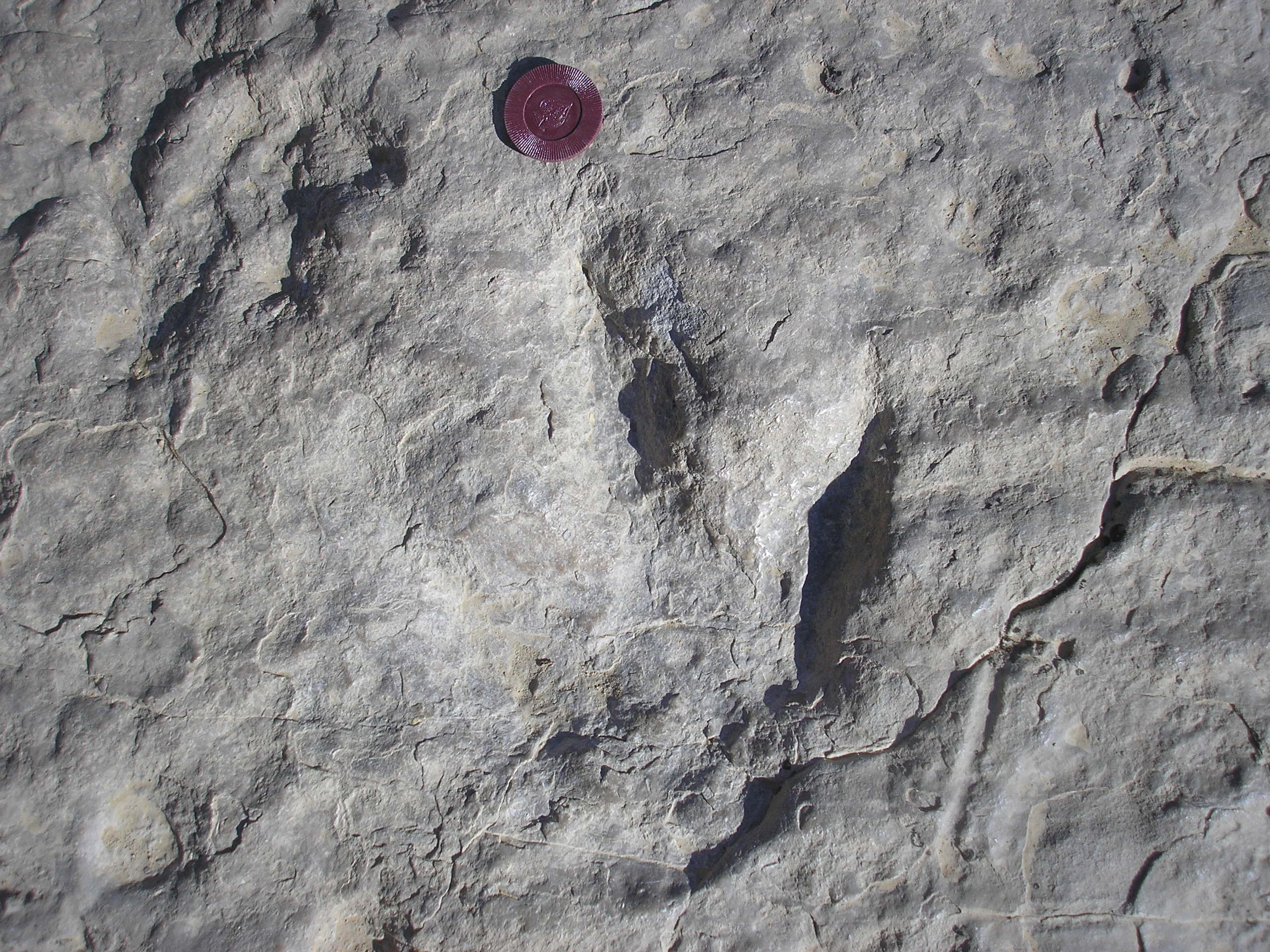
Dinosaur footprint, Western USA, Fall 2005.

Ophiolite:

Dunite channels (light brown) in harzburgite (darker brown), Samail Ophiolite, Oman, January 2009.

Trace Fossil:

Footprints on the beach, Woods Hole, Cape Cod, December 2010.

Ophiolite:

Pillow Basalts in the Samail Ophiolite, Oman, January 2012.

Trace Fossil:

More dinosaur footprints, Western USA, Fall 2005.

Ophiolite:

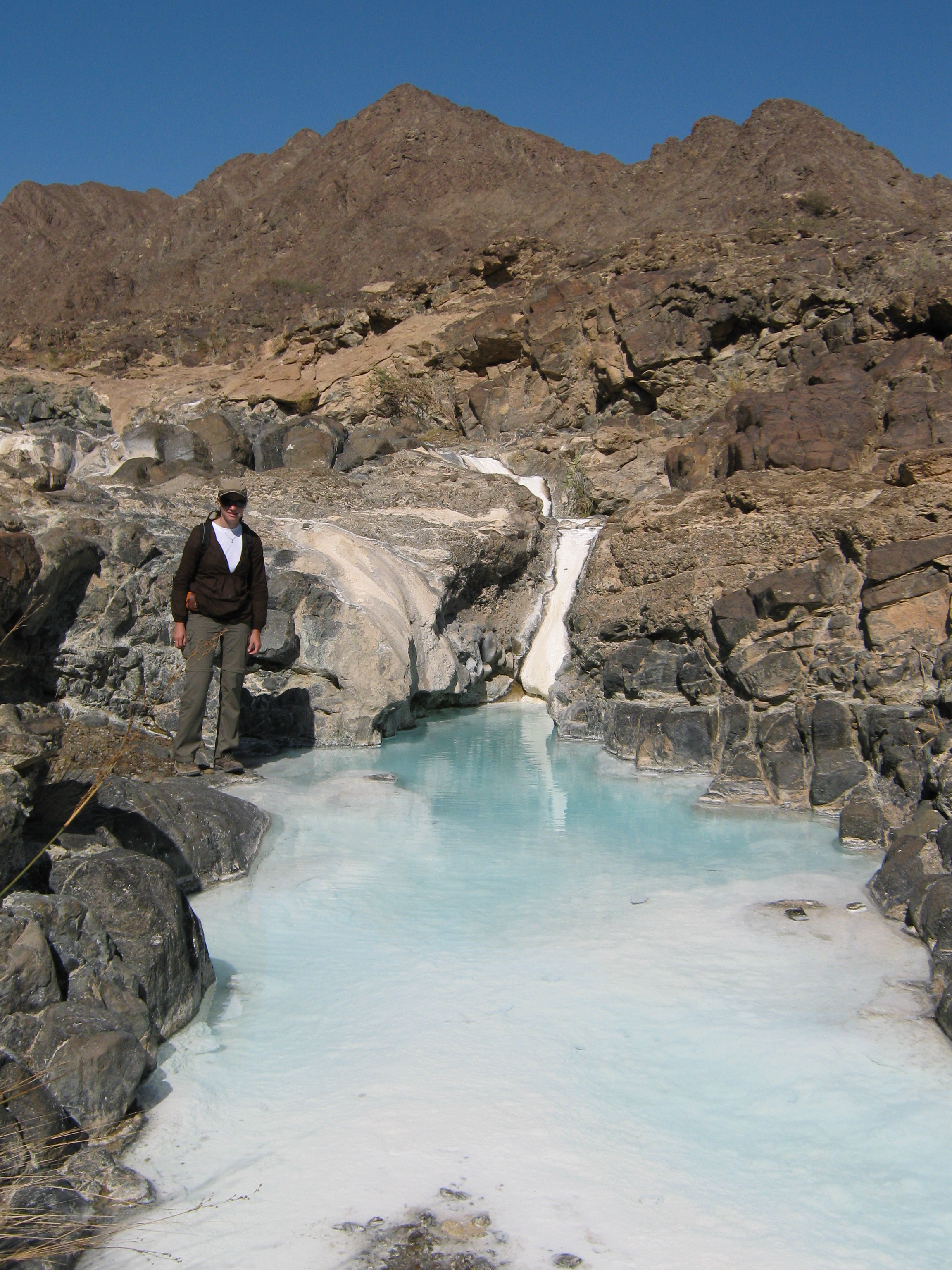
Hyperalkaline (pH ~12) pool in the peridotite layer of the Samail Ophiolite, Oman, January 2009.

Trace Fossil:

Crab house in the sand, Barr Al-Hikman, Oman, January 2012.

Ophiolite:

Examining ophicarbonate rocks in Davos, Switzerland... in JUNE! There's ophiolite in this picture, I swear. Switzerland, June 2010.

Trace Fossil:

Penguin burrow. With Penguin. Simonstown, South Africa, January 2008.

Ophiolite:

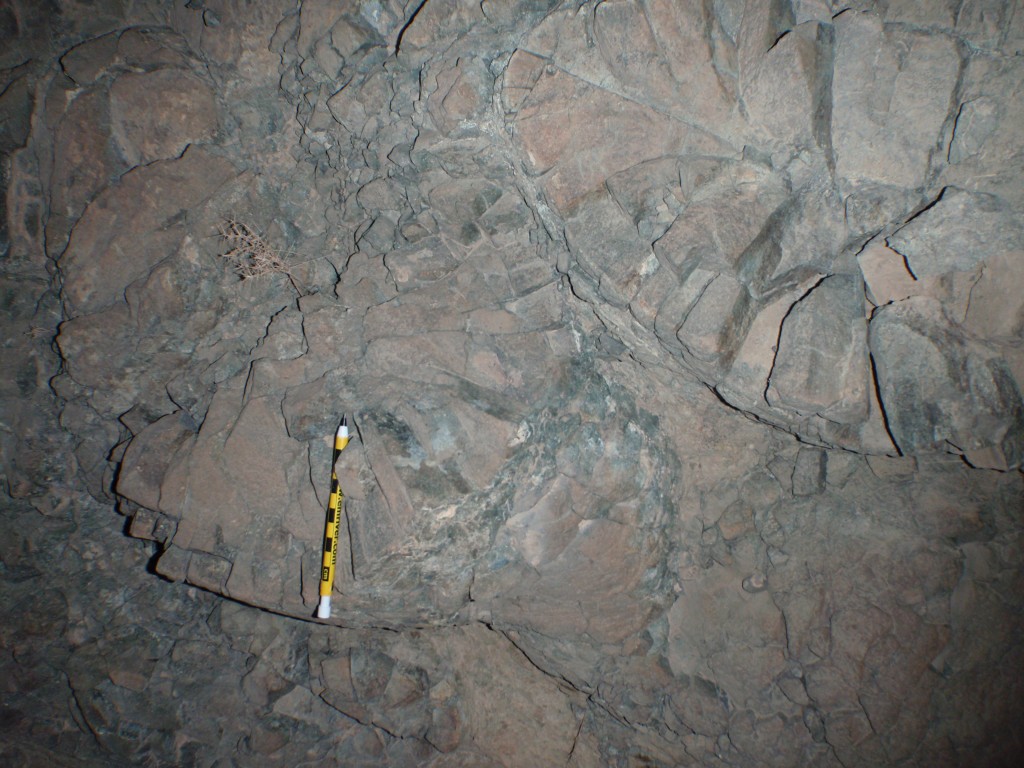
Sheeted dikes in the Samail Ophiolite, Oman, January 2012.

Trace Fossil:

Crab and gastropod traces, Barr Al-Hikman, Oman, January 2012.

Ophiolite:

Hiking in the Samail Ophiolite as sunset approaches, Oman, January 2009.

Trace Fossil:

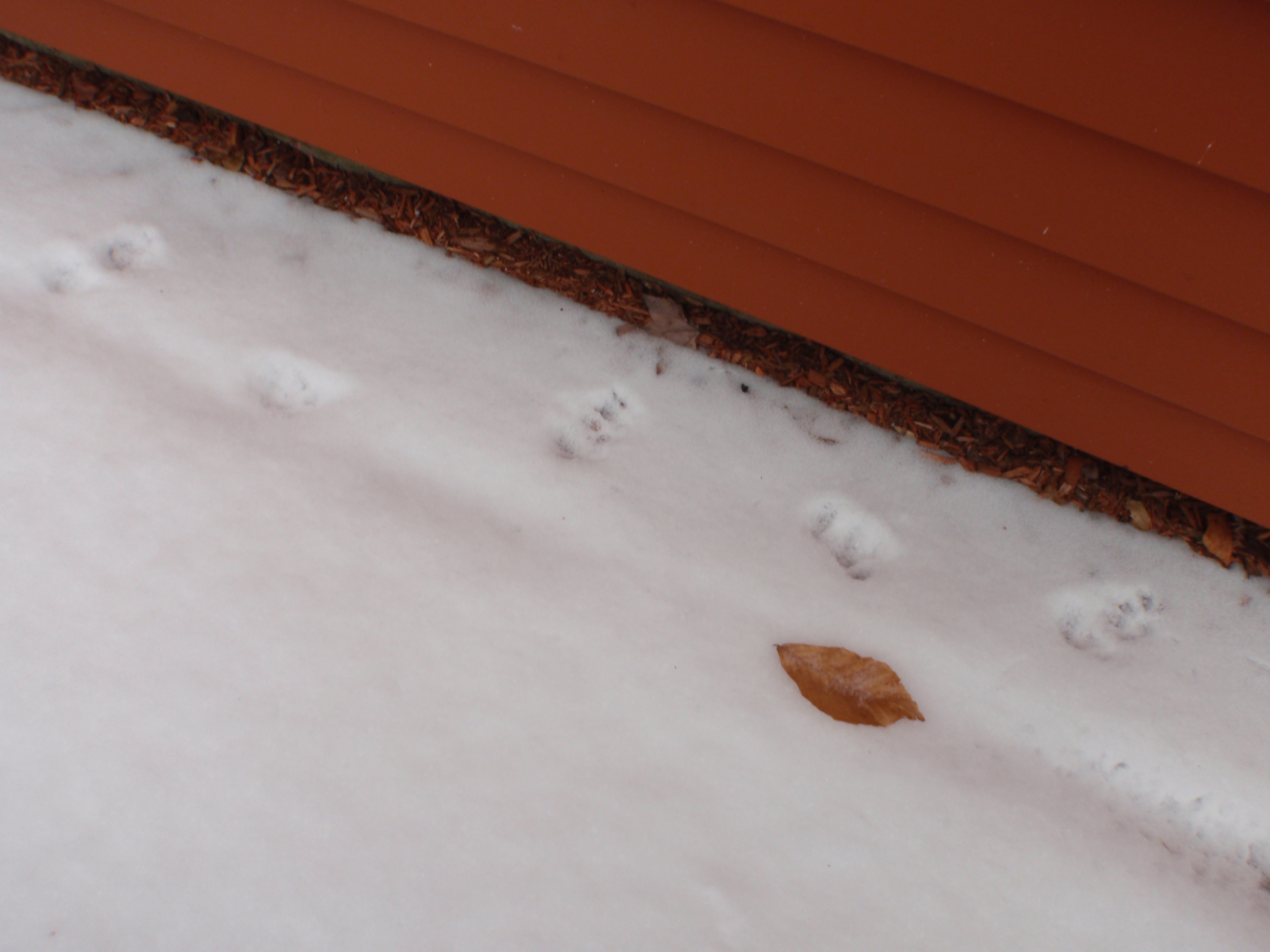
Cat footprints in the snow, New Hampshire, December 2010.

Cat:

Zayna on a walk in the snow. Yes, my awesome cat walks on a leash in the snow. New Hampshire, December 2010.

I put the cat photo in for good measure. Cat photos are always good for attracting internet followers.

Only a Rock Scientist

Doing some rock science in Oman, January 2009.

I defend my PhD thesis in just under a month. I’m super nervous, particularly about the questions I’ll receive after my defense. However, I’ve come up with the ideal way to respond to difficult questions.

Scary Committee Member: Can you please draw all three uranium-series decay chains, with all of the decay constants, on the board and then comment on how they relate to life, the universe, and everything?

Me: What do I look like, a rocket scientist? I’m only a rock scientist.

I think this plan is foolproof*.

Okay, back to the thesis preparations now.


*Don’t worry, I won’t actually answer questions this way. I just wanted to share my new geology joke. Next time someone asks you a difficult science question, feel free to inform them that you are “not a rocket scientist, only a rock scientist.”

Happy Pi Day!

The symbol for Pi. Image taken from here: http://www.nature.com/scitable/blog/student-voices/314159_day.

Happy Pi Day! The grad students here at WHOI are having a pie-themed potluck tonight. What are you doing for Pi day?

3.141592653589793238462643383279502884197169399375105820974944592307816406286 208998628034825342117067982148086513282306647093844609550582231725359408128481 117450284102701938521105559644622948954930381964428810975665933446128475648233 786783165271201909145648566923460348610454326648213393607260249141273724587006 606315588174881520920962829254091715364367892590360011330530548820466521384146 951941511609433057270365759591953092186117381932611793105118548074462379962749 567351885752724891227938183011949129833673362440656643086021394946395224737190 702179860943702770539217176293176752384674818467669405132000568127145263560827 785771342757789609173637178721468440901224953430146549585371050792279689258923 542019956112129021960864034418159813629774771309960518707211349999998372978049 951059731732816096318595024459455346908302642522308253344685035261931188171010 003137838752886587533208381420617177669147303598253490428755468731159562863882 353787593751957781857780532171226806613001927876611195909216420198938095257201 065485863278865936153381827968230301952035301852968995773622599413891249721775 283479131515574857242454150695950829533116861727855889075098381754637464939319 255060400927701671139009848824012858361603563707660104710181942955596198946767 837449448255379774726847104047534646208046684259069491293313677028989152104752 162056966024058038150193511253382430035587640247496473263914199272604269922796

For more digits of Pi, see the website 100,000 Digits of Pi.

Thesis Survival with Geokittehs

A sample Geokitteh photo. Bug Girl's cat Pandora demonstrates a normal fault.

My thesis defense is in exactly one month. That’s right: I’ll be defending my thesis on Friday, April 13th. Friday the 13th! Honestly, it feels very surreal that I will be defending in a month. I’m excited, nervous, happy, anxious, confident, and worried all at once. I’m working long hours finishing up my defendable draft, so I probably won’t have much time for posting on Georneys other than my weekly Monday Geology Picture. However, after I hand in my final thesis draft in early May, I plan to revive the dormant Geology Word of the Week and also write up a couple of longer posts that I have been  musing about for awhile. So, stay tuned for that.

The next month of thesis preparation will be challenging, but there’s one thing that I know will help me survive: Geokittehs. What is Geokittehs, you may be wondering? Geokittehs is a ridiculous blog about geology and cats. I think it’s best explained on the About Geokittehs page. Basically, I started Geokittehs with my friend Dana Hunter so that I would not post too many cat pictures here on Georneys. My husband and I have two gorgeous, long-haired cats that probably have some Norwegian Forest Cat in them, and I am constantly photographing them in adorable poses. If I didn’t have other outlets for posting cute cat pictures (Facebook and Geokittehs), I’m afraid cat pictures might sneak on to Georneys more often, and I’m not sure AGU would want to host a cat blog.  I promise to keep Georneys (mostly) cat-free, but I plan to do quite a bit of posting on Geokittehs over the next month as I wrap up my thesis. So, if you like cats and geology and cat-themed geology puns, feel free to head over to Geokittehs to check out the posts. I actually have a small backlog of photos to post since I neglected to check the Geokittehs email for a few months. Sorry about that if you sent an email! I’ll try to post the backlog over the next week or so. If you would like to submit a Geokitteh photo, you may do so by emailing geokittehs at gmail. Please do send as many cat pictures as you want. You’ll be doing a good deed by helping me survive my thesis, and hopefully other cat-loving geologists will find the Geokittehs posts entertaining.

Monday Geology Picture: Listwanite Hills in the Sultanate of Oman

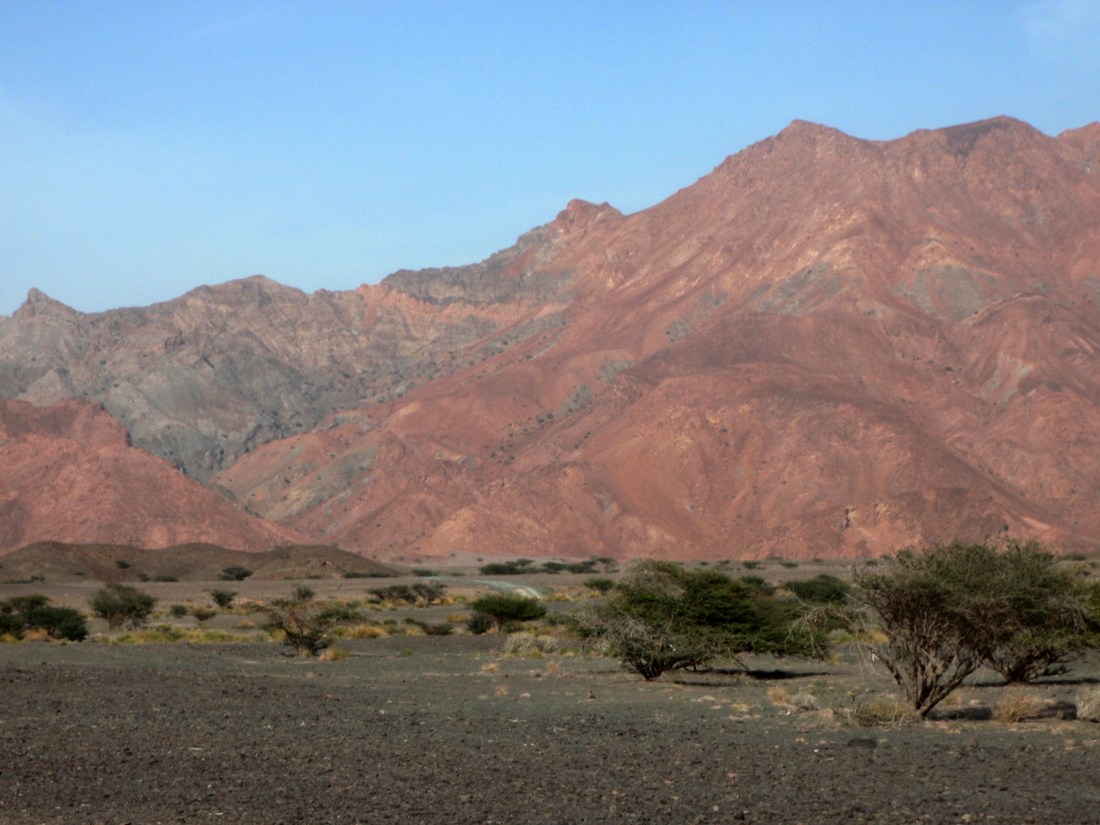
Listwanite hills in the Sultanate of Oman, January 2012. The reddish parts of the moutnain are listwanites while the grayish parts are less-altered peridotites.

Today I am going to share some pictures of listwanite (also sometimes spelled listvenite, listvanite, or listwaenite), an unusual  rock type that I bet even some of the well-educated geologists who read this blog have never seen or even read about. I don’t even think there’s a wikipedia entry about listwanite. Perhaps I’ll write one after my thesis defense next month.

Listwanite forms when ultramafic rocks (most commonly mantle peridotites) are completely carbonated. The pyroxene and olivine minerals found in peridotite commonly alter to form carbonate and serpentine minerals. However, peridotites are usually not completely carbonated. Rather, they typically contain carbonate veins (primarily magnesite; also calcite, dolomite, and other carbonates). Complete carbonation of peridotite means that every single atom of magnesium and calcium as well as some of the iron atoms has combined with CO2 to form  secondary carbonate minerals such a magnesite and calcite. The silica atoms in listwanite are found in quartz. Thus, liswanites consist of quartz (a rusty red color) and  carbonate and also sometimes talc and Cr-muscovite (a mineral known as mariposite/fuchsite).  Geologists are still studying how listwanites form, but they likely form through the interaction of CO2-rich fluids with peridotites at higher than ambient temperatures up to ~200 degrees Celsius. Structural controls (faults and fractures) permit the percolation of the CO2-rich fluids through peridotite, so the formation of listwanites is generally structurally controlled.

Listwanites are important rocks to study for a number of reasons. First of all, listwanites contain large amounts of CO2 which originated from fluids and which is now stored in solid mineral form.  Recently, geologists and other scientists have been investigating the potential of storing CO2 in solid minerals (which are more stable than CO2 stored as a liquid or gas) through carbonation of mafic and ultramafic rocks (see, for example, this Nature Geoscience Progress Article by Matter and Kelemen, 2009). Mafic and ultramafic rocks uptake significant CO2 through their natural alteration processes (that’s what I study for my PhD, so expect more on this in the next year or so as I submit my papers for publication). However, the natural carbonation rates of these rocks are too slow to significantly offset anthropogenic CO2 emissions. Therefore, scientists are currently investigating if it is possible to geoengineer CO2 uptake in mafic and ultramafic rocks so that this CO2 uptake happens more quickly. This could be done, perhaps, by fracturing and heating and injection of CO2-rich fluids. This is already being tested in mafic basalts through the CarbFix Project in Iceland.

However, scientists and engineers still have plenty of work to do in order to figure out the right conditions and protocols for CO2 sequestration in mafic and ultramafic rocks. In order to learn about what conditions lead to complete carbonation of ultramafic rocks, scientists such as Peter Kelemen and Gregory Dipple (and their many grad students and collaborators) are working to learn more about listwanites to see if mother nature can provide some clues.

In addition to the recent interest in listwanites for carbon sequestration efforts, listwanites are also important because they are often associated with economic mineral deposits, particularly gold deposits.

So, now that I’ve explained what listwanites are and why they are important, here are some pictures of listwanites which I observed during my trip to Oman back in January. Listwanites are pretty neat rocks, aren’t they?

A closer view of a listwanite outcrop, with a hammer for scale. Sultanate of Oman, January 2012.
Another view of listwanite up close. Sultanate of Oman, January 2012.
More listwanite. Note the offsets in the carbonate veins. Sultanate of Oman, January 2012.
Another piece of listwanite with offsets in carbonate veins. This sample is gray in color and thus perhaps not fully a listwanite. Sultanate of Oman, January 2012.

Monday Geology Picture: Fossil Seashells at Barr Al-Hikman, Oman

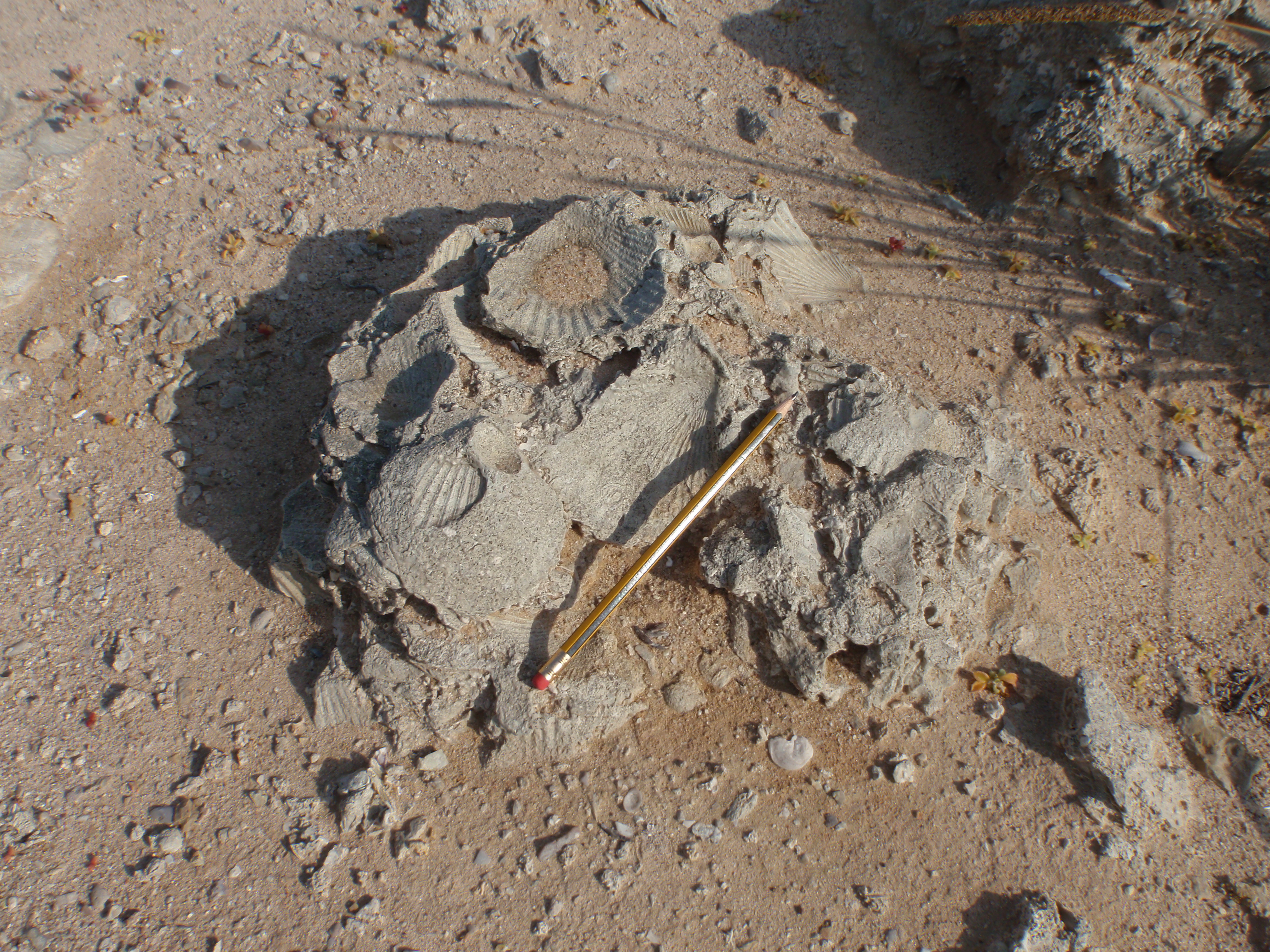
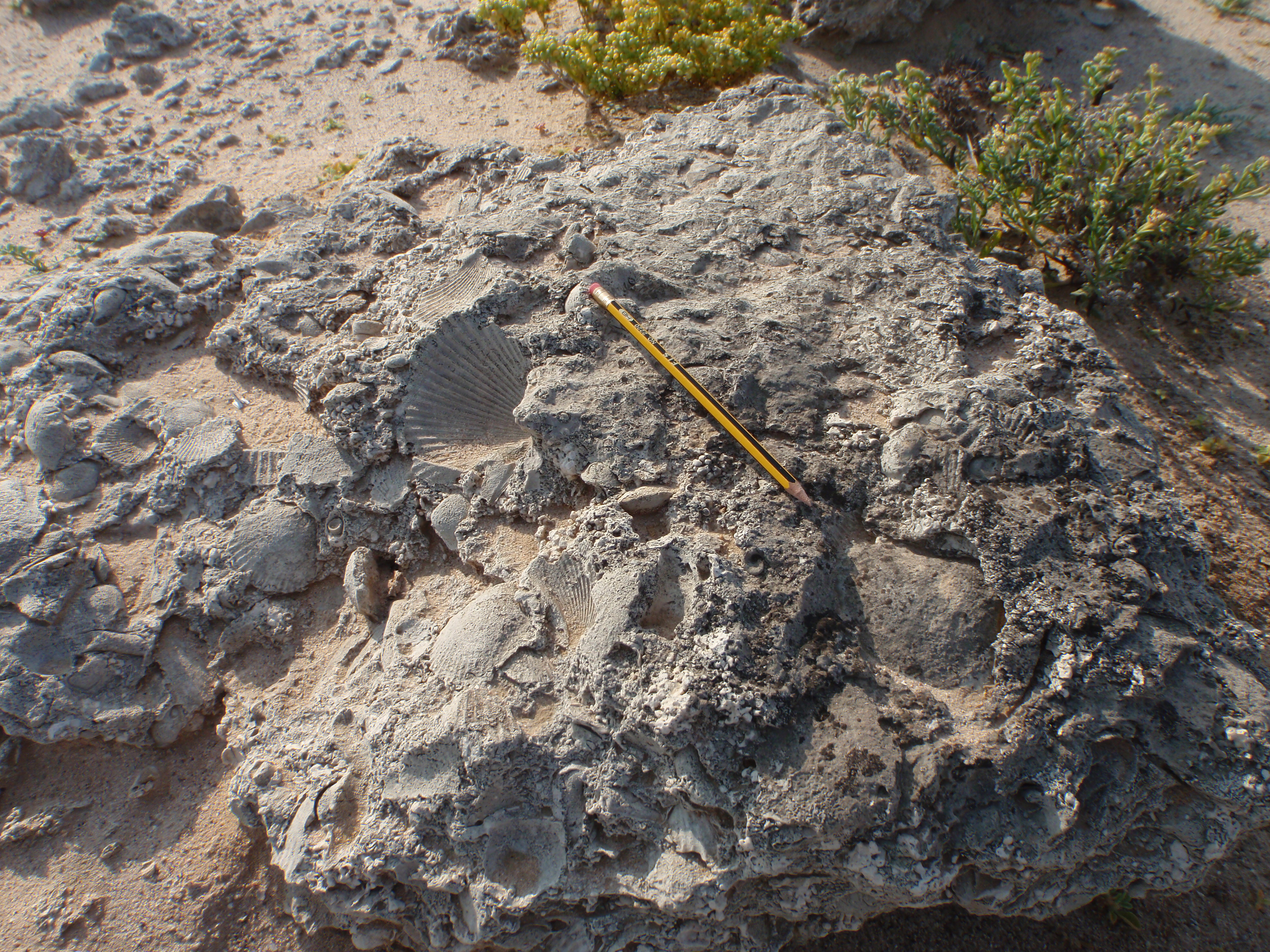
Fossil seashells #1 at Barr Al-Hikman, Oman, January 2012.

For this week’s Monday Geology Picture post, I thought I would share some more pictures from my trip in January to Barr Al-Hikman, Oman. A few weeks ago, I posted about some crabs and their traces at Barr Al-Hikman. This week I am sharing some pictures of some large, beautiful, fossilized seashells which we observed along one of the beaches at Barr Al-Hikman. I believe that these seashell fossils formed fairly recently. I think that the seashell species (or perhaps a close relative) still exists today in Omani waters. Also, some of the fossilized shells contain un-fossilized shell fragments.

Can anyone identify the seashell species and give me any more information about these beautiful fossils?

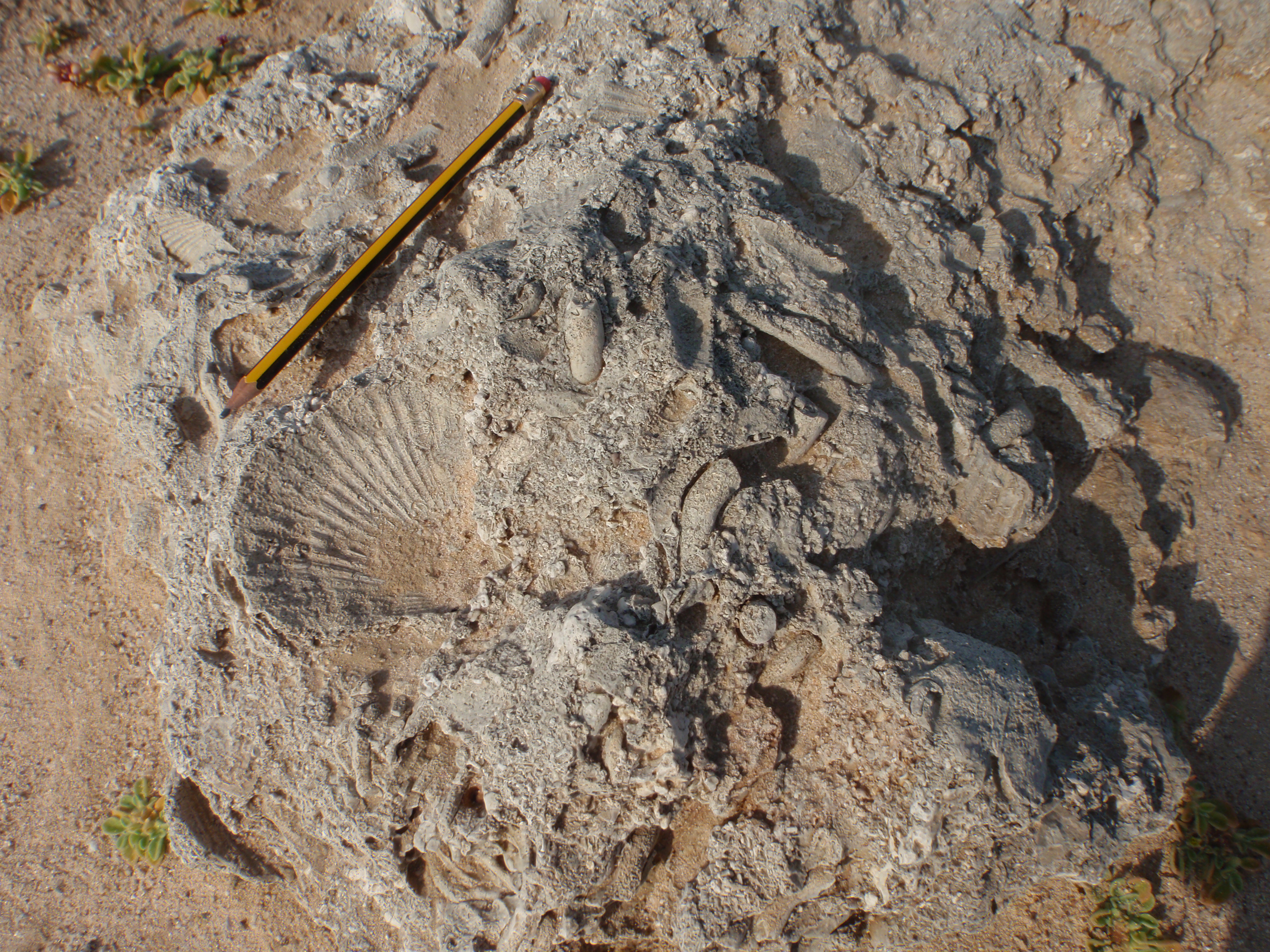
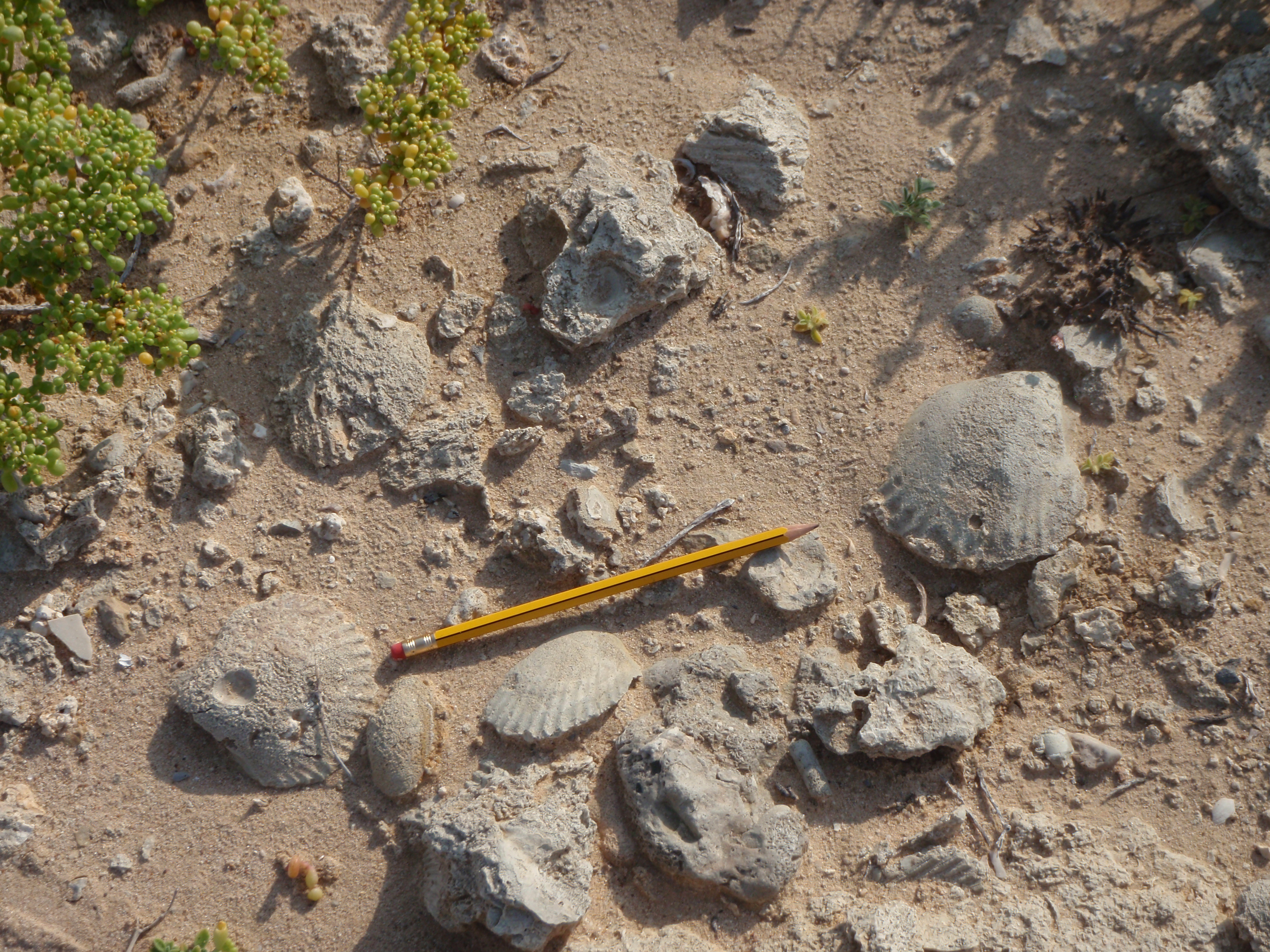
Below are a few more pictures of the seashell fossils. Note that the fossils form as both molds and casts.  Also note the pencil for scale.

Fossil seashells #2 at Barr Al-Hikman, Oman, January 2012.
Fossil seashells #3 at Barr Al-Hikman, Oman, January 2012.
Fossil seashells #4 at Barr Al-Hikman, Oman, January 2012.
Fossil seashells #5 at Barr Al-Hikman, Oman, January 2012.

Monday Geology Picture: Building Stones in Downtown Cape Town, South Africa

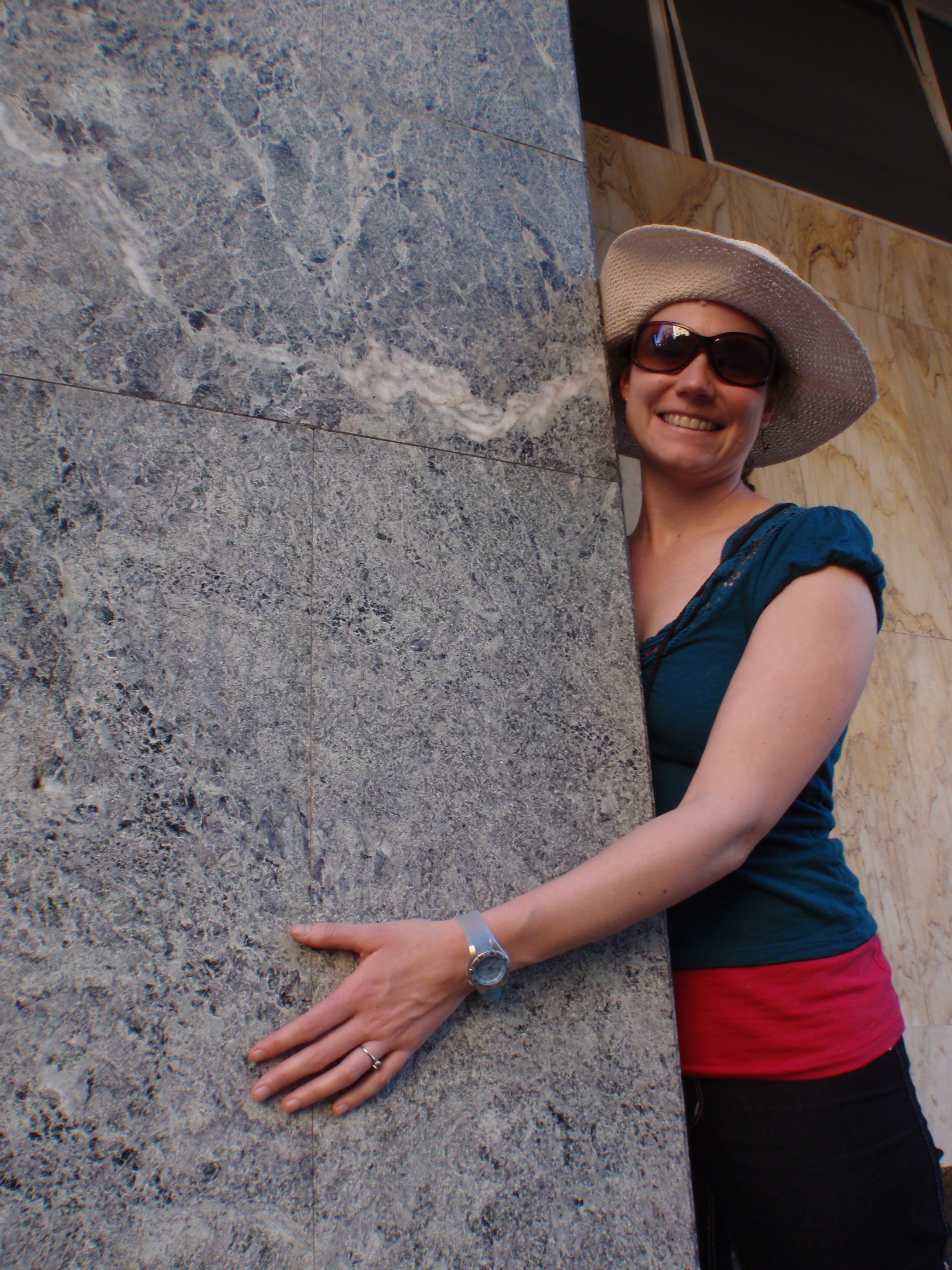
Hugging some building stones in downtown Cape Town, South Africa, April 2011.

My thesis is keeping me super busy, as usual, so there many not be much blogging again this week. However, here’s your Monday Geology Picture– a picture of me showing my appreciation for some green marble building stones displayed in downtown Cape Town, South Africa. Looking at building stones can be fascinating even though it can sometimes be frustrating to examine interesting rocks without field context.

How a Geochemist Really Dresses

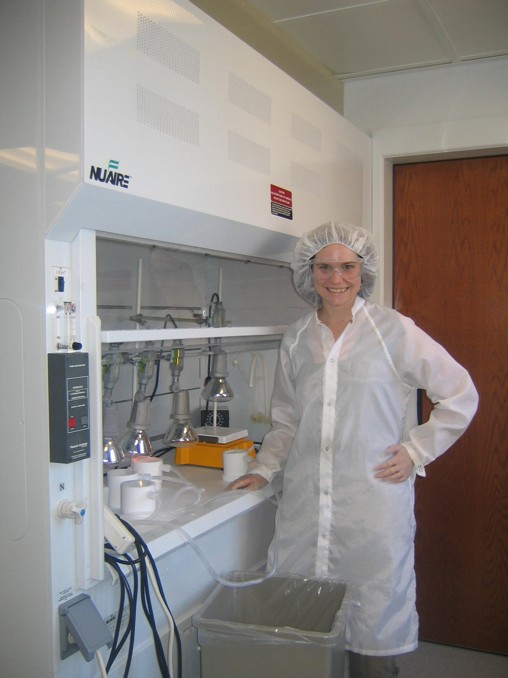
Properly dressed for clean lab chemistry, Dartmouth College, New Hampshire, 2006.

I am a geochemist. For my PhD thesis, undergraduate, and summer internship research, I have spent thousands of hours in geochemistry labs. I enjoy labwork, and I take laboratory safety seriously. When I work in the laboratory, I usually wear an outfit similar to the above. In the above photograph I am wearing an acid-resistant lab coat, long pants, closed-toed plastic lab clogs (out of the picture, but believe me), gloves, safety glasses, and a hair net to keep my long hair out of my way (and also out of my samples). As much as possible, I keep the chemicals I work with inside fume hoods, which protect me from dangerous acid vapors. When I work with especially dangerous chemicals such as hydrofluoric acid or aqua regia, I usually add a full face shield, an extra pair of gloves, and sometimes an extra labcoat or apron to the above outfit. In some labs I wear a full tyvek jumpsuit  rather than a labcoat so that my legs are better protected.

The clothes I wear in geochemistry labs may not always be the most flattering (although, personally, I think I look pretty good in a labcoat), but that’s not the point. The point of these clothes is to protect me from dangerous chemicals. Everyone dresses like this in geochemistry labs (or should), and no one worries over fashion when donning laboratory gear. Why? Because looking fashionable is not particularly important when you are trying to prevent acid exposure. Preventing acid exposure can literally be a matter of life-and-death. Unfortunately, rocks (especially silicate rocks) do not like to dissolve. So, geochemists use a very dangerous acid called hydrofluoric acid to bring them into solution for chemical analysis. Exposure to hydrofluoric acid is initially painless (because it interferes with nerve function), so you often don’t know that you’ve been exposed until hours later, when your flesh and bones have started to dissolve. A large hydrofluoric acid exposure is lethal, so I always, always, always wear my protective laboratory gear when working with hydrofluoric acid and also when working with other, slightly less dangerous acids.

You might be wondering why I’m posting the above photograph and explaining how geochemists generally dress. I am posting this photograph because there has been a disturbing stock photograph titled “lab work” that has been circulating around the science blogosphere recently. Here is the picture:

Image taken from here: http://www.istockphoto.com/stock-photo-13771784-lab-work.php

In the above photograph the female chemist is either (1.) naked or (2.) wearing a strapless top or dress. Neither type of attire (or lack thereof) is appropriate for chemistry. There is far too much skin that could be exposed to dangerous acids. Furthermore, if that beaker contains acid, the chemist really should be handling that beaker under a fume hood. Perhaps that is the problem– maybe the acid fumes have dissolved her clothes? In that case, she really should consider wearing a more acid resistant tyvek suit or coat.

Joking aside, the stock photograph really disturbs me. Is this how we want the general public to view lab work? Why does the female chemist look naked? Is it to make her more attractive? Why is it important for her to look attractive?  I suppose that I understand that stock photos usually feature more-attractive-than-average people, but does she have to look naked to look attractive?

Even Barbie, who is definitely a fashionista, is smart enough to wear proper laboratory safety clothing when doing geochemistry:

Geochemist Barbie takes safety seriously. Image taken from the "Dress Barbie Like a Geologist" Accretionary Wedge here: https://evelyngeorneys.wordpress.com/2011/11/18/accretionary-wedge-39-geologist-barbie/

Geochemist Barbie and I are appalled at the stock photo of the naked female chemist. I really hope that not too many people actually purchase this stock photo. Rather than use that stock photo, I encourage you to– please– rather use a photograph of a real scientist dressed in real laboratory safety gear. If you’re considering purchasing that stock photo, you’re more than welcome to rather take the picture of me (for free!) or of Geochemist Barbie (also free!) in our more realistic laboratory clothing instead. Also, I have a proposal for other chemists: why not post pictures of you in your laboratory clothing, as I have posted here? If you don’t have a blog, I’d be happy to host your picture here at Georneys. I’ve been really impressed with the recent This is What a Scientist Looks Like effort, which was initiated by Allie Wilkinson. Why not start a similar effort, perhaps titled “This is What a Chemist Looks Like” or “This is What Lab Work Looks Like” ?