I’m currently in the airport lounge in Amsterdam awaiting my next flight (2 of 4) on my way to Nome, Alaska. My husband and I slept through a good part of the first flight, which left around midnight Cape Town time. We’re flying business class (thank you, my new company!). I’ve never flown business class before, so it’s sort of like Dinsey World for me. I’m amazed at all the little details: real silverware, free magazines, flight attendants handing out Belgian chocolates, etc. KLM even gave us a present: little dutch houses! I’m really amazed. I’ve flown the Cape Town to Amsterdam flight in coach class a dozen times or more, and I’ve never managed to properly sleep before. With the almost flat seat in business class, however, I slept for a good six or seven hours! I suppose the proper sleep will make our 30+ hour journey to Nome a little more bearable.
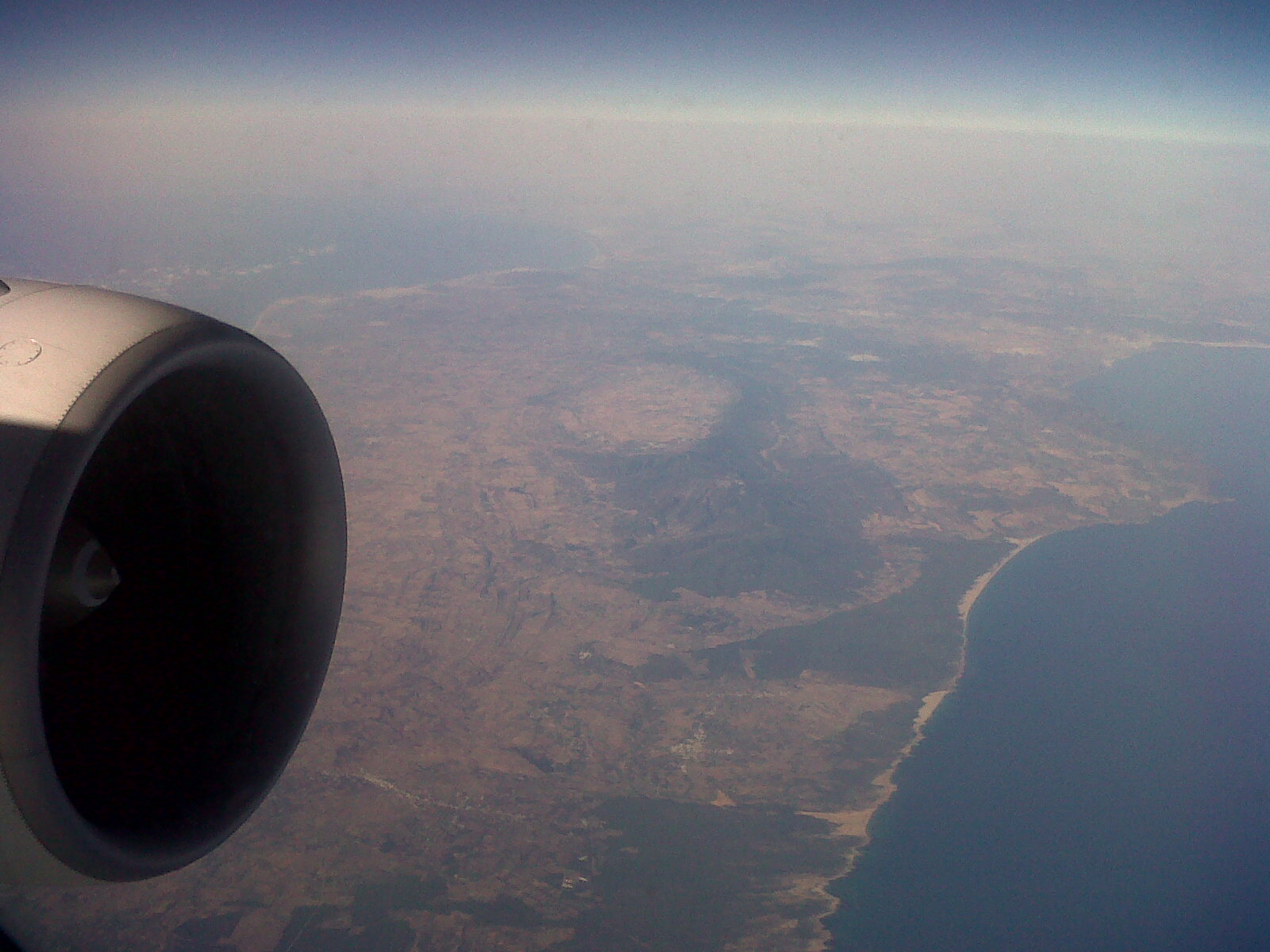
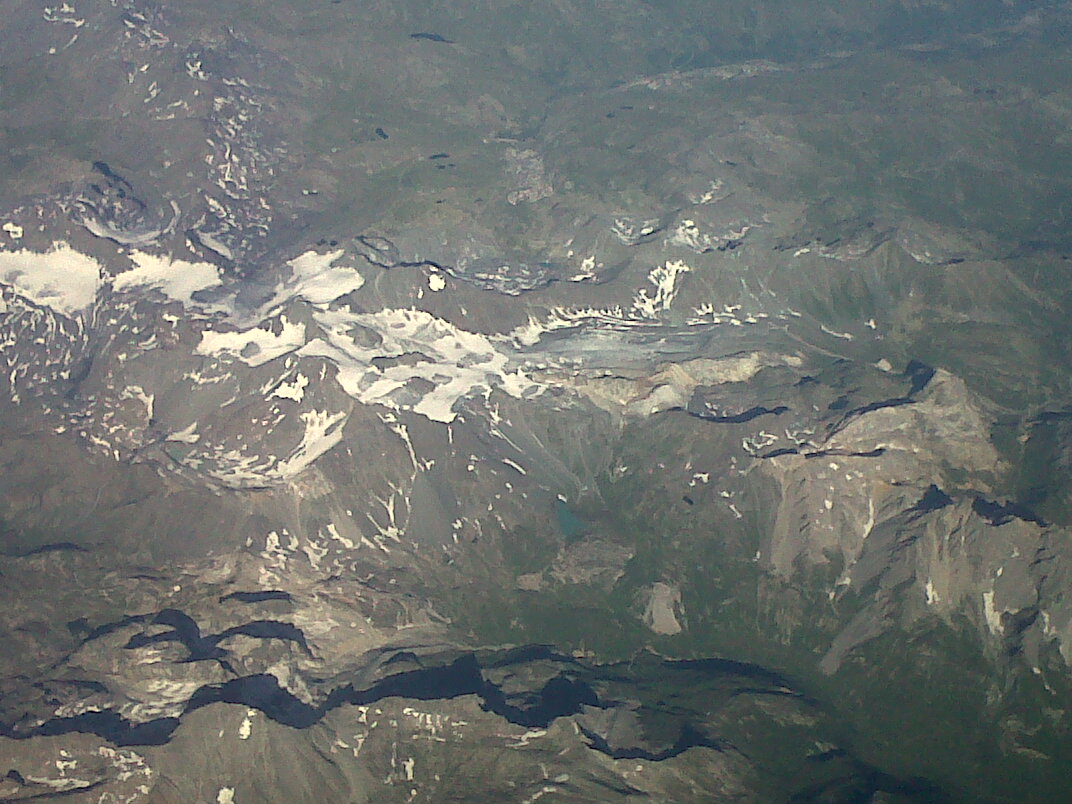
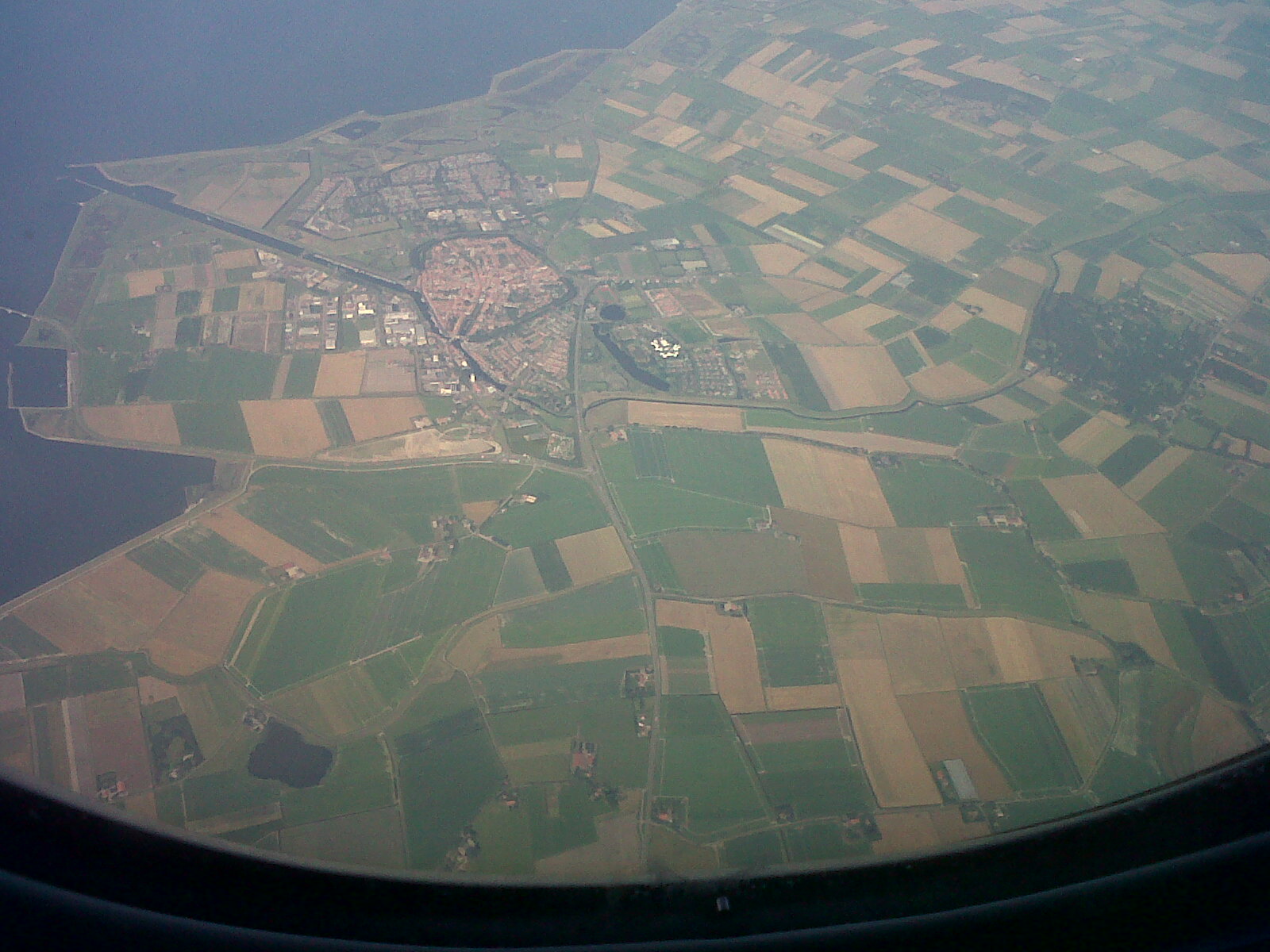
When I finally woke up, I managed to take a few interesting snapshots of the North Africa, Mediterranean, and European scenery. I thought I’d share a few pictures here. Perhaps some of my blog readers can help identify some of the areas and geological features:
Northern Africa, near Tunis.Sardinia coastline.Some mountains on Sardinia.French coastline.French? mountains.More French? mountains.Snow-capped peaks.Interesting French? mountain feature.Approaching Amsterdam.
I’ll share some more plane views– and also try to Google Earth some of the locations– when I have time.
Homework in the field! Don't you think this picture should be in a Dartmouth brochure or something?
When I was in college, I sure did plenty of homework. Mostly, I did my homework in my dorm room, the library, or in a cafe with a study group. However, when I went on Dartmouth College’s semester-long geology field program (called “The Stretch”) in the Western USA in Fall 2005, I found myself doing homework in cabins, hotel lobbies, tents, and– more often than not– outside on picnic tables, as shown in the above picture. I can genuinely say that I really enjoyed my experiences during The Stretch, including all the homework done on picnic tables. Sure, we complained a little on the nights we found ourselves working on homework by headlamp, but really the homework wasn’t too bad. I was fortunate enough to participate in The Stretch with an amazing group of students, teaching assistants, and professors. We had many a good time– and laugh– while working on our Stretch homework. Does anyone else have pictures of “Homework in the Field”?
Jackie and I in front of the Chapman's Peak Nonconformity in Cape Town, South Africa, May 2011.
I have an announcement to make: in a few days my husband Jackie and I will be flying from our home in Cape Town, South Africa to Nome, Alaska. In Nome we’re both going to be working for AuruMar, a South African based marine gold exploration company. We’ll be working in Nome for about two months. I am very excited about this opportunity to travel to Alaska and gain experience working in industry, and I’m even more excited that my husband and I will be going into the field together. We’ve spent far too many months apart over the last 5 years, and usually it’s one or the other of us hopping on an airplane, not both.
I will not be blogging about my work in Nome (or any of my industry work), but I will probably share a few pictures from Alaska when I return. If you’d like to learn more about gold exploration and mining in Nome, I’ll refer you to AuruMar’s official news releases. If you’d like to learn more about independent/amateur gold mining offshore of Nome, I’ll refer you to The Discovery Channel’s reality TV show “Bering Sea Gold” (called “Gold Divers” in some countries). This TV show probably skews, scripts, and edits “reality”, but I’ll recommend the show anyway. The show does have some great underwater shots of gold-bearing sediment!
I’ve set up “Monday Geology Picture” posts and a few other things to autopost while I’m away. However, I won’t be able to check my blog regularly and respond to comments and such. I look forward to interacting with everyone when I return!
Like my fellow geoblogger Jessica Ball, I wish that I could be a geologist on Star Trek. I can think of no better, more exciting job than traveling the universe as a geological researcher for the United Federation of Planets. Sign me up, Starfleet!
Maybe one day in my life– or in my children’s or grandchildren’s lives– there will be opportunities for Earth geologists to travel to other planets and planetary bodies. Already, there are hundreds (thousands?) of geologists who work in the exciting field of Planetary Geology. However, today planetary geologists primarily rely upon remote sensing, rovers (on Mars and Earth’s moon), and little bits of space rock that fall to Earth to understand the geology of other planets and planetary bodies. While several humans have walked on the moon, only one geologist (Harrison Schmidt) has walked on the moon.
A few years ago I became interested in Star Trek after watching a few episodes of The Next Generation with some friends in graduate school. Now my husband and I are hooked on Star Trek. We’re currently watching Season 6 of The Next Generation, and I’m also watching Season 2 of Deep Space Nine (so that I have something to watch when my husband is away. He’s forbidden me from watching TNG without him). I’m contemplating buying a Star Trek uniform costume and visiting a Star Trek convention. Any suggestions, for either the uniform or a convention? Are there ever Star Trek conventions in Africa? Also, my husband and I (and also our friend Mo, a fellow Star Trek fan) have already penciled in a visit in 2014/2015 to the Star Trek theme park currently being built in Jordan.
I like Star Trek for many reasons, one of which is the favorable light in which science is portrayed on the show and also the rational way in which science (even if it’s fake “Star Trek science”) is used an explanation for mysterious phenomena which occur on the show. However, the science on Star Trek is often not real science. That is, the scientific explanations on the show are sometimes inaccurate– or at least apply a bit of poetic license to a scientific fact or theory. Also, much of the show’s technology, such as teleportation and warp drive, is not currently scientifically feasible. I recently learned about a book written by Lawrence Krauss called The Physics of Star Trek (next in the queue on my Kindle reading list!) that goes into some of the physics shown on the show.
After I heard about Krauss’s book, I thought to myself: why not write about the geology of Star Trek? This is the first post in what may become a series of posts about the geology of Star Trek. In this post I am going to point out some of the geological inaccuracies of a particular episode, but I hope that these posts will not always be about nit-picking the scientific details. I hope that the geology of Star Trek, even if sometimes scientifically inaccurate, can inspire some young people (myself included, perhaps?) to learn more about planetary geology and geology in general.
I can imagine several topics of interest regarding the geology of Star Trek:
-Types of planets encountered on Star Trek
-Geology of non-Earth-like planets
-Terraforming planets for settlement
-Geoengineering of environment (atmosphere, climate, weather, soil, etc.) and of plate tectonics
-Diversion of meteoroids / comets / asteroids from impact with inhabited planets and planetary bodies
-Volcanic activity of Star Trek planets
-Best geologic lairs for Vulcans, Klingons, Romulans, Cardassians, and other Star Trek species
-Building stones seen/used on Star Trek
-Magnetic fields of Star Trek planets
-Atmospheres of Star Trek planets
-Geochemistry of Star Trek. If it hasn’t been done already, someone should really come up with a Star Trek periodic table. Which element names mentioned on the show are real and which are made up?
-Tools of Star Trek geologists (Do they just need tricorders? What geologic measurements can be made with a tricorder? Why didn’t I have a tricorder for my PhD thesis research?)
-Various mining operations shown in Star Trek
-What are those dilithium crystals made of, anyway?
Perhaps my blog readers can suggest additional topics?
Now that I’ve introduced “The Geology of Star Trek” series, let me move on to my first topic of discussion. In this post, I’d like to talk a little about the geology of a cave shown in the Star Trek: The Next Generation episode “Chain of Command, Part I.” In this episode, Captain Jean-Luc Picard, Chief Medical Officer Beverly Crusher, and Lieutenant Worf are sent on a covert mission to the Cardassian planet Celtris III to destroy a biological weapons facility. The facility is supposedly located in a deep underground cave. Decked out in black with various spy gear, Picard, Crusher, and Worf make their way through the cave to the supposed location of the weapons facility. When they arrive, they discover that there is no biological weapons facility. Rather, the intelligence about the supposed facility was leaked by the Cardassians as a trap to capture Picard. The episode ends with Picard being taken away by the Cardassians as Crusher and Worf escape.
Sneaking through the cave on Celtris III.
The overall plot of this particular Star Trek episode is excellent, but the geology of the cave on Celtris III is somewhat implausible. I suspect that many of the walls of the “cave” are artificial and part of a Hollywood sound stage set-up. Some views of the cave interior also seem to feature painted backgrounds or special effects. Fake and painted rocks aside, however, there are still some fundamental problems and inconsistences with the geology of the cave.
For example, after reaching a steep drop in the cave, Picard says, “We’ll have to rappel from here. This is sheer granite. We’ll have to use fusing pitons.”
"This is sheer granite. We'll have to use fusing pitons."
Granite caves are not unheard of, but they are somewhat unusual. Caves are most commonly formed as solutional caves in soft, easily dissolved and re-precipitated rocks such as limestone, dolomite, and halite. The re-precipitation of minerals such calcite forms speleothems, including stalagtites and stalagmites, that are commonly found in solutional caves. Granite is a very hard rock that is not easily dissolved and re-precipitated. Therefore, solutional caves are not going to form in granite, and granite caves are not going to contain significant speleothem precipitates. The most common type of cave that forms in granite is an erosional cave, a type of cave that forms when flowing water (a stream or possible seawater) erodes rock to form a cave. Some granite caves also may form by seismic activity.
So far, I’m willing to buy that Picard, Crusher, and Worf are in a granite cave. A close-up shot of a fusing piton being inserted even makes the rock (or fake rock) look pretty similar to granite:
The rock looks granite-ish to me. Or maybe rhyolite-ish with phenocrysts.
However, the next few shots show that the “granite” cave has abundant speleothems, which would rarely (never?) occur in a granite cave! The big speleothems look much more similar to what would be seen in a classic limestone solutional cave:
Picard contemplates the cave, which now looks like a limestone cave!Rapelling down a wall in the granite/limestone cave.
After Picard, Crusher, and Worf repel (500 meters, according to the dialogue) down the wall of the “granite” cave and continue walking along, they reach a solid wall and cannot progress any farther. Fortunately, Picard is able to tell with his tricorder that, “There’s a lava tube beyond here [the wall] that runs for 75 meters, and it connects with another chamber. We need to get through here.”
Investigating the rock wall with tricorders.
Hang on a minute! Aren’t Picard, Crusher, and Worf supposed to be in a granite cave (that strangely resembles a limestone cave in some shots)? Lava tubes are a common type of cave, but they aren’t going to be found in a granite cave, and they are very unlikely to be found at 700 meters depth (in one of the early cave scenes Picard notes that the supposed weapons facility is located ~700 meters depth, and the lava tube seems to connect very close to the supposed weapons facility cavern).
For those of you who are not familair, let me explain a little bit about igneous rocks. Igneous rocks are rocks which form from molten material, which is called magma in the subsurface and lava on the Earth’s surface. There are two types of igneous rocks: plutonic rocks (which form in the subsurface from magma) and volcanic rocks (which form on Earth’s surface from lava). Granite is one type of plutonic igneous rock. A common volcanic rock is basalt.
Lava tubes are common primary caves, but they are found close to Earth’s surface, not at 700 meters depth! Furthermore, lava tubes may sometimes be connected to other lava tubes or types of volcanic primary caves, but they are rarely connected to extensive networks of caverns. Since granite is a plutonic rock and not a volcanic rock, it is impossible for a lava tube to form in granite.
To sum up, there are three geological issues with the cave featured in this Star Trek episode:
1. Granite caves are uncommon.
2. Granite caves do not generally contain speleothems such as stalagtites and stalagmites. These are generally a feature of solutional caves in rocks such as limestone.
3. Lave tubes are not found in granite caves and not found in caves at depth. This is because (a.) granite does not form from lava, and (b.) lava flows on Earth’s surface.
Bad geology aside, I do think that it’s pretty cool that Picard, Crusher, and Worf can map out the cave with their tricorders and that Worf can conveniently cut through a rock wall to the hidden lava (err… granite? limestone?) tube by using his phaser. Just check this out:
Phaser versus cave wall #1.Phaser versus rock wall #2.The "lava tube" revealed!Crawling through the "lava tube."
If anyone has an extra tricorder and phaser lying around, could you please send them to me for my upcoming geologic fieldwork in Alaska? Thanks!
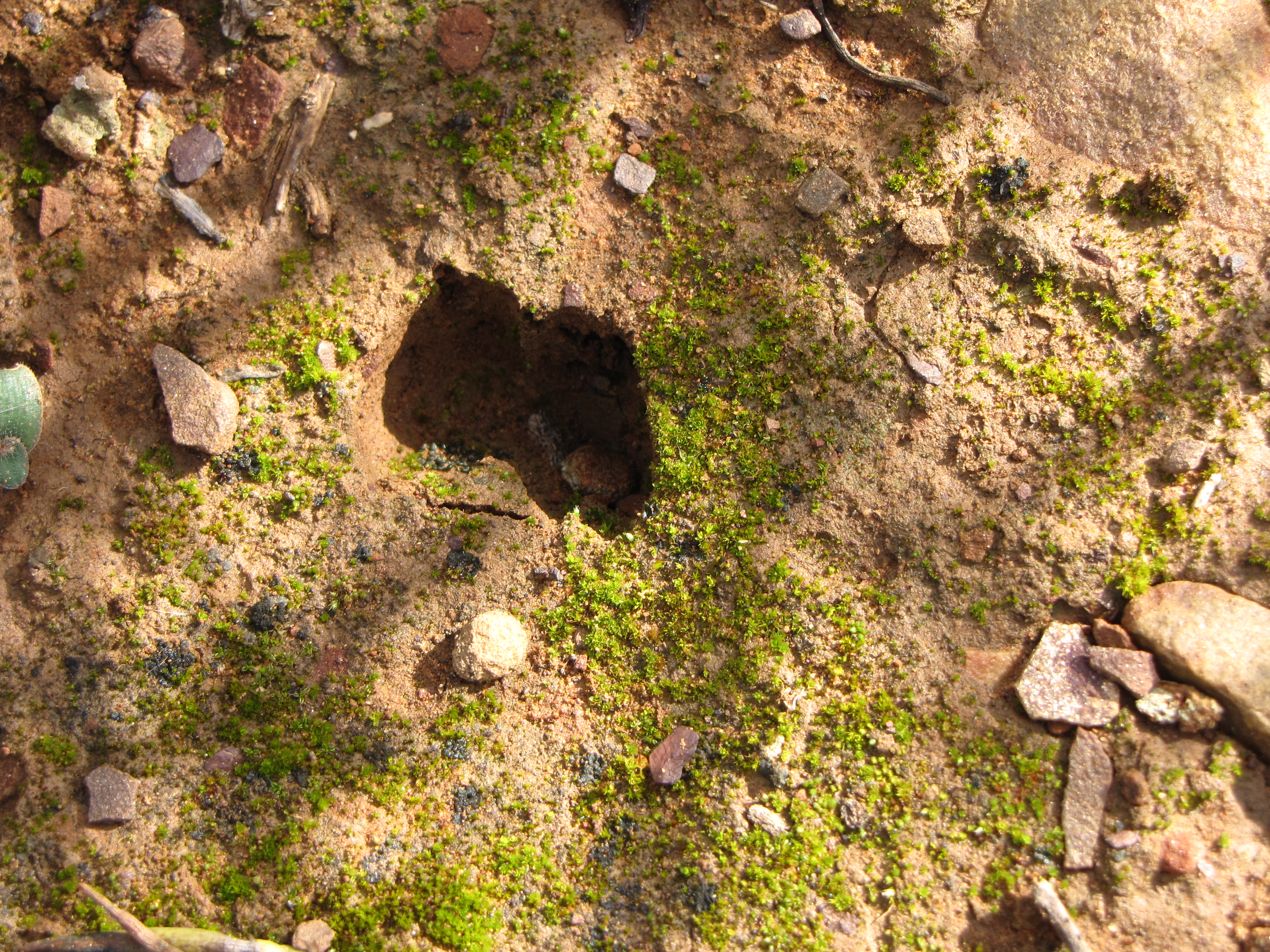
Teeny tiny footprints, with hammer for scale.Little duiker footprint!
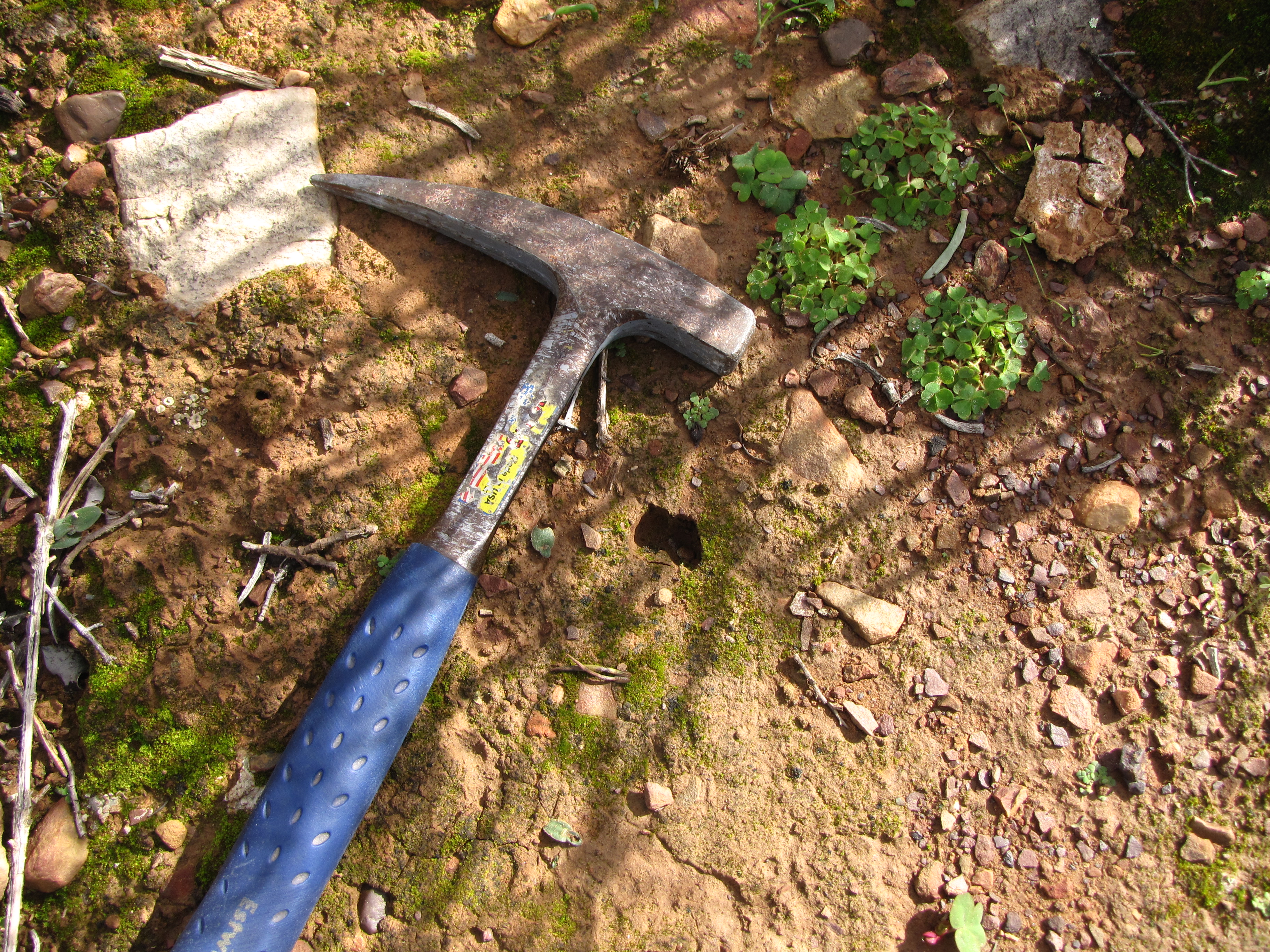
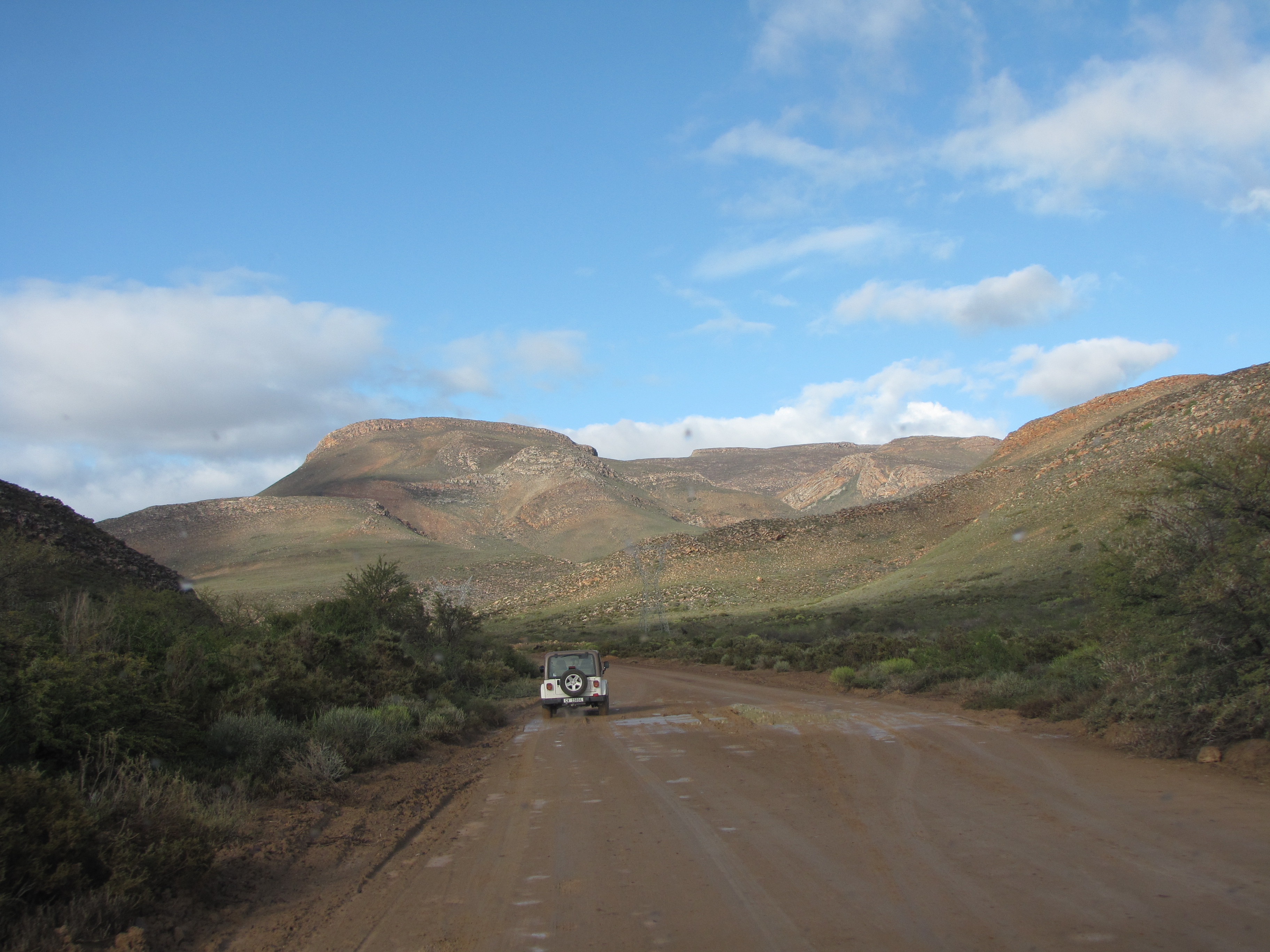
When my husband and I visited Gnoem Gnoemskloof in the Robertson area of South Africa a little over a week ago, we noticed some teeny tiny footprints, shown above with a rock hammer for scale. We’re not animal footprint experts, but we suspect that these tiny footprints belong to the duiker, a little antelope which is found throughout sub-saharan Africa. Most likely, these are footprints of the common duiker.
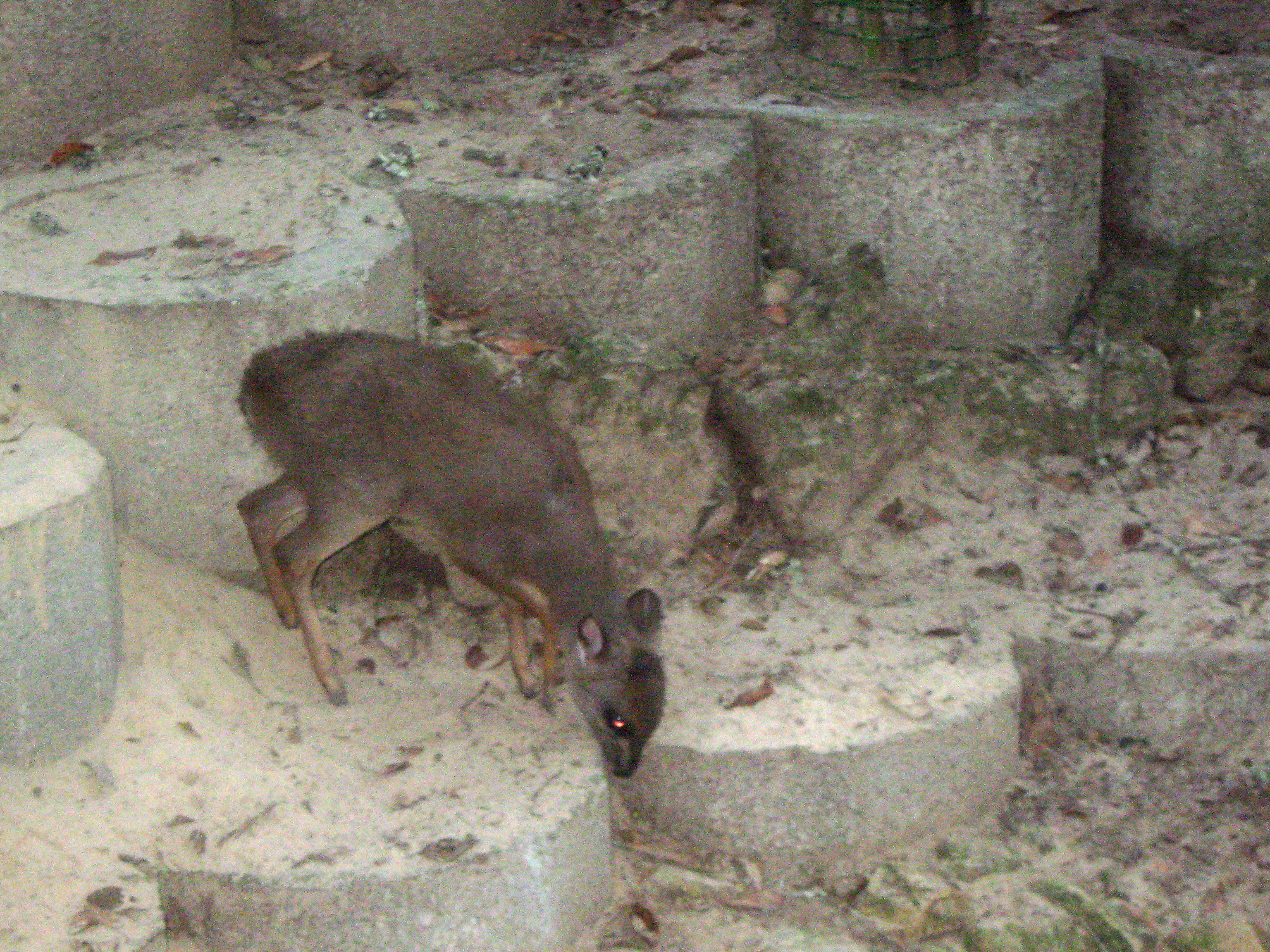
I have yet to take a good picture of a duiker in the wild (these little antelope move quickly!), but here are a few pictures of duiker in a small zoo in Knysna, South Africa:
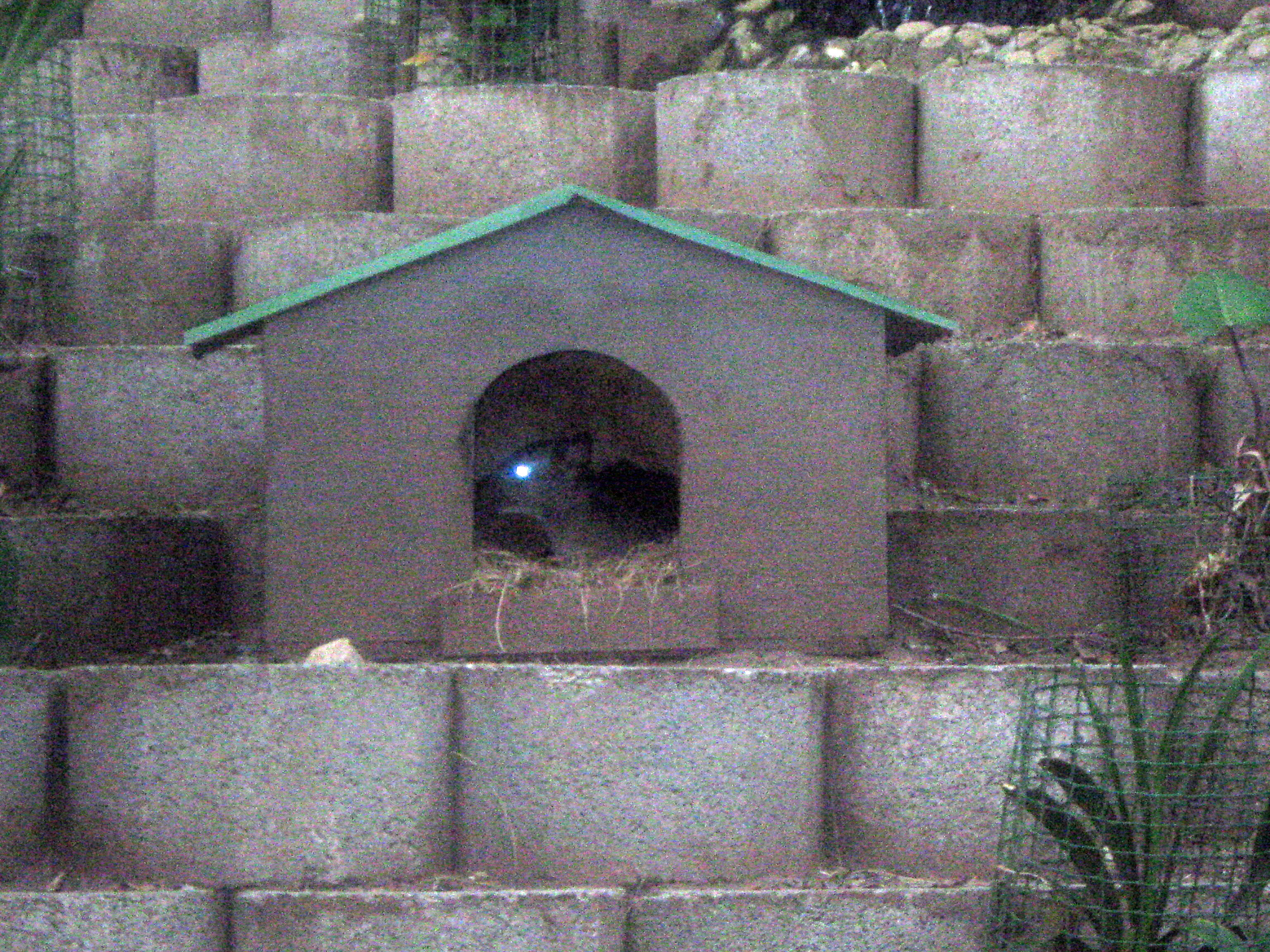
A little duiker taking a drink.Another little duiker.A little duiker house.All nestled in the little house.
Aren’t these little duiker cute? I especially love their little houses!
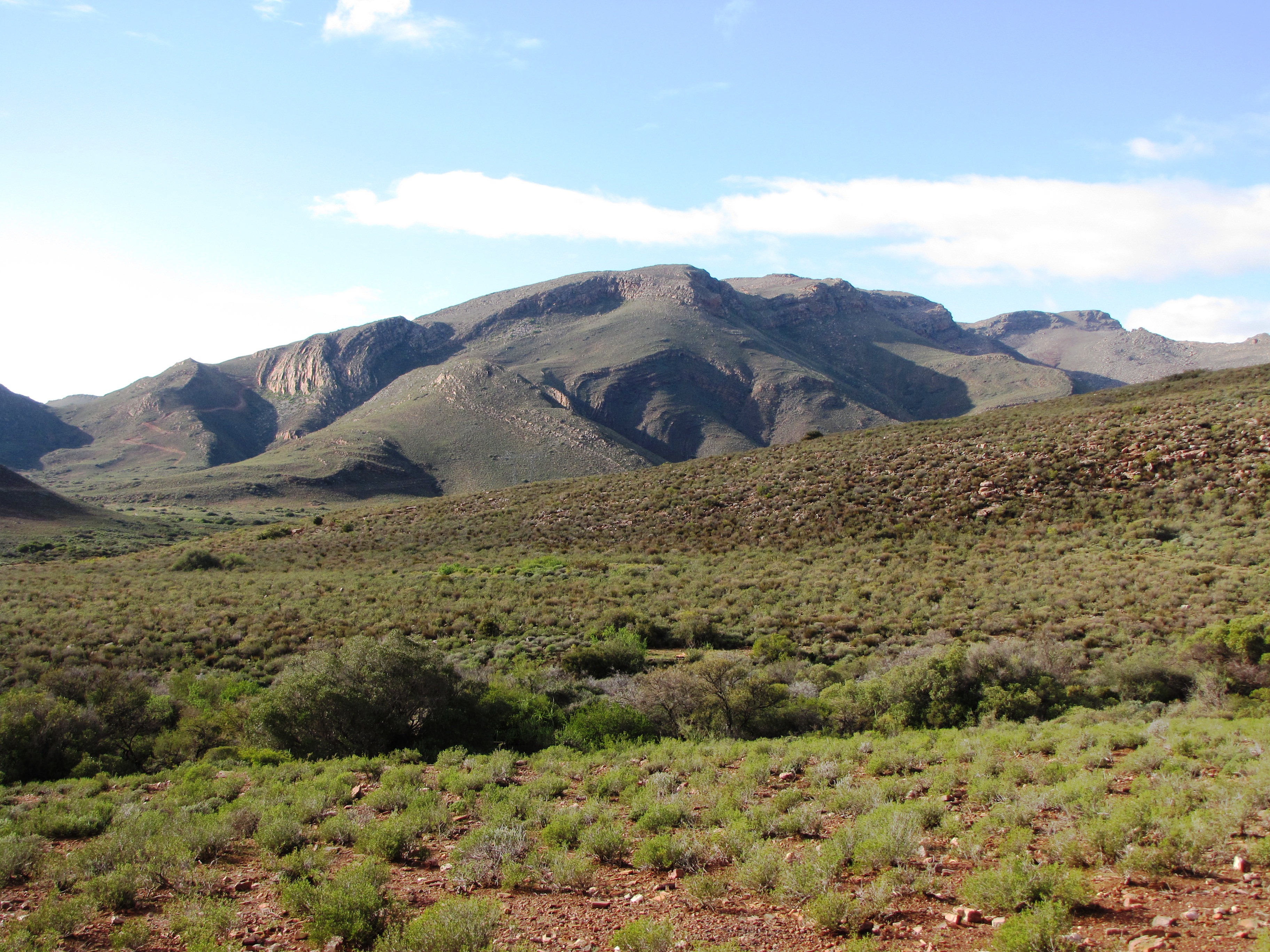
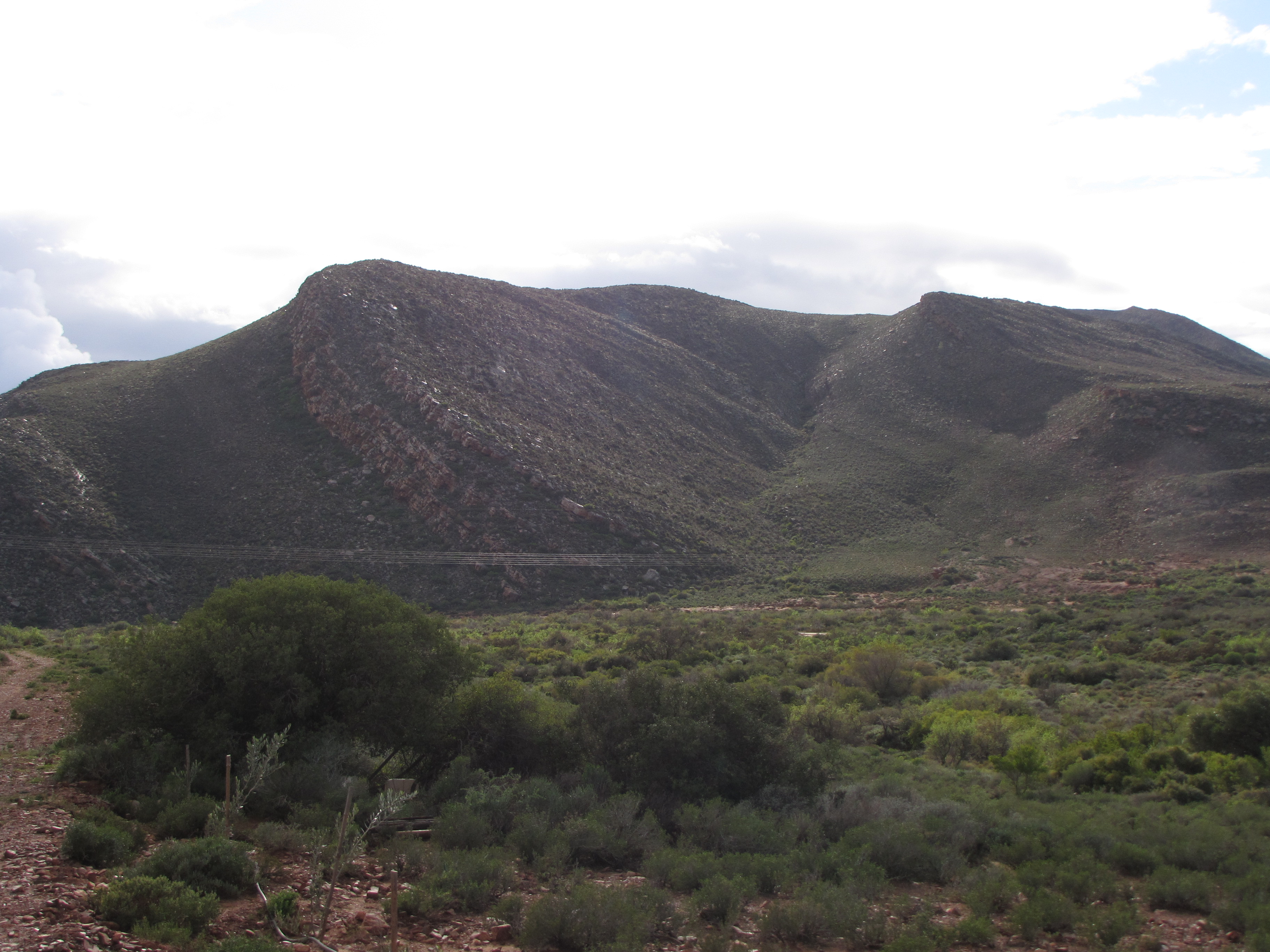
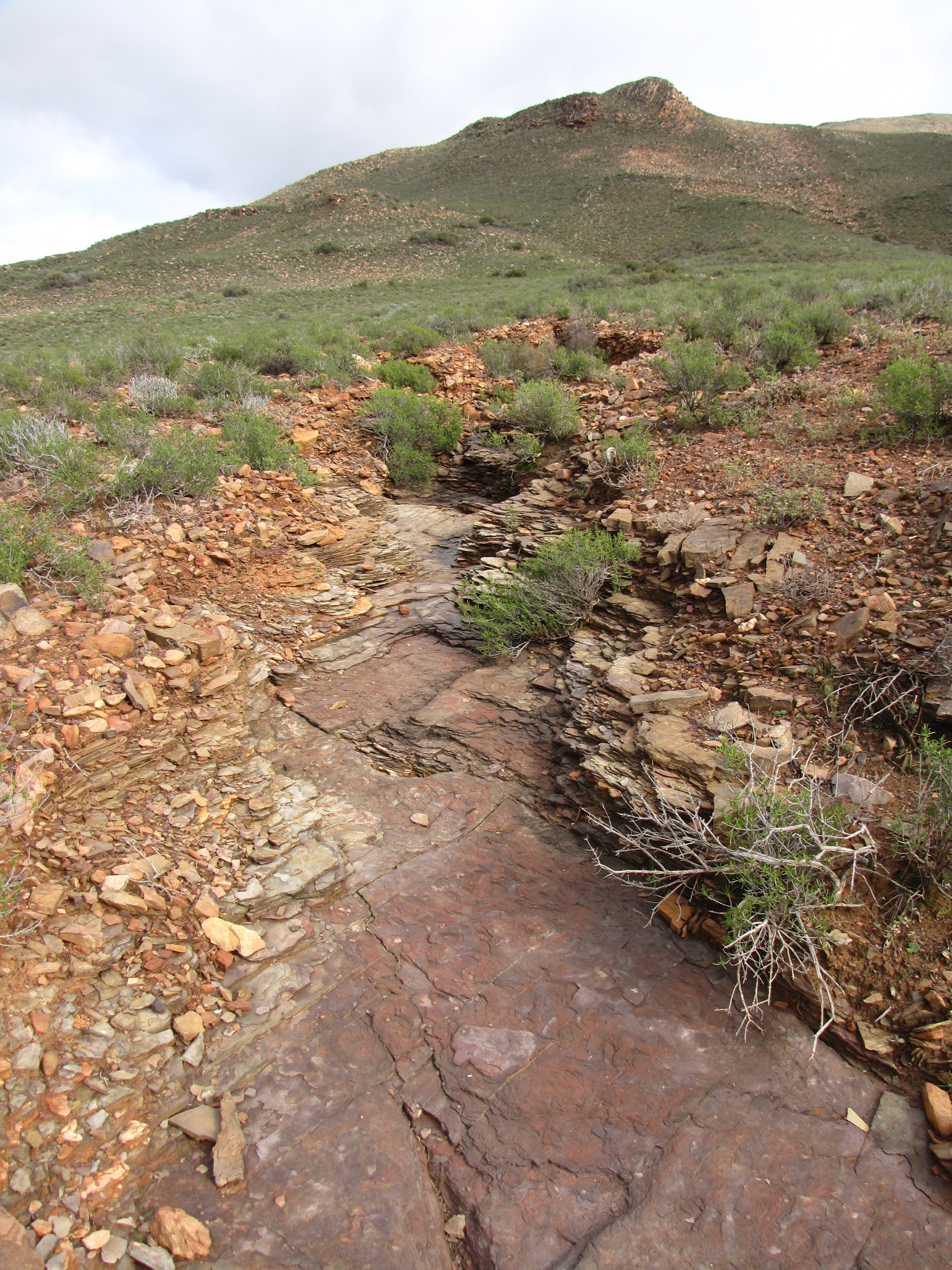
Last weekend my geologist husband Jackie and I visited the Robertson area of South Africa. On Saturday morning we visited a lovely little place called “Gnoem Gnoemskloof” (pronounced like “Noom Noomskloof”) at the invitation of Francie, a woman who emailed me to ask if I could tell her more about the rocks on her family’s property. Jackie and I spent a couple of hours with Francie and her family looking at the various rocks on the property, which is nestled in the Breede River Valley.
The Breede River Valley is located in the Cape Fold Belt, and there’s a great description of the Breede River Valley’s geology (focused on how the geology affects vinticulture, but still a great article) located here. Jackie and I still need to take a look at a local geologic map, but we think that the sandstones exposed at Gnoem Gnoemskloof are part of the Cape Supergroup, specifically the Witteberg Group.
All of the rocks exposed at Gnoem Gnoemskloof are sandstones. If these sandstones do belong to the Witteberg Group as we suspect, then they are early Ordovician (490-439 million years) to early Carboniferous (363-290 million years) in age. Originally deposited in a flat-lying, shallow marine environment, the sandstones were subsequently folded during the formation of the supercontinent Pangea (~300 million years ago). The folding is quite complex in places, leading to some beautiful scenery in the Robertson area.
Some of the beautifully folded sandstones at Gnoem Gnoemskloof.Tilted and folded sandstones at Gnoem Gnoemskloof.Sandstones at Gnoem Gnoemskloof... next to the fantastic swimming hole!More sandstone terrain at Gnoem Gnoemskloof.
The sandstones exposed at Gnoem Gnoemskloof are fairly uniform. For the most part, they are comprised of pure quartz although in places they also contain a small amount of mica which makes them sparkly. One thing that surprised Francie and her family is the variety of colors found in the sandstone. The sandstone can be a white, slightly gray color (close to the original color of the sandstone) or a darker tan color or a rusty red color (caused by the oxidation of iron in the sandstone). The outside of the sandstone can also sometimes be dark black, probably due to surface weathering / precipitation of material similar to desert varnish.
Before Jackie and I visited, Francie and her family thought that perhaps the different colored rocks were different types of rocks. Jackie and I explained that all the rocks were the same type of rock: sandstone. Originally, most of the sandstones would have been similar in color (a white/gray color). However, post-depositional oxidation/reduction processes and weathering processes have changed the original color of many of the sandstones. Some of the sandstones also contain quartz veins, which formed when hot fluids circulated through the sandstones and re-precipitated some of the original quartz grains as quartz veins. Some sandstones contain dark black patches or nodules which are iron-rich concretions also formed during secondary alteration.
Here are some examples of the different colors found in the sandstones at Gnoem Gnoemskloof:
Sandstones of many colors #1.Sandstones of many colors #2. You can see quartz veins (bright white) and iron-rich (black) bands in this picture.Sandstones of many colors #3. Here you can see a rusty red, oxidized weathering zone and a lighter-colored, less-weathered interior.Sandstones of many colors #4. The upper rock has black, iron-rich areas and the lower rock has a coarse (big crystals) quartz vein.Sandstones of many colors #5. This sandstone contains several fine (small crystals) quartz veins.Sandstones of many colors #6. This sandstone had a thin black coating on one side-- perhaps something similar to desert varnish?
I think the lesson to be learned from the above photos is to never identify a rock by its color– or at least not by its color alone. Many rocks, such as sandstones, come in several colors. Geologists must use several features– texture, morphology, grain size, hardness, reaction with acid, taste (yes, taste), and many others– to identify a rock. Color is one feature used to identify a rock– but only with caution since the colors of rocks and minerals often vary due to the presence of trace elements and can also be modified through weathering and reduction/oxidation processes.
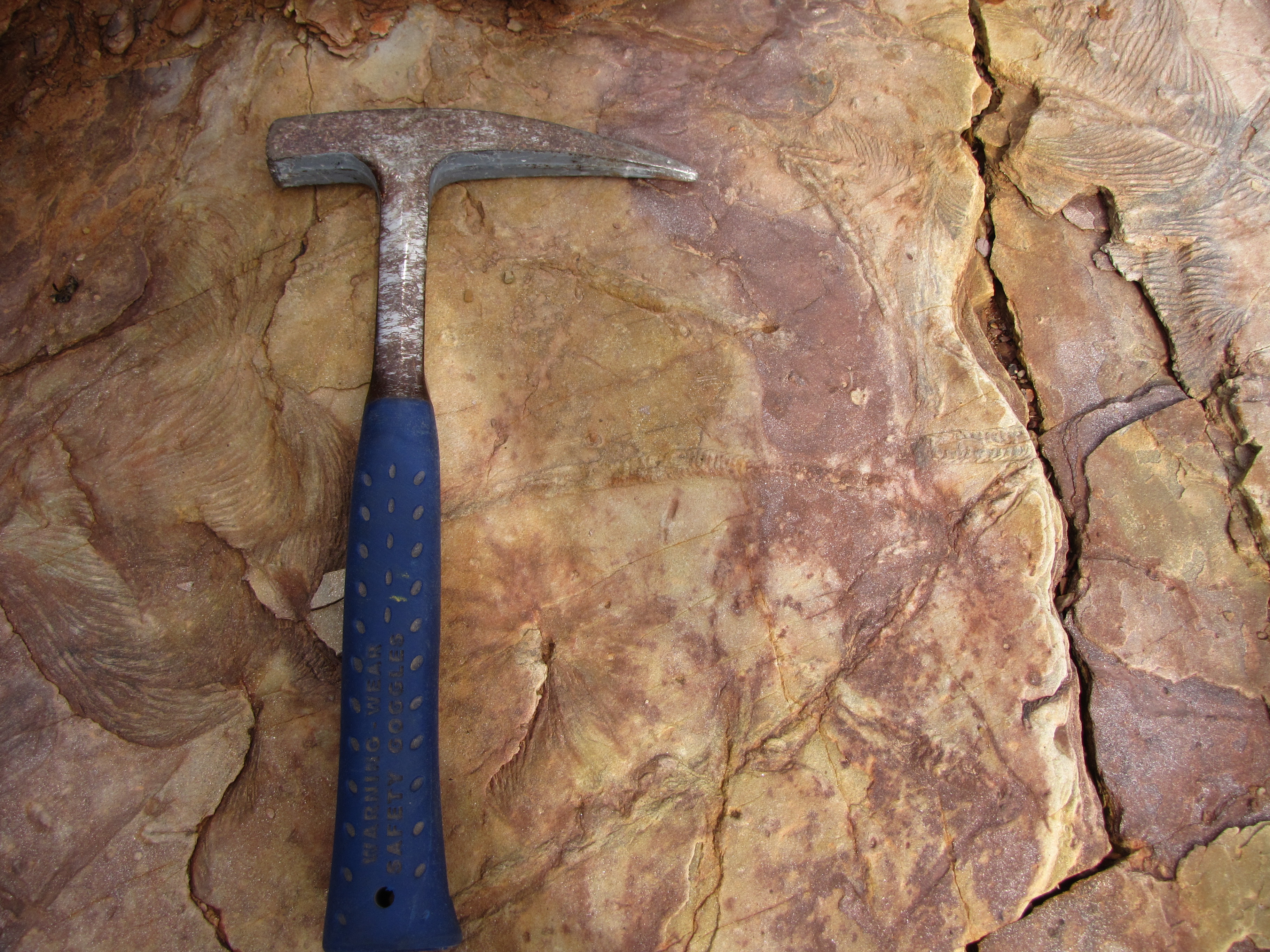
Although the sandstones at Gnoem Gnoemskloof come in many colors and have also been folded and uplifted, some of the original sandstone features such as ripple marks, cross-bedding, and even trace fossils have been preserved in places.
An exposure of sandstone. Along this exposure we observed ripple marks and trace fossils.Ripple marks, with hammer for scale.Cross-bedding, with my handsome husband Jackie for scale.Jackie explains cross-bedding to Francie's husband and the rest of us (out of the picture).A closer view of some cross-bedding. Look at how the red color (from iron oxidation) makes the cross bedding stand out! Neat, isn't it?Trace fossils, located about 2 meters away from the ripple marks shown above.
We found the trace fossils particularly interesting, but neither Jackie nor I are fossil experts. Therefore, I sent the fossil pictures through to fellow geoloblogger Tony Martin, an ichnologist who blogs at Life Traces of the Georgia Coast. Tony identified the trace fossils as, “Zoophycos ( ‘witchbroom’ pattern) and probably Scolicia (tube with meniscae).”
Here’s an annotated version of the picture above:
Trace fossils, with labels.
I asked Tony to write up a little something about the Zoophycos trace fossil, and here’s what he wrote:
Zoophycos is a beautiful, complex trace fossil with a wide geologic range, from the Lower Cambrian Period to the Holocene Epoch. It serves as the namesake of the Zoophycos ichnofacies, an assemblage of invertebrate trace fossils that mostly represent sediment feeding in deeper, quiet-water marine environments. But this trace fossil also occurs in shallow-water (shelf) deposits from the Paleozoic Era. I’ve encountered it in Ordovician shallow-marine rocks of Ohio-Kentucky and Carboniferous prodelta rocks of Kentucky. So for it to be in Ordovician prodelta rocks of South Africa is probably not too unusual, but might be worthy of further investigation by ichnologists who work specifically with Zoophycos. (Surprisingly, it’s more than one person!)
How was Zoophycos made, and what made it? That’s been the subject of lots of discussion among ichnologists, but everyone agrees that it is a systematic feeding trace, in which its maker repeatedly probed into the sediment and shifted its position each time, making “lobes.” These lobes then overlap and spiral in one direction or another, making what some researchers have described as a “Chinese hat” arrangement. Because of its long geologic range, it obviously has not been made by a single species of animal, but rather reflects an identical behavior expressed by many species over the past 500+ million years. These trace fossils were most likely made by a marine worm, and the best candidates so far are sipunculids, also known as peanut worms.
Thanks for the information, Tony! Fascinating! If you’re ever in South Africa, we’ll have to take you down to Gnoem Gnoemskloof to have a look at the trace fossils in person.
Here’s a few more pictures of the trace fossils:
Another view of the trace fossils.Yet another view of the trace fossils.And yet another view of the trace fossils.
Francie, thanks so much for inviting us out to Gnoem Gnoemskloof! We had a lovely time checking out your beautiful property and your rocks. I hope that Jackie and I were able to help you better understand the geology of your property. We’ll have to come back in the summertime to take a dip in your swimming hole!
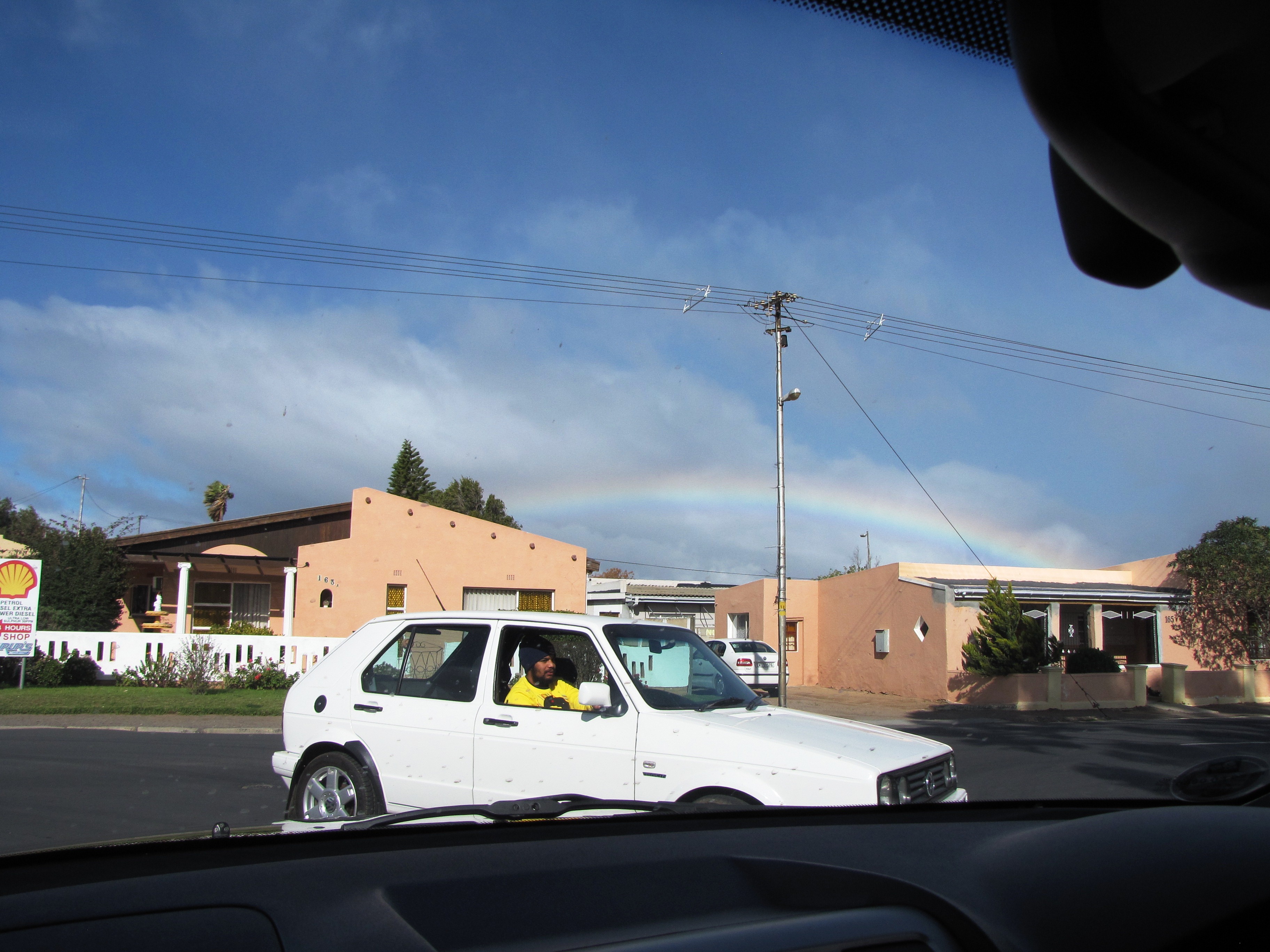
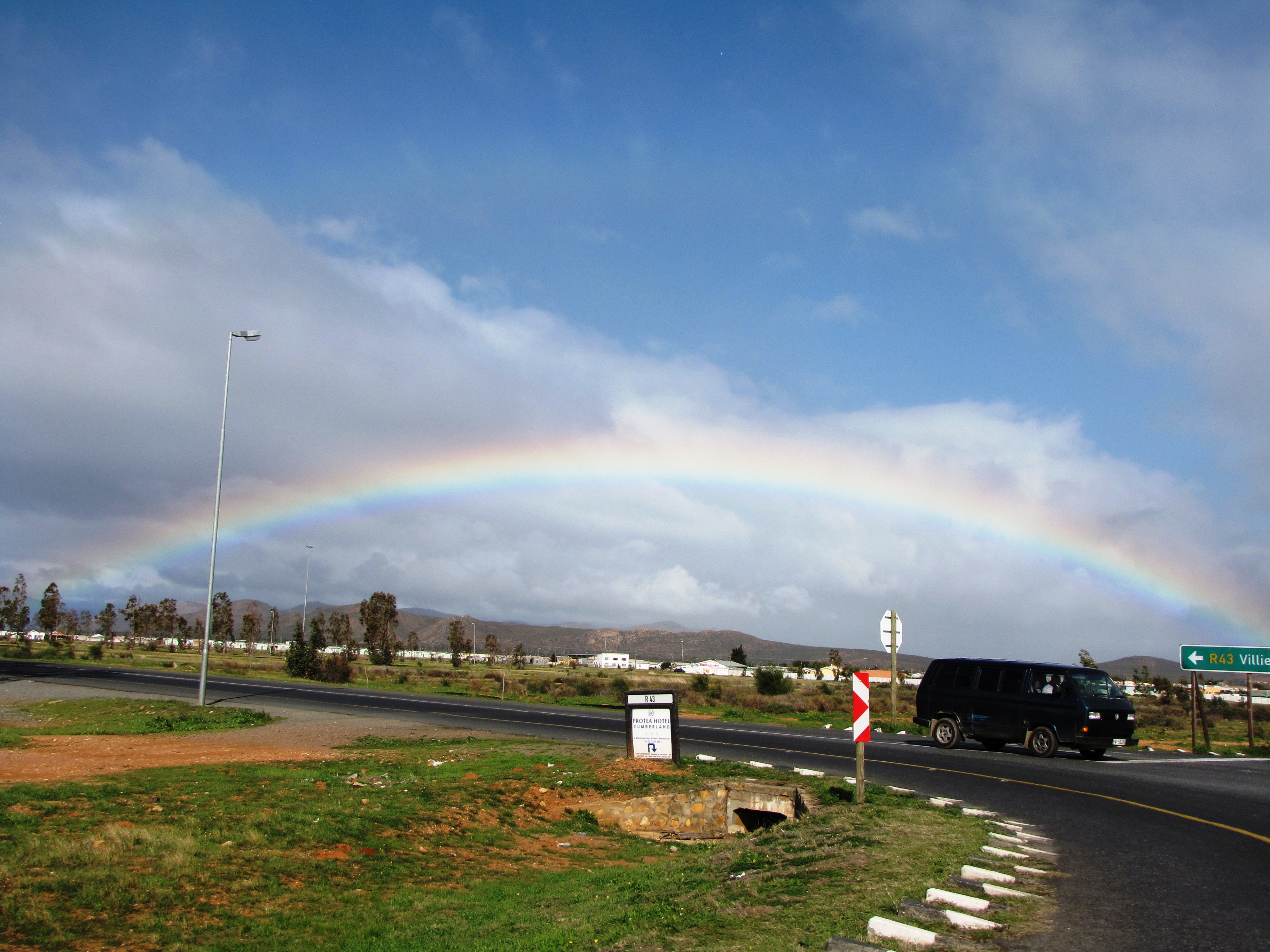
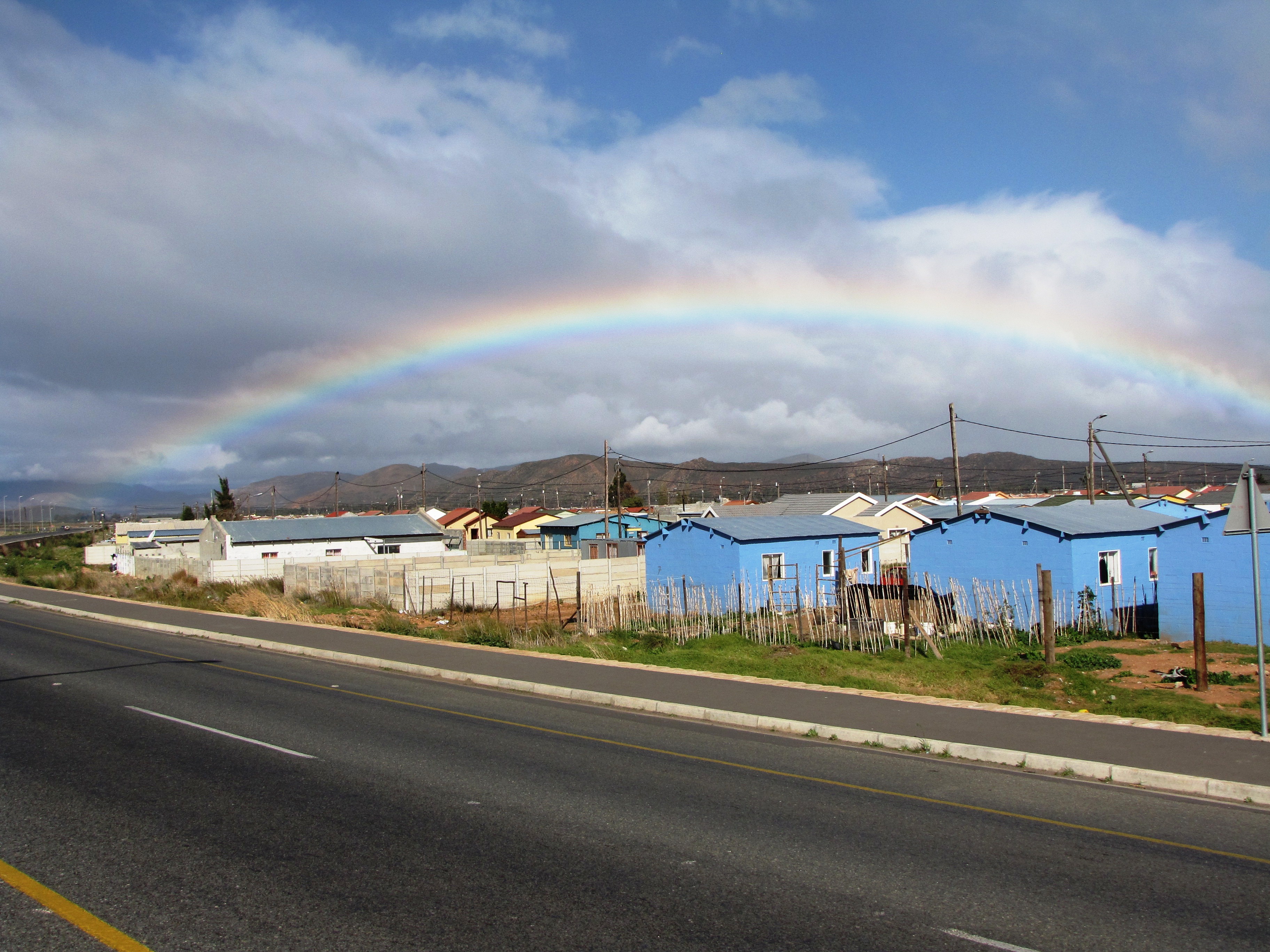
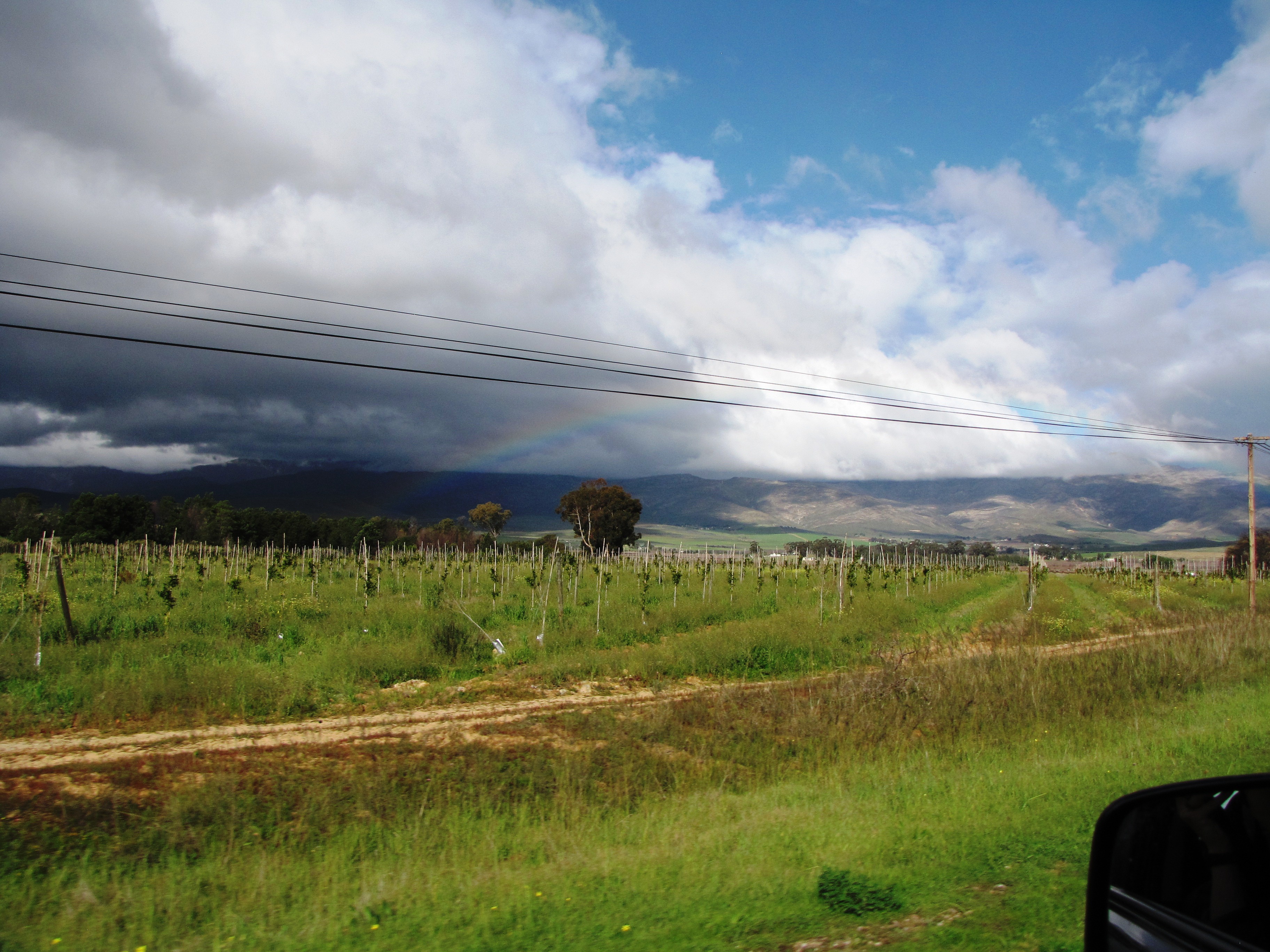
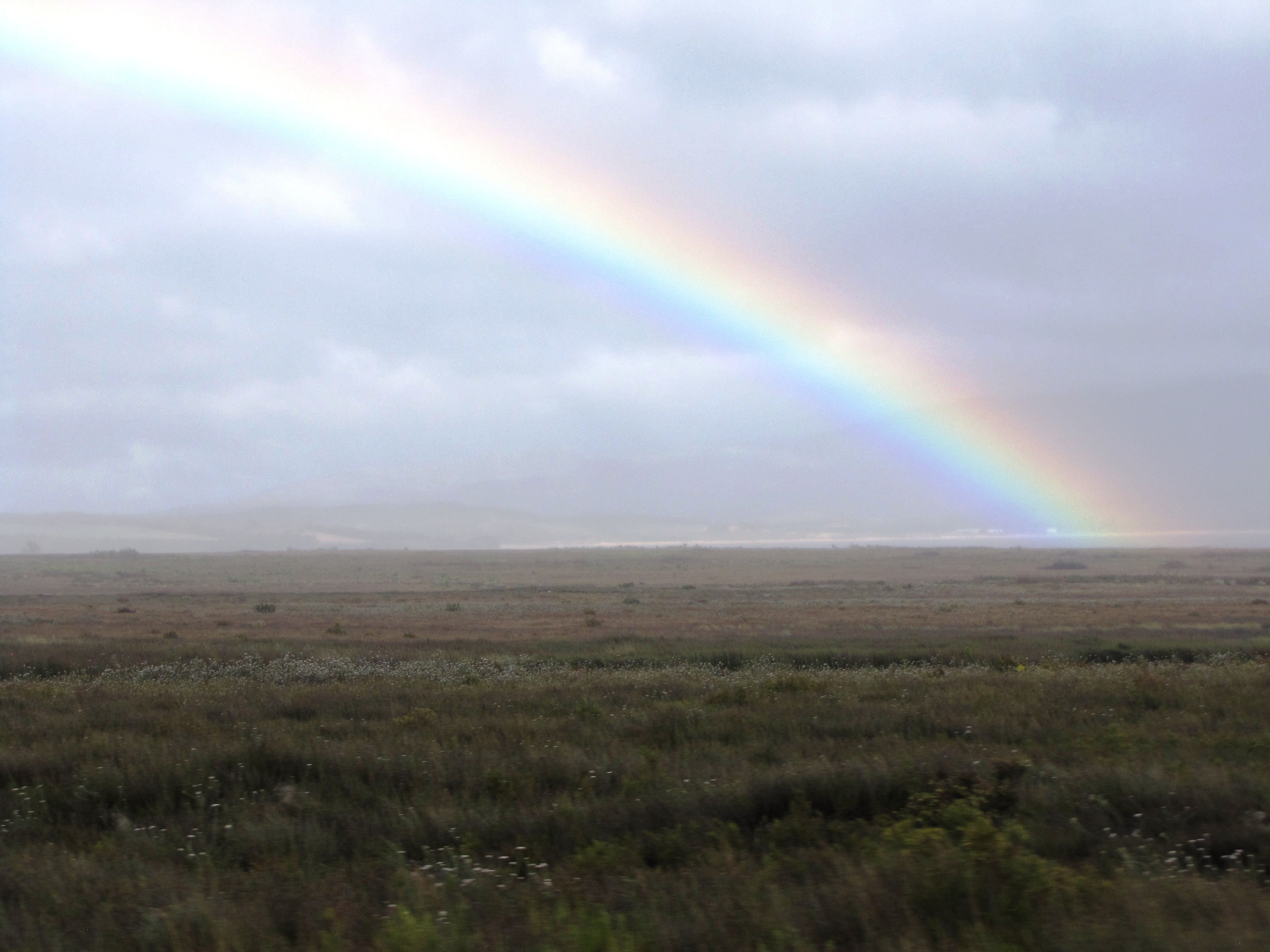
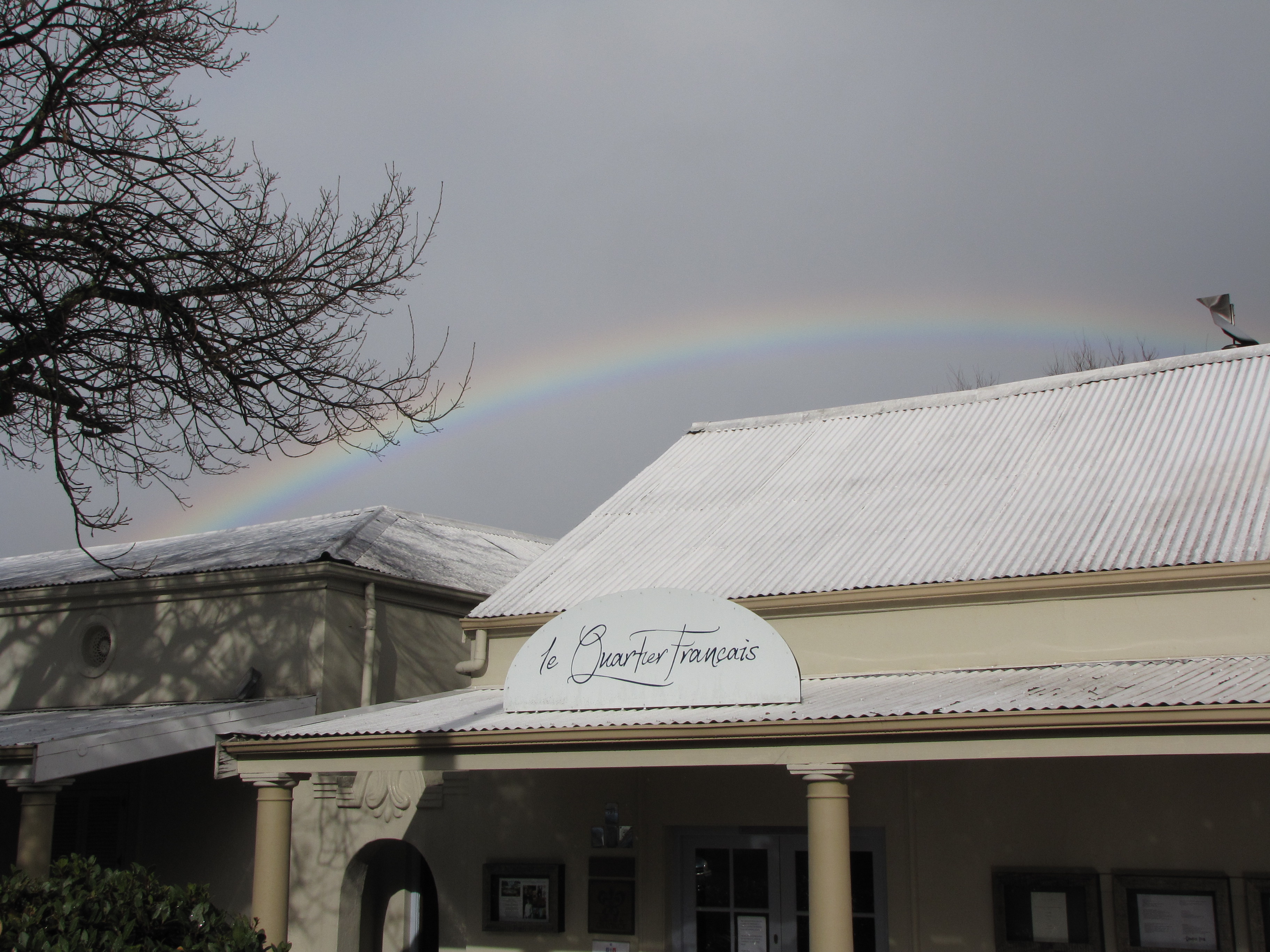
This past weekend my husband and I left our cosy flat in Cape Town, South Africa and spent three days in the winelands. We went down to the Robertson area, where we were married back in October 2011, and also the Franschhoek area (Franschhoek means “French Corner” in Afrikaans). Since it is currently winter here in the southern hemisphere, the weather was cold and rainy for much of the weekend. The sun did come out periodically, however, and when the sun came out, there were rainbows! We saw five or six rainbows over the course of the weekend, and I thought I’d share a few rainbow pictures with you here on Georneys. Enjoy!
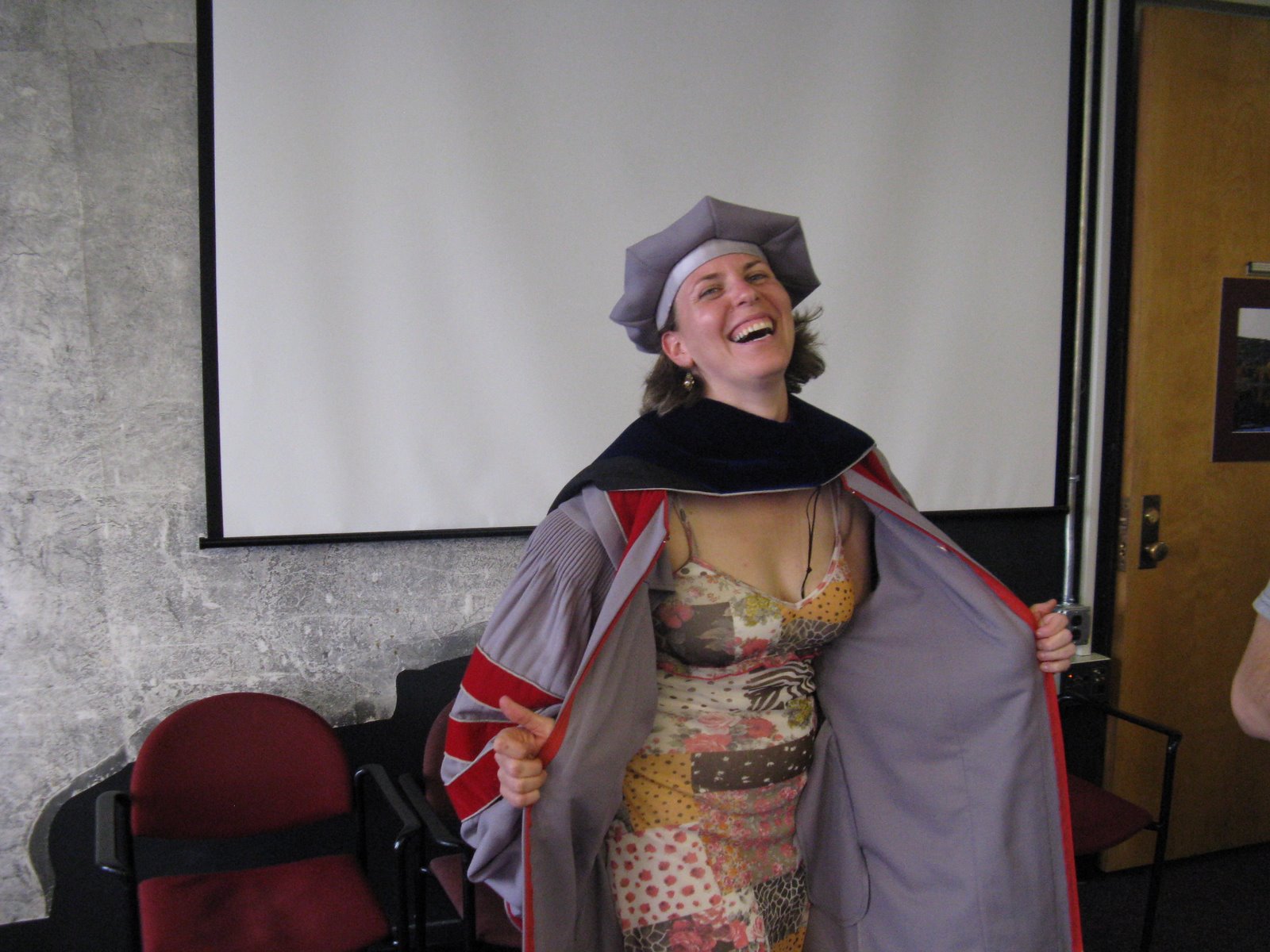
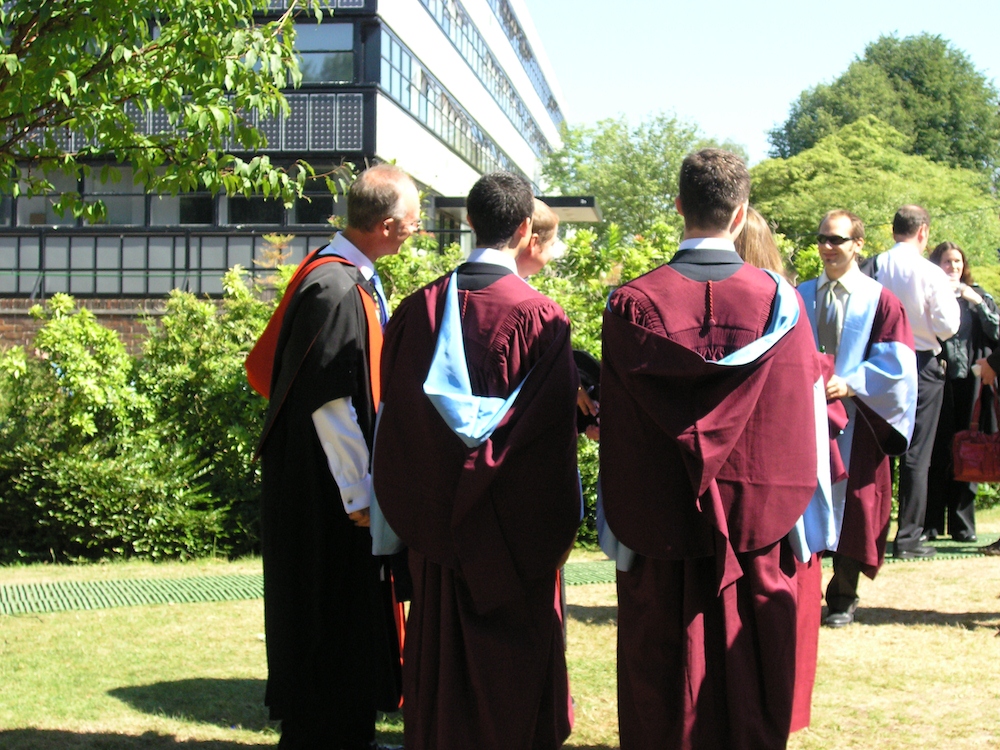
Several days ago, I shared some pictures of me in my PhD regalia, and I asked people to share with me pictures of academic dress so that I could host an academic dress parade here on Georneys.
For those of you who are not familiar, academic dress consists of fancy robes and hats and such that used to be worn daily or regularly by students and professors but which are now generally only worn for formal ceremonies such as graduations. Academic dress is very diverse. Countries, schools, and even departments have their own individual styles of academic dress, and the dress also varies to indicate the level of degree earned by an individual (PhDs and DScs usually wear doctoral hoods, for instance). Since academic dress is so diverse, I thought it would be fun to share some pictures here. I’m still looking for more pictures of academic dress (particularly some of the more elaborate dress styles with fur and lace and really crazy hats), so please continue to send pictures to georneysblog AT gmail. I can always host a second parade!
I think it’s wonderful to celebrate academic dress. In these days when students and professors are more likely to wear jeans than a tie, I find the academic dress a fascinating throwback to times when dress was much more elaborate. Today, academic dress looks delightfully ridiculous… as if all the students and professors are dressed up for a Harry Potter movie, perhaps.
I recently attended the Massachusetts Institute of Technology graduation ceremony (I received my PhD in Marine Geology), and the graduation speaker this year was an MIT alum named Salman Khan.During his speech, Khan compared MIT to Hogwarts:
As long as I could remember, to anyone who would listen to me, I’ve told people that MIT is the closest thing on this planet Earth to Hogwarts, to Harry Potter’s wizarding school. That the – the ideas and research and the science that percolate behind these walls — that’s the closest thing to magic in the real world, and frankly, to people outside this campus it looks like magic. The faculty we have these are the leading wizards of our time, the Dumbledores and McGonagalls (I guess, President Hockfield, you would be McGonagall). The halls here they have secret passages and tunnels, and around every corner there are strange and bizarre magical objects and creatures, some of whom may finish their thesis this decade. Maybe a few in the audience.
I’d argue that Khan’s remarks apply not only to MIT but also to many other research universities. While a bit ridiculous, perhaps Harry Potter style robes are appropriate attire for the “leading wizards of our time.”
I really like my tassled hat!My doctoral regalia from the back.
I describe the dress as well as my doctoral hooding and graduation ceremonies in detail in this post.
In similar attire, here is my friend Einat Lev, who graduated with a PhD from the Earth and Planetary Sciences Department at MIT:
Einat, showing off her doctoral hood.
You’ll notice that Einat’s hood has red and gray colors (MIT’s school colors) while my hood has red, gray, and blue colors. The extra blue is to represent the joint program with WHOI. Here’s another photo of Einat, eager to remove the very hot robes!
The MIT PhD robes are rather warm for June weather in Cambridge!
Here is Jenny Holden, decked out in her undergraduate and PhD academic dress:
Jenny in her undergraduate robes.Jenny in her stylish PhD regalia.Jenny at her PhD graduation.
Jenny provided some detailed information about her academic dress and graduation ceremonies:
I got my undergrad and PhD from the University of London but different colleges (SOAS and King’s). I chose to have a University of London PhD and academic dress over the King’s robes as although the latter were designed by Vivienne Westwood— they don’t have a detachable hood, which you can wear when singing in certain church choirs and preaching in some places (an option I may want to take up). There are nine pages describing University of London academic dress more interesting pictures.
The gowns are fairly heavy and warm (good in Winter not so much in July), but my supervisor’s (who got his PhD at Cornell) seemed warmer and velvet like!
I hired all mine but can buy the hood at a later date if I wish. We don’t have any robing ceremony, you are dressed by the gown hire people and don’t wear hats [see hat picture above] for ceremonies.
My PhD ceremony in July last year was with undergraduates so we had our degree titles and names read out as we walked across the stage as opposed to just our names (which undergrads get). We had
a couple of honorary doctorates awarded at my ceremony including Terry Pratchett!
My undergrad ceremony is memorable as I graduated from the School of Oriental and African Studies, so the music before, during and after reflected this (Shone funeral music, Sephardic singing, Chinese strings and a Japanese Buddhist nose flute where the player wears a basket over their head!), after 3 years at SOAS the graduands are used to it but our parents not so much.
All undergrads in the UK have black gowns, with the colours on the hood denoting different subjects in groupings such as Science, Arts, LLB (or law) etc. The Masters gowns have different colour ribbons but are still black. In Scotland (where I work now) the PhD students where a different kind of cap called the John Knox cap.
I have to say the most striking PhD gown was worn in the academic procession for my PhD and we think it came from a Scandinavian university and looked like a knight’s outfit.
Note: If you know of anyone who owns Scandanavian knight academic dress, please tell them to email me a picture for our next dress parade!
Moving along, here are some pictures of my fellow geoblogger Chris Rowan in his academic dress during his PhD graduation from the University of Southampton in 2007:
Chris in his doctoral robes and with his diploma. He looks very happy in this picture!The back of the Southampton doctoral regalia.Chris with his PhD supervisor Andy Roberts.
Here’s a picture of Tannis McCartney, another fellow geoblogger, in her MSc robes for her recent graduation from the Department of Geoscience at the University of Calgary:
Anna in her undergraduate academic dress... posing with an interesting sculpture!Anna in her MSc academic dress.A sea of students in academic dress.
Anna wrote a little explanation of her academic dress:
I have two photos for you! the first is my undergrad and second is my masters!
WWU: I got a BS in Geology and as part of the College of Sciences and Technologies we had a yellow tassel. Just the tassel and the black rope, that was it.
UAF: I got a MS in Geophysics and for this one the black gown had different sleeves for the masters candidates (I contemplated putting a book in one to read….) and I think everyone had the same tassels in the schools colors. The cape thing was colored for colleges and mine was yellow for College of Natural Science and Mathematics.
You can also see that I got very pale living in Alaska! 🙂 I am exited to see all the photos! Oh and I am sneaking in a photo of me against a see of other grads! It’s just too fun!
Here are some pictures of my high school friend Taylor in academic dress during her graduation from the University of Arizona with an MSc degree in library science:
Receiving her diploma! This picture shows a nice view of the hood.A view of Taylor's academic dress from the front.
Here’s a picture of Aimee, another high school friend of mine, in her doctoral regalia. Aimee is a real medical doctor! She recently obtained her degree in medicine from the University of Washington:
My friend Aimee is on the right in this picture. Looking good, Aimee!
Moving along with the dress parade, here are pictures of Scott, another friend of mine. These pictures show Scott graduating with his degrees in BSEE (Bachelor of Science in Electrical Engineering) and MSEE (Master of Science in Electrical Engineering) from Tufts University. These pictures were taken back in the 1980s.
Scott at his BSEE graduation.Scott at his MSEE graduation.
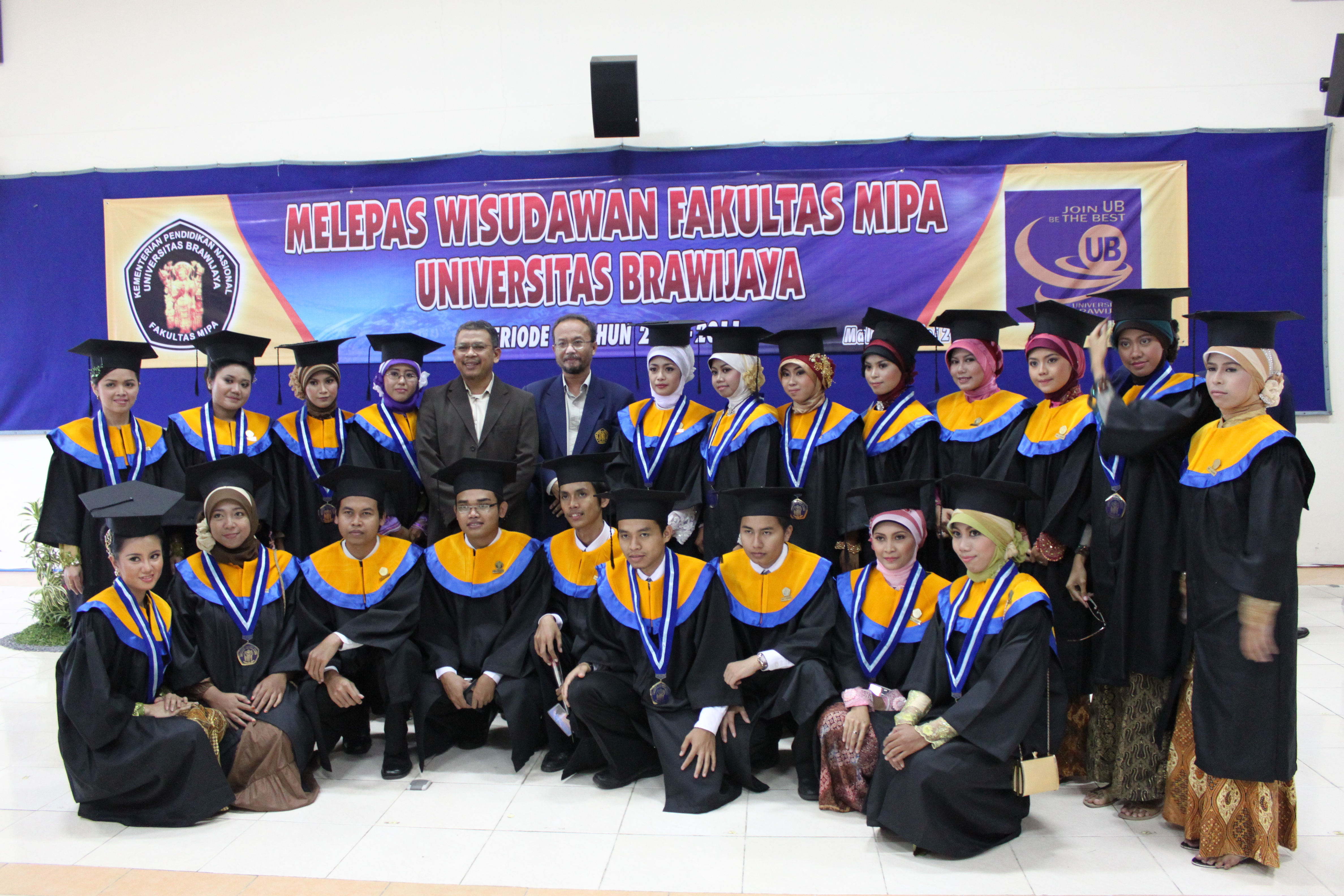
Last, but definitely not least, here are some pictures of Cholisina in her academic dress for her graduation from Brawijaya University in East Java, Indonesia:
Cholisina in her academic dress with her diploma. That's a great hat, Cholisina!A view of the Brawijaya University academic dress, with some helpful annotations by Cholisina.Cholisina with other graduating students in her department.
Cholisina wrote some explanation of the academic dress at Brawijaya (note: I’ve corrected the English very slightly):
I’ve attached some phothos of my graduation day.
Actually, we have little bit different in toga’s [robe’s] collar to determine whre he/she graduate from. If me, because I gradute from Faculty of Mathematics and Natural Sciences, it will be blue colour in my toga’s collar (the other that I remember is Green for graduate from Medical Faculty and red for gradute from Law Faculty).
If he/she graduate in Undergraduate level, it will be square shape in the back, but for master and PhD have triangle shape one.
That’s all the pictures I have for this academic dress parade! Thanks to everyone who sent me pictures. Please let me know if I’ve forgotten to include any pictures or if you have additional pictures you’d like to share. Again, I’d be happy to host a second academic dress parade in the future!
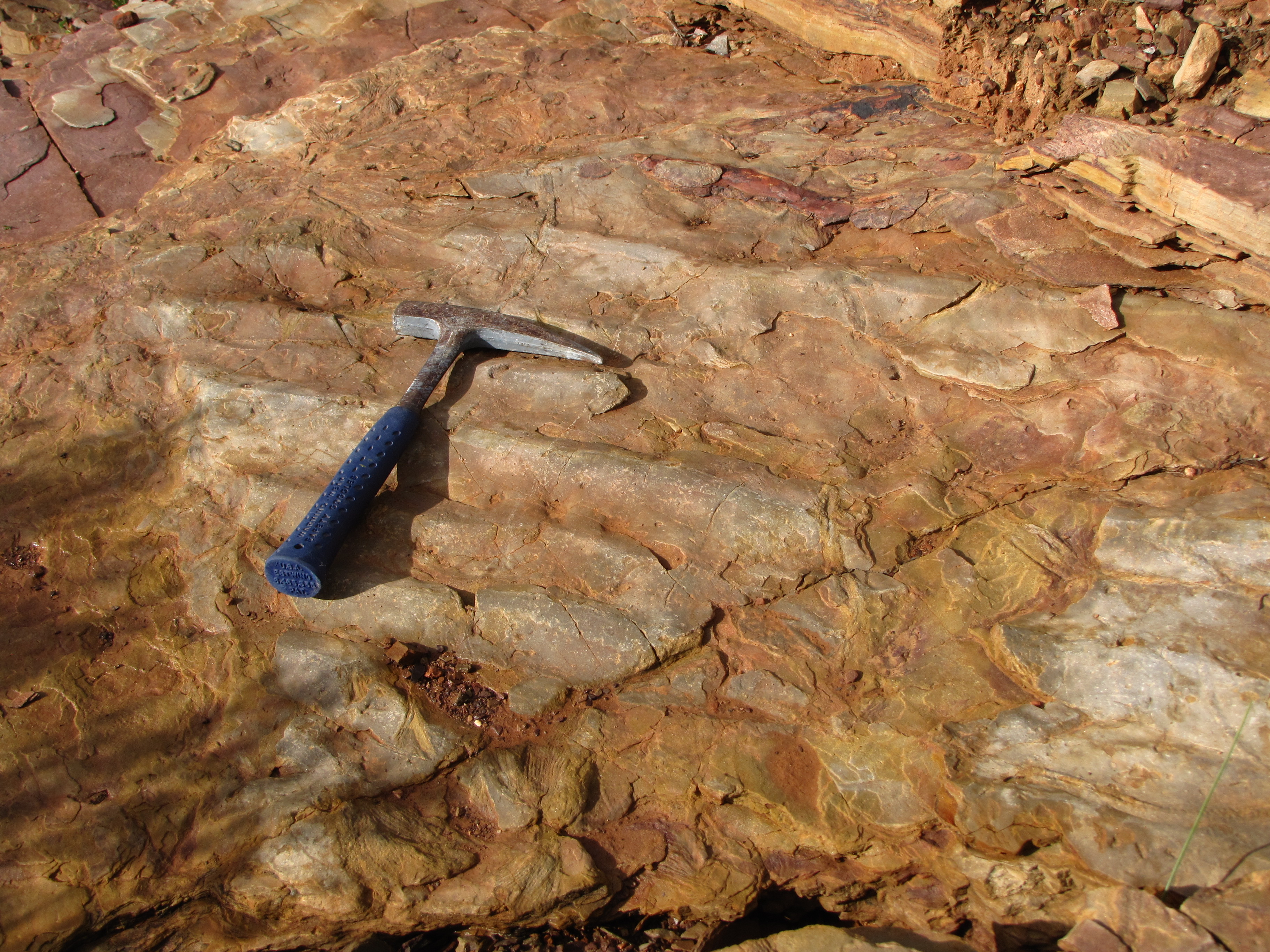
This past Saturday my husband and I visited the Robertson area, which is about an hour and a half drive from Cape Town, South Africa. We went to visit my husband’s grandmother and also to meet up with a very nice woman named Francie, who emailed me several months ago about some rocks on her property outside of Robertson. Francie asked if she could send me some rock pictures, and I told her I’d do better and come look at her rocks. Saturday morning we finally met up with Francie as well as her husband and daughter at their property, which is delightfully called “Gnoem Gnoemskloof” (pronounced like “Noom Noomskloof”). Gnoem Gnoemskloof is located in the Cape Fold Belt, so the rocks we saw on the property were all sandstones. There were some beautiful sandstones on the property. I’ll be sharing some more pictures and geologic information from our visit to Gnoem Gnoemskloof in the future. For today, I thought I would share this neat picture of ripple marks which have been preserved in the sandstone.
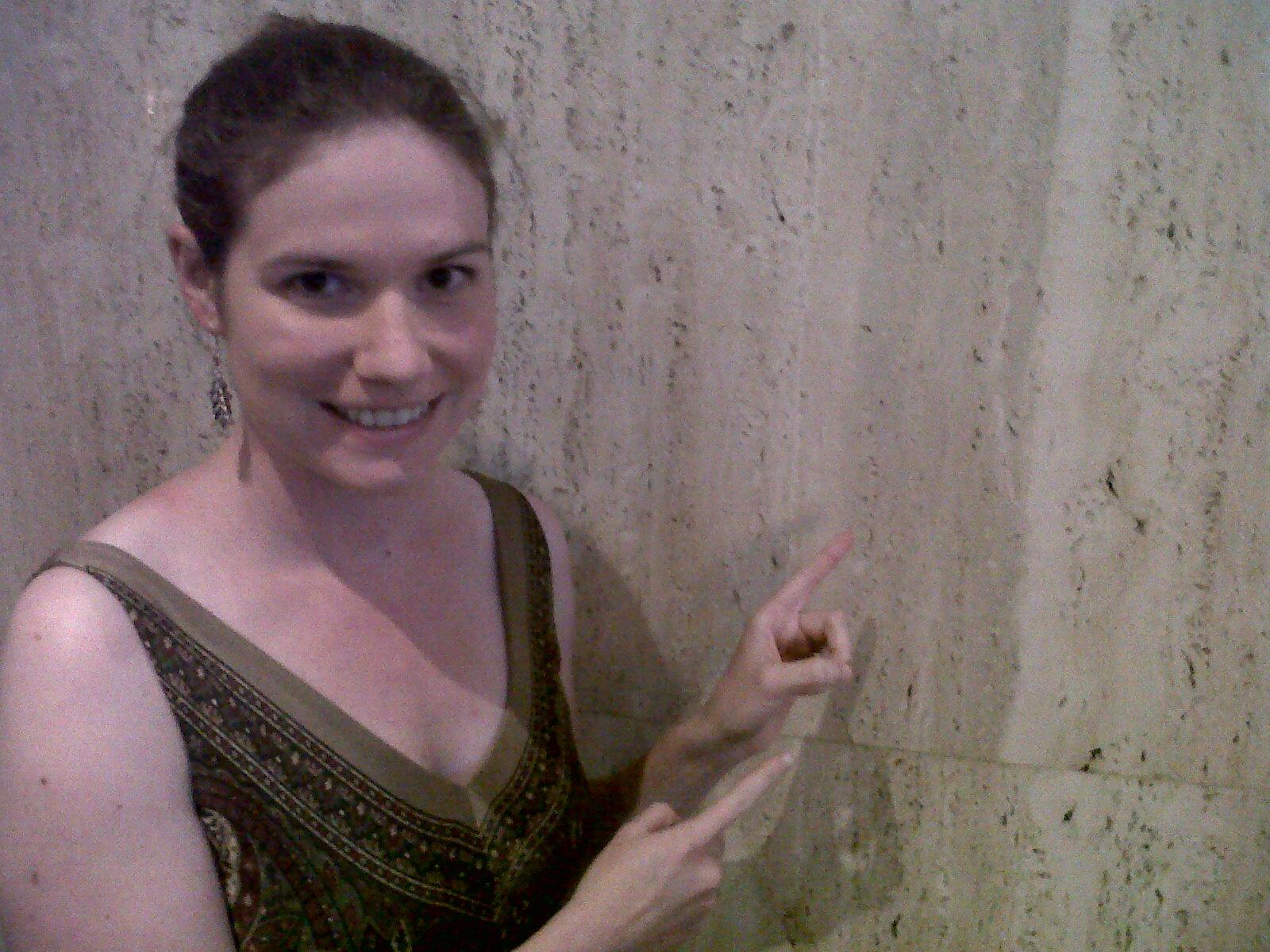
Travertine building stone at the Artscape Theatre in Cape Town, South Africa.
Several months ago, my husband and I went to the opera. Specifically, we went to see a South African production of “The Phantom of the Opera” at the Artscape Opera House in our home city of Cape Town. I had never visited the Opera House before, and I was impressed with the beautiful building. In this week’s geology picture, I am enthusiastically pointing out some travertine building stone in the Opera House. The opera was excellent– very enjoyable, particularly since I’d never seen a live production of “The Phantom of the Opera” before. I had the opera music stuck in my head for weeks!


















































 Georneys