A few days ago my fellow AGU blogger Callan Bentley reviewed the book 101 American Geo-Sites You’ve Gotta See and posted the list of the 101 Geo-Sites described in the book. Callan encouraged other geobloggers to copy and paste the list and highlight in bold the places they’ve visited. Here’s my list:
1. Wetumpka Crater, Alabama
2. Exit Glacier, Alaska
3. Antelope Canyon, Arizona 4. Meteor Crater, Arizona
5. Monument Valley, Arizona
6. Prairie Creek Pipe, Arkansas
7. Wallace Creek, California 8. Racetrack Playa, California
9. Devils Postpile, California
10. Rancho La Brea, California 11. El Capitan, California
12. Boulder Flatirons, Colorado
13. Interstate 70 Roadcut, Colorado
14. Florissant Fossil Beds, Colorado 15. Dinosaur Trackway, Connecticut
16. Wilmington Blue Rocks, Delaware
17. Devil’s Millhopper, Florida
18. Stone Mountain, Georgia
19. Kilauea Volcano, Hawaii
20. Borah Peak, Idaho
21. Menan Buttes, Idaho
22. Great Rift, Idaho
23. Valmeyer Anticline, Illinois
24. Hanging Rock Klint, Indiana
25. Fort Dodge Gypsum, Iowa
26. Monument Rocks, Kansas
27. Ohio Black Shale, Kentucky
28. Mammoth Cave, Kentucky
29. Four Corners Roadcut, Kentucky
30. Avery Island, Louisiana
31. Schoodic Point, Maine
32. Calvert Cliffs, Maryland
33. Purgatory Chasm, Massachusetts
34. Nonesuch Potholes, Michigan
35. Quincy Mine, Michigan
36. Grand River Ledges, Michigan
37. Sioux Quartzite, Minnesota
38. Thomson Dikes, Minnesota
39. Soudan Mine, Minnesota
40. Petrified Forest, Mississippi
41. Elephant Rocks, Missouri
42. Grassy Mountain Nonconformity, Missouri
43. Chief Mountain, Montana
44. Madison Slide, Montana
45. Butte Pluton, Montana
46. Quad Creek Quartzite, Montana
47. Ashfall Fossil Beds, Nebraska
48. Scotts Bluff, Nebraska
49. Crow Creek Marlstone, Nebraska
50. Sand Mountain, Nevada
51. Great Unconformity, Nevada 52. Flume Gorge, New Hampshire 53. Palisades Sill, New Jersey
54. White Sands, New Mexico
55. Carlsbad Caverns, New Mexico
56. Shiprock Peak, New Mexico
57. State Line Outcrop, New Mexico
58. American Falls, New York
59. Taconic Unconformity, New York
60. Gilboa Forest, New York
61. Pilot Mountain, North Carolina
62. South Killdeer Mountain, North Dakota
63. Hueston Woods, Ohio
64. Big Rock, Ohio
65. Kelleys Island, Ohio
66. Interstate 35 Roadcut, Oklahoma
67. Mount Mazama, Oregon
68. Lava River Cave, Oregon
69. Drake’s Folly, Pennsylvania
70. Hickory Run, Pennsylvania
71. Delaware Water Gap, Pennsylvania
72. Beavertail Point, Rhode Island
73. Crowburg Basin, South Carolina 74. Mount Rushmore, South Dakota
75. Mammoth Site, South Dakota 76. Pinnacles Overlook, South Dakota
77. Reelfoot Scarp, Tennessee
78. Enchanted Rock, Texas
79. Capitan Reef, Texas
80. Paluxy River Tracks, Texas
81. Upheaval Dome, Utah
82. Checkerboard Mesa, Utah
83. San Juan Goosenecks, Utah
84. Salina Canyon Unconformity, Utah
85. Bingham Stock, Utah
86. Whipstock Hill, Vermont
87. Great Falls, Virginia
88. Natural Bridge, Virginia
89. Millbrig Ashfall, Virginia
90. Catoctin Greenstone, Virginia
91. Mount St. Helens, Washington
92. Dry Falls, Washington
93. Seneca Rocks, West Virginia
94. Roche-A-Cri Mound, Wisconsin
95. Van Hise Rock, Wisconsin
96. Amnicon Falls, Wisconsin
97. Green River, Wyoming 98. Devils Tower, Wyoming 99. Fossil Butte, Wyoming 100. Steamboat Geyser, Wyoming 101. Specimen Ridge, Wyoming
I haven’t been to very many of these locations. I’d like to visit some more. But I’d also argue that this list is very far from complete– I’ve been to dozens (perhaps hundreds!) of other fantastic geo-sites in the US. There’s just so much fantastic geology in the US!
I think it would be really neat to come up with similar lists for other countries. Perhaps I’ll propose a similar list for my adopted home country of South Africa– there’s plenty of excellent geology here!
Almost three weeks ago I participated in the doctoral hooding and commencement ceremonies at the Massachusetts Institute of Technology (MIT). During these ceremonies, I received my doctoral hood and my diploma, which I earned for my PhD in Marine Geology, a degree which was jointly awarded by MIT and the Woods Hole Oceanographic Institution (WHOI). During the course of planning for and participating in these ceremonies, I found myself fascinated by the traditions associated with these ceremonies. I found myself particularly fascinated by the doctoral regalia and other forms of academic dress, which are the fancy robes worn by the faculty members and graduates in the ceremonies.
I think I found myself fascinated by the academic dress because the standard dress for students and professors– at least in the geology departments at MIT and WHOI– is fairly casual. Personally, I generally wore shorts, t-shirts, and sandals in the summertime and jeans, t-shirts, sweaters, and sneakers in the wintertime during my time at MIT and WHOI. This sort of clothing is more-or-less what most people in the departments wear. At both institutions, it was not uncommon for me to encounter people in exercise clothes or field clothes or old painting clothes, recently covered in dirt and mud from some rock or core sampling project. Occasionally, I wore fancier clothes. I wore slightly nicer attire (perhaps a skirt or just nicer shoes and a nicer shirt with jeans) for classroom presentations, and I wore full-out “dress attire” (a simple suit or a dress with a nice sweater or jacket) for my qualifying exams, committee meetings, presentations to the trustees, and for my PhD defense. Given the fairly casual attire worn around the geology (and many other) departments, I found it delightful and somewhat humorous to see my classmates and faculty members decked out in elaborate doctoral regalia, complete with fancy velvet and tassles and bright colors.
A few weeks ago, I thought I might do a little research on academic dress and then write up a post on such dress, perhaps with a focus on doctoral regalia. However, after a few minutes of google searching, I found myself overwhelmed with information about academic dress. Academic dress comes in all shapes and sizes and colors, and each country– even each institution– seems to have its own particular set of rules for academic dress. Thus, I think I’ll abandon my pursuit to write a detailed post about academic dress. Instead, I’ll just provide a little bit of basic information about the dress and then will focus this post on the doctoral regalia which I recently wore.
I’d also like to present a call for pictures. I think it would be great to compile a bunch of pictures of people in their academic dress, so if you have a photo of you in your dress, please email it to georneysblog AT gmail with a little bit of information about the dress (perhaps provide the name of the school and the degree and any information about what various parts of the attire might represent). I’ll compile the pictures, and we’ll have an academic dress parade here on Georneys. If you prefer, you’re welcome to post pictures of your academic dress on your own website or blog, and I can just link to your post.
I’ll start the academic dress parade with some pictures of my MIT /WHOI doctoral regalia and a description of the ceremonies in which I participated. MIT has a great webpage here which gives a little bit of history about academic dress in America and then describes the MIT academic dress. My academic dress journey started when I had to make a decision about whether I wanted to buy or rent the doctoral robes. Purchasing the doctoral robes from the official MIT store costs over $700. Renting the doctoral robes from the MIT store is still fairly expensive– about $170– although you are allowed to keep the fancy gray hat with the tassle. You also are allowed to keep your doctoral hood, which is presented to you at the hooding ceremony. Various knock-off MIT doctoral regalia can be purchased or rented for less money. A word of advice about that: DO NOT purchase or rent the knock-offs… or at least make sure you inspect the quality of the knock-offs prior to the ceremony. I saw some terrible looking knock-off robes during the hooding and commencement ceremonies. Some of the cheap knock-off robes started to fall apart during the ceremony– the stripes on the sleeves were actually peeling off in some cases. Although expensive, the official MIT gowns definitely look MUCH better than the knock-offs. Of course, for awhile I contemplated purchasing this $20 Harry Potter costume, which could probably pass as doctoral regalia… and could also be worn with a stylish wand, I suppose.
I contemplating renting verses buying for a few days and then decided to rent my doctoral regalia. While academic dress used to be worn daily (back in the 1700s and 1800s, anyway), these days academic dress is pretty much only worn at fancy ceremonies such as commencement. So, the only time that I might wear my fancy academic regalia in the future would be as a university faculty member participating in graduation and other ceremonies. Several months ago, I decided to leave academia and spend some time working in industry. One day, I may return to academia. However, I don’t see any need for my doctoral regalia in the near future, so I decided to rent the regalia.
I first donned my rented regalia on the morning of Thursday, June 7th. My husband Jackie and I woke up very early– about 5:30 am– so that we could drive from my parents’ house in New Hampshire to the Alewife T-station (subway station) in Boston. We parked the car at Alewife then took the T to the Alewife/Kendall stop, where we visited the MIT COOP to pick up my doctoral regalia. I was worried it might take a long time to pick up the regalia, but the process actually went fairly quickly. We soon headed across campus to the gym, where the doctoral hooding ceremony was going to be held.
As we were walking around outside the gym, a Chinese couple came up to us, and the man said to me, “You are very beautiful. I take a picture?” I was a bit flabbergasted, but I agreed. I ended up taking several pictures with the Chinese man and his wife, who told me (in very broken English) that they were tourists from China and were very excited to be visiting MIT. I’ve encountered many Chinese and other Asian tourists during my years at MIT. Often, the tour groups at MIT are full of Asian tourists. I guess my doctoral robes and I will be shown in some vacation picture slideshows over in China! Being asked to take pictures with the two Chinese tourists reminded me just how special– how beautiful, really– it was to be graduating from MIT. I am very lucky to have had the opportunity to study– and graduate from!– such a world-renowned institution.
Eventually, the Chinese tourists left us alone, and I went inside the gym to line-up. Jackie waited outside to meet my parents, who drove down from New Hampshire a little bit later. After some waiting and some processing, the soon-to-be-doctors made their way into the gym and sat down on the plastic chairs that were lined up. At least, most people sat down on plastic chairs. There were supposed to be 13 chairs in each row, so the ceremony staff members counted out 13 people before starting a new row. However, in the row where I sat there were only 12 chairs because one chair had been taken away to make room for a person in a wheelchair. As we were counted out, my classmates and I tried to protest when 13 people were directed to sit in 12 chairs, but our protests were swiftly dismissed by the stern staff member.
Before we knew it, the procession music had ended, and we were trying to figure out how to sit 13 people in 12 chairs. Fortunately, we were seated by degree, so most of the people sitting in my row were my fellow classmates in the MIT/WHOI Joint Program. Therefore, at least we knew the people to whom we were suddenly a bit too close for comfort. The plastic chairs placed out for the ceremony are not very comfortable to begin with, and they are definitely not comfortable when you are sitting on half of one chair and a quarter of another chair. We giggled and elbowed each other a bit, but otherwise we managed to make ourselves look reasonably presentable for the ceremony despite our 13-people-in-12-chairs situation. At one point, we attempted to steal a chair from a partly-empty row behind us. However, we noticed– just in time– that the chairs were tied together. I imagine we would have caused quite a ruckus had we pulled on the one chair and moved the entire row of chairs. In any case, we survived our seating arrangement, and I managed to enjoy the ceremony despite the uncomfortable seating.
The ceremony was fairly simple. There were a few speeches, and then the names of the 400+ doctoral graduates were read. After a person’s name was read, the person went onto the stage, where he or she received a doctoral hood. Each hood was placed over a student’s head by the chancellor, who was assisted by a representative from the student’s department. My hood was thus placed over my head by the chancellor and by Jim Yoder, who is the Dean of the MIT/WHOI Joint Program. I’ve known Jim for several years, and it was nice to have someone I know investing me with my doctoral hood. If you have any interest, you can watch a video of the hooding ceremony here. I receive my doctoral hood towards the end of the video. On that same website, there are also videos of the next day’s commencement ceremony.
Here’s a picture of me receiving my hood:
Receiving my doctoral hood. Yay!
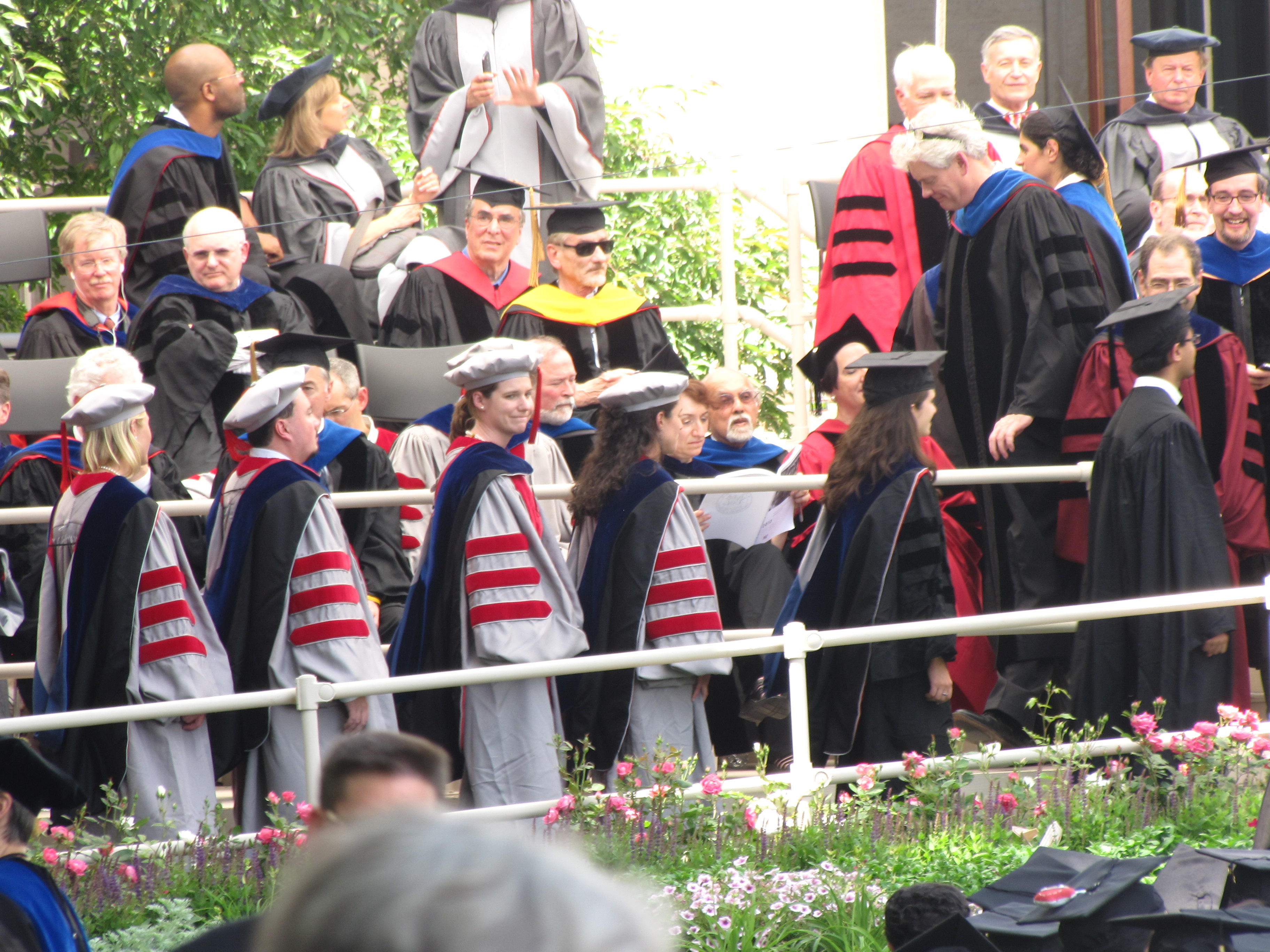
And here’s a view of the MIT/WHOI doctoral hoods from the back:
Soon-to-be MIT/WHOI graduates lined up, wearing their doctoral hoods. This picture was taken by my husband at commencement.
Doctoral hoods are somewhat funny garments. From what I can tell, doctoral hoods are not really designed to be worn at hoods. At least, I couldn’t figure out how to cover my head with my hood. Rather, doctoral hoods are worn on the back as a sort of decorative embellishment. The MIT doctoral hoods are black on the outside with a blue velvet strip for PhDs and a yellow velvet stripe for DScs. The inside of the hood is lined with the MIT school colors– red and gray. In addition, the hoods of MIT/WHOI doctors are lined with a stripe of “Old Glory” blue, which can be seen at the bottoms of the hoods in the above picture. The hoods contain a pocket which, as the chancellor explained during the hooding ceremony, “Is big enough for a book or perhaps a sandwich but is too small for an iPad.” Graduates were not permitted to carry purses and other bags for either the hooding or commencement ceremonies. The men generally wore pants with pockets and were able to store their wallets, keys, cell phones, etc. in their pants’ pockets. Most of the women, on the other hand, wore dresses or skirts underneath their robes and had difficulty finding places to store their things. Keys and wallets and such were stored in sleeves and blouses and even, in one case, underneath a hat. I know many women were grateful for their hood pocket for the commencement ceremony. Personally, I stored my Kindle, keys, wallet, and cell phone in my hood pocket for the commencement ceremony.
The commencement ceremony on Friday June 8th was held in Killian Court, which is a beautiful courtyard located across the street from the Charles River and adjacent to one of MIT’s classic domed buildings. Like the doctoral hooding ceremony, the commencement ceremony was fairly simple– a long, hot procession (they actually made us walk a lap around the MIT track!) followed by sitting in the courtyard and listening to a few speeches and then about two hours of name reading and diploma receiving. The day was fairly sunny and warm, and the graduates were sitting in the sun. Like many other graduates, I unbuttoned and loosened my doctoral robe, grateful that I was wearing a fairly cool sundress underneath. While name after name was called, I chatted with my classmates and read a book on my Kindle. Eventually, the time came for the MIT/WHOI graduates, and we lined up to approach the stage. My name was finally called, and I received my diploma from MIT president Susan Hockfield and WHOI president Susan Avery.
Here’s a picture of me receiving my diploma:
Receiving my diploma. Yay!
Here are a few more pictures from the doctoral hooding and commencement ceremonies:
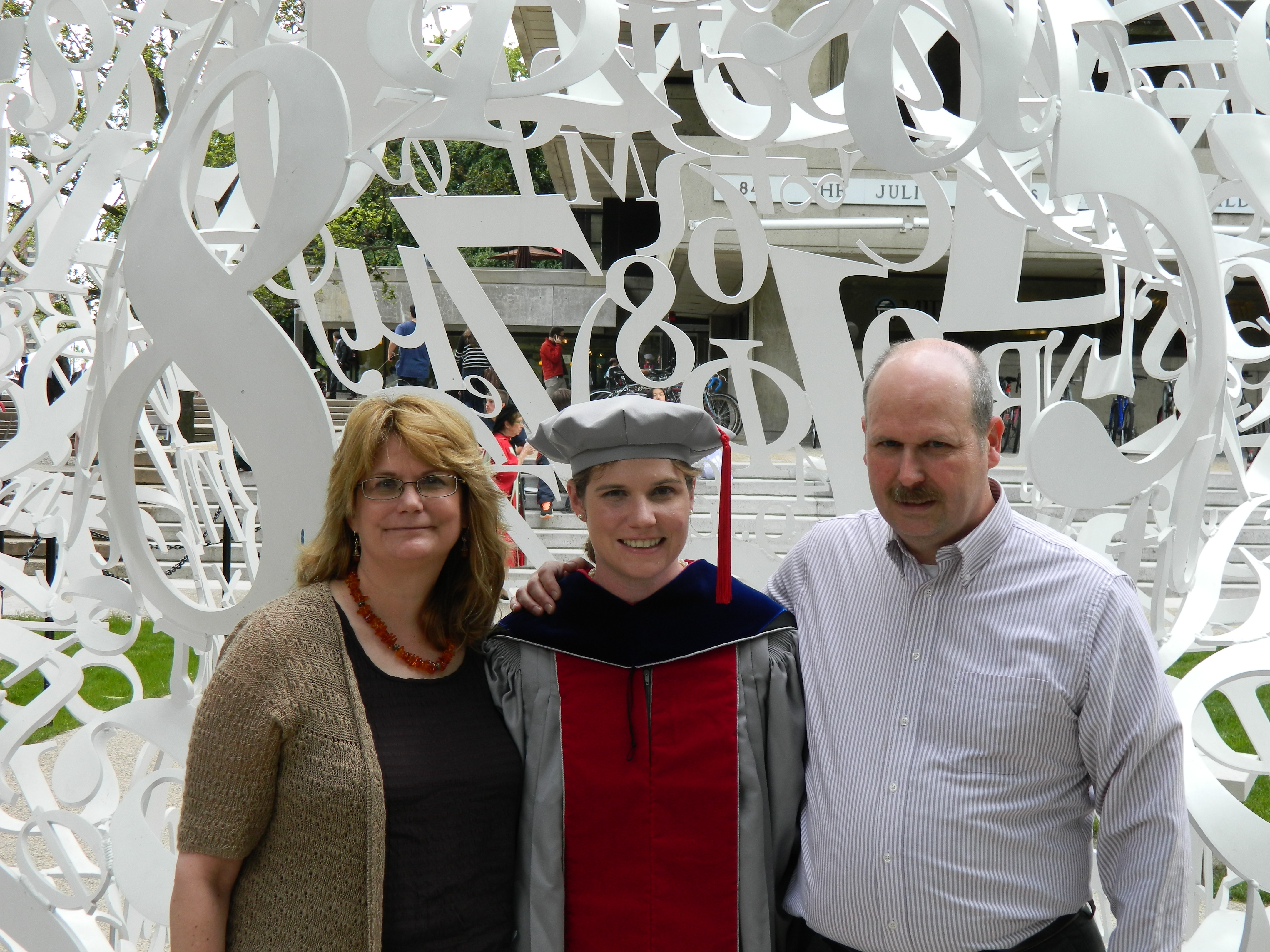
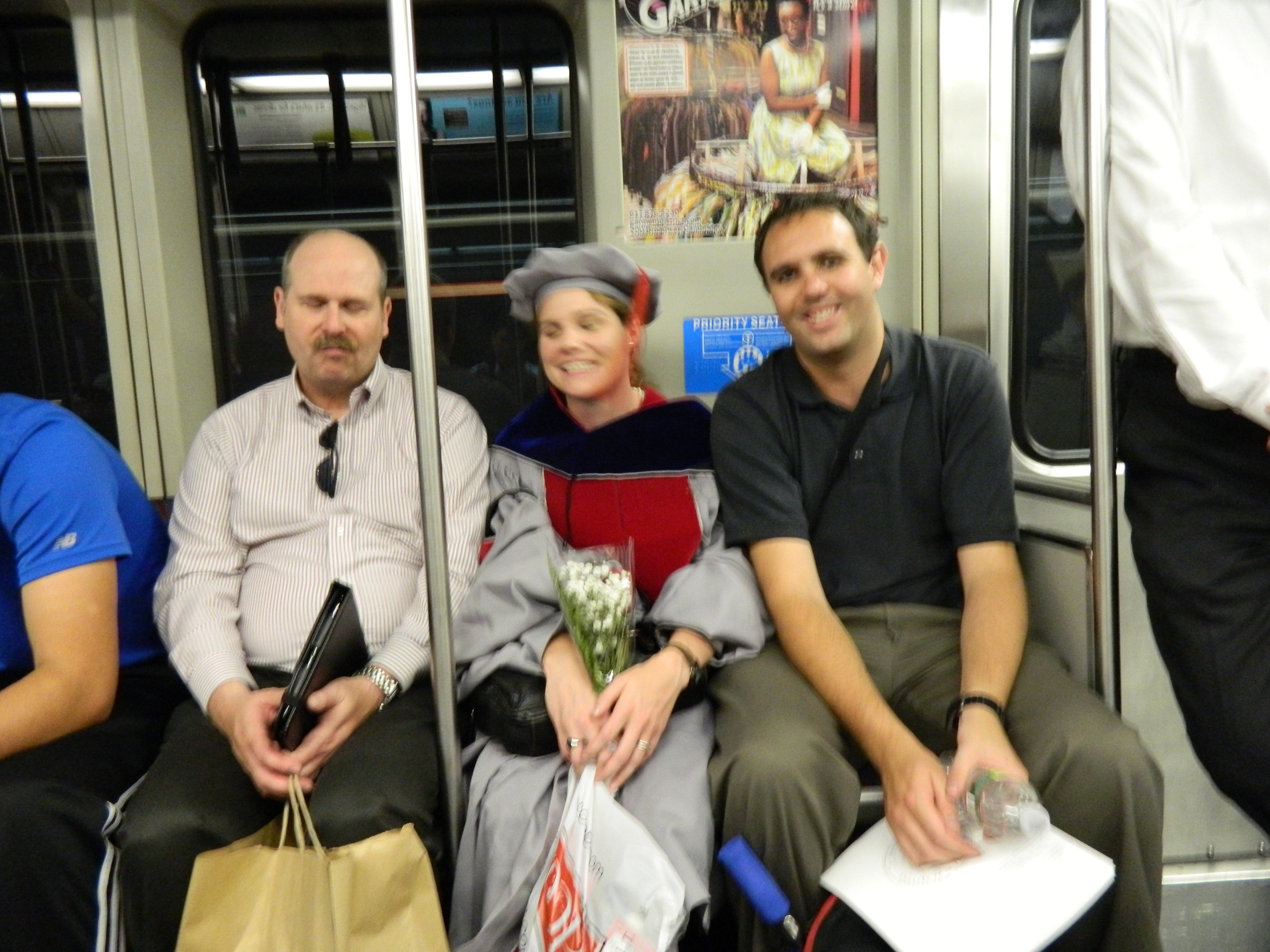
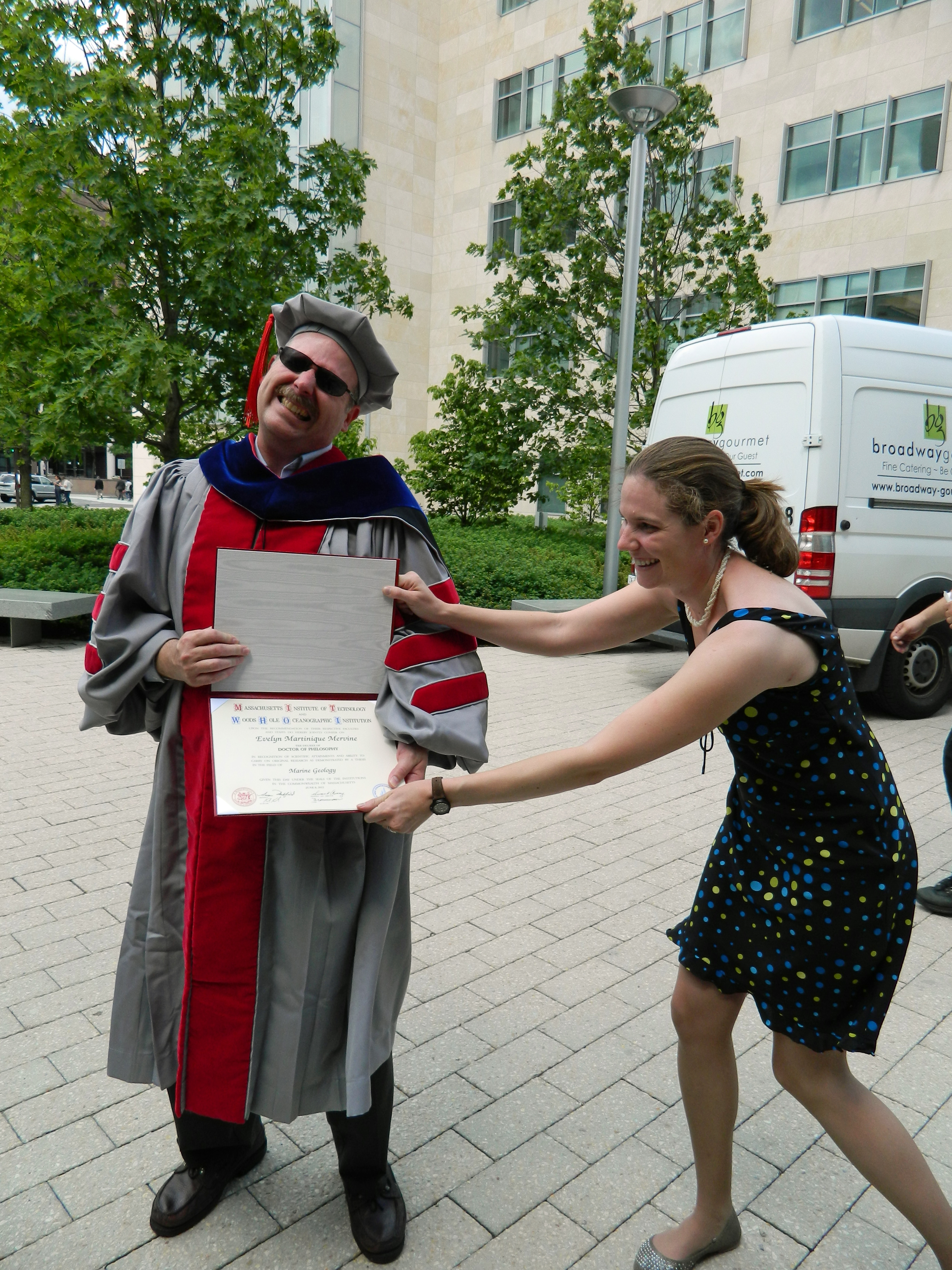
All decked out in my doctoral regalia, before the hooding ceremony.After the hooding ceremony, with my hood.With mom and dad in front of a number sculpture.With Jackie in front of the MIT seal.Wearing the doctoral regalia on the T.Another view of the doctoral regalia on the T.With my diploma!I went to use the restroom, and my dad tried to steal my diploma.
Those are the pictures I have to share. Please share some pictures of you in your own academic dress!
A boulder resting on some rocks at Sea Point, Cape Town, South Africa. This picture was taken during my first visit to Sea Point in January 2008.
For this week’s geology picture, here is an image of a boulder resting on some rocks at Sea Point here in Cape Town, South Africa. I took this picture back in 2008, but I’ve visited Sea Point numerous times since then. Fairly recently, my husband and I brought Callan and his wife Lily to Sea Point back in December 2011.
I’m enjoying being back home in Cape Town. I spent much of my first week at home sorting out immigration matters (I now have my residency permit! Hooray!) and unpacking and recovering from a cold (still a bit sick, unfortunately), but hopefully I’ll be back to some more blogging soon.
Tilted rocks along the River Dee, Aberdeenshire, Scotland, June 2012.
For this week’s geology picture, I thought I would share a photograph from my recent trip to Scotland. I recently spent four days staying in the village of Ballater, Scotland with Dr. Ken Glennie, a well-known petroleum geologist (he worked 33 years for Shell and is now an Honorary Professor at the Univeristy of Aberdeen) who is now retired but still spends several hours every day thinking and writing about geology. I greatly enjoyed the four days I spent with Ken, and I learned a great amount about the geology of Oman, Scotland, and elsewhere. I plan to write up several articles about my visit, so stay tuned for more! The picture above was taken when Ken and I took an afternoon trip to Balmoral Castle and some other sites of interest in Royal Deeside.
At the moment, I am enjoying being home in Cape Town, South Africa after 3 1/2 months away. Yesterday evening I arrived at the Cape Town airport after flying from Aberdeen to London to Johannesburg to Cape Town. I’m exhausted from the flight and also from the past 3 1/2 months. There have been many events and changes in my life over the past 3 1/2 months. I successfully defended my PhD, for one. I also visited Florida and Scotland, spent some time with my family in New Hampshire, took my husband to my 10-year high school reunion, had a wedding/graduation celebration with friends and family in New Hampshire, and attended my MIT PhD hooding and graduation.
I’m pretty tired, and chances are I may be starting a job in the near future, so posting may be a bit quiet on here for awhile longer as I rest and recover. Never fear, though! The Monday Geology Picture shall appear like clockwork, and I will be catching up on a few outstanding posts. Eventually, perhaps, the Geology Word of the Week may also make a reappearance, but probably only after I’ve had a bit of rest and relaxation.
Rollins Chapel at Dartmouth College in Hanover, NH.
Last week my husband and I visited my alma mater Dartmouth College in Hanover, New Hampshire. Dartmouth has a beautiful campus, and one of my favorite buildings on the campus is Rollins Chapel. The chapel is a multi-faith spiritual center that is used by students and alumni for a variety of purposes. The chapel is used for spiritual services, quiet reflection, weddings, seminars, speeches, and other events. When I was a student at Dartmouth several years ago, the climbing club even used the outside of Rollins Chapel as a bouldering or “buildering” location.
I’m not religious, but I enjoyed and continue to enjoy visiting Rollins Chapel for quiet reflection and also to admire the chapel’s beautiful building stones. The chapel was built with large, rounded blocks of gray-white granite that are complemented by rusty red, more square blocks of sandstone. The chapel also contains some stunning stained glass windows.
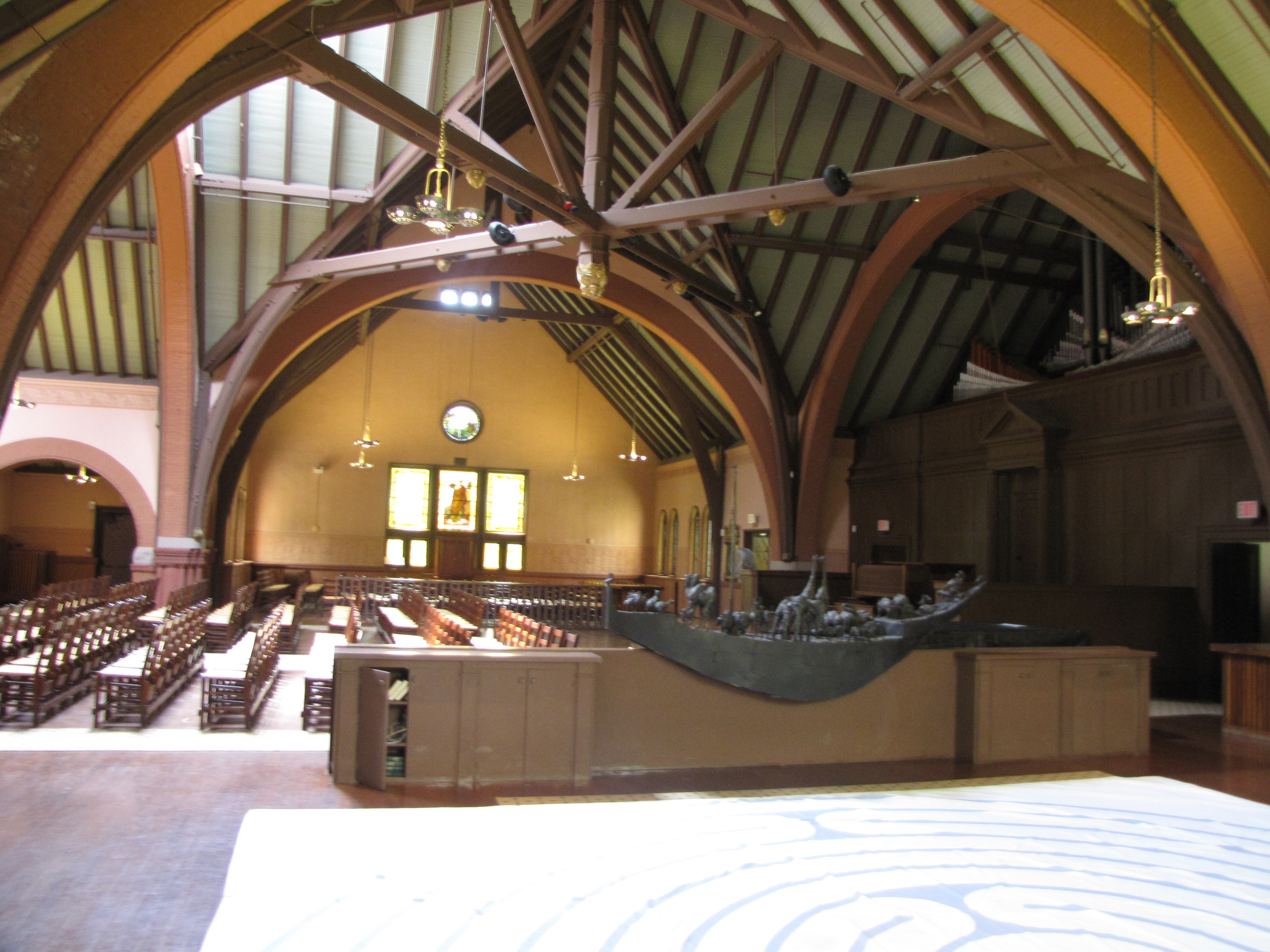
Here are some more pictures from our visit to Rollins Chapel last week:
Close-up of the outside of the chapel #1.Close-up of the outside of the chapel #2.Inside of the chapel.A detail of the inside of the chapel. A closer look at some decorative trim inside the chapel.Another view inside the chapel.Carved sandstone inside the chapel.
I highly recommend a visit to Rollins Chapel if you’re ever on the Dartmouth College campus.
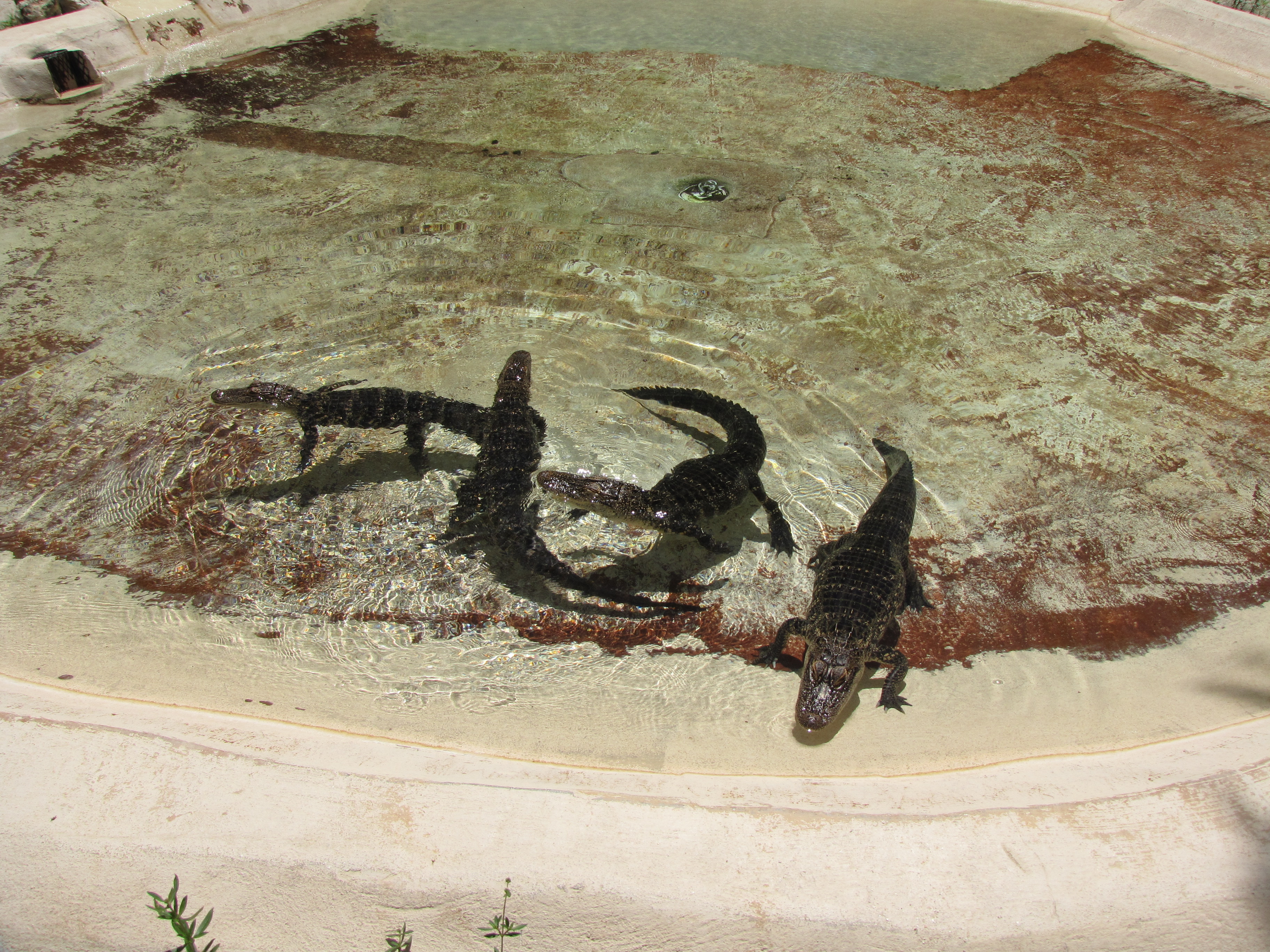
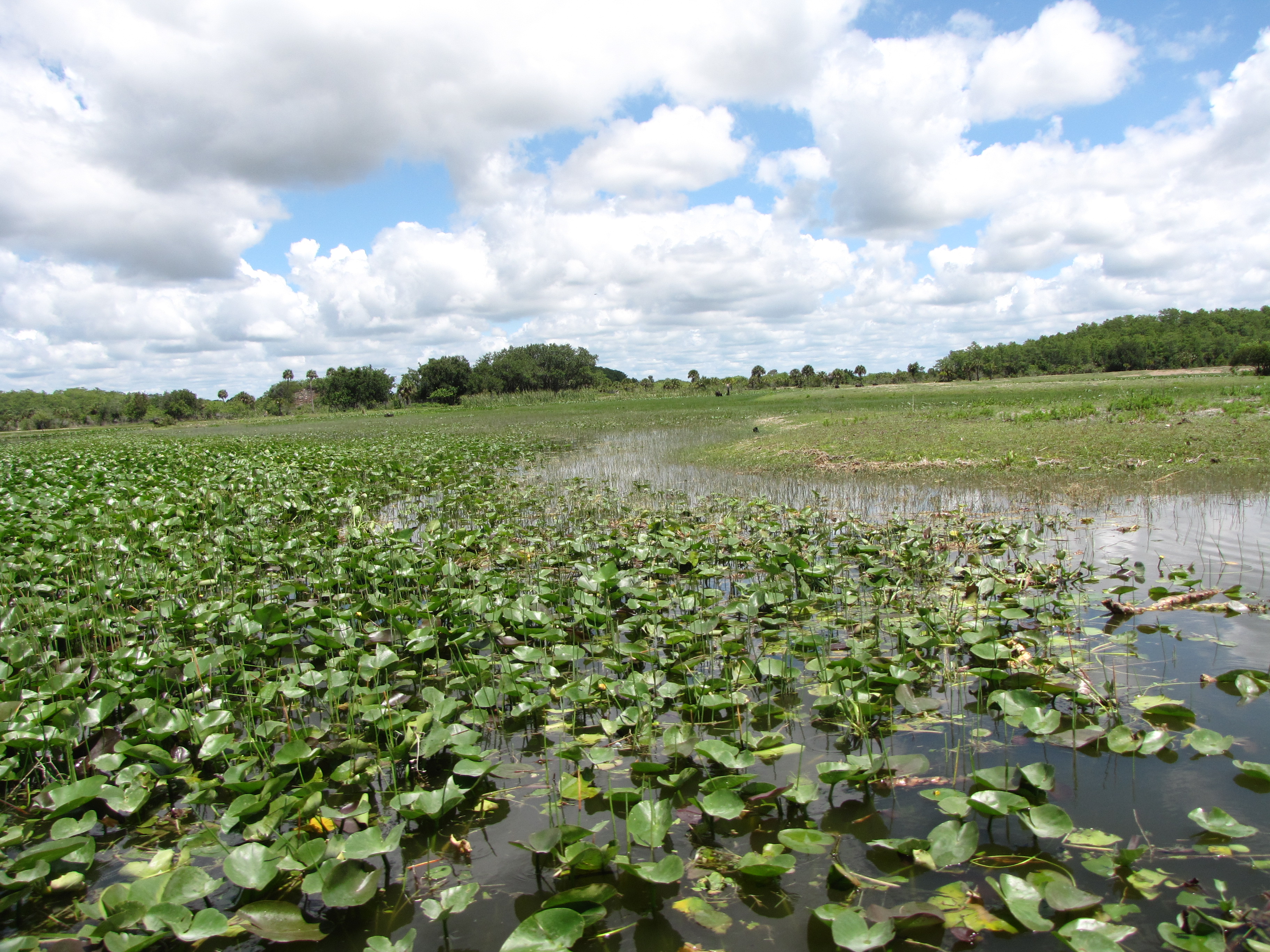
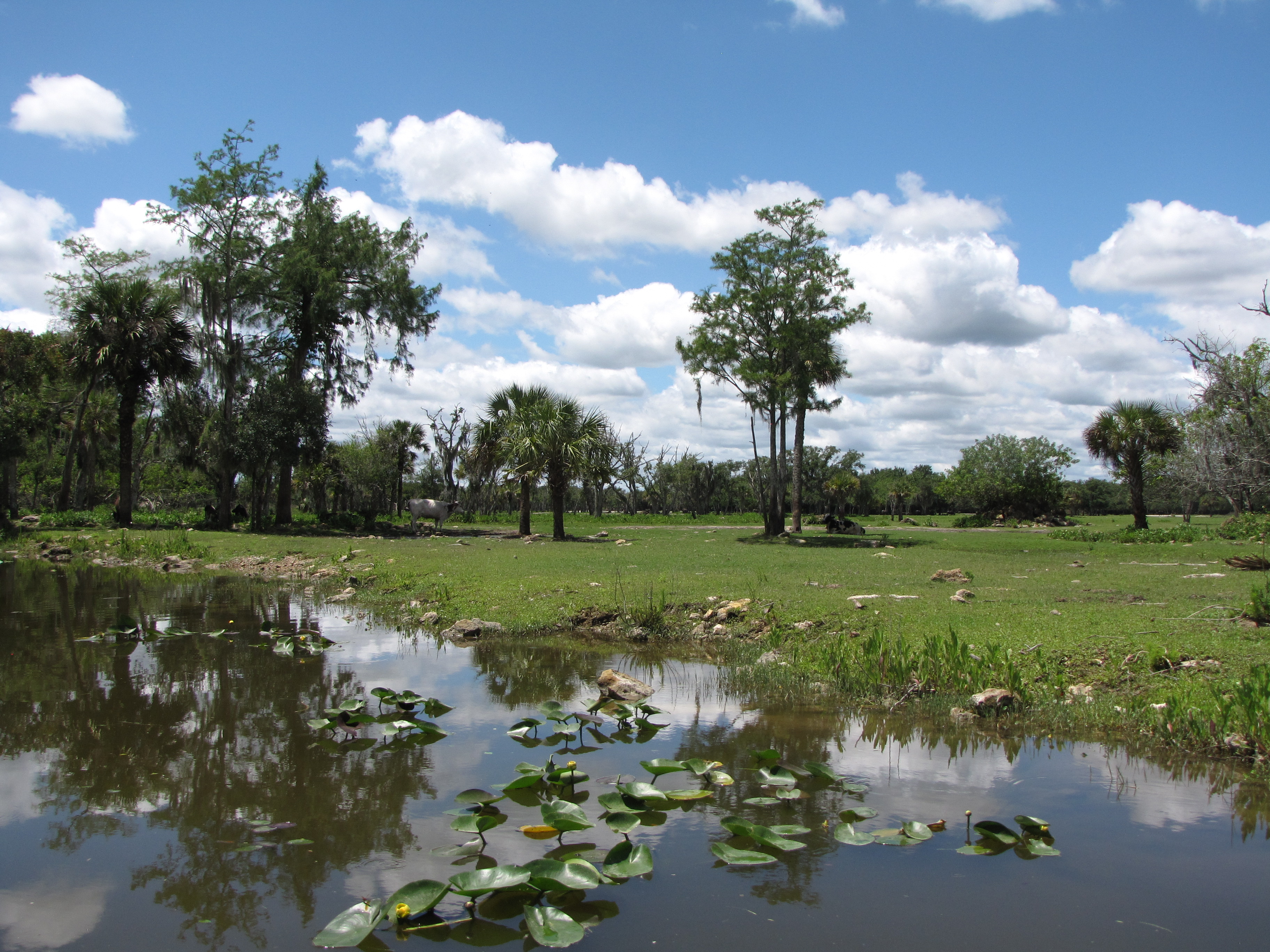
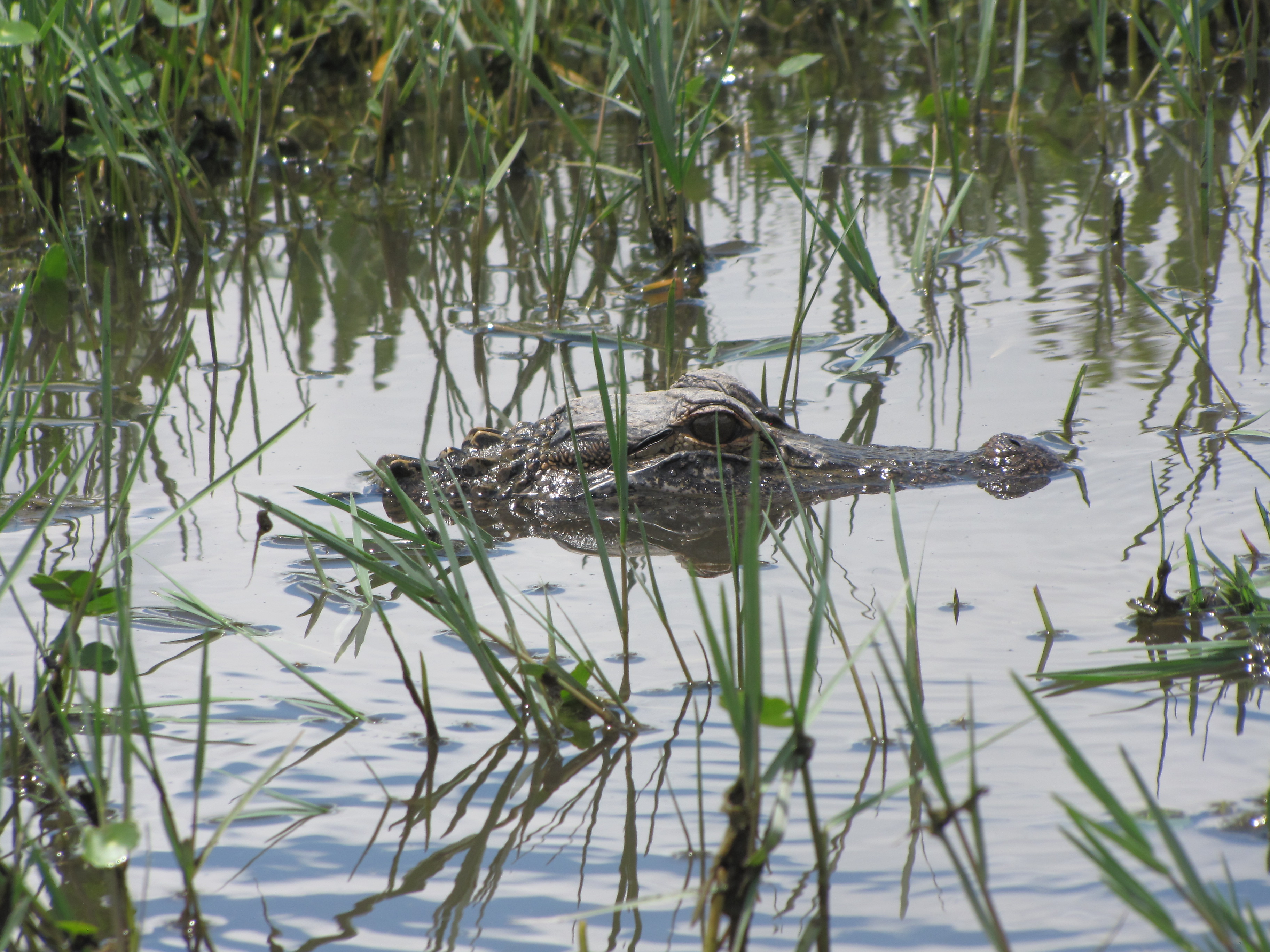
Today I thought I would share a few more pictures from my recent trip to Florida with my husband. These pictures don’t have much to do with geology except that the Everglades is an important geological feature in Florida. These pictures were all taken at the Billie Swamp Safari, which I highly recommend visiting if you’re ever down in southern Florida. Enjoy!
Baby alligators in a pond.A view of the everglades from an airboat.The last airboat tour.Into a cedar forest.A swampy bank.Alligator!Alligator #2!Coming back to the dock on the airboat.
Note: I convinced my Geokittehs co-author Dana Hunter to fly from Seattle to New Hampshire to visit me for a few days. I handed in the final version of my PhD thesis on Friday May 4th, and Dana arrived the next day to help me celebrate. This is Part VI of my description of the fun georneys we had together during Dana’s visit. This is also the last post in my series about Dana’s visit. Dana and I will have to meet up again for more fun georneys!
When Dana came to visit, she told me that she had never been kayaking. I adore kayaking. From ages 12-22 I was very active in competitive whitewater slalom racing, in both kayaks and canoes. During grad school on flat Cape Cod, I didn’t do as much whitewater kayaking, but I’m hoping to return to the sport over the next few months. Since I handed in my PhD thesis a few weeks ago, I’ve been regularly going out on flatwater kayaking trips, which are excellent for building up those kayaking muscles. Anyway, when I learned that Dana had never been kayaking, I just had to take her on a kayaking trip! Fortunately, the lakeside geologist lair (aka my parents’ lakeside cabin) is well-stocked with 4 kayaks.
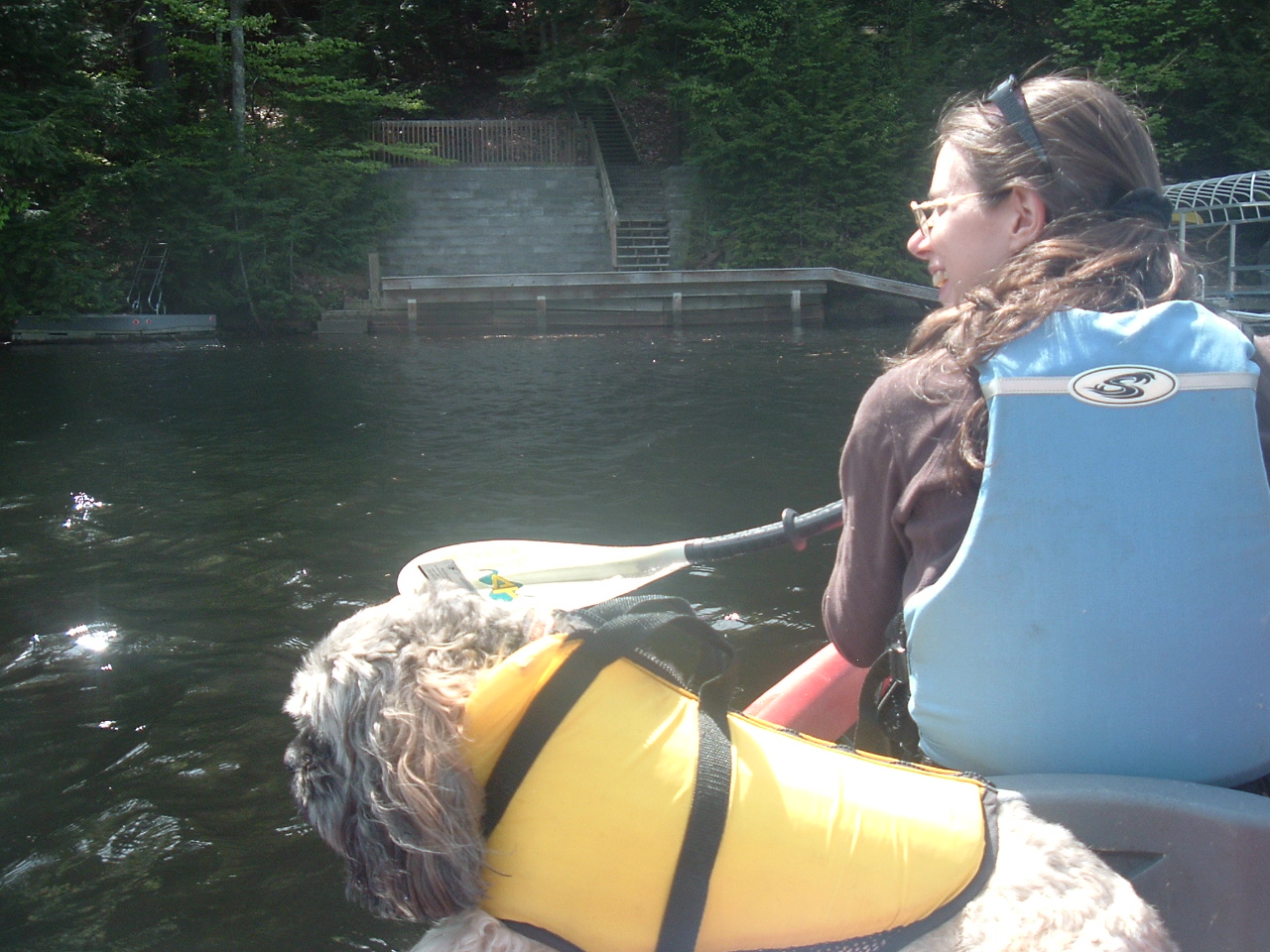
One of the kayaks at the lakeside geologist lair is a nice tandem flatwater kayak that is excellent for pairing a novice kayaker with a more experienced kayaker. We call the tandem kayak “The Family Wagon Truckster” because it is large and slow and can fit 2-3 people. For our kayak adventure, we took the Family Wagon Truckster and put Dingo, my parents’ dog, in the middle of the big kayak. Dingo is seven now, and he loves kayaking. When Dingo was a puppy, he was terrified of the water, but I spent several weeks training him to go kayaking. Now, Dingo is happy as can be in a kayak. He’ll even bring you his life vest when he wants to go kayaking.
We didn’t see too much geology during out kayak trip, but we did take a look at several large boulders, which are most likely glacial erratics.
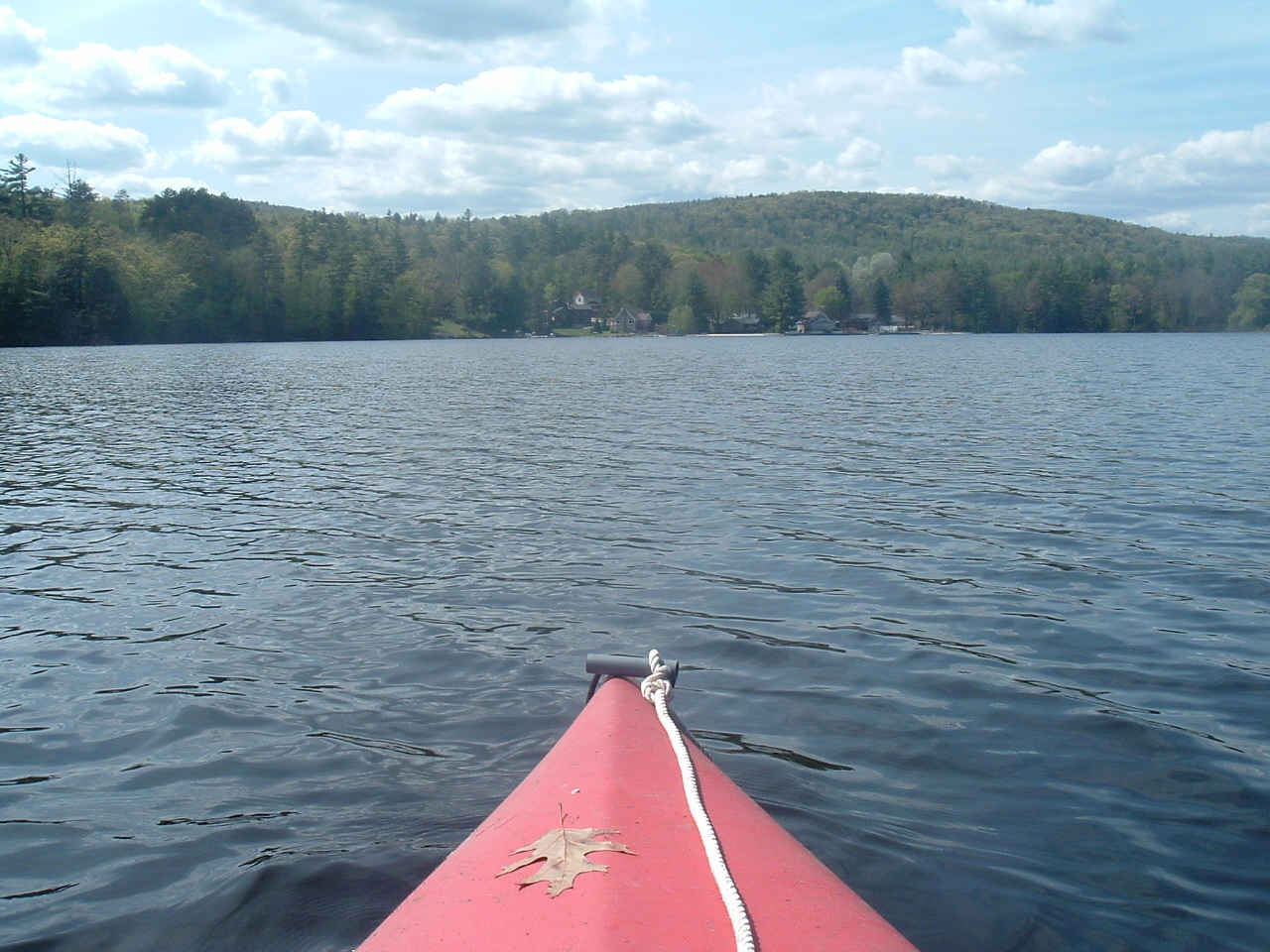
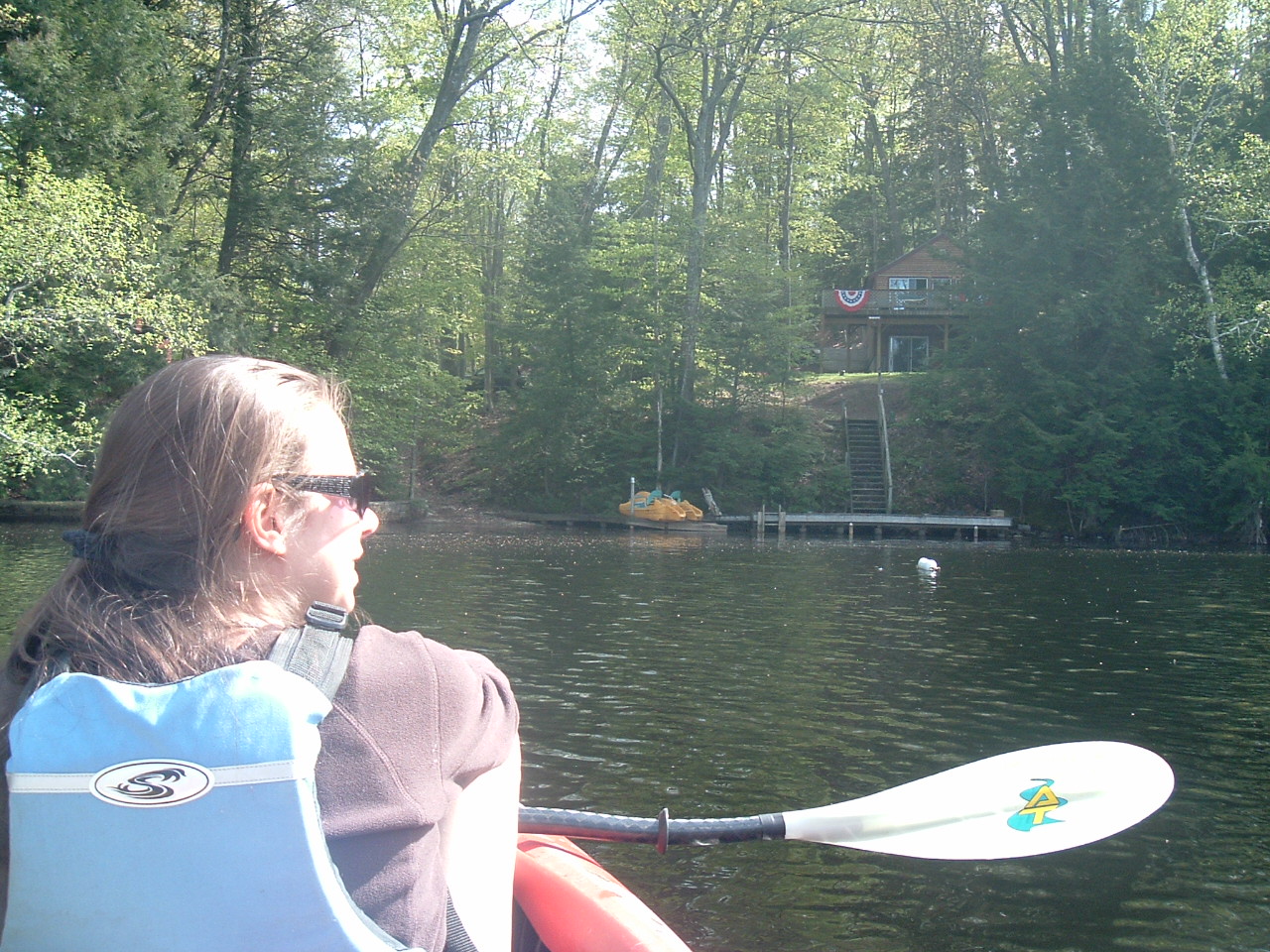
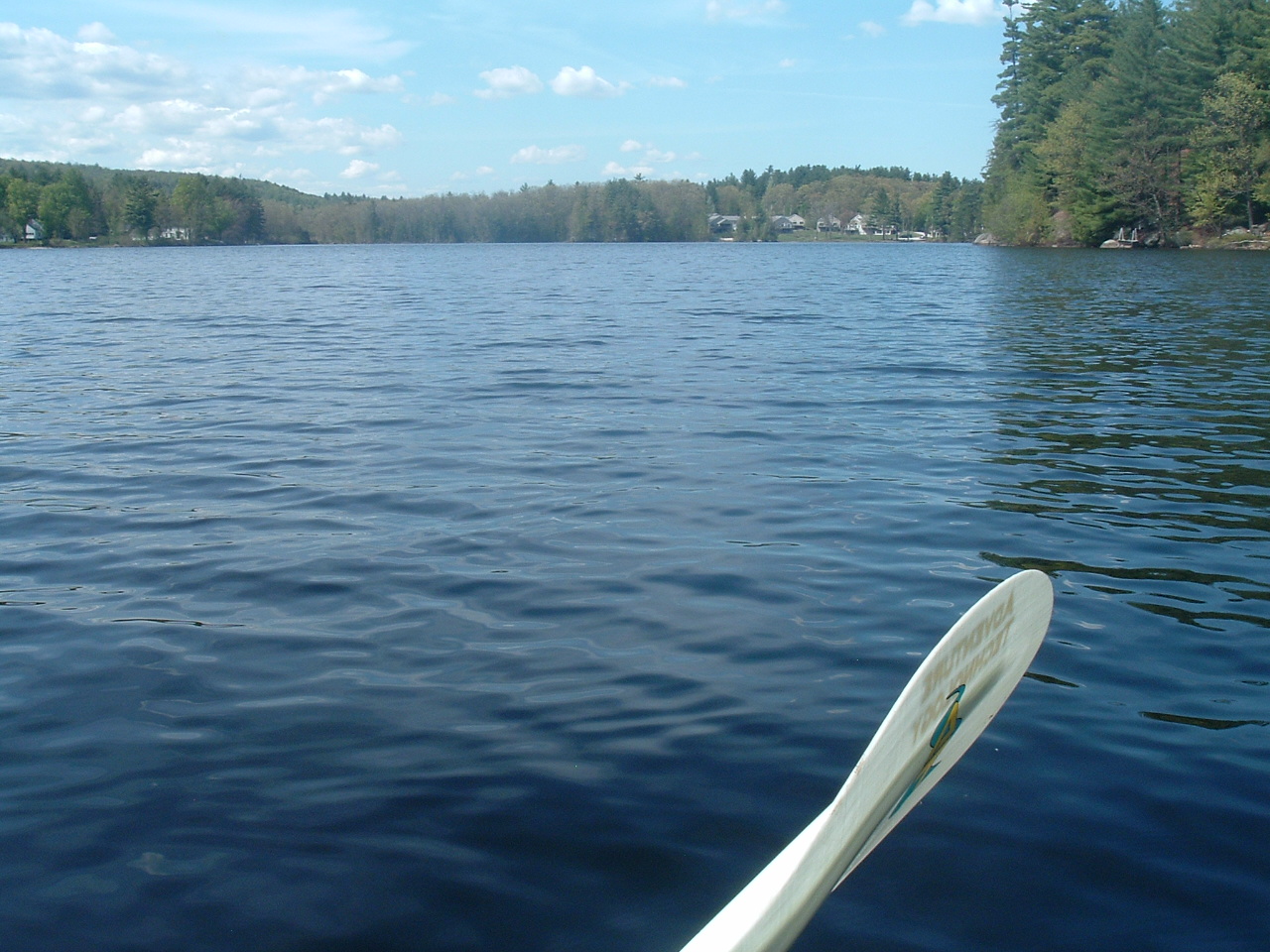
Here’s some pictures from Dana’s first kayaking trip:
The view from the front of the kayak.Lakeside scenery.Dingo and I. Also something in front of the lens.Dingo and Dana.Dana, looking reflective.Paddling away...
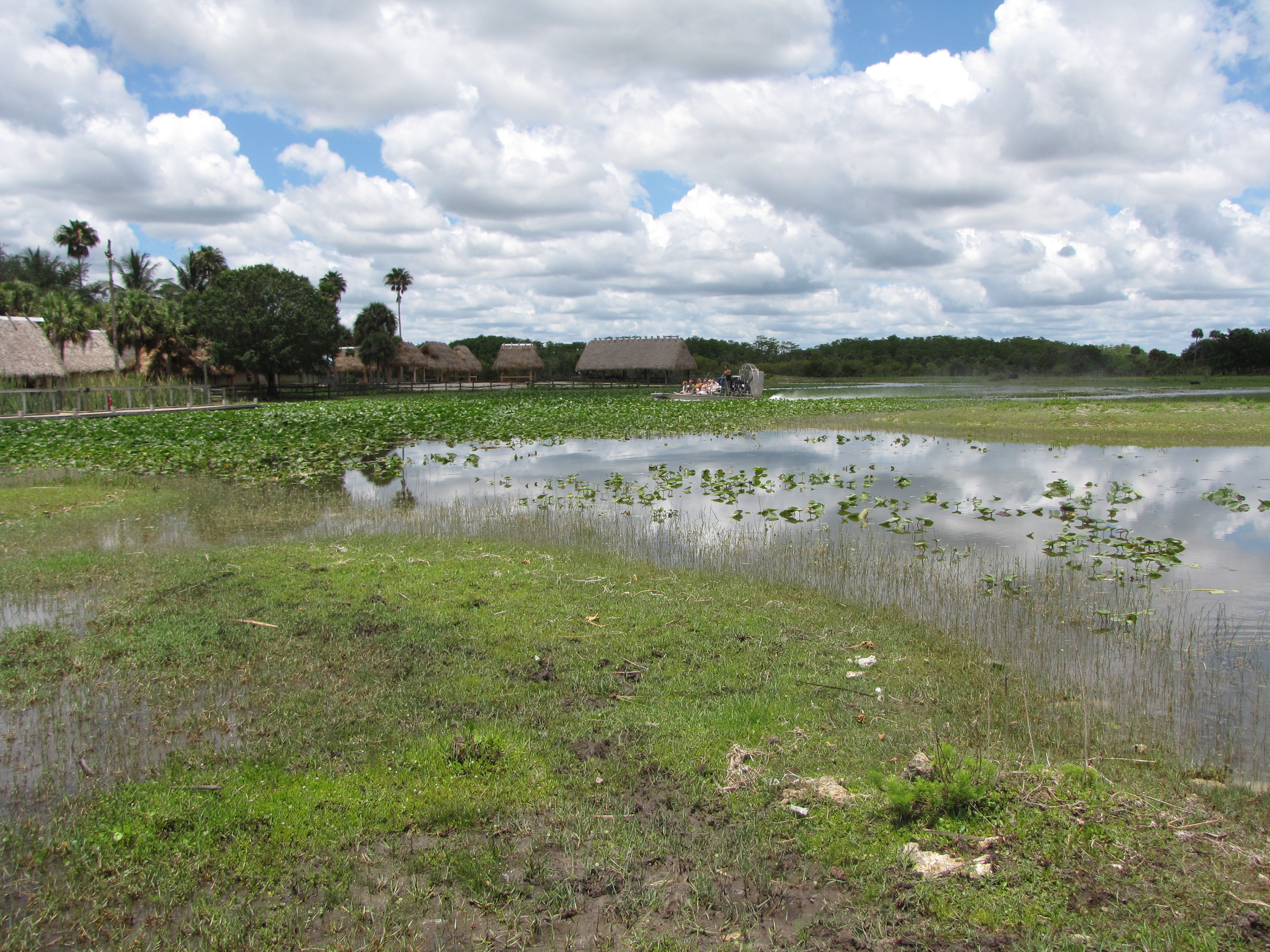
An airboat giving a tourist tour in the everglades.
For this week’s geology picture, I thought I’d share a picture that I recently took in the Florida everglades. My husband and I were recently down in Florida for five days, and one day we visited the Bille Swamp Safari. I highly recommend visiting the safari park, which is located on a Seminole Native American reservation about an hour’s drive from Fort Lauderdale. We spend the whole day at the safari park. We went on an airboat ride and a buggy ride, went to a venomous snake show and a critter (creepy-crawly things) show, we visited various zoo animals (my favorite were the Florida panthers, and we went on a nature walk on a raised walkway through the swamp. If you’re ever in the area, I highly recommend the safari park.
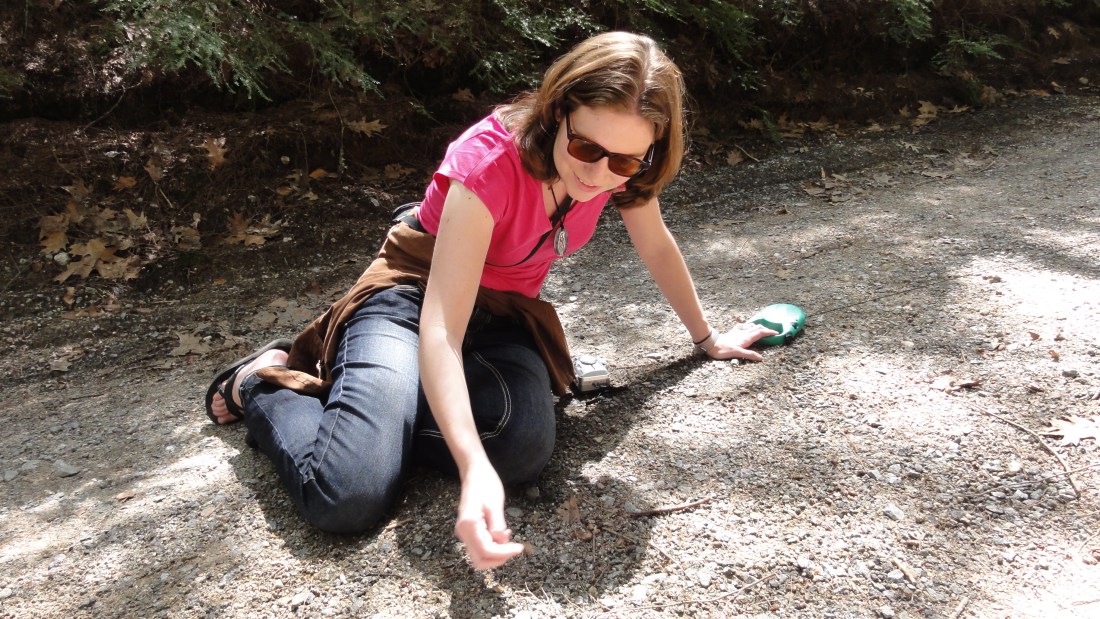
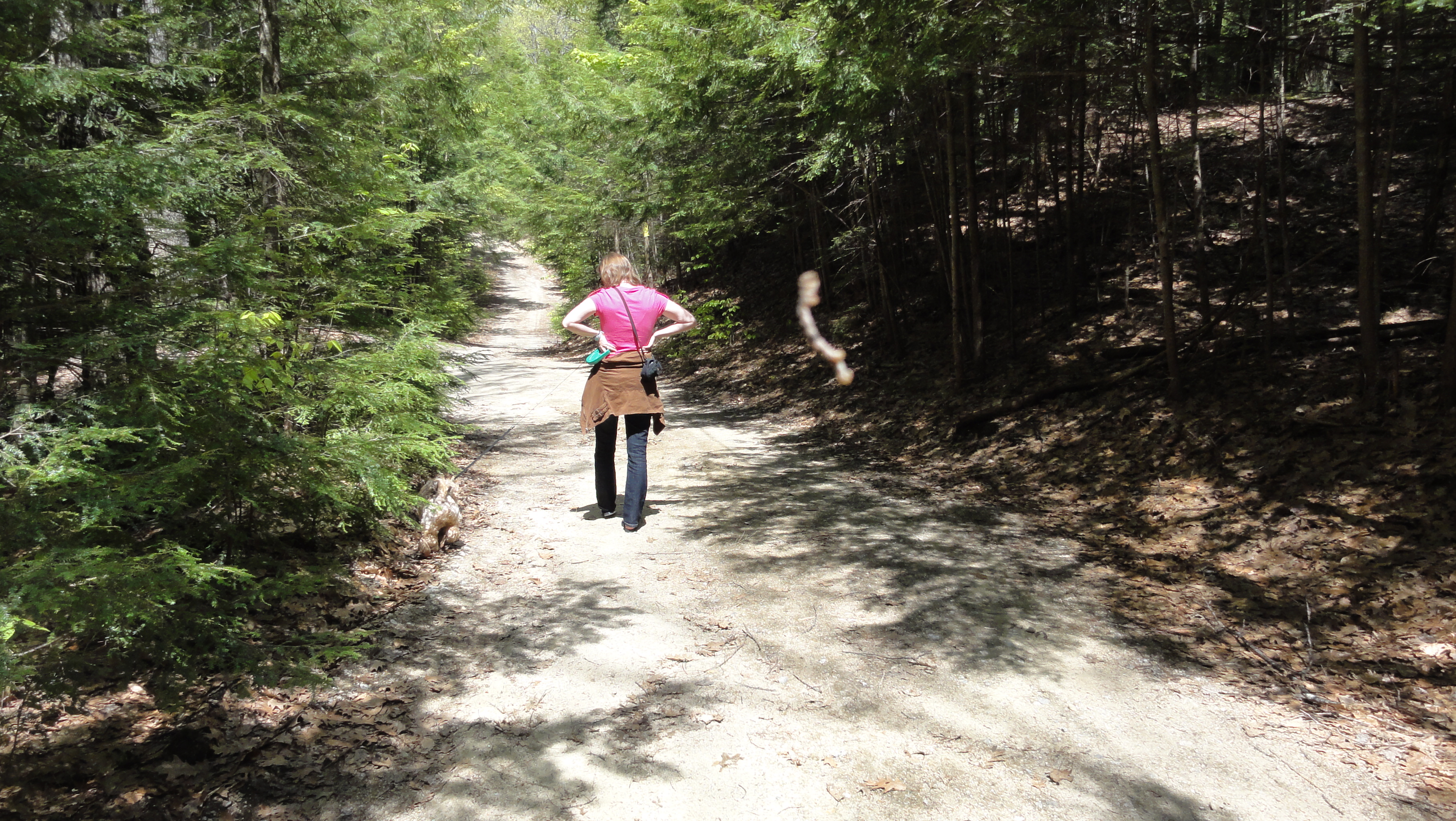
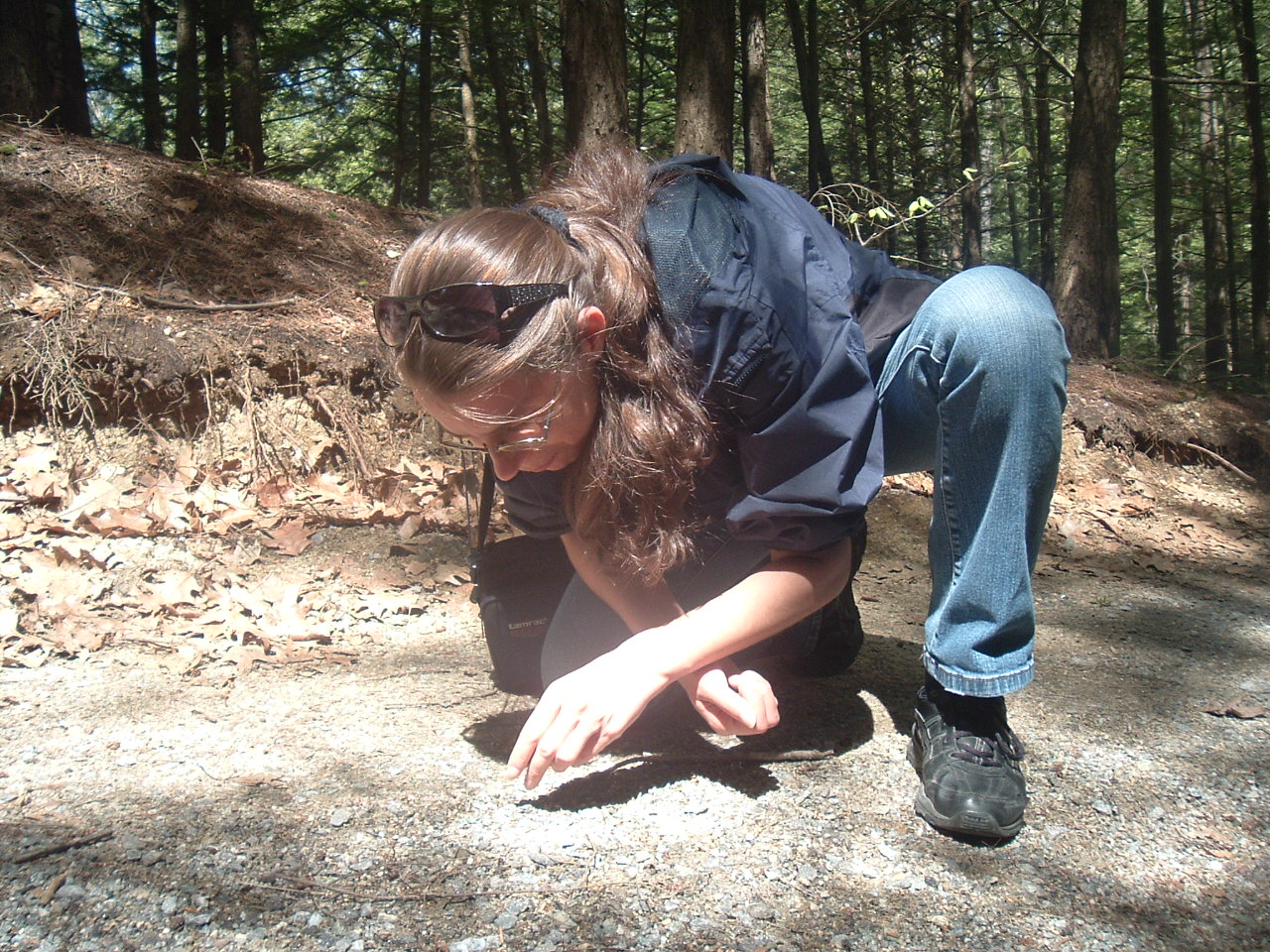
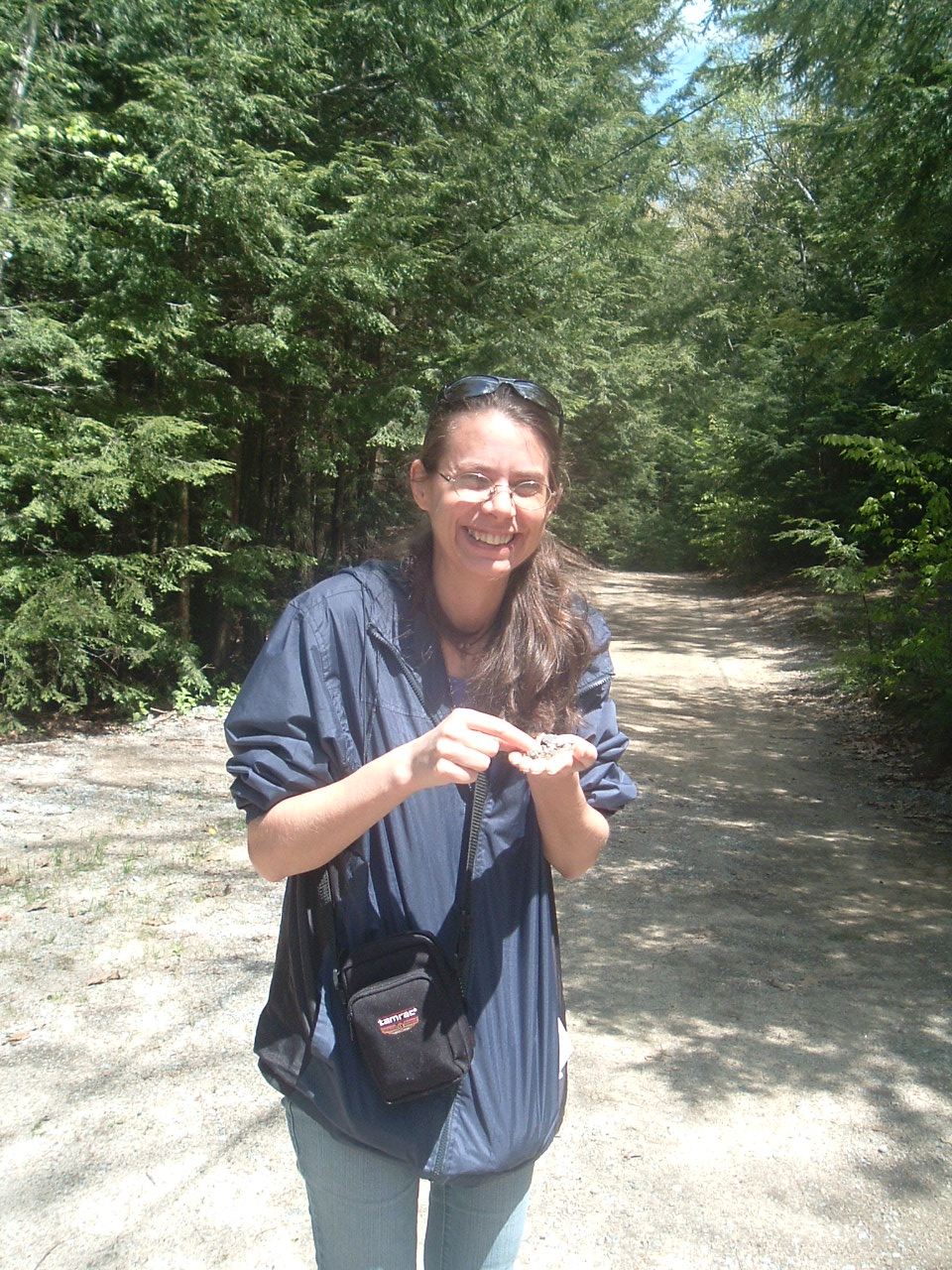
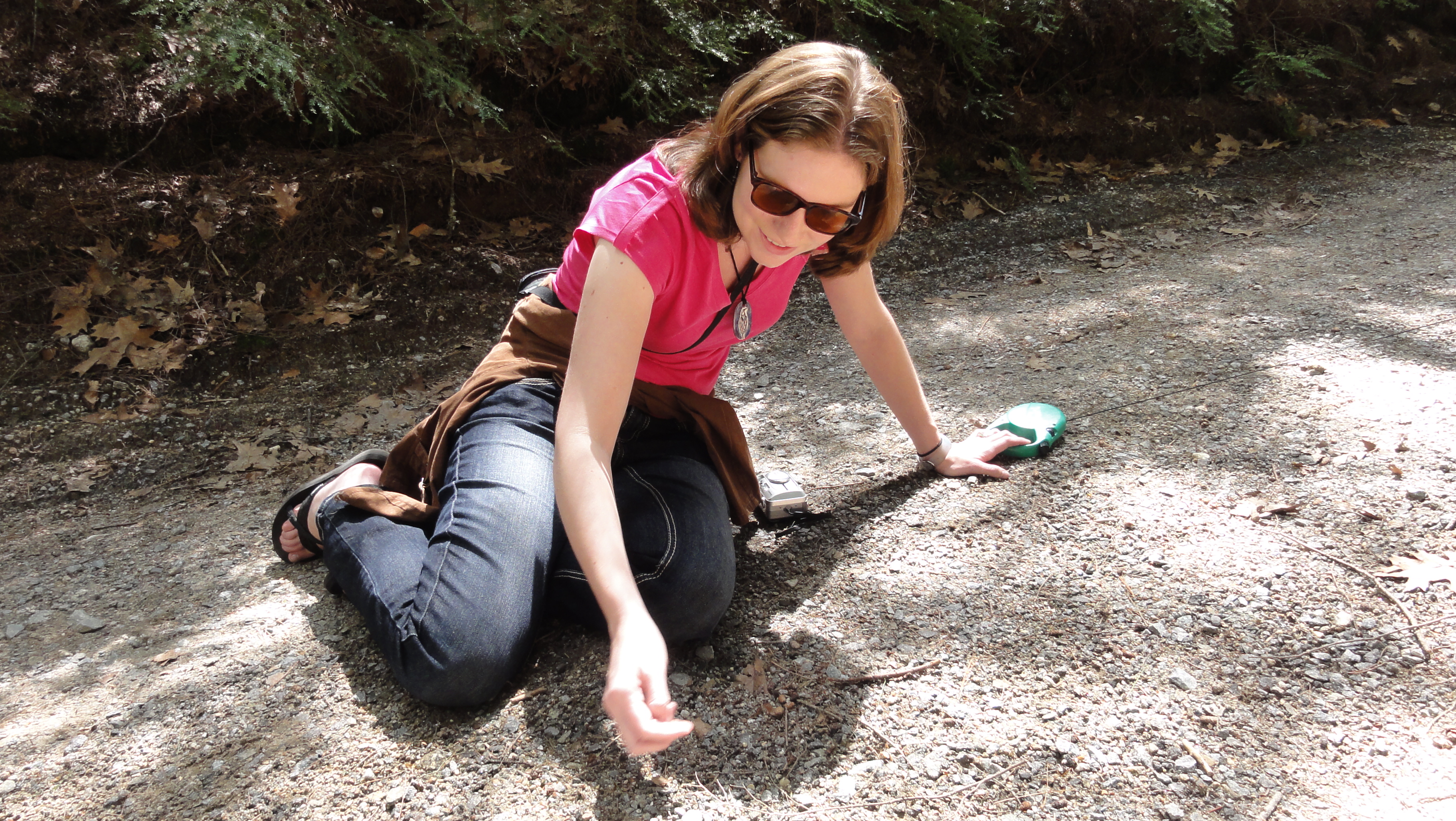
A casual stroll along the garnet road. Geologists often walk with their heads to the ground,watching for interesting rocks.
I apologize for a bit of a hiatus in posting. There were some technical troubles with the AGU blogs, and then my husband and I were down in Florida for five days. Blogging may continue to be somewhat light for the next few weeks, but I’ll post when I’m able. First, I’ll finish up my “Georneys with Dana” series. Then, I’ll post a bit about the trip to Florida.
Note: I convinced my Geokittehs co-author Dana Hunter to fly from Seattle to New Hampshire to visit me for a few days. I handed in the final version of my PhD thesis on Friday May 4th, and Dana arrived the next day to help me celebrate. This is Part V of my description of the fun georneys we had together during Dana’s visit.
Geologists, you may notice, often walk with their heads pointed downward. That’s because down is where the rocks generally are. Geologists also keep their heads pointed toward cliffs or boulders. When driving, geologists slow down and turn their heads when they pass roadcuts. At times, geologists become so absorbed in watching for rocks– and then looking closely at the interesting rocks they find– that they forget about the rest of the world: the scenery, other people, that squishy biology stuff, lunch, water, continuing the walk or hike that was started, driving at a normal highway speed, and so on.
Long before I began studying geology in a formal manner, I walked with my head pointed downward, looking out for interesting rocks. I guess that’s how I knew I should study geology. For example, my second week of high school I was going on a training run in the woods as part of my school’s Outdoor Program*. As I ran, I kept my eyes on the ground, keeping a casual eye out for interesting rocks. I ended up running straight into a tree. I went to the hospital for a few stitches, but I was generally okay. For the rest of the year, I was called “George” by my fellow students.
Before I learned much about rocks, I used to watch out for “pretty” rocks such as large pieces of rose quartz, silvery garnet schists, and rocks with bright red iron oxide weathering rims. Now that I know more about geology, I still enjoy finding “pretty” rocks, but I also find myself very interested in a wide variety of “ugly” rocks, such as highly-weathered peridotites, dull-colored sandstones, and gray basalts. That’s because even the dullest of rocks can tell fascinating stories.
To non-geologists, rocks are just something to walk upon or drive above or build a house upon; rocks are brown or gray or white hard things that are not worth paying much attention to unless they sink or shake or erupt… or perhaps if they are particularly sparkly. To geologists, rocks– even the dullest gray or brown rocks– are interesting, even when they are not particularly mobile or sparkly. That’s because geologists learn to read rocks the way people learn to read books. To a geologist, a rock’s features are like hieroglyphics. There are stories enfolded in the juxtaposition of two minerals, in the order of a set of veins, in the thickness of a lamination, in the offset of a fault, in the shape of a crystal, in the softness of a sediment, in the curve of a fossil,in the color of a weathering rind, in the roundness of a cobble, and in many other rock features.
Rock stories are almost always mysteries. The rocks provide clues, but it takes often quite a bit of work to figure out who murdered whom in what room with what weapon, so to speak. When reading rocks, geologists use various clues to try to figure out what crystallized from what and then squished into what under what conditions… or, perhaps, who died and was preserved into what that was then altered into what… or, perhaps, what settled onto what and then was filled with what… or, perhaps, what slid past what when and caused what size earthquake and tsunami. There are countless rock mystery stories.
Often, geologists barely begin to unravel rock mysteries in the field. Rocks must also be sampled and brought into the laboratory. Rocks must be cut up into thin slices and examined under microscopes; they must be scanned and crushed and dissolved and, sometimes, turned into plasma. Sometimes, rocks must be analyzed from space, using fancy satellites that provide much information about large and small-scale field features. Field observations of rocks must be carefully examined in the office: thousands of strikes and dips and other field information must be compiled and formed into geologic maps and models. Even then, geologists often only unravel part of a rock mystery. There is always more to learn about rocks. Like a good mystery novel, a rock story is rarely fully resolved; there are always loose ends left at the end; there are always sequel stories to unravel.
Because they can read rocks, geologists are easy to entertain. You don’t need a computer or a kindle or a television to entertain a geologist. All you need are some rocks– and there are rocks almost everywhere.
Here’s one recipe for entertaining two geologists for a morning:
1. Take two geologists.
2. Add one dog, two cameras, one hand lens, and one dirt road in New Hampshire.
3. Sprinkle the dirt road generously with freshly-broken, garnet-filled metamorphic rocks that are useful for stabilizing the road during spring “mud season.”
4. Tell the geologists to take the dog for a walk along the dirt road.
5. Busy yourself with something else while you wait for the two geologists to return. Note that geologists may take much longer to complete walks than non-geologists. A good rule of thumb, when the rocks are particularly interesting, is that geologists will take about two hours to complete a walk that takes non-geologists twenty minutes. If the geologists are too long in returning home, you may be able to lure them back by cracking open a few ice cold drinks.
Recipe warnings: The dog may periodically sit down in the middle of the road, looking forlornly at the geologists while they hunt for pretty garnet rocks in yet another section of the road. The geologists are likely to fill their pockets and camera bags full of rocks. Even for a “short” walk, it is advisable to send the geologists out fully equipped with water, sunscreen, and sun hats. Don’t bother sending snacks as the geologists will likely forget to eat the snacks.
I followed the above recipe when entertaining Dana last week. Dana served the role of “first geologist, I served the role of “second geologist” and Dingo (my parents’ pet) served the role of “the dog.”
Here are some pictures of our walk along the road which we nicknamed “The Garnet Road” because of all the crushed-up, garnet-bearing metamorphic rocks which were recently dumped on the road:
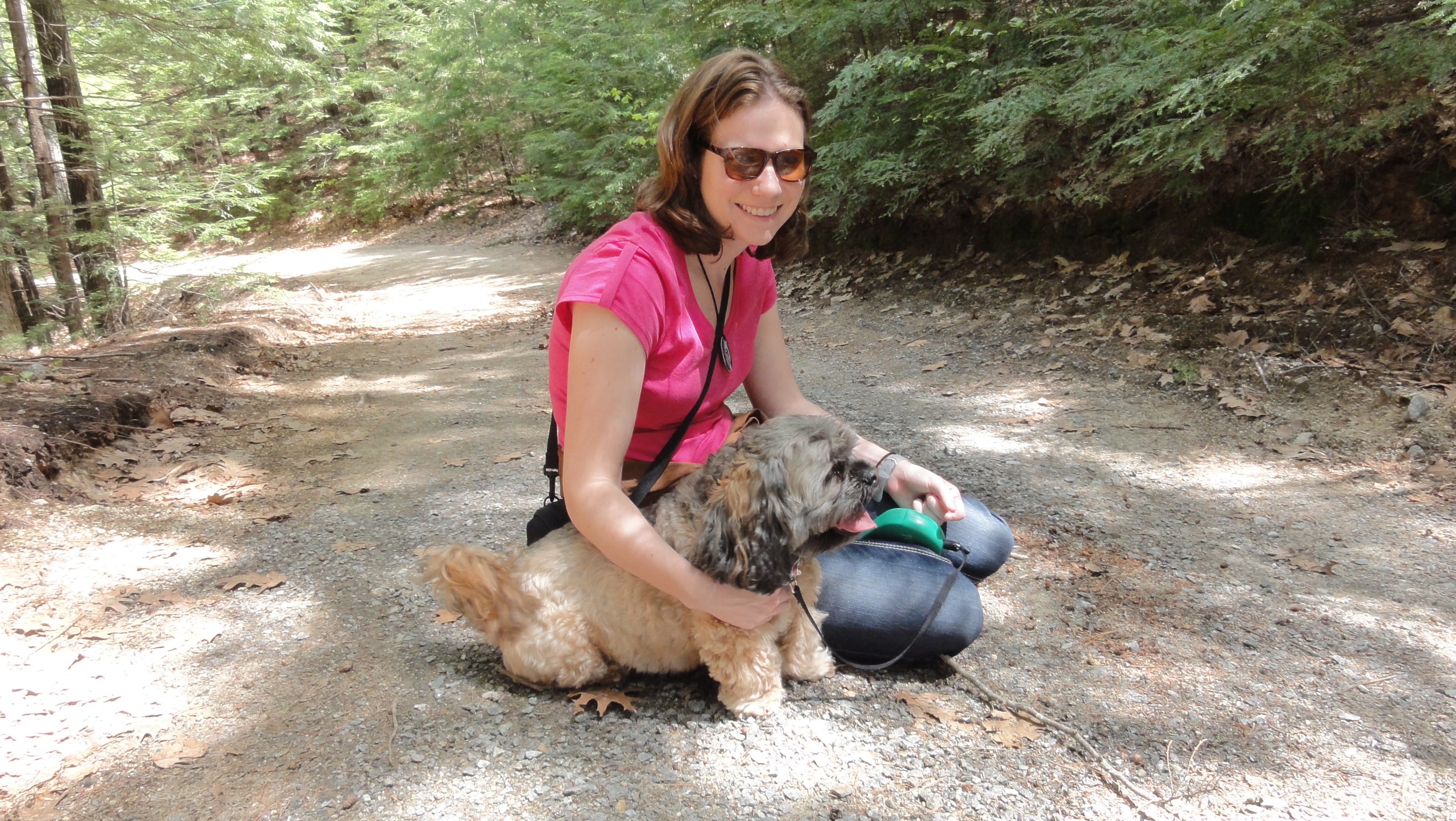
Oooh interesting road rocks.Found something.Interesting rocks = happy geologist.Sitting down to search for garnets. Fortunately, there is not too much traffic along the dirt road.Taking a closer look at a road rock.Dingo was confused about why we were doing so little walking on our "walk."Can we walk please?Dana finds a great pile of garnet-rich rocks.
Here are some pictures of a few garnet-rich, metamorphic rocks which we collected along the road:
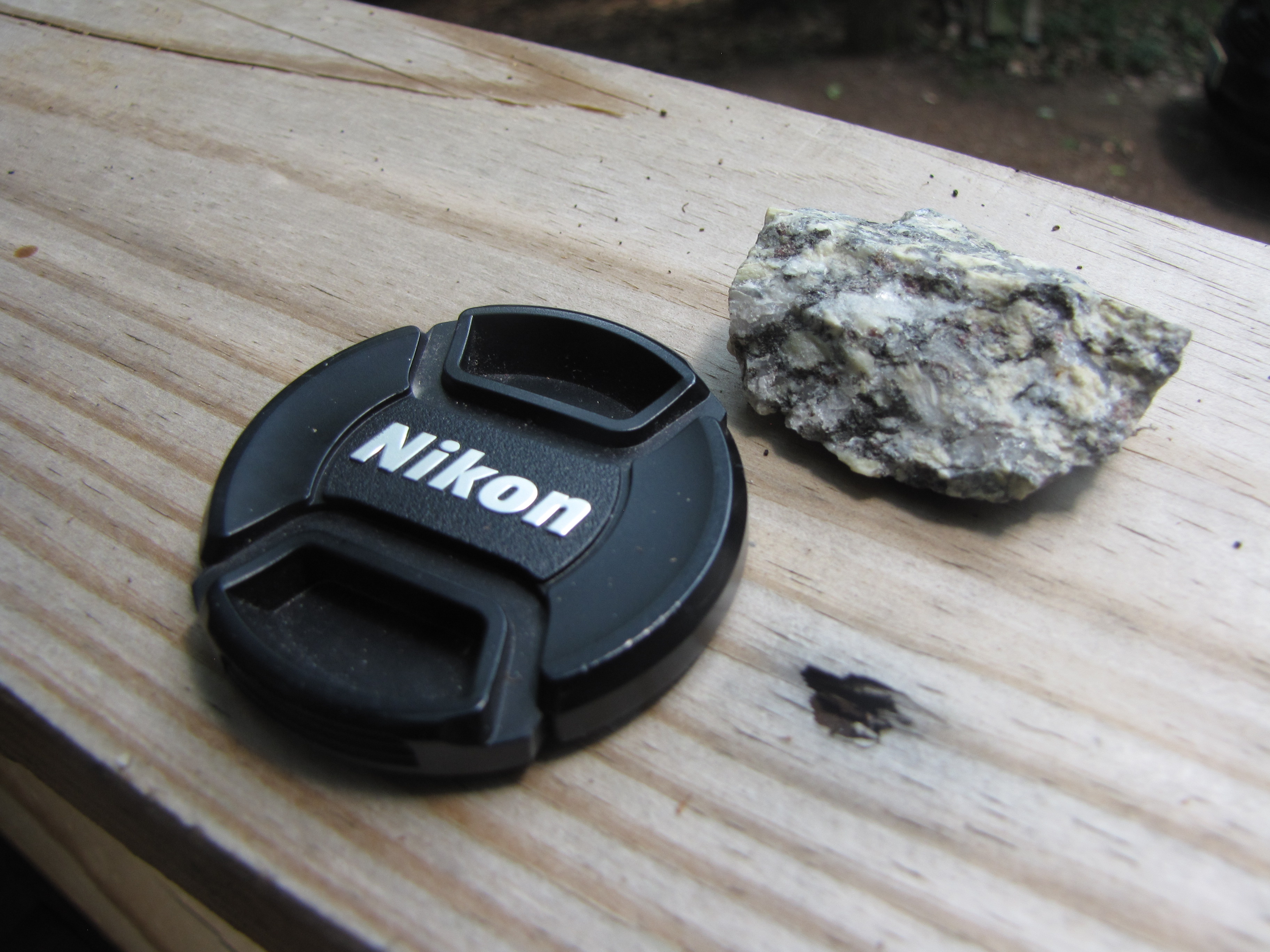
Garnet Rock, Picture #1. Just look at those large, gorgeous garnets!Garnet Rock, Picture #2.Garnet Rock, Picture #3.
*My high school has a wonderful program called Outdoor in which students spent the semester learning about hiking, rock climbing, kayaking, and camping. Twice a week the students go on a longer trip, such as a kayaking trip. The rest of the week the students participate in short exercise and skill programs, such as going for a run and then learning how to set up a tent. I participated in Outdoor all four years of high school, and I greatly enjoyed the program.
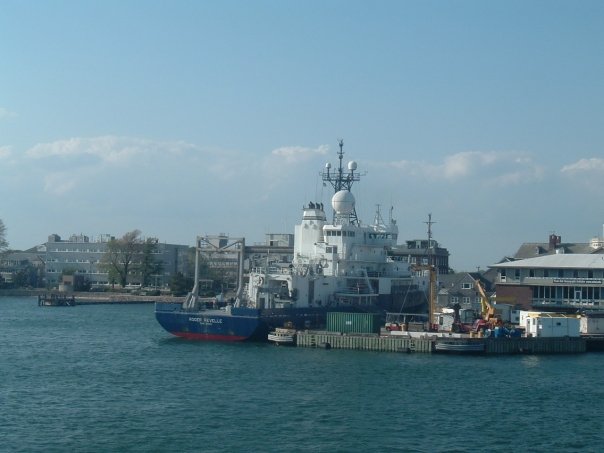
R/V Roger Revelle in port in Woods Hole, MA in July 2008.
I spent two months (early June – early August) aboard the R/V Roger Revelle during an expedition to the Ninetyeast Ridge in the Indian Ocean. Although the R/V Revelle is a Scripps Institution of Oceanography research vessel, during the summer of 2008 the ship spent some time in Woods Hole, MA on the dock owned by the Woods Hole Oceanographic Institution. I was very happy to see the ship and the crew again– many of the crew members were the same ones who were aboard during the Ninetyeast Ridge expedition. My boyfriend (now my husband; we met aboard the Revelle during the Ninetyeast Ridge expedition) and I threw the R/V Revelle a 4th of July party at my house in Woods Hole. The R/V Revelle staff kindly provided much of the food and drink since it was a little difficult for us to feed a hungry crew by ourselves. Oceanographic research vessels travel all over the world and spend time in many ports, so you never know when you might see them again!
Jackie (my now-husband) and I in front of the R/V Roger Revelle in July 2008. My hair is a bit of a mess from a bike helmet.A 4th of July BBQ for the Revelle crew & other friends.
























 Georneys