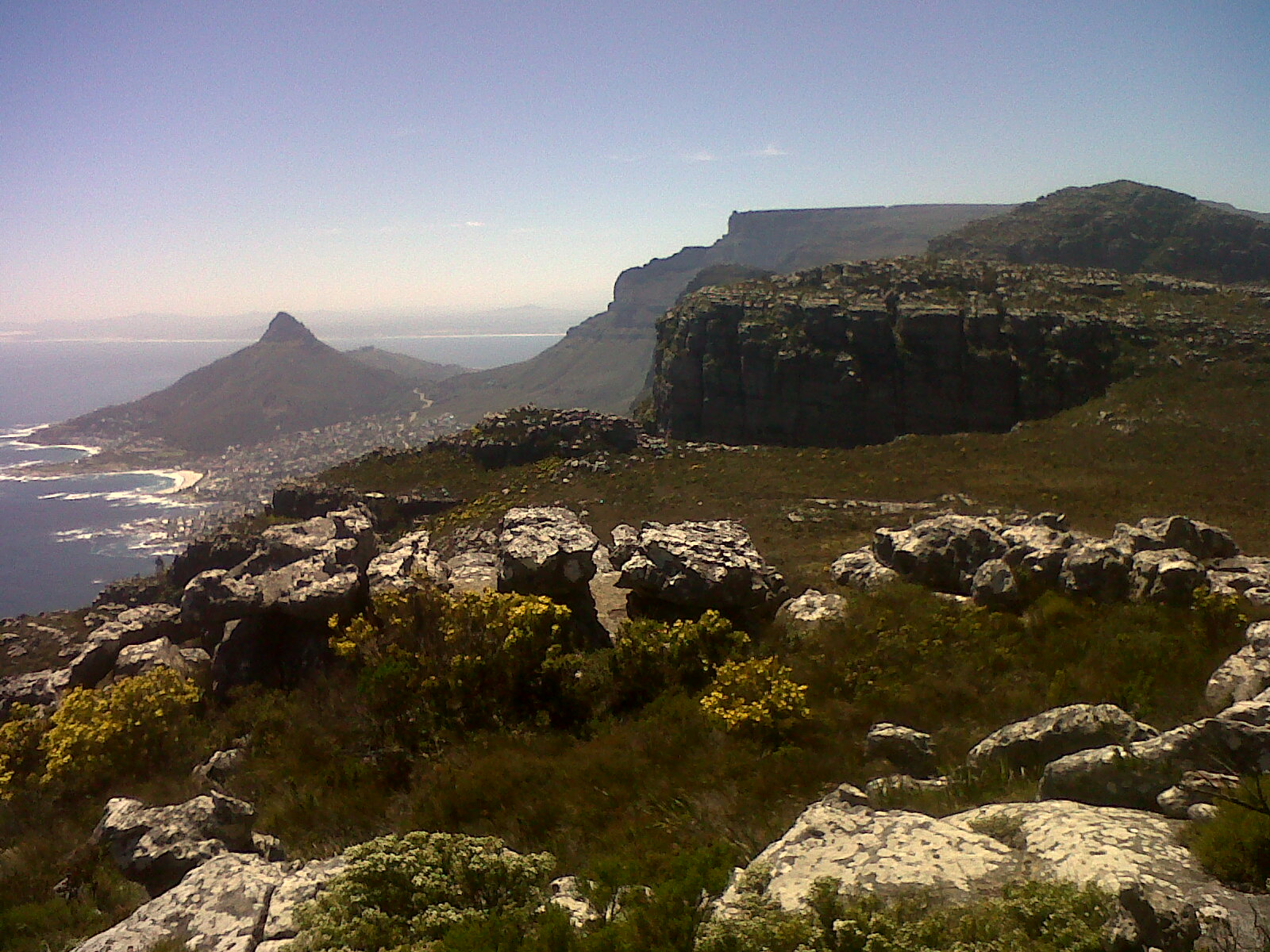
A view from near the top of Judas Peak, October 2012.
Yesterday (Sunday) I went on a hike up Judas Peak, one peaks in the Twelve Apostles range, which flanks Table Mountain and overlooks beautiful Hout Bay. On clear days, there is a gorgeous 360 degree view from the top of Judas Peak. The picture above shows the inselberg of Lion’s Head,which is another great peak to hike. I feel very fortunate to live in such a beautiful part of the world and to have a group of friends who enjoy hiking and other outdoor activities. Now that I’m in South Africa more-or-less full time, my husband and I are going to try to hike with friends at least one weekend a month. So, I’ll probably share more pictures from our hikes in the future.
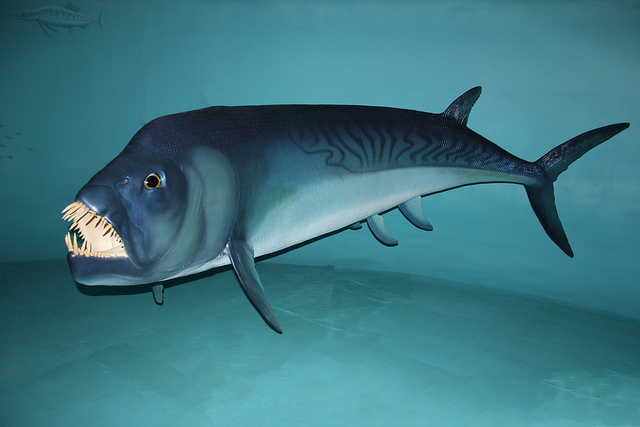
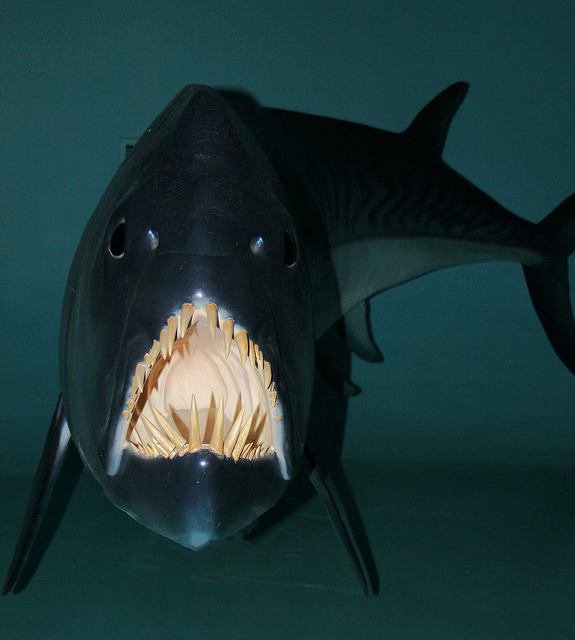
A model of a live Xiphactinus. Photo courtesy of Ron Schott.
def. Xiphactinus:
1. A large (15-20 ft long), predatory fish that lived during the Late Cretaceous.
2. A prehistoric sea monster. Seriously. What an enormous and scary looking fish.
3. A really, really cool fossil. Maybe one day I can display one in the library of my evil geologist lair.
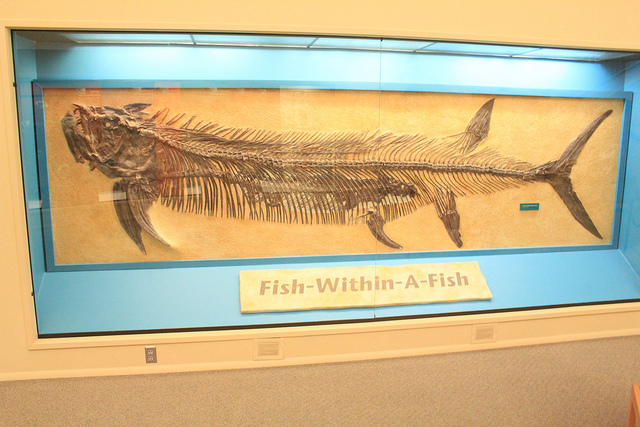
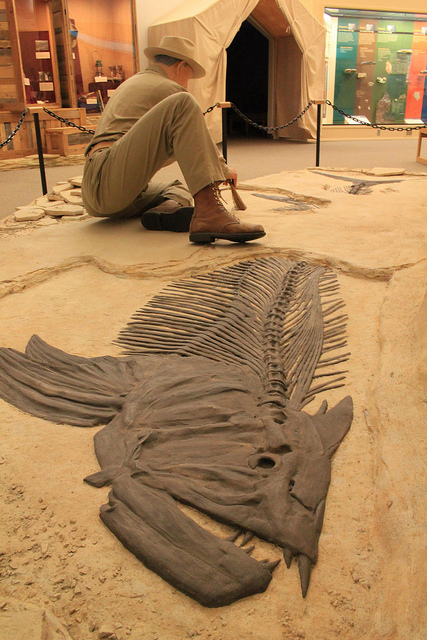
One of the most famous fossils of Xiphactinus is the “fish within a fish” fossil located at the Sternberg Museum of Natural History in Hays, Kansas. Ron Schott visited the museum several months ago and took many pictures as well as an incredible Gigapan of the “fish within a fish” fossil and some of the associated displays. Ron describes:
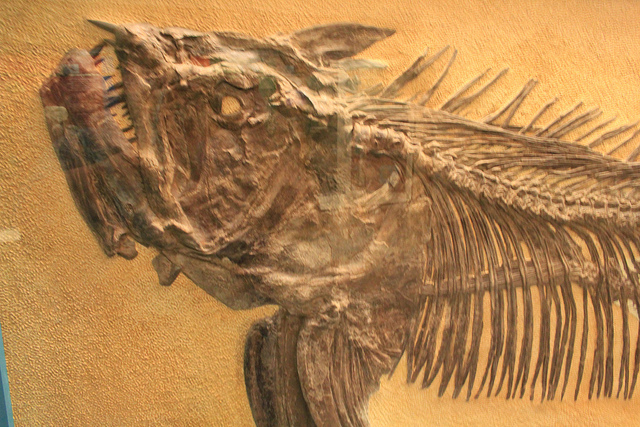
The centerpiece of the Sternberg Museum of Natural History in Hays, Kansas is the world renowned “Fish Within a Fish”. This remarkably complete sample from Gove County, Kansas is of a fourteen foot long Xiphactinus that had ingested an eight foot long Gillicus shortly before its demise in the Western Interior Seaway some 80 million years ago.
Here are some pictures that Ron took of Xiphactinus:
A fossil fish within a fossil fish. Very cool! Photo courtesy of Ron Schott.Another view of the "fish within a fish" fossil. Photo courtesy of Ron Schott.A closer view of the big fish's head. Look at those teeth! Photo courtesy of Ron Schott.Scary fish teeth! Photo courtesy of Ron Schott.A Xiphactinus skull. Photo courtesy of Ron Schott.A reconstruction of the excavation of a Xiphactinus fossil. The model person gives a good sense of scale-- this is an enormous fish! Photo courtesy of Ron Schott.Another view of the model excavation. Photo courtesy of Ron Schott.Scary Xiphactinus mouth. Photo courtesy of Ron Schott.Boo! Photo courtesy of Ron Schott.
***Thanks to Ron Schott for suggesting this week’s word and providing all the wonderful scary pictures.***
When my husband Jackie and I were working in Alaska back in late July through mid-September, we spent time both in Anchorage and in the little town of Nome. While we were in Alaska, we learned a fair amount about the famous Iditarod sled dog race. This is probably because the Iditarod starts in Anchorage and ends in Nome. We traveled to Nome by airplane, not sled dog, but we did make a point of visiting the start and finish points of the Iditarod.
Here I am at the Iditarod’s starting point in Anchorage:
Start of the Iditarod. I'm not sure that I'm at the exact starting point, but we were close and there was a sled dog statue. Note how Anchorage is warm and sunny in late July.
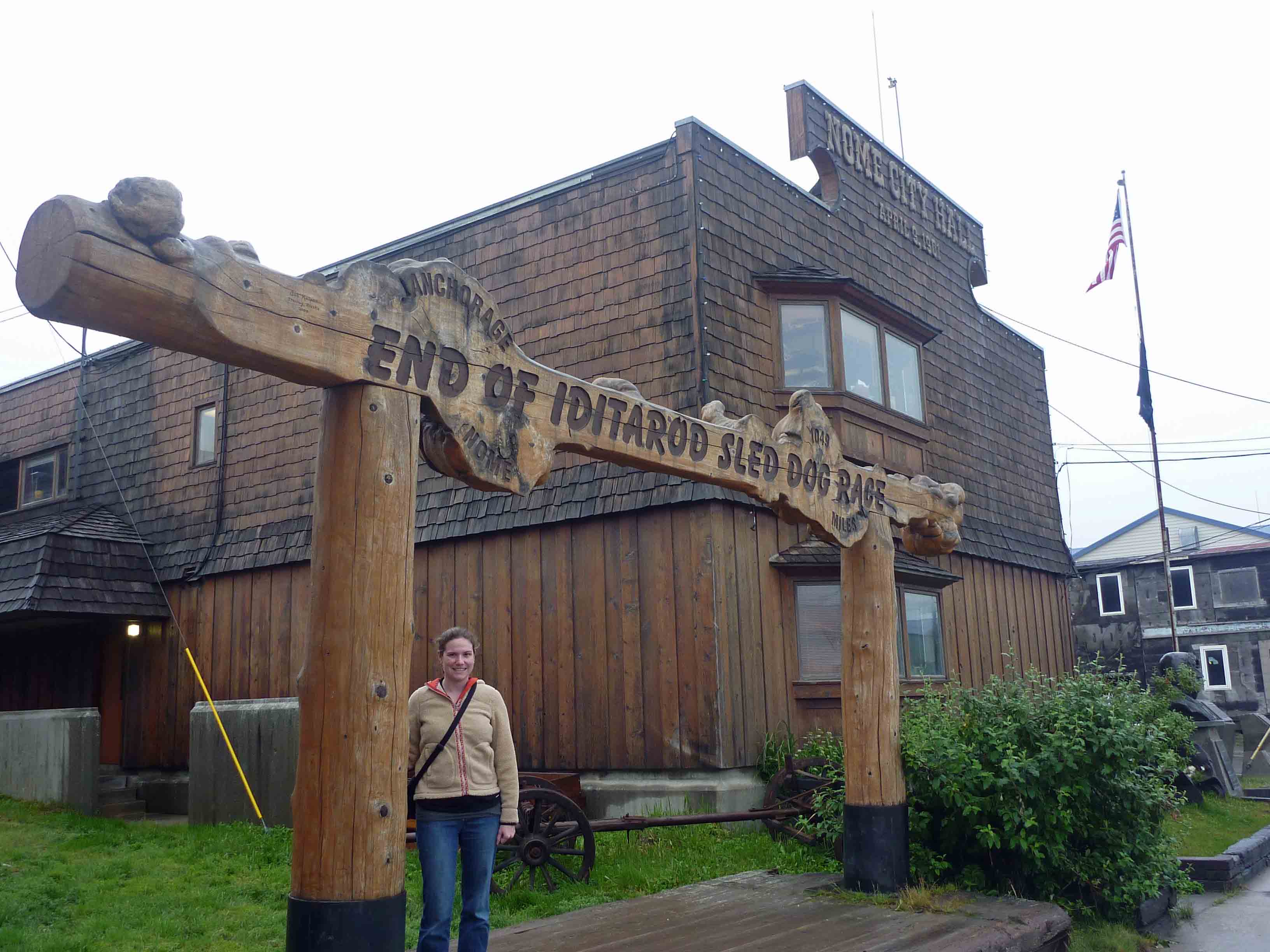
And here I am at the Iditarod’s ending point in Nome:
Finish of the Iditarod. Note how the weather in Nome (also in late July) is a bit colder and more dreary than in Anchorage.
Sunrise over peridotite mountains in downtown Muscat, the capital of Oman.
I have the honor of hosting Accretionary Wedge #50 here at Georneys. The topic I chose for the September (Deadline: October 10th) Wedge is:
Share a fun moment from geology field camp or a geology field trip. You can share a story, a picture, a song, a slogan, a page from your field notebook– anything you like!
I have many fond memories from Dartmouth’s geology field camp (called “The Stretch”) in the Western USA and also from various geologic field trips I’ve taken over the years. However, for Accretionary Wedge #50 I’ve decided to share a moment from some fieldwork I did in the Sultanate of Oman for my PhD thesis research.
I participated in two ~1 month long fieldwork seasons in Oman: January 2009 and January 2010. For the first field season one of my PhD supervisors came along to help me with mapping and collecting samples. For the second field season neither of my two PhD supervisors were available to help me with my fieldwork, so I had to recruit another helper. I ended up bringing along my husband Jackie, who was my fiance at the time. Jackie was already working full-time as an industry geologist, but fortunately he had accumulated significant vacation time from several months that he spent at sea and in the field. So, Jackie cashed in 3 1/2 weeks worth of hard-earned vacation time… and then spent his vacation helping me do more geology work!
Jackie and I worked hard during the field season. We worked long days, eating a quick campfire breakfast of oatmeal with tea or coffee and then heading off to the day’s sampling location. We would map and sample until a couple of hours before dark and then head back to camp. Even though January is the middle of winter for Oman, the days were often sunny and hot. Temperatures in the 90s were not uncommon, and we had to be careful to keep our heads covered and stay hydrated. We usually drink plain water when hiking, but working in Oman is so hot that we frequently mixed Gatorade powder into our water bottles as the electrolytes seemed to help prevent dehydration. We usually arrived back at camp a little before sunset. Some nights we arrived at a new campsite and had to pitch our tent and set-up the rest of the camp. Other nights we returned to a campsite and just had to help make dinner. Most nights we joined up with a group of scientific colleagues who were working in similar field areas. A few nights we camped on our own and made a small makeshift meal, generally out of canned supplies that were perhaps supplemented by a few local ingredients from a nearby town. No fresh food stays fresh for very long in 90+ degree temperatures. We ate plenty of canned hummus and tahini, that’s for sure!
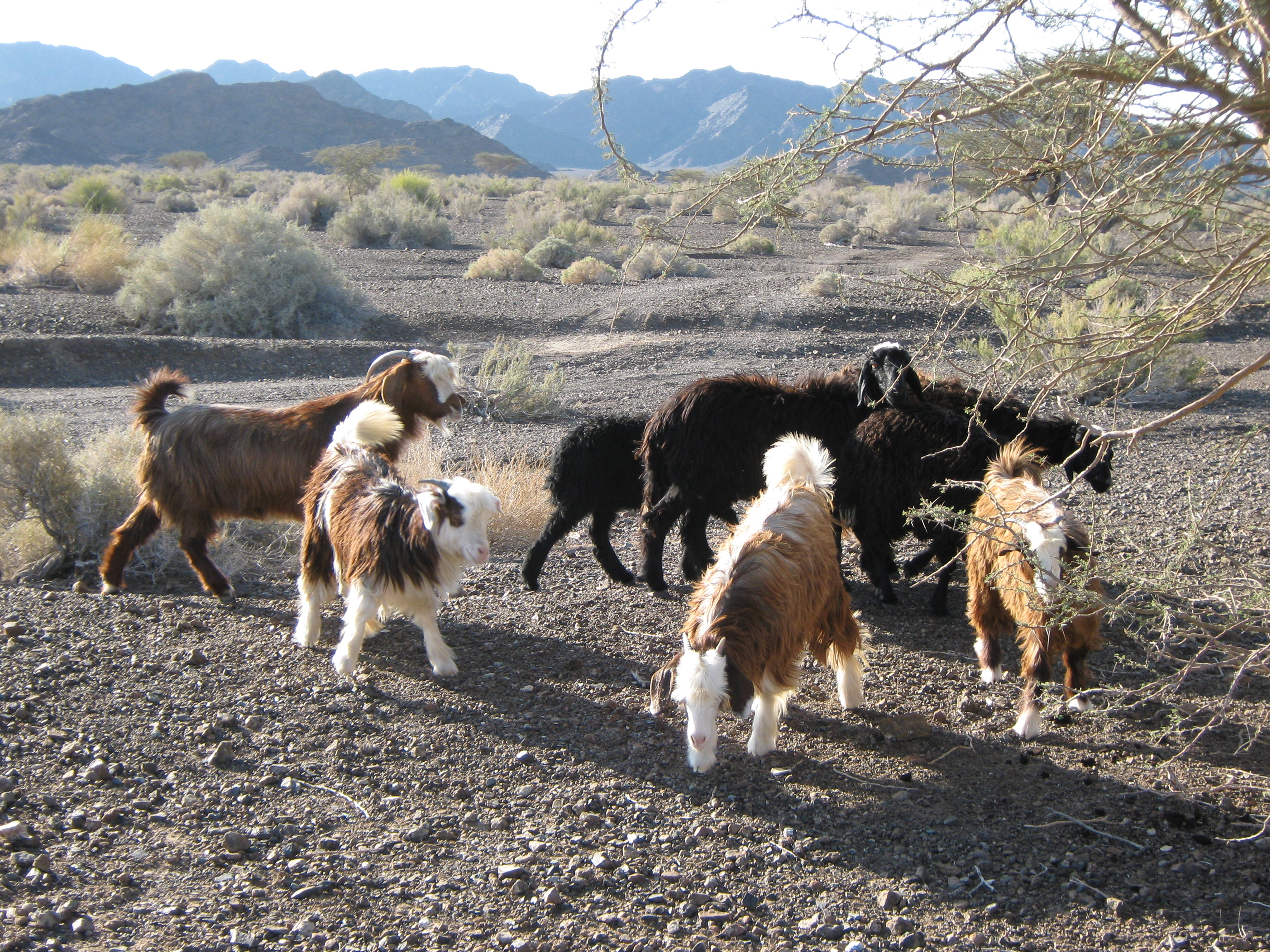
My PhD fieldwork in Oman mostly went smoothly, but there were some challenging days. During my first field season in 2009, we experienced a rare torrential downpour, and our hotel in Oman’s capital city of Muscat flooded. We had to dart around our rooms picking our bags and other gear and putting them on top of beds and sofas as the floors turned into rivers. I remember walking down the hotel stairs to inform the hotel management about the flood and feeling as if I were climbing down a waterfall. There was no need for me to inform the management– they were already rushing around with mops and buckets and trying to placate several disgruntled guests. During the 2009 field season we also had problems with goats invading one of our campsites. One of my scientific colleagues gave a half-rotted apple to one adorable goat that wandered into our camp, and within a few minutes all of the goat’s friends arrived– more than a dozen friends! The goats started eating through the cardboard boxes that contained our vegetables and fruit, eating the cardboard along with the food!
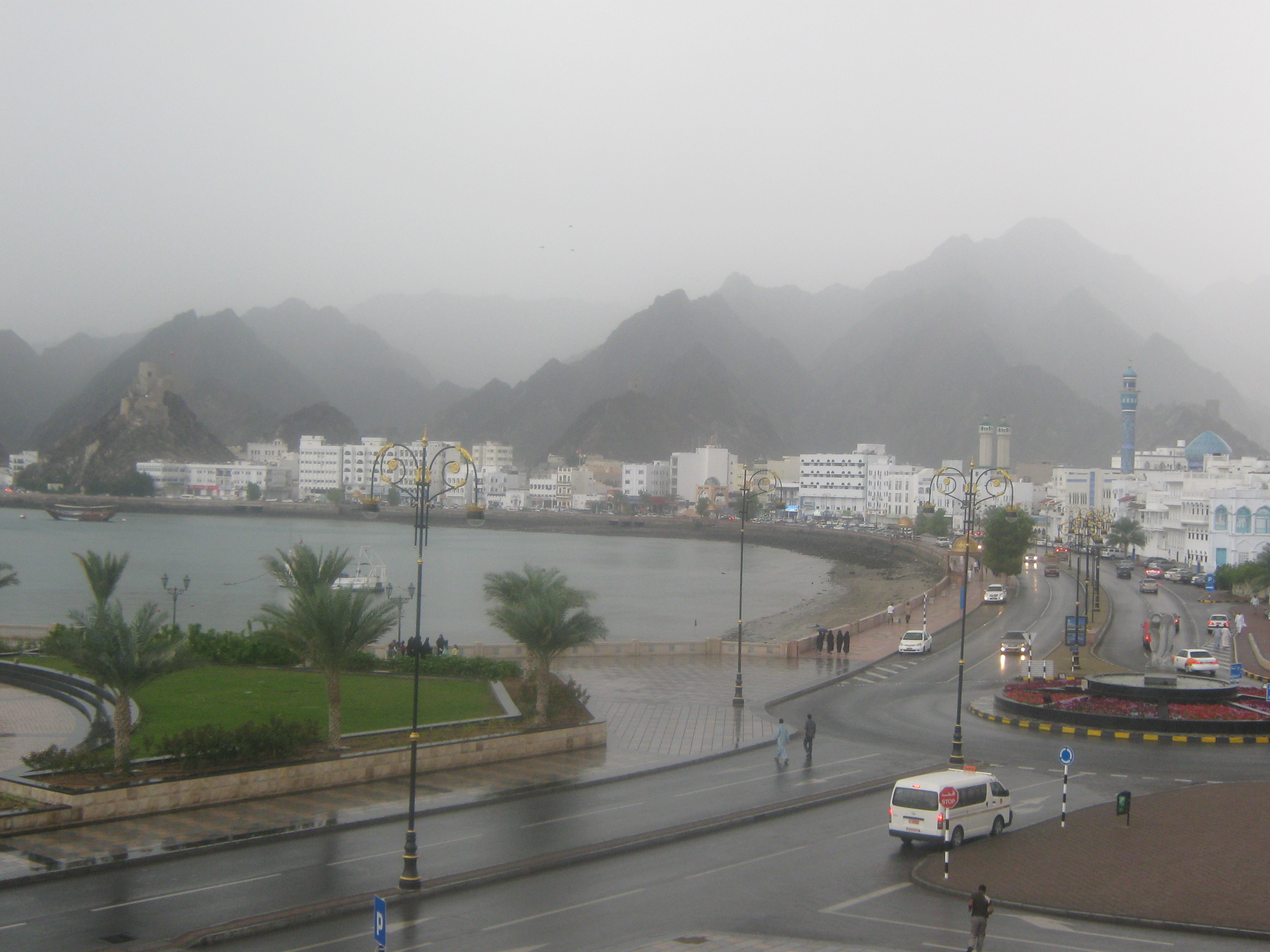
A rare Muscat rainstorm. This storm was in 2010, but we experienced a similar storm during the flooding event of 2009.A small goat invasion.
Jackie and I had a few challenging days during the 2010 field season, too. One morning we were packing up our tent when suddenly Jackie jumped away from the tent and screamed. I asked him what was wrong, and he replied, “There’s a spider under the tent fly.” I rolled my eyes and asked, “Is that all?” Then I looked under the tent fly and started screaming myself. Underneath the tent fly was an enormouscamel spider. Now, I knew that camel spiders are relatively harmless: they aren’t poisonous, and accounts of them attacking people are mostly urban legends. In fact, they aren’t even spiders; they are solifugae. There is actually a variety of poisonous spiders, scorpions, and snakes in Oman, so camel spiders are really the least of your worries when camping in the Oman Mountains. However, camel spiders are very large and can run very fast, and for some reason this makes me– and I guess also Jackie– petrified of them. Eventually, we managed to gently coax the camel spider away from our tent with a stick. After carefully checking the rest of our tent for other critters, we packed up camp and started driving to our next sampling location.
Jackie and I at the start of the 2010 field season. Already, we look sunburned! That's Muscat in the background. Notice the old fort in the far distance.
Towards the end of the 2010 field season, we had a couple of very difficult days. One morning, I woke up and felt horribly ill. I think I must have caught some sort of flu. I don’t think it was food poisoning because I hadn’t had anything to eat or drink that was out of the ordinary, and no one else in our group fell ill from the food that we shared. Whatever I had, I was very, very sick. I immediately vomited up any food or water. All day, I could only keep a few sips of Sprite down. I left a certain public bathroom in a certain little Omani village in a terrible state. One day, I must go back and do something nice for the village– maybe donate a sparkling new public bathroom. By the end of the day of vomiting, I was becoming dangerously dehydrated. Jackie ended up driving me to a rural hospital, where a kind doctor treated me for free. The doctor did ask if perhaps I were pregnant with another child and experiencing morning sickness (note: Jackie and I have no children; I guess he thought Jackie and I were old enough to have a couple of kids), but once we assured him that I was not pregnant, he diagnosed me with flu, rehydrated me, and gave me some medicine to take back to camp. After a day or two I felt much better, just a little bit weak. However, I can’t say that I’d like to repeat the combination of having flu and camping in hot weather anytime in the near future! Poor Jackie ended up catching my “death flu”, as we called it, a few days later. However, I didn’t feel too sorry for him because he had “death flu” in the nice air conditioned hotel room with a proper bathroom in Muscat.
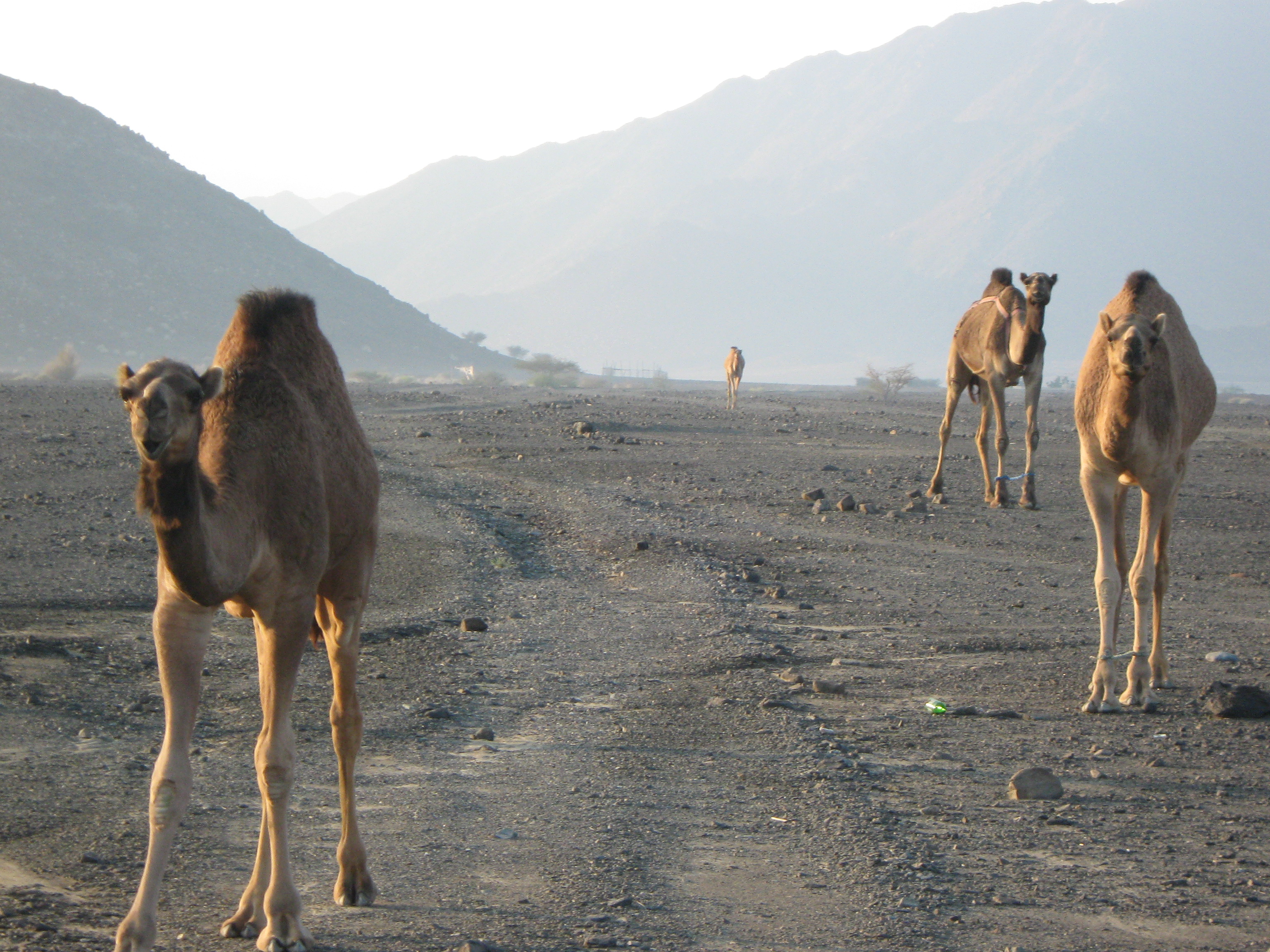
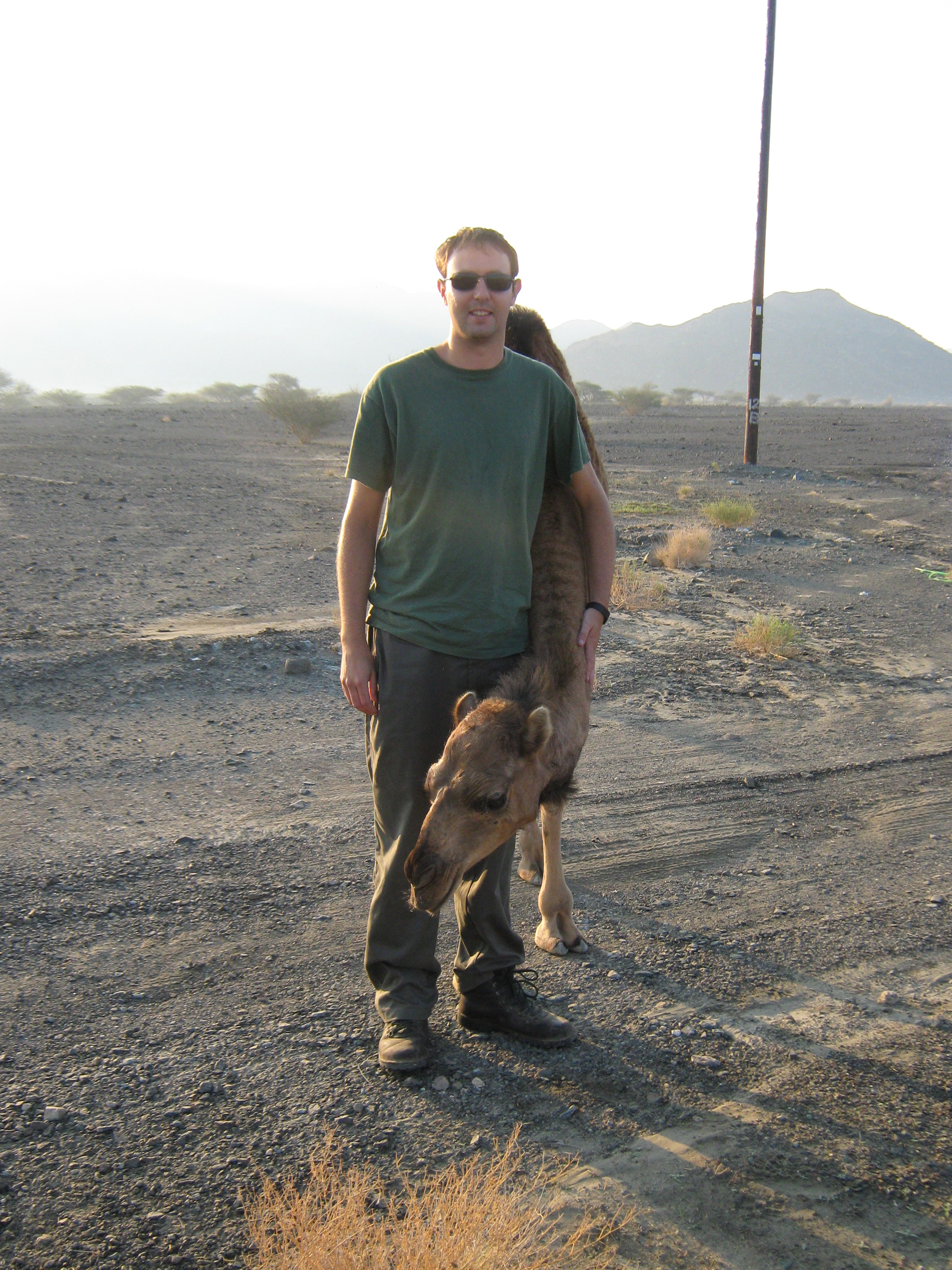
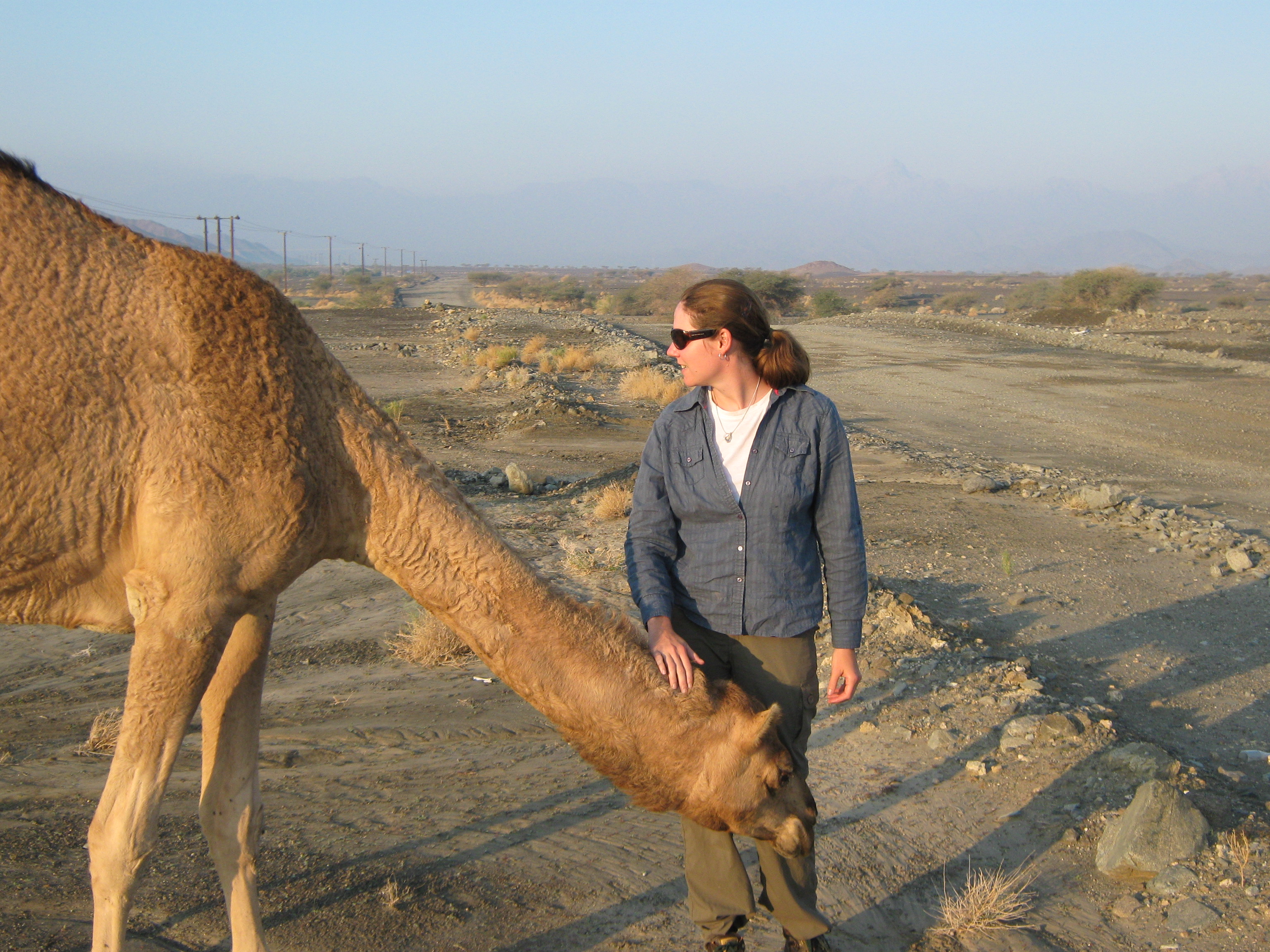
However, there were also plenty of wonderful field moments during the 2010 field season to make up for the challenging times. I wanted to share one moment in particular: a camel sunrise. As Jackie and I were driving out of camp early one morning along a dirt road, we stopped to observe four camels in the distance. As we stood by our Land Cruiser, the four camels slowly walked towards us and came over to say hello. We pet all of the camels, and a juvenile camel was particularly affectionate. After awhile, the camels continued on their way, stopping now and then to nibble on Acacia trees as they shuffled along. I have a vivid memory of the few minutes we spent watching the camels– the early morning light was beautiful, and for that moment all the world seemed to contain were the two of us, our Land Cruiser, the camels, and the mountains. In a busy, often crowded world, I’ve learned to treasure such moments. It was one of those moments that makes you remember why you became a geologist. It was one of those moments that makes you remember why you keep going into the field– floods, goats, camel spiders, “death flu”, and all.
Approaching camels.Closer......And Closer......And Closer!The affectionate juvenile camel.Cuddling with a camel.Petting one of the adult camels.Shuffling away. The adult camels had their legs tied together with ropes to keep them from wandering too far.Every day I'm shuffling.
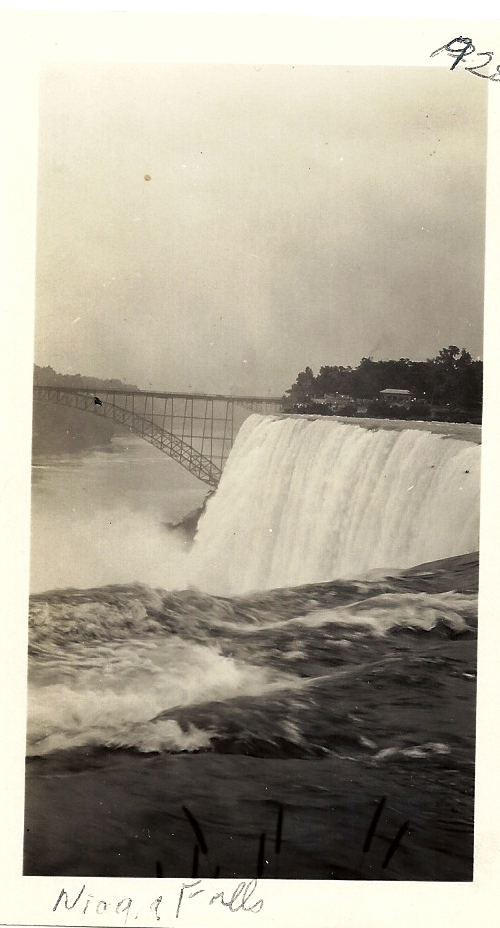
For last week’s Monday Geology Picture I shared a picture that I took of Niagara Falls in 2005. The glacially-carved falls have been attracting tourists for many, many years. This week, I am sharing some black and white photographs of Niagara Falls that were taken in 1928! These pictures were sent to me by Ann of the blog Ann’s Musings on Geology and Other Things. Ann informs me that these are family photographs of hers that she scanned. Thanks so much for sharing these wonderful photographs with me, Ann… and for letting me share them here on Georneys!
Niagara Falls circa 1928 #2.Niagara Falls circa 1928 #3.Niagara Falls circa 1928 #4.Niagara Falls circa 1928 #5.Niagara Falls circa 1928 #6.Niagara Falls circa 1928 #7.Niagara Falls circa 1928 #8.
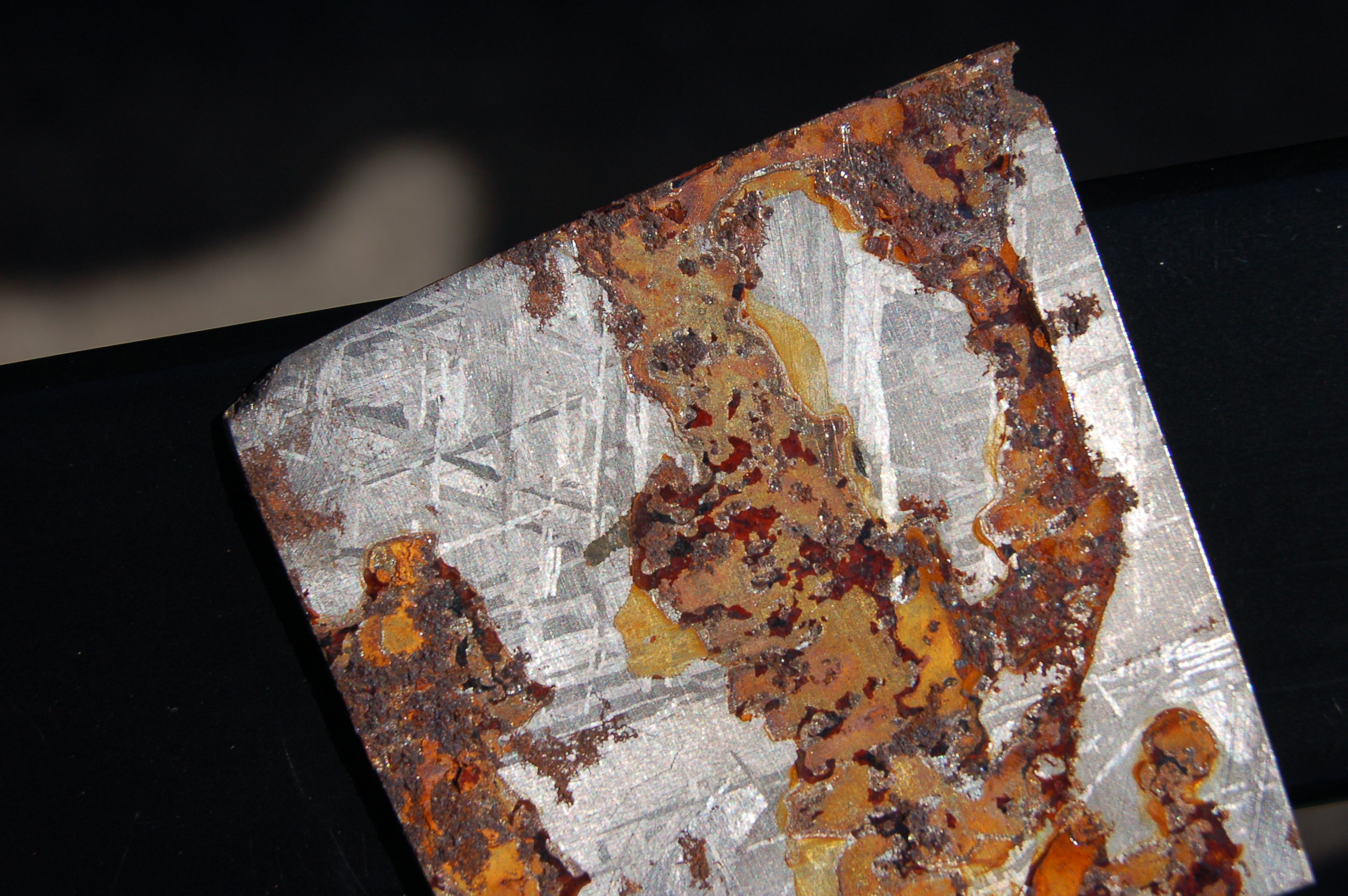
A slice of meteorite displaying a Widmanstätten pattern (silvery patches) in between oxidized or rusted sections (reddish brown patches). Photo courtesy of Lockwood Dewitt.
def. Widmanstätten Pattern:
An interweaving pattern of the extraterrestrial minerals kamacite (a low nickel content iron-nickel alloy, similar to the terrestrial mineral ferrite) and taenite (a high nickel content iron-nickel alloy, similar to the terrestrial mineral austenite) that appears in some iron-nickel meteorites when a cut section of the meteorite is etched with weak acid.
Widmanstätten patterns appear during acid etching because kamacite is more easily dissolved by weak acid than taenite. Widmanstätten patterns are believed to form in a few different ways (depending on the pressure and temperature conditions experienced; I won’t go into too much detail on this) as iron-nickel material separates into the high-nickel and low-nickel minerals as it cools. Whatever the formation pathway, Widmanstätten patterns can only form when there is very slow cooling in an environment such as the core of a planet. Therefore, Widmanstätten patterns are only found in meteorites, not in any naturally forming rocks on Earth’s surface. In fact, Widmanstätten patterns require such slow cooling that they cannot even be reproduced by scientists in a laboratory.
Widmanstätten patterns are named after Count Alois von Beckh Widmanstätten, an Austrian scientist who discovered the patterns in 1808 when he was flame heating a meteorite. Count Widmanstätten never published his discovery, but he orally communicated it to his scientific colleagues, and the pattern was named after him. Some scientists believe that the patterns should also be called Thomson patterns because a scientist named G. Thomson had previously, independently discovered the patterns when he was trying to use acid to clean some rust off of a meteorite. Thomson published his discovery in French in 1804. However, Thomson’s discovery was not widely spread throughout the scientific community because the Napoleonic wars interrupted Thomson’s communication with his scientific colleagues (Thomson was English) as he was living in Naples, Italy at the time. Thomson also died at an early age in 1806 before Widmanstätten made his own discovery of the patterns.
I, for one, always forget how to spell and pronounce “Widmanstätten.” Perhaps I’ll remember better after this post. Regardless, I’m happy to know that, due to some scientists trying to right some misfortunes and twists of history, I can always google “Thomson patterns” to find out the more popular name of “those pretty meteorite pattern thingies.”
Below are a few more pictures of Widmanstätten patterns. If anyone else has additional pictures of Widmanstätten patterns, I’d love to add them to this post. Just email them to georneys blog (AT) gmail.
Another view of the Widmanstätten pattern on Lockwood's meteorite. Picture courtesy of Lockwood DeWitt.Widmanstätten pattern on the Cape York meteorite at the American Museum of Natural History in New York City. Picture courtesy of Patrick Donohue.
***Thanks to several of my twitter followers for suggesting this week’s word. Thanks to Lockwood DeWitt and Patrick Donohue for providing pictures.***
Salmon Lake #1. The sign for the Salmon Lake Campground.
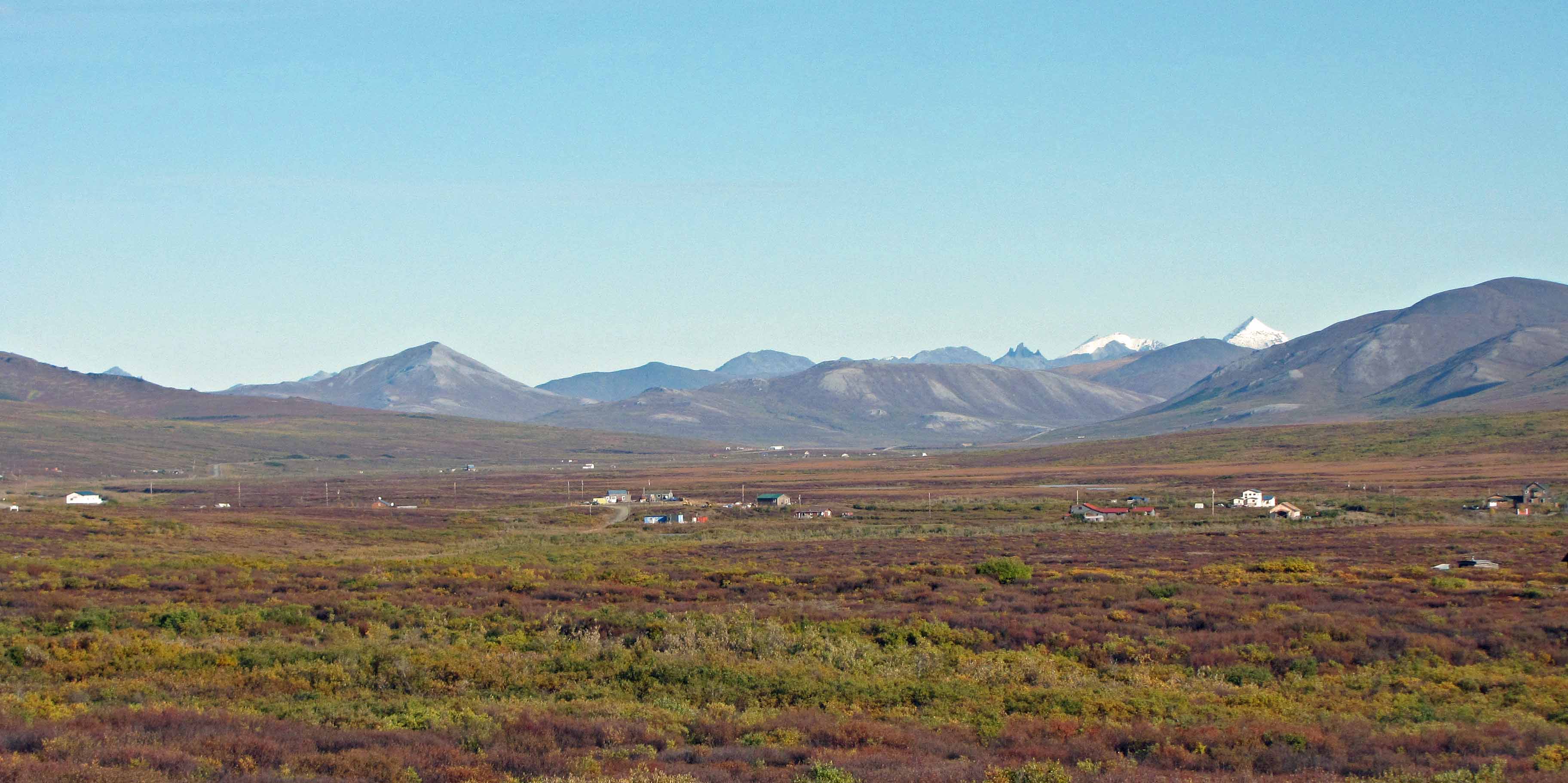
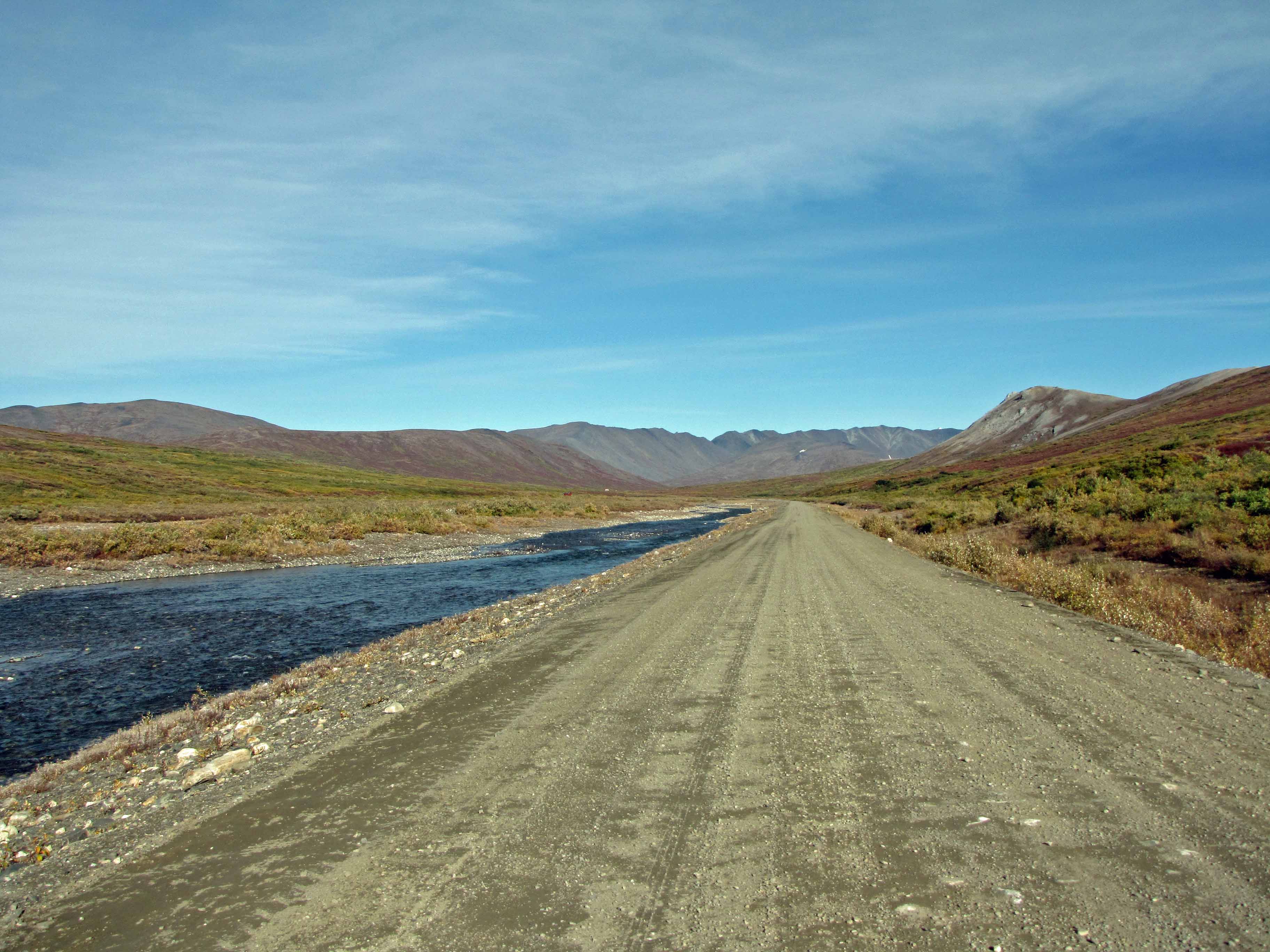
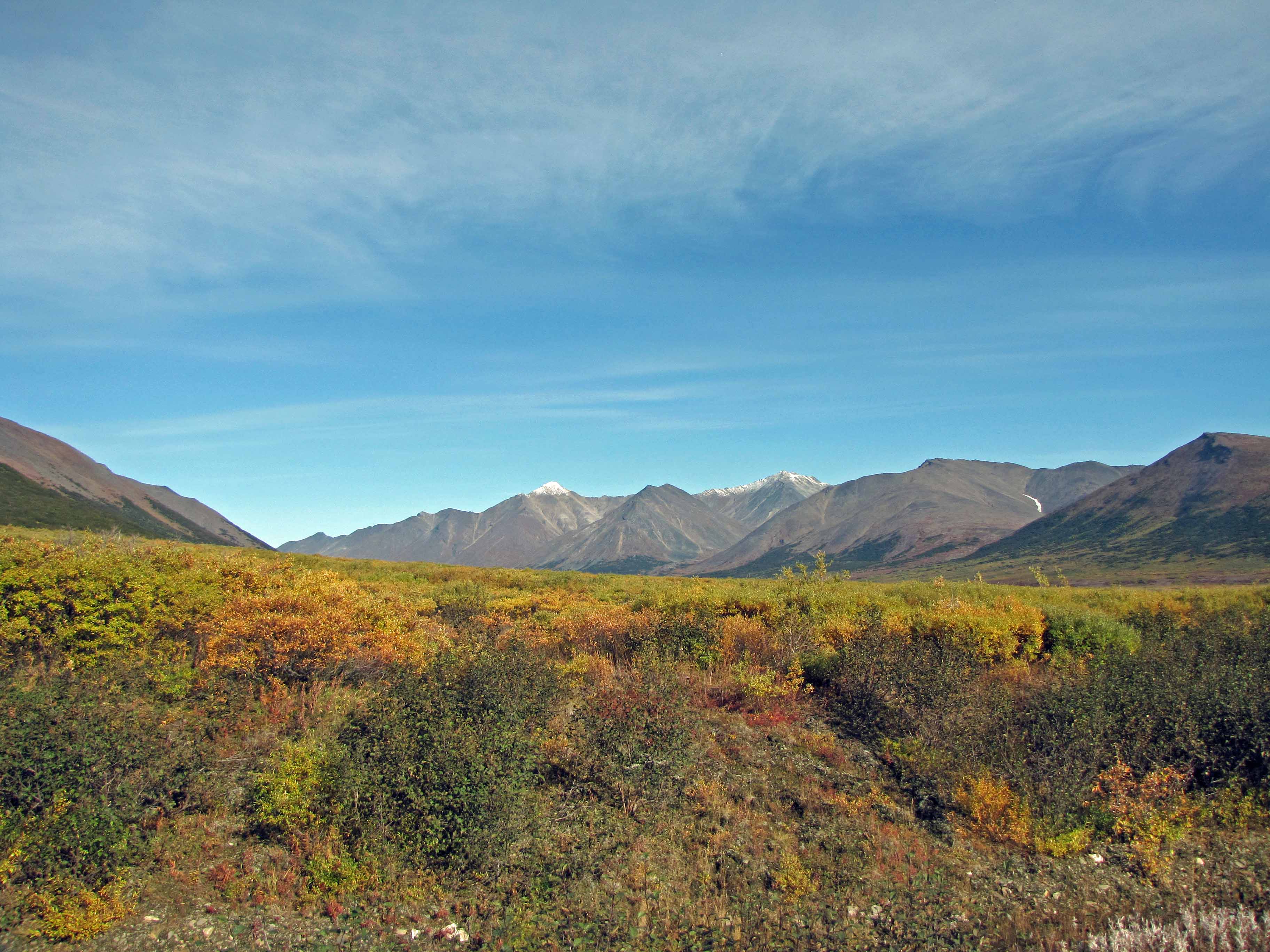
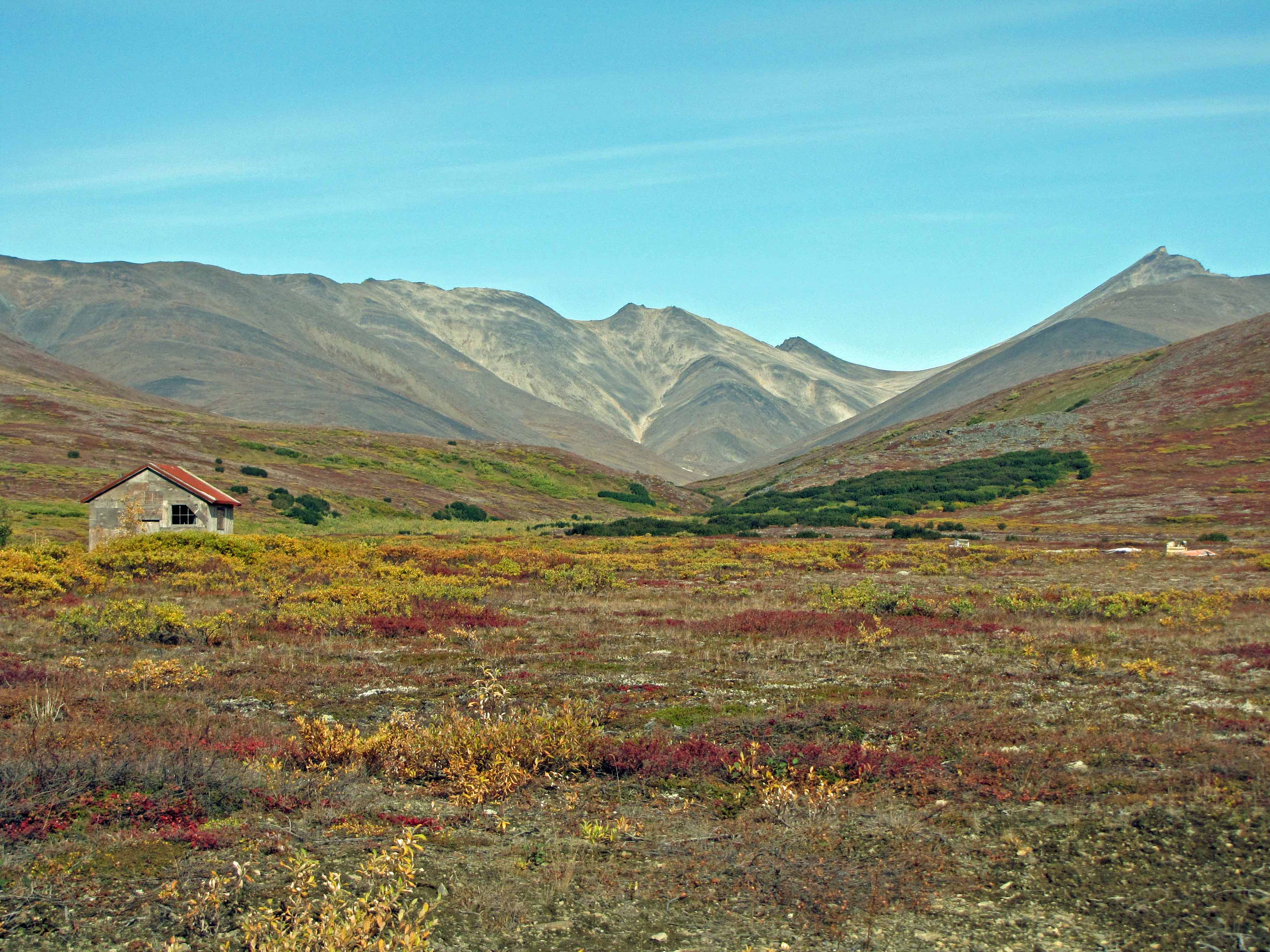
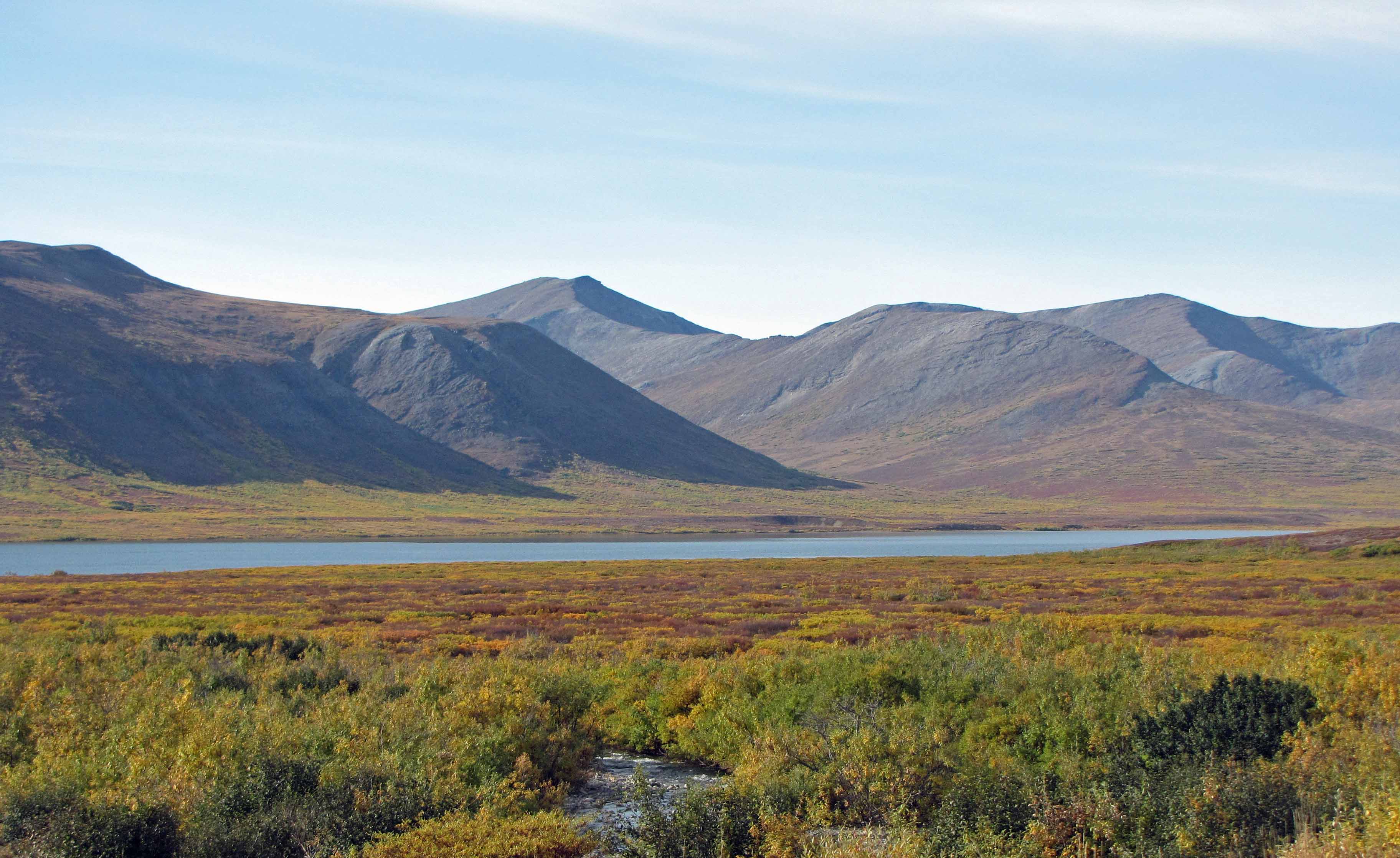
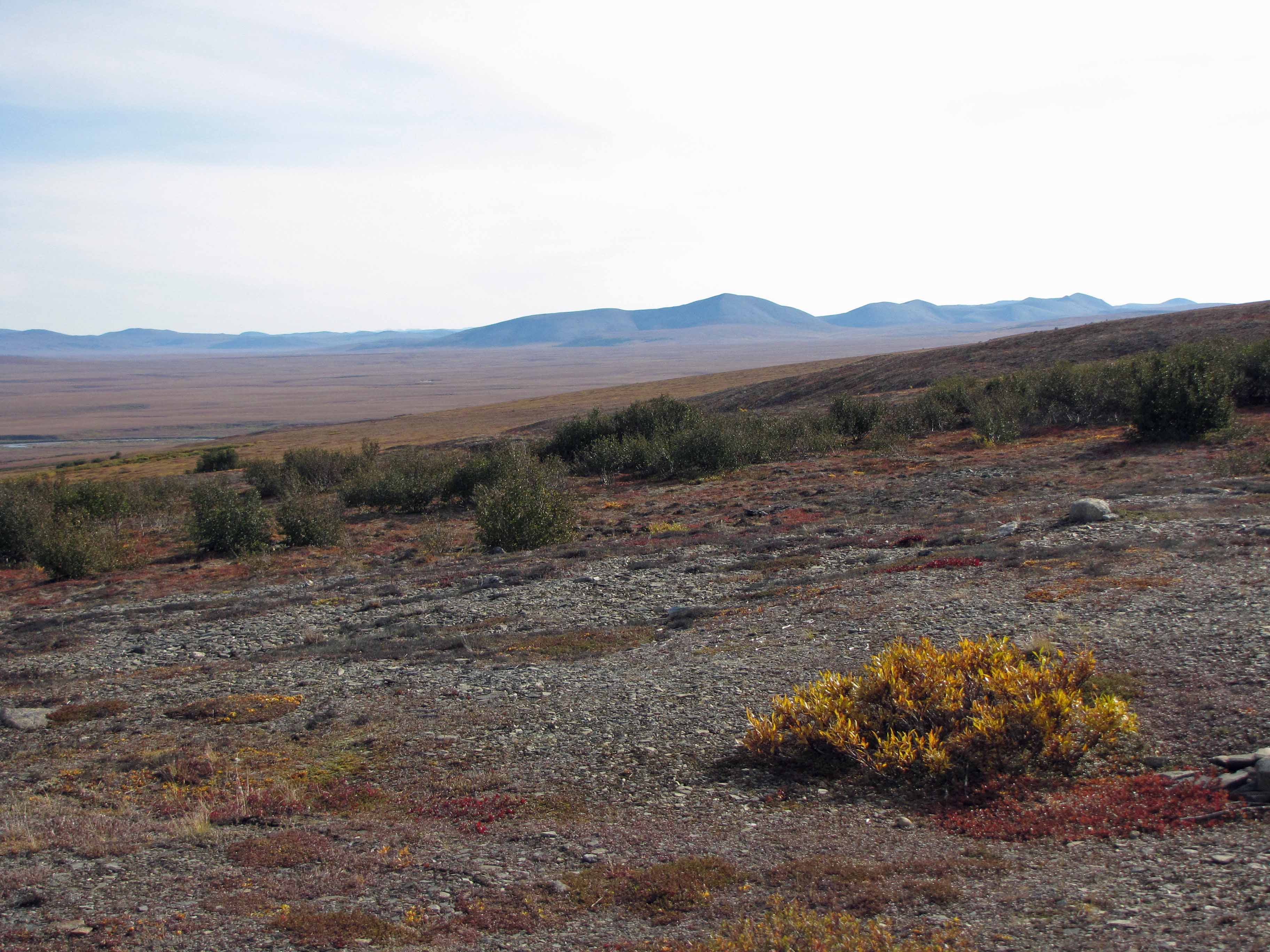
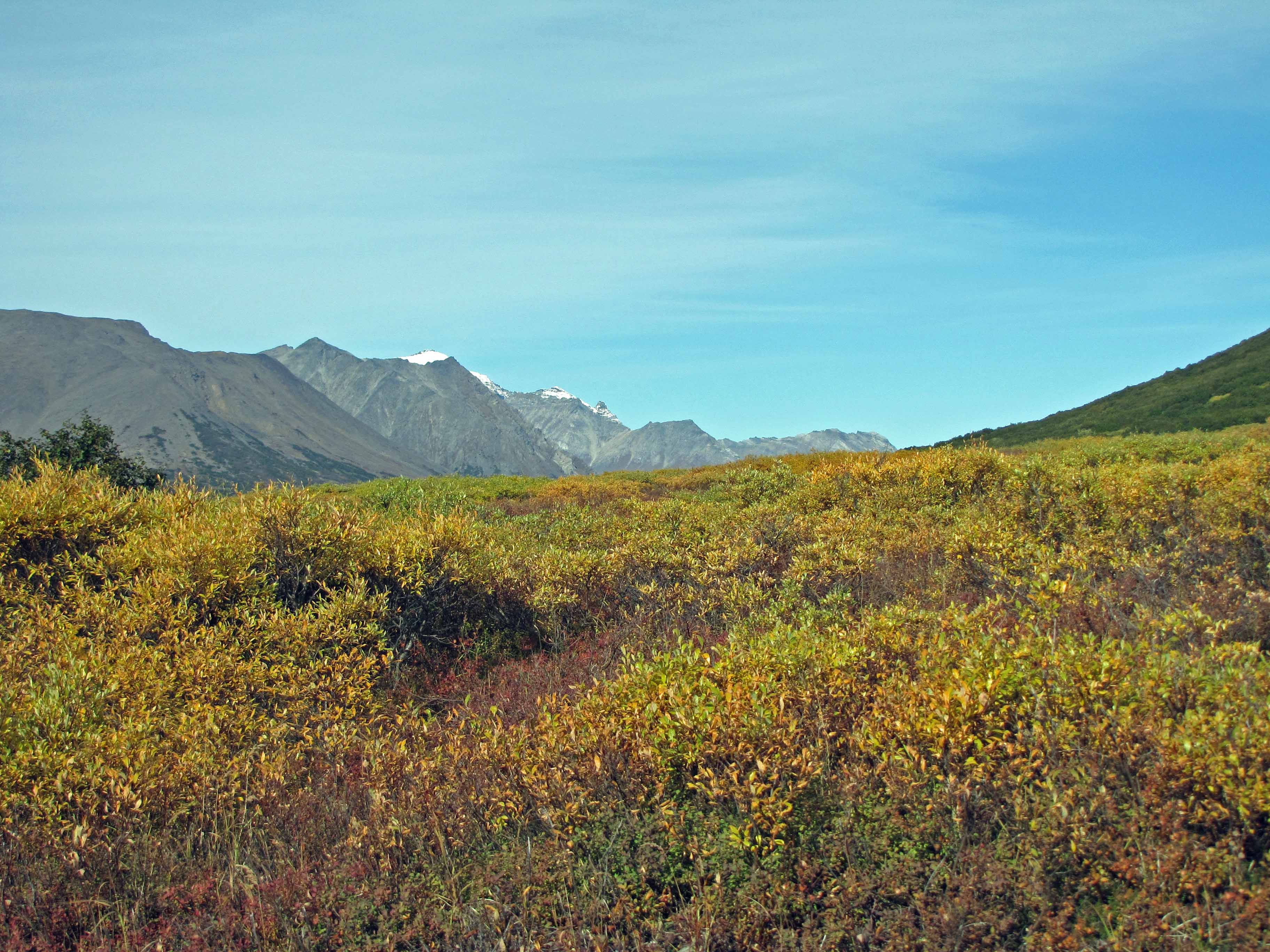
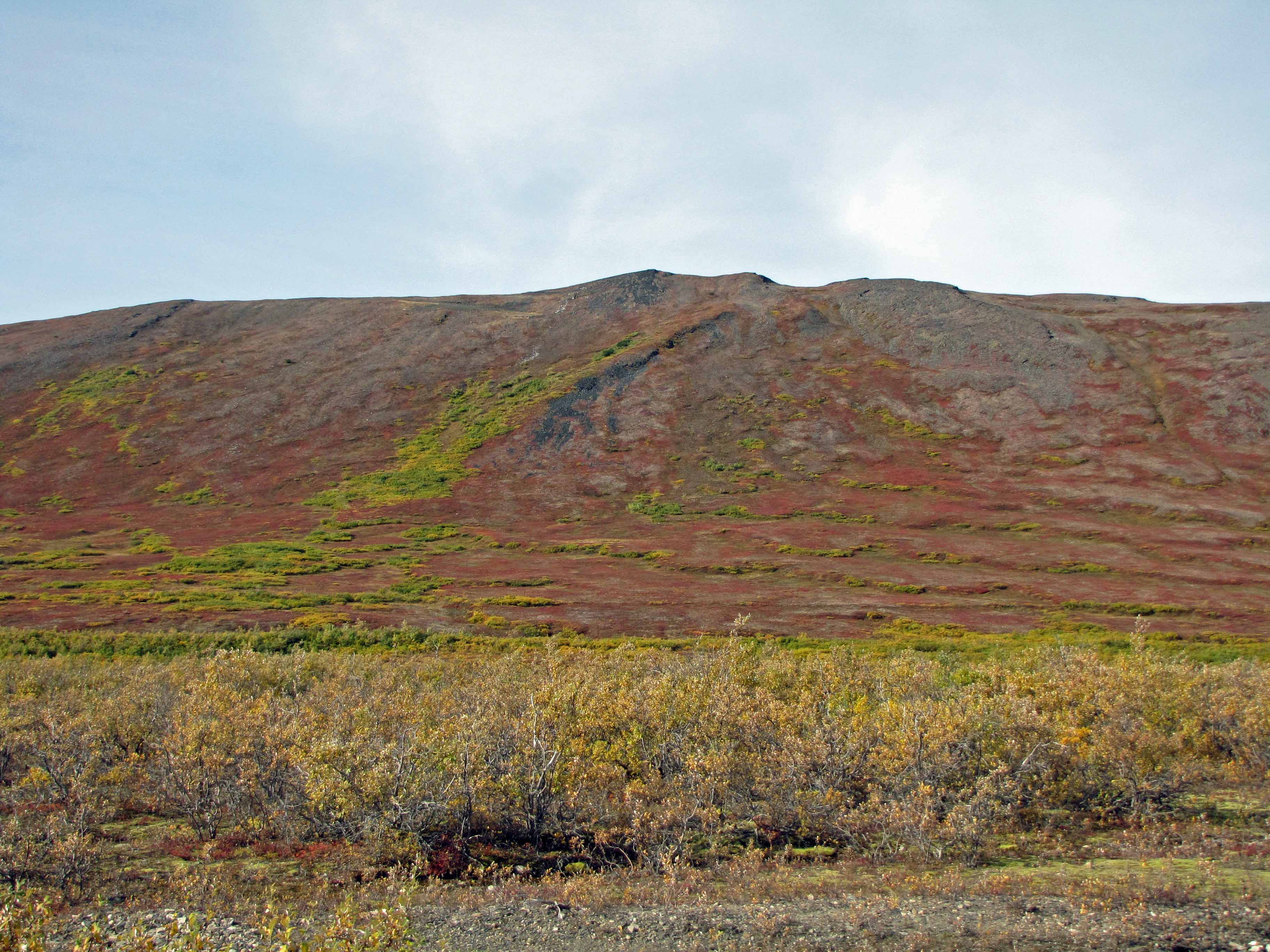
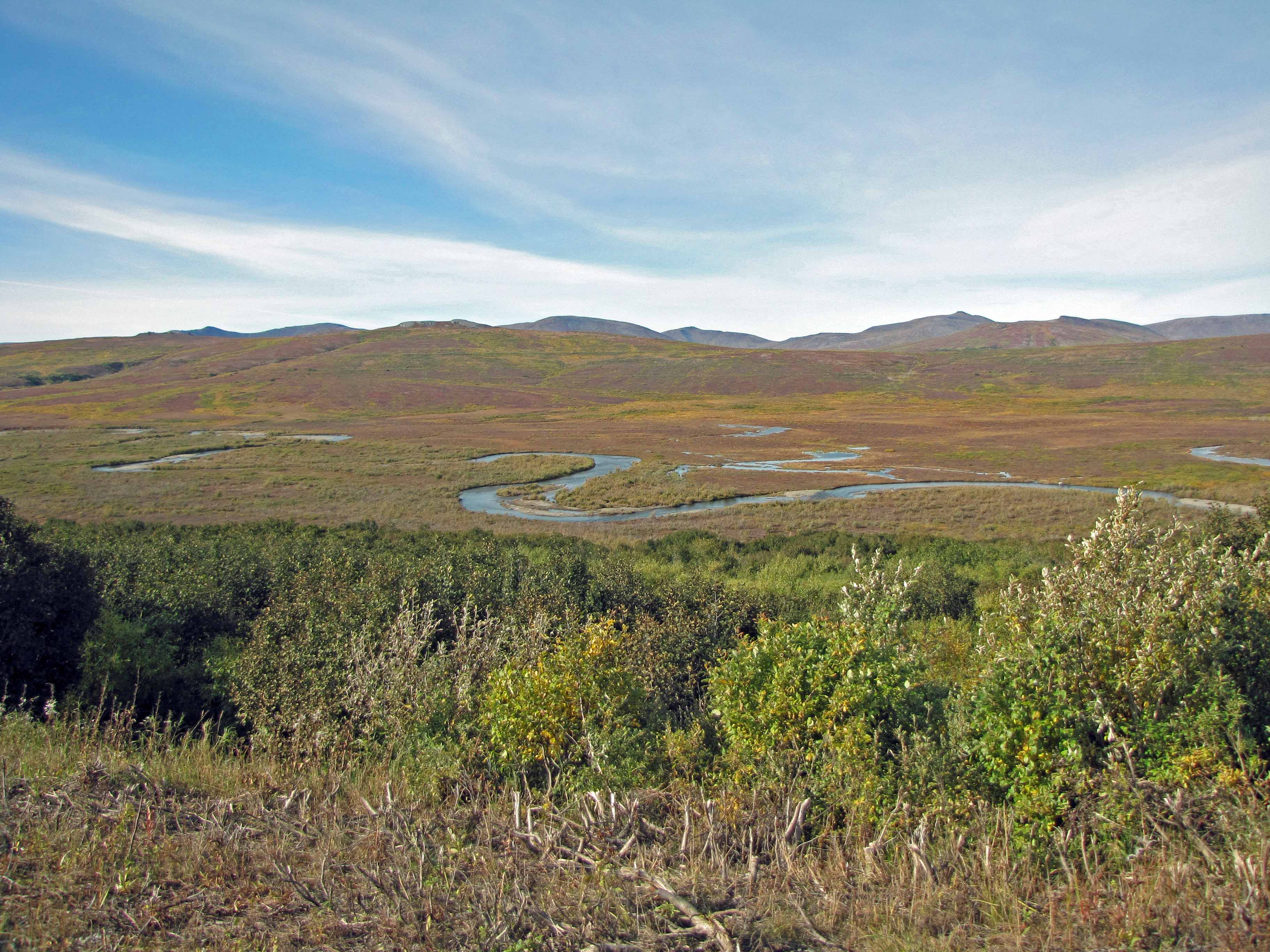
On one of our last days in Nome, Alaska, my husband and I had the opportunity to drive up the road to a little place called Salmon Lake. The U.S. Bureau of Land Management operates a summer campground on the shore of Salmon Lake. We drove up to Salmon Lake to check out the beautiful scenery (especially the gorgeous, snow-capped Kigluaik Mountains) and also to take a look at some regional geology. We were fortunate enough to have a beautiful, sunny September day for our drive. I thought I would share some pictures that we took along the drive. Enjoy!
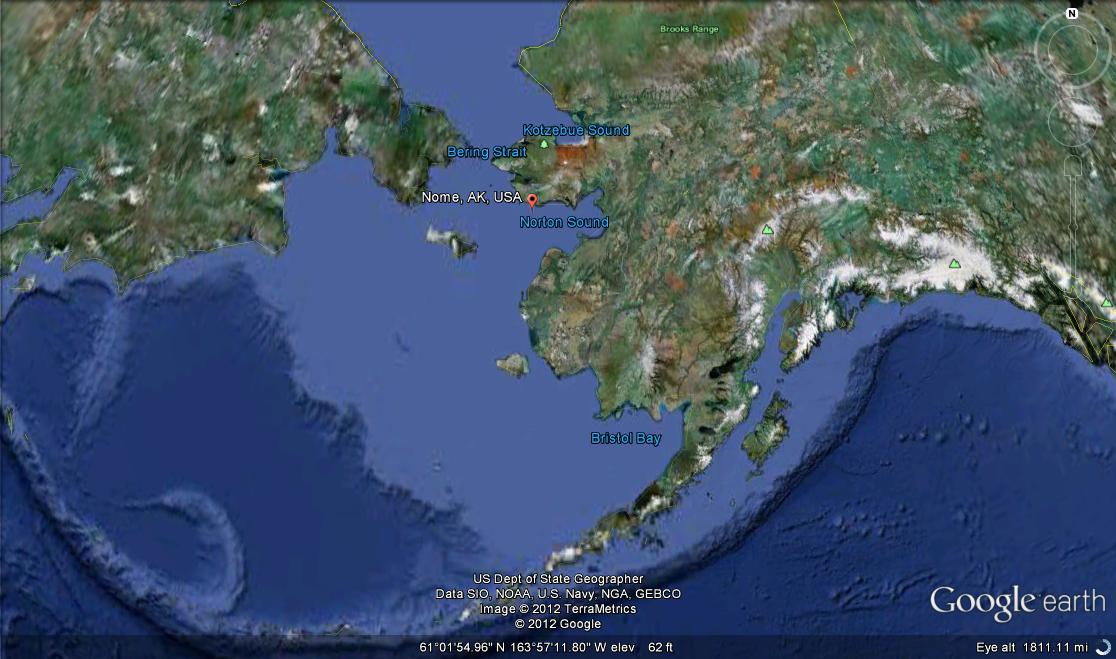
First, here’s a map showing the location of Nome:
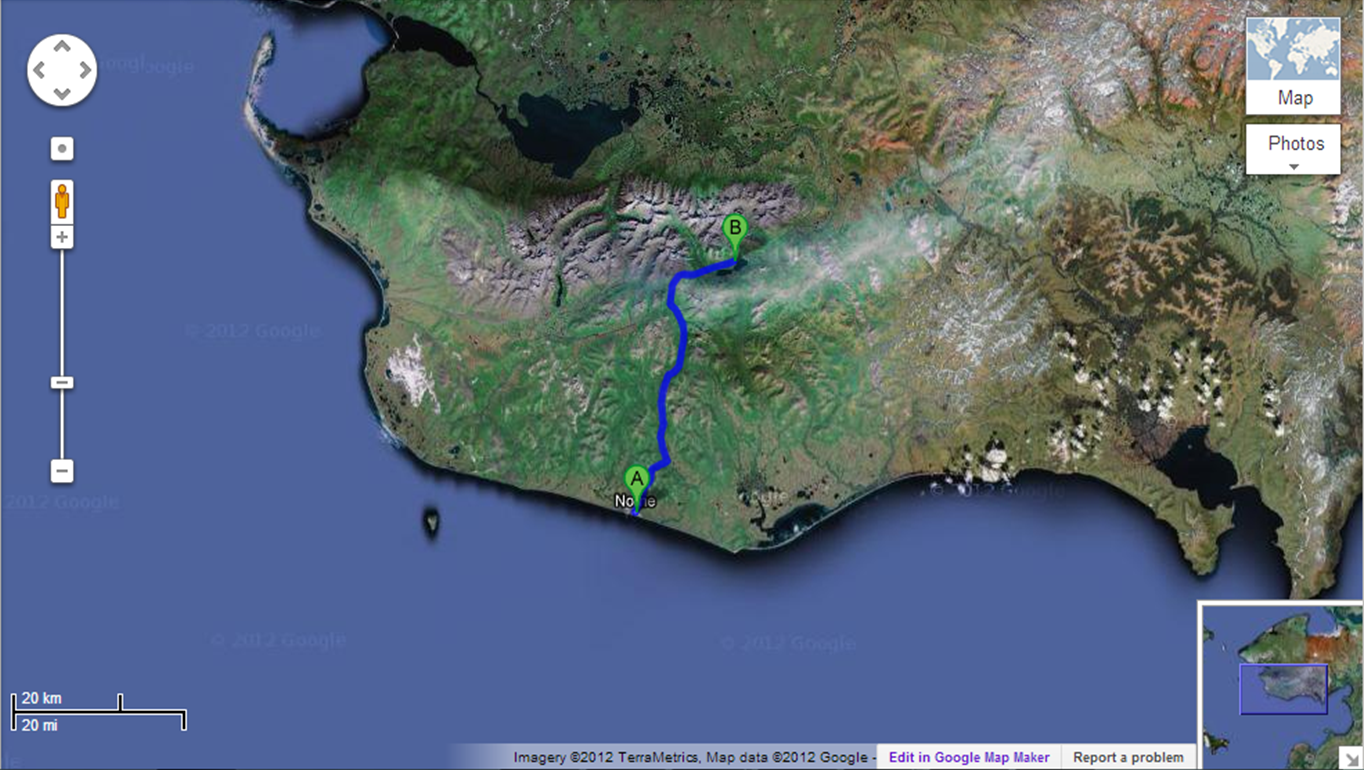
And here’s a map showing the route from Nome (A) to Salmon Lake (B):
On our drive, we actually continued past Salmon Lake for a few miles before turning around and heading back to Nome.
Second, here’s an informational blurb on Salmon Lake from the BLM website:
The Nome Field Station maintains Salmon Lake Campground, 40 miles north of Nome on the Nome-Kougarok Road. The campground offers 6 campsites with fire pits and picnic tables, a natural boat launch at Salmon Lake, and an outhouse. The campground opens in late June after the Nome-Kougarok Road is free of snow and remains open until mid October, depending on snow and road conditions. The Salmon Lake area offers outstanding recreational opportunities. It’s the spawning grounds for the northernmost run of sockeye salmon in the United States.
And now for the pictures:
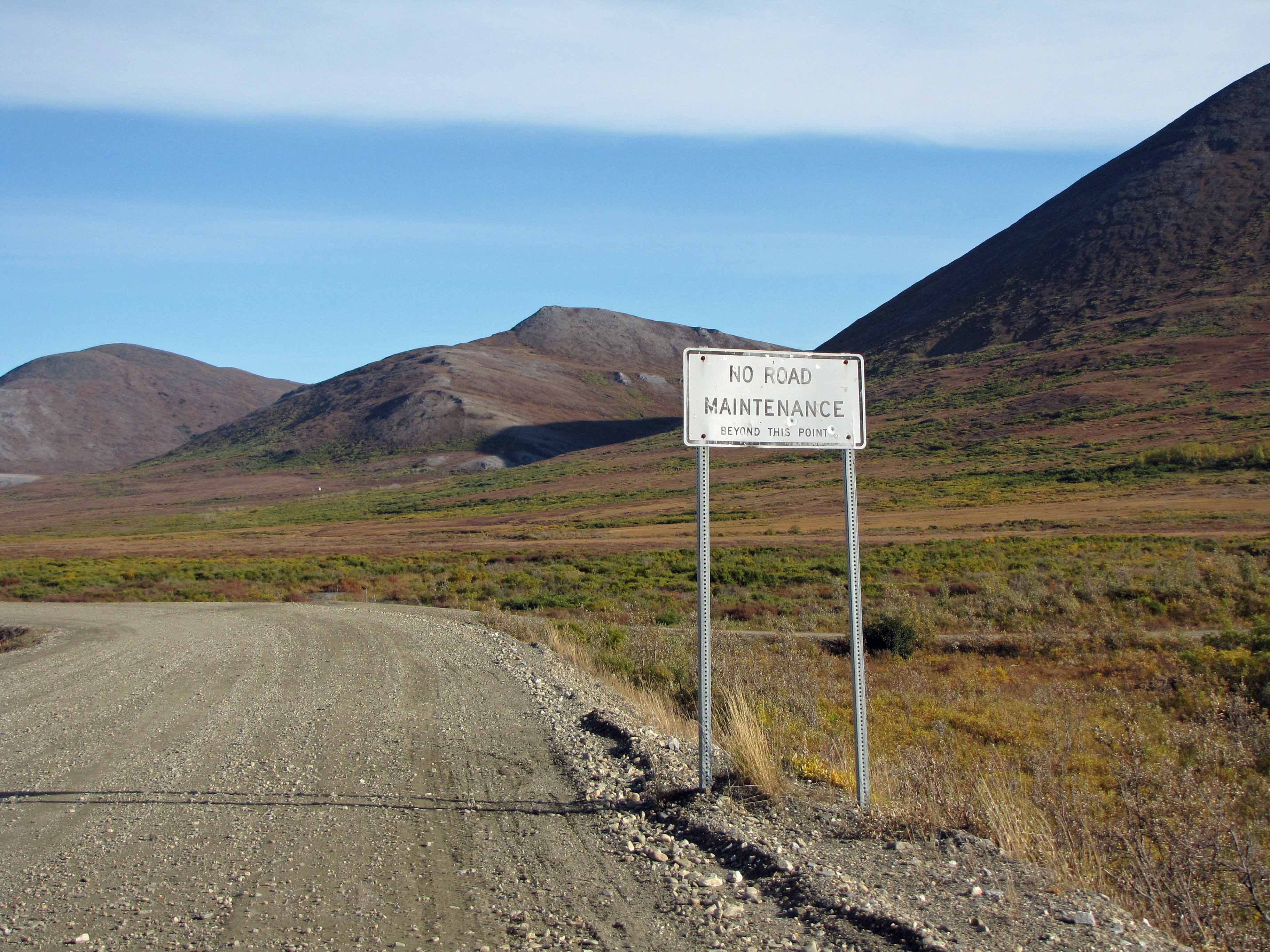
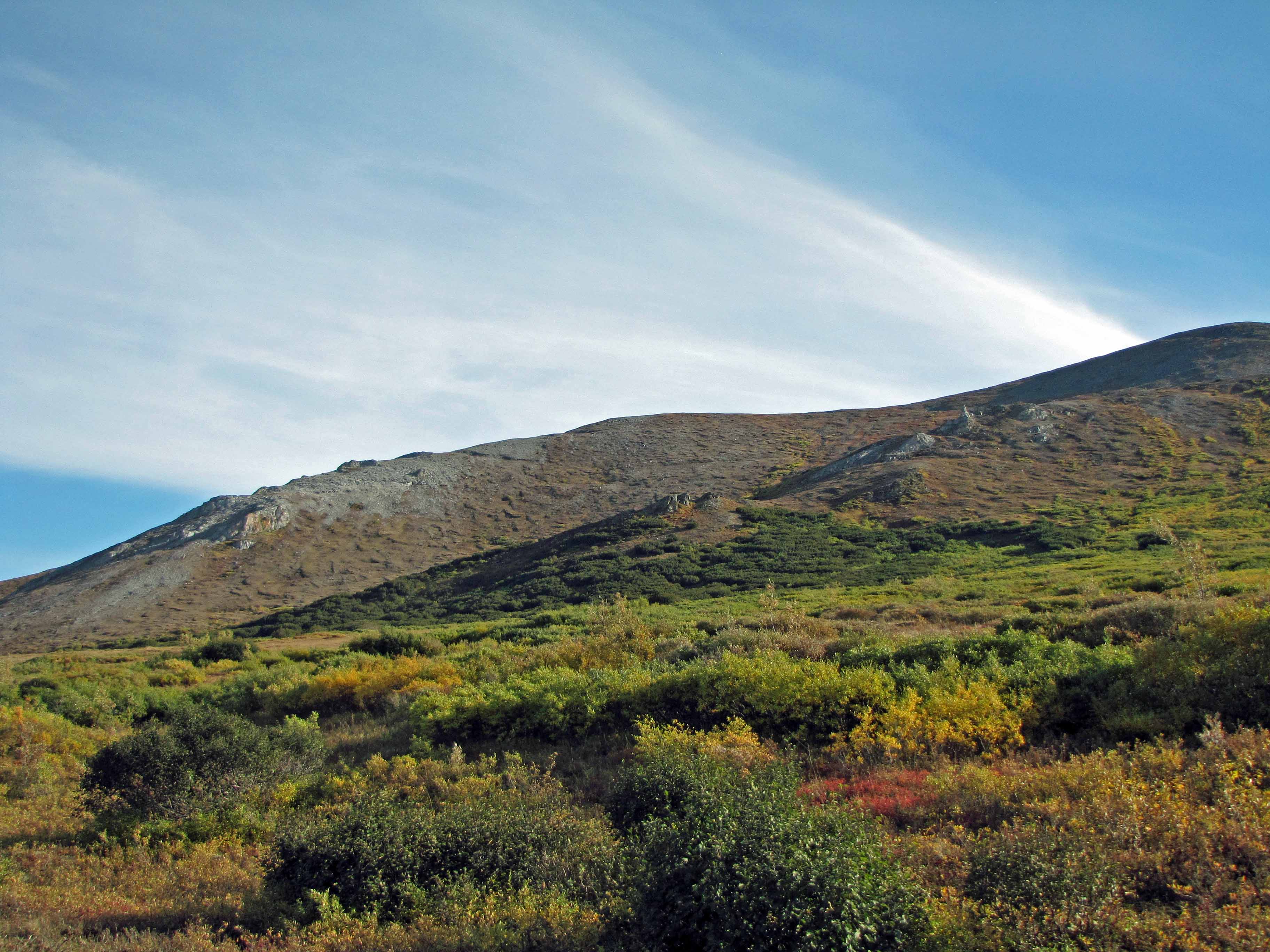
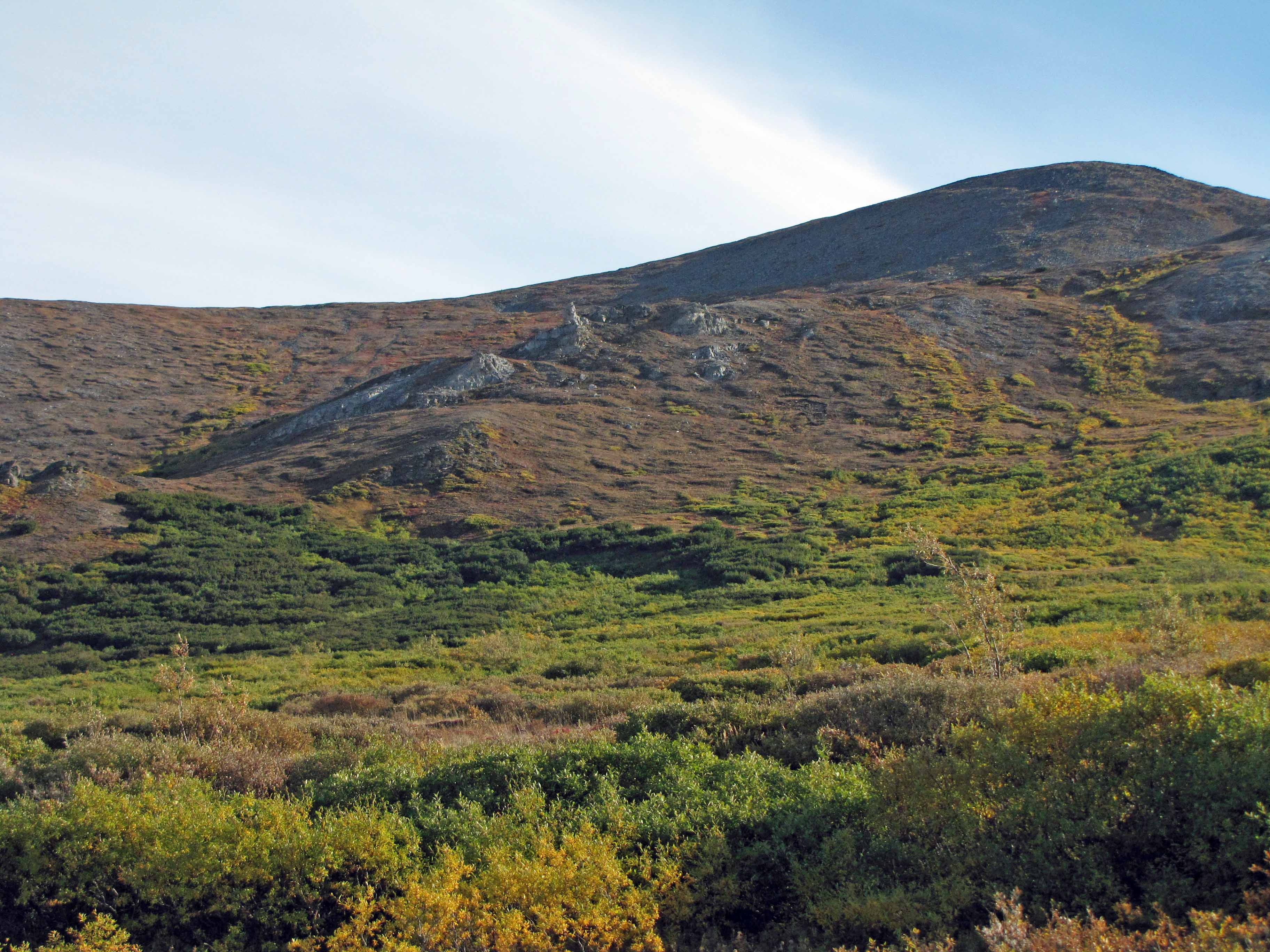
Salmon Lake #2. Fall colors, arctic tundra style.Salmon Lake #3.Salmon Lake #4.Salmon Lake #5. Those are the Kigluiak Mountains in the distance.Salmon Lake #6.Salmon Lake #7. The sign reads "No Road Maintenance Beyond This Point."Salmon Lake #8.Salmon Lake #9.Salmon Lake #10.Salmon Lake #11.Salmon Lake #12. My handsome co-driver. Salmon Lake #13.Salmon Lake #14.Salmon Lake #15.Salmon Lake #16.Salmon Lake #17.Salmon Lake #18.Salmon Lake #19.Salmon Lake #20.Salmon Lake #21.Salmon Lake #22.Salmon Lake #23.Salmon Lake #24.Salmon Lake #25.Salmon Lake #26.Salmon Lake #27.Salmon Lake #28.Salmon Lake #29.Salmon Lake #30.Salmon Lake #31.Salmon Lake #32.
Earlier today I noticed an unusual comment on my blog post Blast from the Past: Carbon Cycle Story. In the blog post I share a story that I wrote about the carbon cycle when I was 10 years old as part of a school unit on atoms at my Montessori school.
Here is the unusual comment, which is from a “Mrs. Kim”:
Please delete this post. I am a biology teacher at Thomas Jefferson High School for Science and Technology. Two students were caught plagiarizing this article for a carbon cycle assignment. The issue has been resolved, but we need to guarantee this does not occur in the future. Thank you.
I replied to “Mrs. Kim”:
Hi Mrs. Kim, Thanks for your concern– I’m sorry to hear that students were plagiarizing this assignment, but I’m not going to delete it. There will always be things out on the internet to plagiarize, and schools need to learn how to resolve these issues. I find it sad that students felt the need to plagiarize this assignment, which was one of my favorite school assignments ever :-).
I then asked my twitter followers, many of whom are geoscientists and/or teachers, what they thought about the comment and my response. Here’s the tweet:
Please excuse the typo. "aksed" should be "asked."
Overwhelmingly, my twitter followers agreed that I should not take down the blog post and that requesting that primary sources be taken down from the internet is an inappropriate way to handle plagiarism. Here is a sample of the many, many replies I received on twitter:
A sample of the replies to my twitter inquiry.
Wanting to make sure that the teacher saw my response to her request, I tried sending a message to the email which “Mrs. Kim” provided. The email was returned because the address didn’t exist. I thought that possibly “Mrs. Kim” had entered her email address incorrectly, so I did some sleuthing and looked up the Thomas Jefferson High School for Science and Technology. Guess what? From 2007 to 2011 this high school was ranked as the best public high school in the United States.
Now, I found it somewhat strange that a teacher at one of the best high schools in the United States would be so naive about how to handle plagiarism. I also found it strange that high school students would be plagiarizing a story I wrote when I was 10. So, I decided to write to Dr. Evan Glazer, who is the principal of the Thomas Jefferson High School for Science and Technology. Boy, that school name is sure a mouthful! From now on, I’ll refer to the school as TJHSST. Dr. Glazer kindly wrote back to me and informed me that there is no biology teacher named Mrs. Kim at TJHSST. Furthermore, the TJHSST email provided by “Mrs. Kim” is fake.
Quite honestly, I now find myself puzzled and somewhat discombobulated by the “Mrs. Kim” comment. I find myself worried over who “Mrs. Kim” could possibly be. Is “she” a teacher at another school? Could “she” be a student trying to convince me to remove my post so that “she” can plagiarize my content for a school assignment? I have no idea. However, I do feel relieved that the comment does not come from a biology teacher at TJHSST.
However, I’m happy to see that my twitter followers and blog readers are so passionate about issues regarding the internet and plagiarism. Please feel free to comment (productively and politely– I reserve the right to remove comments) about plagiarism and the internet below.
“Mrs. Kim”: please don’t post here again under a false name! And “Mrs. Kim”: if you are a student with a carbon cycle assignment, I’d be happy to answer any questions you may have about the carbon cycle… though you’ll have to write the assignment yourself!
I’ve only visited Niagara Falls once. I visited the American side of the falls for a few hours back in 2005 when I went with my mom, dad, and sister on a roadtrip from New Hampshire to Ohio. We drove to Ohio to pick up my parents’ new dog from a friend who had a litter of puppies. I didn’t have a very good camera back in 2005, so I only took a few pictures of the falls. I ran across the falls pictures when I was browsing my folders of pictures for a “Monday Geology Picture,” and I decided to share the above picture with you. I like the above picture because the falls almost look as if they’re falling from the sky… from the clouds, perhaps. Does anyone else have good pictures of Niagara or other famous waterfalls?
Today I thought I’d share a few more pictures from the two months that my husband Jackie and I recently spent working in Nome, Alaska. You can find more pictures of Nome in Part I and Part II. Enjoy!
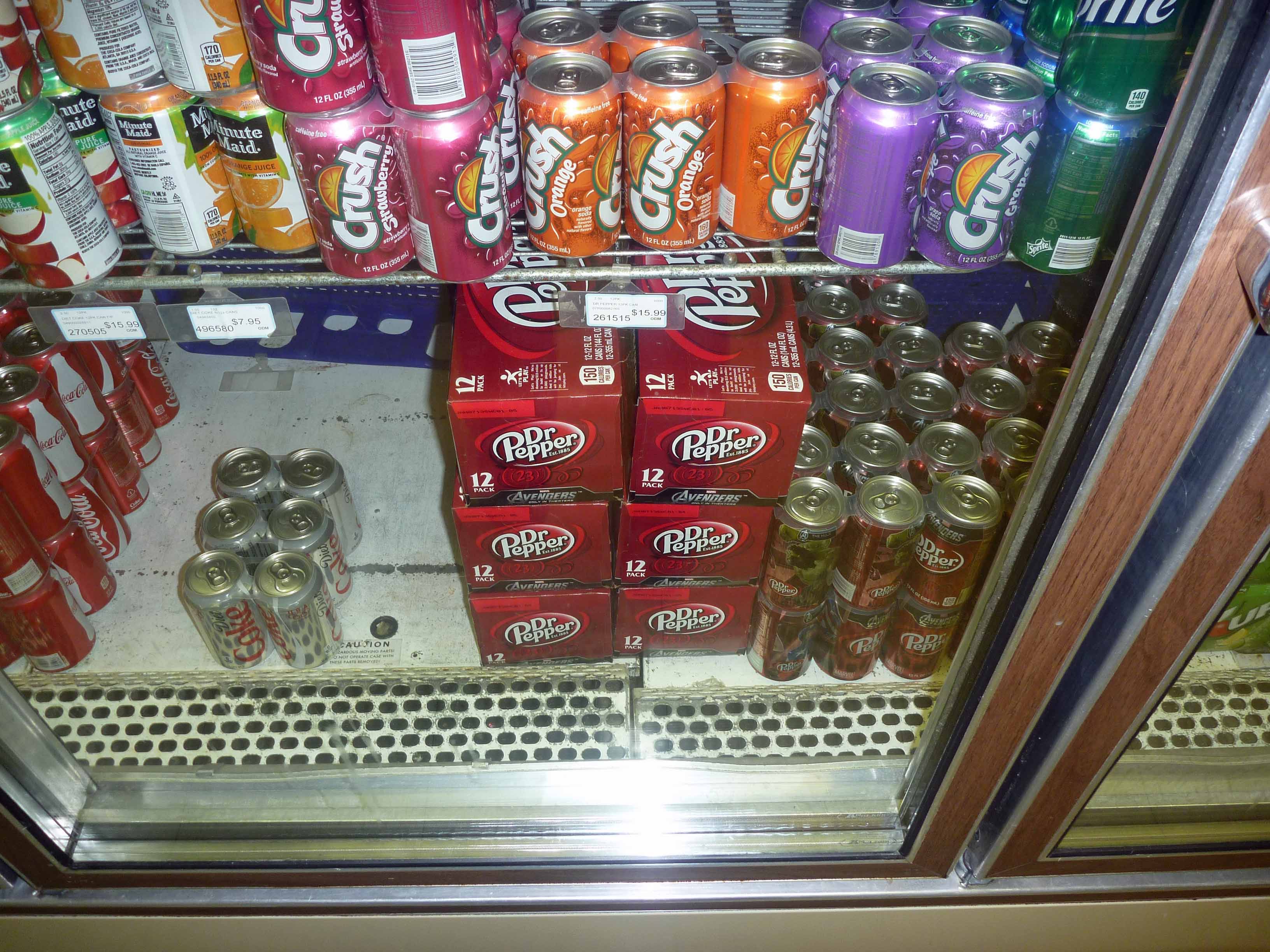
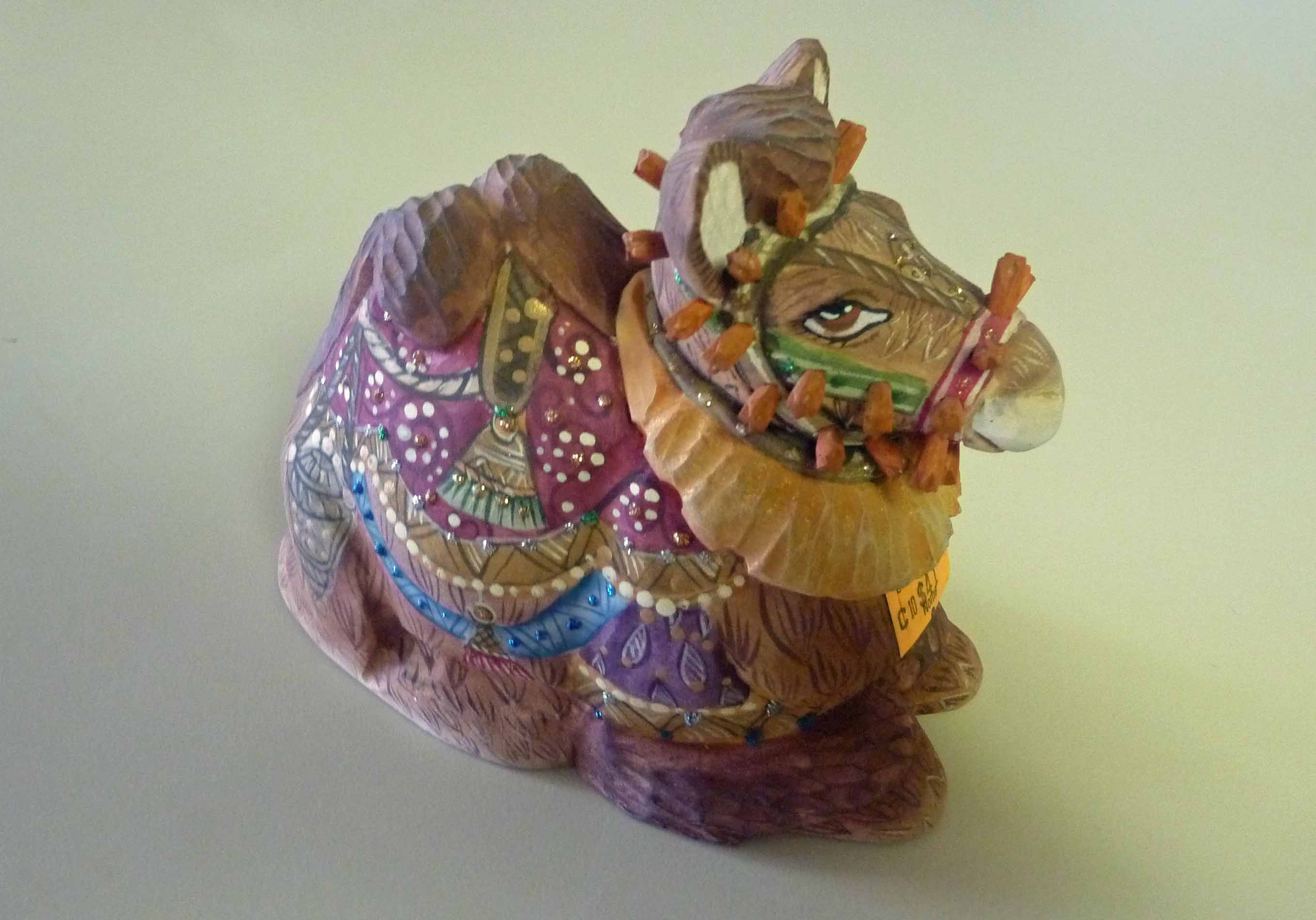
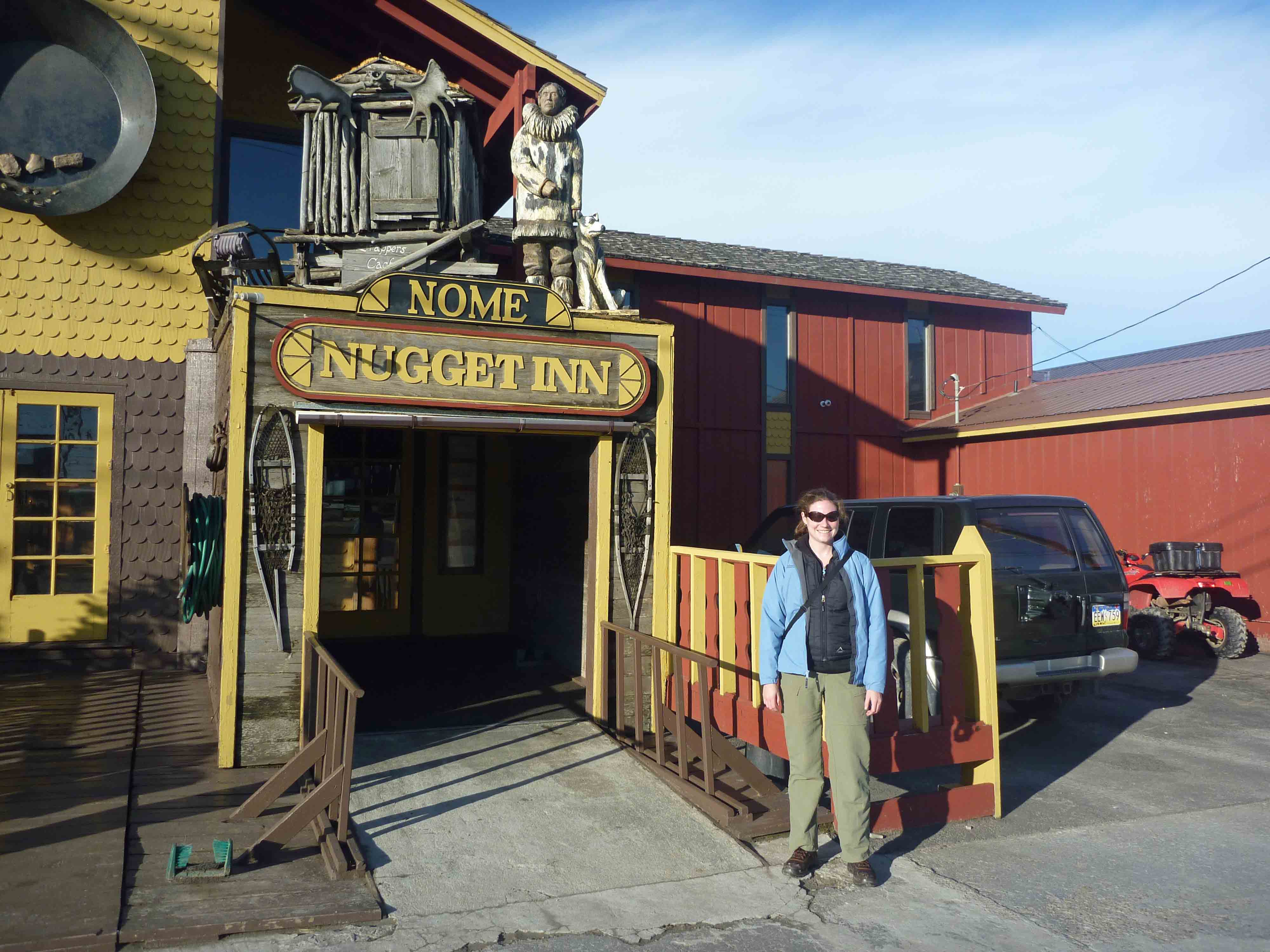
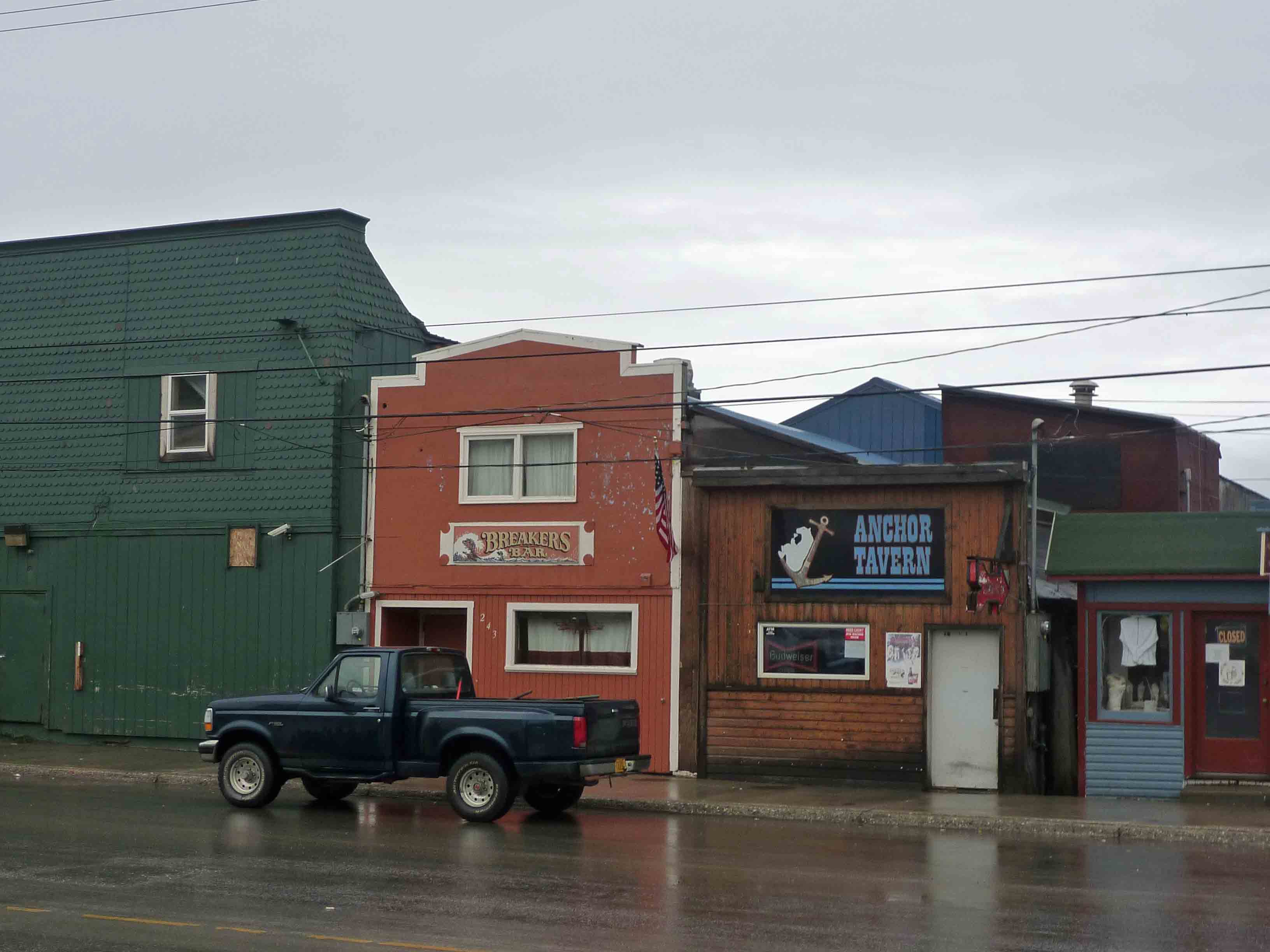
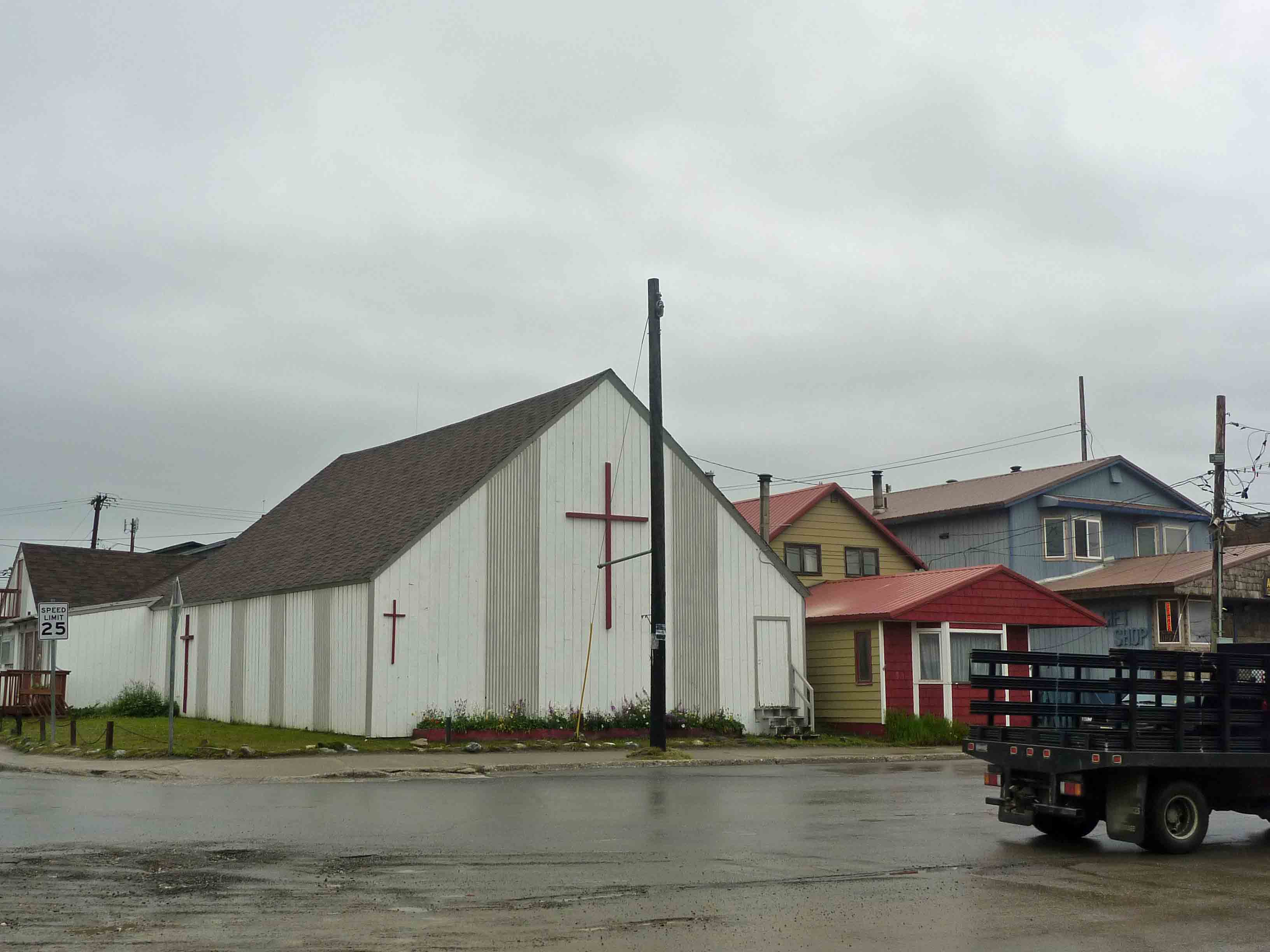
A little dredge named the "Golden Wave"-- a converted pontoon boat.Checking out the famous (from the TV show "Bering Sea Gold") dredge named "The Christine Rose."Gas prices in Nome!Food prices in Nome are rather high. A box of granola bars is $6.29 and a box of oatmeal is $7.19. Food is so expensive because nearly all the food is brought in by airplane or boat since no roads lead to Nome from bigger towns or cities.Liquids are very expensive in Nome. A 12-pack of soda costs $15.99.I really hope this isn't Nome's only vet... or that it's bigger on the inside.Jackie trying on a polar bear fur hat at "The Russian Shop," as we call it.The really neat painted wooden camel that I acquired from "The Russian Shop." I have a collection of camel figurines. Feel free to donate any interesting camels to my collection! 🙂The Nugget Inn.Breakers Bar and the Anchor Tavern.Nome City Hall.One of Nome's churches.An abandoned building on main street. Looks as if there may have been a fire?One of Nome's restaurants.










































 Georneys
