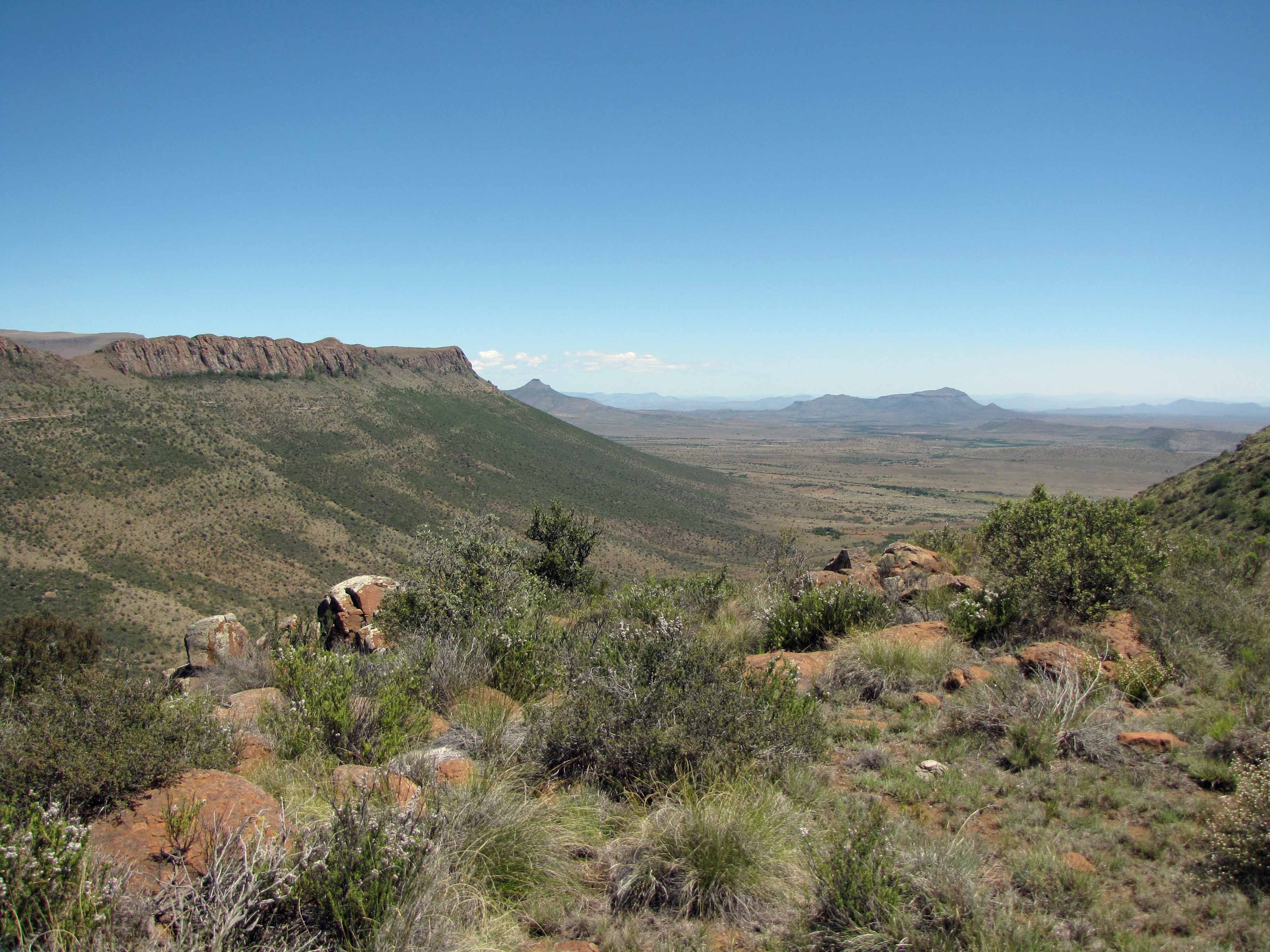
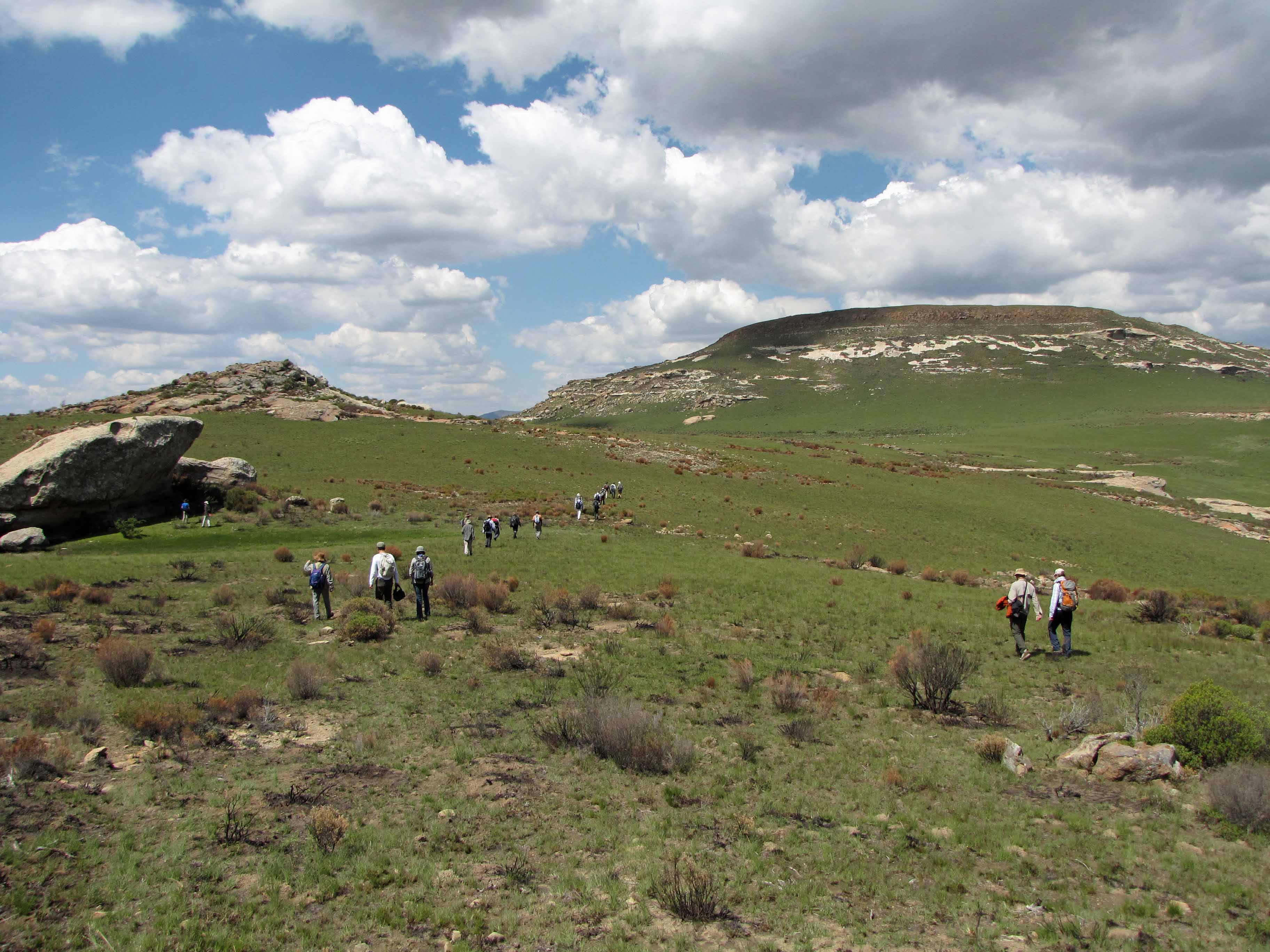
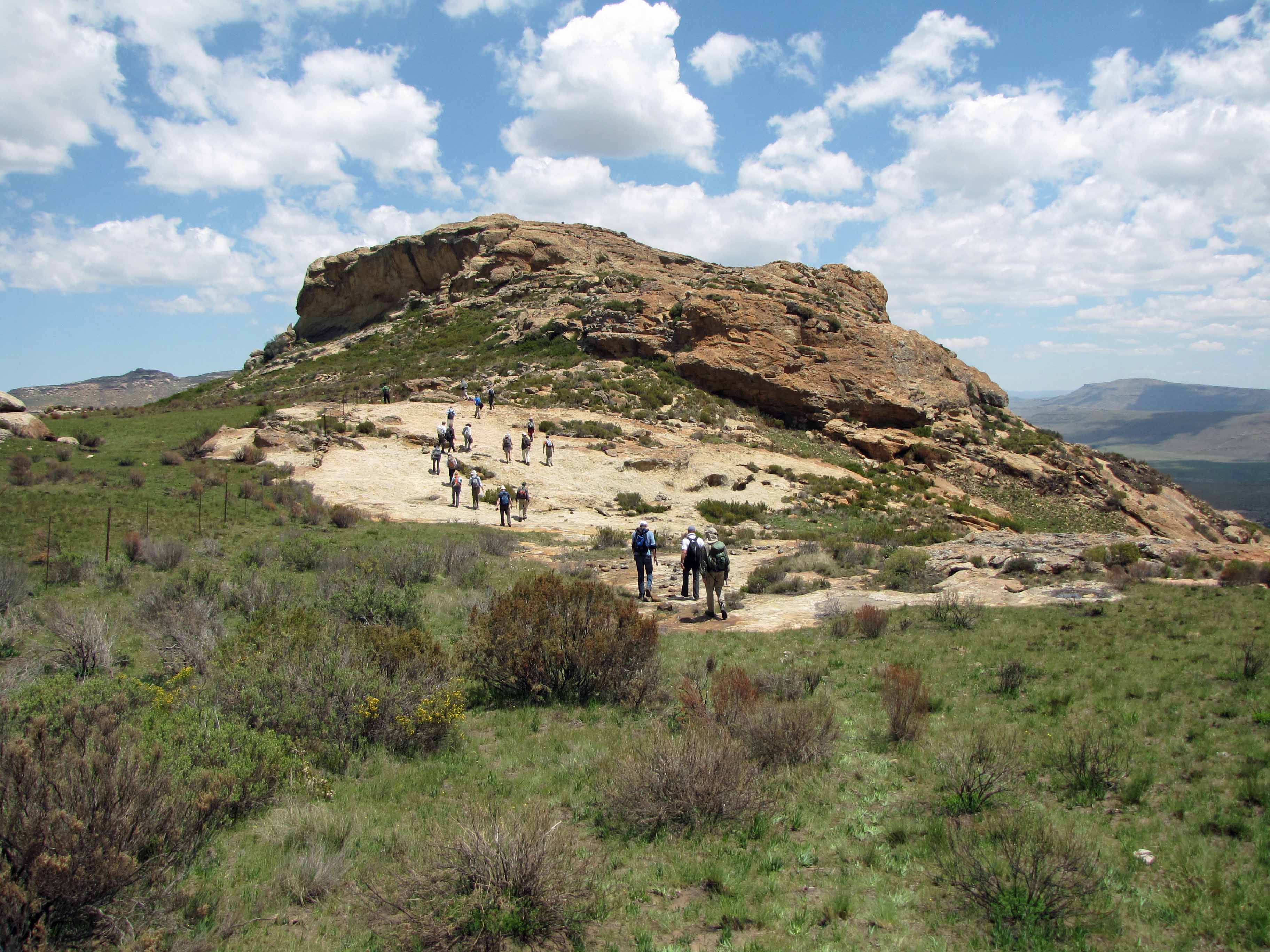
For this week’s “Monday Geology Picture” post I thought I would share a few teaser pictures from the field trip I attended last week as part of the LASI V workshop on the physical volcanology of laccoliths, sills, and dykes. For the field trip, we spent three days exploring and learning about subvolcanic systems that are exposed in South Africa’s Karoo region. We stayed just outside of the town of Queenstown and went on field trips in the area. In future posts I’ll be writing in detail about the geology that we saw on the field trip. In fact, I’m spending some time working on my first proper LASI V post this evening. You can expect it later this week. For now, enjoy these teaser pictures!
LASI V Teaser Picture #2.LASI V Teaser Picture #3.LASI V Teaser Picture #4.LASI V Teaser Picture #5.LASI V Teaser Picture #6.
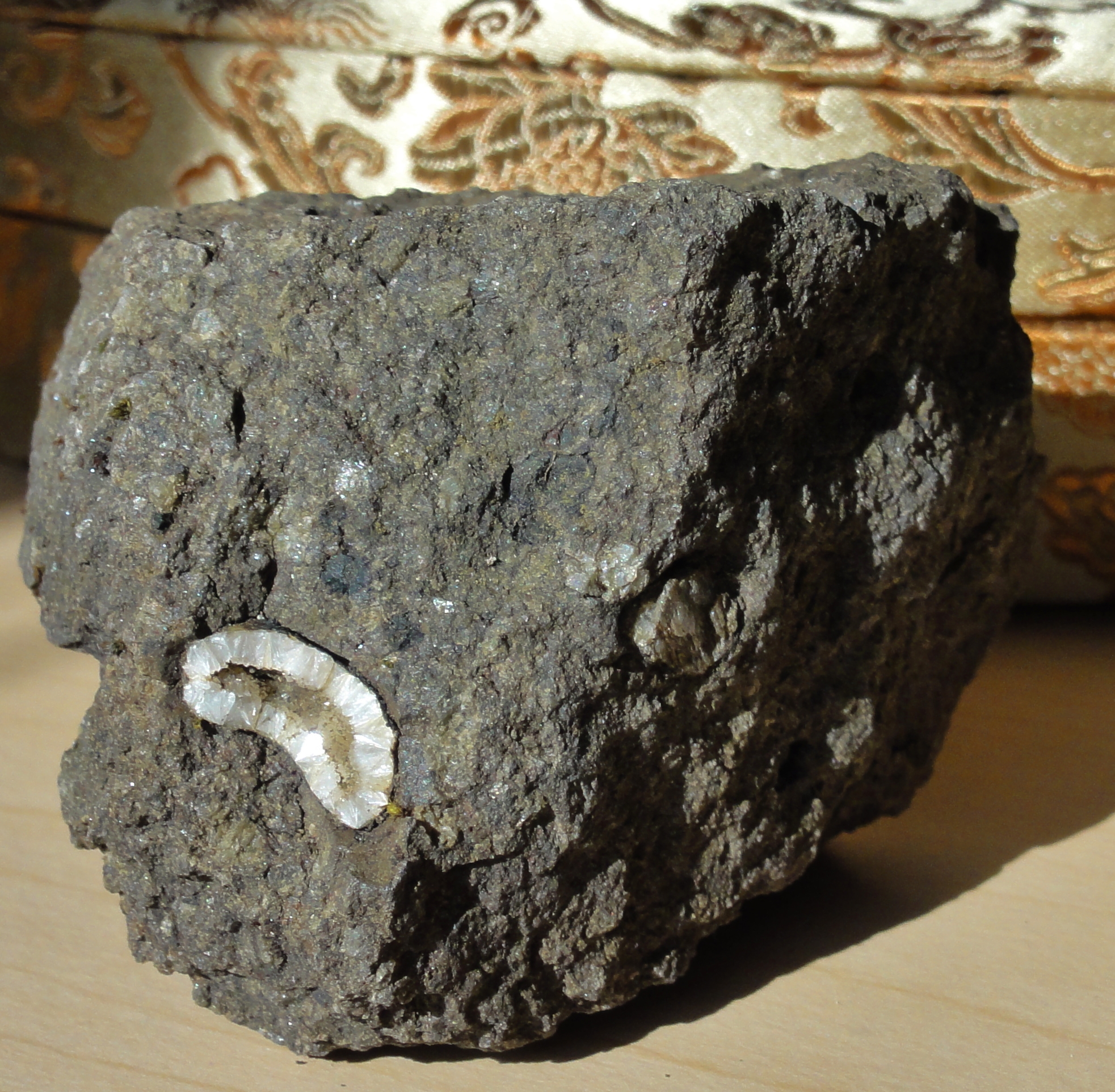
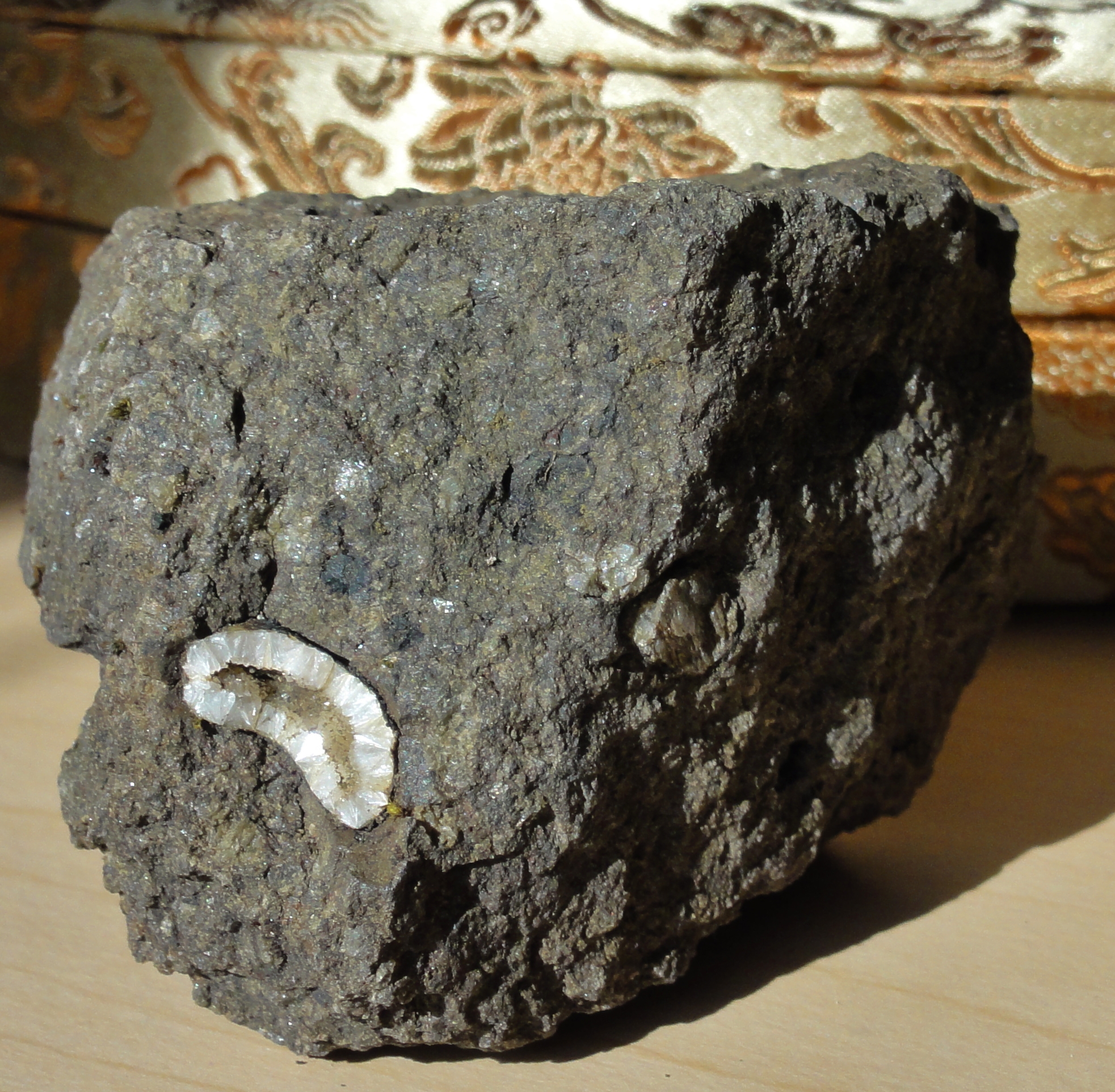
Amygdaloidal basalt collected during dredging along the Ninetyeast Ridge in the Indian Ocean in summer 2007.
def. Amygdale (also spelled Amygule):
Vesicles, generally in extrusive igneous rocks, that are filled with secondary minerals, most commonly quartz, calcite, chlorite, and zeolite.
When a rock contains amygdales, geologists often describe it as an amygdaloidal rock. For example, basalt is often described as amygdaloidal basalt.
Here are a few previous, related geology words of the week that may be of interest:
And here are a couple more pictures of amygdaloidal rocks:
Amygdaloidal basalt from the Isle of Skye, Scotland. Picture courtesy of Matt Kuchtam.A zeolite amygdale in a rock collected from Quartzville, Oregon. Picture courtesy of Dana Hunter.
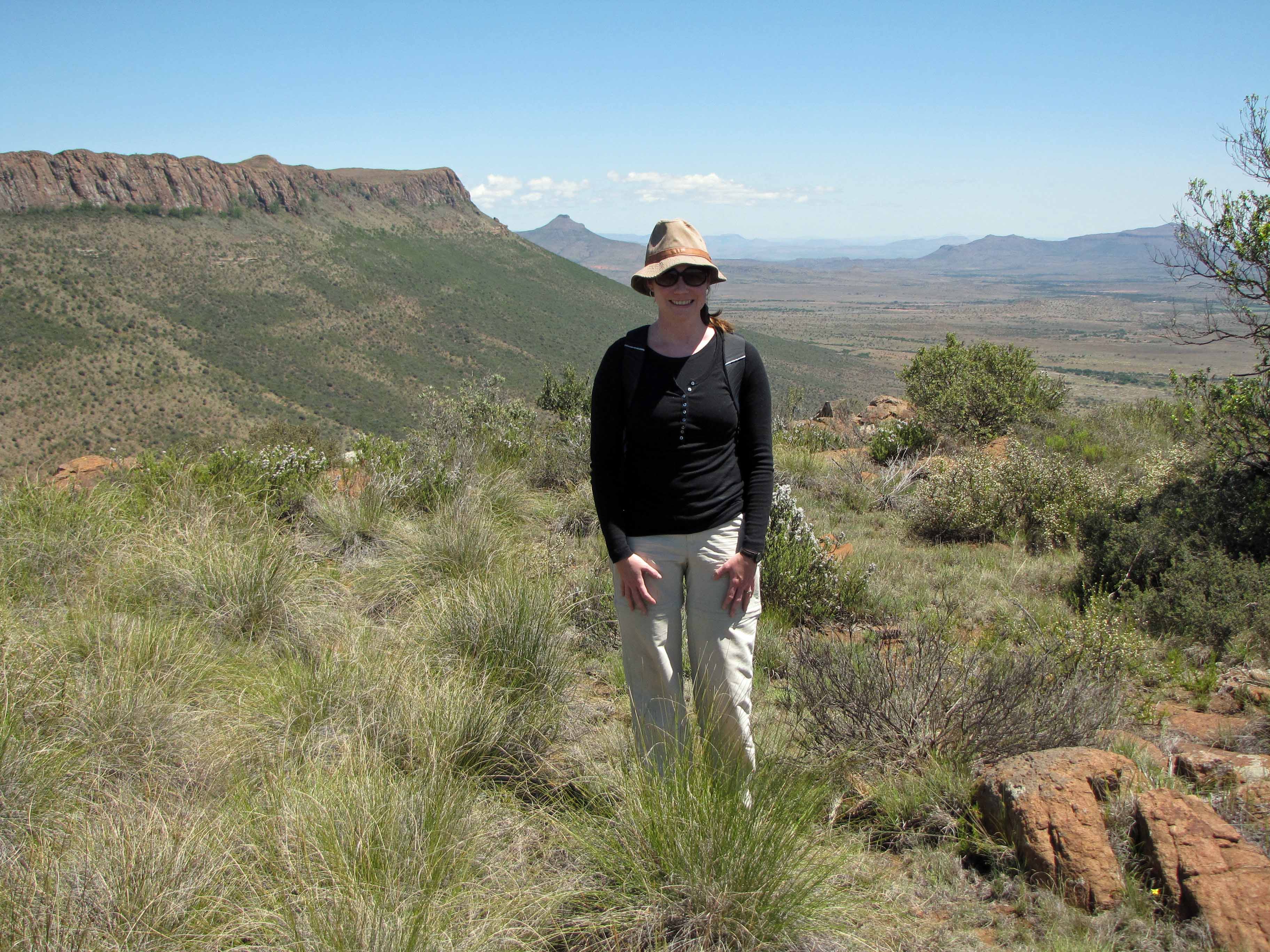
Me, enjoying a georney to the Golden Valley, Karoo, South Africa. That's a dolerite sill in the background on top of the sedimentary rocks.
Yesterday– November 2nd– was my two-year blogaversary. It’s hard to believe that two years has already passed. In those two years I’ve finished my PhD in Marine Geology, married, moved to South Africa, and obtained my first job in industry working in the marine gold exploration field. I’ve posted two complete alphabets of “Geology Words of the Week”, dozens of “Monday Geology Pictures”, speculated about a few “Mystery Rocks”, shared numerous pictures from my travels, and blogged on many other topics, mostly about geology but also sometimes about cats.
I missed my blogaversary yesterday because I was in the Karoo on a wonderful field trip as part of the LASI V workshop, which I will be blogging about quite a bit over the next few weeks. So, there is no end in sight to my blogging here on Georneys!
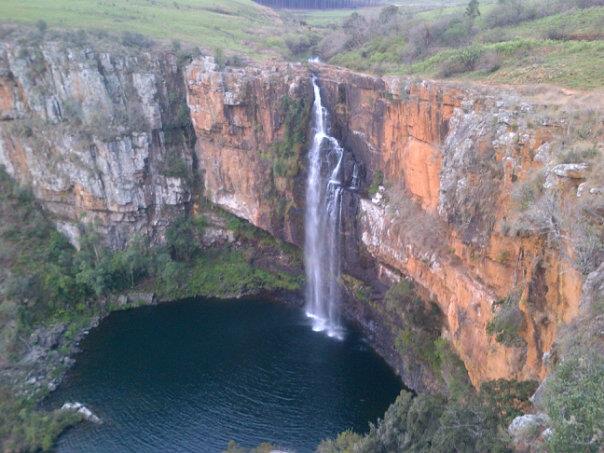
Berlin Falls. Photo courtesy of Bonita and Jonathan Hall.
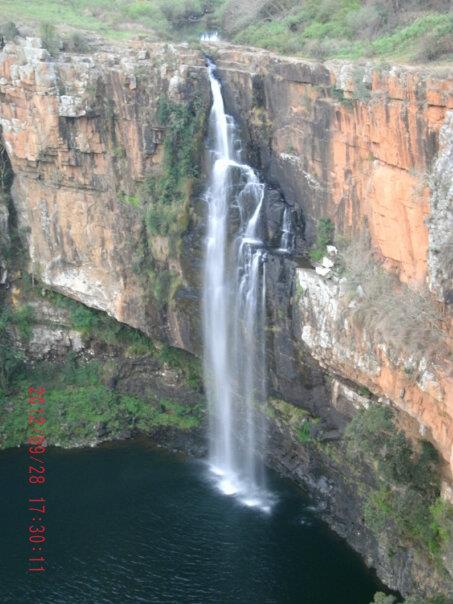
For this week’s geology picture post I thought I would share some more pictures from my sister-in-law’s recent honeymoon in the Mpumalanga region of South Africa. Last week I shared some pictures of Bourke’s Luck Potholes. This week I’m sharing two pictures of Berlin Falls. What a lovely waterfall!
Another view of Berlin Falls. Picture courtesy of Bonita and Jonathan Hall.
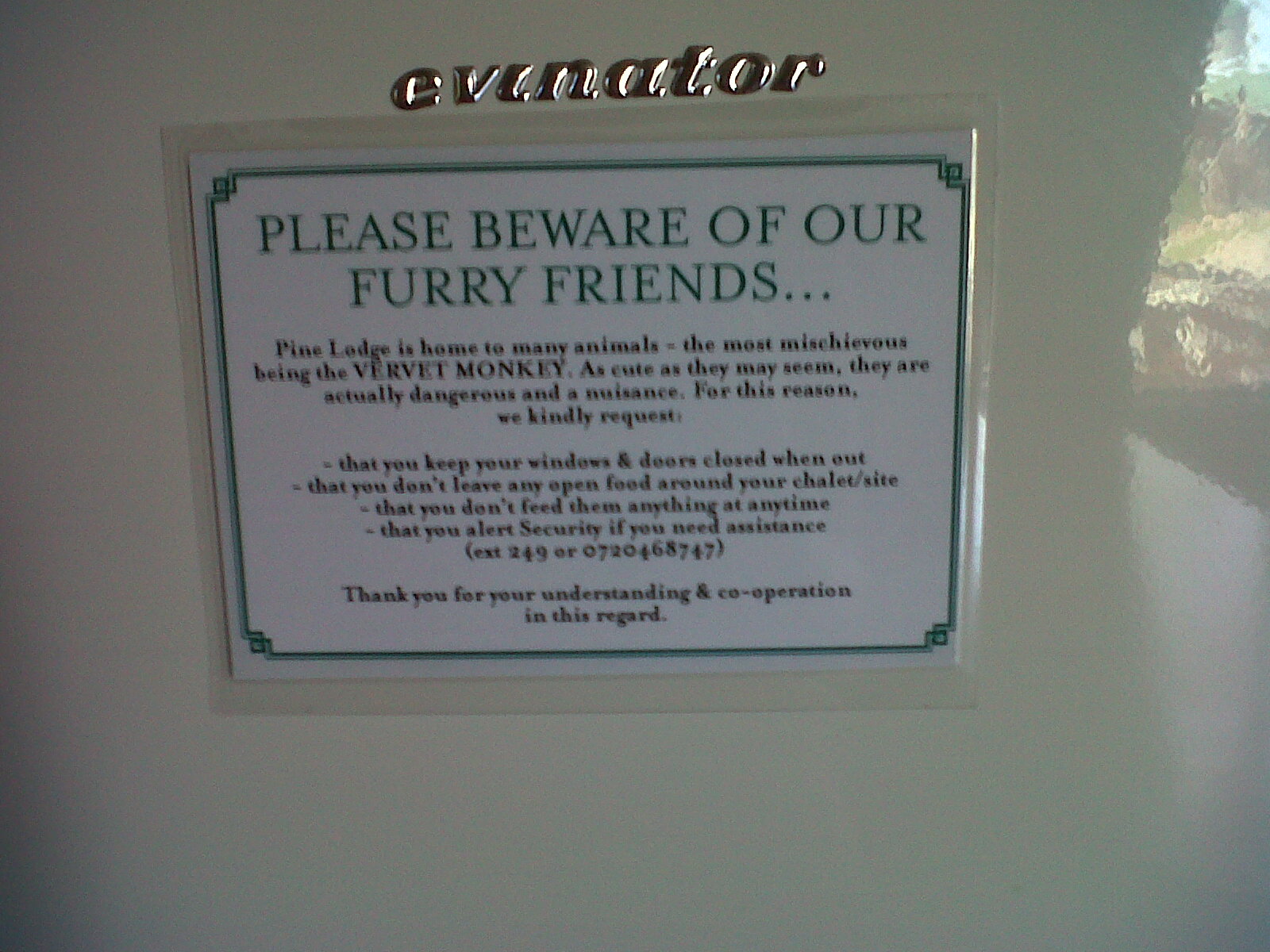
A warning sign on the fridge in my hotel room here at Pine Lodge.
This afternoon I arrived at Pine Lodge, the venue for the LASI V workshop. The facilities are very nice here (I’m currently sitting next to the pool and hot tub and catching up on some blogging and other work), but you do need to be careful to close the doors and windows of your room when you leave because there are thieves around… monkey thieves! Specifically, adorable but mischievous vervet monkeys.
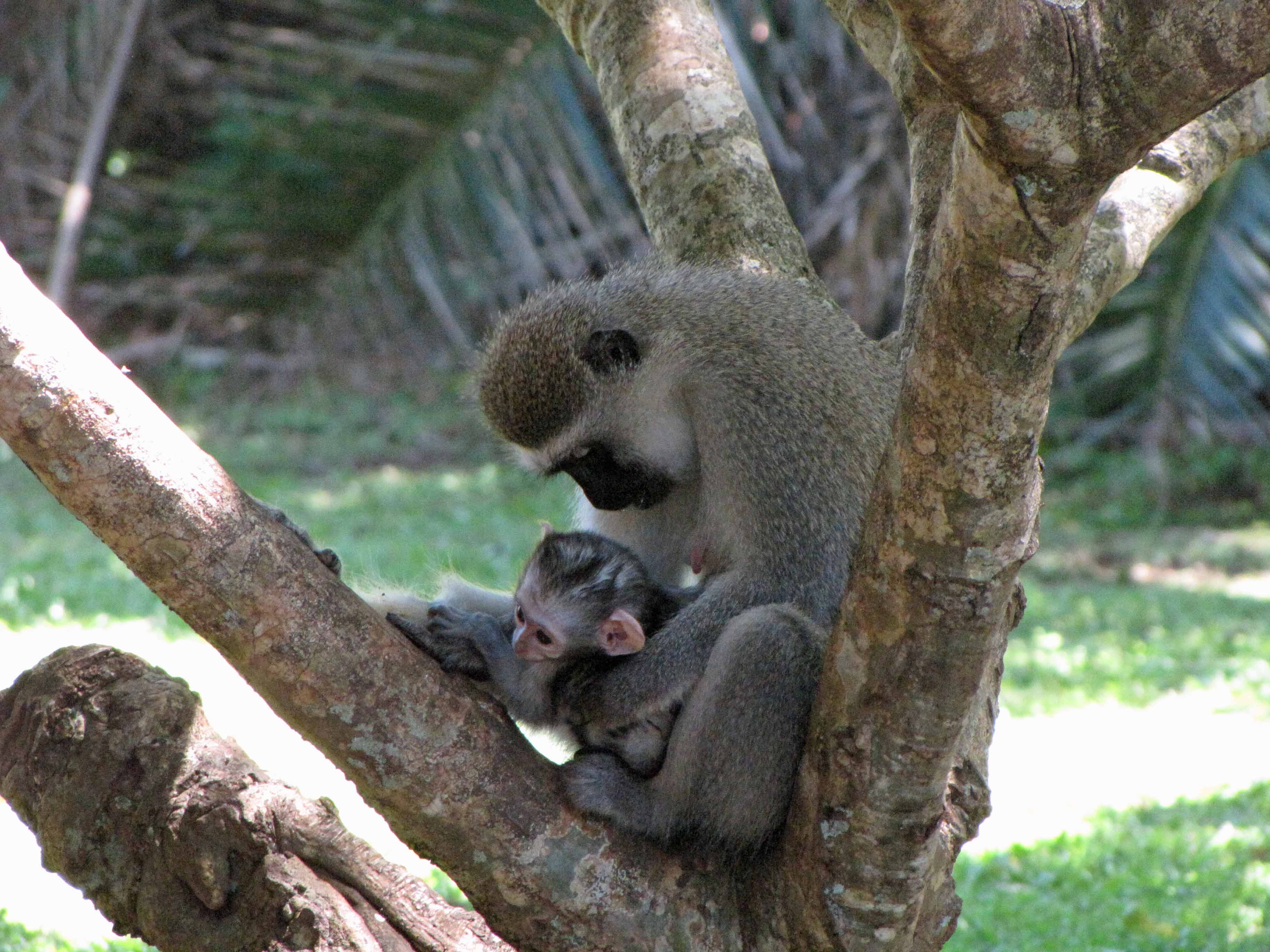
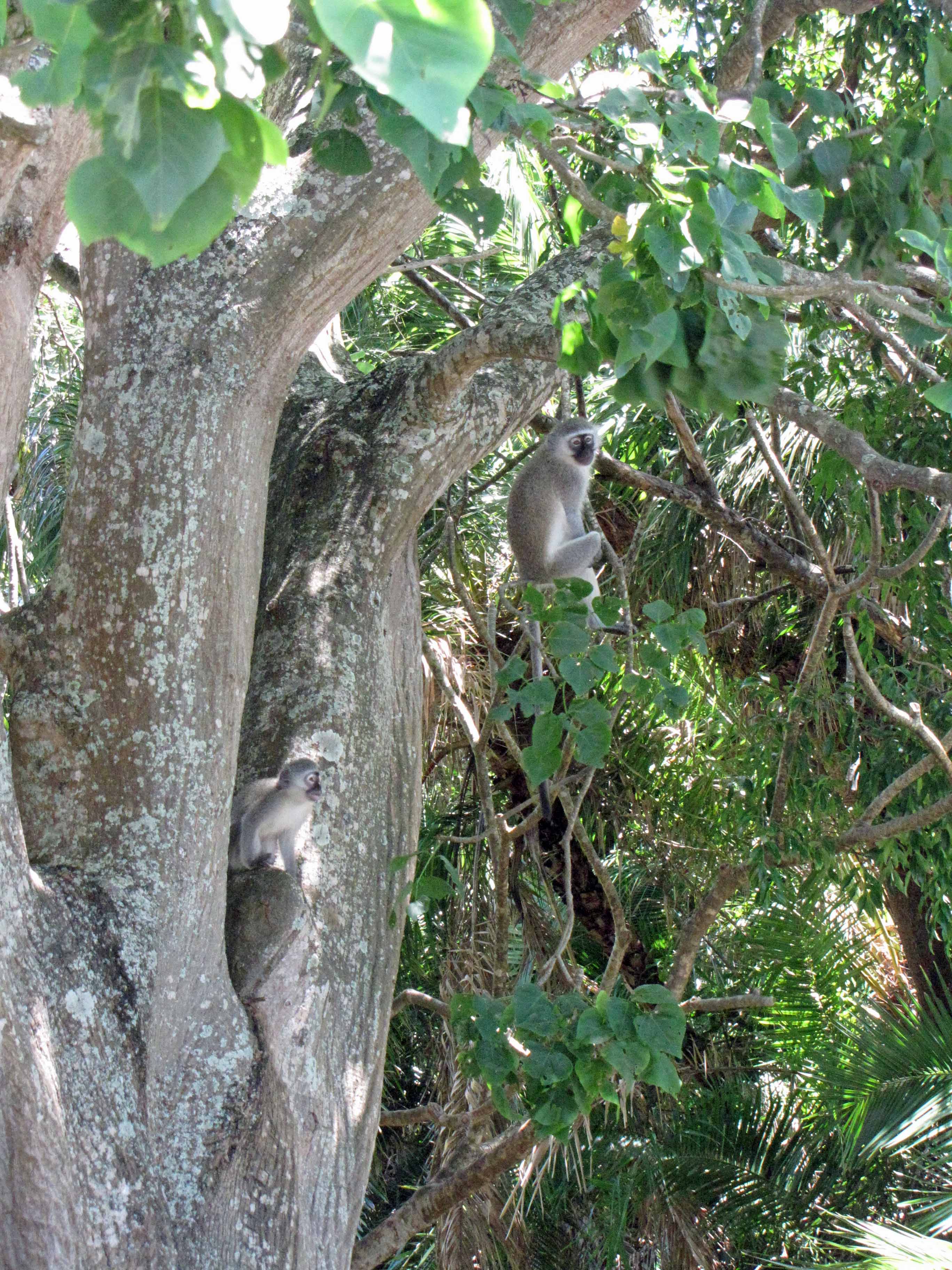
I have yet to catch sight of a vervet monkey here in Port Elizabeth, but I’m sure that I’ll see some before I leave. My husband and I saw plenty of vervet monkeys last week when we were on holiday at South Africa’s “South Coast” and “Wild Coast”. Below are a few pictures of vervet monkeys from our holiday last week.
Vervet monkey sitting in a tree. South Coast, South Africa, October 2012.Mother and baby vervet monkey. South Coast, South Africa, October 2012.Another view of the mother and baby vervet monkey. South Coast, South Africa, October 2012.Photobomb! South Coast, South Africa, October 2012.Just hanging around. South Coast, South Africa, October 2012.Up in a tree. South Coast, South Africa, October 2012.
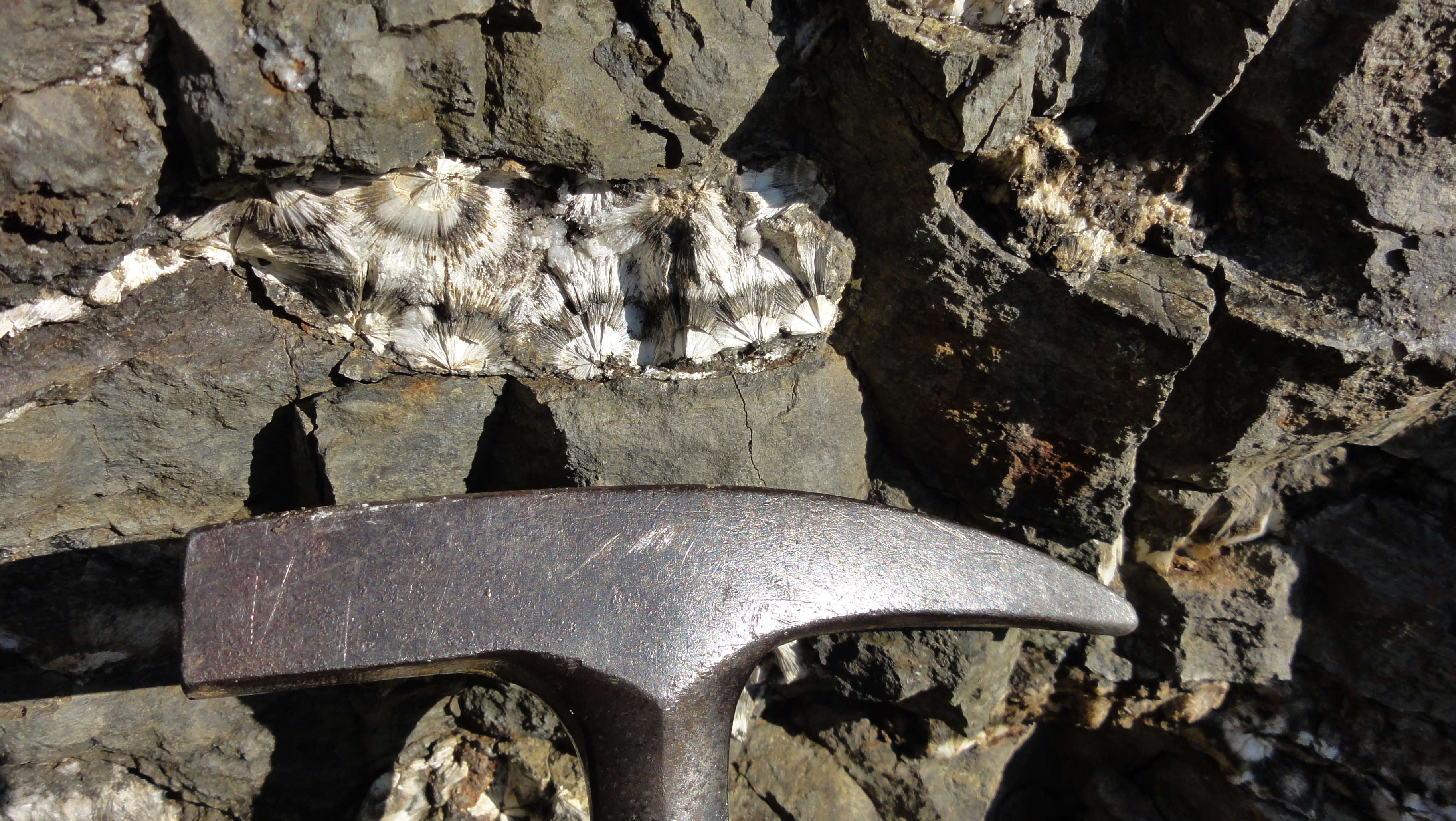
Natrolite, a mineral belonging to the zeolite group. Mary's Peak, Oregon. Picture courtesy of Dana Hunter.
def. zeolite:
The name of a large group of porous, framework, aluminosilicate (their basic structure is interlocking tetrahedra of SiO4 and AlO4) minerals that contain significant water and also significant exchangeable cations, which makes them absorbent materials. The name zeolite originates from the Greek words “zeo”, which means “to boil”, and “lithos”, which means “stone”. Zeolites were given their name because when you heat them, they generally release water in the form of steam. There are dozens of minerals in the zeolite group. You can view a list of zeolite minerals here. Zeolites often form through the interaction of volcanic rocks and ash with alkaline groundwater. Thus, you can often find spectacular and very beautiful zeolite crystals inside vesicles and vugs (often creating amygdules or crystal-filled cavities) in volcanic rocks such as basalt. Zeolites also crystallize in shallow marine basins.
My good friend and fellow geoblogger Dana Hunter has provided me with zeolite pictures galore. She took these pictures during one of her geology trips with Lockwood DeWitt. Thanks for the pictures, Dana and Lockwood!
More Natrolite. Mary's Peak, Oregon. Picture courtesy of Dana Hunter.A zeolite amygdule (Lockwoods says consisting of mostly of the zeolite mineral stilbite) in a rock from Quartzville, Oregon. Picture courtesy of Dana Hunter.A closer view of the zeolite amygdule. Picture courtesy of Dana Hunter.More zeolite crystals from Quartzville, Oregon. Picture courtesy of Dana Hunter.More zeolite crystals from Quartzville, Oregon. Picture courtesy of Dana Hunter.
***Thanks to several of my twitter followers for suggesting this week’s word and to Dana and Lockwood for all the pictures!***
The LASI V field trip route in the Karoo Large Igneous Province. Image taken from the LASI V website: http://www.lasi5.com/
My husband and I just returned from Durban as well as South Africa’s “South Coast” and “Wild Coast”, where we enjoyed a lovely week of holiday to celebrate our 1-year wedding anniversary. We had a great time despite the rainy weather, and I took plenty of pictures which I’ll be sharing here on Georneys in due time.
We’re back home in Cape Town now, but tomorrow morning I fly out again. I’m headed to Port Elizabeth, South Africa to participate in something called LASI V, a workshop titled “The physical geology of subvolcanic systems: laccoliths, sills, and dykes.” LASI V consists of two days of talks and posters followed by a 4-day field trip to the Karoo Large Igneous Province. I’ve been invited to attend the conference by Dr. Henrik Svenson, a Senior Researcher at Physics of Geological Processes, a Norwegian Center of Excellence. Henrik has invited me to attend the workshop as a science writer… or, perhaps, as a science blogger. I’ll be taking notes (and pictures!) during the talks and field trip and writing up some blog posts which I’ll be sharing with you here on Georneys. If some of the LASI V participants are willing, I’m also hoping to do a few interviews (my voice recorder is packed!) and share edited transcripts of these interviews. I’m sure I’ll also have plenty of pictures to share from Port Elizabeth and the Karoo!
I’m excited and honored to be participating in the LASI V workshop. I’m so excited, in fact, that I’m even taking an extra week off from my day job to attend LASI V. The list of talks and posters looks great– you can download the Conference Program here. If there’s any talk or poster you particularly want me to blog about, please let me know in a comment below. I’m also looking forward to the field trip to the Karoo as I’ve been wanting to visit the Karoo for years. Certainly, the geology of the Karoo is currently a hot topic since several companies are interested in extracting shale gas from the Karoo, but there are concerns about the environmental impact of such gas extraction. As geologists working in South Africa, my husband and I (who work in gold exploration and know relatively little about shale gas) are often asked about what we think about “fracking and the Karoo” at dinner parties and such. We actually learned quite a bit about shale gas and the Karoo last week when we attended a talk by Dr. John Decker of PetroSA, who highlighted how much more research needs to be done just to properly estimate the amount of shale gas in the Karoo, let alone to assess any potential environmental impacts of gas extraction. Perhaps after attending LASI V next week I’ll at least be able to talk more about the geology of the Karoo– if not shale gas and fracking– at dinner parties.
Anyway, I need to finish (re-)packing now, but stay tuned for more about LASI V and the Karoo!
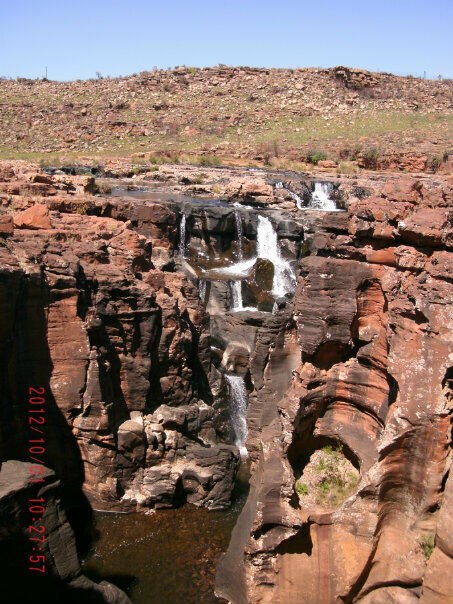
Bourke's Luck Potholes #1. Photo courtesy of Bonita and Jonathan Hall.
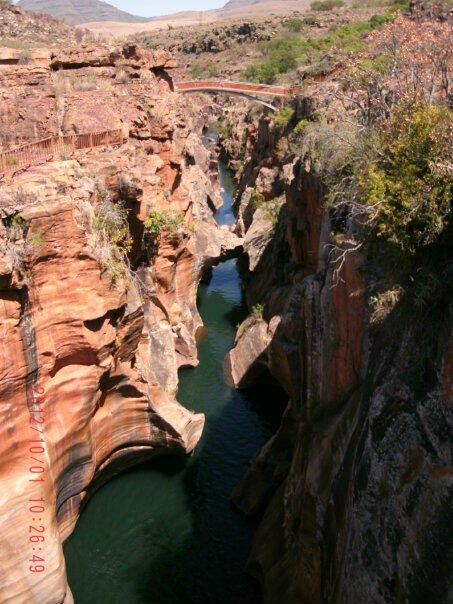
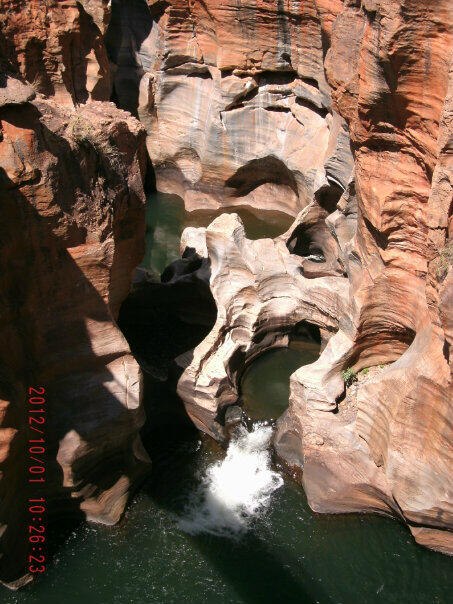
My sister-in-law Bonita was married last month. For her honeymoon she and her new husband Jonathan went to the Mpumalanga region of South Africa. Bonita and Jonathan saw some incredible geology on their honeymoon, and they’ve kindly given me permission to share some of their pictures here on Georneys. Today I am sharing some pictures of their visit to Bourke’s Luck Potholes. Impressive potholes, aren’t they?
Bourke's Luck Potholes #2. Photo courtesy of Bonita and Jonathan Hall.Bourke's Luck Potholes #3. Photo courtesy of Bonita and Jonathan Hall.Bourke's Luck Potholes #4. Photo courtesy of Bonita and Jonathan Hall.
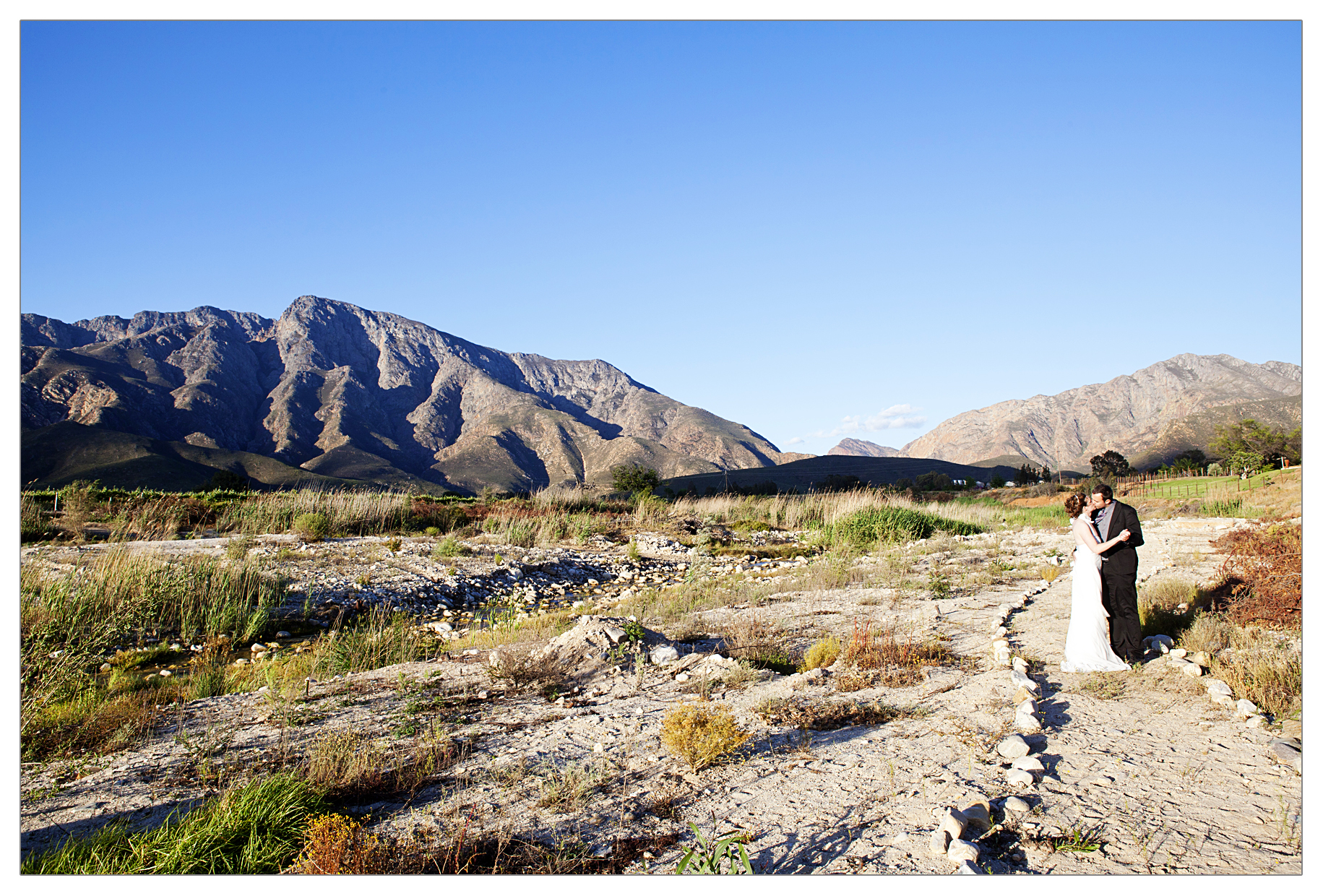
One year ago today. Photograph by Christine Watters Photography.
One year ago I married the love of my life, another geologist named Jackie. We were married on a little wine farm nestled in the Cape Fold Belt. Happy anniversary, darling! I look forward to many more years of georneys and other adventures together.
Newly married geologists amidst the folded sandstones. Photograph by Christine Watters Photography.
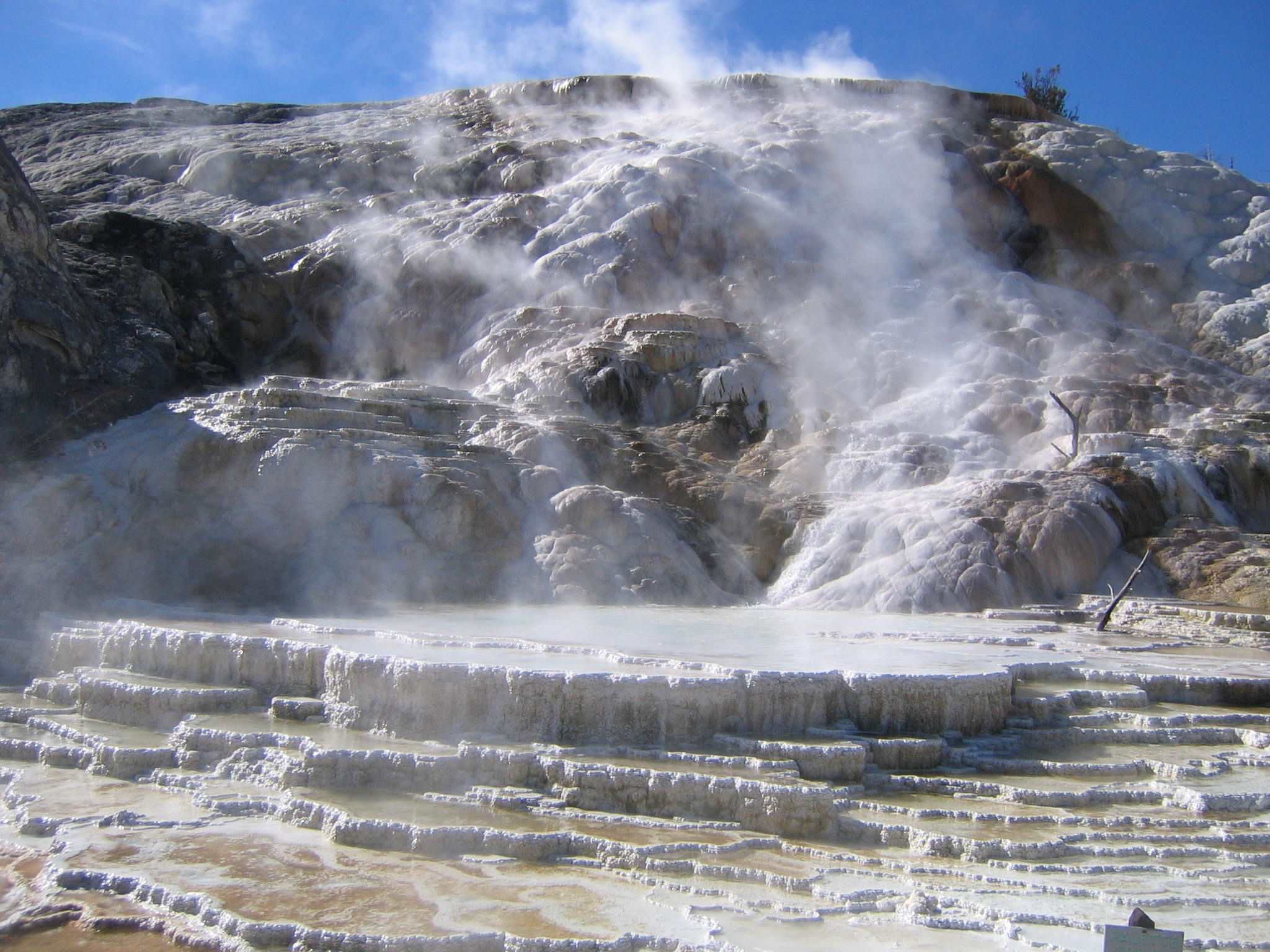
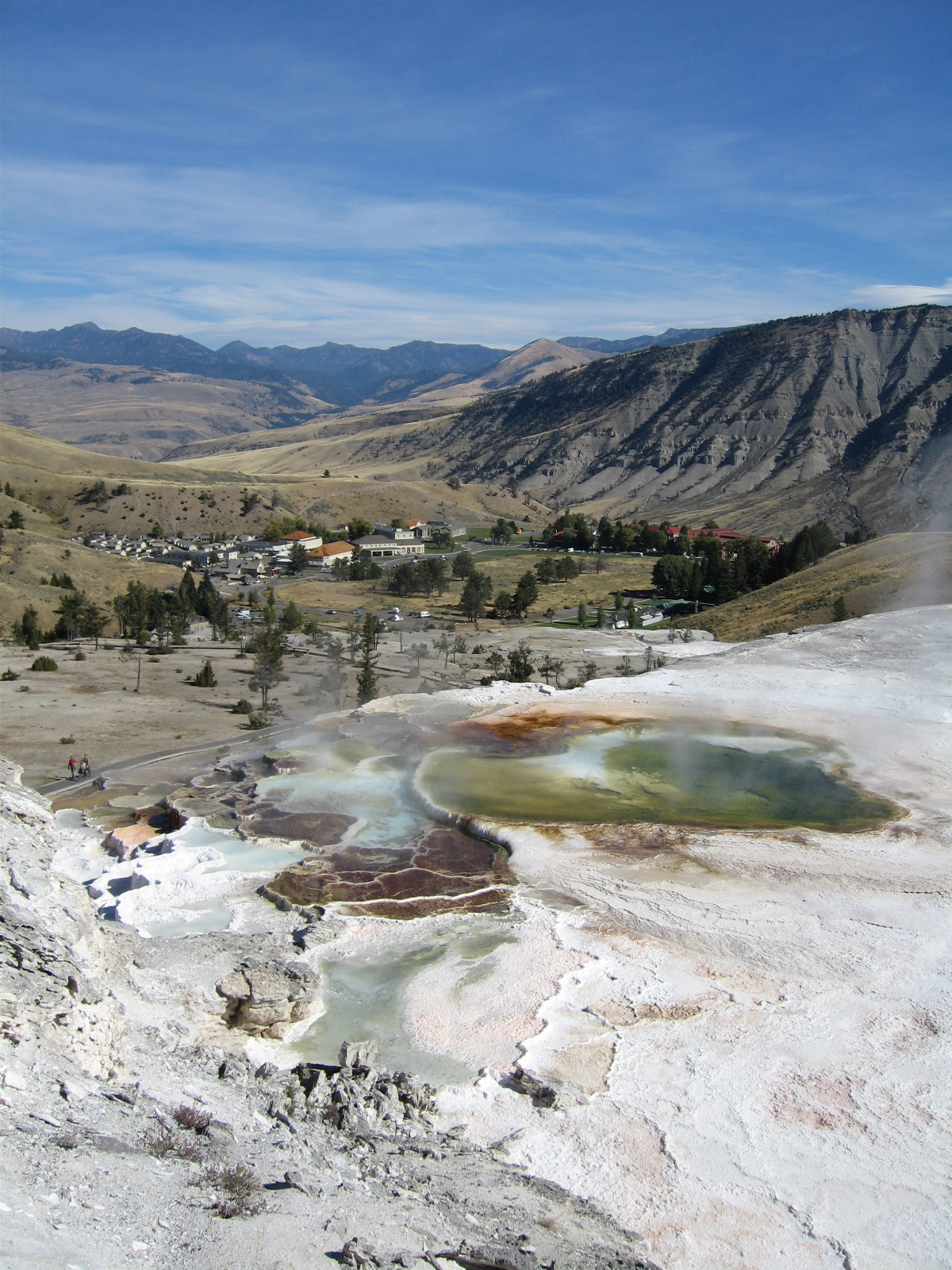
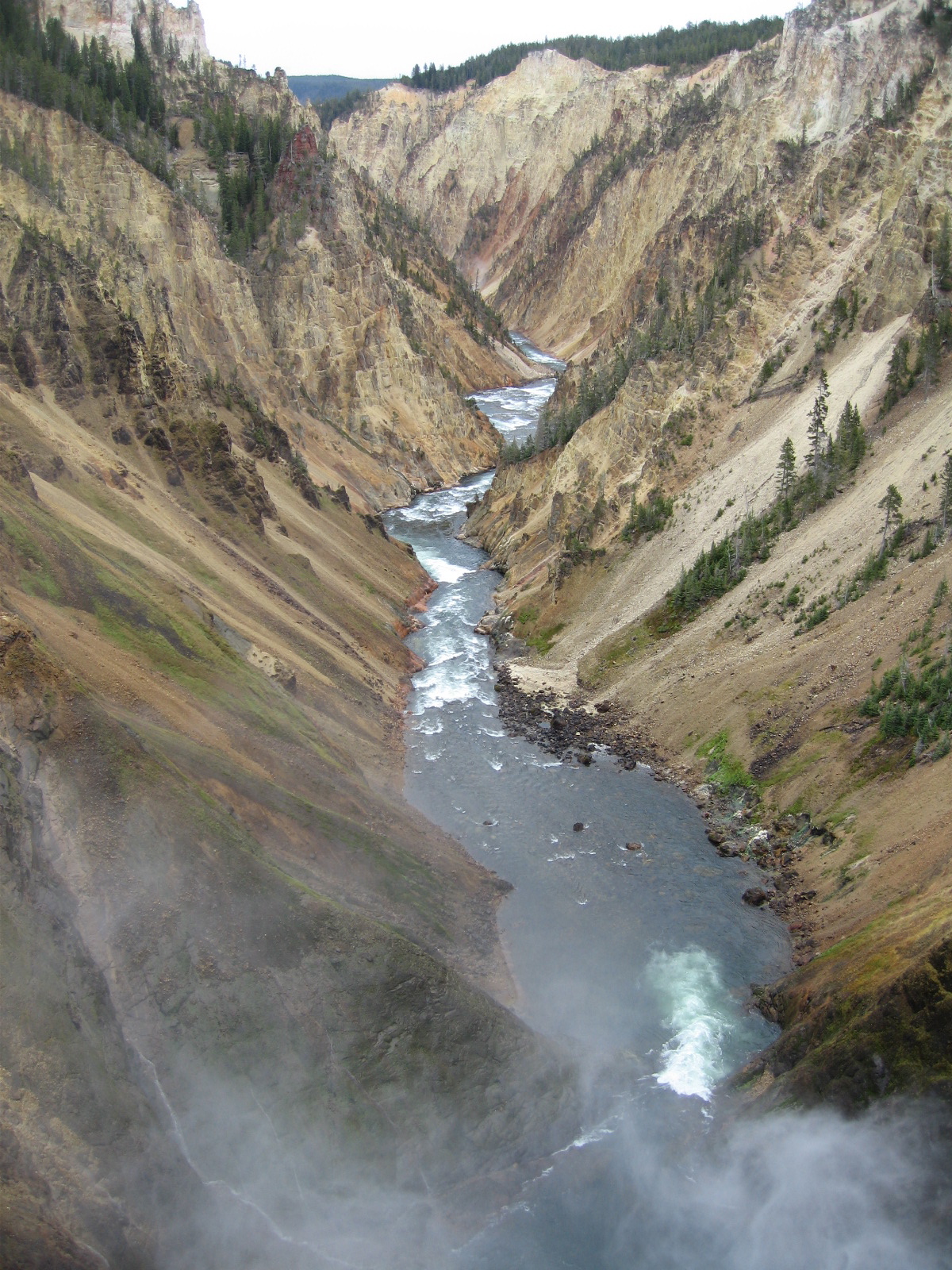
def. Yellowstone National Park:
A United States national park that is located in the states of Wyoming, Montana, and Idaho. Established in 1872, Yellowstone was the first national park to be founded and set an example for other national parks which were subsequently established all over the world. The park is the current location of the Yellowstone hotspot, which is responsible for large-scale volcanism in Oregon, Nevada, Idaho, and Wyoming. As a result of the hotspot, the park is full of geothermal features such as hotsprings and geysers… and thus is a treasured location for geologists to visit!
For this week’s geology word, I thought I would share some pictures from when I visited Yellowstone National Park as part of my undergraduate geology field camp back in 2005. I haven’t been back to Yellowstone since then, but my husband and I are hoping to visit sometime in 2013 as part of a Western USA roadtrip that we’re plotting.
Does anyone else have some Yellowstone pictures to share? Perhaps we can start a geomeme!
Yellowstone #2. Fall 2005.Yellowstone #3. Fall 2005.Yellowstone #4. Fall 2005.Yellowstone #5. Fall 2005.Yellowstone #6. Fall 2005.Yellowstone #7. Fall 2005.

















 Georneys