Geology Word of the Week: V is for Vitreous

Obsidian with vitreous luster. Photo courtesy of Maitri Erwin.

Introductory Note: At long last, the Geology Word of the Week has returned! For almost a year, the Geology Word of the Week post has been on hold. I briefly resurrected the weekly word back in April with the posts T is for Time and U is for Ulexite, but the revival was short-lived. I neglected the weekly word because this past year has been busy and full of important life events and changes: getting married, finishing up my PhD, moving overseas, and starting my first job, among other things! To keep Georneys interesting, I started the Monday Geology Picture weekly feature. I’ll still keep posting the Monday Geology Picture, but I also hope to resume my weekly words. As always, feel free to suggest words and provide information and pictures related to the weekly word. Note that I go through the alphabet in order for my words, so for next week you should suggest words that start with “W”. From now on, I’ll do my best to keep up with the weekly word, but I may skip a week or several weeks here and there depending on what else is going on in my life. 


def. Vitreous:
Resembling glass. Most often used in geology to refer to a glassy (highly reflective and often transparent to translucent) luster.

Luster (or Lustre) is a term that is used to describe the way that light interacts with the surface of a mineral, rock, or other solid (such as glass or a manmade crystal). Luster is one of many physical properties (others are hardness, streak, cleavage, crystal shape, color, etc.) that geologists use to help them identify rocks and minerals. There are several terms used to describe luster, such as dull, metallic, waxy, pearly, and so on. Andrew Alden, the geology writer for About.com, has a great webpage (including an example gallery) all about luster here. Vitreous (also called glassy) luster is which resembles the luster of glass. Vitreous rocks and minerals are thus highly reflective and often translucent to transparent, like glass. Some vitreous rocks, such as obsidian, even are glass… natural glass!

Here’s a few more pictures of rocks and minerals with vitreous luster:

More vitreous obsidian. Photo courtesy of Maitri Erwin.
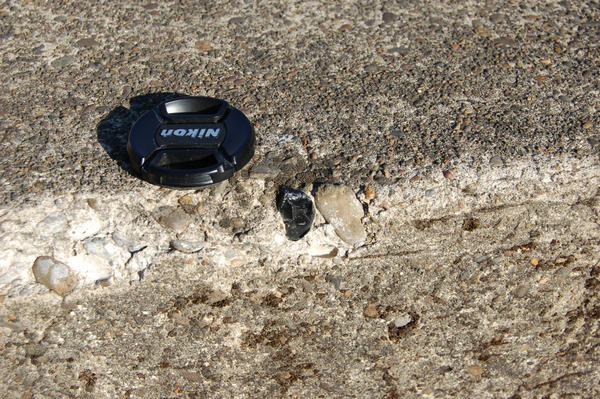
Even more vitreous obsidian (small black clast). Photo courtesy of Lockwood Dewitt.
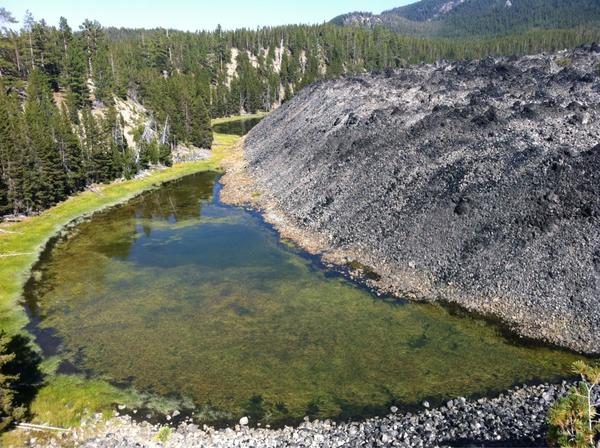
An entire flow of vitreous obsidian. Photo courtesy of Cian Dawson.
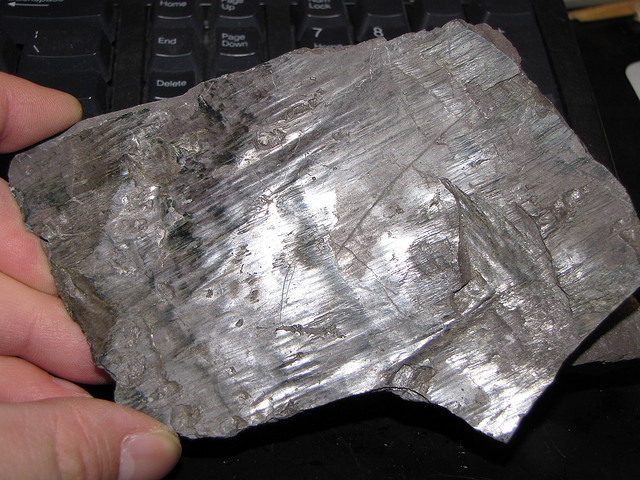
Slickensided slate (say that three times fast!) with vitreous luster. Photo courtesy of Ron Schott.
Limestone covered by vitreous sandstone, which has been melted by lightning. Cool, huh?! Photo courtesy of David Bressan.
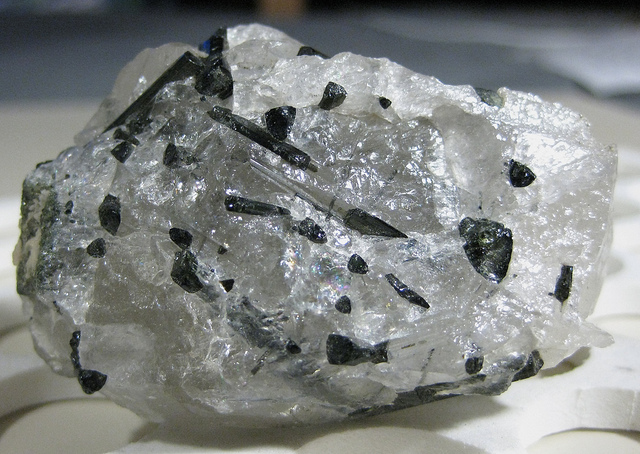
Quartz and tourmaline, both of which have vitreous luster. Photo courtesy of Patrick Donohue.

***Thanks to Maitri Erwin, Lockwood Dewitt, Cian Dawson, Ron Schott, David Bressan, and Patrick Donohue for providing pictures.***
Nome, Alaska in Pictures: Part II


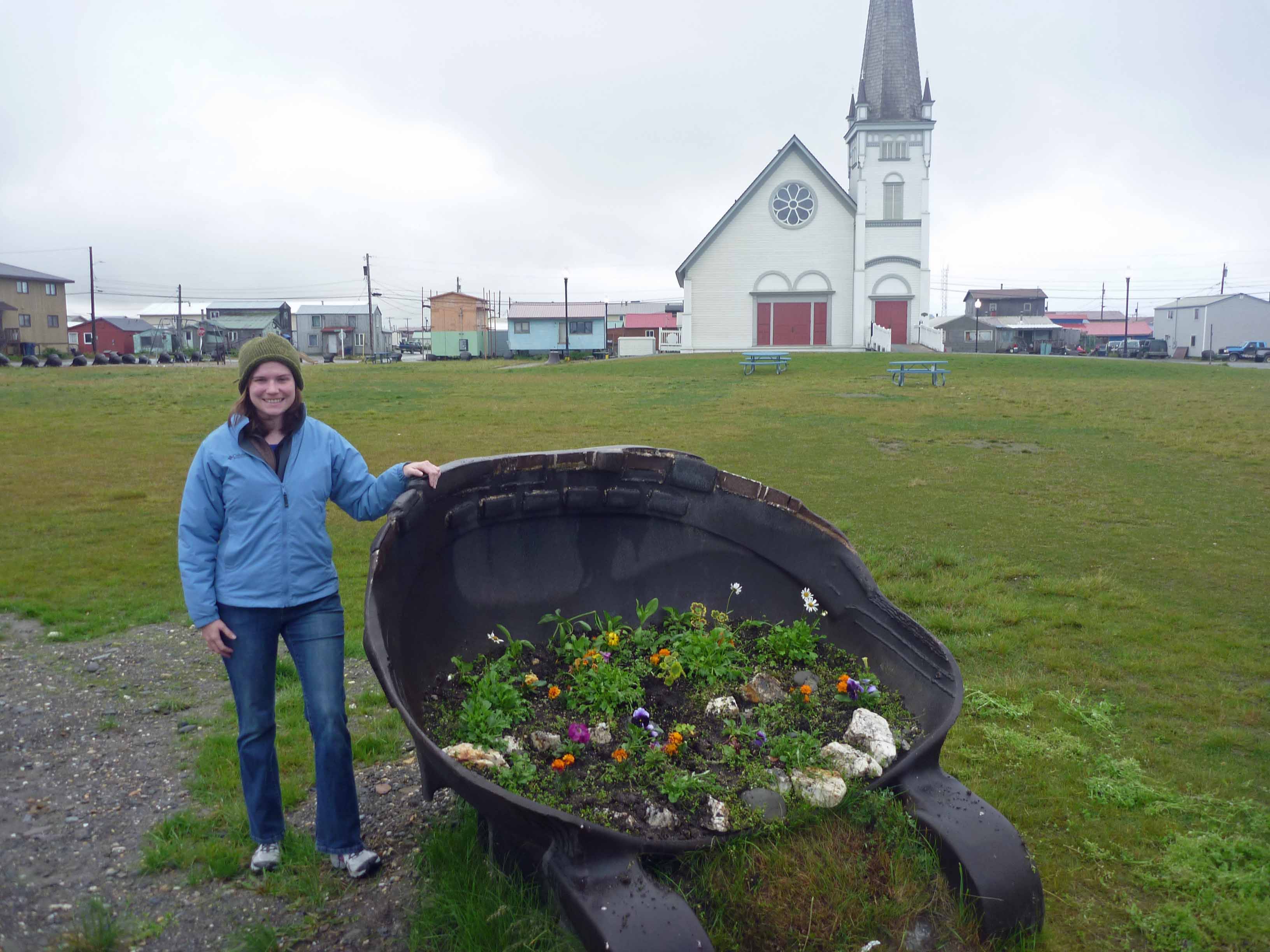
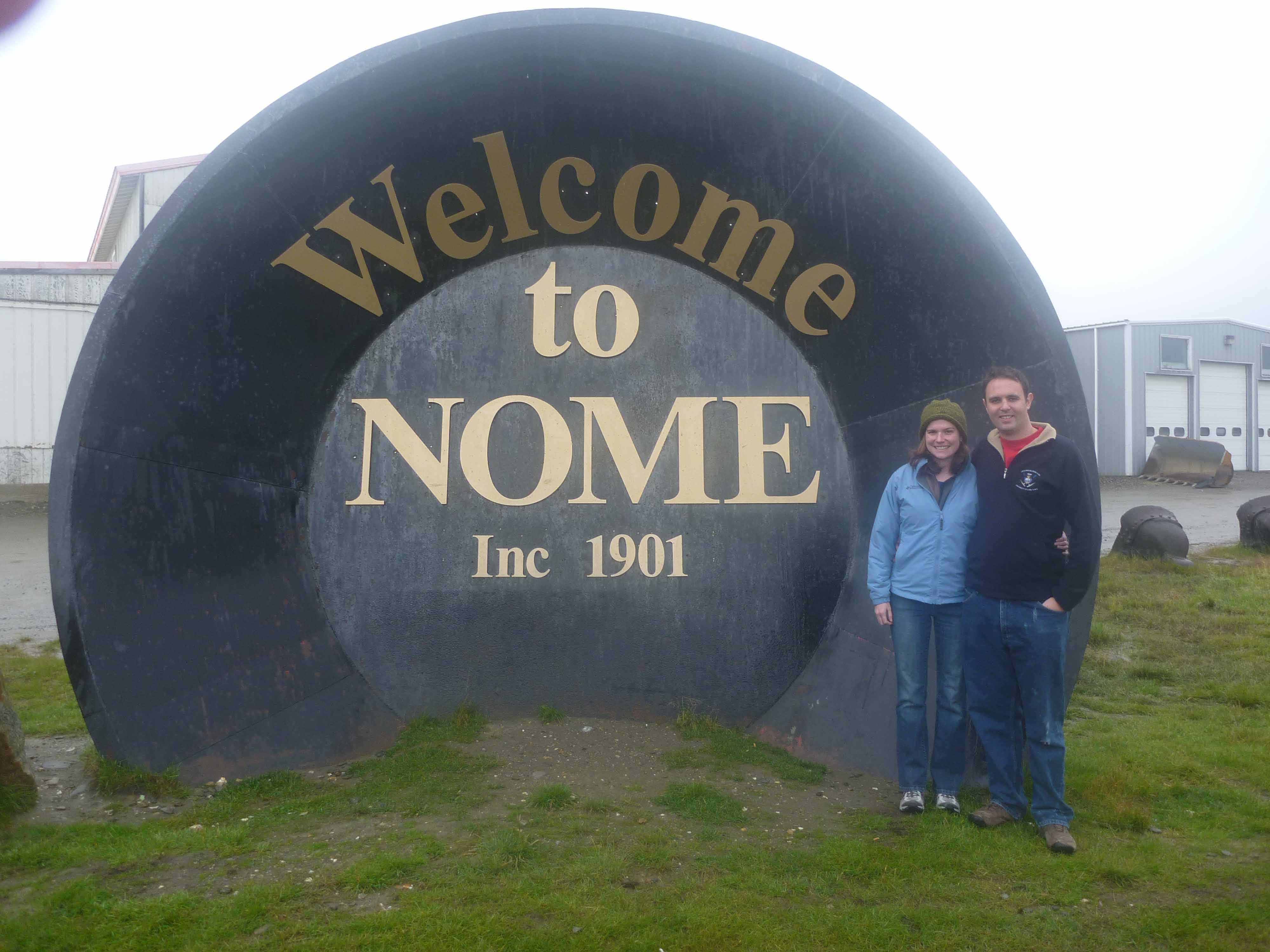
My husband Jackie and I in front of Nome's gigantic gold pan on the town square.

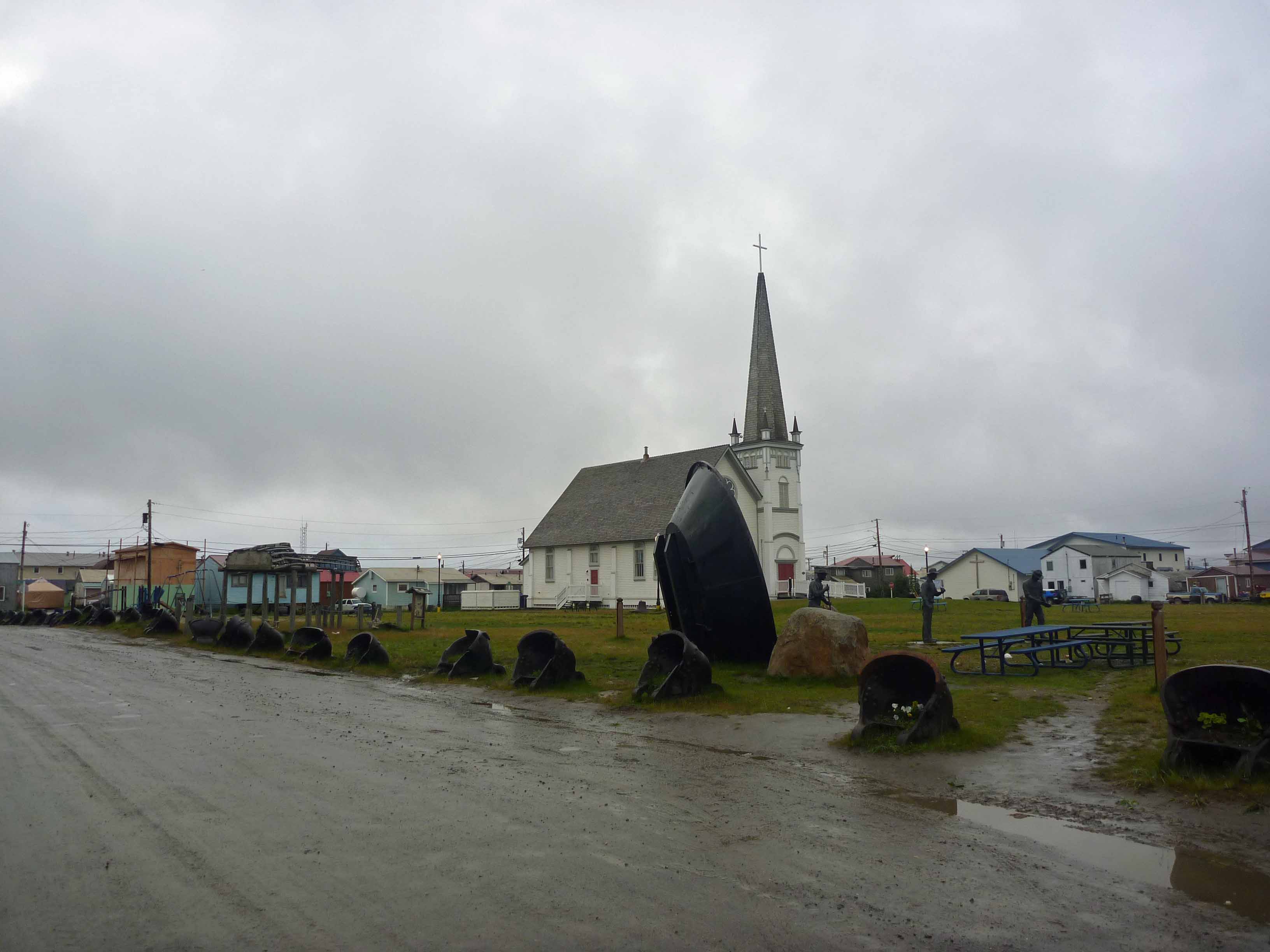
Here are some more pictures from the two months which my husband and I recently spent working in Nome, Alaska. Today I thought I’d share some pictures of the town square, which is called Anvil City Square. The town square is adorned with several items which honor the town’s gold mining history (a giant gold pan, gold dredge buckets, statues of the people who first discovered the gold, and information signs) and the famous Iditarod sled dog race (statues and information signs), which ends in Nome. You can find more pictures of Nome in Part I here. Enjoy!

Another view of the town square. The town square is edged with metal gold dredge buckets which have been turned into flower pots.
Another view of the town square showing the giant gold pan and the statues of "The Three Lucky Swedes."
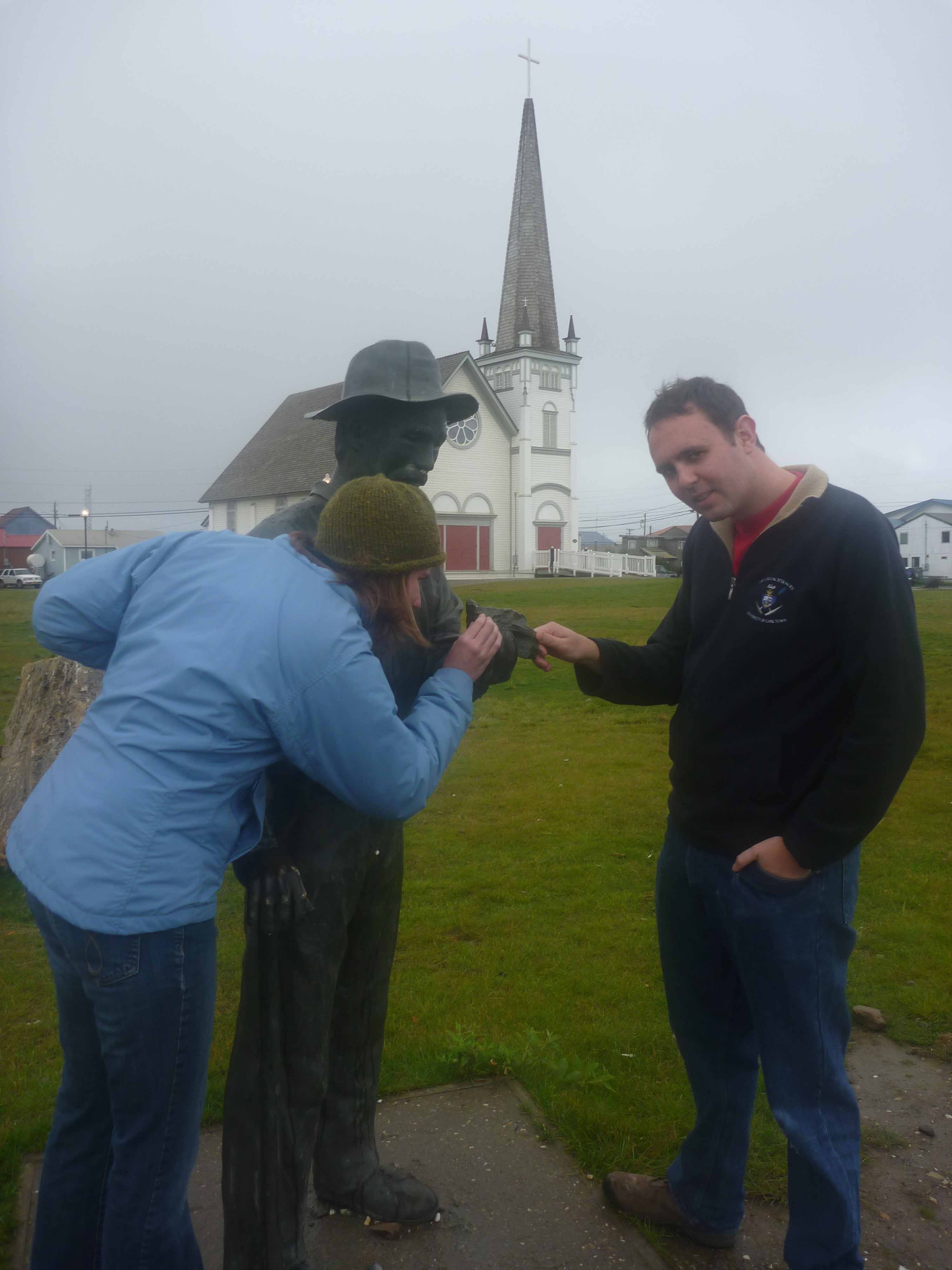
Making friends with one of the lucky Swedes... I hear he's rich!
Jackie and I checking out some of the Three Lucky Swedes' gold.
A sign about the Three Lucky Swedes and their gold discovery in Nome. There are many such informational signs around Nome. I'm not sure who was responsible for putting them up, but they are much appreciated! Click to enlarge the picture if you want to try to read the sign.
A closer view of the pictures of the Three Lucky Swedes on the information sign.
They say that even the flower pots in Nome contain gold... perhaps that's because all the flower pots are old gold dredge buckets!

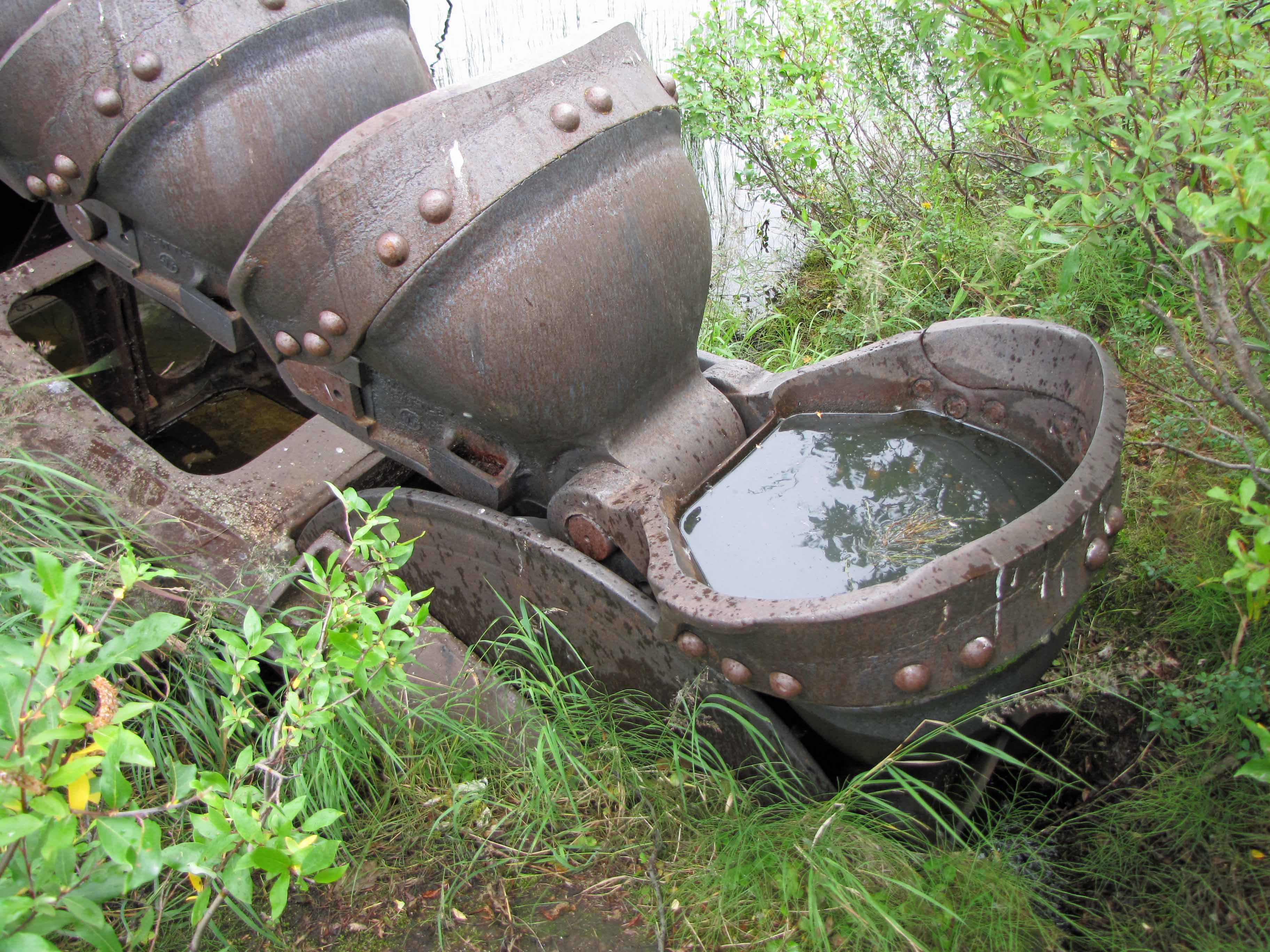
For those who don’t know, this is what a gold dredge looks like:

An abandoned gold dredge about a two hour drive outside of Nome. Note the buckets on the right side of the dredge.
A closer view of some dredge buckets on the dredge in the above picture.

I’ll be writing more about some of Nome’s gold dredges in a later post, so stay tuned!

Posing with some Iditarod sled dogs.
And Jackie and I thought we were clever and had thought up that slogan...

That’s all for now– hope you enjoyed!

Monday Geology Picture(s): My Favorite Glacial Erratic

The glacial erratic in front of my parents' lakeside cabin.

New England is full of glacial erratics: rocks which were transported and dropped by glaciers and which have a different lithology from the rocks upon which they have been deposited. Often, erratic rocks have an angular shape because they were broken off of bedrock by glaciers and have not yet had time to be weathered and rounded by water, wind, and other erosional forces. Glacial erratics can range in size from very small pebbles to very large boulders, but usually it is the boulders which are noticed since these stand out in the landscape and are not easily transported away.

I remember becoming interested in geology as a child when I began noticing large boulders in the middle of fields and the forest around my native New Hampshire. I asked my science teacher about these boulders, and he told me they were called glacial erratics and taught me a little about ice ages. Most of the erratic boulders seen throughout New England today were deposited during the last ice age, which reached a maximum around ~22,000 years ago and which ended ~10,000 years ago.

My favorite glacial erratic, which is shown in this week’s geology picture, sits on a small island in front of my parents’ lakeside cabin on Franklin Pierce Lake in New Hampshire. My parents purchased the cabin about 5 1/2 years ago, and although I had long moved away from home when they bought the cabin, I quickly fell in love with it (and its erratic island!) and try to visit regularly. Every year, my husband and I spend at least a couple of weeks at the cabin. Back in May, the cabin served as a geologist lair when my fellow geoblogger Dana Hunter visited for a few days. If you are brave, you can swim or kayak to the little island from my parents’ cabin and jump off the erratic.

An erratic jump! This picture gives you a better sense of the scale of this enormous erratic boulder.

Does anyone else have a favorite glacial erratic to share?

Accretionary Wedge #50: Field Camp / Trip Moments

Some bewildered field camp students learning how to use Brunton compasses. Western USA, Fall 2005.

Ron Schott recently reminded me that I am hosting September’s Accretionary Wedge geoblog carnival. Sorry for the late posting, but quite honestly I forgot that I was hosting this month! Fortunately, I’ve thought of a fun topic, and the deadlines for the wedge are somewhat fluid. I’ll make entries due on October 10th.

Here’s the topic:

Share a fun moment from geology field camp or a geology field trip. You can share a story, a picture, a song, a slogan, a page from your field notebook– anything you like!

I think we all have many fun moments from geology field camp and trips. Feel free to share more than one, if you want! Here’s a few field camp and trip moments which I shared on Georneys in the past:
The Cow Game
Field Animal Favorites
Ternary Personalities
How Not to Lose Wireless GPS Receivers
Beware the Jungle Raccoon
Chondrite Town

Nome, Alaska in Pictures: Part I

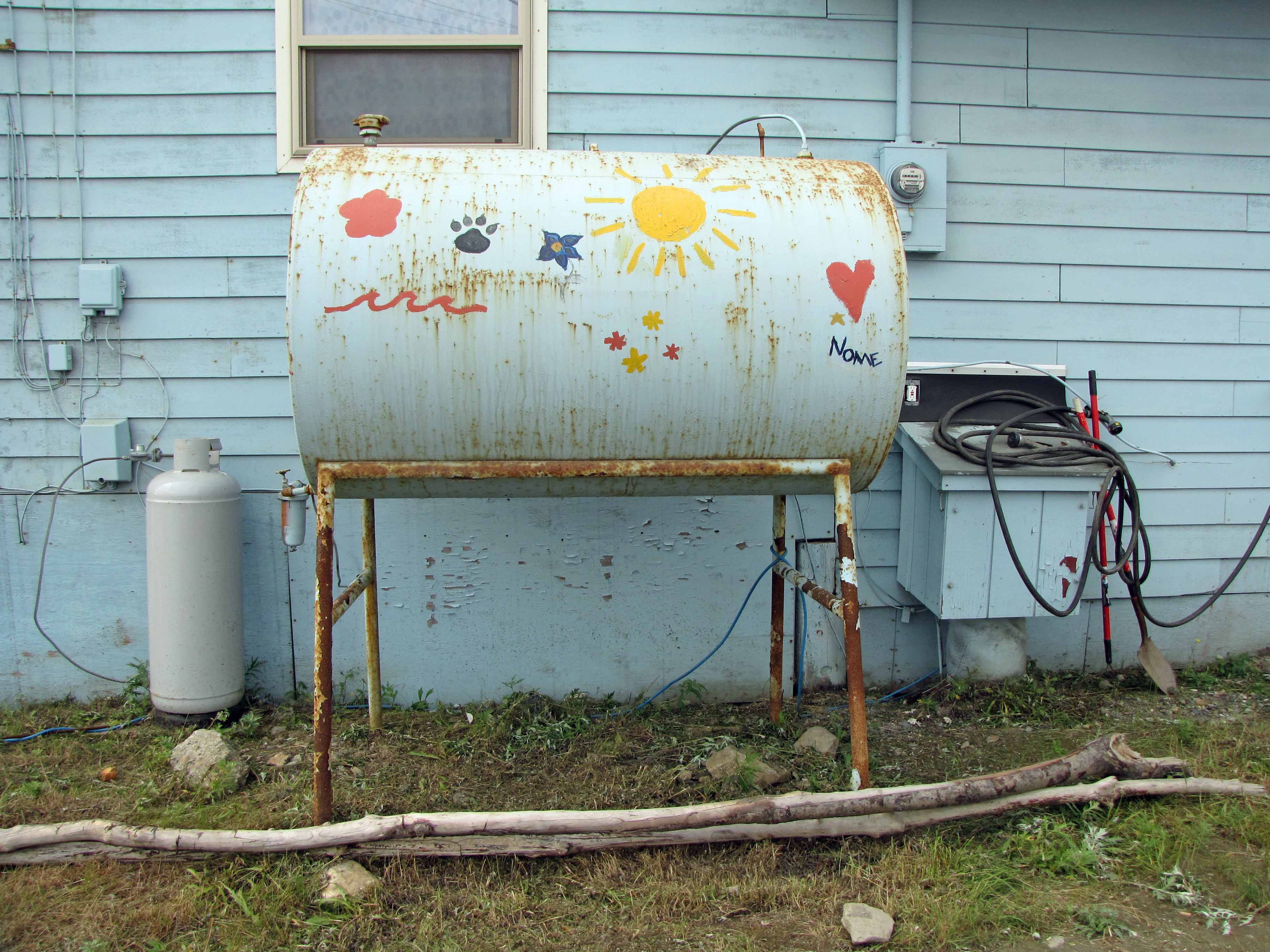
Rust and paint on a gas tank in Nome.

I haven’t done an “…in Pictures” post for awhile, and I have many, many photographs from Nome, Alaska to share with you. I just spent 2 months living and working in Nome, which is an unusual town filled with gold miners in the summer and sled dog racers in the winter. About 3,000 people call Nome home year round. No roads lead to Nome, so everything (people, cars, mining equipment, etc.) is brought in either by airplane or by boat. Because of this, nothing ever leaves Nome. Well, people do, but things (aside from gold, of course) rarely do. The yards of many of the houses in Nome are filled with years of discarded cars, equipment, tools, and so on. Various fields at the edges of town are piled with mounds of junk. I guess it’s just too expensive to remove worn-out items. At first, I found Nome overwhelming and a little bit scary. After a few weeks, however, Nome– piles of rusted junk and all– began to grow on me. While I’m happy to be back at my home base in Cape Town now, I can truly say that I enjoyed my two months in Nome.

Today I’m going to share some pictures from Nome. I took all of the pictures in this post during a walk on a rare sunny (well, overcast… but the sun poked through the clouds sometimes) day back in August. In future posts I’ll share some additional pictures from Nome. Enjoy!

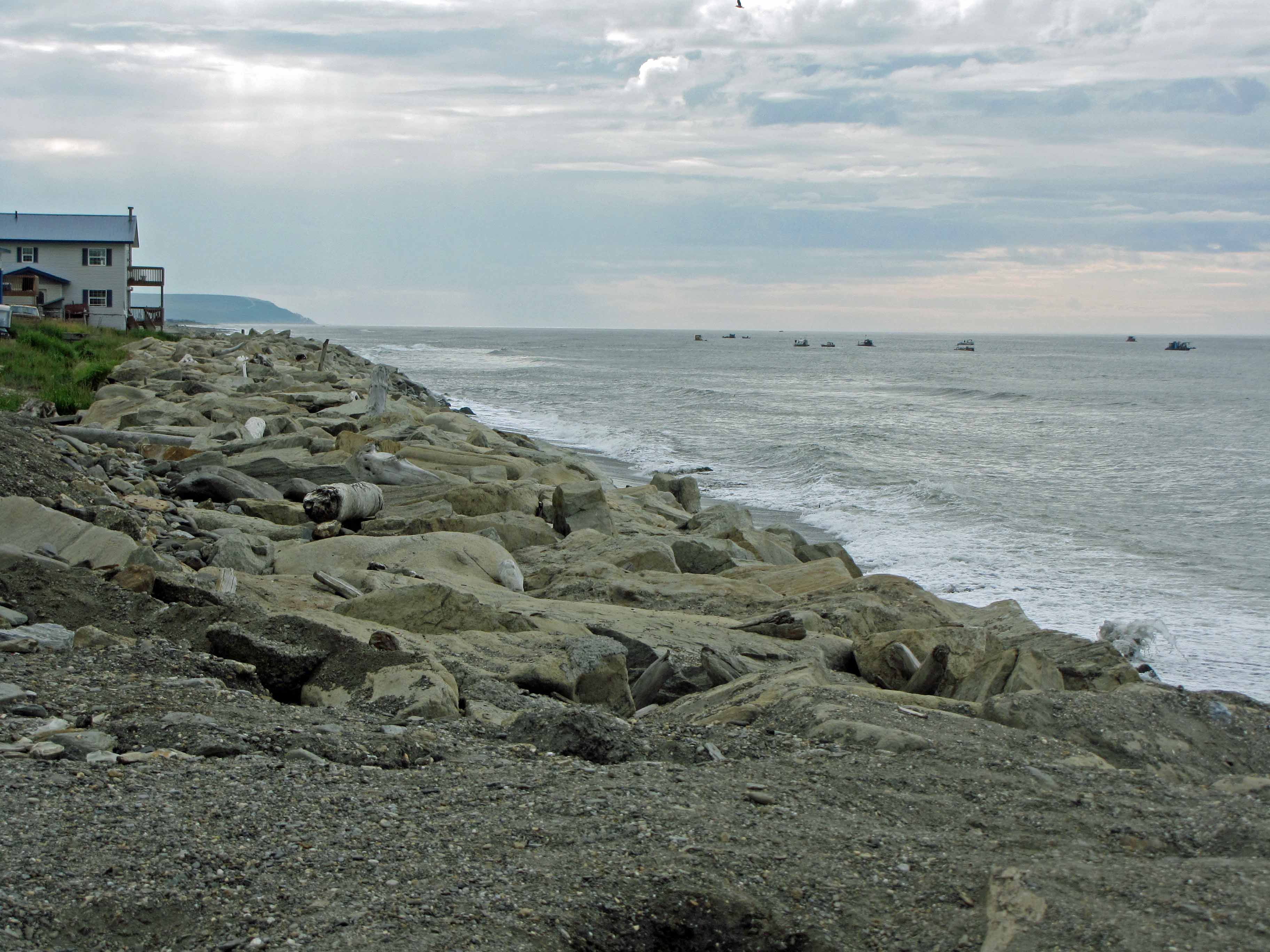
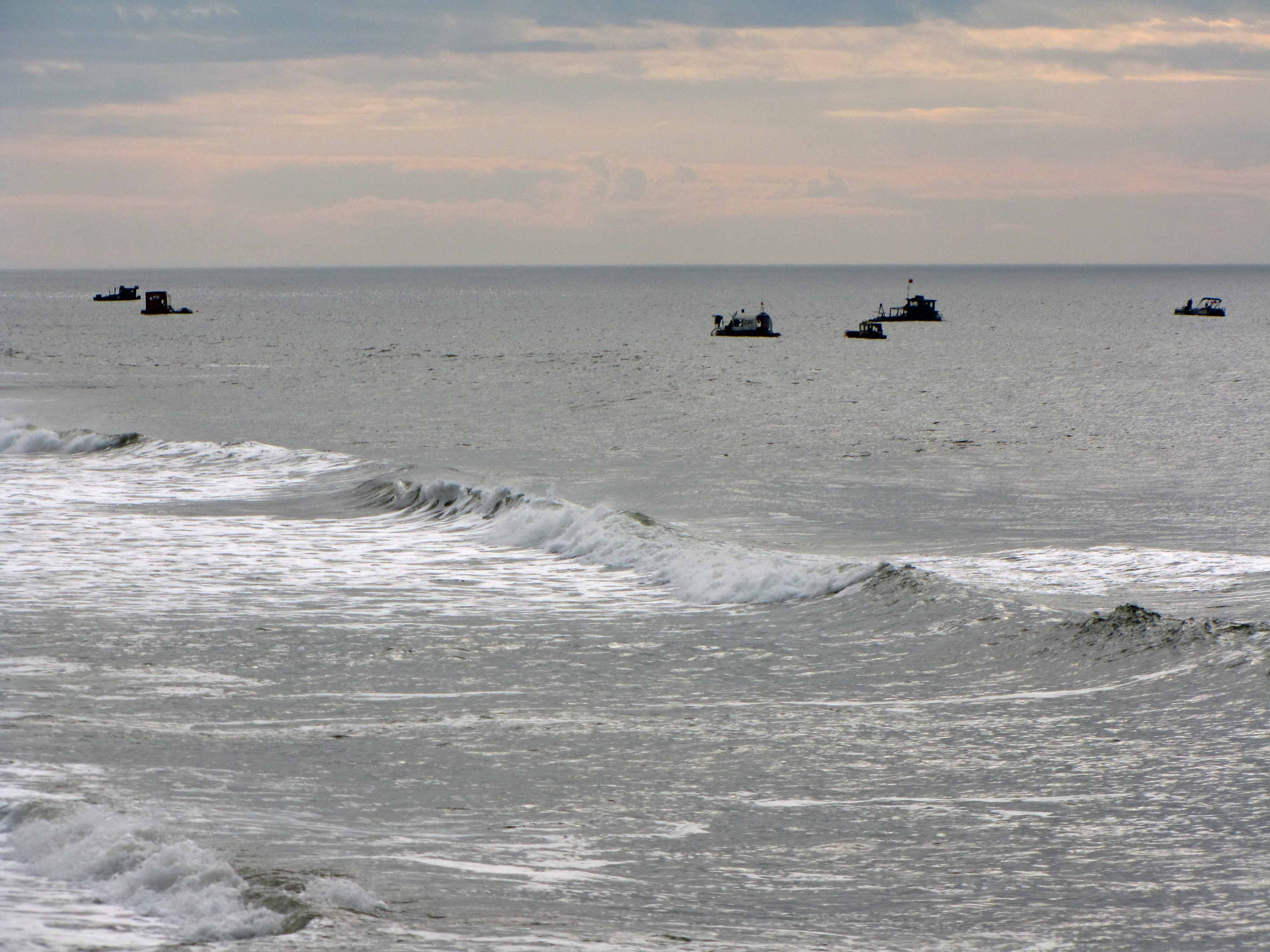
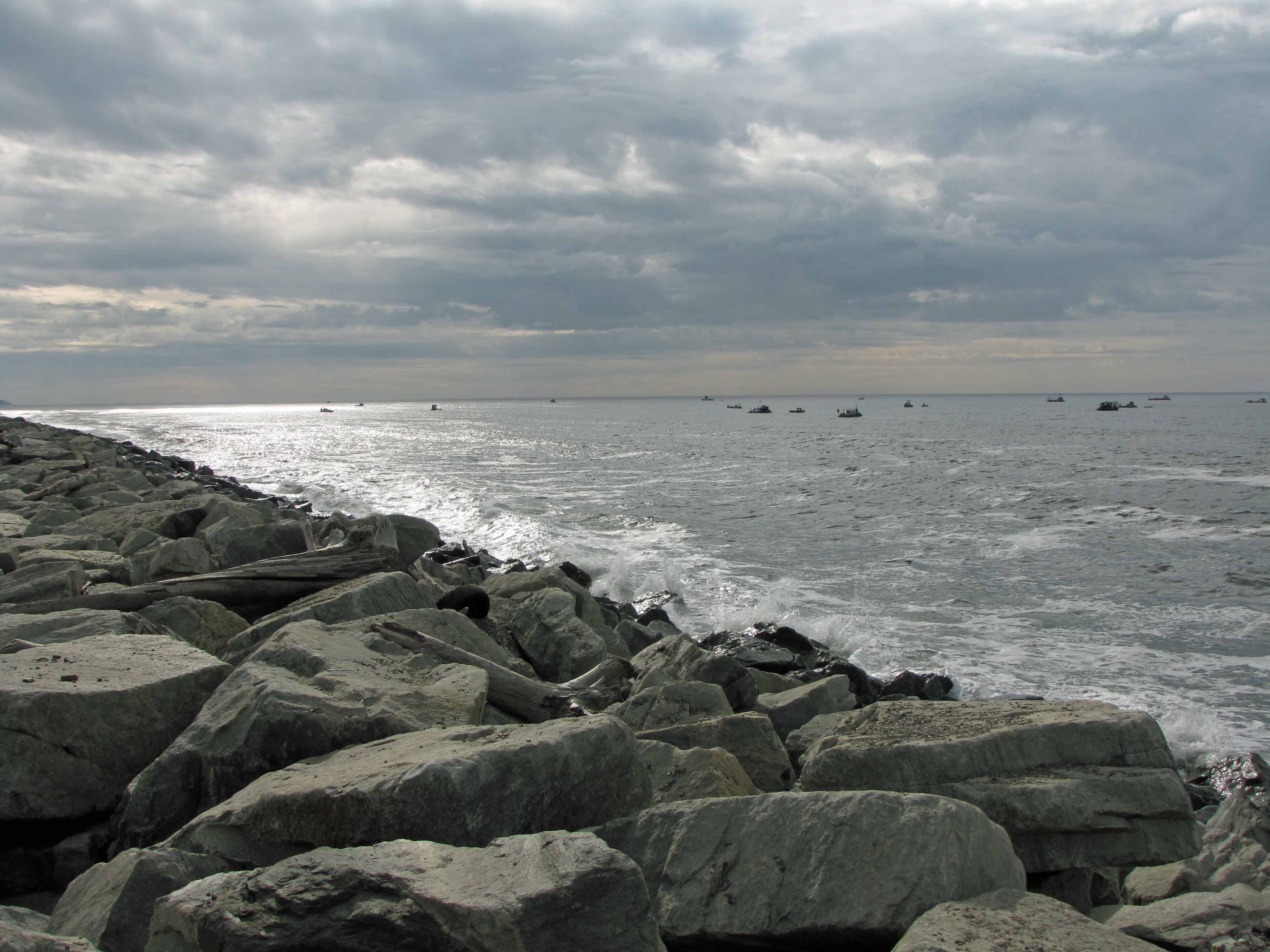
Nome #1. Those are little gold dredge boats on the horizon.
Nome #2. Again, those are little gold dredge boats on the horizon.
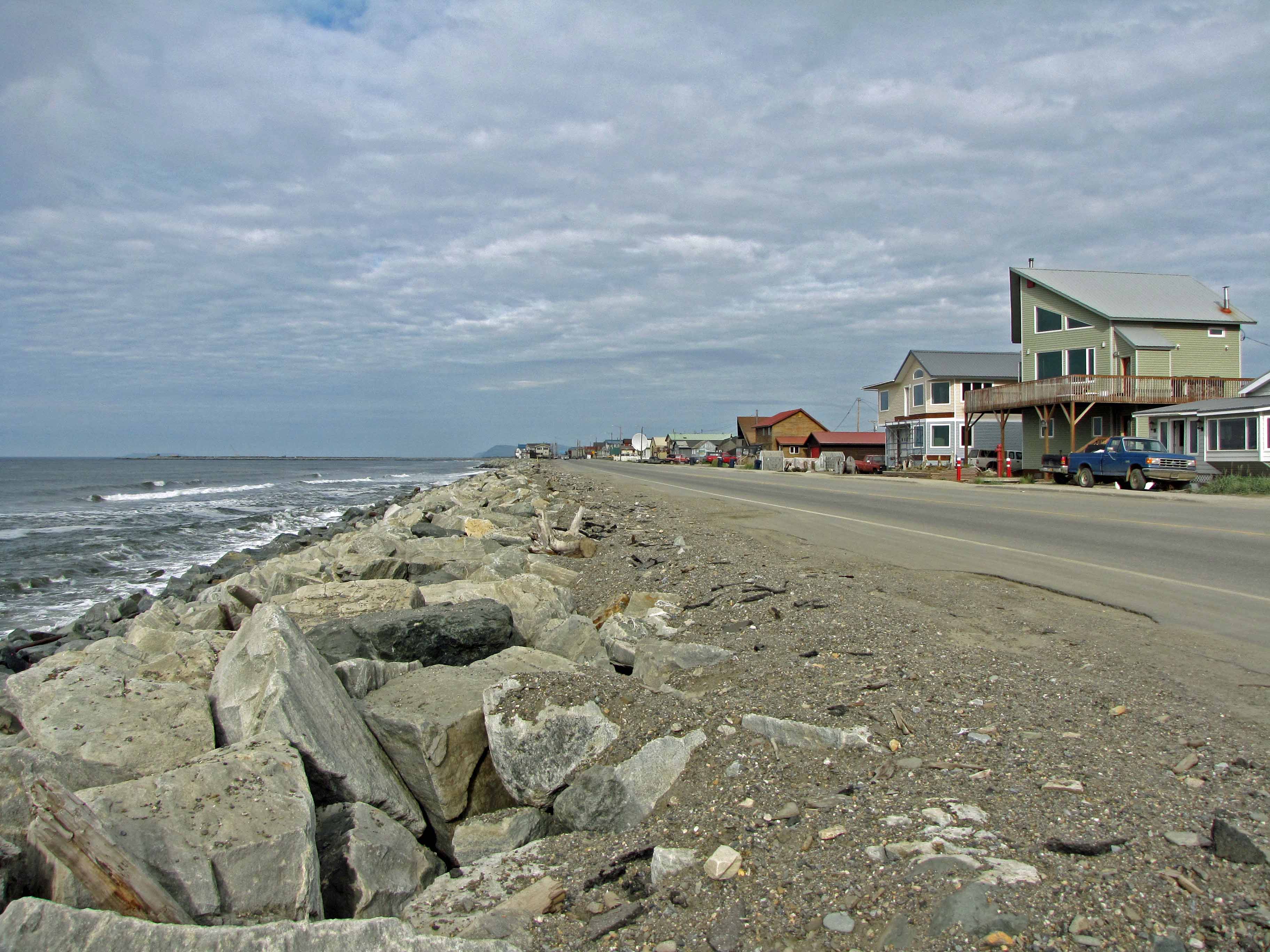
Nome #3. Some houses and a wood stockpile.
Nome #4. More houses.
Nome #5. Seagulls and a sign.
Nome #6. Another view of some little gold dredge boats.
Nome #7. A closer view of some gold dredge boats.
Nome #8. The nicest house in Nome?
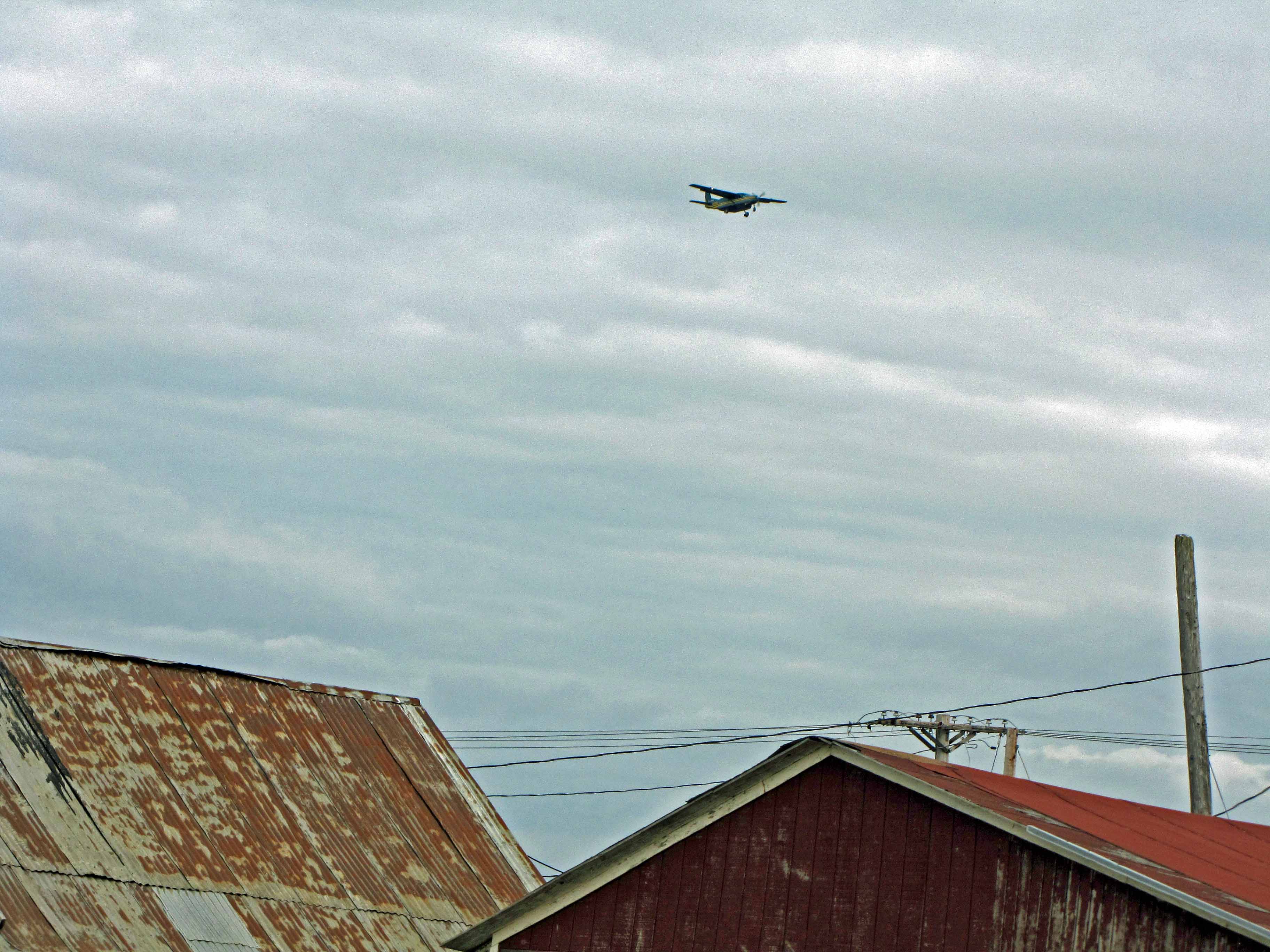
Nome #9. A bush plane flying over some houses.
Nome #10. A closer view of the bush plane.
Nome #11. Interestingly, many of the locals are Green Bay Packers fans.
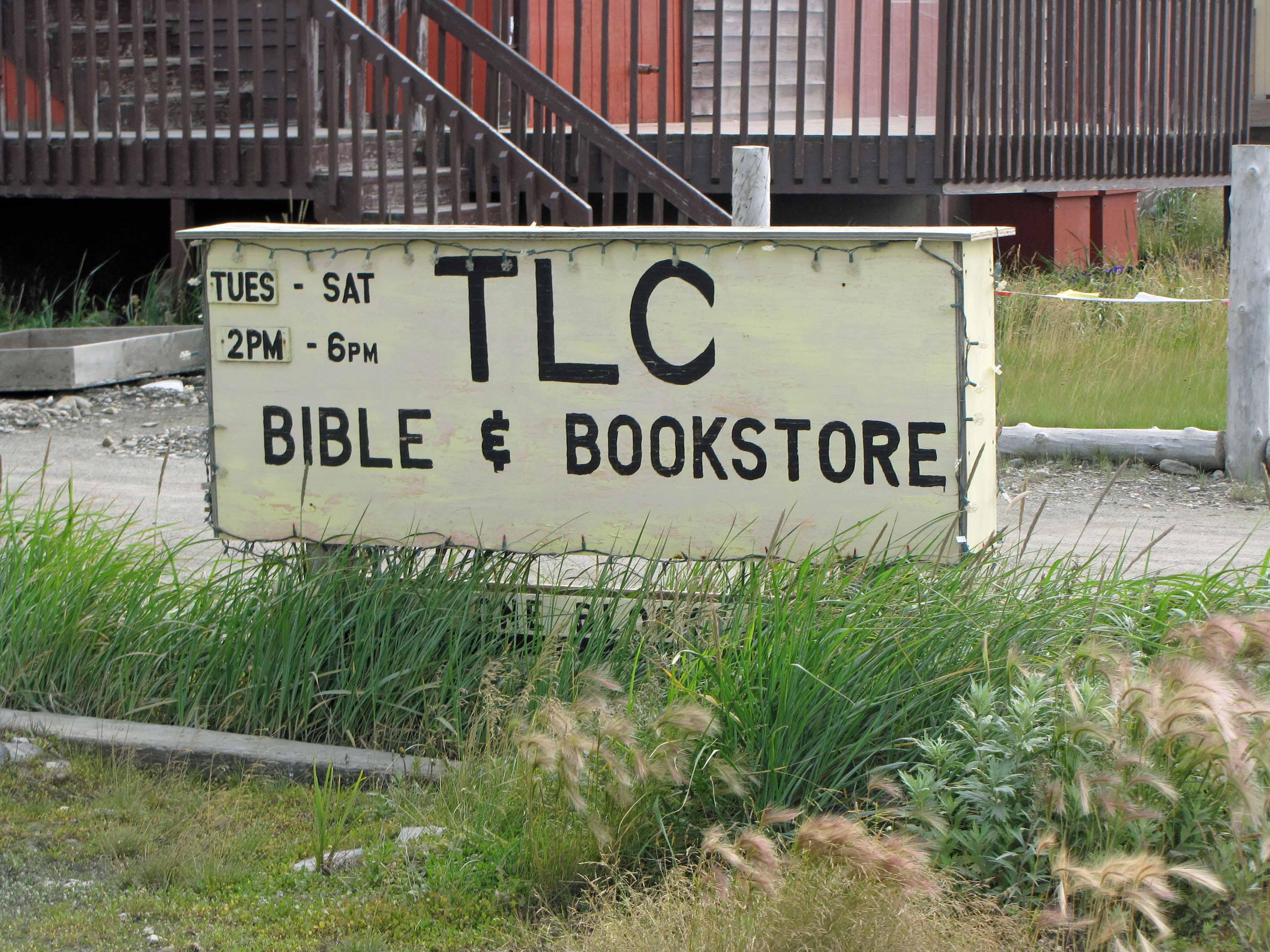
Nome #12. Bible & Bookstore.
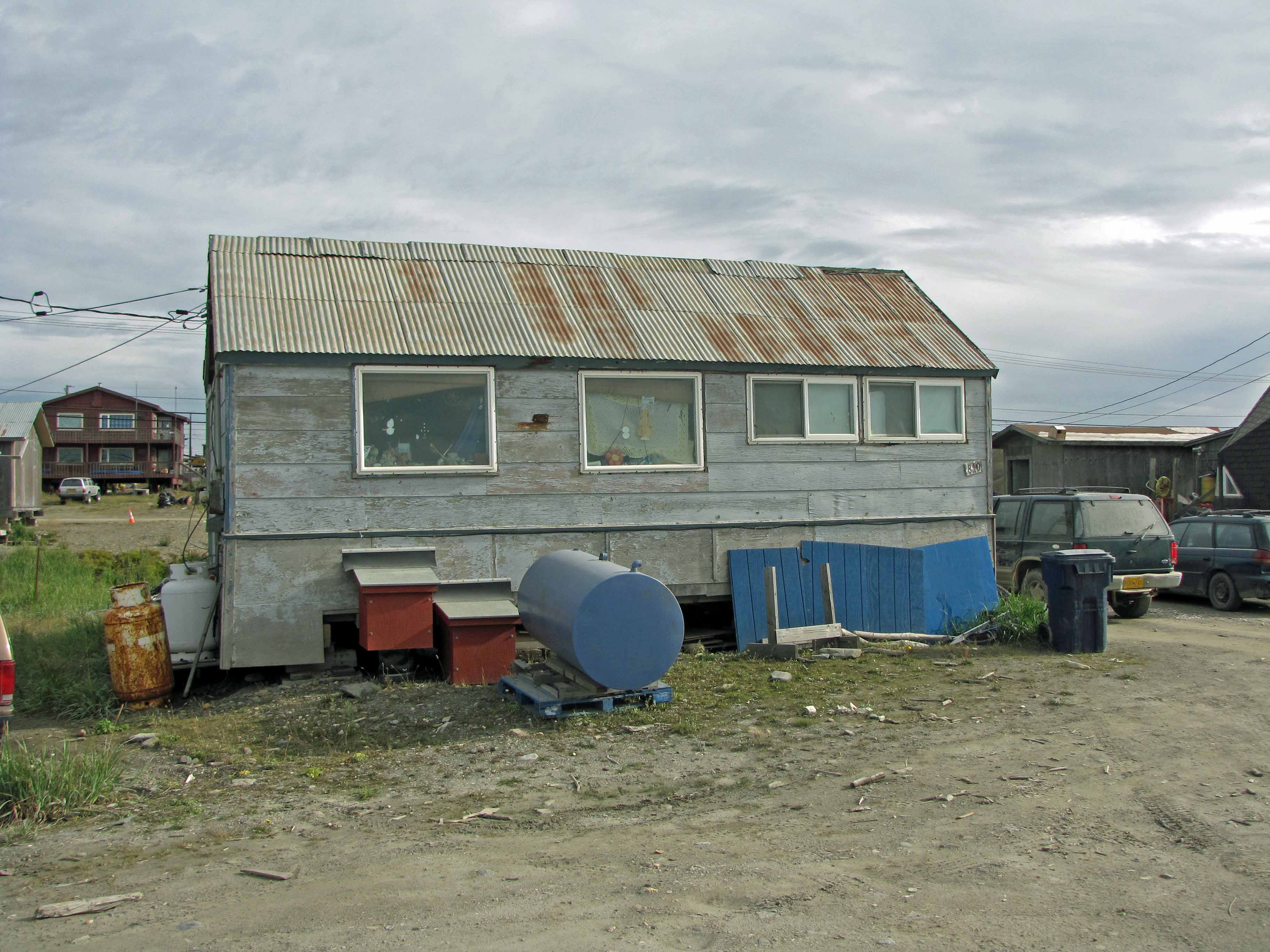
Nome #13. Another house.
Nome #14. An interestingly shaped house.
Nome #15. A sidewalk mermaid.
Nome #16. Little gold dredge boats everywhere.
Nome #17. Another close-up view of some gold dredge boats.
Nome #18. Some of the little gold dredge boats seem to barely float!
Nome #19. A little gold dredge boat with another little boat in tow.
Nome #20. An ominous sky over the little gold dredge boats.
Nome #21. Looking back towards town from the beach.
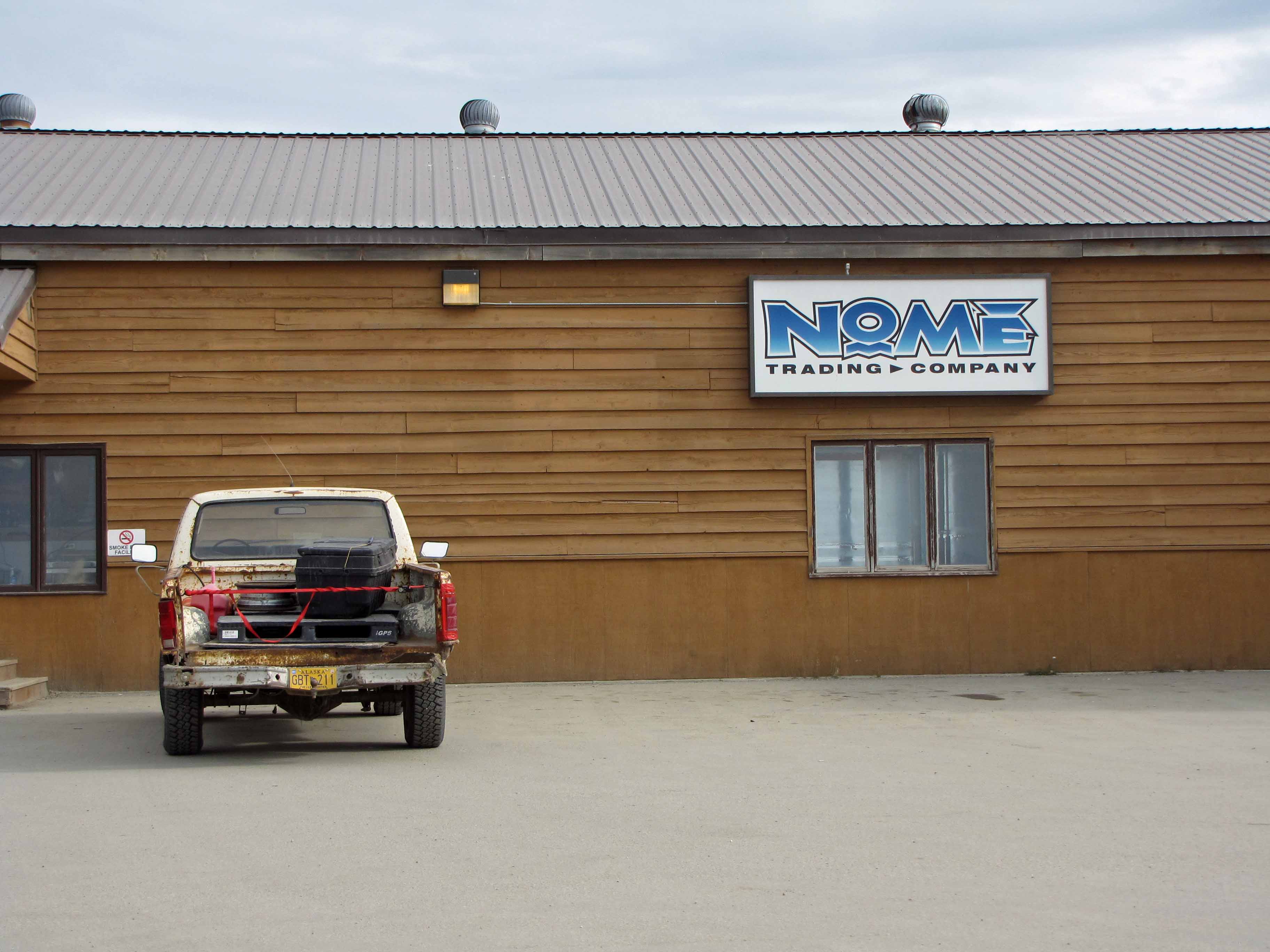
Nome #22. The Nome Trading Company.
Nome #23. Well, I bet you won't see this creative home decoration in Martha Stewart's "Living."
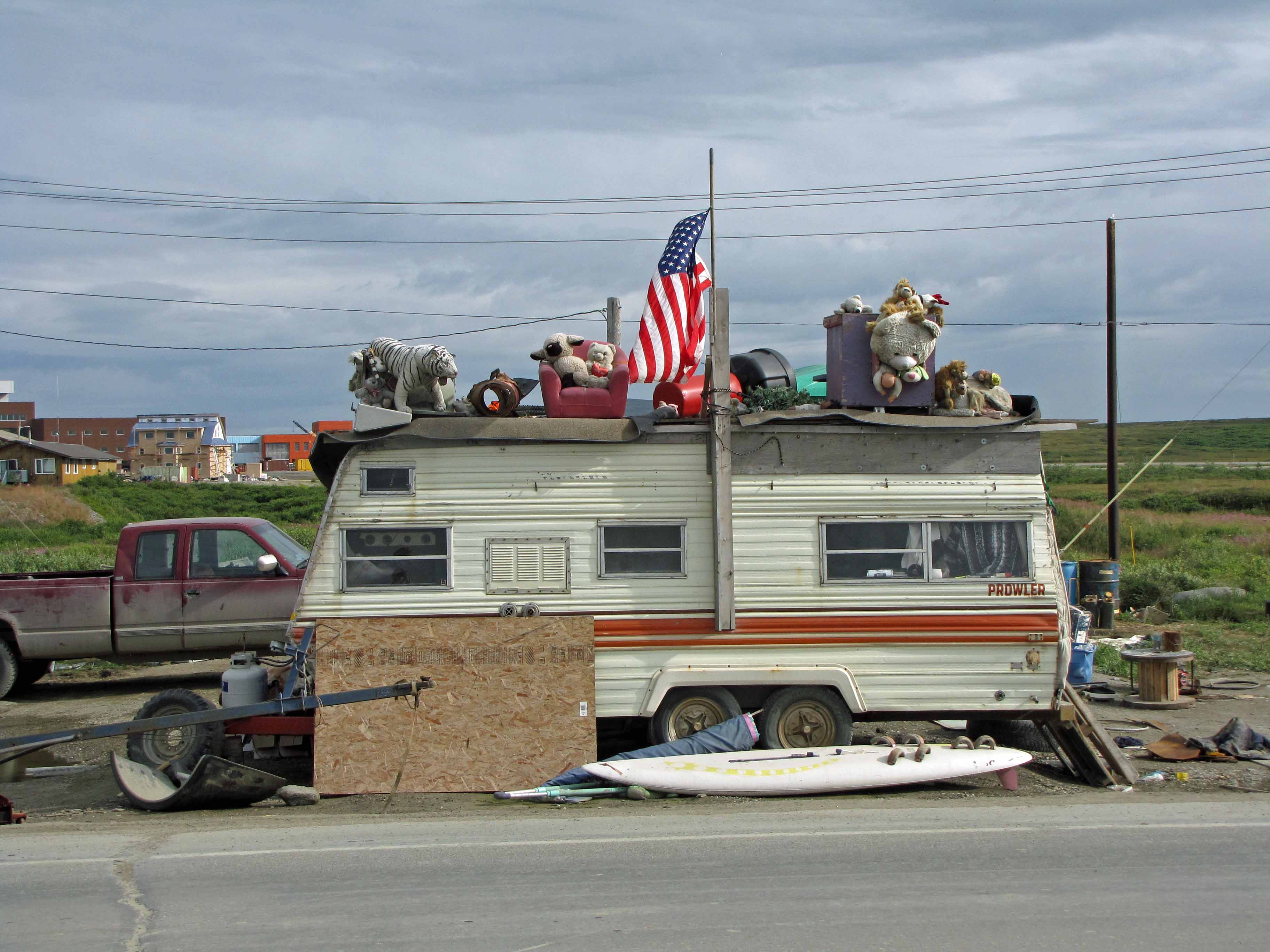
Nome #24. A crazy caravan and an American flag.
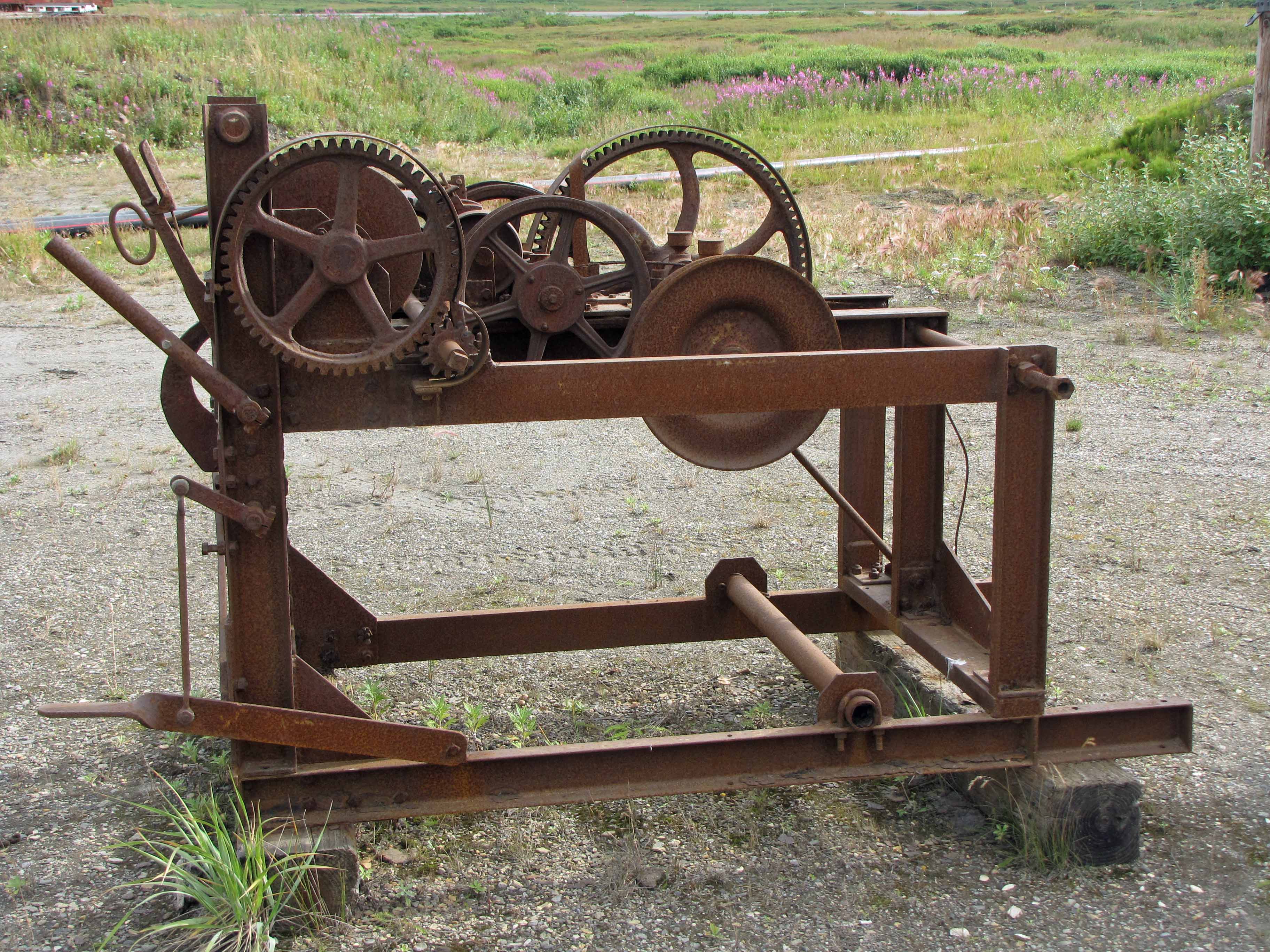
Nome #25. Abandoned mining equipment from one of Nome's previous gold rushes.
Nome #26. Gears and tundra flowers.
Nome #28. An old cement mixer truck.
Nome #29. More old gold mining equipment.
Nome #30. Gold dredging equipment, old and new.
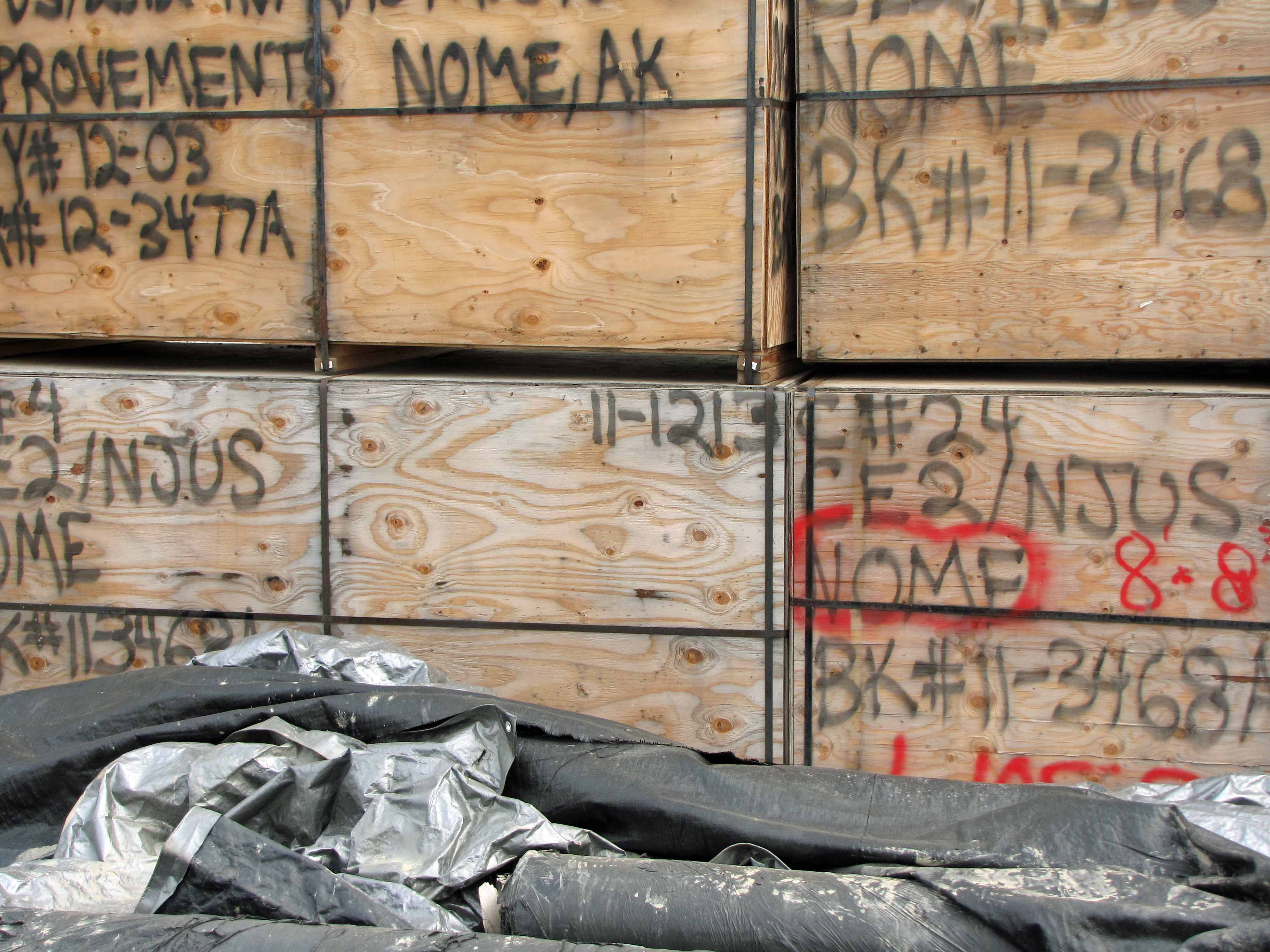
Nome #31. Addressed to Nome.
Nome #32. An old Ford.
Nome #33. A painted gas tank.
Nome #34. Truck trailers.
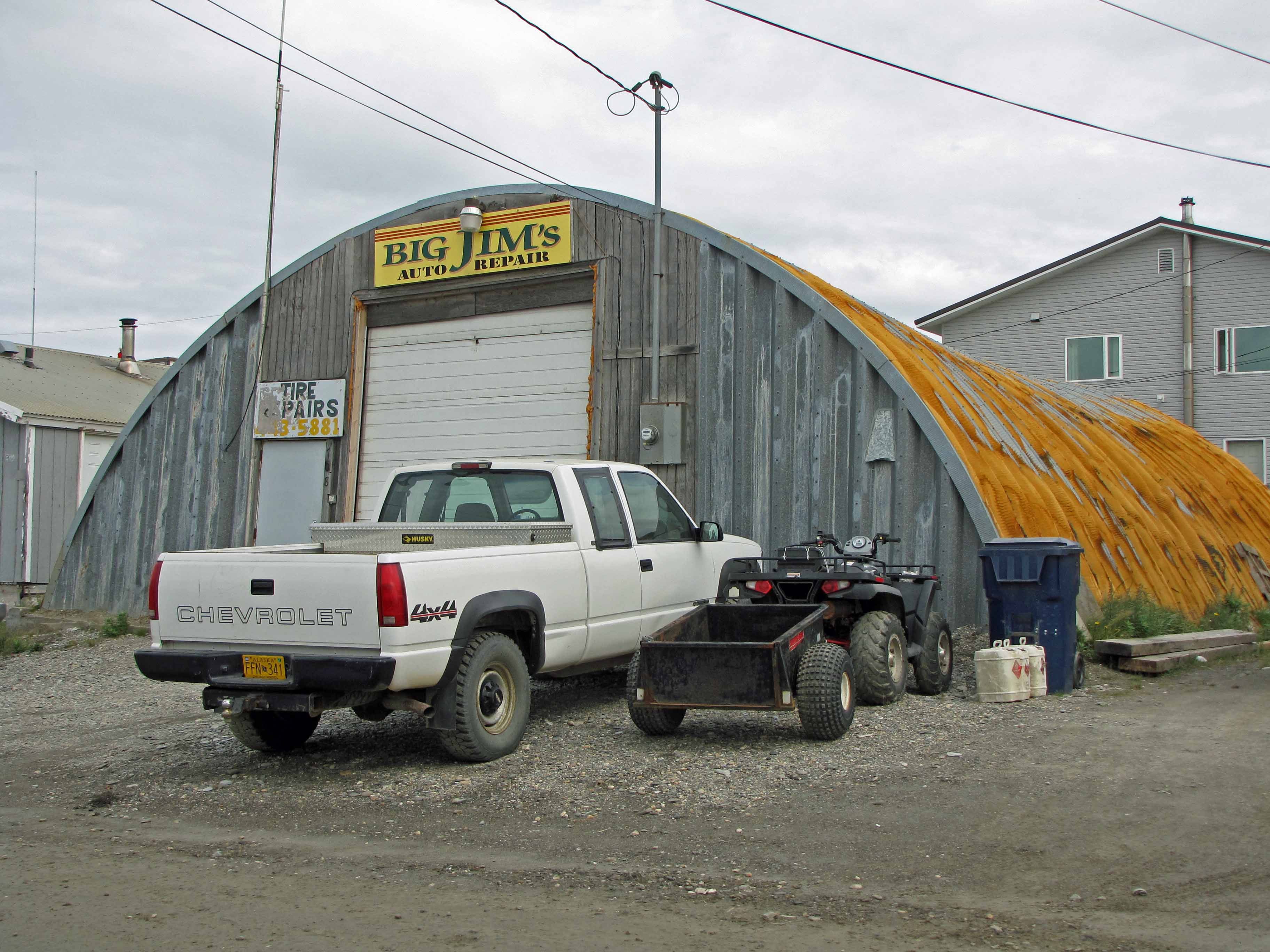
Nome #35. Big Jim's Auto Repair.
Nome #37. Junk everywhere!
Nome #37. Beaver digger.
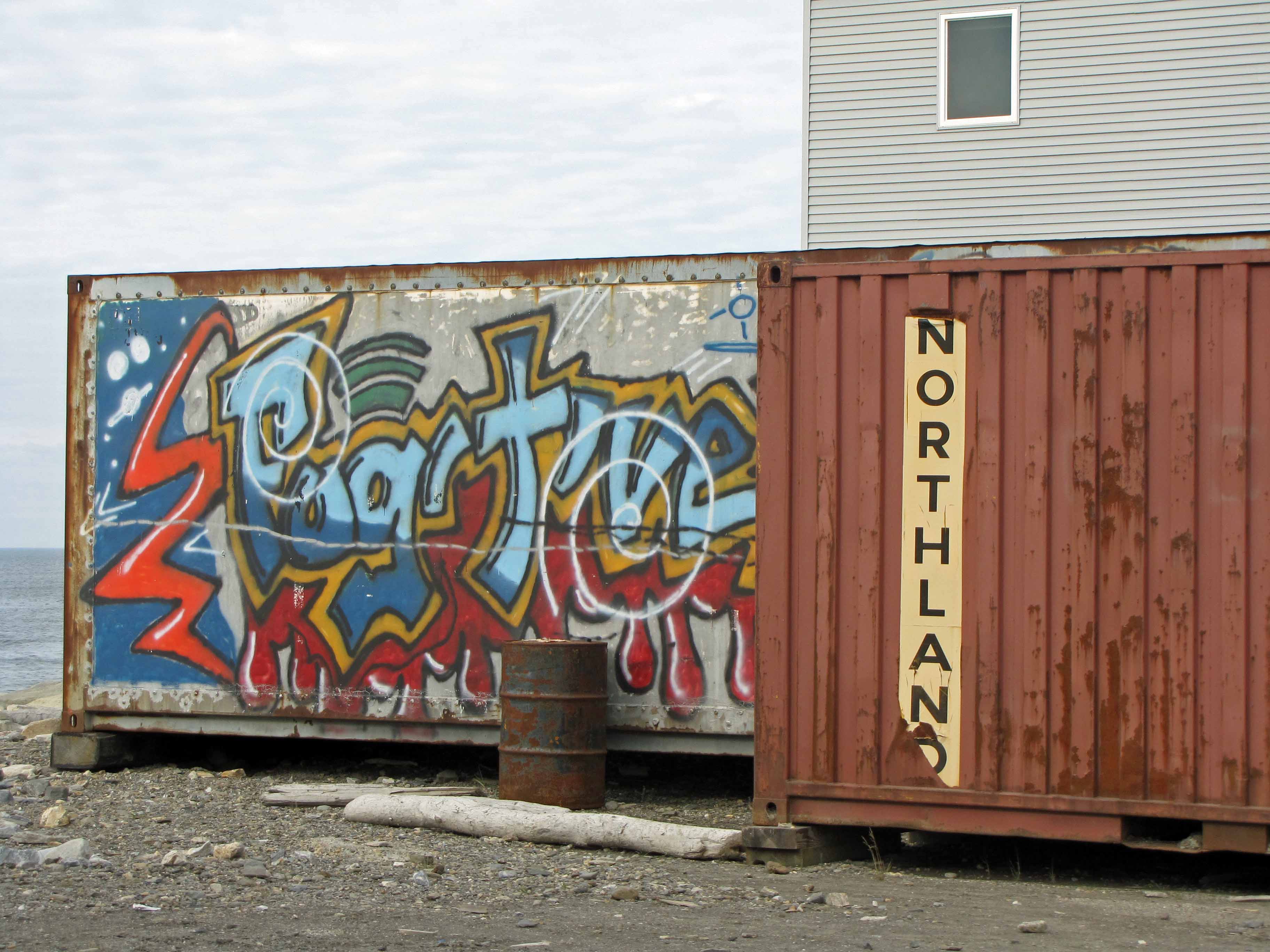
Nome #38. Containers.
Nome #39. Subway... and Nome's movie theater!
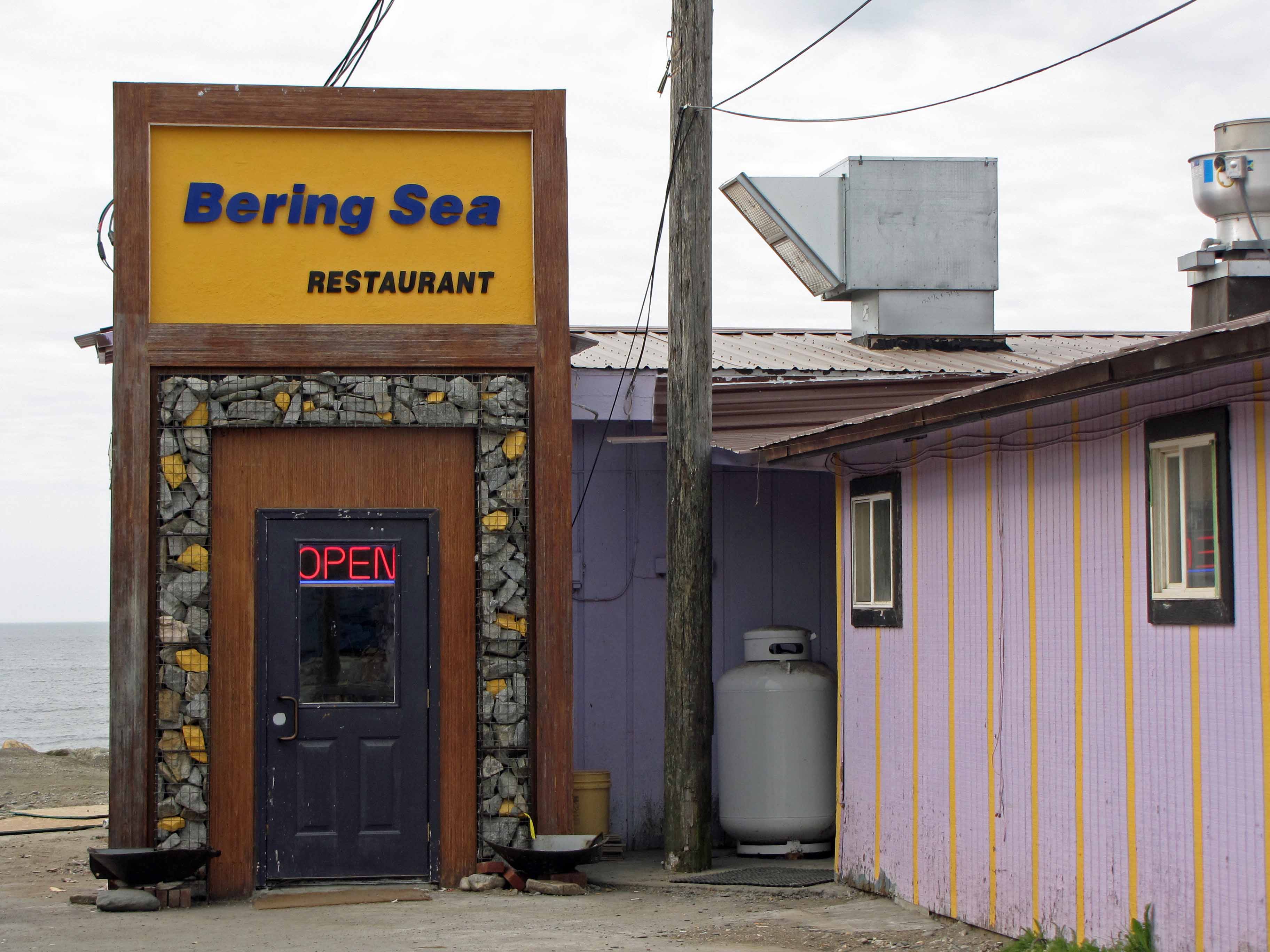
Nome #40. Nome's best restaurant (in my opinion, anyway): The Bering Sea!

Hope you enjoyed these pictures from Nome. I’ll share more soon.

Monday Geology Picture(s): Garnet Sands in Nome, Alaska

Gold-bearing garnet sands on Western Beach in Nome, Alaska, Summer 2012.

Above is a gorgeous beach sand picture for this week’s Monday Geology Picture. I took this picture a few weeks ago in Nome, Alaska after a summer storm. The beaches of Nome are rich in red garnet grains. The beaches of Nome are also very rich in grains of gold, and you can bet that if you pan some of the red garnet sand along the Nome beaches, you will find dozens of small flakes of gold. If you pan some of the more gravely beach material, you may even find yourself a gold nugget!

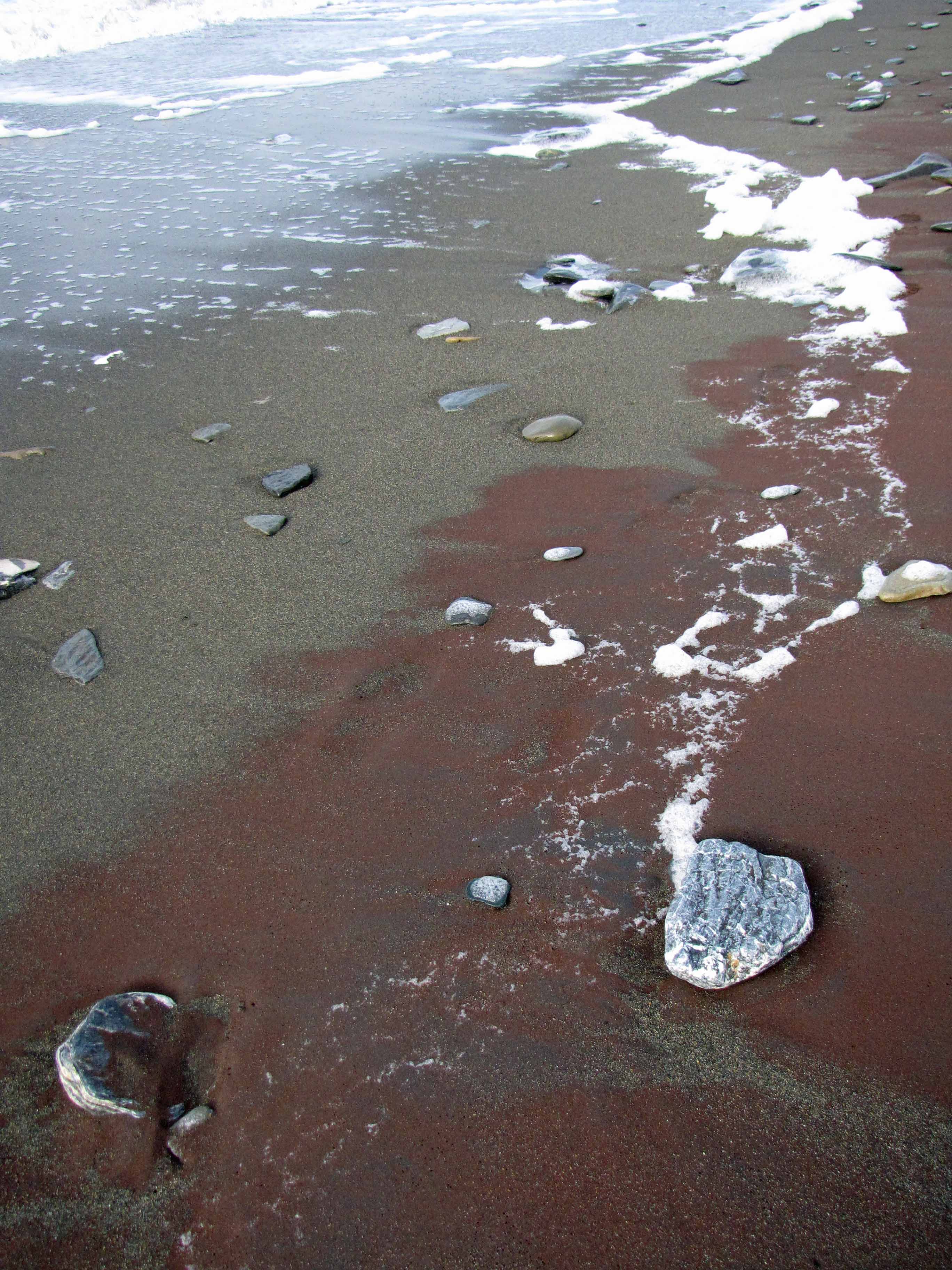
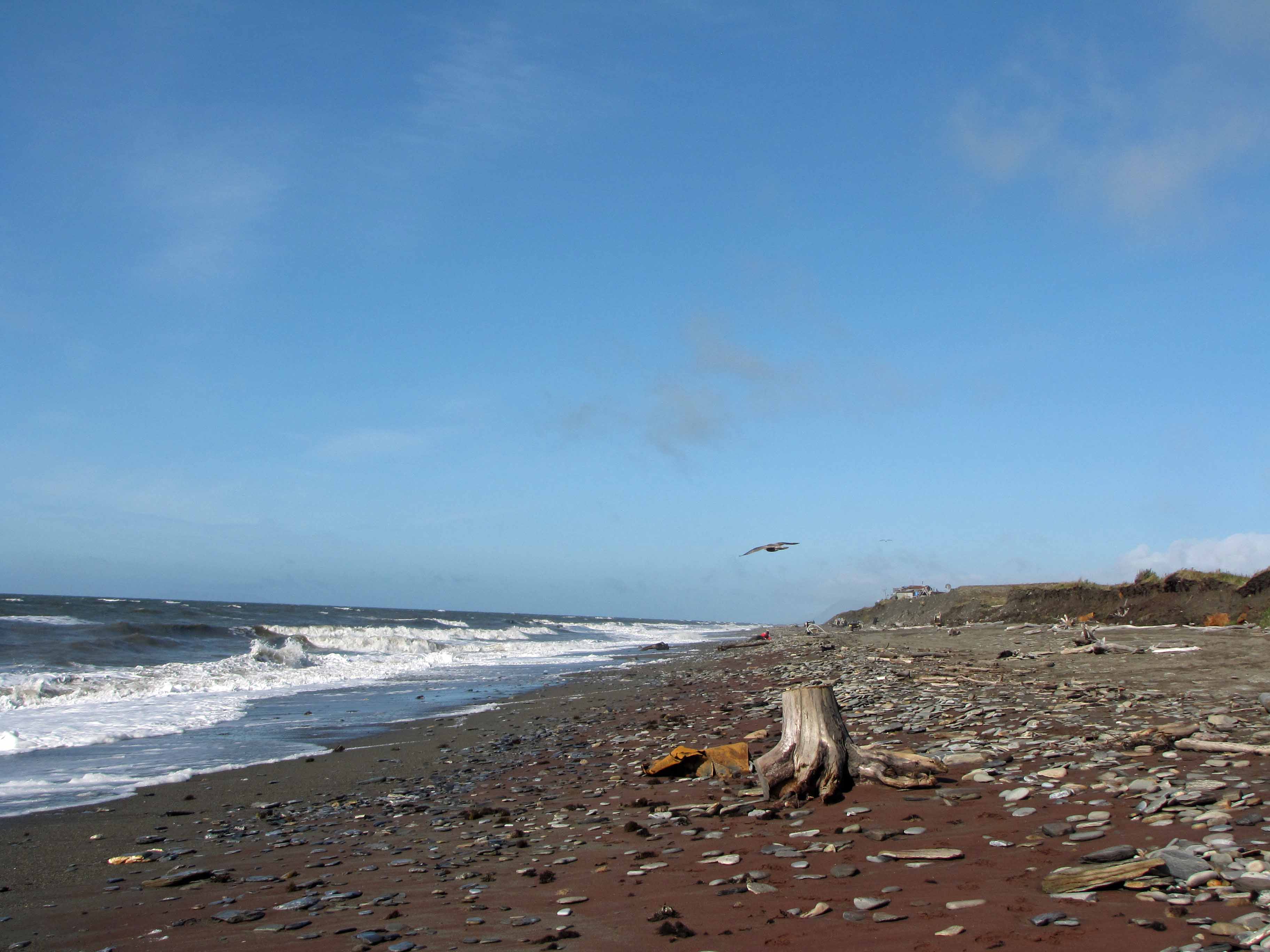
The beaches of Nome are always a rich red color, but after a storm the beaches look particularly red. This is because the storm waves remove some of the lighter beach sand grains (quartz and such) while leaving behind a lag of beautiful bright red garnet… and dark heavy minerals… and gold!

Here are two more pictures of the red garnet beach sands in Nome:

More red garnet sands along Western Beach in Nome, Alaska, Summer 2012. 
More red garnet sands– and beach cobbles– along Western Beach in Nome, Alaska, Summer 2012.

And here’s proof that if you pan some garnet sand from Nome, you will find gold:

Panned garnet sands from Western Beach in Nome, Alaska, Summer 2012. Note all the little gold glakes on the left side of the pan. Click to enlarge picture.

Gold panning is a gravity concentration process in which a large plastic pan and water are used to separate minerals according to their density. Gold is a very dense material (pure gold has a density of ~19.3 g / cm3), so gold will be sink to the bottom of the pan while much lighter sand grains are washed off during the panning process. Panning first removes the lightest sand grains such as quartz (density of ~2.7 g / cm3) and muscovite (density  of ~2.8 g / cm3) and leaves behind heavier grains such as garnet (density of ~3 to 4 g / cm3), magnetite (density of ~5.2 g / cm3), and ilmenite (density of ~4.7 g / cm3). Eventually, the panning process leaves behind a dark-colored, heavy mineral concentrate that is rich in gold!

Here I am with just such a concentrate from Western Beach in Nome:

Me, with a gold pan and a bag of gold-bearing heavy mineral concentrate in Nome, Alaska, Summer 2012. 

That’s an old gold dredge in the background of the above photo; I’ll write about the some of Nome’s old dredges in another post.

Bering Sea Sunset

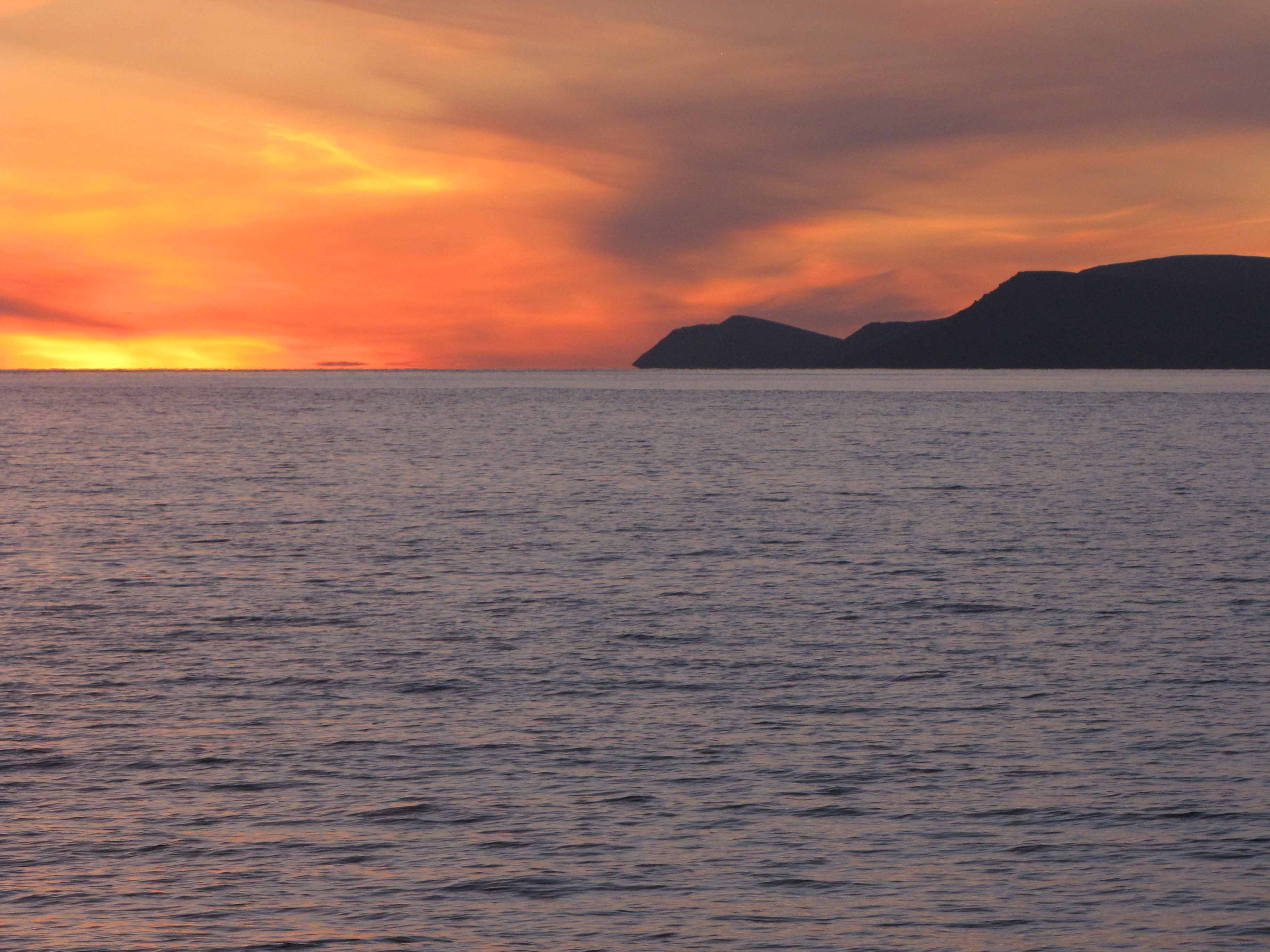
Bering Sea Sunset #1.

I just finished my last work shift here in Nome, Alaska and will soon be headed home to Cape Town, South Africa. I’ll just be in Nome for a couple more days to pack and wrap up a few loose ends. By Friday, I’ll be back home!

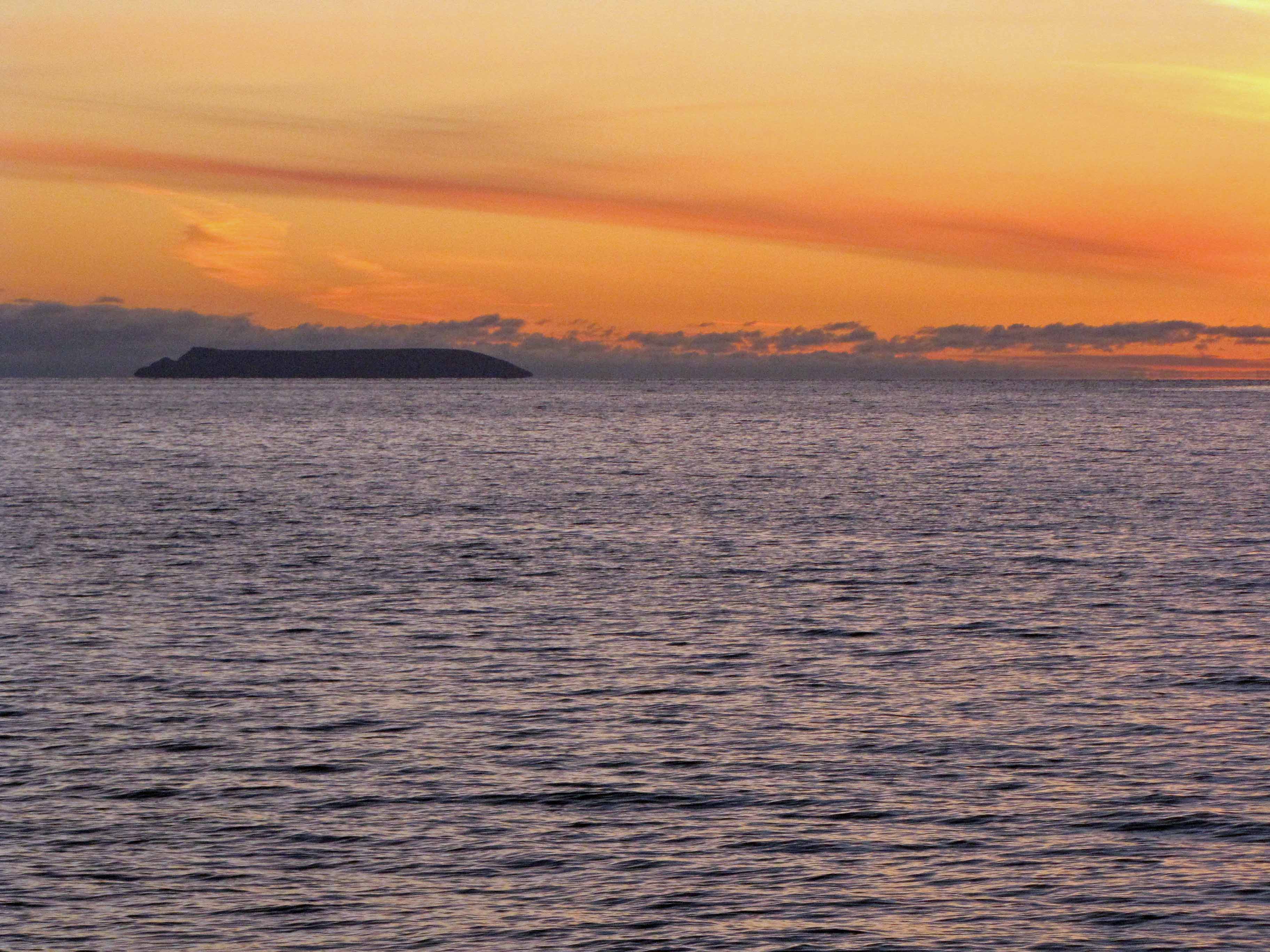
The weather in Nome has mostly been cold and rainy over these past 2 months, but yesterday was a warm (for Nome, so in the 50s), sunny day that was ended with a spectacular sunset over a very calm Bering Sea. I thought I’d share some pictures here of last night’s sunset, which provided a wonderful backdrop for the end of an enjoyable, if tiring, 2 months of work on the Bering Sea.

Bering Sea Sunset #2.
Bering Sea Sunset #3. That's Sledge Island.


Monday Geology Picture(s): Happy Rock Monster

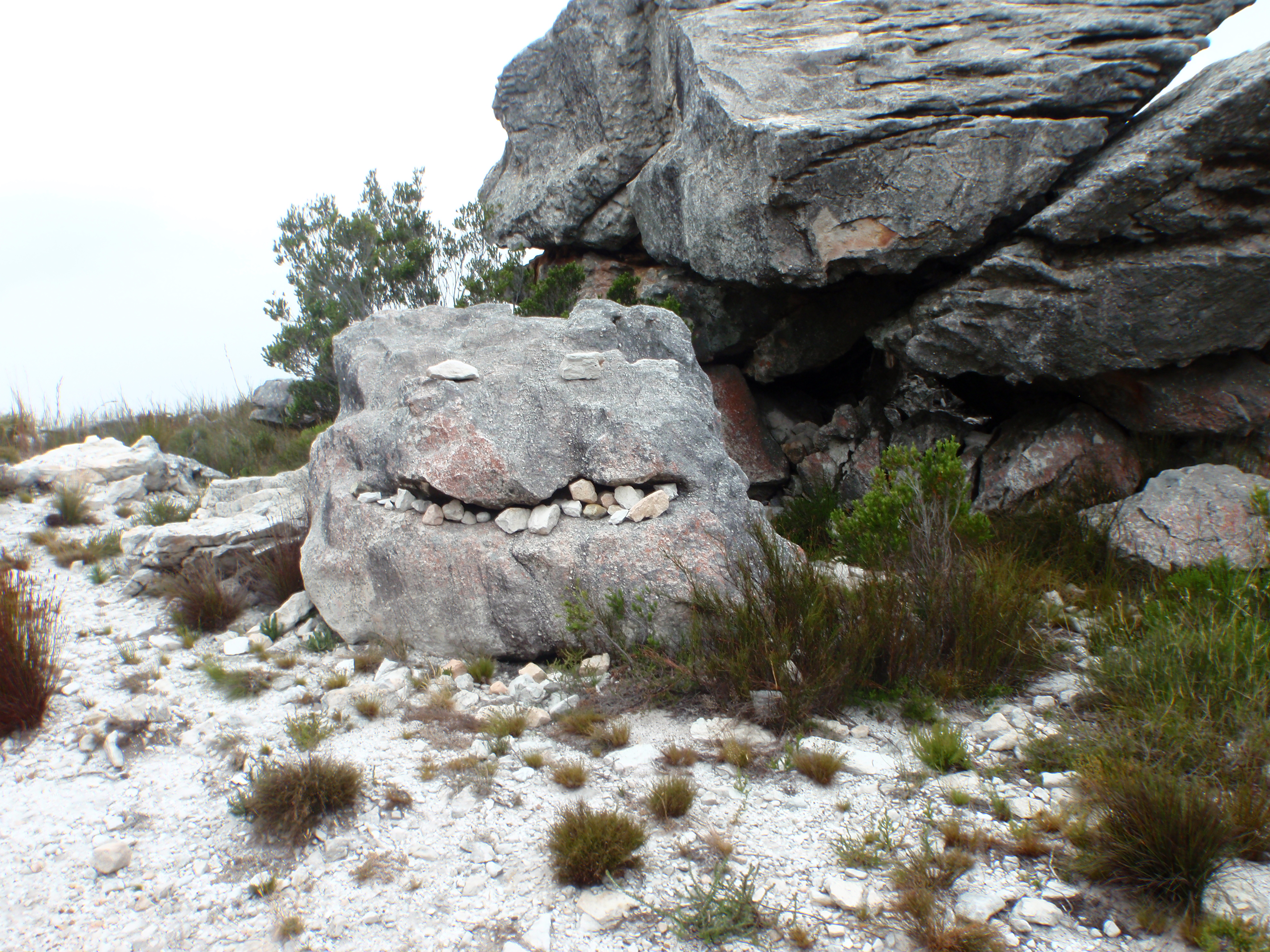
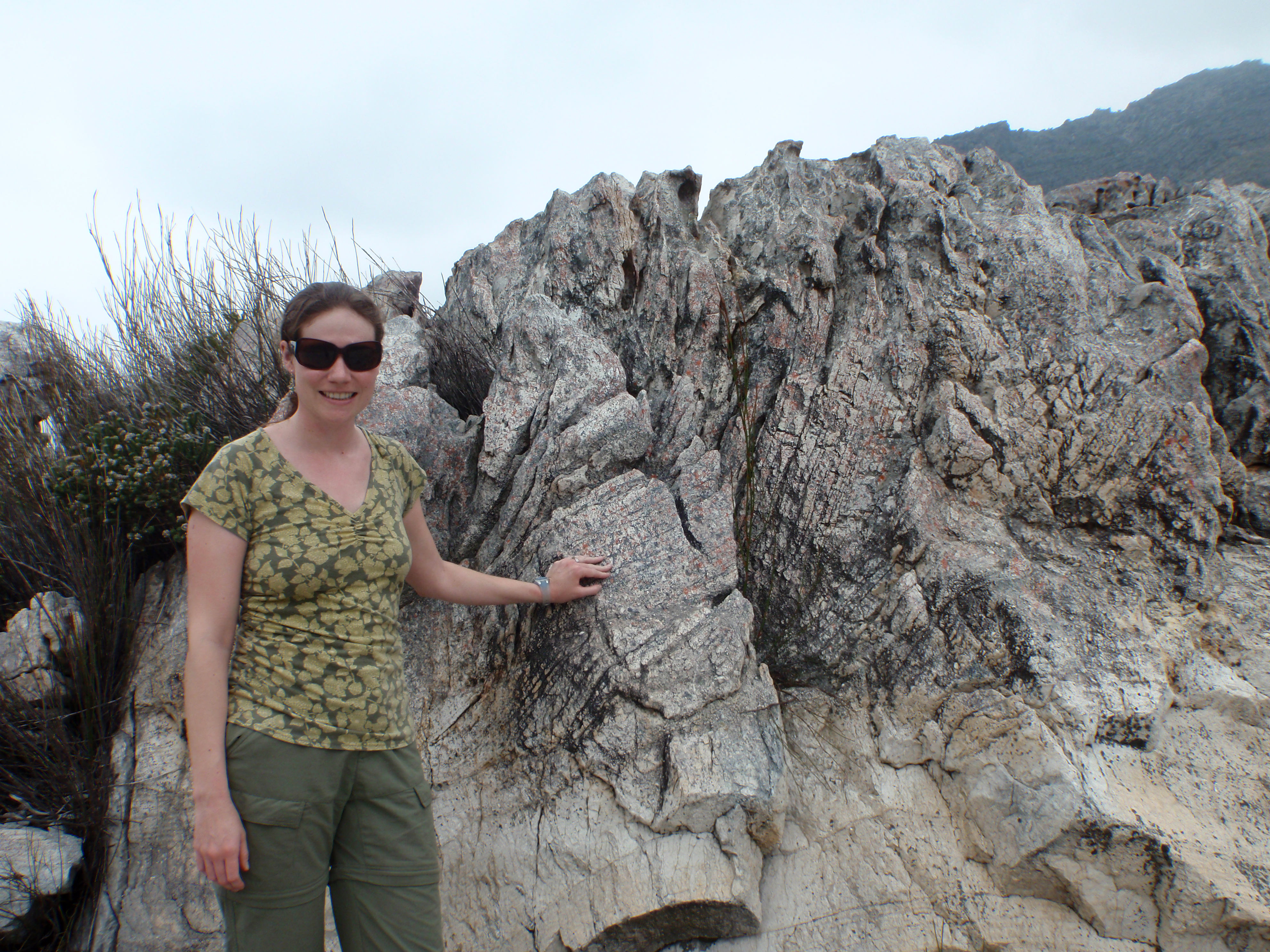
Happy rock monster, marking the trail to Suicide Gorge.

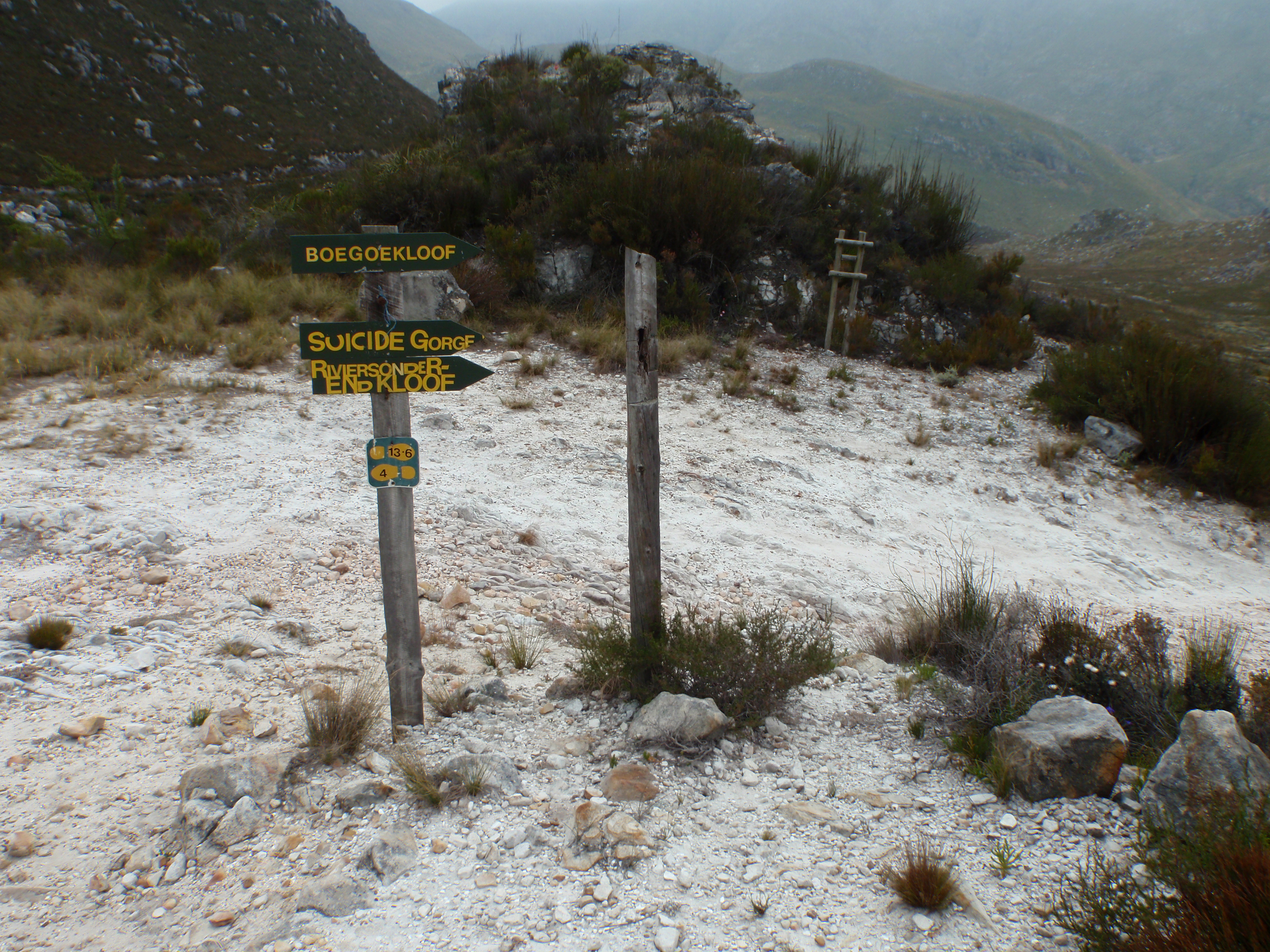
Back in January my husband and I took a day trip to the Hottentots Nature Reserve outside of Cape Town, South Africa. We walked a few miles in the reserve, including towards the start of the famous “Suicide Gorge” although we did not hike along the gorge itself. We’ll save that for another day, with a group of friends including an experienced kloofer (kloof in Afrikaans means “cliff”, so kloofing is probably best translated as “canyoneering”). While we were walking along the trails, we encountered the smiling rock monster shown above. Doesn’t he look happy, in a creepy sort of way?

Here are a few more pictures from our hike:

A winding path and wildflowers.
To Suicide Gorge!
Posing with some rocks #1.
Posing with some rocks #2.

Muskoxen Near Nome, Alaska

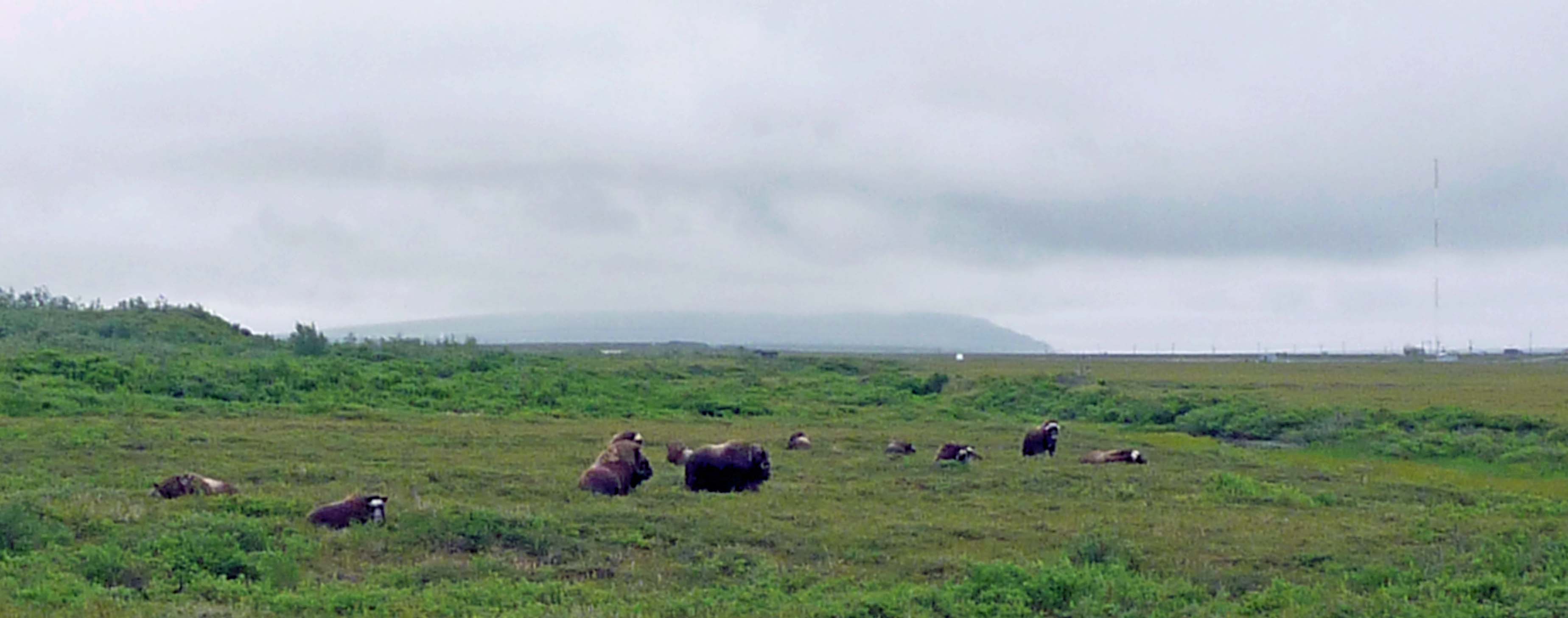
Here’s a little biological interlude: pictures of some muskoxen which I encountered on the arctic tundra just outside of Nome, where I’m currently working.

A small herd of muskoxen near Nome, Alaska, August 2012.
A (slightly) closer view of some muskoxen near Nome, Alaska, August 2012.

There is some tension between the muskoxen and the citizens of Nome. Muskoxen can be aggressive towards dogs and small children, and they often wander into people’s backyards. Here’s a recent example of some of the tension between muskoxen, people, and dogs. Personally, I like observing the muskoxen… but from a safe distance.

Monday Geology Picture(s): Decorative Stones in the O.R. Tambo International Airport


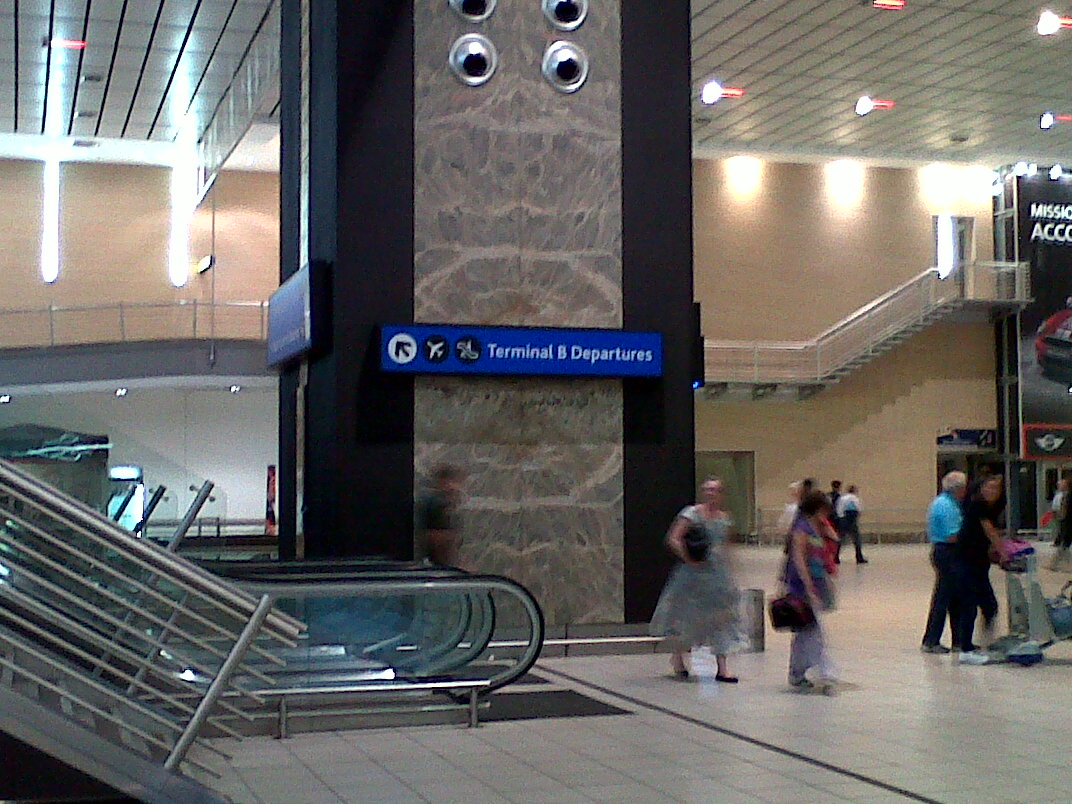
Some of the gorgeous decorative stones at O.R. Tambo International Airport.

Today I am going to share some pictures of decorative stones adorning the O.R. Tambo International Airport in Johannesburg, South Africa. I’ve flown through O.R. Tambo a dozen times or more, and I always appreciate the beautiful decorative stones that are found throughout the airport. I took the pictures in this post from the area around the security check-in for the international terminal. I apologize that the quality of these pictures isn’t fantastic. I took these photos somewhat slyly with my Blackberry phone, and I didn’t pause for too long to examine the decorative stones. The security guards look at you suspiciously when you start investigating the walls of the terminal too carefully.

I don’t know much about these decorative stones or where they came from– can anyone provide me with more information on them? All I know is that they are GORGEOUS and make my layovers in the airport much more enjoyable.

More gorgeous decorative stones at O.R. Tambo International Airport.
Even more gorgeous decorative stones at O.R. Tambo International Airport.
Even MORE gorgeous decorative stones at O.R. Tambo International Airport.
A closer view of some of the decorative stones.
An even closer view, with my hand for scale.
Another close-up view.
Even closer!