Just down the road from where I live there is a fantastic place to observe gigantic granite boulders: Boulders Beach in Simonstown. Actually, you can see granite boulders on many beaches in the greater Cape Town area. These granites are part of the regional Cape Granite Suite and are roughly 550 million years old. However, Boulders Beach is special because it has a particularly good collection of large boulders… and it is also home to a penguin colony! Penguins and geology is a great combination for sightseeing!
Here’s a close-up of the picture above, showing the penguins:
Penguins atop the granite.
And here’s another view of the spectacular granite boulders:
Two generations (at least) of footprints on Noordhoek Beach, South Africa, November 2015.
This past Saturday my husband and I went for a long walk along Noordhoek Beach with some friends. The beach is over 8 km long, and we walked about 2/3 of it… and back! As we walked, I enjoyed the beautiful, panoramic views of the mountains on one side and the sea on the other side. In addition, I periodically found myself enjoying the view at my feet (as geologists often do), admiring the patterns in the sand. I took a few pictures of the sand beneath my feet, and I thought I’d share one for this week’s “Monday Geology Picture” post. The picture above shows two generations of footprints, one fresh and made by my friends moments before and one older and halfway erased by the wind, both on top of some windswept sand patterns. I wonder how long ago the older generation of footprints was made. Were the footprints made a few hours before I snapped my picture? A few days? How long, in general, does it take for footprints to fade from a beach? I imagine that it must depend upon the wind, amongst other things.
Website for the 35th International Geological Congress. Go check it out!
I recently registered to attend the International Geological Congress, a big geological conference that is held every four years in different locations around the globe. Next year, the 35th International Geological Congress is being held in Cape Town, South Africa, the beautiful city that I currently call home! The conference is being held August 27th to September 4th 2016, and there are a number of exciting field trips being held before and afterwards. For example, you can ride a train from Cape Town to Victoria Falls in Zimbabwe, stopping to see all sorts of geological wonders along the way. Or, if you prefer, you can spend a week travelling down the Orange River by canoe, paddling past 2 billion years of geological history. Or, if you’d like to learn a little about the geology that I study for my day job working as an industry geologist for De Beers, you can participate in a diamond field trip in South Africa or in a second diamond field trip up in Namibia. If you can’t attend one of the longer field trips, there are also a number of shorter field trips. For example, you can attend a day field trip to the West Coast Fossil Park, which I featured in this week’s “Monday Geology Picture” post.
I’m very excited to be attending the congress next year, and I hope that some of my local and overseas geological colleagues will consider attending. You can register for the conference any time between now and the day it begins. If you want to present a talk or a poster, the abstracts are due at the end of January. If you happen to be a friend of mine (that is, I know you in person, from graduate school or something like that), I might even be able to provide you with accommodation. Our house is a short drive from the conference venue, and we have two guest rooms and a couple of sofas that could accommodate visitors… and we have a swimming pool in the front yard! First come, first serve… although you have to like cats since we have three! At the very least, my geologist husband and I hope to host a couple of geological parties at our house for friends attending the conference.
Our pool… the perfect venue for post-conference relaxation!
I’m excited about this conference, for a number of reasons. First, I think it’s wonderful that geologists from all over the world will be coming to Cape Town and that I’ll be able to spend a week listening to all sorts of geological talks. Second, I haven’t attended a scientific conference since I started working in industry. It will good to attend an old fashioned academic conference again… and it sounds as if the International Geological Congress is going to be a good one! Last but not least, I have permission from my superiors to give a talk on some research that I’ve been working on recently. I can’t share the details yet since my abstract needs to go through various approvals first, but I’m looking forward to being able to share a little about some of the research that I carry out as an industry geologist. I’ll be sure to post a link to the abstract once it’s available on-line a few months from now.
And if all that doesn’t convince you to attend the 35th International Geological Congress, below are a few pictures of gorgeous Cape Town. Come and visit!
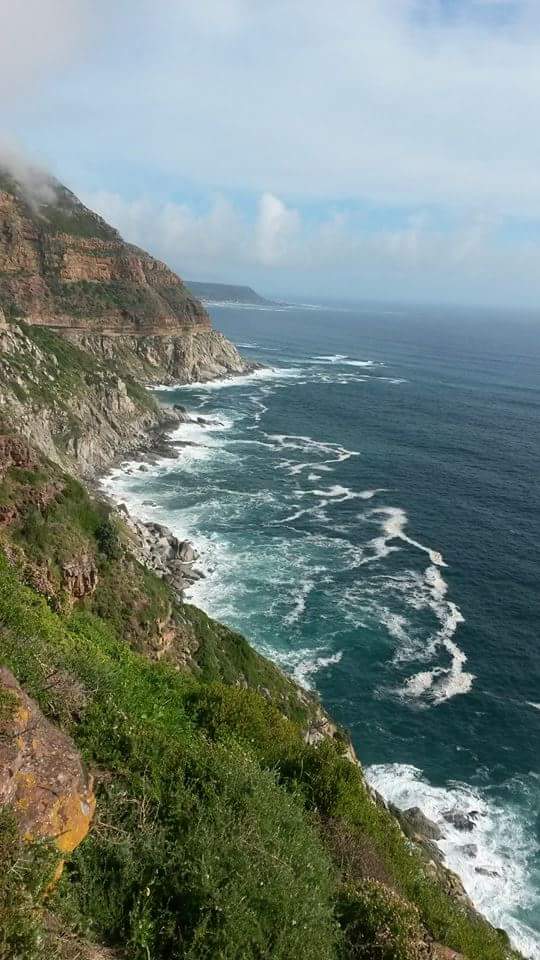
Gorgeous scenery, including an inselberg!Check out this beautiful nonconformity!Cape Town has great rocks… and some of them have adorable penguins living on top of them!More stunning scenery. Just sign up for the conference already!
Pleistocene dig site at the West Coast Fossil Park, South Africa.
For this week’s “Monday Geology Picture” I’m sharing a picture of some bones from a Pleistocene age fossil site located about an hour’s drive from Cape Town, South Africa. I took this picture last year during a visit to the West Coast Fossil Park. If you ever find yourself in the Cape Town area, I highly recommend a visit to the fossil site. You can tour the dig site, and there’s a great little museum and educational center nearby as well. Later this week, I’ll share some more pictures from the fossil park and will tell you a little more about it. For today, enjoy this preview picture.
Update November 11th, 2015: I realize that I still have gotten around to sharing some more pictures and information. I’m busy working on a post, so stay tuned!
Kirstenbosch Dinosaur – Picture #1. I shared this picture yesterday in my “Monday Geology Picture” post. Cycad plants are located in front of the sculpture.
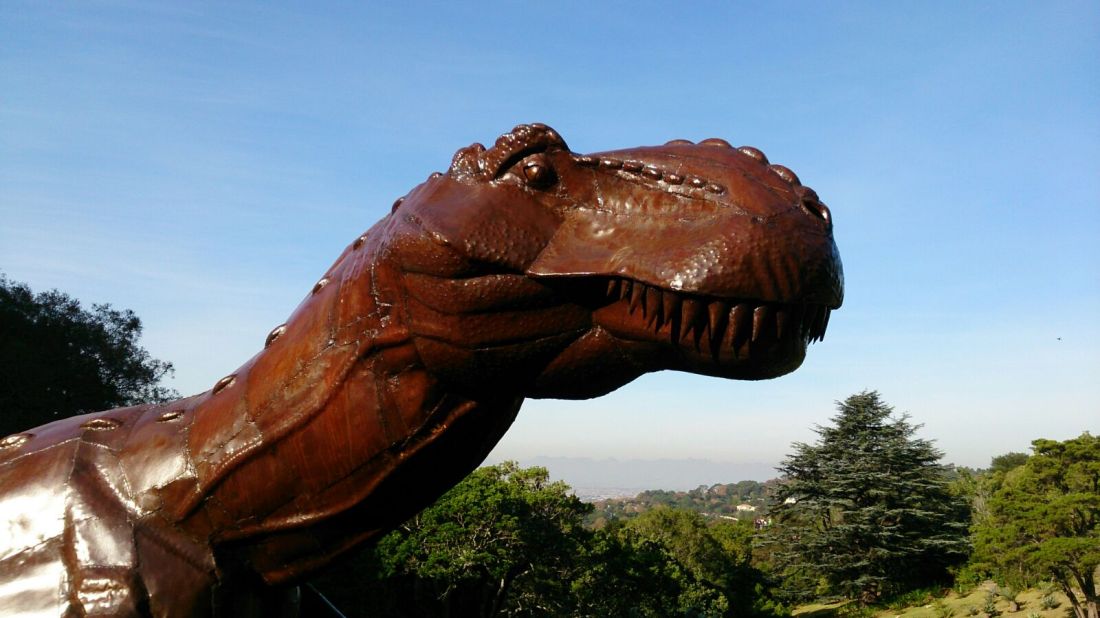
For my “Monday Geology Picture” post yesterday I shared a picture of a dinosaur sculpture that is currently on display at Kirstenbosch Gardens here in Cape Town, South Africa. This sculpture is one of several dinosaur sculptures on display in the gardens. Today, as I promised, I’m sharing a few more pictures of the sculptures. These large metal dinosaurs were installed in the gardens in 2015 to raise awareness about cycads, which are plants that grew in abundance when dinosaurs roamed the Earth. Today, however, many cycad species are critically endangered and may soon, like the dinosaurs, become extinct. The beautiful dinosaur sculptures are the work of Zimbabwean artist David Huni.
Walking amongst the dinosaur sculptures, which are reasonably scientifically accurate, in the beautiful gardens is a real treat. If you find yourself in Cape Town, please do go visit the sculptures – you won’t regret it! The sculptures will be on display in the gardens through 2017.
Kirstenbosch Dinosaur – Picture #2.Kirstenbosch Dinosaur – Picture #3.Kirstenbosch Dinosaur – Picture #4.Kirstenbosch Dinosaur – Picture #5. You can see a couple of dinosaur sculptures in the background of this image.Kirstenbosch Dinosaur – Picture #6.
Those are all of the dinosaur sculpture pictures that I have to share today. I didn’t take pictures of all of the sculptures (there are nine of them), so I’ll try to visit Kirstenbosch Gardens again sometime soon to take some more pictures of these lovely sculptures. The pictures in this post were taken back in May, shortly after the exhibit opened.
Dinosaur sculpture in the background, cycads in the foreground. Kirstenbosch Gardens, 2015.
This week’s Monday Geology Picture features a dinosaur in a botanical garden. Specifically, it features a giant metal sculpture of a dinosaur that is part of an exhibit in Kirstenbosch Gardens here in Cape Town, South Africa. The sculpture is one of several dinosaur sculptures that have been installed in the gardens as part of an exhibit to raise awareness about cycads, which are ancient plants that have been around for several hundred million years. Currently endangered, cycads were common millions of years ago, during the same time period when dinosaurs roamed the Earth. However, if cycads are not carefully conserved they could join the dinosaurs and become extinct.
Tomorrow, I’ll share some more pictures of dinosaur sculptures in Kirstenbosch Gardens. For now, enjoy this one picture as a “sneak peak”.
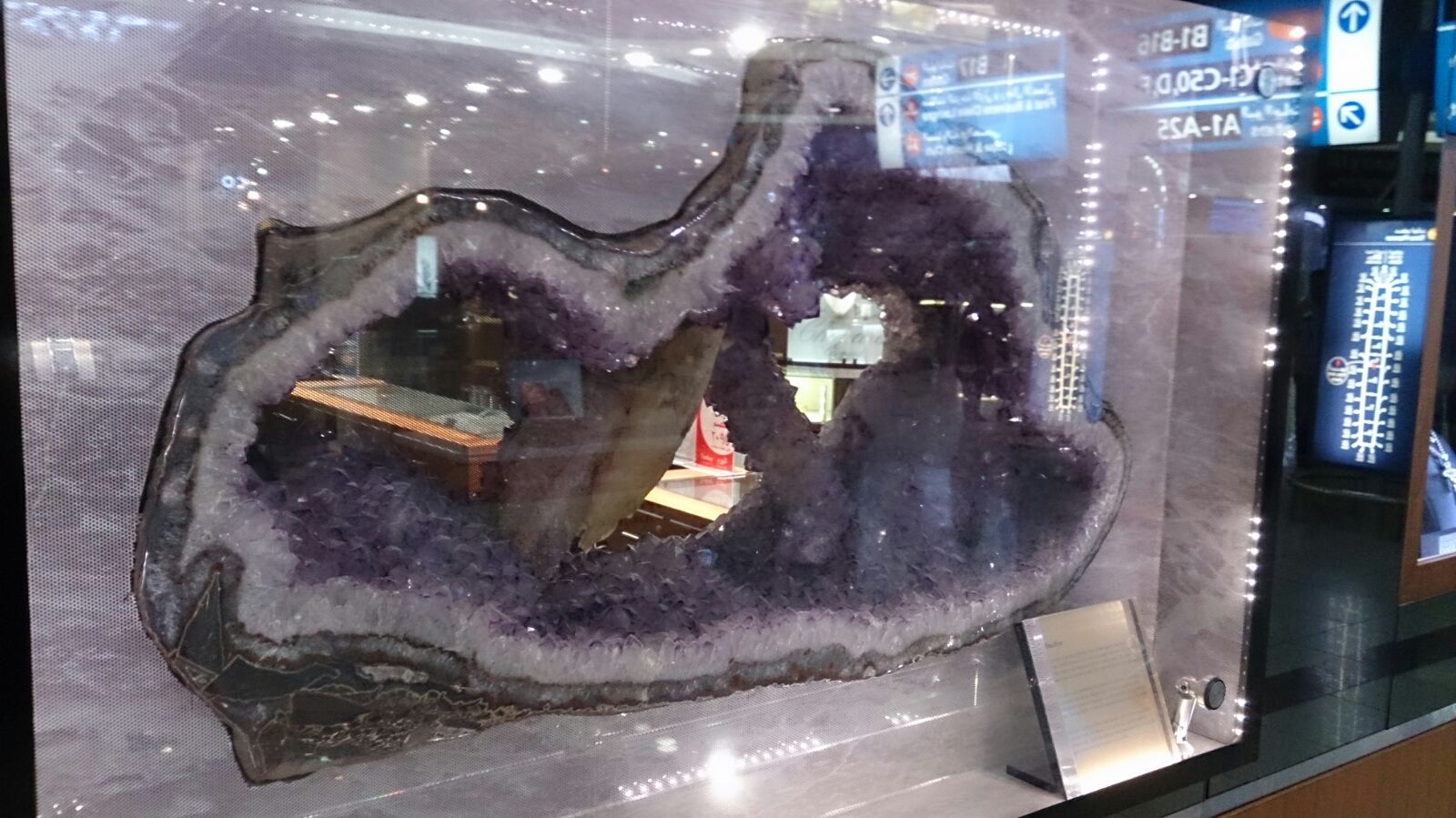
A few days ago I flew through the Dubai Airport on my way back to South Africa. One of the terminal shops had a gorgeous slice of geode on display. Check out those beautiful purple amethyst crystals!
Fox Forest #1. Trees and glacial erratic boulders.
For this week’s Monday Geology Picture I shared a picture of a stone wall incorporating a large glacial erratic. I took this picture recently in Fox Forest in southern New Hampshire. Yesterday, my husband and I went on a lovely hike in the forest. We saw quite a few glacial erratics… parts of the forest are piled high with them! We also saw many stone walls incorporating glacially dropped stones. Most of the forest is relatively young and grew up over the past hundred years or a little less on top of former farmland. You thus see old stone walls, the outlines of former fields, throughout the forest. You can also see old building foundations and even an old cemetery. A few parts of the forest are “virgin” and contain older trees, including some that are hundreds of years old. All in all, I recommend a walk in the forest. You can see some glacial geology… and learn about the trees and other vegetation, too!
I thought I’d share a few more pictures of our hike yesterday. If you want to read more about glacial erratics and stone walls in New England, I highly recommend this Earth Magazine article. Thanks to AGI for recommending the article to me on Twitter!
Without further ado, here are some more pictures from lovely Fox Forest:
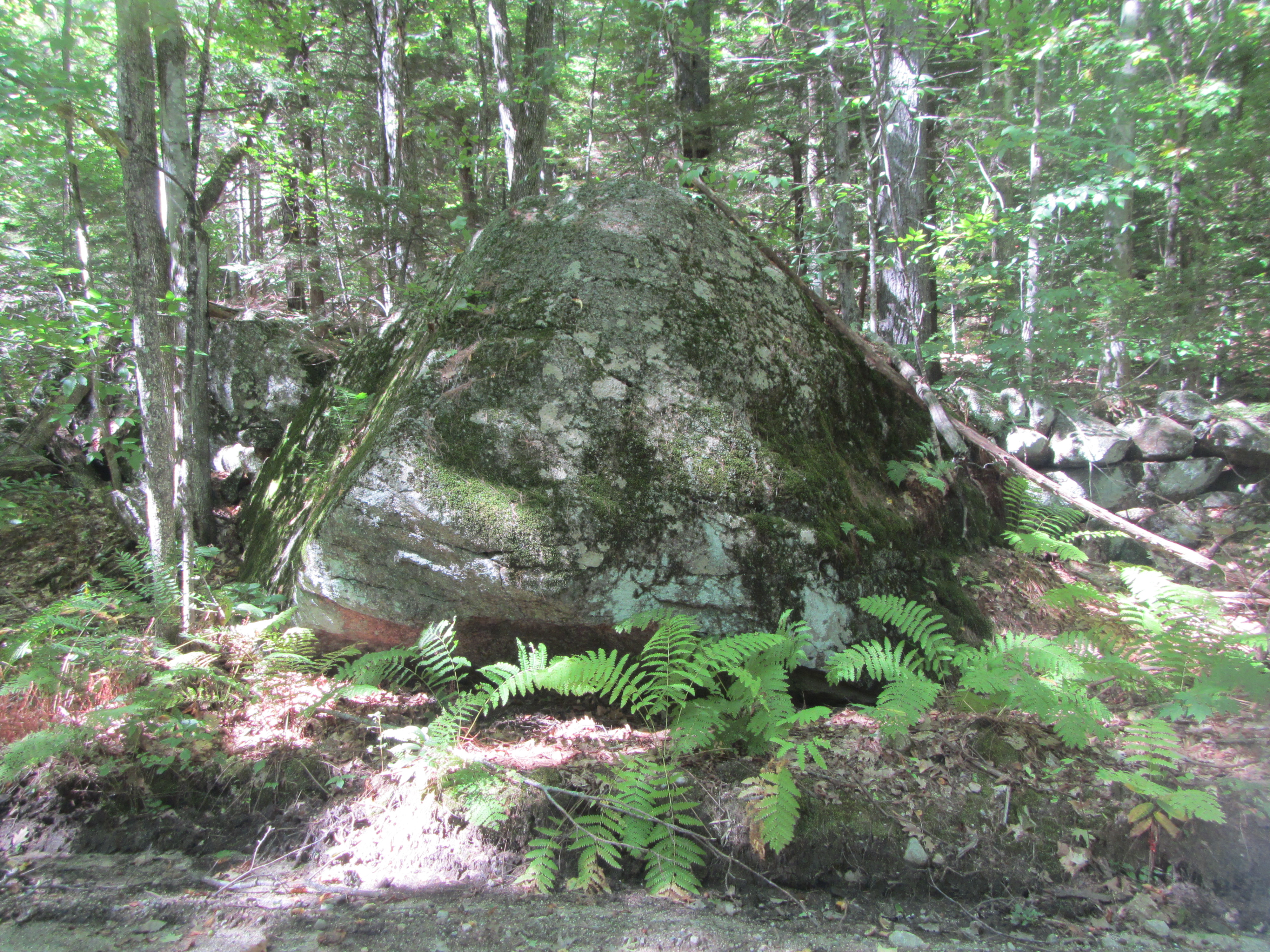
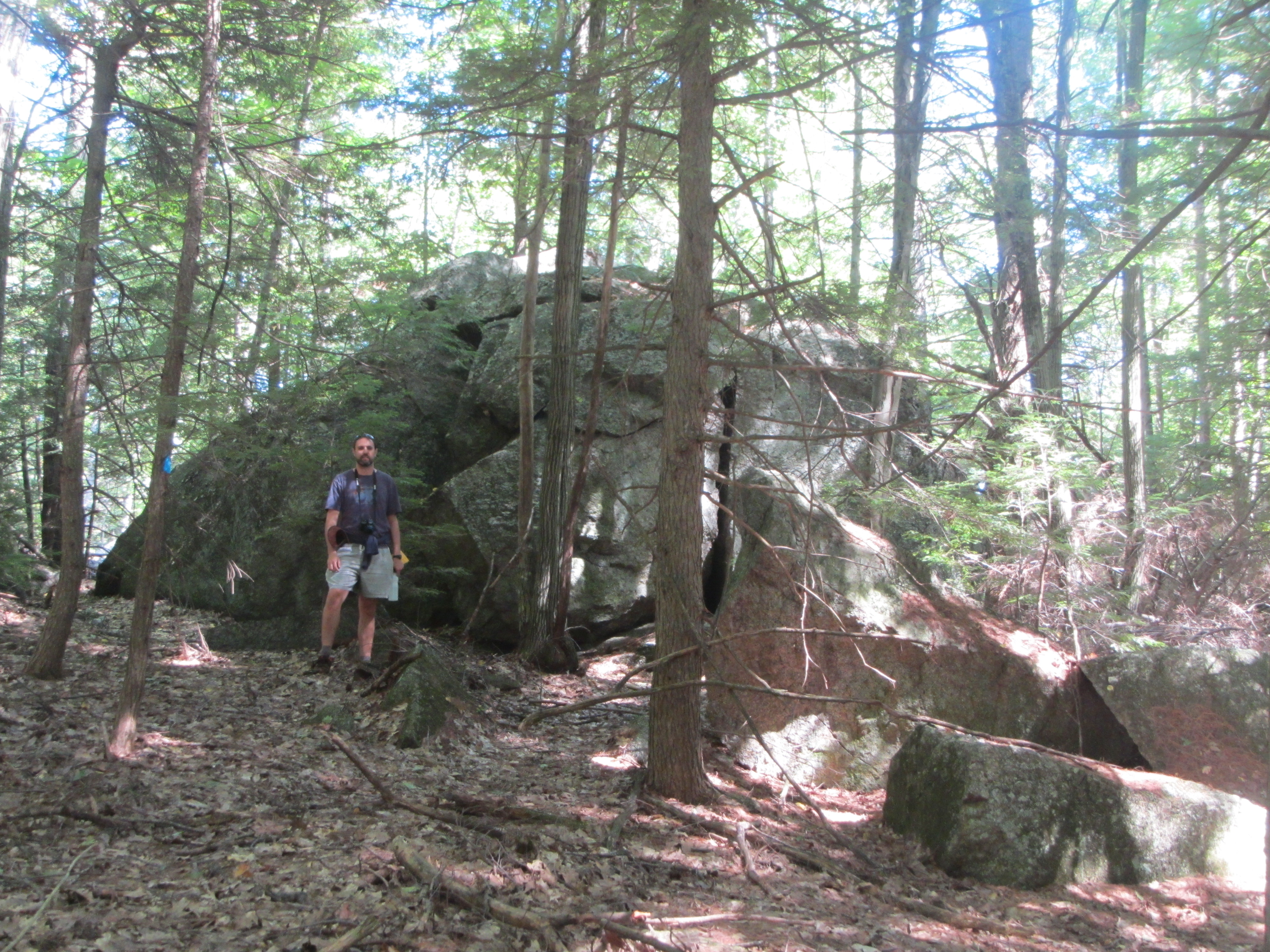
Fox Forest #2. More glacial erratic boulders and trees.Fox Forest #3. A glacial erratic boulder, with geologist on top for scale.Fox Forest #4. Erratics, erratics everywhere!Fox Forest #5. Moss-covered erratics and some ferns.Fox Forest #6. A stone wall made out of glacial erratics.Fox Forest #7. A closer view of the stone wall.Fox Forest #8. A long stone wall running through the forest.Fox Forest #9. A stone wall incorporating a very large erratic boulder.Fox Forest #10. An old cemetery in the middle of the forest.Fox Forest #11. Cemetery headstones.Fox Forest #12. A fallen headstone, in the process of being restored.Fox Forest #13. Another large erratic boulder, with another geologist for scale.Fox Forest #14. Another stone wall.Fox Forest #15. Fading afternoon light in the forest, near the entrance to the hiking trail.
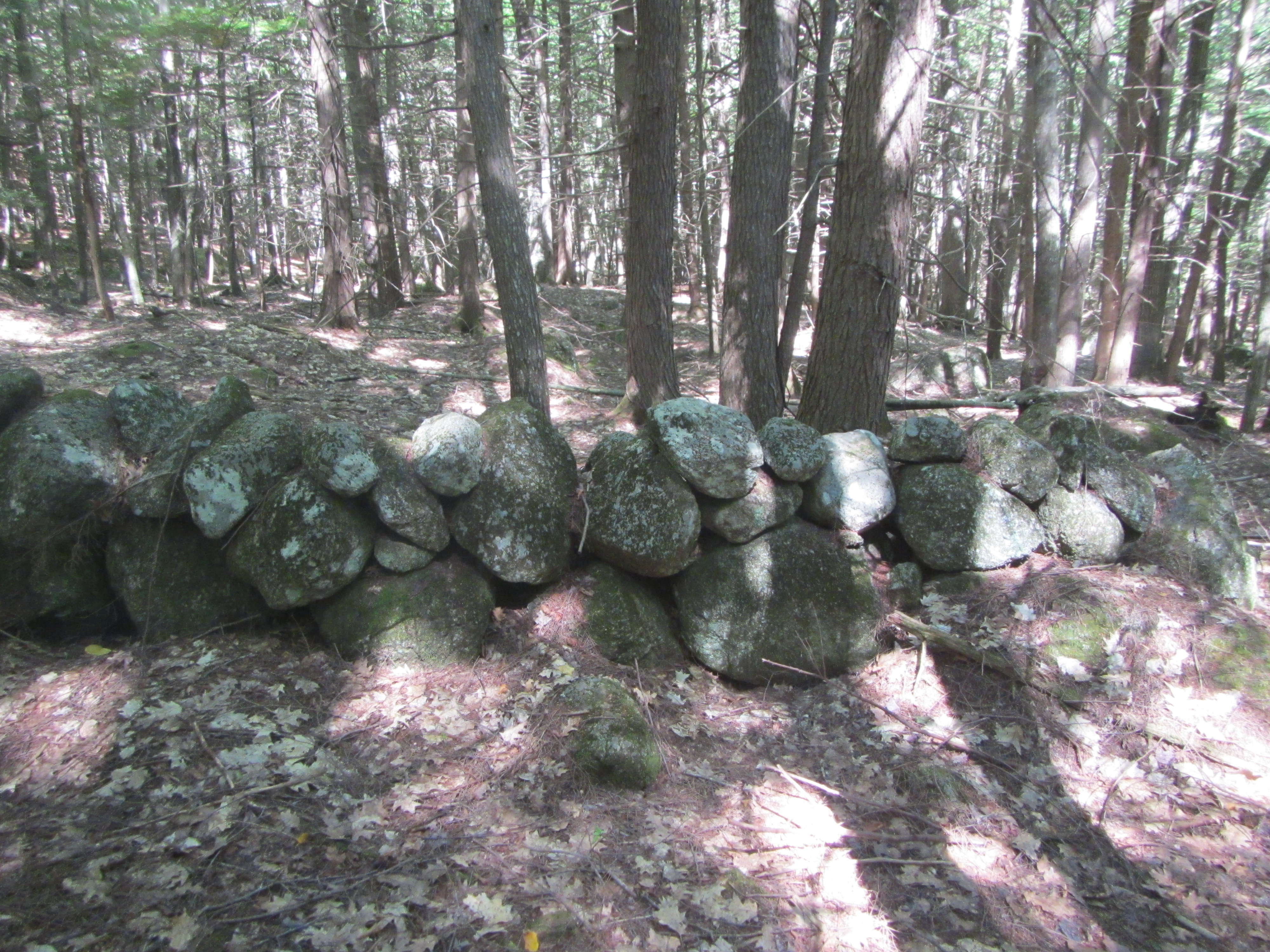
A stone wall incorporating a large glacial erratic boulder, Fox Forest, New Hampshire.
Continuing with my recent blogging themes of stone walls and glacial erratics, here is a picture of a stone wall in Fox Forest in New Hampshire. This stone wall was built out of glacial erratics and incorporates a large glacial erratic that was most likely left in situ… that is, left more or less where the glacier deposited it. Today, the stone wall is located in the middle of a relatively young forest. A hundred or so years ago, it was part of a farm. If you find yourself in southern New Hampshire, I recommend a hike in Fox Forest. It’s a lovely place, and you’ll see quite a few glacial erratics and stone walls!
I’m visiting family in New Hampshire at the moment… and also spending a little time with my favorite glacial erratic. I’ve posted about this particular glacial erratic before here and here. For this week’s Monday Geology Picture post I thought I’d share another shot of this stunning glacially deposited boulder. Enjoy!














 Georneys