Monday Geology Picture(s): Cross-Bedding in Ceres, South Africa

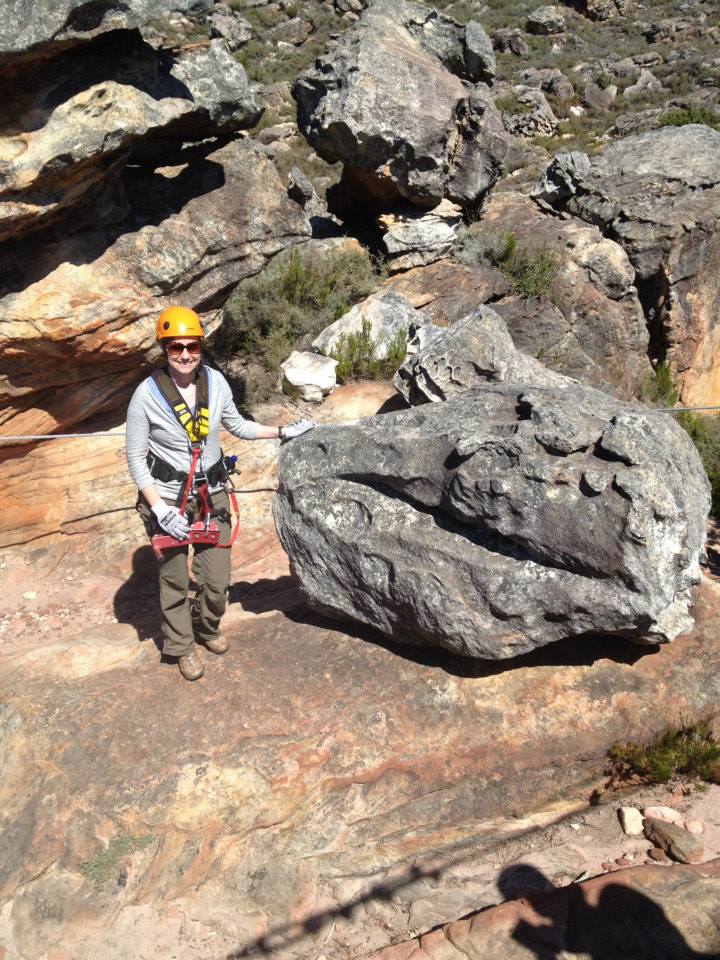
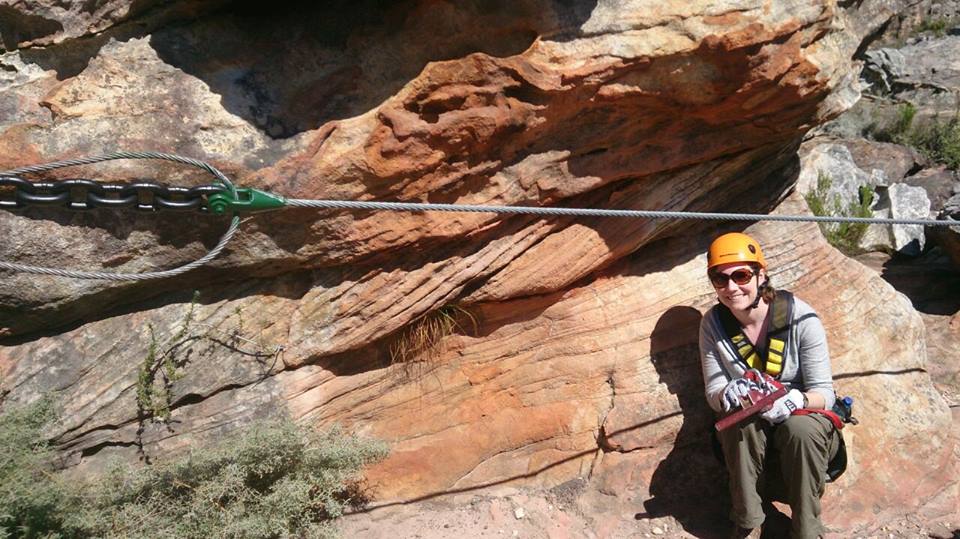
Posing with some pretty cross-bedding in Cape Fold Belt sandstones, Ceres, South Africa.
Posing with some pretty sandstone cross-bedding in the Cape Fold Belt, Ceres, South Africa.

Soon, I’ll continue with sharing more pictures from my geological wanderings in Mauritius earlier this year. However, for this week’s “Monday Geology Picture” I want to share some pictures from my recent visit to the little town of Ceres in the Western Cape of South Africa. Last Friday, I went to Ceres for the day with my husband and two friends visiting from America. Ceres is about an hour and a half north of Cape Town by car and is located in a geologic feature known as the Cape Fold Belt. In the Cape Fold Belt, sandstones and other sedimentary rocks have been extensively uplifted and folded. However, there are still many places where you can glimpse some primary sedimentary structures, such as the sandstone cross-bedding shown in the picture above. I posed with this cross-bedding when I was on a zipline adventure at Ceres Zip Slide Tours. If you like beautiful views of sedimentary rocks and aren’t afraid of heights, I highly recommend ziplining in Ceres. We had a great time!

Here are some more pictures from our ziplining adventure in Ceres:
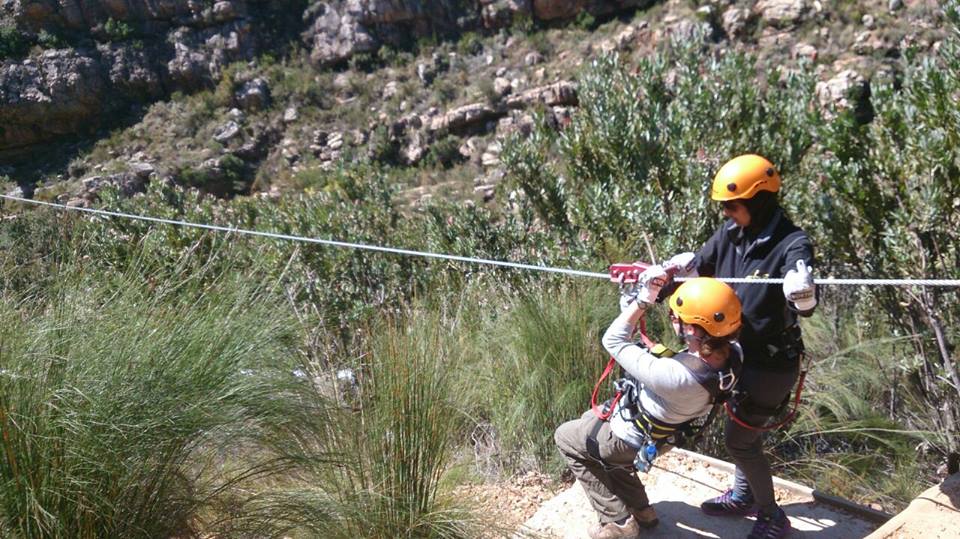
Nervously preparing to launch myself on the first zipline of the day.
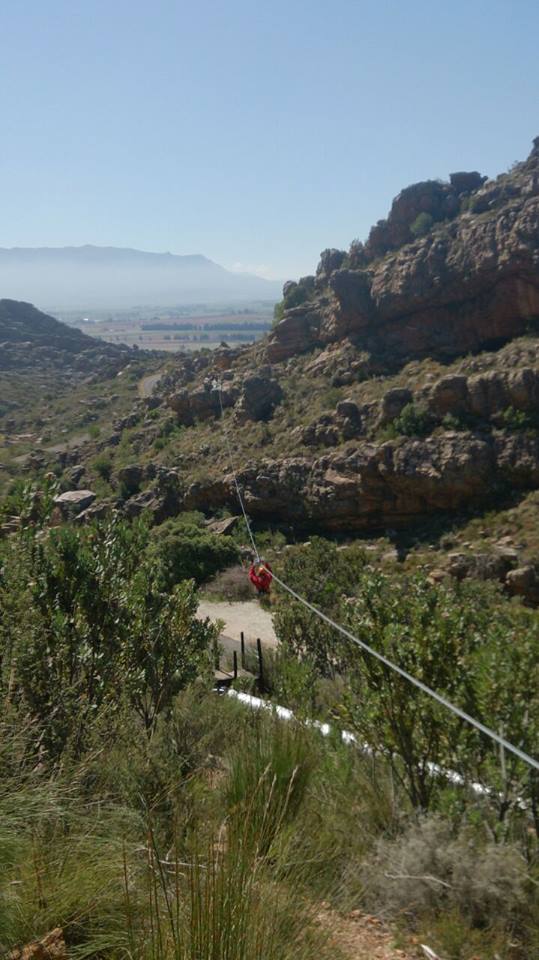
One of my friends on the first zipline. You can see vineyards in the background.
One of my friends on the first zipline. You can see some vineyards in the background.
On another zipline. What a view!
On another zipline. What a view! What a great way to look at some uplifted sedimentary rocks!
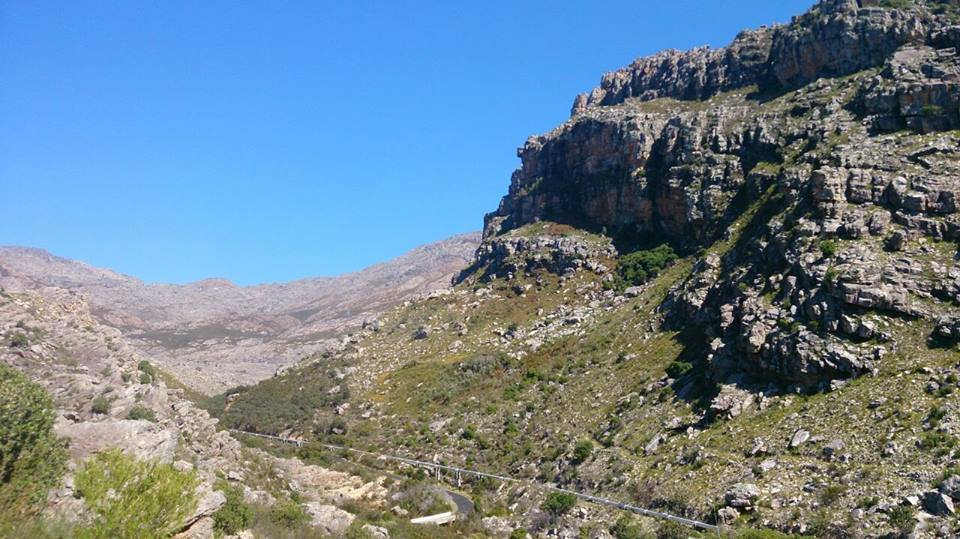
Stunning sedimentary scenery.
More stunning scenery.
Yet more stunning scenery.
Just stunning.
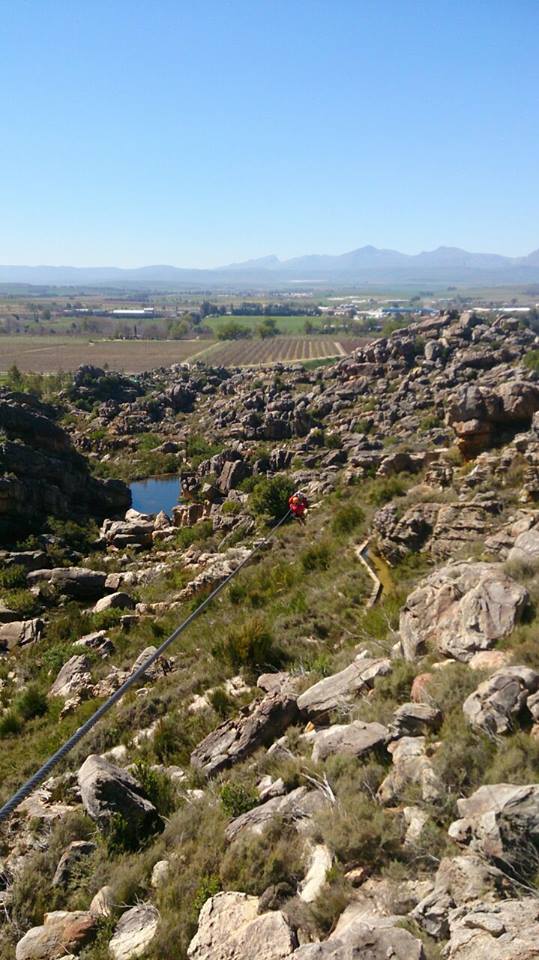
A friend on another zipline. This was a long one!
Posing with an interesting rock that is supposed to resemble a T-Rex head.
Posing with an interesting rock that resembles a dinosaur head.
A zipline with a view...
Another stunning zipline view.
Having fun... I think I'm (mostly) over my nervousness here.
Having fun… I think I’m (mostly) over my nervousness here.
On one of the last ziplines.

What a fun day and a fun way to see some geology!

Monday Geology Picture(s): Vesicular Basalt Boulder, Mauritius

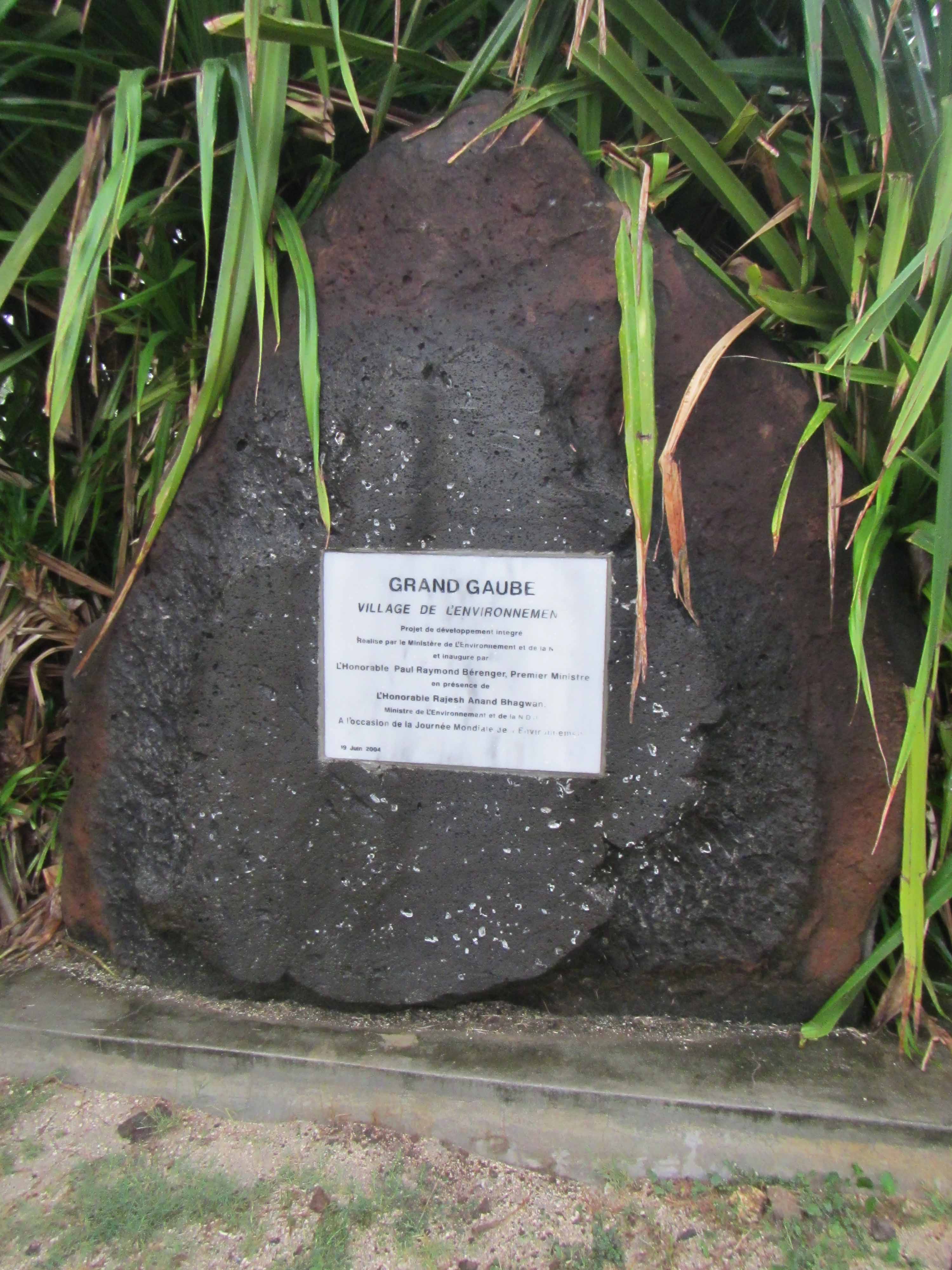
Grand Gaube sign on a large boulder of vesicular basalt, northern Mauritius.

Continuing with some pictures from my trip to Mauritius back in March, for this week’s “Monday Geology Picture” post I am sharing some pictures of a large boulder of vesicular basalt. This particular boulder is located in the town of Grand Gaube in northern Mauritius and is used as a decorative stone on which a plaque has been mounted.

Vesicular basalt is a dark-colored volcanic rock that contains many small holes, more properly known as vesicles. A vesicle is a small cavity in a volcanic rock that was formed by the expansion of a bubble of gas that was trapped inside the lava. Sometimes, vesicles can become filled in with secondary minerals, such as calcite, quartz, or zeolites. When vesicles are filled with such minerals, they are called amygdales. The vesicular basalt boulder featured in this post contains some amygdales. Some of the vesicles in the boulder are filled with a clear to white mineral, possibly calcite.

The boulder featured in this post also has a notable reddish-brown weathering rind. A fresh (and beautiful!) surface of the basalt boulder was exposed when the boulder was cut to make a flat surface for displaying the plaque.

Here are a few more pictures of the vesicular (or amygdaloidal) basalt boulder:

Another view of the vesicular basalt boulder.
A closer view of the vesicular basalt.
A closer view of the vesicular basalt boulder.
Another close-up view of the vesicular basalt.
Another close-up view of the vesicular basalt boulder.

The boulder almost certainly originates from a local source since basalt is abundant on the young volcanic island of Mauritius. Basaltic rocks can be found all over the town of Grand Gaube. For example, basaltic rocks are commonly seen on Grand Gaube’s beautiful beaches. I shared one picture of a basalt-covered beach in Grand Gaube last week.

Below is another picture of basalt on the beach in Grande Gaube; this picture was taken at the resort where my husband and I stayed:

A beautiful basaltic beach, Grand Gaube, Mauritius.

Stay tuned for more pictures from Mauritius!

Monday Geology Picture: Black Basalt on the Beach, Mauritius

Mauritius_BasaltBeach
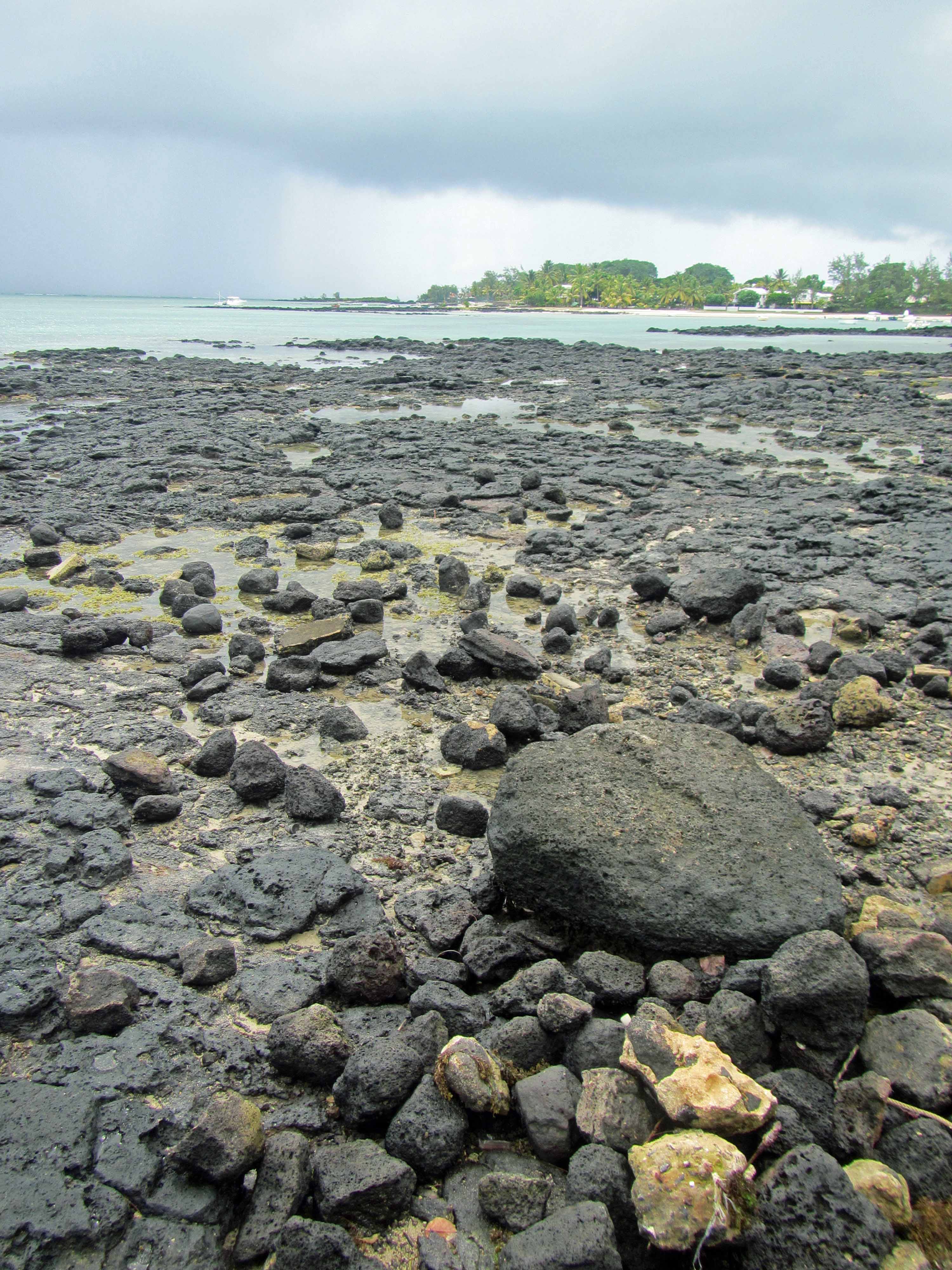
Black basalt on the beach, northern Mauritius, March 2014.

First of all, my apologies for the long absence from blogging. Work has been extremely busy this year, and for the last 6 weeks I was in the field with very spotty satellite internet connection. However, I’m back in Cape Town now, and September should be a quieter month for me, workwise. So, I’m hopeful that I will have time to catch up on some blogging. One of the things that I want to blog about is my recent (well, back in March, but fairly recent…) vacation to the beautiful Mauritius, a young volcanic island in the Indian Ocean that is perhaps most famous for having been home to the Dodo bird… before the Dodo went extinct, of course!

I have quite a few pictures and stories to share from my trip to Mauritius. For today, I’ll start with a picture of a beach in Grand Gaube in northern Mauritius. My husband and I stayed at a small beachside resort in Grand Gaube, and we explored the coastline near the resort by foot and by kayak. Because Mauritius is a young volcanic island, black basaltic rocks can be seen at many places along the coast. For example, outcrops and boulders of basalt can be seen in the above picture. I noticed that many items around the town of Grand Gaube were constructed out of basalt, no doubt locally sourced. I’ll share some more pictures from Mauritius soon… stay tuned!

Monday Geology Picture(s): Rocks Flanking the Entrance to the Smithsonian Natural History Museum

Petrified wood in front of the Smithsonian Natural History Museum, June 2014.
Petrified wood in front of the Smithsonian Natural History museum, June 2014.

My apologies for the light blogging recently. I was traveling in the US for three weeks, and now I am traveling for work for 6 weeks. I will do my best to blog when I can, but blogging may continue to be light for a little while longer since I’m currently working 12 hour shifts in the field. However, when I return in September I will be taking some time off, and I have a few bigger blog posts planned. So, stay tuned… and thank you for your patience!

I do have a little time today to share a few geology pictures. During my recent visit to the US, I visited Washington, DC, for a day. My husband had never been to DC before, so we went to The Mall, visited various memorials, and walked past The White House. We also spent a significant amount of time touring two of the Smithsonian museums: the Air and Space museum and the Natural History museum.

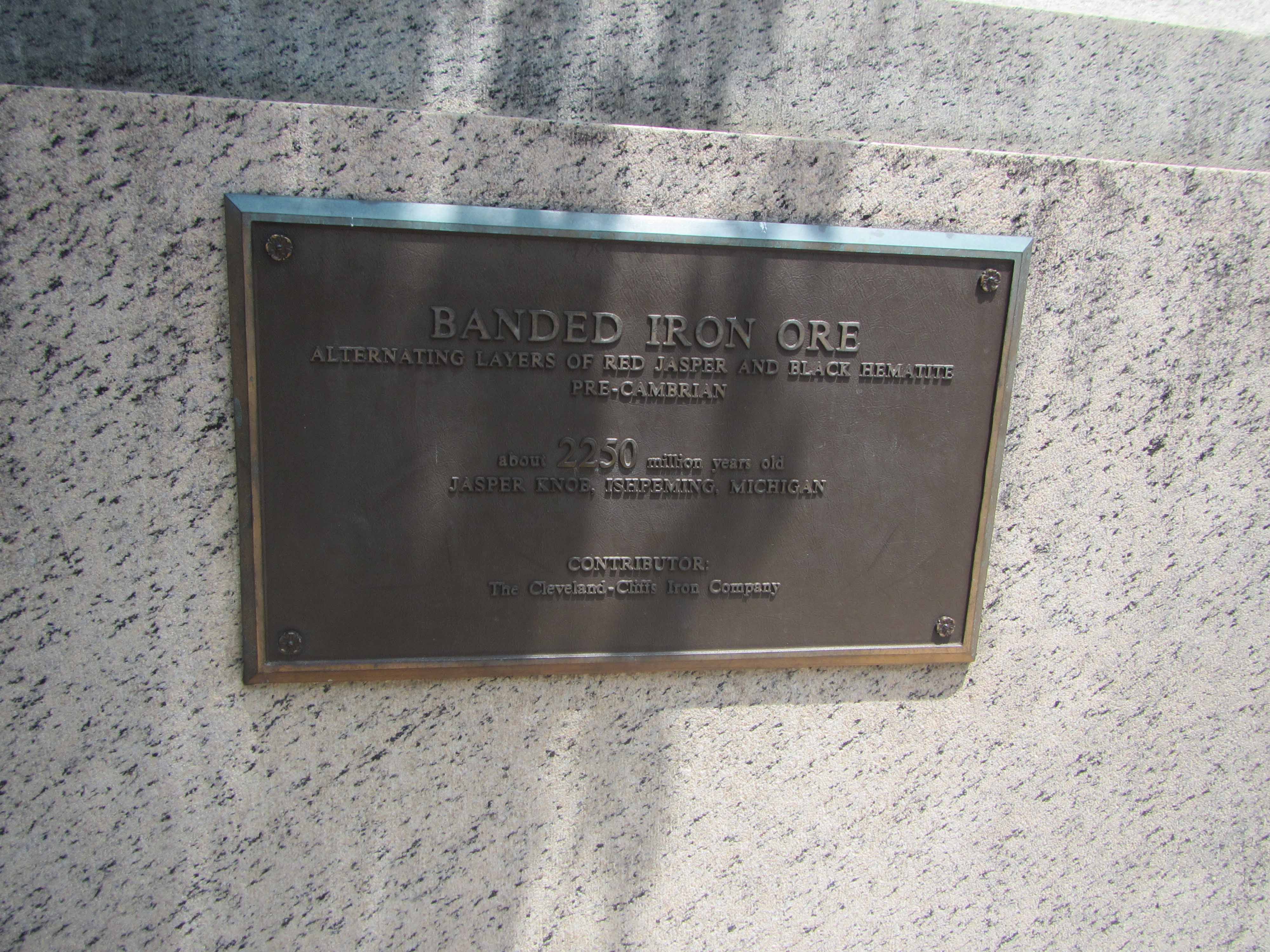
When we arrived at the entrance to the Natural History museum, we could tell right away that the museum was going to be great fun to visit. That’s because flanking the entrance to the museum are a few giant rocks! Specifically, a giant boulder of banded ironstone and two tall pieces of petrified tree.

Here are a couple more pictures of the petrified tree pieces:

Another view of the petrified wood in front of the Smithsonian, June 2014.
Informational sign for the petrified wood, June 2014.

And here’s a view of the giant banded ironstone boulder:

Banded ironstone boulder in front of the Smithsonian Natural History museum, June 2014.
Informational sign for the banded ironstone, June 2014.

Sure enough, my husband and I found plenty more wonderful rocks– and gemstones and fossils and taxidermy animals and skeletons and archaeological artefacts– inside the museum. I had visited the museum a few times before, but I hadn’t been in quite a few years. I’ll have to share a few more pictures from our visit to the museum when I have a chance. Has anyone else been to the Smithsonian Natural History museum recently?

Monday Geology Picture(s): Fossils in the Floor

Fossils in the floor #1.
Fossils in the floor.

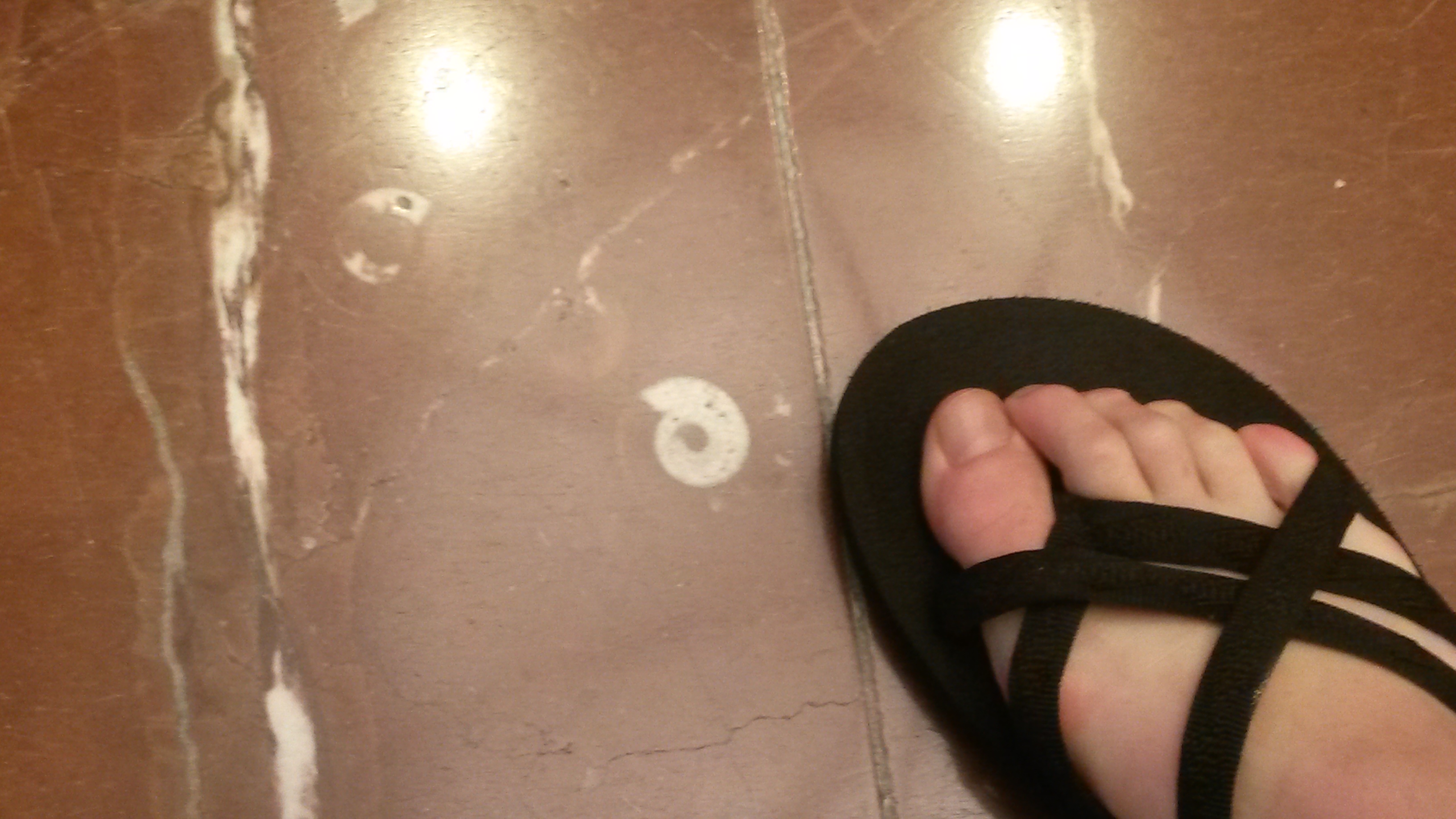
My husband and I are travelling in the US at the moment. A little over a week ago we attended an event at the Hynes Convention Center in Boston, and I noticed some interesting fossils in some beautiful building stones on the floor of a hallway connecting the center with an adjacent hotel. I snapped a few pictures of the fossils. Can anyone identify them? Does anyone know where the building stones come from?

Here are a few more pictures:

A wider view of the pretty building stones on the floor.
Here's a close-up view of one of the fossils, with my foot for scale.
Here’s a close-up view of one of the fossils, with my foot for scale.

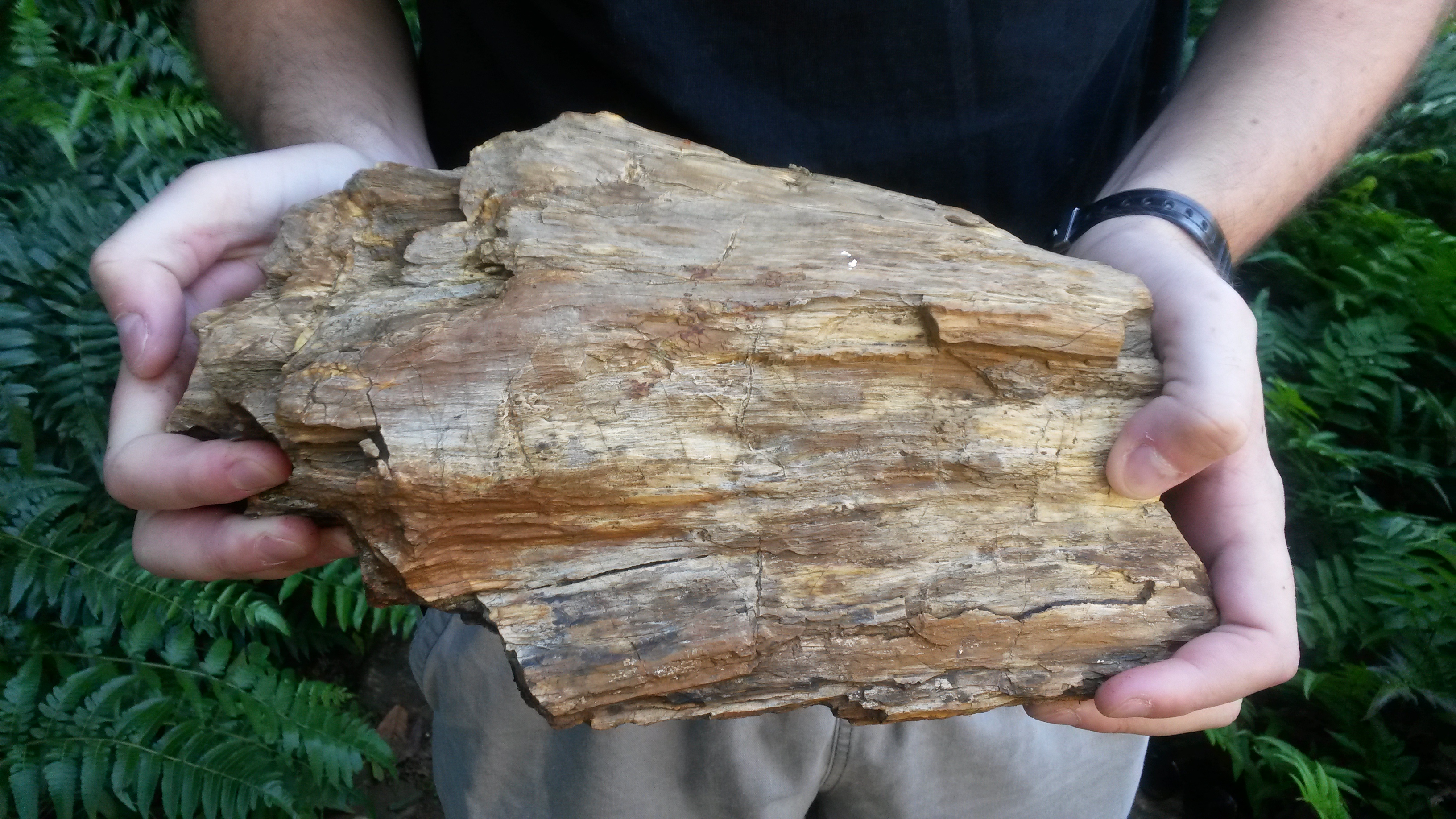
Monday Geology Picture(s): More Petrified Wood at Kirstenbosch Garden

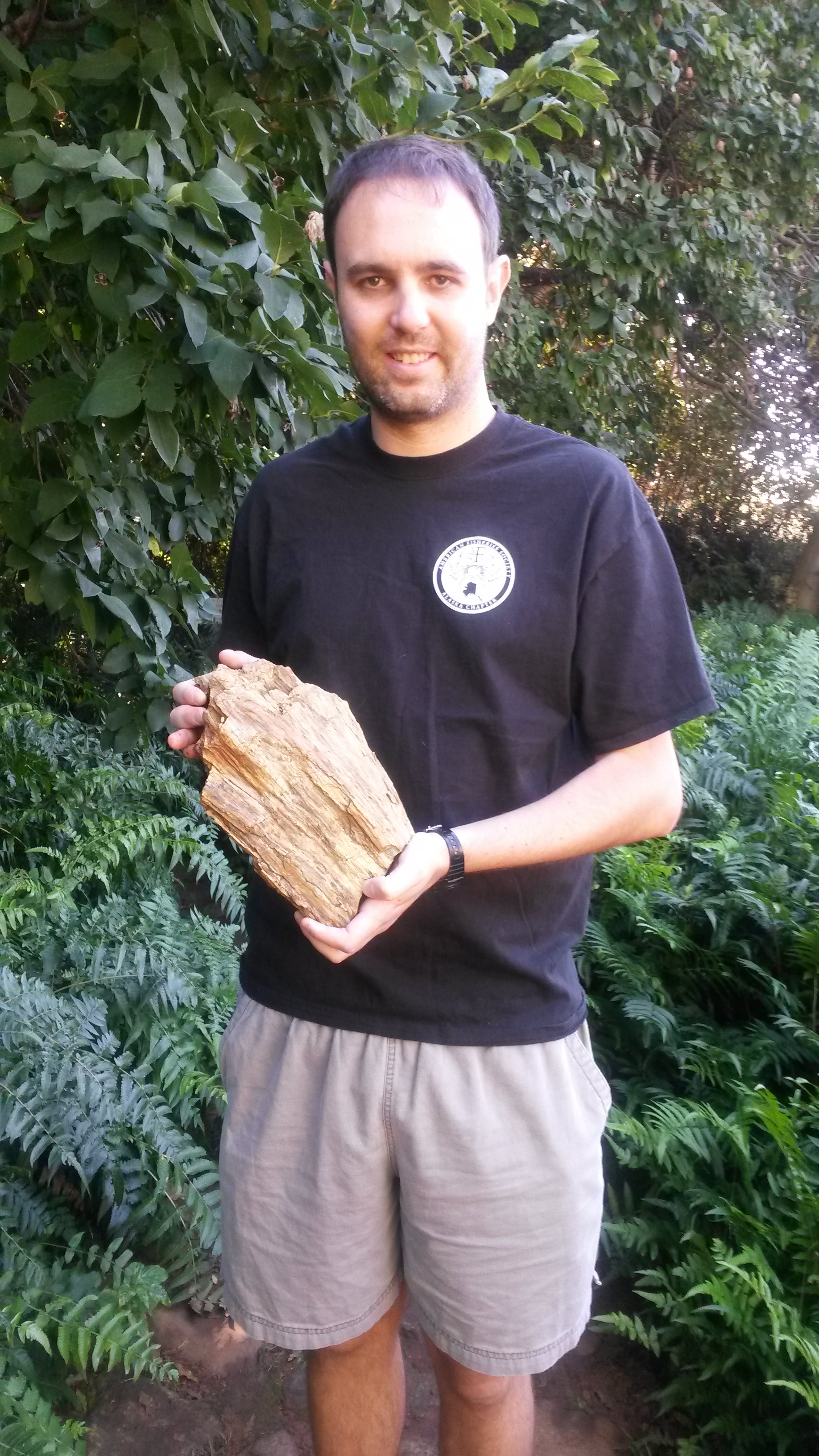
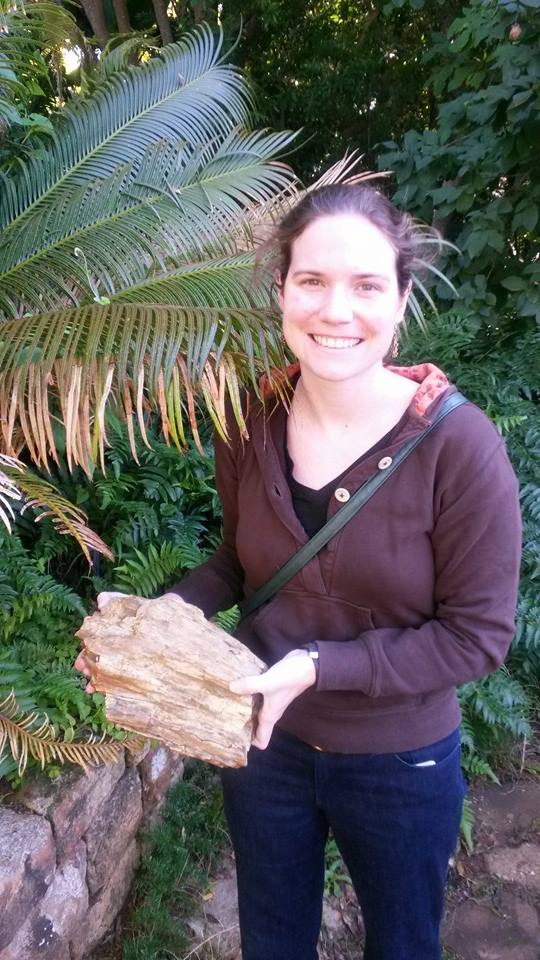
Petrified log at Kirstenbosch Gardens, held by my husband.
Petrified log at Kirstenbosch Garden, held by my husband.

My apologies again for the light blogging recently. My day job as an industry geologist has been keeping me extremely busy over the past couple of months. However, on Friday my husband and I are to the US for a much-needed three weeks of vacation, including spending time with friends and family whom we see far too rarely. Hopefully I’ll be able to squeeze in a little time for blogging during our vacation. Otherwise, I’ll do my best to pick up the blogging again in about a month. In the meantime, the “Monday Geology Picture” posts will have to tide you over until I can settle down for some real blogging.

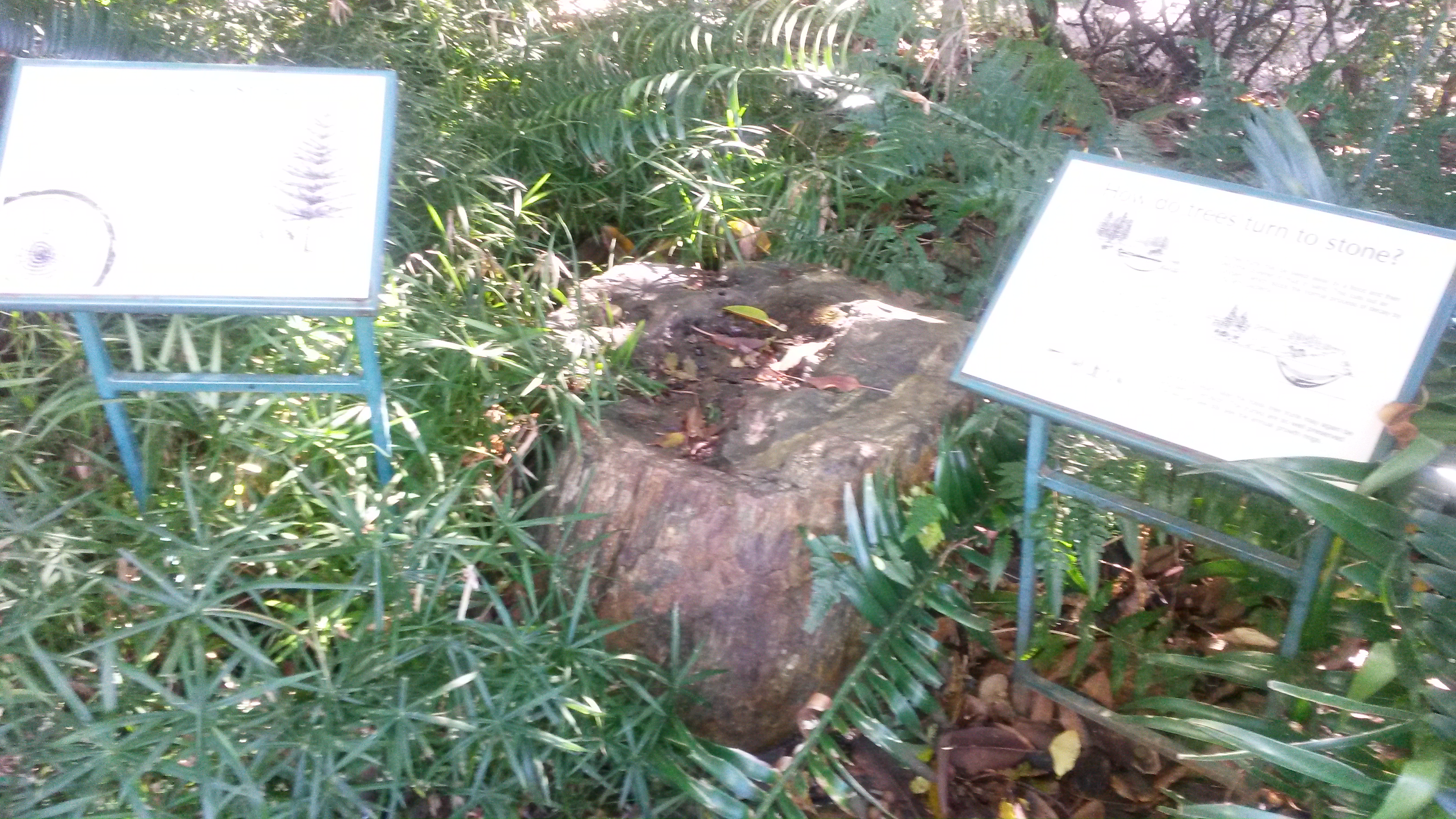
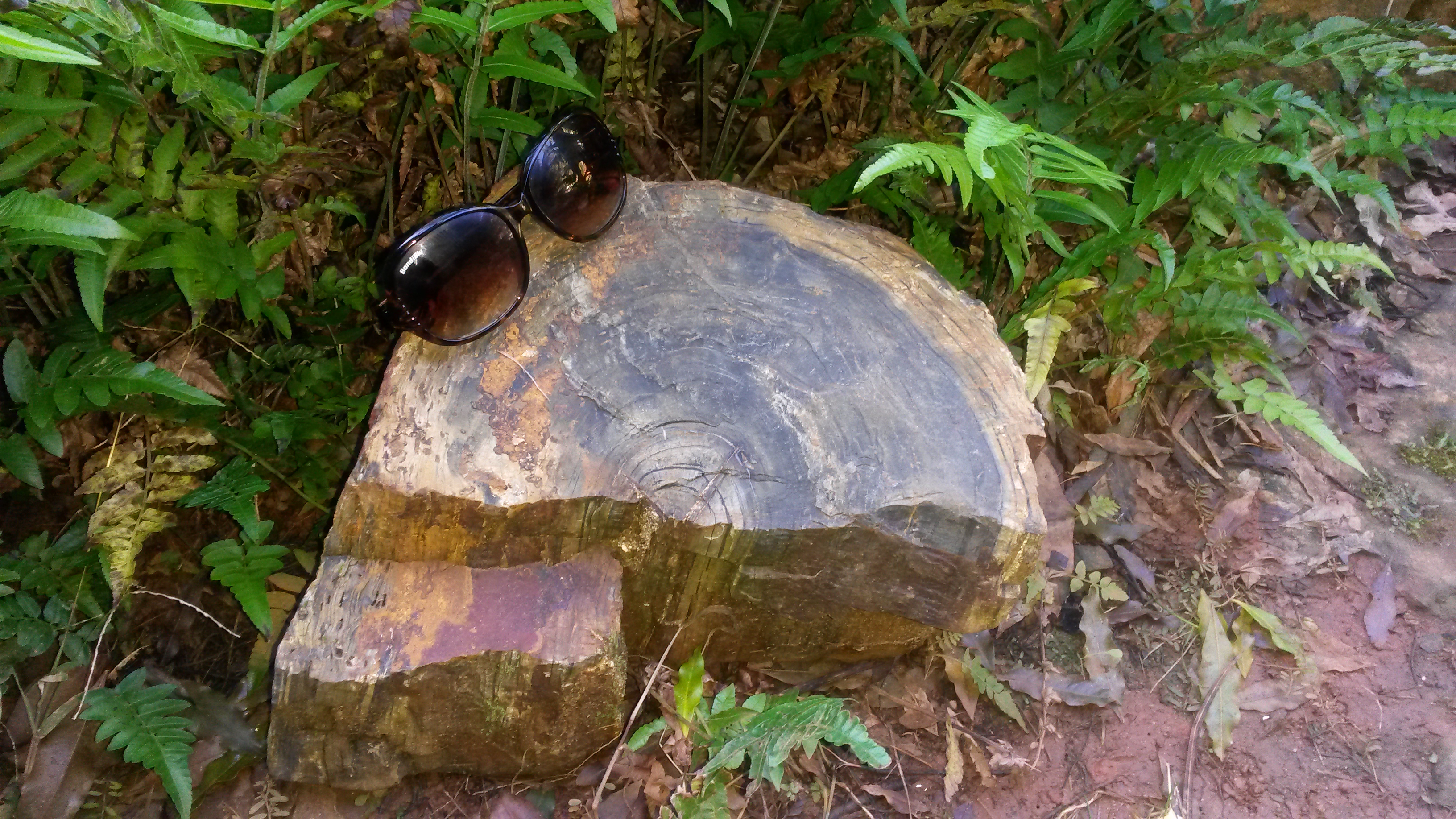
Today, I thought I would share some more pictures of the petrified wood that my husband and I recently saw at Kirstenbosch Garden here in our home city of Cape Town, South Africa. Enjoy! True geologists, my husband and I spent far more time looking at the “trees of stone” than at the real trees of the botanical garden.

Sign explaining how petrified wood is formed.
Sign #1 explaining how petrified wood is formed. Click to enlarge.
Sign #2 explaining how petrified wood is formed.
Sign #2 explaining how petrified wood is formed. Click to enlarge.
Sitting on a petrified log.
Petrified wood between the signs about how petrified wood forms.
Petrified wood, with sunglasses for scale.
More petrified wood.
More petrified wood. These are heavier than they look!
My husband Jackie holding some petrified wood.

Monday Geology Picture: Posing with Petrified Wood in Kirstenbosch Garden

Posing with some petrified wood in Kirstenbosh Garden, May 2014.

My apologies that my blogging has been very light over the past few weeks. I didn’t even post my “Monday Geology Picture” these past few weeks! A busy work schedule combined with some family issues meant that something had to go, and unfortunately that something was blogging here on Georneys. Never fear, though! I won’t abandon you! That said, starting in mid-June, I am going to be travelling for ~3 months, but before I depart I will set up many “Monday Geology Pictures” to auto-post. I have a few of my own geology pictures that I can share. However, if you have a fun geology picture, please feel free to email it to me (georneysblog at gmail), and I’d be delighted to share your picture here. Please include a caption, photographer credit, and a link to your website/blog (if you like me to link to something).

Before I depart for my travels, I’ll also wrap up my “Sutherland Sky” series of posts, and I’ll share some geological pictures from my March vacation to the beautiful volcanic island of Mauritius. And, when I have some downtime during my travels, I’ll post a few other things.

With that explanation, let me move on to this week’s “Monday Geology Picture.” This week I thought I’d share a picture of me posing with some petrified wood. A couple of weeks ago my husband and I visited Kirstenbosch National Botanical Garden here in Cape Town, South Africa. We’ve been to Kirstenbosch many times, but this was the first time that we discovered Kirstenbosch’s rock garden! I have to say, as a geologist, I enjoyed the rock garden even more than the regular garden… but of course the regular garden is lovely as well. I’ll share some more pictures from Kirstenbosch in the future.

Monday Geology Picture: Table Mountain Silhouette

Table Mountain viewed from Milnerton Beach, April 2014.

I am very fortunate to live in beautiful Cape Town, South Africa. One of Cape Town’s best geographical (and geological) features is Table Mountain. I see Table Mountain pretty much every day– I have a nice view of it on my drive to work. For this week’s Monday Geology Picture I’m sharing a beautiful view of Table Mountain. I took this picture from Milnerton Beach during a recent weekend walk.

Monday Geology Picture: Map Pillow Decor

My cat Zayna relaxing on the new map pillow.
My cat Zayna relaxing on one of the new map pillows.

During a shopping trip over the weekend, I acquired a set of lovely pillows with a map of Africa on them for the sofa in our lounge. Geokitteh Zayna heartily approves of the new map pillows. She’s sleeping on one of the map pillows in the above picture.

I really enjoy decorating with maps. When we have a house, I plan to frame a few maps to display in various rooms. I have a geologic map of Oman just waiting to be framed. Do any other geologists decorate with maps?