Today I’m continuing with my series of posts about my October 2013 visit to the small town of Sutherland in South Africa’s Northern Cape province. Sutherland is home to a South African Astronomical Observatory (SAAO) research station that contains many telescopes, including the Southern African Large Telescope (SALT). You can read Part I of this series here, Part II of this series here, Part III of this series here, and Part IV of this series here.
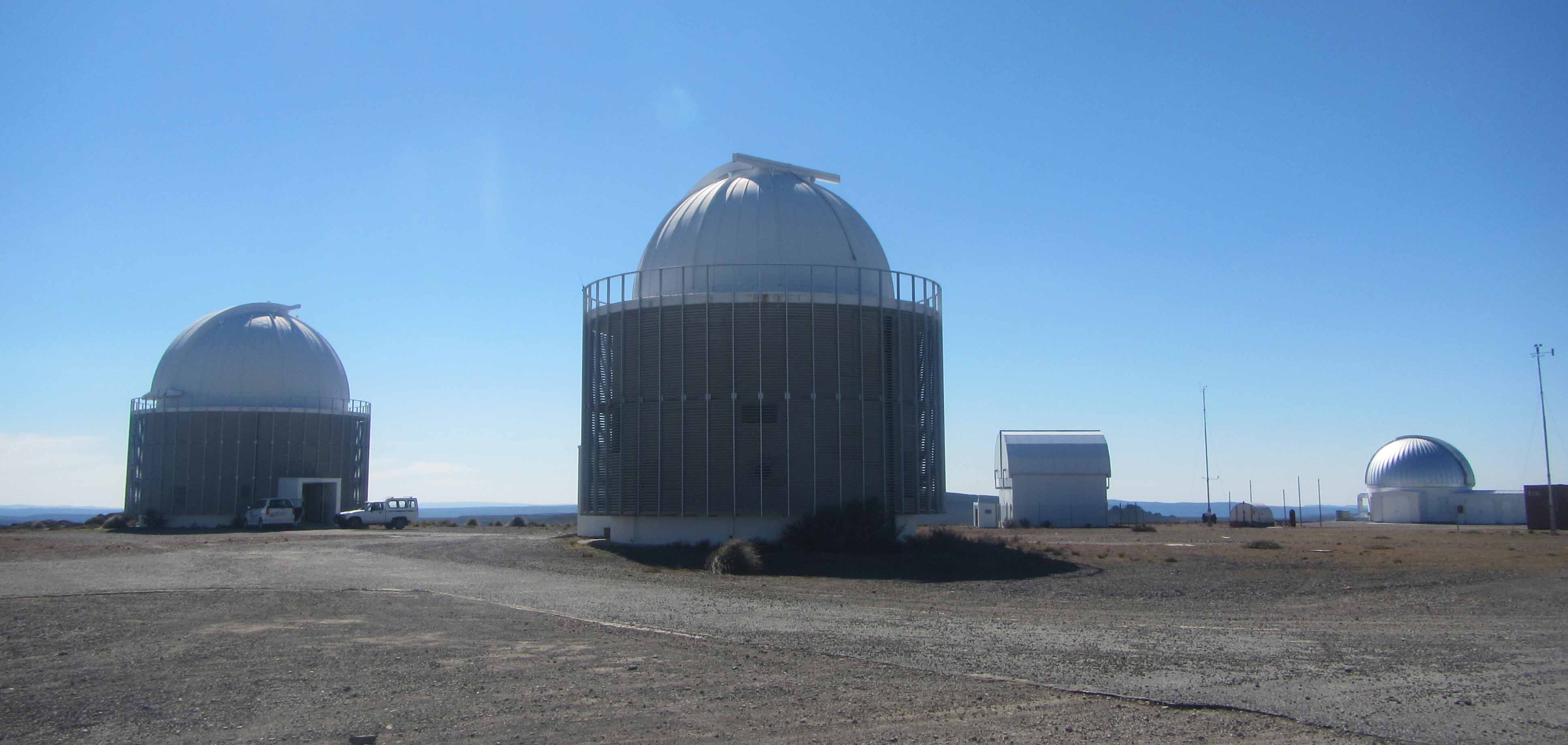
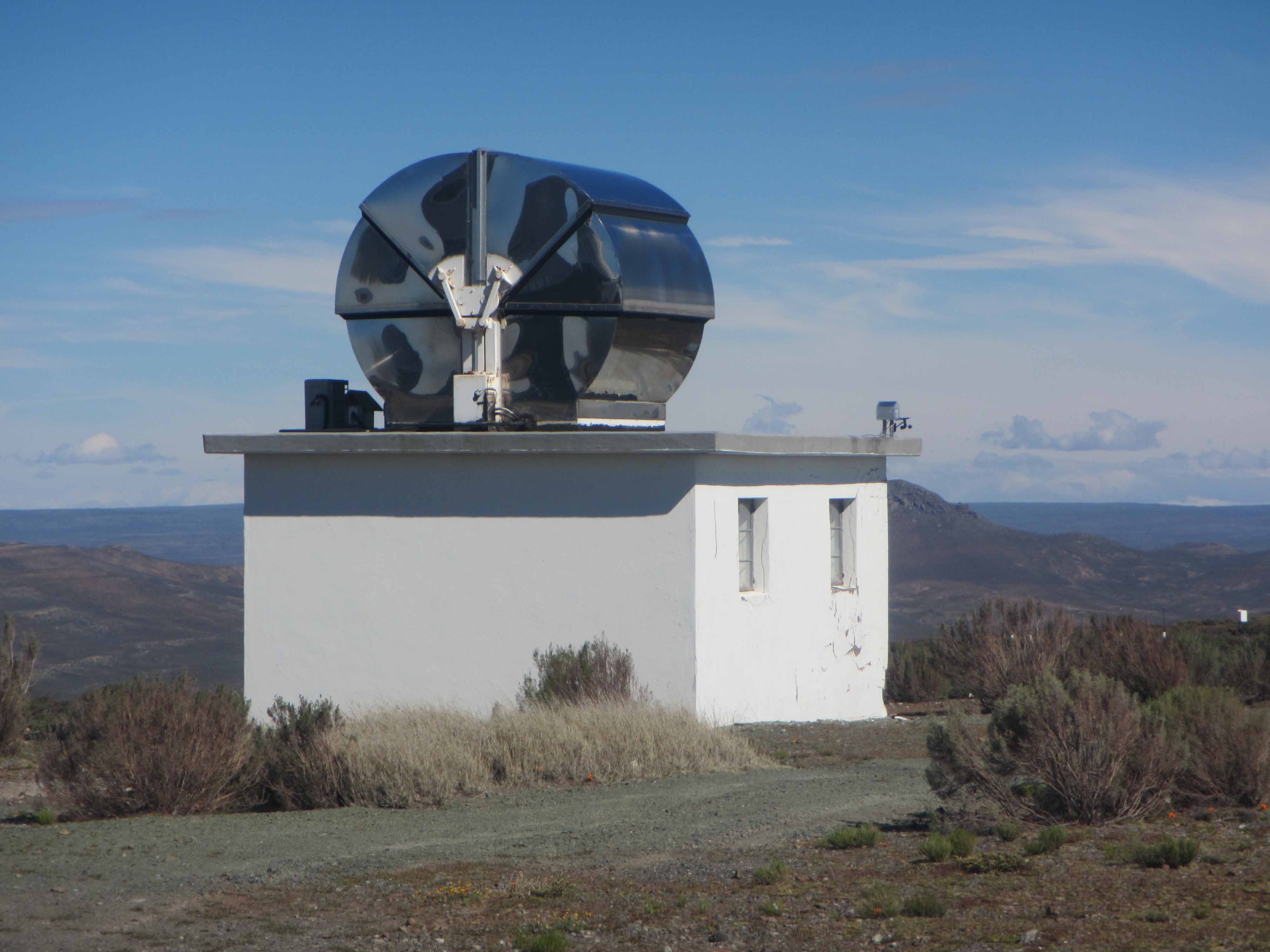
In my last post, I shared some pictures of the famous SALT. In this post I’m sharing pictures of some of the other telescopes that I saw on top of the hill near SALT. You can find a list of all of the telescopes at the SAAO Sutherland facility here. There are all sorts of telescopes located at Sutherland– it’s an astronomer’s heaven! If you can identify any of the telescopes in the pictures, please leave a comment below. I’d love to be able to match my pictures to the list of telescopes at Sutherland.
Without further ado, here are some pictures of some of the awesome telescopes located in Sutherland:
Telescopes #1.Telescopes #2.Telescopes #3.Telescopes #4.Telescopes #5.Telescopes #6.Telescopes #7. The telescope on the right is SALT.Telescopes #8.Telescopes #9.Telescopes #10.
That’s all for this post. In the next post in this series I’ll discuss some of the geology of the Karoo region in the vicinity of Sutherland.
Today I’m sharing some pictures of SALT, the most famous telescope located in Sutherland. I don’t know much about telescopes, to be honest, so here’s some information from the SALT website:
The Southern African Large Telescope (SALT) is the largest single optical telescope in the southern hemisphere and among the largest in the world. It has a hexagonal primary mirror array 11 metres across, comprising 91 individual 1.2m hexagonal mirrors. Although very similar to the Hobby-Eberly Telescope (HET) in Texas, SALT has a redesigned optical system resulting in a larger field of view and effective collecting area.
SALT can detect the light from faint or distant objects in the Universe, a billion times too faint to be seen with the unaided eye – as faint as a candle flame would appear at the distance of the moon. The telescope and instruments are designed to operate from the near ultraviolet to the near infrared (320 to 1700 nm), and offer some unique or rare capabilities on a telescope of this size.
SALT is situated at the South African Astronomical Observatory (SAAO) field station near the small town of Sutherland, in the Northern Cape province, and is ~380 km from Cape Town. SALT is funded by a consortium of international partners from South Africa, the United States, Germany, Poland, India, the United Kingdom and New Zealand. The construction phase was completed at the end of 2005 and from 2006 to 2009 it entered a period of commissioning and performance verification. Since September 2011, observing is now in full swing and the telescope is finally realising its huge potential as Africa’s Giant Eye on the Universe.
I definitely recommend checking out the SALT website. There’s much great information there although it does seem that some sections of the website, such as the “Picture of the Month”, have not been updated since 2011. However, there is a SALT blog that seems to be updated regularly. The blog has daily observation logs and the occasional post on topics such as optics and an astronomer’s braai (South African BBQ). There is also a website for scientists interested in working at SALT. This website provides information on how to apply for observation time at SALT. Since observation time at SALT is limited and sought after, there is an application / proposal process in place to allocate the observation time to various scientists. I also ran across this informative SALT webpage on the Rutgers University website. And here’s another great website about SALT.
During my weekend visit to Sutherland, I visited SALT and some of the other telescopes on the Saturday afternoon. SALT and the other telescopes are located a short drive away from the small town of Sutherland. The telescopes are perched on top of a hill away from the modest light pollution of the little town of Sutherland.
Here are some pictures that show the location of the telescopes on the hill:
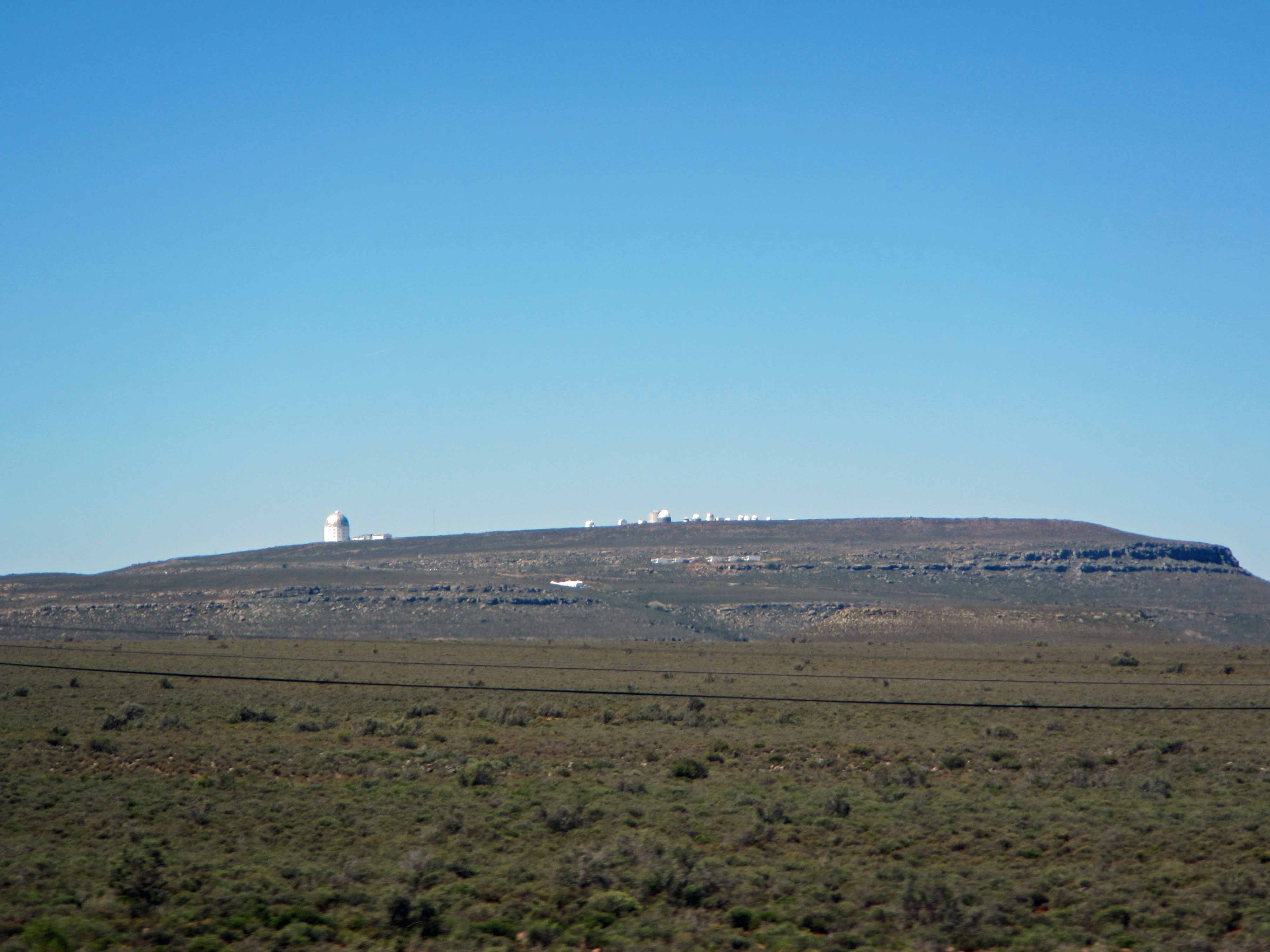
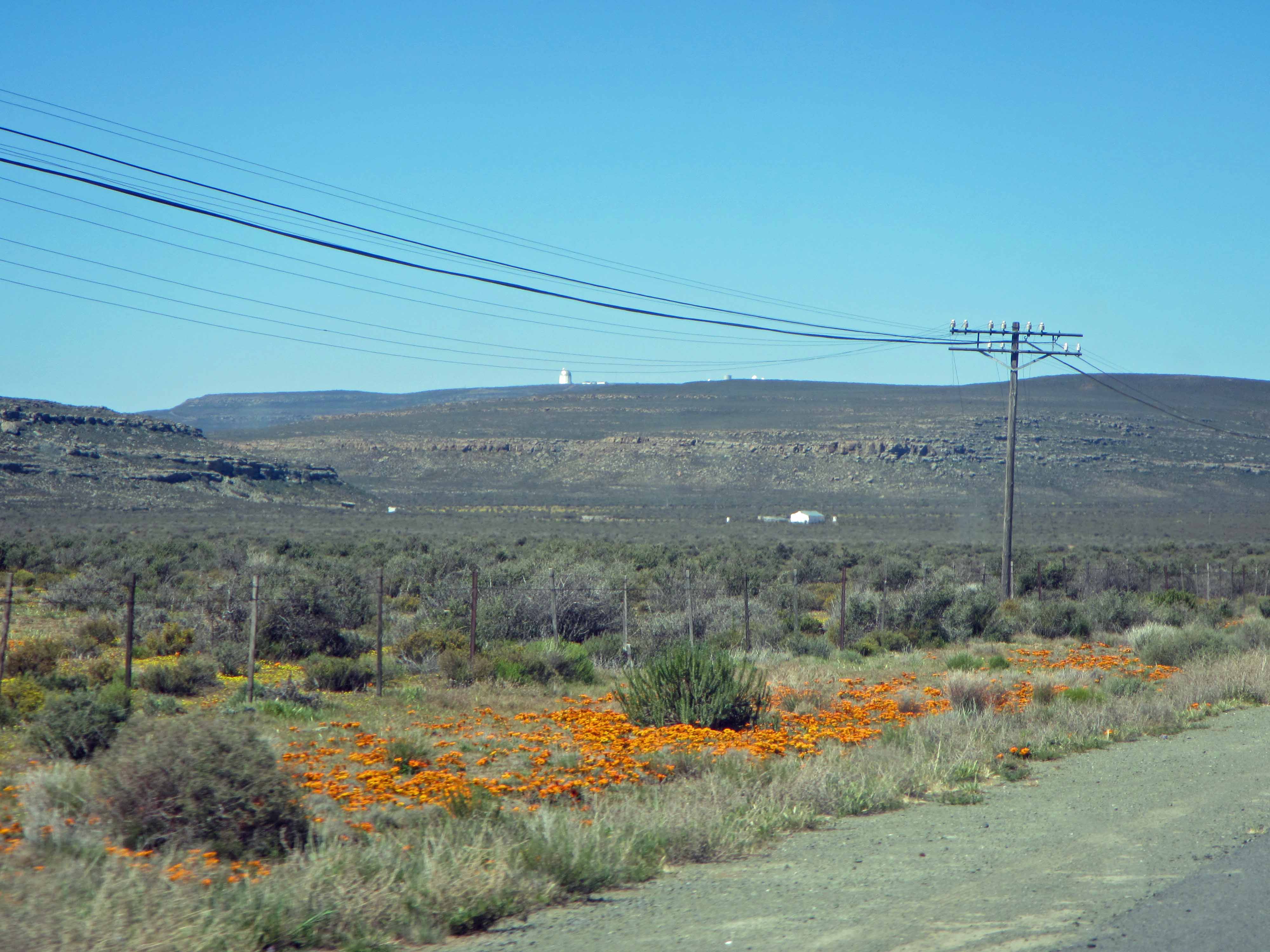
The road from the town to the telescopes. You can make out the big SALT telescope in the upper left just below the power line.Another view of the telescopes from the road. SALT is the biggest telescope on the left. Some pretty Karoo wildflowers are in the foreground.All the telescopes up on the hill. There’s some nice sedimentary bedding on the hill, too!
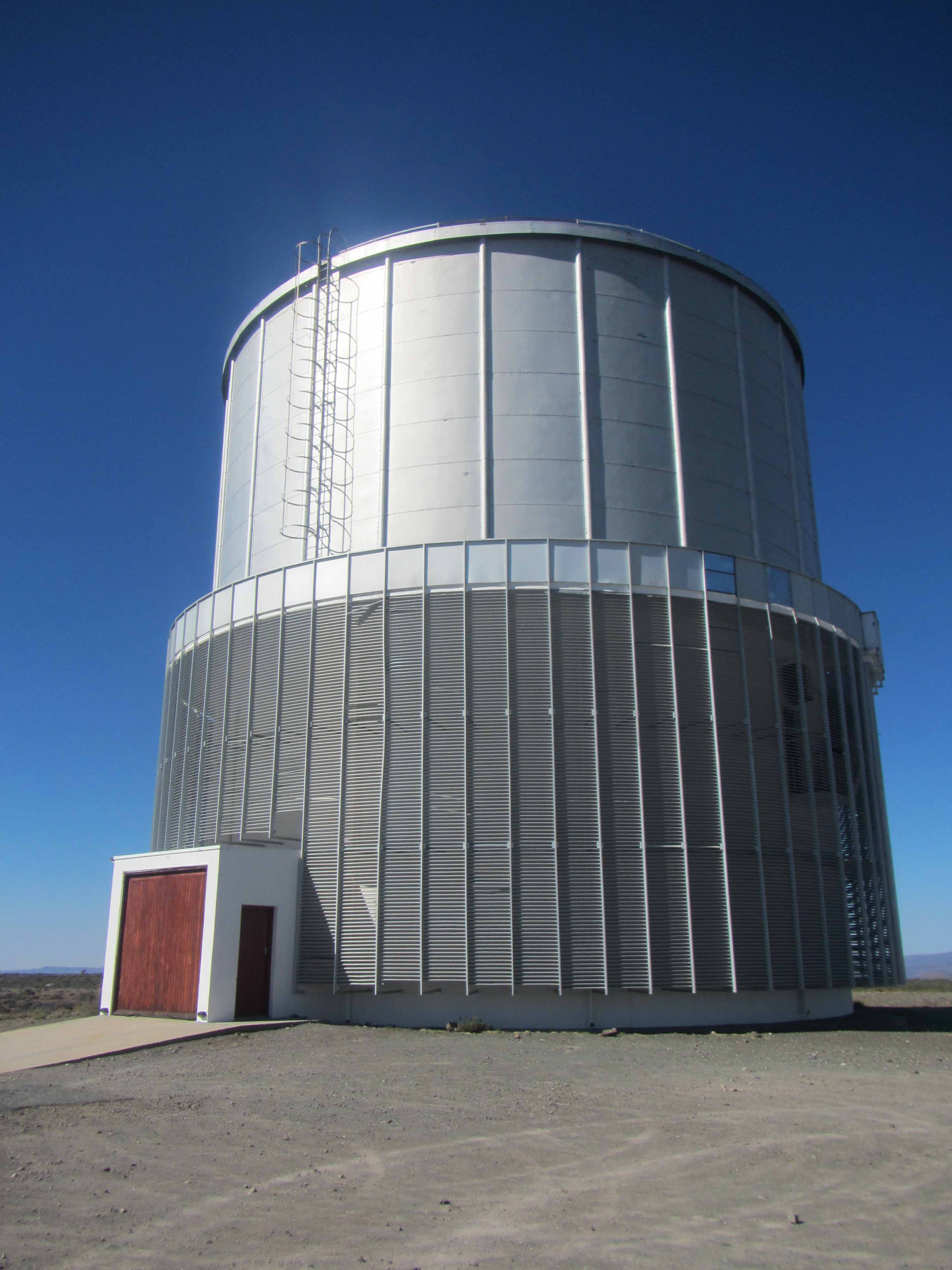
Here are some pictures of SALT up close:
SALT viewed from the top of the hill.Another close-up view of SALT.
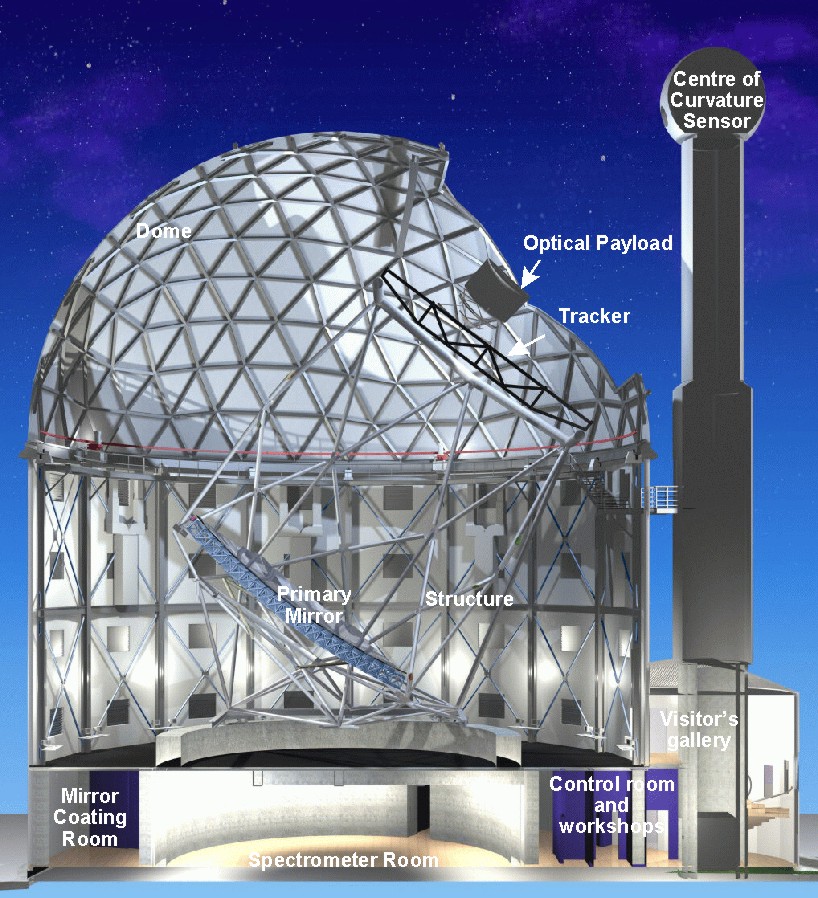
As part of the tour, I was able to visit the inside of SALT. Here’s a diagram showing what SALT looks like on the inside:
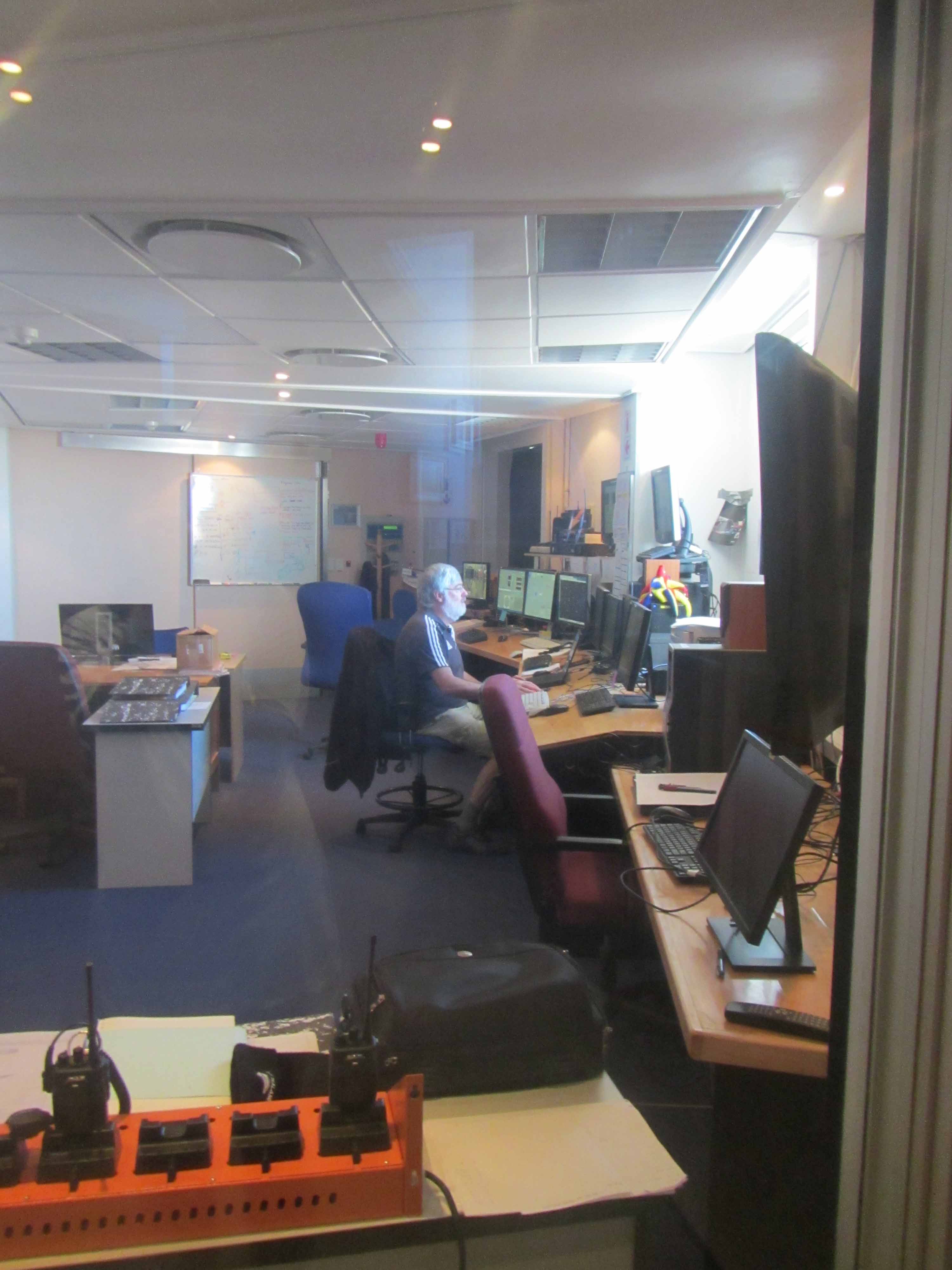
On the tour, I went past the Control Room, where I was able to see a scientist at work:
A scientist at work in the SALT control room.
Then I went up the stairs to the Visitor’s Gallery, where I was able to take a look at SALT’s impressive mirrors:
SALT’s mirrors.
I apologize for the poor quality of the above picture– it was difficult to take a good picture through the window of the Visitor’s Gallery. The gallery is kept separated from the mirrors by windows because it is important to keep conditions (temperature, humidity, etc.) perfectly controlled in the room with the mirrors.
Again, I’m afraid I don’t know much about telescopes, so here’s some information on SALT’s mirrors from Wikipedia:
Both SALT and HET have an unusual design for an optical telescope. Similar to the Keck Telescopes, the primary mirror is composed of an array of mirrors designed to act as a single larger mirror; however, the SALT mirrors produce a spherical primary, rather than the paraboloid shape associated with a classical Cassegrain telescope. Each SALT mirror is a 1-meter hexagon, and the array of 91 identical mirrors produces a hexagonal-shaped primary 11 x 9.8 meters in size. To compensate for the spherical primary, the telescope has a four-mirror spherical aberration corrector (SAC) that provides a corrected, flat focal plane with a field of view of 8 arcminutes at prime focus.
Each of the 91 mirrors is made of low-expansion Sitall glass and can be adjusted in tip, tilt and piston in order to properly align them so as to act as a single mirror. Because the mirror is spherical, light emitted from a position corresponding to the center of curvature of the mirror will be reflected and refocused to the same position. Therefore, the telescope employs a Center of Curvature Alignment Sensor (CCAS) situated at the top of a tall tower adjacent to the dome. Laser light is shone down on all the segments and the position of the reflections from each mirror measured. A process called “stacking” thus allows the telescope operator to optimize the adjustments of the mirrors.
SALT’s mirrors certainly look very impressive! To me, they look as if they belong in a science fiction movie or perhaps a James Bond movie… I can just see a James Bond villain taking over the world with SALT.
Speaking of science fiction, I mentioned in an earlier post that I visited SAAO and SALT as part of an event organized by a local (South African) Star Trek club to which I belong. Of course, if you attend a Star Trek club event, it’s best to attend in uniform. So, several of us wore Star Trek attire during our SAAO tour:
My husband Jackie and I in Star Trek: The Original Series uniforms in front of the SALT telescope.Four Trekkies in front of SALT.
The human race may not (yet) be exploring The Final Frontier as part of the United Federation of Planets. However, at least we are looking up at the sky in places such as Sutherland.
That’s all for this post. Next, I’ll share some pictures of some of the other telescopes located at Sutherland. After that, I’ll share a few pictures highlighting the geology of the Karoo region in the vicinity of Sutherland.
Today I’m going to share some pictures from our visit to the SAAO Visitor Centre, which has several museum-like displays. We started our official tour of SAAO / SALT by visiting the Visitor Centre and watching a 20 minute or so video about the universe. Then we went and toured several of the telescopes, which I’ll write about in my next post in this series. After touring the telescopes, we had an opportunity to look around the Visitor Centre displays, which included several astronomy displays and also a geology display that included a meteorite (I believe) and many interesting fossils. I spent some time looking through the astronomy displays, but I spent most of my time checking out the geology display. Thus, most of my pictures are of the geology display! Don’t worry, though… there will be plenty of astronomical telescope pictures in the next blog post in this series.
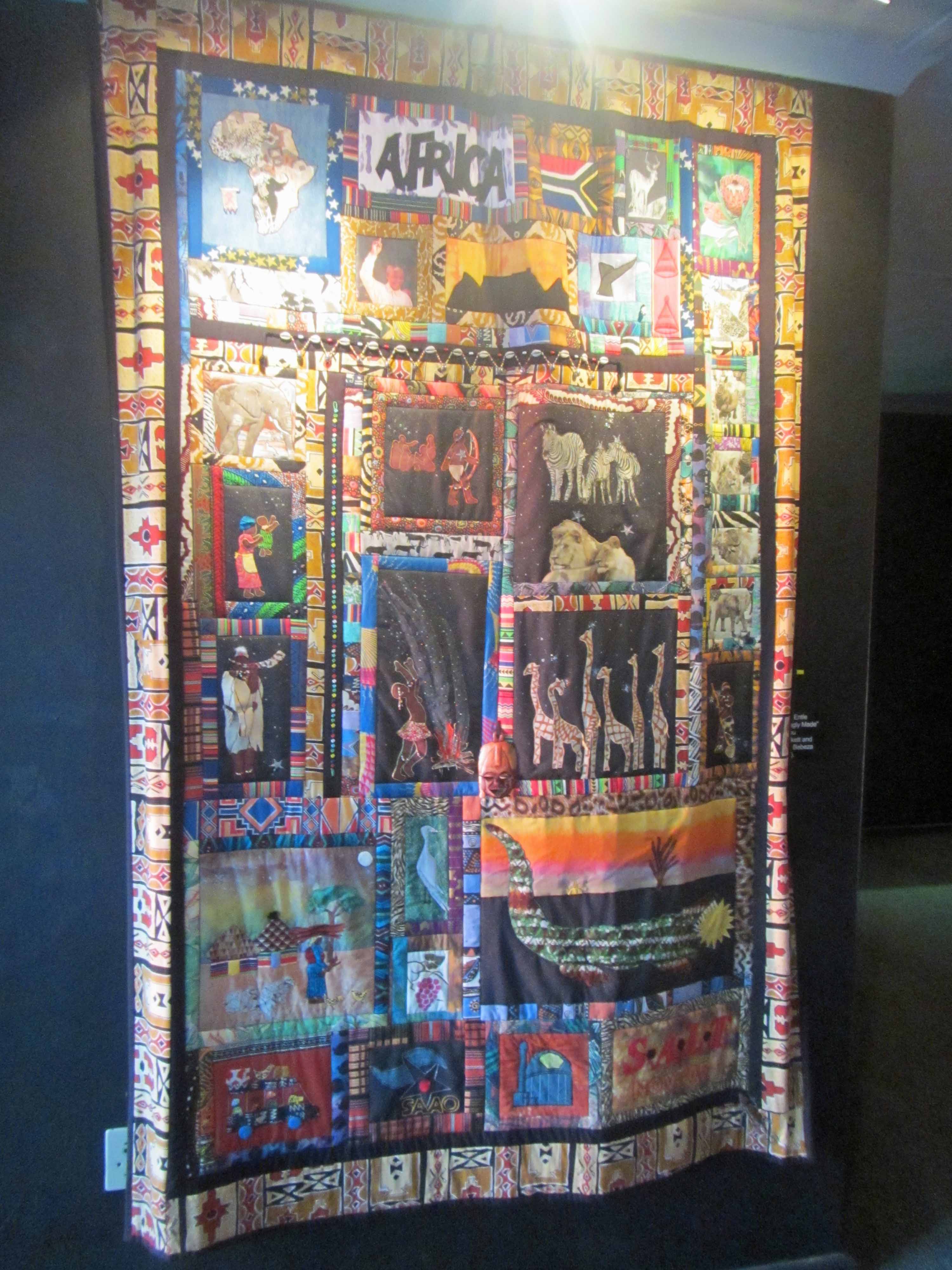
A pretty quilt– with a telescope on it!– in the lobby of the SAAO museum.
In the entrance to the geology display, there was a fairly big iron meteorite– at least, I assume that’s what it was, since I didn’t see any explanation card. I took a picture with the presumed meteorite:
Posing with a presumed meteorite.
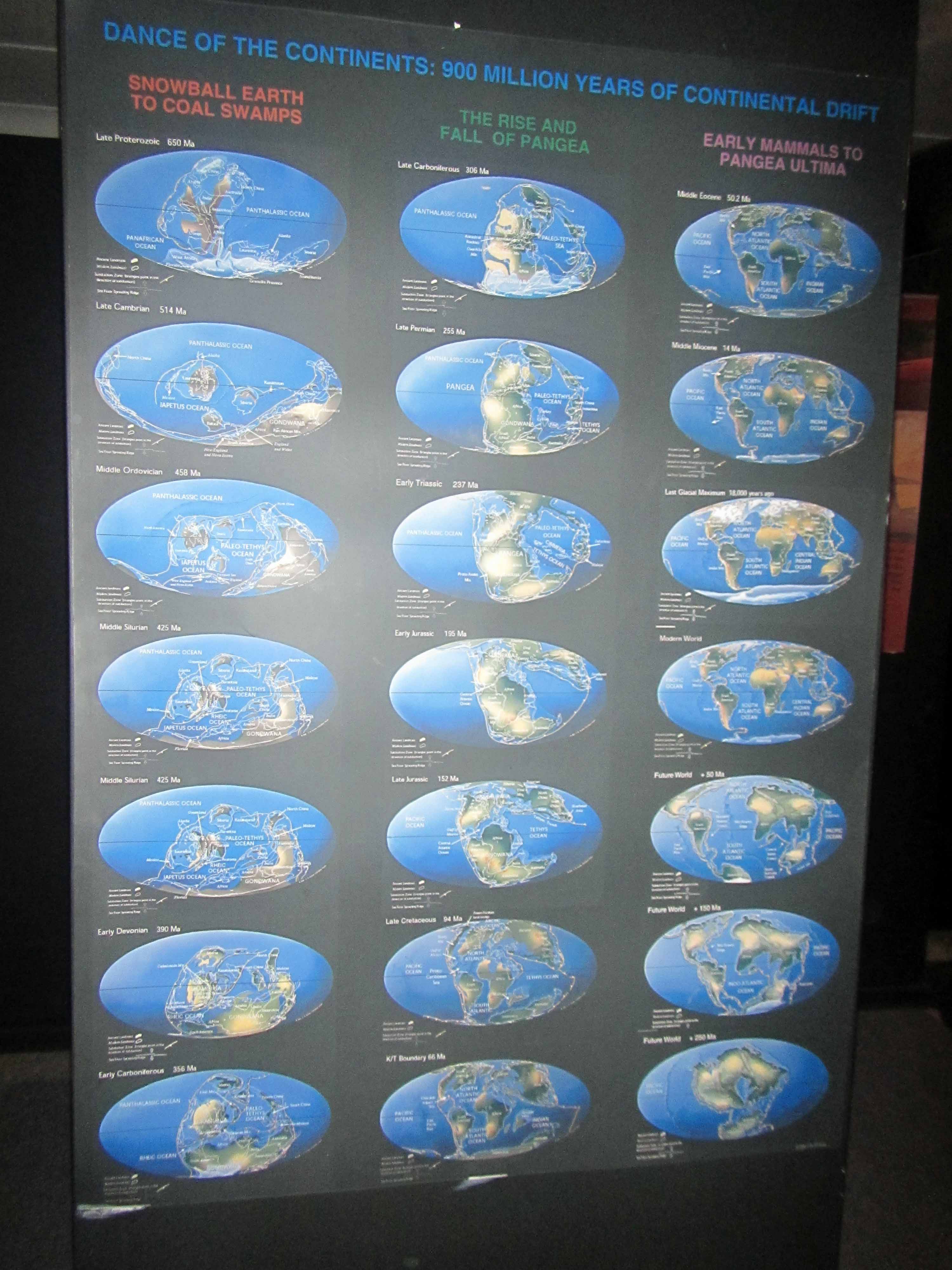
The geology display had many fossils and bits and pieces of information organized by geologic time. The display included this neat poster showing continental reconstructions (“continental drift”) over the past 900 million years:
A poster of continental reconstructions over the past 900 million years. Click to enlarge.
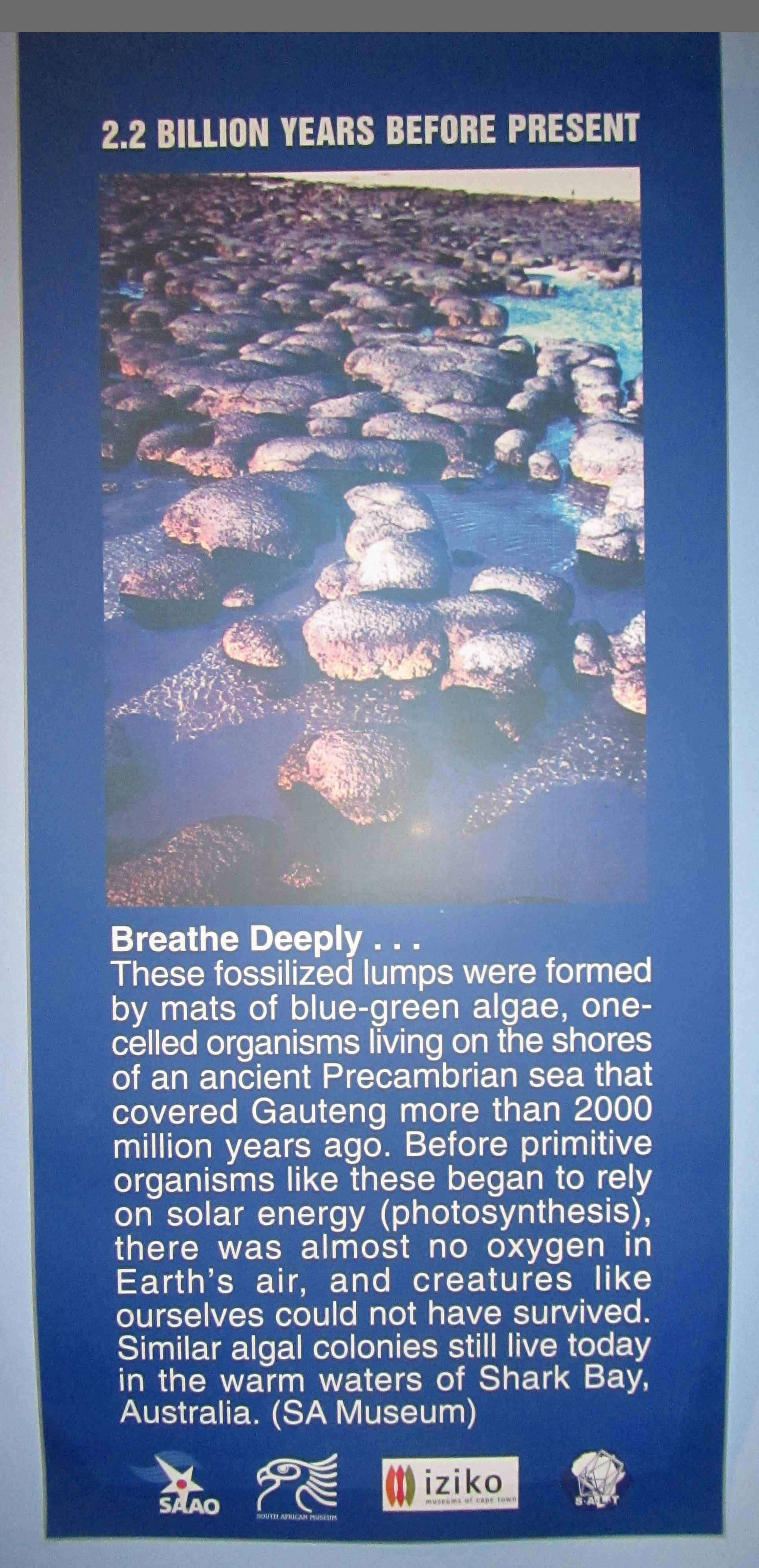
Many of the other geologic information signs had a little continental reconstruction on the bottom of them, reminding the viewers of the state of the continents at that particular geologic time. The display highlighted various fossils, primarily from the nearby Karoo region, from different geologic times. The oldest of these fossils were the stromatolite fossils:
Informational sign about the stromatolite fossils on display at the SAAO Visitor Centre. These stromatolites are from Gauteng (a province of South Africa; the city of Johannesburg is located in this province).Stromatolite fossils!
Stromatalites are pretty neat. They are layered, accretionary, sedimentary structures formed by biofilms of micro-organisms, such as blue-green algae. Stromatalites were formed billions of years ago by some of the earliest lifeforms on Earth, and they are still formed by micro-organisms at several places on Earth today. Stromatalite fossils may not look like much, but as a geologist I find myself awestruck every time I see them.
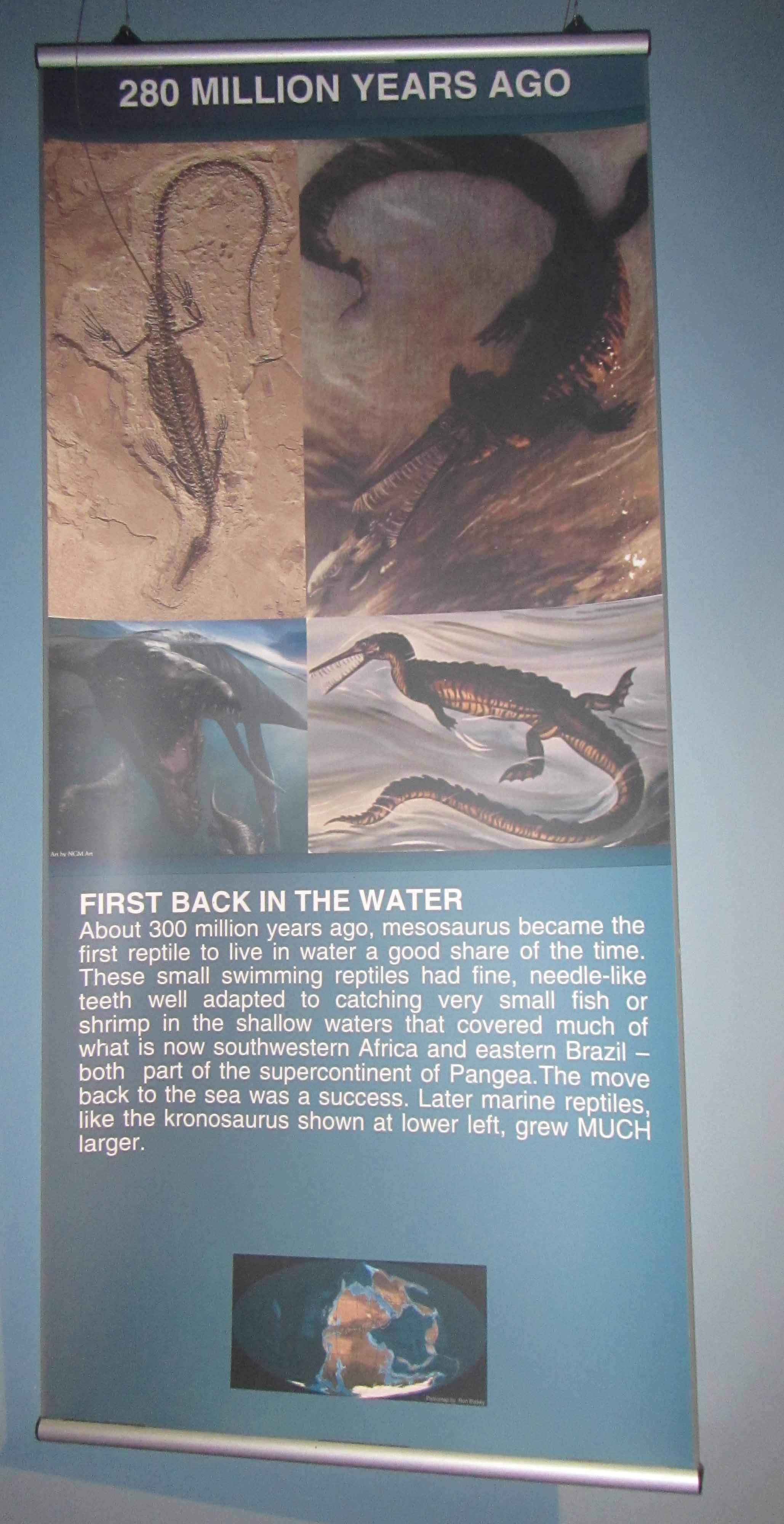
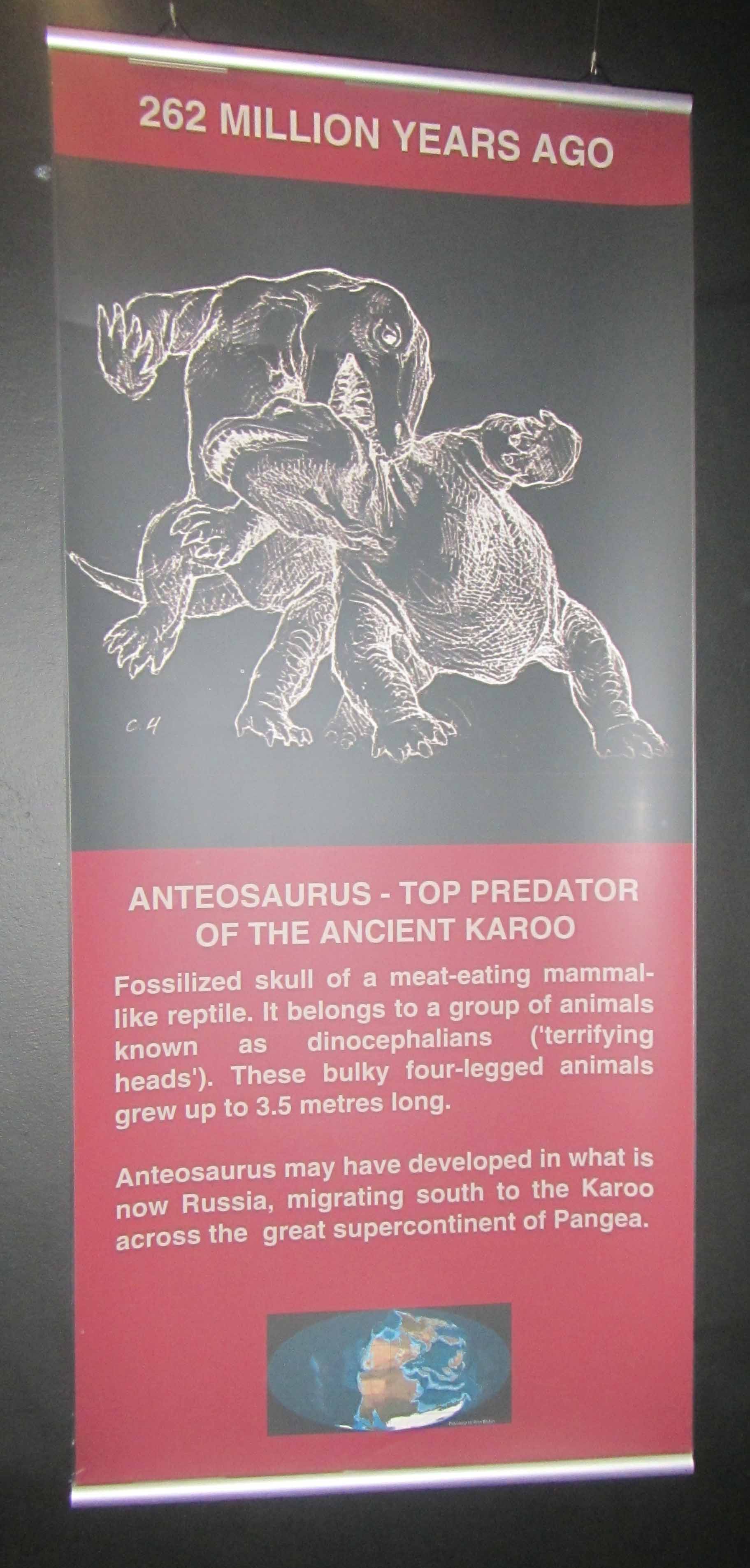
Here are a few other informational signs and fossils for different periods of geologic time:
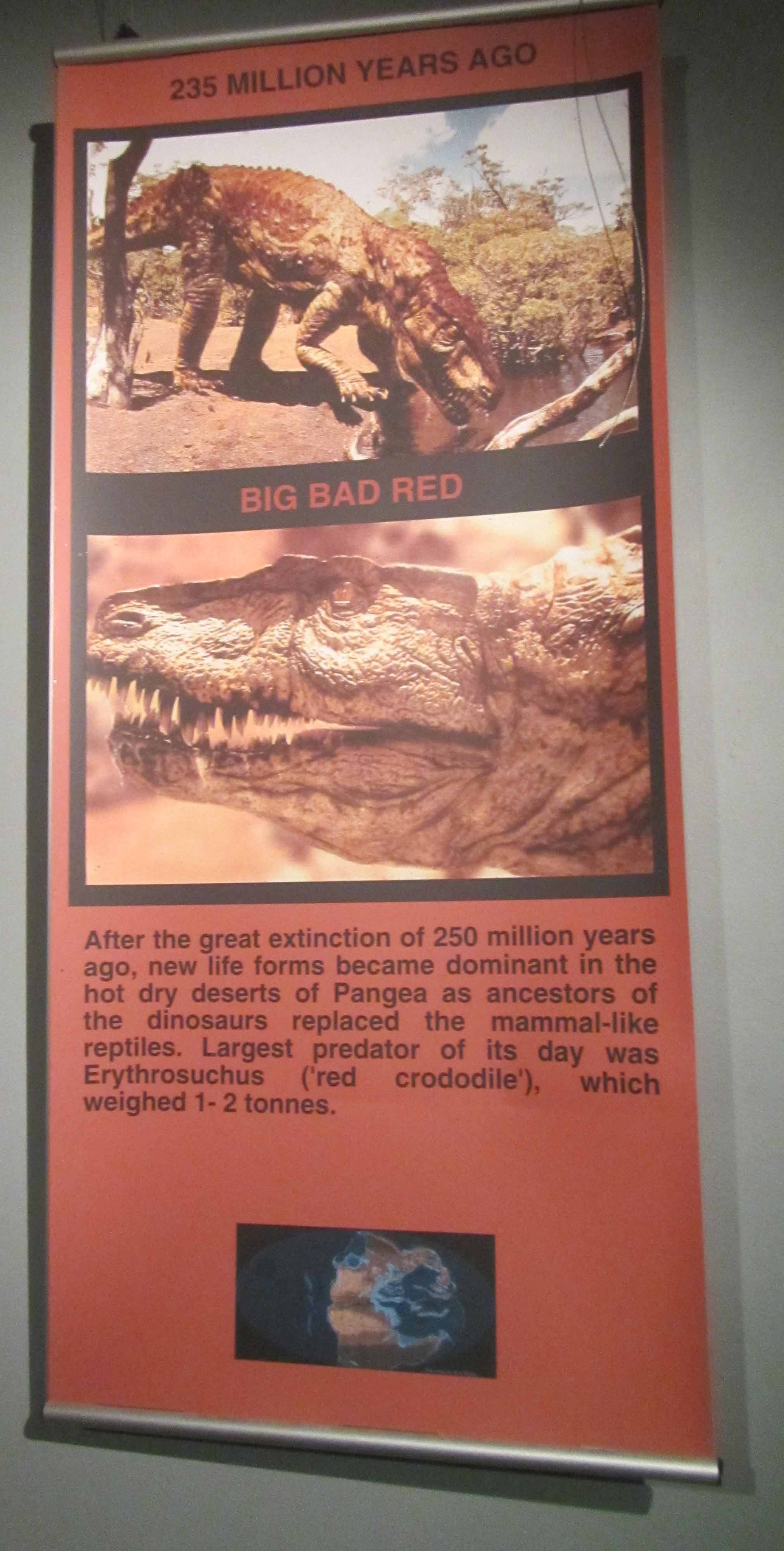
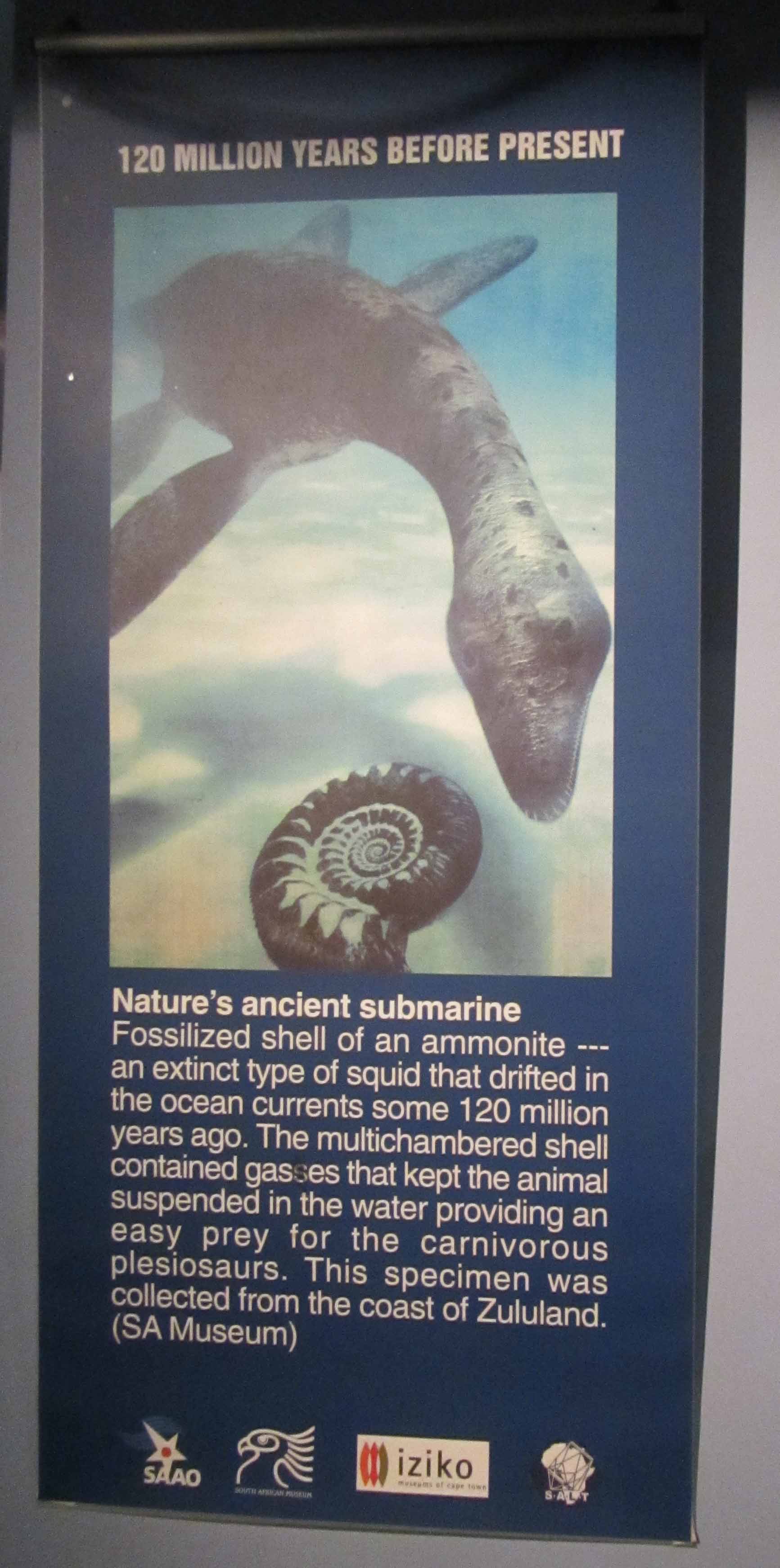
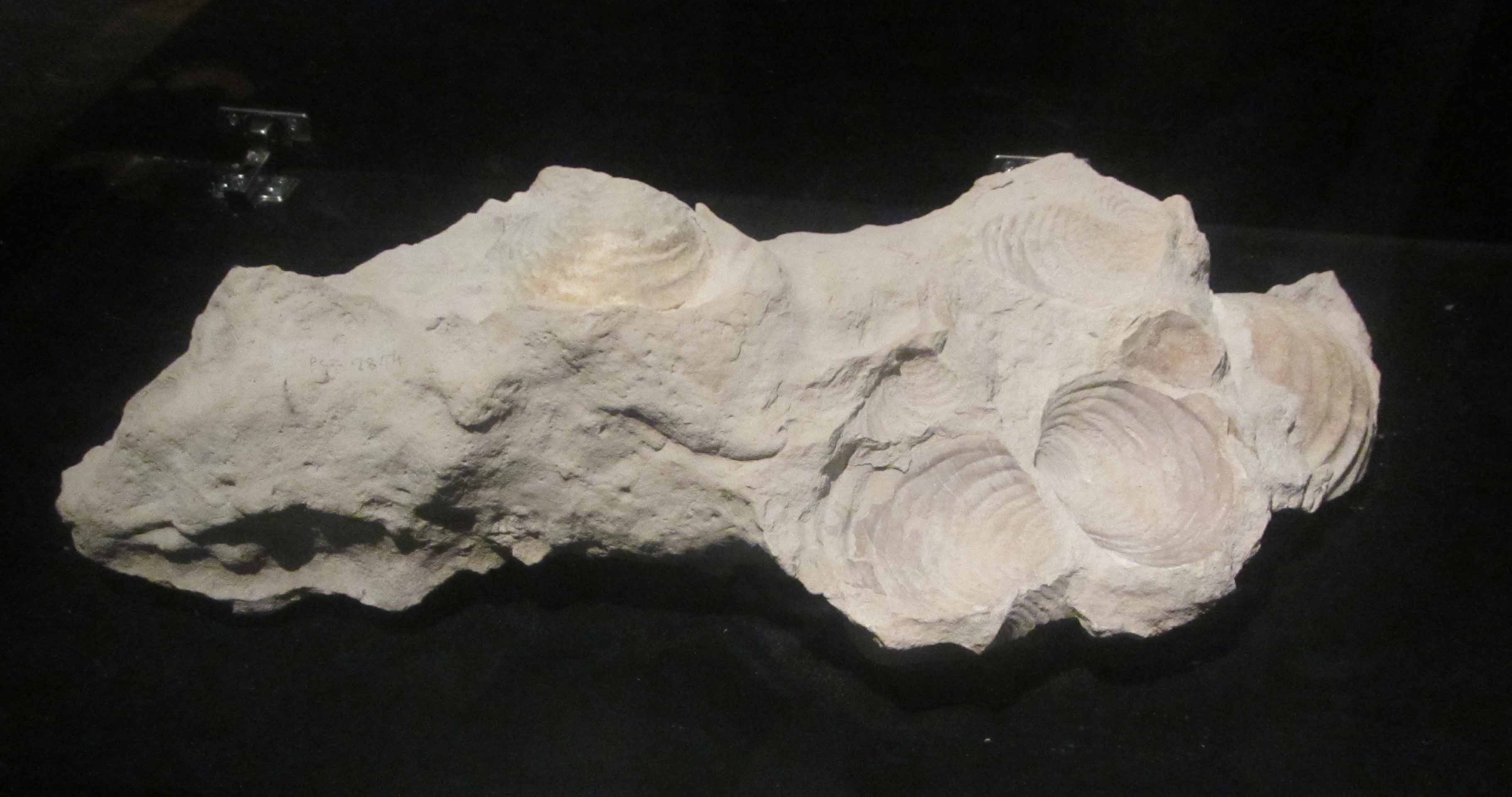
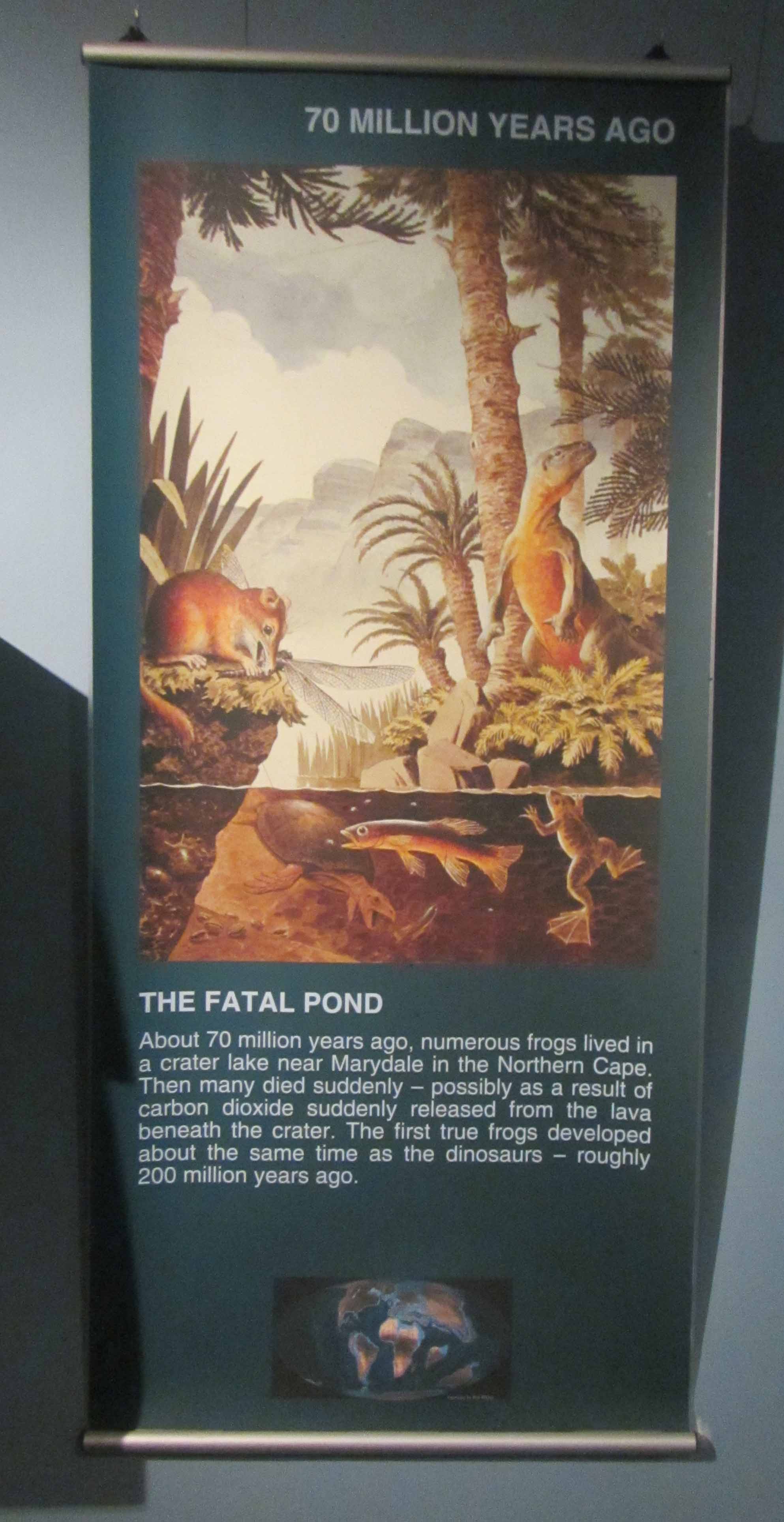
Informational sign for 400 million years ago… it was a trilobite world!Some trilobite and other fossils.Informational sign for 280 million years ago… Mesosaurus roams.I think that this is a Mesosaurus fossil? Well, it was near the Mesosaurus geological sign 🙂Informational sign for the Anteosaurus, a large reptile that was a top Karoo predator 280 million years ago.Anteosaurus skull. Pretty neat!Neat painitng… I think this painting shows Anteosaurus roaming the ancient Karoo.Informational sign for 235 million years ago… the time of the “red crocodile” in the Karoo.“Red crocodile” skull.Informational sign for 120 million years before present… ammonites are found in the oceans.A stunning ammonite fossil. Just beautiful!Informational sign for 70-80 million years ago… some clams died out.Gorgeous clam fossils.More gorgeous clam fossils.Informational sign for a sudden extinction event approximately 70 million years ago that created some stunning frog fossils.Frog fossils!Informational sign for more recent geological time a mere 5 million years ago… the time of the megatooth shark!Megatooth shark tooth. That’s quite a big tooth!
Last but not least, I want to share two pictures of a plaque titled “Pangea Reunited”. I really liked this little plaque. The inscriptions on the plaque read:
PANGEA REUNITED
Pangea is the name given to the single continent which existed about 200 million years ago. Evidence for this has been discovered in rocks and fossils in Africa and other continents of the world. Sediments and rocks associated with Pangea have been assembled from all continents of the world, symbolically reuniting Pangea at the beginning of the African Renaissance and the dawn of a new millennium.
and:
KAROO ROCK
This Permian rock, representing part of the Pangean super-continent, was excavated a the groundbreaking ceremony associated with the Southern African Large Telescope on September 1, 2000.
Pangea reunited.
I think it’s really wonderful that the SAAO museum contains so much geology information and that the SALT ground-breaking ceremony paid tribute to Pangea. The SAAO telescopes, including SALT, are located in a remarkable geological location– I’ll be sharing some more information and pictures about the geology of the Karoo region in future posts in this series. I think that it is wonderful, and very important, that the researchers using the SAAO telescopes to study other interesting parts of the universe– perhaps other little rocky planets where, perhaps, there may also be life– are reminded of the wonderful little rocky planet on which their telescopes are perched. At Sutherland, there is much to see by looking up into the sky… but there is also much to see by looking down toward one’s feet.
Speaking of looking up into the sky, stay tuned for the next post in this series… I’ll be sharing some pictures of some of the SAAO telescopes!
This is the first in what will be a series of posts about my recent visit to Sutherland, a small town in South Africa’s Northern Cape province. In October 2013 my husband Jackie and I visited Sutherland for a long weekend. Sutherland is famous because it is home to the South African Astronomical Observatory (SAAO) research station, which has a number of telescopes that are used for astronomical and astrophysical research. The most famous telescope located at Sutherland is the Southern African Large Telescope (SALT), the largest optical telescope in the southern hemisphere. Jackie and I visited Sutherland as part of a Star Trek club (yes, Star Trek club– we’re proud Star Trek fans!) event. Along with our fellow Trekkie friends, we toured the SAAO facility. We went on a daytime tour and visited the museum and also some of the large telescopes. Some of us wore Star Trek uniforms/costumes on the tour, and I think (and hope) that we delighted some of the other visitors with our attire. We certainly ended up posing for quite a few pictures! In addition to the daytime tour, we also attended an evening stargazing session during which we peered through some smaller telescopes that have been set up for educational purposes– the big telescopes are reserved for proper scientific research at night.
In addition to touring the SAAO research station, Jackie and I also spent some time exploring the wonderful little town of Sutherland. In addition, we spent some time exploring some of the impressive geology that can be viewed along the approximately four hour drive to Sutherland from our home in Cape Town. To reach Sutherland from Cape Town, we drove over the Cape Fold Belt and saw some highly impressive folded and uplifted sedimentary rocks. After we trekked (see what I did there?) across the Cape Fold Belt, we reached the flat, empty roads of the Karoo desert region. During the last two hours of our drive, we only passed one other car. Geologically, the Karoo region is home to the Karoo Supergroup, a stratigraphic unit that covers two-thirds of South Africa and consists of a sequence of sedimentary rocks that are intruded, in many places, by igneous rocks, including some impressive dolerite dikes. The Karoo region is also covered in many places by the Dwyka tillite, which was deposited by widespread glaciation.
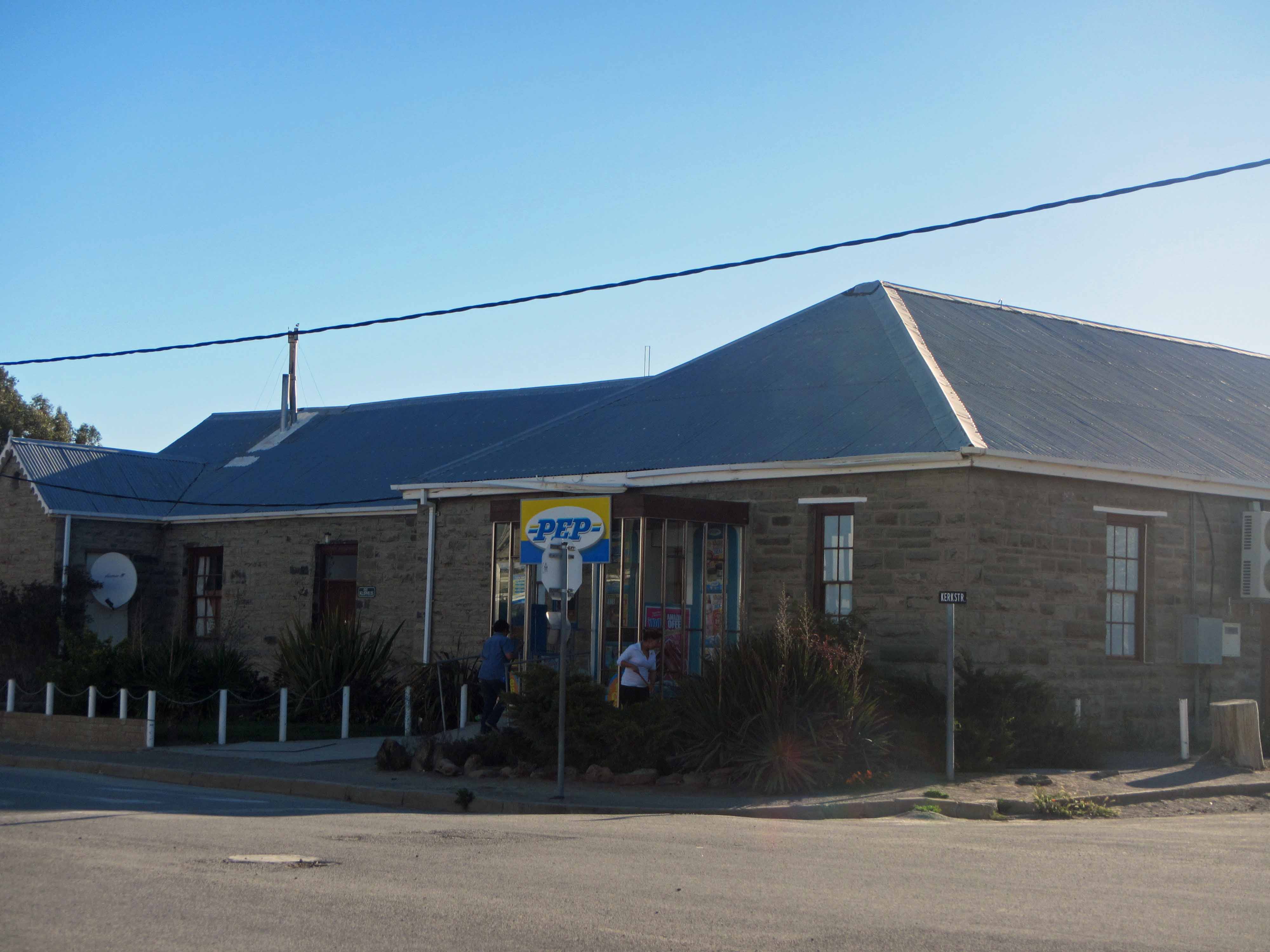
In subsequent posts, I’ll discuss SAAO and SALT and some of the geology that we observed along the way to Sutherland. Today, I want to share a few pictures of the town of Sutherland. At first glance, Sutherland looks like many other small towns in the Karoo. There are small shops, cafes, a restaurant or two, guest houses, schools, and churches– and even the PEP store that is found in most South African towns, both large and small. My husband and I joke that the presence a PEP store, which sells inexpensive clothing and other items, marks the difference between a village and a town in South Africa.
Main Street. Sutherland, October 2013.Another view of Main Street. Sutherland, October 2013.The Sutherland Mall… for all your shopping needs! Sutherland, October 2013.Sutherland’s PEP store. October 2013.
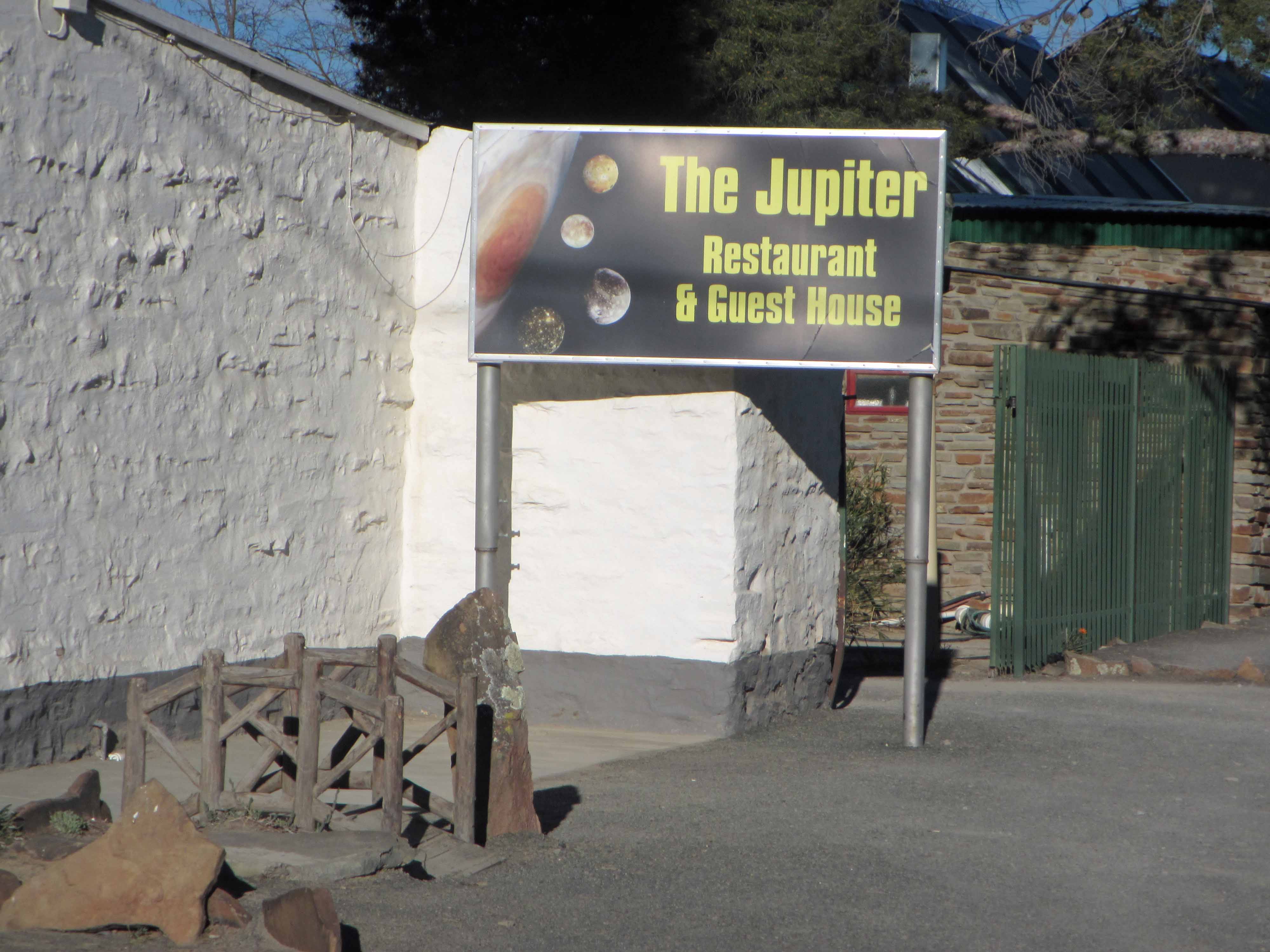
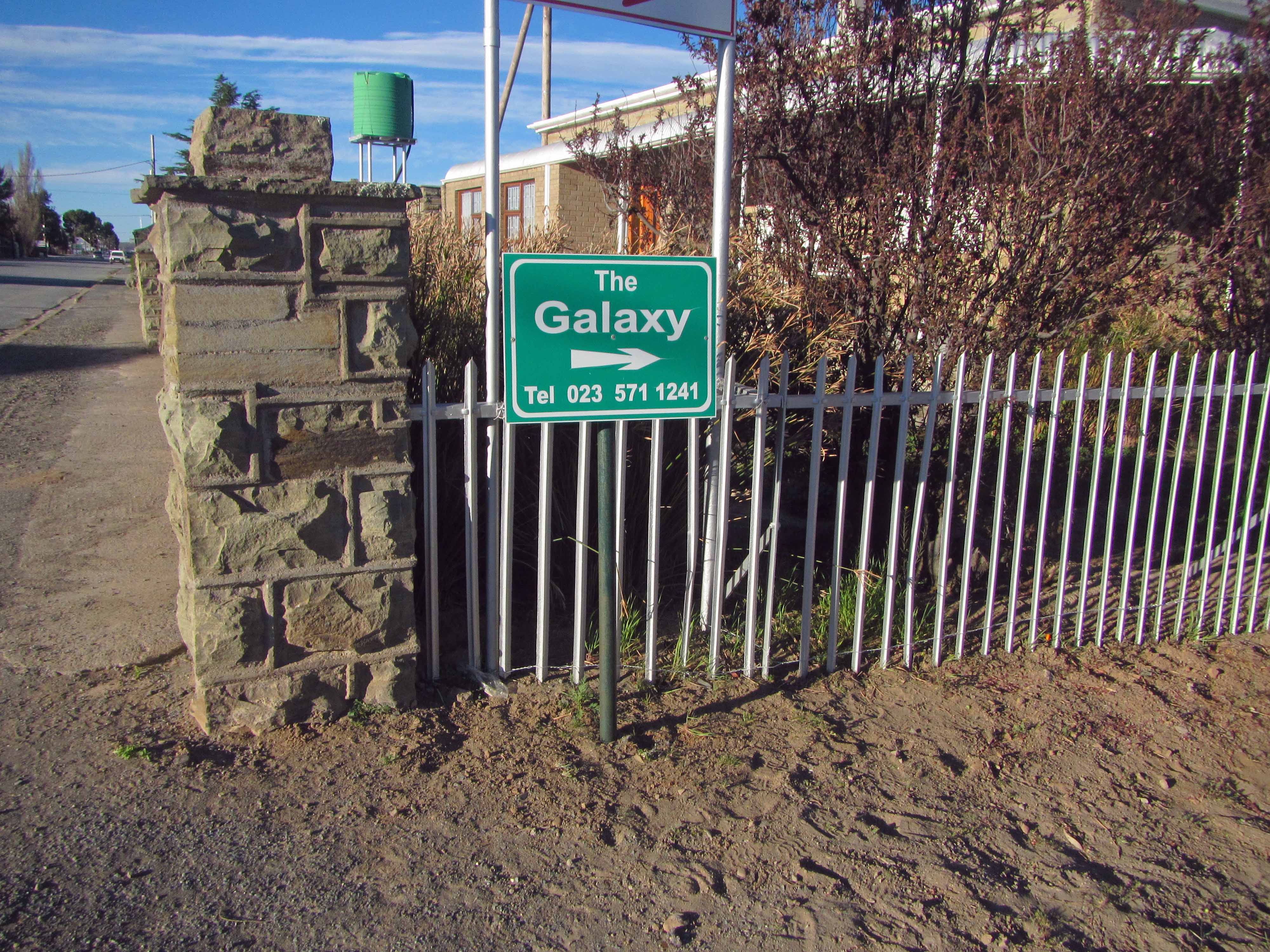
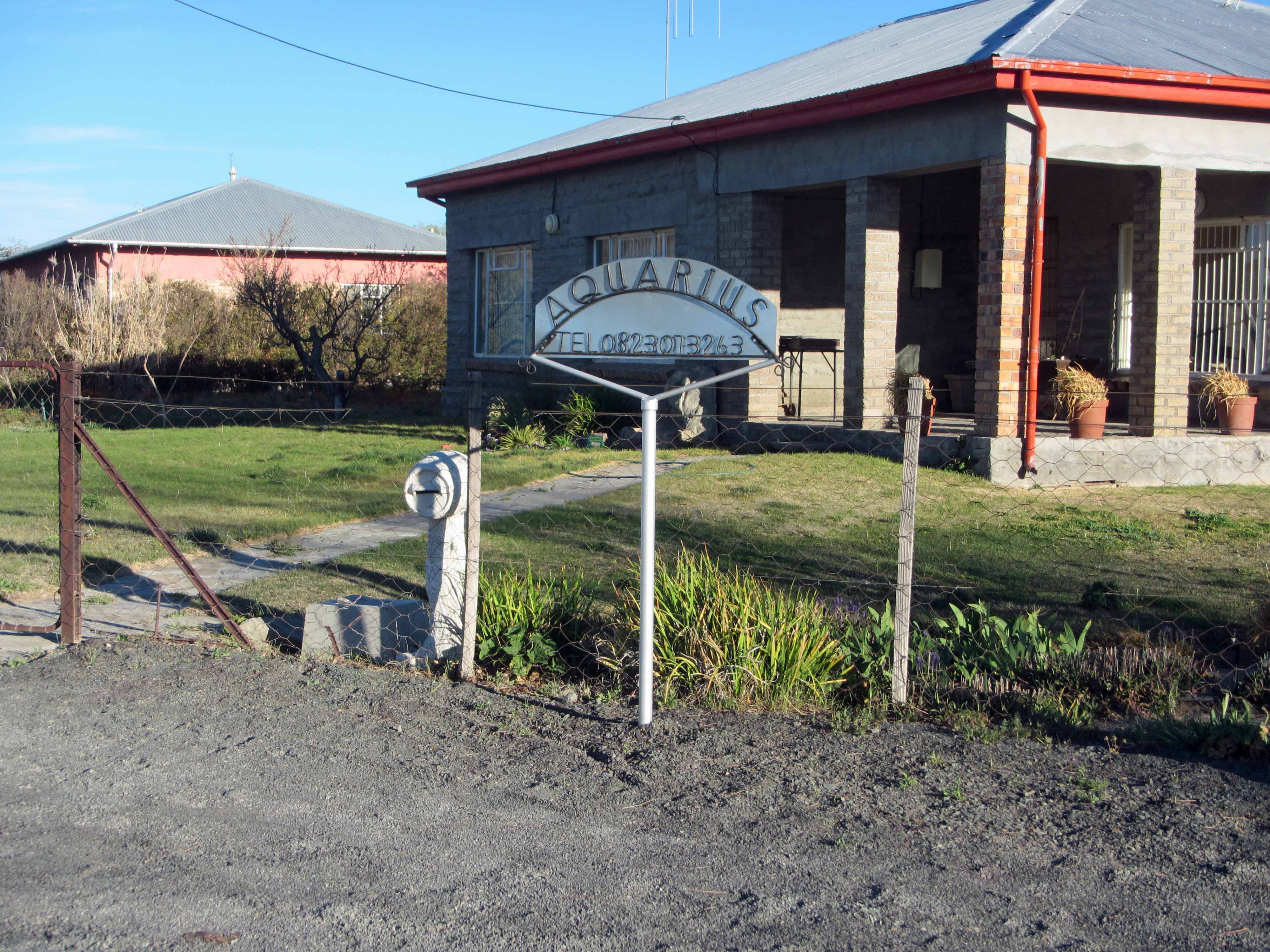
However, after Jackie and I spent some time walking around Sutherland, we quickly realized that Sutherland is no ordinary small town in the Karoo. Rather, the town has a decidedly astronomical flavor. See for yourself:
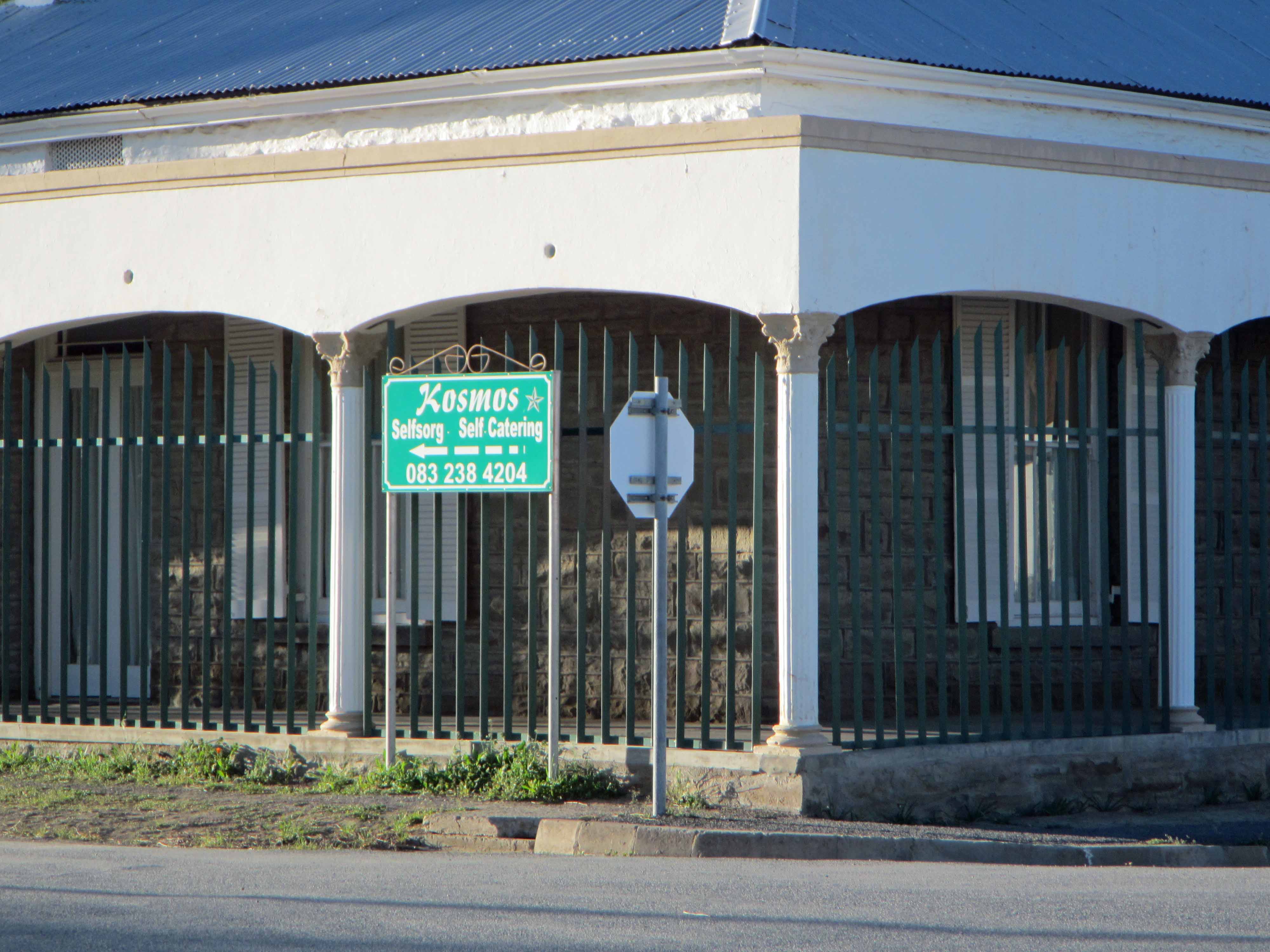
Signs for the Jupiter and Andromeda guest houses. Sutherland, October 2013.Jupiter Guesthouse. Sutherland, October 2013.Sign for the Skitterland Guesthouse. Skitter means “Sparkle” in Afrikaans. Sutherland, October 2013.A sign pointing to The Galaxy. Sutherland, October 2013.The Galaxy itself. Sutherland, October 2013.A sign for the Galileo Guesthouse. Sutherland, October 2013.A sign for the Aquarius Guesthouse. Sutherland, October 2013.A sign for the Kosmos Guesthouse. “Kosmos” is Afrikaans for “Cosmos”. Sutherland, October 2013.
My favorite example of the astronomical theme found in the town of Sutherland is a cleverly named cafe:
Halley-sê-kom-eet Cafe. Sutherland, October 2013.
The name of the cafe is “Halley-sê-kom-eet”, which has a double meaning in Afrikaans. The cafe’s name obviously refers to the famous Halley’s Comet. In Afrikaans, “Halley’s Comet” is “Halley se komeet”. However, “Halley sê kom eet” means “Halley says come eat”. Adding a little hat above the one e and adding a space turns an astronomical reference into instructions to go eat some delicious Afrikaans food. The instructions worked– Jackie and I ate at the cafe a couple of times during our visit to Sutherland.
Well, that’s all I’ll share in this post. Stayed tuned for more about Sutherland!
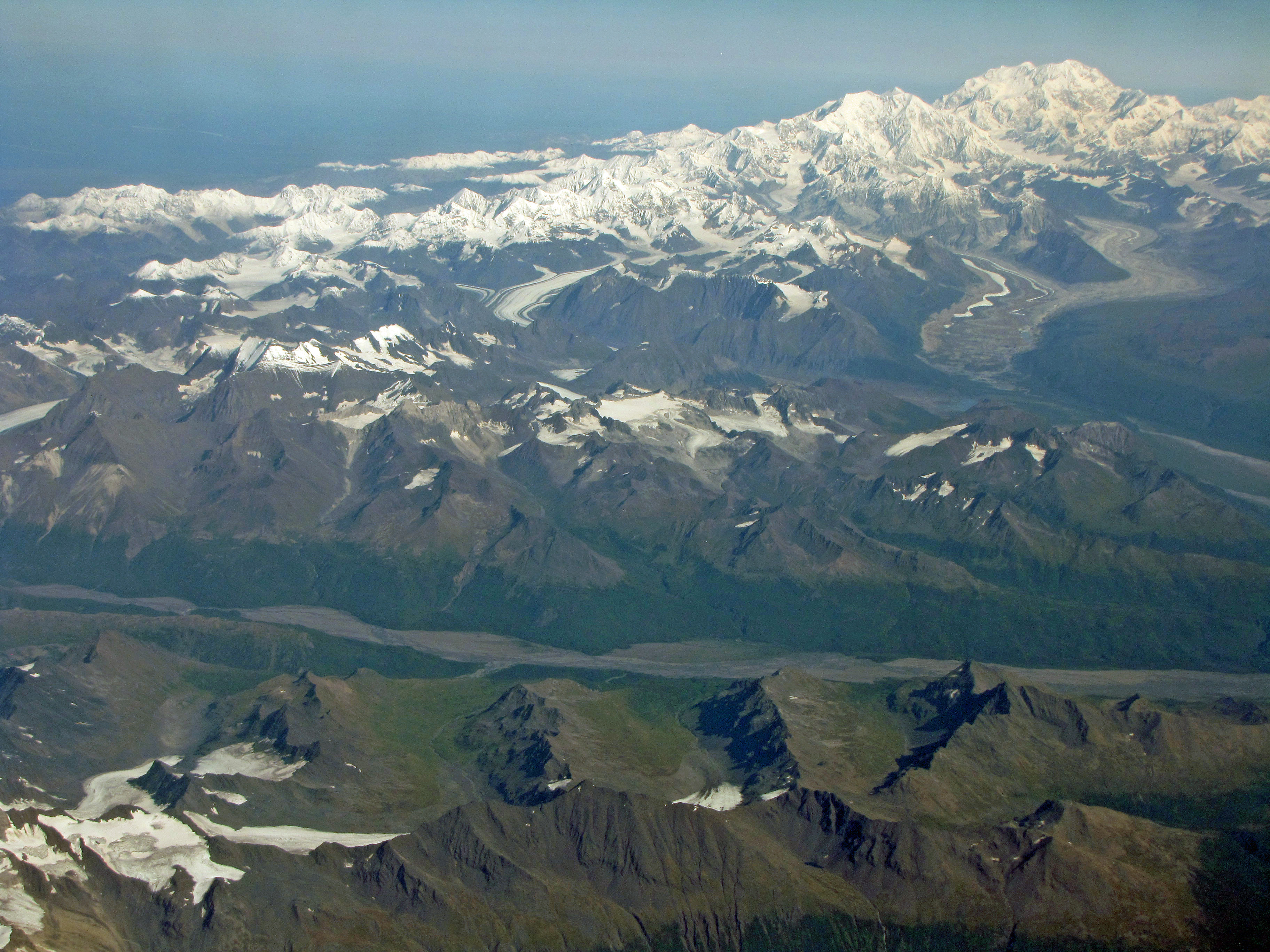
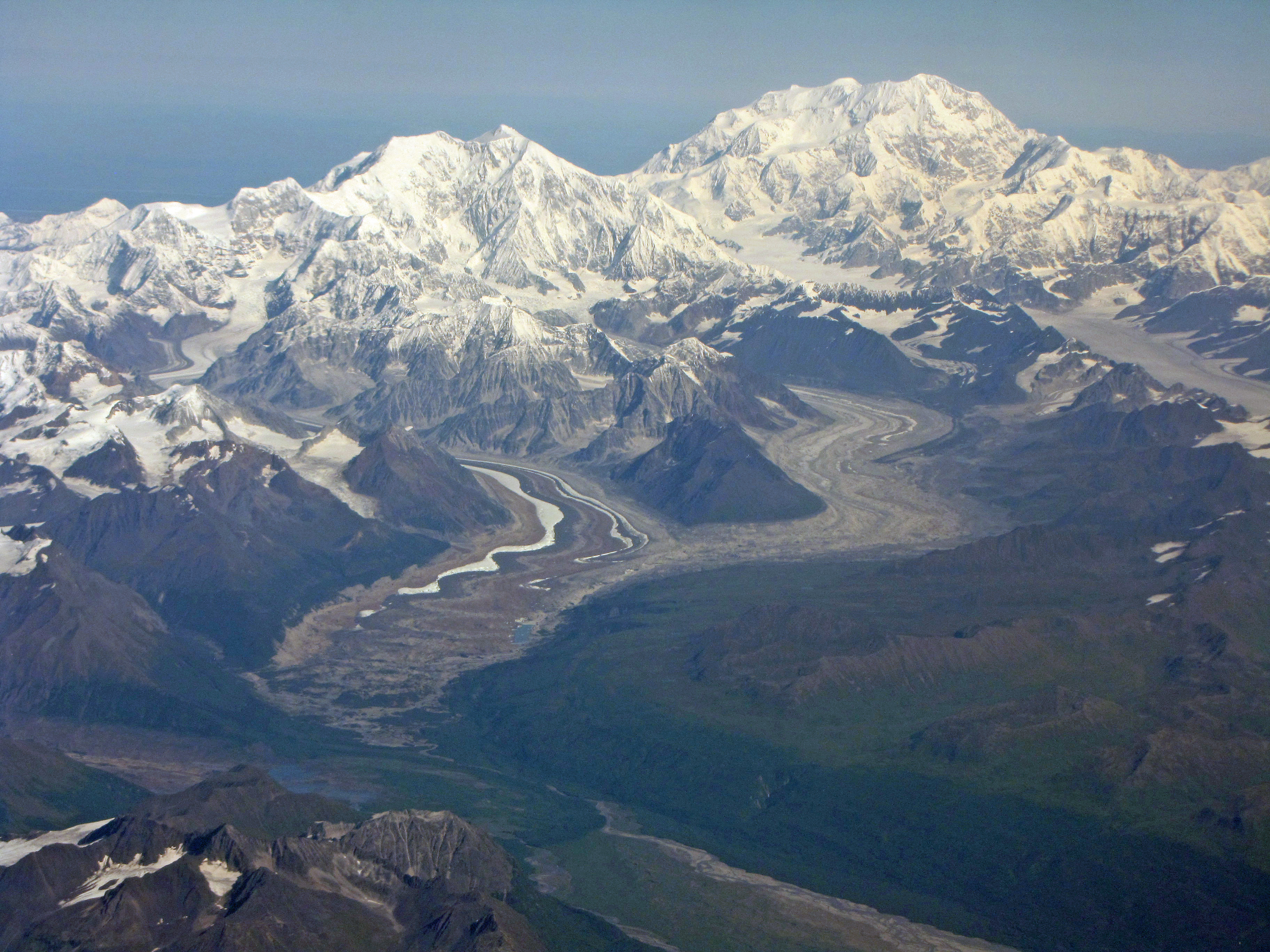
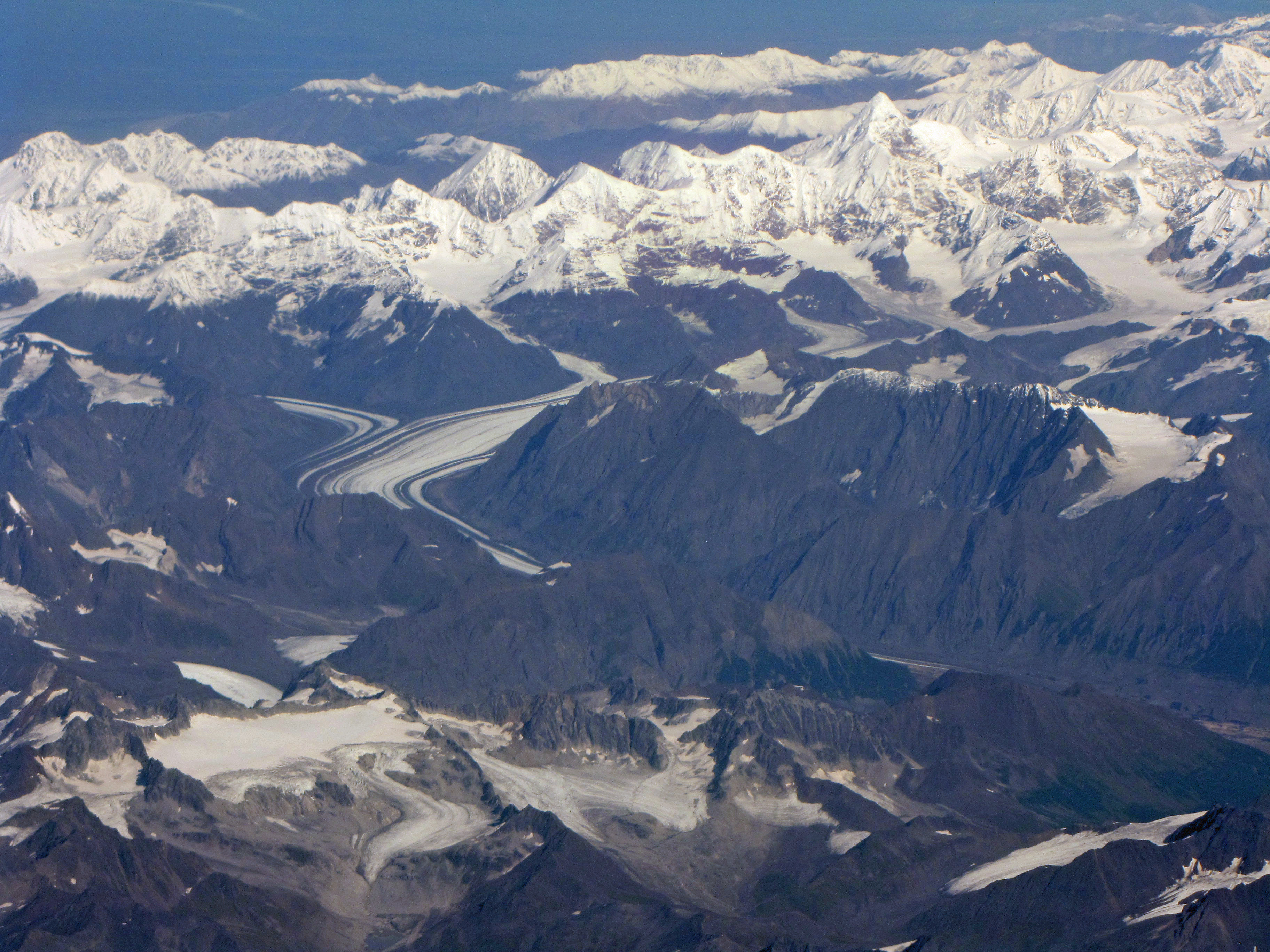
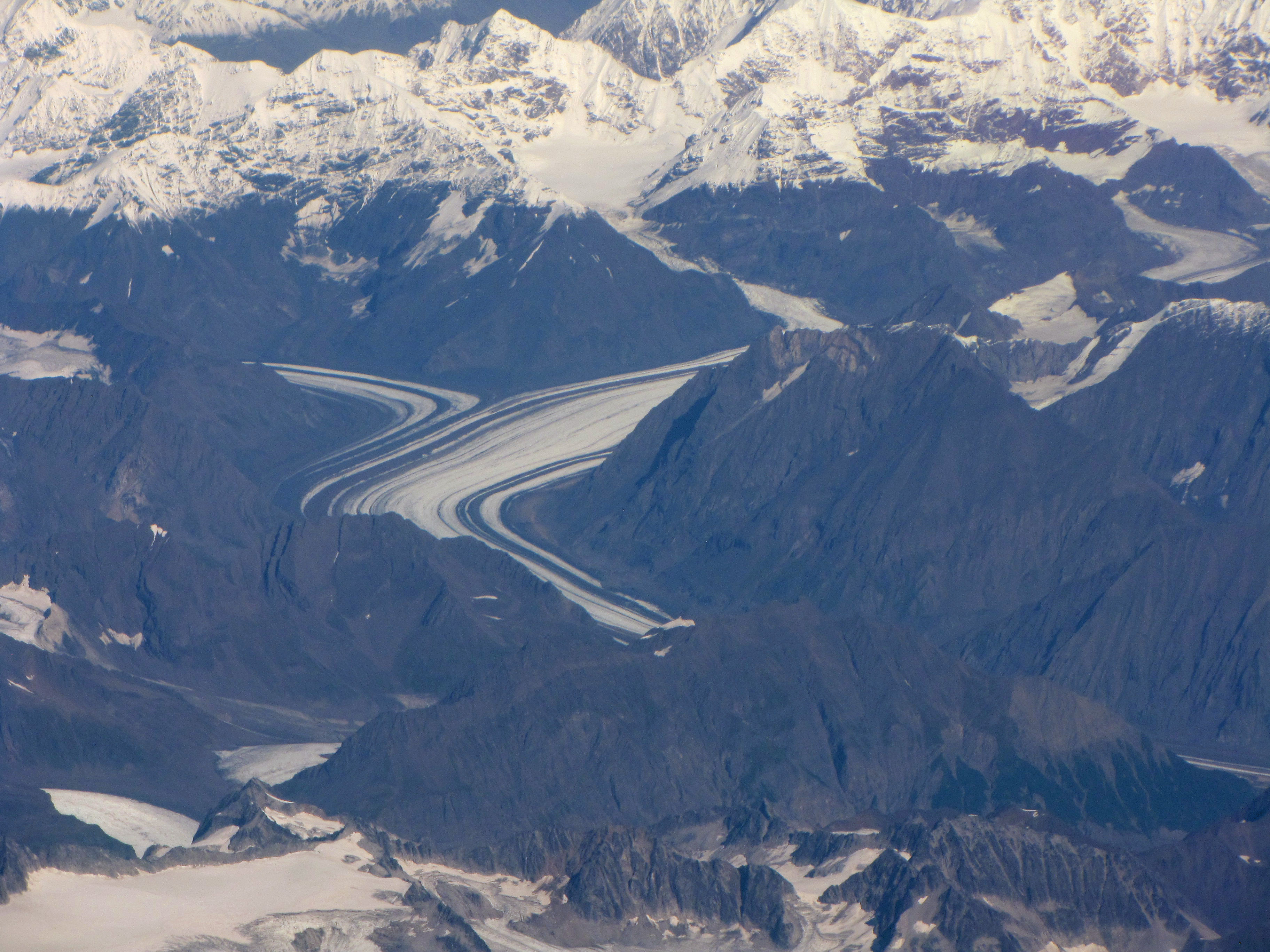
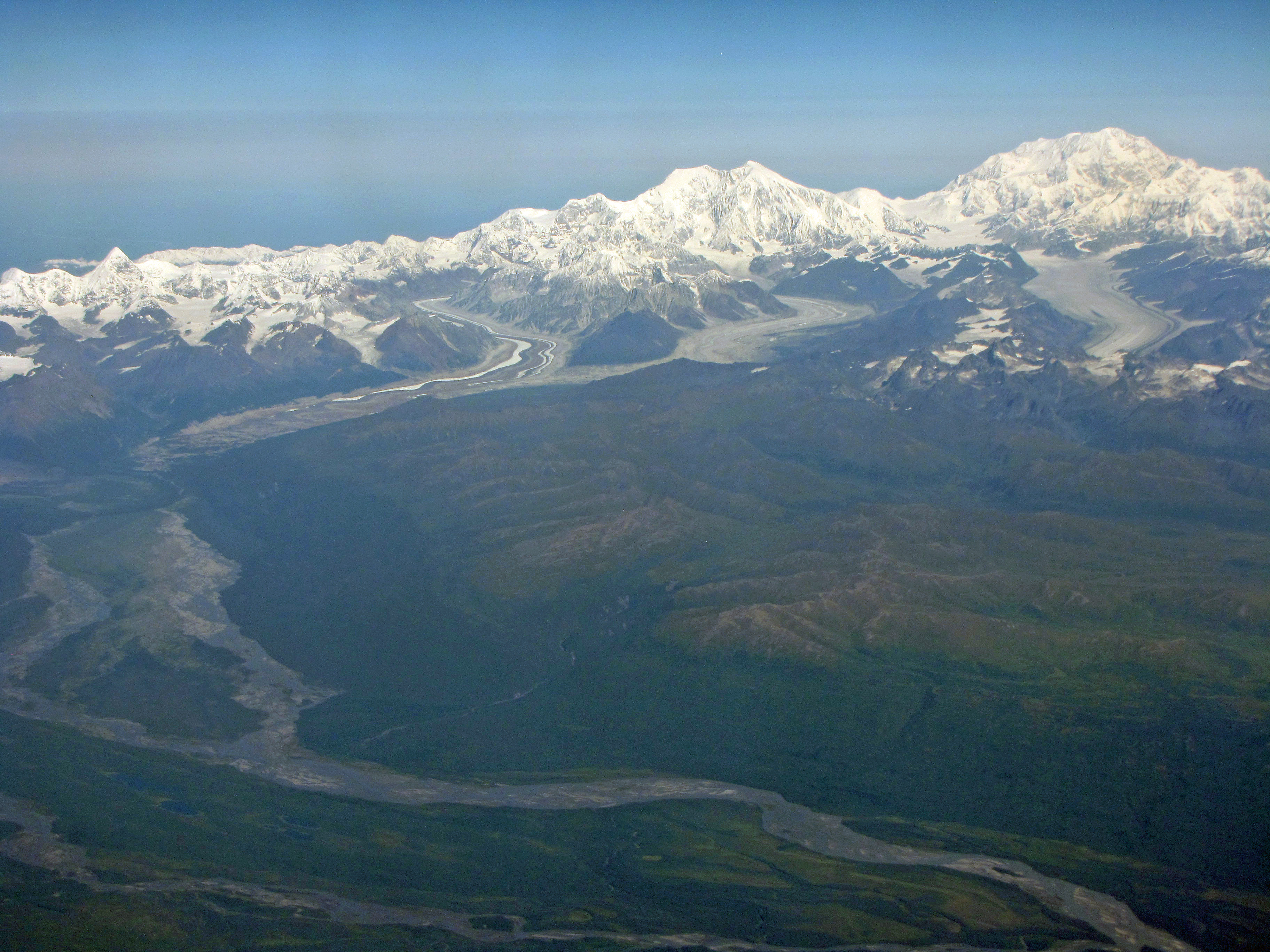
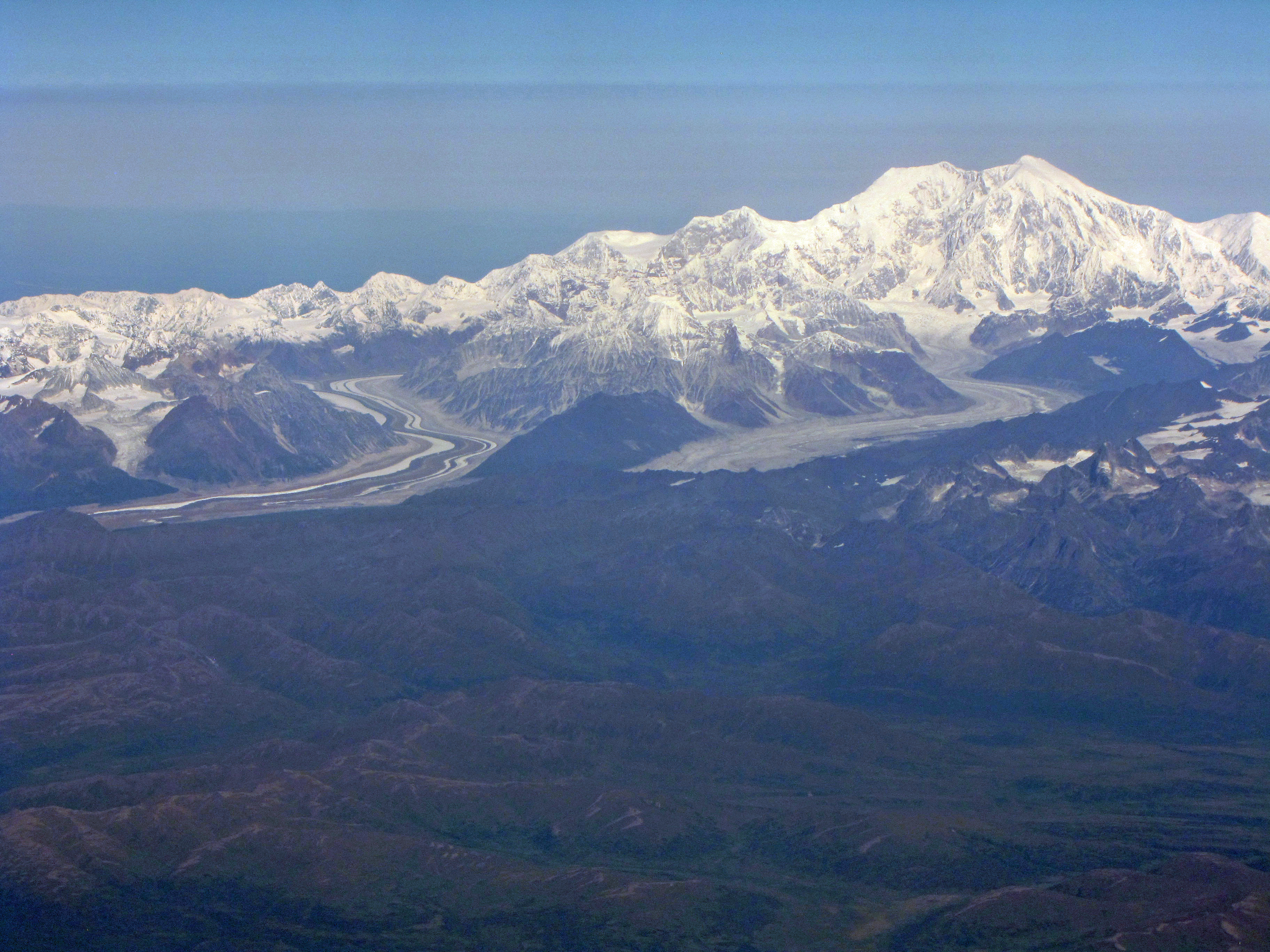
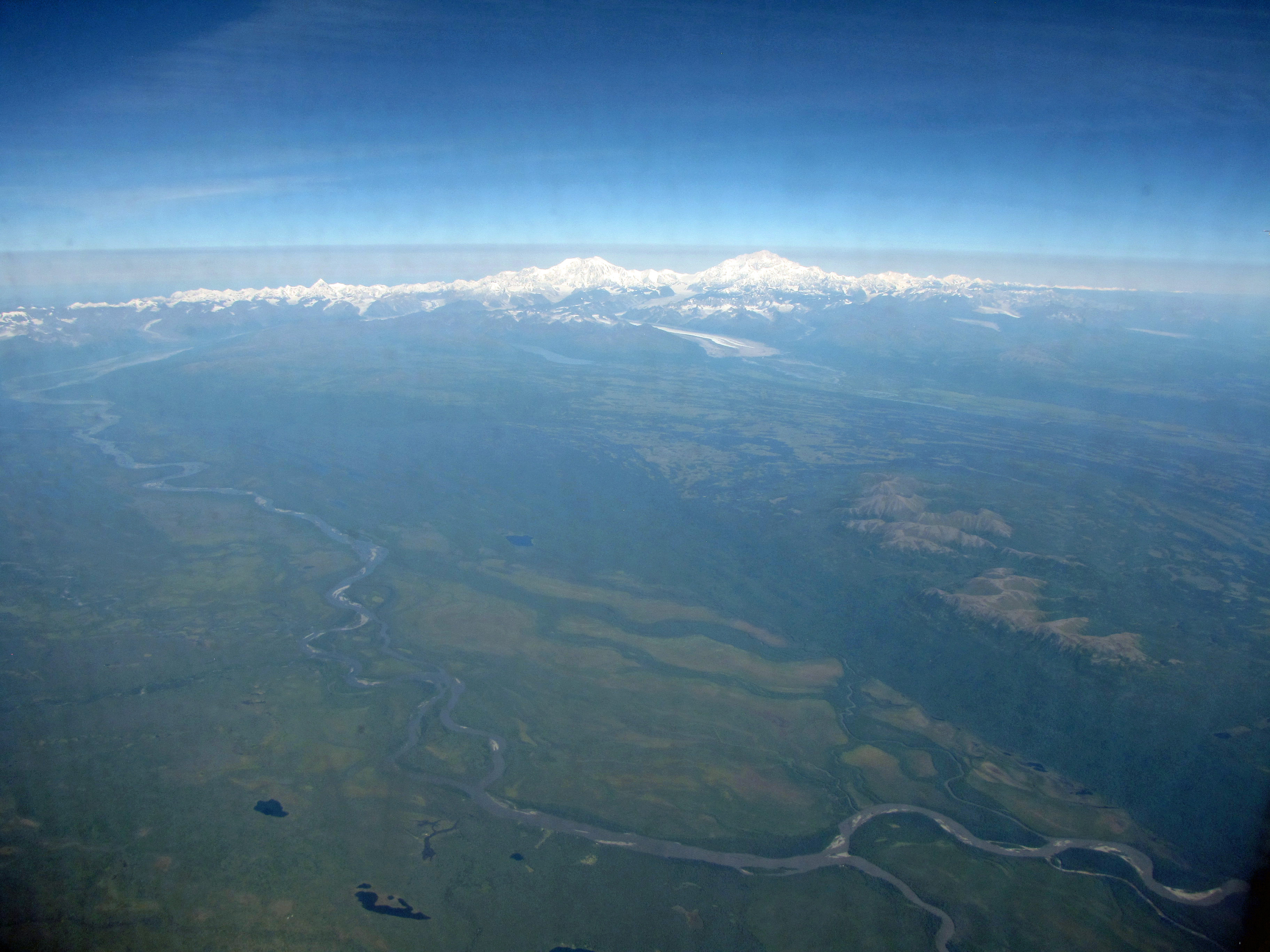
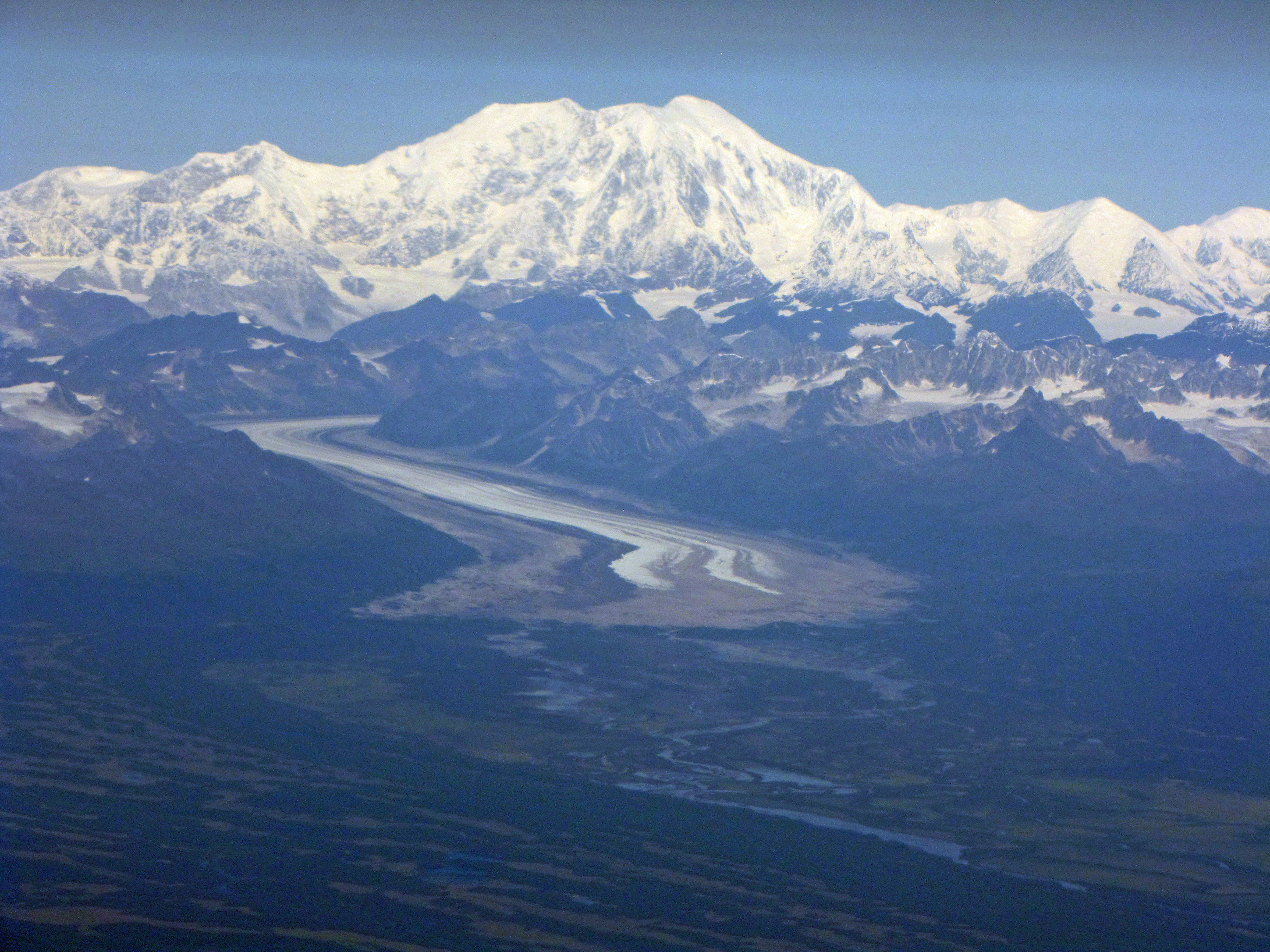
Three out of the four times that I flew between Anchorage and Nome, Alaska, the weather was overcast and clouds covered much of the landscape below. However, when I flew from Nome to Anchorage in August 2013 I was fortunate enough to fly on a day when skies were clear. I was thrilled to obtain a spectacular view of Denali, also known as Mt. McKinley, the highest peak in North America. Denali towers an impressive 20,237 feet above sea level. Flying over the Denali mountain range was a beautiful, humbling, thought-provoking experience. The landscape is certainly breathtaking. Rugged white mountain peaks are flanked by immense brown-and-white striped glaciers that snake down the slopes before melting into sediment-laden rivers that rush through green valleys then meander across the flat, pale green plain far below the mountain peaks. I found the glaciers particularly beautiful and fascinating. I also wondered and worried about what the glaciers will look like in 10 years, in 20 years, in 50 years, in 100 years– blinks of an eye in geologic time but significant periods in human time. Will the glaciers have shrunk due to warming climate? Will they be there at all? The immensity, and also the fragility, of the lofty landscape humbled me. So, too, did the thought that I was flying high above Denali, traveling in a little metal airplane built by little men (and women, I hope). I likely will never have the skill or guts or determination to climb a mountain such as Denali, but thanks to modern technology and some good weather conditions I was able to, for a little while at least, appreciate Denali’s beauty from a great height.
Below are some more plane views of Denali and the surrounding landscape. Enjoy! Please feel free to point out features on these pictures if you are familiar with the terrain. The National Park Service provides some information about the geology of Denali here.
Sometimes, manmade objects become part of the geological landscape. For example, on Noordhoek (which means “North Corner”, in Dutch and Afrikaans) Beach near Cape Town, South Africa, there is a shipwreck at one end of the beach. Two rusted boilers and a ring of metal ribs– sticking up out of the sand like a picket fence– are all that remain of the S. S. Kakapo, a New Zealand steamship that became stranded on the beach in 1900. You can read all about the wreck of the S. S. Kakapo here. In this Anthropocene time discarded manmade objects no doubt have a big impact on the Earth and its various processes. While the remains of the S. S. Kakapo likely have a fairly small impact on the environment, the skeletal shipwreck nonetheless reminds me of the traces we humans leave behind. 114 years after the shipwreck, the ghostly metal outline of the S. S. Kakapo remains.
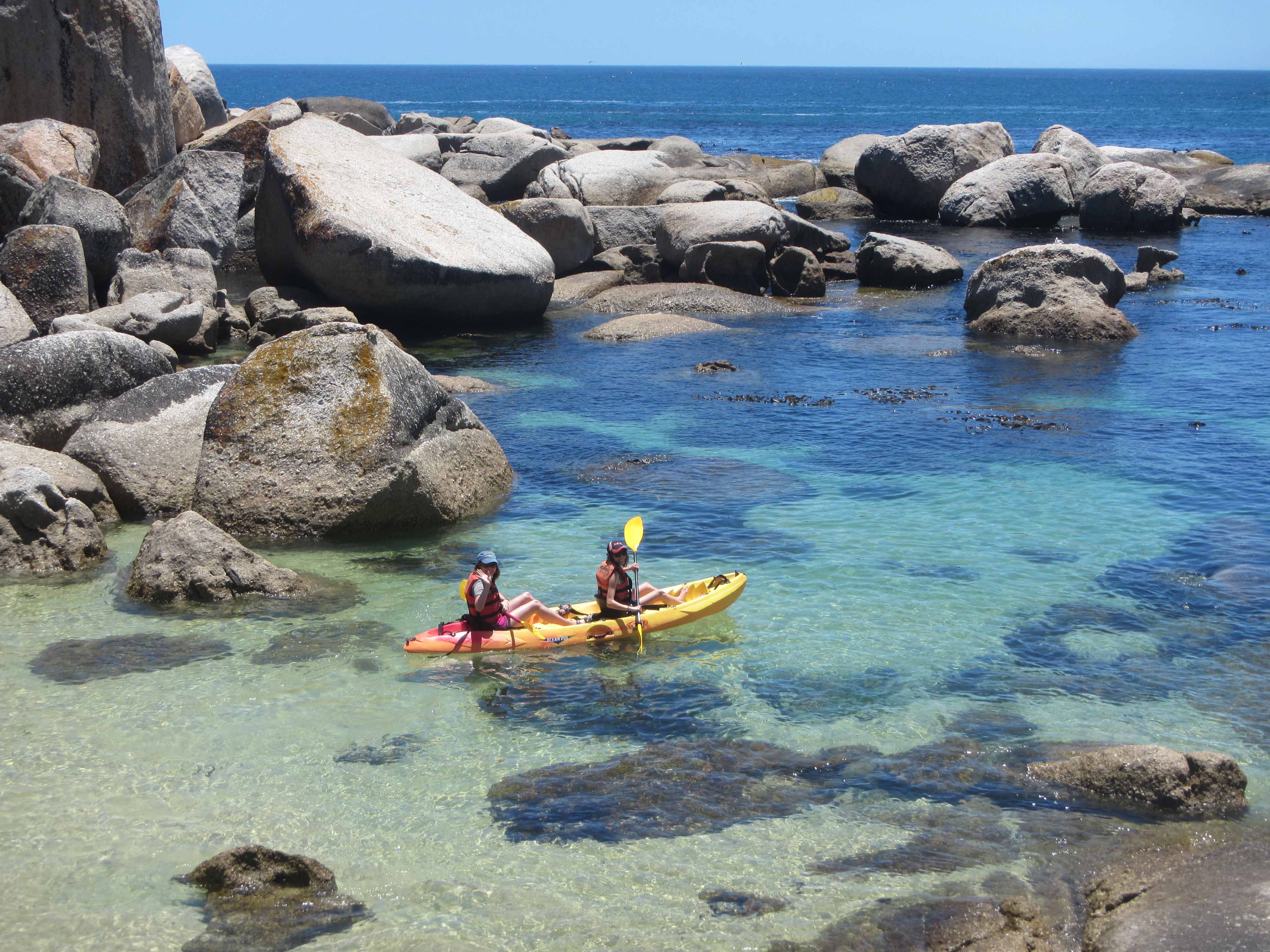
A stunning location for a birthday party. In this picture my friend Kaylee and I check out some of the giant granitoid boulders by kayak.
Yesterday was my 30th birthday. Amongst other wonderful things, my husband Jackie organized a surprise birthday party for me at Oudekraal, a beautiful beach (and national park) here in Cape Town. Bordered on one side by gigantic boulders and turquoise-blue waters and flanked on the other side by tall, jagged, gray-green mountains, Oudekraal is a stunning location. Jackie rented a kayak, brought plenty of delicious picnic food, and invited many good friends for my party. The weather was beautiful, and we all had a great time. I’d never been to Oudekraal Beach before, but I hope to return soon!
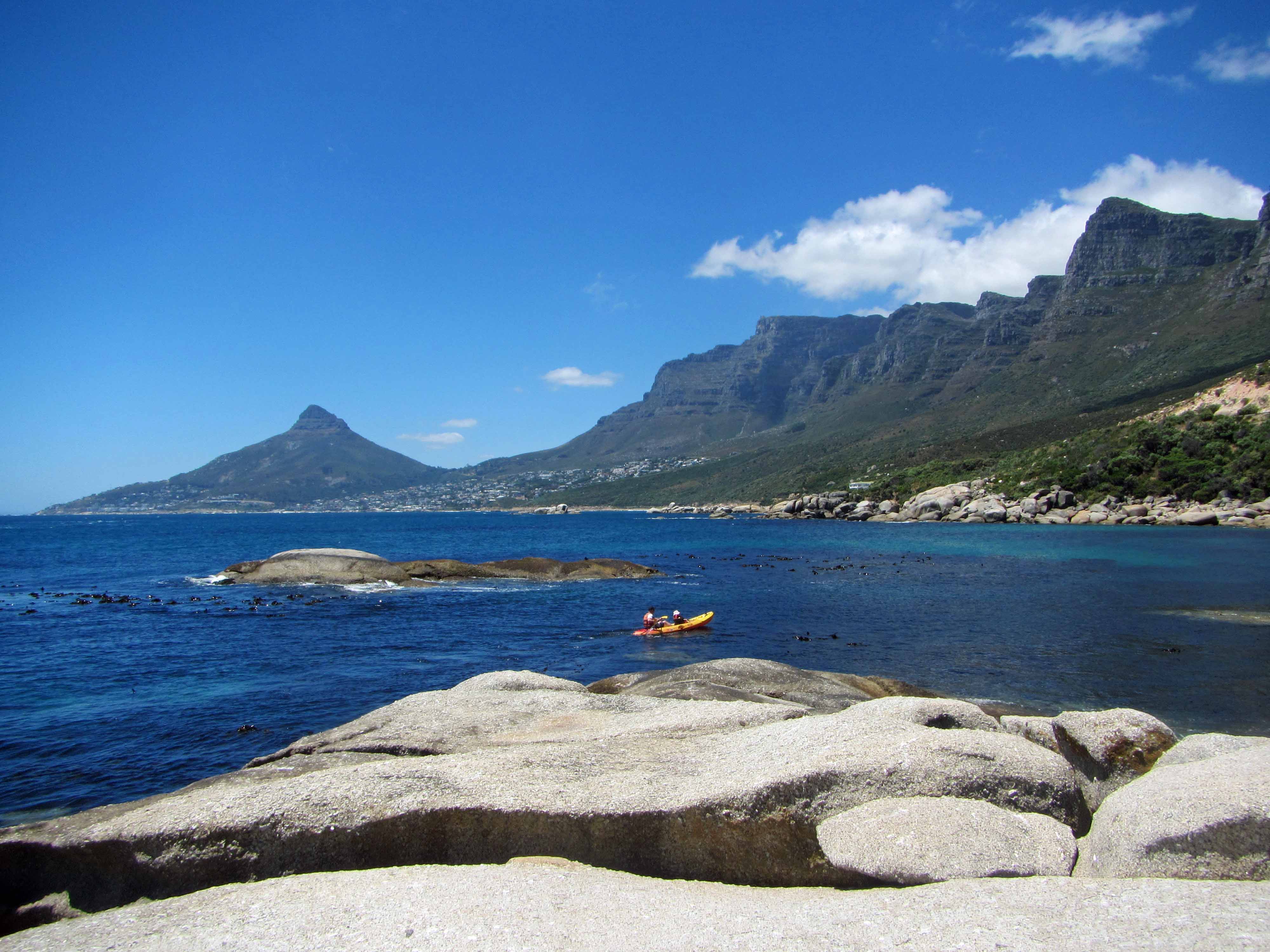
Here are a few more views of gorgeous Oudekraal:
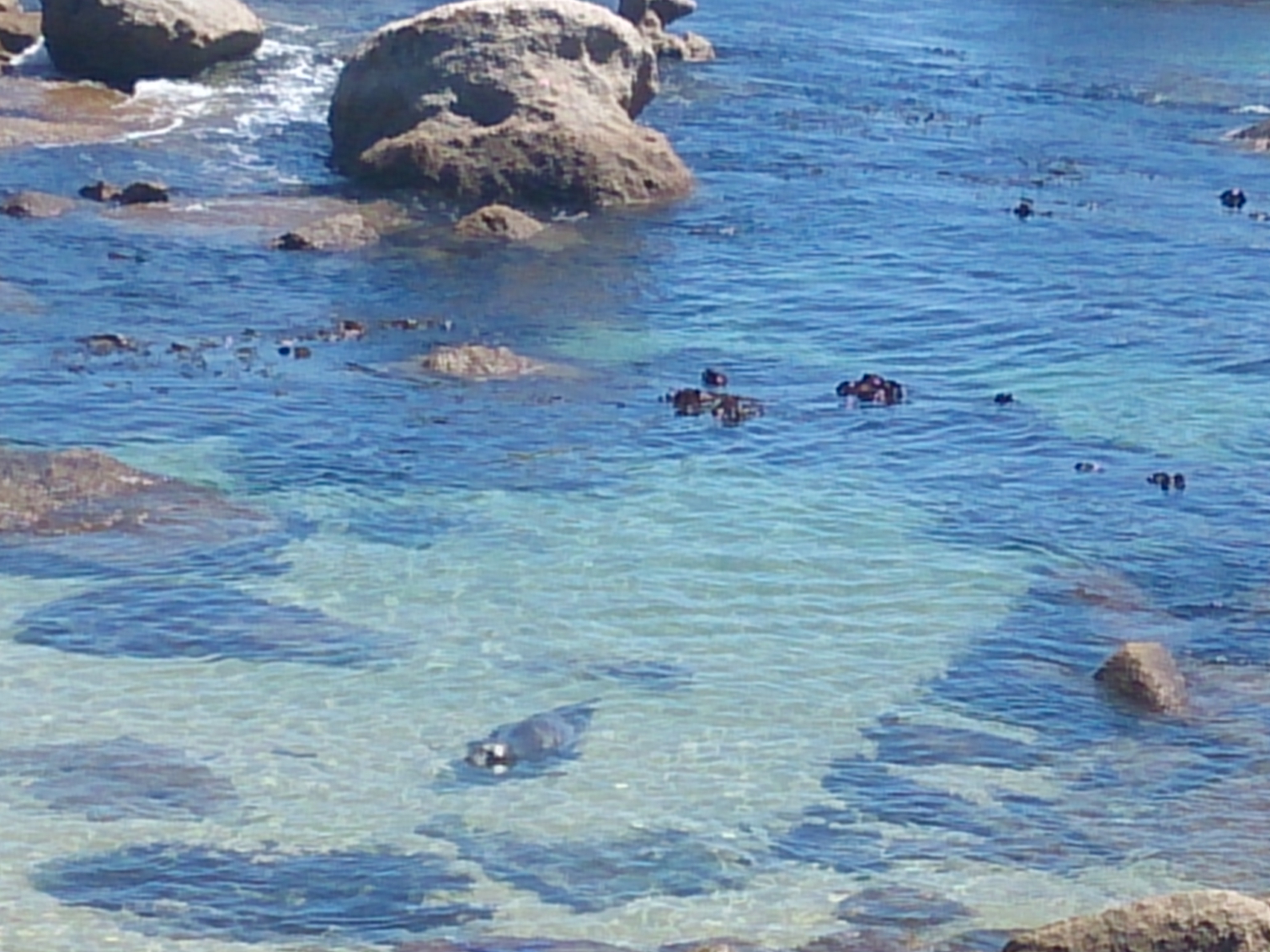
Exploring the bay near Oudekraal Beach.Jagged mountain peaks.A seal came to visit! We saw several seals, actually.A closer view of the seal. Hello!
Two little landslides on Table Mountain. Picture taken December 29th, 2013.
Yesterday my husband and I took advantage of the sunny summer weather here in Cape Town and went for an easy walk along Constantia Nek, a contour path along Table Mountain that eventually leads to the beautiful Kirstenbosch Gardens. Along the walk, I noticed a few small landslides on Table Mountain, including the two shown in the picture above. If you’re looking for an easy and beautiful hike in the Cape Town area, I recommend Constantia Nek. There’s some interesting geology to see along the way… including, at the moment, some landslides.
I’ve been meaning for months to post some pictures from the LASI V Field Trip that I participated in just over a year ago in November 2012. However, despite my best intentions, I never ended up posting some field trip pictures. This is primarily because I lost all of my own LASI V field trip pictures when my laptop and a hard drive were stolen from my apartment back in April. I was quite upset about this and have now diligently backed up all of my computer data online as well as on multiple hard drives. Fortunately, my fellow field trip participants Ben Manton and Stephanie Scheiber were kind enough to send me some of their pictures to share with you here on Georneys.
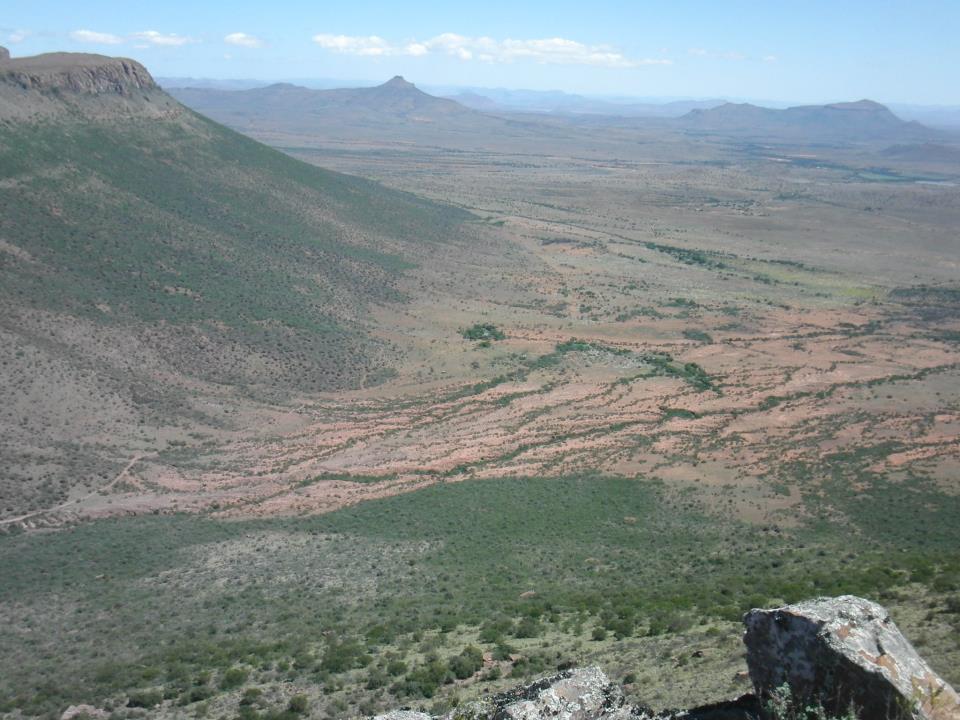
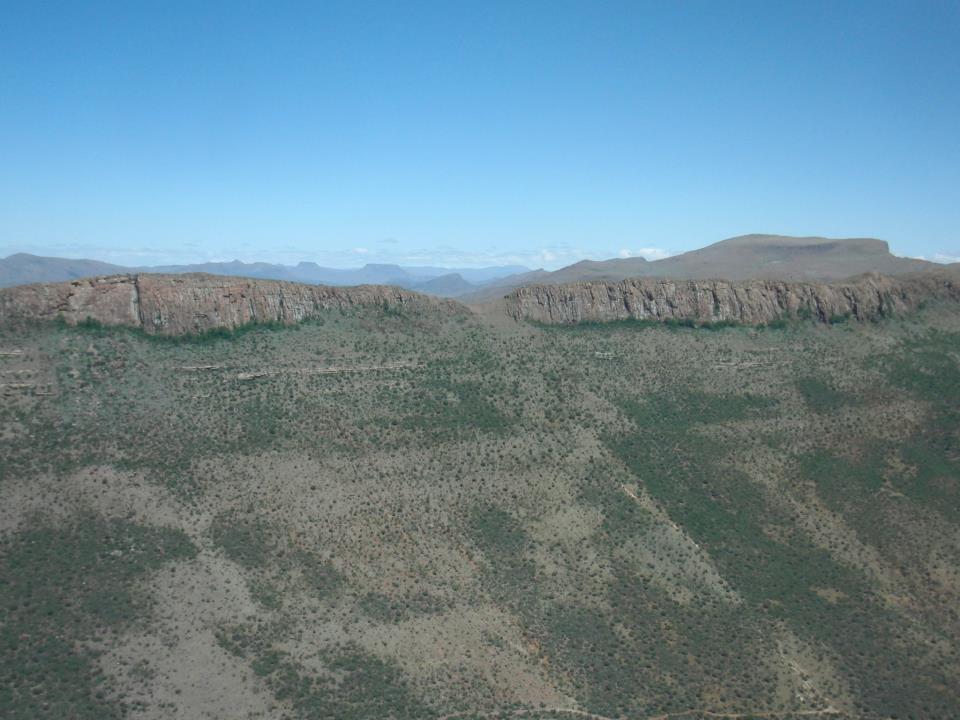
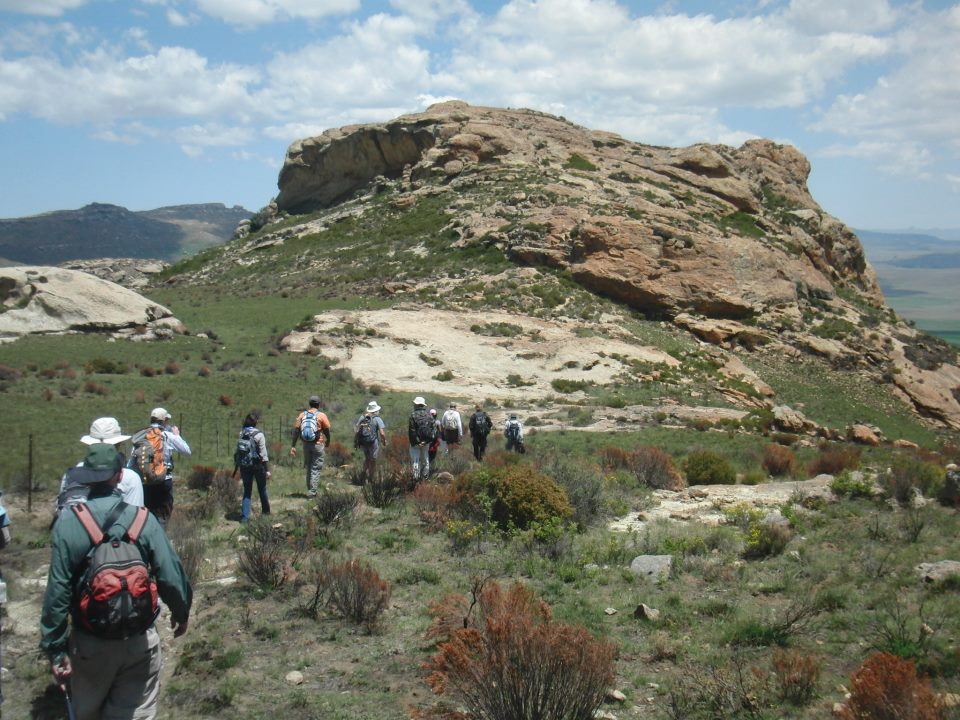
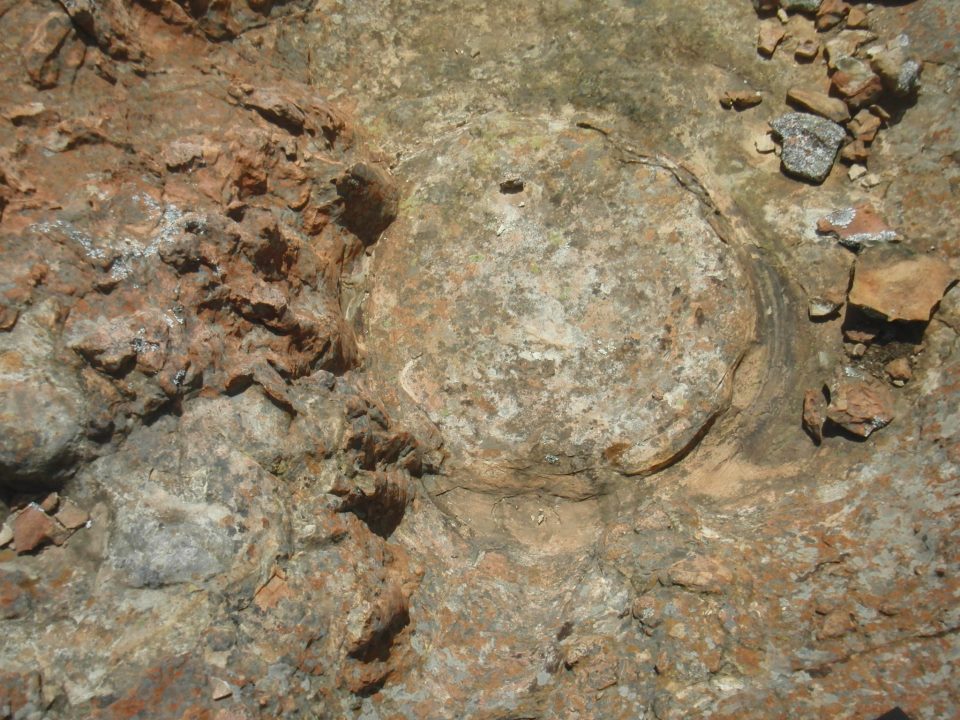
In the interest of wrapping up a few things here on Georneys before the end of the year, I thought I’d (finally!) share some pictures from the LASI V field trip. You can find my previous posts about LASI V here. A good introductory post about LASI V is here. In brief, the LASI V workshop was a gathering of geologists from around the world to discuss the geology of subvolcanic systems such as sills, dykes, and laccoliths. The field trip went to several places in South Africa’s Karoo region to look at large dolerite sills, hydrothermal vent complexes, and other subvolcanic features which have intruded into various sedimentary units.
Without futher ado, here are some pictures from the LASI V field trip:
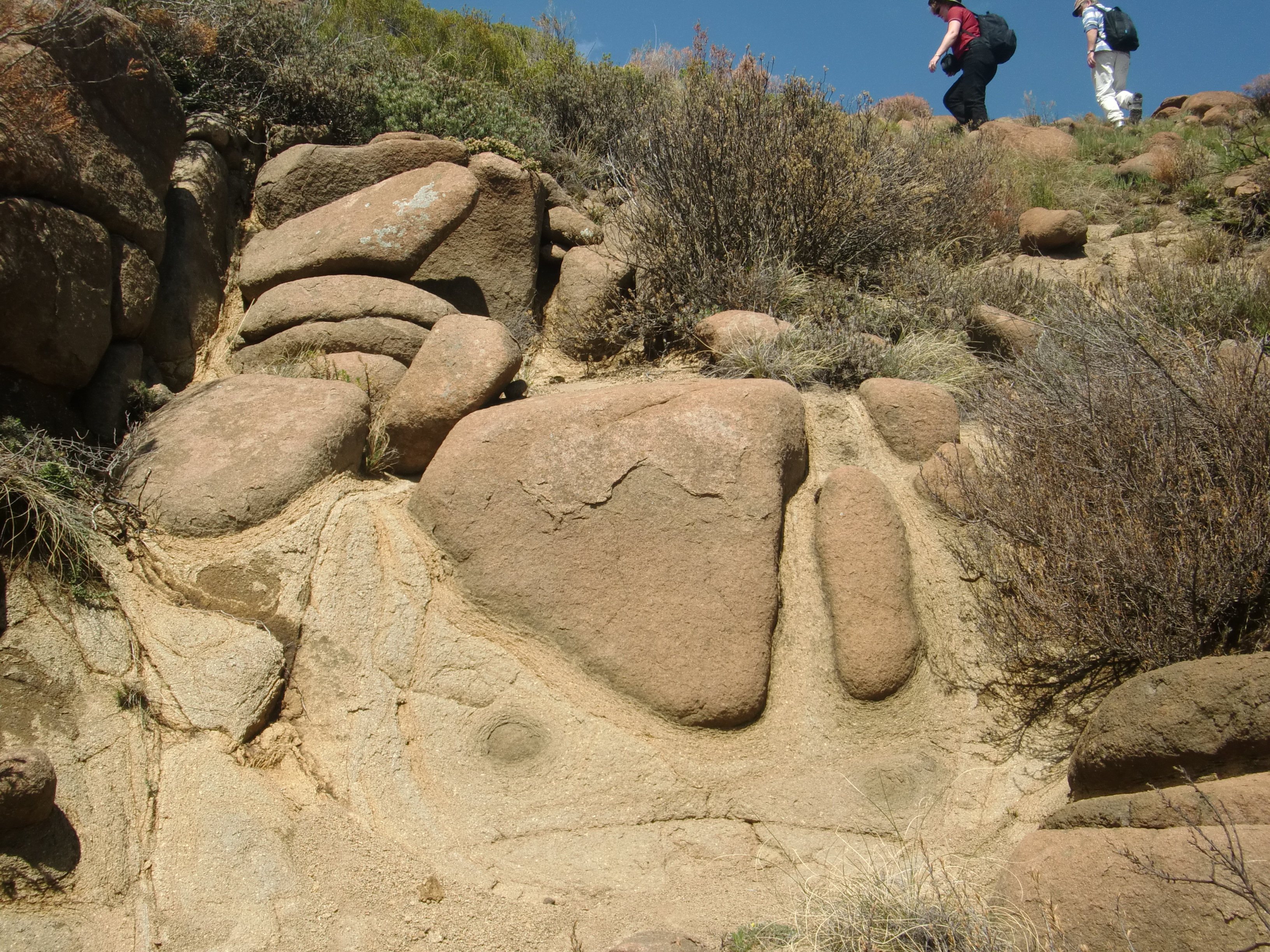
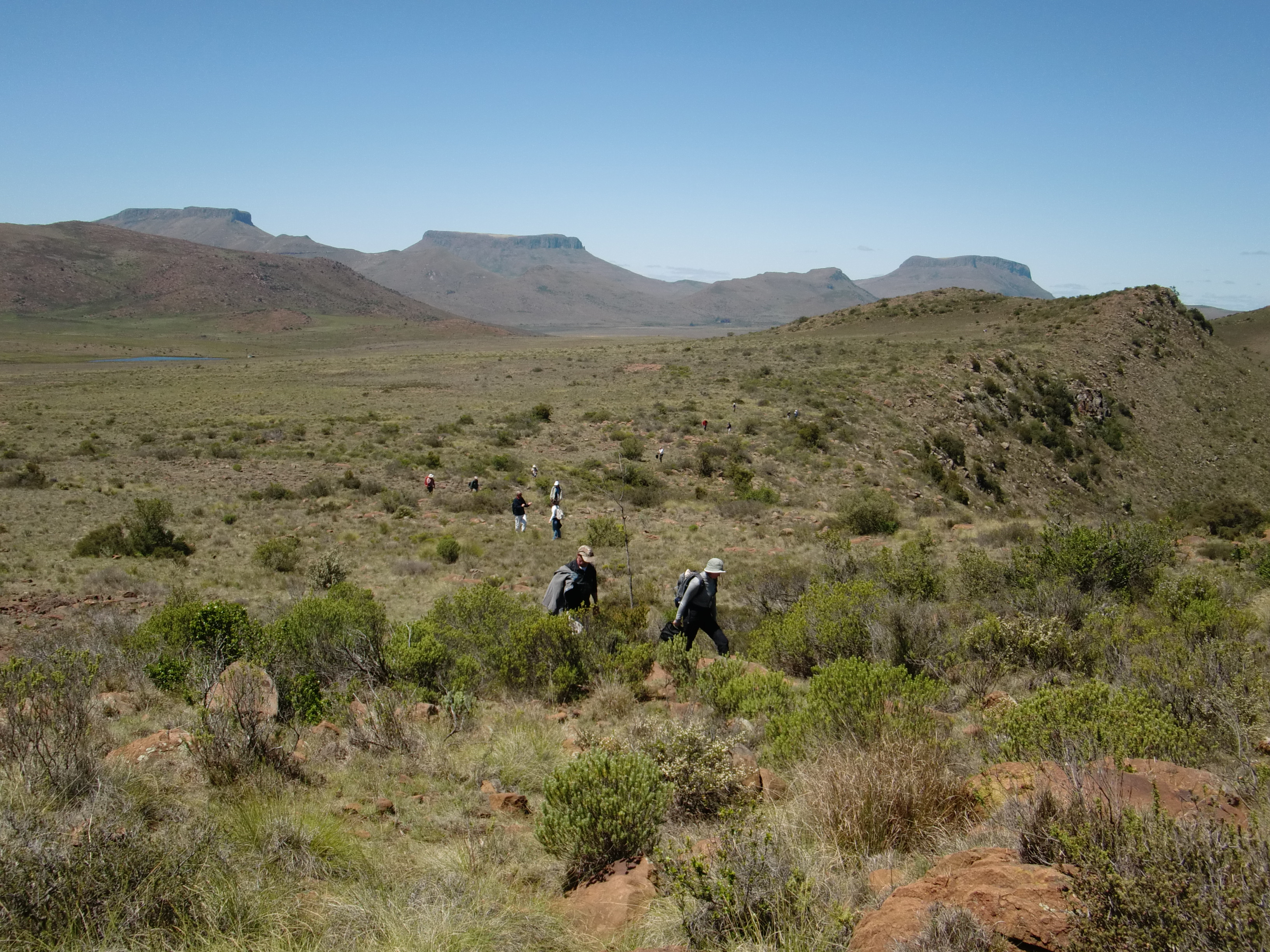
Dolerite sills on top of a hill, with termite mounds in the foreground. Picture courtesy of Ben Manton.The view from the top of a dolerite sill in the Golden Valley region. Picture courtesy of Ben Manton.Impressive dolerite sills in Golden Valley. Picture courtesy of Ben Manton.A beautiful view in the Karoo. Picture courtesy of Ben Manton.Whitkop, a hydrothermal vent feature. Whitkop means “white head” or “white little hill”. Picture courtesy of Ben Manton.Fluid flow features on Whitkop. Picture courtesy of Ben Manton.Circular pipe structures on Whitkop. Picture courtesy of Ben Manton.Checking out some geology (spherical weathering, among other things) on a steep slope. Picture courtesy of Ben Manton.Another beautiful view in the Karoo. Picture courtesy of Ben Manton.Impressive spheroidal weathering of a dolerite sill. Picture courtesy of Stephanie Scheiber.More spheroidal weathering. Picture courtesy of Stephanie Scheiber.Dwyka tillite, one of my favorite rocks! Picture courtesy of Stephanie Scheiber.Another view of Dwyka tillite. Picture courtesy of Stephanie Scheiber.A hydrothermal vent complex… with cows. There are many. many cows and sheep in the Karoo! Picture courtesy of Stephanie Scheiber.A windmill and termite mounds in the foreground, dolerite sills in the background. Picture courtesy of Stephanie Scheiber.Geologists amongst the dolerite sills. Picture courtesy of Stephanie Scheiber.
A snapshot of our Christmas / Newtonmas tree this year. The ornaments are mainly Star Trek ornaments and carved wooden ornaments that I picked up during geological field work in Alaska.
The annual Georneys “What to Buy a Geologist for Christmas” list is a little late this year. Sorry about that– I’ve been extremely busy recently, primarily with work. There are some changes afoot in my professional life– I’ll provide an update on that when I can. I feel that December has just flown by. I can’t believe that there are now only 5 days until Christmas! However, there is still one shopping weekend left before Christmas (or Newtonmas, for those of you who aren’t particularly relgious). So, I thought I’d once again suggest some things that a geologist might like for Christmas. Be sure to also check out the 2010 (Part I and Part II), 2011, and 2012 lists. And happy holidays!
Without further ado, here are some suggestions of what to buy the geologist in your family for Christmas:
For the planetary scientist in the family, a LEGO Curiosity Mars Rover makes the perfect gift! Your family member will first enjoy (as scientists and engineers do) assembling the gift and then will enjoy playing with the gift. No doubt the LEGO Curiosity will become a fixture in your family member’s office or research laboratory.
Buying the LEGO Curiosity is important because the design came into production through voting for a fan-based design on LEGO’s CUUSOO website. Please buy LEGO Curiosity so that LEGO can see that scientific models sell and will consider producing more of them in the future. Personally, I still very much hope that LEGO will produce the Alvin Deep Sea Submergence Vehicle model– so go vote for that model, too!
Unfortunately, the LEGO Curiosity is only being released on January 1st. However, you could make up a little voucher for the gift and put it in a card.
Cost: $29.99
Gift #2: Munsell Color Chart Book
Munsell Soil Color Book. Picture taken from Munsell website.Munsell Rock Color Book. Picture taken from Munsell website.
Geologists, particularly soil scientists, enjoy describing the colors of the samples that they study. The best way to accurately and consistently describe the colors of soils and rocks is to use a color system. One of the best color systems, particularly for soil colors, is the Munsell color system. In order to follow this system, the colors of soils or rocks must be compared to standard color charts, which are available in books published by Munsell. There are two books: one with soil color charts and one with rock color charts.
Cost: $198 for the soil book and $78 for the rock book
Gift #3: 3D Earth Puzzle
Ravensburger The Earth – 540 Piece Puzzleball. Picture from Amazon.com.
Geologists love globes, and many geologists also like puzzles. For the puzzle-loving geologist in your family, a 3D Earth puzzle could be the perfect gift. There are a few companies who make 3D Earth puzzles. The picture above is a nice puzzle by Ravensburger that is available on Amazon.com here.
Cost: $20 to $50
Gift #4: A Geology Themed Book
I’ve suggested geology books before in my “What to Buy a Geologist for Christmas” lists. There are many excellent geology books– both technical scientific books and popular science books. Here are a few geology themed popular science books that I’ve read recently and enjoyed:
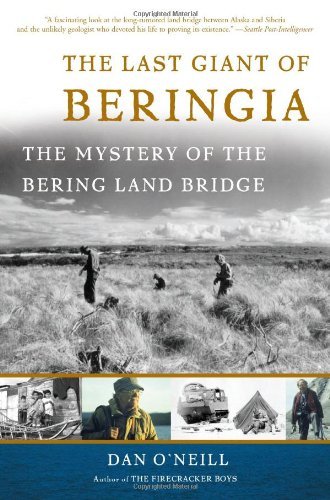
The Last Giant of Beringia book. Picture taken from Amazon.com.
The Last Giant of Beringia: The Mystery of the Bering Land Bridge by Dan O’Neill. This is a book about David Hopkins, a famous geologist who recognized the importance of the Bering Land Bridge and made significant contributions to the understanding of the geological history of the Beringia region.
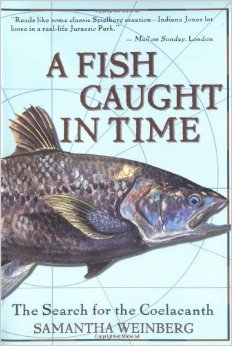
A Fish Caught in Time book. Picture taken from Amazon.com.
A Fish Caught in Time: The Search for the Coelacanth by Samantha Weinberg. This book is about the Coelacanth, a fish that was originally thought to have gone extinct at the end of the Cretaceous but which was discovered alive off the coast of South Africa in 1938.
Diamond book. Picture taken from Amazon.com.
Diamond by Matthew Hart. This is a well-written book exploring diamonds and the diamond industry. The subtitle of the book varies depending on the edition.
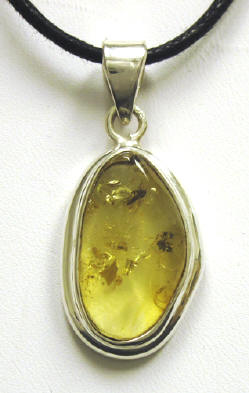
I’ve always wanted a piece of amber jewelry with a fossil insect (or several) inside the amber. I don’t own such a piece of jewelry but hope to some day. While the non-geologists in your family might not appreciate such amber jewelry, the geologist in your family is bound to love such a gift. If you want to make the gift really great, throw in a copy of Jurassic Park. Although it is scientifically implausible that dinosaur DNA could be preserved in an insect fossil in amber, the jewelry and book combination will nevertheless make a super fun gift for a geologist.
Cost: Variable, generally $100 to $250
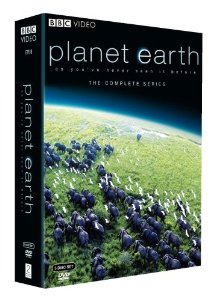
Gift #6: Planet Earth DVD Set
Planet Earth DVD boxed set. Picture taken from Amazon.com.
This BBC documentary series came out in 2007 and features some stunning footage of the Earth in episodes with themes such as “Caves”, “Deserts”, and “Jungles”. The series is currently available for a bargain on Amazon.com.
Cost: $50 to $80 (depending on whether or not it’s on sale)
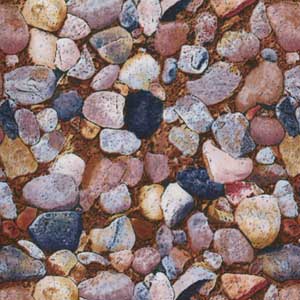
Is the geologist in your family fond of sewing? Or are you fond of sewing? Then why not buy some rock fabric that can be made into a fun tote bag, tablecloth, shirt, skirt, or other item? There are some lovely rock fabrics available. For example, here is one and here is another for sale on the Keepsake Quilting website. Be prepared, however, for some puns about rock fabric.
Cost: About $10 per yard of fabric
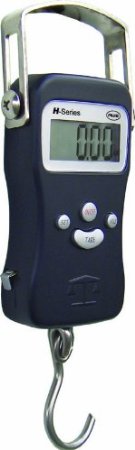
Gift #8: Hanging Luggage Scale
Hanging luggage scale. Picture taken from Amazon.com.
All geologists have had a conversation that goes something like this:
Airport Check-In Agent: Woah. This bag is really heavy. What do you have in here, rocks?
Geologist: Of course. I’m a geologist.
Rocks are heavy, and thus the bags of geologists are often heavy– either with geological samples collected during field work or with souvenir rocks collected during holidays. A portable hanging luggage scale can help the geologist in your family carefully distribute rocks in their various bags in order to avoid airline overweight charges and/or annoying last-minute repacking in an airline check-in queue.
Cost: About $15 to $20
Gift #9: Waterproof and Shockproof Digital Camera
Cannon waterproof and shockproof camera. Picture taken from Amazon.com.
Geologists like taking pictures but often need a sturdy camera that isn’t affected by the elements (rain, sleet, snow) and which can withstand being knocked around in a field bag or accidentally dropped a few feet. Thus, a waterproof and shockproof camera is a great gift for a geologist. Personally, my geologist husband and I own this Canon waterproof and shockproof camera and are very happy with it.
Cost: Variable, generally $100 to $300
Gift #10: Safari Vest
A vest with many pockets. Picture taken from Amazon.com.
When they work in the field, geologists carry many things: notebooks, pencils, rulers, compasses, GPS devices, bottles of acid, hand lenses, snacks, maps, and so on. Geologists often want easy access to the various items that they carry into the field. Thus, a Safari Vest (a vest with many pockets, usually in a tan or green color) is a perfect garment for geologists to wear in the field. If the geologist in your family does not yet own a Safari Vest (or even if they do– the vests wear out after awhile), consider giving them one for Christmas.

























































 Georneys