Dinosaur Bone Hunting with Nobel Laureates

Yesterday afternoon I went on a dinosaur bone hunting trip in Livingston, Montana with paleontologist Jack Horner. Okay, so we didn’t really go on a proper dinosaur bone hunting trip. Rather, we went on a short tour of a dinosaur digsite in Livingston, Montana. The digsite is in the Morrison Sandstone– a formation known for being a rich source of dinosaur bones– and is in a place where they have discovered several sauropod skeletons. Jack was kind enough to let us dig around a bit on the site to see if we could find any new sauropod bones sticking out of the sandstone. I didn’t find any new bones, but Jack let me hold the cast of a bone that was discovered earlier. Sauropod bones are enormous. This one was nearly as big as I am!

Jack Horner, Me, and a cast of a Sauropod bone.
Livingston, Montana, June 2011.

So, visiting a dinosaur digsite with Jack Horner alone is an incredibly awesome way to spend an afternoon. However, I was also fortunate enough to visit the digsite with four– yes, four!– Nobel Laureates in physics (Murray Gell-Mann, Dick Taylor, Bob Wilson, and Sheldon Glashow), two– yes, two!– astronauts as well as people accomplished in other fields (writing, dance, music, fashion design, and so on) who were all out in Montana for the “Adventures of the Mind” program. This program brings together bright, promising high school students with “adult doers and dreamers.” 

The “Adventures of the Mind” Program ended this past weekend, but many of the adult participants stayed in Bozeman, Montana for an extra two days to attend a couple of fundraiser events. The first event was a reception and a panel on cosmology at the Museum of the Rockies. The panel consisted of the four Nobel Laureates in physics and was moderated by accomplished physicist Lisa Randall. The second event was a behind-the-scenes tour of the dinosaur exhibit– as well as of the dinosaur bone preparation and storage areas– led by Jack Horner and some of his graduate students. The museum tour was followed by a drive out to Livingston to visit the sauropod digsite. So, I spent the past two days surrounded by incredibly smart scientists– and other smart people accomplished in other fields– and some somewhat wealthy folks. And we spent a great amount of time looking at DINOSAURS. These past two days, I feel that I died and went to science heaven. I had a fantastic time.
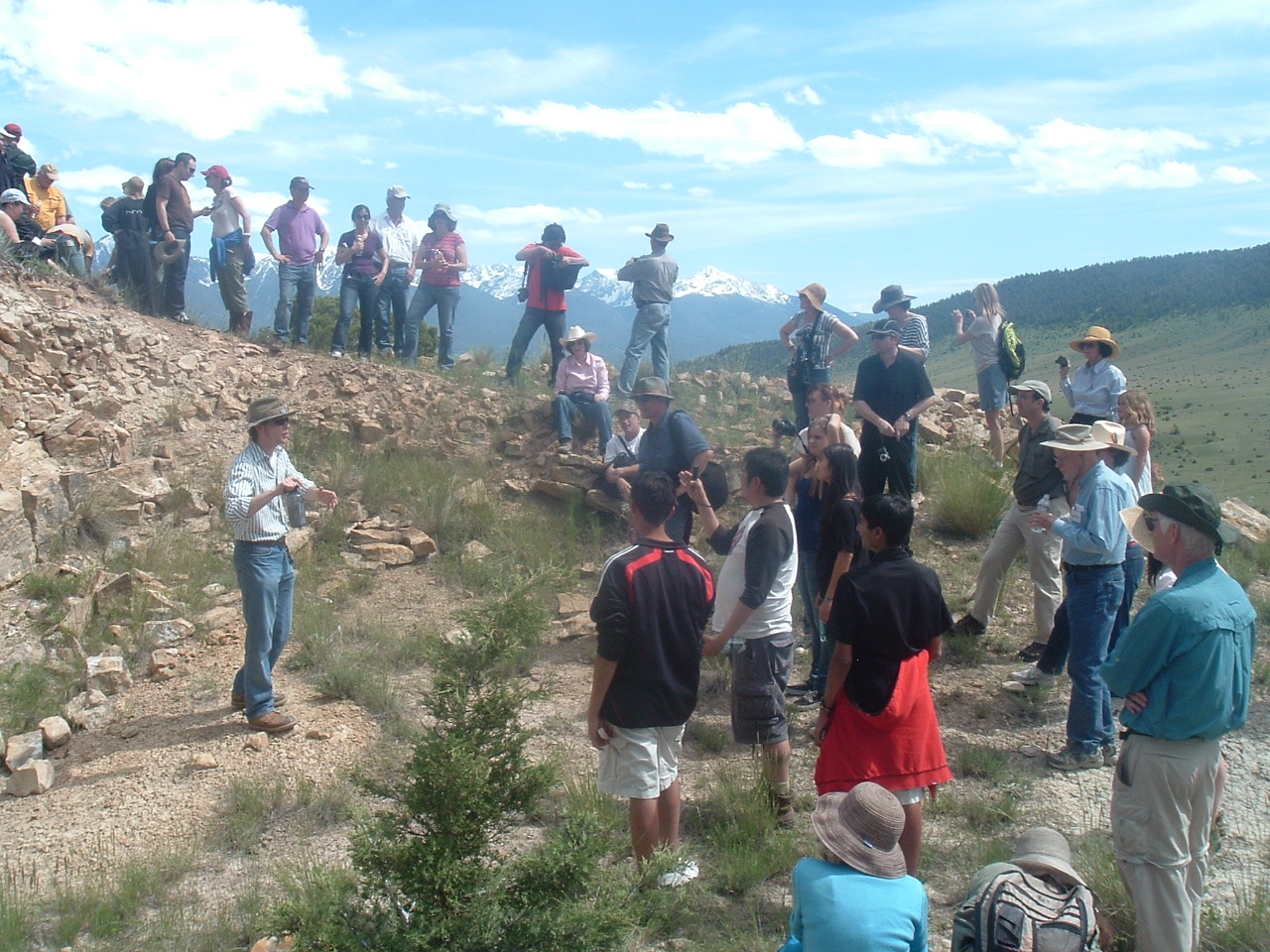
One of Jack’s graduate students chats about sauropods.
Livingston, Montana, June 2011.

Murray Gell-Mann and I at the digsite. Livingston, Montana, June 2011.

So why, you might ask, did I attend this event? No, I am not secretly wealthy… or a dinosaur expert… or a Nobel Laureate… the story is long and somewhat complex. Perhaps I’ll tell it sometime. I’ll just tell you the beginning right now. The story begins, “Well, I used to work for a magician…”

This particular magician has many scientist friends. A friend of this magician– who is now also my friend– invited me up for the event. And I just couldn’t say no to meeting Jack Horner and the others!

 Murray Gell-Mann checks out a dinosaur bone in preparation.
Museum of the Rockies, Bozeman, Montana, June 2011.

Dinosaur eggs (dark black) in a chunk of rock coated in white plaster
for protection. Museum of the Rockies, Bozeman, Montana, June 2011.

A closer view of a dinosaur egg (dark black).
Museum of the Rockies, Bozeman, Montana, June 2011.

My head is actually reeling from all of the wonderfully brilliant people I have met over the past two days. I had to explain my thesis research several times to some very smart people, and I found that a little overwhelming and intimidating. I think I managed to explain my research fairly well, however. I hope so. Most recently, I had a long chat with Bob Wilson about my thesis research. I kept thinking to myself, “Wow! I can’t believe Bob Wilson is actually asking me questions about my thesis!”

You may have heard of Bob, or at least his research. He received his Nobel prize in physics for accidentally discovering cosmic microwave background radiation associated with the Big Bang. He and his research colleagues did not expect to find this radiation, and so at first they thought it might be trouble with their instrument. They devoted quite a bit of effort to removing any possible interferences to their instrument, including scaring away some pigeons that had roosted in their instrument and removing the associated pigeon excrement. The removal of the pigeon poop made no difference, however. The radiation was still there, and shortly thereafter was recognized as concrete evidence supporting the Big Bang theory.

Bob Wilson and I. Museum of the Rockies, Bozeman, Montana, June 2011.

I’ve had a blast these past few days! I owe my friend– and my magician friend– a big thank-you. I’m honored that I was able to attend this event.

Tomorrow, it’s back to Laramie and back to work on my thesis!

***As an aside, I think it’s finally time to upgrade my little, ancient point-and-shoot camera, which has not been impressing me recently with its quality (or lack thereof). I’m actually going to visit my magician friend in Las Vegas in July, so I’m going to treat myself to a new camera before then. Let me know if you have any good suggestions for affordable digital cameras. I think I want to buy another point-and-shoot for now since I’m not quite ready yet to spring for a real camera.***

Geology Word of the Week: D is for Delta

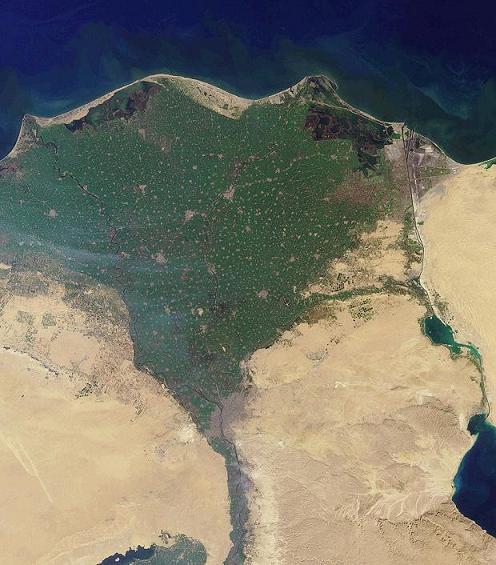
The Nile Delta as seen from Earth orbit. Photo courtesy of
NASA and taken from Wikipedia here.

def. Delta:
1. The fourth letter of the Greek alphabet (uppercase Δ, lowercase δ).
2. A popular US airline with questionable service (except for those delicious little snacks they serve with your drink), often-delayed flights, and a hilarious in-flight safety video
3. A triangle-shaped deposit of sediment that forms where a river or stream flows into an ocean, lake, or other large, standing body of water.

Deltas are beautiful landforms, especially when viewed from above. Roughly triangular in shape, deltas are full of complex, wonderful detail: swirling, multi-colored sediments broken by serpentine, miniature river channels. Composed of soft sediment and other alluvium, deltas are shapeshifters: depositing, drifting, building up here, washing away there. Deltas form and evolve at the mercy of both river (or stream) and ocean (or other large, standing body of water). They change with the seasons and with the years, based on waterflow and tides and weather and– in recent years– human influences, such as dams and levees. Deltas are almost chimera landforms: ephemeral, constantly changing. Despite the shapeshifting, many deltas remain in the same location– more-or-less– for millennia, building up thick, rich sediment deposits that are generally good places to live and grow food and which are also greatly valued by geologists trying to understand past climate conditions and ancient river-flow.

A delta in Bangaladesh. Image courtesy of Peter Clift.
Ganges River Delta. Image courtesy of Peter Clift.

Deltas form when faster-moving, channeled water in a river or stream meets a standing (or still) body of water such as an ocean or lake. Fast-moving waters are able to carry a significant amount of sediment with them as they travel. However, slower-moving waters carry less sediment, and in still waters most sediment will drop out, falling to the bottom of the body of water. Certainly, even still bodies of water such as oceans and lakes contain some sediment. However, they are able to hold much less sediment than a fast (or even slow) moving river or stream. When a river or stream enters a standing body of water, the water spreads out and the velocity of the water drops, along with the carrying capacity of that water for sediment. The large amounts of sediment that drop out because of the velocity change form the soft delta.

Often, deltas have a roughly triangular shape– hence the name. The Greek historian Herodotus (484 BC – 425 BC) noticed that the sediments deposited at the mouth of the Nile River in Egypt formed a roughly triangular shape, like the Greek letter delta. So, Herodotus starting calling the mouth of the Nile a delta [1].
According to the Oxford English Dictionary, the word “delta” was first used in English to describe the Nile River in 1555 and was used as a broader term for the sedimentary feature starting in the late 1700s [2].

However, not all deltas are triangular in shape. Many deltas are roughly triangular because rivers slow down and fan out– often branching into smaller streams amidst the delta sediments– when they reach a standing body of water. However, the shape of a delta really depends on various depositional and erosional forces, including the river but also including forces such as waves and tides [1]. Where river forces dominate, the sediments are more aggressively deposited, and the delta extends out into the standing body of water as a lobe or long arm. Where tidal erosion is significant, deltas tend to be very smaller and cut off sharply at the shoreline.  Where wave action dominates, deltas tend to have smooth, arc shapes. There are other factors that influence delta shape as well. For example, along the ocean, large deltas can really only form in places where there are broad continental shelves to support them. If there is a steep drop-off close to where a river meets the ocean, it will be more difficult for sediments to build up into a large delta. And, as I mentioned, deltas are also shapeshifters– if any of the depositional or erosional features change over time, a delta may change shape. Sometimes, if the river moves on, a delta may disappear altogether, partly washed away, often buried and preserved as a thick sedimentary layer in the geologic record.

While deltas are perhaps most impressive when viewed from above, they can also be intriguing up-close. Below are some field pictures from my friend Peter Clift, who works in deltas all over the world. These photos are from some work Peter did in the Indus Delta in Pakistan.

Soft sediment deformation. Photo courtesy of Peter Clift.
Chani Dora boats. Photo courtesy of Peter Clift.
Khobar fishing boats. Photo courtesy of Peter Clift.

Here are a few more pictures of deltas from geobloggers Ron Schott and Brian Romans:

Delta deposits in Ontario. Photo courtesy of Ron Schott.
Braided river and delta in Washington State.
Photo courtesy of Brian Romans.
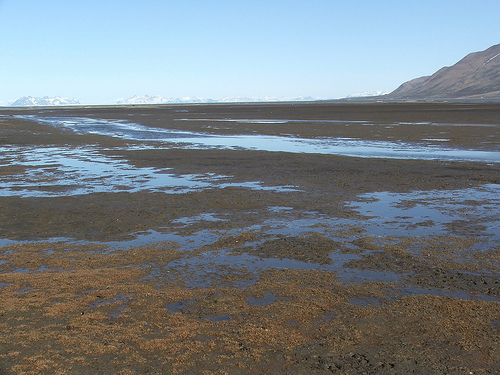
Glacial outwash delta in Svalbard, Norway. Photo courtesy of Brian Romans.
A closer look at the glacial outwash delta. Svalbard, Norway.
Photo courtesy of Brian Romans.
Tidally-influenced delta in Svalbard, Norway. Photo courtesy of Brian Romans.

References:

1. Prothero, Donald and Schwab, Fred. 2004. Sedimentary Geology: An Introduction to Sedimentary Rocks and Stratigraphy (Second Edition). New York: W. H. Freeman and Co. 

2. “delta, n.” The Oxford English Dictionary. 2nd ed. 1989. OED Online. Oxford University Press. 23 June 2011  .

A Different Kind of Life on Mars

Weekly World News Cover taken from here.

When I was a sophomore in college [note: in 2004], I went on a field trip to Death Valley and Owens Valley with my volcanology class over spring break. At the time, everyone was very excited about the Mars rovers, which had landed on Mars just a few months before. I was buying a soda in a grocery store and saw the above “Weekly World News,” a fine newspaper that I read on a regular basis. By “read” I mean that I usually skim it while waiting in line at supermarket checkouts. When I saw the issue above, though, I just had to buy a copy.

I was heading over to a pizza restaurant to meet my classmates and professors for dinner. I couldn’t resist a little joke. I ran into the restaurant, looking frazzled and excited, the newspaper safely behind my back. I was a little late to dinner, so almost everyone was already seated and calmly looking over the menus.

“You won’t believe the news!” I exclaimed. “They just announced that they found life on Mars!”

Immediately, the table was astir. Everyone started talking at once, and I noticed that one of my friends turned around to look at the news on the TV behind him. He was looking for a Mars story, no doubt.

Finally, one of the professors asked, genuinely, “Was it a microbe? How did they identify it?”

“No,” I replied. “It’s even bigger than a microbe. It’s a macro-organism.” I hoped that I wasn’t making the word “macro-organism” up, but it didn’t seem to bother anyone.

There was more excited chatter.

“How big was it?” one of my classmates asked.

“Well, forget pizza,” another of my classmates said. “I’m going back to the hotel to watch the news.”

“It’s okay,” I said. “Look, I brought the story with me.”

I dramatically revealed the “Weekly World News” issue shown above. I think it was good that no one had food or water yet or else I would have been pummeled. As it was, the person nearest me threw his empty glass at me.

Aside from illustrating a good prank to pull on your scientifically-minded friends, the story above illustrates that finding life on Mars is a very exciting possibility. I think that it’s something that both scientists and non-scientists can get worked up about. I know that whenever I read an article supporting evidence for life– or even just running water– on Mars, I become very excited. I think: gosh, if there’s life only a couple of planets away, what other life could possibly out there?

I’m not an expert in extraterrestrial biology, so I won’t comment too much on this article on a different kind of life on Mars* aside from saying that I think the possibility of a different, hydrogen pyroxide-based form of life on Mars perhaps makes sense. I wouldn’t be surprised if scientists one day– hopefully soon– discover this form of life on Mars. Boy, will the creationists be in for it then. Or perhaps God had some time to populate Mars on Sunday?

Anyway, I don’t see why there shouldn’t be very different forms of life in the universe. I once saw an episode of “The X-Files” (I think it was Season 2) where Scully and Mulder uncovered a new form of silica-based life in a volcano. The spores of this silica-based life form would grow into an organism inside people and then burst through people’s throats and stomachs releasing a new batch of spores. I don’t think I need to worry too much about silica-based parasite spores on my volcanology trips, but silica-based life in general doesn’t sound too unrealistic. After all, silicon is an even more common element than carbon. And life based on hydrogen peroxide liquid instead of water? Maybe not so far fetched, at least on Mars.

Scientists now know of hundreds of organisms living in conditions so extreme that fifty years ago biologists would have said, across that board, that life wasn’t possible in such extreme environments. Now, scientists know of micro-organisms that live everywhere from boiling, acidic hotsprings in Yellowstone to the insides of rocks in the harsh, cold, dry valleys of Antarctica to highly-alkaline pools in Oman deserts**. Entire biological communities based on sulfur energy instead of sunlight energy were discovered at the bottom of the ocean in the 1970s. These hydrothermal vent communities continue to impress and amaze.

So, who knows? I hope there is life on Mars, and I hope we find it. And if these Mars cats are real, I want one. My childhood cat passed away this summer. Currently, I’m avoiding animals*** as my busy schedule doesn’t allow me to take care of a houseplant properly, let alone a living creature. I’d make an exception for a Mars cat, though. I’d just have to take him to the office with me.
*Note: The original CNN link is now broken, so I found a different article to reference.

**I couldn’t resist adding the life in alkaline pools in Oman– something I’ve seen first-hand during my 2009 and 2010 field seasons for my thesis research. In these highly alkaline (pH 11-12) pools in Oman, there are sometimes even fish and little, strange-looking, crab-like critters!

***In 2009, I adopted my two adorable kitties, Zayna (with the mustache) and Samira (calico). They’re from a Martha’s Vineyard shelter, though… not from Mars.

And now, a perfect excuse to post pictures of my adorable cats:

Zayna on the bed.
Samira on the sofa.
Snuggling together.

Sorry, Folks, but Callan was Attacked by a T-Rex

This morning I had the pleasure of meeting up with Callan Bentley of Mountain Beltway. After several months of interacting on the internet, it was great to meet up in real life! I hope to meet some more of my fellow geobloggers over the next year or so.

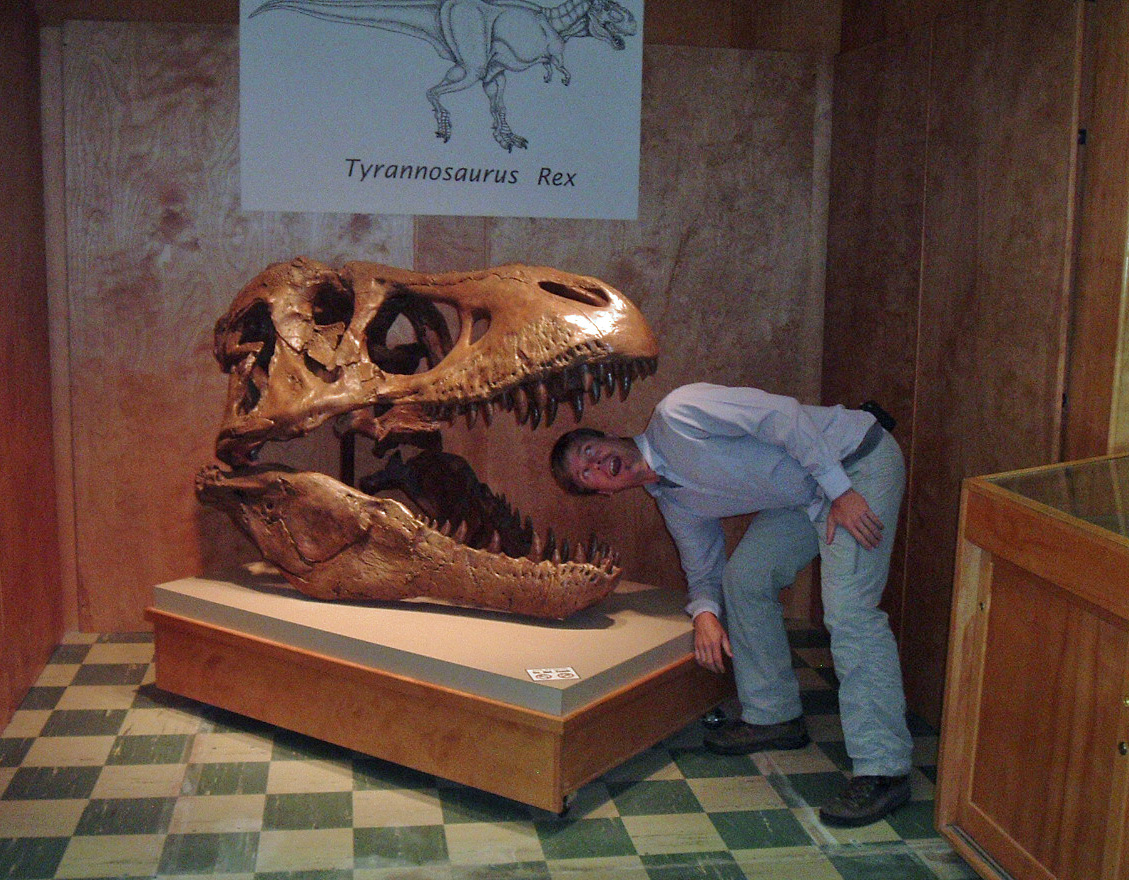
Unfortunately, shortly after we met up, Callan was attacked by a T-Rex in the University of Wyoming Geology Museum:

A T-Rex attacks Callan.

Fortunately, Callan managed to escape, and we were able to tour the rest of the museum and have a sandwich afterward. Safe travels to Montana, Callan!

Limestone, Wildflowers, and Big Sky: A Wyoming Trail Run

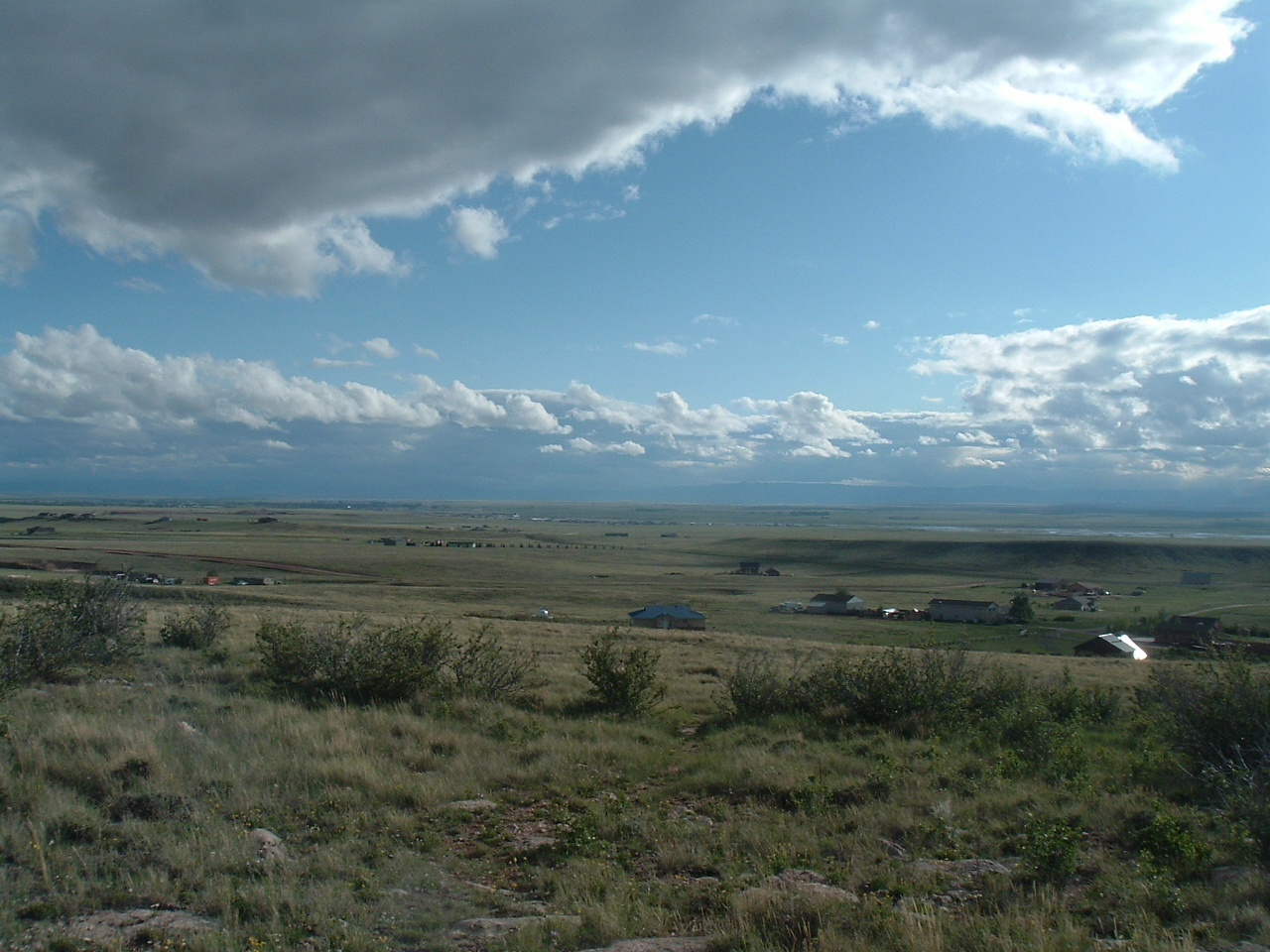
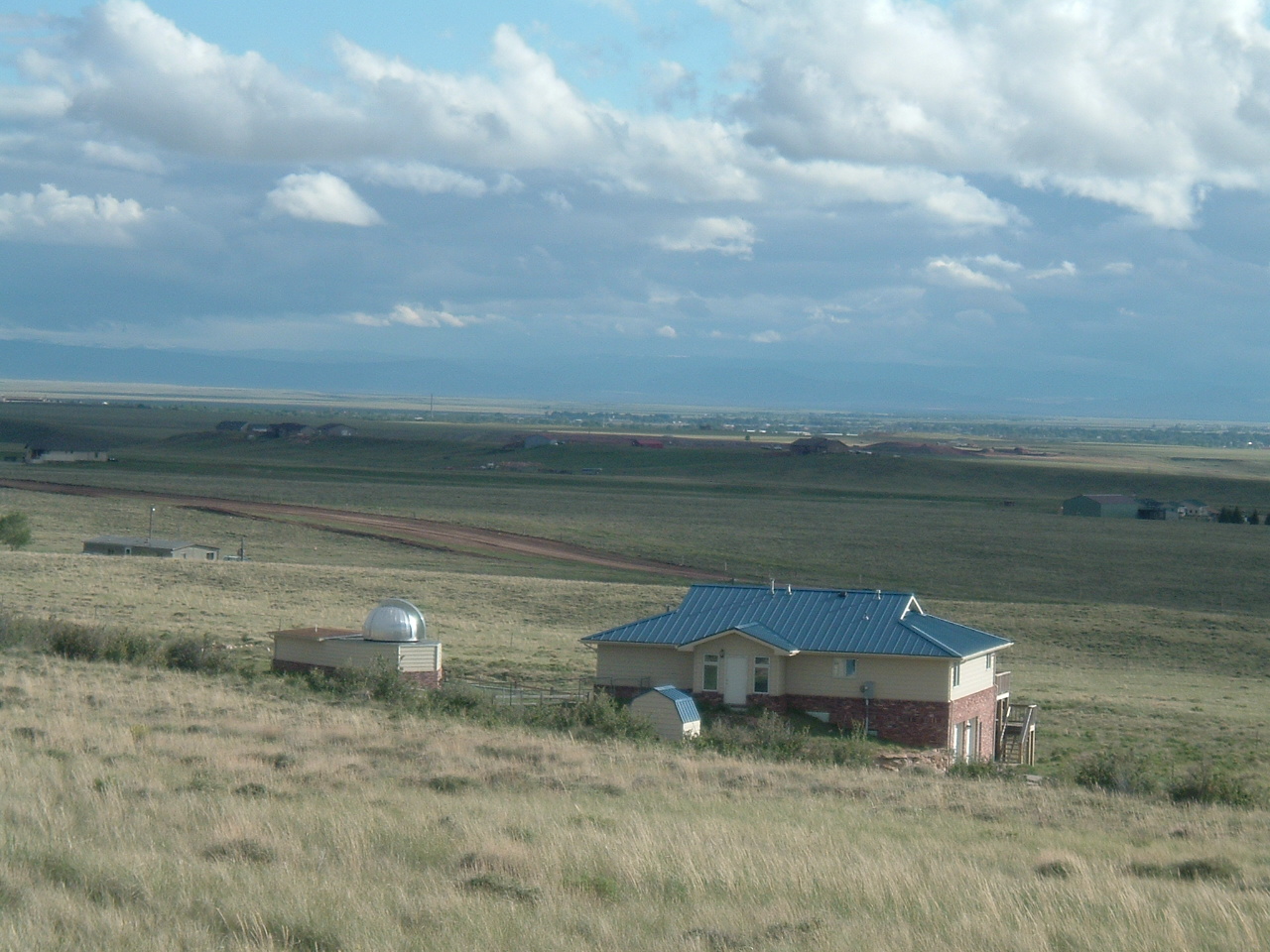
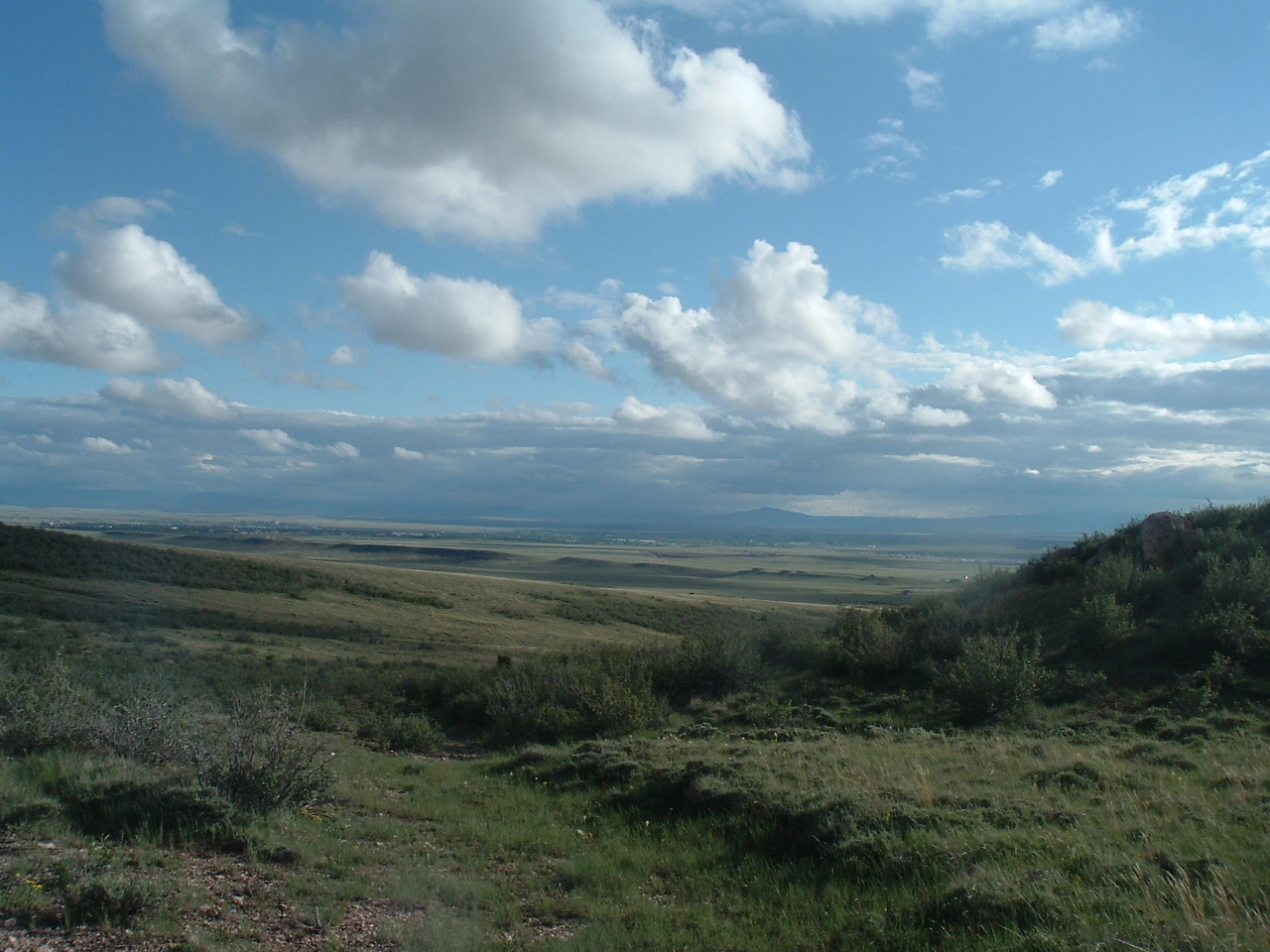
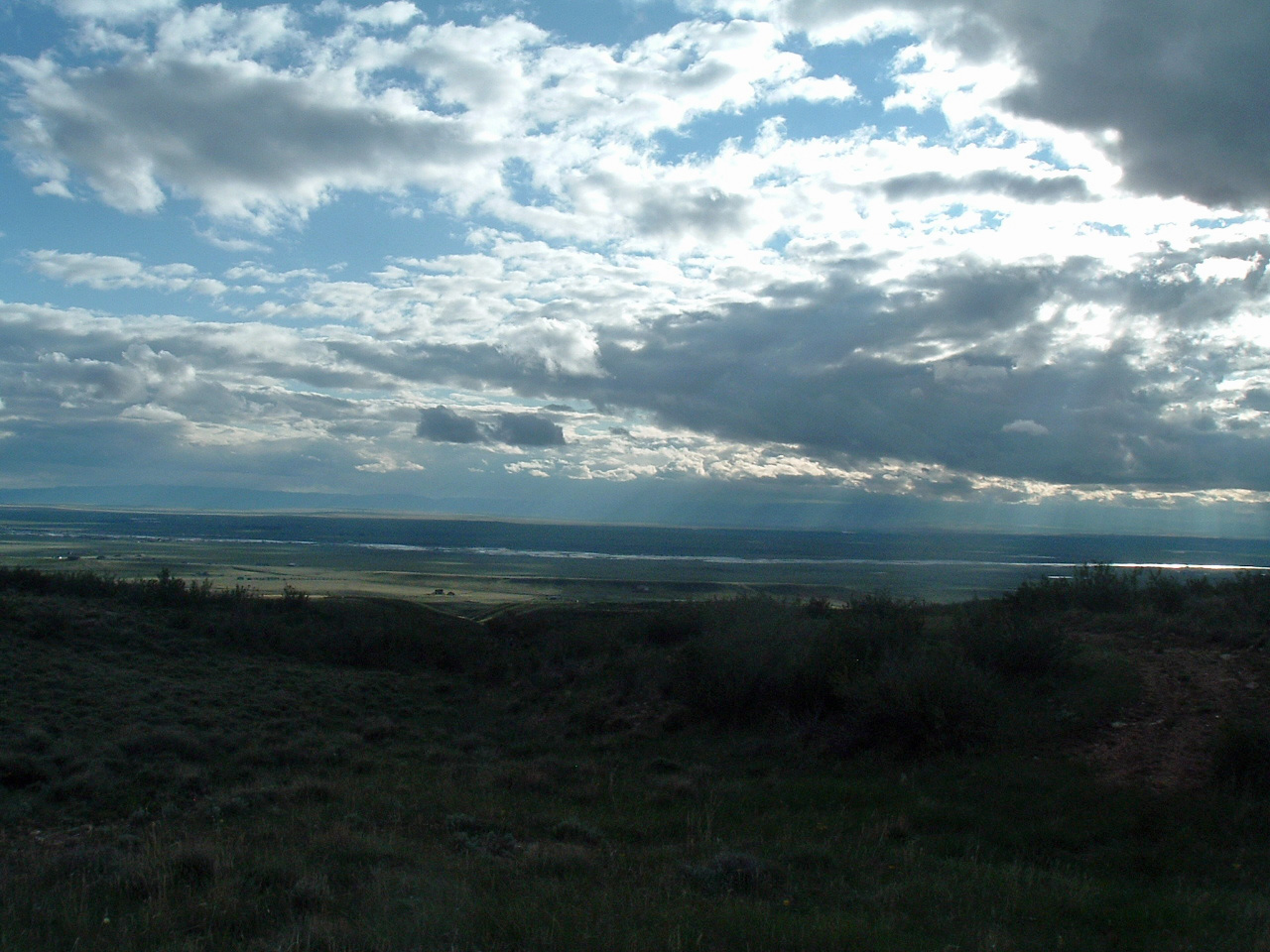
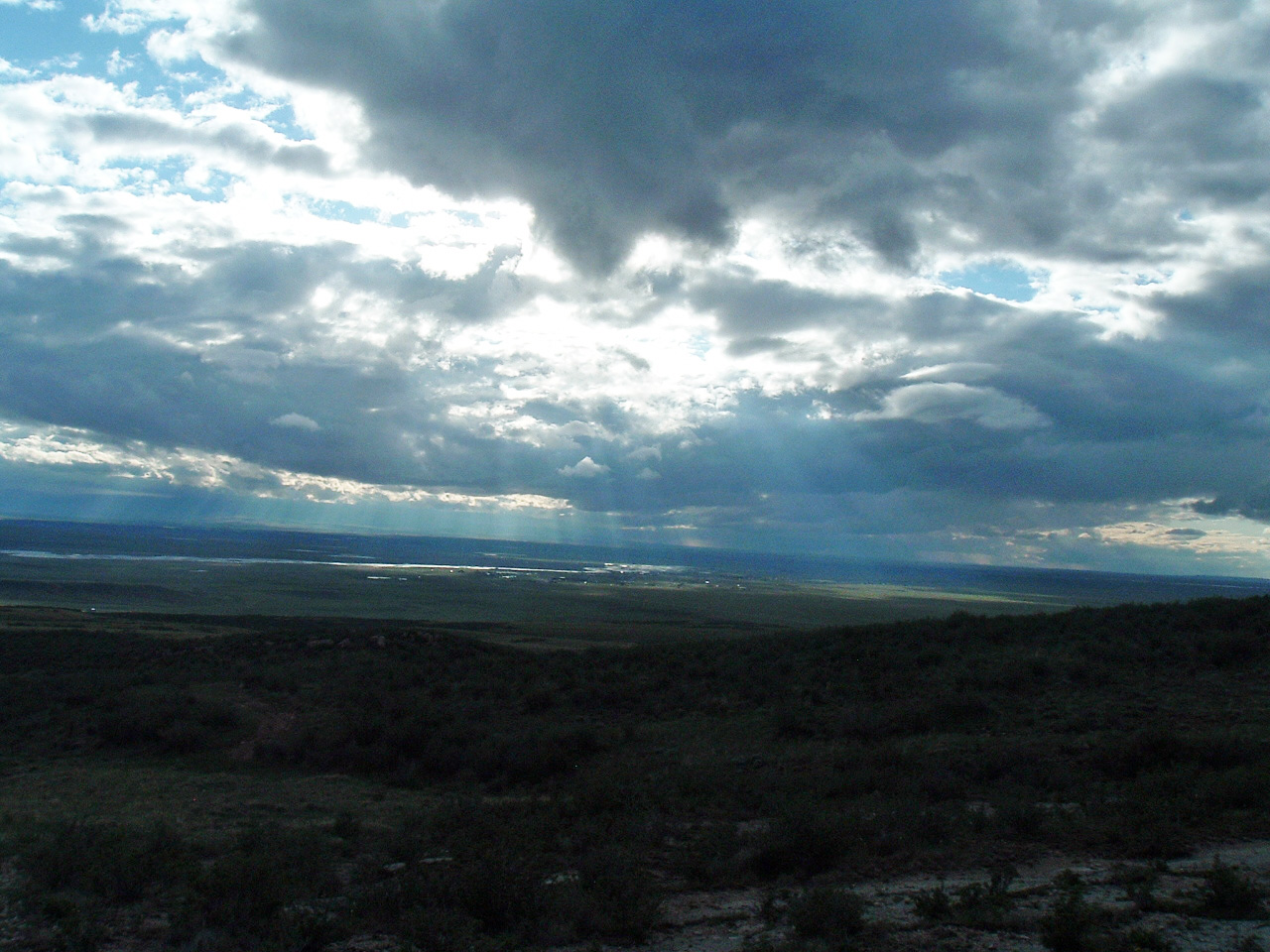
I arrived in Wyoming last Sunday, and I’ll be here for two months working with one of my advisors. I haven’t had too much time to explore yet, but today (Monday) I went on a beautiful trail run*. Wyoming really is beautiful. I enjoy all the quiet, wide-open spaces. Here are a few pictures from today’s trail run:

Wyoming big sky 1.

Start of the trail.

The trail.

Phil Plait’s astronomy dreamhouse.

Wyoming big sky 2.

Wyoming big sky 3.

Wyoming big sky 4.

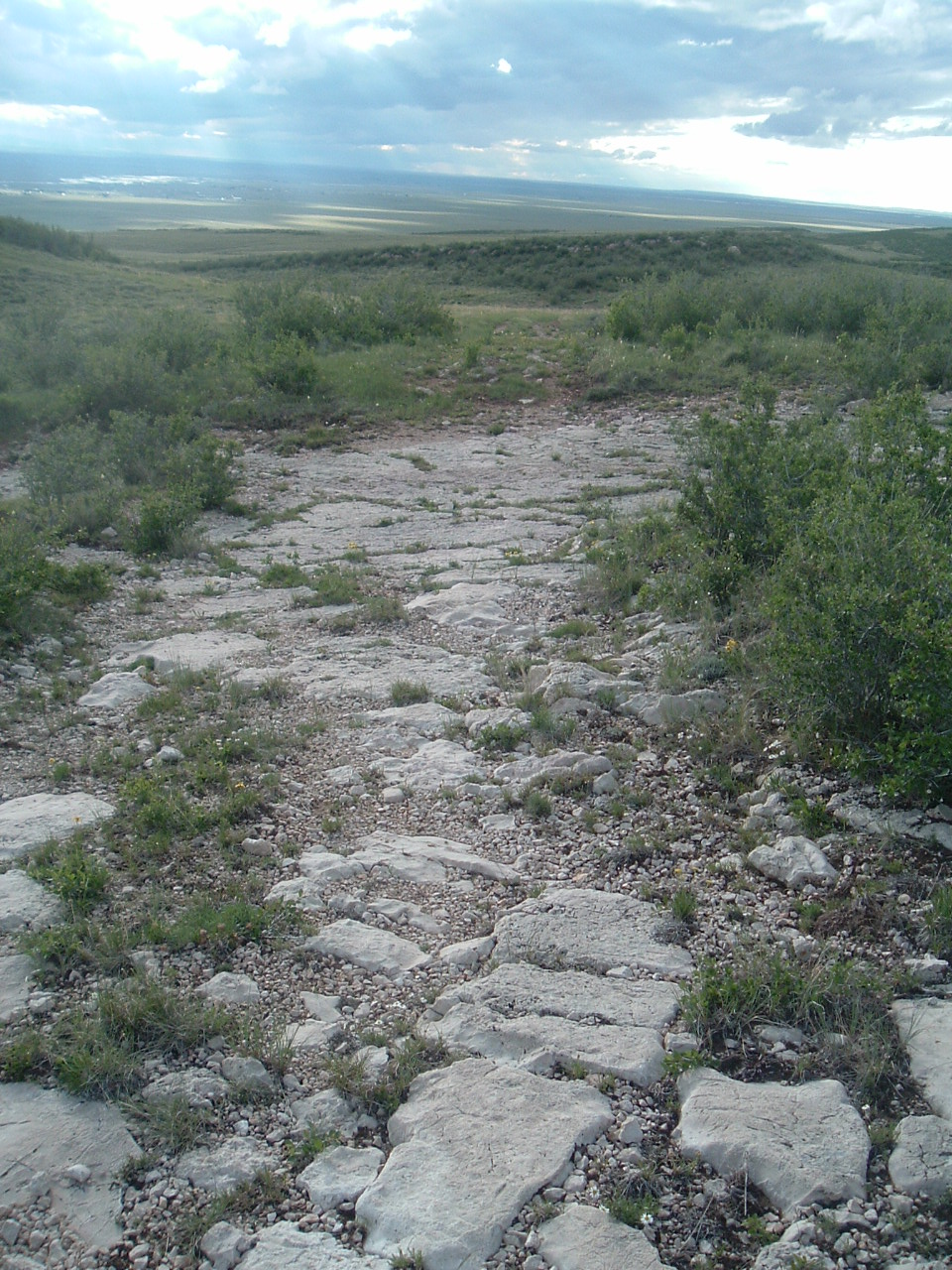
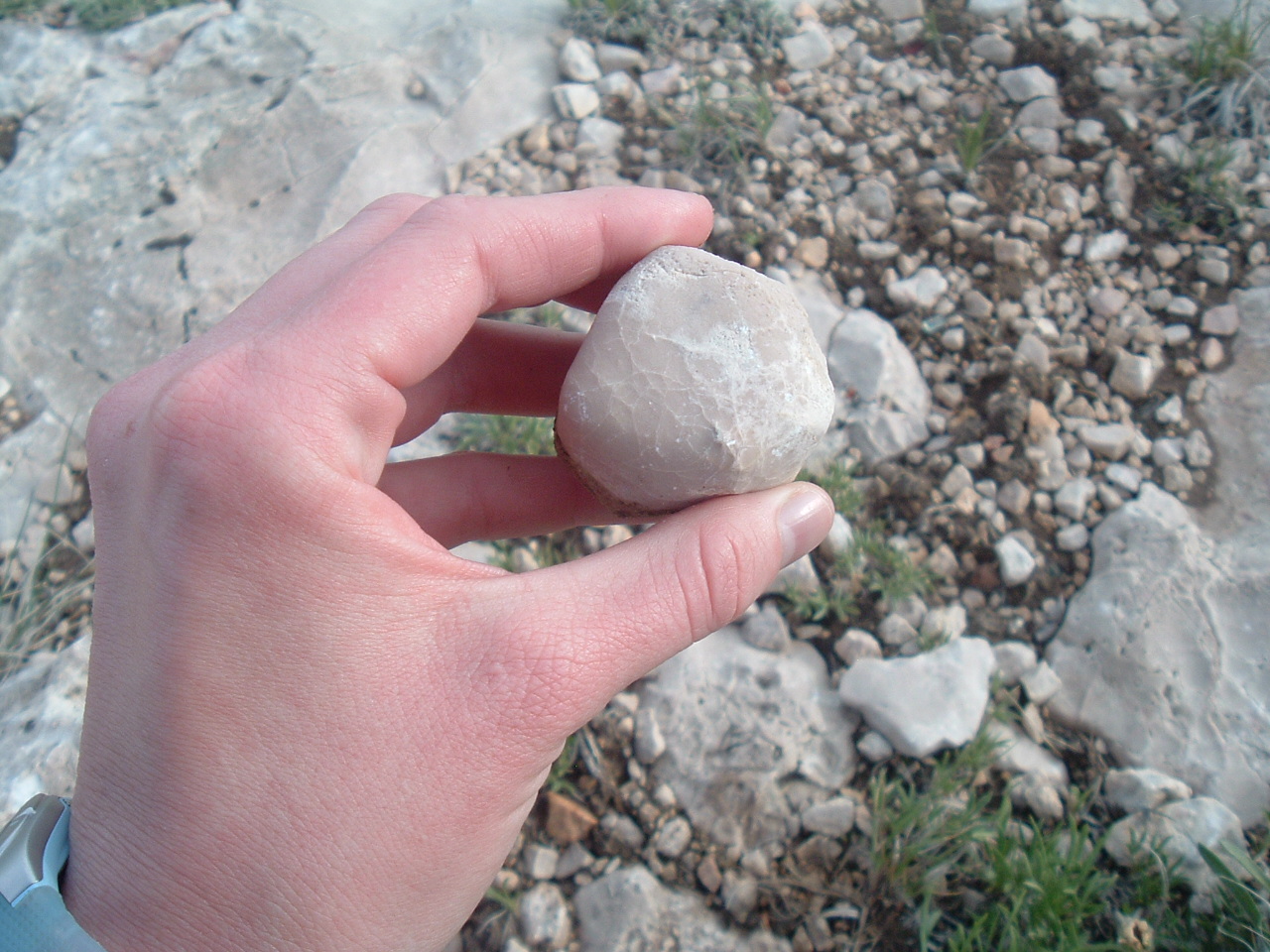
Along the trail, I found some interesting limestone (not sure which unit; still have to learn the local geology): 

Limestone trail 1.

Limestone trail 2.

Limestone trail 3.

Limestone rock 1.

Limestone rock 2.

Limestone rock 3.

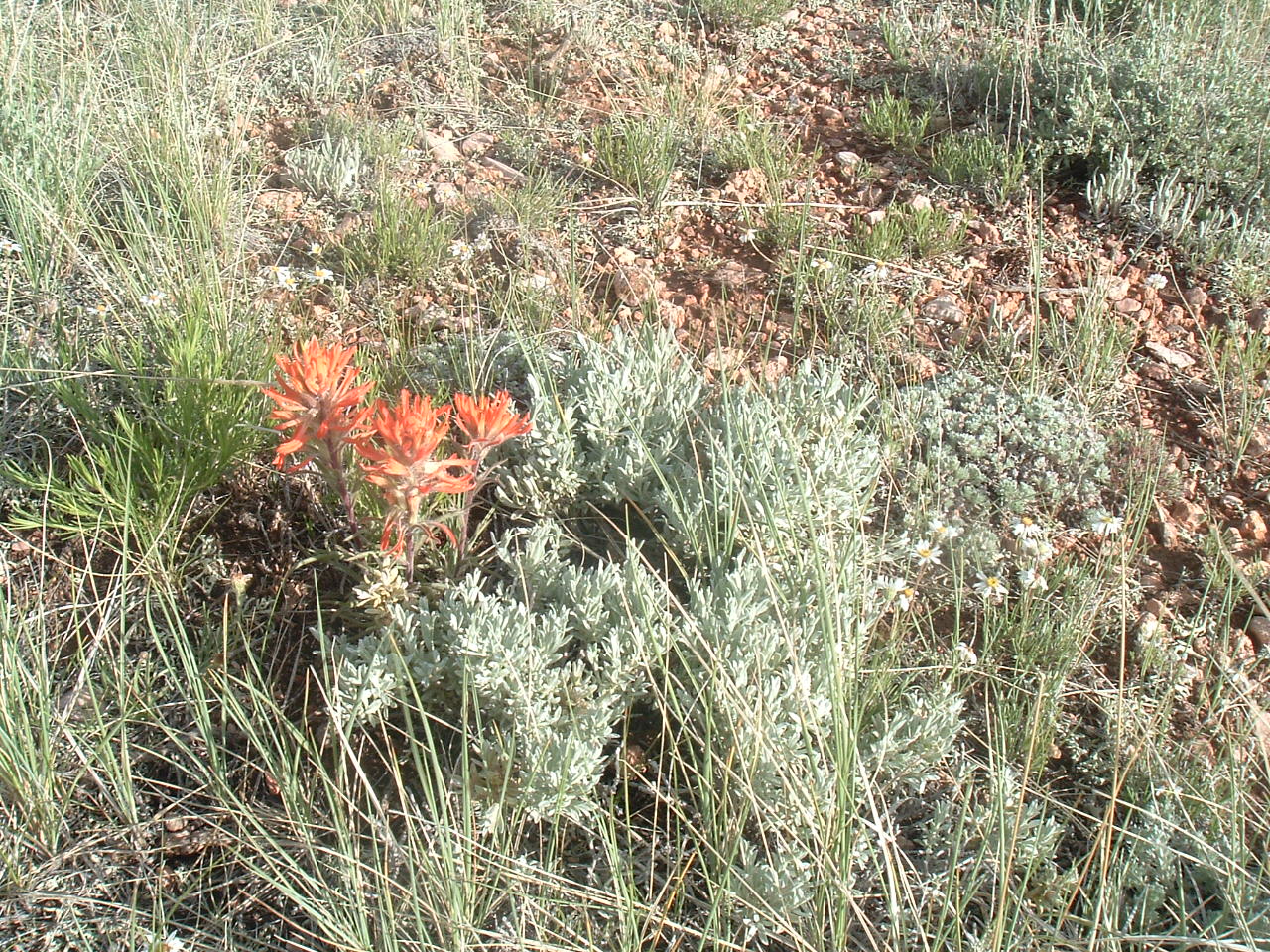
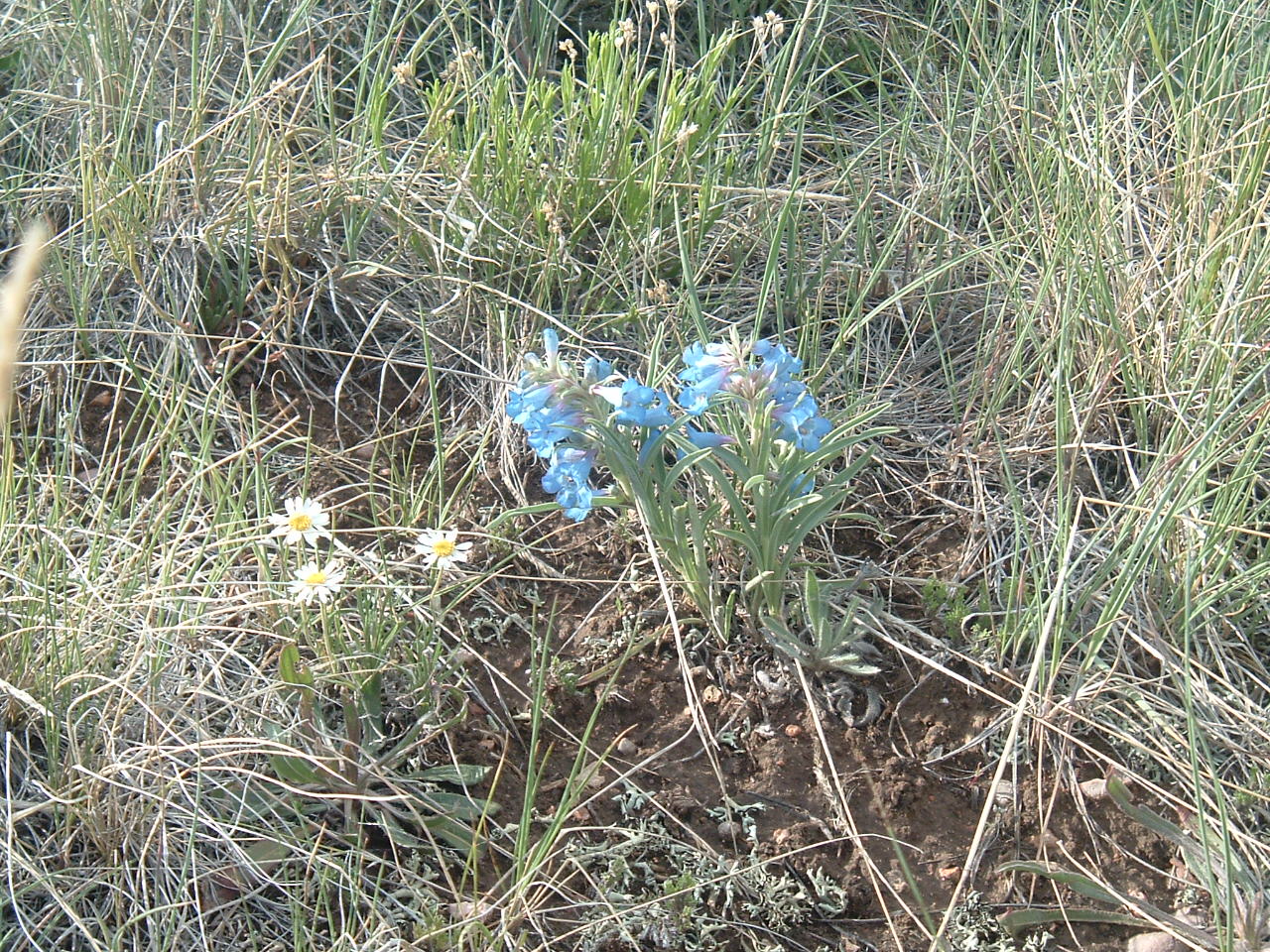
There were also some pretty flowers:

Wildflowers 1.

Wildflowers 2.

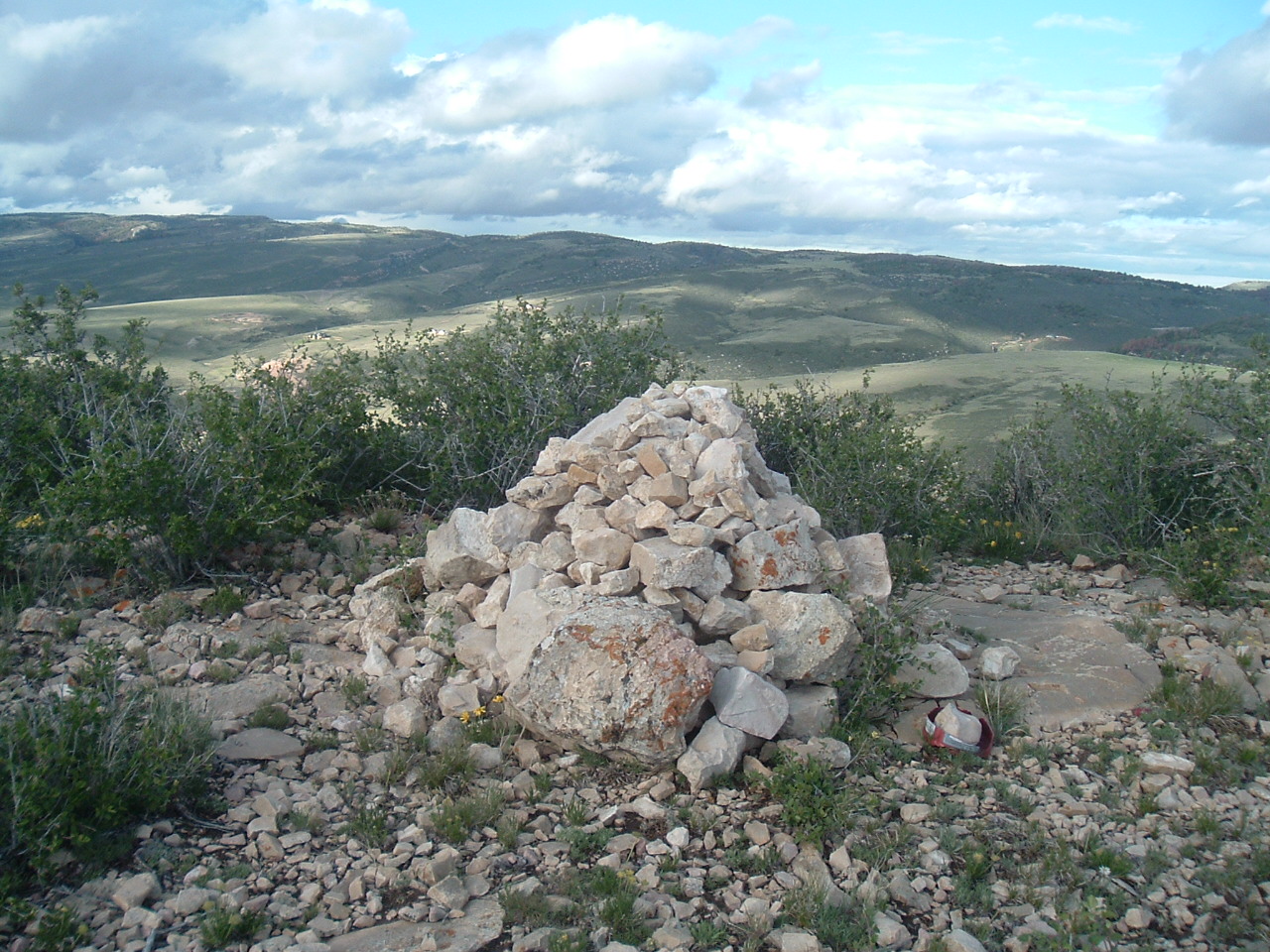
 Finally, I made it to the top of the trail:

Cairn at the top of the trail.

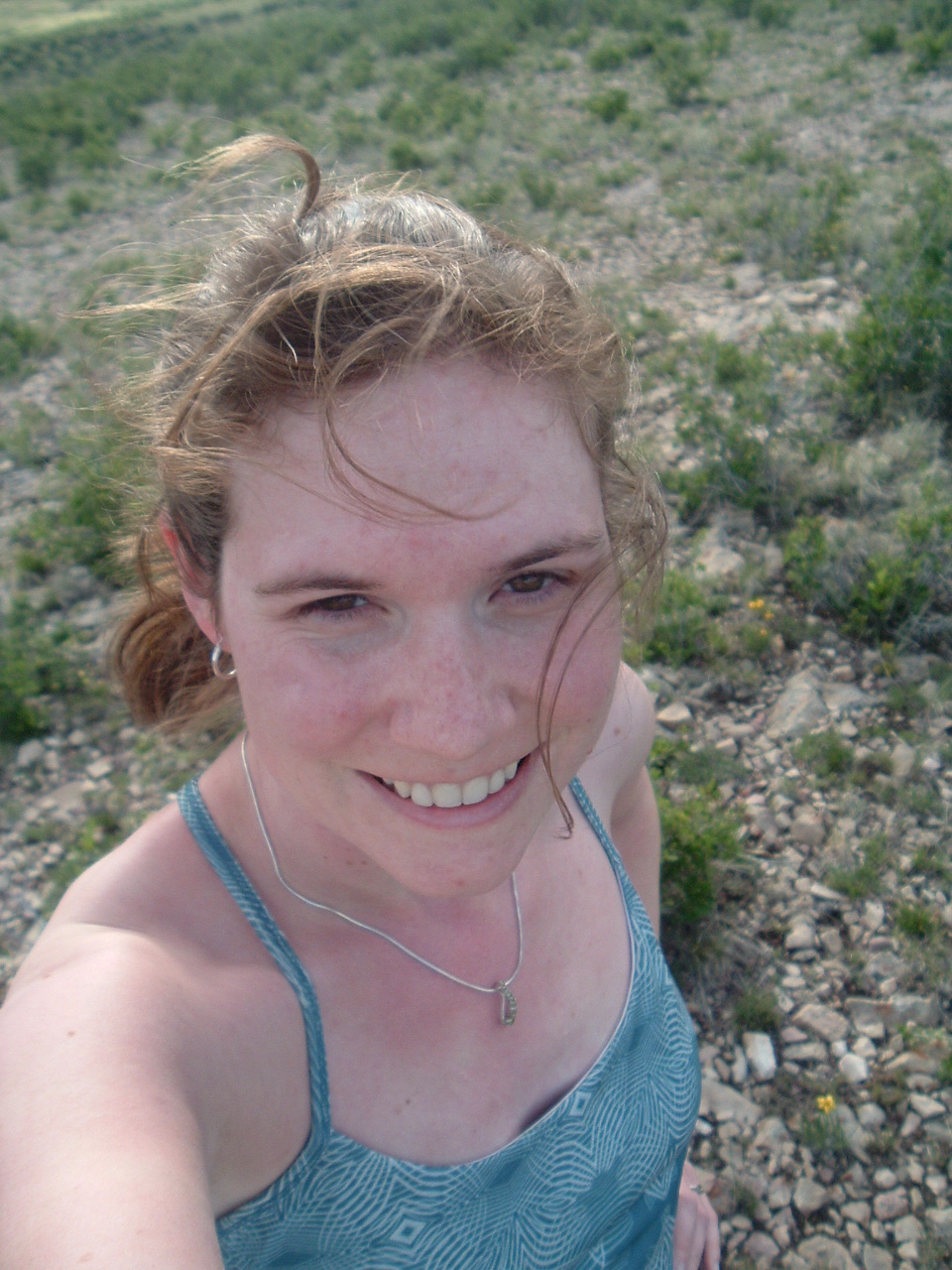
Windswept, tired self-portrait.

Where there was a beautiful valley view:

Valley view 1.

Valley view 2.

And then I ran all the way back down again as the sun began to set… what a beautiful run!

Wyoming big sky 5.

Wyoming big sky 6.

Wyoming big sky 7.

*Okay, so really a run/walk with frequent picture stops, since I’m a tad out of shape and also not yet fully accustomed to running at 7,000+ ft.

Forget Rent… I’m Moving to the Smithsonian

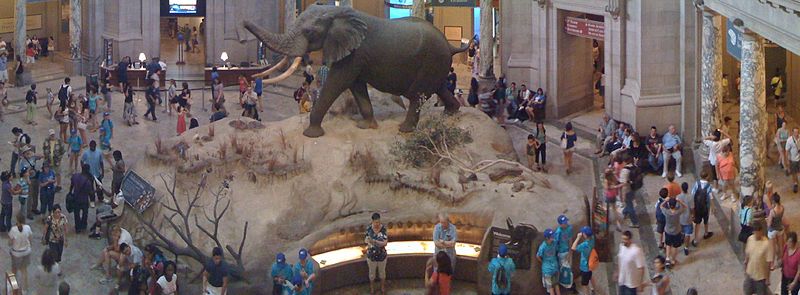
Elephant in the Rotunda, Smithsonian Museum of Natural History. Picture taken from wikipedia here.
There is nothing better than having an empty museum all to yourself. If I ever become wealthy, I think that I’ll rent out the great museums of the world at odd hours so that I can quietly appreciate them. Or maybe I’ll just hone my burglary skills and sneak it at night. I’m not interested in stealing anything, just enjoying the richness of the exhibits without all the lines, tourists, and misbehaving toddlers. 
One of my favorite books from childhood is From the Mixed-up Files of Mrs. Basil E. Frankweiler, a book about a little girl and her brother who run away from home and live in the Metropolitan Museum of Art for a week or so. After all of the tourists go home for the day, the two children have the run of the museum, bathing in the public fountain, sleeping in an antique bed in one of the exhibits, and generally having a good time with all of the artwork and artifacts. After reading this book, I nearly packed a bag and ran away to the nearest big museum, which fortunately was several hours away. Running away from home is not easily accomplished by an eight-year-old stuck in rural New Hampshire with no public transportation.
Just over a year ago [Note: in 2005 since this is a re-post], I was again ready to run away from home (well, from my apartment, I guess…) and move into a museum. More specifically, I was ready to move into the Smithsonian Department of Mineral Sciences, the behind-the-scenes home of the thousands of rocks, minerals, and gems which are not on public display. Far less than 1% of the Smithsonians mineral collection is on display for the public. The reason there is so little on display relates to space constraints, not to lack of impressive specimens. 
There are hundreds upon hundreds of more minerals and gems that should be on public display but which are instead tucked away in storage. Yes, I’m quite willing to take sponge baths in the department bathroom and roll out my sleeping bag in one of the labs or collection rooms. So many beautiful samples to appreciate, so little time. I really must move in there. 
As part of a summer internship in geochemistry, I went to the Smithsonian Natural History Museum to pick up some volcanic glass samples. Really, the samples could have been Fed-Exed to the lab where I was working, but I was so excited about the prospect of interacting with the curators of the Smithsonian that my summer boss surprised me with a ticket to Washington and meetings with several of the curators.
At couple of weeks later, I flew up to Washington and took the subway to the museum. I went in the public entrance and found the special office where I was signed in as a visitor. Tim, a researcher in the volcanology and petrology division, came down and brought me up to the department. I felt very cool and professional as I was led upstairs– not everyone gets to go behind-the-scenes at the Smithsonian! I was also very curious. Tim led me by doors that had very interesting signs, such as “meteorite collection” and “time-of-flight mass spectrometer” and by laboratories that had intriguing-looking machines and chemicals. I didn’t realize that the Smithsonian did so much research. In addition to taking care of the thousands upon thousands of mineral, gem, and rock samples in their collection, they also actively conduct research on many of the samples.
Within about five minutes of arriving at Tim’s office, my “work” for going up to the Smithsonian was done. Tim had already organized, photographed, and documented the samples I was taking, so all he had to do was hand me the envelope, really. There was an awkward moment or two, then finally I asked somewhat sheepishly and also as politely as possible, “So, could I please see some of your rocks?”
Tim generously indulged my interest, showing me bits and pieces of the volcanological reference collection, the seafloor collection, and the ultramafic xenolith collection. We chatted about rocks and petrology as he browsed for interesting samples. I asked him if there were any fulgurites in the collection, and he showed me several. I’d never seen a fulgurite before, and I was impressed. 
After showing me through the rock collections, Tim arranged for me to be shown some of the mineral, gem, and meteorite collections. For the rest of the afternoon, I was given attention by various middle-aged, male curators who clearly don’t see too many pretty, young females in their day-to-day work. They easily impressed me. The mineral collection took my breath away. There were a few particularly impressive samples on display in large glass cases, and the rest were neatly filed away in dozens upon dozens of large, metal cabinets. The curator of the mineral collection knew the place by heart and was a walking encyclopdia of mineral knowledge. He kept trying to find unusual specimens to impress me. At one point, he told me to close my eyes and hold out my hands. He filled my hands with what felt like many crystals, maybe a half-inch in diameter. After a few seconds, my hands become very cold. I felt as if the crystals were sucking all the heat out of my hands. The mineral curator told me to open my eyes, and when I did I saw that there were about two dozen large, raw diamonds in my hands. A single one of those diamond crystals would probably have paid for my college education… 

I was able to see only a couple of pieces in the gem collection, which has somewhat tighter security than the rest of the collection. However, who needs gems when you can see meteorites? The meteorite samples are kept in a large, room-sized vault. Another Tim,  whom I’ll refer to as “Meteorite Tim,” showed me the collection. There were many impressive samples, but I think I enjoyed looking at the tektites most. Filed away with the tektites were several samples of Libyan Desert Glass, a beautiful yellow-green glass that is actually impact glass created when a meteorite hit the desert sands millions of years ago. 
I became so interested in this glass that I wrote an article about it for Skeptic Report shortly after my trip to the Smithsonian. I’m pleased to say that Dr. Farouk al-Baz recently discovered Kabira Crater, the crater formed by the meteorite that almost certainly formed this desert glass. Note that I made a mistake in this article– a small one, but one I think I should point out. Cristobalite is a high-temperature polymorph of quartz, not a high-pressure one. The high-pressure polymorph of quartz is actually sitshovite. You can find both cristobalite and stishovite in the desert glass, I believe, but I’d double-check with Meteorite Tim on that.
Anyway, after showing me many wonderful tektites and meteorites, Meteorite Tim pointed to a very special-looking meteorite sitting in a fancy, round glass case. 
“Do you know what that is?” he asked.
I didn’t have a clue. I peered at the rock and guessed, “A moon rock?”
Meteorite Tim picked up the sample, case and all, and put it under a nearby microscope.
“Look there,” he said.
I looked at the microscope, adjusting the focus slightly and trying to look all professional. I saw a few reddish-brown little patches on the rock surface. I still had no idea what I was looking at.
Finally, Meteorite Tim said, “This is ALH 84001.”
I jumped, saying, “Really?” I eagerly peered back through the microscope.
“Is that…?” I couldn’t even finish my question.
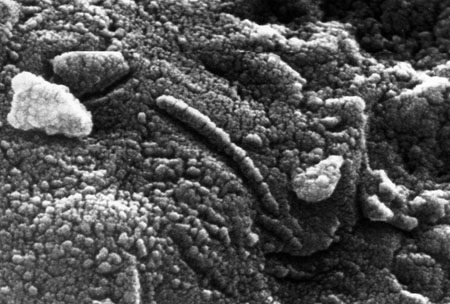
“Yes, that’s the little bit of rock that caused the big ‘life on Mars’ debate.”
Microscopic view of ALH84001. Image taken from wikipedia here.

I didn’t see a view of the meteorite that was this close-up, but the above picture gives you a sense of what I was looking at… possible traces of fossil life from another planet. Now, that’s a cool rock.

Honestly, I think that the recent images from Mars showing evidence that water is actively transforming the planet are far more compelling evidence for the potential for life on Mars than some possible little fossilized traces of life in a single Mars meteorite. Still, seeing a rock from Mars– any rock from Mars, since there’s only thirty or so identified Mars rocks here on Earth– is a neat thing to see. I was definitely ready to move into the meteorite vault at that point. 
Finally, after several hours of showing me around, I decided that I had taken up enough time of the generous curators and scientists in the Mineral Science Department. I was impressed with how they treated me. I was just an undergraduate student at the time, but they treated me with great respect. Of course, they tried to impress me by showing off their best samples, but in their conversation they engaged me as if I were a colleague of theirs. In a way, I guess I was. After all, I was taking some of their precious rocks away with me.
I think that this story highlights one of the biggest perks of being a scientific researcher: access to all kinds of neat museums and the knowledgeable researchers and curators who work there. Scientists maybe don’t get paid a lot, but who would begrudge, say, The Bad Astronomer a behind-the-scenes tour of a meteorite collection? Maybe my friends with consulting and finance jobs make far more money than I ever will as a scientist, but how many behind-the-scenes tours of the Smithsonian’s Mineral Department have they had? Yes, there are definitely perks to being a scientist. 

At the end of my afternoon visit, I walked out the front door of the Smithsonian with three dozen volcanic glass samples in my purse. Security didn’t even check my bag… I should have palmed one of those diamonds. Or, better yet, a meteorite.

Geology Word of the Week: C is for Coquina

Coquina rock. Image taken from wikipedia here.

def. Coquina (“co-keen-ah”):
A sedimentary rock consisting of loosely-consolidated fragments of shells and/or coral. The matrix or “cement” consolidating the fragments is generally calcium carbonate or phosphate. Coquina is a soft, white rock which is often used as a building stone. Coquina forms in near-shore environments, such as marine reefs. According to the Oxford English Dictionary, coquina is a loanword from Spanish meaning “shell-fish” or “cockle” (a type of bivalve mollusc). Also according to the Oxford English Dictionary, the word was first used in English (to refer to the building stone) in 1837 in the book The Territory of Florida by J.L. Williams.

I remember exactly when I first learned the word “coquina.” When I was in high school, I had the opportunity to take some science electives in addition to the normal biology, chemistry, and physics courses. One of the electives I took was geology. I remember reading the textbook for the class (I believe it was Essentials of Geology), and there was a picture of coquina rock in the chapter on sedimentary rocks. I remember thinking, “Cool!” when I saw the picture of coquina. To me, coquina was a great rock because it was so simple: the rock was clearly composed of shell and coral fragments which had been cemented together. The fragments were large and obvious and just barely cemented together.  I think I liked coquina so much because I was a bit overwhelmed by all of the rock and mineral types when I took that first high school geology class.  I loved learning about rocks and minerals, but I found myself somewhat befuddled by all of the names and strategies used for identification. I had to think before I could confidently distinguish amphibole from pyroxene or diorite from dolerite. Coquina, on the other hand, was a refreshingly simple rock to identify.

While relatively simple to identify, coquina can actually be a complex rock. There are many different types of shell and coral fragments that can cement together to form coquina. Identification of these fragments is important in order to fully classify and understand the origin of a particular coquina, but this identification can sometimes be challenging. Like with any sedimentary rock, the origin of a particular fragment in coquina may sometimes be mysterious. Coquina may also be covered in mud and dirt or weathered, making identification difficult at first glance. Many coquina rocks were formed recently (within the past few thousand years), but some coquina rocks are older. Determining the age of older coquina is sometimes important for understanding local geology. For instance, since coquina forms in a near-shore environment, determining ages of coquina deposits (either marine or on land) can help reconstruct sea level rise and fall over time. However, determining the ages of sedimentary rocks, including coquina, is always a challenge since diverse fragments (often of different ages) have come together to form new rock.

Below is a picture some coquina that was collected from the seafloor just off the coast of southern Africa by my fiance, who is also a geologist. My fiance regularly finds coquina and shell fragments in the marine sedimentary rocks he studies. He is sometimes able to date coquina and other shell-containing sedimentary rocks by identification of shells.  Since certain shell-making organisms lived at specific times in the past, identification of some types of shells can be used to date coquina rocks. Coquina rocks can also sometimes be dated by their location within a sequence of sedimentary rocks. For instance, if the ages of rock layers on either side of a coquina layer are of a known age, then the age of  the coquina layer can be bracketed.

My fiance writes about this particular coquina,

Here is a picture of the coquina rocks – bear in mind these were photographed right after being collected off the sea-bed so are still covered in bits of mud. The entire “rock” consists of shell cemented by calcareous material and phosphorite. The sample contains least two different species of shell: a thin, long, spirally shell and a clam-like shell. From my seismic work I’ve interpreted this unit as Miocene in age (Burdigalian ~ 20 million years old).

Coquina collected at sea off the coast of Southern Africa.
Photo courtesy of Jackie Gauntlett.

Coquina is commonly used as a building stone, particularly in places (such as Florida and the West Indies) with large coquina deposits. Coquina is a very soft building material, so soft that it needs to be dried out  in the sun for a few years before being used as a building stone. Apparently, the softness of coquina made it an ideal building stone for some forts. For example, coquina was used to build the Castillo de San Marcos Fort in St. Augustine, Florida. The fort was built by the Spanish in the late 1600s when Florida was a Spanish territory. When British forces attacked the fort in 1702 during the Siege of St. Augustine, they fired cannon balls at the fort. However, the cannons were not effective at destroying the fort because the cannonballs kept sinking into the soft coquina. Forts are normally made out of harder stone, which fractures or punctures when hit with cannonballs.

Since the British could not break through the coquina walls, they were forced to lay siege to the fort. Eventually, Spanish relief ships forced the British to withdraw. The British managed to burn down much of the St. Augustine fort as they retreated (not sure why they didn’t try that earlier, honestly), but the fort was rebuilt and refurbished by the Spanish a few years later. However, the British did not give up, returning for a second siege and eventually taking over the fort in 1763. Just think, though… that pesky soft coquina kept the British from taking over the fort for 61 years.

Castillo de San Marcos fort. Image taken from wikipedia here.

In addition to being a good cannonball protector, coquina is a beautiful ornamental building stone. In response to my request on twitter (@GeoEvelyn) for coquina pictures, Phoebe Cohen (@PhoebeFossil) sent me some beautiful coquina pictures which she took just a couple of days ago in Shark Bay, Australia. The building where she is currently staying is made out of gorgeous coquina that was mined locally.

Phoebe writes,

This building at Carbla Station, Western Australia, is made entirely of blocks of coquina. The coquina comes from the nearby beach of Shark Bay, a hyper-saline semi-restricted area. The coquina forms right near the beach, mainly from tiny clam shells washed up onshore. The shells are compressed and turned into a cohesive mass as rain water filters through them, dissolving a little bit of the shell’s calcium carbonate, which then glues the shells together. The coquina here is no longer used for building stone, as it is now in a protected marine park area.

Here are Phoebe’s pictures of the coquina building:

Coquina building in Shark Bay, Australia. Photo courtesy of Phoebe Cohen.

A closer look at the coquina building stones, Shark Bay, Australia.
Photo courtesy of Phoebe Cohen.

An even closer look at a coquina building stone in Shark Bay, Australia.
Photo courtesy of Phoebe Cohen.

And here’s a picture from Phoebe of an old coquina mining site:

Old coquina mining location, Carbla Beach, Shark Bay, Australia.
Photo courtesy of Phoebe Cohen.

Chapman’s Peak Nonconformity

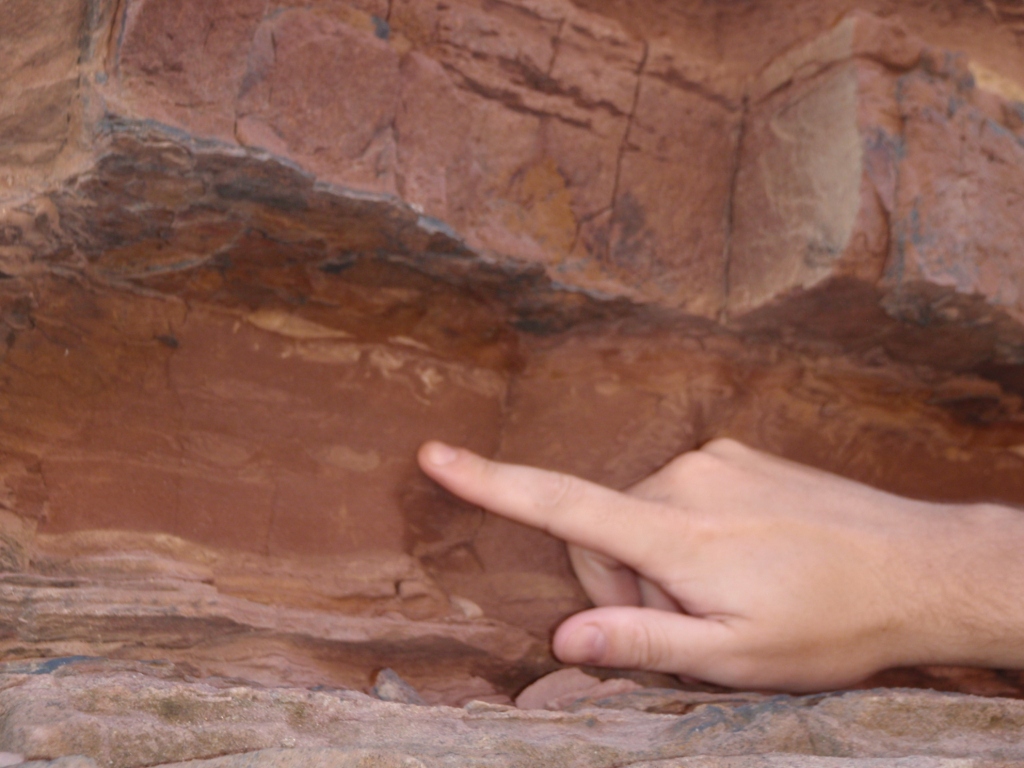
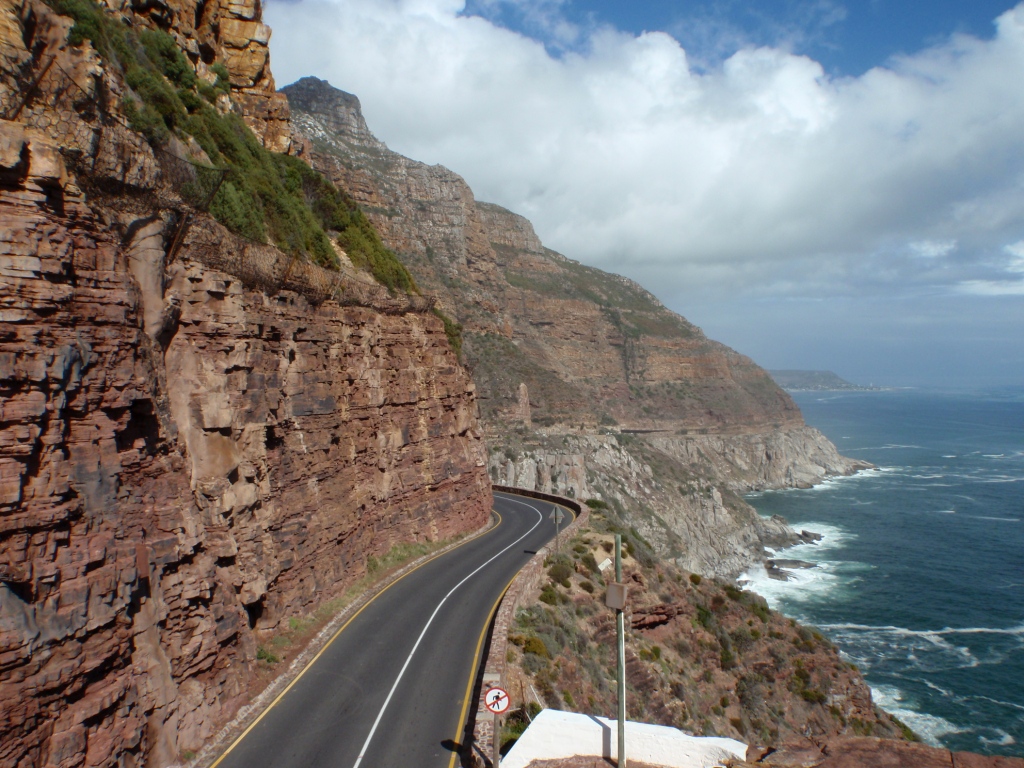
Chapman’s Peak Nonconformity, South Africa, May 2011.

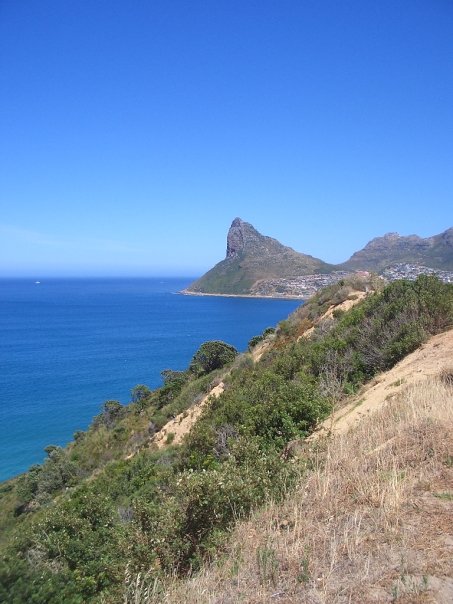
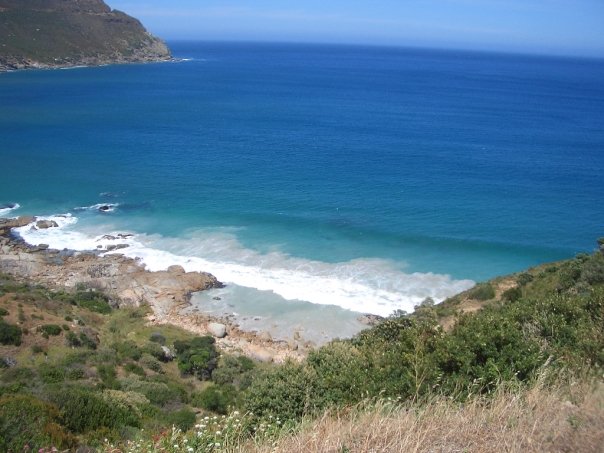
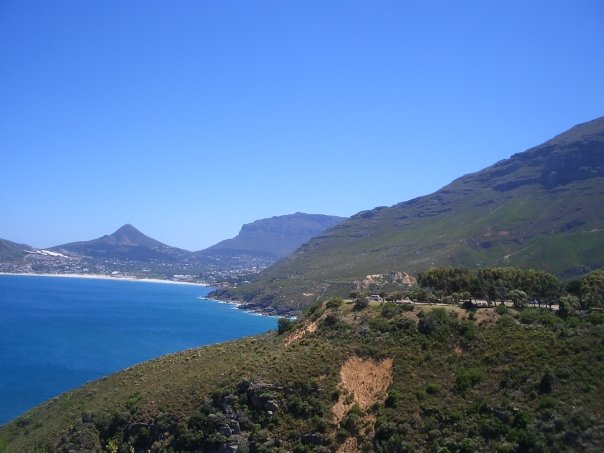
On my recent trip to South Africa (see also my recent posts Sevilla Rock Art Trail, The Maltese Cross, The “Peace in Africa” in Port, and Cape Peninsula in Pictures), I spent my very last day touring around Cape Town with my fiance, my future sister-in-law, and her boyfriend. One of the things that we did just before I headed to the airport was drive along the Chapman’s Peak Drive, a road just outside Cape Town that stretches from Noordhoek (which means “North Corner” in Afrikaans) to Houtbaai (which means “Wood Bay” in Afrikaans; the Afrikaans-English hybrid “Hout Bay” is commonly used). The drive follows the rocky coastline and provides breathtaking views. First constructed during World War I (and considered an incredible feat of engineering for the time), the drive was closed for a time in the 1990s due to safety concerns. The winding road is built on quite steep terrain and is frequently covered by rockfalls. However, the drive was re-opened in the 2000s (with reinforced safety features) as a scenic toll road catering to foreign tourists. However, there are many residents of Hout Bay and the surrounds who travel along Chapman’s Peak everyday. Occasionally, the drive is closed because of weather or rockfall.

Google map showing location of Chapman’s Peak Drive. Click to enlarge.
Google map showing location of Chapman’s Peak Drive (zoomed out).
Note the location of Cape Peninsula just below the drive. Click to enlarge.

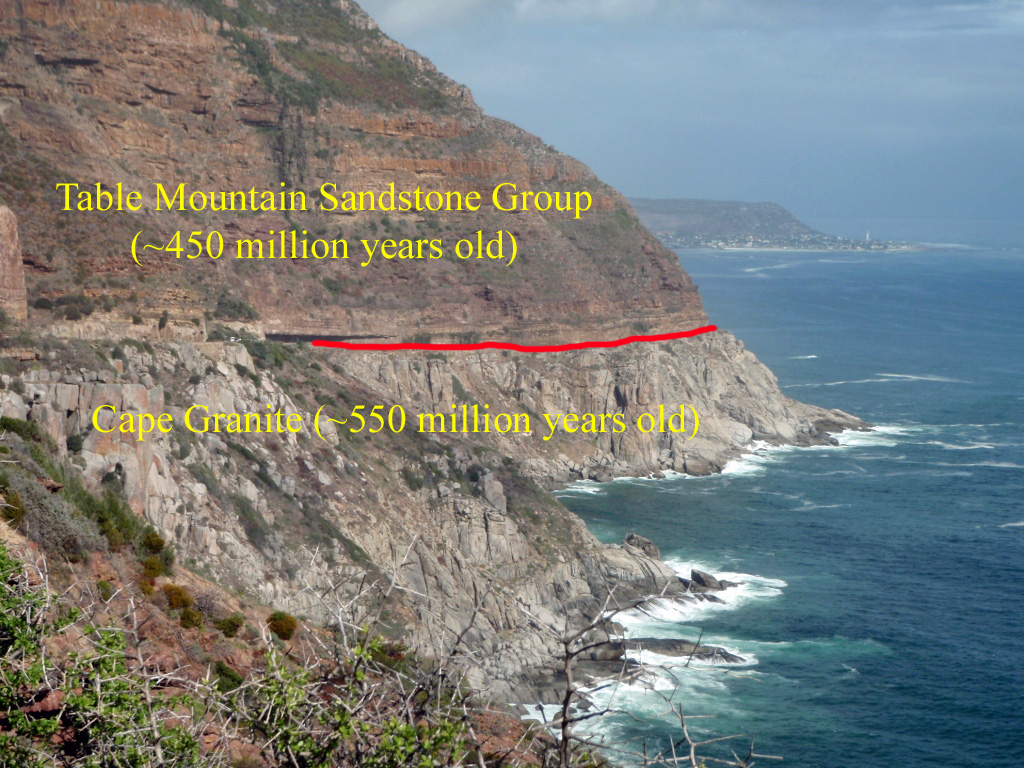
I highly recommend that every visitor to Cape Town go on the Chapman’s Peak Drive, which has gorgeous views of the coastline and ocean. If you are a geologist visiting Cape Town, you absolutely have to go on the Chapman’s Peak Drive. The reason is simple: the road follows a spectacular nonconformity between ~550 million year old Cape Peninsula granite and ~450 million year old sandstone of the Table Mountain Sandstone Group. The basal (bottom-most) layer of this sandstone group is called the Graafwater*. The Chapman’s Peak road was built by carving out the cliffside into the softer sandstones; the road itself rests on top of the harder granite.

Same picture as above, but with the nonconformity marked,
South Africa, May 2011. Click to enlarge.

For those of you who are not geologists, a nonconformity is a place where there were igneous or metamorphic rocks that were eroded are in contact with overlying sedimentary rocks. Nonconformities form when, after a period of erosion, sedimentary rocks are deposited on top of igneous or metamorphic rocks. There is missing time (the time of erosion) in the rock record. Thus, there is a nonconformity of geologic time. At the Chapman’s Peak nonconformity, about 100 million years of time is missing in the geologic record. The word nonconformity is closely related to the word unconformity, which is a similar contact between two sedimentary rocks (or rock groups).

Here are some figures (taken from University of Cape Town Geology Department websites here and here) that give you a sense of the geology of the Cape Town area, including along the Chapman’s Peak Drive:

Postcard view of Cape Town. Taken from here. Click to enlarge.
Similar view to above postcard, but with rock types colored in. Figure taken from here.
By the way, one of my favorite things to do in Cape Town is take a moonlight hike up
Lion’s Head, the little knob of sandstone sticking out of the Cape Granite.
Note the location of Hout Bay. Click to enlarge.
Rock types of Table Mountain, Cape Town. The red link marks the
unconformity/nonconformity. Figure taken from here.
Click to enlarge.

This University of Cape Town website has a good description of the geologic history of the Cape Town area. The oldest rock around Cape Town is the Malmesbury Group (alternating graywacke sandstone and slate), which was intruded by the Cape Granite (and some later dykes). Then there was erosion, and then the impressive Table Mountain Sandstone Group was deposited. I look forward to learning more about Cape Town geology when I move to Cape Town in August, but the above figures should give you a rough idea of the geology in which the Chapman’s Peak nonconformity is found.

Below are some more pictures of Chapman’s Peak Drive. These pictures are from my recent trip and also from my first visit to the Chapman’s Peak Drive in January 2008.

Sign for the Chapman’s Peak Drive toll road, South Africa, January 2008.
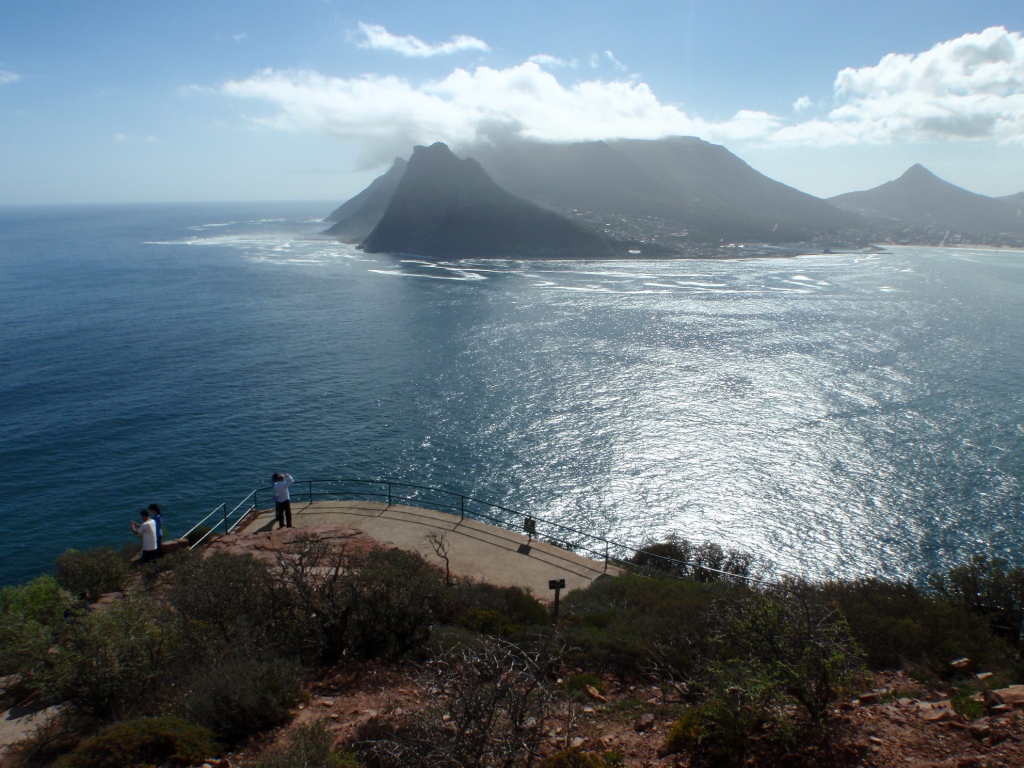
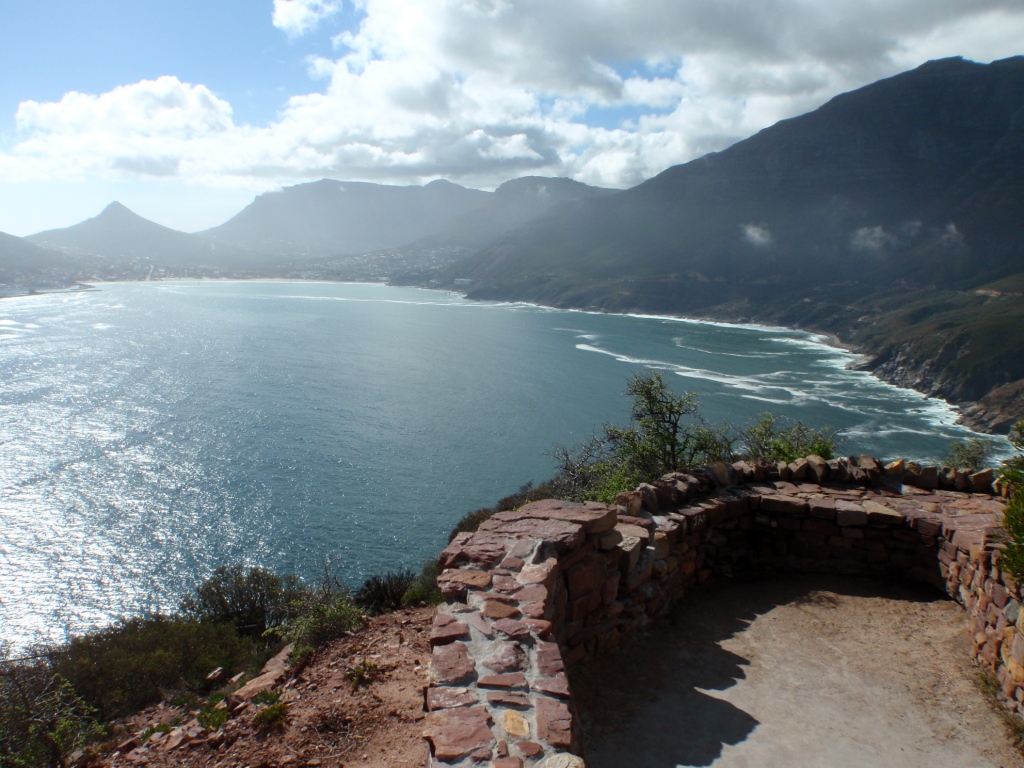
A trio looking over Hout Bay, South Africa, May 2011.
Another Hout Bay view, South Africa, May 2011.
Viewing platform at Hout Bay, South Africa, May 2011.
Cliffs along Chapman’s Peak Drive, South Africa, May 2011.
Another viewing platform at Hout Bay, South Africa, May 2011.
Jackie contemplates some geology (and scenery), Hout Bay, South Africa, May 2011.

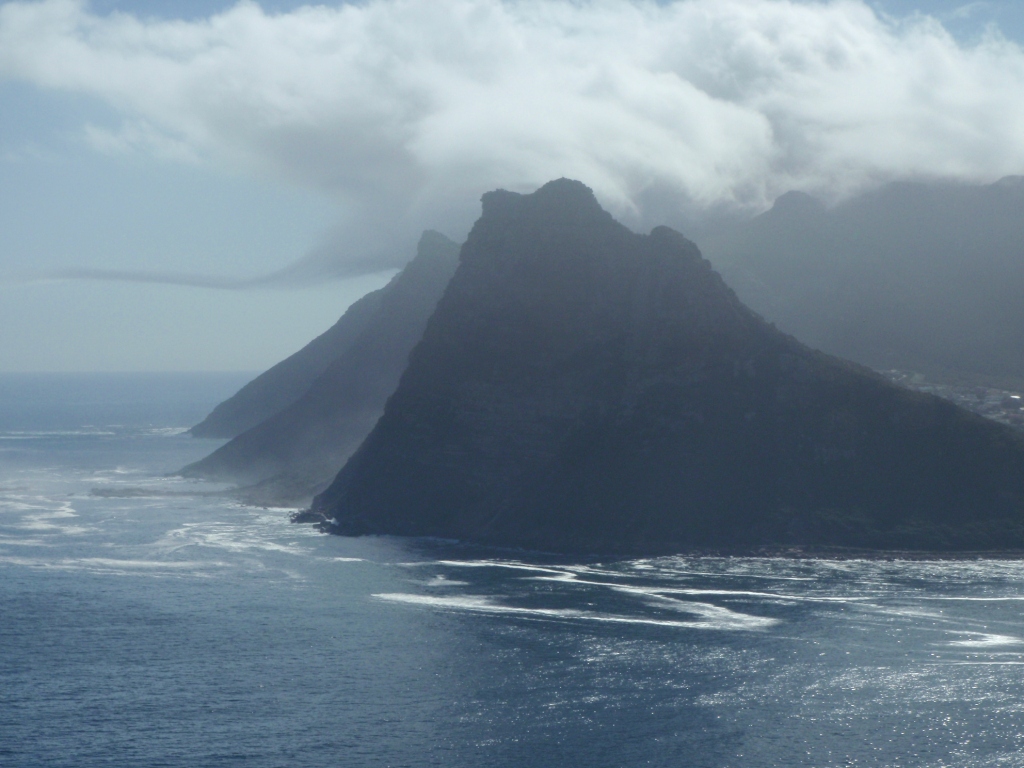
Hout Bay Sentinal, South Africa, January 2007.
Beach view, Chapman’s Peak Drive, South Africa, January 2008.
Looking across Hout Bay, South Africa, January 2008.
Another spectacular Chapman’s Peak Drive view, South Africa, January 2008.
Can you spot the nonconformity?
Chapman’s Peak Drive, South Africa, January 2008.
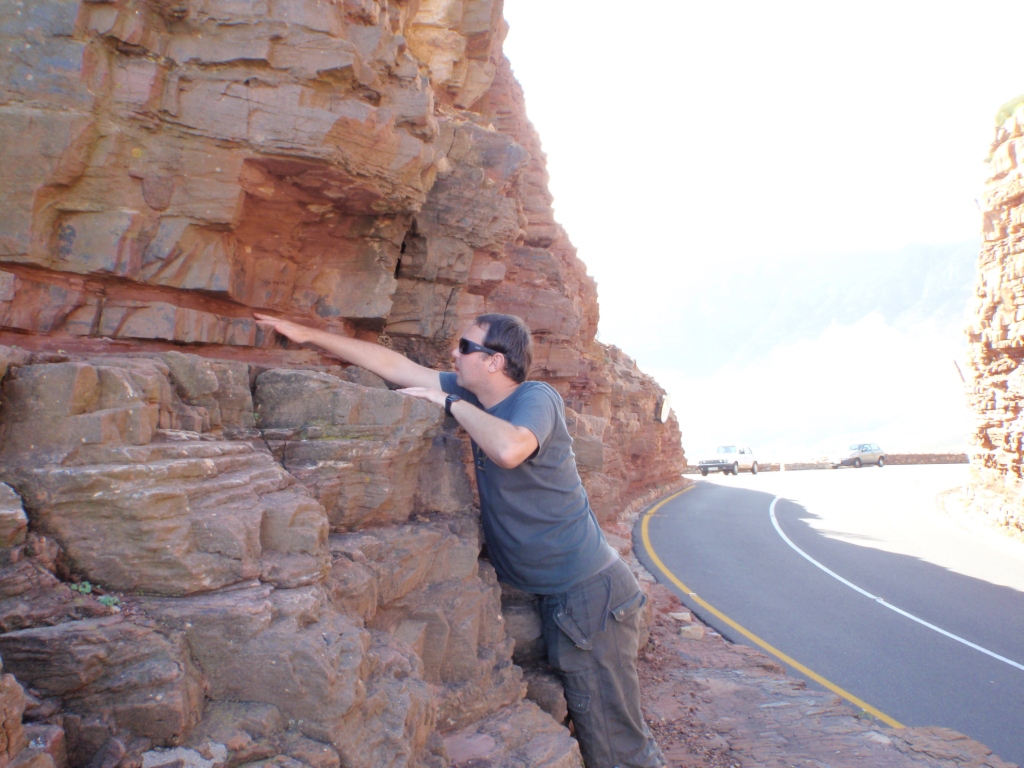
Roadcut through the Graafwater formation.
Chapman’s Peak Drive, South Africa, May 2011.
A perilous place to investigate the Graafwater– but we did anyway!
Chapman’s Peak Drive, South Africa, May 2011.
Jackie takes a closer look at the Graafwater. Do you see the cross-bedding?
Chapman’s Peak Drive, South Africa, May 2011.
Found something interesting…
Chapman’s Peak Drive, South Africa, May 2011.
What is it?
Chapman’s Peak Drive, South Africa, May 2011.
It’s a trace fossil! A filled-in burrow.
Chapman’s Peak Drive, South Africa, May 2011.
More trace fossils in Graafwater.
Chapman’s Peak Drive, South Africa, May 2011.
These fossilized burrows were filled with either sand or organic material.
Chapman’s Peak Drive, South Africa, May 2011.
More trace fossil burrows!
Chapman’s Peak Drive, South Africa, May 2011.
Another view of the road along the nonconformity.
Chapman’s Peak Drive, South Africa, May 2011.
Yet another view of the road and nonconformity.
Chapman’s Peak Drive, South Africa, May 2011.
Obligatory cute (and slightly sunburnt) geologist couple shot in
front of the nonconformity. Chapman’s Peak Drive,
South Africa, May 2011.

*I asked my fiance what “Graafwater” means. He says: “directly translated [from Afrikaans] it’s rubbish, ‘spade-water.’ “

Finalists Announced in the 3 Quarks Daily Science Blogging Contest

Georneys didn’t make it to the final round of judging in the 3 Quarks Daily Science Blogging Contest– I guess ophiolites and geology words weren’t the editors’ cup of tea, and there was some stiff competition– but that’s fine. As I said, I’m thrilled to have just made it to the semifinal round and to have had so much support during the voting round. Since I’m relatively new to the science blogging scene, I’m proud to have such a strong following. Thanks again for all your support!

Here are the 9 finalist posts (6 chosen from the 20 semifinalists, and 3 wildcard entries added by the 3 Quarks Daily editors):

  1. Cosmic Variance: The Fine Structure Constant is Probably Constant
  2. Dr. Carin Bondar: Sacrifice on the Serengeti
  3. Empirical Zeal: Blind Fish in Dark Caves Shed Light on the Evolution of Sleep
  4. Highly Allochthonous: Levees and the Illusion of Flood Control
  5. Laelaps: The Pelican’s Beak – Success and Evolutionary Stasis
  6. Oh, For the Love of Science: Prehistoric Clues Provide Insight into Climate’s Future Impact on Oceans
  7. Opinionator: Morals Without God?
  8. Scientific American Guest Blog: Seratonin and Sexual Preference: Is It Really That Simple?
  9. Starts With A Bang: Where Is Everybody? 

There are some great posts among the finalists, but I’m rooting for the geology-themed posts by Anne Jefferson of Highly Allochthonous and by Brian Switek of Laelaps. Good luck to them!