Left Behind in the Field: Accretionary Wedge #36

For this month’s Accretionary Wedge, Geosciblog asks:

What do you regret leaving behind at a geological locality?

In other words, what samples, specimens, or even photographs do you regret “not getting enough of”?

For those of you who are not familiar, the Accretionary Wedge is a monthly “geology blog carnival” where geobloggers of all kinds are invited to blog on a theme. The deadline for this month’s Accretionary Wedge is July 16th. Be sure to head over to Geosciblog and participate!

Personally, my experience with scientific fieldwork has been collecting far more rocks, photographs, and notes than I could ever possibly work on scientifically. For every month of fieldwork I’ve done, I’ve had to work a year or longer in lab just to process a subset of the rocks and data collected from the field. Geochemistry is often this way; it takes months of hard work to process samples collected in the field. I’ve been lucky enough to participate in three major field campaigns during graduate school– a 2007 expedition to the Ninetyeast Ridge in the Indian Ocean and two month-long field campaigns in the Samail Ophiolite in Oman.

During the Ninetyeast Ridge expedition, we collected an enormous quantity of rock– about 3,000 kilograms!

A full dredge basket of rocks. Indian Ocean, Summer 2007.
Too Many Rocks. Singapore Harbor, August 2007.
Still too many rocks. Singapore Harbor, August 2007.

We collected so many rocks, in fact, that we started to become creative with some of the less-important samples:

90E Ridge in Cobbles. Indian Ocean, Summer 2007.

Because we’ve collected so many rocks during the fieldwork I’ve participated in, I rarely wish for more rocks– I have enough to keep me busy! Occasionally, I do sometimes wish for a specific scientific sample. However, for my thesis research I was fortunate to have two field seasons. During the second field season, I collected many of the samples I longed for after the first field season. During my field seasons, I also collected a plethora of notes and photographs.

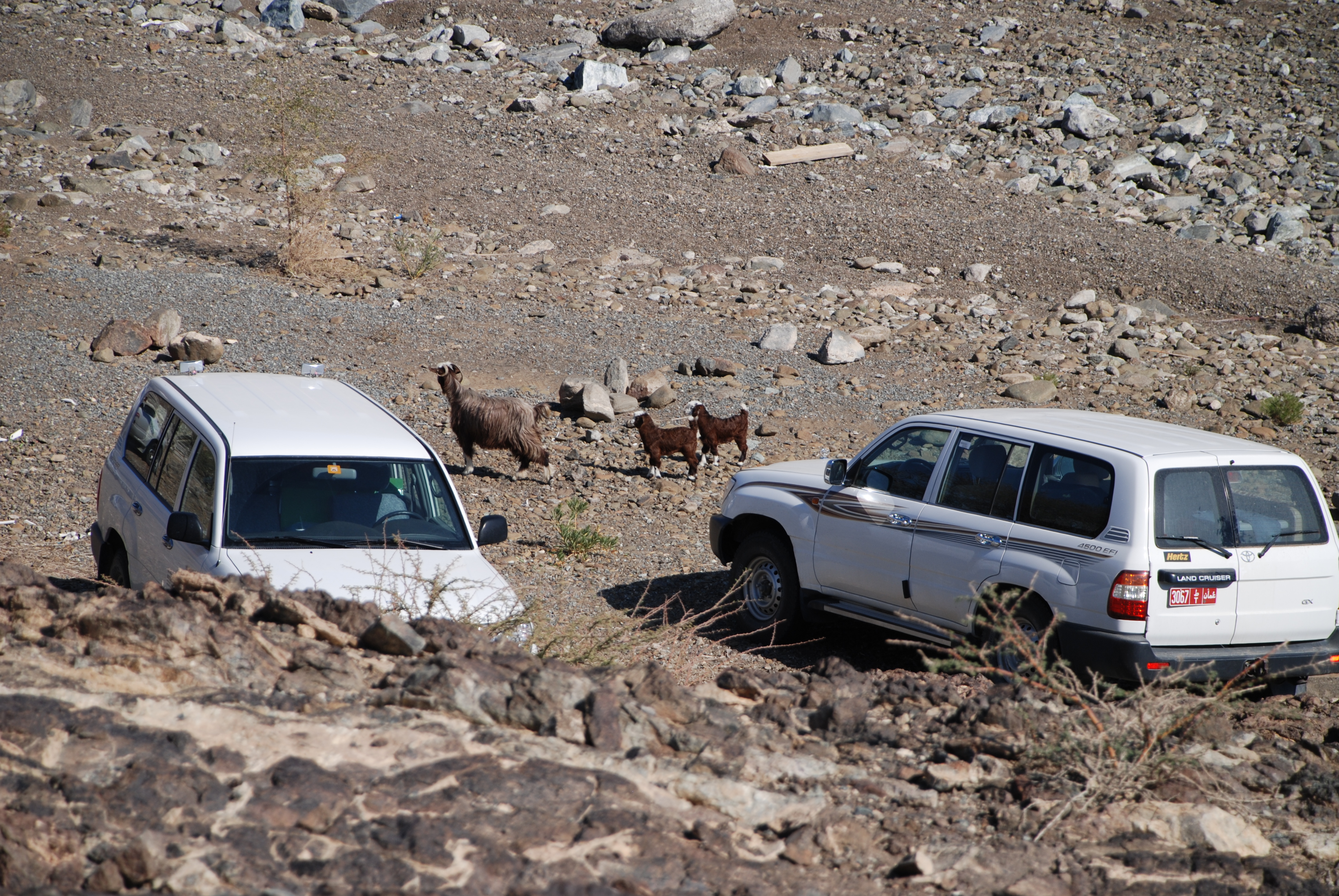
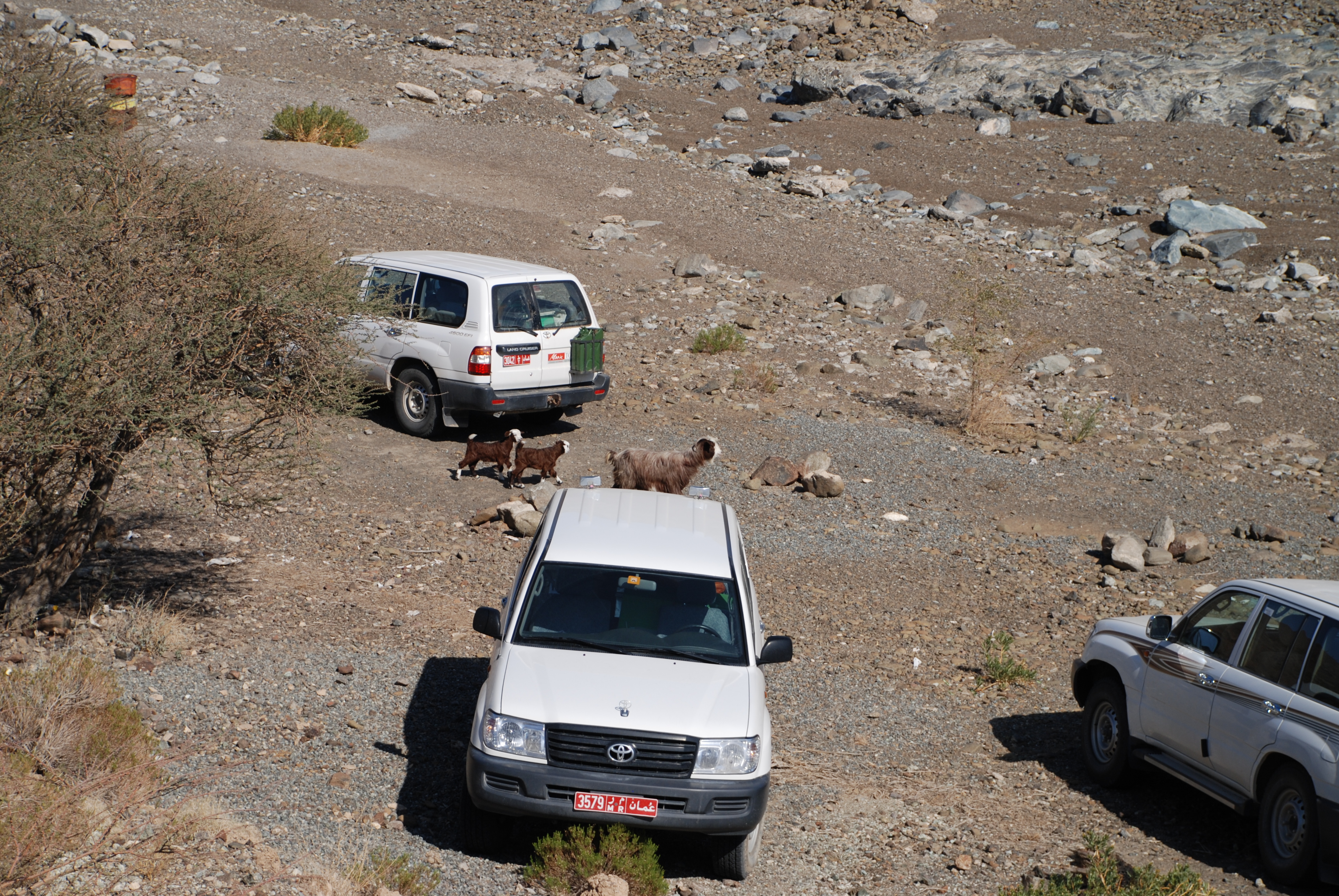
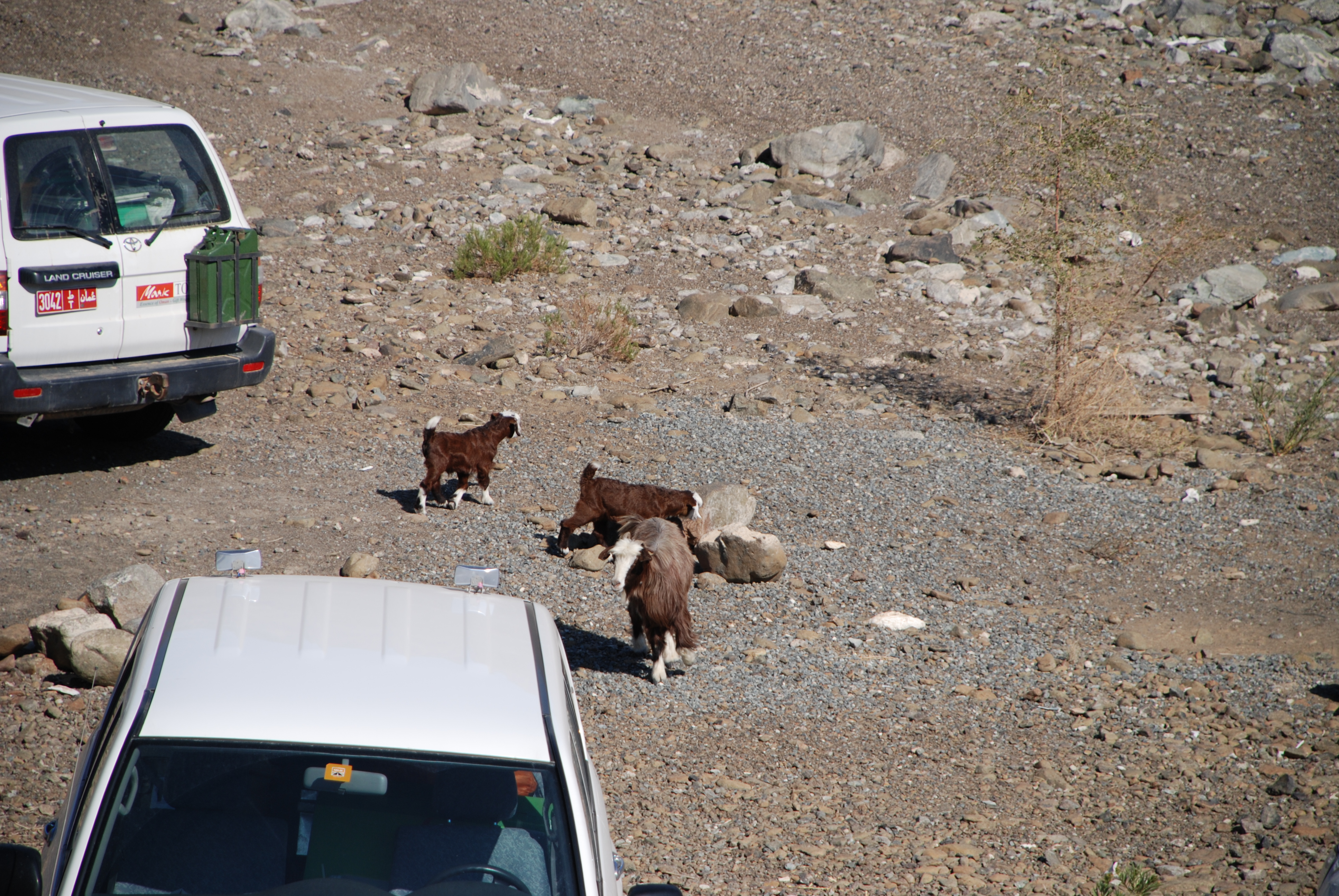
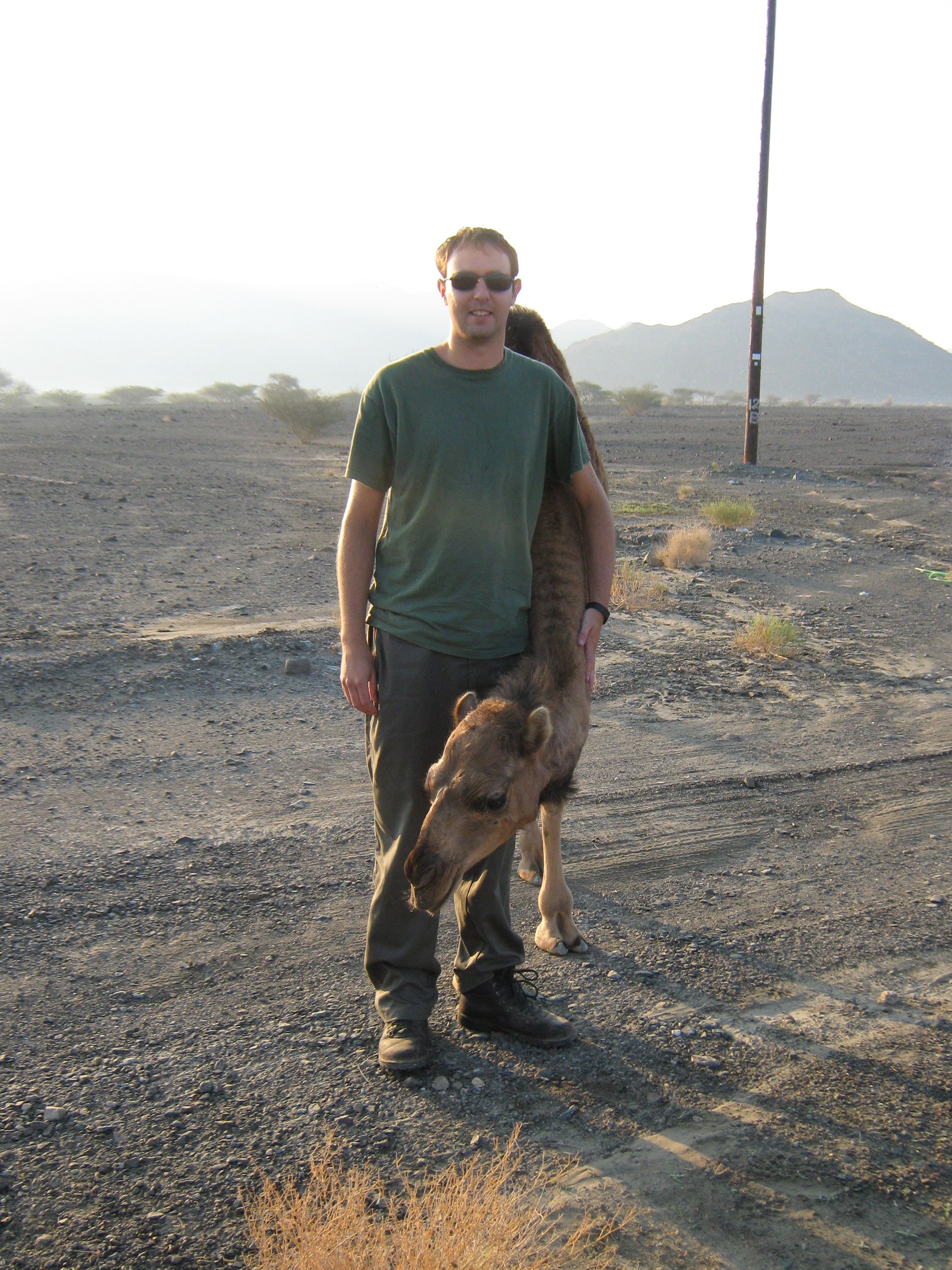
So, what do I wish I had brought back from the field with me? Not more rocks or notes or photographs. I wish I had brought back baby goats. Or maybe a baby camel. Particularly these little babies from Oman:

Baby goats 1. Oman, January 2009.
Baby Goats 2. Oman, January 2009.
Baby goats 3. Oman, January 2009.
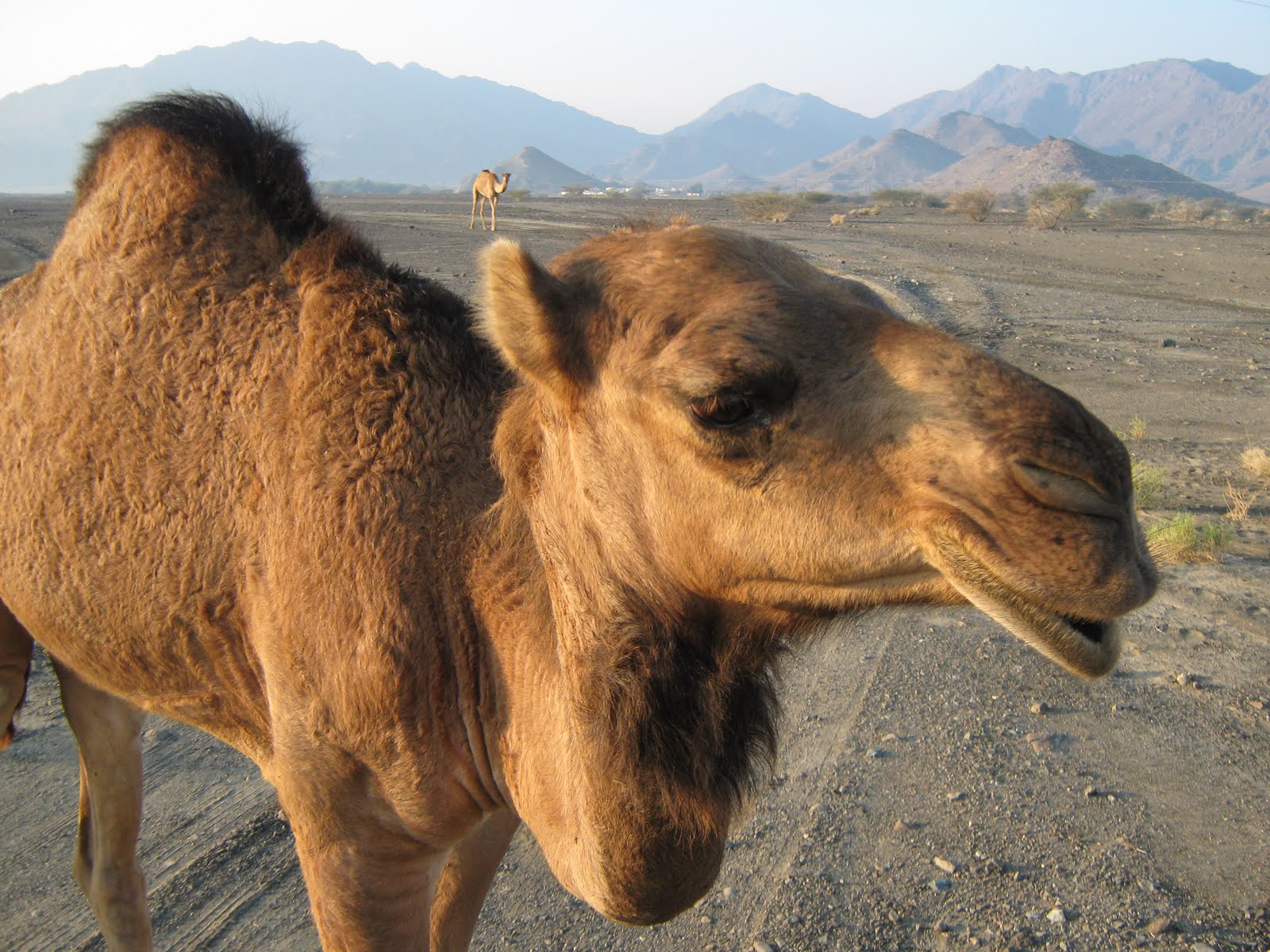
Baby camel 1. Oman, January 2010.
Baby camel 2. Oman, January 2010.

I’m not sure where we would put the baby goats and camels since we live in a 2-bedroom apartment. I’m also not sure if they would get along with our two housecats. But I’d like to bring them back anyway…  because they are adorable! I guess I’ll have to make do with pictures, though.

Geology Word of the Week: F is for Fumarole

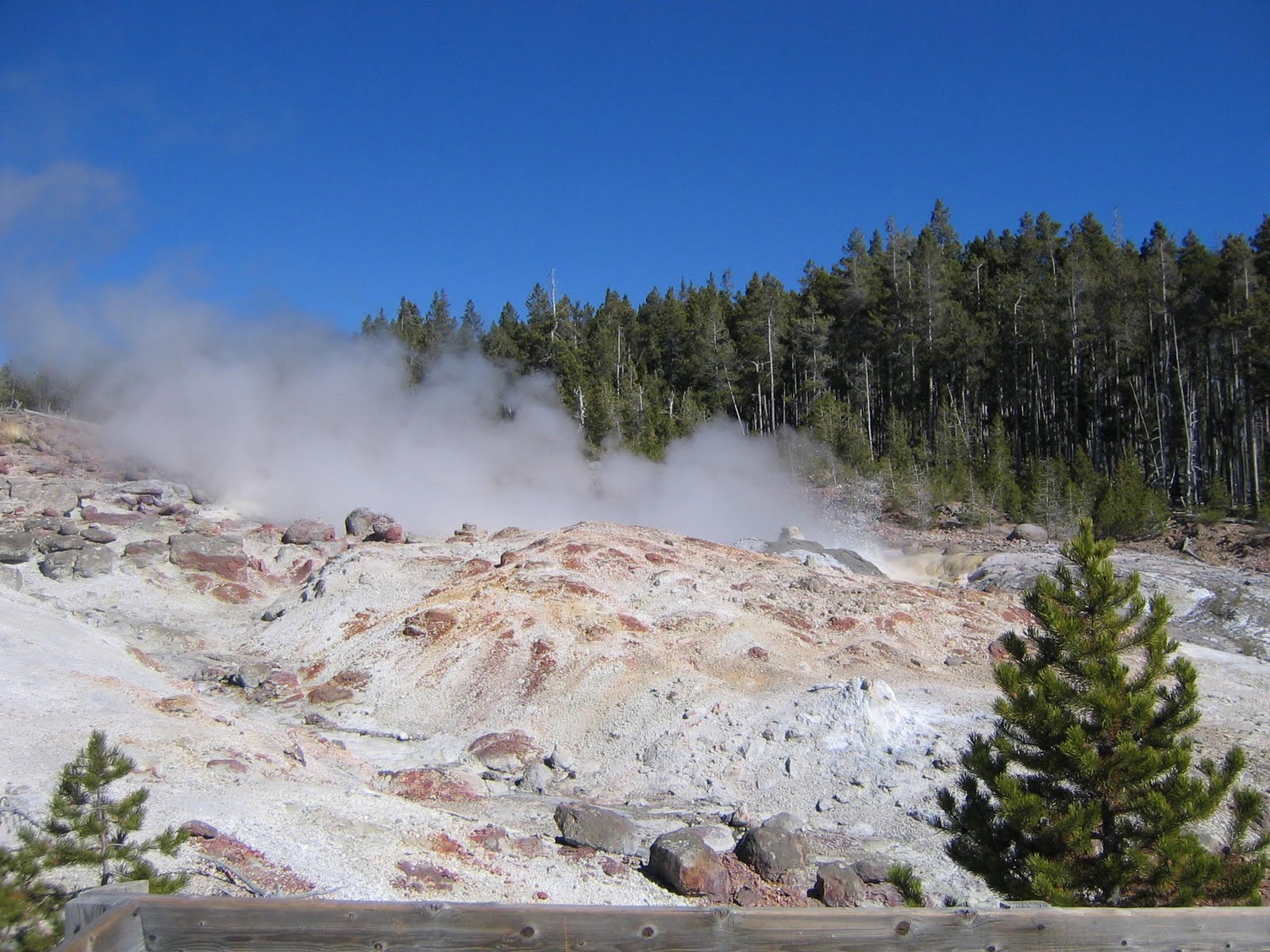
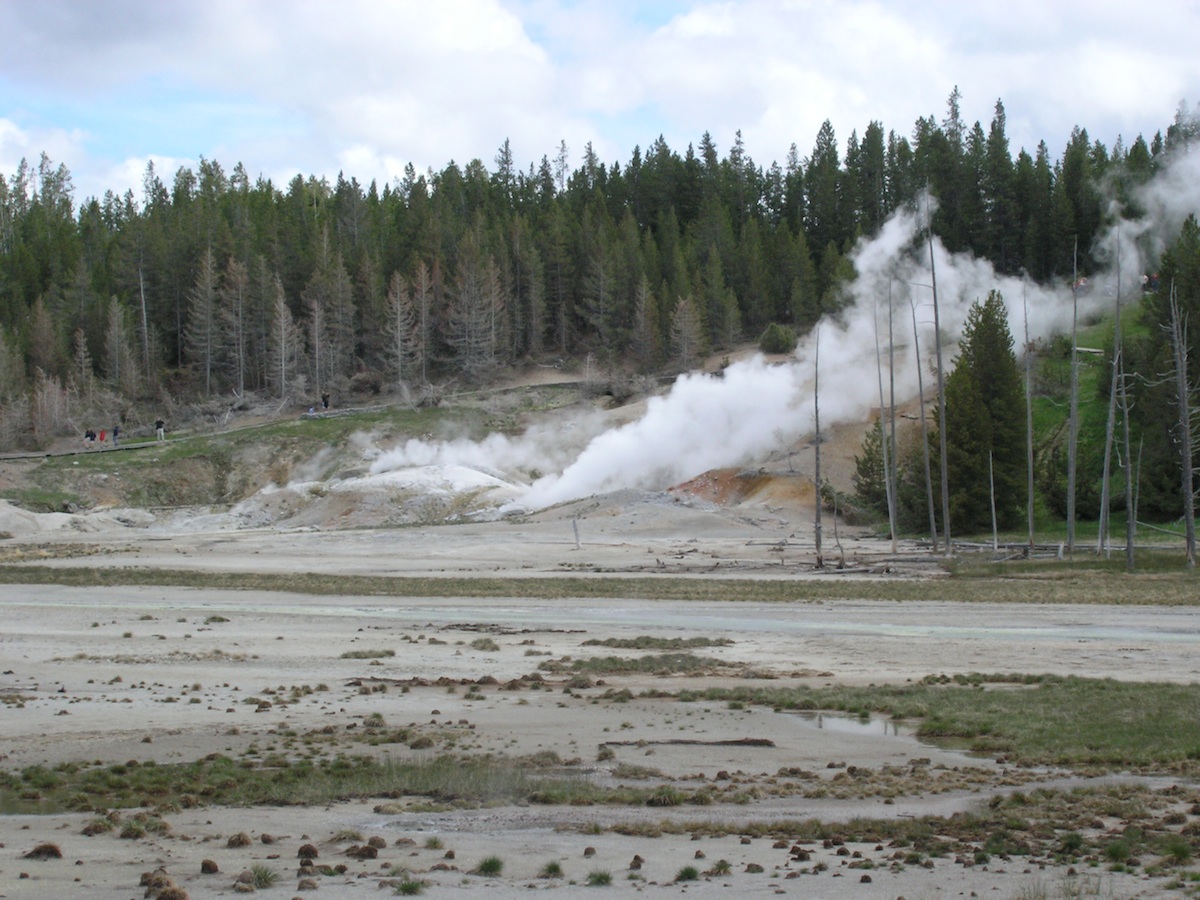
Fumarole 1. Yellowstone, Western USA, Fall 2005.

def. Fumarole:
A crustal opening, usually in the vicinity of a volcano, through which steam and other hot gases– such as carbon dioxide, sulfur dioxide, and hydrogen sulfide– are emitted. Fumarole comes from the Latin word “fumus,” which means smoke. According to the Oxford English Dictionary, the word was incorporated into English through the French word “fumarolle” [1].

When I’m pondering my geology word of the week, I usually start by reading several definitions of the geology word which I have chosen for that particular week. My trusty geology dictionaries rarely fail me, and I also often read the word’s entry (if it exists) on wikipedia (which is sometimes well-written; sometimes not) and check to see if the geology word is in the Oxford English Dictionary or OED. The OED is a great place to trace the etymology (origin and history) of a particular word. Sometimes geology words are in the OED (for instance, the words “delta” and “fumarole”), and sometimes they’re not (for instance, the word “nabka”). The OED definitions are usually elegantly written, but they are not always perfectly scientifically accurate. After reading several definitions– and sometimes sections of geology books related to a particular word– I set everything aside and then write up my own definition. I then add a little explanation and some pictures, edit a little, and then my geology word of the week is complete!

I really try to write the geology definitions in my own words and not just copy them out of books or online sources. However, this week I find myself particularly enchanted by the OED definition of “fumarole,” which is:

A hole or vent through which vapour issues from a volcano; a smoke-hole [1].

While perhaps not the most scientifically accurate and complete definition, I think that “smoke-hole” is a great way to describe a fumarole. Perhaps “gas-hole” would actually be better since a fumarole does not really release smoke from a fire but rather gases, generally hot gases generated by nearby volcanic activity. However, fumaroles do sort of look as if they are releasing fire smoke. Fumaroles often occur together in a “fumarole fields.” From a distance, a fumarole field can make a landscape look as if it is on fire, or perhaps smoldering after a recent fire. Indeed, one of the largest and most famous fumarole fields occurred in Alaska in 1912 and became known as “The Valley of Ten Thousand Smokes.” This impressive field of thousands of fumaroles formed in gas-rich volcanic ash that covered the valley after a very large eruption of the Novarupta Volcano.
However, fumaroles do not erupt smoke, at least not proper smoke generated by the burning of something. Rather, fumaroles release hot gases such as steam (water vapor), carbon dioxide, sulfur dioxide, and hydrogen sulfide. A fumarole which releases primarily sulfur-rich gases actually has a special name: it is called a solfatara (plural: solfatare). The gases released by fumaroles are generally produced as a result of volcanic activity and are generally being released from hot, gas-rich magma or ash. Water vapor released by fumaroles could also be the result of volcanic heating of groundwater.
Below are fumarole pictures galore! Enjoy!
Here are some pictures of fumaroles that I took during a trip to Yellowstone back in 2005:
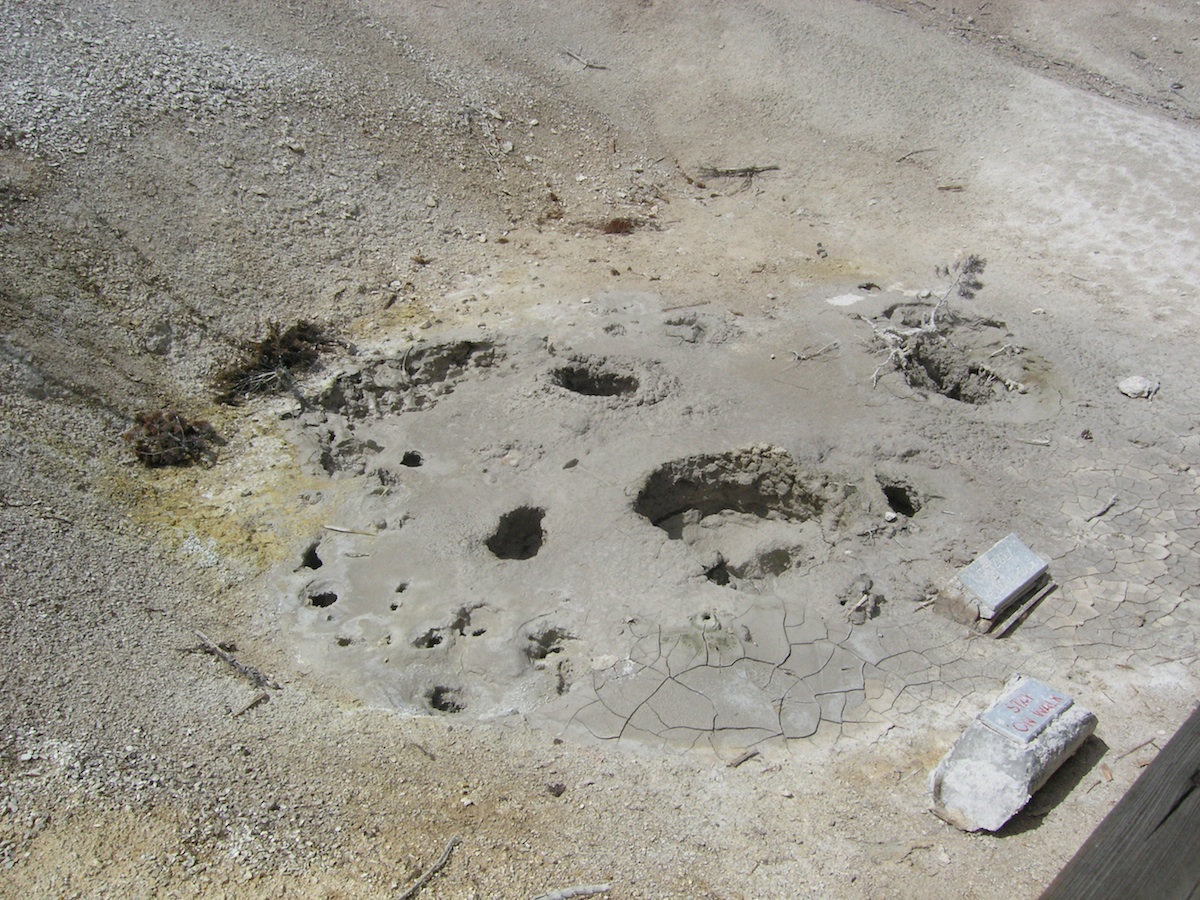
Fumarole 2. Yellowstone, Western USA, Fall 2005.

Fumarole 3. Yellowstone, Western USA, Fall 2005.

Fumarole 4. Yellowstone, Western USA, Fall 2005.

Fumarole 5. Yellowstone, Western USA, Fall 2005.

Fumarole 6. Yellowstone, Western USA, Fall 2005.

Fumarole 7. Yellowstone, Western USA, Fall 2005.

Here are some fumarole pictures and descriptions sent to me by Erik Klemetti of Eruptions:

Fumarole field at Bumpass Hell near Lassen Peak, California.
Photo courtesy of Erik Klemetti.


A fumarole near the road at the southern entrance of Lassen Volcanic National Park.
Photo courtesy of Erik Klemetti.

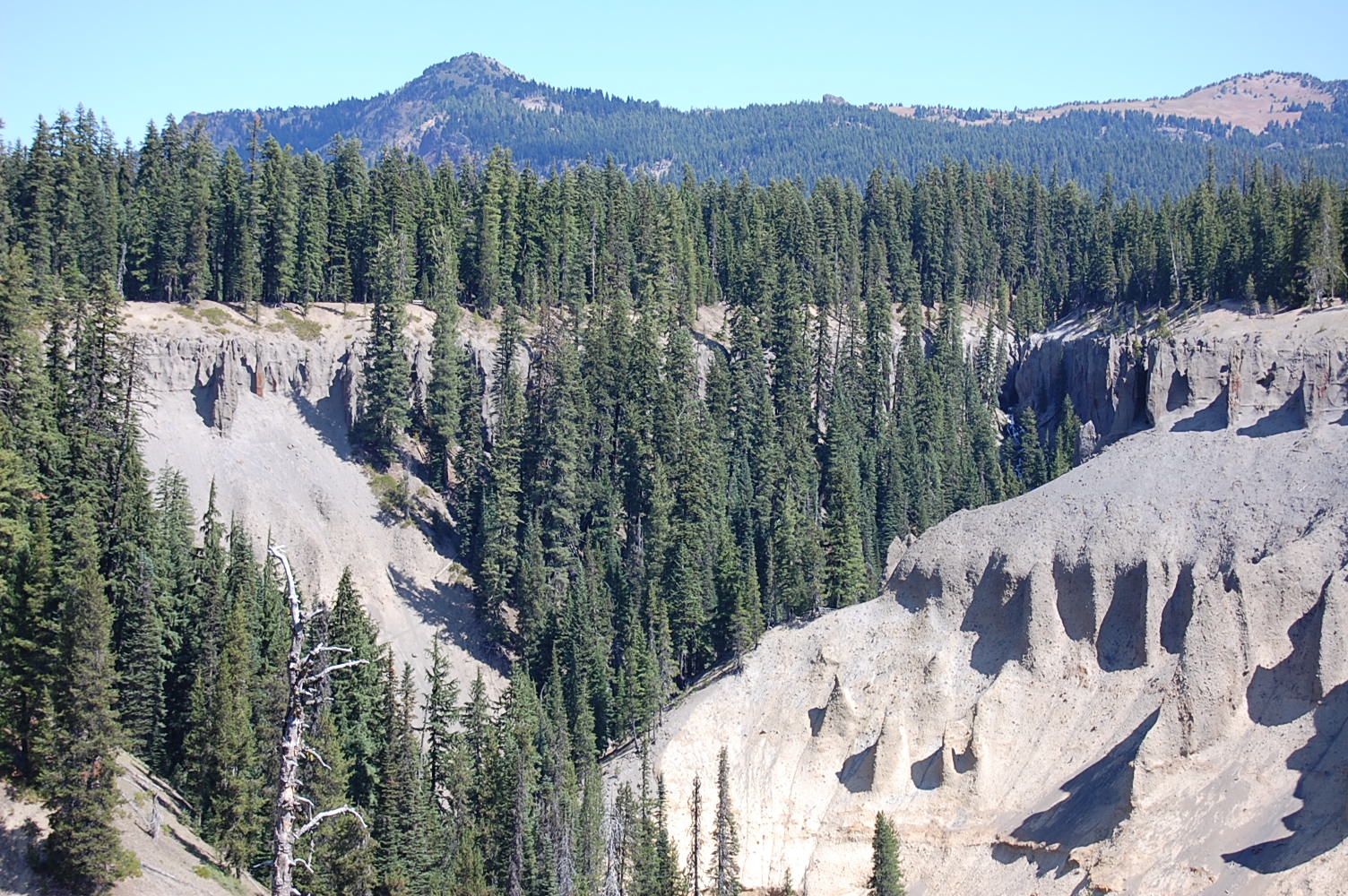
These aren’t active fumaroles, but the pinnacles in the Crater Lake ~7700 year old
eruption deposits are fossil fumaroles formed as the tephra degassed.
The ones in this shot are along the southern entrance road to the National Park.
Photo Courtesy of Erik Klemetti.
A fumarole in a sewer grate in downtown Rotorua, New Zealand.
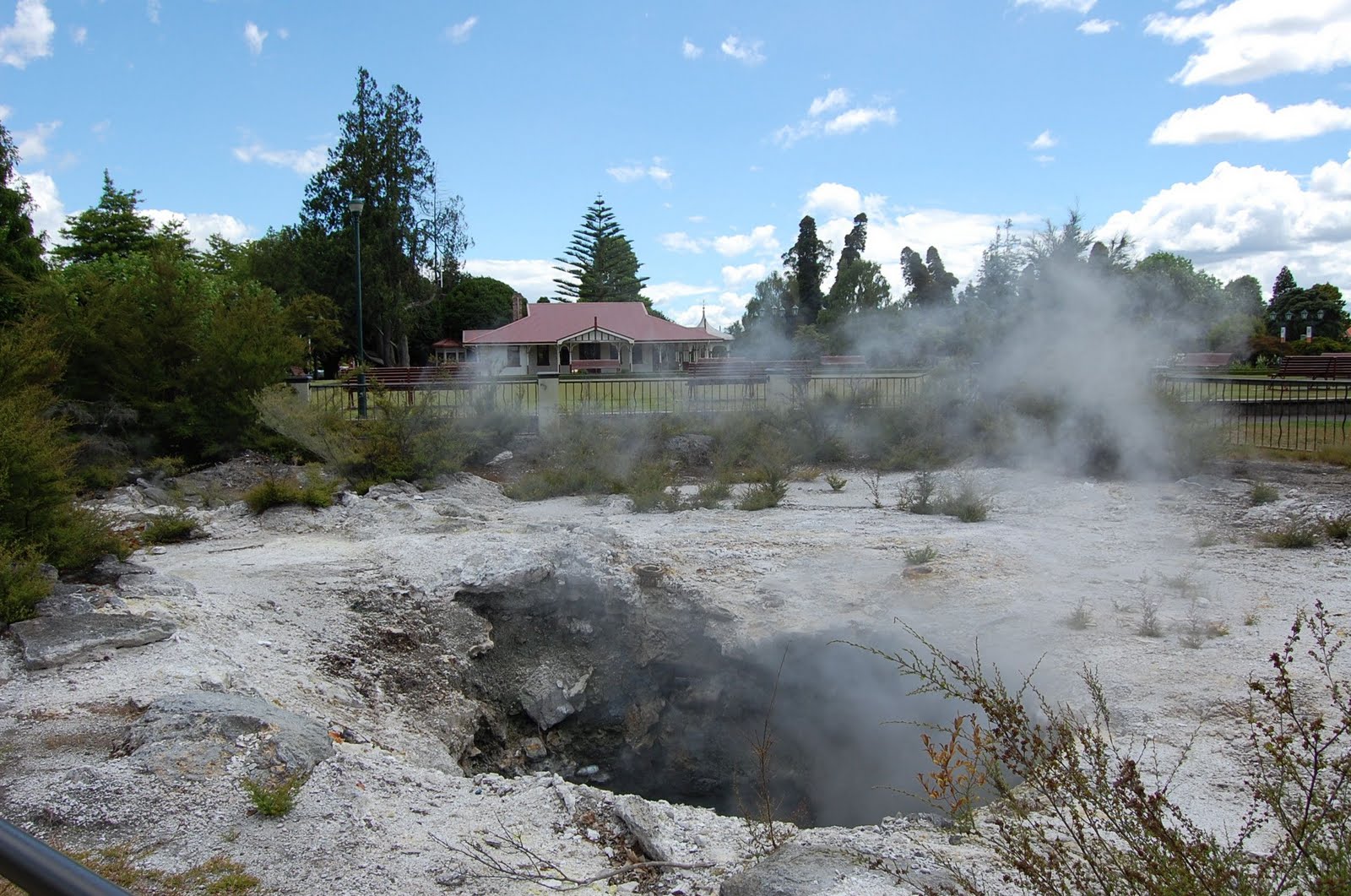
Photo courtesy of Erik Klemetti.

Fumarole in front of some colonial buildings along the shore of
Lake Rotorua, New Zealand. Photo courtesy of Erik Klemetti.

Here are a few more fumarole pictures from Yellowstone sent to me by Chris Rowan of Highly Allochthonous:

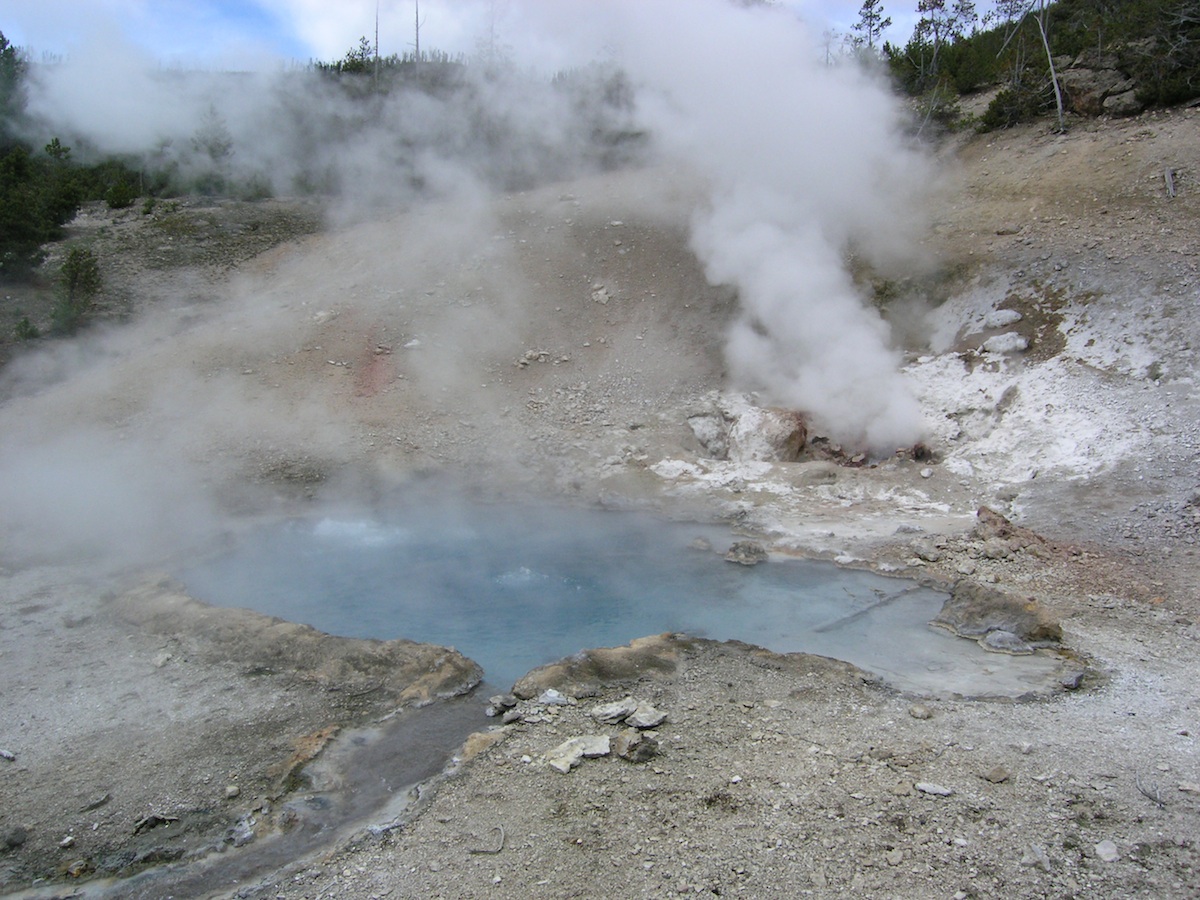
Beryl Spring Fumarole, Yellowstone, Western USA. Photo courtesy of Chris Rowan.

Black Growler fumarole. Yellowstone, Western USA. Photo courtesy of Chris Rowan.

Grizzly fumarole. Yellowstone, Western USA. Photo courtesy of Chris Rowan.

Reference:
1. “fumarole, n.” The Oxford English Dictionary. 2nd ed. 1989. OED Online. Oxford University Press. 7 July 2011  .

***Thanks very much to Erik Klemetti and Chris Rowan for pictures of this week’s geology word.***

Interesting Search Terms That Found My Blog #2

For the past little while, I have been keeping track of some interesting search terms that found my blog. These are just a sampling of ones that I happened across. I’ve put some “answers” below the search terms. Enjoy!

Also see:
Interesting Search Terms That Found My Blog #1

how to read a ternary diagram (5/22/11)
Answer: A ternary personality diagram? 

geologists are cute (5/22/11)
Answer: Thanks. Yes, we are, aren’t we?

baby camel pics (5/22/11)
Answer: Oh, I love baby camels! Here are some pictures for you:

Jackie and his baby camel friend. Oman, January 2010.
Baby camel close-up. Oman, January 2010.
Momma and baby camel. Oman, January 2010.

geology dress code (5/25/11)
dress code geologist at oil companies (6/23/11)
dress code calgary geologist (6/23/11)
Answer: This seems to be a popular search term that finds my blog. The recommended geology dress code is:
General: geology-themed t-shirt and teva sandals worn with socks.
Field: hiking boots, hiking pants, field shirt, hat, brunton compass, hammer, Rite-in-the-Rain notebook, and hand lens.
Industry Interview: Suit borrowed from old college friend.

i love my source located deep in the mantle (5/26/11)
Answer: Ummm… okay then.

geology lolcats (5/27/11)
Answer: My little geololcats are adorable.

zayna hunter (5/28/11)
Answer: Go away! No hunting my adorable kitty Zayna.

Zayna with mini soccer ball.

geology word of the week (5/31/11)
Answer: No problem.

geology word of the day (6/3/11) 
geology word of the day (7/5/11)
Answer: Okay, now you’re a little too demanding… 

carbon cycle story time (5/31/11)
Answer: Yay! I love carbon cycle story time.

geology alphabet (5/31/11)
Answer: I have one of those. Working on a second one.

non fiction book about geology travels (6/1/11)
Answer: I would love to write such a book. I could title it “Georneys” after my blog. Any publishers out there?

black spotted rock (igneous) (6/2/11)
Answer: An amygdaloidal basalt, perhaps? 

x is for (6/3/11)
Answer: Xenolith!

write short note on the origin of the earth (6/4/11)
Answer: Okay, your note is below. More here.

The Origin of the Earth in a Nutshell:
Our solar system evolved from the solar nebula, which was composed of stardust from extinct stars and thus rich in heavier elements relative to cosmic abundances. Likely triggered by a shockwave from a nearby exploding supernova, the solar nebula collapsed gravitationally to evolve into the solar system. The solar nebula heated up, began spinning faster, and formed into a disk. Eventually, a proto-sun formed at the dense, hot center of the young solar system. At the same time, gases and dust began to condense in the outer, cooler parts of the solar system. Heavier, more refractory elements condensed closer to the sun, forming the terrestrial planets, while hydrocarbons condensed further from the sun, forming large bodies which were able to capture gases from the solar nebula and develop into gas giant planets. At the furthest reaches of the solar system, icy planets formed from methane, water, and ammonia ice. The Earth is believed to have accreted from chondritic planetesimals about 4.567 billion years ago. Chondrite meteorites come from old, undifferentiated asteroids that have undergone very little alteration or metamorphism. Carbonaceous chondrites are rich in organic material and are the least altered and metamorphosed of the chondrites. Thus, carbonaceous chondrites are often used as the starting material for Earth in geophysical and geochemical models. Earth was mostly accreted by ~10 million years after the formation of the solar system, and there was probably significant accretion of the Earth up to ~100 million years. Towards the end of Earth’s accretion, impacts between large planetesimals may have played a key role Earth’s growth and development. In particular, an impact from a large, Mars-sized impactor ~30 million years after the formation of the solar system may have created the moon and a deep magma ocean on Earth. The formation of the core probably occurred gradually as Earth accreted. However, the final stage of core formation may have been aided by the descent of iron and sulfur rich melts through a molten, silicate magma ocean. Eventually, the magma ocean crystallized, and the upper Earth differentiated into an enriched, continental crust and a depleted mantle, the source for oceanic crust. Potentially, an early proto-crust may have existed early in Earth’s history. 

geological periods memorization (6/6/11)
Answer: I strongly recommend that you don’t try to memorize the geologic Ages. 

peridot is bad luck (6/6/11)
Answer: Goodness! I hope not. My engagement ring is a peridot.

uplifted oceanic snake rock (6/6/11)
Answer: Ophiolite!

in what ways are ocean basins similar to bathtub (6/7/11)
Answer: Here’s a good post on eustasy in which I talk about ocean bathtubs.

rock cycle poem (6/8/11) 
Answer: Well, I wrote one in 4th grade…

4th grade view of the rock cycle (6/9/11)
Answer: In poem form!

my doctoral adviser left (6/9/11)
Answer: I’m sorry. That’s no fun, I know. Keep your chin up!

cool gifts for geologists (6/9/11)
Answer: Suggestions here and here.

nuclear engineer puns (6/13/11)
Answer: Don’t have any of those. Will geology puns do? 

technology anachronisms list (6/11/11)
Answer: Here are a few examples.

cimarec hot plate error code e12 (6/12/11)
Answer: I hate cimarec hotplates. They are bad hotplates. Also, I’m sorry, but I have no idea what the error codes mean, despite reading the manual many times.

obsidian dome california can you take a piece (6/14/11)
Answer: Not sure. Anyone know?  

are u a phd candidate after qualifying exams (6/15/11)
Answer: No, u are not. But you might be. 

phd qualifying geology exam blog (6/16/11)
Answer: Is that what my blog is known for? Uh-oh… hope you like Bee-Bop.

asian art birds with long tails and pics (6/16/11)
Answer: Huh. Can’t help you there. But I do have some pictures of cool South African birds with long tails here and here. 

why my dad is special (6/17/11)
Answer: Well, one reason my dad is special is he is really good at explaining about nuclear power.  

if hot plate smells funny when it is new (6/17/11)
Answer: Then it might be a bad cimarec hotplate.

define the term rock (6/17/11)
Answer: Difficult, but can do!

jurassic park poop pile realistic (6/18/11)
Answer: No, dinosaur poop probably wasn’t that gigantic.

Search terms within 20 minutes of posting C is for Coquina:
meaning of word coquina (6/18/11)
coquina on the coast of africa (6/18/11)

anyone want a meteorite (6/18/11)
Answer: Yes, please! Do you need my address?

how to use a hotplate in chemistry? (6/18/11)
Answer: Um…. you use it to heat stuff.

random (6/19/11)
Answer: How about a million random digits?

grad student lab dirty dishes (6/19/11)
Answer: Yes, we graduate students are not always good at remembering to wash our dishes in timely fashion.

” i ” (6/20/11)
Answer: Ichnite!

geological term for rocks (6/20/11)
Answer: Errr… rocks? 

explain: a scientist must be willing to work hard (6/20/11)
Answer: Yes, scientific perspiration is often needed.

girl and boy run away to smithsonian book (6/20/11)
Answer: That would be The Mixed-Up Files of Mrs. Basil E. Frankweiler. Personally, I’m running away to the Smithsonian.

random funny stuff (6/21/11)
Answer: Like a book of random digits?

chances of meteorite hitting me on my head (6/21/11)
Answer: Pretty much zero. 

rocks with spots like a reverse dalmatian (6/22/11)
Answer: Amygdaloidal basalt!

how hard are mit phd qualifiers (6/23/11)
Answer: Honestly, they are quite difficult and stressful. I’m glad I never have to survive my qualifiers again! 

is jurassic park scary for little 6 year old (6/23/11)
Answer: Yes, probably. But might inspire the little kid to become a paleontologist.

geologist writers (6/23/11)
Answer: Me?

rocks for jocks (6/25/11)
Answer: Is a great class.

geology is best or bed (6/25/11)
Answer: Geology. Unless I’m tired. Then bed might be better.

one word begins letter r describe employer (6/29/11)
Answer: Rock?

happy birthday evelyn (7/1/11)
Answer: Thanks, but you’re a little early. My birthday isn’t until January!

dinosaurs on mars world news weekly (7/2/11)
Answer:  I’d love to see that cover. I’ve only seen the cats on Mars one! 

what is brittle earth layer defined by physical properties (7/5/11)
Answer: The lithosphere.

simplest words most difficult to define (7/6/11)
Answer: It’s true. Words like rock. 

how to wash dishes (7/6/11)
Answer: With acid!

i got a conditional pass on phd qualifying exam (7/6/11)
Answer: Don’t stress. Hug Bee-Bop.

conversation with my doctor (7/7/11)
Answer: I hope your conversation didn’t go like this. 

describe geologists (7/7/11)
Answer: Well, we like rocks. And we’re also cute, apparently.

A Quick Note: Nuclear Dad Book is Coming!

Really, I swear. The book of interviews with my dad, a nuclear engineer, about the Fukushima Daiichi nuclear power plant disaster is coming. I know that I promised the book back in April… and then again in June, but this time it’s coming for real. I’m trying to make the formatting pretty and everything.

My plan is to release the book around– or perhaps shortly after– the four-month mark of the Fukushima disaster, which is coming up on July 11th. I am currently trying to coax my father into conducting a four-month follow-up interview on the current state of the Fukushima nuclear power plants. My father is very busy, but I think my coaxing is slowly working. If I manage to convince him, I will delay the book a day or two so that I can incorporate this four-month update interview.

If you’d like to hear my dad give a four-month Fukushima update, post a comment below!

And sorry for such a long delay with the book. I’m a busy grad student, and compiling these interviews has been a somewhat depressing task that I have not always been motivated to work on for hours upon hours.

Over the next few days, I am going to modify the original interview posts. I’m going to clean them up and replace the transcripts with polished, more uniform, and corrected (for transcript errors) versions. I’ll start this process tonight. Watch my twitter feed (@GeoEvelyn) if you’re curious as I’ll announce each cleaned-up interview version as I post it. Also, if you happen to be reading the new versions of the transcripts and spot any typos or other errors, I would appreciate you letting me know before the book goes to press. Thanks!

A Swiss Fold

Last week I blogged about the “Chondrite Town” of Chur in Switzerland. As I was going through my pictures from Switzerland to find the Chur picture, I came across some photographs of a spectacular Swiss fold. Of course, I was reminded of my fellow geoblogger Callan Bentley and his Friday Fold posts! If you like folds, Callan provides them a-plenty on Fridays.

Gorgeous Swiss Fold. Switzerland, June 2010.

Fold, with person in the foreground for scale. Switzerland, June 2010.

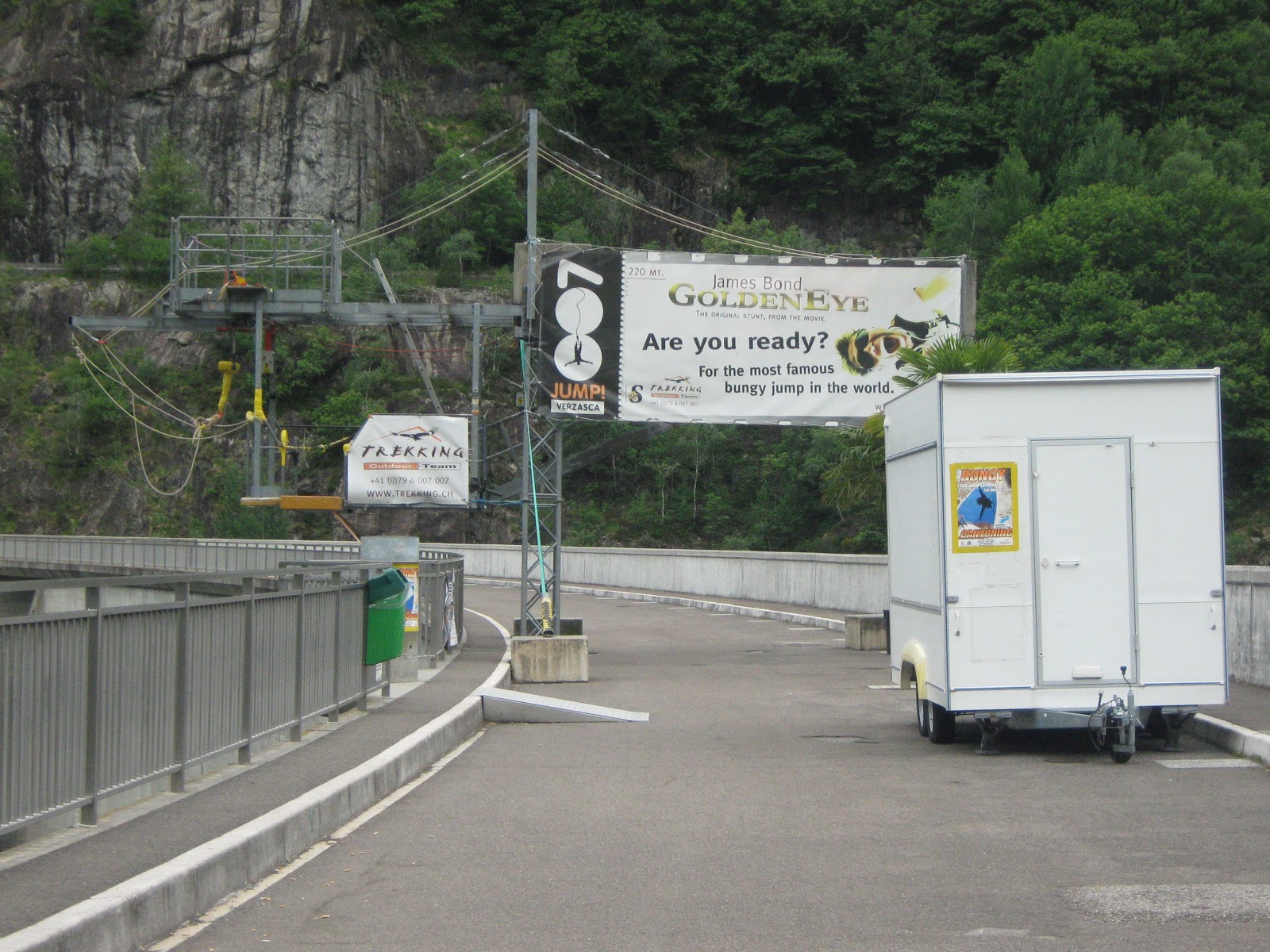
This beauty of a fold is located just behind the Verzasca Dam in Switzerland. This dam is also sometimes called the “Golden Eye” dam because in the opening scene of the movie James Bond bungee jumps off the very tall dam.

The dam is almost as impressive as the fold:

Verzasca Dam 1. Switzerland, June 2010.

Verzasca Dam 2. Switzerland, June 2010.

Verzasca Dam 3. Switzerland, June 2010.

If you want, you can even pretend to be James Bond and bungee jump off the dam yourself:

Bungee jumping at Verzasca Dam. Switzerland, June 2010.

4th of July Rocks: Red, White, and Blue

Happy 4th of July, everyone! In honor of the 4th, here are some red, white, and blue rocks.
Red sandstone:

Red Standstone. Arches National Park, Utah, Fall 2005.

Newly-deposited white travertine:

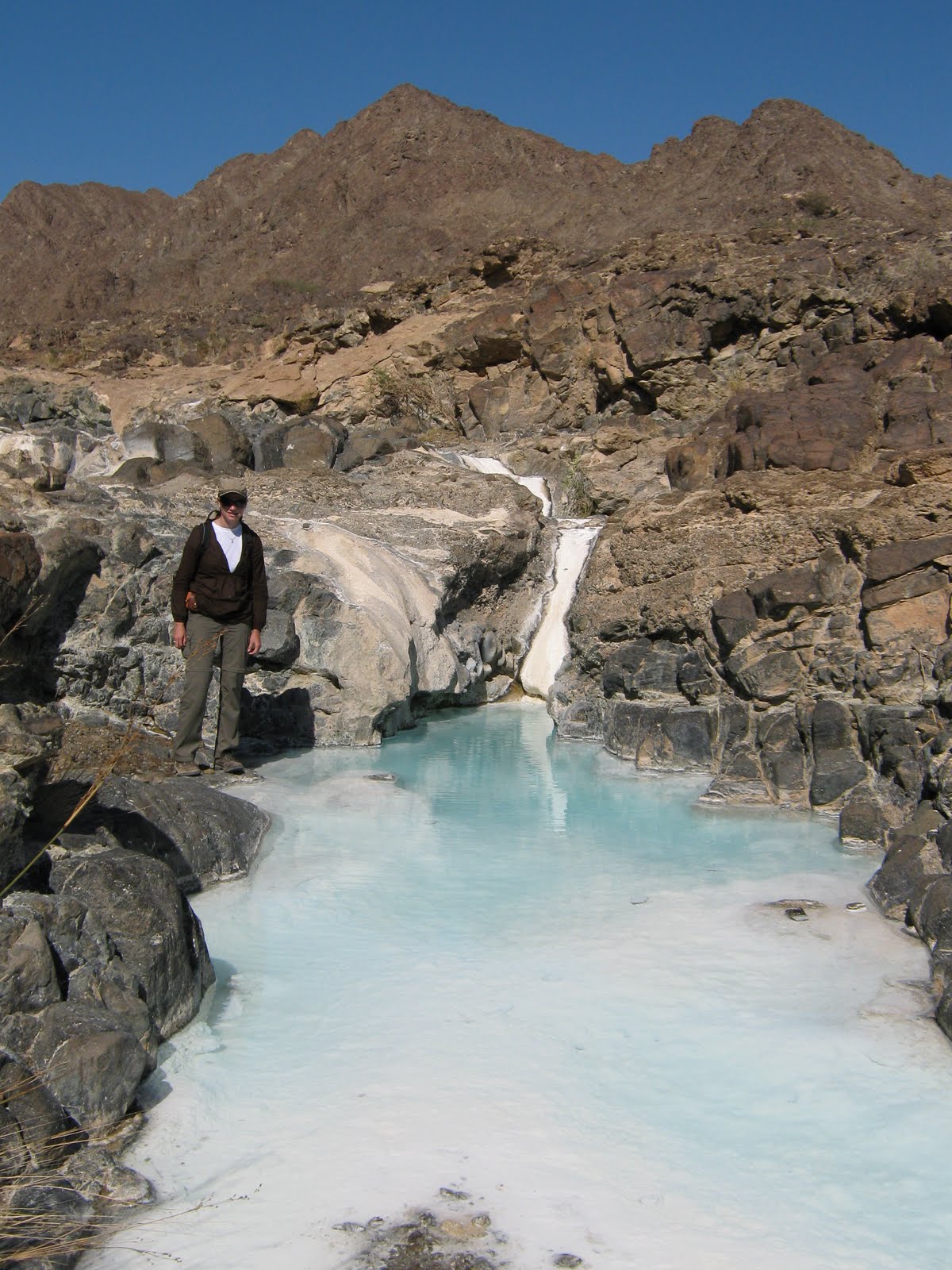
Travertine forming in an alkaline pool. Oman, January 2009.

And, last but not least, brilliant bright blue kyanite crystals:

Blue kyanite. Image courtesy of Ian Stimpson’s Flickr stream.

Geology Word of the Week: E is for Eclogite

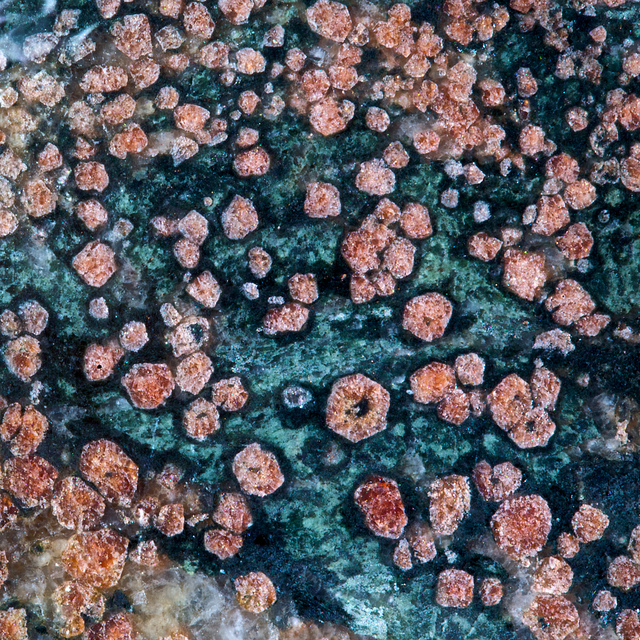
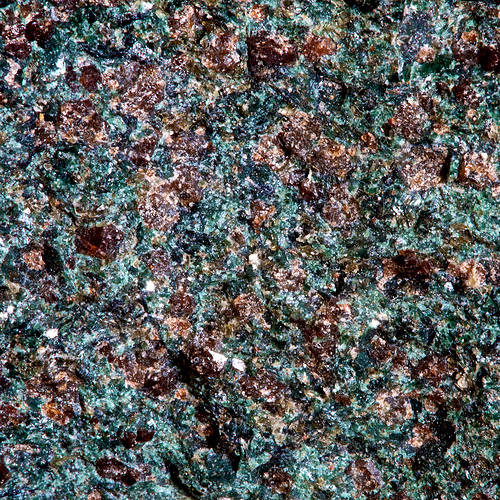
Eclogite from the Mariánské Lázně Complex in the west Czech Republic.
Keele collection. Check out those gorgeous pink garnets!
Photo courtesy of Ian Stimpson.

def. Eclogite:
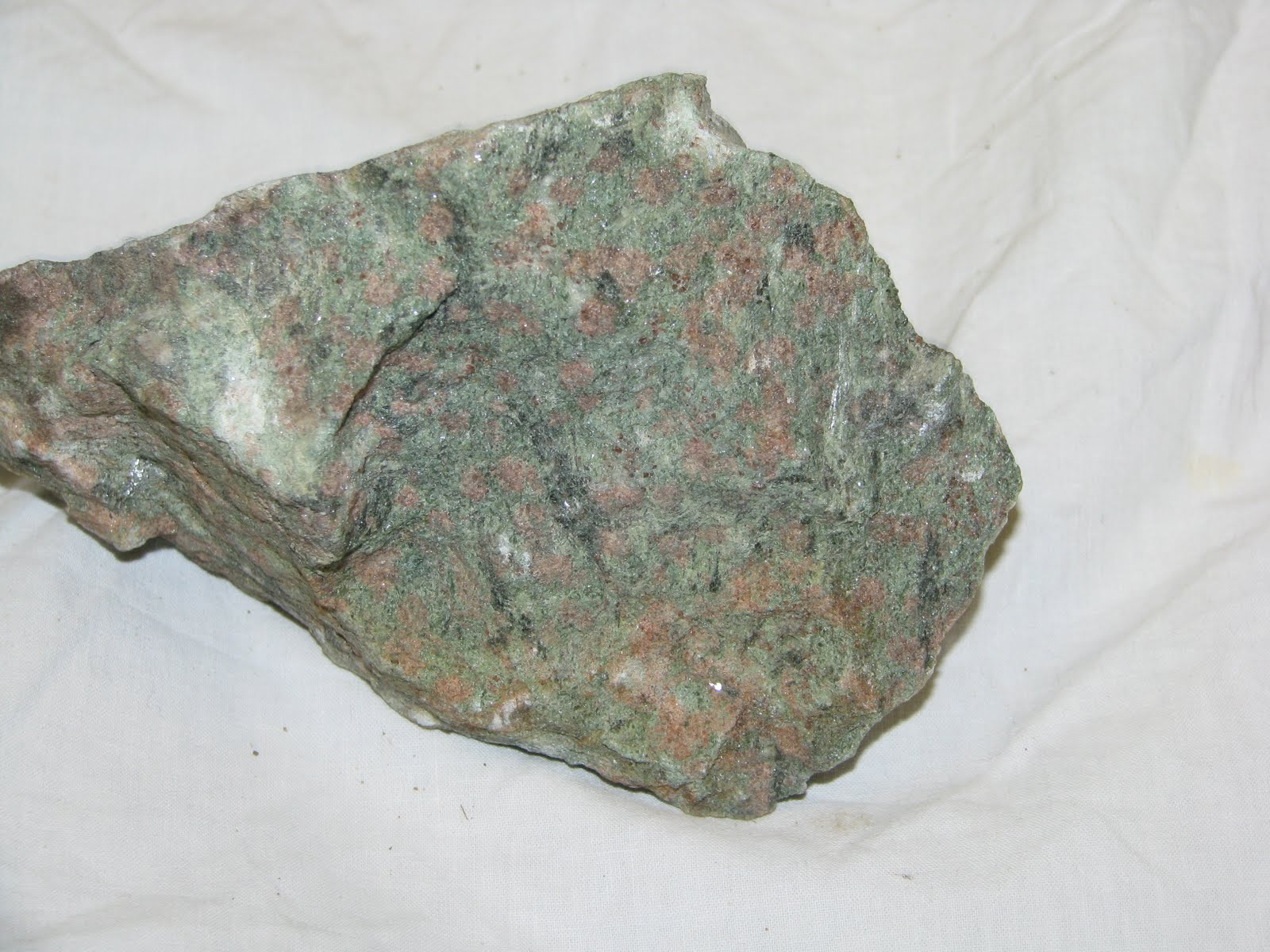
A high-pressure, high-temperature, coarse-grained metamorphic rock consisting primarily of pink-red garnet (almadine-pyrope variety) and green pyroxene (omphacite, a sodium-rich variety). Eclogites may also contain small amounts of other high-pressure minerals such as kyanite, quartz, hornblende, and zoisite. Eclogites form when mafic rock (basalt or gabbro) descends deep within the Earth, generally at a subduction zone. Mafic rocks consist primarily of pyroxene and plagioclase (along with some amphibole and olivine). At high pressures and temperatures, the original minerals in mafic rock are squished into the more compact (denser) minerals garnet and omphacite, and the mafic rock becomes eclogite. Eclogites form when mafic rock encounters temperatures greater than ~400 degrees Celsius and pressures greater than ~12 kbar (or ~1.2 GPa). These temperatures and pressures mean that eclogites form at a minimum depth of ~40 km; some eclogites may form as deep as ~150 km. As a reference, ocean crust (which is comprised primarily of basalt and gabbro) is generally only 6-10 km thick. Because they are very dense and inclined to descend even deeper into Earth’s mantle, eclogites are rarely brought to Earth’s surface. Eclogites may be exposed in ophiolite sequences and other places where deep mantle rocks are brought to Earth’s surface. Often, eclogites experience partial or full retrograde metamorphism as they are brought to Earth’s surface. That is, if eclogites are brought to the surface slowly, their minerals may change back into minerals that are stable at lower temperatures and pressures. Sometimes, higher-pressure minerals will have rims of lower-pressure minerals around them.

Eclogites are stunningly beautiful red-green rocks that represent what happens to black basalt and green gabbro when these crustal rocks descend deep into Earth’s mantle. Basalt, gabbro, and eclogite have identical chemical compositions. That is, if you crushed these three rocks and measured the proportion of different elements (for example, calcium, silicon, and iron) in these rocks, you would find that the chemical proportions of elements in these three rocks are nearly identical. However, these rocks look very different. Basalt is generally black or gray and fine-grained, meaning that the mineral crystals are very small, often too small to see with the naked eye. Sometimes, basalt may contain a few isolated, large crystals of a particular mineral, often plagioclase picked up from a magma chamber. Gabbro contains the same minerals as basalt, but because gabbro forms deeper in the crust, the mineral crystals are larger because the rock cooled more slowly, giving large crystals time to grow. Eclogite has the same chemistry as basalt and gabbro but has different minerals. Basically, the minerals in eclogite are squished (denser) forms of the minerals found in basalt and gabbro.

Basalt boulder in a garden in Madiera, Portugal.
Photo courtesy of Ian Stimpson.

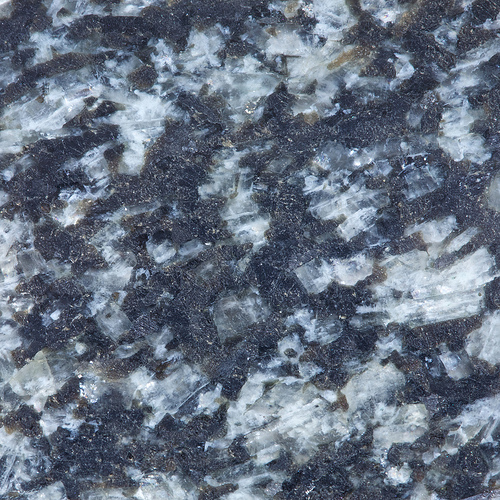
A gabbro from the Bushveld Complex, Central Transvaal, South Africa. Keele
collection. The white mineral is plagioclase and the green-black mineral is pyroxene.
Photo Courtesy of Ian Stimpson.

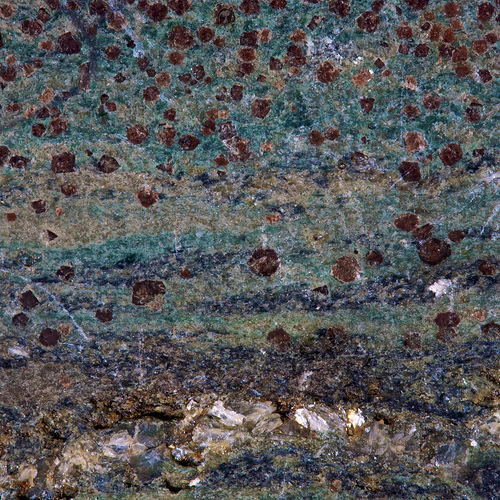
An eclogite from the lawsonite type locality, Reed Station on the Tiburon Peninsula,
Marin County, California. Keele collection. Photo courtesy of Ian Stimpson.

Eclogite is a very interesting rock. Aside from being an absolutely gorgeous rock, eclogite is intriguing because it provides direct evidence that basalt and gabbro descend deep within the Earth. For a long time, geologists thought that perhaps a significant portion of Earth’s mantle was composed of eclogite and that melting of this eclogite might produce basalts and gabbros at or near Earth’s surface. Now, geologists understand that most of Earth’s mantle is composed of a rock called peridotite, which consists primarily of pyroxene and olivine. Geologists also now understand that rocks rarely melt 100%. So, partial melting of peridotite to produce basalt and gabbro makes much more sense than melting of eclogite to produce these rocks. You see, to produce a basalt or gabbro from an eclogite, you would have to melt that eclogite close to 100%, which just isn’t feasible on our Earth. However, eclogites still play a role in mantle melting processes (eclogite melts may mix with peridotite melts, for instance), and melting of eclogites can produce other crustal rocks, such as the somewhat unusual and weird-sounding rocks adakite and trondhjemite.

A Scottish eclogite from the Lewisian inlier, Glen Beag, Glenelg.
Keele collection. Photo courtesy of Ian Stimpson.

An eclogite from Lago Mucrone, Santuario Di Oropo, Italy.
Keele Collection. Photo courtesy of Ian Stimpson.

Eclogite from Adula Nappe, The Alps. Photo courtesy of Ron Schott.

Here is a GigaPan (a really neat picture which you can zoom in on) of an eclogite-blueschist facies mixed rock from California (GigaPan courtesy of Ron Schott):

When you look at the eclogite pictures in this post, just think: eclogites are rocks that used to be common basalts or gabbros, which then descended to incredibly great depths within the Earth, then returned to Earth’s surface against all odds. Study of eclogite rocks provides important information about what happens to ocean crust after it plunges into a subduction zone and thus provides insight into very deep mantle processes. What remarkable rocks!

Metamorphic facies. Figure taken from Wikipedia Commons here. Click to view larger.

Eclogite is also the name of one of the metamorphic facies. A metamorphic facies is a region of pressure-temperature space in which characteristic metamorphic minerals form. Most eclogite facies are eclogites– that is, they are basalts or gabbros which have experienced metamorphism at eclogite facies pressures and temperatures. However, sometimes other rock types (notably, granodiorites and pelites) may experience eclogite facies metamorphism, but these rocks are not proper eclogites, just eclogite facies rocks.

***Thanks so much to Ian Stimpson (and his incredible Flickr rock photo set!) and Ron Schott for photos for this week’s geology word post.***

Accretionary Wedge #35: Favorite Geology Words

As many of you know, I hosted the Accretionary Wedge Geoblog Carnival for June, and I asked What’s Your Favorite Geology Word? Turns out, many of you have favorite geology words! Geologists– like many scientists, I suppose– are fond of their jargon. Personally, I’m so fond of jargon that I blog about a geology word every week. I love many geology words, but if I had to pick an absolute favorite, it’s ophiolite.

Thanks so much to everyone who participated and shared a favorite geology word! The words are listed below, in the order in which they were posted. If I somehow missed your word, please let me know in the comments, and I’ll add it.

Jazinator of The Geology P.A.G.E. likes the Icelandic word jökulhlaup.

Reynardo of Musings of the Midnight Fox wrote a wonderful poem about the word volcano.

The Short Geologist of Accidental Remediation says that varves are not flashy, but they sure are pretty!

Ryan of Glacial Till says that he loves many geology words, but that welded tuff has to be one of his favorite geology phrases.

Jessica of Magma Cum Laude thinks autobrecciation is a really cool process– and she explains it very well, too!

Callan of Mountain Beltway is fond of the word boudinage, especially when said with “a heavy French accent and a leering, dirty expression.” 

Ian of Hypo-theses thinks crozzle has a great sound to it. I agree! What a fun word– almost sounds like a Dr. Suess word or maybe a something that a Jaberwocky might encounter. 

Denise of Life as a Geologist likes the word mylonite (or Míléngyáng in Chinese). She shares a beautiful Chinese poem with us and also some pictures of mylonites from Hong Kong.

Dana of En Tequila es Verdad seduced us with subduction.

David of History of Geology really likes geology, in several languages!

Shockingly, Chris of Highly Allochthonous likes the word allochthonous. His co-blogger Ann also likes the word allochthonous but for different reasons.

I swear that Brian of Clastic Detritus made up the word geophantasmogram. But I love the word anyway! I think Brian wins the internet (at least the geology part of the internet) with this word.

Jefferson of Anisotropic Reflections likes the folded rocks that hang out in an anticlinorium.

Elli of Life in Plane Light tells a wonderful story about how she first learned the word disthen.

Suvrat of Rapid Uplift came up with a word I cannot pronounce: primarrumf. I’m going to go ahead and pronounce the word “pirate’s rump” like Suvrat’s friend.

Silver Fox of Looking for Detachment tells us why she likes detachment. Also, she says everyone should become friends with Detachment Fault on Facebook.

Ron of the Geology Home Companion Blog had a little trouble settling on a favorite word but finally went for Tavurvur.

Mika of GeoMika thinks that rheology is an ugly word for a pretty science, but I disagree. I think rheology is a very pretty word. Rhea is also one of my favorite girls’ names!

Andrew of About Geology wrote about palinspastic. Interestingly, this was the very first geology word I blogged about during my previous (failed) attempts to keep up with the geology word of the week on Skepchick, a skeptical blogging group which I have recently left.

Simon writes about why he likes the word porphyroblast over at Earth Science Erratics.

Chuck of Lounge of the Lab Lemming is fond of the word sphene but not of that horrible “T-word.”

John of Geologic Musings in the Taconic Mountains also likes the word jökulhlaup.

Selim of GeoSelim explains why he likes the word isopach.

A Life-Long Scholar really likes mountains and the word orogenesis.

Julia of Stages of Succession cheated and picked two words: bioturbation and turbidite. It’s okay, Julia. I can’t really decide what my favorite geology word is, so I blog about one every week.

G of Gioscience also likes mountains, I assume, with a favorite word of orogeny. Did you hear that time that Antarctica Africa, and South America were caught in a three-way orogeny? Shocking, I tell you!

MyPhyz likes (in the comments) the word unconformity.

MK of Research at a Snail’s Pace is also fond of bioturbaton.

Tannis of Tannis Likes Rocks is fascinated by geohistory.

Finally, Jacquelyn starts a new blog called The Contemplative Mammoth with a post about playing with gyttja mud.

Thanks again to all the participants! If you have other favorite geology words, post them in the comments!

Chondrite Town

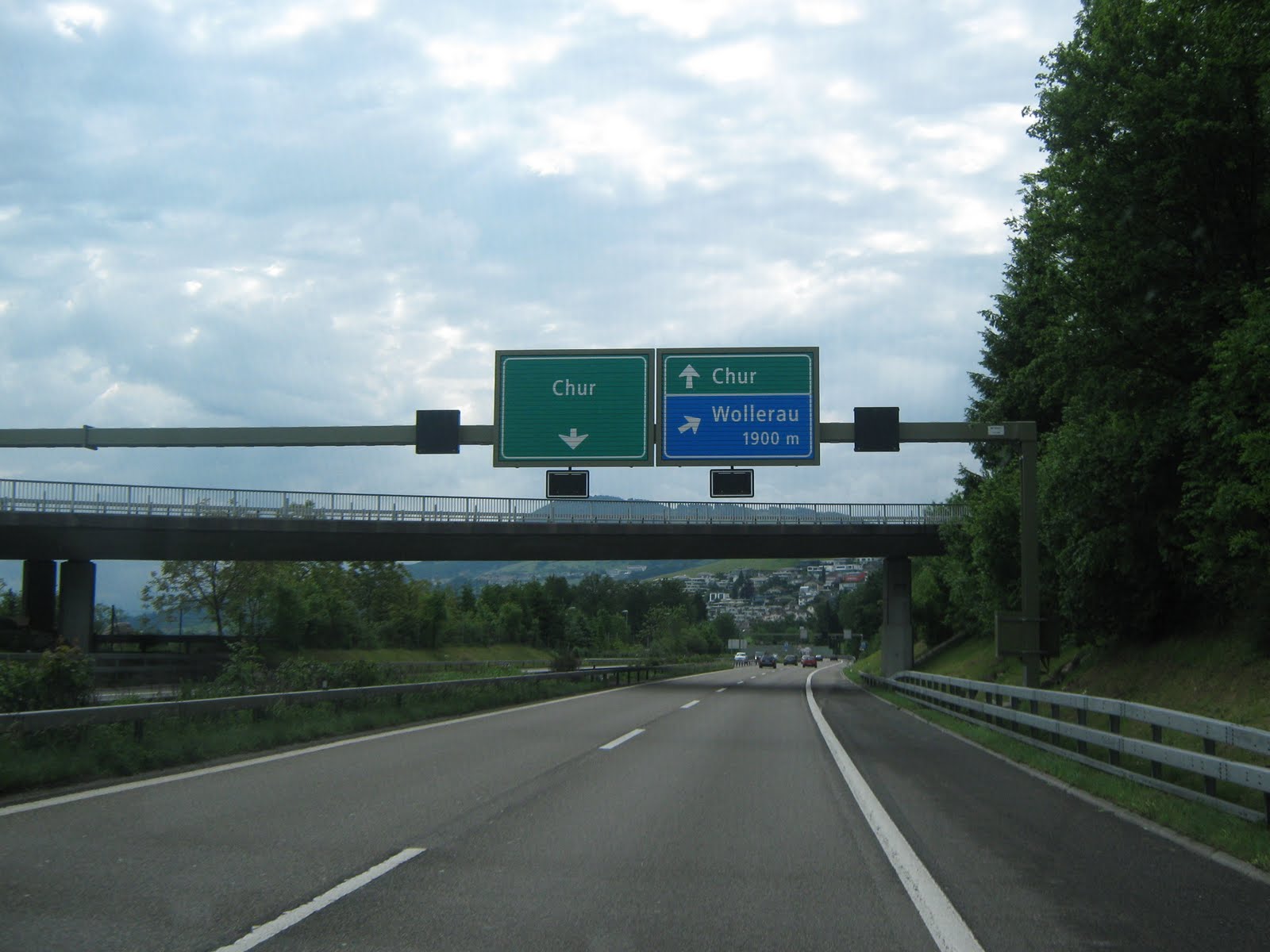
The road to the chondritic uniform reservoir. Switzerland, June 2010.

Last June I spent ten days in Switzerland and Italy exploring the geology of The Alps as part of Woods Hole Oceanographic Institution’s annual Geodynamics Program. As we were driving one day on the trip, several geochemists in the group became very excited about the above sign. Apparently, the mysterious chondritic uniform reservoir (CHUR) is located in Switzerland! We tried our best to persuade our instructors that we should visit this important Earth reservoir, but we were told that Chur is a charming little Swiss town, not a place where we could find chondrites. So, we continued our drive to the mountains, but not before I snapped a photo as we passed a sign for Chur.

***For those who are not familiar, chondrites are primitive, stony meteorites that have not undergone significant melting or differentiation. Thus, chondrites are considered the original “starting material” for planet Earth, which scientists believe formed through accretion of chondritic bodies. The Earth probably started out as roughly chondritic then underwent chemical differentiation. To put it simply, the heavy stuff sunk to the center of the Earth (the core) and the lighter stuff floated to the top of the Earth (the crust) and the medium stuff stayed in the middle (the mantle).  For long-lived chemical systems (for example, the samarium-neodymium isotope system), geochemists like to think about how these chemical systems may have evolved over the ~4.54 billion year history of the Earth. Often, geochemists like to compare the evolution of certain chemical systems to a baseline. One baseline that is sometimes used is CHUR– the chondritic uniform reservoir. The chemical composition of CHUR is based on the average chemical composition of chondritic meteorites. Where do we obtain these chondrites, if planets differentiated? Well, not all bits and pieces of the original chondrite parent bodies were incorporated into planets, which then differentiated. Some chondrite bits and pieces survived and have been zooming around our solar system. Chondrites often fall to Earth as meteorites, where they are sometimes recognized. Since these meteorites are stony, they look like Earth rocks and are tricky to tell apart. There could be one in your backyard! Most chondrite meteorites are found in places where there are few rocks, such as in deserts and in Antarctica.***