

When relatives come to into town for a wedding, geologists show them…
….migmatite!
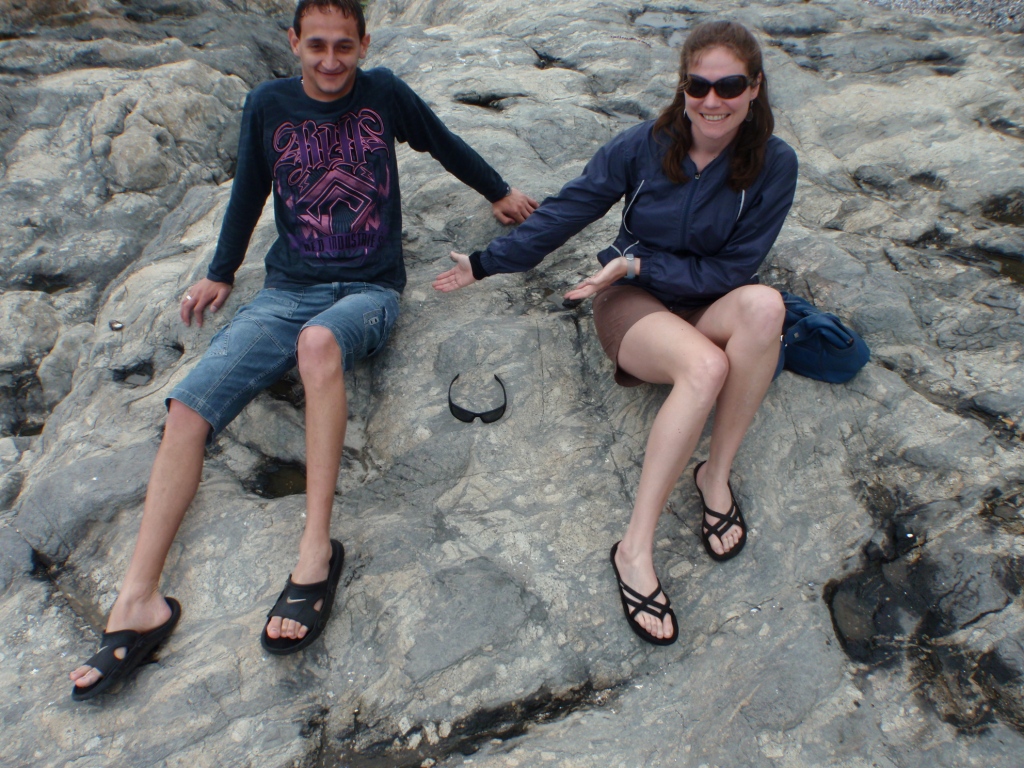
….and a xenolith!
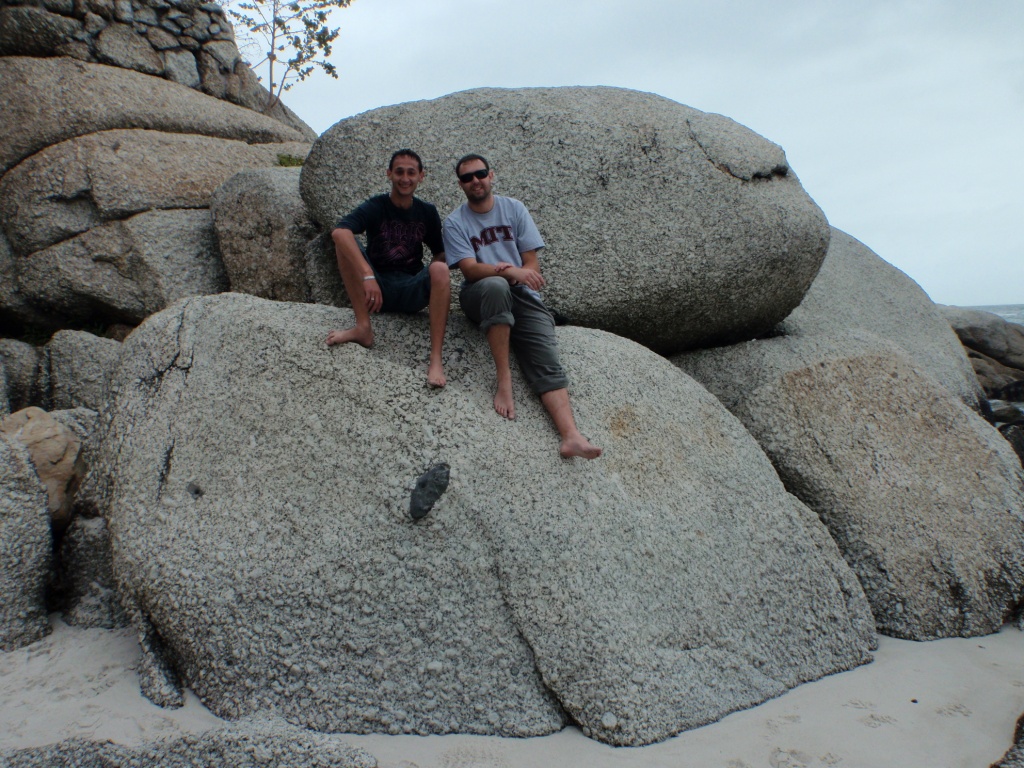
Wonder if the rest of our guests will “appreciate” such geologic sites.
When relatives come to into town for a wedding, geologists show them…
….migmatite!
….and a xenolith!
Wonder if the rest of our guests will “appreciate” such geologic sites.
My mom heard that I was a little bit too busy to keep up with my regular blog writing over the next few weeks, so she volunteered (jokingly, I thought!) to write my blog for me. She just sent me this brilliant guest post… enjoy! Mom, I love you very much. Thanks for this wonderful post!

The Care and Feeding of a Geologist
By, Barbara Mervine
Evelyn is busy getting married, so as her mother I offered to guest host her blog. I am an artist and a teacher, not a geologist. However, I feel I do have some expertise in raising a geologist.
Geologists are often born, not made. Shortly after birth, the parents of a born geologist notice something different about their child. Some parents try to interest their young child in other subjects, such as birds or stamp collecting. However, it is best to just give up and accept that your child is different.
Here are just some of the challenges I had raising a geologist:
*At a very early age (8 months) Evelyn exhibited signs of having pica, the odd desire to eat objects that are not food. Evelyn’s pica seemed to be restricted to eating small rocks. I have video taken by her father of her crawling along outside, picking up small rocks and bits of dirt and putting them in her mouth. I would then take the rocks and dirt out of her mouth. Her pediatrician assured me she would outgrow it. The pediatrician forgot to warn me she would never outgrow her love of rocks.
*While clothes washing is a challenge for any parent with a child who loves the outdoors as much as Evelyn does, for the parent of a geologist it is especially frustrating. Failure to carefully check all pockets before washing clothes results in a “thunk thunk” as rocks tumble around the washing machine. Those not ejected in the washing machine make it to the dryer, where the resulting sound is an even more intense “THUNK THUNK.”
*Rock collecting starts as soon as the child can lift things. The room of the geologist child is beyond the power of any parent to dust. Rocks fill every space, from bookshelves to under the bed. Stubbed toes result from rocks on the floor as the parent wonders, “How did she even lift a rock that size?”
*Keeping the young geologist safe can be an almost full time job for a parent. The child walks with her head pointed down. That’s because down is where the rocks live. Beaches, woodland trails, newly paved streets, the neighbors’ garden border– rocks are everywhere! The child never looks up enough to see mundane, boring things like cars, mean dogs, other people, birds. Pretty much anything that’s not a rock isn’t worth looking at.
*The parent of the geologist dreads the day that the child becomes a teenager and begins learning to drive. That is because now the child’s habit of looking for rocks while in the car becomes looking for rocks while driving a car. Rock cuts on highways are a danger that all parents of geologists should be aware of. For example, Evelyn was once traveling with a group of geologists from MIT when they stopped the van along the side of a major highway. All the geologists piled out to go look at a rock cut. The police man who gave them tickets for illegal stopping on a highway was not impressed with their excuse that millions of years of history was revealed right there before his eyes. He pointed out that hundreds of cars were right there going by at high speeds. Obviously, the police man did not have a brother or sister who was a born geologist.
*Geologists tend to date and perhaps even marry fellow geologists. This can be a problem. When Evelyn brought home her soon-to-be-husband Jackie, dinner conversations became dominated by talk about rocks… talk about rocks that had the rest of the family nodding and smiling and thinking, “What are they talking about?” Then you realize that your child has her perfect match. My daughter and her fiance will spend the rest of their lives enabling each other to be the ultimate rock geeks they always wanted to be.
Happily, there is hope. Perhaps one day Evelyn and Jackie will have a child of their own. That child may one day crawl out in the yard and start eating rocks. Or that child may crawl out in the yard and start eating insects. Yes, they could give birth to….an entomologist.
So, I was hoping to post the Geology Word of the Week before flying back to South Africa in a few hours. However, I’ve been busy with work and also with a few last-minute wedding preparations (my wedding is in 12 days! Eek!). Now, the hour approaches 2am, and I need to finish packing… I hope the wedding favors and table placards survive the long trip. Worst case scenario, we’ll have some slightly-squashed wedding decor and a good story.
Anyway, this week we’re at the letter S in our geology alphabet, and I’ve selected the word schist! One of my favorite geology words! In fact, schist is such a fantastic word that I don’t want to write up a rushed post. So, I’m going to put the Geology Word of the Week on hold for a few weeks until after my wedding and the associated chaos of friends and family traveling to South Africa for the occasion. You can expect a return of the Geology Word of the Week in early November. In the meantime, I may sneak in a picture post or two.
By the way, I full expect many schist jokes and puns to be posted in the comments below.

Here’s my entry for Accretionary Wedge #39: Dress Barbie Like a Geologist for Halloween!
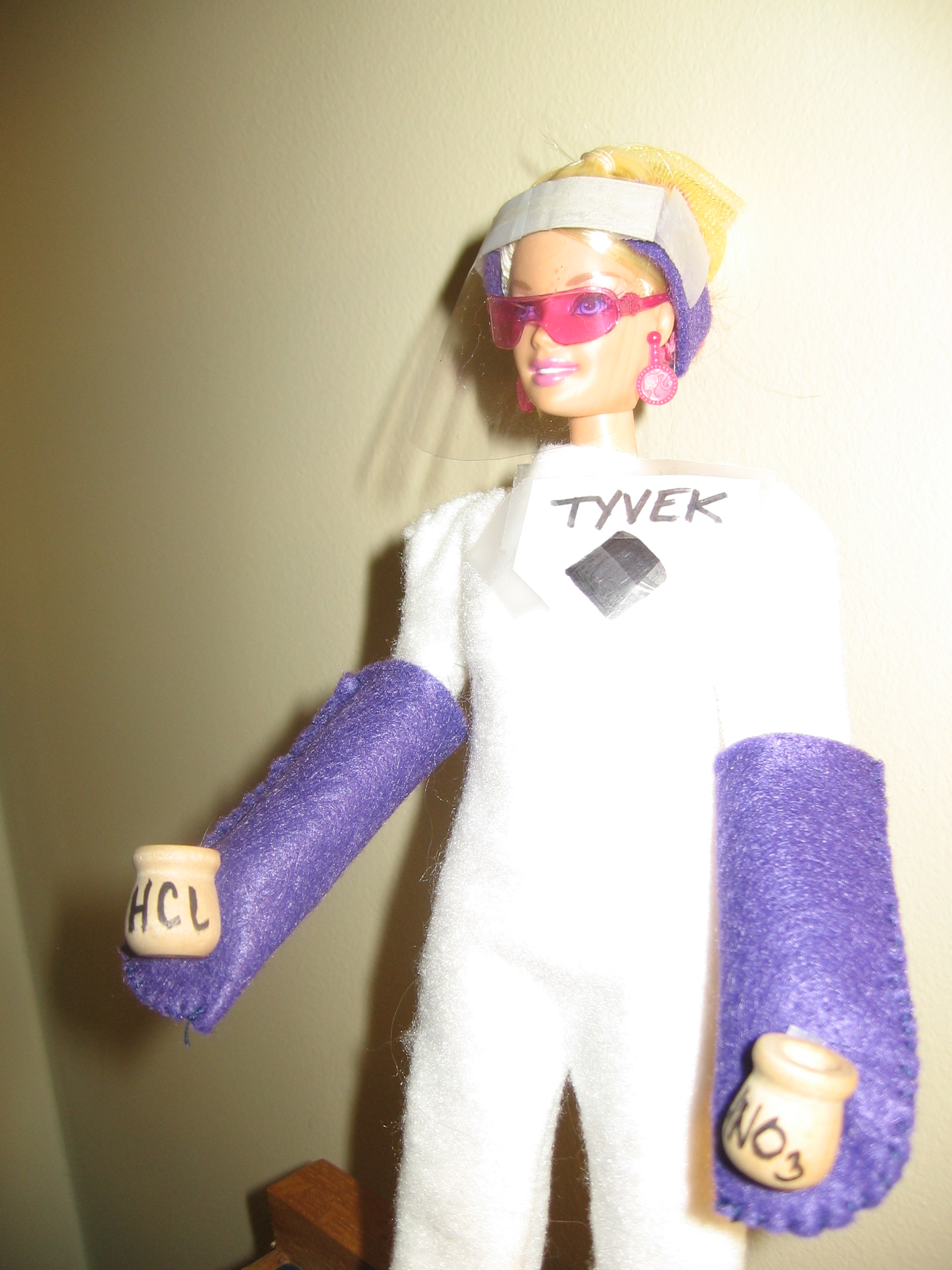
Geochemist Barbie keeps busy in the clean lab! She wears a white, full-body tyvek jumpsuit to protect herself from chemicals. The suit also keeps dust and dirt out of the lab so that Geochemist Barbie can avoid contamination of her precious rock samples.
Geochemistry is dangerous work! For instance, today Geochemist Barbie has to mix up some aqua regia (70% hydrochloric acid or HCl and 30% nitric acid or HNO3), which she is going to use to clean out teflon beakers for her next set of rock dissolutions. Aqua regia is a very dangerous chemical, so Geochemist Barbie wears long, purple, nitrile gloves, bright pink safety glasses (which are definitely *not* sunglasses filched from Beach Barbie… I swear…) , and a plastic face shield for protection. She also keeps her long blonde hair tied up in a net so that it stays out of her way and also so that it does not fall into her sample beakers or chemicals.

Anne Jefferson just posted a wonderful round-up of back-to-school posts for Accretionary Wedge #38.
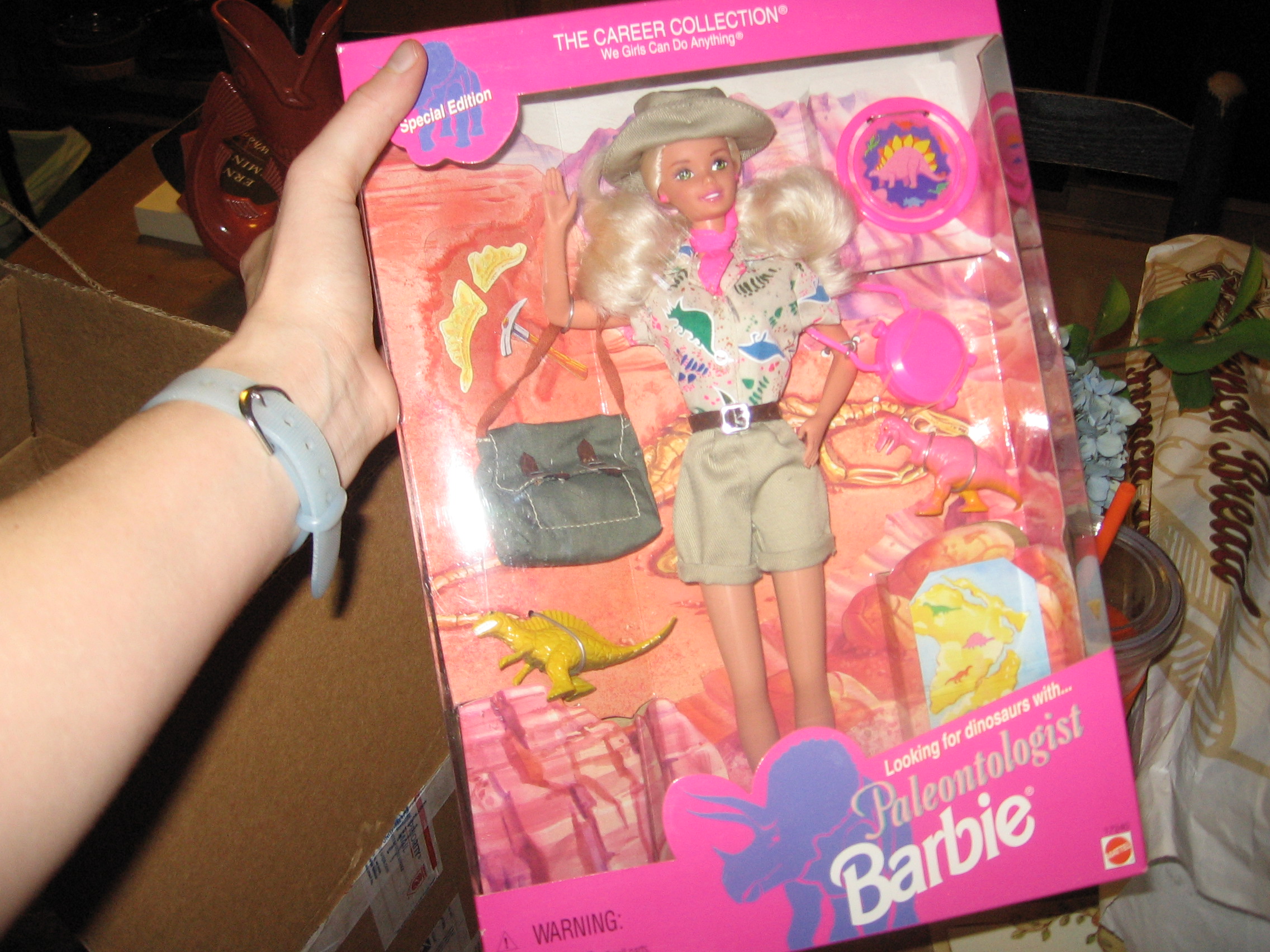
I’m hosting Accretionary Wedge #39 here at Georneys. Several weeks ago I shared pictures of Paleontologist Barbie, which I acquired from ebay. Inspired by Paleontologist Barbie and in honor of Halloween, this month’s accretionary wedge is:
Dress Barbie as a geologist for Halloween! To participate in this month’s accretionary wedge, purchase a Barbie (I think they sell for about $10) or, better yet, acquire one from a friend, thrift shop, or garage sale. If you can’t manage to find a Barbie, any doll will do! Then, construct a geologist costume for Barbie. You can recycle bits and pieces of Barbie clothing or you can make new clothes using cloth, yarn, paper… anything really! If you want, you can also find or make some props for Barbie. For example, if you want to dress Barbie as a seismologist, make her a seismometer out of cardboard. Paleontologist Barbie already exists, but feel free to make another (perhaps more realistic?) Paleontologist Barbie if you want.
Here are some ideas for dressing up Barbie as a geologist:
-Paleontologist Barbie
-Geochemist Barbie
-Geophysicist Barbie
-Structural Geologist Barbie
-Hydrologist Barbie
-Volcanologist Barbie
-Marine Geologist Barbie
-Geobiologist Barbie
-Climate Scientist Barbie
-Meteorologist Barbie
-Museum Curator Barbie
-Mineralogist Barbie
-Gemologist Barbie
-Geology Professor Barbie
-Graduate Student Barbie
-Astronaut Barbie
-Planetary Scientist Barbie
I’m sure there are many other possible geo-themed Barbies! If you don’t feel like submitting a geologist Barbie, a scientist Barbie would be fine. For example, you could make an astronomer Barbie. If you prefer, you can also dress up Barbie’s friend Ken or any of the other Barbie characters. I look forward to seeing your creations! Please submit your entries by November 1st. You can submit an entry by posting a comment below with a link to your blog post.
I’m going to create my own geologist Barbie sometime in the next few days. I’ll post pictures once she’s ready!

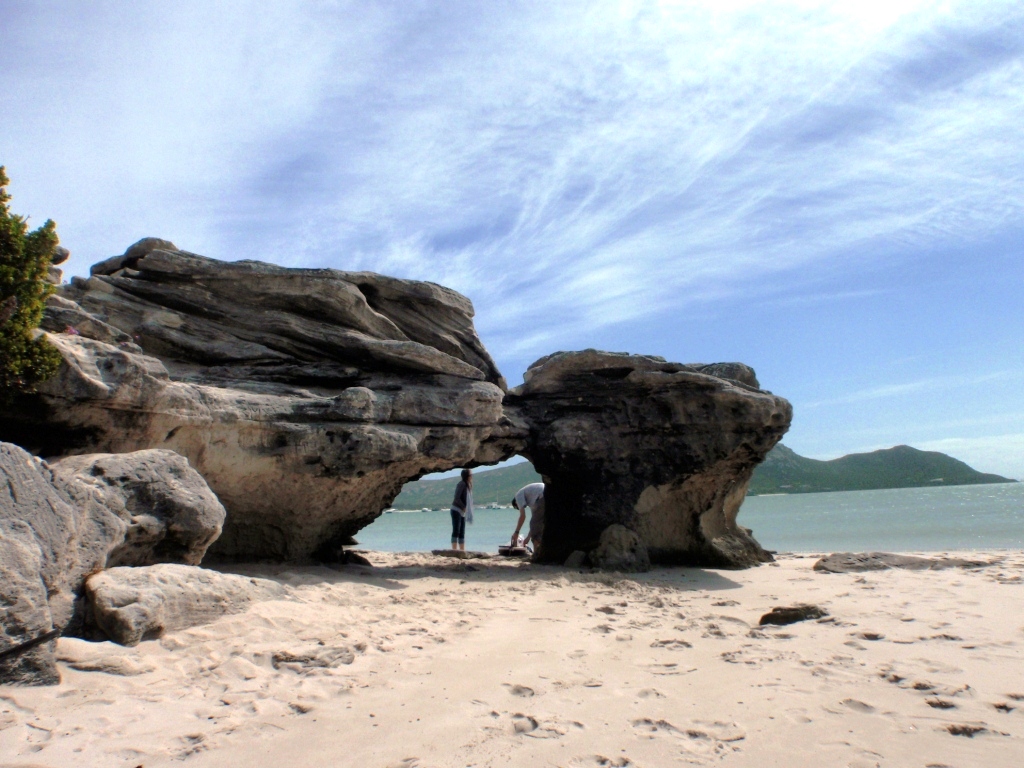
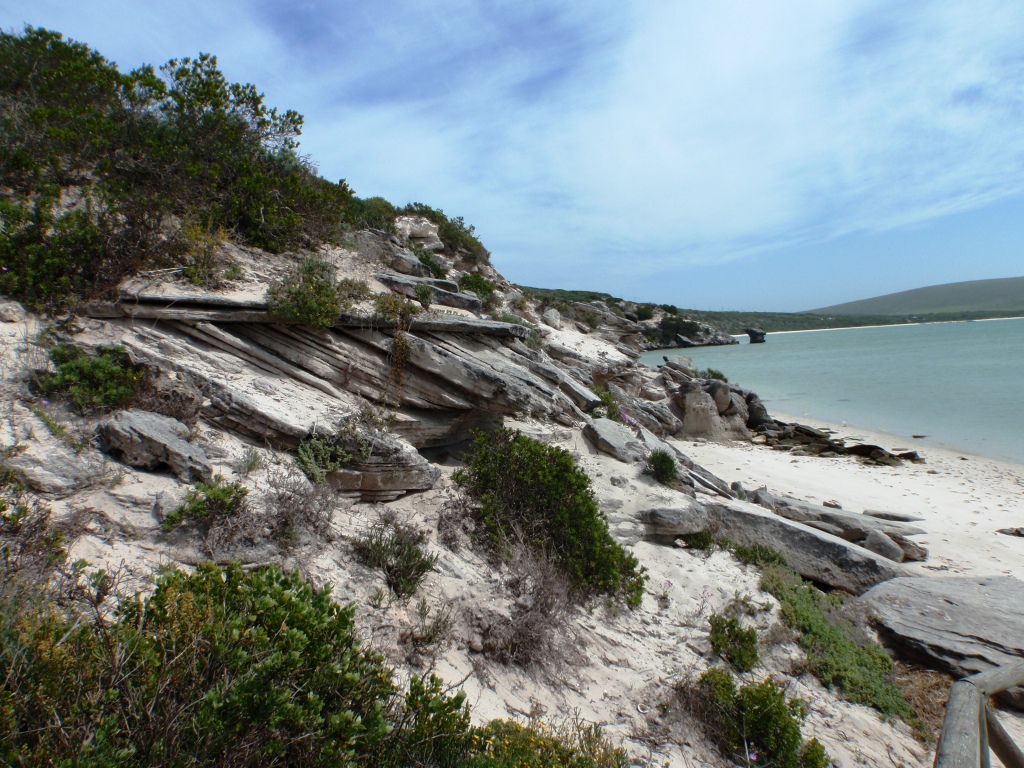
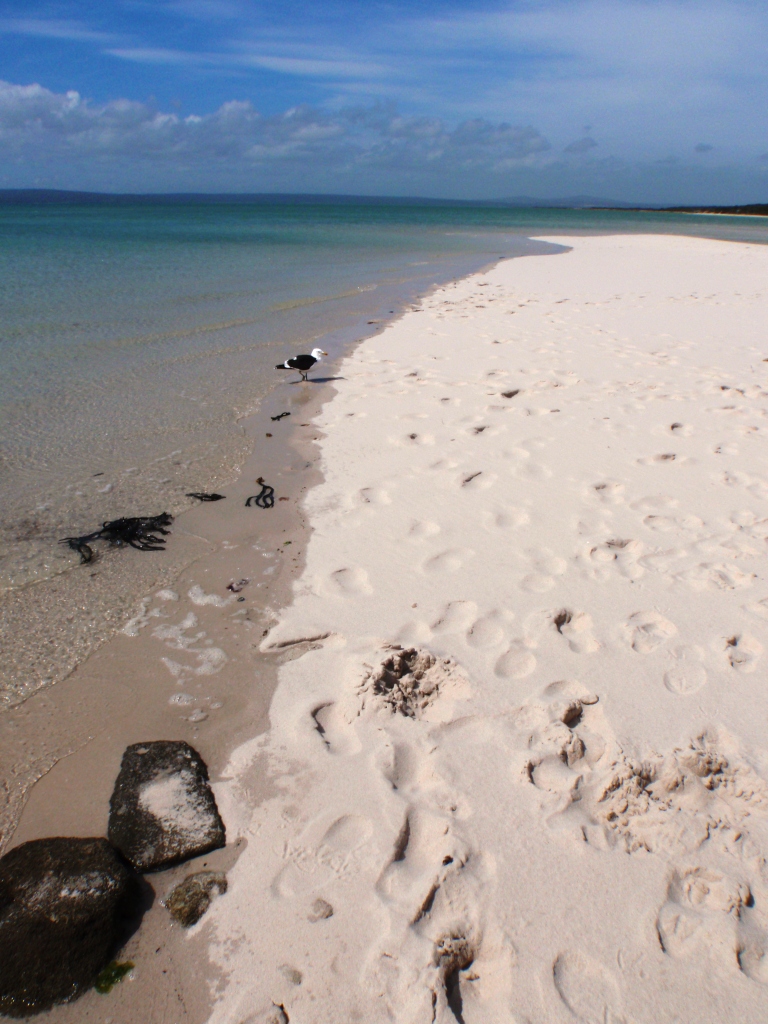
A few weeks ago, my fiance, some friends, and I took a day trip to the West Coast National Park, which is about an hour’s drive north of Cape Town, South Africa. We had a picnic on Langebaan Lagoon and then drove around the park to see the beautiful flowers. If you’re ever in the Cape Town area, I highly recommend visiting the West Coast National Park. While you’re in the area, be sure to check out the nearby Fossil Park. Below are some pictures from our recent visit to Langebaan Lagoon. I’ll share some pictures from the rest of our visit to the park in a separate post… stay tuned!
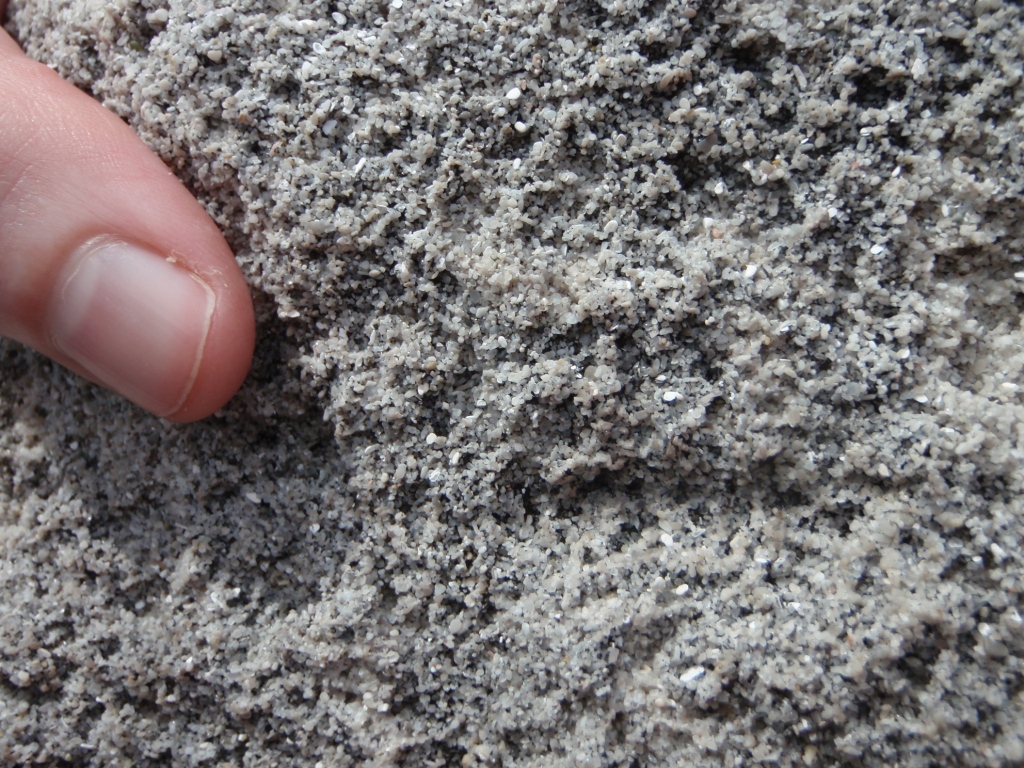
The lagoon is mostly surrounded by loosely-consolidated, very young sandstone. However, there are also a few granitic plutons in the area. I’ll show some more pictures of this granite in my next post.



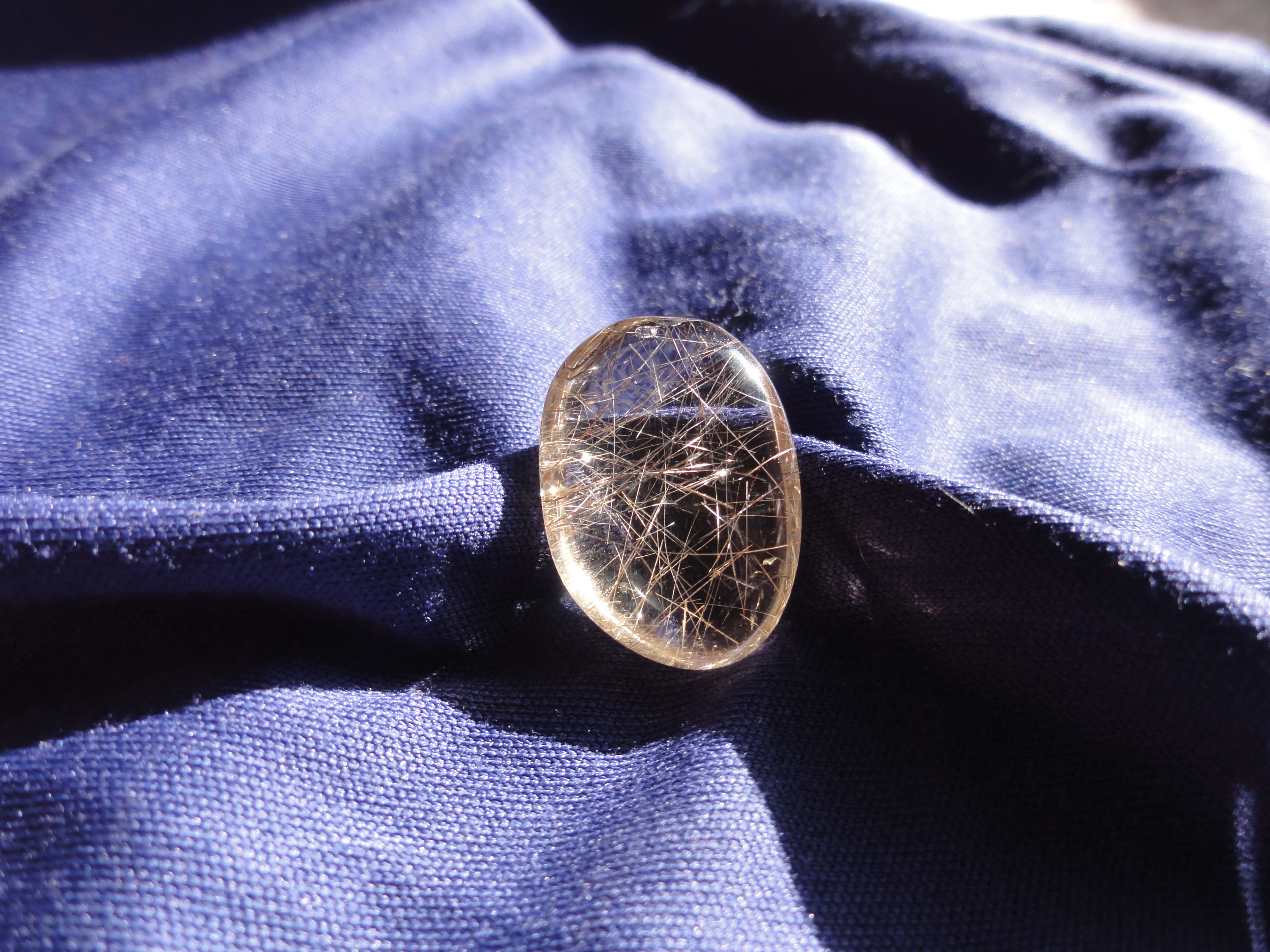
def. Rutile:
A high-pressure, high-temperature mineral that is the most common form of titanium oxide (TiO2). Rutile is commonly found in metamorphic rocks, such as eclogite. Rutile is also found as an accessory mineral in igneous rocks, particularly in deeper-formed plutonic igneous rocks and also volcanic rocks with deep sources, such as kimberlites. Rutile is an important economic mineral that is mined for titanium. Rutile often forms as thin, needle-like crystals, which are commonly found as inclusions in minerals such as quartz and corundum. Rutile is commonly a brownish-red color due to the presence of iron impurities. Reflecting this characteristic color, the name rutile derives from the Latin word “rutilus,” which means “red.”
Rutile is often found in metamorphic rocks. For example, here are some thin section images showing rutile (red-colored mineral) in an ultra-high-temperature granulite:


Rutile is also found as an accessory mineral in some igneous rocks. Most igneous rutiles are fairly small. However, when space and time permit, large igneous rutile crystals may form in pegmatites. For example, here’s a gigantic crystal of rutile that likely formed as a pegmatite mineral:

Rutile can also be found as a secondary mineral in hydrothermal veins. Hydrothermal veins form when heated fluids circulate through a rock, picking up certain elements and concentrating them elsewhere. For example, gold is often concentrated through hydrothermal circulation. Since silica is a major component of many rocks, quartz is a very common hydrothermal mineral and can often be found as secondary veins in rocks which have experienced hydrothermal alteration. Hydrothermal minerals such as quartz are often deposited in cracks or spaces (such as vesicles or vugs) in a host rock. Sometimes, quartz contains thin, needle-like crystals of rutile. When this occurs, the quartz is named “rutile quartz” or “rutilated quartz.” The long rutile crystals found in rutilated quartz generally form in a cavity, such as a vug– a place where they have space to grow into long needles. Then, these rutile needles are incorporated into hydrothermally-deposited quartz. Some rutile inclusions in quartz may also form as a result of metamorphism, but most rutilated quartz forms through hydrothermal processes*.
Gemstones which contain inclusions are generally considered less-valuable than inclusion-free gemstones. However, rutile inclusions are desired in certain gemstones. For example, rutile inclusions make for some gorgeous quartz crystals (see pictures above and below). Rutile inclusions in corundum and other minerals are responsible for asterism, an optical phenomenon that creates “star gems” such as star sapphires.

As I discovered this evening when I was googleing rutilated quartz, there are many woo-woo pseudoscientific “properties” associated with rutilated quartz. In my google search, I was hoping to learn about the geologic properties of rutilated quartz. Unfortunately, many of the websites I found on google informed me about some other “properties” of rutilated quartz. For instance, one of these websites “informed me” that rutilated quartz:
Brings forth each person’s strengths, originality, aids sleep, relate to others.
Rutile is said to intensify the metaphysical properties of its host crystal and to enhance one’s understanding of difficult situations. It is also said to enhance creativity and to relieve depression and loneliness.
Rutilated quartz is said to slow down the aging process and is said to be a strong healer.
Source of the above quotation.
Well, I’m no doctor, but I have a feeling that placing rutilated quartz around my house is not going to help me sleep (I’ve had insomnia for years, and I mange it fine without woo-woo crystals) or prevent wrinkles. I suppose that placing rutilated quartz all over my house could help relieve depression. I do love pretty crystals.
My friend Dana Hunter agrees that the woo-woo properties of rutilated quartz are nonsense. When she sent me the two beautiful pictures of her piece of rutilated quartz, she also sent this delightful story:
I know you sometimes like to laugh at woo in these Word of the Week posts, and there’s definitely woo involved with rutilated quartz. This little piece was purchased at a crystal shop in Sedona, AZ, back when I was a wooful middleschooler. What you did was tie a string round its middle, dangle it like a pendulum, and ask it yes-or-no questions. It would swing in a circle or from side-to-side to answer (you had to ask first “What is yes?” and “What is no?” to determine which was which). Supposedly, then, it could predict the future. Freaky, watching something you were holding perfectly still start to move! I didn’t know then about the extremely subtle muscle movements that would set it in motion. I did try to test it by tying it to bits of furniture and seeing if it would move without a human touching the string (it would, but erratically, and probably had something to do with the air movements created as I shouted at it). Even back then, deep in the clutches of woo, there was apparently a scientific bit of my mind screaming to get out. It’s all a bunch of rubbish, of course – if it wasn’t, I would’ve died in July of 2008, according to it. So much for the stone’s power of prediction! But it’s gorgeous stuff, and its true nature is far more interesting than the woo we attached to it.
Thanks for the story, Dana!
Reference:
“rutile, n.” The Oxford English Dictionary. 2nd ed. 1989. OED Online. Oxford University Press. 2 October 2011.
*That’s the consensus we’ve reached on Twitter and Facebook, anyway… please let me know if you have additional information on rutilated quartz formation.
***Thanks to Chuck Magee for suggesting this week’s word. Thanks to Tanya Ewing, Paul Glasser, and Dana Hunter for providing pictures. Thanks also to Dana for her wonderful woo-woo rutilated quartz story. Thanks to Erik Klemetti, Matthew Garcia, and Christie Rowe for an interesting Twitter and Facebook discussion about the origins of rutilated quartz.***
Stones that know the weather? Surely, that’s pseudoscience!
Not when you follow these guidelines:


You can find these Weather Stones at the Wilgewandel Holiday Farm in Outdshoorn, South Africa.
def. Quarry:
1. An open-pit mine from which rock is extracted, usually rock which is used as a building stone.
2. A place frequented by rock-hunting geologists.
3. A cold, deep body of water frequented by daring rock jumpers and divers.
4. (Obsolete, except in those old books I read sometimes): Game meat; something that is hunted or pursued.
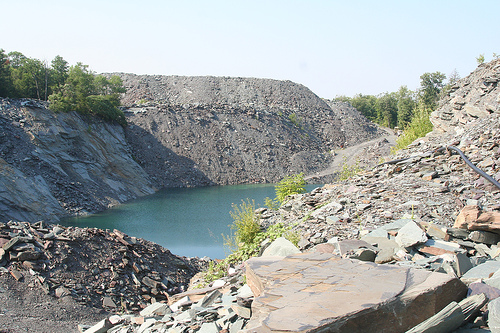
Geologists often hunt for rocks* in quarries, which are found in a wide variety of rock types. Quarries often expose rocks that would otherwise be difficult to see because of weathering or cover by vegetation and soil. Quarries also often expose beautiful or unusual rocks that are valued as building stones or for some other purpose. Many quarries are no longer actively mined, and geologists may collect rocks in a semi-legal fashion from large, abandoned talus piles (bits of rock leftover from mining). Other quarries are still actively mined for building stones and other material. Some of these active quarries are closed to the general public. Other active quarries encourage visitors, and sometimes even make a small profit by allowing geotourists to collect samples. And sometimes– speaking purely hypothetically of course– a private, closed quarry may become “accessible” when a geology professor teaches his petrology class the stealth arts of scaling fences, sneaking over locked gates, and running very swiftly with wollastonite hand samples. Not that I would know anything about that purely hypothetical example, of course.
Geologists really enjoy visiting quarries. A few geologists even work for quarries, investigating the rock being extracted and identifying good places to extend or build a quarry.
*A geologist’s quarry. Get it?
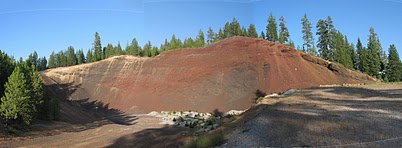
Here’s a plethora of quarry pictures, illustrating the wide range of rocks in which quarries are found:


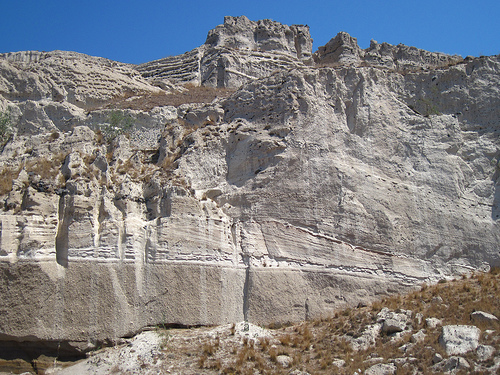


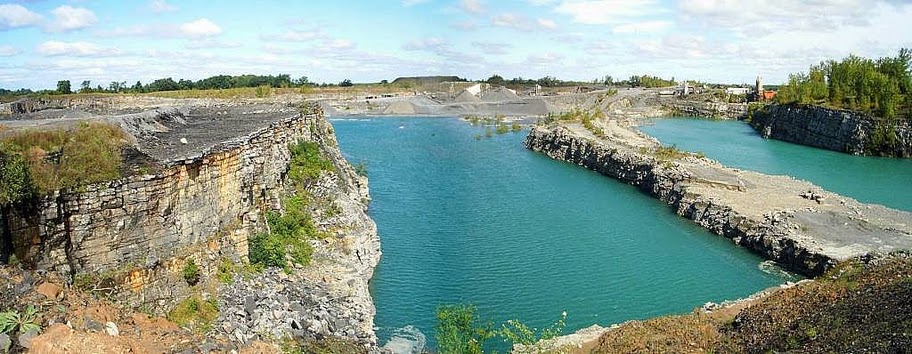
***Thanks to Lockwood Dewitt for suggesting this week’s word. Thanks to Ron Schott, Gareth Fabbro, Dana Hunter, and Patrick Donohue for providing pictures. For additional quarry photos, see Gareth’s Flickr collection and Patrick’s Picasa collection. Also check out these incredible Quarry photos by professional photographer Edward Burtynsky (click on the Quarry link on the left side of the website). Thanks to Matt Hall for directing me to the Burtynsky photos.***

I’ve been so busy working on my thesis recently that I haven’t had time to post many pictures from my new home in South Africa. That’s okay since I’ve been spending most of my time in my home office, which looks pretty much like offices back in America.
My fiance and I did manage to escape for a weekend trip, however. We visited some incredible geology near the town of Oudtshoorn. I’ll write up a few geology posts as time permits, but for now here’s an ostrich riding interlude:
Saddling Up:

Video Evidence:
 Georneys