This week’s “Monday Geology Picture” features a pretty pink rock lamp owned by some friends of mine. Many pink rock lamps are made out of salt crystals. However, this particular rock lamp is made out of a rose quartz crystal. The lamp is placed on top of a flat muscovite crystal.
(Fake) boulders on display at the Cape Town International Airport.
Boulder’s Beach is a popular tourist attraction in the greater Cape Town area. At Cape Town International Airport, a small section of the airport has been decorated to resemble Boulder’s Beach, giant (fake) boulders and all! I enjoy walking past this decorated area every time I travel to the airport. Of course, even better is visiting Boulder’s Beach for real. For example, see some pictures from my visits here and here. I hope that the airport decoration inspires some tourists to go and visit Boulder’s Beach during their visits to beautiful Cape Town.
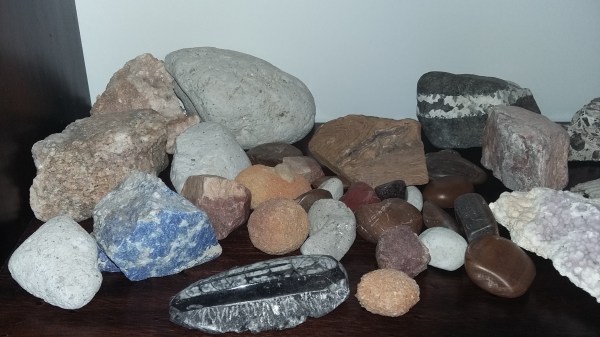
Like many geologists, I like to decorate with rocks. This week’s “Monday Geology Picture” features some rocks on a shelf in my living room. There’s many more rocks on this shelf — this picture just shows a few of them. What do you spot in this picture? Among other things, I see an orthoceras fossil, some volcanic pumice, a botryoidalcarbonate rock, a rock with a vein of gabbro, sandstoneconcretions, and some chert.
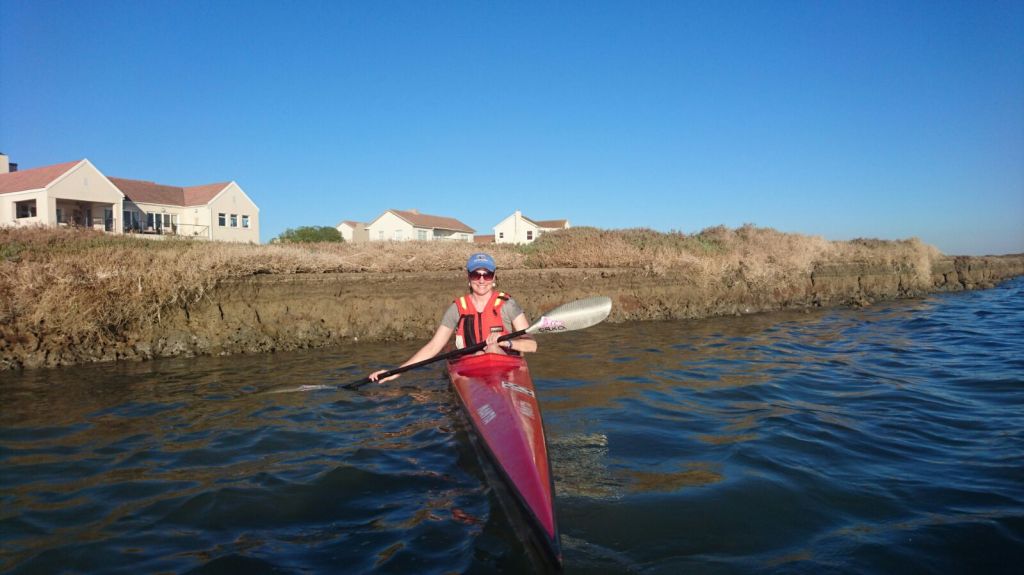
Investigating soil horizons by kayak, Berg River Mouth, South Africa, February 2016.
A few weeks ago I participated in a kayak race on the Berg River a few hours north of Cape Town, South Africa. I went on a short warm-up paddle the evening before the race. While on this paddle, I couldn’t resist checking out some soil horizons that were visible along the river in several places. In the picture above, I am posing next to some soil horizons. You can see the horizons of surface soil and subsoil.The organic soil horizon is also visible although due to drought the vegetation is pretty dry. Geology by kayak is wonderful… it combines two of my favorite things! I should try to see more geology by kayak.
On Monday I shared one picture from a recent hike to Elephant’s Eye cave in Silvermine Nature Reserve here in the Cape Town region of South Africa. Today I’m sharing some more pictures from that hike, which took place last weekend.
I really enjoy hiking to Elephant’s Eye.The hike consists of a fairly easy 3 hour round trip route that takes you through some beautiful fynbos vegetation and past some lovely rock formations in Table Mountain Sandstone. The cave itself is a great destination that provides a nice place for lunch or a snack and, when the weather is clear, a fantastic view of the valley below. Generally, I hike to Elephant’s Eye two or three times a year. However, until last weekend I hadn’t hiked to Elephant’s Eye in well over a year. That’s because much of the Silvermine Nature Reserve was burned during a large forest fire last year. For most of last year, the hike to Elephant’s Eye was closed while the area recovered from the fire. The Elephant’s Eye hiking trial was only opened up again recently.
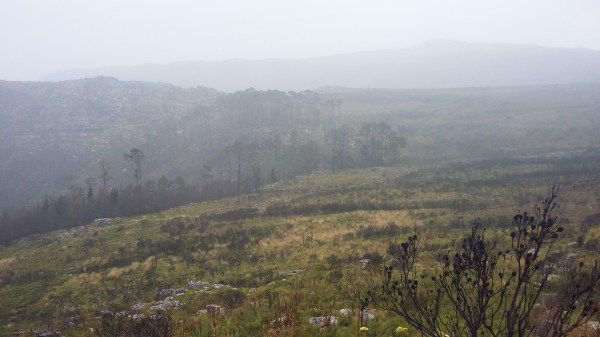
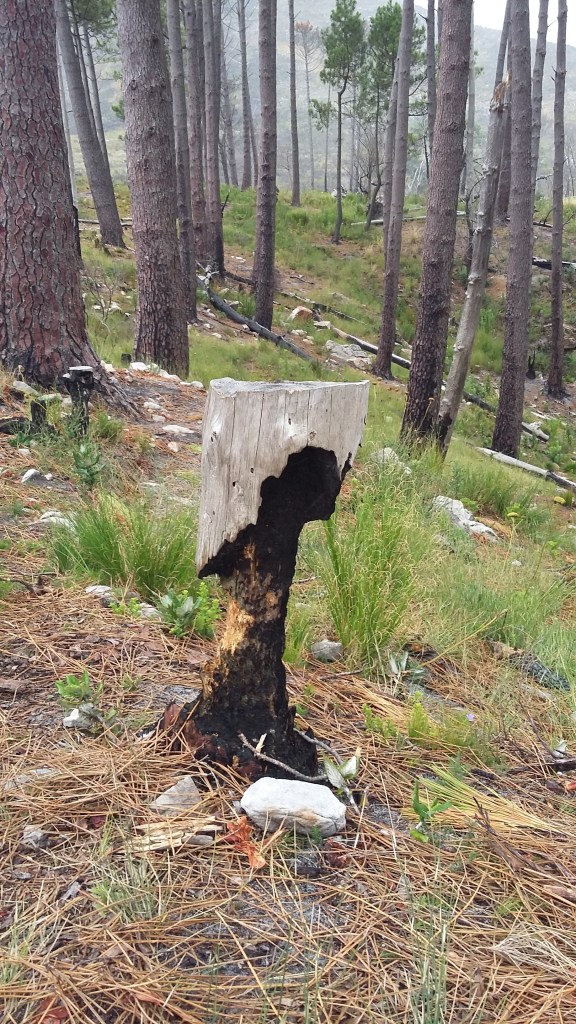
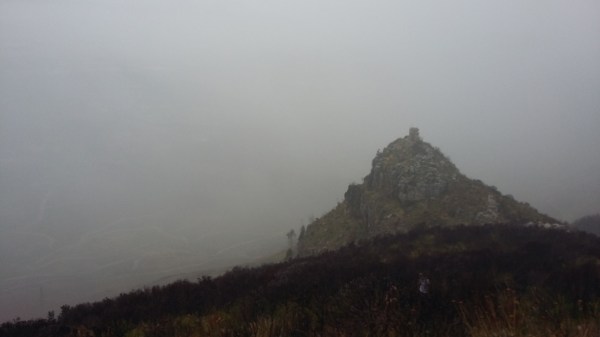
Without further ado, enjoy some pictures from the hike. Note that the weather was rainy and misty for our hike last weekend – however, I enjoyed hiking in the cooler weather. Also note how the vegetation has recovered significantly yet there are still signs of last year’s fire. For example, we saw burned logs and tree stumps amidst fresh green vegetation.
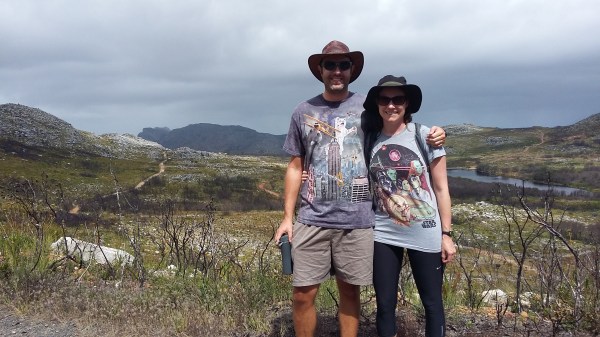
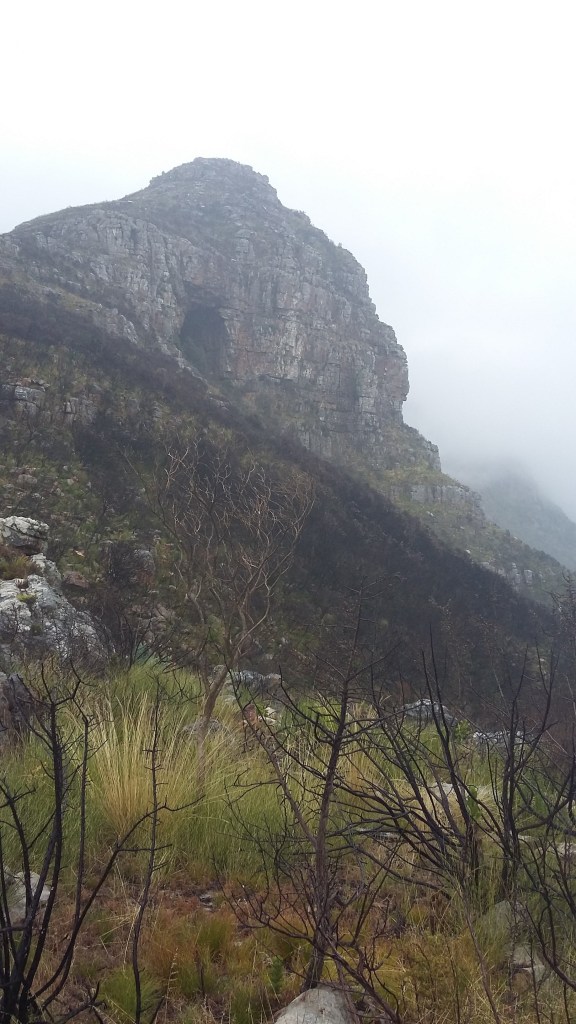
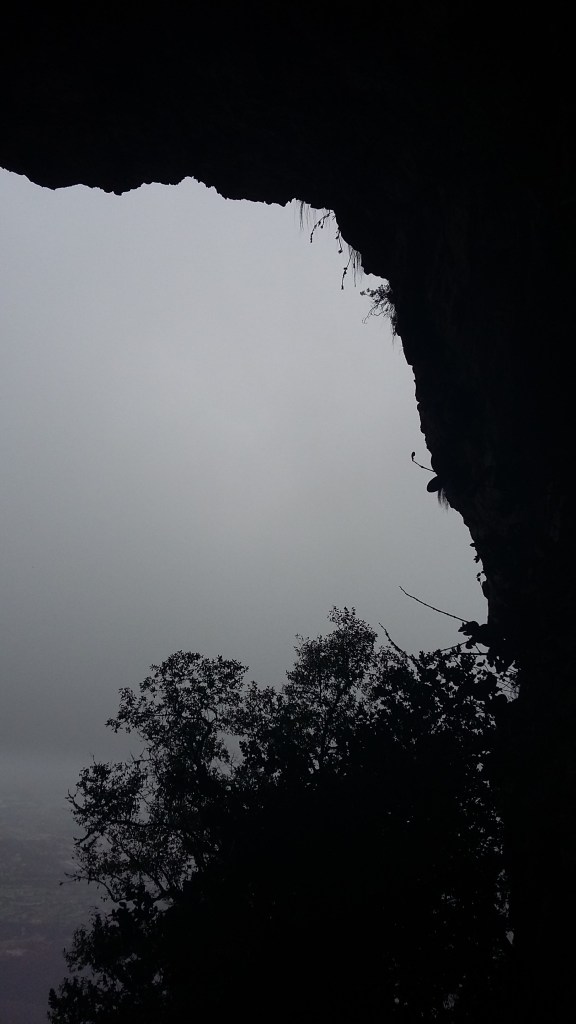
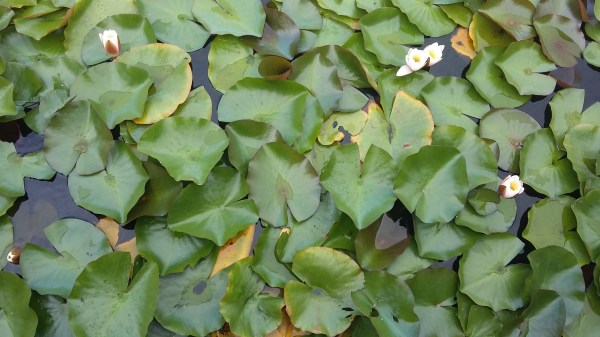
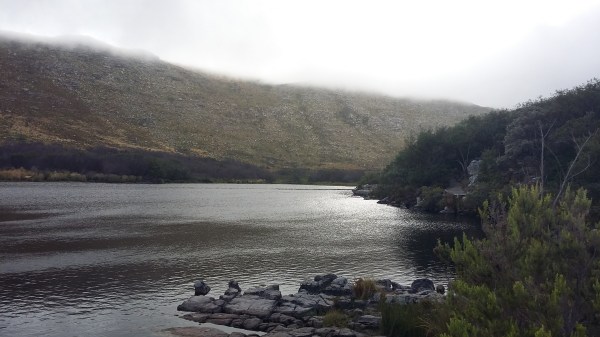
Elephant’s Eye Hike #2.Elephant’s Eye Hike #3. My husband Jackie and I competed for nerdiest t-shirt. My Star Wars t-shirt was pretty amazing, but I think that Jackie won the contest with his “Kitten Kong” t-shirt.Elephant’s Eye Hike #4.Elephant’s Eye Hike #5. A remnant of last year’s forest fire: a burned tree stump.Elephant’s Eye Hike #6. Note a few more charred tree stumps in this picture.Elephant’s Eye Hike #7. Trees and a cliff of Table Mountain Sandstone in the background.Elephant’s Eye Hike #8. Charred logs surrounded by green grass.Elephant’s Eye Hike #9. More charred logs and green grass.Elephant’s Eye Hike #10. The approach to the cave.Elephant’s Eye Hike #11. A misty view of the cave.Elephant’s Eye Hike #12. The cave itself.Elephant’s Eye Hike #13. The view from the cave entrance, shrouded in mist.Elephant’s Eye Hike #14. Another misty view from the cave.Elephant’s Eye Hike #15. We could see a little through the mist.Elephant’s Eye Hike #16. For a few minutes, the mist lifted and we had a lovely view of the valley below.Elephant’s Eye Hike #17. We saw some lovely pink March Lilies – they’re a little early this year!Elephant’s Eye Hike #18. On our way back to the parking lot, we took a small detour and walked past a beautiful lake. Note more charred tree remains here.Elephant’s Eye Hike #19.Elephant’s Eye Hike #20. Water lilies viewed from the bridge.Elephant’s Eye Hike #21. Another view of the water lilies.Elephant’s Eye Hike #22. Yet another view of the water lilies.Elephant’s Eye Hike #23. One last view of the lake as we headed back to the parking lot.
That’s all for now. Stay tuned for more pictures of hikes in the Cape Town area. In August I’ll be backpacking the Fish River Canyon in Namibia with friends, so I’ll be going on a number of training hikes this year. My goal is to hike 2 or 3 times per month. I’m fortunate to live in a part of the world with such lovely hiking trails!
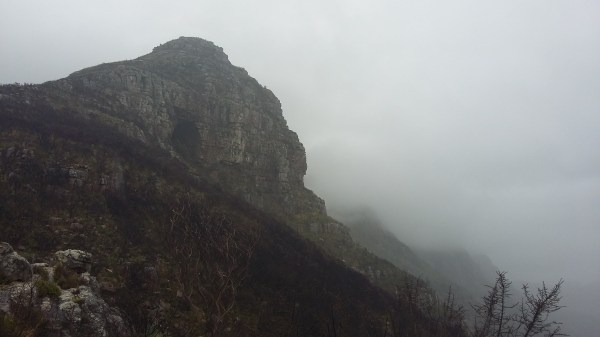
Elephant’s Eye on a rainy Saturday in February 2016.
This week’s “Monday Geology Picture” post features a natural rock formation that resembles an elephant. A small cave named “Elephant’s Eye” is located at the eye of this rock elephant’s head. The elephant consists of Table Mountain Sandstone and is located in the Silvermine Nature Reserve here in the Cape Town region of South Africa. On Saturday I hiked up to Elephant’s Eye with some friends. We hiked on a rare rainy summer day, and we appreciated the cooler weather for our hiking. The scenery on our hike was ethereal and beautiful, although we didn’t have much of a view from the top of the hill! We mostly saw mist. I’ll share some more pictures from our hike later this week.
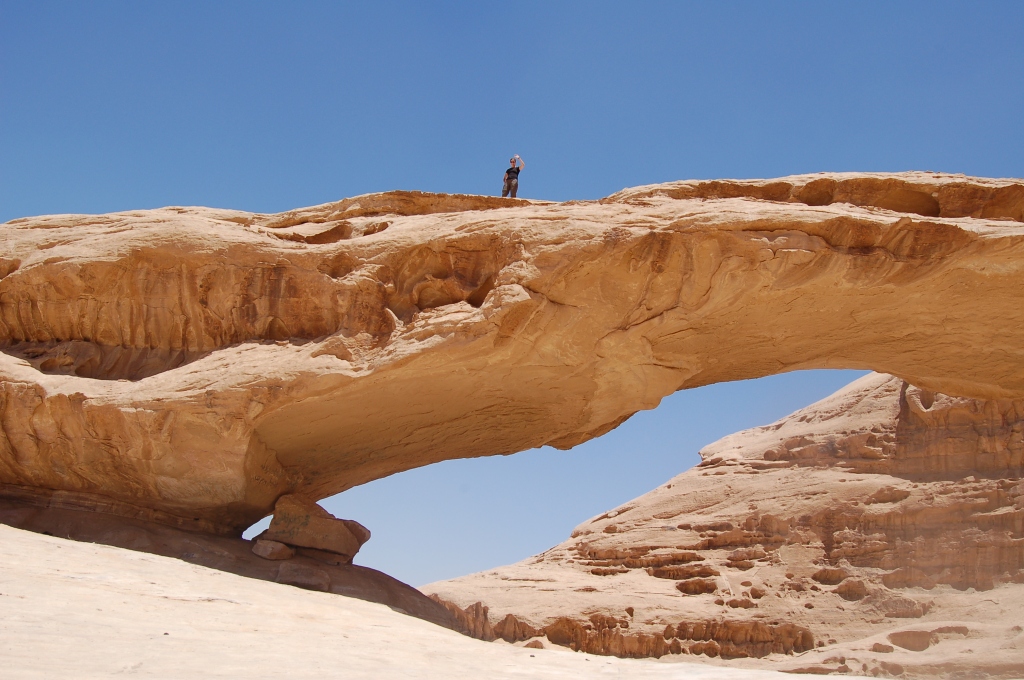
Yours truly on top of a rock arch, Wadi Rum, Jordan, circa 2007.
Ever wonder about the lovely artwork that is featured in my blog title? That artwork was inspired by a real picture, which I’ve decided to feature in this week’s “Monday Geology Picture” post. The above picture was taken in Wadi Rum, Jordan back in 2007. Wadi Rum is a magical place. You can see some more of my pictures of Wadi Rum here.
A great shot of the Great Barrier Reef taken by my husband Jackie Gauntlett. Can you see me in the background?
For today’s “Monday Geology Picture” post I thought I’d share one shot of the Great Barrier Reef that my husband took during our vacation to Australia last year. Stay tuned for some more pictures from that trip! One of the items on my blogging to-do list is sharing some more pictures and information from our Australian adventure.
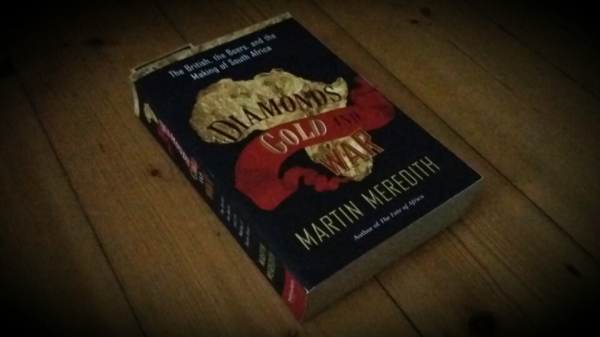
My thick paperback copy of Diamonds, Gold, and War.
Earlier this week I shared a picture of a few books on diamonds that are on my current reading list. I’ve also mentioned in a couple of previousposts that I’d like to share with you a little information about some of the geology-themed books that I’ve read recently.
I read Diamonds, Gold, and War (hereafter abbreviated as DGW) over a couple months last year. The book is thick, so it took me a few airplane trips and many nights at home to read through. Although it took me awhile to read, without a doubt DGW is the most interesting and important book that I read last year. The book provides a detailed account of key events in South African history focusing on the 1870s to the 1910s. During this time period, rich deposits of diamonds and gold were discovered and developed into mines, kicking off the modern economic development of the region and a legacy of mining that continues to be important to the South African economy to this day. Some of the mineral deposits that were first discovered in South Africa over a hundred years ago are still being mined in today. Several large mining companies, such as De Beers, were founded in South Africa during this time period. However, while the rich mineral deposits played an important role in the economic development of the country, they also led to a fierce battle to control the new-found riches. At the turn of the century, the British battled the Afrikaner Boers for control of southern Africa, waging a costly and bloody war that badly affected both parties. In addition, businessmen such as Cecil Rhodes schemed to dominate the mining industry, ruthlessly forcing aside the competition. During this time period, South Africa’s mineral wealth was largely controlled by a few individuals, who often exploited their mine workers and who did not put much emphasis on health and safety standards, considering mine injuries and deaths to simply be part of the cost of doing business.
Here’s an excerpt from the book’s introduction:
“… in 1871, prospectors exploring a remote area of sun-scorched scrubland in Griqualand, just outside the Cape’s borders, discovered the world’s richest deposits of diamonds. Britain promptly snatched the territory from the Orange Free State. Fifteen years later, an itinerant English digger, George Harrison, stumbled across the rocky outcrop of a gold-bearing reef on a ridge named by Transvaal farmers as the Witwatersrand. Beneath the reef lay the richest deposits of gold ever discovered. The gold strike transformed the Transvaal from an impoverished rural republic into a glittering prize.
What followed was a titanic struggle fought by the British to gain supremacy throughout southern Africa and by the Boers to preserve the independence of their republics. It culminated in the costliest, bloodiest and most humiliating war that Britain had waged in nearly a century…
Two men personified the struggle: Cecil Rhodes and Paul Kruger. Rhodes, the son of an English country parson, used his huge fortunes from diamonds and gold to promote the expansion of the British empire as well as his own business interests… Paul Kruger, the Boer leader and landowner, whose only education was the Bible and who believed the earth was flat, defied Britain’s prime ministers and generals for nearly a quarter of a century.”
DGW covers a fascinating and important time period in South Africa’s history. The book is thoroughly researched and contains several pages of historical pictures and maps. Although the book is long (570 pages) and a little cumbersome at times, overall it is extremely readable – it’s not dry history at all. The book is full of rich detail and anecdotes. In particular, Meredith paints a vivid picture of Cecil Rhodes and Paul Kruger, two of the most influential – and also the most controversial – figures of the time period. Meredith also paints a vivid picture of the early days in the mining towns of Kimberly (diamonds) and Johannesburg (gold).
Personally, the book was an important one for me to read. I’ve been living in South Africa for nearly five years. During this time period, I’ve worked as a geologist in both the diamond and gold industries. Fortunately, the mining industry in South Africa looks quite different today than it did back in the late 1800s and early 1900s. Today, mining companies are much more socially responsible, and there is also a great emphasis placed on the health and safety of employees. The modern South African mining industry isn’t perfect, but it has come a long, long way. I found it extremely valuable to read DGW in order to better understand the origins and complex development of South African’s mining industry. In addition, I found it fascinating to read about how deposits of diamonds and gold were first discovered and developed in South Africa. Fortunately, Meredith’s descriptions of geology are fairly accurate, as history books go! I didn’t spot any glaring geological errors or omissions.
Overall, I highly recommend reading DGW. The book provides a wonderful example of how geology influences history. The discovery of rich mineral deposits in South Africa played a key role in shaping the country’s history and continues to shape the country to this day. If neither diamonds nor gold were discovered in South Africa, the country’s development would likely have taken a radically different path, for better or for worse.
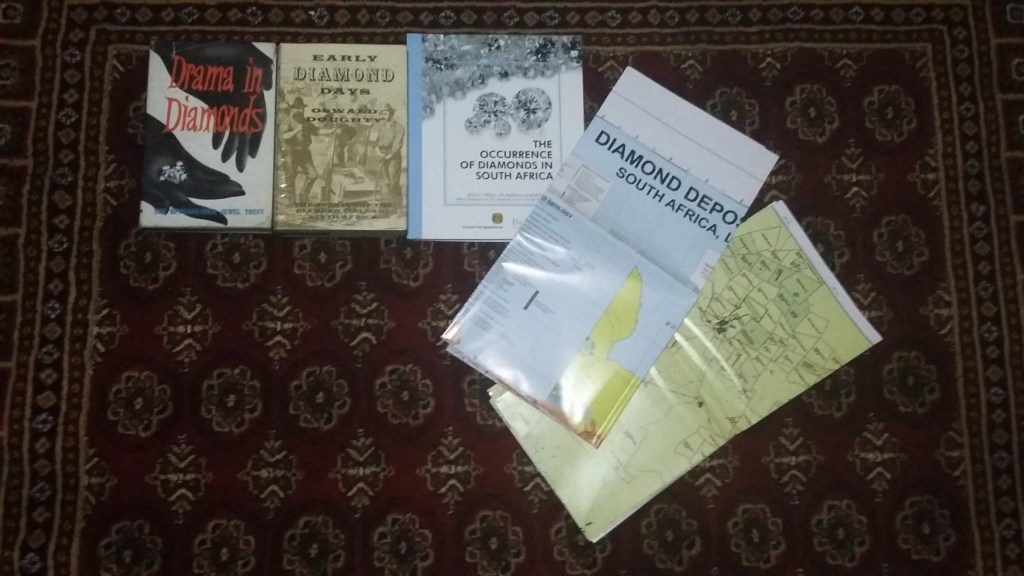
Three books on my reading list… one book comes with two maps!
Since I started working for De Beers a little over two years ago, I’ve slowly but surely been learning all about diamonds and diamond geology. I’ve also been learning about the history of diamond mining in southern Africa and elsewhere in the world. In some other posts, I’ll have to share a little about the books on diamonds that I’ve already read. However, for this week’s “Monday Geology Picture” I thought I’d share a picture of three of the next books on my diamond reading list. I’m particularly excited to read the book on occurrences of diamond in South Africa – it comes with two great maps!












 Georneys