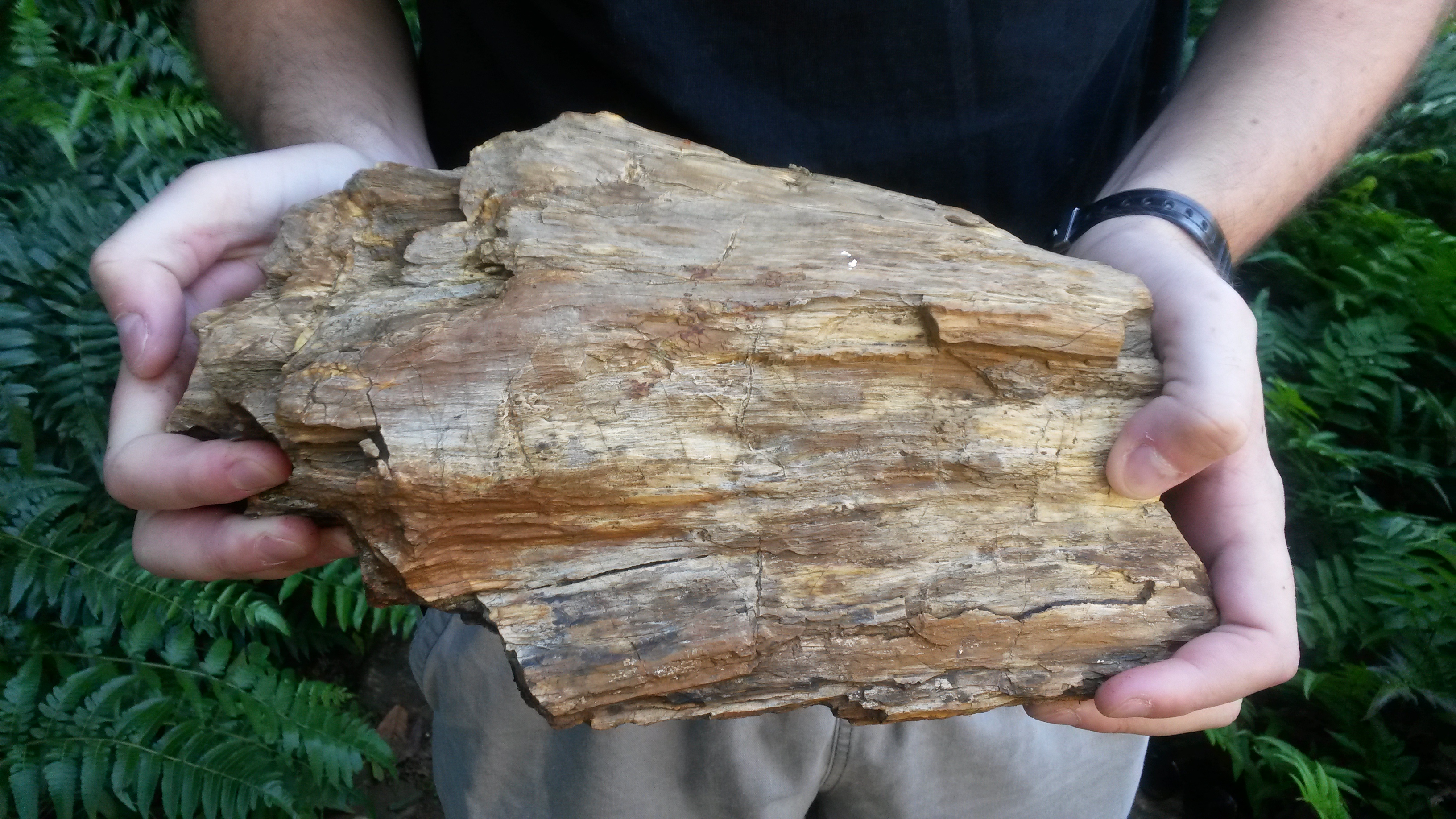
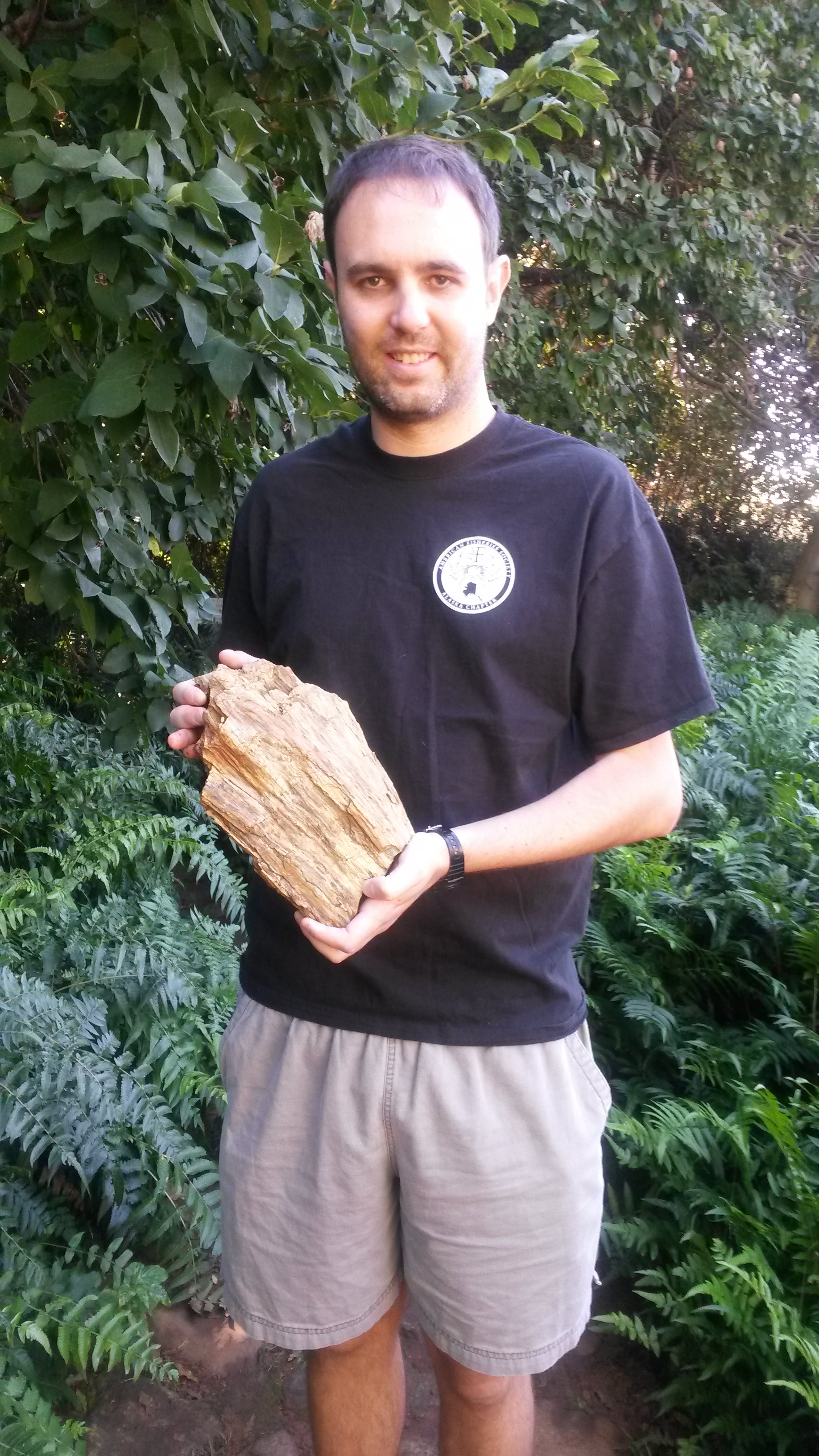
Petrified log at Kirstenbosch Garden, held by my husband.
My apologies again for the light blogging recently. My day job as an industry geologist has been keeping me extremely busy over the past couple of months. However, on Friday my husband and I are to the US for a much-needed three weeks of vacation, including spending time with friends and family whom we see far too rarely. Hopefully I’ll be able to squeeze in a little time for blogging during our vacation. Otherwise, I’ll do my best to pick up the blogging again in about a month. In the meantime, the “Monday Geology Picture” posts will have to tide you over until I can settle down for some real blogging.
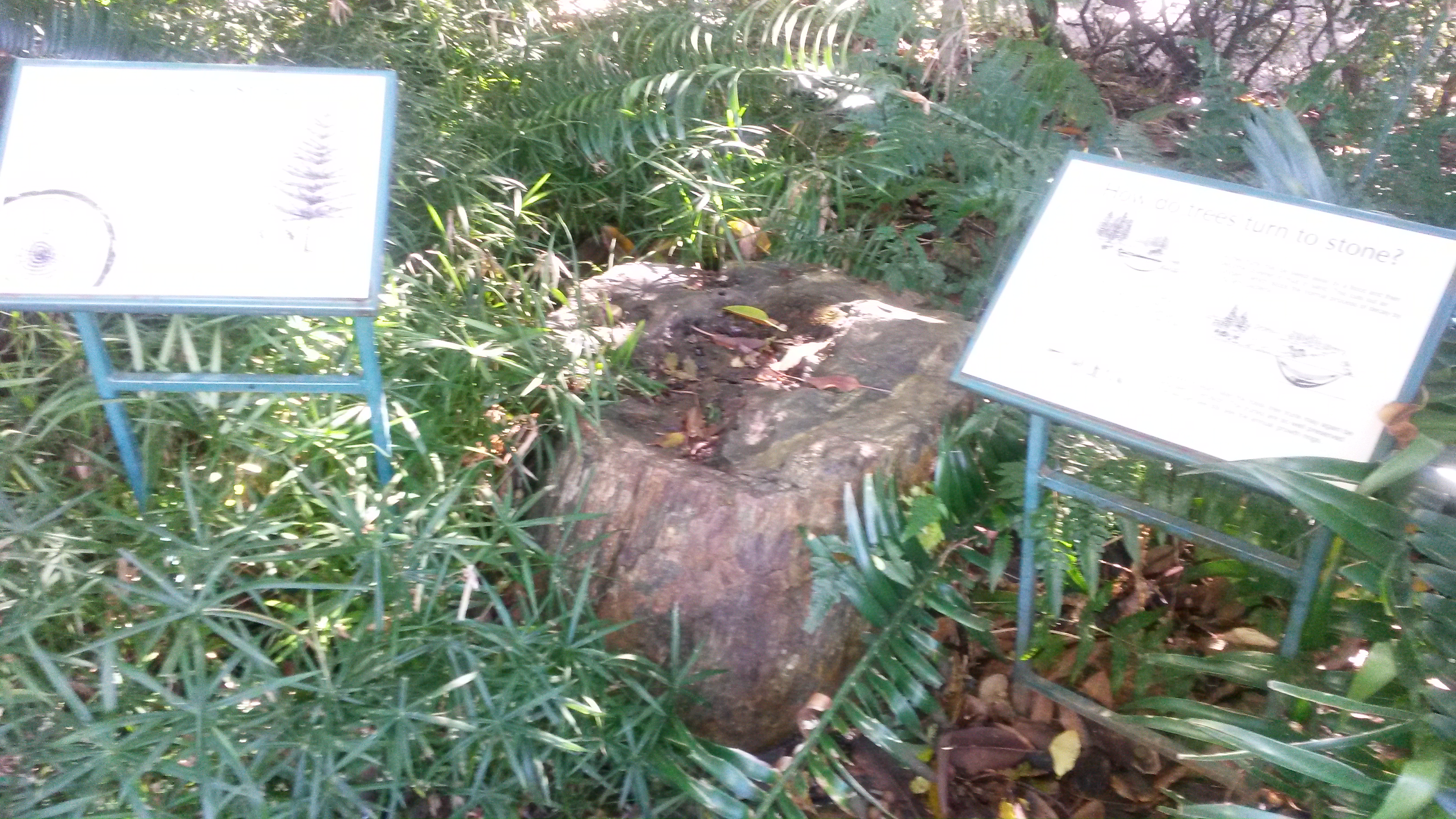
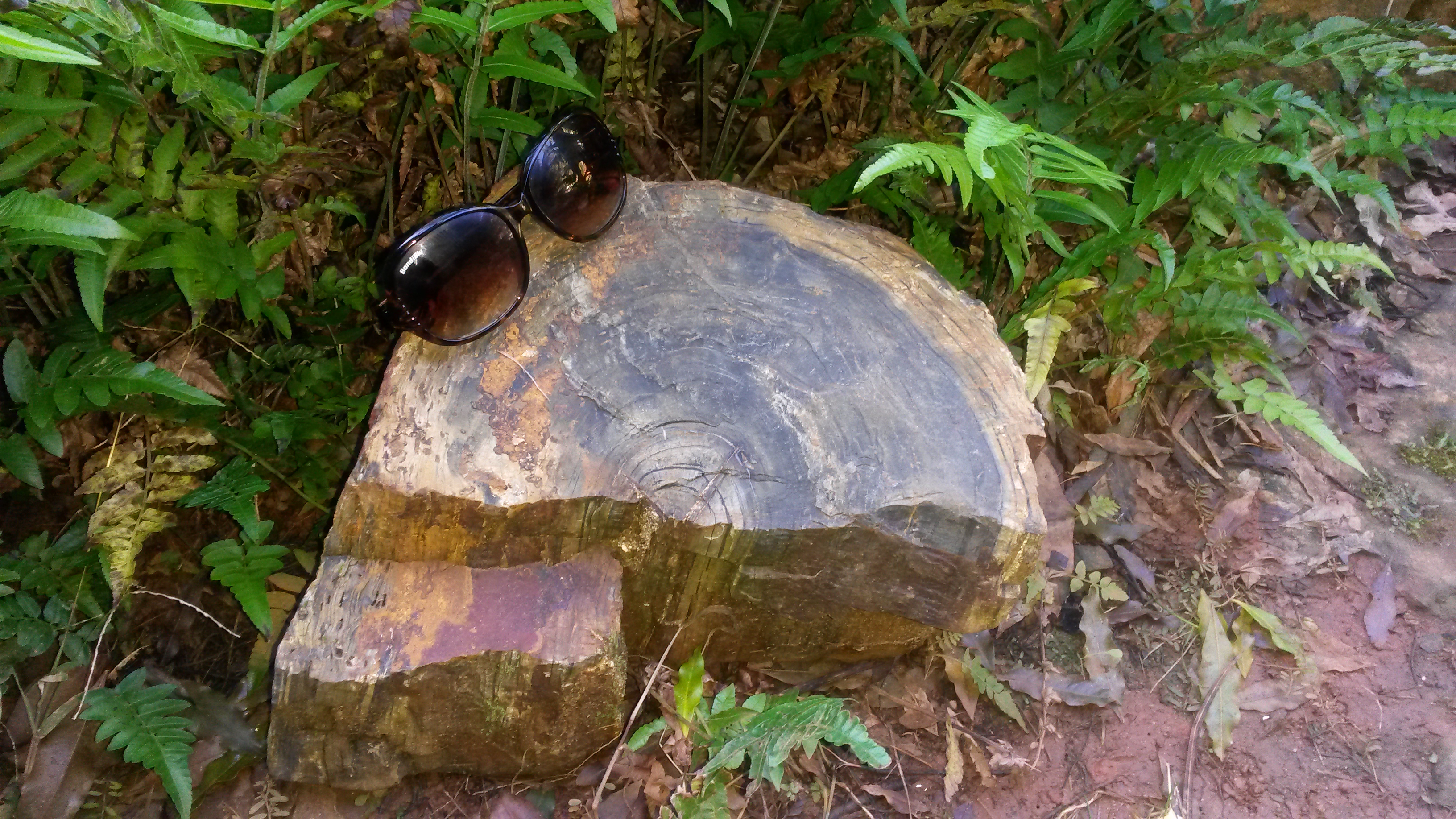
Today, I thought I would share some more pictures of the petrified wood that my husband and I recently saw at Kirstenbosch Garden here in our home city of Cape Town, South Africa. Enjoy! True geologists, my husband and I spent far more time looking at the “trees of stone” than at the real trees of the botanical garden.
Sign #1 explaining how petrified wood is formed. Click to enlarge.Sign #2 explaining how petrified wood is formed. Click to enlarge.Sitting on a petrified log.Petrified wood between the signs about how petrified wood forms.Petrified wood, with sunglasses for scale.More petrified wood. These are heavier than they look!My husband Jackie holding some petrified wood.
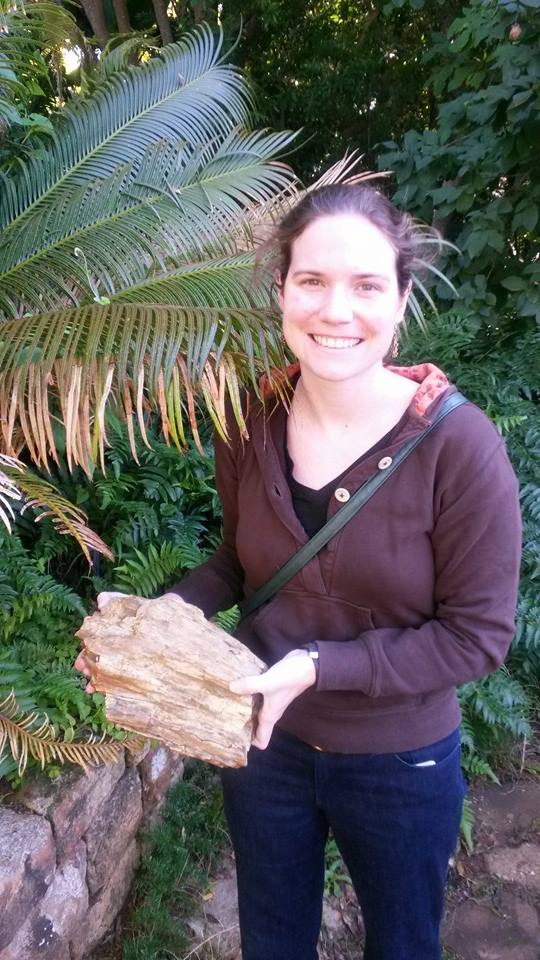
Posing with some petrified wood in Kirstenbosh Garden, May 2014.
My apologies that my blogging has been very light over the past few weeks. I didn’t even post my “Monday Geology Picture” these past few weeks! A busy work schedule combined with some family issues meant that something had to go, and unfortunately that something was blogging here on Georneys. Never fear, though! I won’t abandon you! That said, starting in mid-June, I am going to be travelling for ~3 months, but before I depart I will set up many “Monday Geology Pictures” to auto-post. I have a few of my own geology pictures that I can share. However, if you have a fun geology picture, please feel free to email it to me (georneysblog at gmail), and I’d be delighted to share your picture here. Please include a caption, photographer credit, and a link to your website/blog (if you like me to link to something).
Before I depart for my travels, I’ll also wrap up my “Sutherland Sky” series of posts, and I’ll share some geological pictures from my March vacation to the beautiful volcanic island of Mauritius. And, when I have some downtime during my travels, I’ll post a few other things.
With that explanation, let me move on to this week’s “Monday Geology Picture.” This week I thought I’d share a picture of me posing with some petrified wood. A couple of weeks ago my husband and I visited Kirstenbosch National Botanical Garden here in Cape Town, South Africa. We’ve been to Kirstenbosch many times, but this was the first time that we discovered Kirstenbosch’s rock garden! I have to say, as a geologist, I enjoyed the rock garden even more than the regular garden… but of course the regular garden is lovely as well. I’ll share some more pictures from Kirstenbosch in the future.
Table Mountain viewed from Milnerton Beach, April 2014.
I am very fortunate to live in beautiful Cape Town, South Africa. One of Cape Town’s best geographical (and geological) features is Table Mountain. I see Table Mountain pretty much every day– I have a nice view of it on my drive to work. For this week’s Monday Geology Picture I’m sharing a beautiful view of Table Mountain. I took this picture from Milnerton Beach during a recent weekend walk.
Today I’m continuing with my series of posts about my October 2013 visit to the small town of Sutherland in South Africa’s Northern Cape province. Sutherland is home to a South African Astronomical Observatory (SAAO) research station that contains many telescopes, including the Southern African Large Telescope (SALT). You can read Part I of this series here, Part II of this series here, Part III of this series here, and Part IV of this series here.
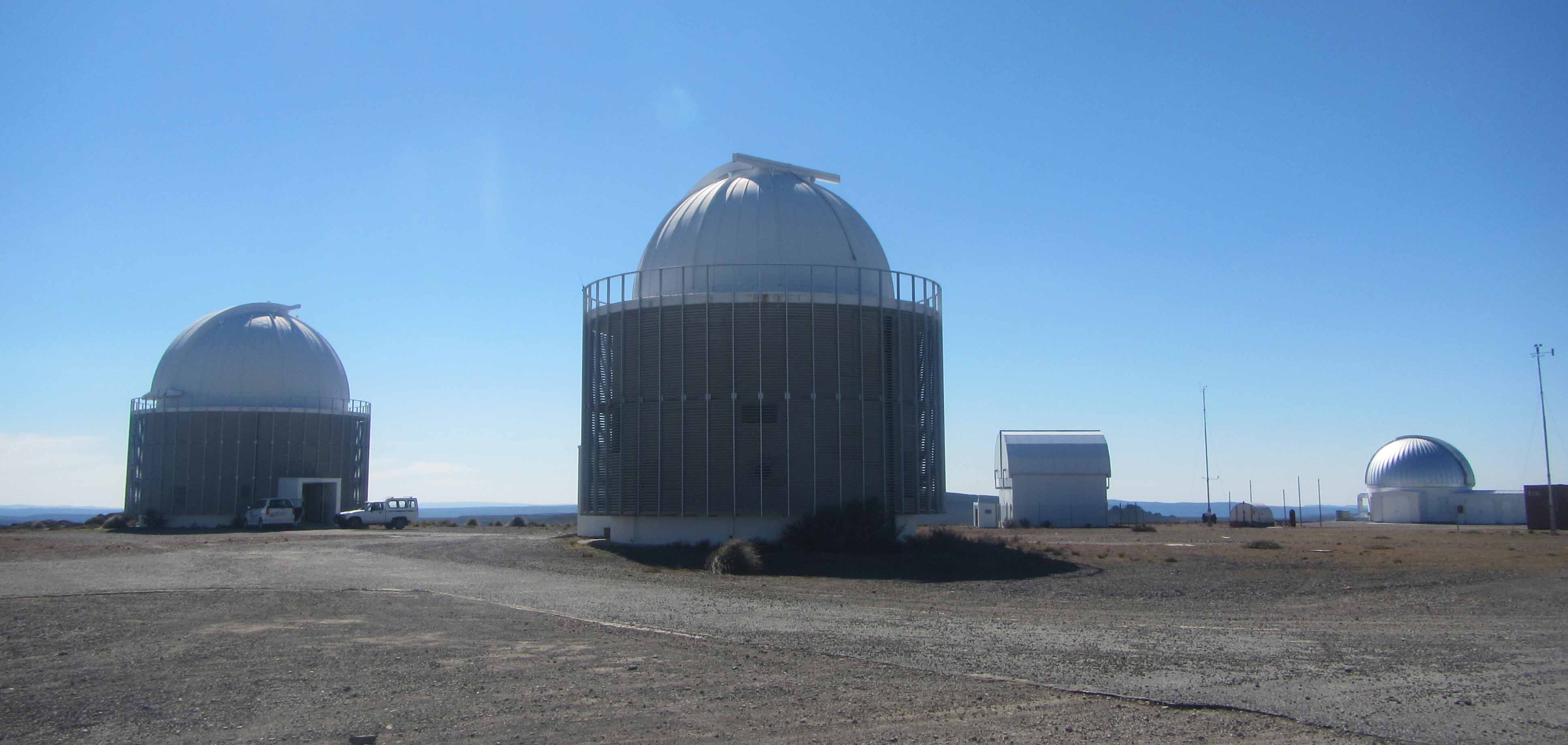
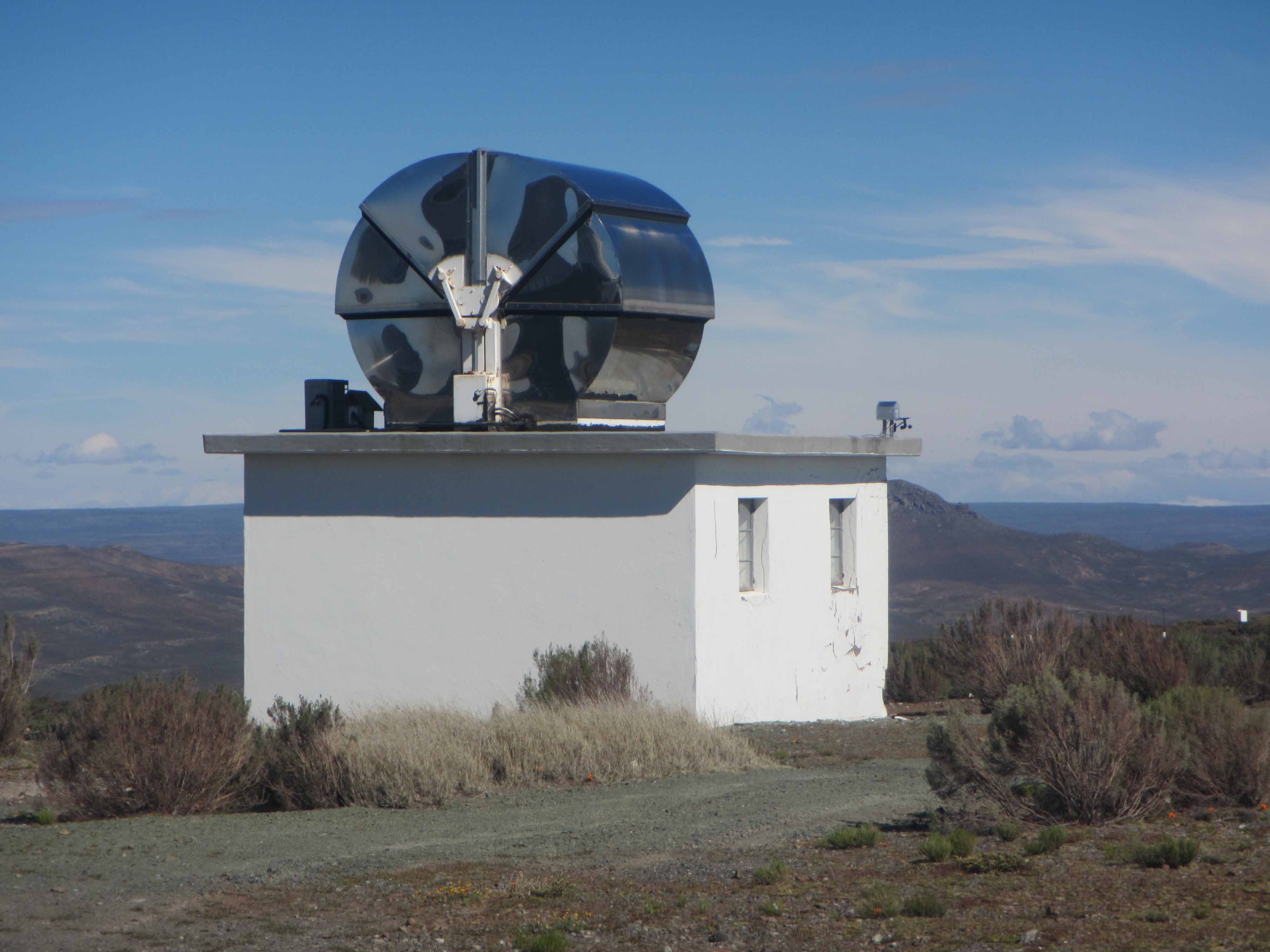
In my last post, I shared some pictures of the famous SALT. In this post I’m sharing pictures of some of the other telescopes that I saw on top of the hill near SALT. You can find a list of all of the telescopes at the SAAO Sutherland facility here. There are all sorts of telescopes located at Sutherland– it’s an astronomer’s heaven! If you can identify any of the telescopes in the pictures, please leave a comment below. I’d love to be able to match my pictures to the list of telescopes at Sutherland.
Without further ado, here are some pictures of some of the awesome telescopes located in Sutherland:
Telescopes #1.Telescopes #2.Telescopes #3.Telescopes #4.Telescopes #5.Telescopes #6.Telescopes #7. The telescope on the right is SALT.Telescopes #8.Telescopes #9.Telescopes #10.
That’s all for this post. In the next post in this series I’ll discuss some of the geology of the Karoo region in the vicinity of Sutherland.
Today I’m sharing some pictures of SALT, the most famous telescope located in Sutherland. I don’t know much about telescopes, to be honest, so here’s some information from the SALT website:
The Southern African Large Telescope (SALT) is the largest single optical telescope in the southern hemisphere and among the largest in the world. It has a hexagonal primary mirror array 11 metres across, comprising 91 individual 1.2m hexagonal mirrors. Although very similar to the Hobby-Eberly Telescope (HET) in Texas, SALT has a redesigned optical system resulting in a larger field of view and effective collecting area.
SALT can detect the light from faint or distant objects in the Universe, a billion times too faint to be seen with the unaided eye – as faint as a candle flame would appear at the distance of the moon. The telescope and instruments are designed to operate from the near ultraviolet to the near infrared (320 to 1700 nm), and offer some unique or rare capabilities on a telescope of this size.
SALT is situated at the South African Astronomical Observatory (SAAO) field station near the small town of Sutherland, in the Northern Cape province, and is ~380 km from Cape Town. SALT is funded by a consortium of international partners from South Africa, the United States, Germany, Poland, India, the United Kingdom and New Zealand. The construction phase was completed at the end of 2005 and from 2006 to 2009 it entered a period of commissioning and performance verification. Since September 2011, observing is now in full swing and the telescope is finally realising its huge potential as Africa’s Giant Eye on the Universe.
I definitely recommend checking out the SALT website. There’s much great information there although it does seem that some sections of the website, such as the “Picture of the Month”, have not been updated since 2011. However, there is a SALT blog that seems to be updated regularly. The blog has daily observation logs and the occasional post on topics such as optics and an astronomer’s braai (South African BBQ). There is also a website for scientists interested in working at SALT. This website provides information on how to apply for observation time at SALT. Since observation time at SALT is limited and sought after, there is an application / proposal process in place to allocate the observation time to various scientists. I also ran across this informative SALT webpage on the Rutgers University website. And here’s another great website about SALT.
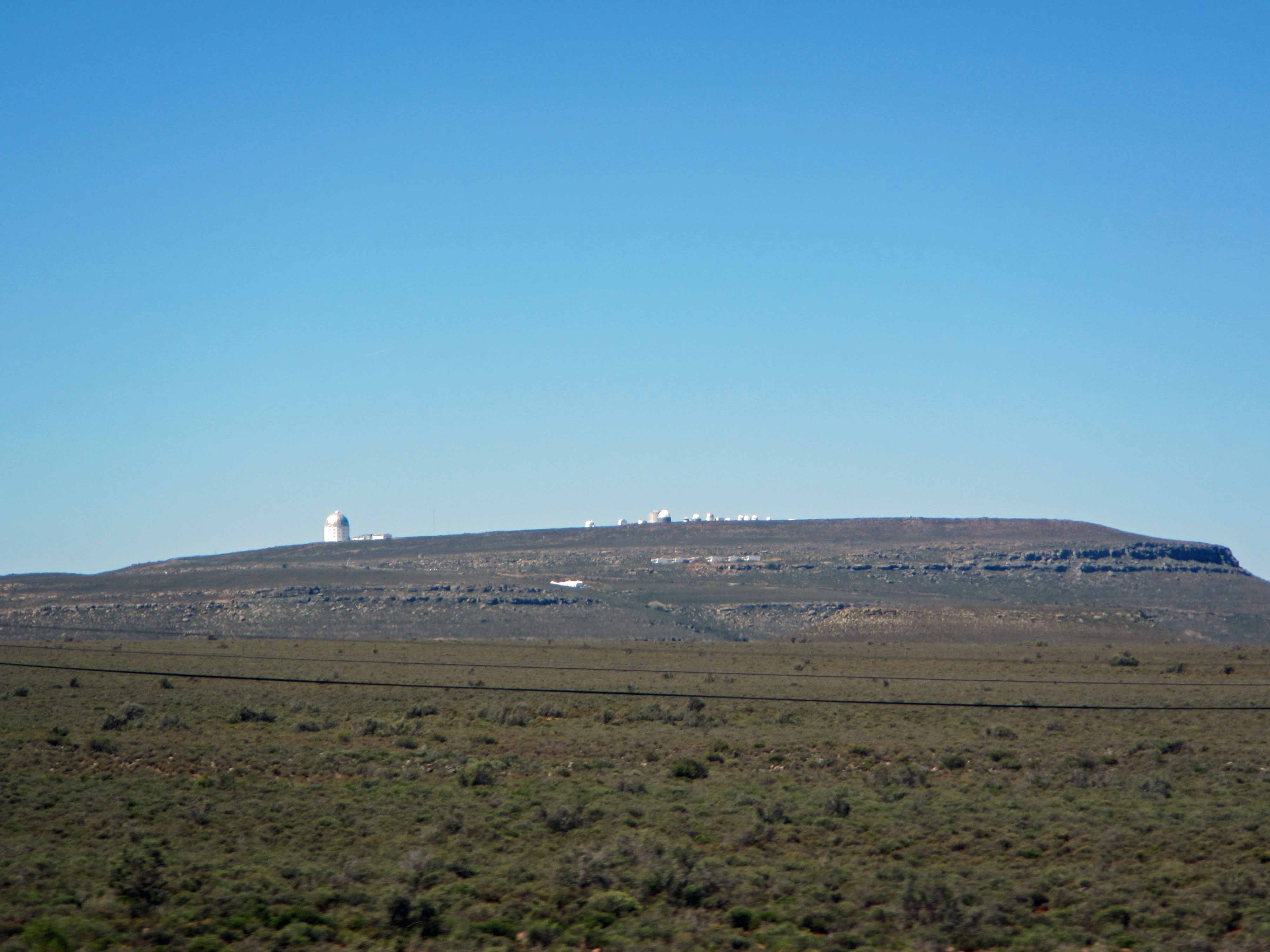
During my weekend visit to Sutherland, I visited SALT and some of the other telescopes on the Saturday afternoon. SALT and the other telescopes are located a short drive away from the small town of Sutherland. The telescopes are perched on top of a hill away from the modest light pollution of the little town of Sutherland.
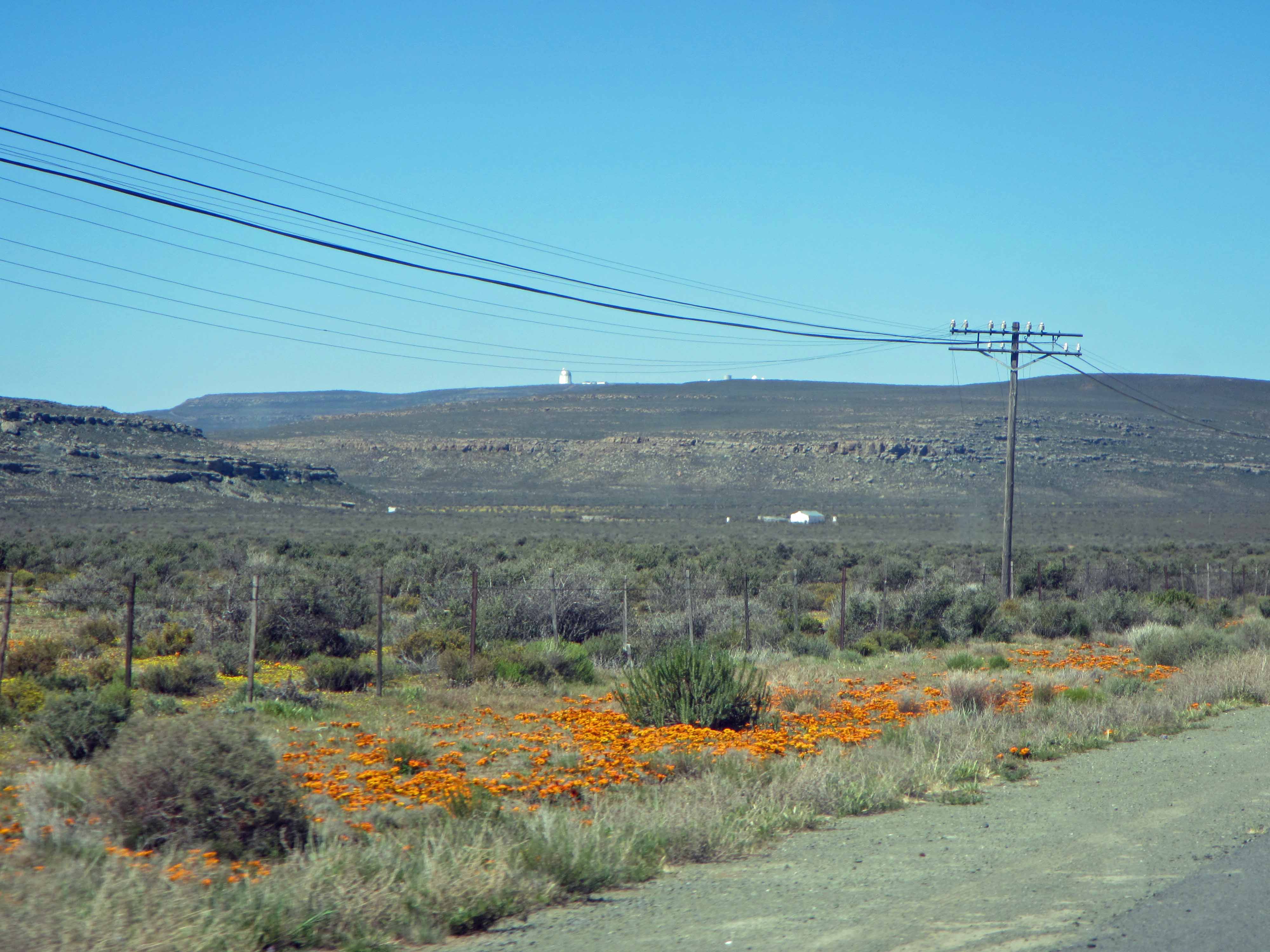
Here are some pictures that show the location of the telescopes on the hill:
The road from the town to the telescopes. You can make out the big SALT telescope in the upper left just below the power line.Another view of the telescopes from the road. SALT is the biggest telescope on the left. Some pretty Karoo wildflowers are in the foreground.All the telescopes up on the hill. There’s some nice sedimentary bedding on the hill, too!
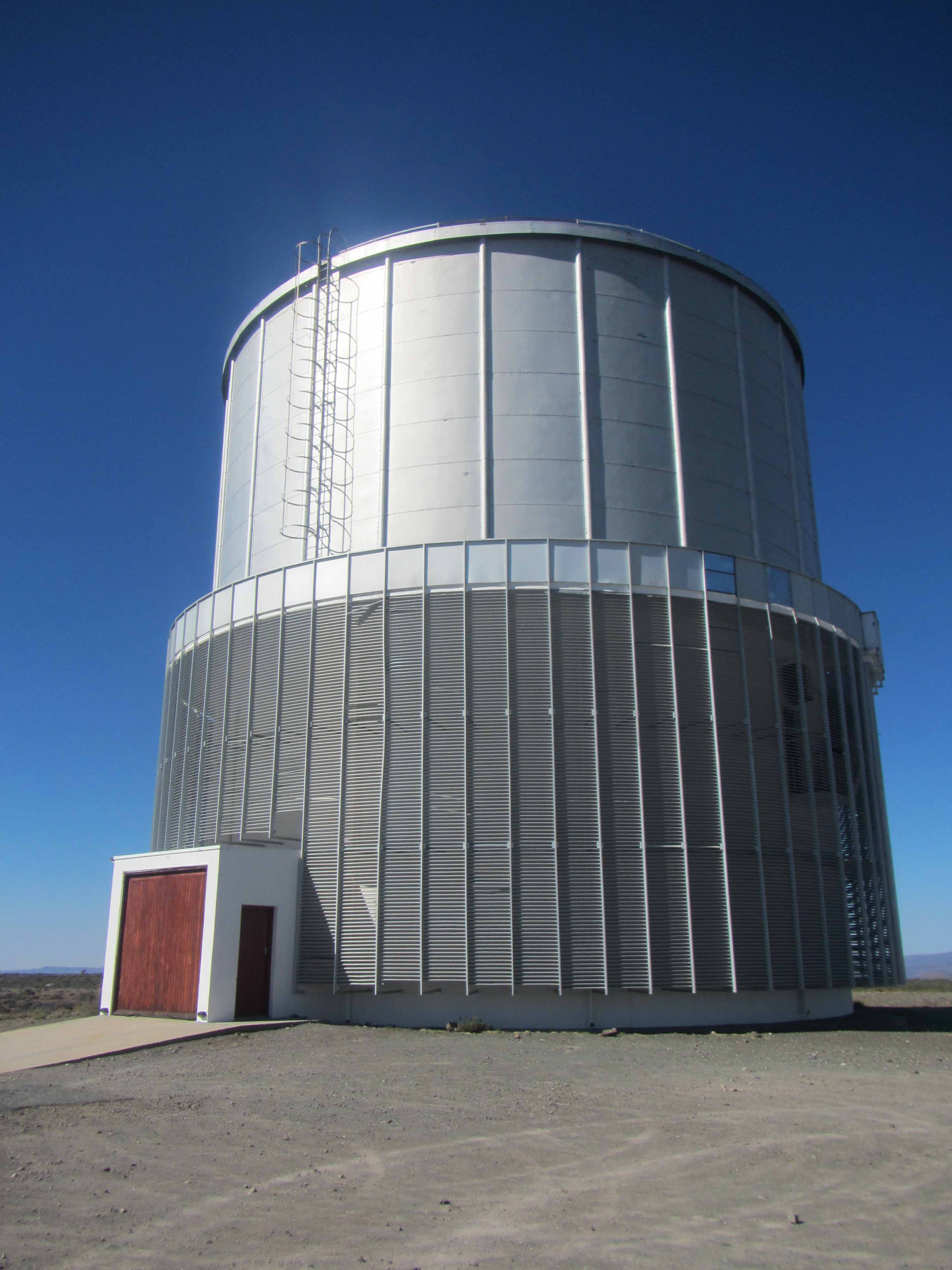
Here are some pictures of SALT up close:
SALT viewed from the top of the hill.Another close-up view of SALT.
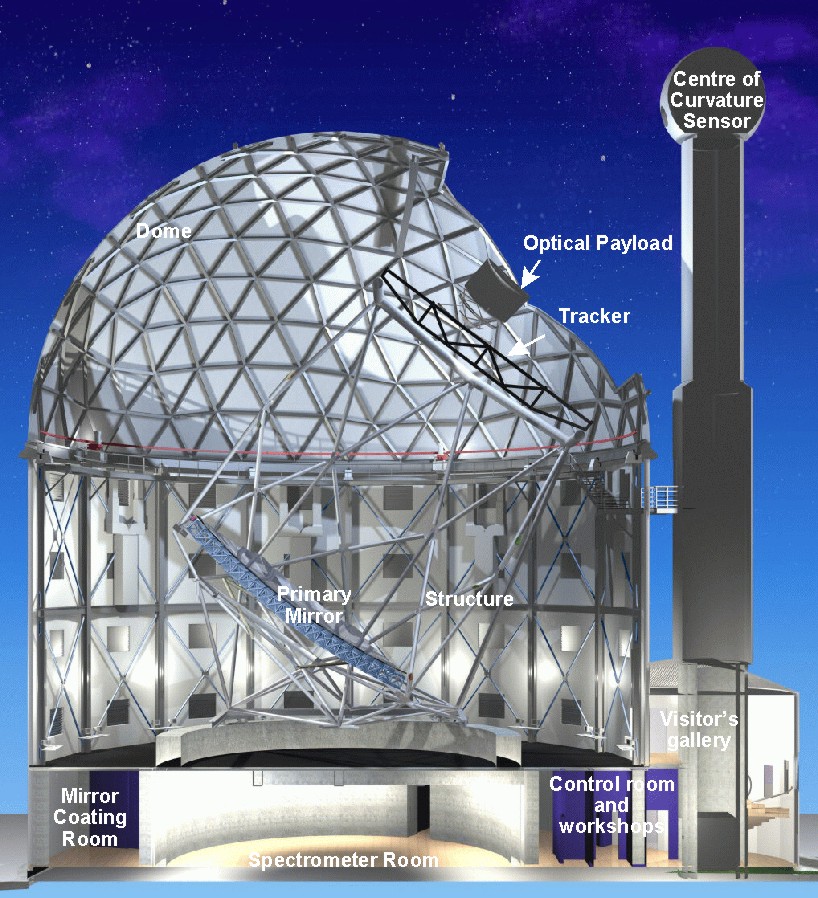
As part of the tour, I was able to visit the inside of SALT. Here’s a diagram showing what SALT looks like on the inside:
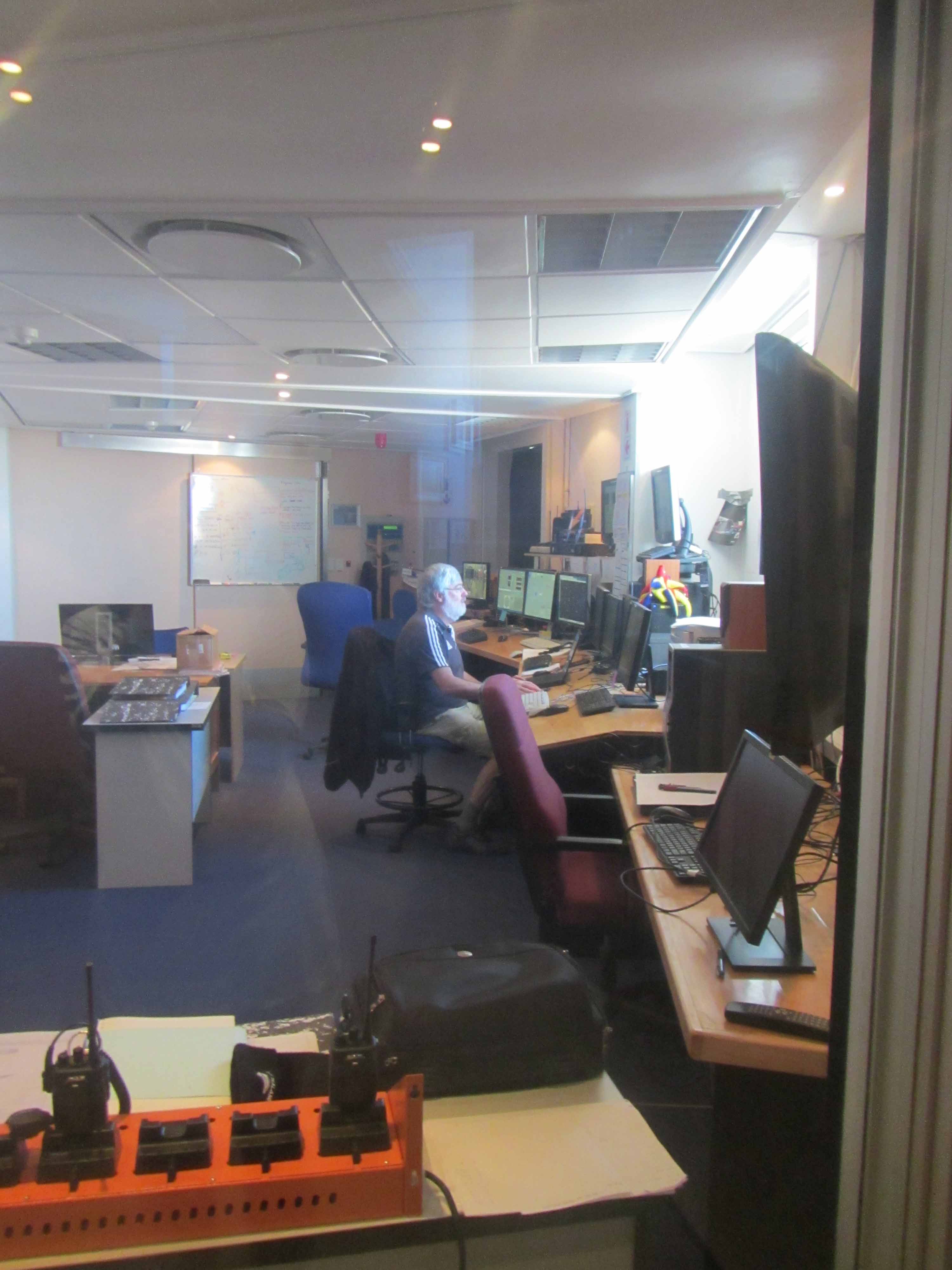
On the tour, I went past the Control Room, where I was able to see a scientist at work:
A scientist at work in the SALT control room.
Then I went up the stairs to the Visitor’s Gallery, where I was able to take a look at SALT’s impressive mirrors:
SALT’s mirrors.
I apologize for the poor quality of the above picture– it was difficult to take a good picture through the window of the Visitor’s Gallery. The gallery is kept separated from the mirrors by windows because it is important to keep conditions (temperature, humidity, etc.) perfectly controlled in the room with the mirrors.
Again, I’m afraid I don’t know much about telescopes, so here’s some information on SALT’s mirrors from Wikipedia:
Both SALT and HET have an unusual design for an optical telescope. Similar to the Keck Telescopes, the primary mirror is composed of an array of mirrors designed to act as a single larger mirror; however, the SALT mirrors produce a spherical primary, rather than the paraboloid shape associated with a classical Cassegrain telescope. Each SALT mirror is a 1-meter hexagon, and the array of 91 identical mirrors produces a hexagonal-shaped primary 11 x 9.8 meters in size. To compensate for the spherical primary, the telescope has a four-mirror spherical aberration corrector (SAC) that provides a corrected, flat focal plane with a field of view of 8 arcminutes at prime focus.
Each of the 91 mirrors is made of low-expansion Sitall glass and can be adjusted in tip, tilt and piston in order to properly align them so as to act as a single mirror. Because the mirror is spherical, light emitted from a position corresponding to the center of curvature of the mirror will be reflected and refocused to the same position. Therefore, the telescope employs a Center of Curvature Alignment Sensor (CCAS) situated at the top of a tall tower adjacent to the dome. Laser light is shone down on all the segments and the position of the reflections from each mirror measured. A process called “stacking” thus allows the telescope operator to optimize the adjustments of the mirrors.
SALT’s mirrors certainly look very impressive! To me, they look as if they belong in a science fiction movie or perhaps a James Bond movie… I can just see a James Bond villain taking over the world with SALT.
Speaking of science fiction, I mentioned in an earlier post that I visited SAAO and SALT as part of an event organized by a local (South African) Star Trek club to which I belong. Of course, if you attend a Star Trek club event, it’s best to attend in uniform. So, several of us wore Star Trek attire during our SAAO tour:
My husband Jackie and I in Star Trek: The Original Series uniforms in front of the SALT telescope.Four Trekkies in front of SALT.
The human race may not (yet) be exploring The Final Frontier as part of the United Federation of Planets. However, at least we are looking up at the sky in places such as Sutherland.
That’s all for this post. Next, I’ll share some pictures of some of the other telescopes located at Sutherland. After that, I’ll share a few pictures highlighting the geology of the Karoo region in the vicinity of Sutherland.
Malmesbury sediments by the beach, Hermanus, South Africa.
This past weekend my husband and I and some friends visited the little seaside town of Hermanus, which is located about an hour and a half drive from our home in Cape Town, South Africa. Normally, the weather in April in South Africa is starting to become somewhat cold. However, we enjoyed unseasonably warm weather this past weekend. Thus, we spent plenty of time walking along the seashore and even swimming in the sea itself during our visit to Hermanus. The seashore at Hermanus is bordered by beautiful, dark sedimentary rocks of the Malmesbury Group. which you can read more about here. A few of these rocks are shown in the picture above.
Today I’m going to share some pictures from our visit to the SAAO Visitor Centre, which has several museum-like displays. We started our official tour of SAAO / SALT by visiting the Visitor Centre and watching a 20 minute or so video about the universe. Then we went and toured several of the telescopes, which I’ll write about in my next post in this series. After touring the telescopes, we had an opportunity to look around the Visitor Centre displays, which included several astronomy displays and also a geology display that included a meteorite (I believe) and many interesting fossils. I spent some time looking through the astronomy displays, but I spent most of my time checking out the geology display. Thus, most of my pictures are of the geology display! Don’t worry, though… there will be plenty of astronomical telescope pictures in the next blog post in this series.
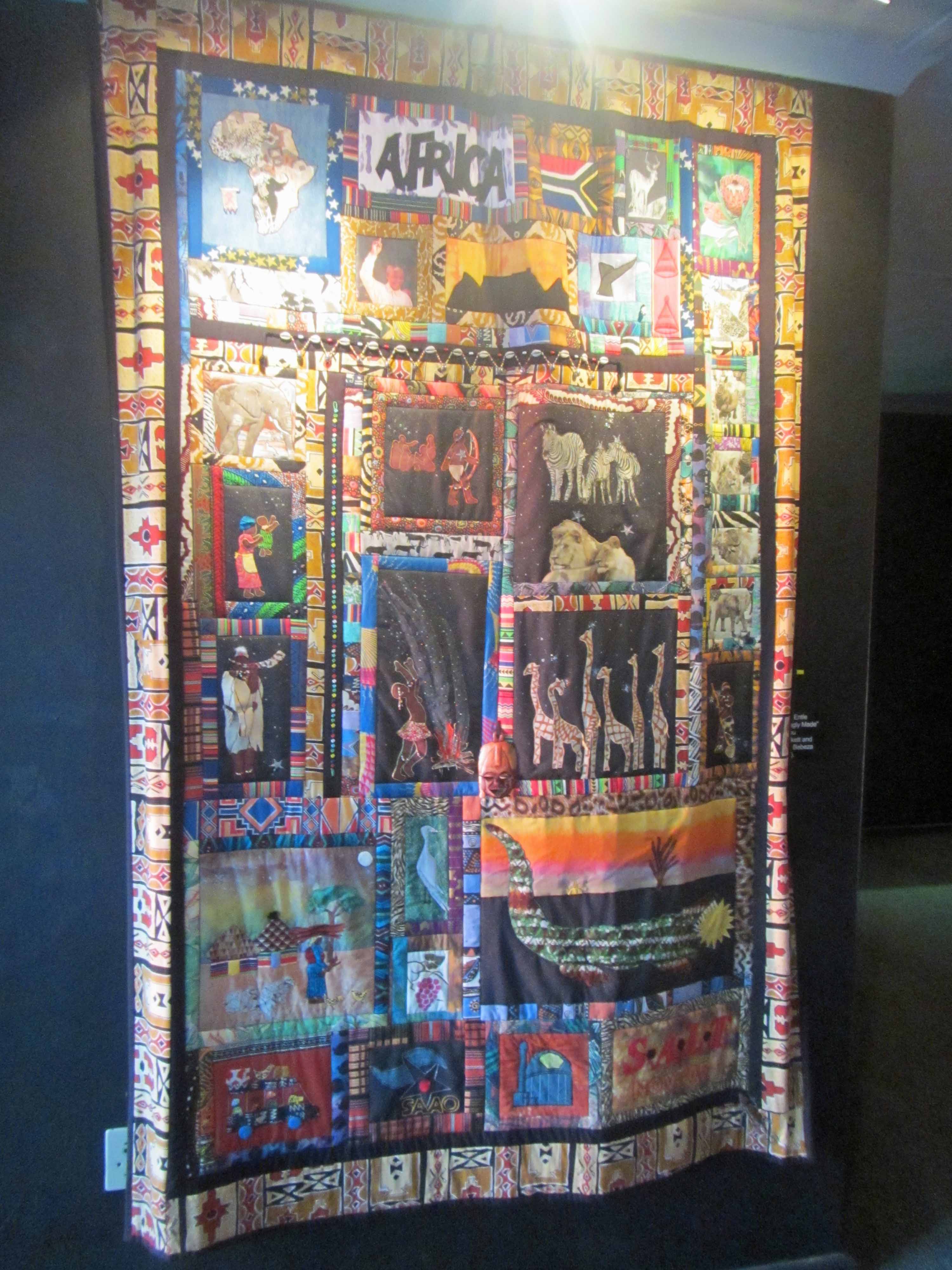
A pretty quilt– with a telescope on it!– in the lobby of the SAAO museum.
In the entrance to the geology display, there was a fairly big iron meteorite– at least, I assume that’s what it was, since I didn’t see any explanation card. I took a picture with the presumed meteorite:
Posing with a presumed meteorite.
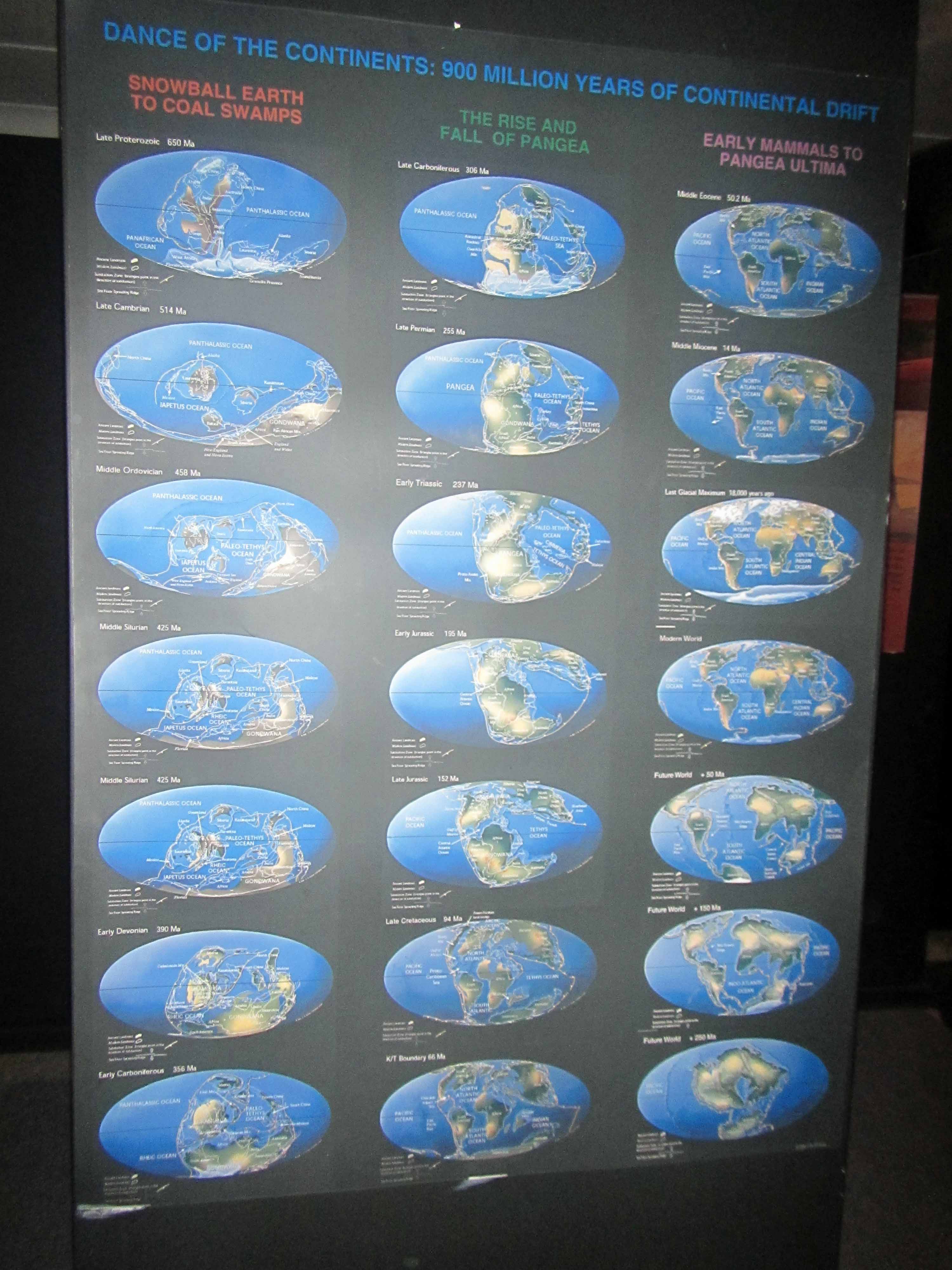
The geology display had many fossils and bits and pieces of information organized by geologic time. The display included this neat poster showing continental reconstructions (“continental drift”) over the past 900 million years:
A poster of continental reconstructions over the past 900 million years. Click to enlarge.
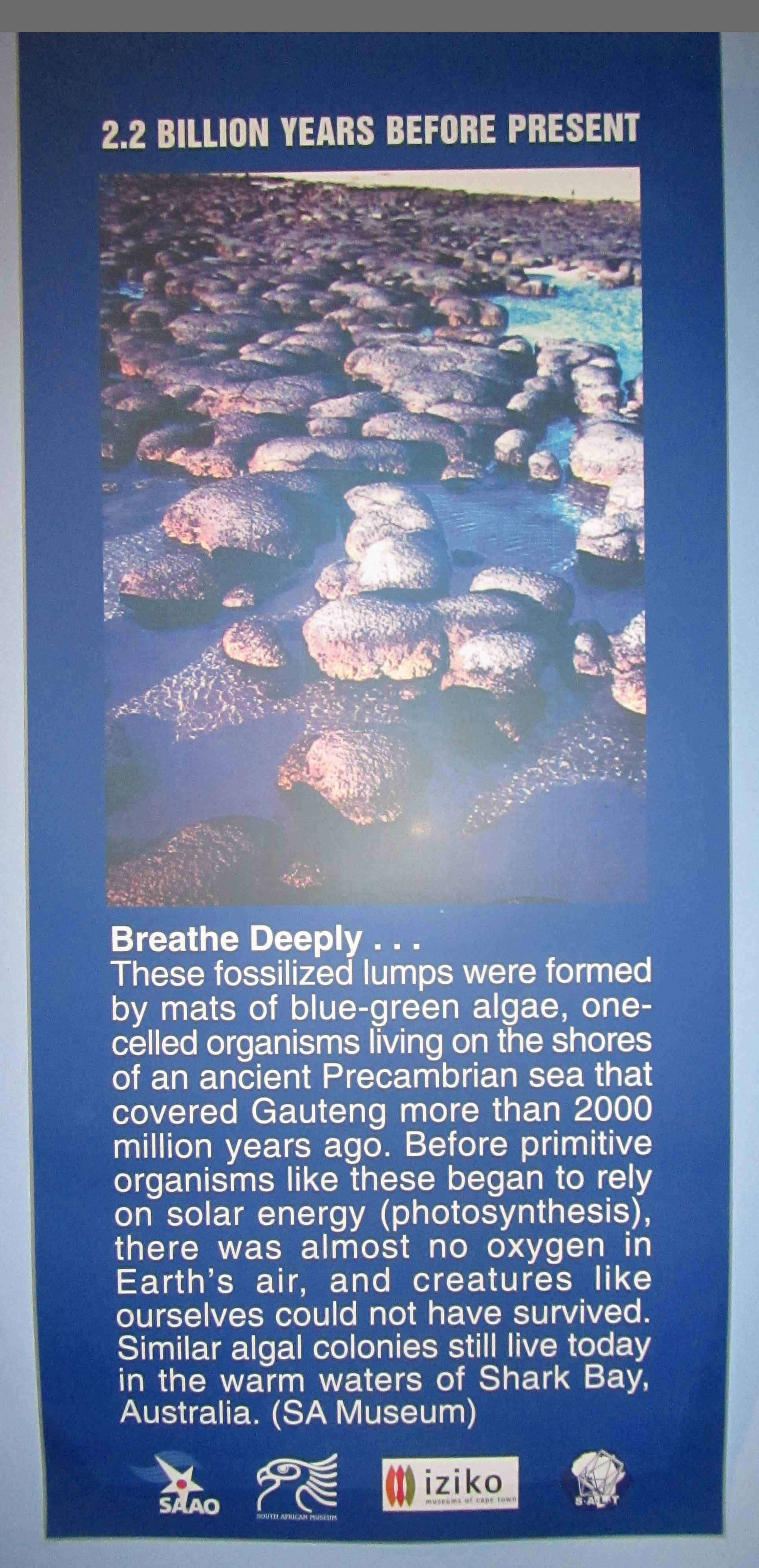
Many of the other geologic information signs had a little continental reconstruction on the bottom of them, reminding the viewers of the state of the continents at that particular geologic time. The display highlighted various fossils, primarily from the nearby Karoo region, from different geologic times. The oldest of these fossils were the stromatolite fossils:
Informational sign about the stromatolite fossils on display at the SAAO Visitor Centre. These stromatolites are from Gauteng (a province of South Africa; the city of Johannesburg is located in this province).Stromatolite fossils!
Stromatalites are pretty neat. They are layered, accretionary, sedimentary structures formed by biofilms of micro-organisms, such as blue-green algae. Stromatalites were formed billions of years ago by some of the earliest lifeforms on Earth, and they are still formed by micro-organisms at several places on Earth today. Stromatalite fossils may not look like much, but as a geologist I find myself awestruck every time I see them.
Here are a few other informational signs and fossils for different periods of geologic time:
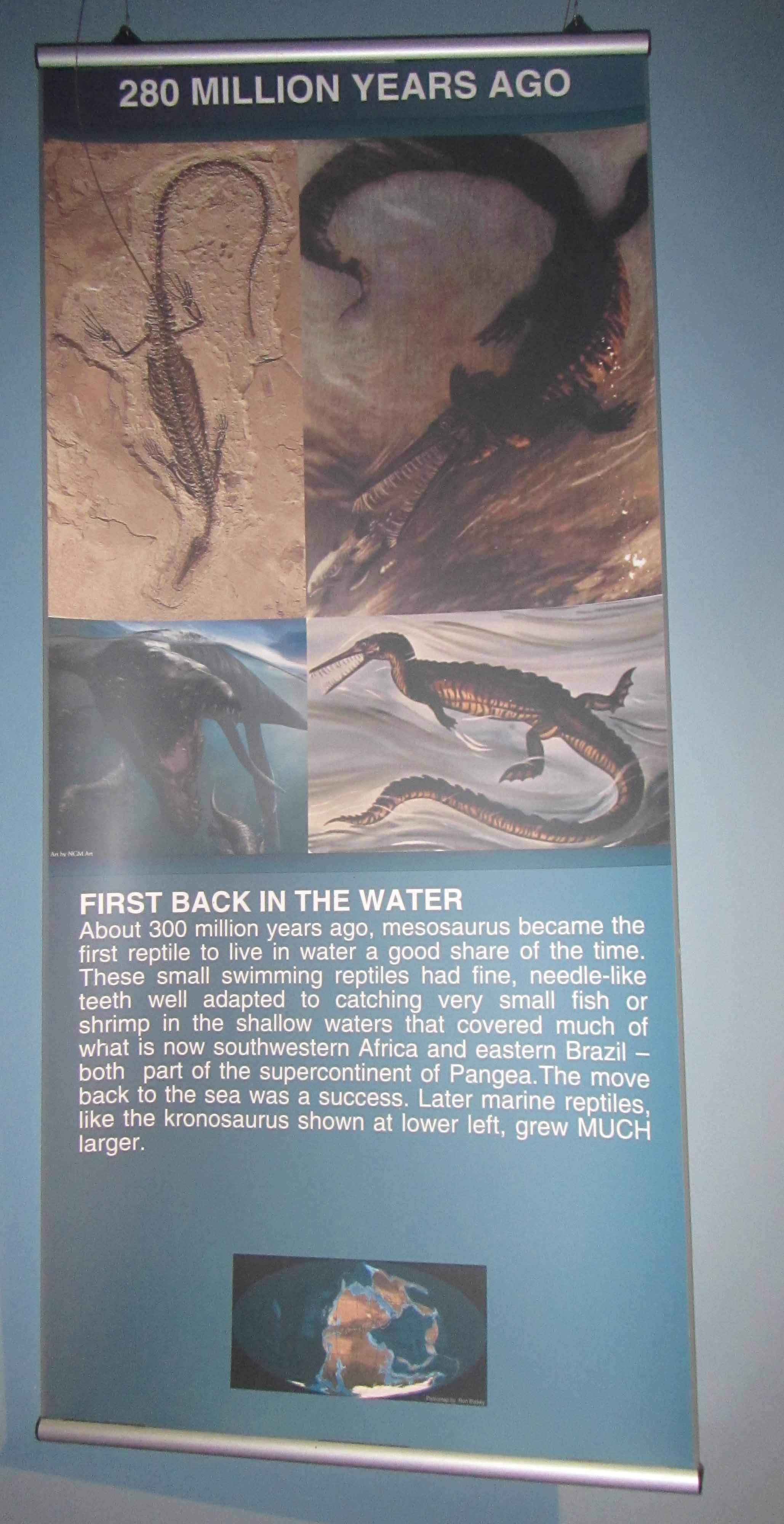
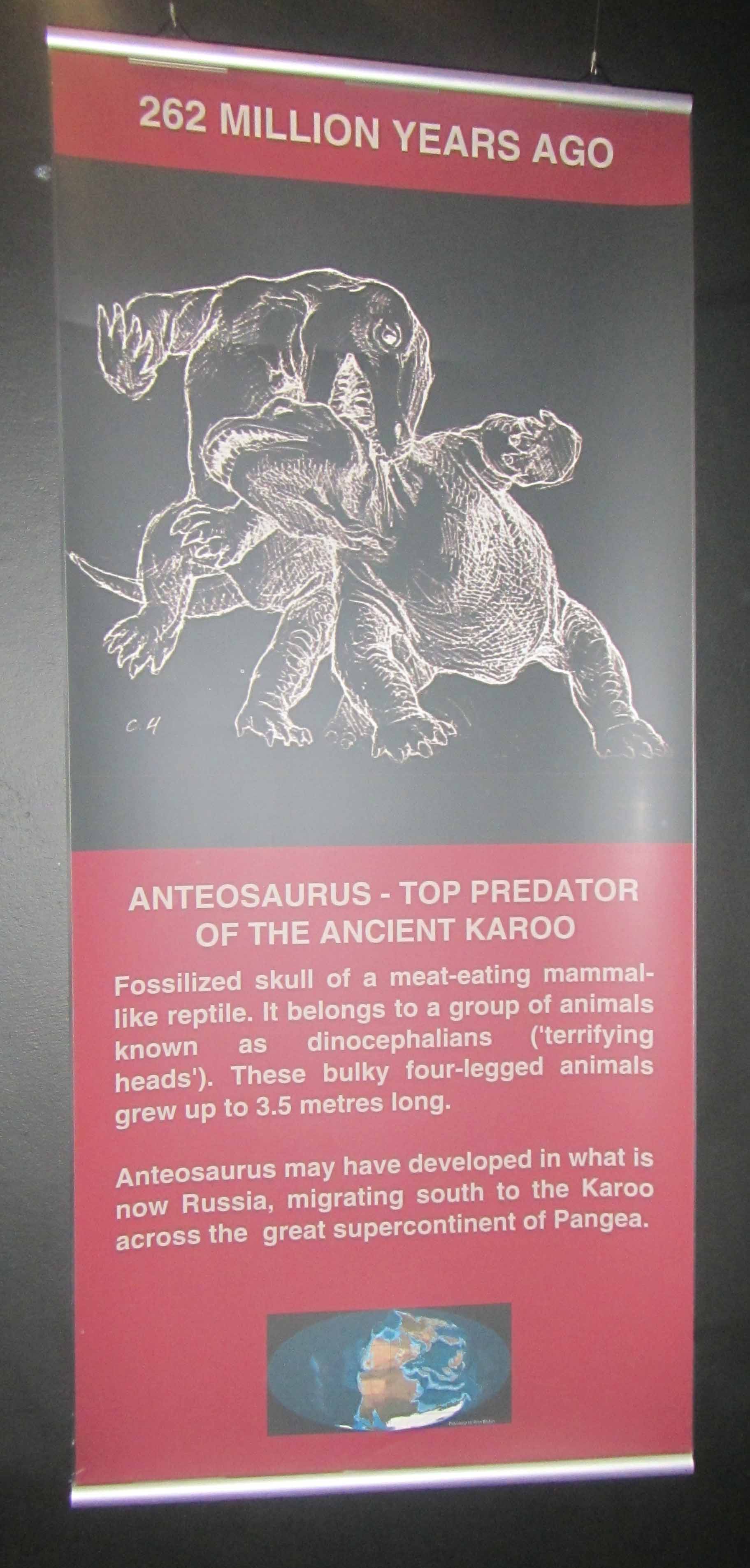
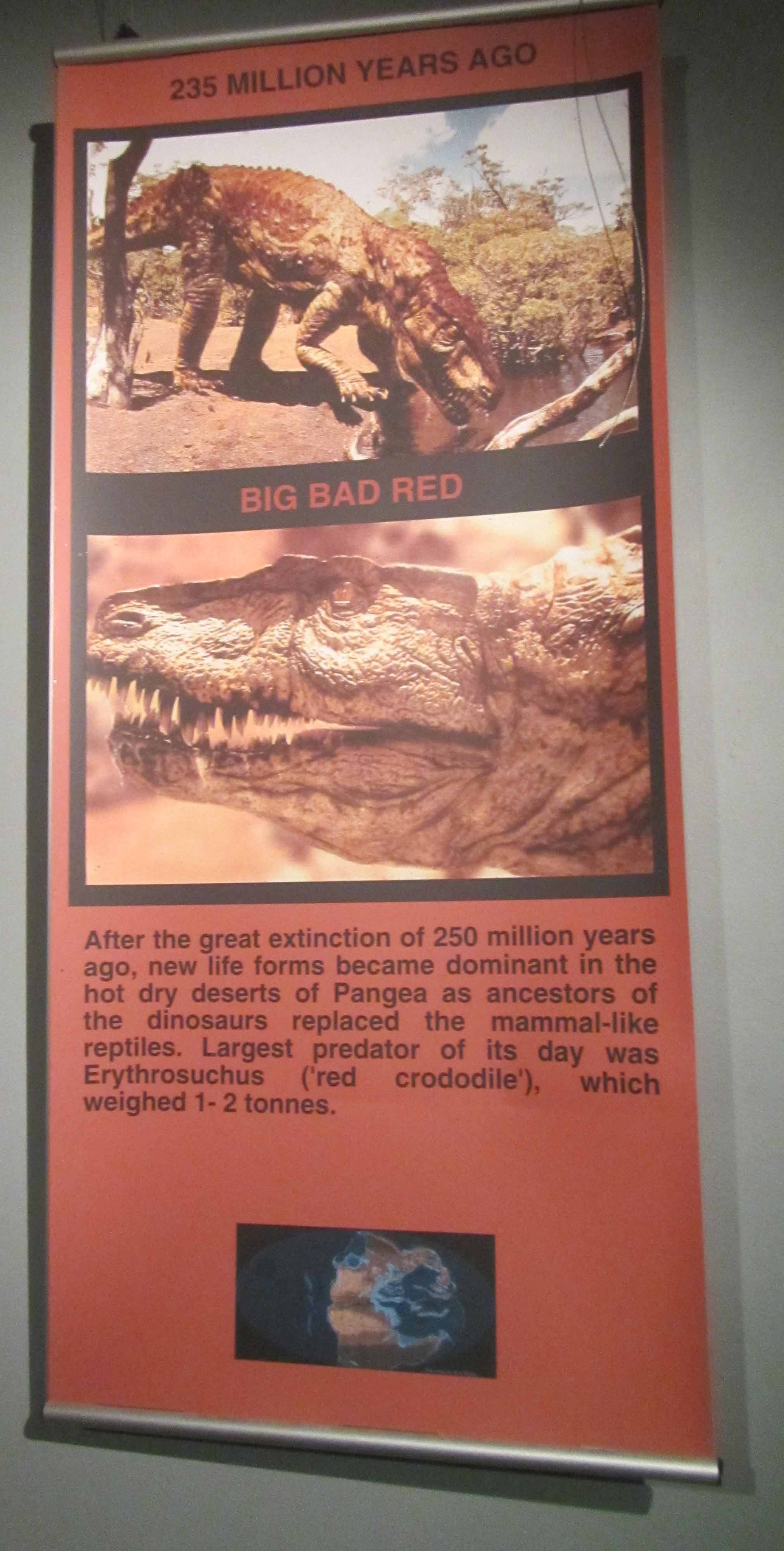
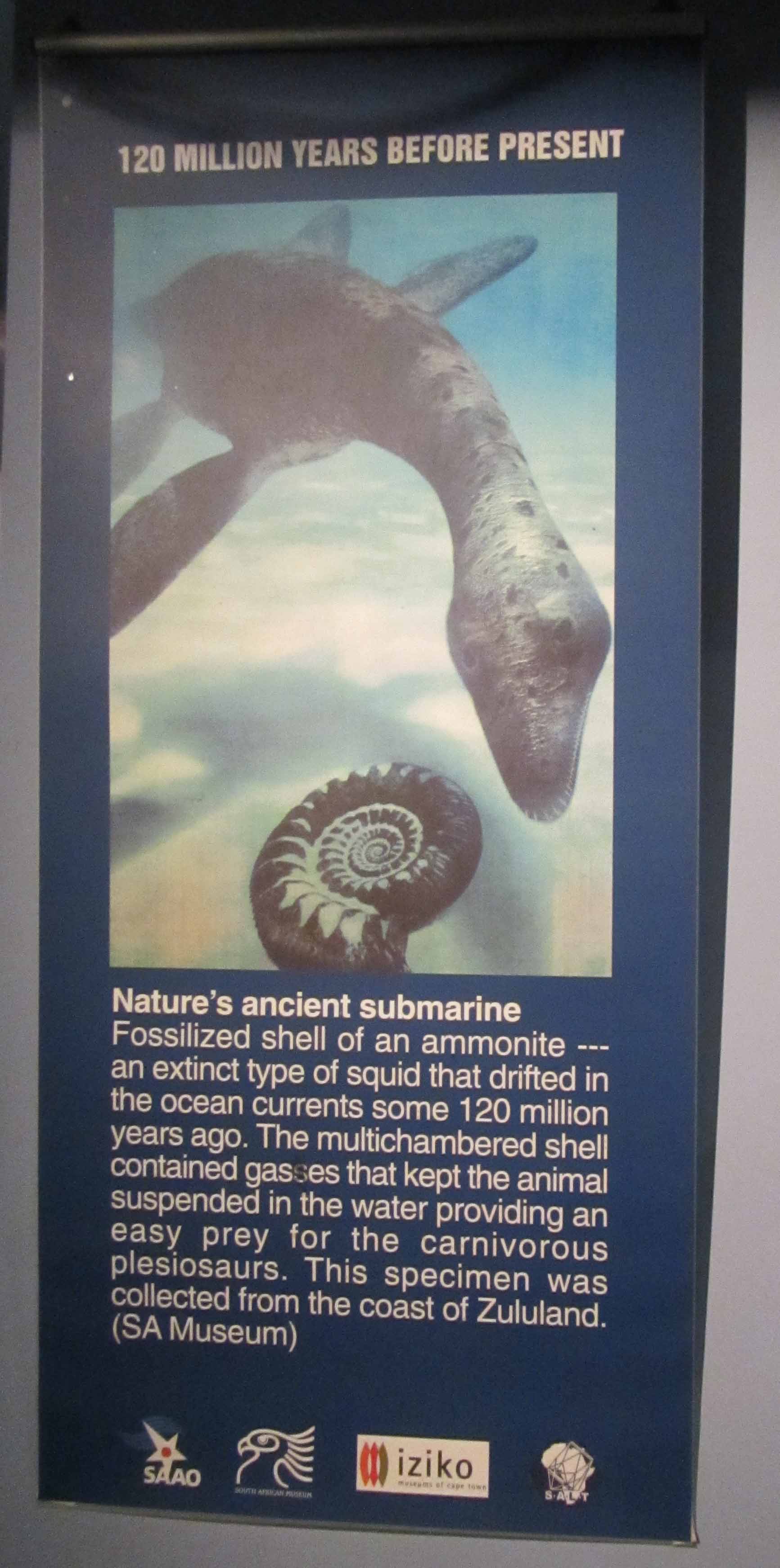
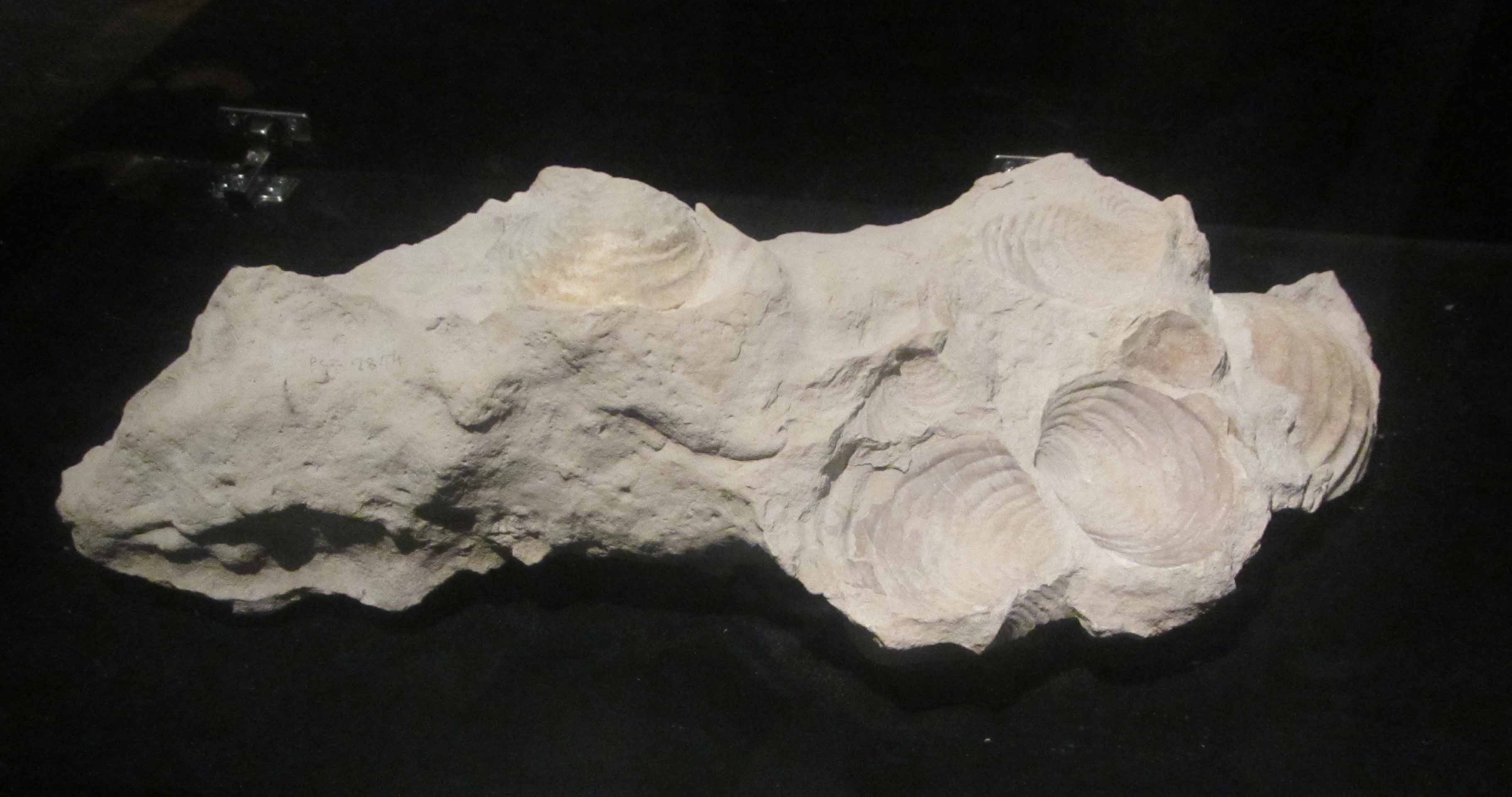
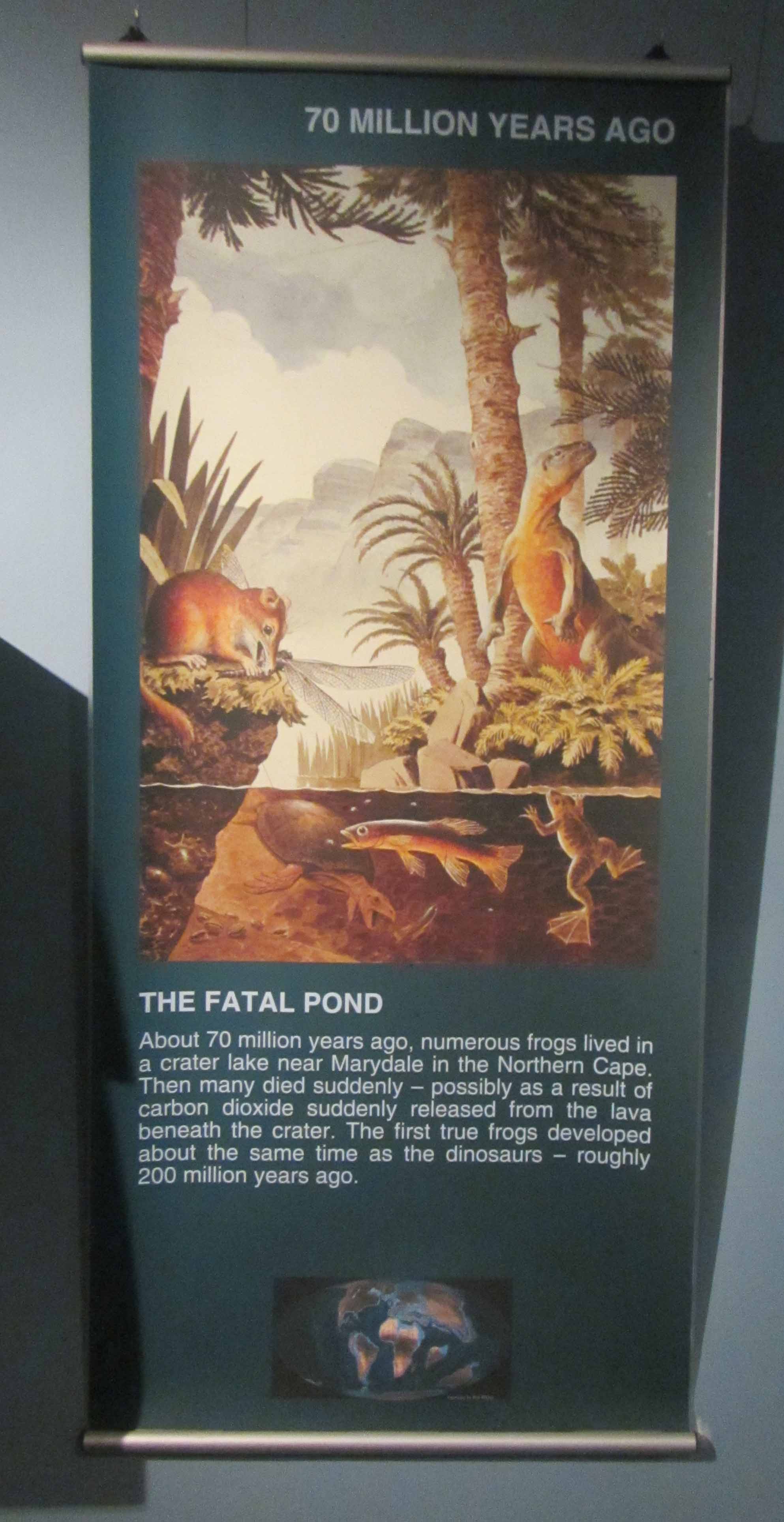
Informational sign for 400 million years ago… it was a trilobite world!Some trilobite and other fossils.Informational sign for 280 million years ago… Mesosaurus roams.I think that this is a Mesosaurus fossil? Well, it was near the Mesosaurus geological sign 🙂Informational sign for the Anteosaurus, a large reptile that was a top Karoo predator 280 million years ago.Anteosaurus skull. Pretty neat!Neat painitng… I think this painting shows Anteosaurus roaming the ancient Karoo.Informational sign for 235 million years ago… the time of the “red crocodile” in the Karoo.“Red crocodile” skull.Informational sign for 120 million years before present… ammonites are found in the oceans.A stunning ammonite fossil. Just beautiful!Informational sign for 70-80 million years ago… some clams died out.Gorgeous clam fossils.More gorgeous clam fossils.Informational sign for a sudden extinction event approximately 70 million years ago that created some stunning frog fossils.Frog fossils!Informational sign for more recent geological time a mere 5 million years ago… the time of the megatooth shark!Megatooth shark tooth. That’s quite a big tooth!
Last but not least, I want to share two pictures of a plaque titled “Pangea Reunited”. I really liked this little plaque. The inscriptions on the plaque read:
PANGEA REUNITED
Pangea is the name given to the single continent which existed about 200 million years ago. Evidence for this has been discovered in rocks and fossils in Africa and other continents of the world. Sediments and rocks associated with Pangea have been assembled from all continents of the world, symbolically reuniting Pangea at the beginning of the African Renaissance and the dawn of a new millennium.
and:
KAROO ROCK
This Permian rock, representing part of the Pangean super-continent, was excavated a the groundbreaking ceremony associated with the Southern African Large Telescope on September 1, 2000.
Pangea reunited.
I think it’s really wonderful that the SAAO museum contains so much geology information and that the SALT ground-breaking ceremony paid tribute to Pangea. The SAAO telescopes, including SALT, are located in a remarkable geological location– I’ll be sharing some more information and pictures about the geology of the Karoo region in future posts in this series. I think that it is wonderful, and very important, that the researchers using the SAAO telescopes to study other interesting parts of the universe– perhaps other little rocky planets where, perhaps, there may also be life– are reminded of the wonderful little rocky planet on which their telescopes are perched. At Sutherland, there is much to see by looking up into the sky… but there is also much to see by looking down toward one’s feet.
Speaking of looking up into the sky, stay tuned for the next post in this series… I’ll be sharing some pictures of some of the SAAO telescopes!
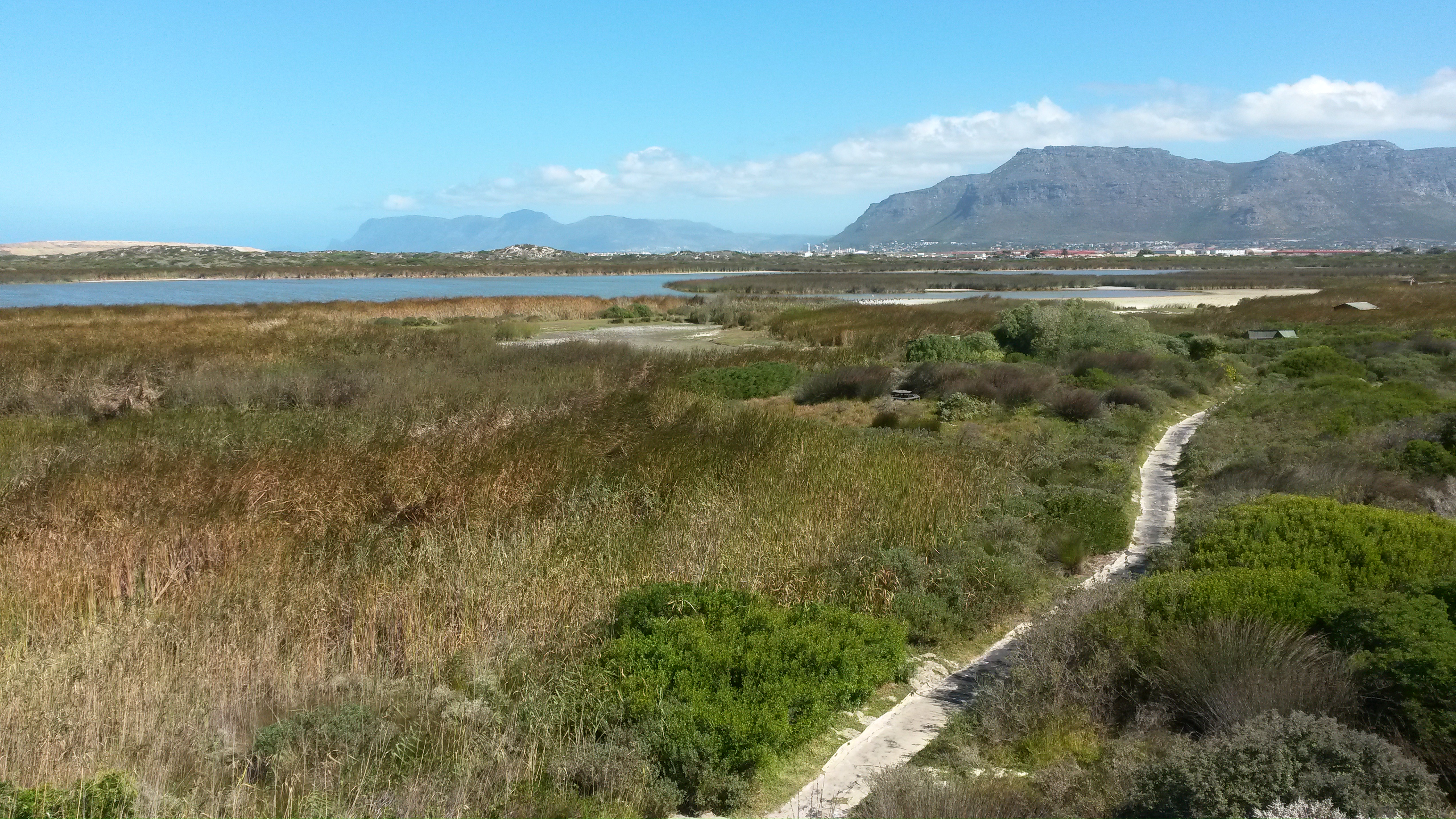
A view of some of Cape Town’s mountains, with Rondevlei in the foreground.
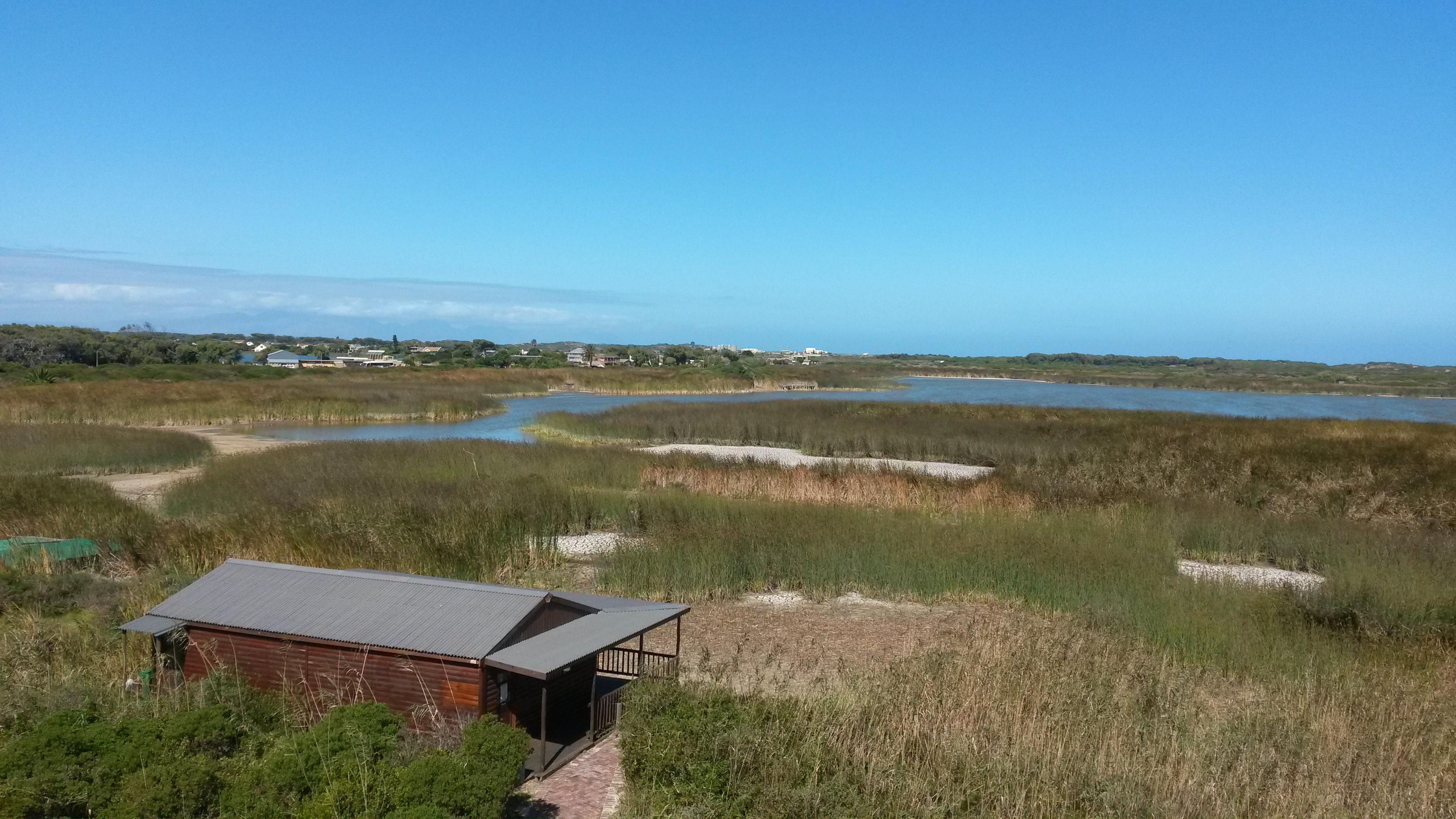
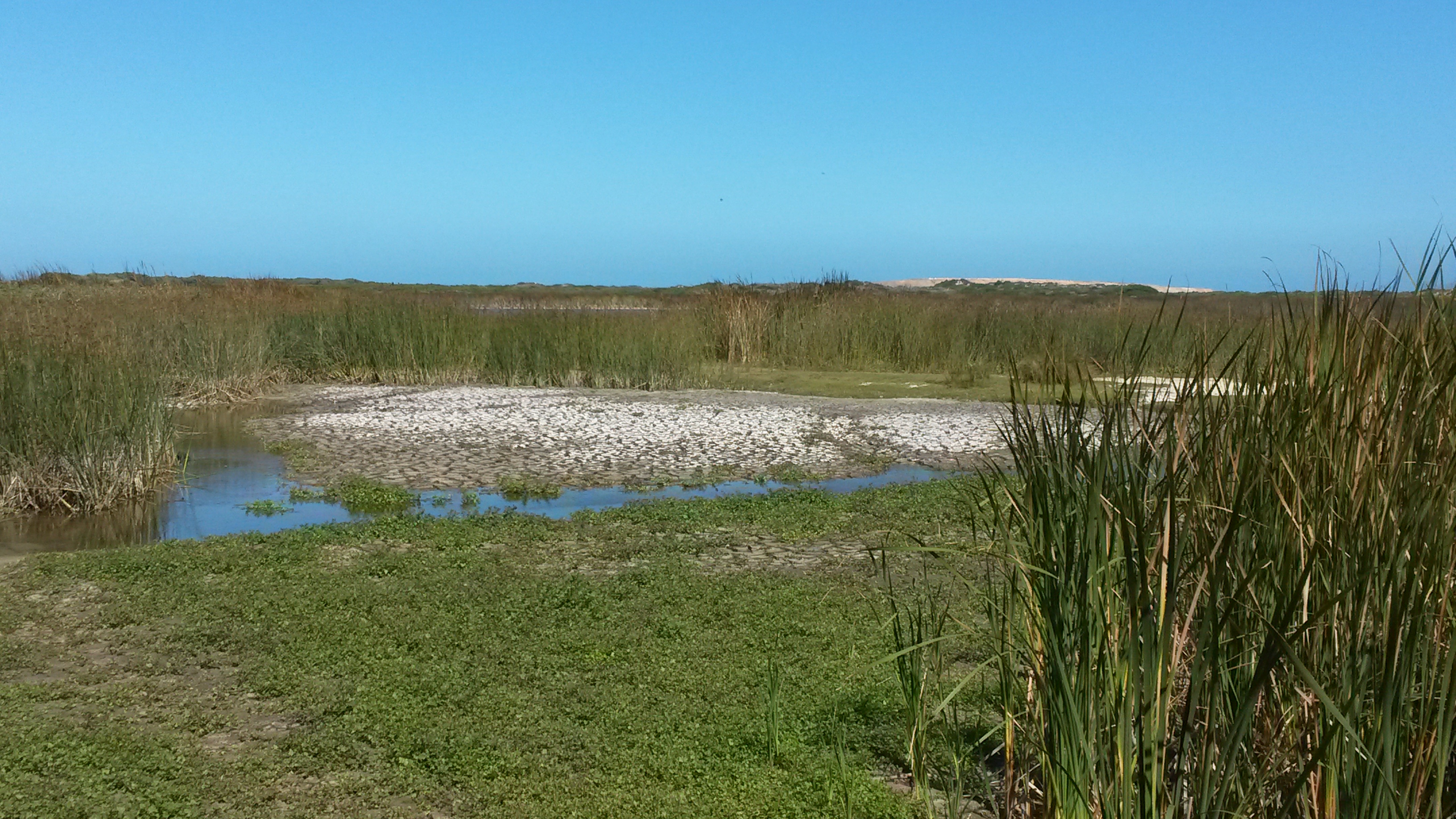
For this week’s “Monday Geology Picture” post I thought I would share a few more pictures from my recent visit to Rondevlei Nature Reserve here in the Western Cape of South Africa. I shared one picture last week. As a quick reminder, Rondevlei is a vlei or marsh that is home to the Western Cape’s only population of hippos. When I visited the vlei a little over a week ago, the water level was low, and I saw some very impressive mudcracks and salt accumulations. I didn’t see any hippos, unfortunately– I’ll have to go back to the vlei one evening since the hippos are not active during the day.
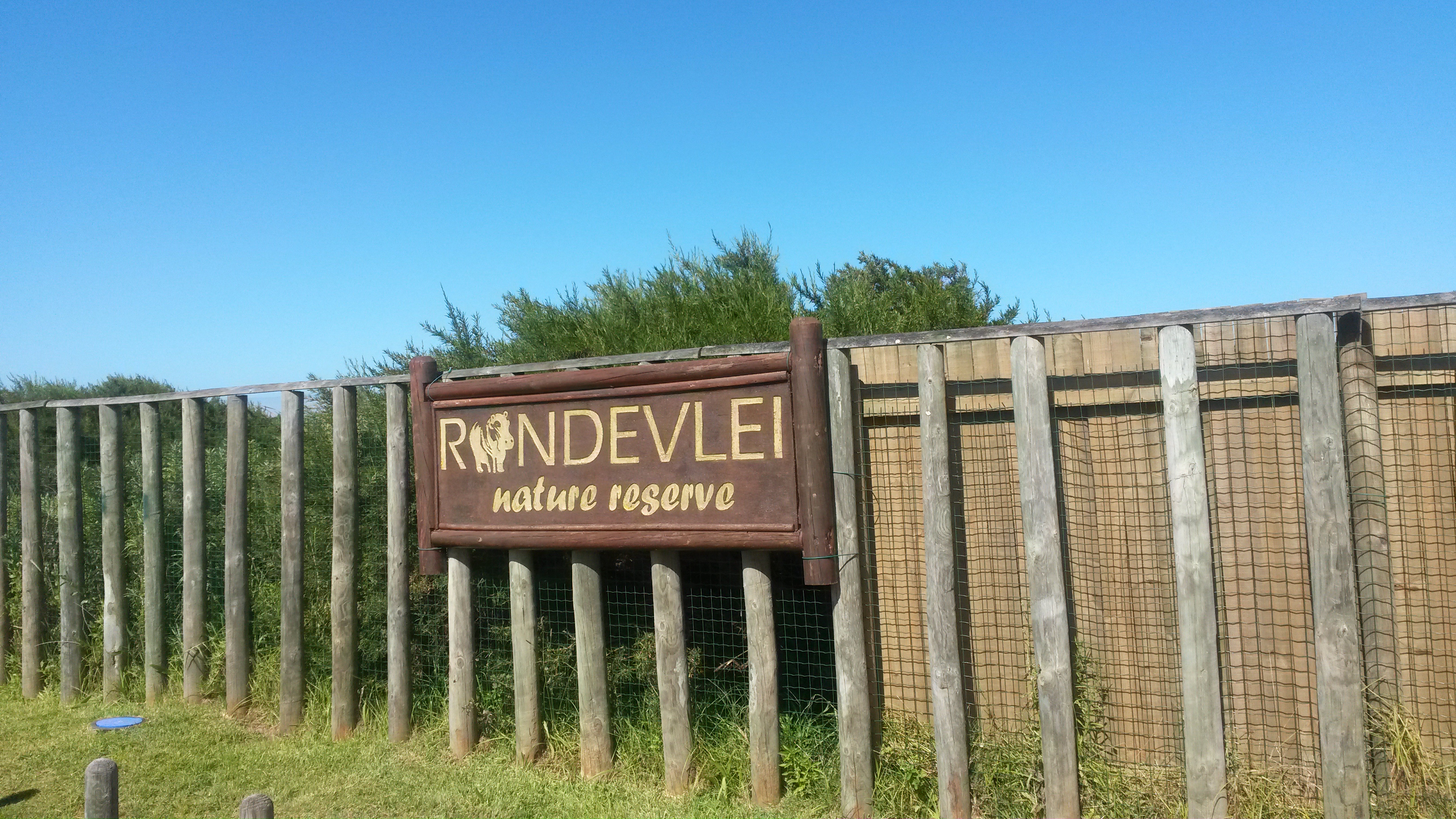
Another view of Rondevlei. This picture was taken from one of the observation towers on the nature reserve.A picture of the Rondevlei sign… with hippo theme!Low water levels at Rondevlei.Another view of the low water levels at Rondevlei.A close-up view of some mudcracks and salt accumulations.
Yesterday my husband and I visited the Rondevlei Nature Reserve here in the Western Cape of South Africa. Rondevlei is the only place in the Western Cape where hippos live. Hippos lived in the Western Cape historically, but they went extinct in the 1700s. A few hippos were re-introduced to Rondevlei in the 1980s. We didn’t see any hippos during our walk around Rondevlei– apparently hippos are seen in the evening when they’re active. However, we did see some impressive mudcracks since the water level in the vlei or marsh is quite low at the moment. A view of some of the mudcracks is shown above.
Today I am sharing a few more pictures of the town of Sutherland. In my next post I’ll discuss my visit to the SAAO museum. Then I’ll discuss our amazing tour of some of Sutherland’s telescopes, including SALT. Last but not least, I’ll discuss some of the great geology that we saw while traveling between Cape Town and Sutherland.
Without further ado, here are a few more pictures of the small– but important– town of Sutherland:
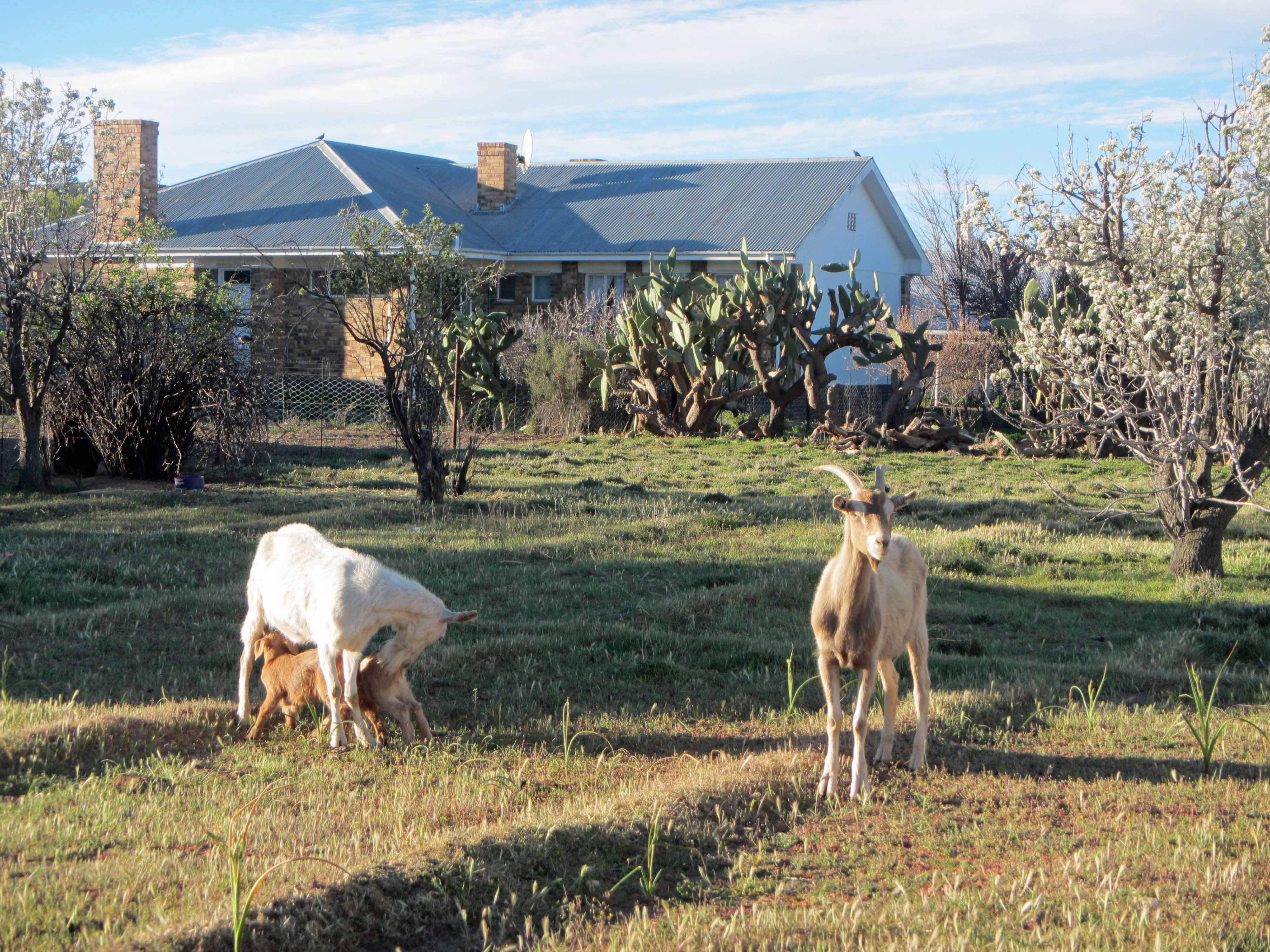
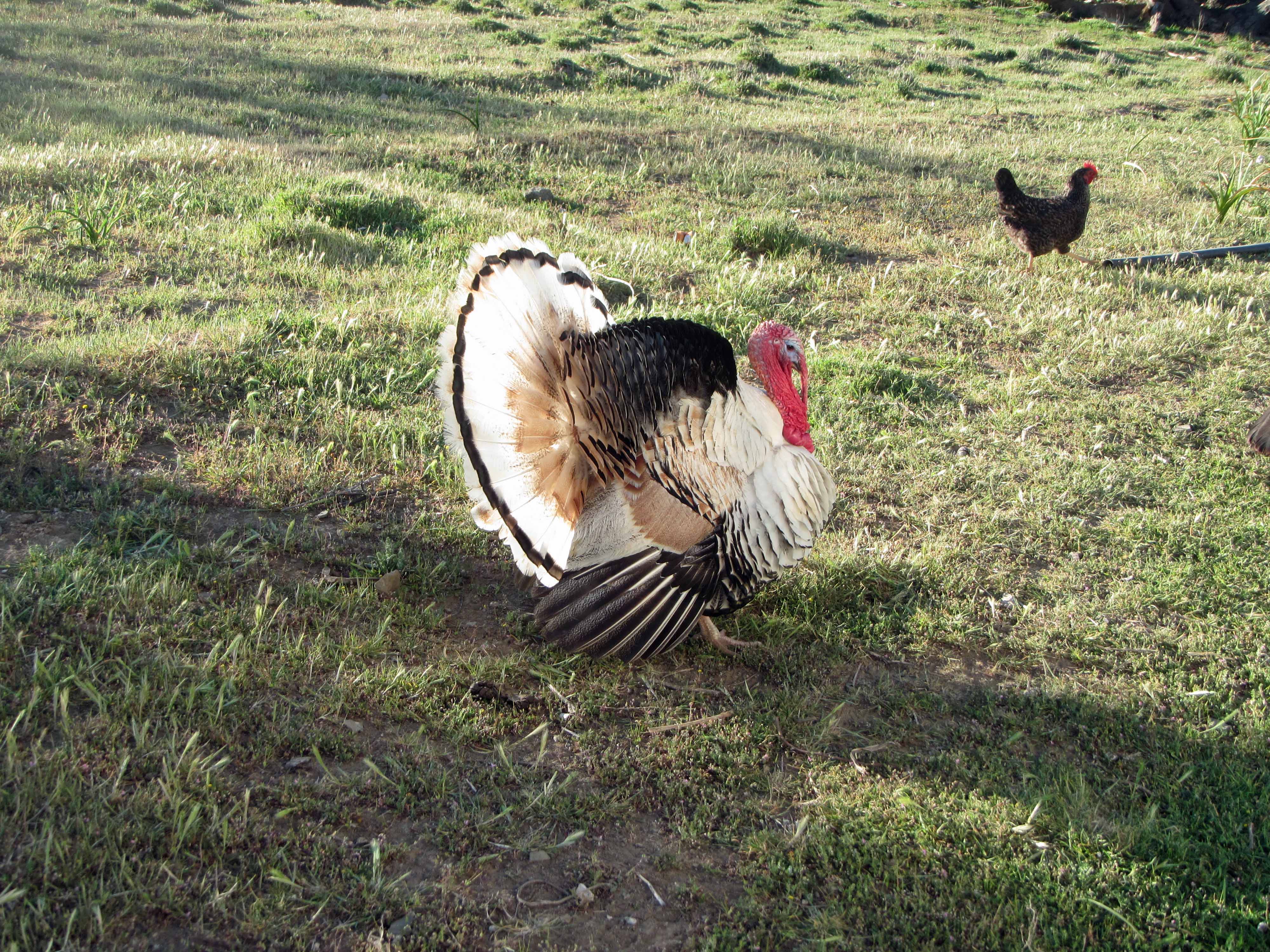
Along the main road in Sutherland there is an educational display about planets. This part of the display represents Mars. Sutherland, October 2013.Here’s the part of the display representing Earth and a few more planets. Sutherland, October 2013.A view of the church along Sutherland’s main street. October 2013.Another view of the church along Sutherland’s main street. October 2013.Windmill and a barn. Sutherland, October 2013.Backyard goats. Sutherland, October 2013.Backyard turkey. Sutherland, October 2013.Garage with chickens. Sutherland, October 2013.A typical road in Sutherland. October 2013.The White House… in Sutherland. It is (was?) for sale! October 2013.A solitary lion guardian. Sutherland, October 2013.Friendly cat adornments near a door. I’d love to get some of these for our home. Sutherland, October 2013.
My husband and I spent two nights in Sutherland, and we stayed at The Sutherland Hotel. The rooms at the hotel are very basic and somewhat small, but they are clean and the inn staff are very friendly. The hotel also has a bar and a kitchen providing some traditional Afrikaans food– very rich, hearty food. The food wasn’t anything to write home about, though– we’ve had much better Afrikaans food. Breakfast was included with our stay. For variety, if my husband and I visit Sutherland again we’ll probably stay in one of the smaller guest houses or possibly on a nearby guest farm. However, the Sutherland Hotel provided economical accommodation for our Star Trek club group. I certainly recommend the hotel– just don’t expect anything fancy.
The Sutherland Hotel. October 2013.
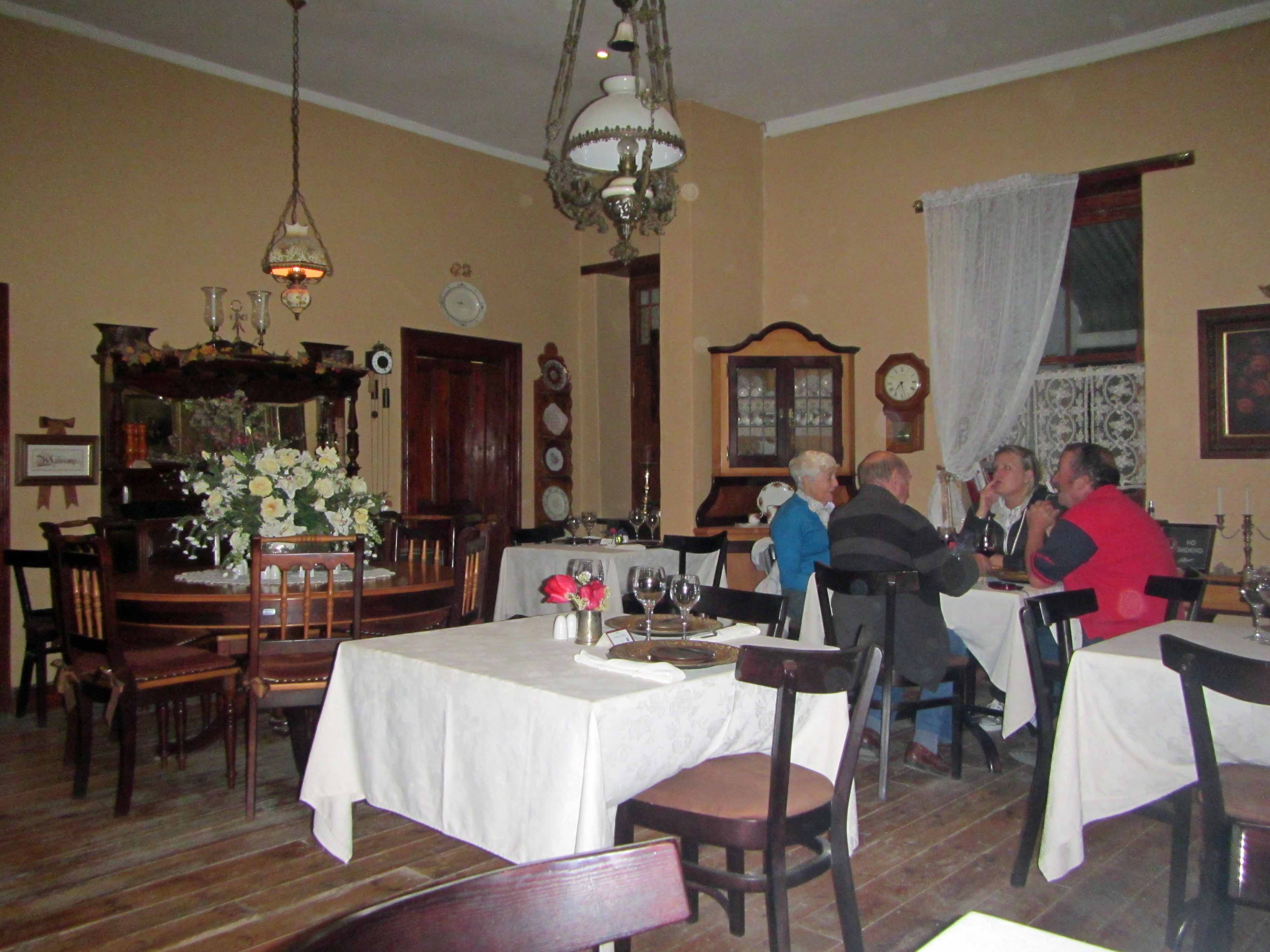
During our first night in Sutherland, we had dinner at a lovely little restaurant called Cluster d’ Hote. My husband and I arrived in Sutherland a night before the rest of the Star Trek club group. After walking around the town for a few hours on our first day, we popped into Cluster d’ Hote and asked if we could have afternoon tea. We enjoyed a leisurely pot of tea and some sweets in the restaurant, which is located in an old house that is filled with interesting antiques. We noticed that Cluster d’ Hote had a very good Trip Advisor rating advertised on their wall, so we made a booking for dinner later in the evening. We tried to pay for tea before we left to freshen up and spend an hour or so reading in our hotel room, but we were told not to worry about the bill; we were told that we could settle it after our evening meal. I guess that there is still some trust in some of the small South African towns! It was very refreshing to experience such small town trust.
We immensely enjoyed our dinner at Cluster d’ Hote. We sampled two traditional Karoo lamb dishes, and the food was excellent. I highly recommend a meal at Cluster d’ Hote if you find yourself in Sutherland.
Cluster d’ Hote dining room. Sutherland, October 2013.Another view of the Cluster d’ Hote dining room. Sutherland, October 2013.A delicious Karoo lamb dish at the Cluster d’ Hote restaurant. Sutherland, October 2013.
That’s all for this post. Stay tuned for Part III!





































 Georneys