This week I’m sharing a picture of a bullion coach, or a special train that was used to transport gold from the mines in the Johannesburg area to the seaside towns of Durban and Cape Town in South Africa. This particular train is on display at Gold Reef City, a gold mining themed amusement park. You can go and see the train yourself if you visit the park.
Gold theft has long been a problem in the mining industry — and continues to be a problem to this day. Trains such as this are not used anymore (at least not here in South Africa), but for many years heavily fortified trains such as this were the primary way that gold was transported. In addition to the special armor, the train had several guards who lived aboard the train.
Look at the thick doors of the train and the special safe used to store the gold:
Posing with the thick doors of the train. These pictures were taken last year when I was 7 months pregnant with my son.
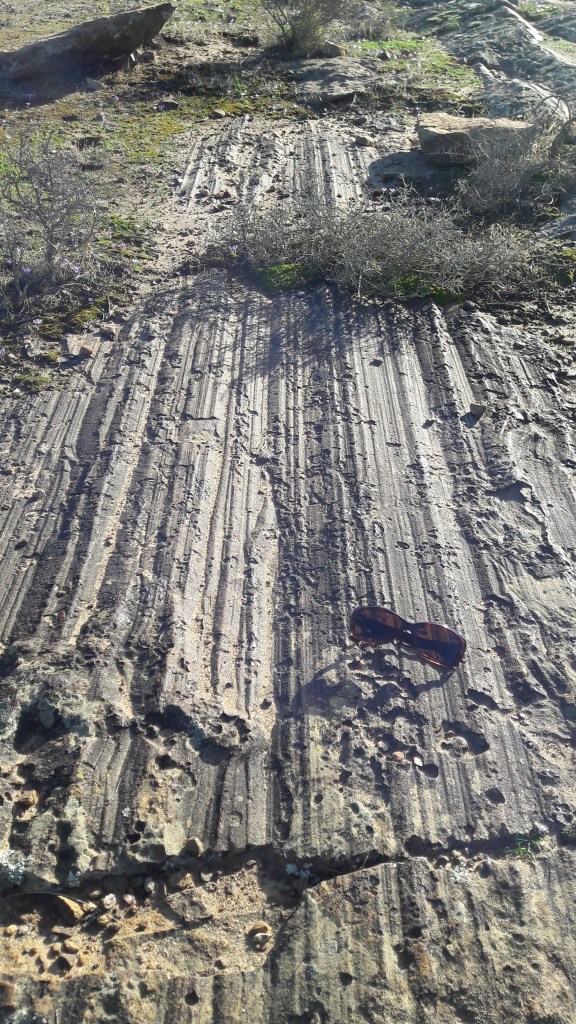
Gorgeous glacial pavement, with sunglasses for scale.
This week I’m sharing a gorgeous picture of the Oorlogskloof Glacial Pavement, which is located in the Northern Cape Province here in South Africa. You can read more about this pavement here. I’ll be blogging more about this pavement soon, so stay tuned!
For this week’s post, here’s a picture showing a lovely example of Pele’s Hair, which is a type of volcanic glass that consists of fibers or thin strands.
Although I’ve visited many volcanoes (including a few active ones) over the years, I’ve never seen Pele’s Hair in the field. So, I was quite happy to see this excellent example in the volcano museum on Réunion Island. I visited the museum during my vacation to the island last year. If you ever find yourself on the island, visiting the museum is a must. There are all sorts of wonderful displays and examples of different lava types, including this fantastic Pele’s Hair sample.
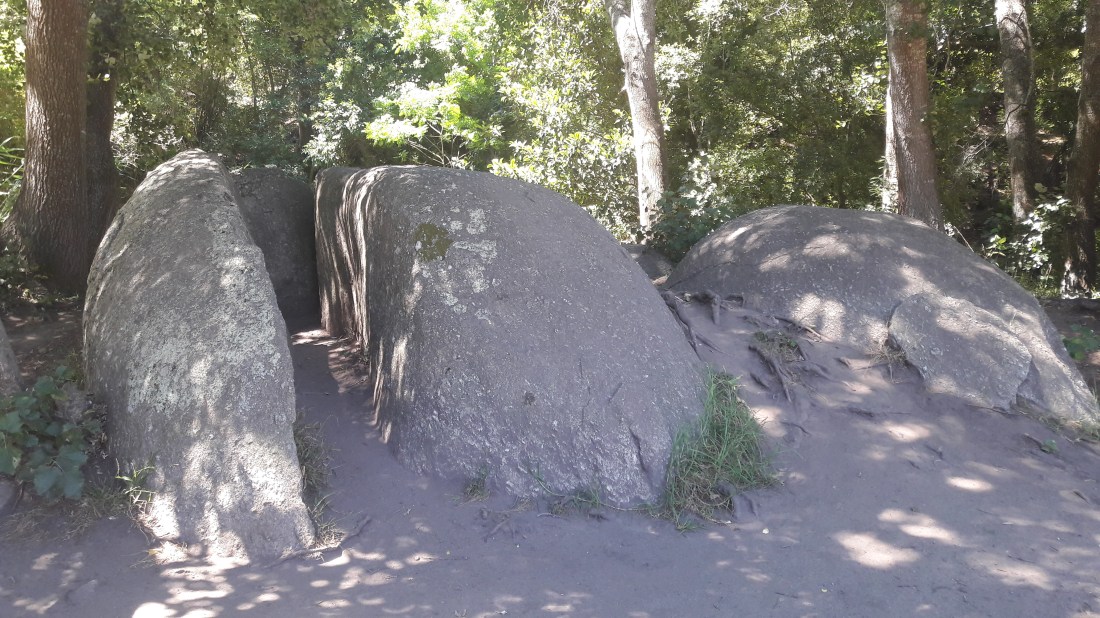
Large granite rocks along a walking trail in Constantia, South Africa. January 2018.
For this week’s post, here’s a picture that I took yesterday during a Sunday afternoon hike with my family. We went for an easy stroll, baby and all, along the Alphen Trail in the Constantia region of Cape Town here in South Africa. My son is 3 months old now, and we’re just starting to go on some easy hikes as a family. The Alphen Trail is more of a walk than a hike, but nevertheless it was nice to spend some proper time outdoors again! In another month or two we hope to embark on some proper hiking.
There is too much vegetation along the Alphen Trail to see much geology, but along one part of the trail I did notice some interesting large granite boulders, which are shown in the above picture. These boulders no doubt belong to the ~550 million year old Cape Granite Suite. Large outcrops or boulders of these granites are commonly seen in the Cape Town area. For example, you can see large granite boulders at some of Cape Town’s beaches. However, I found these Constantia granite boulders interesting due to their weathering. While still quite large, there are clear signs that these boulders are being broken down through weathering. On the right, you can see a nice example of exfoliating granite weathering. On the left, you can see that a large boulder has split in two. In a few parts of the picture, you can see tree roots and other vegetation, which are no doubt contributing to biological weathering of the boulders.
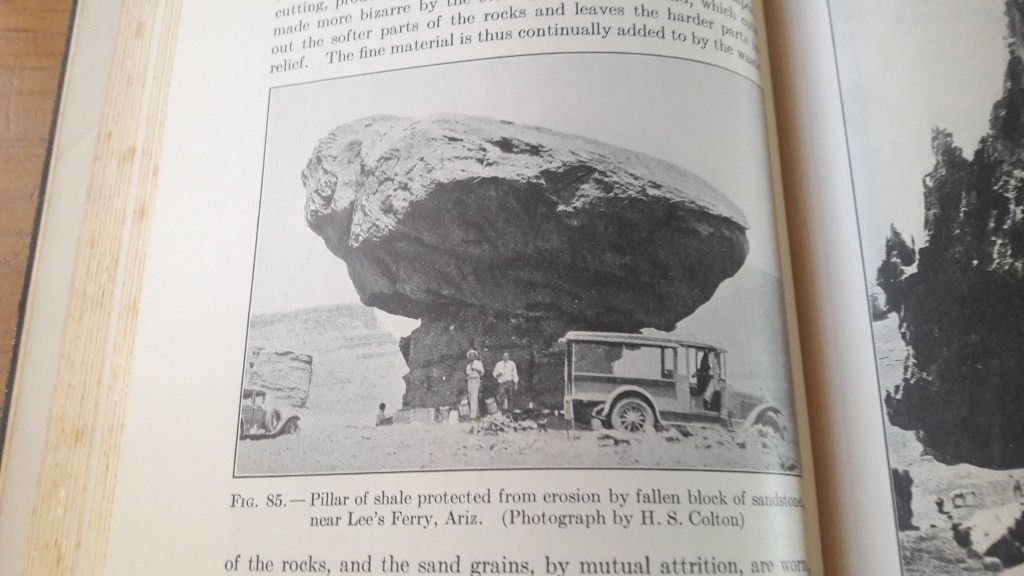
A photo from an old geology textbook. Check out the field vehicle!
I really enjoy looking at old geology textbooks, which often have incredible photos and drawings in them. For example, check out the above photo from an old geology textbook that I picked up at a secondhand bookshop. Look at that vintage field vehicle! Does anyone know what kind of car that is?
The information in old geology textbooks (especially ones published before plate tectonics was understood) is often incorrect, but then again some geology basics – such as rock and mineral descriptions – haven’t changed too much over the past 100 years or so. So, old geology textbooks can still often be useful!
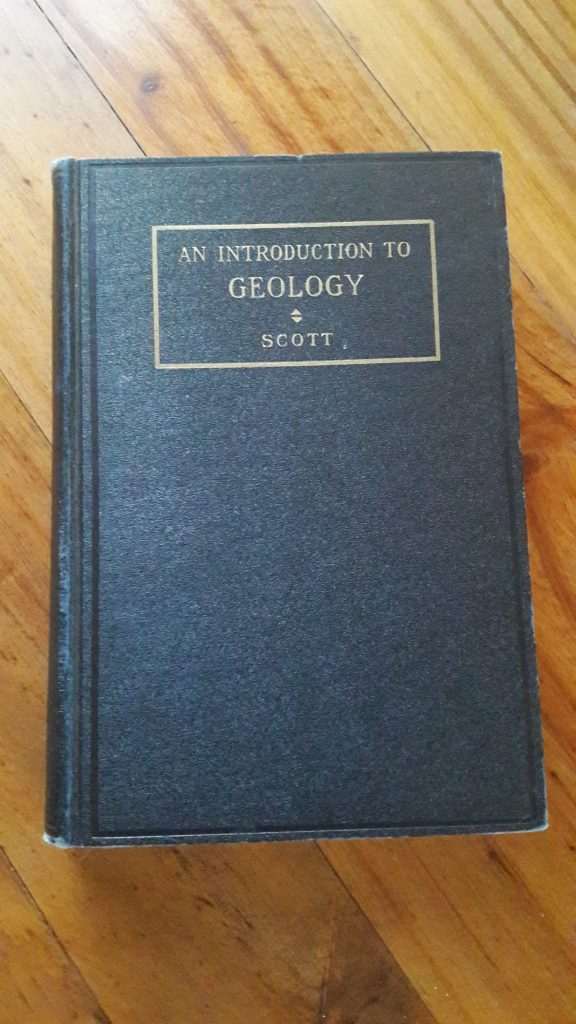
Here are a couple more pictures of the book from which this week’s “Monday Geology Picture” was taken:
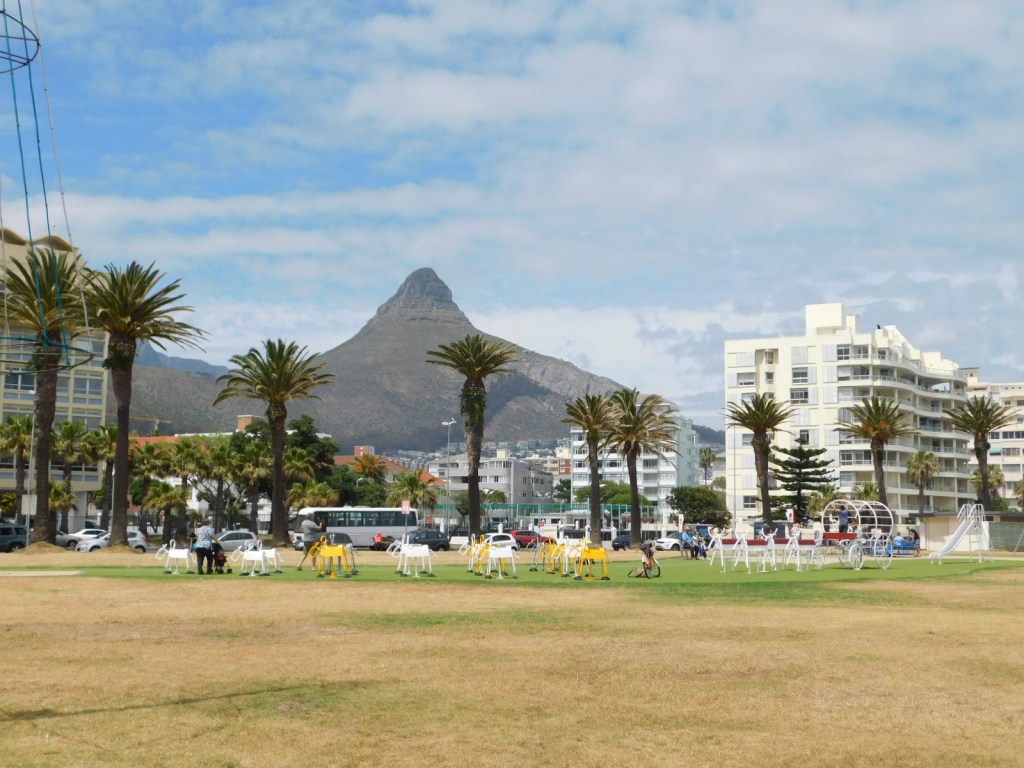
Lion’s Head. Photo taken from Sea Point Promenade, November 2017.
Happy New Year! I’m going to do my best to blog more regularly in 2018, starting with this first “Monday Geology Picture” post. This week I’m sharing a view of Lion’s Head (the distinctive mountain in the background of the picture), an inselberg here in Cape Town, South Africa, the city where I live. I took this picture a few weeks ago during a walk with my family along Sea Point Promenade. Cape Town is a fantastic city — you can see amazing geology even when you’re downtown!
My Christmas cards may be very late this year, but at least I’ve managed to fill up a dinosaur stocking with presents for my son.
My annual What to Buy a Geologist for Christmas list is very late this year… along with some of my other holiday traditions. For example, I’m generally quite diligent about sending cards, but I have not yet mailed a single Christmas card! I think that my cards will only go out in January or maybe even February. At least I have a good excuse: my son is 10 weeks old and understandably takes up most of my time these days.
Never fear, however. This year’s edition of the What to Buy a Geologist for Christmas list is special: I’ve compiled 10 last minute gifts suitable for those of you who (like me) may be a little behind on your holiday preparations. All of the gifts listed below can be sent electronically or made with one day’s preparation.
Happy Holidays and Happy New Year! I hope to blog more regularly in 2018, so stay tuned!
Gift #1: An e-book
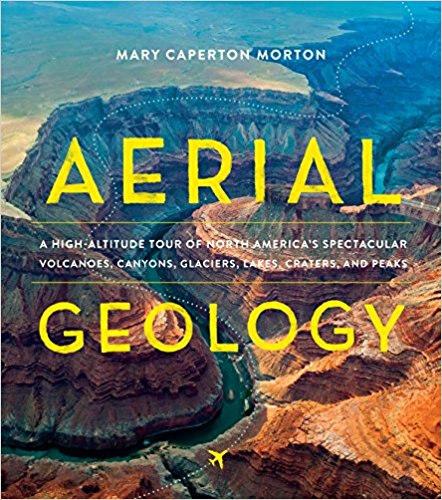
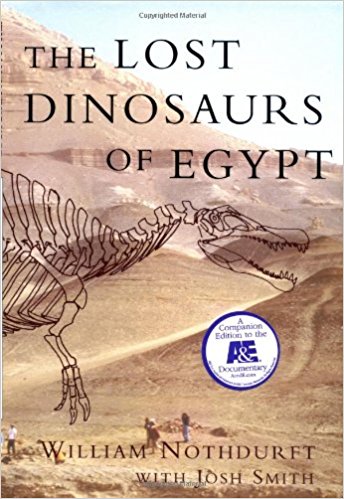
Does the geologist in your family own a Kindle or tablet? Most likely they do. In that case, why not send them a geology-themed e-book? Three suggested books are given below, and you can find hundreds of more options on Amazon and other websites.
Thanks to Callan Bentley for suggesting the above book. This is available as an e-book. However, if you’re willing to have your gift be a few days late, the physical copy of this would also make an excellent coffee table book.
Is the geologist in your family a student? In that case, they will no doubt appreciate the gift of an e-textbook or of a physical textbook. Textbooks are very, very expensive (they can be $100 or more!), and in order to become a fully-trained geologist you need to read quite a few textbooks. If you know that the student is going to need a particular set of books for next semester, then I recommend writing up a voucher that says something along the lines of “Good for One Geology Textbook”.
Cost: $20 for the digital edition or $45 for the print edition
Gift #4: Membership Fees
Geologists generally need to buy annual memberships to one or more geological organizations. Joining these organizations provides access to conferences, journals, and other services. For example, geologists in the USA are generally members of organizations such as the Geological Society of America, the American Geophysical Union, and the Mineralogical Society of America. Here in South Africa I’ve joined the Geological Society of South Africa. Most of these organizations cost money to join, and I’m sure that the geologist in your family would appreciate it if you offered to pay for one or more of these membership fees for 2018.
Cost: Variable, generally $50 to $100
Gift #5: Software Fees
These days, much geology is actually done while sitting behind a computer screen. So, the geologist in your family probably has to use one or several different types of geological software programs. These programs can be expensive and often have annual use fees. If the geologist in your family works in industry, the software is likely paid for by their employer. However, if the geologist in your family is a student or works as a consultant, he or she likely has to pay for software. Why not offer to pay for software such as ArcGIS, Geosoft, or Strater? If you’re not sure what software to purchase, a copy of Adobe Photoshop or Adobe Illustrator is always a good choice since geologists use these programs to make figures. Or you can simply write a voucher “Good for One Geologic Software Program Up to Value of X”.
Cost: Highly variable, from about $25 to thousands of dollars. Students can often access software at reduced rates.
Gift #6: A Park Pass
There is so much wonderful geology to be seen in state and national parks. However, many of these parks have entry fees, which can sometimes be quite costly. The geologist in your family is sure to appreciate a park pass. For example, every year my husband and I generally purchase a Wild Card Pass that gives us entry into various parks here in South Africa.
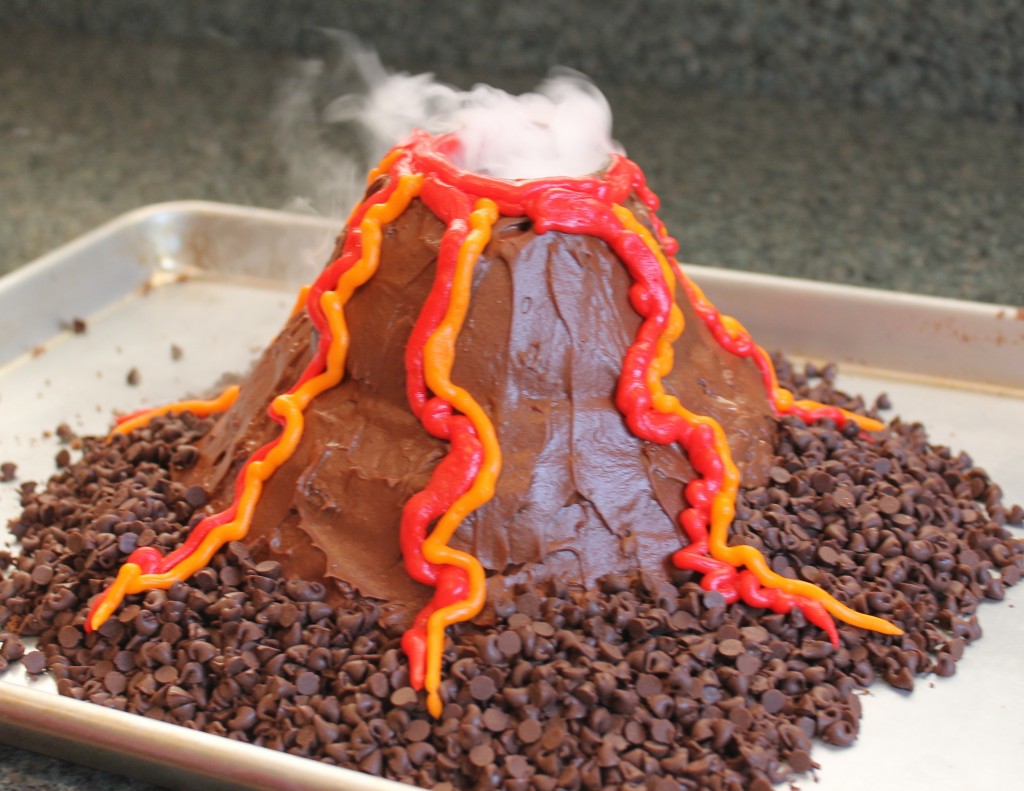
Are you a baker? If so, then why not spend tomorrow making a special geology-themed cake for the geologist in your family? If you want to keep the cake simple, you can bake a plain cake and put some dinosaur figurines on top (personally, that’s about the limit of my baking skills!). However, if you’re good at baking you could consider a more complex cake, such as one with stratigraphic layers or one shaped like a volcano.
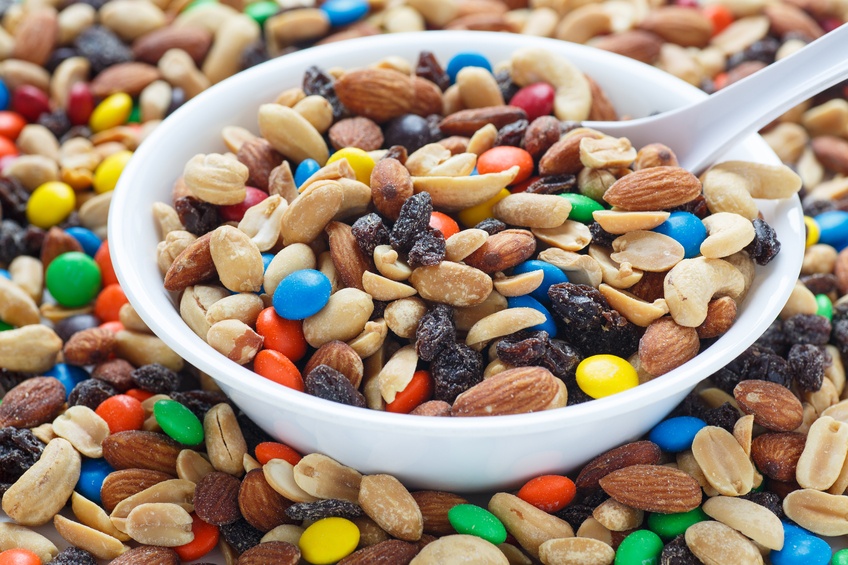
Does the geologist in your family go into the field often? In that case, he or she is bound to enjoy a gift of field snacks, such as little bags of trail mix. You can find all sorts of trail mix recipes online, for example here. You could also consider giving energy bars or little bags of dried fruit or nuts.
Cost: Variable – $15 to $50 for the ingredients, depending how much you want to give and how fancy you want the snacks to be.
Gift #9: A Jar of Sand
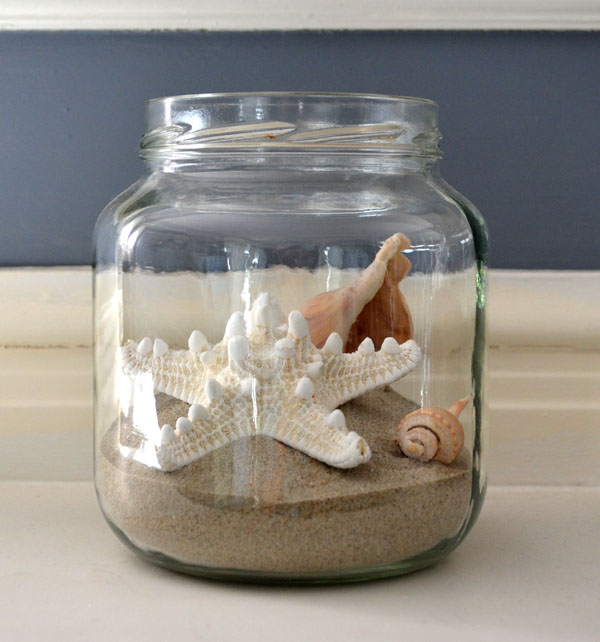
No, seriously, a jar of sand. Geologists love sand, especially if it is an interesting color, such as red garnet sand or black basalt sand. Really, though, just about any jar of sand will do as the geologist in your family is likely to find something interesting to see when a little bit of the sand is put under a microscope. So, go down to your local beach, scoop up some sand into a jar, put a few seashells or pebbles on top to make the jar look pretty, write a little note explaining where the sand was collected, and — presto — you have the perfect gift for a geologist! If you really want to be festive you can put a Christmas bow on top of the jar.
Cost: Free — or perhaps a few dollars if you want to buy a pretty jar
Gift #10: A Charity Donation
Last but not least, why not make a donation to a scientific charity on behalf of the geologist in your family? There are many worthy organizations that could use support. Personally, I like to donate to the National Center for Science Education, which promotes climate change education and also carries out other very excellent work.
Red garnet and black biotite… in a tabletop! South African coin for scale.
Since re-starting my blogging, I missed a few weeks of weekly pictures. My apologies! Life with a newborn does not leave much extra time, I’m afraid! I’ll try to be more consistent with my blogging in December and going into the new year.
However, I have a great picture for today: a close-up snap of a lovely stone tabletop that I recently saw, believe it or not, at a McDonald’s here in Cape Town — the one near the stadium downtown. You can see some beautiful minerals in this particular tabletop: garnet, biotite, feldspar, and quartz. The dark red garnet and black biotite stand out in particular.
The tabletop was really lovely, with some light and dark gneissic banding.
Here are a couple more views:
Another view of the tabletop.One last view of the tabletop.
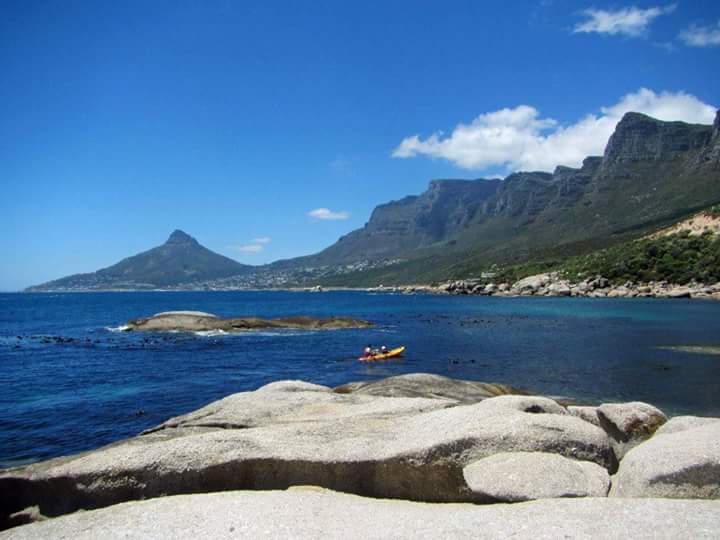
Some fantastic geologic scenery in Cape Town, South Africa: an inselberg (left) and the Twelve Apostles section of Table Mountain (right) in the background, a kayak in the middle, and some granitic rocks of the Cape Granite Suite in the foreground.
For this week’s picture, here’s a lovely view of an inselberg and the Twelve Apostles section of Table Mountain here in Cape Town, South Africa. Note the layers of sedimentary rocks of which the mountain is made. In the foreground, you can see some rocks of the Cape Granite Suite, which is about 550 million years old.
Lovely fresh pahoehoe flow on Réunion Island with my hand for scale.
For this week’s picture, here’s another lovely shot of pahoehoebasalt that I took during a March 2017 vacation to Réunion Island. I previously shared a picture of some Réunion pahoehoe here.



















 Georneys