Good Hotplate

On Wednesday there was a bad hotplate incident that melted two of my samples. As scary and destructive (for my poor Oman rocks…) as this incident was, I’m happy to report that there is some good resulting. I’ve filed a full safety report, and with the help of a safety person I’ve been in touch with Thermo Scientific, the company that manufactured the defective hotplate. Maybe it’s because Woods Hole Oceanographic Institution is a big client, but I’ve been very impressed at Thermo Scientific’s response so far. We have a representative working with us on our case, and the company is launching an investigation of the incident to see if there is a problem with this model of hotplate. I really hope the company follows-through with the investigation. Thermo Scientific is also offering to buy me a new hotplate, though I told them I don’t want another Cimarec hotplate since I don’t trust this hotplate. I almost said, “I don’t want your crappy unsafe hotplate,” but I managed to put it a little more tactfully than that on the phone with the representative.

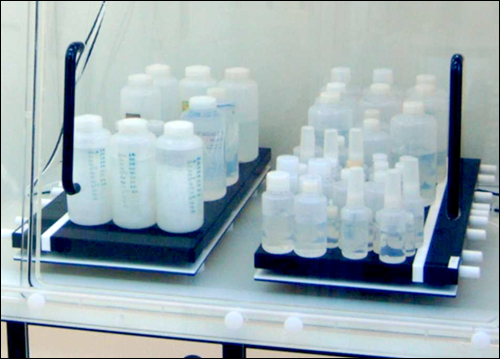
So, you might be wondering, what hotplate do I want? I want a PicoTrace safety hotplate, a geochemist’s dream:

The dreamy PicoTrace hotplates. Image taken from here.

What a gorgeous hotplate…. separate temperature control outside of the corrosive environment, multiple safety features and temperature limits, a maximum temperature of 265 degrees C… I could go on and on about this dreamboat hotplate.

Alas, these beautiful hotplates start at about $3,000. I’m not sure if Thermo Fisher will spring for that, but perhaps they’ll at least refund our money for the two hotplates that malfunctioned, and we can put that money towards the expensive hotplate. Also, I’m pretty sure the hotplate incident has convinced everyone involved in the lab re-design and money budgeting that it’s worth it to pay for the $3,000 model hotplates. Yes, the PicoTrace hotplates are expensive, but they’re worth it for safety.

Geology Word of the Week: T is for Travertine

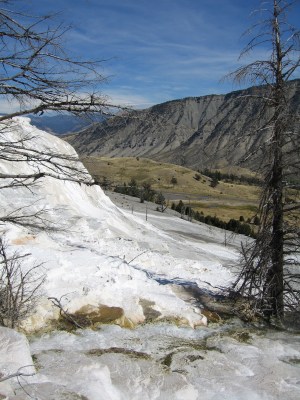
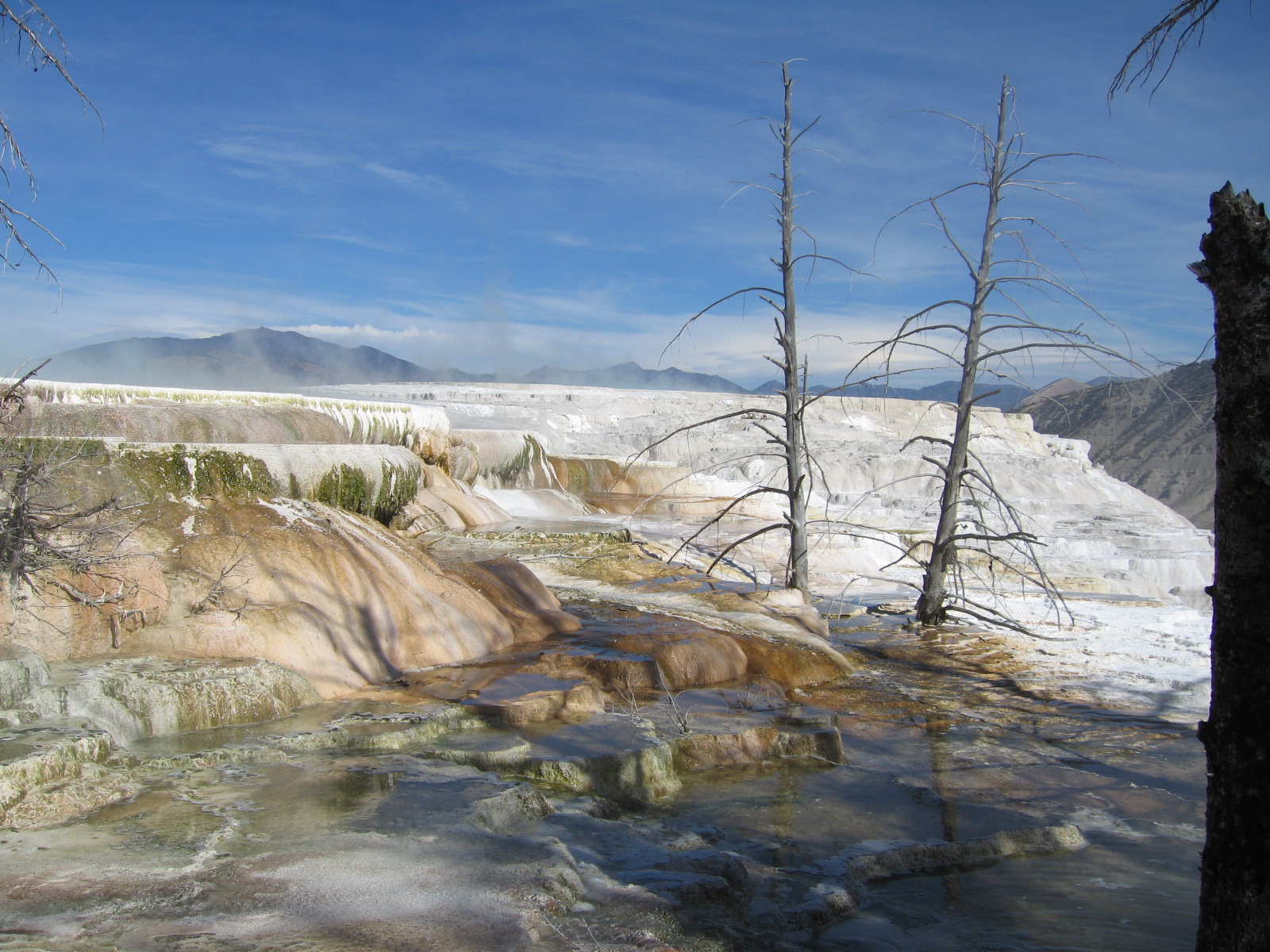
Travertine terraces, Yellowstone, Western USA, Fall 2005.

After a month’s absence because of the Fukushima interviews, I am resuming the geology word of the week. For my new readers, every week I blog about a geology word. Over the past several months, I have been working my way through the alphabet, from A is for Alluvium to S is for Speleothem. I hope you enjoy this weekly feature!

def. Travertine:
1. Formal and specific: “A chemically-precipitated continental limestone formed around seepages, springs, and along streams and rivers, occasionally in lakes and consisting of calcite or aragonite, of low to moderate intercrystalline porosity and often high mouldic or framework porosity within a vadose or occasionally shallow phreatic environment. Precipitation results primarily through the transfer (evasion or invasion) of carbon dioxide from or to a groundwater source leading to calcium carbonate supersaturation, with nucleation/growth occurring upon a submerged surface (Pentecost, 2005).”

2. Translation of the above + a little more: A type of limestone (a calcium-rich rock composed primarily of the CaCO3 minerals calcite and aragonite) which forms by chemical precipitation (the stuff that makes the rock falls out of solution) from certain types of shallow or surface waters, such as springs and rivers. The trigger for the precipitation is usually gain or loss of carbon dioxide (CO2), which causes a pH change and changes the solution chemistry so that CaCO3 precipitates. This gain or loss of CO2 usually happens very close to the Earth’s surface as the CO2 is lost to or gained from the atmosphere. The waters that produce travertines are usually very acidic (low pH) or very alkaline (high pH). Often, travertines precipitate from acidic hotsprings, such as those at Yellowstone in the Western USA. However, contrary to many web sources (this wikipedia article, for instance), travertines do not always form at hotsprings; they can also form from cooler waters. Closely related to the word travertine is another T word: tufa. The difference between travertine and tufa is porosity– tufa is a type of highly porous travertine that generally forms from cooler waters (not hotsprings).

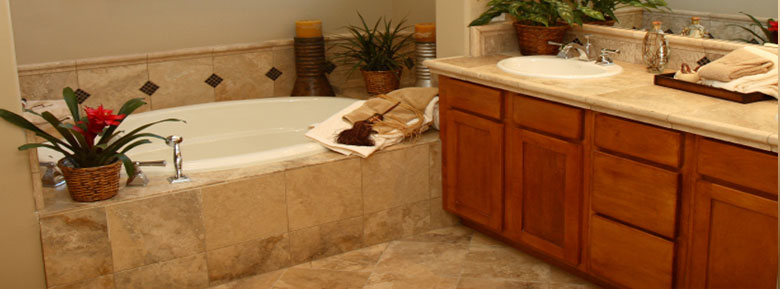
If you’re not a geologist– and even if you are– you might associate the word “travertine” more with fancy tiles and kitchen countertops than with geology. That’s okay– travertine tiles and countertops can be very beautiful. Personally, I’d love to have some gorgeous travertine in my kitchen or bathroom. Since I work on travertines as part of my PhD, such tiles and countertops would be part of my geology dreamhouse. However, perhaps it’s best that I don’t have any travertine in my kitchen. If I did, every time some poor houseguest complimented me on my beautiful kitchen I’d probably subject this poor person to a long lecture on just how amazing travertine is scientifically and what I’ve learned from studying travertines in Oman. I’d probably go on to excitedly point to a small layer or feature in a tile and bemoan how some of the textural characteristics were lost when the piece of travertine was polished to make it into a tile. Since my soon-to-be husband is also a geologist, he’d probably join in on the discussion and we’d scare away our poor houseguest.

Travertine bathroom. Image taken from here.

However, the value of travertine goes beyond the economic value of certain types of travertine as ornamental stones. There is also much scientific value that can be gleaned from studying travertine. Also, I’d argue that the beauty of seeing many travertines in their natural environment– no polishing– goes far beyond the beauty of any travertine tile or countertop. At least for me, anyway.

There are many good scientific reasons to study travertine. For example, study of carbon and oxygen isotopes in travertines (especially speleothem-type travertines that form in caves) can provide a chemical record about how the climate of a region has varied in the past. Study of travertines and the fluids from which they precipitate can also provide information about shallow groundwater. Since many travertines form from high-temperature springs (often heated by magma, such as at Yellowstone), study of these types of travertines can provide information on a volcanic system, such as water-magma interaction. As I mentioned in the definition above, travertines usually precipitate from either very high pH or very low pH waters. Study of the critters (bugs and fishy things and microbes) that hang out in these extreme pH environments provides interesting information about life in extreme environments, which might provide helpful information relevant to looking for life on other planets and figuring out the origin of life on our own planet. These are just a few of the ways that studying travertine is scientifically valuable.

Why do I study travertine, you might be wondering? Well, I study travertine because I am interested in learning more about how travertine interacts with atmospheric CO2. As many of you know, CO2 is a greenhouse gas that contributes to global warming. Humans release CO2 to the atmosphere through burning of fossil fuels. There is currently much effort being put forth around the world to investigate how we can reduce anthropogenic CO2 emissions and– maybe– even geoengineer our environment so that we can remove CO2 from the atmosphere and store it in another reservoir, such as underground in an abandoned oil well or a porous sedimentary layer.

Most travertines precipitate when water degasses CO2 to the atmosphere. This happens through the reverse of the following reaction:

(Opposite of) travertine formation through degassing of CO2. Reaction taken from Pentecost (2005).

However, a few travertines– such as the ones I study in Oman– actually precipitate when CO2 is “sucked up” into the water from the atmosphere. This happens through the following reaction:

Travertine formation through uptake of CO2. Reaction taken from Pentecost (2005).

If you think about it, this is really, really cool! Travertines that form in this manner are naturally sucking up CO2 from the atmosphere and storing this CO2 in solid rock– travertine. For my thesis research, I am studying the formation of such travertines from very high pH (highly alkaline) natural groundwaters (most are pH = 11-12) that occur in peridotite rocks in Oman. Very high pH groundwaters are rare, but they are found at several places around the world.

Below are some pictures of travertines I’ve encountered in my geology travels and research. The Omani travertines are my favorite. I think the newly-formed travertine looks like snow in the Omani desert. Click on any of the pictures below to view larger.

A final note: I really like the first definition above, which I took from a book called “Travertine” by Allan Pentecost. I like this definition because it is very specific, descriptive, and inclusive. However, this type of definition is probably daunting for the non-geologist. A common problem with definitions of scientific words is that they contain more scientific words. As a geologist who works on travertine, I am familair with the other sciencey words such as “aragonite”, “mouldic”, and “vadose.” However, I can see how a non-geologist might struggle with the first definition of the word travertine. In the second definition, I have tried to define travertine in plainer language.

Pictures of hot, low-pH (acidic), CO2-degassing travertines in Yellowstone:

Travertine terraces engulfing trees, Yellowstone, Western USA, Fall 2005.
Travertine precipitating around a tree, Yellowstone, Western USA, Fall 2005.

Travertine engulfing civilization, Yellowstone, Western USA, Fall 2005.

More travertine! Yellowstone, Western USA, Fall 2005.

Closer view of travertine terraces, Yellowstone, Western USA, Fall 2005.

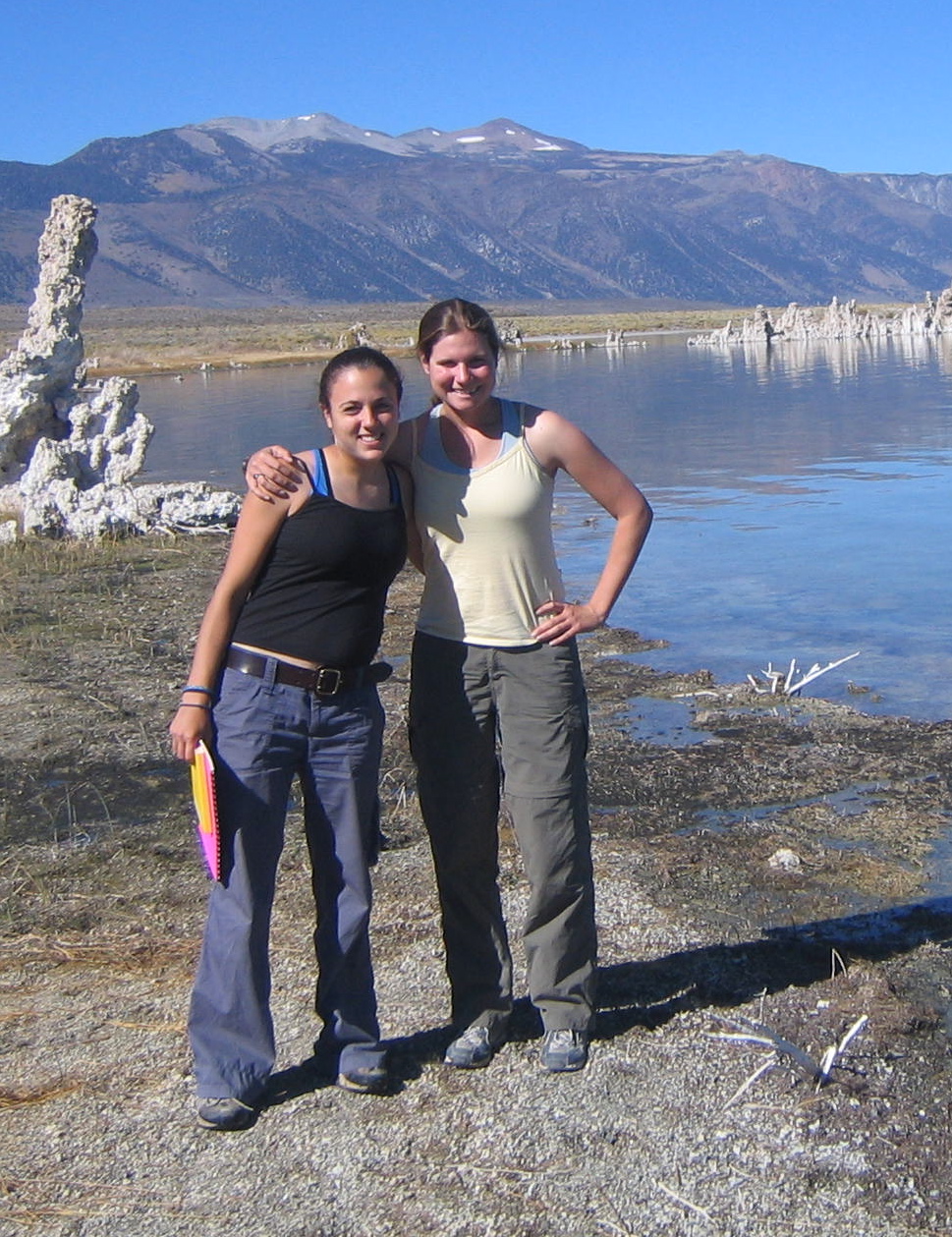
Here’s a picture of me and a friend posing with some tufa (very porous travertine):

Geology students with tufa towers in the background, Mono Lake, California, Fall 2005.

Pictures of cold, high-pH, CO2-absorbing travertines in Oman:

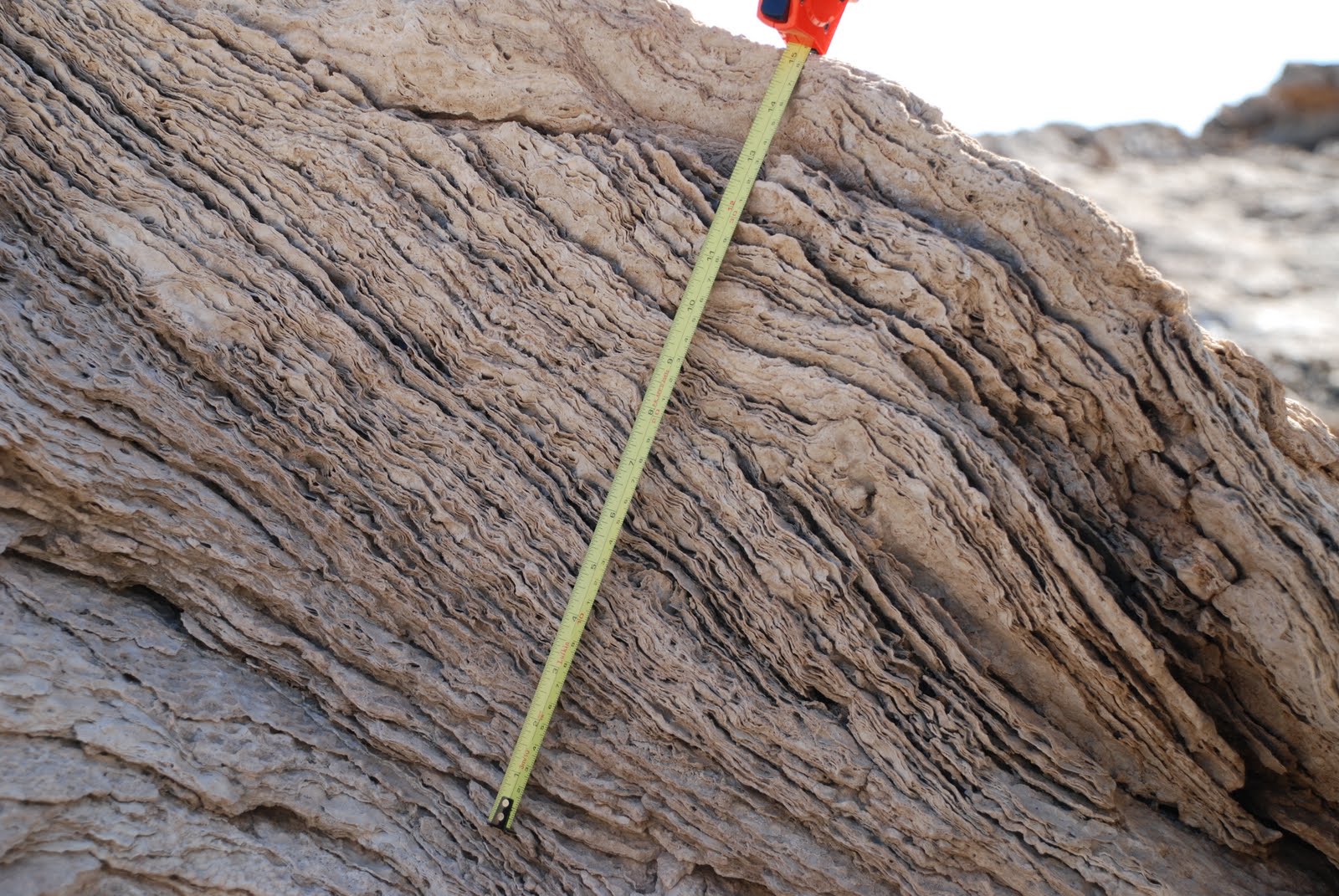
Layers of travertine time, Oman, January 2009.

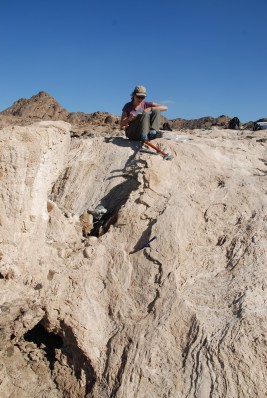
Sitting atop some travertine, Oman, January 2009.

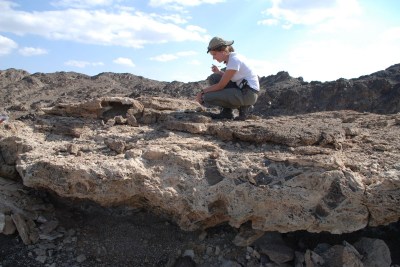
Investigating some more travertine, Oman, January 2009.

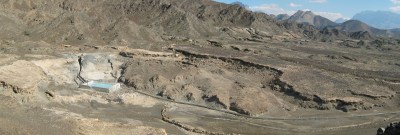
Travertine coating an alkaline streambed, Oman, January 2009.

Travertine coating a soda bottle, Oman, January 2009.

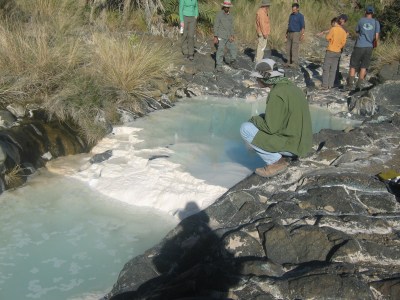
Travertine precipitating from an alkaline pool (geologist for scale), Oman, January 2009.

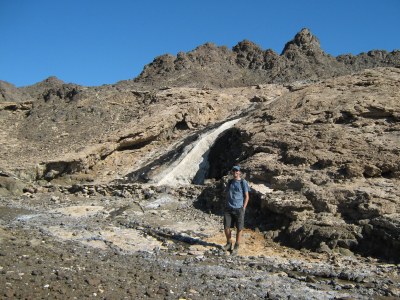
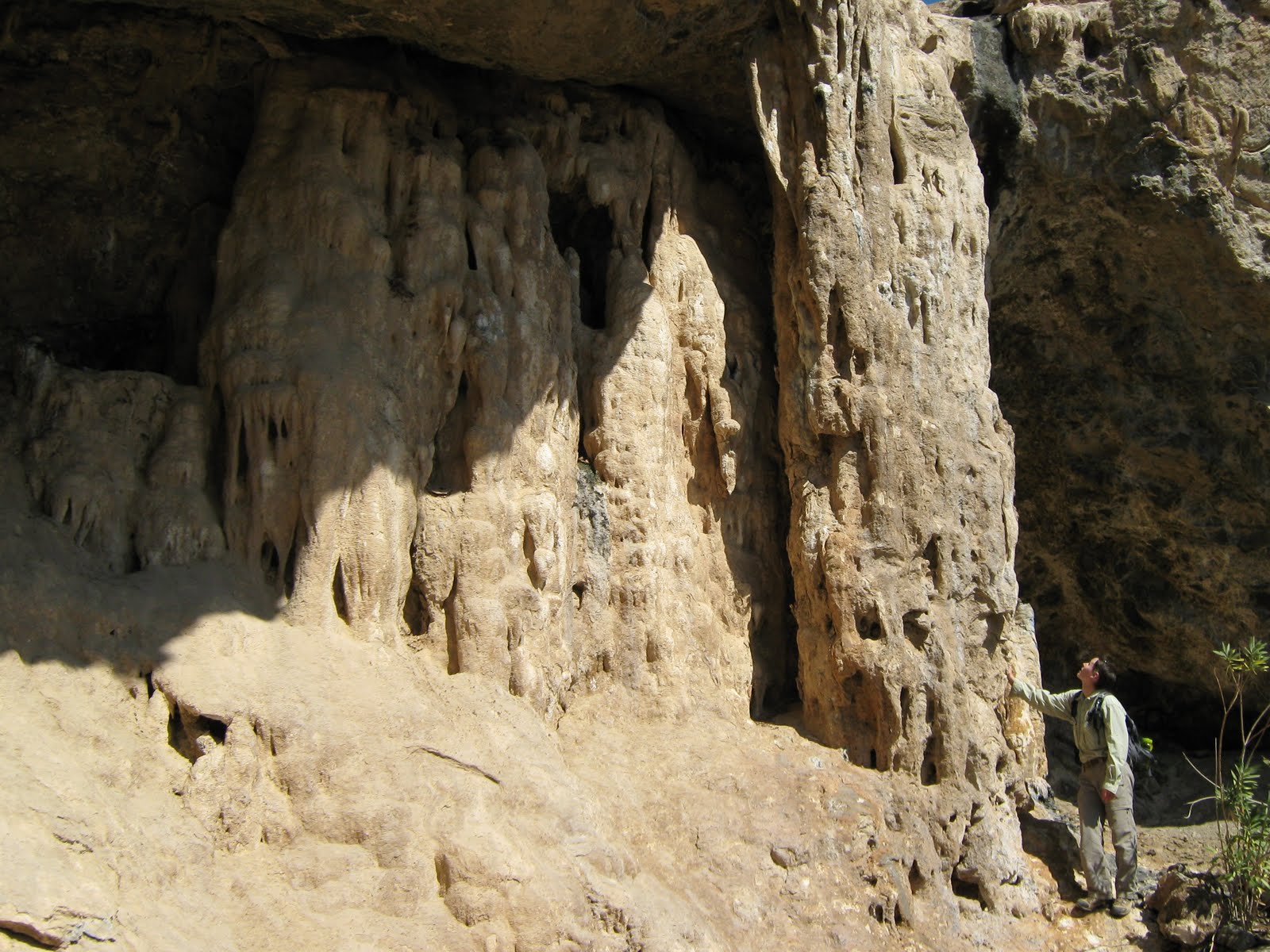
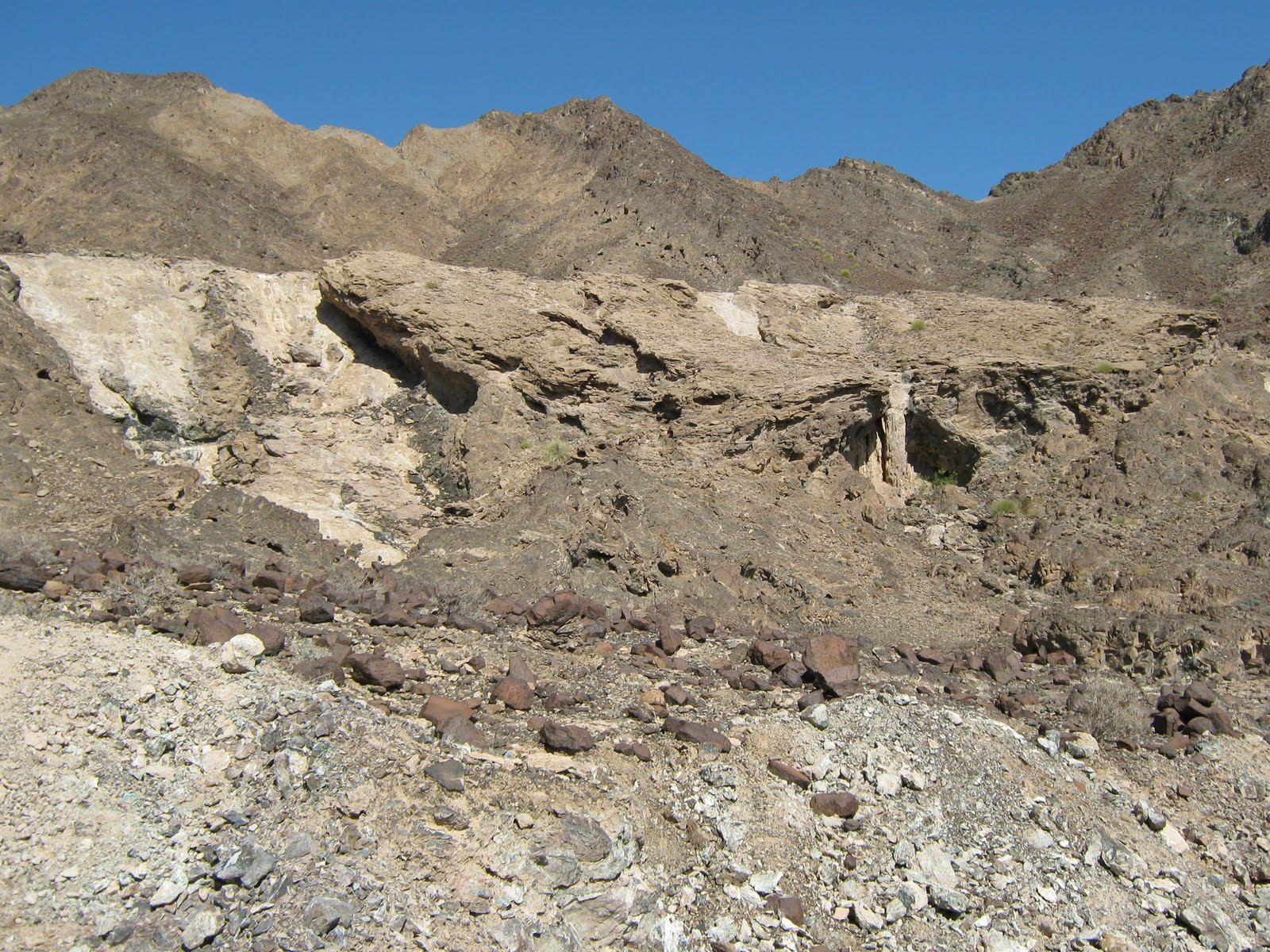
Travertine tower, likely formed from an alkaline waterfall (geologist for scale), Oman, January 2009.

Very large travrtine deposit, note the tower (see above picture) to give you a sense of scale, Oman, January 2009.

Alkaline streambed, Oman, January 2009.

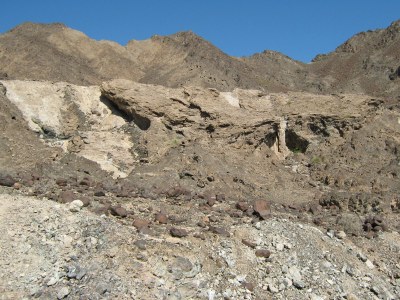
Older (brown) and newer (white and black) travertine, Oman, January 2009.
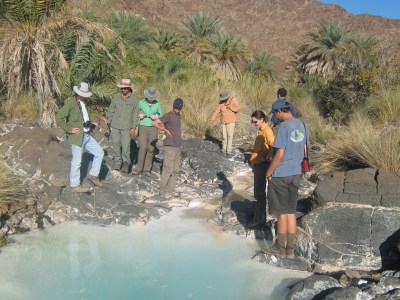
Standing around an alkaline pool, Oman, January 2010.

Little travertine terraces, Oman, January 2010.
Older, brown travertine deposit, Oman, January 2010.

Older travertine (brown) and newer travertine (white and black), Oman, January 2010.

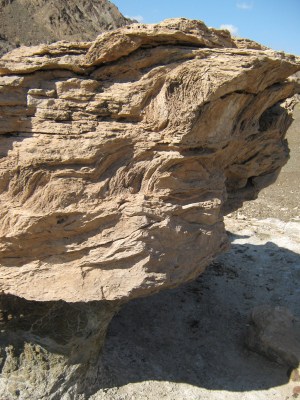
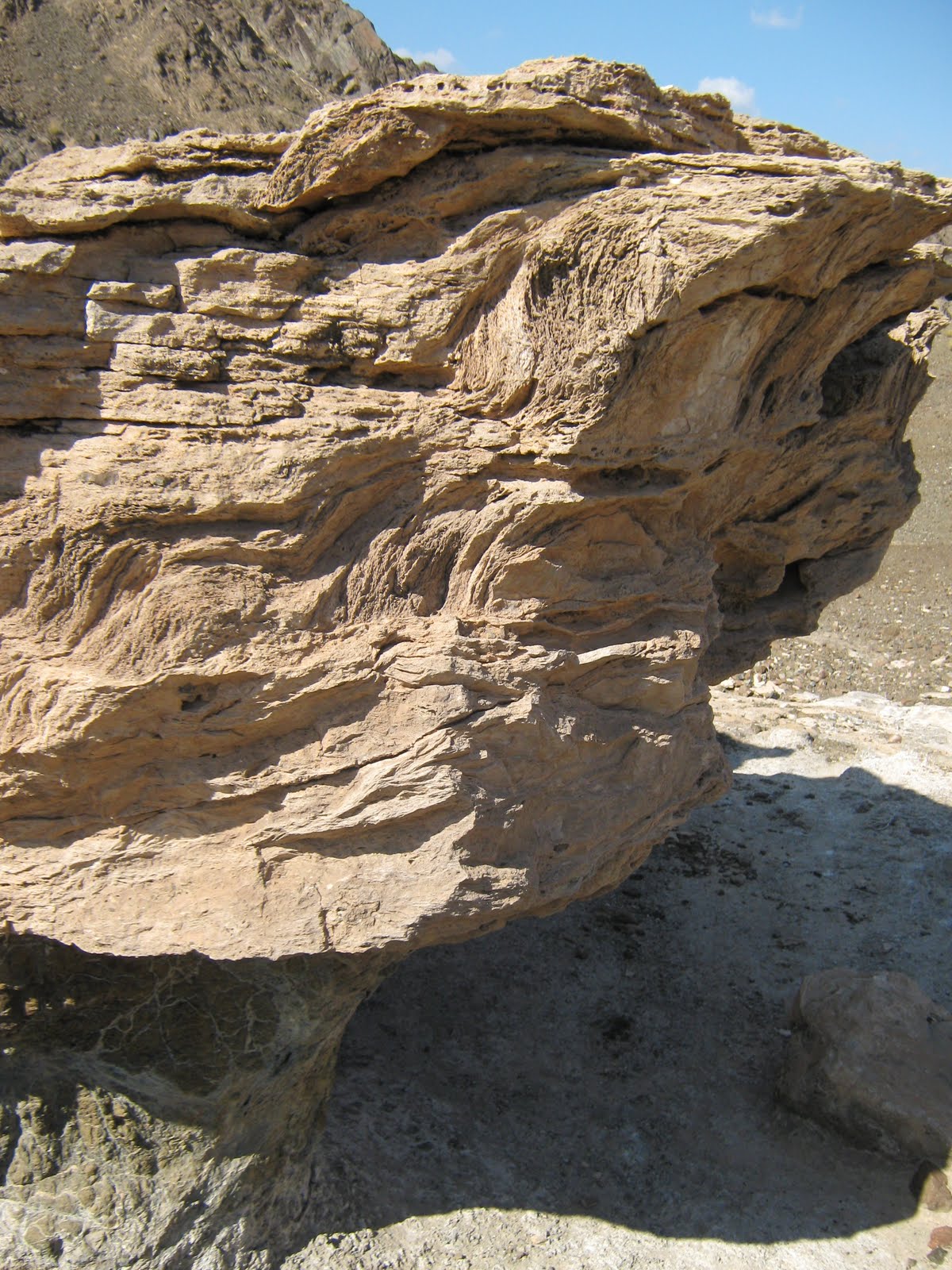
Unusual travertine morphology, Oman, January 2010.

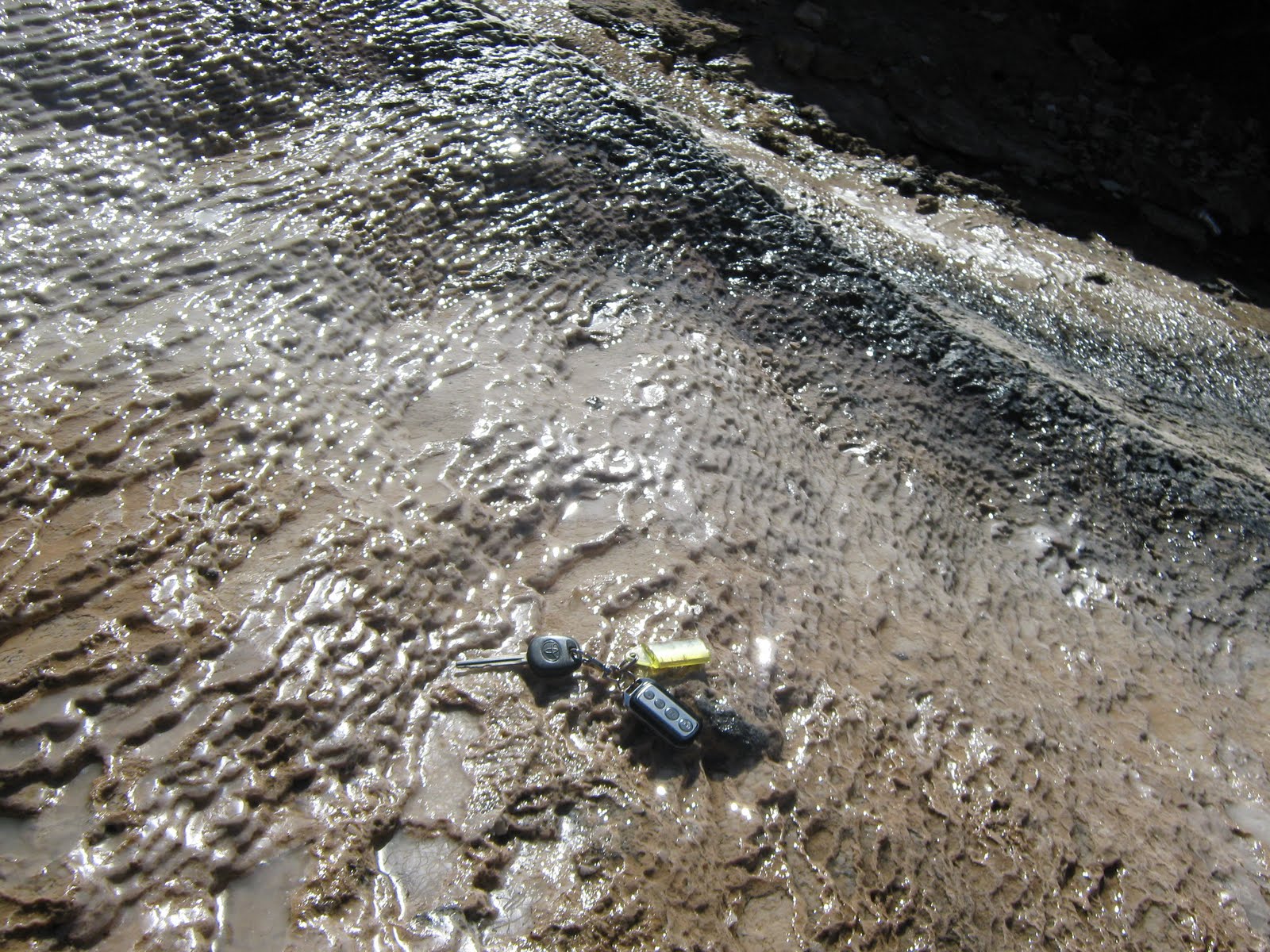
Mini travertine terraces (car keys for scale), Oman, January 2010.

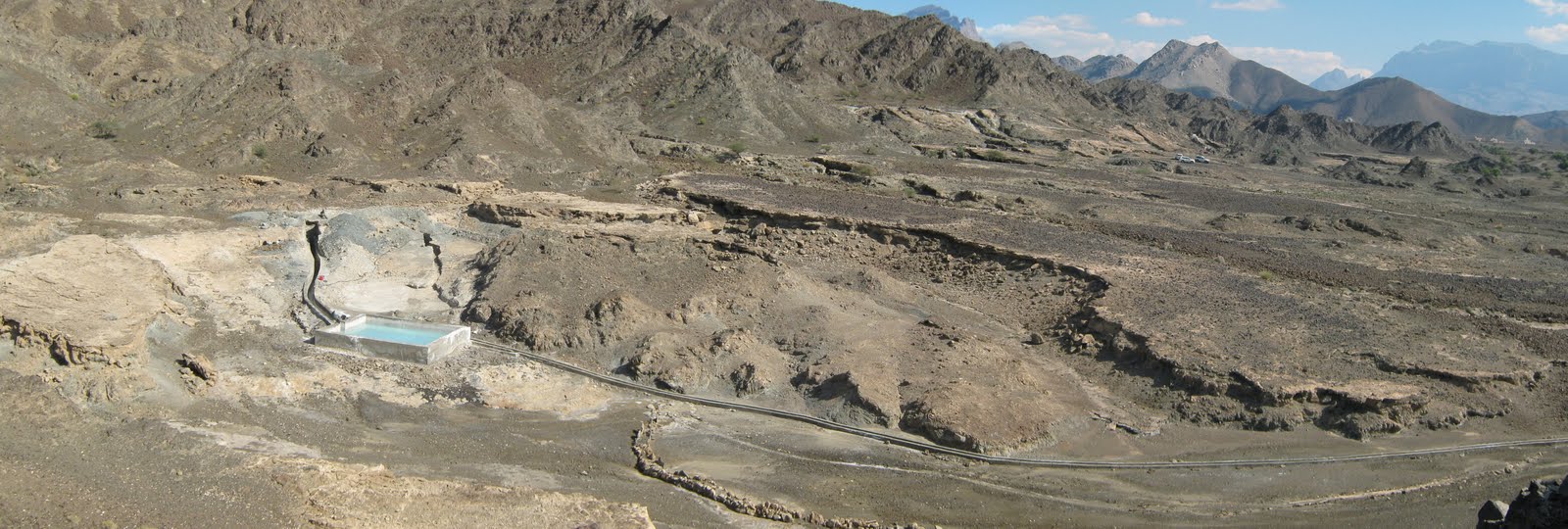
Large travertine deposit (locals have controlled the alkaline stream in a cement pool), Oman, January 2010.

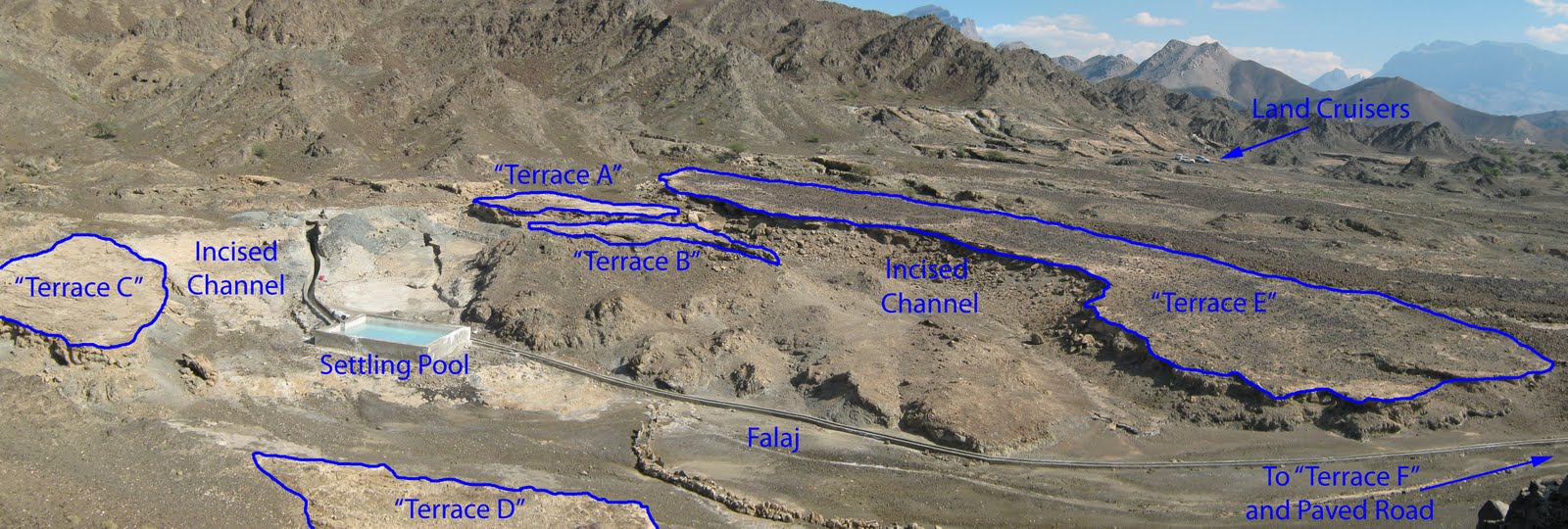
Travertine terraces outlined, Oman, January 2010.

A tower amidst the travertine, Oman, January 2010.

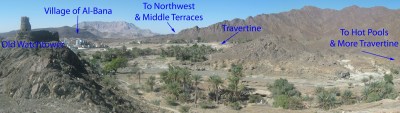
A tower amidst the travertine (with labels), Oman, January 2010.

For more pictures of Omani travertine, see here and here.

Useful Link:
More on how CO2 affects water pH

Reference:
-Pentecost, Allan. Travertine. Berlin: Springer-Verlag, 2005.

A Blog Milestone

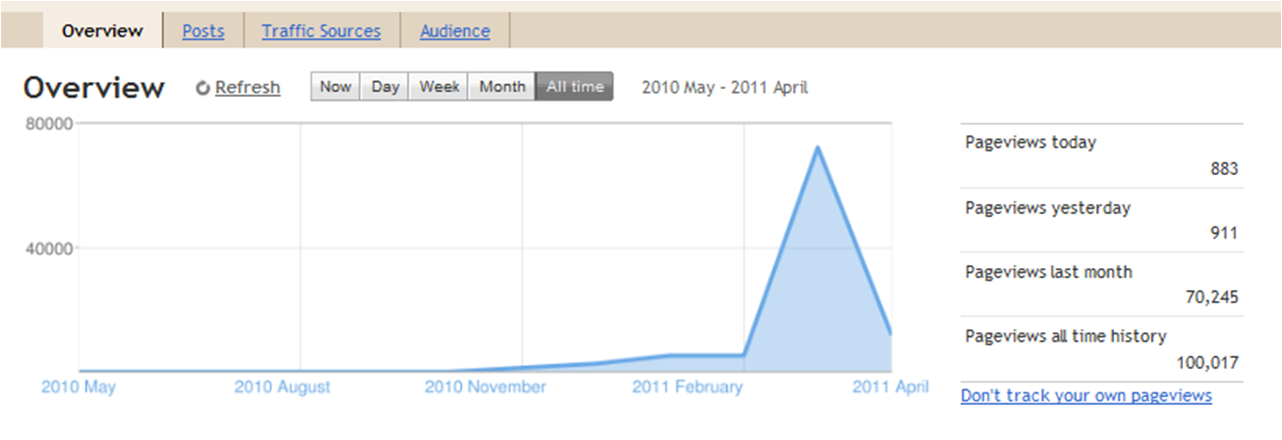
100,015 pageviews.
Fukushima spike.

Sometime yesterday my little geology blog passed 100,000 pageviews, a milestone that I expected to reach maybe by the end of 2011 or perhaps in 2012. I never expected to reach this milestone so quickly. I’ve only been blogging since November 2010, and when I first started blogging I was happy if I even had ten pageviews per day.

I have mixed feelings about reaching 100,000 pageviews. I am happy and sad. I am happy because so many people are interested in reading my blog, but I am sad because the primary reason I have so many pageviews is a result of interviews I’ve done with my father on the second-worst nuclear disaster in history. I must say, this is a depressing way to increase readership. However, I’ve noticed that a few of my “nuclear dad interview” readers are staying to read some of my geology-related posts. That makes me happy, at least.

Bad Hotplate

When it comes to laboratory safety, you should never cut corners to save money.

A few months ago, I had a teflon beaker melt on a yellow hotplate which we had purchased for the lab to replace a hotplate that died. Unfortunately, when inexpensive hotplates “die” they tend to heat up very hot, which can be very dangerous. I’m not sure exactly what happens, but I think that over time acid corrosion affects the thermocouple so that the hotplate can no longer regulate temperature properly.

I use some very strong acids in my chemistry– concentrated nitric acid, hydrofluoric acid, and perchloric acid. I need to use strong acids because I am dissolving rocks. As you can imagine, dissolving rocks is no easy task– those silicate bonds are difficult to break. Because I use such strong, corrosive acids, I think the electronics of an inexpensive hotplate are easily corroded. I wish the hotplate would just switch off or cool down when it becomes corroded. Unfortunately, when this model of hotplate dies because of acid corrosion, it dangerously ramps up in temperature, melting teflon beakers filled with acid and rock powder.

Good hotplate. Note the lack of melted beakers.

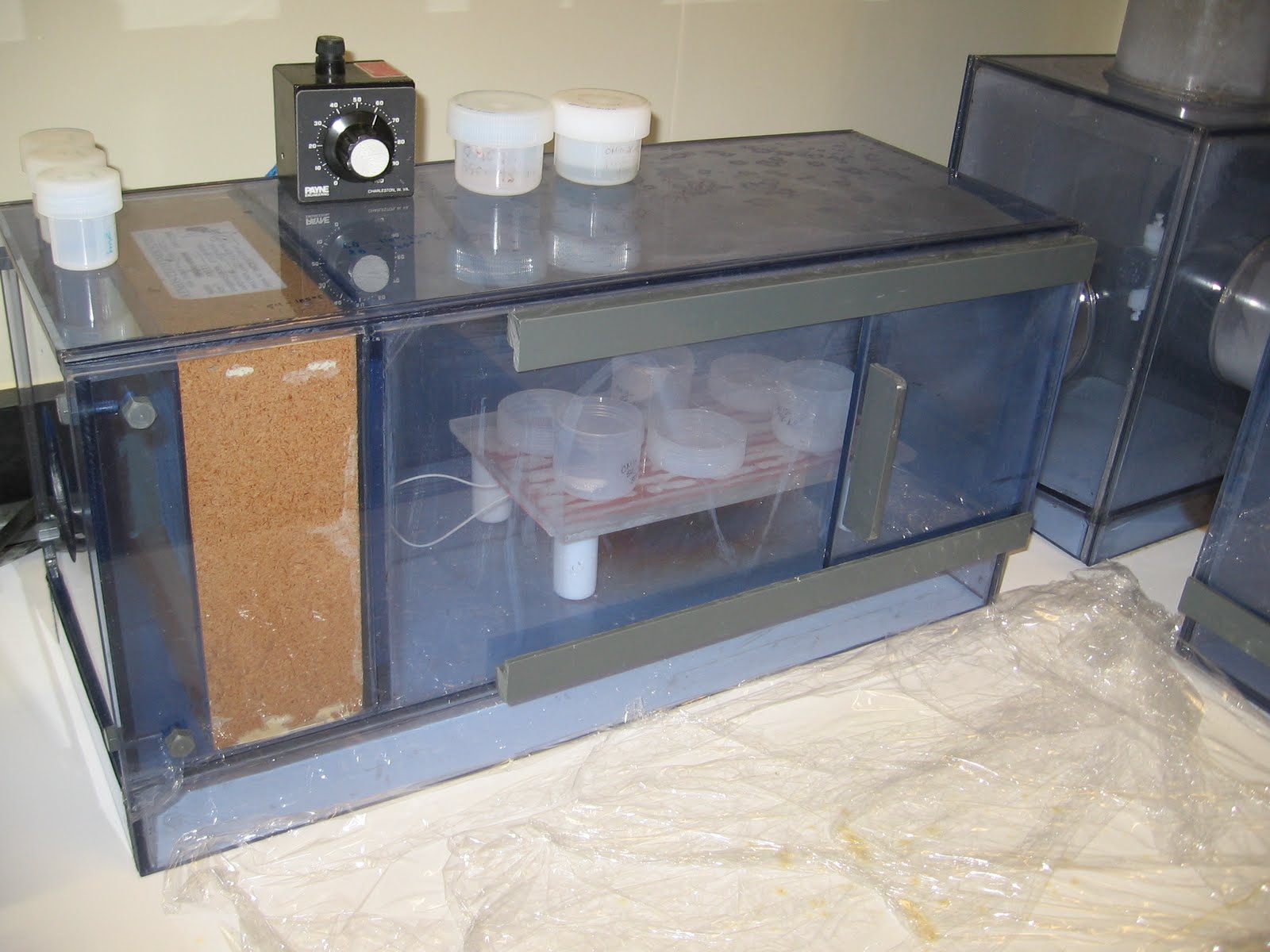
Most of the hotplates in lab are home-made with heating tape and will not fail in such a catastrophic way. However, these hotplates do not reach high enough temperatures to dry down perchloric acid, which I must use in my dissolutions. I’m not the only one who uses perchloric acid– there are others in the lab who have used this dangerous acid. To dry down perchloric, we use a special venting system (so we don’t inhale the vapors) and use a store-bought hotplate. We’ve been using the Cimarec hotplate made by ThermoScientific. This is a BAD HOTPLATE. I bought a brand-new Cimarec back in October or so, and it has already failed by overheating. The Cimarec we had before that lasted less than a year before it melted a single teflon beaker.

When the beaker melted on the previous Cimarec hotplate, I was very concerned. I was very sad to lose a sample, of course, as my chemistry takes MONTHS so the loss of even a single sample is very unfortunate. The bigger problem, however, is the possible risk of fire by melting a plastic beaker containing very strong acids and rock powder. I looked into what types of hotplates we could purchase that would not fail in such a catastrophic manner. The problem? The “safe” hotplates cost about $3,000 whereas the “unsafe” Cimarec hotplates cost only about $300. My primary advisor had just left for another institution, so there was no way that he was going to buy a $3,000 hotplate to leave behind. The lab technician advised that I buy another Cimarec since “it was unlikely” that it would fail again before the labwork for my thesis was completed. I listened to the lab technician and my one advisor (I’ve got two actually), which was a mistake. I should have insisted that we purchase the expensive hotplate. Or I should have insisted that I be allowed to dry down my perchloric samples in another lab with safe hotplates.

But I bought the new Cimarec hotplate and the technician helped me install it. I did change my behavior– I didn’t leave the hotplate alone during the day, and I switched it off overnight. However, I didn’t watch it every minute– it’s just not practical to do so.

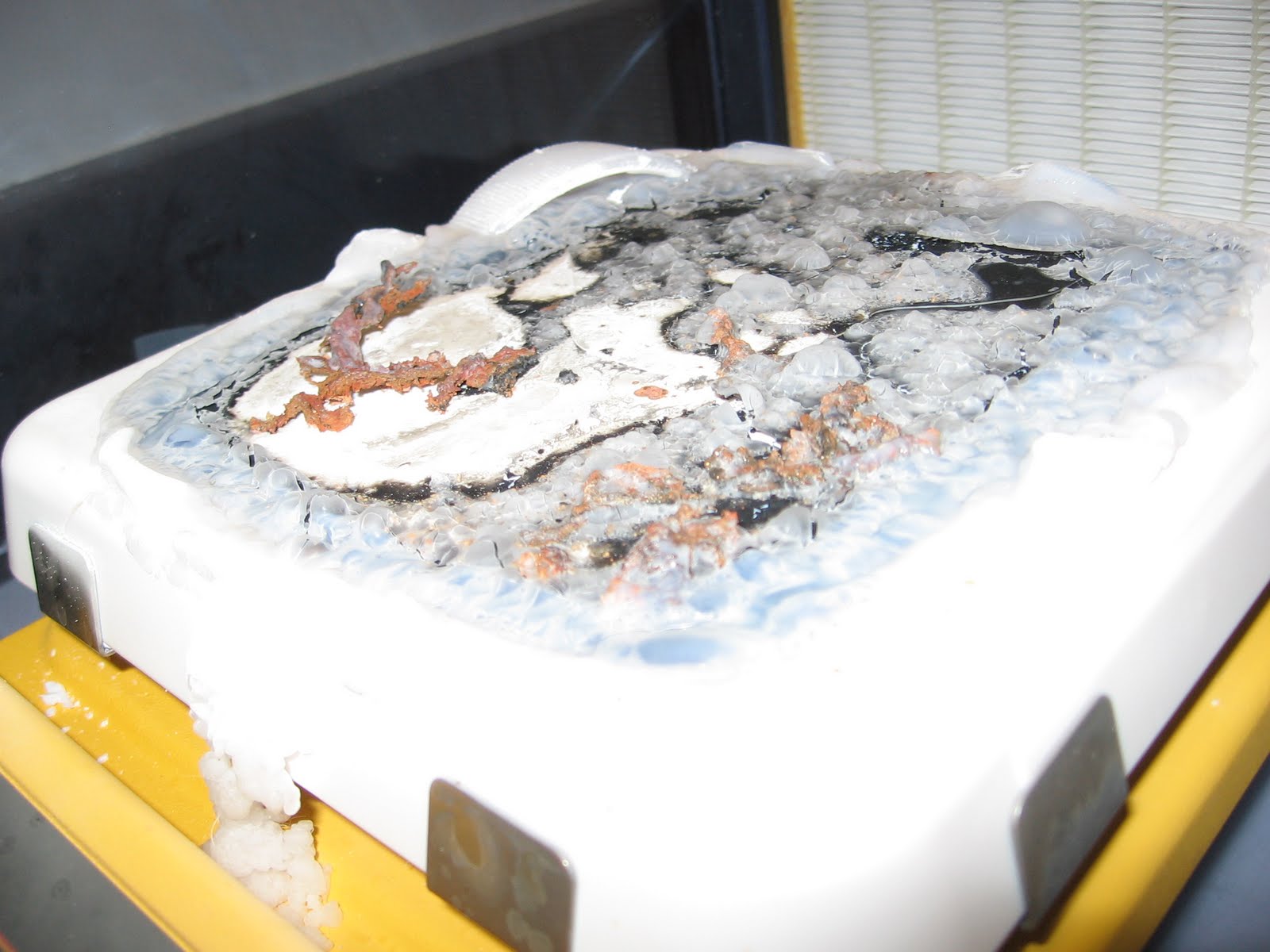
Today the inevitable happened. I put two 120 mL teflon beakers and their lids on the yellow hotplate to dry down. I went to work on something else in the lab, but after about 30 minutes I smelled some smoke. This is what I found:

Bad hotplate.

Note the lowness of the temperature dial. I had it set to 125 deg C, well below the melting point of teflon plastic.

Only a beaker lid rim remains.

Bad teflon goo.

I immediately unplugged the hotplate and called security. No one was hurt, and there was no fire. But someone could have been hurt, and there could have been a fire. I have already filed an extensive safety report and plan to meet with the safety officers in the near future. Although a new, fancy hotplate may not be installed in time for my thesis work, I plan to do everything possible to make sure that an expensive but safe hotplate is installed. There is a new scientist about to take over the lab (a replacement for my advisor), and he agrees with me. He made a fuss about the hotplate as well, and he’s trying to insist that his start-up allow for the purchase of several of the expensive but safe models of hotplate. I hope that the accident today gives him leverage to insist on the money he needs for the safe hotplates.

This time, I think my advisor and the lab technician will take my request for an expensive hotplate seriously. If not, an accident like this may happen again. After all, those who do not learn from history are doomed to repeat it. If any of you use the Cimarec hotplates to dry down acids, please seriously consider abandoning use of this type of hotplate.

As for my chemistry? I’ve already asked the scientist across the hall if he would dry down my samples for me in his expensive dry-down system. He has generously agreed and also offered to help me insist that the lab (which is going to be rebuilt for the new scientist) contain the safe hotplates.

A final note is that I am mourning the loss of the two peridotite samples that melted earlier today. I had been dissolving these samples for several months, so I’ve now lost months of chemistry. Fortunately, I only lost two samples.

Cederberg in Pictures

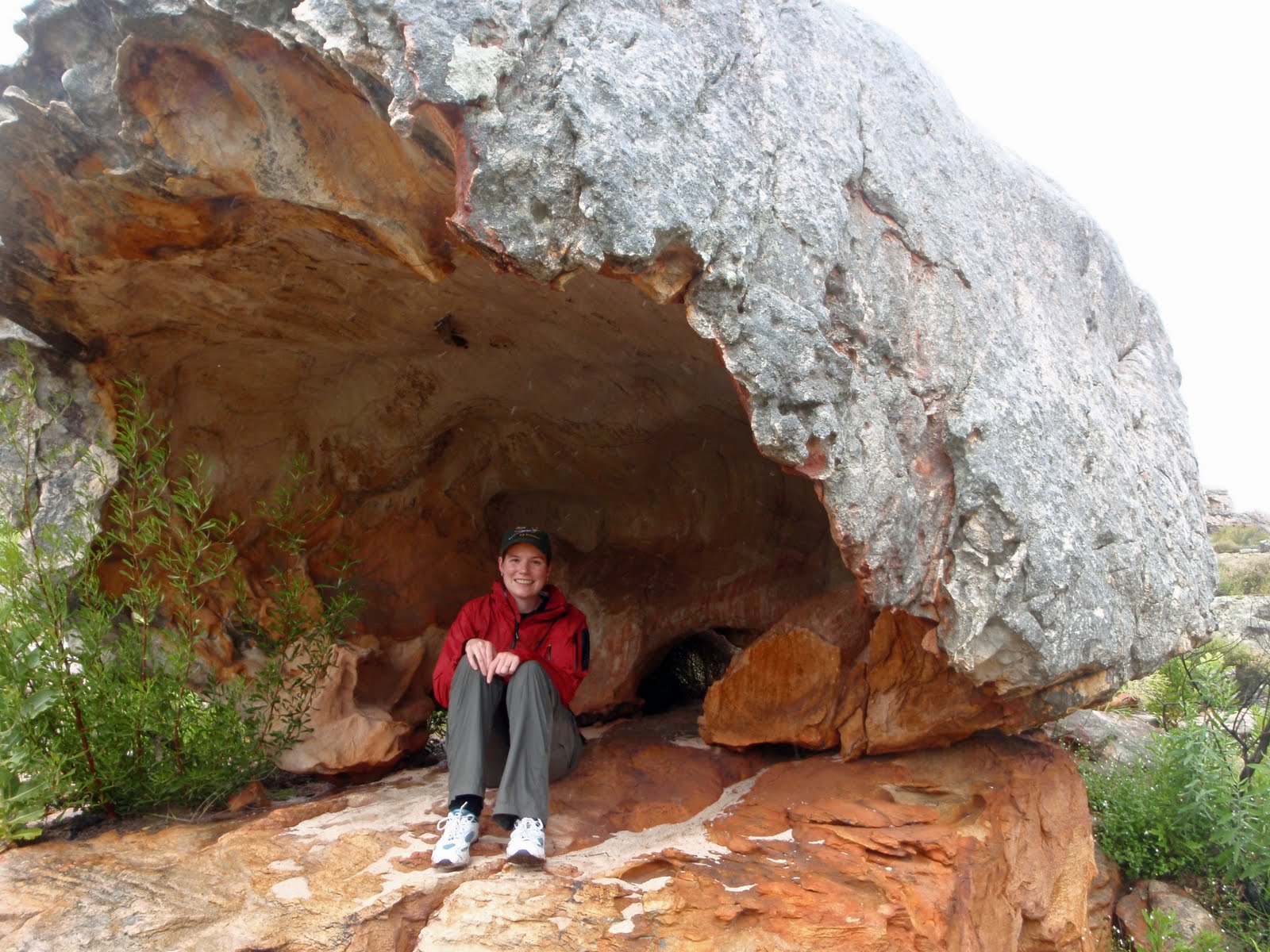
Contemplative in the Cederberg.

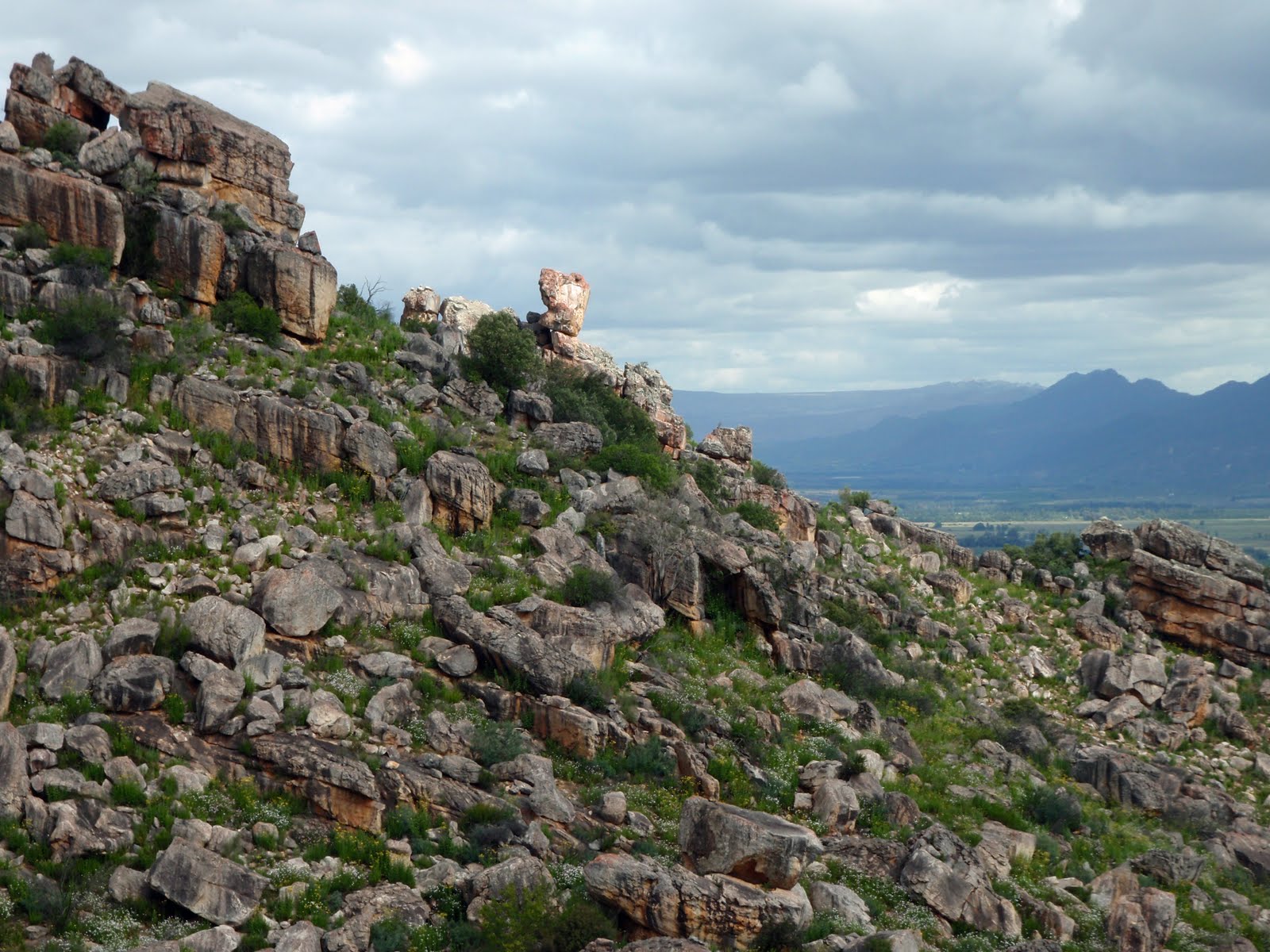
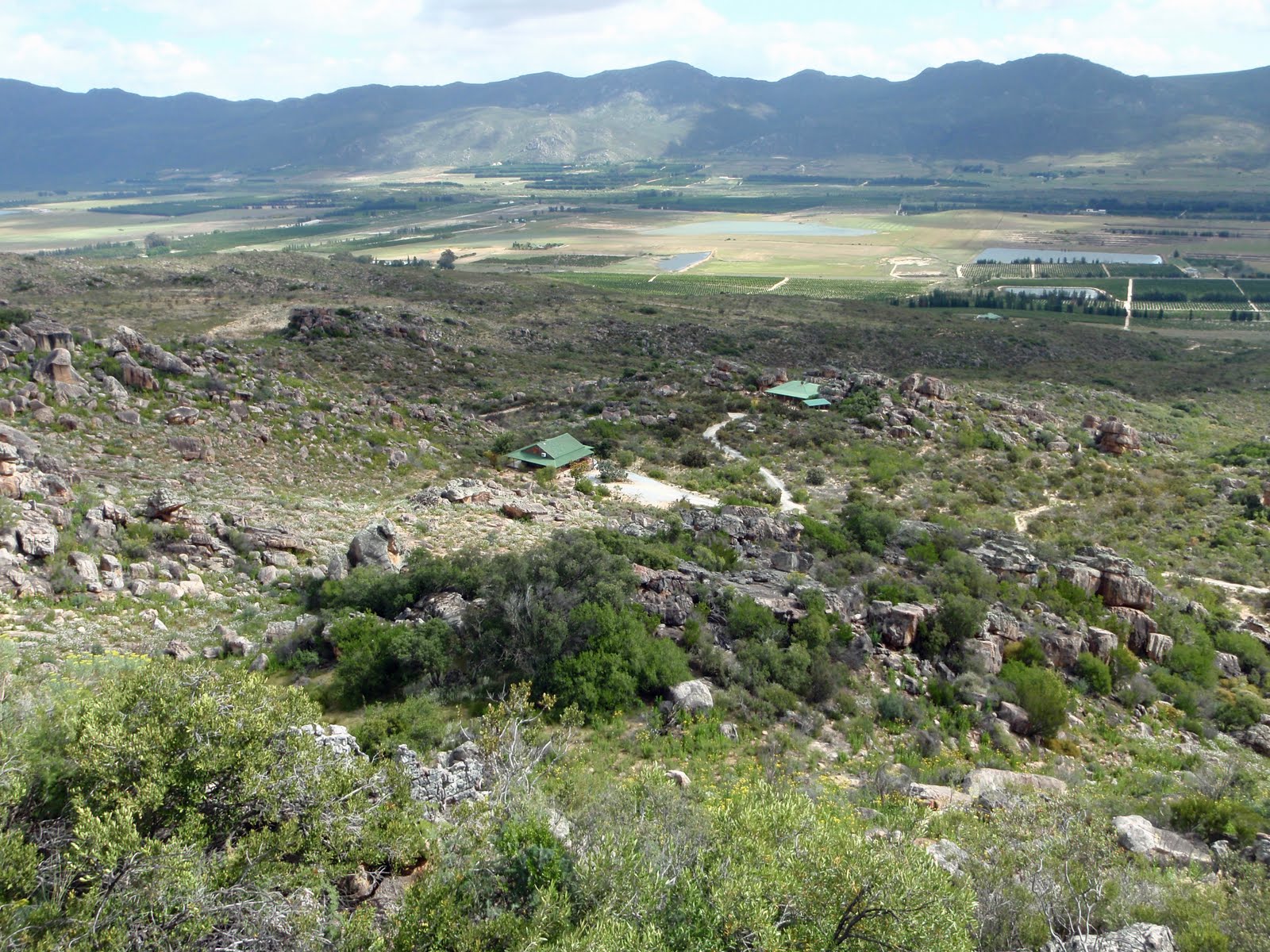
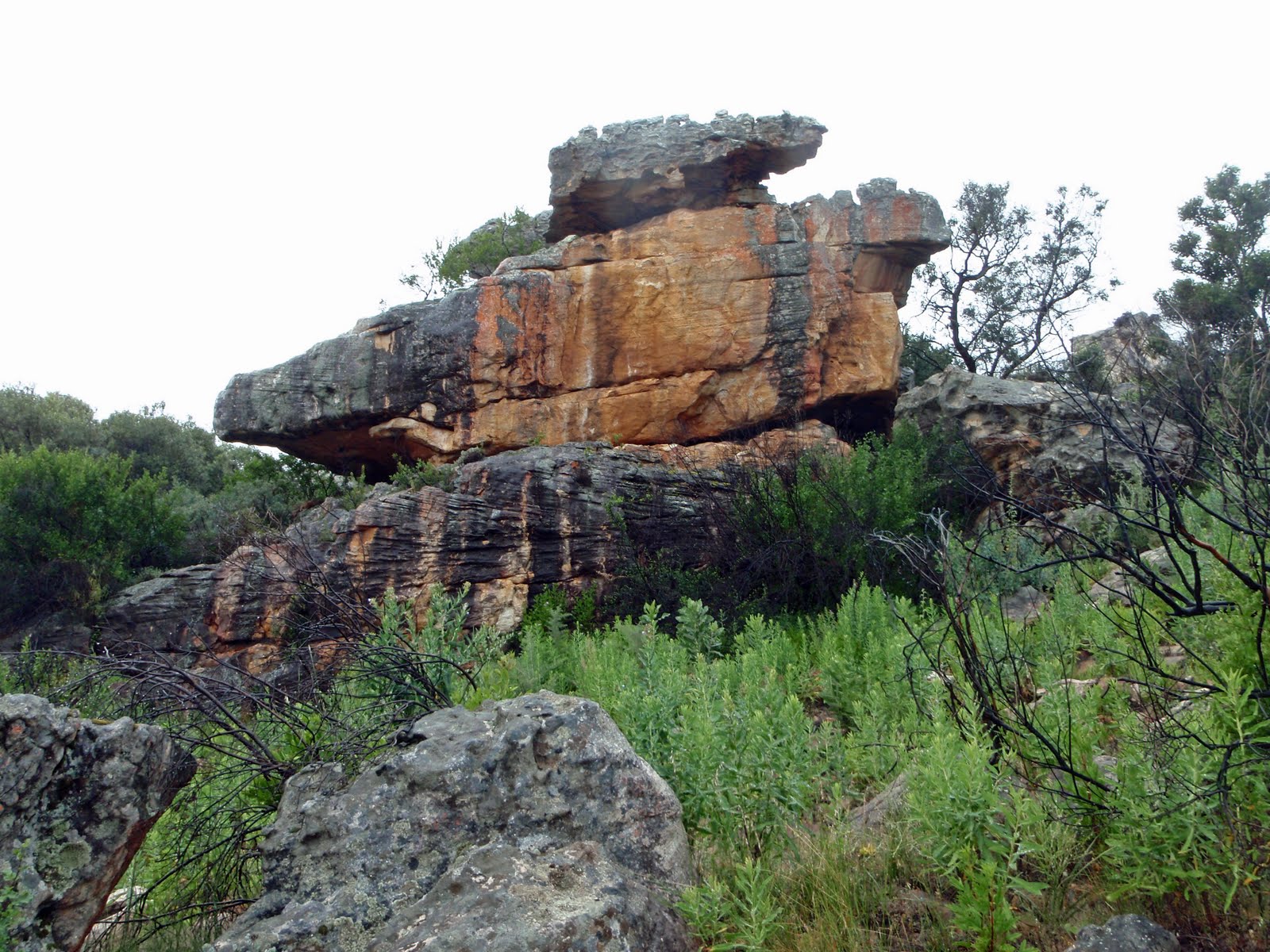
It’s been awhile since I’ve done an “…in Pictures” post, so I thought I’d put up some pretty geology pictures today.

Exactly one week from today I fly to Cape Town, South Africa to visit my fiance and have a bit of a vacation after 4 1/2 months of hard work. I’ve only taken a weekend or two off since Christmas, so I’m definitely feeling tired and in need of some rejuvenation. This trip to South Africa is also an exciting one because I’m starting to make plans for my upcoming wedding and move; I plan to move to Cape Town permanently later this year.

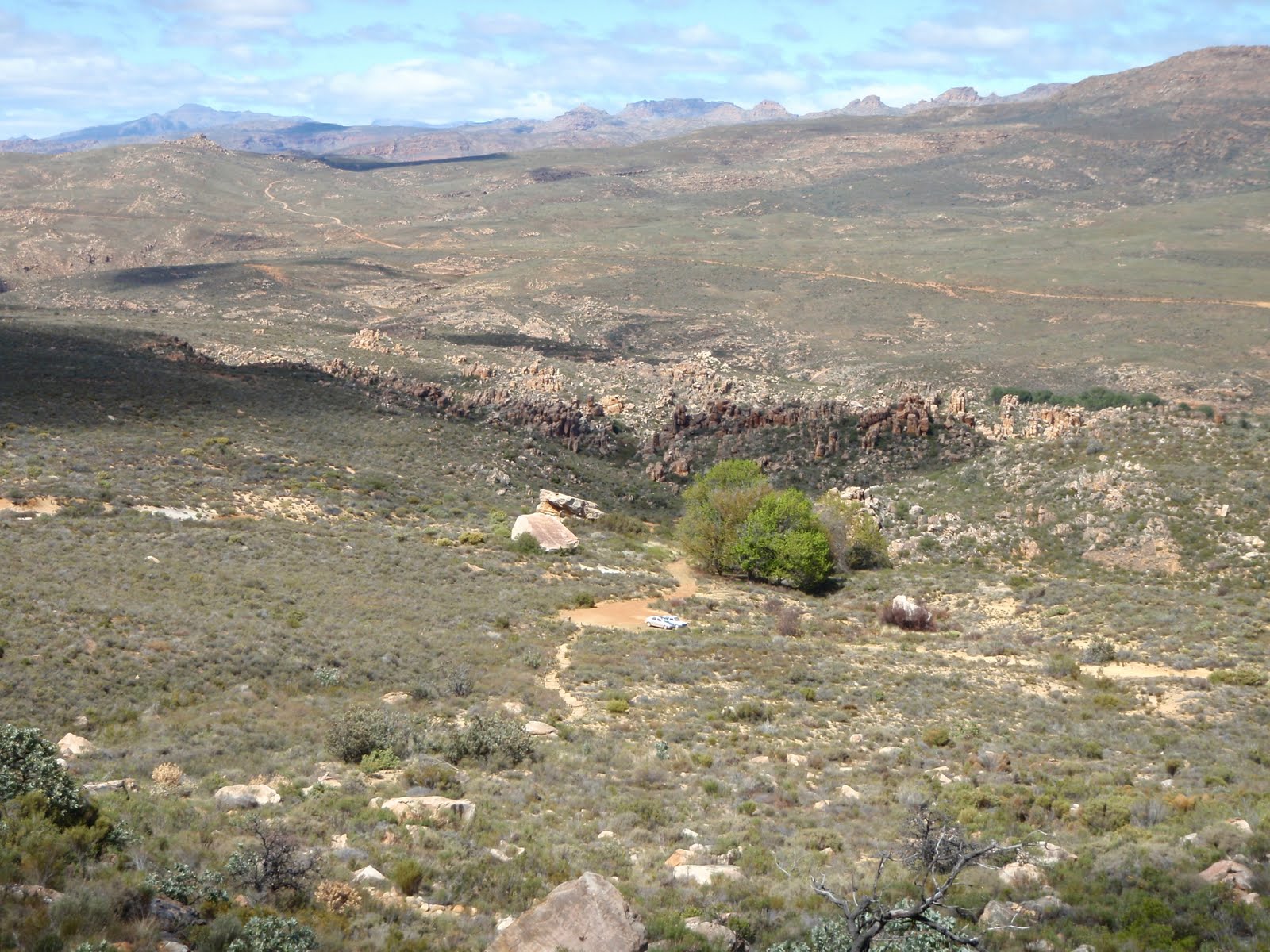
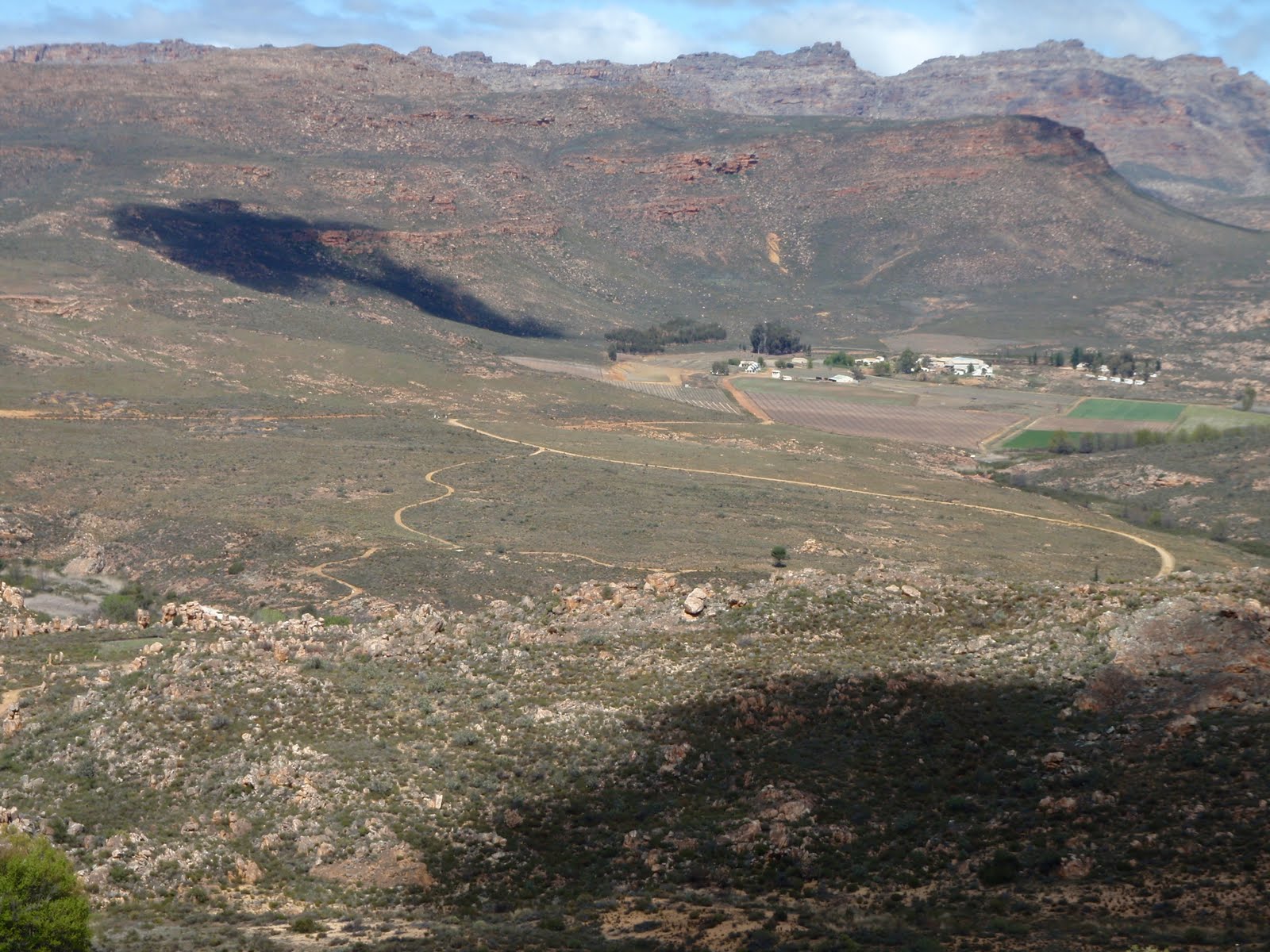
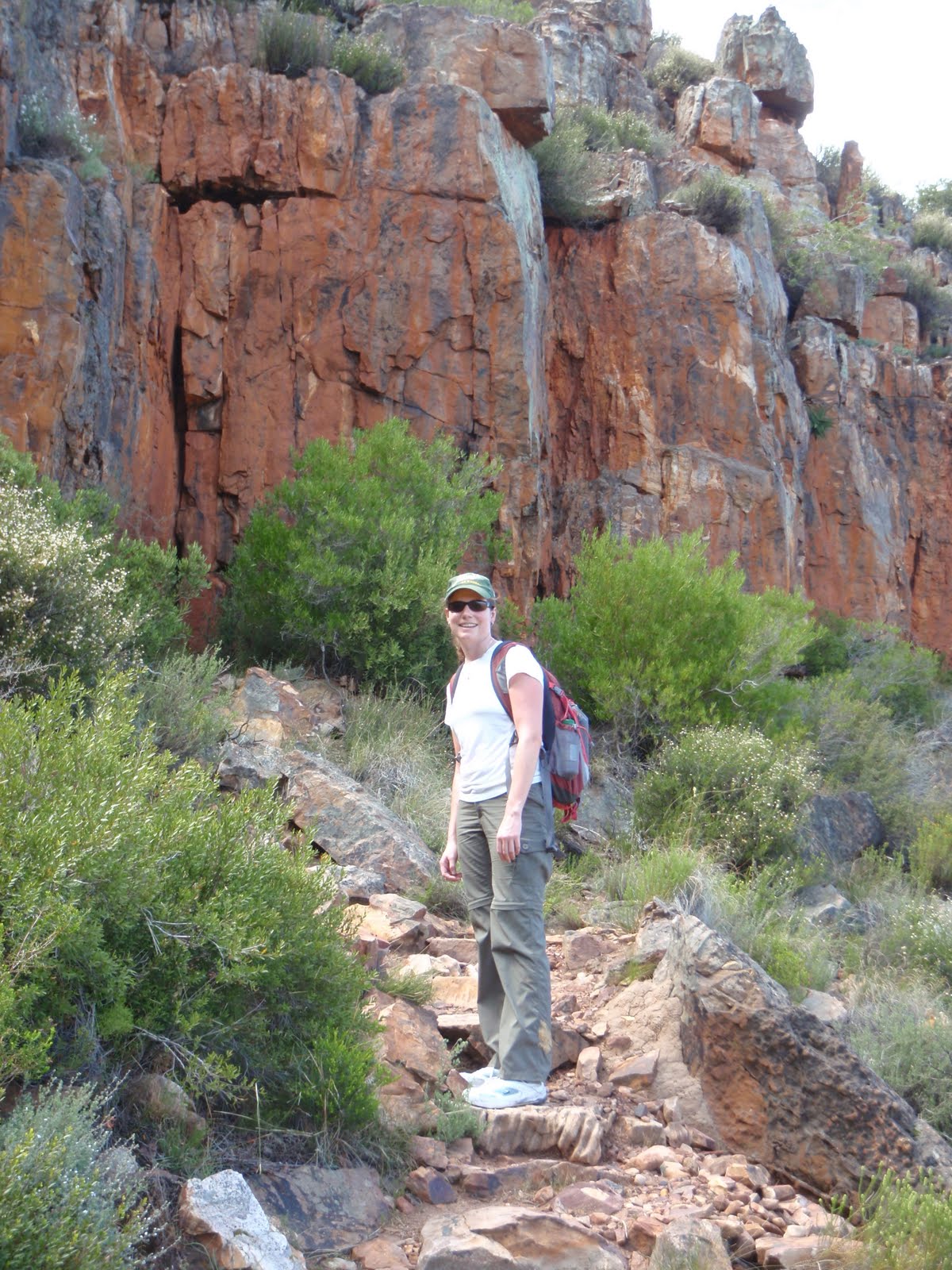
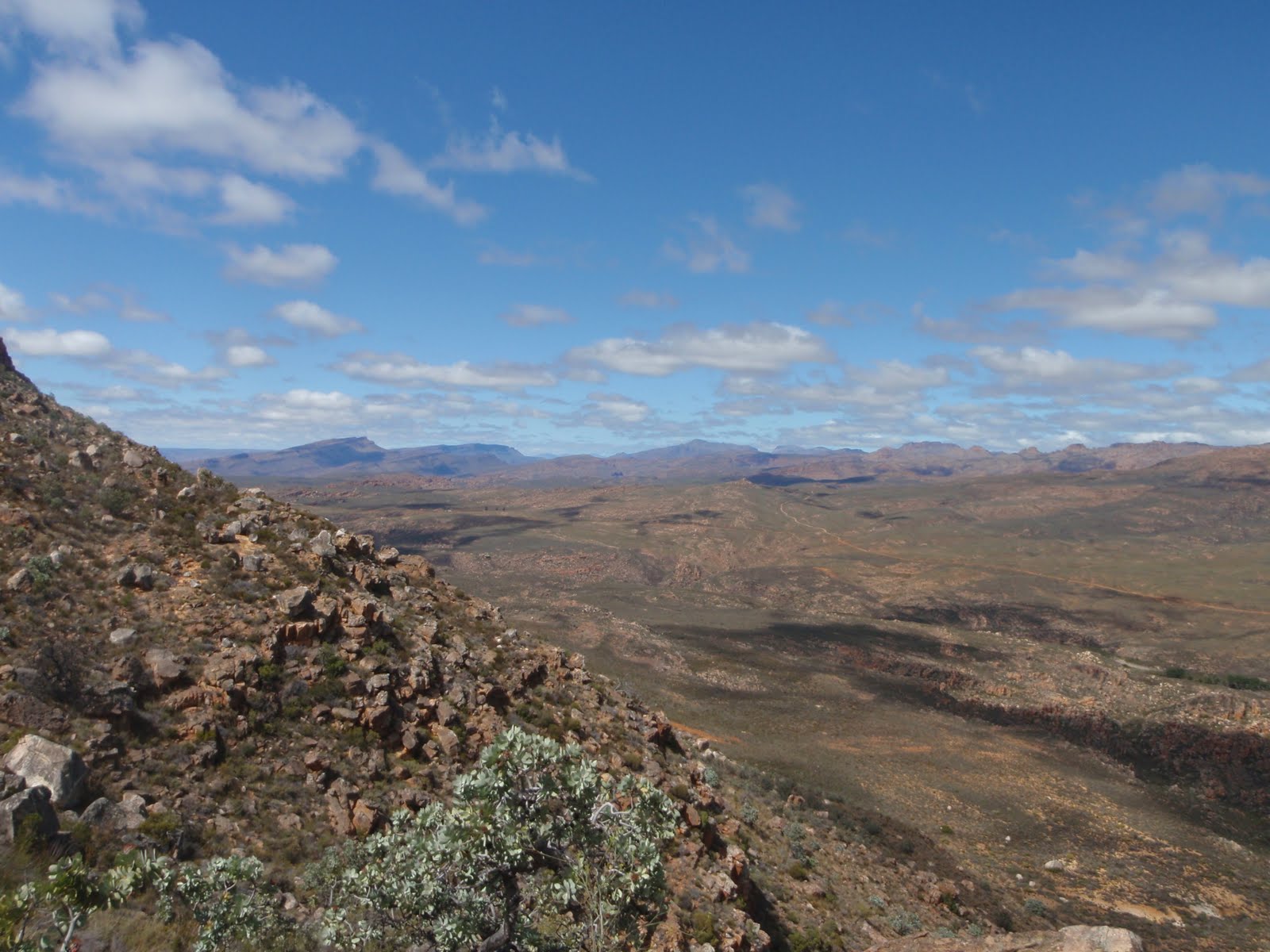
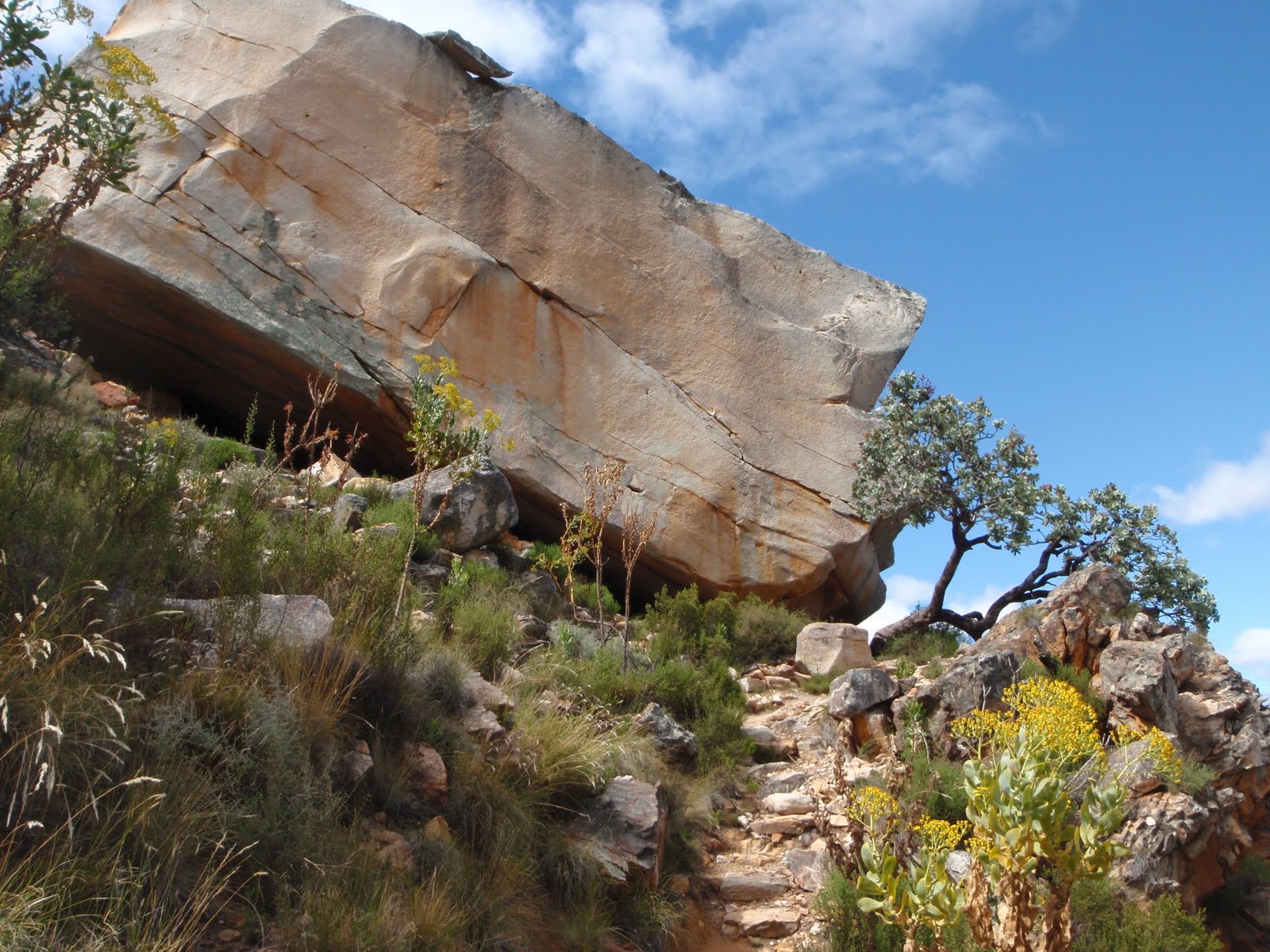
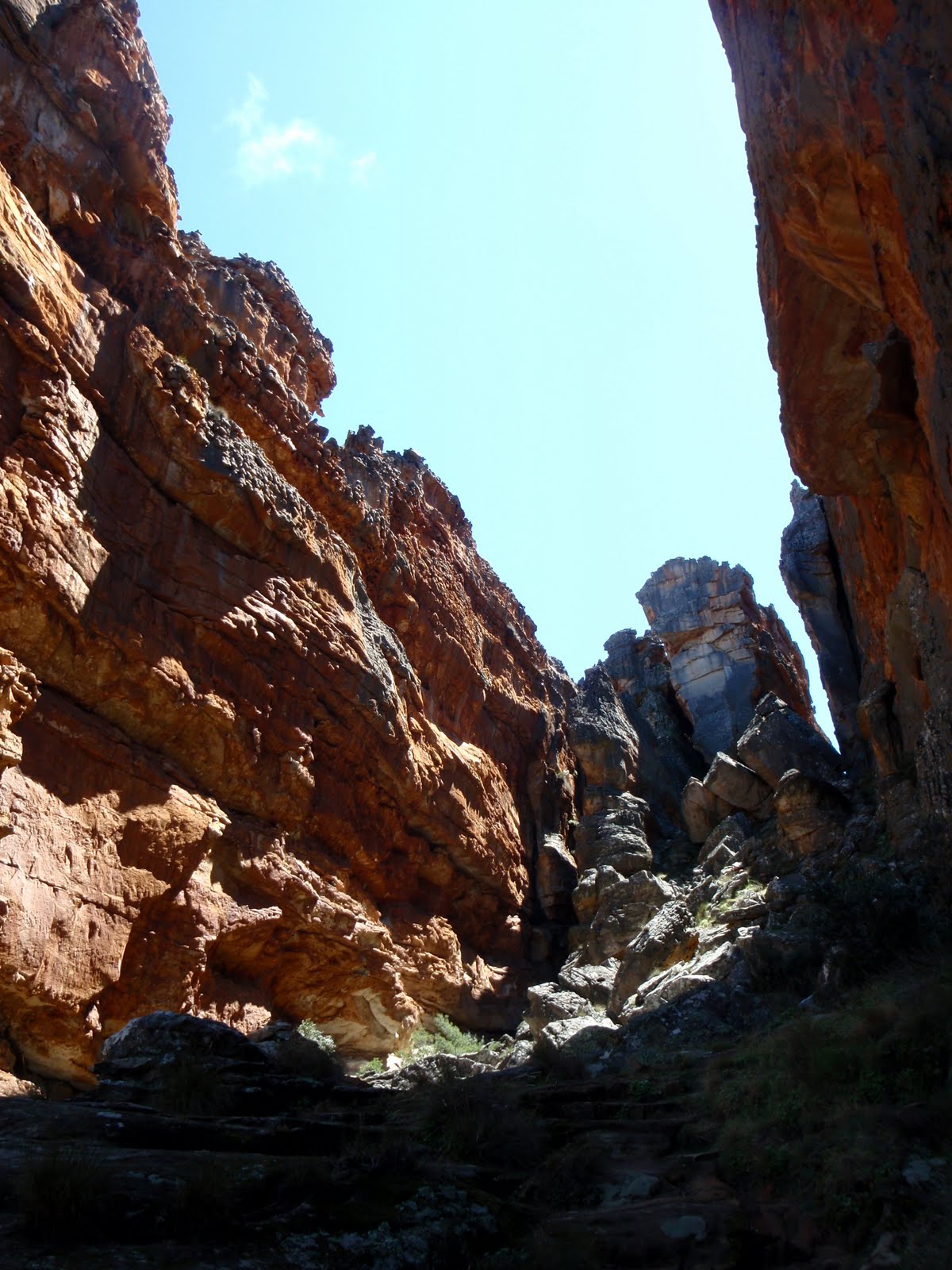
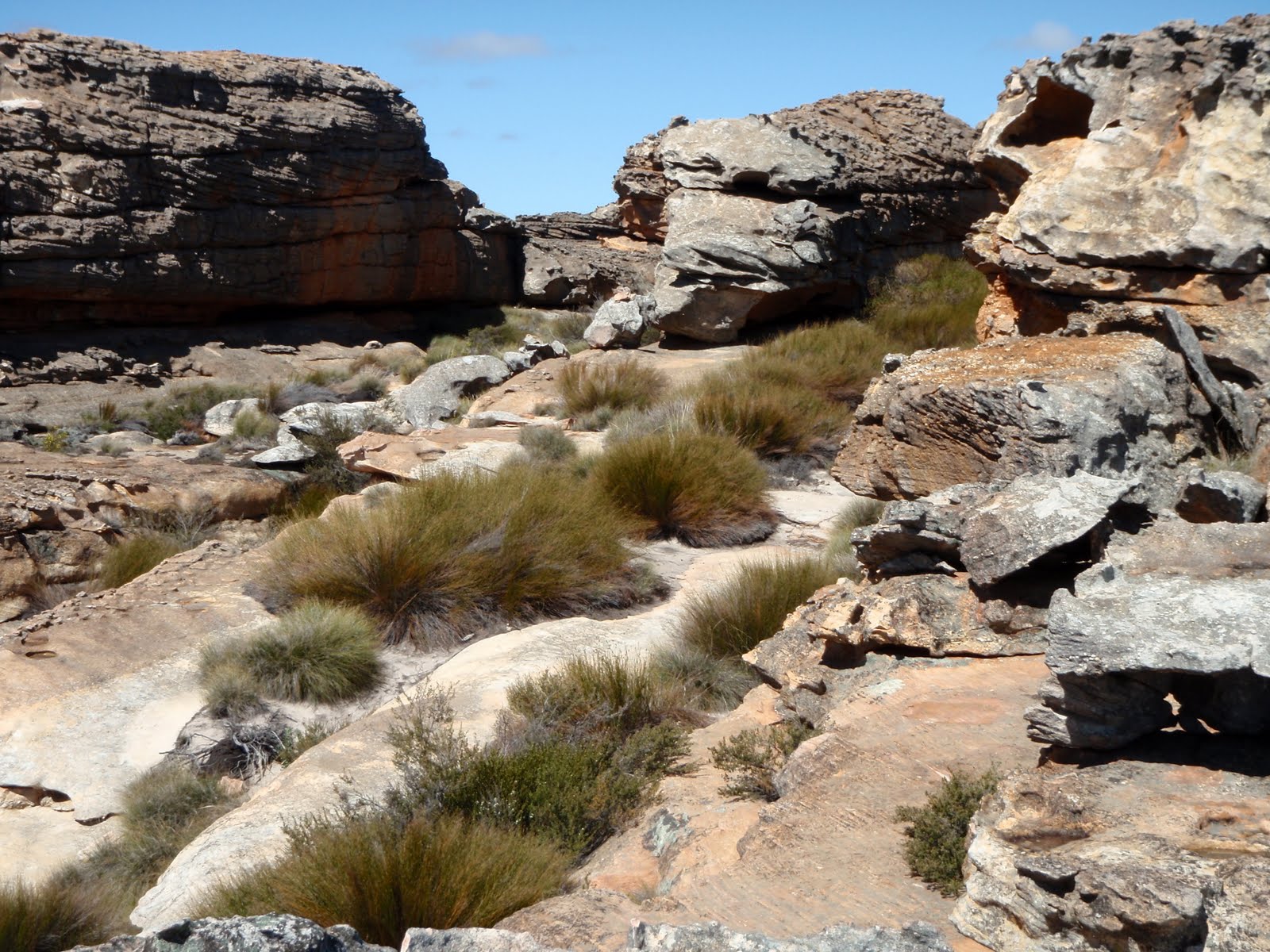
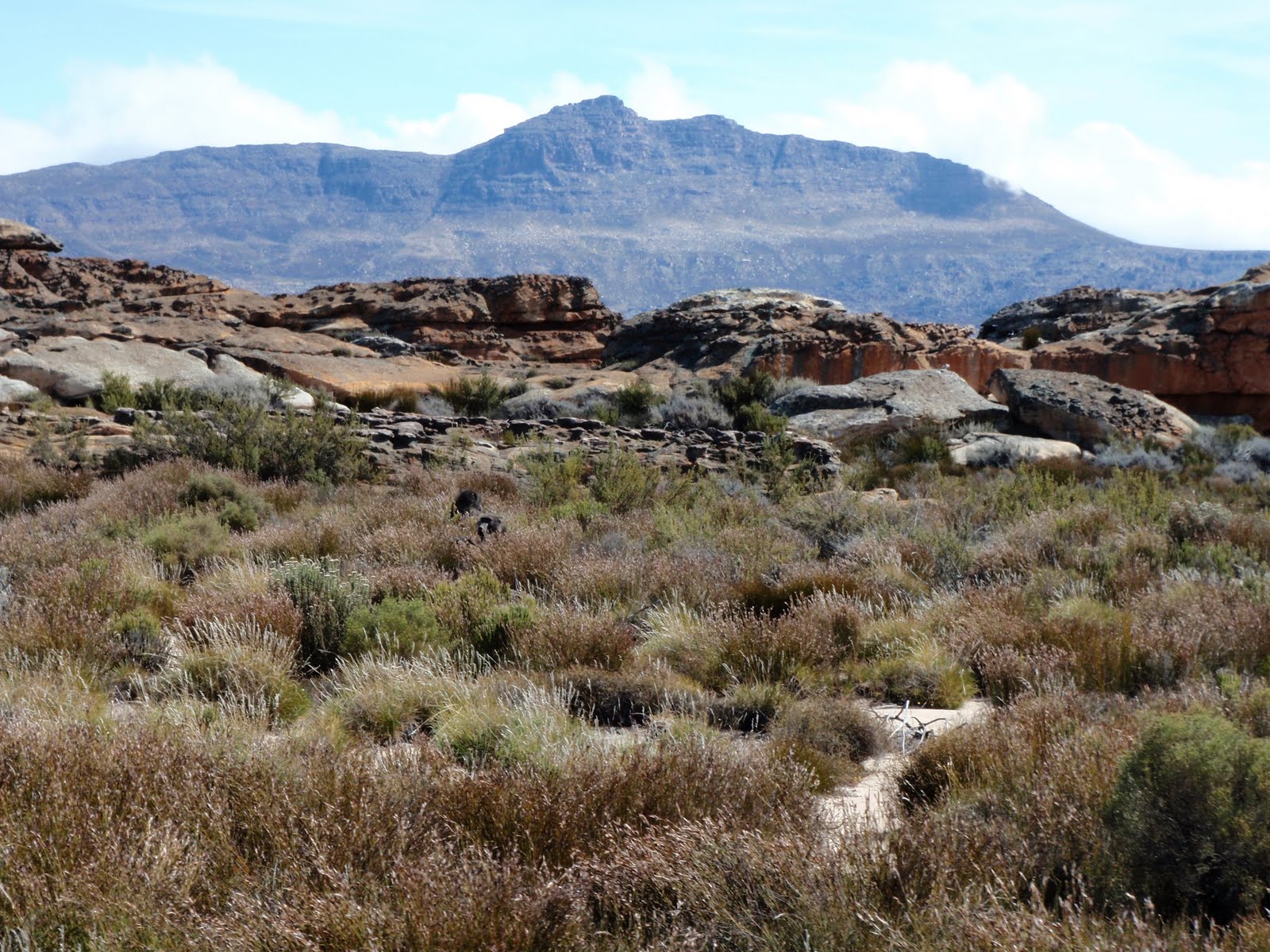
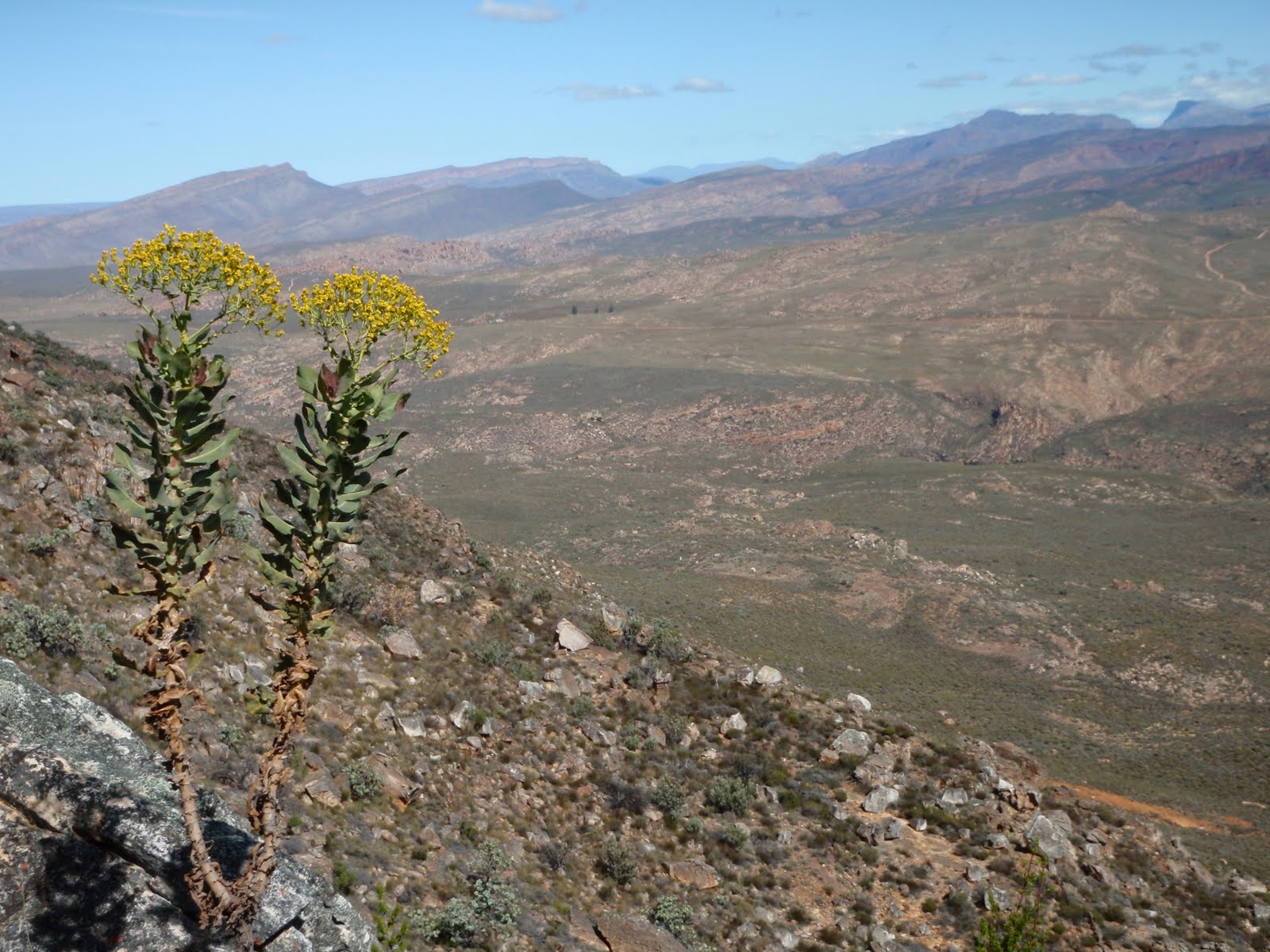
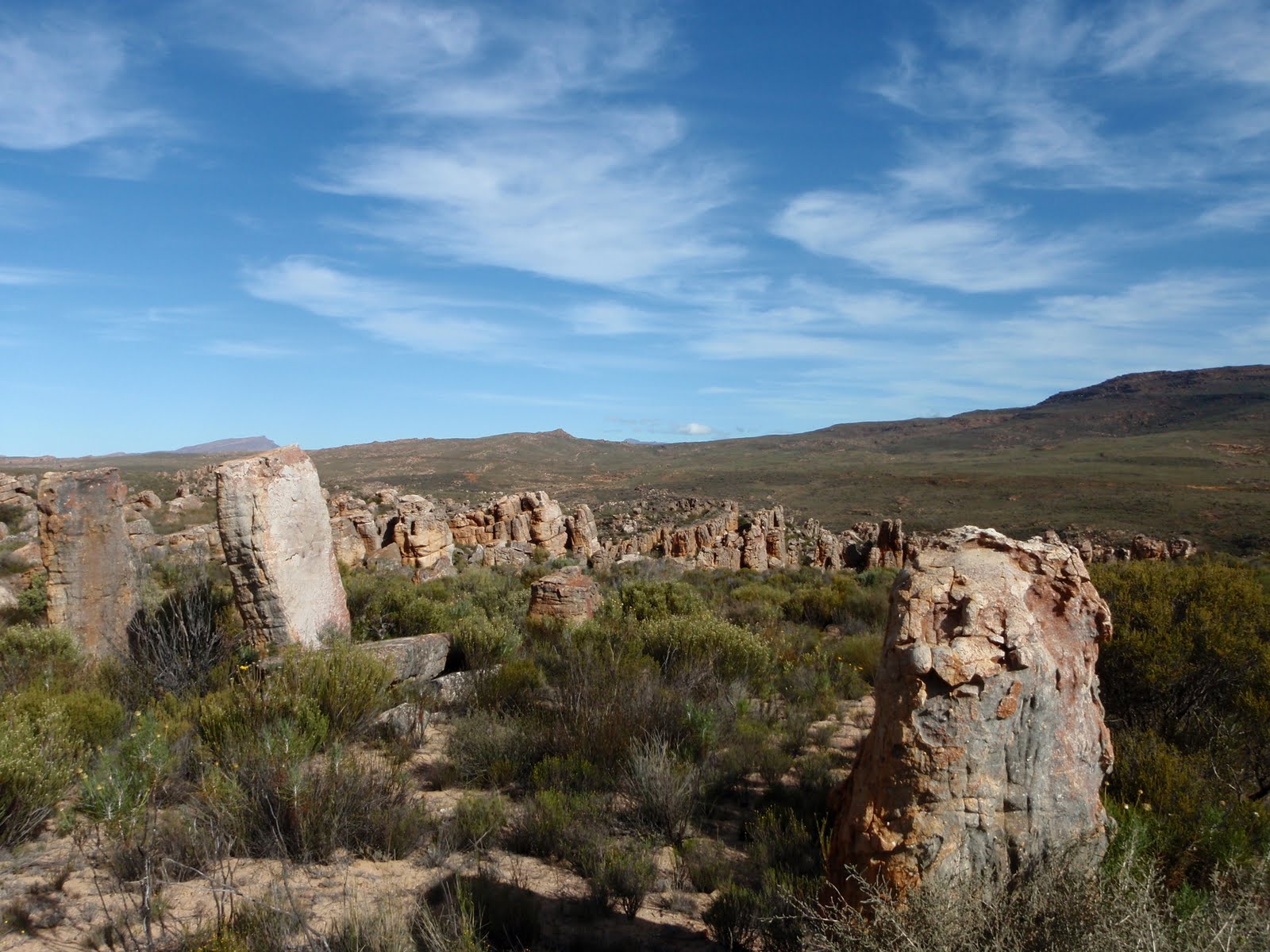
I am really looking forward to doing some hiking and spending some time outdoors on my upcoming trip. My fiance and I plan to spend several days hiking in the Cederberg Mountains, which are a couple of hours drive from Cape Town. I’ve been to the Cederberg twice before– once in January 2008 and again in September 2010– but there is much to explore there. You could spend weeks hiking in the Cederberg and not see everything. I find the Cederberg a magical, wonderful, relaxing place. I’m very much looking forward to returning there.

I’ll post some pictures of my upcoming trip to South Africa upon my return. Meanwhile, here are some pictures of my trip to the Cederberg in September 2010. Click on any of the pictures to enlarge.

Mini rock arch.

Hands.

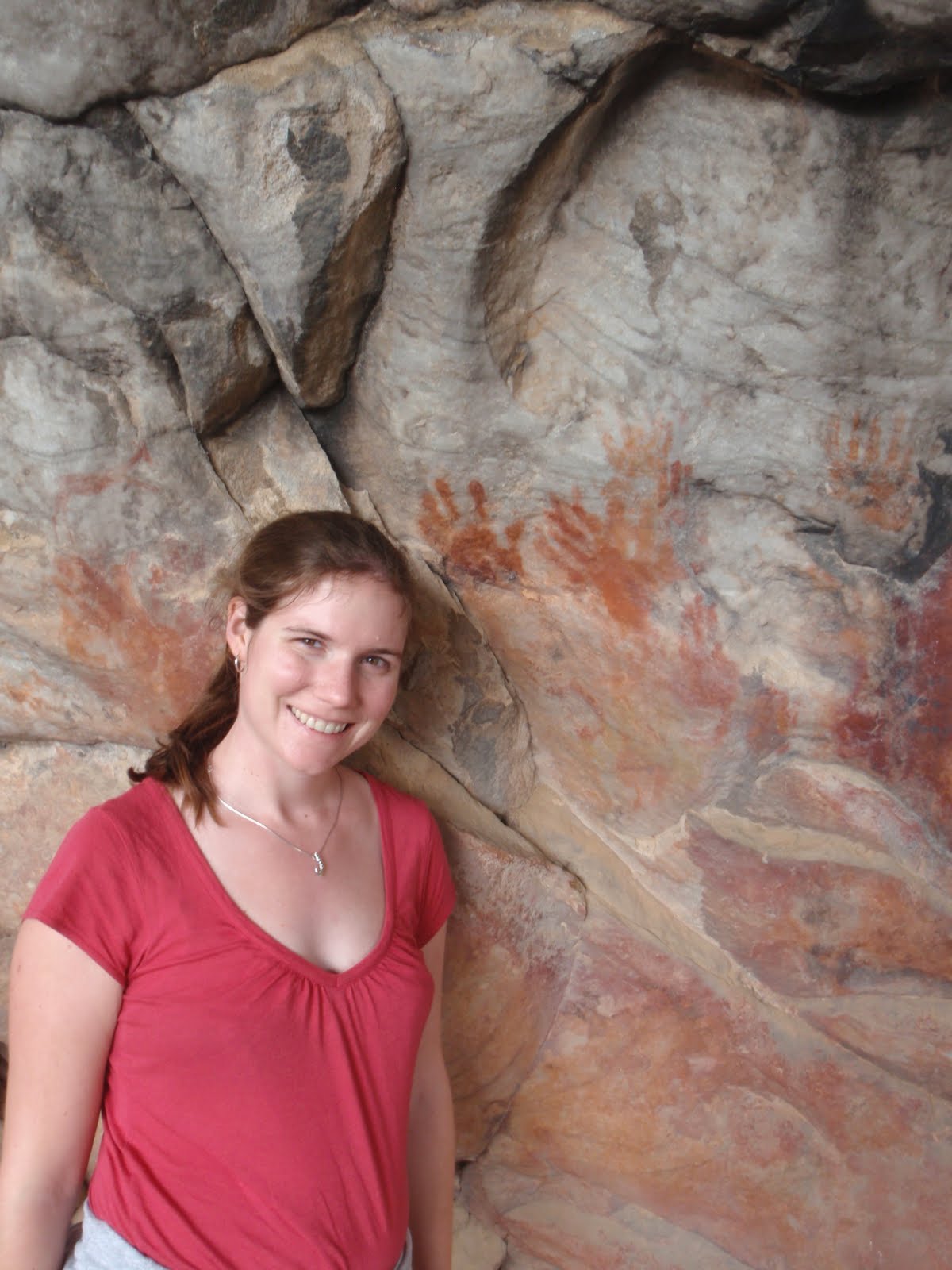
Posing with petroglyphs.

Hill above our cabin 1.

Hill above our cabin 2.

A view of the beautiful cabin we rented from the hill above.

Food (healthy and not-so-healthy) for hungry hikers.

View from the front porch of our cabin.

Stew for hungry hikers.

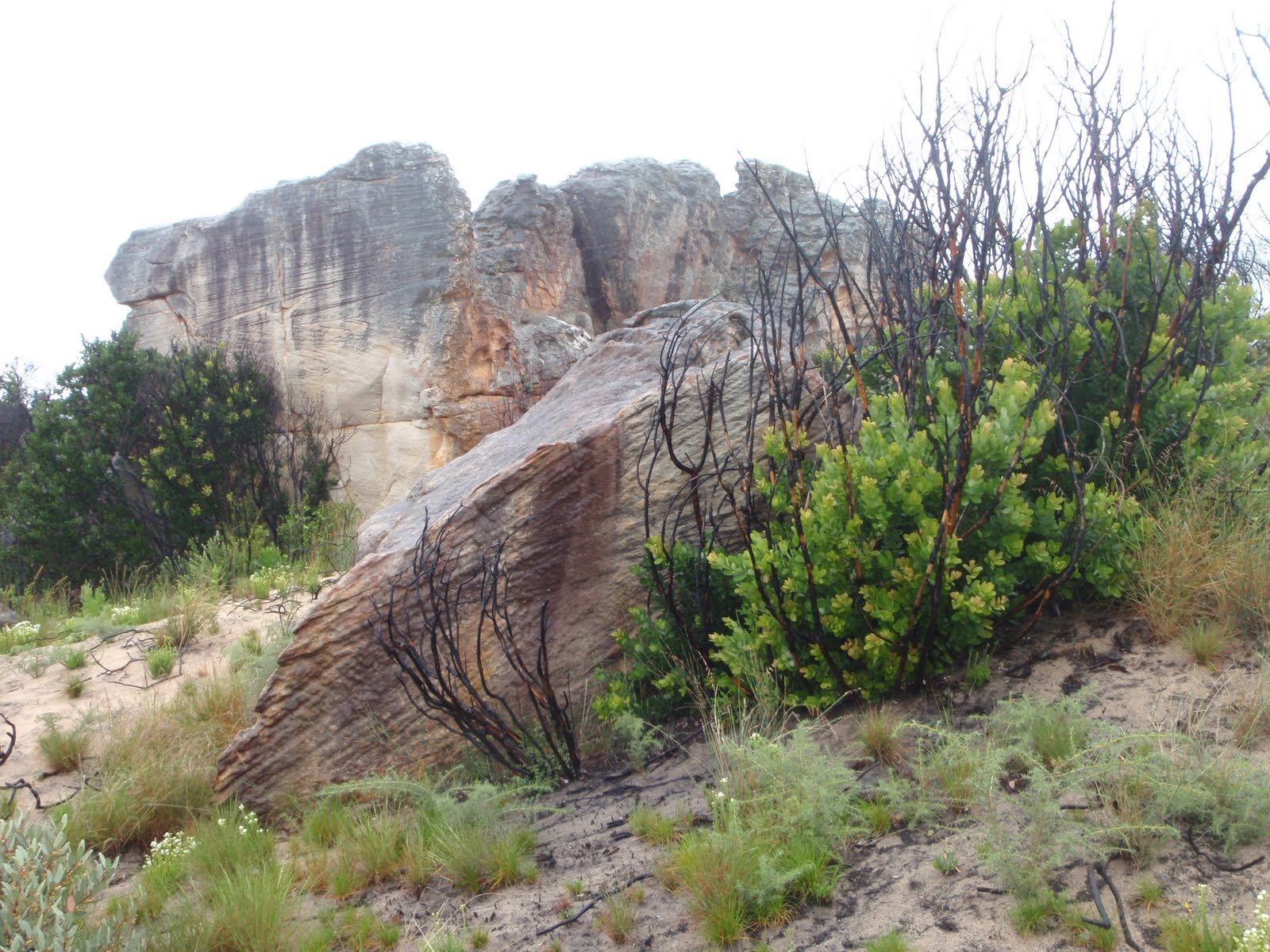
Large sandstone boulder.

Sandstone boulders.

Pretty biology.

Rock shelter from the rain.

Oasis.

The trail and flowers.

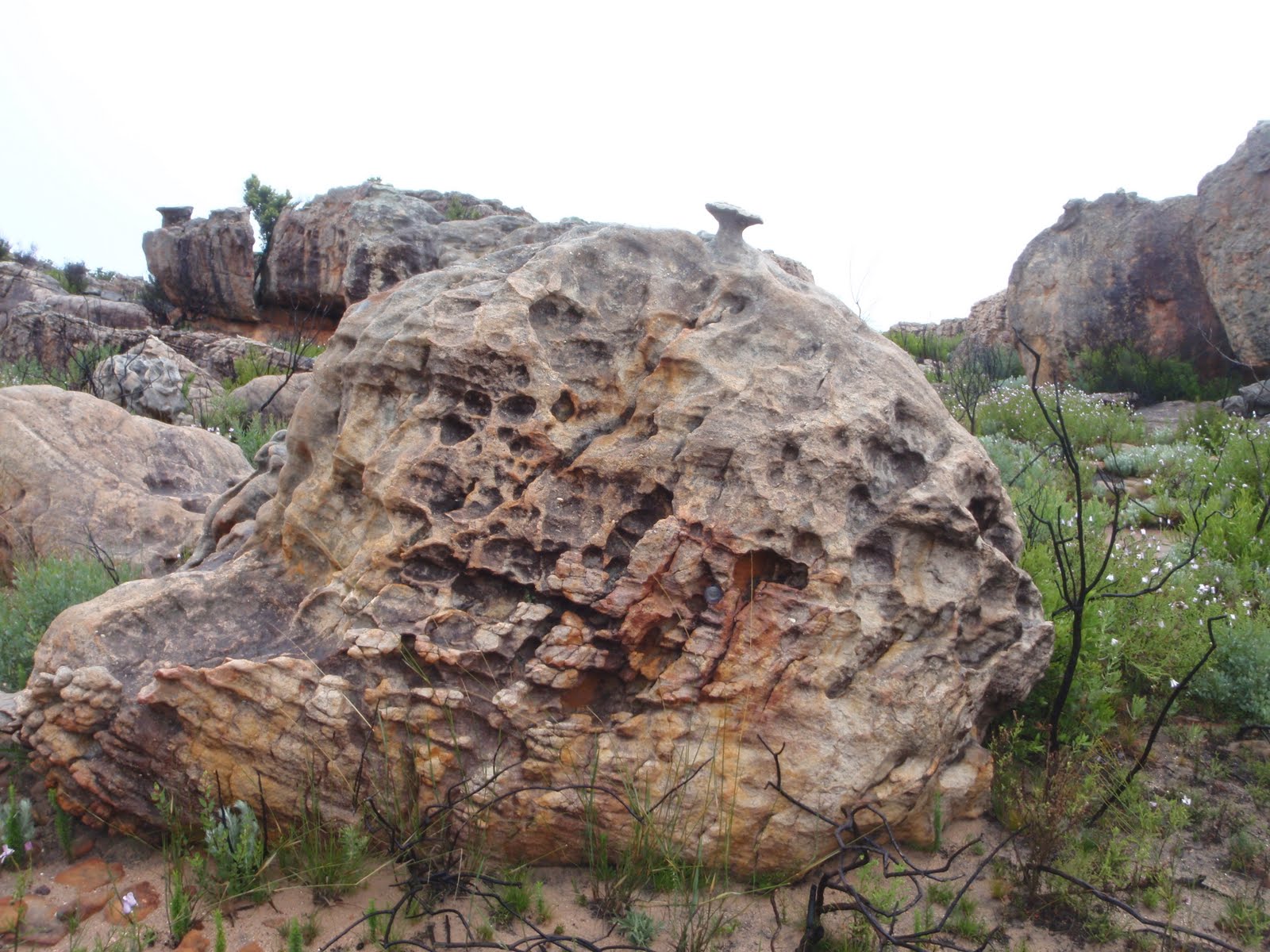
Interesting weathering on a boulder.

Weathering close-up.

The trail to Mordor?

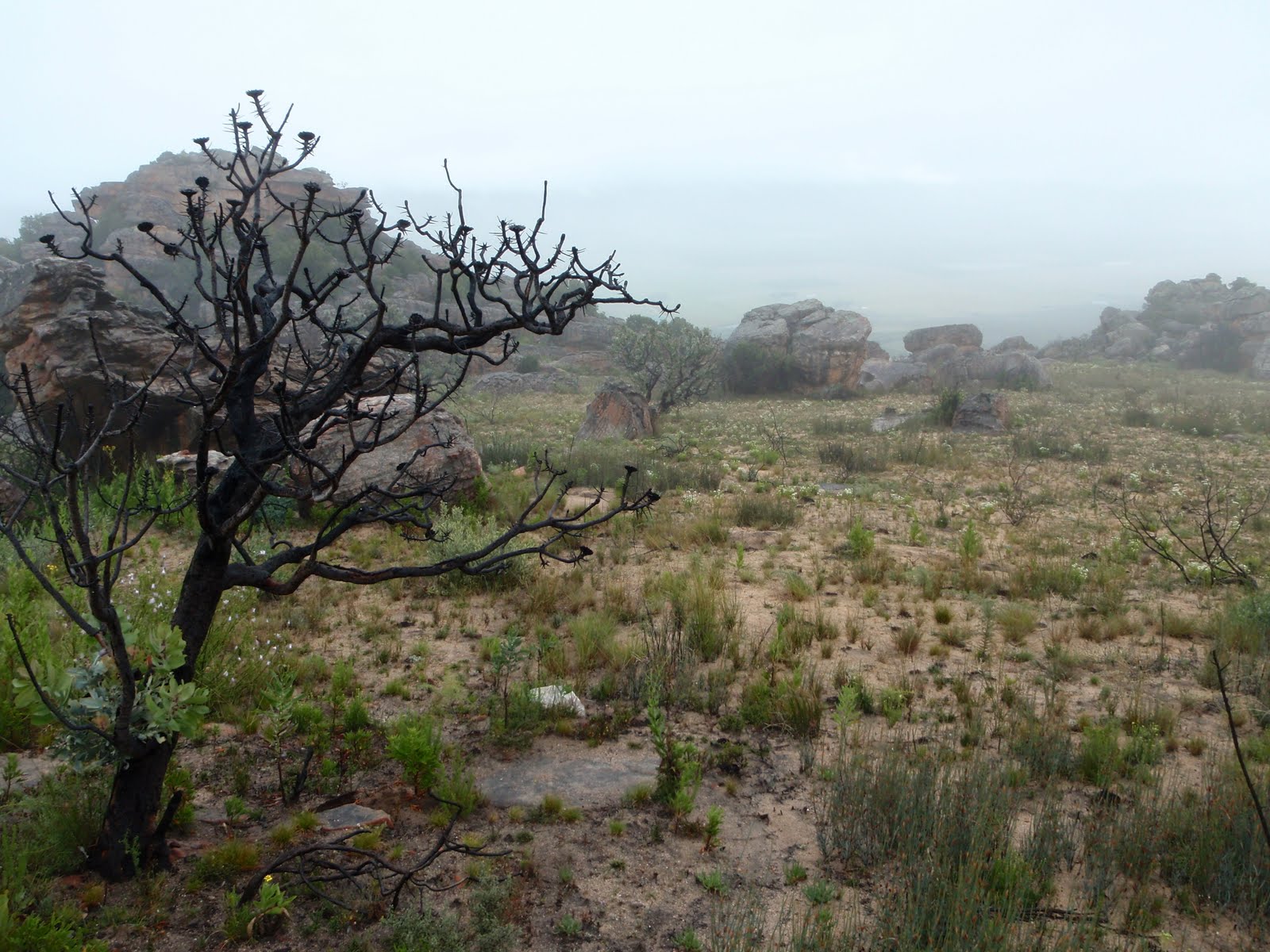
Mordor tree 1.

Mordor tree 2.

Somehow I felt this plant wanted to reach out and grab us…

Typical Mordor landscape.

Cross-bedding on boulders.

Is there where Frodo needs to bring the ring?

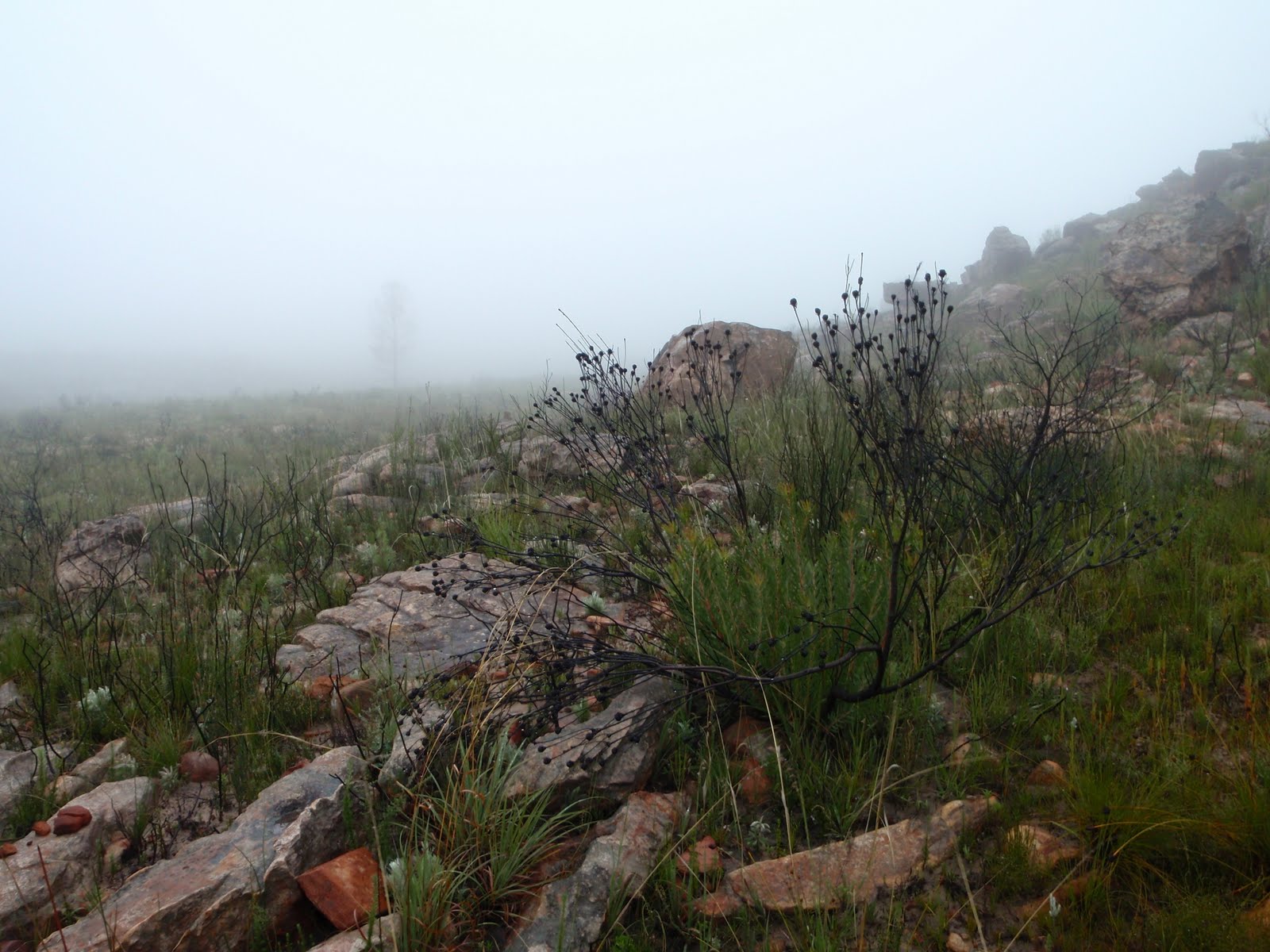
A misty trail.

Interesting biology thingy– this is called a “butt plant” or something.

A tree through the mist.

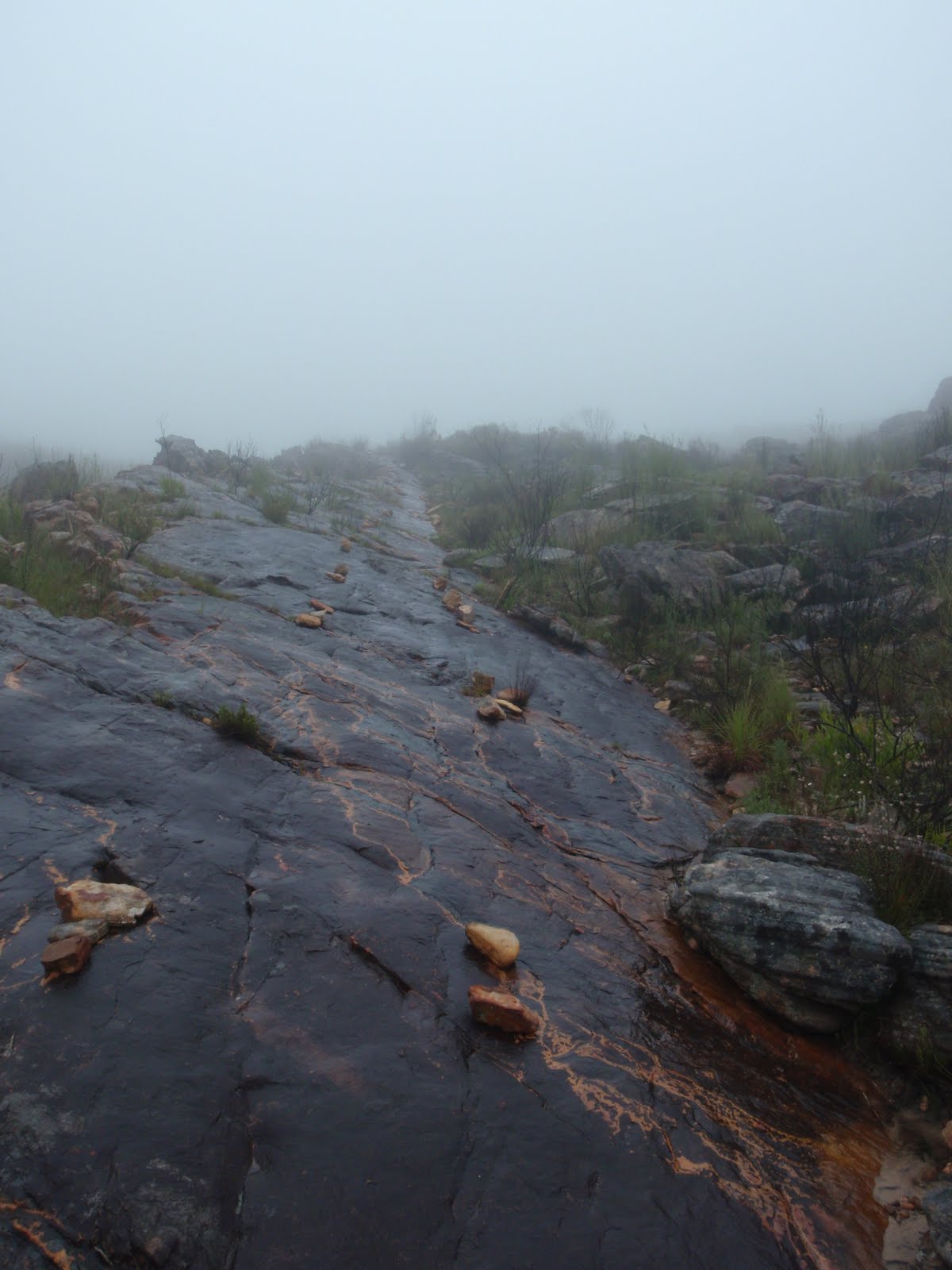
Trail marked by rocks.

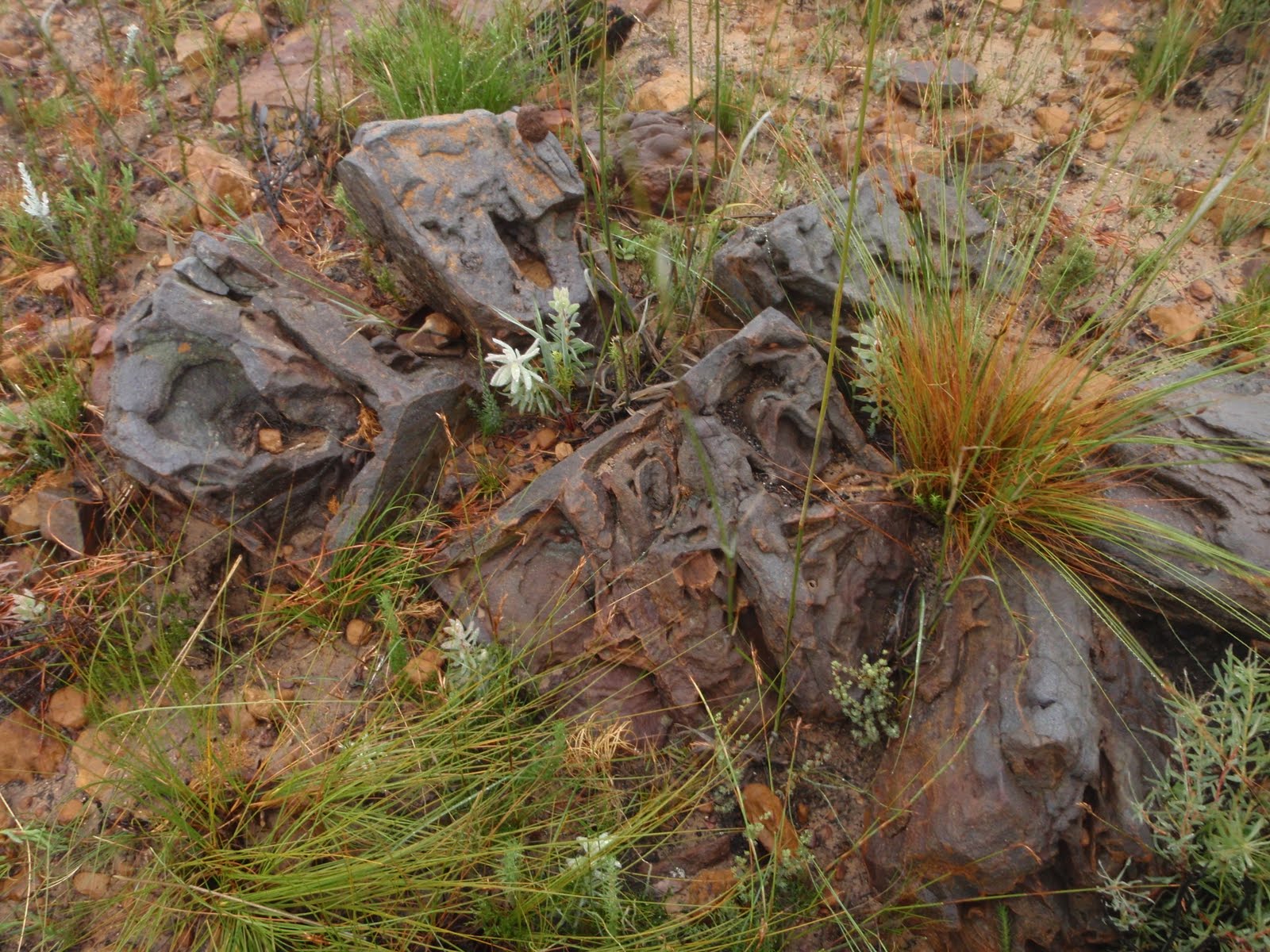
Interesting weathering 1.

Interesting weathering 2.

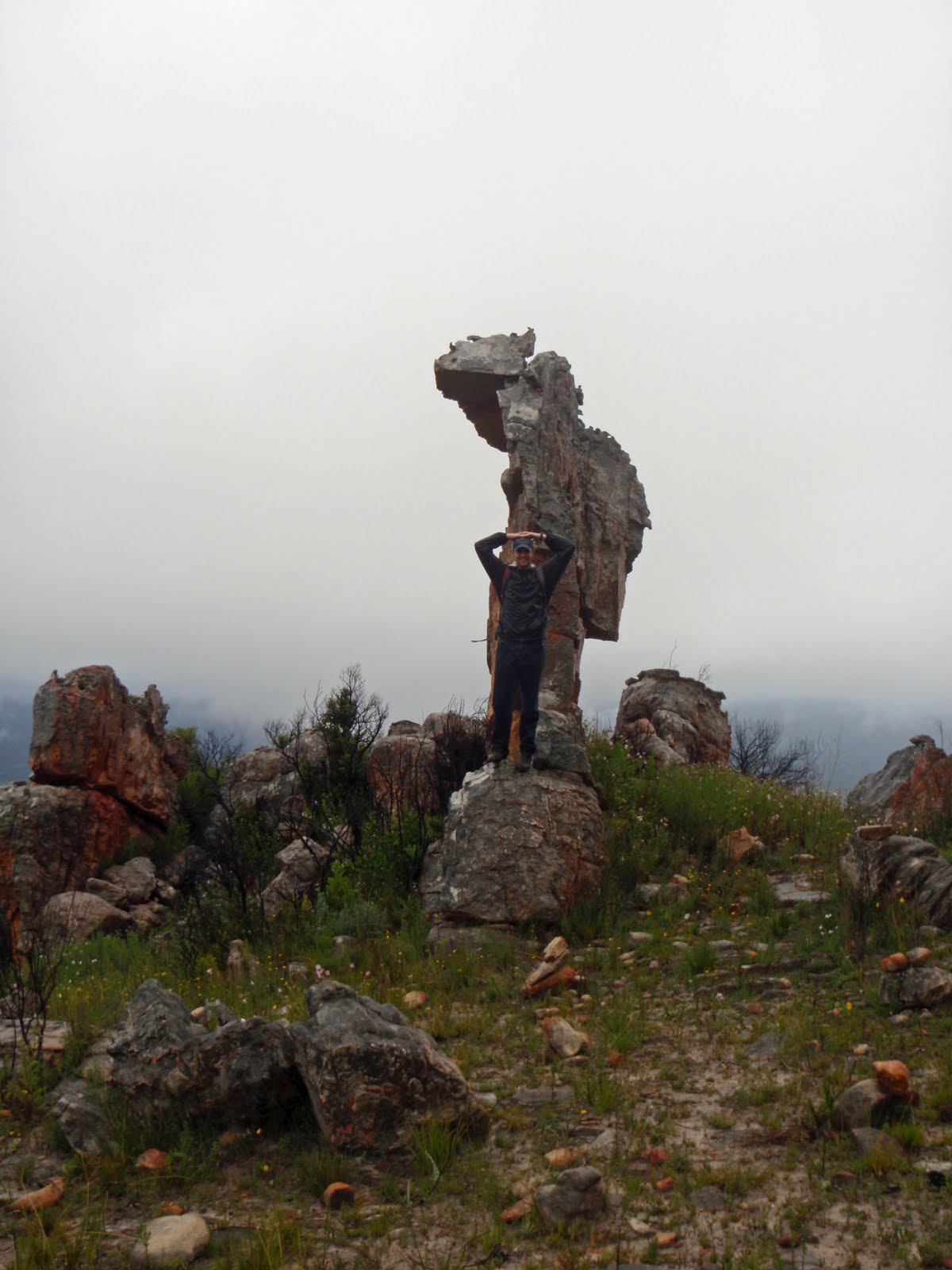
Man imitates rock.

Wet, tired, hungry, but happy hiker.

Valley through rock arch 1.

Valley view.

Valley through rock arch 2.

Sunburst 1.

Sunburst 2.

Into the great wide open.

View from partway up the mountain.

Distant wine farm 1.

Distant wine farm 2.

Interesting iron weathering.

Upwards and onwards.

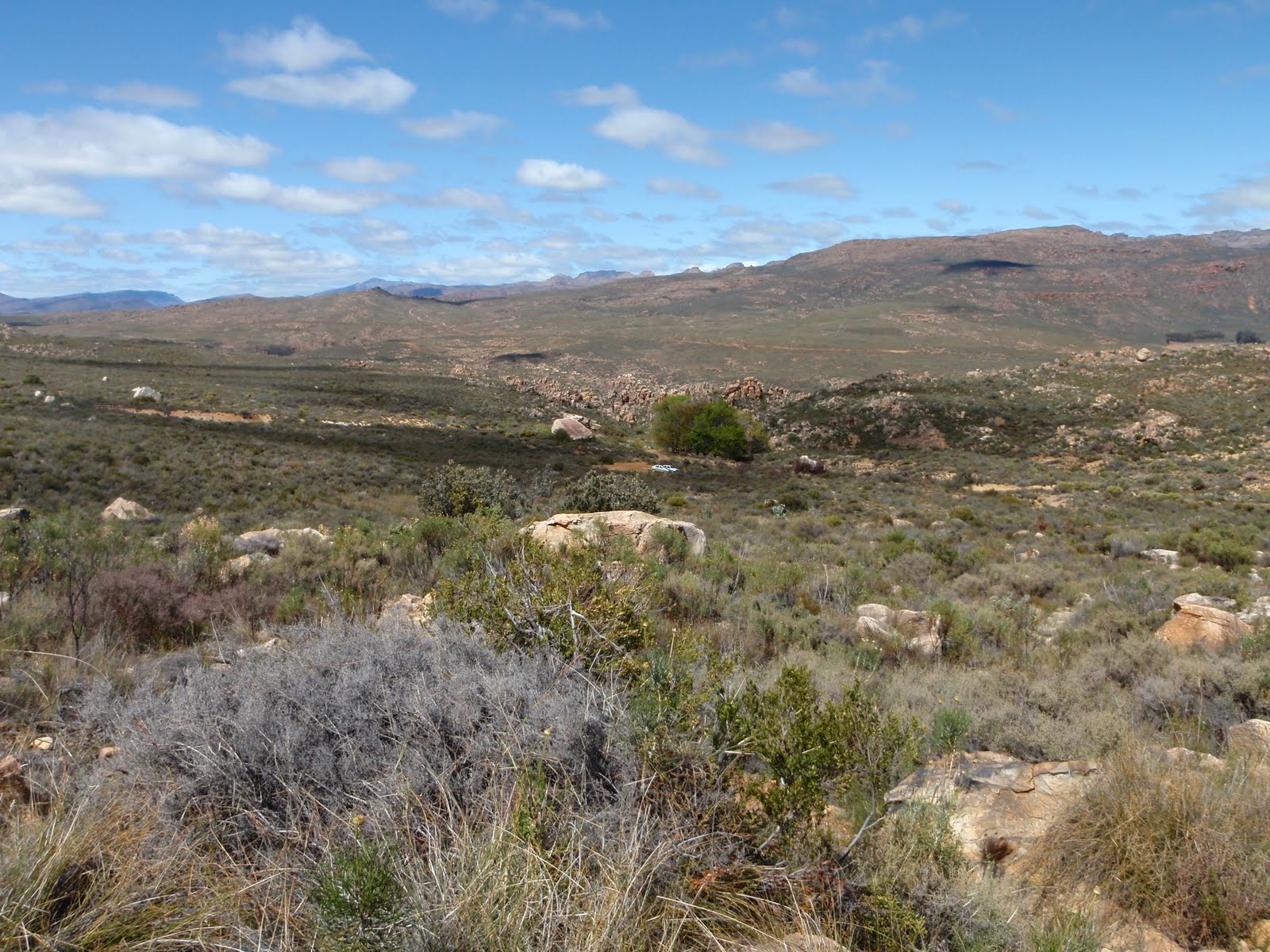
A view down the valley.

Precarious boulder 1.

Precarious boulder 2.

Entering the “Easy Crack.”

View from inside the “Easy Crack.”

Interesting erosional features.

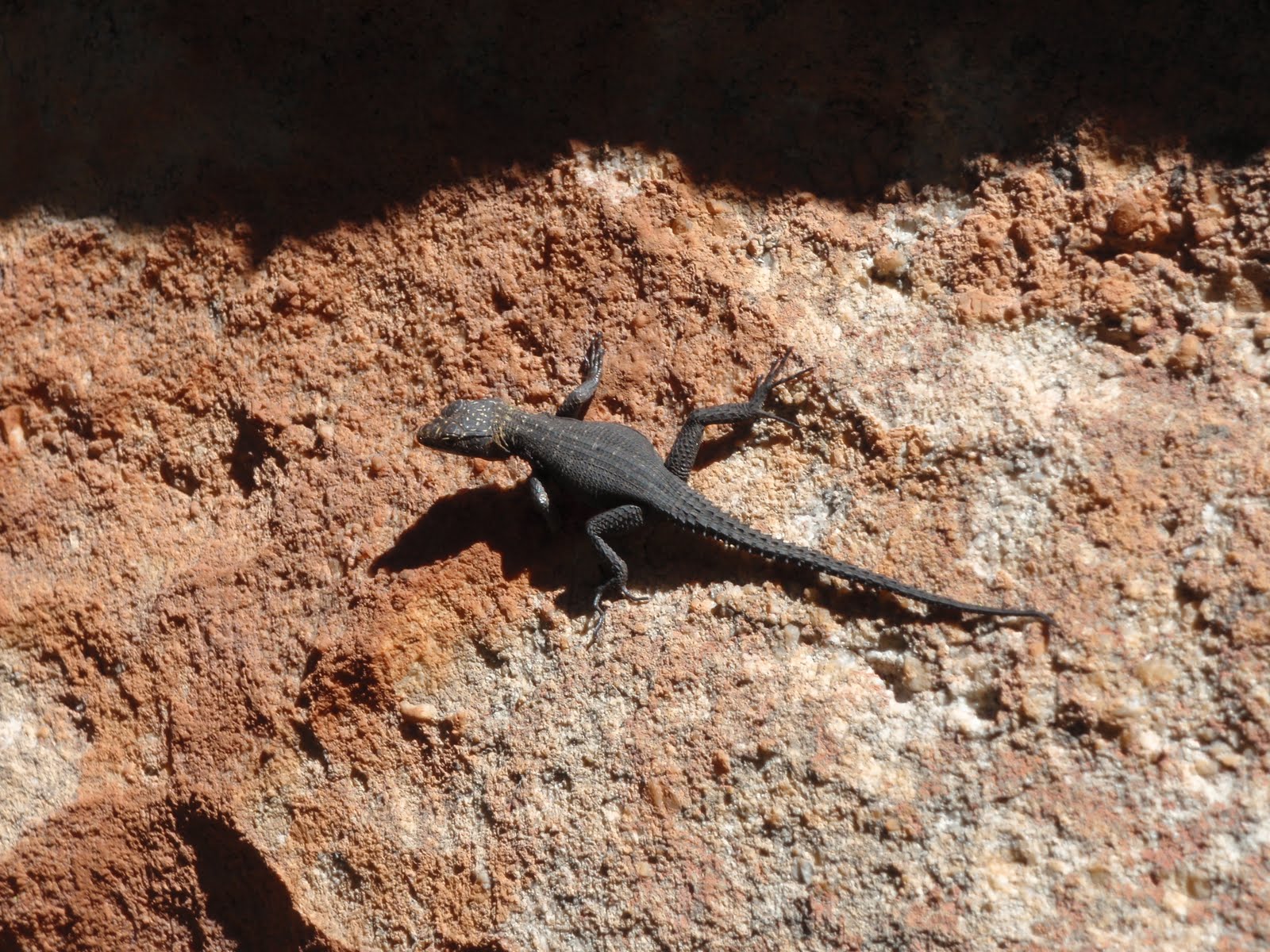
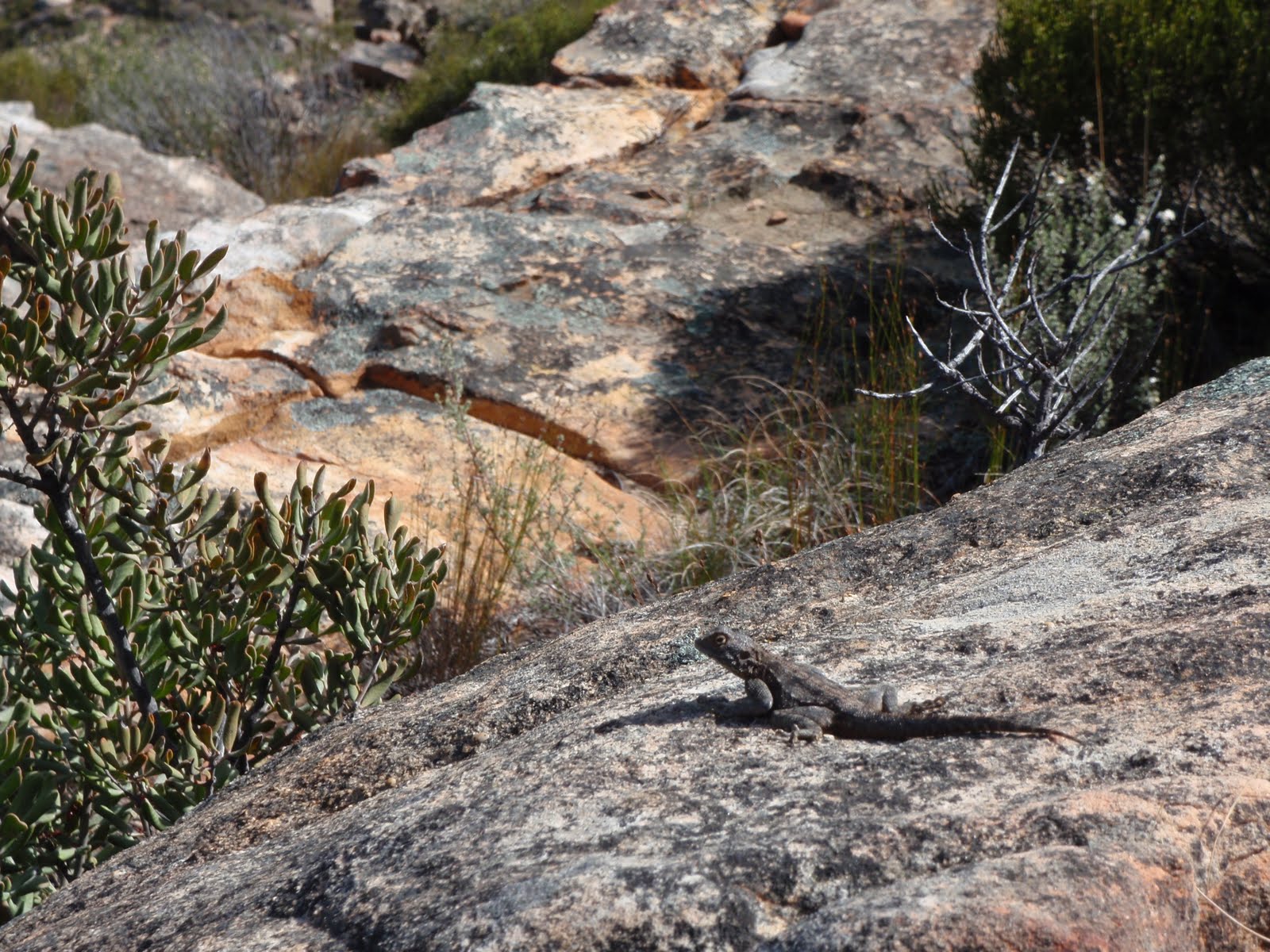
A lizard friend.

At the flat mountaintop.

Sandstone cross-bedding.

I am the Vanna White of cross-bedding.

Twisted rock.

The old man in the Cederberg Mountains.

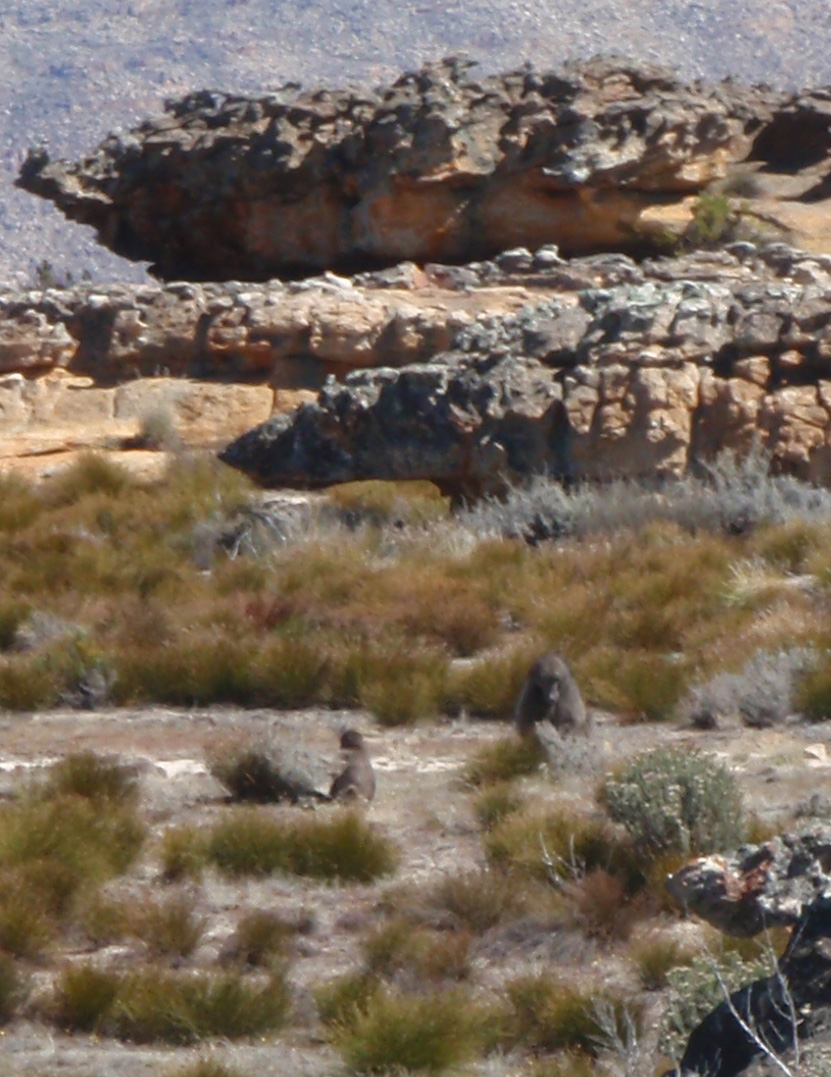
Baboons!

More baboons! Including a baby!
Overlooking the valley.

Another lizard friend.

Rock monuments 1.

Rock monuments 2.

Rock monuments 3.

Why we need to buy a 4×4, Part I.

Yet more baboons!

Why we need to buy a 4×4, Part II.

On the Recent Japan Earthquake Sequence

Note: This is a guest post by my friend, Jean-Arthur Olive. Arthur volunteered to make these figures and write this post in response to my concern about the recent magnitude 6.6 earthquake that prompted an evacuation and knocked out power at the Fukushima Daiichi nuclear power plant facility for the better part of an hour. For more information on recent events at Fukushima, see: 
Arthur’s Post: 
The March 11th (magnitude 9.0 – ‘mainshock’) earthquake followed a 2-day sequence of increased seismicity that included a strong (magnitude 7.2) earthquake. Such an event is commonly referred to as a ‘foreshock’, although its role as a trigger for the mainshock is not clear.
Click figure to view larger.
In the wake of the magnitude-9.0 earthquake, numerous aftershocks were triggered by the readjustment of stresses on the fault. In map view, the location of all these events roughly outlines the region that ruptured on March 11th.
Click figure to view larger.
Aftershocks may keep happening for years, decades, or even more. In fact, after a long time, it becomes less and less clear whether an earthquake can be considered as an aftershock of some prior large event.
In 1894, Japanese seismologist Fusakichi Omori discovered that the number of aftershocks per day following a large earthquake is inversely proportional to the time elapsed since the earthquake. This is termed Omori’s law. The Japanese sequence seems to fit this empirical prediction rather well, which means that aftershocks should become less and less frequent over the next few months. However, we have no way of predicting what the magnitudes of these aftershocks might be.

Click figure to view larger.

Note: All the data plotted in the figures is from the ANSS composite earthquake catalog.

20th Interview with My Dad, a Nuclear Engineer, about the Fukushima Daiichi Nuclear Power Plant Disaster in Japan

You can listen to all the interviews on the new vimeo channel Brandon and I created. You can also listen to most of the interviews on Brad Go’s YouTube channel.

Here’s the vimeo channel:

Brad Go’s YouTube channel: 

This evening my dad and I recorded our 20th interview on the Fukushima nuclear power plant disaster. Please see the rest of the blog (sidebar) for previous interviews. If you would like to send a message to me or my father about this or any of the previous interviews, you can do so in a comment below or by sending an email to georneysblog (at) gmail (dot) com. You can also follow me on twitter @GeoEvelyn.

We thought that we were done with the Fukushima interviews, but because of a number of requests by email and in comments, we decided to conduct an interview tonight to comment on the upgrade of Fukushima from a 5 to a 7 on the International Nuclear and Radiological Event Scale (INES).  My dad highly recommends checking out this IAEA slideshow presentation to better understand this scale and the reason for the upgrade:

My dad also recommends checking out this Associated Press article comparing and contrasting the Fukushima and Chernobyl nuclear disasters:

As a geologist, I also wanted to comment on the recent magnitude 6.6 earthquake that prompted an evacuation and cut off power at Fukushima for the better part of an hour. Any event– such as an earthquake– that could lead to an extended loss of power is potentially quite serious for the Fukushima Daiichi reactors and spent fuel pools at Units 1-4, which remain “static but not stable.”  Fortunately, the recent earthquake only caused a temporary evacuation and loss of power. There is the potential for more aftershocks in coming days, and an unfortunately located aftershock could potentially lead to another power loss.

However, I am a geochemist, not a geophysicist or an earthquake expert, so I am not qualified to speak in too much detail about earthquakes and aftershocks. Fortunately, two of my geophysicist friends came through with some more detailed information and analysis than I can provide. First, I want to direct you to a blog post about the recent Fukushima area earthquakes by geoblogger Chris Rowan.  Second, I want to direct you to a guest post (following this one) on my blog that has some figures and text written by Jean-Arthur Olive, a good friend of mine and a fellow PhD student in the MIT/Woods Hole Oceanographic Institution Joint Program. Thanks so much, Chris and Arthur! If any other geophysicists would like to add anything else, just let me know. I can post more information on my blog and/or post a link to another website. Here are links to the two posts I mentioned above:

In today’s interview:
1. My dad gives an update about Fukushima

2. My dad discusses the upgrade on the INES scale and comments again on the evacuation zone.

Hope to have an audio link soon. Here is the interview on vimeo:

Please see the announcement page for more information about these interviews:

If you have time and interest, please transcribe this interview or volunteer to transcribe Interviews 17, 18, and 19. At this time, we have no plans for future interviews.

A Quick Note: And We Thought We Were Done with the Interviews…

My dad and I wrapped up our regular Fukushima interviews last Saturday, but we did say that if something important happened we would consider commenting on it.

Well, the Fukushima nuclear disaster was just provisionally upgraded from a 5 (Three Mile Island level) to a 7 (Chernobyl level) by Japanese authorities. My dad is not surprised by this upgrade since he has long felt Fukushima to be higher than a level 5. Several people have asked us (begged, even) if we would consider commenting on the upgrade, so we’ve agreed to do another interview tonight. If you have any questions related to recent developments at Fukushima that you would like me to ask my father, we may have time to answer one or two questions. Post them in a comment below or send them to georneysblog (at) gmail (dot) com no later that 5 pm EDT.
Geology Pun Contest: The Winner

The prize: Gillian Turner’s book “North Pole South Pole.”

As I mentioned yesterday, this blog is now returning to its usual geological theme. I also mentioned yesterday that in the near future I will blog about the Oklo Natural Nuclear Reactor, which is a topic that I hope will appeal to both those interested in geology and those interested in nuclear power. I want a few days to read some papers and write up a proper post on the topic, and in the meantime I will return some of my usual geology posts, such as the Geology Word of the Week. I managed to take the Geology Word of the Week most of the way through the alphabet from A is for Alluvium to S is for Speleothem before halting all geology posts so that my dad and I could do our Fukushima interviews. This week I will be writing about a geology word starting with the letter T, so stay tuned!

Today I want to wrap-up a bit of unfinished blog business. Just before the Japan earthquake and tsunami, I announced a geology pun contest with the prize being a copy of Gillian Turner’s book “North Pole South Pole: The Epic Quest to Solve the Mystery of Earth’s Magnetism.” I unfortunately haven’t had time to read this book, but it has already been reviewed favorably by other geobloggers, such as Callan Bentley over at Mountain Beltway and Wayne Ranney over at Earthly Musings. I hope to read the book myself on an upcoming trip to South Africa.

Because I did not want to break up the Fukushima interviews, I never announced the winner of the geology pun contest, but I am now:

Best Geology Pun (made me laugh the most):

“I never got into geology. Seemed too crowded as so many geologists are out standing in the field.”
-sisyphusrocks

Congratulations to sisyphusrocks! You have won the book. Please email your address to georneysblog (at) gmail (dot) com, and I’ll send the book on its way.

For amusement, I’ve compiled the rest of the geology puns after the jump. Thanks to everyone who entered, and feel free to post more geology puns in the comments. There can never be too many geology puns :-).

More Geology Pun Entries: 

“You want geology puns? Give me a minute. I’ll dig some up.”
sisyphusrocks

“I met a stoner who said he once lost his apatite. I think that’s a lode of schist.”
-William

“IANAG so I really don’t know a lode of geology puns.”
-Mike”When I was in college, our geo lab had a large chunk of schist sitting around. I put a sign under it (only visible if you took it and moved it) that said, ‘Hey, it’s not gneiss to take a schist in the lab!’ ”
-mikerattlesnake

“I know some things about rocks but I vishnu more schist for sure.”
-James Fox

“Geology ROCKS!”
-vbalbert

“Or the inevitable… geologists make my bed rock.”
-James Fox

“It was his fault the conversation eroded. He assumed I was saying I had too much on my plate, but that wasn’t what I sediment.”
-Melanie

“If you want to have impact, donate for the crater good.”
-Melanie

“We voted on which cheese to serve at the party. Debris won by a landslide.”
-Melanie

“Orogeny recapitulates plate tectonics.
(Actually, I think this is backwards, but meh! I’ve already won Tim Minchin tix this month…)”
-Buzz Parsec”The Earth’s crust was bland until she got a basalt shaker.”
-Melanie

“I’ve started calling myself an A-geologist, because I don’t believe in the divinity of Geode.”
-DiscordianStooge

“hehehe…. these puns are all clastics!”

-oldearthaccretionist
“I hope limericks count because I put pen to paper and think Mary had a little lamb…
Mary found rhombohedral crystals of calcite,
Whose color was white as snow,
And everywhere that Mary went the exposed calcite was sure to erode.”
-greenstone123″An educational and I hope, witty limerick…

Twinkle twinkle little Larimar,
How I wonder what you are?
From the mineral class pectolite,
Luster silky, what a sight!
Twinkle twinkle little Larimar,
What a pretty gem you are!”
-greenstone123

“Hmmm… a pun on demand? Let me think on that. In the meantime, here’s one from two years ago:
http://outsidetheinterzone.blogspot.com/2009/03/non-geology-people-will-not-get-this.html”
-Lockwood

“Geologist couples are always gneiss people, but almost never have children because they have plutonic relationships.”
-Garry Hayes

“Geologists know that subduction leads to orogeny and thrusting, making the bedrock.”
-Garry Hayes

“You know how pinstripe laminated sandstones are popular for building stones? And they put them in big wire cages for shipping? That’s an example of ‘Stoss Cratification of Cross-Stratification’ ”
-MK

“Let’s go behind that rock, I am a little boulder there.”
-Jazinator

“Subduction leads to orogeny”
-Jazinator

“Every time I try to be gneiss I get the schist beat out of me…”
-brainthing

“Not quite a pun, but the way to remember which way the _cline bends: A syn makes you grin!”
-Reynardo

“Geology – The only profession where it is acceptable to measure a dyke’s cleavage.”
-oldearthaccretionist

“So I said to the geologist, ‘Wow, taking core samples. That sounds pretty interesting,’ and he says ‘actually, it’s really just boring.’ ”
-drbuzz0

“A stone mason with a powerful phobia of indoor lighting was accused of misrepresenting the ‘black granite’ he used in a counter top. He was charged with basalt, but when his condition came to light, the charges were dismissed due to lamprophyre.”
-Lockwood

“Many years ago a geology student friend and I planned to write a geological murder mystery titled ‘Murder by default.’ We still have the notes, so who knows, some day….”
-kathy

“Cave formations are like ants in the pants: the mites to up and the tights come down.”
-MTM

19th (and Final) Interview with My Dad, a Nuclear Engineer, about the Fukushima Daiichi Nuclear Power Plant Disaster in Japan

You can listen to all the interviews on the new vimeo channel Brandon and I created. You can also listen to most of the interviews on Brad Go’s YouTube channel.

Here’s the vimeo channel:

Brad Go’s YouTube channel: 

This evening my dad and I recorded our 19th interview on the Fukushima nuclear power plant disaster. Please see the rest of the blog (sidebar) for previous interviews. This is the final interview in our series. If you would like to send a message to me or my father about this or any of the previous interviews, you can do so in a comment below or by sending an email to georneysblog@gmail.com. You can also follow me on twitter @GeoEvelyn. My dad in particular has put an enormous amount of work into research for these interviews. If you would like to send him a thank-you message, I promise to pass it along to him.

In today’s interview:
1. My dad gives a quick update about Fukushima

2. My dad discusses 5 types of Generation III and Generation III+ nuclear power plants (click on links below for more information on each plant):

(a.) EPR AREVA

(b.) APR1400

(c.) AP1000

(d.) ESBWR

(e.) Thorium Reactors

Several links, thanks to a listener also named Mark:

Summary of multiple videos on Thorium reactor, (16 minutes):
One of the better long videos on Thorium reactor, (55 minutes):
A written article on the Thorium fuel cycle:
A written article on the molten salt reactor that the Thorium fuel uses:

(3.) My dad talks about the importance of evaluating spent fuel pool safety & long-term storage of spent fuel rods

Hope to have an audio link soon. Here is the interview on vimeo:

Please see the announcement page for more information about these interviews:

If you have time and interest, please transcribe this interview or volunteer to transcribe Interviews 17 & 18 (16 is in progress). This is our last interview.

Some Final Notes:
As I announced before, I will be compiling all of the interview transcripts into a book that I will be self-publishing on Lulu. My goal is to have this book available by the end of April. I will try to keep the cost of the book fairly low, and I will donate 25% of the book profits to charities (such as the Red Cross, see the sidebar for a list of charities) benefiting Japan earthquake and tsunami disaster relief. The remaining profits I will use to recover some the expenses I had to put forth (paying for several different recording softwares before Skype came forward and helped, a new headset, and video hosting costs on vimeo) over the past month. Anything leftover I will share with my dad, who has put forth a tremendous amount of effort for these interviews. If you would like to support us (and Japan disaster relief), you can buy the book from Lulu when it comes out and/or you can use the paypal button (see blog sidebar) to make a small donation.  If you prefer that 100% of your money goes to Japan earthquake and tsunami disaster relief, please consider a donation to one of the charities listed on my blog sidebar or any of a number of other relief organizations.

The interview audios and transcripts will remain freely available here always. I also hope to put together the audios in podcast format in the near future– if you have tips on how to make this happen, please post a comment or send an email.

Finally, I would like to say a big THANK YOU you to all of the people who volunteered their time and expertise to help me with audio quality, hosting, and transcriptions. My helpers are too numerous for me to list here, but I will compile a long thank you list (first names) to put in the Lulu book. I have already mailed many of you pretty rocks as thank-you presents. There are still a few of you I need to mail rocks to– I will try to do so in the next couple of weeks. Note that I am a geologist and so I consider *most* rocks pretty, but hopefully some of you appreciate the rocks I have sent you.

I would also like to say a big THANK YOU to all of the thousands upon thousands of people who listened to these interviews, read these interviews, and sent my father and I comments and emails. We hope that these interviews have been helpful for you, and we are happy that we were able to continue them as long as we did– a full month.

In the near future this blog will return to being a geology blog. I hope that a few of you will stay to learn about geology and read about some of my geological travels and adventures. However, I will not be offended at all if many of you decide to no longer follow this blog, which will no longer focus on nuclear power.

As a transition back to geology, in a few days I will blog a little about the Oklo Natural Nuclear Reactor— a nuclear reactor that occurred naturally due to some unusual conditions a long, long time ago in what is today Gabon, Africa. There is no danger of natural nuclear reactors developing on Earth today, but this is an interesting ancient geological phenomenon that can teach a little about nuclear reactors, including possible lessons for long-term storage and migration of nuclear fission products.