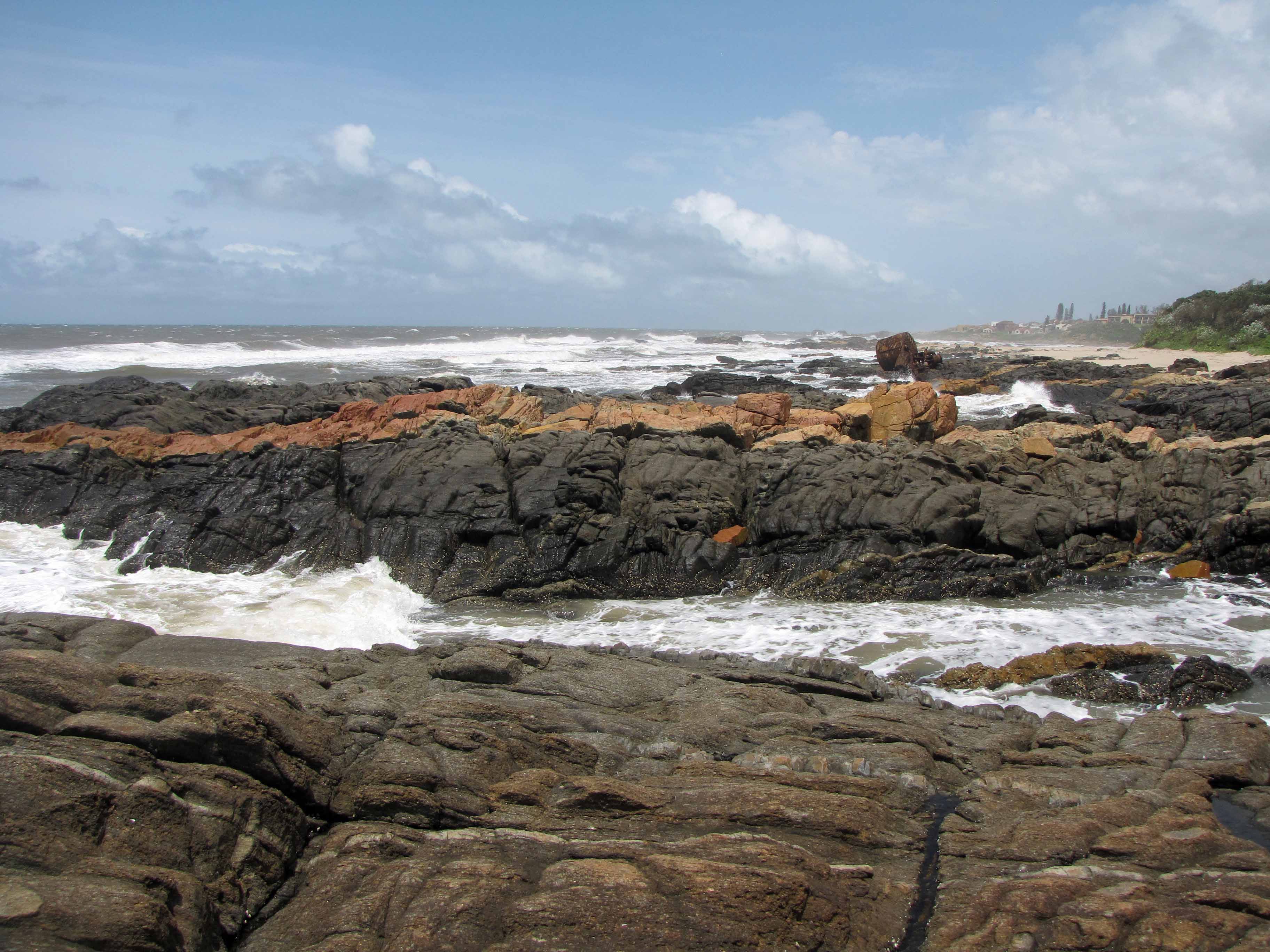
A dyke and a shipwreck along the beach in Munster, South Africa.
This week’s geology picture is a light-colored dyke amongst some darker rocks on the beach in the little town of Munster, South Africa. You can also see some metal in the background– that’s all that remains of the Nightingale, a fishing trawler which ran aground on the beach in 1933. Most of the metal is the ship’s boiler.
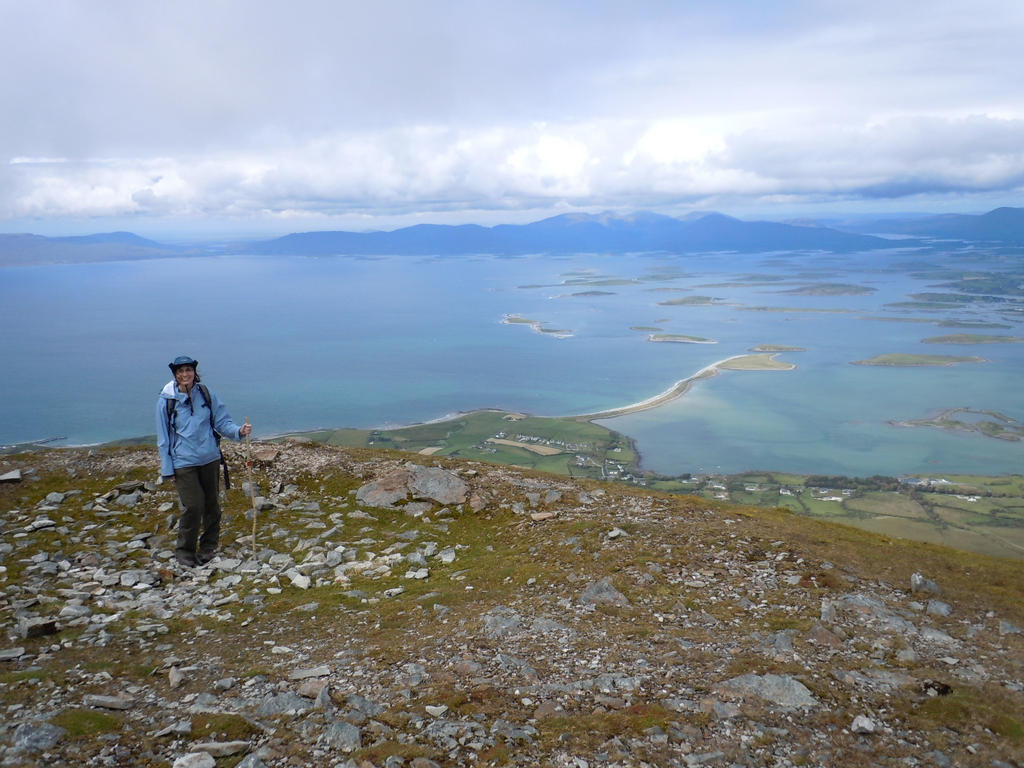
Geologist Liz Johnson in front of drumlins in Clew Bay, Ireland. Picture courtesy of Liz Johnson.
def. Drumlin:
An elongated hill or ridge with a shape resembling an upside-down spoon or a half-buried egg that was formed out of glacial till– and sometimes other material such as gravel and even bedrock– that was shaped by the movement of a glacier. A drumlin carved in bedrock is usually called a “rock drumlin.” Drumlins have a steeper end and a less-steep, more tapered end. The shape of a drumlin gives an indication of ice flow in the glacier or ice sheet that formed it. The steeper end of a drumlin was formed upstream and the more tapered end was formed downstream in the ice flow. Drumlins, like many features carved by glaciers, generally appear in groups. So, it is not uncommon to find fields of drumlins.
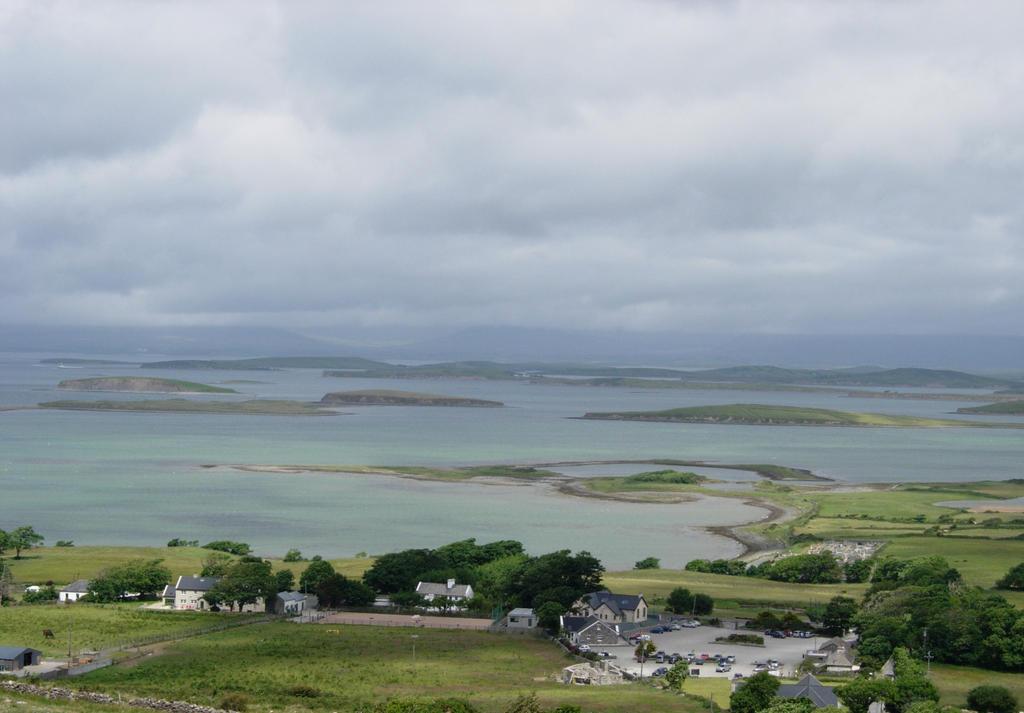
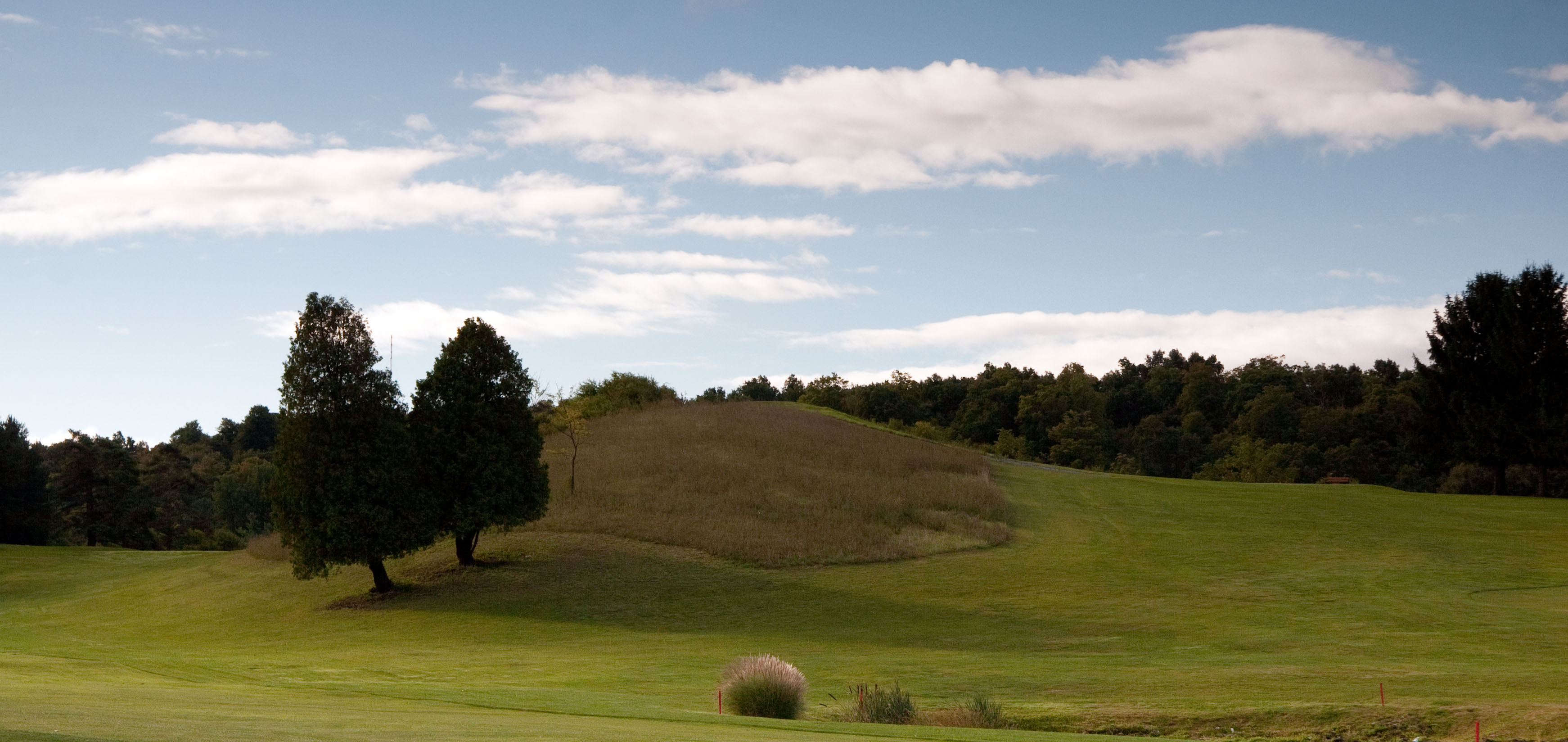
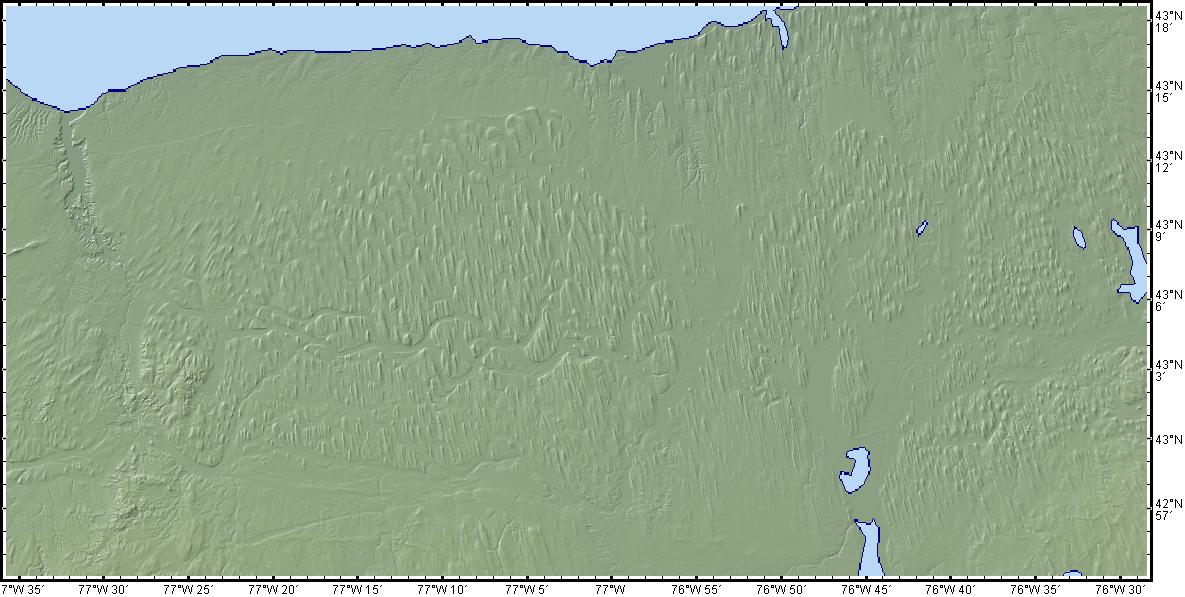
Another view of the drumlins in Clew Bay, Ireland. Picture courtesy of Liz Johnson.A drumlin at Drumlins Golf Course in Syracuse, New York. Picture courtesy of Tannis McCartney.Drumlin field south of Lake Ontario (the large bay in the upper left that is not colored blue is Irondequoit Bay near Rochester, NY). Map made in GeoMapApp and courtesy of Tannis McCartney.
If anyone else has good drumlin pictures, please send them to me, and I’ll add them to this post. My fellow AGU blogger Callan Bentley also has a couple of posts about drumlins:
Happy holidays from Evelyn, Jackie, Zayna, and Samira (who dislikes her Santa hat).
Do you have a geologist (or several) in your family, and you’re not sure what to buy them for Christmas? Good news! The Georneys “What to Buy a Geologist for Christmas” (or Chanukah, Newtonmas, etc.) 2012 holiday gift guide is here.
I also recommend looking through the previous Georneys “What to Buy a Geologist for Christmas” lists:
Gift #1: Journey to the Center of the Earth, the Board Game
Journey to the Center of the Earth, the board game! Picture taken by me.
My husband and I recently purchased this game, and I highly recommend it. You can read more about the game here, and you can buy it on Amazon.com here.
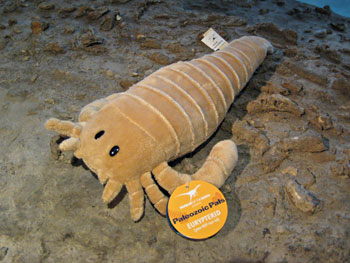
The eurypterid is the state fossil of New York. You can buy a cuddly version here at the Museum of the Earth online store. My fellow AGU blogger Callan Bentley has one of these for his baby boy Baxter.
Cost: $12
Gift #3: Ocean Sediment Pottery from “The Soft Earth”
A bowl made with sediments from the Bermuda Rise. Picture from “The Soft Earth” website.
“The Soft Earth” is a pottery studio located in Woods Hole, MA (nearby Woods Hole Oceanographic Institution). The studio sells beautiful pottery that is made using ocean sediments from all over the world. You can buy the pottery from the studio’s online store here. This pottery isn’t cheap, but it makes for unique and special gifts that any geologist will treasure!
Cost: Variable, most items are $100 to >$300
Gift #4: Mars Rover Curiosity Hot Wheels Toy
Curiosity… the Hot Wheels version! Picture from Amazon.com.
Hot Wheels has come out with a Mars rover Curiosity toy, which you can buy here. This makes a perfect stocking stuffer for your favorite geologist!
Cost: $10
Gift #5: An Earth Scientist’s Periodic Table of the Elements and Their Ions
Earth Scientist’s Periodic Table of the Elements and their Ions. Picture from here: http://www.gly.uga.edu/railsback/PT.html. Click to enlarge.
For the geochemist in your family, I highly recommend a copy of “An Earth Scientist’s Periodic Table of the Elements and Their Ions.” You can purchase a copy of this specialized periodic table at the Geological Society of America’s online bookstore here.
Cost: $10
Gift #6: Geological Tricorder
Star Trek Geological Tricorder! Picture from Amazon.com.
For the Star Trek fan / geologist in the family, the Star Trek Original Series Geological Tricorder is a must and can be bought from Amazon.com here. This is certainly on my Christmas wish list this year! Actually, I wish I had a real tricorder for my geology research… maybe someone will give me a handheld XRF for Christmas?
Cost: $70
Gift #7: Reviews in Mineralogy and Geochemistry
One of the MSA’s wonderful review books. Picture from the MSA website.
The “Reviews in Mineralogy and Geochemistry” book series published by the Mineralogical Society of America is a very useful resource. Ask the geologists in your family which books in the series they’d like, and then order the books here.
Cost: $30-$50
Gift #8: Geology Jewelry from Surly-Ramics
A fossil-filled bracelet. Picture from the Surly-Ramics Etsy Shop.
Surly-Ramics makes all sorts of fun, often science-themed jewelry… including some pieces with geology themes! Browse the Surly-Ramics Etsy Shop here.
Cost: $18-$50
Gift #9: Cummingtonite T-Shirt
A punny t-shirt. Picture from Zazzle.com.
Geologists love puns. Buy this punny t-shirt here … and dare the geologist in your family to wear it!
Cost: $25
Gift #10: Something From the Geokittehs CafePress Shop
A mug from the Geokittehs CafePress shop.
Update: The Geokittehs shop is now closed… perhaps it will re-open one day when we have more time.
Last but not least, I recommend buying an item from the Geokittehs CafePress Shop that my friend and fellow geoblogger Dana Hunter and I run. The goal of the shop is to raise funds so that Dana can afford a plane ticket to come visit me in South Africa. I need her to come visit so that I can take her on some wonderful georneys here! If we raise more money than we need for Dana’s ticket, we’ll donate the excess earnings to needy animal shelters. Dana is planning some exciting new merchandise for the shop, so check for that over the next few weeks. If you’re not familiar with Geokittehs, set aside a few minutes for procrastination and check out the blog here.
Journey to the Center of the Earth... the board game!
Over the past few years, my husband and I have become interested in board games. This is because some of our nerdy friends regularly get together to play board games such as Settlers of Catan, 7 Wonders, Agricola, and Puerto Rico. For awhile, we resisted buying our own games. We just owned a few basic games such as chess, checkers, and backgammon, and we relied on our friends’ collections of fancier, more modern board games. However, since I’m a big Star Trek fan (and my husband watches plenty of Star Trek, too), I just couldn’t resist acquiring this board game a couple of months ago:
Star Trek Catan! How could I resist?
This past weekend, my husband and I went to a board game shop (one of the few such shops here in South Africa) to look for an expansion pack for “Star Trek Catan” to allow for more players. We found out that no such expansion pack exists yet, but we didn’t leave the game shop empty handed. We found a game called “Journey to the Center of the Earth,” which is based on the classic Jules Verne novel. We both adore the “Journey to the Center of the Earth” story, including some of the various movie adaptations. Sure, the story isn’t scientifically plausible, but the story helped inspire us to become geologists, so we have a soft spot for it, bad science and all. The “Journey to the Center of the Earth” board game came out a few years ago, and the copy we found in the shop was somewhat dusty– obviously, it had been sitting on the shelf for awhile. The good news was that the dusty game was on sale for only 1/3 of its original price! We were a little worried that perhaps the game was on sale because it wasn’t very fun, but we decided to purchase it anyway since it was such a bargain.
This past Sunday afternoon my husband and I spent a couple of hours playing “Journey to the Center of the Earth”, and we enjoyed it greatly! The game is actually very fun! The game is great for 2-person play and is challenging but not overwhelmingly complicated. The best part about the game is that you win by collecting the most fossils. How could you not like this game? At the end of our first game, my husband and I tied each other with sixty fossil points each. We’ll have to have a rematch soon.
Overall, I highly recommend the game, especially if you are interested in geology. I think I’ll put the game on my forthcoming annual “What to Buy a Geologist for Christmas” list!
Here’s a couple more shots of the game:
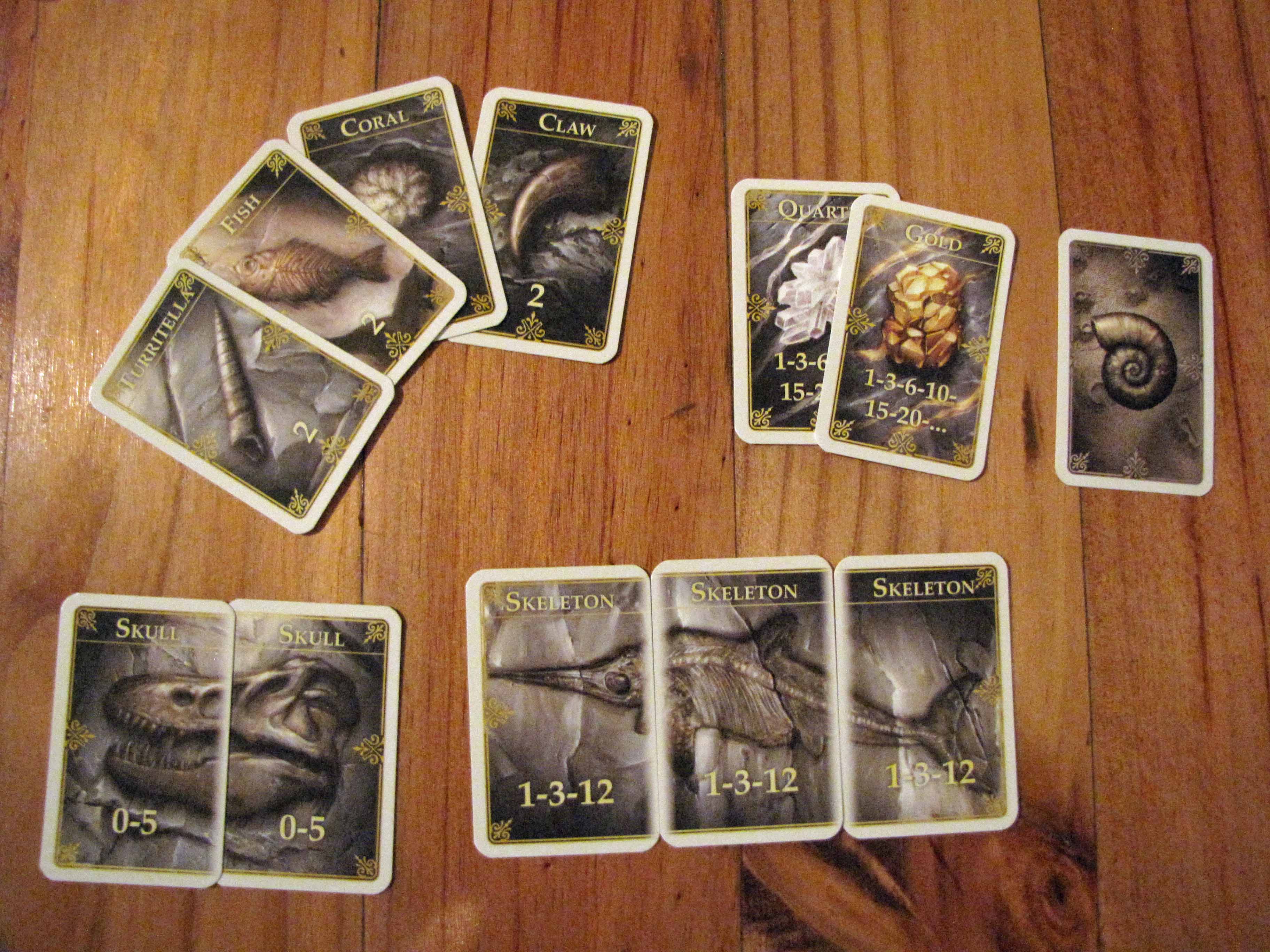
The back of the "Journey to the Center of the Earth" board game box, showing the game layout.Fossil cards! You collect these to win the game. Okay, I know that quartz and gold aren't really fossils, but the game is still fun!
Basalt columns at Devil's Postpile, California. Picture courtesy of Cian Dawson.
def. Columnar Jointing:
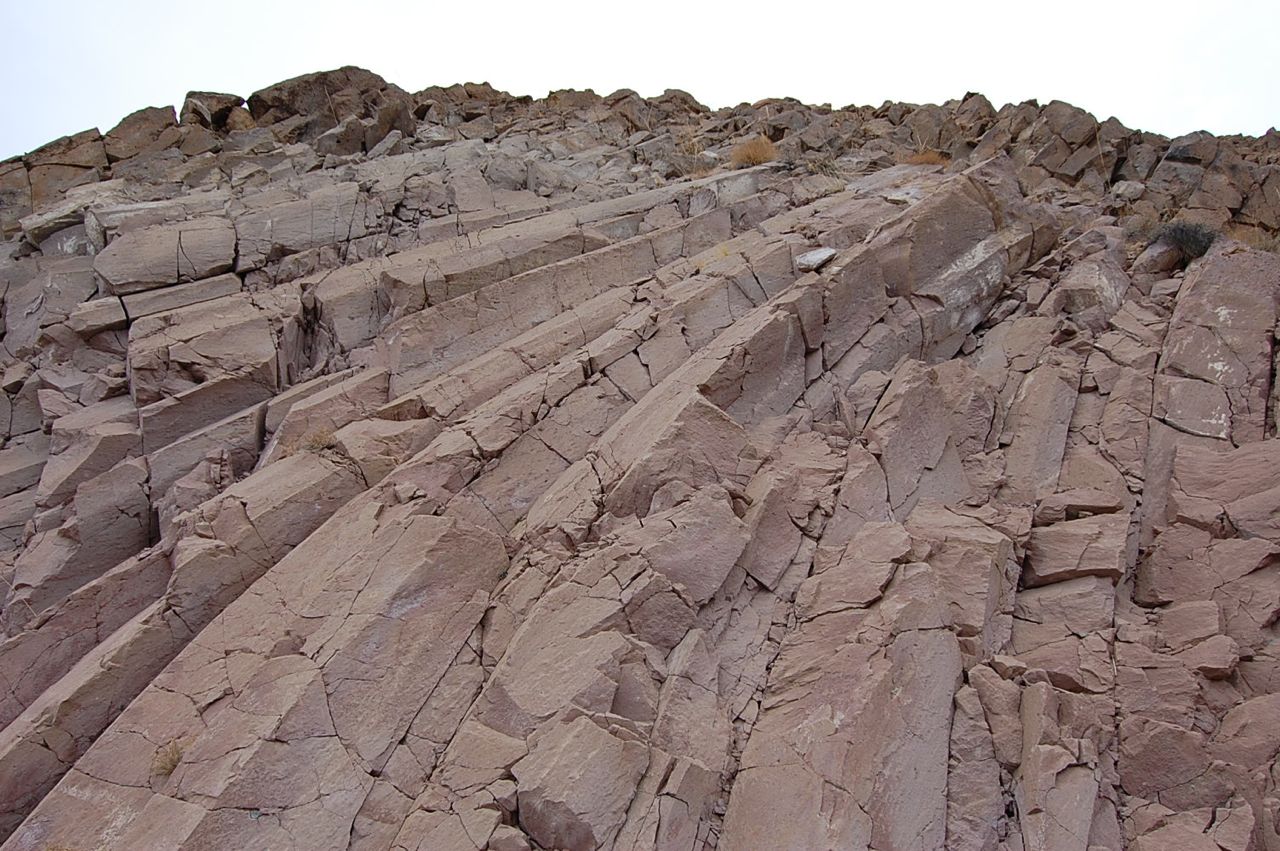
A structure that forms in rocks (most commonly in basalt) that consists of columns (mostly commonly hexagonal in shape) that are separated by joints or fractures in the rock that formed when the rock contracted, most often during cooling.
Columnar jointing is always a joy to observe in rocks in the field. Stumbling upon perfectly geometric columns of rock can only be described as magical. Even the most austere scientist might find herself (or himself) gaping in awe at the flawless shapes and wondering if men or Gods carved those immaculate columns. However, that majestic columnar jointing can easily be explained with a little bit of physics.
A geologist ponders columnar jointing at Mt. Ruapehu, central North Island, New Zealand. Picture courtesy of Shaun Eaves.
Most commonly, columnar jointing is observed in basalt. Let me try to explain how columnar jointing forms in basalt.The diagram below will be helpful for the explanation.
Basalt is an igneous, volcanic rock. For those of you who need a little Geology 101 refresher, “igneous” means that the rock formed from a melt and “volcanic” means that the melt erupted at the Earth’s surface as lava before it cooled to form the rock. After lava is erupted onto Earth’s surface, it cools. However, lava may take awhile to cool, and as it cools there may be a temperature gradient. Most commonly, the top of the lava flow will be cooler than the bottom of the lava flow.
When the lava cools, it contracts. This is because hot things generally take up more space than cool things. Think about hot steam, for instance. When you open the lid of a simmering pot or a tea kettle, that hot steam wants to escape and expand into the air. Or think about those balloons from your last birthday celebration. Have you ever notice how balloons tend to droop overnight? Partly, that may be because the helium in the balloons is escaping, but it’s also often because the gas inside the balloons cools down and contracts with the cooler nighttime temperatures. Sometimes, if you prop those drooping birthday balloons in the sun the next morning, they’ll pop back up again as the gas inside them warms up and expands.
When objects contract, they often crack or fracture. When contraction occurs at centers which are equally spaced (see the above diagram), then a hexagonal fracture pattern will develop. If the contraction is not evenly spaced, then other geometries of fractures, such as 5-sided or 7-sided fractures, may occur. Contraction may not be equally spaced if, for example, the thickness or composition of the lava flow varies. The fracture pattern that forms at the cooling surface will tend to be propagated down the lava as it cools, forming long, geometric columns. Thus, as lava cools to form basalt, it may crack in a hexagonal (or other) shape and form columns. These columns form in a variety of sizes– some are fairly small, and some are wider and much taller than people!
Hexagonal joints at the top of Devil's Postpile, California. Picture courtesy of Cian Dawson.
The formation of columns is particularly enhanced by water… Where water cooling has played a significant role, often when lava flows are ‘ponded’ in river valleys and are cooled by river water flowing over them, a predominantly two-tiered set of columns can develop, known as entablature and colonnade. The colonnade columns rise straight up from the basal cooling… whereas the ingress of water in the upper parts of the flow sets up a variety of different angles of cooling fronts. This leads to an irregular and sometimes hackly jointing called entablature in the upper parts of the flow.
Here’s a picture of some entablature (upper) and colonnade (lower) columnar jointing structures in basalts in Iceland:
Colonnade and entablature columnar jointing structures in Iceland. Picture courtesy of Dougal Jerram.
Columnar jointing isn’t restricted to basalts, however. This structure can also form in other types of rocks which undergo cooling and contraction. For example, here is some columnar jointing in the Bishop Tuff of the Long Valley Caldera in California:
Columnar jointing in the Bishop Tuff. Picture courtesy of Erik Klemetti.
I’d like to end this post with a question from me for the geoblogosphere: are there any other conditions (other than cooling of igneous rocks) that lead to the formation of columnar jointing in rocks? Could, perhaps, contraction related to the drying out of a sedimentary rock lead to columnar jointing? I know that mudcracks, for instance, are often hexagonal in shape. Put your brains to work and leave a comment below.
***Thanks to Cian Dawson, Shaun Eaves, Dougal Jerram, and many, many others for providing pictures of columnar jointing. I didn’t have time or space to share all of your pictures in this post, but stay tuned for an upcoming “Columnar Jointing in Pictures” post in which I’ll share a few more pictures. Meanwhile, you can enjoy this amazing collection of columnar jointing Gigapans compiled by Ron Schott.***
For the LASI V workshop which I attended a couple of weeks ago, the Physics of Geological Processes (a scientific Center of Excellence in Norway and one of the workshop sponsors) offered two scholarships for South African geology students to attend the workshop. I thought I would introduce you to the two wonderful scholarship awardees here on Georneys. Both of the scholarship awardees are studying for their masters degrees in geology with Prof. Gary Stevens at Stellenbosch University, which is one of the top universities in South Africa. Both students presented their masters degree projects at the conference.
Priscilla in the field at LASI V.
The first scholarship awardee is Priscilla Ramphaka, who comes from the Limpopo Province of South Africa. At LASI V Priscilla presented a talk titled, “The origin of rhythmic magmatic layering in the S-type Peninsula Pluton, Cape Granite Suite, South Africa.”
Prsicilla explains, “I presented my project on the layering in the granites found at Llandudno in Cape Town. My goal was to find out how the layering formed at Llandundo since that is not well understood.”
Priscilla says that she loved everything about the LASI V workshop, from the presentations to the field trip to the meeting of new people. Overall, she says that she really enjoyed participating in her first international geology conference. In addition to being a talented geologist, Priscilla is also a talented linguist– she speaks an impressive 10 languages!
Cedric in the field at LASI V.
The second scholarship awardee is Cedric Joseph, who comes from Windhoek, Namibia. At LASI V Cedric presented a talk titled, “The petrogenesis of the ignimbrites and quartz porphyritic granites exposed along the Saldhana west coast, South Africa.”
Cedric explains, “I did a project on the ignimbrites and subvolcanic rocks that you find around Saldhana. We investigated the petrogenesis of the rocks as well as the rock textures because it’s quite a controversial issue whether these rocks are intrusive or extrusive.”
Cedric says that his favorite part of the LASI V workshop was learning more about sills and dykes, particularly through observing these features in the field. Cedric is looking forward to working for a mining company in Namibia starting next year.
I really enjoyed meeting both Priscilla and Cedric at LASI V. I hope to run into them again, especially since Stellenbosch is just down the road from where I live in Cape Town.
Well, I did it again. I forgot to post my Monday Geology Picture on Monday. Sorry about that! I had a long, busy day at work. After work, my husband and I went to see a movie with some friends and only arrived home fairly late.
This week, I thought I would share a picture of some old mining posters which I saw on an underground mine tour (of an inactive mine) at a place called Gold Reef City in Johannesburg, South Africa. At Gold Reef City the area surrounding an abandoned gold mine has been turned into a gold mining themed amusement park. Part of the old gold mine has been preserved for tours, and several of the park attractions are about the history of gold mining in Johannesburg. If you ever find yourself in Johannesburg, I highly recommend a visit to Gold Reef City. The history is very interesting, and the rollercoasters and other rides are pretty fun, too!
Here’s a closer view of the mining posters:
A closer view of the old mining posters at Gold Reef City.
Some of the mining posters are written in an interesting pidgin language called Fanagalo, which is a mixture of primarily Zulu, English, and Afrikaans and has been used for many years as a lingua franca among mineworkers in South Africa and, to a lesser extent, in other southern African countries. In recent years, English has been replacing Fanagalo as a lingua franca in the mines, but there are still some mineworkers who speak Fanagalo. The mining posters likely date from the 1960s and 1970s and advocate safety in the mine.
I’m already at the letter B of my third geologist’s alphabet, so I thought I should compile a list of my second geologist’s alphabet. During the last year of my PhD, my weekly words were not so weekly. Thus, I blogged my second geologist’s alphabet over the last year and a half or so. My first geologist’s alphabet can be found here.
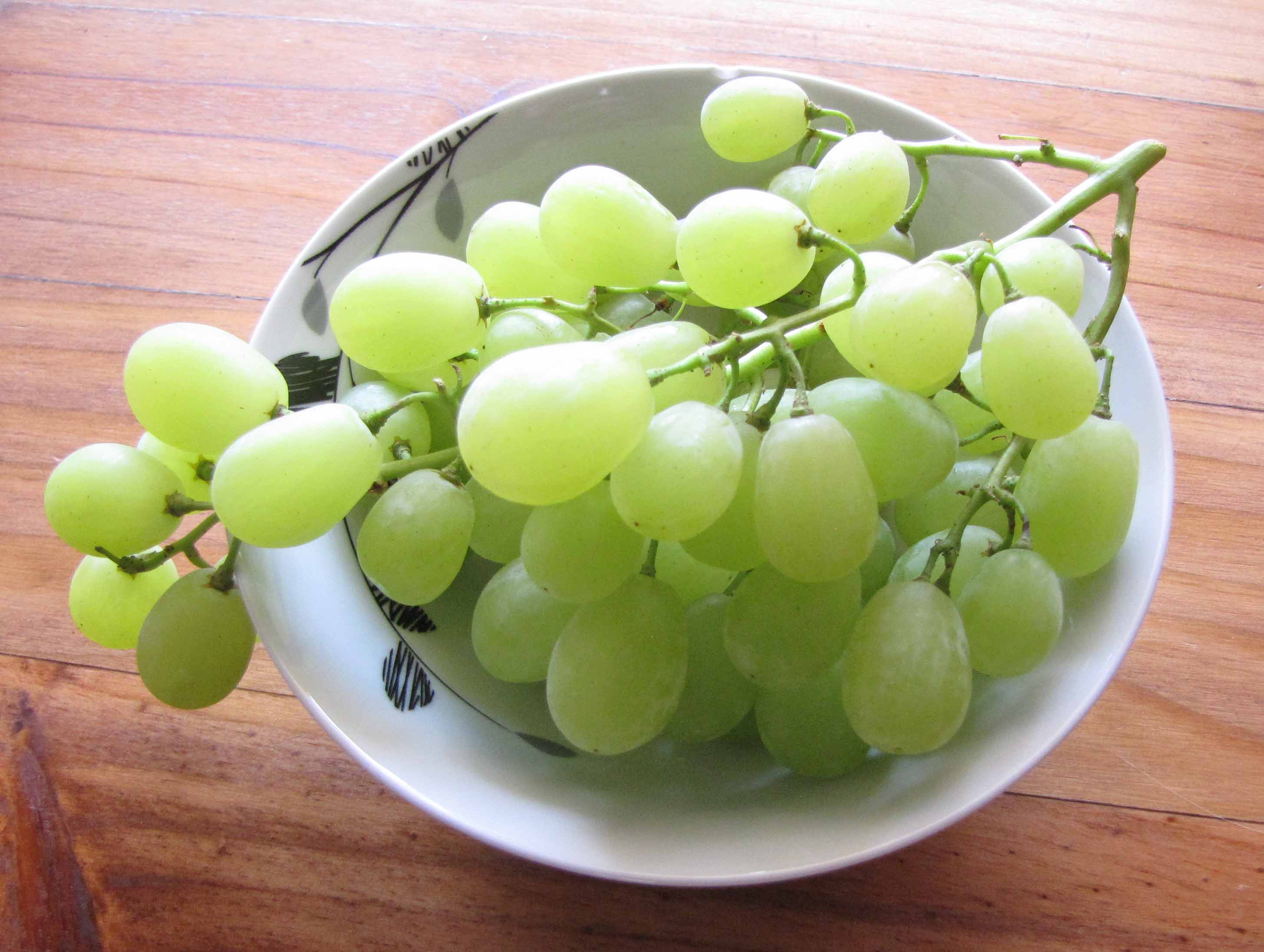
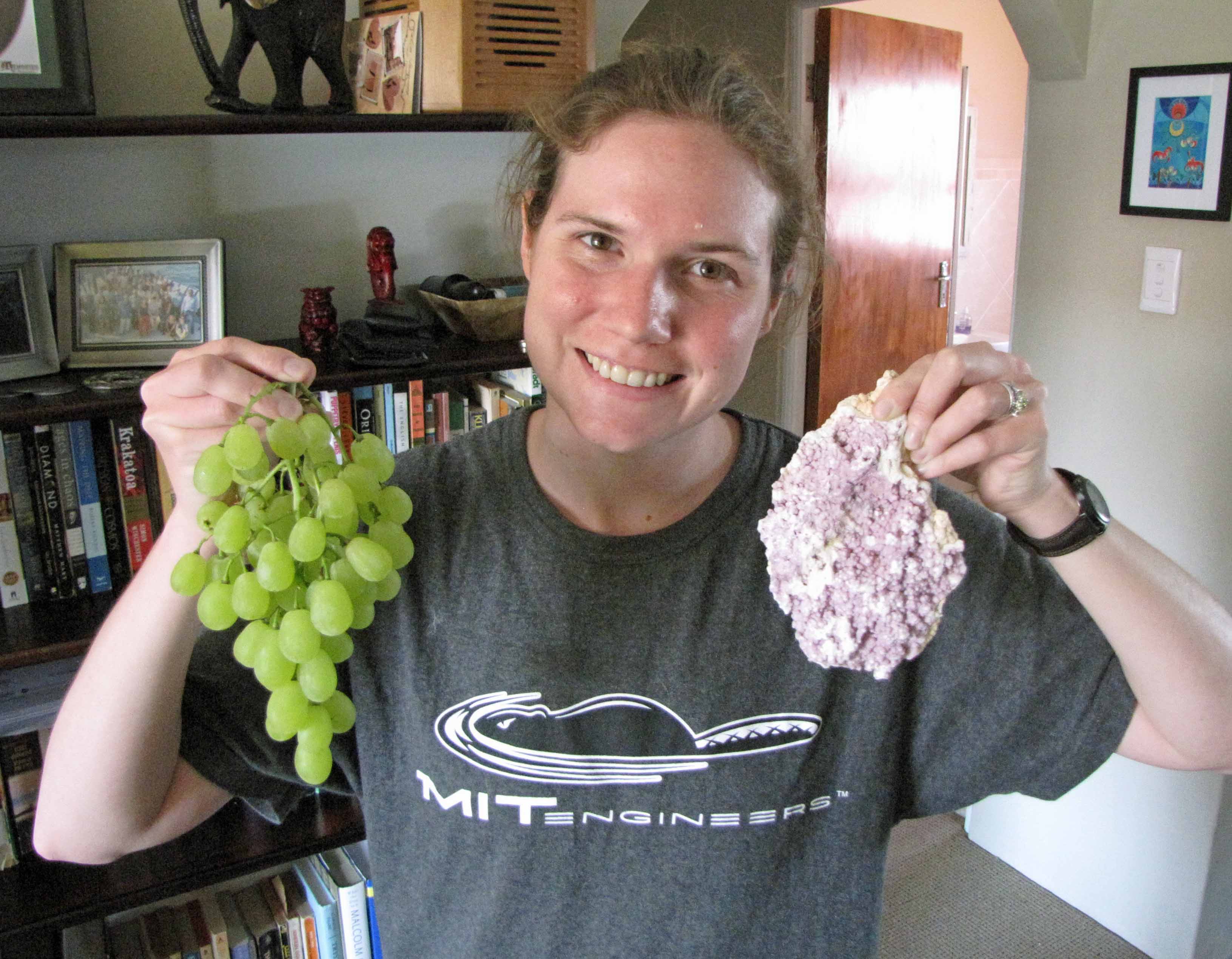
A bunch of grapes which I purchased earlier today at the Woolworth's grocery store across the street.
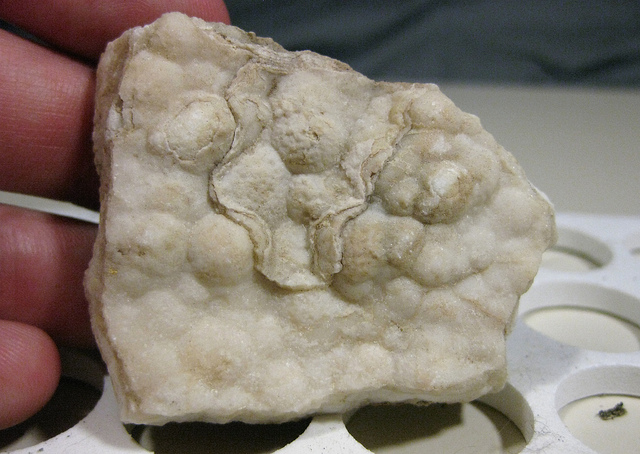
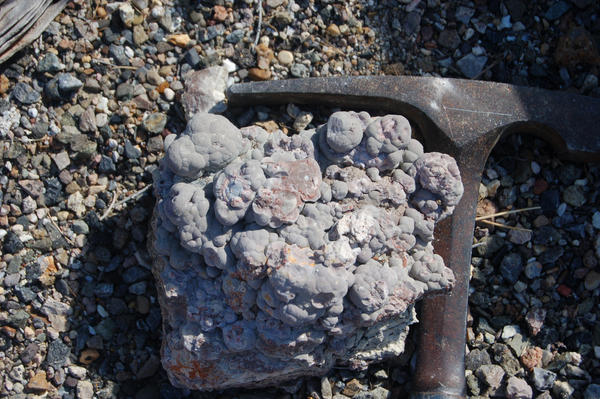
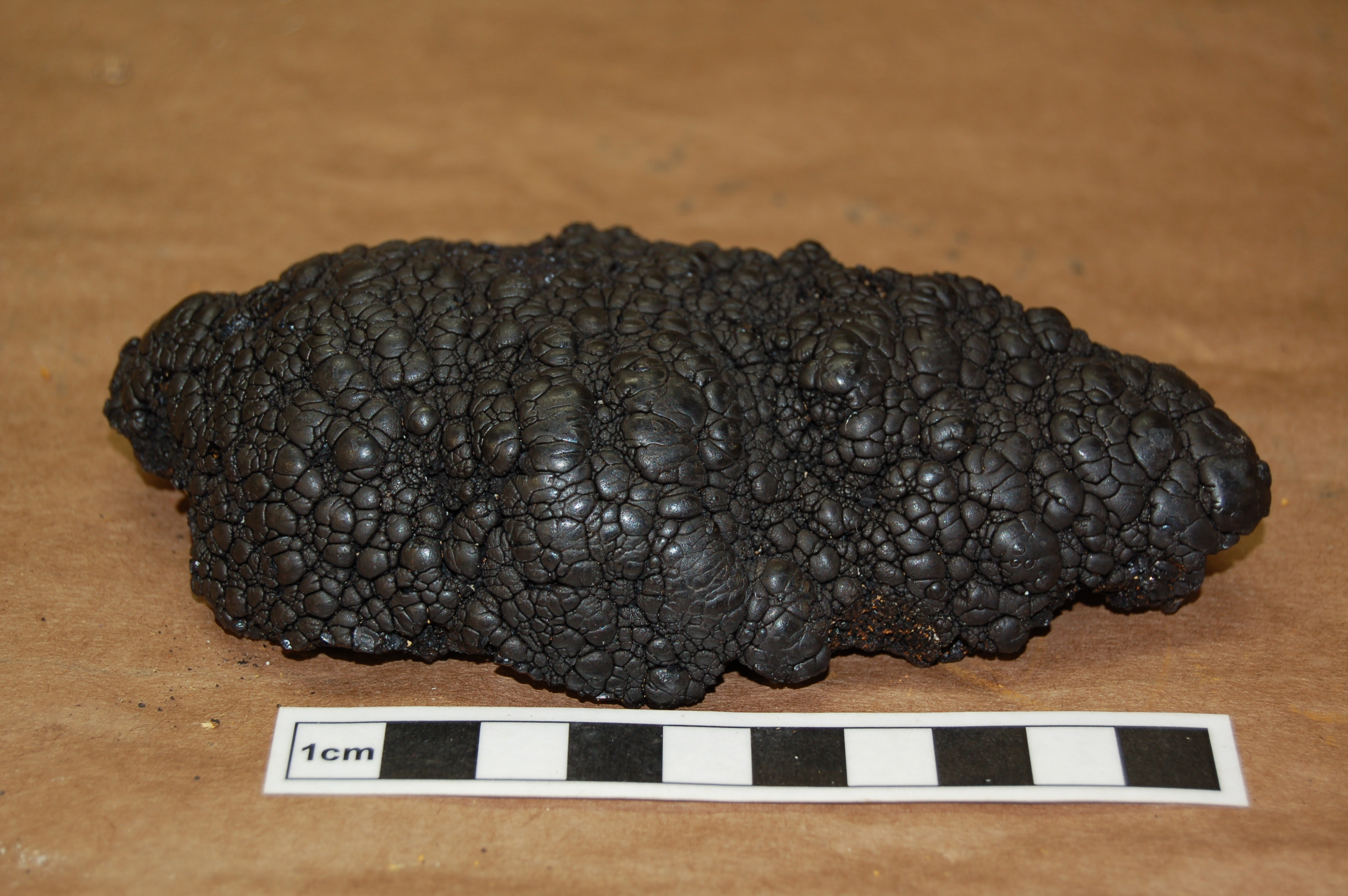
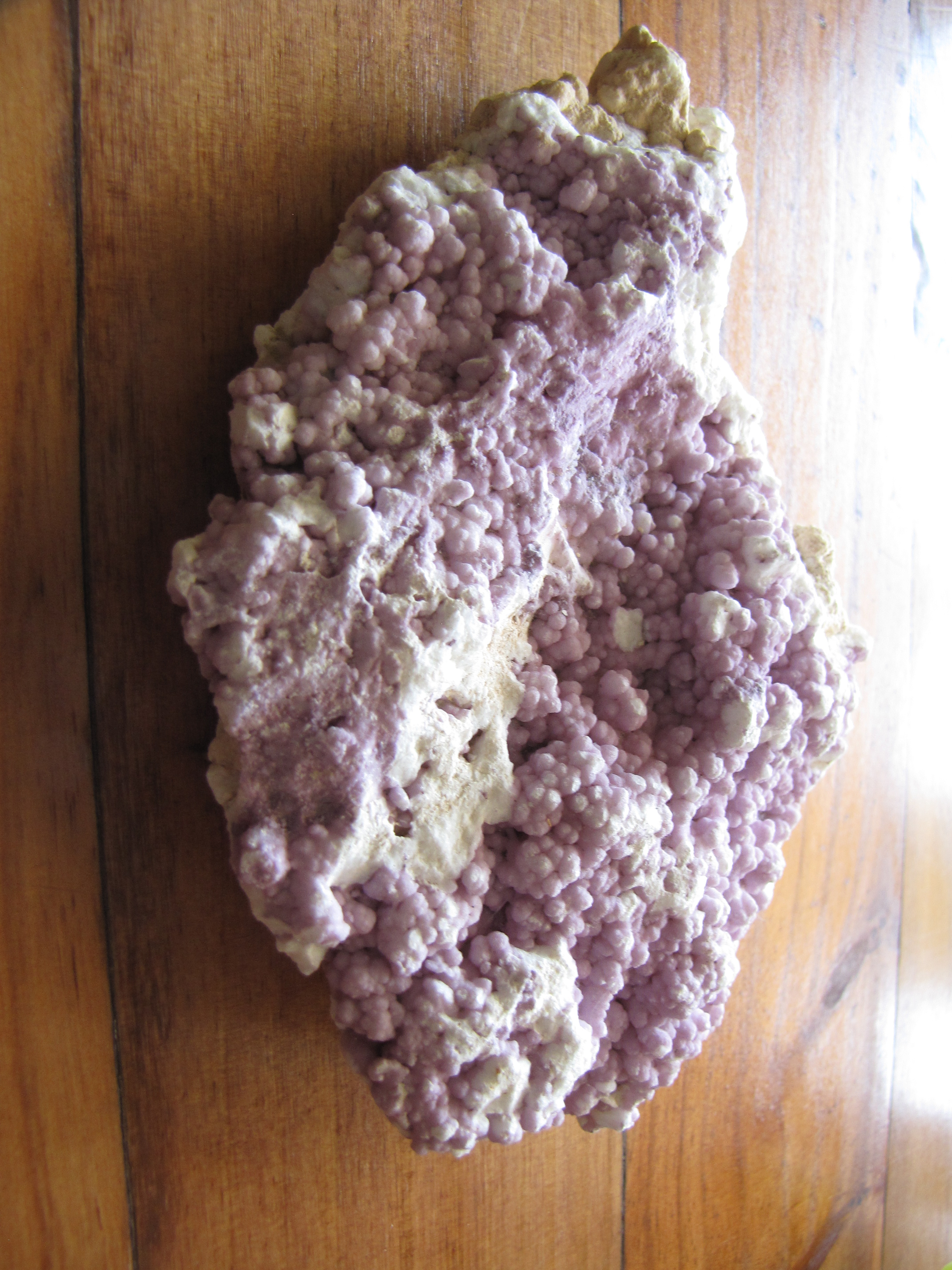
def. Botryoidal:
Shaped like a bunch of grapes.
The word botryoidal comes from the Greek word “botrus”, which literally means a cluster or bunch of grapes. In geology the word botryoidal is often used to describe a rock texture or mineral habit (appearance).
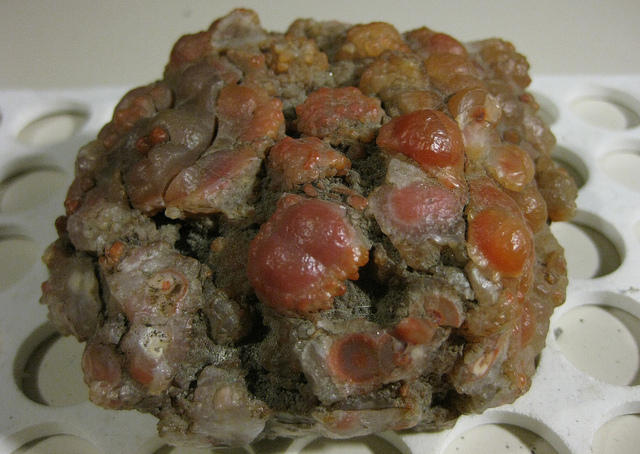
Here are a few pictures of some botyroidal rocks and minerals:
Botryoidal chalcedony. Picture courtesy of Patrick Donohue.Botryoidal arsenic. Picture courtesy of Patrick Donohue.Botryoidal carbonate. Picture courtesy of Patrick Donohue.Botryoidal vapor-phase altered rhyolite. Picture courtesy of Lockwood DeWitt.Botryoidal ferromanganese crust dredged from the Ninetyeast Ridge, Indian Ocean, Summer 2007.More botryoidal ferromanganese crust dredged from the Ninetyeast Ridge, Indian Ocean, Summer 2007.Botryoidal (and purple!) carbonate from the Samail Ophiolite, Sultanate of Oman.A geologist, a botrus, and a botryoidal rock.
***Thanks to Patrick Donohue for suggesting this week’s word and to Patrick and Lockwood DeWitt for providing pictures.***
LASI founder Christoph Breitkreuz checks out a dolerite sill in the field in the Karoo on the LASI V field trip.
Last week I had the great honor and pleasure to attend the LASI V workshop, which was held in Port Elizabeth, South Africa with a field trip to observe sills and dykes which were emplaced into the Karoo sedimentary basin. I was kindly invited to attend LASI V by organizers Henrik Svensen and Sverre Planke, who are both scientists at Physics of Geological Processes, a Center for Excellence in Norway. I was invited to attend LASI V to observe, learn a little about subvolcanic systems, and write some blog posts about the workshop here at Georneys. Over the next few weeks, you’ll see several posts about the LASI V workshop. I plan to write about some of the workshop participants and their research on subvolcanic systems. I also plan to write about the Karoo field trip. I’m sure that I will also have quite a few LASI themed “…in Pictures” posts. I thought I would start off with a basic post to explain what LASI is all about. This is a question and answer style post. Many of the answers are based on interviews I conducted with Christoph Breitkreuz, a professor at TU Freiberg in Germany and one of the founders of LASI, and with Sverre Planke. I’ve edited their responses for brevity and clarity.
If you have any additional questions about LASI V, please feel free to leave your question in a comment below. I’ll forward your questions on to Henrik, Sverre, Christoph, and other LASI organizers. Hopefully, they will be able to provide you with an answer. You can also check out the official LASI website here.
LASI stands for Laccoliths and Sills. However, LASI workshops include study of all subvolcanic systems, which also includes dykes. I guess the acronym LASIDY just isn’t as catchy as LASI. The official title of LASI is “The physical geology of subvolcanic systems: laccoliths, sills and dykes.”
What are laccoliths, sills, and dykes?
Laccoliths, sills, and dykes are subvolcanic systems. That means that they represent the plumbing, so to speak, for volcanoes and other environments where volcanic rocks are extruded. They are often the link between magma chambers at depth and volcanic eruptions at the surface. They also represent what happens when magma doesn’t quite make it to the surface but rather is emplaced in the subsurface.
Some brief definitions:
Laccolith: A mass of igneous rock that did not make its way to the surface but rather spread out laterally, often in a lenticular or lens-like shape, and forced the overlying strata to deform upwards.
Sill: A tabular intrusion of igneous rock that is emplaced parallel to the pre-existing rock bedding. Most often, sills are originally horizontal or sub-horizontal.
Dyke: A tabular intrusion of igneous rock that is emplaced discordant to (i.e. cuts across) pre-existing rock bedding. Most often, dykes are originally vertical or subvertical.
I also asked the experts! Here’s what they had to say:
From Christoph:
Essentially, these are bodies of magmatic rock. A dyke is a conduit from a magma chamber in the lower crust or in the mantle towards the surface or near the surface. Dykes are vertical or almost vertical and generally tablet-shaped. In some situations, the magma doesn’t make it to the surface but will emplace in the upper crust— in the upper 500-1000 m, generally. However, the deepest known laccolith, which is in Utah, was emplaced at approximately 3 km depth. And these emplacements form horizontal or subhorizotal sheets of magmatic rock, such as dolerite, and these are known as sills. If there is enough magma volume and if the magma is viscous—that means a high silica content—then the emplacements tend to be laccoliths. A laccolith has a flat base and a lifted up, lentil-like shape. Sometimes, these laccoliths stay completely as a subvolcanic body, but if more magma is pumped in, they might pierce the surface, and there will be an eruption.
From Sverre:
I describe subvolcanic systems as rivers of magma that are running inside the rocks. A sill, for instance, is a horizontal river of magma. That’s an easy way to describe it.
A dolerite sill in the Karoo's Golden Valley.
Why is it important for geologists to understand subvolcanic systems?
From Christoph:
First of all, we have a scientific interest to understand how our “Spaceship Earth” that we are traveling on works. If we want to master the future, we need to know how the system has worked over the last 4.6 billion years. However, there are also a number of applied aspects to understanding subvolcanic systems. For example, we are on a field trip where we can see complex sill systems that have entered a sedimentary basin, and in other areas, such as in the North Sea, similar sill intrusion into a sedimentary basin influenced the formation of oil and gas. Also, emplacement of laccoliths can provoke landslides, so there is a hazard application. Another application is the research of Sverre Planke, Henrik Svensen, and others, who found that when huge subvolcanic systems intrude basins which are rich in organic carbon, they might provoke very fast degassing, which could lead to major climatic change that could trigger a mass extinction.
From Sverre:
There are three main applied areas for study of subvolcanic systems: the first is hydrocarbon exploration in volcanic basins, the second is ore deposits since many of the world’s large ore deposits were formed in or around subvolcanic systems, and the third is climate change since emplacement of subvolcanic systems is believed to have triggered global climate change numerous times in Earth’s history.
What is a LASI workshop?
LASI workshops are a regular (every 2-3 years) meeting of scientists who study subvolcanic systems. The workshop consists of 2 days of scientists presenting their research in talks and posters followed by a 1-3 day field trip to an area where subvolcanic systems can be observed in the field.
From Christoph:
LASI is multidisciplinary meeting of scientists who study subvolcanic systems. At LASI workshops we are looking at subvolcanic systems from many angles: petrology, geochemistry, physical geology, sedimentology, analog experiments, geophysics, numerical modeling, and so on. In a short time, within half a day of LASI, we see many connections across these disciplines, and it’s great fun.
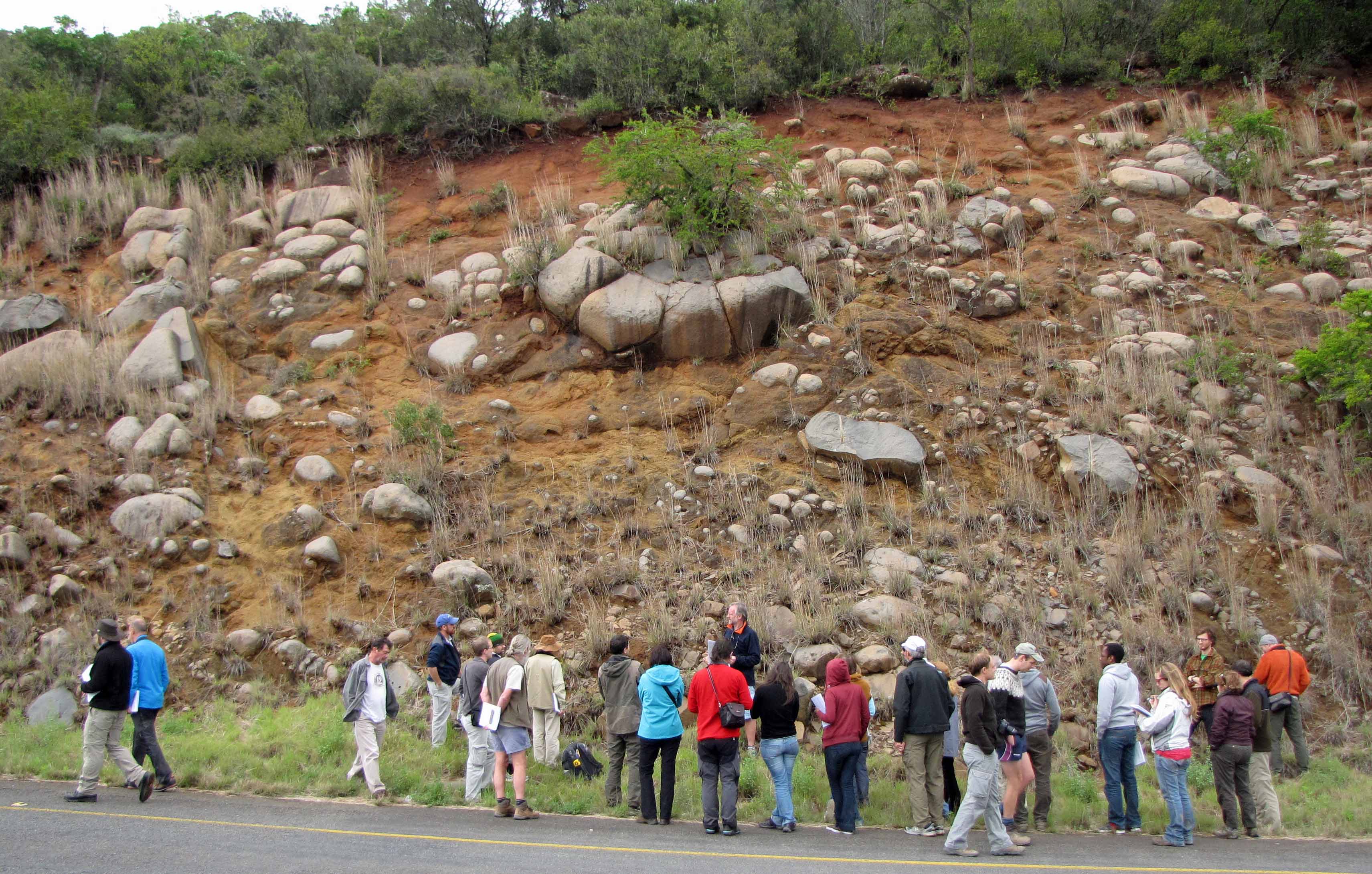
LASI V participants checking out a dolerite sill which is undergoing spheroidal weathering.
How many people usually attend LASI workshops?
Between 40-50 people attend the LASI workshops. The workshops are mostly attended by researchers from Europe (Germany, Norway, Sweden, the UK, France, Germany, the Czech Republic, Poland, Russia, and other countries) and the United States. However, there have also been attendees from South Africa (especially at LASI V), Australia, and other countries. So far, there have not been many attendees from other places such as Asia. However, researchers from other parts of the world would be very welcome to attend future LASI workshops!
What is the history of the LASI workshops? How did the first LASI workshop come about?
From Christoph:
It’s a nice story. In the mid-90s I started to work in Central Europe in the Late Paleozoic systems, which are full of volcanic rocks and subvolcanic rocks. I worked in places such Germany, Poland, Czech Republic, Italy, and France. When I started to work around 1995 on these systems, I found out that there are many kinds of porphyritic rocks (in quarries and outcrops and drill cores), and I found that in many cases the formation of these rocks was not clear at all to the previous authors or the colleauges I talked to. I found out in particular that in the city of Helle in Eastern Germany there is an important complex of rhyolitic rocks (200 km3 of rocks), and I found out that researchers really had no idea how they were formed. So, I started to read literature on subvolcanic systems, such as laccoliths, and I started to contact researchers in that field.
I thought it would be a good idea to launch a symposium on subvolcanic systems at the European Geoscience Union conference around 2000 or 2001, but the organizers turned down the symposium. They said something like, “It doesn’t fit in our program.” But I went to EGU anyway for other purposes, and I met Nick Petford, who is a very good UK geologist, and I talked to him and I said, “Well, EGU turned down this symposium. Why don’t we organize something on our own on the topic of physical processes of subvolcanic systems?” And he said, “Well, that’s a great idea.” And so we spread the news that we would gather in Freiberg for three or four days. Astonishingly, more than 40 people showed up. We had a good meeting with a nice seminar and then a one day field trip that I would call rather modest compared to the other LASI field trips. After the first LASI, we thought that the next should be in the Isle of Skye in Scotland, but it took awhile to organize the next one, so the next one was four years later.
How are LASI workshops organized?
From Christoph:
As in many other scientific disciplines, in geology there are some forms of conferences that are very rigid in their procedures and requirements, and you feel as if you are in a big machine. In contrast, the LASI workshops are very low in terms of organization and are done in a very simple way. We just find some people who are willing to organize the workshop, and we spread the news on the internet. Then we see who wants to attend, and they just pay to cover the costs. The attendees usually submit abstracts although they even can attend without an abstract. There’s no committee, there’s no big reception ceremony, and there are no medals. It’s very laid-back. Every organizer has his own system of fundraising. For instance, when I organized the first LASI workshop I received funding from the German Research Foundation and from the state of Saxony where the workshop was held, and this worked quite well. Other groups are maybe more connected to companies—oil companies and mining companies—and receive funding from industry. But there are no rules, so the organizers just try to find funding for LASI wherever they can. When we’re planning the next LASI, we try to think of a good place for a field trip to subvolcanic systems, and we try to go different places—not always to Europe, for instance.Often, the next LASI comes around at dinner one night of the previous LASI. We’re sitting around the dinner table and someone says, “That’s a good idea for the next LASI. I can organize it.” There are no rules, no voting committees to decide where the next LASI will be. It’s very organic.
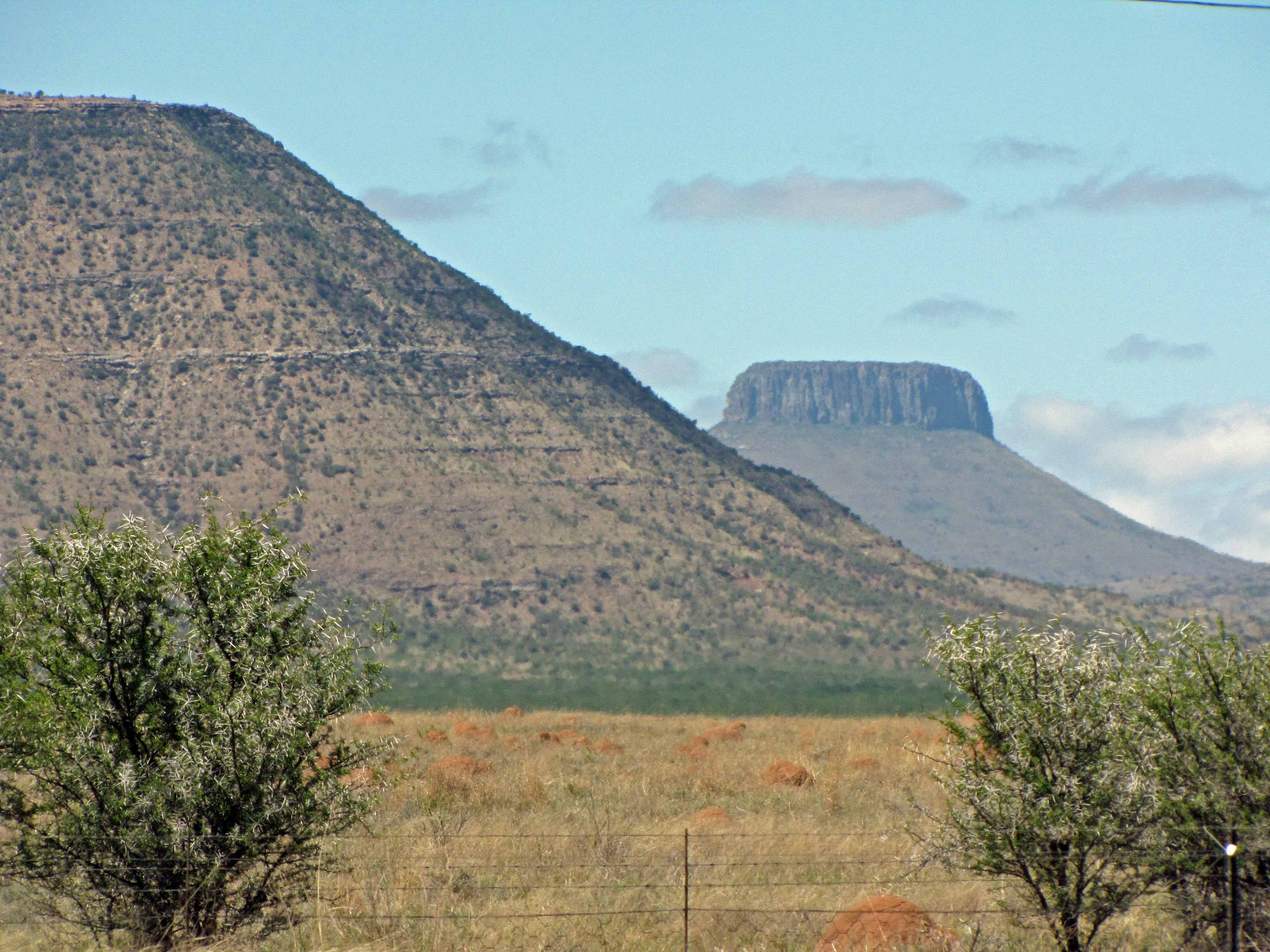
One of many beautiful sill-topped plateaus in the Karoo.
Have the LASI workshops led to some new directions for research on subvolcanic systems?
From Christoph:
I am all the time inspired. For example, at the first LASI workshop I was working on the Halle volcanic complex, and I was very inspired by some talks by German colleagues of mine. Their work inspired me and helped me get ideas for new research and publications on Halle. I guess this is the case for almost everyone, even the veterans of subvolcanic system research. So, there is cross-fertilizing all the time. And the other component of LASI is that we always combine it with field trips to very classic or important outcrops for subvolcanic systems, and so the dsicussions continue on the outcrops.
From Sverre:
Going to meetings is very important for research. The first time I was exposed to the Karoo was at the IAVCEI meeting in 1998 in Cape Town, South Africa. At the first LASI meeting we met various people working on sill emplacement in the UK, and some of them were offered postdoc positions at PGP in Norway and were part of the motivation for doing the Golden Valley studies that we’ve done here in the Karoo. Obviously, conferences are important for meeting people and getting ideas and presenting your own research.
LASI V participants taking a close look at a volcanic pipe.
Where have the previous LASI workshops been held?
They’ve been held all over the world! Here’s a webpage with information on them all, and here’s the list:
LASI I: Freiberg, Germany, 2002.
LASI II: Isle of Skye, Scotland, 2006.
LASI III: Elba Island, Italy, 2008.
LASI VI: Utah, USA, 2010.
LASI V: Port Elizabeth and the Karoo, South Africa, 2012.
Why did you decide to hold the LASI V conference in South Africa? Why are you having a field trip in South Africa’s Karoo region?
From Sverre:
I can say briefly why we [the Norwegian research group from PGP] are here. We are studying subvolcanic systems in seismic data in offshore of Norway, and we’ve been looking for good field analogues for what we see in the geophysical data. The Karoo is really the best place to see these type of complexes exposed. What you find in the Karoo is a very large sedimentary basin where you have numerous sills and dykes and other subvolcanic rocks exposed, and this is similar to what we see offshore of Norway. Here we can go out in the field and then we can compare the results from the Karoo with what we see in the seismic data offshore of Norway.
When and where will the next LASI workshop be held?
This is still to be determined. I overheard many tentative suggestions at the conference, but nothing has been confirmed. If you have a suggestion for a good location, please feel free to leave a comment below. Whenever and wherever, I hope that I have the opportunity to attend the next LASI workshop. I greatly enjoyed attending LASI V. Thanks so much to Henrik and Sverre for inviting me!
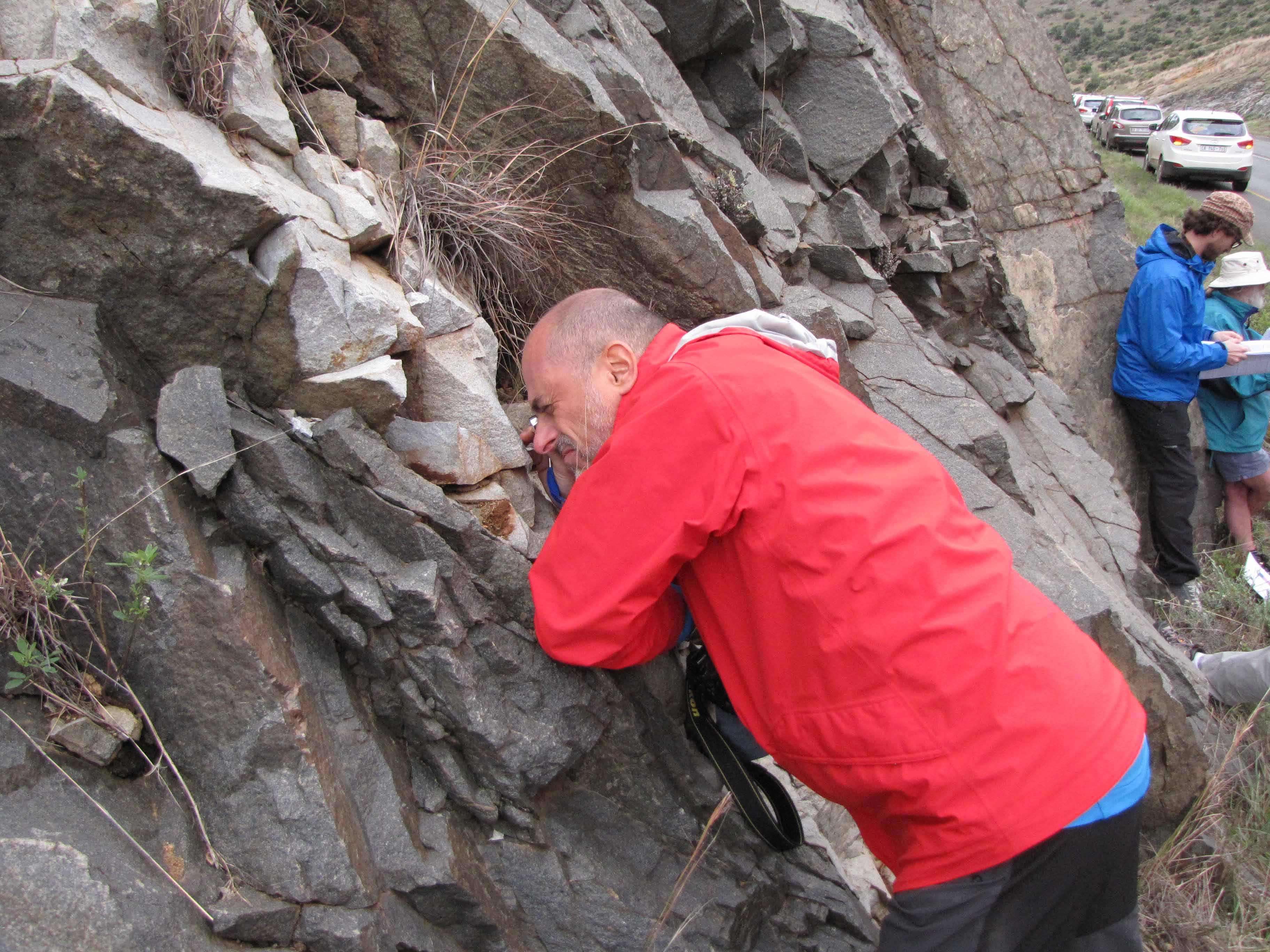
LASI V participant Sergio Rocchi takes a closer look at a dyke.
That’s all I have on LASI for now. In future posts you’ll learn much more about LASI V. Stay tuned!




















 Georneys