Migmatite hills and a pretty blue fence that matches the pretty blue sky.
I was a little sporadic with my “Monday Geology Picture” posts in 2016. I’ll try to be more consistent in 2017!
To start off, here is a shot of a lovely little hill of migmatite in the town of Lüderitz, which is located at the edge of the Namib desert in the beautiful country of Namibia. I took this picture when I was up in Namibia back in 2014.
Happy New Year… and stay tuned for more lovely geology pictures. Feel free to submit an interesting picture, if you like!
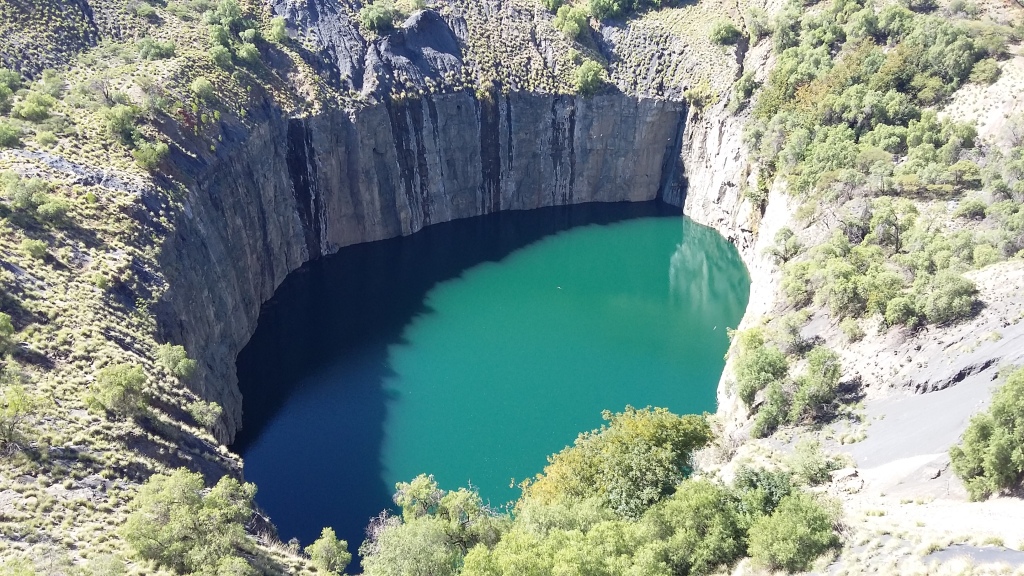
This week’s “Monday Geology Picture” is a shot of the Big Hole in Kimberley, South Africa. This hole, now filled partly with water, is the remains of an early diamond mine in a kimberlite (a rock type named after the town of Kimberley) pipe. The pipe was mined from 1871 to 1914 and today can be safely visited and observed (from a walkway) as part of a visit to The Big Hole Museum. The hole really is big: it’s 214 meters deep and has a perimeter of 1.6 kilometers. I took the above picture when I visited Kimberley earlier this year. If you ever find yourself in the Kimberley area, I highly recommend a visit to the The Big Hole Museum! In addition to the hole, there is a very nice display on diamond and kimberlite geology. You can even see some real diamonds! Around the museum there are also some historical buildings from early mining days with various old items on display.
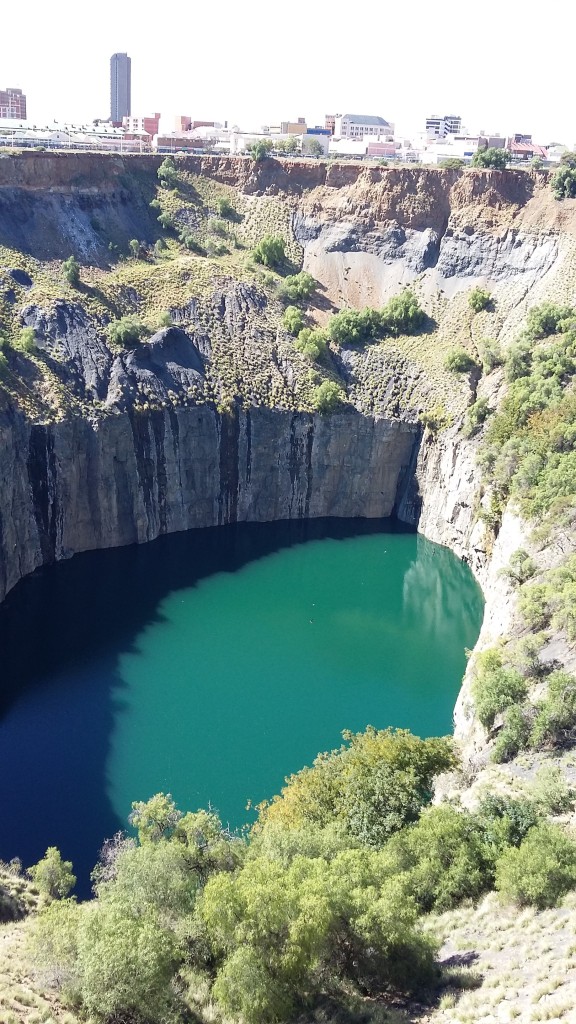
Here’s another view of the Big Hole, with some buildings in the background for some sense of scale:
The Big Hole, Kimberley – with some buildings for scale.
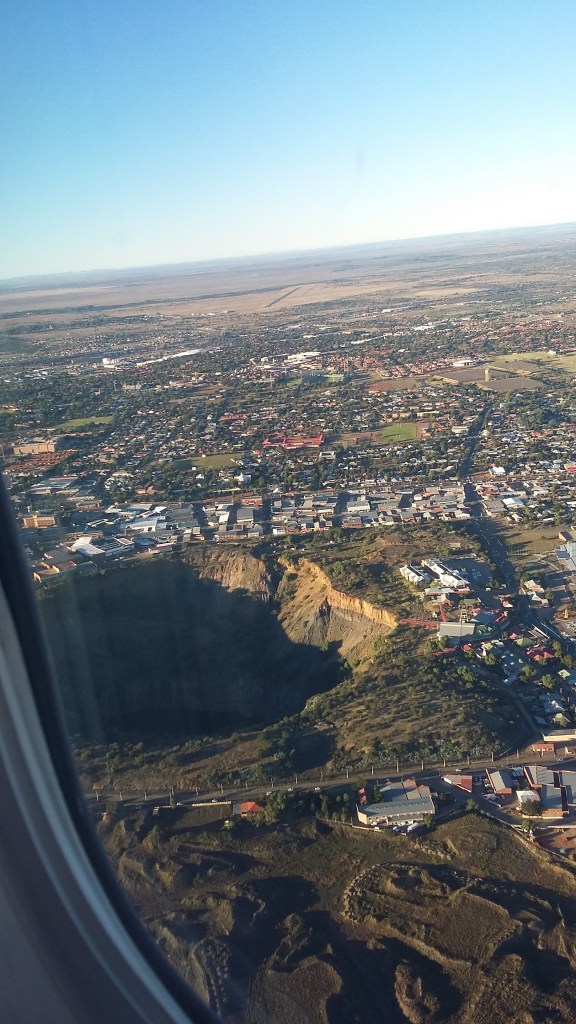
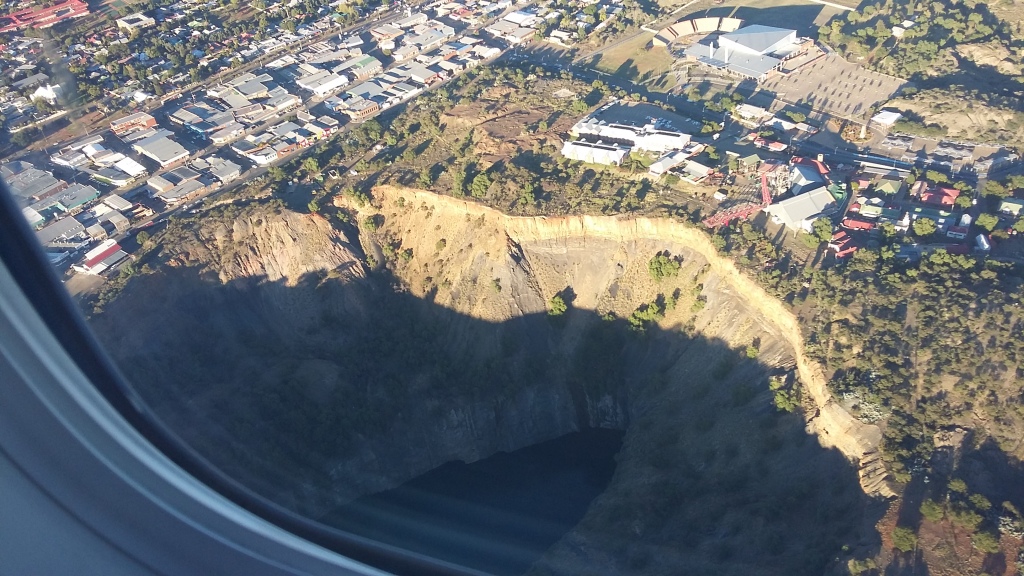
And here are a couple of views of the Big Hole that I took from the airplane when I was flying into Kimberley:
The Big Hole viewed from an airplane – Picture #1.The Big Hole viewed from an airplane – Picture #2.
This week I’m featuring one of my all-time favorite geology pictures: a snapshot of layers of travertine, representing the build-up of carbonate crusts precipitated from springs over many years. This picture was taken several years ago during my Ph.D fieldwork in the Sultanate of Oman. The layers in this picture took several thousand years to accumulate.
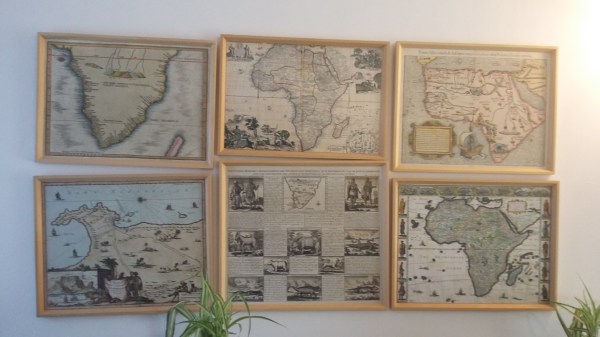
Several old maps of Africa on display. I love when maps are used as decoration! The skewness of these maps upsets my ODC tendencies, but in a way it also adds to the charm of the display!
Earlier this year I visited a local wine farm here in the Western Cape of South Africa, and there I saw a lovely display of some reproductions of some old maps of Africa. I’m not sure about the background of these maps, but I snapped a few pictures because I thought they were interesting. If you recognize any of the maps, please let me know in the comments.
Here are a couple of close-ups of the detailed map of the Cape Town area, where I live:
Cape Town area map.Cape Town area map – Close-up view.
If you look closely on the close-up view (click for a larger version), you can see that there are some useful descriptions on parts of the map. For example, there’s a description “Very Good Grounds” and then there’s a description “Grounds Not Fit for Tillage”. There are also some comments about the local mountain chains, with one being described as “Inaccessible Mountains” (I’ve corrected to modern spelling).
My husband and I live roughly in the “Grounds Not Fit for Tillage” part of the map, which probably explains why we struggle with our garden! The soil where we live is indeed very sandy and mostly comprised of quartz. Thus, it’s tough to grow anything other than local, native plants. So, we’ve planted a garden full of local succulents and are attempting this year to grow a few vegetables in a raised bed. We tried planting some flowers earlier this year, but only the ones in the pots (with special soil) seemed to survive!
I think that “Inaccessible Mountains” description may be fair, too. I’ve been on some tough hikes in that area!
I really enjoy old maps, and it’s great when they contain detailed information such as the Cape Town area map. I’d say that this map is still useful today!
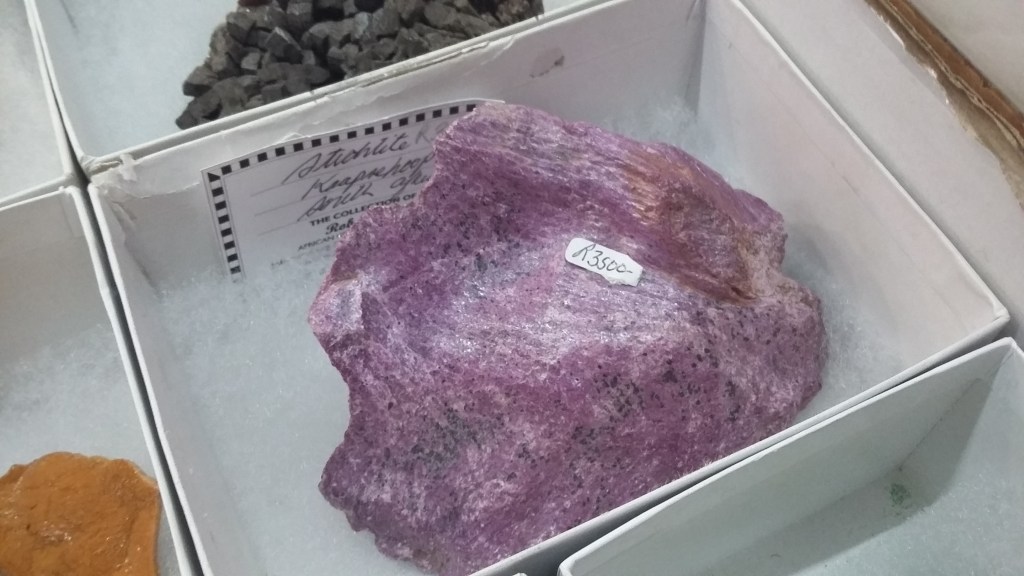
For this week’s picture here’s an example of one of my favorite minerals: stichtite, a lovely purple-colored chromium and magnesium rich carbonate. I saw this particular sample of stichtite for sale at a rock shop. Stichtite comes in a range of purple shades, from a pale pinkish purple to a rich, bright purple. I really like the lilac shade of this particular sample. The R3500 (about $250 US) cost for this sample was outside of my price range, but I did admire it for a little while before eventually buying a couple of other less expensive items at the shop. Fortunately, I already have some stichtite in my rock collection. I have a couple of samples of stichtite that I collected during some field work in the Middle East. Stichtite is a fairly rare mineral, so I’m lucky to have some in my collection!
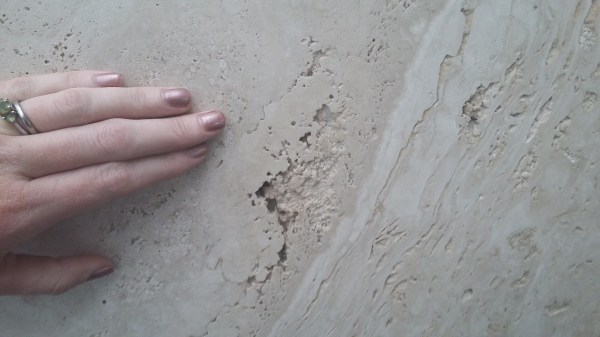
A very pretty travertine tile. I love the layering and the void spaces.
For this week’s Monday Geology Picture, here’s a lovely travertine tile that I spotted in the Cape Town International Convention Centre, which was the site of the 35th International Geological Congress that I attended last week.
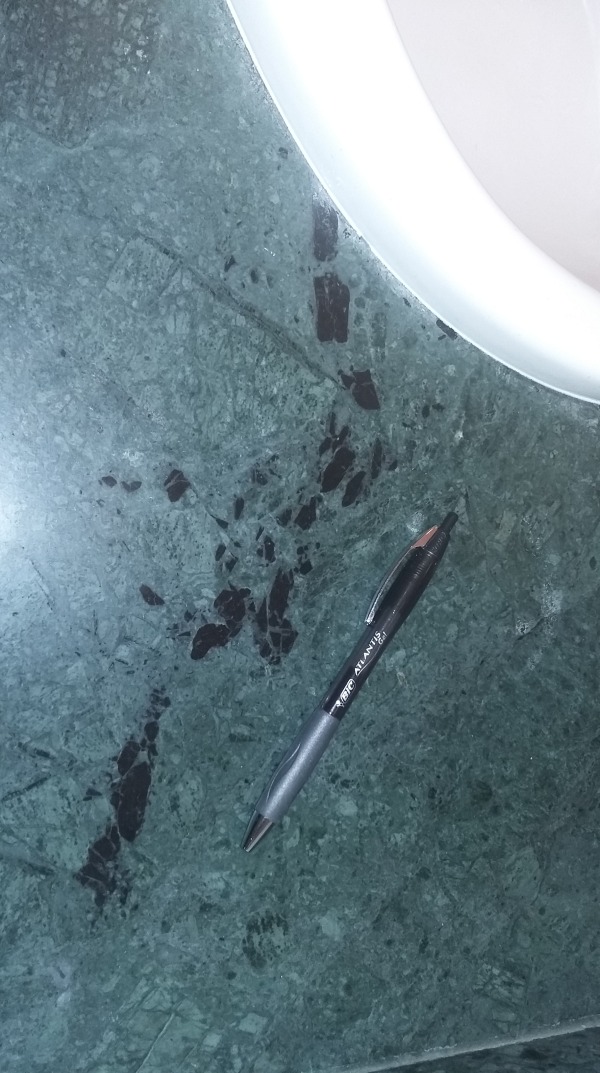
A pretty green decorative rock forms the countertop in my hotel room bathroom. Click to enlarge. Apologies for the poor cell phone camera picture with flash!
I’m traveling for business at the moment and living out of hotel rooms for a week or so. My current hotel room has a pretty green rock for the bathroom countertop. It’s most likely a green soapstone of some sort. Can anyone identify those interesting black minerals?
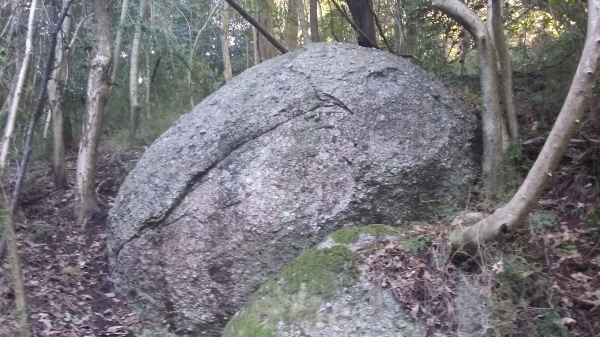
For this week’s “Monday Geology Picture” here’s a shot of a pretty granite boulder that I spotted during a forest hike in the Constantia region of the Cape Town, South Africa. No doubt, this boulder consists of ~550 million year old Cape Granite. There’s no scale in this picture, but the boulder is about 2 meters wide.
A view of Cape Fold Belt mountains from the Hermanus Yacht Club, April 2016.
Over the weekend I participated in a kayak race that was held in the lovely little coastal town Hermanus, South Africa. The race was held on a lagoon with a beautiful background of mountains that are part of the Cape Fold Belt. You’ve seen pictures of this fold belt before here on Georneys. For example, here the belt is featured in one of Callan’s “Friday Fold” posts. However, these mountains are so pretty it’s worth sharing another picture here. Enjoy!
Since I live in Cape Town, South Africa, I often share pictures of beautiful Table Mountain. This week’s “Monday Geology Picture” shows another view of the mountain. I took this picture yesterday during a hike in the Tygerberg Nature Reserve. I’ll share some more pictures from the reserve in a separate post. For now, enjoy Table Mountain!








 Georneys