Dinosaur mobile hanging over the crib in our nursery.
Since my baby boy is likely to arrive this week, I thought that I would share a picture from our dinosaur-themed nursery for this week’s picture. This picture shows the lovely dinosaur mobile that we’ve hung over the crib. This mobile was hand-made by women in South Africa (providing key local employment). I ordered it from a South African website. However, it is also available on Etsy for international customers.
I think that a dinosaur-themed nursery is perfect for the child of two geologists. However, neither myself nor my husband know much about dinosaurs… and much of the nursery decor that we’ve found is likely not so scientifically accurate. So, we have some reading to do in order teach our son properly about dinosaurs. Does anyone have suggestions of good dinosaur books, including for children?
For this week’s geology picture, here’s a shot that I took last year when I visited Sani Pass, which is one of the ways to enter Lesotho. The country of Lesotho is located high up in basaltic mountains, entirely above 1,000 m. You can see basaltic cliffs on either side of this picture. The basalts erupted approximately 180 million years ago and are part of the KarooLarge Igneous Province.
I’ll share some more pictures from Lesotho, including of the fantastic basaltic rocks, in another post.
If you ever have a chance to visit Lesotho via Sani Pass, I highly recommend the trip. The scenery is stunning. I recommend hiring a guide, especially if you don’t have a big vehicle. Note that only 4x4s are permitted to go up the pass.
Taking a break from hiking on a pahoehoe lava flow. I’m about 9 weeks pregnant in this picture and was already struggling with severe morning sickness. However, that didn’t stop me from (slowly) hiking along some fantastic lava flows during my vacation.
First of all, for this week’s “Monday Geology Picture” enjoy this fantastic picture of me sitting on some pahoehoe lava earlier this year, when I visited Réunion Island back in March.
Second of all, let me provide a little explanation about why I have been terribly negligent of this blog over the past few months, despite my best intentions at the beginning of the year. In January I fully intended to read one science book every month (and write a review), post weekly geology pictures, and blog about some geologically-themed aspects of some recent vacations… and maybe even revive the Geology Word of the Week. Instead, I’ve barely posted at all this year!
My excuse is, however, a happy one: I am expecting a baby boy any day now. Why did my pregnancy lead to such a terrible lapse in my blogging? Well, I have had over 8 months of terrible morning sickness so far. I am unfortunately one of those rare women who have morning sickness for the whole pregnancy, and it’s been really debilitating. Even on strong medication, I feel seasick for many hours every day — often all day and all night. I haven’t read a science book in months because reading generally makes me feel more seasick and gives me a headache. Writing is similarly challenging. With an abundance of medication, careful eating, and days off to rest I’ve managed to (mostly) keep up with my day job and home life, but I just haven’t had anything extra in me for blogging. Fortunately, other than the morning sickness my pregnancy has gone well and baby is healthy. He’s full term now, so he could come at any time!
Now that I’m about to start my maternity leave I thought that I should revive this blog. I’ll start with setting up some weekly geology pictures to auto-post over the next few weeks. Then, once I’m settled somewhat with baby, I hope to add some other blogging. I know that I’ll be very busy and sleep deprived, but I think I should be able to carve out a little time for blogging. Also, I think that I’ll feel more like blogging again, since my doctor assures me that as soon as baby is born the seasickness should quickly go away. Maybe, if baby lets me, I’ll even read a science book now and then!
Anyway, thanks for your patience with my absence… and stay tuned for some good content coming soon!
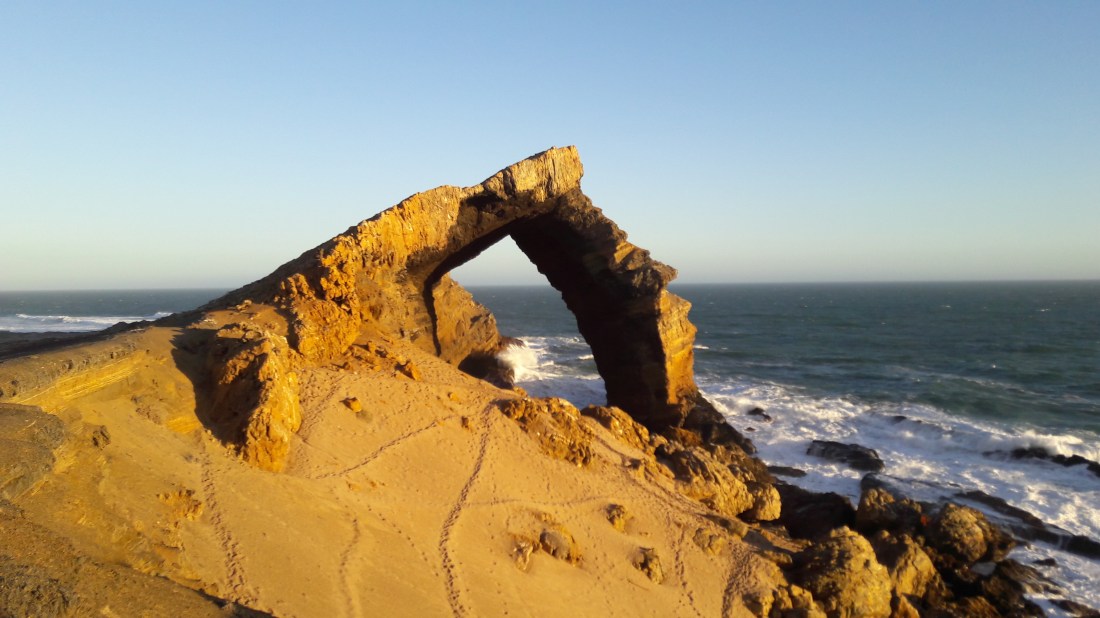
I’m up in Namibia this week, so I thought it would be appropriate to share a picture that I took over the weekend of Bogenfels Rock Arch, which is located in the Sperrgebiet region of Namibia.
I previously posted a similar picture back in 2015. See that post for some more information on the arch and the Sperrgebiet.
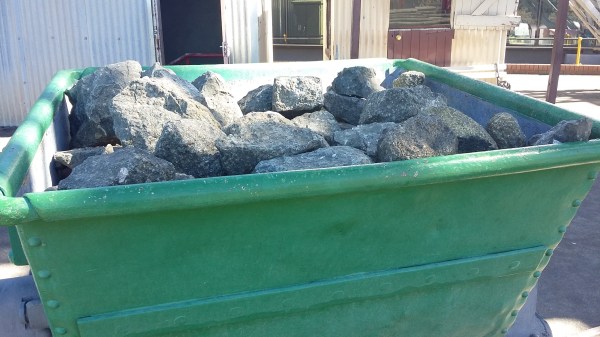
For this week’s “Monday Geology Picture”, here’s a snap of a mine cart filled with kimberlite rocks — and a mantle xenolith or two. I took this picture last year when I visited The Big Hole Museum in Kimberley, South Africa. The rock kimberlite was named after the town of Kimberley, of course! For those who are unfamiliar, kimberlite is the ore that is mined for diamonds, and many of the early diamond mines in South Africa were located in the vicinity of Kimberley. One of those old mines, which is called The Big Hole or Kimberley Mine, has been turned into a museum. The museum is well worth visiting if you find yourself in this part of South Africa.
Here’s a closer view of some of the rocks in the cart:
The Cape Fold Belt, viewed from the Stellenbosch winelands outside of Cape Town, South Africa.
For this week’s “Monday Geology Picture” here’s a view of the Cape Fold Belt with a vineyard in the foreground. I took this picture yesterday when I took a short walk with some friends through a vineyard located in the Stellenbosch winelands, just outside of my home city of Cape Town. You can see some impressive folding in those distant mountains!
Pahoehoe lava flow on Piton de la Fournaise volcano. Photo taken March 2017.
For this week’s “Monday Geology Picture” here’s a stunning example of a pahoehoe lava flow. I took this picture back in March when I visited Piton de la Fournaise volcano on Réunion Island. I’ll be sharing more pictures from Réunion soon – stay tuned!
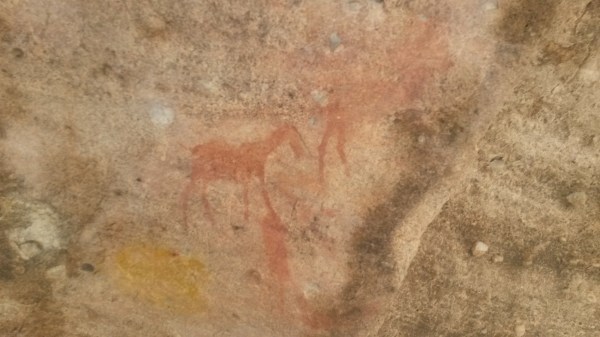
Rock art and sandstone bedding in the Cederberg Mountains, South Africa
First and foremost, I must apologize for the long gap in my blogging. I started the year with great intentions to revive this blog with my monthly science book posts… and then I didn’t post for several months! However, I think I have a good excuse: in January I found out that I am pregnant. Unfortunately, I have been suffering from an extreme form of morning sickness. I’ve been really, really ill for months. So, it was all I could do to keep up with my day job… let alone make time for blogging and other hobbies! I didn’t see my friends for weeks. I was even too sick to even do much reading, which obviously impacted my good intentions of reading more science books this year!
However, I am finally starting to feel a little better… so, I’d like to make another attempt to revive my blogging! So, stay tuned!
For today, however, I thought I would share a picture of some rock art on a lovely sandstone outcrop. I like how you can see some bedding in the sandstone behind the artwork. I took this picture last October, when my husband and I visited the Sevilla Rock Art Trail as part of a weekend trip to the Cederberg Mountains in South Africa. We visited the Cedeberg, one of our favorite places in the world, to celebrate our 5 year wedding anniversary. I previously posted some pictures of this rock art trail several years ago… perhaps I’ll put up a few more from this more recent trip when I have a chance. If you ever find yourself in the Cederberg, I definitely recommend a visit to the trail!
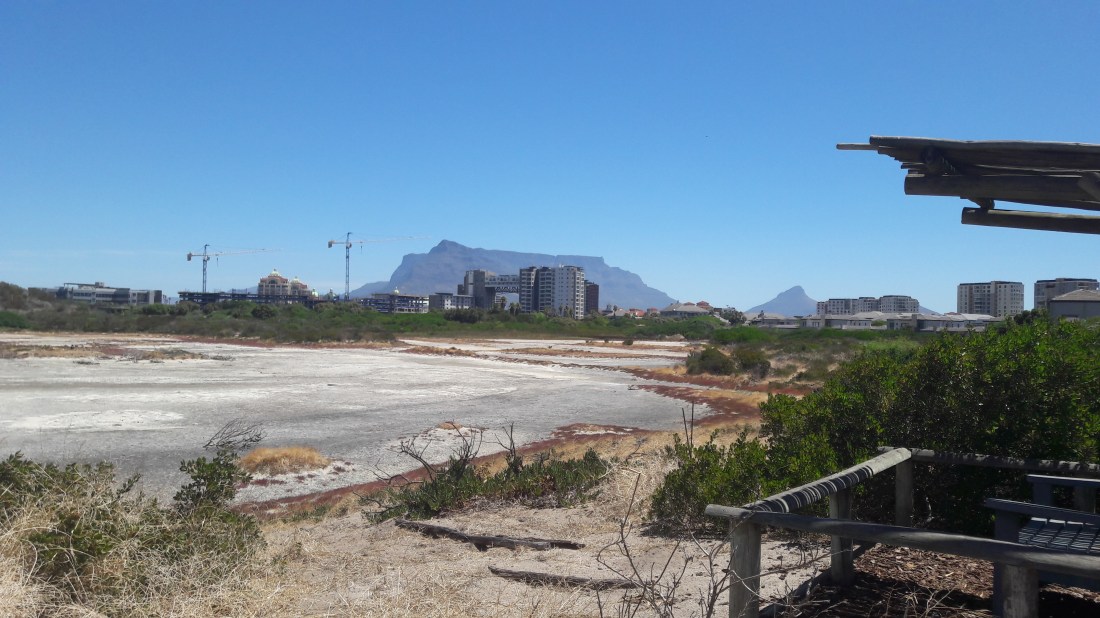
A salt pan on Intaka Island, with Table Mountain in the background.
For this week’s picture, here’s a view of a salt pan on Intaka Island, a small nature reserve in the Century City area of Cape Town. I often go to Intaka Island to paddle in a kayak on the canals surrounding the island. On Saturday morning I went for one of my usual paddles, and then in the afternoon I joined some friends for a nature walk on the island itself. During the walk, I snapped this picture of the salt pan on the island. The island nature reserve was founded to protect plants, bird, and other wildlife in the Century City area, which has been substantially developed since the late-1990s. In the background of this picture, you can see cranes where a block of apartments is being built on one of the last areas of open ground near the reserve. Table Mountain is also visible in profile in the background. Amidst all the development in busy, growing Cape Town, I’m glad that a few parcels of land, such as Intaka Island, have been set aside for conservation. I enjoy visiting Intaka a couple of times a week as an escape from the hustle and bustle, and all the concrete, of city life. I’ll have to share some more pictures of Intaka Island in a future post.
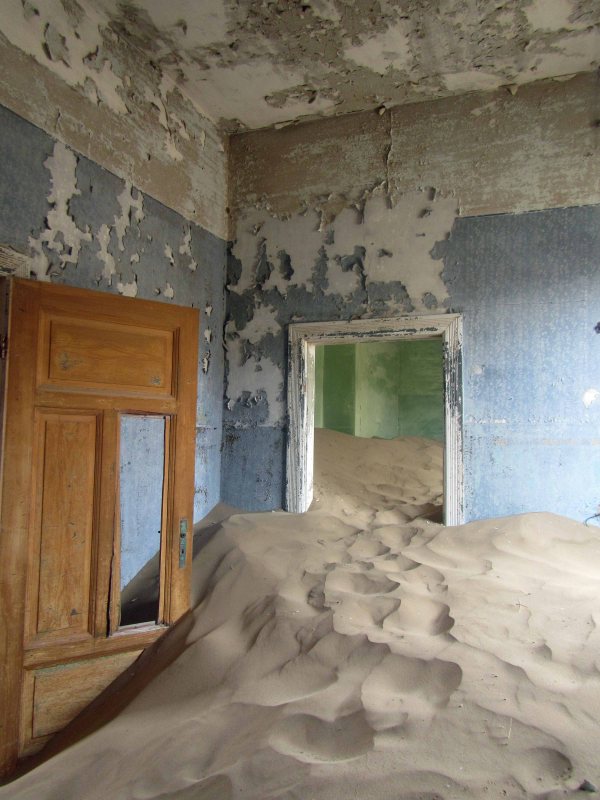
A sand dune slowly taking over a room in Kolmanskop.
For this week’s “Monday Geology Picture” here’s a picture of a spectacular sand-filled room in a house in the ghost town of Kolmanskop, Namibia. I visited this diamond mining ghost town back in 2014, and you can find more pictures from that visit here. If you ever visit Namibia I highly recommend a visit to Kolmanskop!








 Georneys