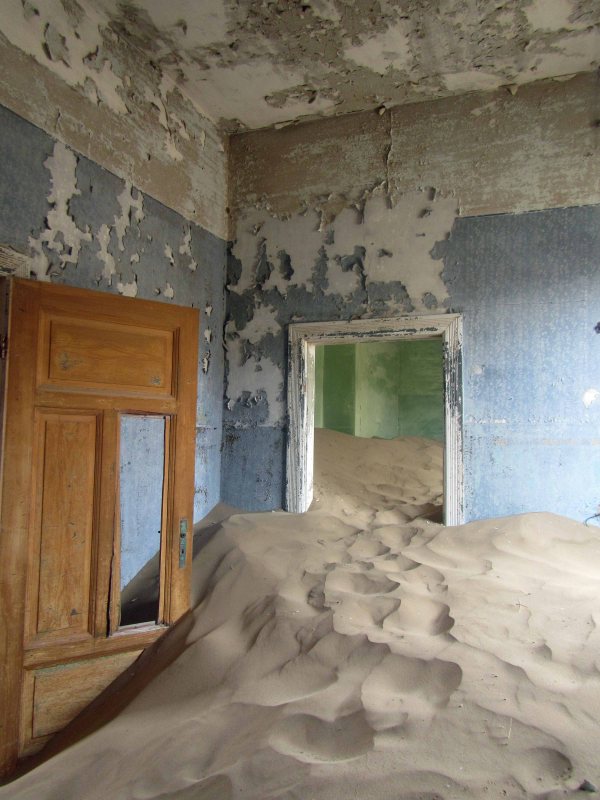
A sand dune slowly taking over a room in Kolmanskop.
For this week’s “Monday Geology Picture” here’s a picture of a spectacular sand-filled room in a house in the ghost town of Kolmanskop, Namibia. I visited this diamond mining ghost town back in 2014, and you can find more pictures from that visit here. If you ever visit Namibia I highly recommend a visit to Kolmanskop!
Migmatite hills and a pretty blue fence that matches the pretty blue sky.
I was a little sporadic with my “Monday Geology Picture” posts in 2016. I’ll try to be more consistent in 2017!
To start off, here is a shot of a lovely little hill of migmatite in the town of Lüderitz, which is located at the edge of the Namib desert in the beautiful country of Namibia. I took this picture when I was up in Namibia back in 2014.
Happy New Year… and stay tuned for more lovely geology pictures. Feel free to submit an interesting picture, if you like!
Mr. Penguin says… it’s time for holiday shopping! Mr. Penguin has found a good rock… see what you can find for your rock-loving family member below.
There are ten shopping days left before Christmas. Do you have a geologist in your family but are not sure what to buy him or her? Never fear, the annual Georneys “What to Buy a Geologist for Christmas” list is here! Below are ten great gift ideas for geologists. If you don’t see something that strikes your fancy on this list, check out the previous years lists:
I’m currently visiting the US for two weeks, and I recently went to Target with my mom. In the kitchenware section I saw an amazing T-Rex cookie jar that you can also buy online. I was very tempted to buy the cookie jar, but it was a little big to put in my suitcase to bring back to South Africa, especially since I’d already done some other shopping! Maybe I’ll buy it next year. This cookie jar is bound to be a hit with the paleontologist in your family… or with any geologist, actually!
Cost: $19.99
Gift #2: Planetary Fleece
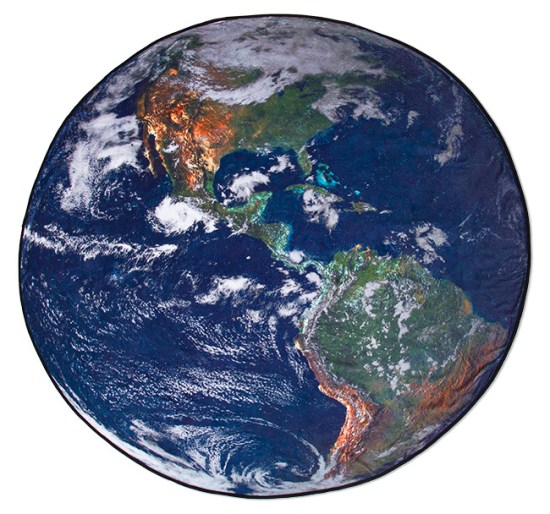
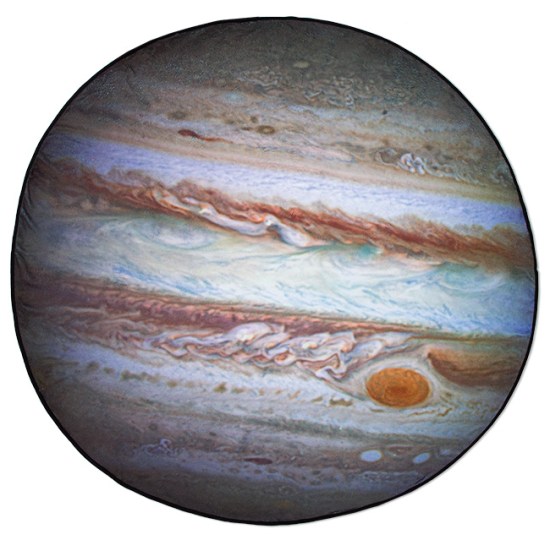
Earth Fleece. Picture from ThinkGeek.com.Mars Fleece. Picture from ThinkGeek.com.Jupiter Fleece. Picture from ThinkGeek.com.
The geologist in your family will adore snuggling up in a planetary fleece available from ThinkGeek.com. You can even choose from one of three options: Earth, Mars, or Jupiter. If you’re not sure which one to pick, I recommend the Earth one… or buy all three!
Cost: $29.99
Gift #3: Planetary Necklace
What a lovely necklace! Picture from ThinkGeek.com.
I really like the lovely “Solar Orbit Necklace” on ThinkGeek.com, and clearly I’m not the only one since the necklace is currently sold out. Perhaps keep this gift in mind for next year, or write a voucher for its purchase once it’s back in stock. The necklace is made up of lovely semi-precious stones that represent the solar system, including the sun, the planets, and the asteroid belt.
Cost: $39.99 (Original) or $79.99 (Sterling Silver)
Gift #4: Rock Display Case
A simple rock display case. Picture from Amazon.com.
Geologists are well-known for decorating with rocks, including making “deskcrops” in their offices. I certainly have quite a few rocks on display, both at home and at the office. Why not provide the geologist in your family with a pretty display case for more elegantly showcasing part of his or her rock collection? The geologist in your family is bound to pile up more rocks in random corners, but a case could at least keep a few of them in order! The display case could vary from very small to vary large, depending upon your budget and the space that your geologist loved one has for decorating. The case in the picture above is available on Amazon here.
Cost: Variable – about $10-$15 to several hundred dollars
Gift #5: Geology Field Notebook Bag
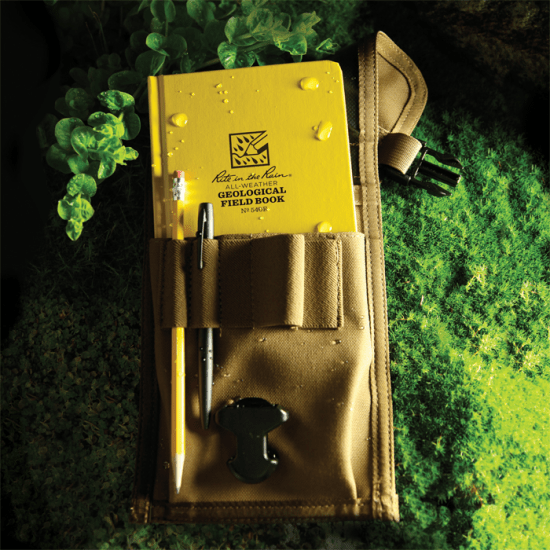
A lovely little bag for keeping a field notebook and other supplies at hand. Picture from http://www.riteintherain.com.
Does the geologist in your family do field work? Most likely! In that case, he or she will really appreciate a little bag for storing a field notebook, writing implements, and other supplies, such as rulers. The bag shown above clips onto a field belt to allow the geologist easy access to his or her field notebook at all times. The bag shown above can be purchased from Rite in the Rain.
Cost: Variable – about $30 for a canvas bag and about $200 for a leather bag
Gift #6: A Ruler
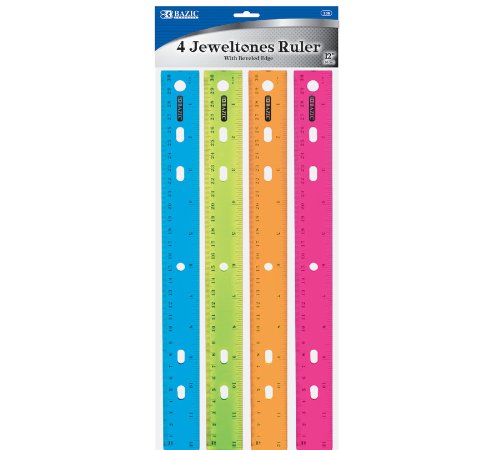
A simple wooden ruler. Picture from Amazon.com.Some colorful plastic rulers. Picture from Amazon.com.A fun ruler decorated with dinosaurs. Picture from Amazon.com.A fun ruler decorated with planets. Picture from Amazon.com.
Geologists can never have too many rulers since they are always measuring things (usually rocks!), both in the field and in the office. Geologists are also always in need of suitable items to include in photographs (usually of rocks!) for scale. You can buy any type of ruler, from a simple wooden or plastic ruler to a fun ruler decorated with dinosaurs or planets. Perhaps buy a few different types of rulers as stocking stuffers!
Cost: Variable – about $1 to $10
Gift #7: A Roadside Geology Book
An example Roadside Geology book. Picture from Amazon.com.
Is the geologist in your family planning a roadtrip soon? If so, why not buy them the relevant “Roadside Geology” book? These books showcase key geology along various roads and are available for many parts of the US. You can also find similar types of books covering some other parts of the world. For example, a similar book for South Africa (where I live now) is Geological Journeys. Above, I’ve shown the book for my home territory of Vermont and New Hampshire. Check out a more complete list on the Mountain Press website or on Amazon.
Cost: Variable – about $20
Gift #8: Volcanic Eruption Paperweight
I found this little volcanic eruption paperweight on the Spectrum Scientifics website, and it delights me. The geologist in your family is sure to love it, especially if he or she is a volcanologist!
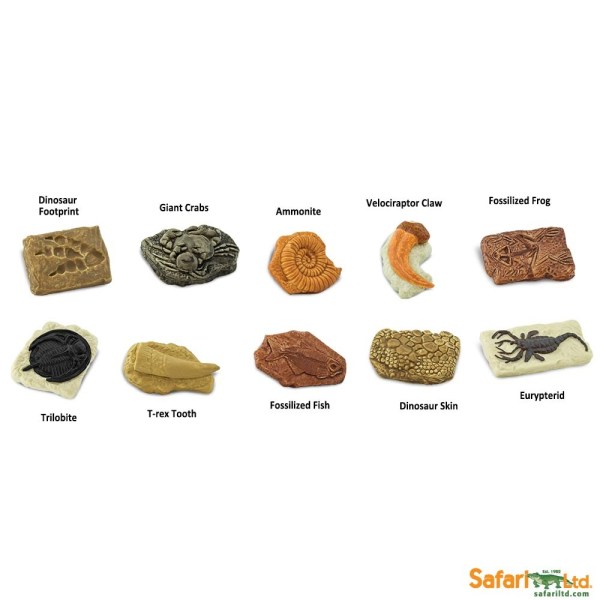
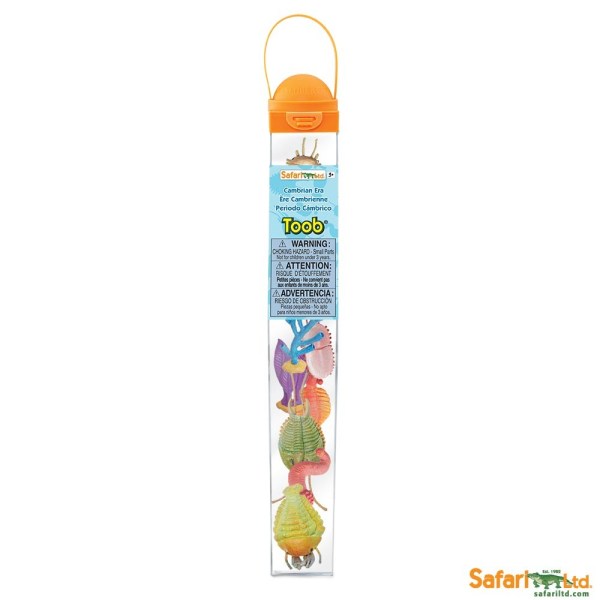
I really like the TOOB sets of toys, which are plastic tubes filled with small plastic figurines. The figurine sets are really fun and are often educational. There are a few sets of TOOB toys that are geology-themed and the geologist in your family is sure to love them, even if he or she is no longer a child! You could buy the geologist in your family the Dinos TOOB or Space TOOB. These are sure to be a hit. However, if you want something really geological in nature, I recommend the Ancient Fossils TOOB or the Cambrian Life TOOB. Those ones are really neat!
Cost: $11.99
Gift #10: A Donation to a Scientific Organization
Donate to a worthy scientific organization today!
Scientific organizations can really use our support right now, especially in the US where some scientific research (including much Earth Science research!) is under political threat. The geologist in your family will definitely appreciate a donation to a worthy scientific organization. Two that I can recommend are the National Center for Science Education and The Planetary Society.
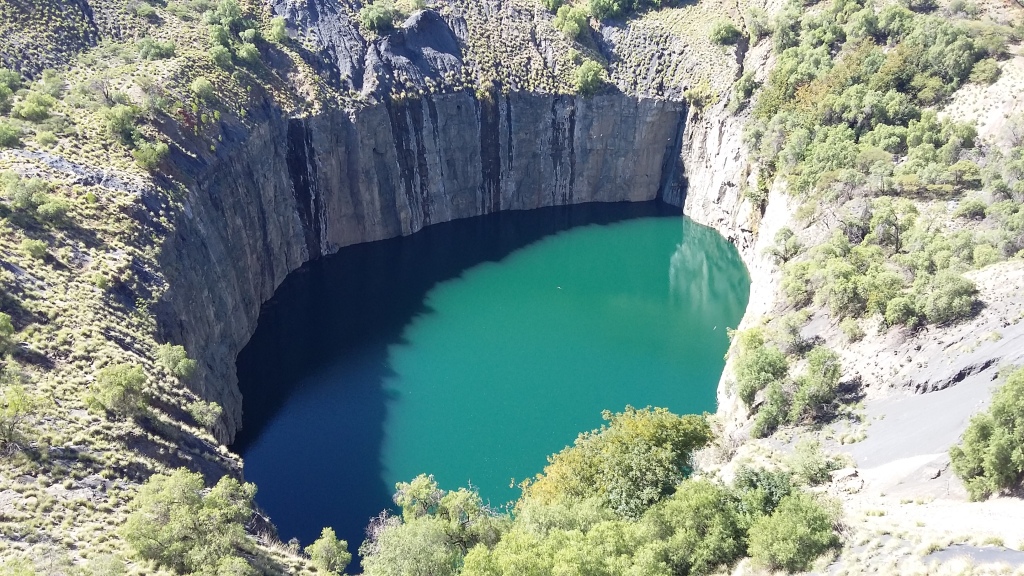
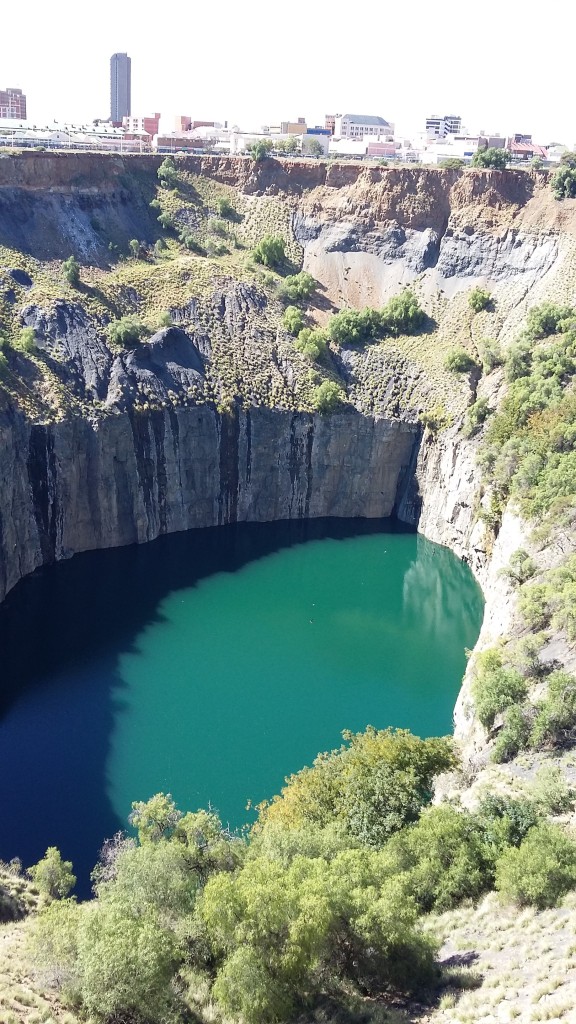
This week’s “Monday Geology Picture” is a shot of the Big Hole in Kimberley, South Africa. This hole, now filled partly with water, is the remains of an early diamond mine in a kimberlite (a rock type named after the town of Kimberley) pipe. The pipe was mined from 1871 to 1914 and today can be safely visited and observed (from a walkway) as part of a visit to The Big Hole Museum. The hole really is big: it’s 214 meters deep and has a perimeter of 1.6 kilometers. I took the above picture when I visited Kimberley earlier this year. If you ever find yourself in the Kimberley area, I highly recommend a visit to the The Big Hole Museum! In addition to the hole, there is a very nice display on diamond and kimberlite geology. You can even see some real diamonds! Around the museum there are also some historical buildings from early mining days with various old items on display.
Here’s another view of the Big Hole, with some buildings in the background for some sense of scale:
The Big Hole, Kimberley – with some buildings for scale.
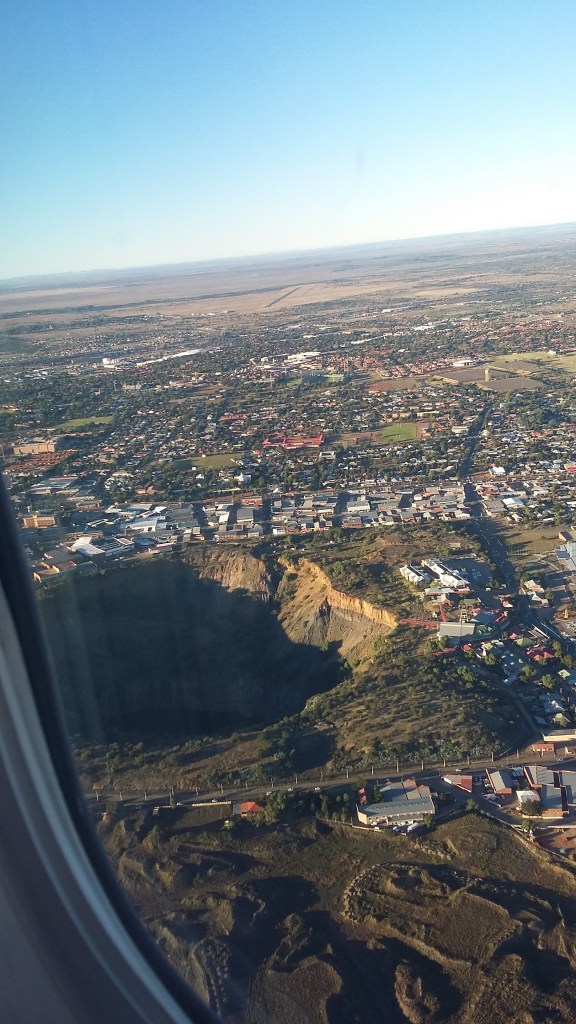
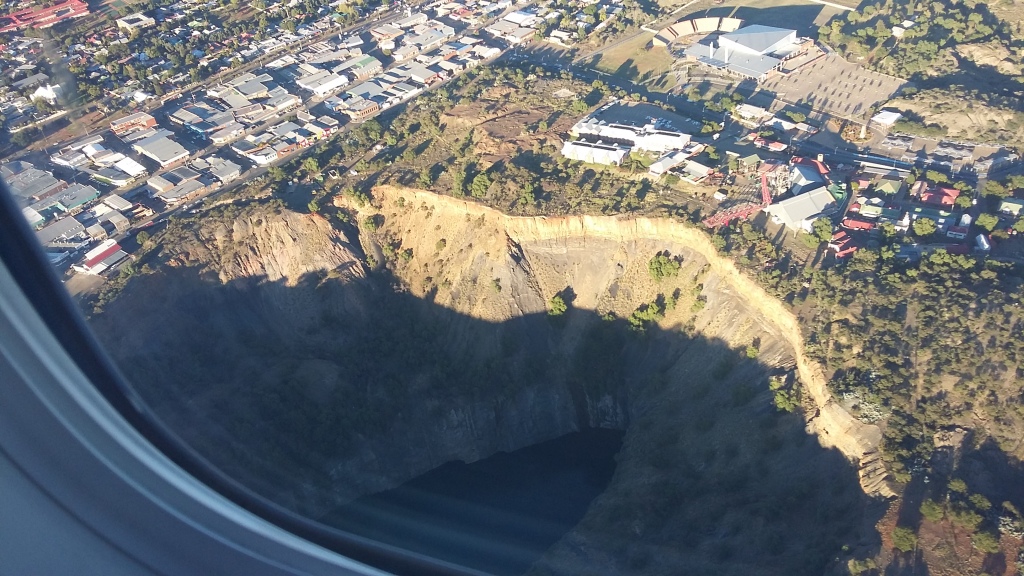
And here are a couple of views of the Big Hole that I took from the airplane when I was flying into Kimberley:
The Big Hole viewed from an airplane – Picture #1.The Big Hole viewed from an airplane – Picture #2.
This week I’m featuring one of my all-time favorite geology pictures: a snapshot of layers of travertine, representing the build-up of carbonate crusts precipitated from springs over many years. This picture was taken several years ago during my Ph.D fieldwork in the Sultanate of Oman. The layers in this picture took several thousand years to accumulate.
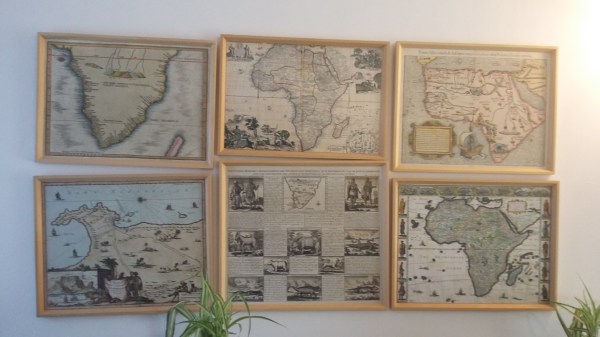
Several old maps of Africa on display. I love when maps are used as decoration! The skewness of these maps upsets my ODC tendencies, but in a way it also adds to the charm of the display!
Earlier this year I visited a local wine farm here in the Western Cape of South Africa, and there I saw a lovely display of some reproductions of some old maps of Africa. I’m not sure about the background of these maps, but I snapped a few pictures because I thought they were interesting. If you recognize any of the maps, please let me know in the comments.
Here are a couple of close-ups of the detailed map of the Cape Town area, where I live:
Cape Town area map.Cape Town area map – Close-up view.
If you look closely on the close-up view (click for a larger version), you can see that there are some useful descriptions on parts of the map. For example, there’s a description “Very Good Grounds” and then there’s a description “Grounds Not Fit for Tillage”. There are also some comments about the local mountain chains, with one being described as “Inaccessible Mountains” (I’ve corrected to modern spelling).
My husband and I live roughly in the “Grounds Not Fit for Tillage” part of the map, which probably explains why we struggle with our garden! The soil where we live is indeed very sandy and mostly comprised of quartz. Thus, it’s tough to grow anything other than local, native plants. So, we’ve planted a garden full of local succulents and are attempting this year to grow a few vegetables in a raised bed. We tried planting some flowers earlier this year, but only the ones in the pots (with special soil) seemed to survive!
I think that “Inaccessible Mountains” description may be fair, too. I’ve been on some tough hikes in that area!
I really enjoy old maps, and it’s great when they contain detailed information such as the Cape Town area map. I’d say that this map is still useful today!
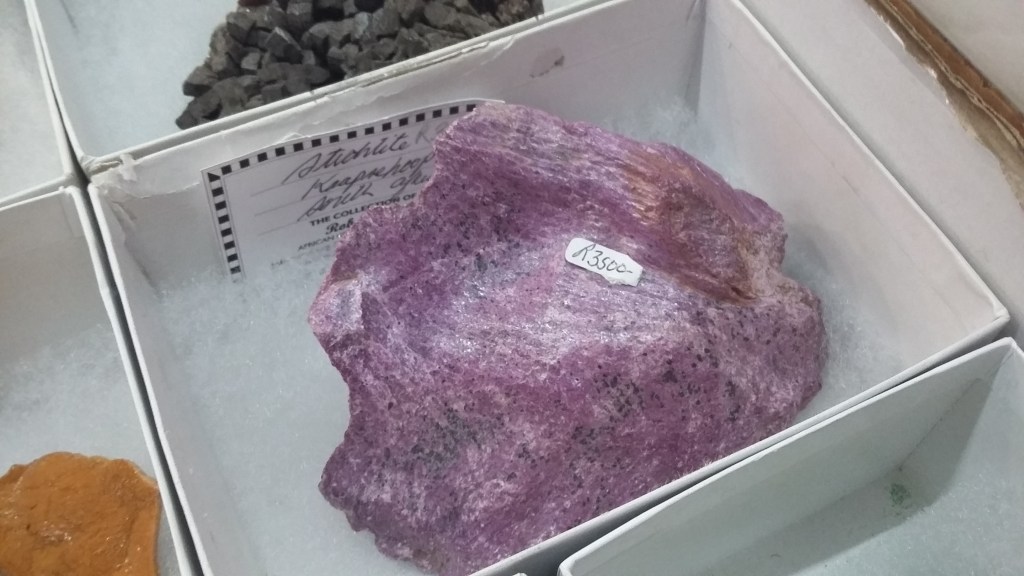
For this week’s picture here’s an example of one of my favorite minerals: stichtite, a lovely purple-colored chromium and magnesium rich carbonate. I saw this particular sample of stichtite for sale at a rock shop. Stichtite comes in a range of purple shades, from a pale pinkish purple to a rich, bright purple. I really like the lilac shade of this particular sample. The R3500 (about $250 US) cost for this sample was outside of my price range, but I did admire it for a little while before eventually buying a couple of other less expensive items at the shop. Fortunately, I already have some stichtite in my rock collection. I have a couple of samples of stichtite that I collected during some field work in the Middle East. Stichtite is a fairly rare mineral, so I’m lucky to have some in my collection!
On Friday I spent the day attending talks on a variety of subjects, namely ophiolites, megafans, and gold. I saw a number of excellent talks, but in this blog post I’ll briefly discuss three interesting talks that I attended.
The first interesting talk was related to ophiolites and was given by Paul Robinson. The talk was titled “The significance of zircon in oceanic mantle peridotites and chromitites”. The talk discussed the presence of felsic minerals, such as zircon, in ultramafic rocks (peridotites and chromitites). Geologists aren’t quite sure why these felsic minerals are found (in low abundances) in ultramafic rocks. Understanding the origin of the zircons, including any possible recycling of zircon from older rocks, has important implications for geochronology studies since zircon is a target mineral for U-Pb dating techniques.
The second interesting talk was about megafans and was given by Justin Wilkinson. The talk was titled “Africa’s megafans and their tectonic habitat.” I learned two important things from the talk. First, I learned what the term “megafan” means. A megafan is a very large fan of fluvial sedimentary material. There isn’t exact consensus in the literature on the size requirement, but generally fans that are larger than 100 km in size are considered “megafans”. Second, I learned that there are many more megafans on Earth than scientists realized even a few years ago. Some of the famous megafans, such as the Okavango megafan in Botswana, have been known about for years. However, others have only recently been identified, mostly through remote sensing mapping. Amazingly, we’re still learning about the surface of our planet. While many megafans have been identified over the past few years through focused efforts, there are likely many more to still identify — for example, there are likely some underneath jungle vegetation in places. Dr. Wilkinson works for NASA and uses satellite data and astronaut handheld photography to study features such as megafans. The use of the astronaut photography to conduct geology is pretty cool — I’d never heard of that before. If you want to learn more about astronaut photography, here’s a neat-looking book authored by Justin Wilkinson on more than 40 years of astronaut photography. I think I need to order a copy of this book for my coffee table!
The third interesting talk was about biology and gold and was given by Hartwig Frimmel. The talk was titled “Early Life and Ancient Gold” and focused on the possible role of biological processes in the formation of the enormous Witwatersrand gold deposits. Frimmel’s talk focused on a recent paper of his (written with a colleague Quinton Hennigh), which has the delightful title of “First whiffs of atmospheric oxygen triggered the crustal gold cycle”. I’d read the Frimmel and Hennigh paper before the talk, but it was great to hear one of the authors explain the theories himself. There were a few skeptics in the audience, but in general Frimmel’s talk was well-received. I certainly enjoyed the talk and think that there is much merit in some of the ideas, even if there’s more work to do to unravel some of the details and the unanswered questions that remain.
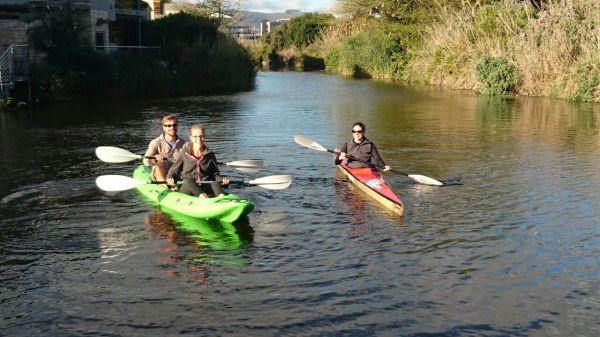
After attending talks most of the day, I met up with fellow AGU blogger Callan Bentley as well as another conference attendee Nadja Drabon. Callan and Nadja bravely joined me for some kayaking along the Century City canals, my usual training spot! We had a great time chatting on the water and also at dinner afterwards. Great to see you in South Africa again, Callan, and great to meet you, Nadja!
This is the last of my official daily posts about IGC, but stay tuned for some additional snippets about the conference here and there.
Today I’m blogging about Day #4 (Thursday) of the 35th International Geological Congress (IGC), which I attended last week in my home city of Cape Town, South Africa. You can also read my posts about Day #1, Day #2, and Day #3.
On Thursday I only spent the morning at IGC since in the afternoon I had some private meetings offsite. I spent most of the morning attending some more talks on gold, a continuation of the gold session that I started attending on Wednesday afternoon. I really enjoyed listening to the various gold talks — gold mineralization can be so complex and can occur in so many different types of environments!
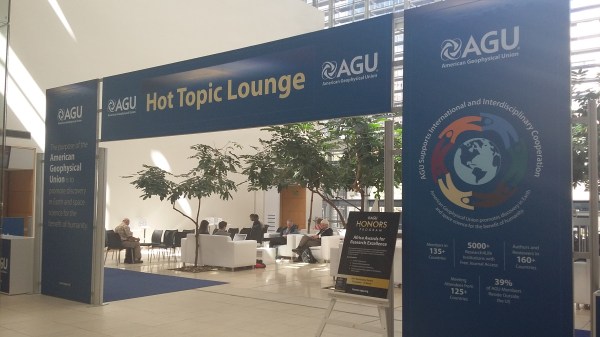
I also spent a little more time wandering through the exhibition hall, and I checked out the AGU Hot Topic Lounge that was set up in one of the convention center hallways. The lounge provided a place for geoscientists to meet and have scientific discussions. There was also a schedule of focused discussion on various topics. For example, there was a discussion on kimberlites and diamonds on Wednesday afternoon, and there were various discussions on scientific publishing throughout the week. The conference center was crowded without too many places to sit and chat, so the lounge provided a great, relaxing environment for scientific discussions of various kinds.
That’s all for today… stay tuned for my post on Day #5!
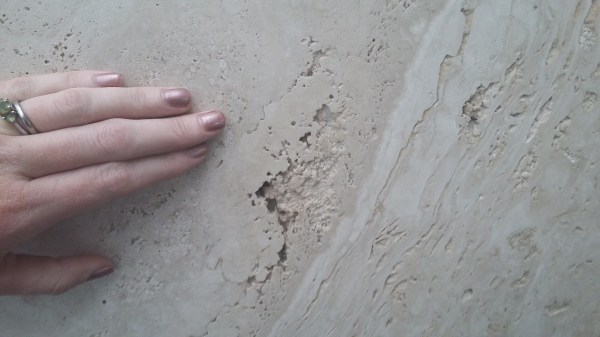
A very pretty travertine tile. I love the layering and the void spaces.
For this week’s Monday Geology Picture, here’s a lovely travertine tile that I spotted in the Cape Town International Convention Centre, which was the site of the 35th International Geological Congress that I attended last week.















 Georneys