Happy Birthday, Jules Verne!

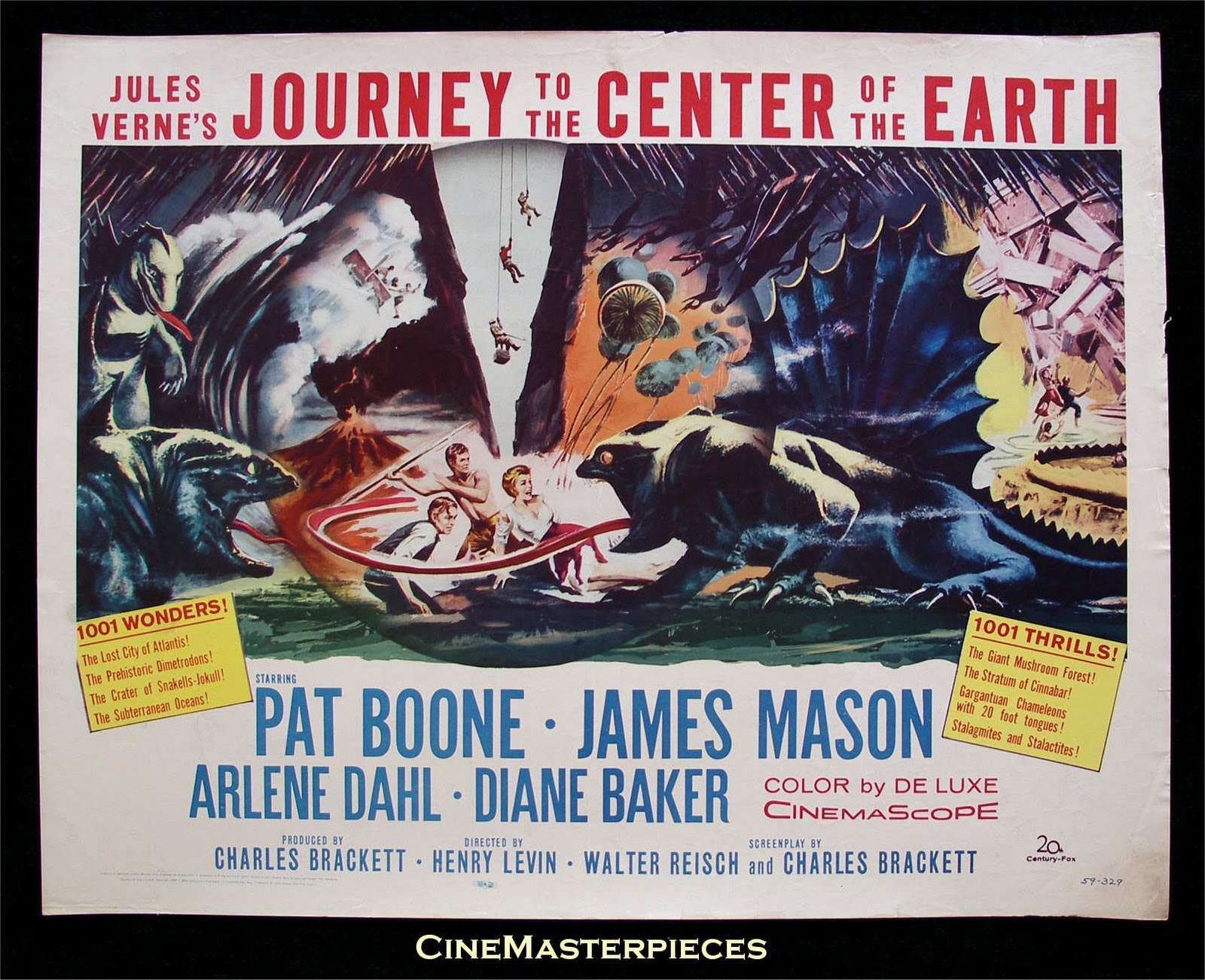
Movie poster for “Journey to the Center of the Earth.” Image taken from here.

David Bressan over at the History of Geology blog reminded me that today is the birthday of Jules Verne, one of my favorite authors. Happy Birthday, Jules!

Even more excitingly, on his blog David posted a trailer for the 1959 Disney movie “Journey to the Center of the Earth” starring Pat Boone. This is my all-time favorite movie. I first watched this movie as a young child at my grandmother’s house. One day, I found the movie in a pile of VHS tapes of children’s movies that my grandma kept to entertain her grandchildren. I watched the movie and loved it. From then on, every time I visited my grandmother’s house I had to watch “Journey to the Center of the Earth.” You know how children often have one book that they insist on reading every night? Or one movie they insist on watching all the time? Well, my movie was “Journey to the Center of the Earth.” If I stayed with my grandma for a week, I’d watch the movie every day. I think my parents purposely did not buy a copy of this movie because if they had then they’d have been forced to watch it even more often.

Many years later, when I was an undergrad at Dartmouth, my mom bought me “Journey to the Center of the Earth” on DVD as a Christmas gift. Perhaps that Christmas gift was the inspiration for the introduction to a paper that I wrote back in undergrad about  hafnium (Hf) and neodymium (Nd) isotopes. Here’s a snippet from the introduction of that paper:

“Introduction
Contrary to the portrayal in Jules Verne’s classic novel Journey to the Center of the Earth, in which a group of scientists reach the center of the Earth by spelunking down a very deep cave, humans have barely scratched the surface of our planet’s outermost crust. Remarkably, almost all of the adventures that seemed so fantastic when Verne wrote about them in the late 1800s have become a commonplace part of human society. Inspired by the imaginings of Verne and others dreamers, humans have developed technology that allows people to travel around the world in far fewer than eighty days, dive far deeper than 20,000 leagues under the sea*, and soar high above the Earth. At least one Verne tale is still a dream, however: humans have not journeyed anywhere near the center of the Earth. In fact, the deepest hole humans have drilled is 12 km deep, a mere 0.2% of the Earth’s 6378 km radius (1). As scientists cannot directly sample mantle or core material, they must rely on other methods to learn about the physical and chemical characteristics of the Earth’s interior.

One of the methods modern scientists use to learn about the chemical composition of the Earth’s interior is the analysis of isotopic compositions in rocks on Earth’s surface. Geochemical analysis of radiogenic Hf and Nd [and other] isotope ratios in erupted lavas is a powerful tool for examining the processes governing the geochemical evolution of magma deep within the Earth’s mantle. Isotope compositions and their ratios are minimally affected by the immense physical stresses imposed at
great depths in the Earth’s interior, the processes of magma upwelling to the crust, and the final eruption at the Earth’s surface. Therefore, these analyses can be used to infer the compositions of the igneous source material as well as how these sources mixed and melted to form the rocks on the surface. Combined with major and trace element data, Hf and Nd isotope ratios can even be used to determine the degree of melting that occurred.”

If you’re curious about the rest, you can read the full paper here, but please keep in mind that I wrote this in 2004 as a very young geochemist and that DUJS is a non-peer reviewed, undergraduate science journal.

If you like bad geology movies, go purchase “Journey to the Center of the Earth.” This is a bad geology movie at its best– the geology is laughably ridiculous, the special effects are sensationally awful, and the story is wondrously entertaining. If you’re like me, you’ll watch this movie several times a year, so you won’t want to have to order it from Netflix every time (sadly, it is not available on streaming). And make sure you order the 1959 version with Pat Boone. The 2008 version with Brendan Frasier isn’t nearly as good.

*Note that this is an error in my paper as 1 league ~ 5.6 km. So it is clearly impossible to dive 20,000 leagues in depth since the deepest point of the world’s oceans is only ~11 km deep at the Mariana Trench. In the title of his book, Verne is referring to the horizontal distance traveled under the sea, not the depth.

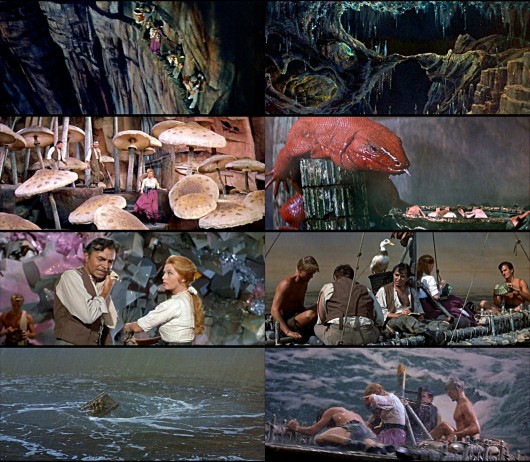
“Journey to the Center of the Earth” movie shot, image taken from here.
Movie poster for “Journey to the Center of the Earth.” Image taken from here.

Various scenes from “Journey to the Center of the Earth.” Image taken from here.

Scientific Perspiration

Note that I originally wrote this essay during my first year of graduate school. Three years later, I still feel that I am an average graduate student. However, I also feel that since I started graduate school I’ve gained a large amount of confidence and greatly developed my knowledge in geology, chemistry, and mathematics. I have also been humbled. Although I know much, much more than when I started graduate school, I have also more fully realized what an enormous amount of knowledge there is in the world and how much I don’t know. Most importantly, I’ve learned not to be afraid of a little scientific perspiration, be it picking crystals for hours on end, teaching myself an ancient data reduction program, or jumping headfirst into some math.

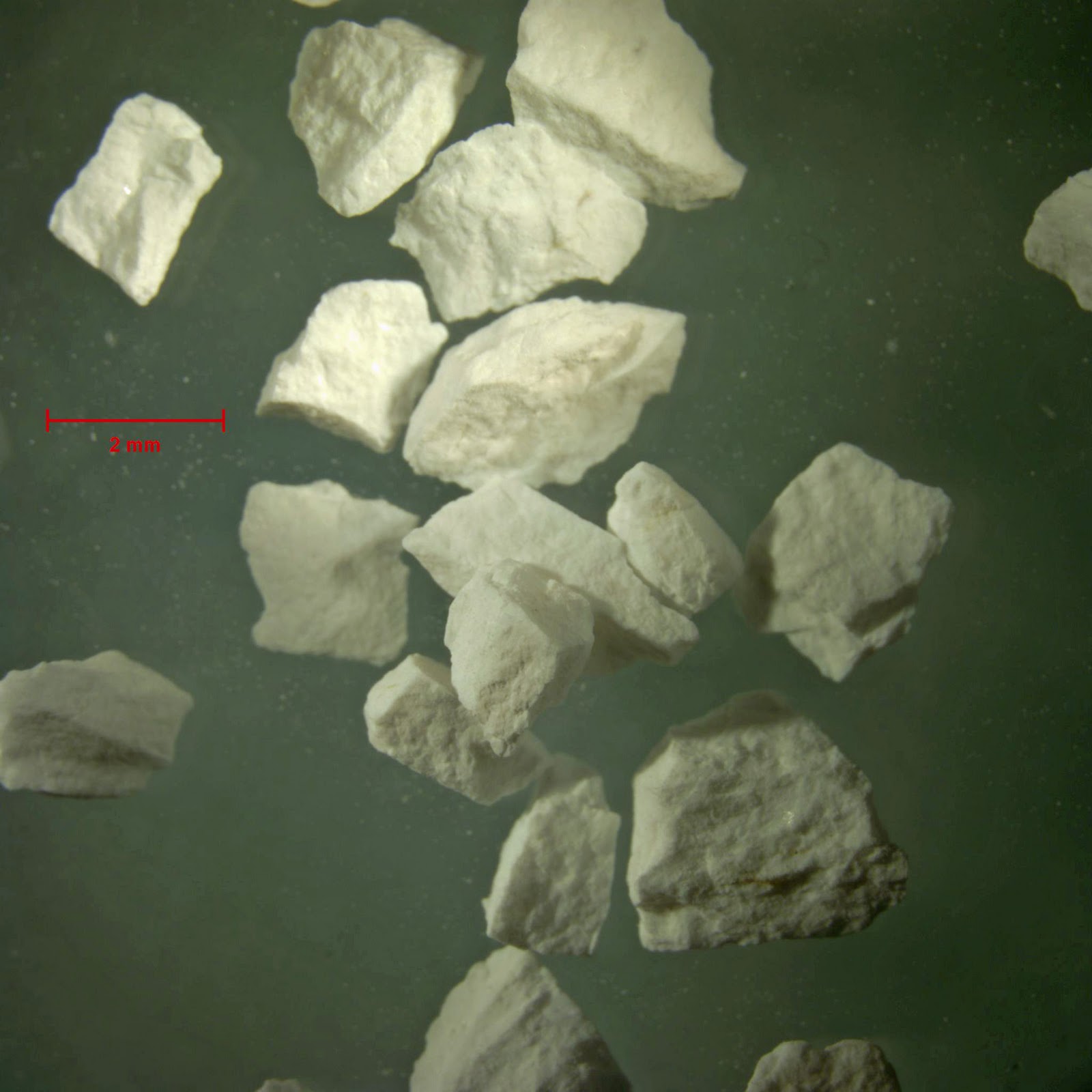
Carbonate grains under the microscope, Fall 2010.

“Genius is one percent inspiration and ninety-nine percent perspiration.”
-Thomas Edison

If you’re average but want to be a scientist, there’s hope! With persistence and a fair amount of perspiration, you can still become a great scientist.

Most of us are not scientific geniuses or autistic savants. Most of us are, well, fairly average. We should be. Most people are supposed to be average. Most of us should be C-level students. C is supposed to be average, the recent trend in grade inflation aside.

Take me, for instance. I may go to MIT and all that jazz, but really I’m quite ordinary. For instance, in the three math classes I’ve taken since high school, I’ve earned two Cs and a B. In many ways, I’m quite dumb by MIT standards. I suffer from math anxiety, like many people, and I have trouble memorizing information. I forget mineral formulas and phase diagrams. I’m slightly dyslexic and mix-up phrases and reverse numbers. I’m a klutz, though I’m more graceful than I used to be as a kid. Still, in the lab I have to work very carefully and constantly be aware of myself. I’m the sort of person to pick crystals for three days and then accidentally knock over the beaker onto the floor of the lab. I’ve done it before.

I am a fairly creative thinker and a decent writer, but in most other ways I’m about average. I hardly fall into the category of MIT genius. Like most people in the world, I don’t solve problems in fluid mechanics by gazing into my coffee cup (like Albert Einstein) or take up animal behavior studies by training the ants in my bedroom (like Richard Feynman). Unlike other MIT students, I don’t play competitive scrabble in my free time or whisk off to Vegas to win thousands by card-counting at Blackjack. I’m just a fairly average graduate student, my MIT credentials aside.

Still, there is hope for me as an average scientist. And there’s hope for you, too, if you’re also average like me! This hope comes from the fact that good science does not come exclusively from intellectual giants who come up with a great idea and immediately change the way we view the universe. We are not all Albert Einsteins, Richard Feynmans, or Carl Sagans. Even these great thinkers had to work fairly hard, long hours to come up with their strongest science. Sure, they were naturally talented in mathematics and their respective scientific fields, but that wasn’t enough. They also had to spend countless hours calculating, measuring, and writing. They not only had to come up with their ideas, they also had to figure out how to prove them and explain them to others.

As science grows more complex and interdisciplinary, the role of many hundreds of average scientists will be just as valuable as the role of one or two great thinkers. There are many problems science needs to tackle in this century and beyond, and we need as many minds as possible working on these problems. In order to be able to cure cancer and figure out issues such as climate change and sustainable energy, we need global scientific efforts.

I think a great misconception in the world is that one has to be really smart or naturally great at mathematics and science to be a good scientist. This is false, in my opinion. Sure, having some natural ability doesn’t hurt. More important, though, is having a real passion for science and being willing to work hard at science because of this passion.

When it comes down to it, science is often about persistence. Because science explores the unknown, there are no certainties. There’s a big difference between the textbook answers in a freshman college physics or chemistry lab and real scientific research. Scientific research is more often than not one step forward, ten steps back. Progress can be very slow and tedious. A great idea can take months to years to test and verify. Sometimes, smart people are not very good at hard work and persistence.

In my own life I’ve watched friends give up on science degrees when there were suddenly no textbook answers, when success required working through a little frustration. An ex-boyfriend of mine switched to finance after he realized biology was “a little more difficult” beyond the introductory level. He was smart enough to become a biologist, but he didn’t want to work hard for the answers that were not already there. The same semester he switched to finance, joined a fraternity, got drunk every night, and we broke up. He moved on to a pretty Asian girl, and I moved on to a research job in a geology lab. I like to think I chose science over him. It sounds more romantic than “he dumped me for a hot Asian chick.”

Personal stories aside, though, I feel that often the scientists who make the most valuable contributions to science are not the smartest ones but rather the most persistent ones (or perhaps the luckiest ones). These persistent scientists may not be geniuses in the Einstein sense, but they are willing to trudge away for years at a task that many might find extremely frustrating or boring. For instance, the Serbian geophysicist Milutin Milankovic was smart, but he did not become famous because of one moment of brilliance. Rather, he became famous because he devoted himself for thirty years to the tedious calculations associated with the planetary and solar system cycles that affect climate and ice ages. The Milankovic Cycles are controlled by Earth’s orbital shape, eccentricity, and axial tilt and are now recognized to play an important, natural role in climate regulation. The theory that physical variations in Earth’s movement may affect climate had been advanced before Milankovic. However, Milankovic was the first person to sit down and grind through the tedious calculations, so the cycles are named after him. He was willing to do the hard, often boring work that others were less willing to pursue. He worked hard.

Fortunately, modern technology is somewhat easing the amount of hard– or at least monotonous– work that scientists must do these days. Computer programs make repetitive calculations much more bearable and also much faster. Fancy equipment in the lab automates many of the more laborious aspects of chemistry, physics, biology, and engineering. Once one works his (or her!) way up the ranks somewhat in science, one can also hire graduate students, a cheap and often efficient way to complete less-than-desirable yet still important calculations or tasks in the lab.

Regardless, I think that dedication and hard work still count for a great amount in science these days. At least, that’s what I tell myself. I am not the hardest worker in my lab, by any means. I do often work long hours, though, and I try not to complain when the tasks are repetitive or frustrating.

For the last three days straight, I have been picking plagioclase crystals under a microscope. By picking I mean selecting crystals that are not altered significantly so that they are good “bottles” for the radioactive isotopes I am using to date the basalts from which these crystals came. These crystals are very small– they’re about 250 microns wide, on average. I use a very small pair of tweezers and pick in a dish filled with ethanol so that the crystals don’t stick to my tweezers as I’m picking them. I have been picking between eight and twelve hours a day with limited breaks. I go to the microscope, pick for a couple of hours, have a cup of tea, pick for another hour, eat lunch, pick for a few more hours, check email, pick for an hour, go to the gym, pick for two or three more hours, and then go home. By the end of the day, my right hand muscles ache and my eyes are sore. I walk home seeing tiny white plagioclase crystals dancing in front of me. While picking, I have listened to just about all the music I own and have started begging my friends for new mixes.

I’m exhausted, but I don’t mind my crystal picking too much. The task is monotonous, but it’s also very important. Picking crystals by hand is the best way to ensure that the dates I end up obtaining for the basalt rocks are the best dates possible. If I know the the crystals are good (unaltered, pure, clean plagioclase) then I can have confidence in my ages once I determine them three or four months from now. For a couple of unpleasant weeks of picking now, I’ll have a great scientific return in the future… hopefully, anyway. Nothing is guaranteed in science research, after all, but my chances for good data are high.

The work I’m doing now may not be as significant as, say, thirty years of Milankovic calculations. Regardless, as I sit here in my lab, at the microscope, picking away for hours on end, I feel somewhat romantic. Hey, I may not be the smartest scientist around. Here I am at MIT, though, and dammit I’m going to work hard.

So, that’s my message for today: a little enthusiasm and dedication can go a long way in science. Not the brightest but still want to be scientist? That’s okay. Work hard, and you can succeed in science. At least, I hope so. We certainly need more scientists in the world, so it shouldn’t be just the very top cream of the crop who pursue degrees and careers in science. We need some average, hard-working people to become scientists, too. And after all, even scientific geniuses have to work hard to provide concrete support for their far-fetched theories.

Alvin Cam

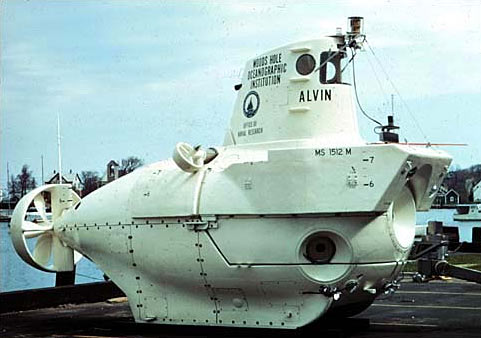
The Alvin Deep-Sea Submersible, Image taken from here.

The Alvin Cam may not be as cute as the Panda Cam, but as deep-sea submersibles go I think that Alvin is actually pretty adorable. Plus, someone has placed a cute stuffed animal dog with a hard hat in front of the camera.

The Alvin Cam monitors the upgrade of Alvin, a deep-sea submersible that has been taking humans deep in the world’s oceans since 1964. This makes Alvin the longest-operating deep-sea submersible with over 4,600 dives! Alvin is owned by the U.S. Navy and operated by Woods Hole Oceanographic Institution (WHOI), where I am a graduate student.

Alvin is long overdue for an upgrade. The National Science Foundation is now funding a multimillion dollar upgrade that will install a larger sphere, more view portals, and other improvements. The upgrade will enhance Alvin’s capabilities and also make long dives more comfortable.

Over the next year or so, you can watch the Alvin upgrade live by tuning into the Alvin Cam. If you see a really neat event happening on the Alvin Cam, take a screenshot and email it to me at georneysblog (at) gmail (dot) com. I’ll post good screenshots on this blog. If you send a really great screenshot, I’ll reward you with a WHOI-themed prize*. 

Read more about Alvin and the upgrade here and here and here.

I am particularly excited about the ongoing upgrade because my advisor is the PI (Principal Investigator, aka “the boss”) in charge of the upgrade. The upgrade certainly keeps my advisor busy! Remarkably, she still makes time for me amidst meetings with the Navy and engineers as well as many other obligations. My thesis seems very insignificant compared with the Alvin upgrade, so I feel very fortunate that my advisor makes so much time for me. She is a remarkable woman whom I admire very much.

Finally, here’s a really neat time-lapse video of Alvin being disassembled during a routine maintenance overhaul in 2005: Alvin Disassembly Movie.

*Don’t get too excited yet… might just be a WHOI pencil, though I’ll keep my eyes open for good WHOI swag.

Wadi Rum in Pictures

Lunch in the shade of a rock arch, Jordan, August 2007.

The Middle East is near and dear to my heart. When I was fifteen, I lived with a Palestinian refugee family in Jordan for five months as an exchange student. The experience opened my eyes to the wider world and no doubt changed the course of my life. Ever since, I have been drawn to the Arabic language, the Middle East, and to deserts. I studied Arabic for four years back in undergrad, but I unfortunately have never had the opportunity to study Arabic abroad and truly gain fluency in the language. The Middle East is a tumultuous region, and the semester abroad programs I signed up for kept being canceled because of safety concerns. Also, I had to balance my Arabic studies with a heavy science courseload.

However, I had the good fortune to have several Arab friends in high school and college. I was also adopted by a wonderful Iranian family (who are Persians, not Arabs) which hired me as a part-time nanny for their three wonderful children. I am still very close with the Iranian family; just the other day, the oldest daughter– who is now in Middle School– called me up to ask me questions for a science report she was writing on Plate Tectonics. She told me yesterday that she received a perfect score on her report, and I couldn’t be prouder.

In graduate school, I have had the opportunity to carry out my thesis research in the deserts of northern Oman. I hope to always do some geology research– and perhaps even teach one day– in the Middle East. There is certainly some fantastic geology in the region.

The recent turmoil in Tunisia, Yemen, Jordan, Egypt, and other Middle Eastern countries worries me, but I am hopeful for the region. The deaths of protesters and policemen sadden me greatly. I have great respect for all those on the street, fighting and marching and shouting for a better life. I hope there is soon a peaceful transition of government in the protesting countries, though I know the struggle will continue long after the streets are empty. In general, I think the biggest problem the Middle East must overcome is a very young population with few job opportunities. This is a problem that will take many years to work through. Again, I am hopeful.

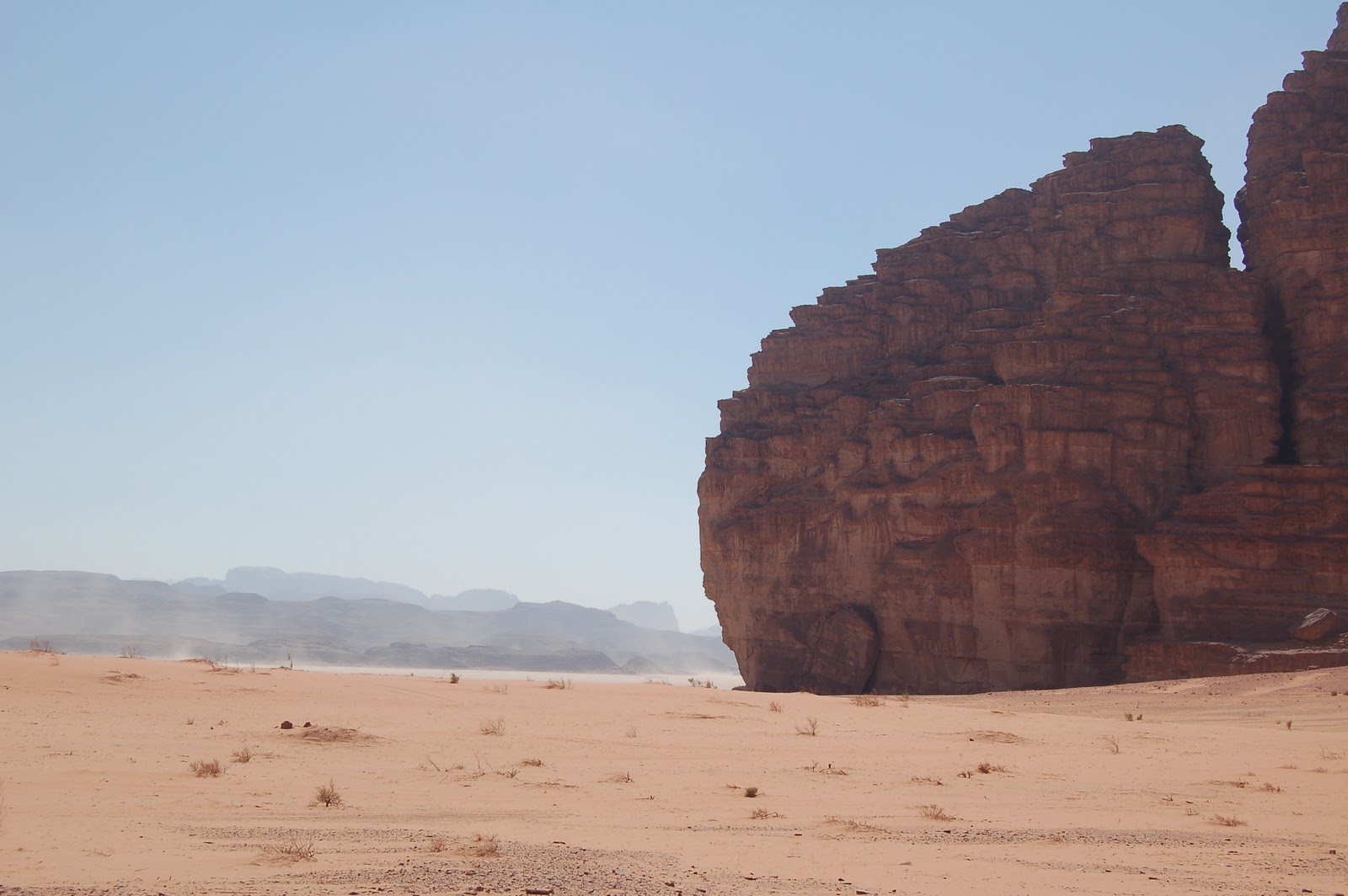
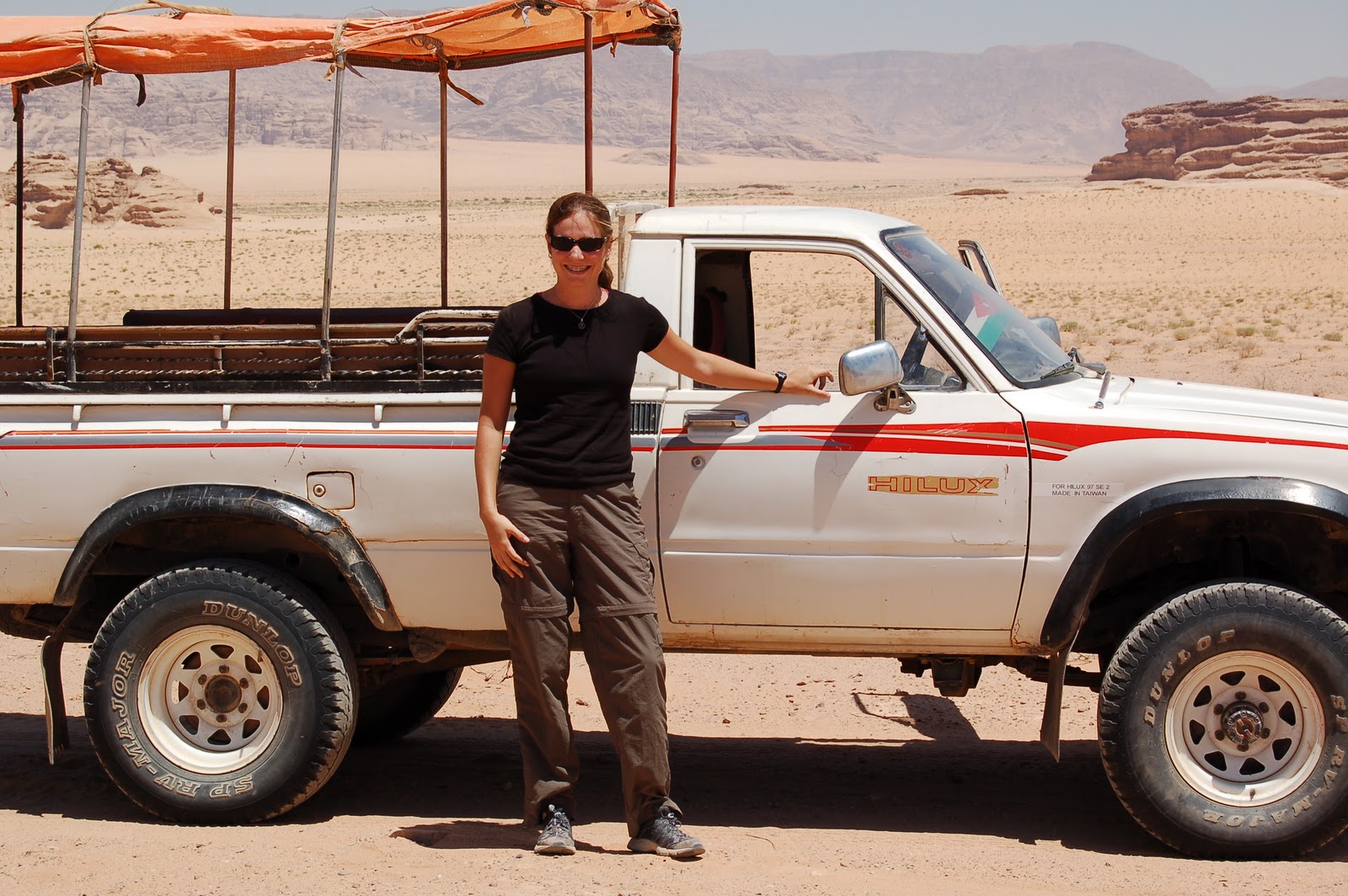
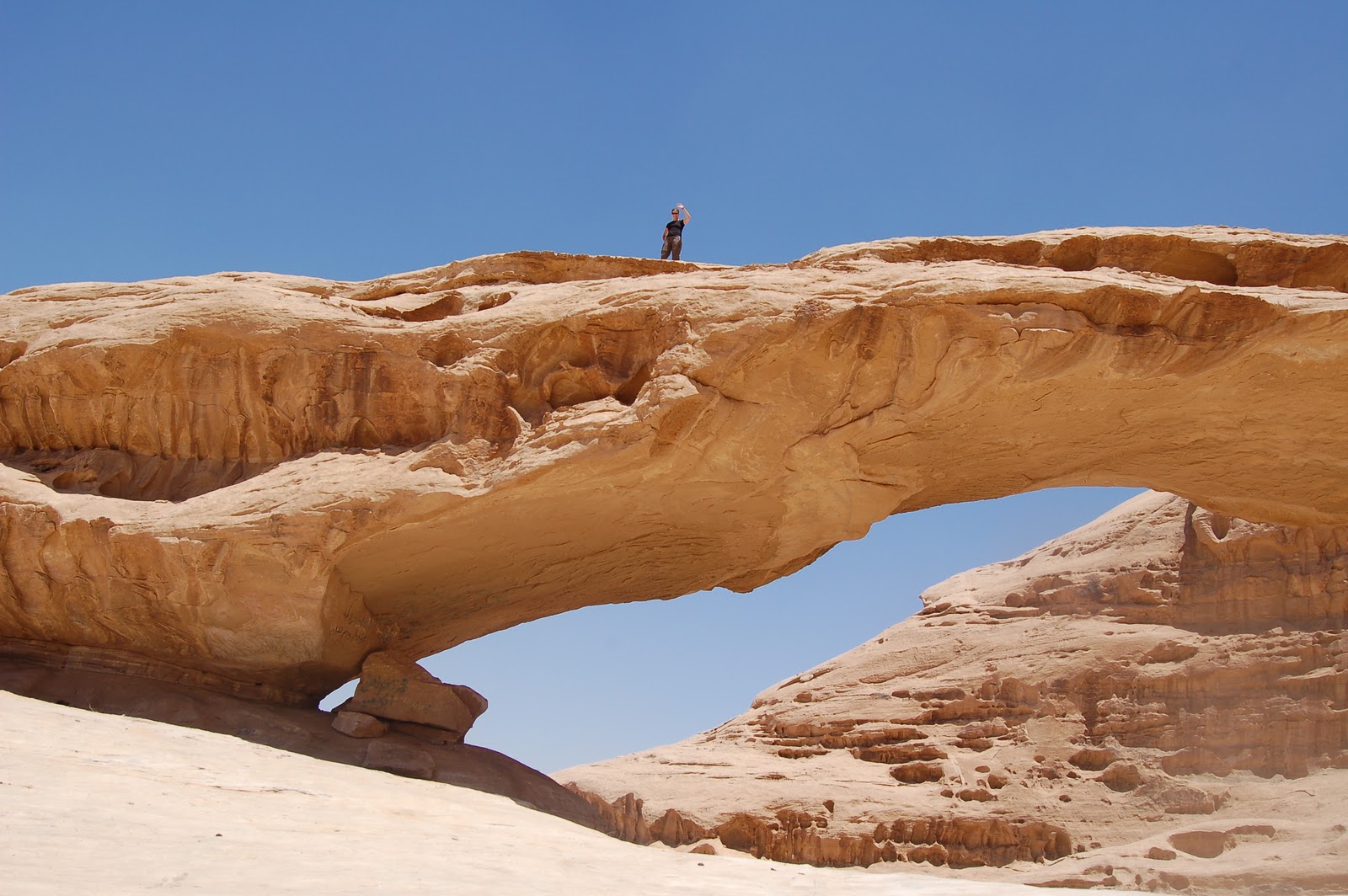
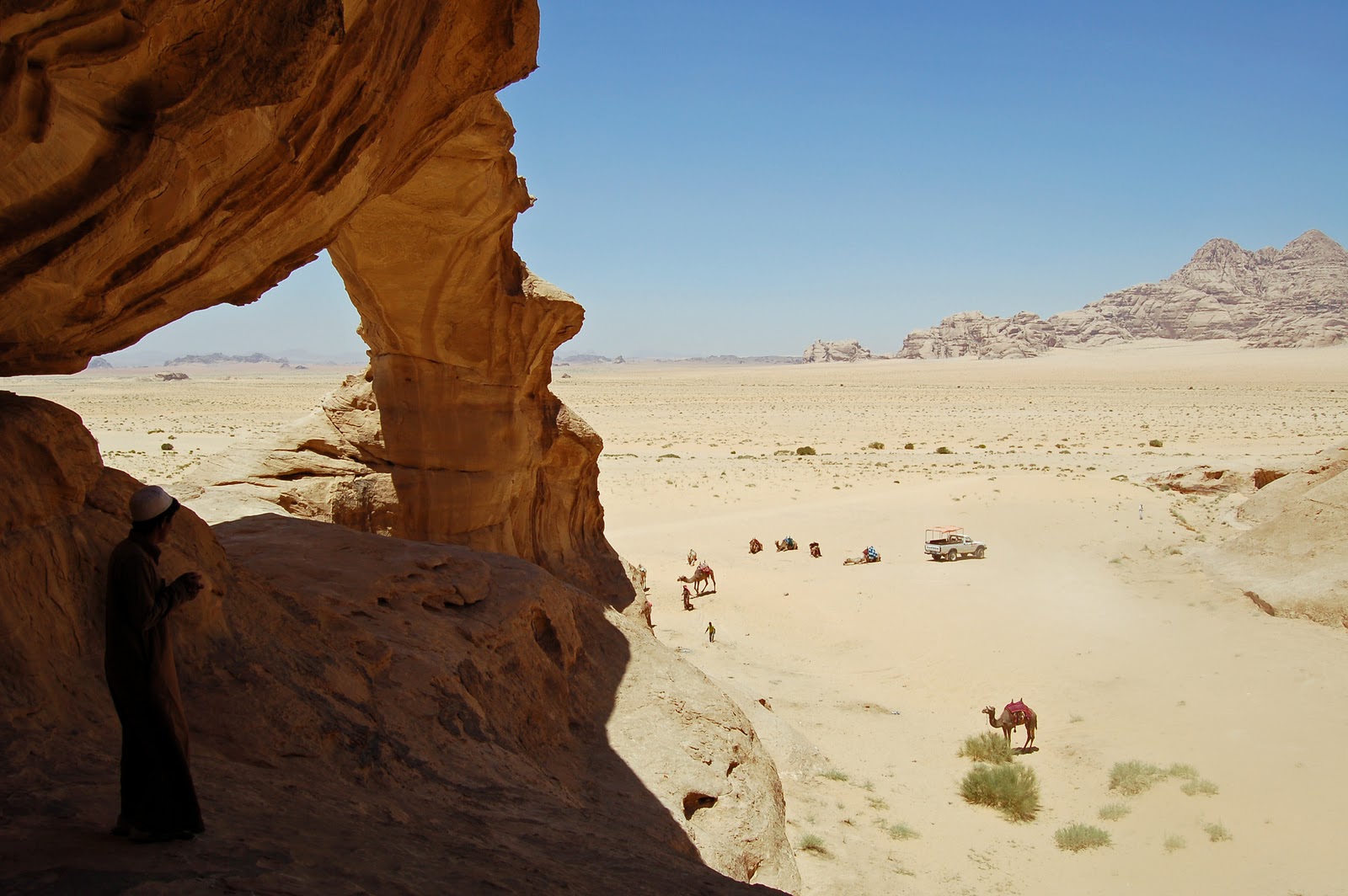
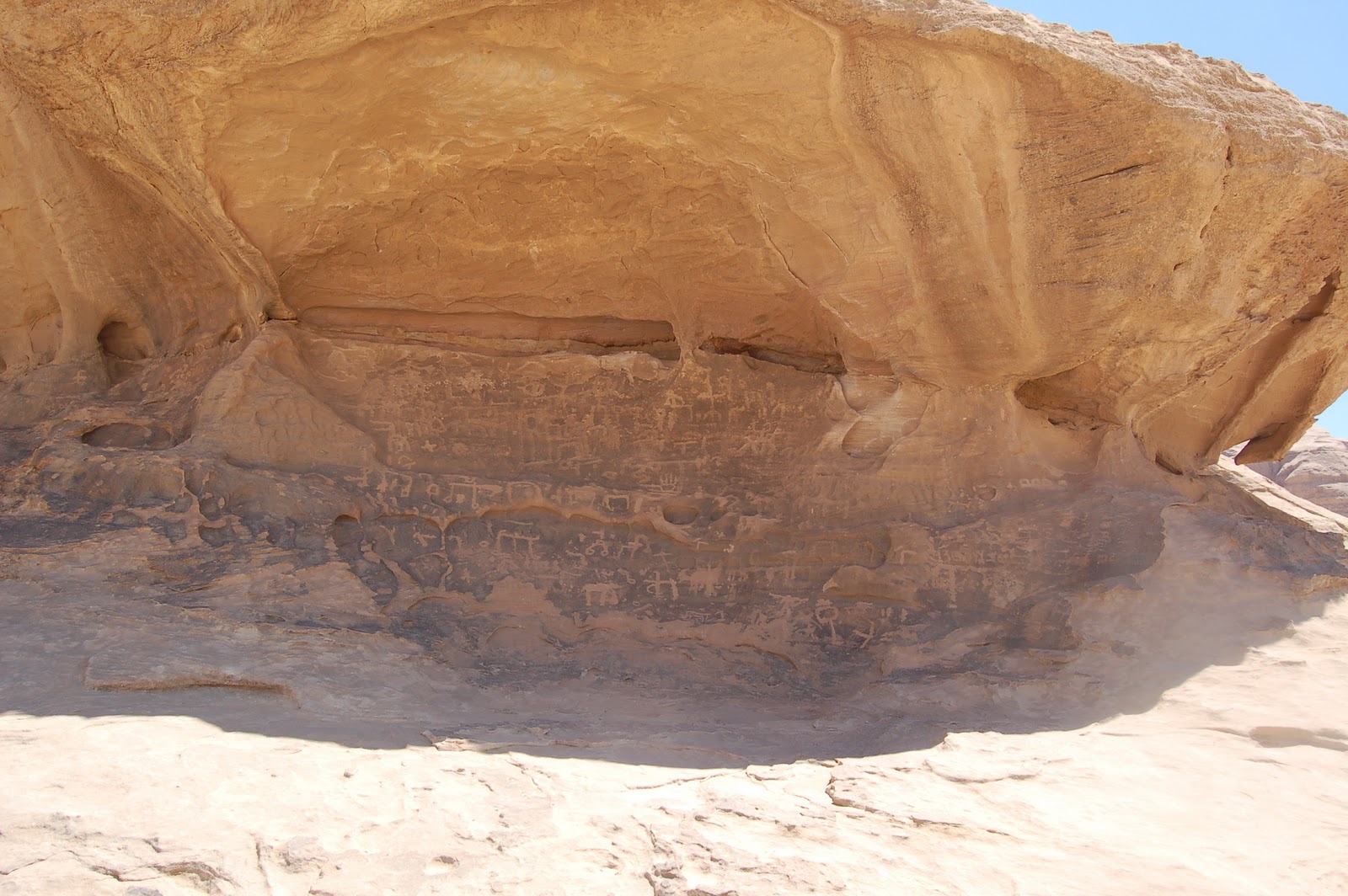
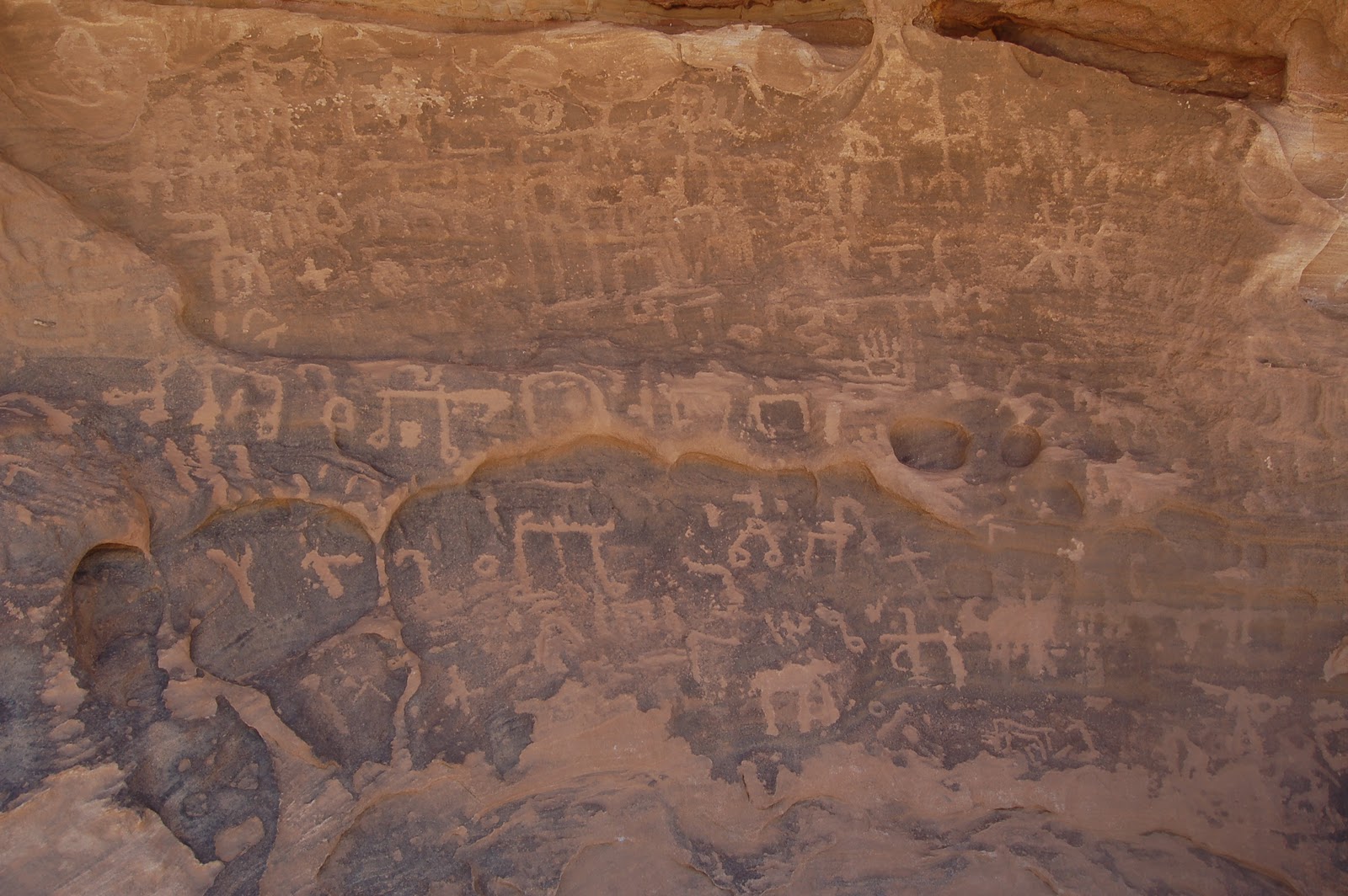
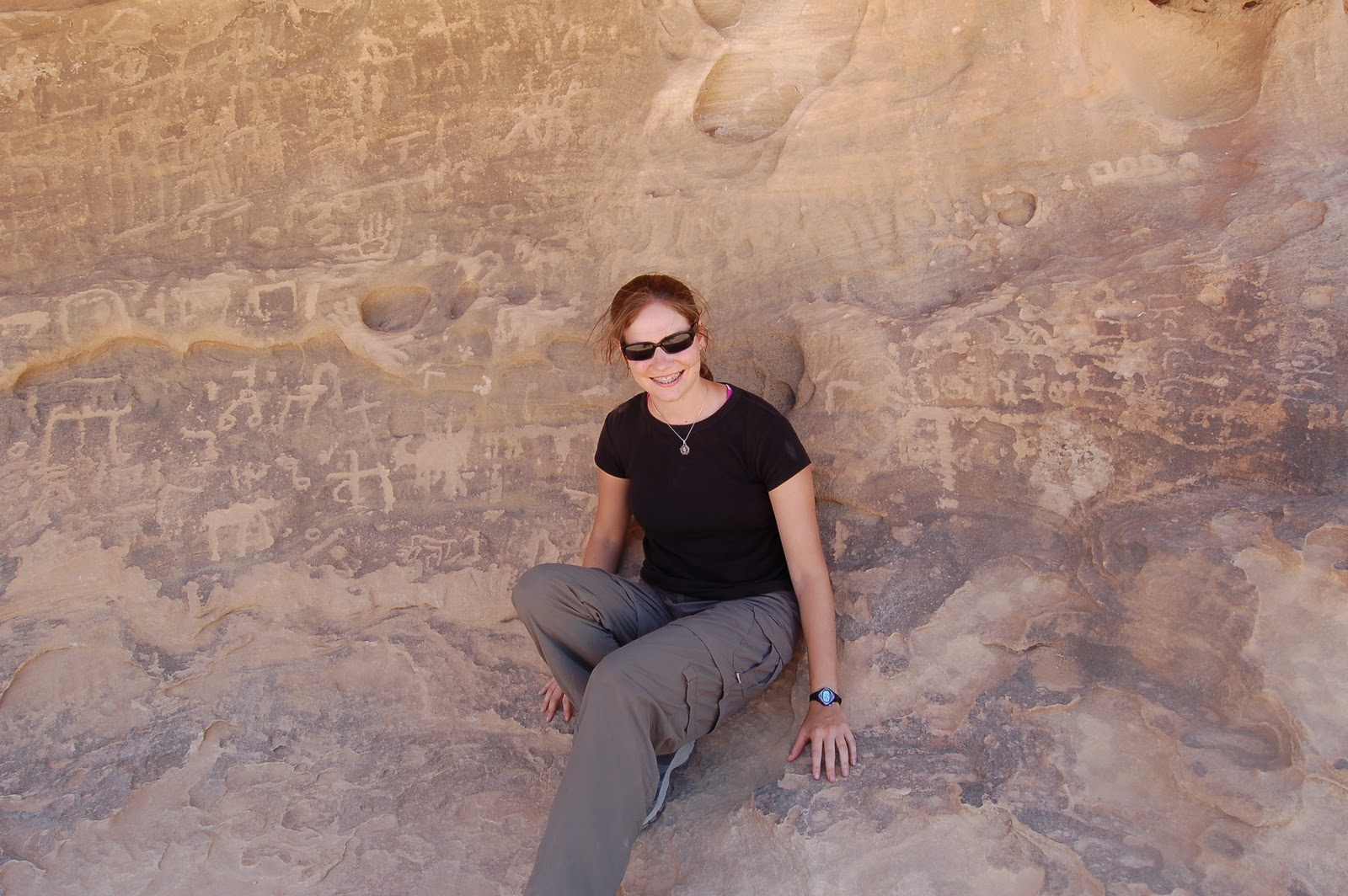
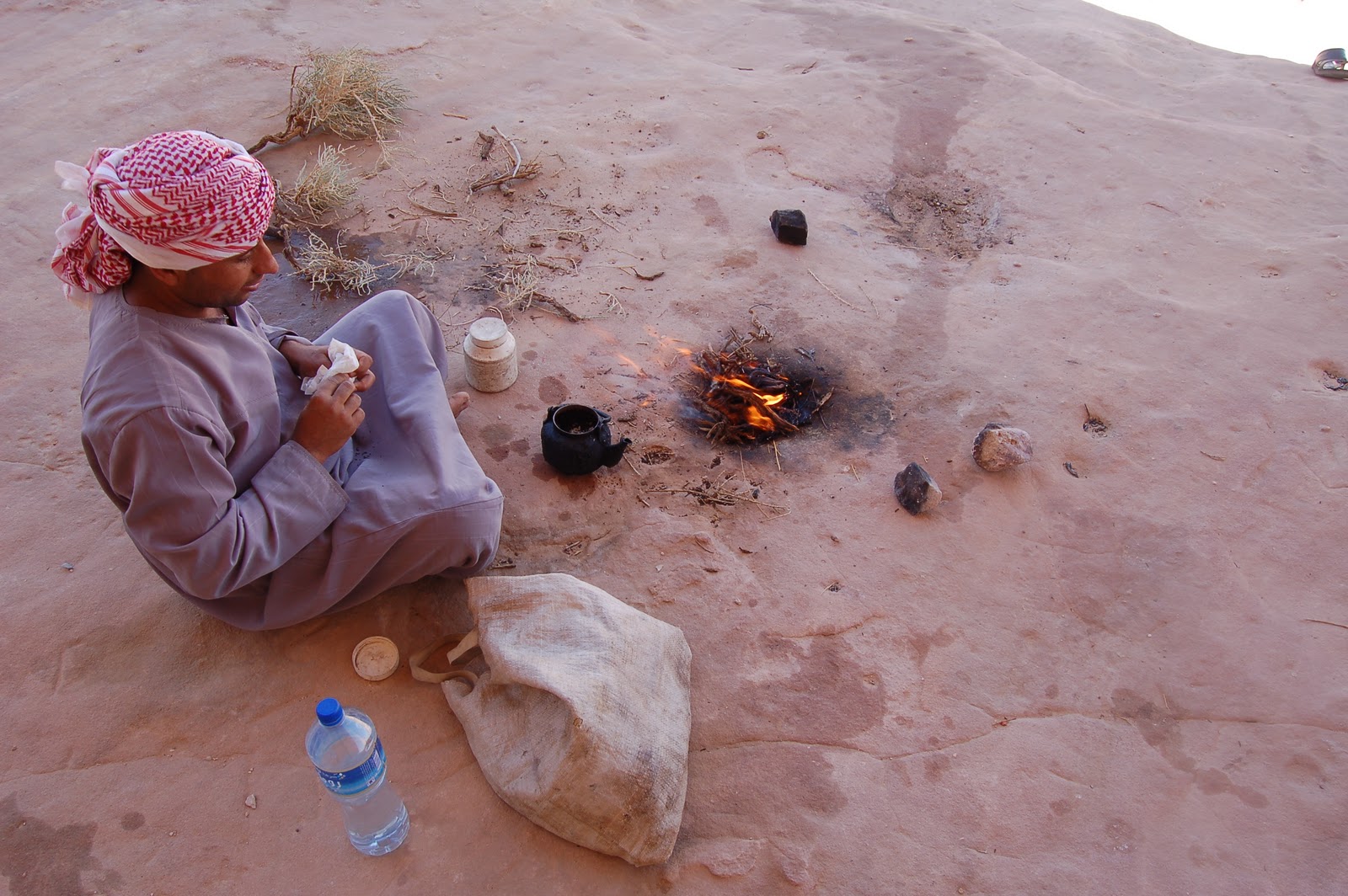
In honor of all of those in the Middle East who are currently struggling in the midst of turmoil, here are a few peaceful pictures of the beautiful desert of Wadi Rum, Jordan. I took these photos when I briefly visited Wadi Rum in August 2007. Note that my blog header picture and my profile picture were both taken at Wadi Rum. Click on any of the photos below to view a larger version.

Wadi Rum Cliff 1, Jordan, August 2007.
Wadi Rum Panorama 1, Jordan, August 2007.
Wadi Rum Panorama 2, Jordan, August 2007.
Wadi Rum Panorama 3, Jordan, August 2007.
Wadi Rum Cliff 2, Jordan, August 2007.
Me with the 4×4, Jordan, August 2007.
Rock Arch 1, Jordan, August 2007.
Rock Arch 2, Jordan, August 2007.
Rock Arch 3, Jordan, August 2007.
Bedouin boy, Jordan, August 2007.
Bedouin boy 2, Jordan. August 2007.
Rock arch 4, Jordan, August 2007.
Petroglyphs 1, Jordan, August 2007.
Petroglyphs 2, Jordan, August 2007.
Petroglyphs 3, Jordan, August 2007.
Sandstone nodules 1, Jordan, August 2007.
Sandstone nodules 2, Jordan, August 2007.
Collecting twigs for the fire, Jordan, August 2007.

Afternoon shade, Jordan, August 2007.
Teatime fire, Jordan, August 2007.

Geology Word of the Week: N is for Nabkha

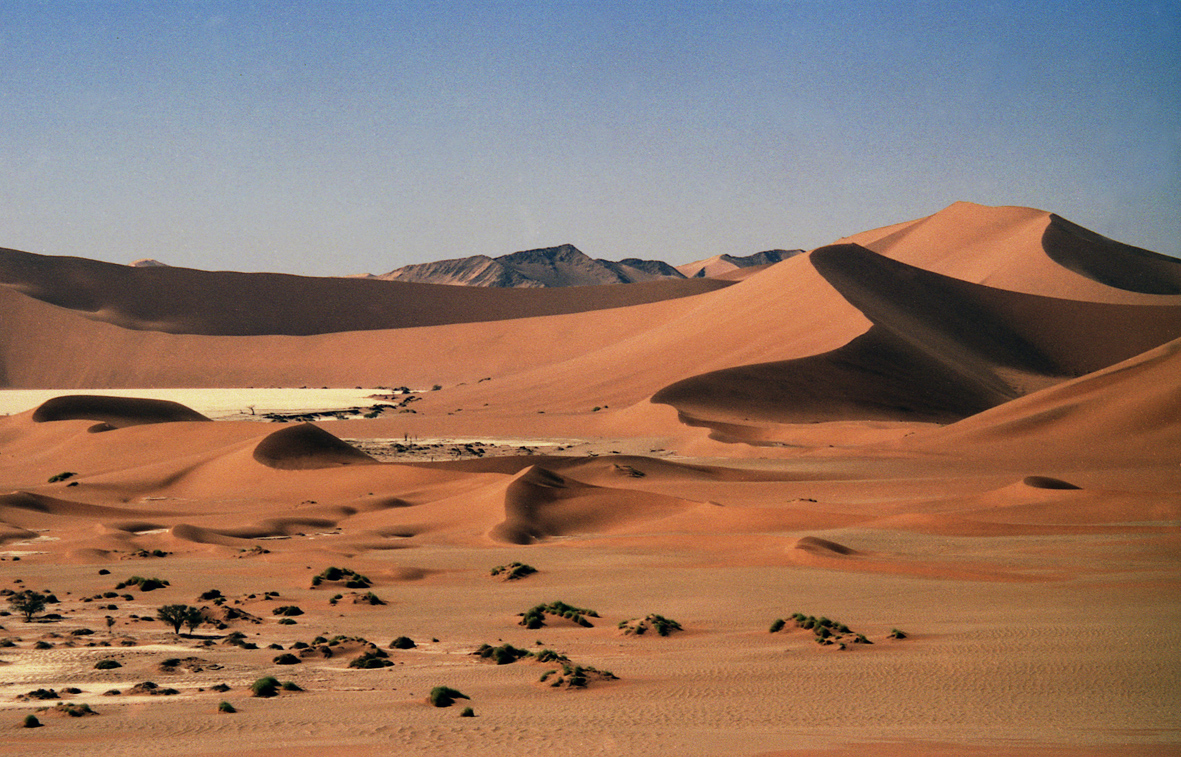
Nabkhas in front of sand dunes in Namibia. Photo courtesy of Michael Welland and used with permission.

def. Nabkha:
1. A mound-like accumulation of wind-blown sediment, usually sand, collected within and behind, and stabilized by, vegetation (definition modified from Khalaf et al., 1995 and Keary, 1996).
2. One of several words of Arabic origin that is used to describe sand features.

The Eskimos having an unusually large number of words for snow may be an urban legend, but perhaps the Arabs have an unusually large number of words for sand.

Actually, probably not. My simple Goodword English-Arabic dictionary lists just one word for sand,  رمل (raml), while my very comprehensive Al-Mawrid English-Arabic dictionary, which is a good three inches thick with very small print, again only gives رمل (raml). The other definitions given in this more comprehensive dictionary are variations on this one word, such as turba ramliyyah, “sandy dirt” or “sandy dust”; shaTi ramly “sandy beach”;  and raml as-sa’ah ramliyyah, “hourglass sand.”

Curious about how many words for sand there might be in Arabic, I tried to google the answer. I found this answerbag question, with an answer that is labeled “great” and “professionally researched.” This “professional” answer says that there are six Arabic nouns for the English word sand. However, I became a little suspicious when I noticed that the reference listed in the answer is Google Translate. Don’t get me wrong– I love Google Translate and use it all the time. However, I decided to double-check the translation. Also, I wanted to know the other five words in Arabic for sand.

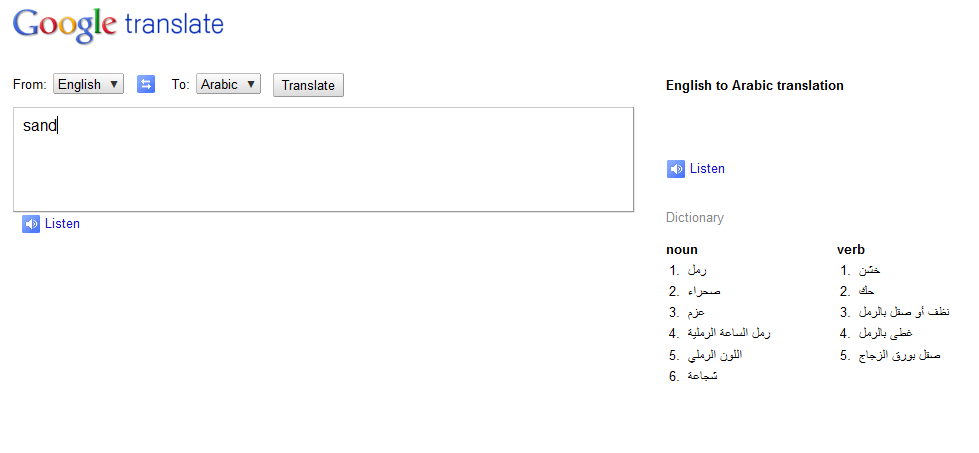
When you type “sand” into Google Translate, the following list of Arabic words shows up:
English-to-Arabic translation of “sand” on Google Translate. Click to view larger.

When the Google Translate result showed up, however, I was disappointed. Again, there is just one word for sand in Arabic. For those of you who don’t know Arabic, let me explain why. I’ll just explain the nouns:

1. raml- this is the word for sand we already know.
2. saHra- this is actually the Arabic word for desert. The English word “Sahara” comes from this word.
3. ‘azm- this word actually translates to “determination” or “resolution.” I assume this word refers to slang usage of the word sand in English as a word to indicate determination or courage. For example, “She had more sand in her than any girl I ever see; in my opinion she was just full of sand.” (Mark Twain) or “After surviving two advisor changes, Evelyn showed she had the sand to survive her PhD.”
4. raml as-sa’ah ramliyyah- hourglass sand.
5. a-laun a-ramlee- the color of sand.
6. shaja’a- this word translates to “courage” or “bravery.” This relates to the third word.

I can only assume that whoever wrote the answer to the answerbag question did not speak Arabic. From my dictionaries and Google Translate, I determine that there is only one word in Arabic for (geologic) sand: raml. However, I am not a native speaker of Arabic. Perhaps there are additional colloquial words for sand. If you are a native Arabic-speaker and read this blog post, please feel free to comment below or email me with any additional words for sand you might know. I would love to hear from you. For now, however, I have to conclude that the Arabs having an unusually large number of words for sand is as much of an urban legend as the Eskimos having an unusually large number of words for snow. 

If you think about it, in English we actually have a large number of words to describe both snowy and sandy things. In addition to the word snow, we have words such as ice, icicle, powder, pack, frost, blizzard, flurry, slush, sleet, freezing rain, and wintry mix. Similarly, in addition to the word sand, we have words such as dust, dirt, grit, soil, soot, sediment, and gravel. Perhaps these words do not describe sand in a geologic sense, but they certainly work as everyday substitutes or specifiers. As an interesting aside, Arabic has one word ثلخ (thalj) that is used for both snow and ice.

I started thinking about Arabic words for sand when I was leafing through my geological dictionary looking for an interesting geology word starting with the letter N. For those of you who haven’t noticed, for my weekly geology words I have been working my way steadily through the alphabet, from A is for Alluvium to M is for Magma. This week I am at the letter N. Browsing my dictionary, I came across the word “nebkha.”

I was very excited to discover the geology word “nebkha” or– more properly transliterating from the Arabic– “nabkha” for two reasons. First, this word exactly describes some sand structures that I noticed last month at Nobska Beach here in Woods Hole. When I observed these features, I didn’t know the word nabkha, so I just called them sand structures. Now I know that these structures are small nabkhas, which are mounds of sand which accumulate around and which are stabalized by vegetation, in this case small plants growing out of the beach. Several other terms are used to describe similar sand-vegetation features. For example: bush-mound, shrub-coppice dune, knob dune, and phytogenetic hillock (Khalaf et al., 1995). However, I think that nabkha is the most comprehensive word and also the prettiest.

Picture of a Nabkha in Kuwait. From Khalaf et al. (1995).

The second reason I was excited about discovering the word nabkha is that I immediately thought the word sounded Arabic in origin. I have a somewhat unusual background (for a non-Arab American, anyway) in that I double majored in Earth Science and Arabic for my undergraduate degree. My Arabic is rusty these days, but I can read basic Arabic well enough. I immediately tried to look up nabkha in my trusty Hans Wehr Arabic-English dictionary. This is hands-down the best Arabic-English dictionary out there. Thus, I was surprised and somewhat disappointed when I could not find the word نبخة (nabkha) in Hans Wehr. However, I did find the word نبكة (nabka), which translates to “hill” or “hillock.” I had never heard this word before. The word that I know for hill in Arabic is تل (tall). Exhausting my own resources, I decided to write to my old Arabic professor for help.

My professor responded swiftly and thoroughly. He managed to find both the words “nabka” and “nabkha” in Lisan al-Arab (The Tongue of the Arabs), the Medieval dictionary of the Arab lexicographer Ibn Manzur. He also explained that both the words nabka and nabkha are antiquated and not often used in modern Arabic speech.

In my professor’s words:

“About the word ‘nabka’, Hans Wehr reproduces his definition from the medieval dictionary Lisan al-Arab. The Lisan gives its meaning as a hill but specifies that this hill is shaped like a cone, with a pointed top. Other meanings listed in the Lisan are: (1) an elevation, (2) sand hill with pointed tops, (3) small hill.

As for its usage, it is not commonly used; it is used in medieval texts and also infrequently by modern writers who use medieval or ‘classical’ style of writing. They often explain it to modern readers. In the following article [available here; also see image below] on the city of Kashgar in Western China, the writer mentions in the beginning of the third paragraph:

‘The city was built in the middle of an oasis with abundant shades and on a nabka (murtafa3) min al-ard’

[Note: ‘min al-ard’ translates to ‘from the Earth.’ The number 3 is frequently used to denote a letter in Arabic that we don’t have in English. This is a sort of guttural “a” sound that is sometimes written “a’a.”]

Notice how either the author or an editor adds the explanation (murtafa3/elevation) in brackets; otherwise, most readers would not know what it is.

Regarding ‘nabkha,’ Lisan also lists it but without mentioning any relation of it to nabka–this is not uncommon in Lisan. It gives as one of its meanings: “an elevated land”. Also, “sand,” “earth that is not sand”.  The compiler of Lisan died in 1311. Since then, nabkha continued to be used, albeit in a limited, mostly academic context.”

A line from this encyclopedia entry showing how in modern Arabic writing the word “nabka” is usually explained by another word in parentheses.

Considering that the words “nabka” and “nabkha” have very similar meanings (perhaps they are related?) and seem to express an elevation or hill of some sort, I thought it very likely that the geology word nabkha was taken from Arabic. Perhaps a foreign geologist familiar with classical Arabic decided to borrow an antiquated word for hill to describe a desert feature. Alternatively, perhaps some modern Arabs call vegetated sand mounds nabkhas and brought the term into geology.

I shed some further light on the matter when I discovered this paper by Khalaf et al. (1995) on nabkhas in Kuwait.

They explain:

“Nabka or nabkha is an Arabic word denoting a small sandy hillock. It was used in Arabic literature before Islam, more than 14 centuries ago (Ibn Manzur, undated). Gautier & Chudeau (1909) used the same term for a mound-like accumulation of wind-driven sediments around vegetation.”

Note that the authors of this paper refer to Ibn Manzur and thus also looked up the word in Lisan al-Arab! The Gautier & Chudeau reference is in French. If anyone can find me a copy and help me translate the French, I would be most grateful. I’m curious to know if and why these French-speaking geologists chose an Arabic word to describe vegetated sand features.

Nabkha is certainly not the only word describing sand and sand features that has been taken from Arabic. Some other words I thought of are:

Seif– A long, narrow sand dune or chain of sand dunes. The word سيف (seif) means “sword” in Arabic.
Erg– Sand sea or sand dune. I think this is an English simplification of the Arabic word غرد (gurd), which translates to “dune” or “shifting dune” in Hans Wehr. However, this site says erg comes from the word عرق (‘arq), which means artery or vein. 
Haboob– An intense sandstorm. هبوب (haboob) means “strong wind or gale” according to Hans Wehr.
Zibar- a made-up Arabic-sounding word?
Rebdou- a large nebkha. I think this word also comes from Arabic.

References:

Various Arabic dictionaries, mentioned above.

Keary, Philip. 1996. Dictionary of Geology. London: Penguin Books. 

Khalaf et al. 1995. Sedimentological and morphological characteristics of some nabkha deposits in the northern coastal plain of Kuwait, Arabia. Journal of Arid Environments, vol. 29:267-292

Gautier, E. F. & Chudeau, R. 1909. Missions au Sahara, 1: Sahara Algerien. Paris: Armand Colin.

Acknowledgements:
Thanks very much to Hussein, the best Arabic professor in the world.

Thanks very much to Michael Welland, author of the book Sand: The Never-Ending Story, for providing the picture of Namibian nabkhas.

On “The Today Show” in 1994: What is the Internet?

Here is a video that has, appropriately, been spidering around the internet recently. This is a clip of “The Today Show” in 1994 where Katie Couric and her co-hosts are discussing a new internet address for the show, but they don’t know how to pronounce the @ symbol. Furthermore, they don’t really know what the internet is!

Video taken from YouTube.

I find it amazing how far the internet has come since 1994. These days, everyone is constantly updating their blogs, twittering (or tweeting, I guess– I must admit I haven’t got the hang of that one yet), facebooking, and so on. No one has phone books anymore; people just look up everything on omniscient google. The internet even plays a role in politics– the Egyptian government has recently shut the internet down in an attempt to slow the revolution there.

Science definitely seems to require the internet these days. There are so many online resources– databases, references, data reduction programs, map programs such as Google Earth, and so much more.  Personally, I can’t imagine writing a geology paper without having the MIT library at my electronic disposal. I rarely make physical trips to the library anymore. When I do actually have to make a trip to the library to– gasp– copy an old journal article, I do so begrudgingly.

I barely remember a time without the internet. In 1994 I was ten years old and already a regular internet user. A computer guru, my dad started using the internet at home in 1992 or 1993. At first we just had very slow text-based internet. If there were any pictures, my dad turned them off. I would bring up simple text versions of websites and devour the information. I remember I used to look up information about foreign countries I found interesting, and I would plan imaginary trips. By the time I started high school in 1998, I used the internet all the time.

These days, we all use the internet constantly. We even carry it around with us (well, not me… but that’s because I’m a poor grad student with a Jurassic cell phone) everywhere we go, constantly updating our statuses on various sites and googleing information as needed with our iPhones and Androids and Black(Crack)berries.

It’s incredible how far the internet has come in seventeen years, isn’t it? Something Katie Couric couldn’t define in 1994 is now an integral part of most people’s daily lives, at least in first world countries.

Although, I do enjoy my occasional internet escapes. The longest I’ve gone without the internet (well, since 1992 or 1993) is about three weeks– during geology fieldwork or personal camping trips. Soon enough, I imagine even fieldwork won’t take me away from the internet. When I was in the (somewhat) remote Oman desert last year, all the locals had cell phones. I’ve bet they’ve upgraded to a 4G network by now.

Brilliant Clutter

My home dining room table, cluttered with computer, papers, notebook, phone, and cat, Spring 2010.

Some of the most brilliant, productive people I know have the most cluttered offices and homes. For instance, I know of one MIT professor whose office is a mess, though he always knows where to find things. Similarly, my friend and mentor James Randi has an office that is full of clutter. Randi doesn’t know where to find things, generally, but his cluttered office doesn’t keep him from doing brilliant work.

Is there a link between clutter and brilliance? Are brilliant, productive people just less concerned with details of keeping house than with their work? Does the lack of time spent tidying up translate into more time for doing more interesting work?

Of course, I am generalizing. There are plenty of brilliant, productive people who keep their offices and homes immaculate. One could argue, just as easily perhaps, that there’s a link between obsessive compulsive disorder and brilliance. However, looking around the halls of MIT, I see clutter, mess, and brilliant work everywhere. Is the scientific mind, the mind of an engineer perhaps, prone to clutter? Or at least prone to not worry about clutter and keeping up appearances?

Personally, I fall somewhere in-between extreme clutter and extreme neatness. Growing up, my room was certainly a mess. I cluttered my room with rocks, books, and sporting equipment. I rarely dusted my bookshelves or made my bed. I shoved large quantities of artwork, shoes, books, and stuffed animals underneath my bed in my infrequent cleaning attempts. My parents rarely lectured me to clean my room, which was great. The forts I built out of sheets and pillows could stay up for weeks (along with the “No Boys or Little Sisters Allowed” signs), and I was free to organize and re-organize my rock collection, laying out various pieces all over my room. The time and freedom I gained by having a messy room far outweighed the benefits of keeping up appearances with a clean room, though I did have to tidy up whenever my grandmothers came to visit.

As I’ve grown up, I’ve become more tidy. I still have far too many rocks, books, and sports equipment items in my apartment, but now I make my bed most mornings and vacuum and dust on a regular basis. I find that I think and write better, often, in a somewhat neater space. Cleaning can also be relaxing, at times. Sometimes, I clean when I want to think about something but also want to feel productive.

However, I still allow myself to be somewhat cluttered, especially if I’m organizing something or working on an intense project. And if I end up becoming a working mom, my house is undoubtedly going to be somewhat cluttered. Why? I want my kids to have the freedom to live in their house without worrying about being perfectly clean. Also, I don’t want to feel that I need to keep things spotless when I have a big deadline at work or a distant volcanic expedition to plan. If my husband wants to clean up or hire a housekeeper, fine with me.

My desk is still a cluttered mess, most days, but that’s okay. After all, as Albert Einstein said, “If a cluttered desk signs a cluttered mind, of what, then, is an empty desk a sign?”

Besides, clutter is more fun. Who wants to clean up their desk or room, anyway?

*When I wrote this, I was still with my first advisor, whom I left at the end of my second year of grad school. I am now co-advised by two scientists. One of my advisors has a nearly spotless office while the other has a moderately messy office that is full to the brim with maps, books, papers, and so on. I’d argue that both of my advisors are brilliant scientists.

Bad Geology Movie of the Month: Four Quick Updates

Those of you who read my inaugural November Bad Geology Movie of the Month post may be wondering why I forgot to write about a bad geology movie in December and why I haven’t yet written about a bad geology movie in January. I apologize. Watching and reviewing bad geology movies takes time, and I am a busy graduate student. I think that my bad geology reviews may have to be a little more sporadic than once a month, at least until I graduate. We’ll see, though! Maybe some months I’ll review more than one movie. I’ll just write the reviews as I have time. I am also working on refining my format. For my first movie review I think I spent too much time describing the plot (humorous as the plot may be) and too little time analyzing the science (or lack thereof) in the movie.

For now, here are four quick updates relating to bad geology movies:

1. Since the AGU Sciences Meet Hollywood session back in December, I have been thinking about why I want to review bad geology movies. I realize that much of what I want to do is simply point out the scientific inaccuracies. Although pointing out errors may seem mean, I will try to do so in good spirit. I understand that Hollywood geology will never be completely accurate, nor should it be. If someone in Hollywood made a movie about how I do geology, I think it could be terribly boring. More often than not, I spend hours picking crystals and reducing data. Even when I am in the field, the pace of research is often painfully slow. I measure rocks for hours. I meticulously collect rocks. I find maps far too interesting. None of my usual science activities done at their usual pace would make for a good Hollywood plot. So, I understand why Hollywood has to “spice up the science” in order to make a film interesting.

However, I am going to pick apart the science in the bad geology movies– not necessarily because I wish the movies had been made differently, but rather because I want there to be a place on the internet where people can find answers to questions such as, “What’s wrong with the geology in ‘The Core?’ ” or “Can we really travel to the center of the Earth?” I want a place where people can find out about the accuracy– or inaccuracy– of geology in bad geology movies from real geologists. 

2. My good friend Arthur– who is a geologist and fellow lover of bad geology movies– has agreed to join me in my quest to review and pick apart the science (and lack thereof) in bad geology movies. Arthur is a geophysicist and modeler while I am a geochemist and field-based geologist. Together, I think we will make a great team to review bad geology movies. We are discussing the best format for this– we will likely start a new blog specifically devoted to reviewing bad geology movies. If the site goes well, perhaps we can eventually invite some other geologists (a sedimentologist? a paleontologist?) to help us pick apart the science in bad geology movies.

3. Thanks to an inquiry about the forthcoming “Ice Age: Continental Drift” movie, I am now an official volunteer science consultant for the Science & Entertainment Exchange. I may or may not be contacted by people in Hollywood, but I’m happy that I’m in the database. So, Steven Spielberg– feel free to ask me questions about geochemistry or marine geology.

4. To tide you over while Arthur and I set up the bad geology movies site, I will be reviewing the geology in the three “Ice Age” cartoon movies over the next few weeks. I haven’t heard anything from the “Ice Age” people about adding a science extra to their forthcoming movie. However, just in case they do contact me I figure I’d better do my homework and re-watch their previous movies. I even bought the actual DVDs (on a grad student budget!) so that I can view all the DVD extras! Remember, if you want to support my campaign to add a science extra to “Ice Age: Continental Drift,” you can also write a letter or can join my facebook group here.

Geology Word of the Week: M is for Magma

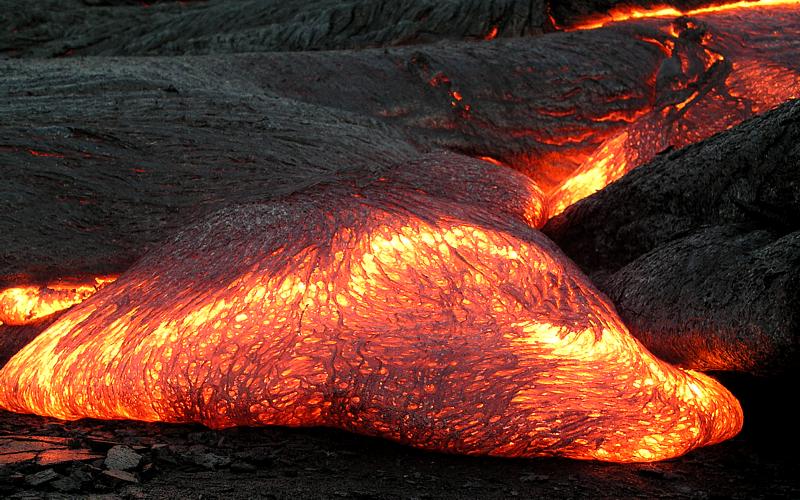
Glowing lava in Hawaii. Image taken from Wikipedia Commons here.

def. Magma
1. Molten (liquid) rock below the Earth’s surface. Often contains volatiles, crystals, and small fragments of solid rock.
2. Not a synonym for lava, which is what you call magma after it has been erupted or extruded onto the Earth’s surface.
3. A favorite word of evil scientists, at least in Hollywood movies.

When non-geologists (and perhaps some beginner geologists) think about magma, there are two common mistakes that I have observed.

The first mistake is confusing magma with lava or treating the two words as synonyms. This is understandable as magma and lava are similar. Both are hot, molten rock. Both can contain volatiles (dissolved gases), crystals (that form as the molten rock cools), and fragments of solid rock (often picked up from the surrounding solid rock). However, magma specifically refers to molten rock located beneath the Earth’s surface while lava specifically refers to molten rock at the Earth’s surface.

Non-geologists might think it silly to have two words to describe molten rock. Perhaps this is true. Perhaps we should call all molten rock magma or lava or even coin a new word– I propose “molta”– that encompasses all types of molten rock. However, I’d argue that having two words to distinguish between molten rock below and above Earth’s surface makes sense. Having two words allows geologists to be specific. For example, in my previous post on komatiite rocks, I was able to say that komatiite rocks formed from lava that cooled. When I said that there is clear evidence that komatiites cooled from lava, geologists immediately understood that this meant these rocks formed at Earth’s surface. This is significant because komatiite rocks have a composition that is normally found deep within the Earth, not at Earth’s surface.There are also some differences between magma and lava. For instance, lava usually contains fewer volatiles (gases) than magma because these escape to the atmosphere.

Science is often intimidating and inaccessible to non-scientists because of all the vocabulary. When you become a scientist, you almost have to learn to speak a new language. While all of the vocabulary can be overwhelming until you learn it, science vocabulary exists for good reason. Science is all about being specific, about describing, quantifying, and– ultimately– understanding a part of the universe. Having a specialized, organized vocabulary allows precise classification. This vocabulary allows scientists to talk to each other and to compare finds and observations from different parts of the planet and universe.

One reason I write the geology word of the week is to explain and celebrate some of the remarkable vocabulary that geologists have developed to describe and classify their rocks. I love geology words. I love talking geology. But I realize that when I talk geology many of  my non-geologist friends are left in the dark. My best friend is an ocean engineer, so I have had to teach her some geology vocabulary over the years. She’s taught me some engineering vocabulary, and now we can talk– with relative ease– with each other about our research. Maybe on this blog I can teach some other people some geology words– and also teach myself some new geology words!

Of course, sometimes scientific vocabulary is a little too complex, even for scientists. For instance, there are thousands upon thousands of different names for rocks. The exact same type of rock might have a dozen different names. This is partly because rocks were independently “discovered” in different places and given different names. A rock might be called by one name in one country and by another name in another country. Rock and mineral names have been standardized internationally in relatively recent times, and continued standardization is an ongoing process. Unfortunately, the standard system of rock names isn’t perfect. Some of the complex names that remain are relics of the time before standardization and really should be replaced by simpler, more logical names. Furthermore, not all geologists stick to the standard names, at least not all the time. Some geologists prefer old names that have been “thrown out” and still use them, at least informally amongst each other. To really speak geology, you have to know  not only the standard names but also many of the non-standard names that are favored by some geologists.

Complex scientific vocabulary also causes problems when scientists want to talk to non-scientists or even to scientists in other scientific disciplines. I speak geology (or at least geochemistry, a dialect of geology), but I don’t speak biology. I also don’t speak physics or astronomy or proper chemistry, though I do know many words in these languages. If I need to collaborate with a physicist or a biologist, I first need to find a common scientific language. Scientists, myself included, often struggle to translate their science into plain English. I believe that it is very important for the general public to understand science and for scientists from different disciplines to be able to talk to each other. I’m not sure the best way to overcome the vocabulary problem, but I don’t think that throwing out all of the vocabulary is the answer. Personally, I don’t see a problem with using some jargon (maybe more when talking to other scientists and less in popular science writing) as long as you explain the terms you are using.

Anyway, I am rambling (which is okay since this is a blog), so let me now continue on to the second common mistake about magma. I think that many people (or at least the people who write bad geology movies) imagine the Earth as being full of magma. They imagine that the interior of the Earth is mostly molten rock or, as Dr. Evil of the “Austin Powers” movies would say, “liquid hot MAGMA.” This is far from the truth. Most of the Earth is actually solid, not liquid. Only one Earth layer (the outer core) is liquid. The Earth’s crust, mantle, and inner core are primarily solid. There is actually only a very small amount of molten rock compared to the amount of solid rock. Even the Earth’s asthenosphere (see last week’s word of the week if you don’t know what this is) is a solid, albeit it tar-like solid that moves very slowly over time. Molten rock only exists in small amounts in Earth’s crust and mantle. Furthermore, while there are some large bodies of magma in magma chambers and channels, much magma actually exists as tiny amounts in tiny pore spaces, not in well-defined magma chambers.

I think that understanding the words magma and lava is important because these words are so commonly used in popular science articles and even in every day life. Jessica Ball over at Magma Cum Laude wrote a great post awhile back about common mistakes made when reporting on volcanic eruptions. One of the mistakes she mentioned is that reporters often confuse magma and lava when writing about volcanoes. However, Jessica thinks it is important for reporters to use these (and other) terms accurately. I agree. Throw out jargon if you must, but don’t misuse scientific terms.

As a lighthearted example of the misuse of the word magma, I would argue that one of my favorite toys is misnamed. “Magmar” is a Rock Lords toy. The Rock Lords are similar to the more-popular Transformers toys except rather than being robots they are “powerful living rocks.” The Rock Lords toys were made in the 1980s, and I had a few of them as a child. Magmar is the leader of the evil Rock Lords. However, since Magmar exists on the surface of the Earth he should really be called “Lavar” or perhaps– since he is a rock– “Basaltar.” I didn’t appreciate Magmar’s misnomer when I was a child, but I do now as an adult geologist.

Magmar. Image taken from here.

Whoops: ROV Crashes into Ship Propeller

ROV Isis. Image taken from here.

A few days ago the multimillion dollar remotely operated vehicle (ROV) Isis accidentally crashed into the propeller of the RRS Cook. Isis is an underwater research vehicle that is operated by the National Oceanography Centre in the UK. Isis is a cousin to the ROV Jason here at Woods Hole Oceanographic Institution.

Whoops. ROV (or more likely ROV operator) fail. I hope poor little Isis isn’t damaged too badly. Repairing her is likely to be quite expensive.