Sutherland Sky: Part II

Giant telescope along the road in Sutherland. October 2013.
Posing with a giant telescope along the road in Sutherland. October 2013.

Today I’m continuing with my series of posts about my October 2013 visit to the small town of Sutherland in South Africa’s Northern Cape province. Sutherland is home to a South African Astronomical Observatory (SAAO) research station that contains many telescopes, including the Southern African Large Telescope (SALT). You can read Part I of this series here.

Today I am sharing a few more pictures of the town of Sutherland. In my next post I’ll discuss my visit to the SAAO museum. Then I’ll discuss our amazing tour of some of Sutherland’s telescopes, including SALT. Last but not least, I’ll discuss some of the great geology that we saw while traveling between Cape Town and Sutherland.

Without further ado, here are a few more pictures of the small– but important– town of Sutherland:

Along the main road in Sutherland there is an educational display about planets. This is Mars.
Along the main road in Sutherland there is an educational display about planets. This part of the display represents Mars. Sutherland, October 2013.
Here's Earth and a few more planets.
Here’s the part of the display representing Earth and a few more planets. Sutherland, October 2013.
Another view of the church along Sutherland's main street. October 2013.
A view of the church along Sutherland’s main street. October 2013.
Another view of the church along Sutherland's main street. October 2013.
Another view of the church along Sutherland’s main street. October 2013.
Windmill and a barn, Sutherland. October 2013.
Windmill and a barn. Sutherland, October 2013.
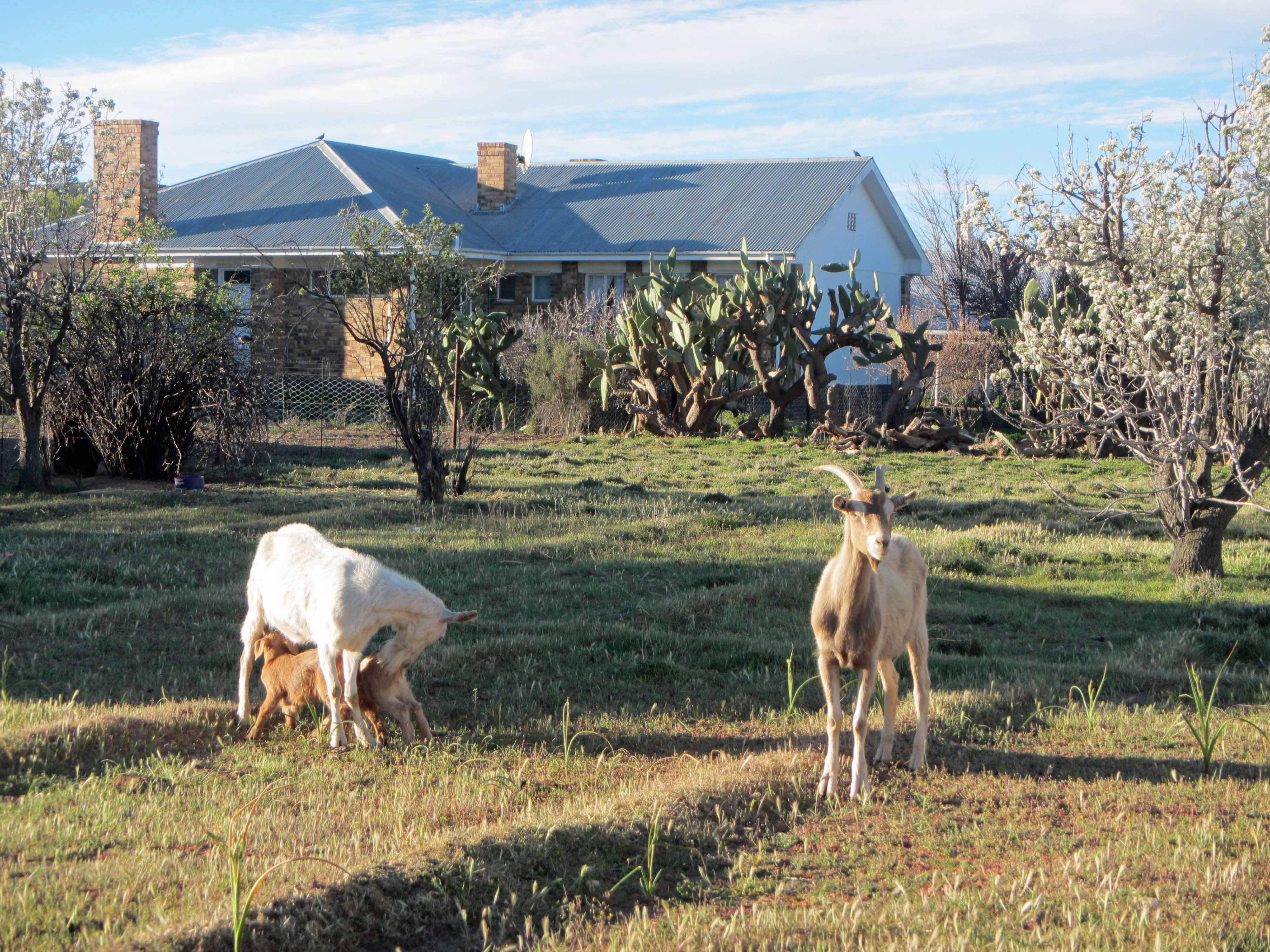
Backyard goats. Sutherland, October 2013.
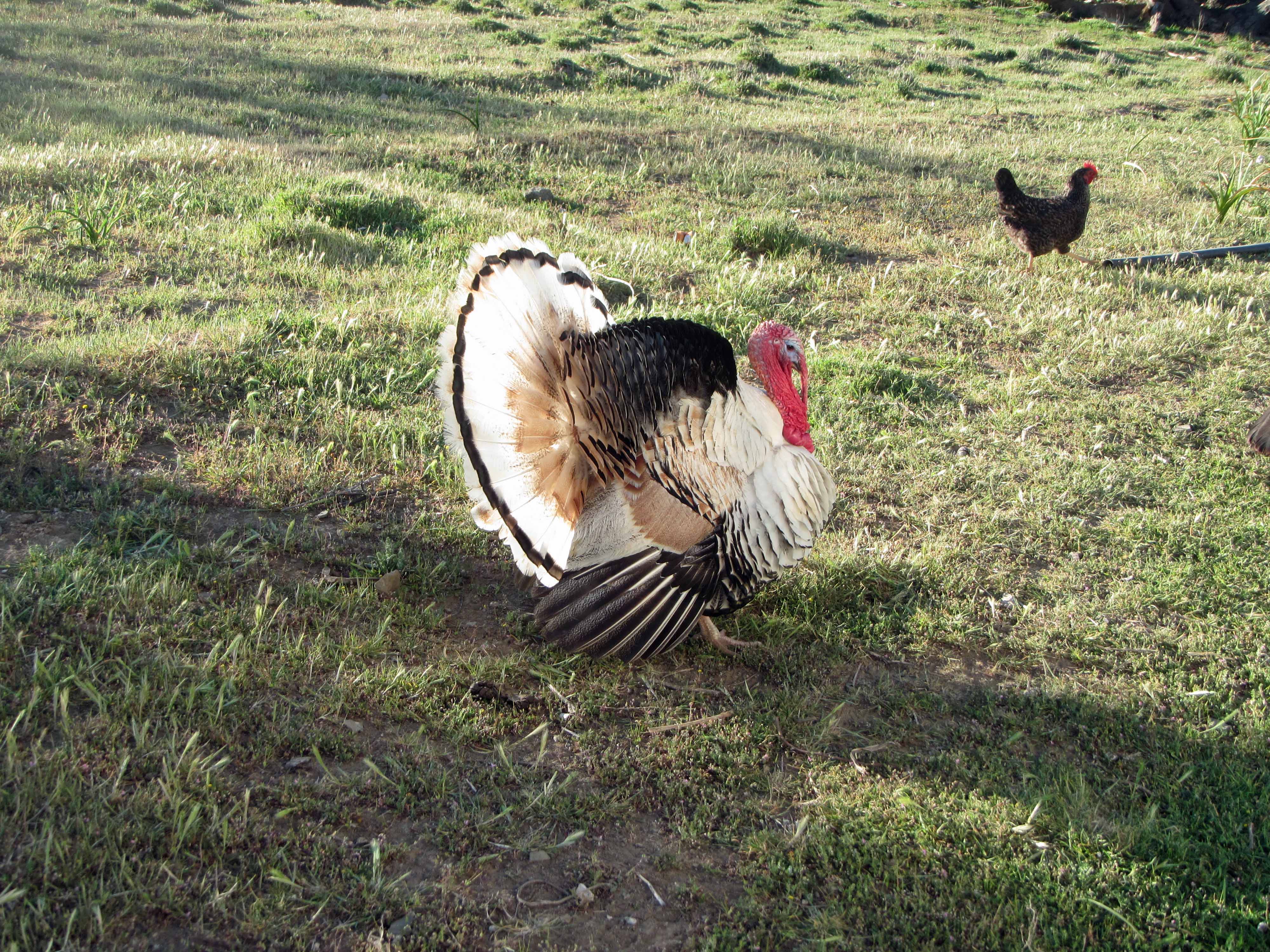
Backyard turkeys. Sutherland, October 2013.
Backyard turkey. Sutherland, October 2013.
Garage with chickens. Sutherland, October 2013.
Sutherland building. October 2013.
A typical road in Sutherland. October 2013.
The White House... in Sutherland.It's for sale! October 2013.
The White House… in Sutherland. It is (was?) for sale! October 2013.
A solitary lion guardian. Sutherland, October 2013.
Friendly cat adornments near a door. Sutherland, October 2013.
Friendly cat adornments near a door. I’d love to get some of these for our home. Sutherland, October 2013.

My husband and I spent two nights in Sutherland, and we stayed at The Sutherland Hotel. The rooms at the hotel are very basic and somewhat small, but they are clean and the inn staff are very friendly. The hotel also has a bar and a kitchen providing some traditional Afrikaans food– very rich, hearty food. The food wasn’t anything to write home about, though– we’ve had much better Afrikaans food. Breakfast was included with our stay. For variety, if my husband and I visit Sutherland again we’ll probably stay in one of the smaller guest houses or possibly on a nearby guest farm. However, the Sutherland Hotel provided economical accommodation for our Star Trek club group. I certainly recommend the hotel– just don’t expect anything fancy.

The Sutherland Inn. October 2013.
The Sutherland Hotel. October 2013.

During our first night in Sutherland, we had dinner at a lovely little restaurant called Cluster d’ Hote. My husband and I arrived in Sutherland a night before the rest of the Star Trek club group. After walking around the town for a few hours on our first day, we popped into Cluster d’ Hote and asked if we could have afternoon tea. We enjoyed a leisurely pot of tea and some sweets in the restaurant, which is located in an old house that is filled with interesting antiques. We noticed that Cluster d’ Hote had a very good Trip Advisor rating advertised on their wall, so we made a booking for dinner later in the evening. We tried to pay for tea before we left to freshen up and spend an hour or so reading in our hotel room, but we were told not to worry about the bill; we were told that we could settle it after our evening meal. I guess that there is still some trust in some of the small South African towns! It was very refreshing to experience such small town trust.

We immensely enjoyed our dinner at Cluster d’ Hote. We sampled two traditional Karoo lamb dishes, and the food was excellent. I highly recommend a meal at Cluster d’ Hote if you find yourself in Sutherland.
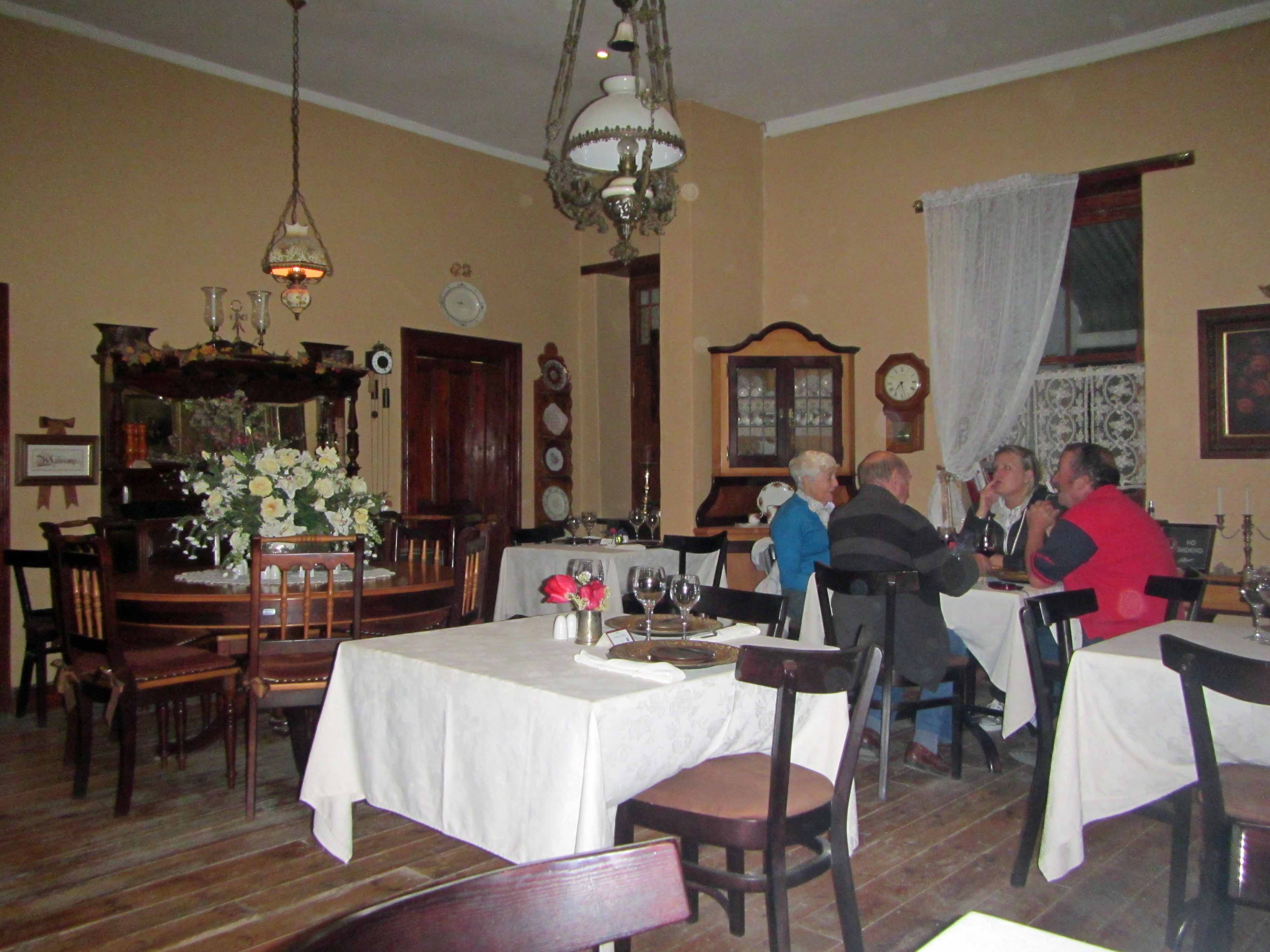
Cluster 'd Hote dining room. Sutherland, October 2013.
Cluster d’ Hote dining room. Sutherland, October 2013.
Another view of the Cluster d' Hote dining room. Sutherland, October 2013.
Another view of the Cluster d’ Hote dining room. Sutherland, October 2013.
A delicious Karoo lamb dish at the Cluster d' Hote restaurant. Sutherland, October 2013.
A delicious Karoo lamb dish at the Cluster d’ Hote restaurant. Sutherland, October 2013.

That’s all for this post. Stay tuned for Part III!
Monday Geology Picture: Geology Jewelry

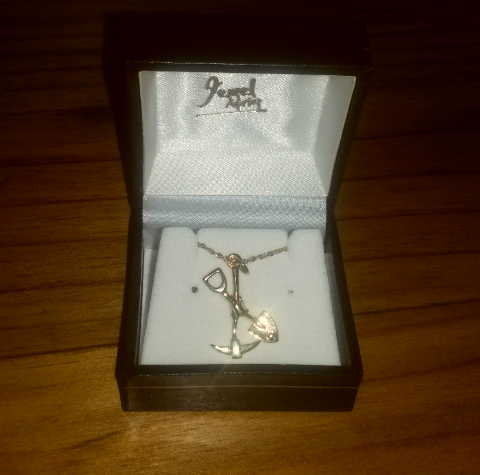
A gold mining themed necklace, a present from my good friends Nia and Patrick.

For this week’s Monday Geology Picture, I thought that I would share a picture of a wonderful geology themed necklace that I received as a 30th birthday present from my good friends Nia and Patrick. This wonderful necklace features a pick and shovel. The shovel has a small gold nugget on it. Considering that I just spent a year and a half working for a gold exploration company, I am delighted by this gold mining themed necklace… made out of real gold! I’ve worn the necklace quite a few times already, and it makes a lovely addition to my small but growing collection of geology themed jewelry.

What geology themed jewelry do you own?

Sutherland Sky: Part I

The SALT telescope at Sutherland, October 2013.
The SALT telescope. Sutherland, October 2013.

This is the first in what will be a series of posts about my recent visit to Sutherland, a small town in South Africa’s Northern Cape province. In October 2013 my husband Jackie and I visited Sutherland for a long weekend. Sutherland is famous because it is home to the South African Astronomical Observatory (SAAO) research station, which has a number of telescopes that are used for astronomical and astrophysical research. The most famous telescope located at Sutherland is the Southern African Large Telescope (SALT), the largest optical telescope in the southern hemisphere. Jackie and I visited Sutherland as part of a Star Trek club (yes, Star Trek club–  we’re proud Star Trek fans!) event. Along with our fellow Trekkie friends, we toured the SAAO facility. We went on a daytime tour and visited the museum and also some of the large telescopes. Some of us wore Star Trek uniforms/costumes on the tour, and I think (and hope) that we delighted some of the other visitors with our attire. We certainly ended up posing for quite a few pictures! In addition to the daytime tour, we also attended an evening stargazing session during which we peered through some smaller telescopes that have been set up for educational purposes– the big telescopes are reserved for proper scientific research at night.

In addition to touring the SAAO research station, Jackie and I also spent some time exploring the wonderful little town of Sutherland. In addition, we spent some time exploring some of the impressive geology that can be viewed along the approximately four hour drive to Sutherland from our home in Cape Town. To reach Sutherland from Cape Town, we drove over the Cape Fold Belt and saw some highly impressive folded and uplifted sedimentary rocks. After we trekked (see what I did there?) across the Cape Fold Belt, we reached the flat, empty roads of the Karoo desert region. During the last two hours of our drive, we only passed one other car. Geologically, the Karoo region is home to the Karoo Supergroup, a stratigraphic unit that covers two-thirds of South Africa and consists of a sequence of sedimentary rocks that are intruded, in many places, by igneous rocks, including some impressive dolerite dikes. The Karoo region is also covered in many places by the Dwyka tillite, which was deposited by widespread glaciation.

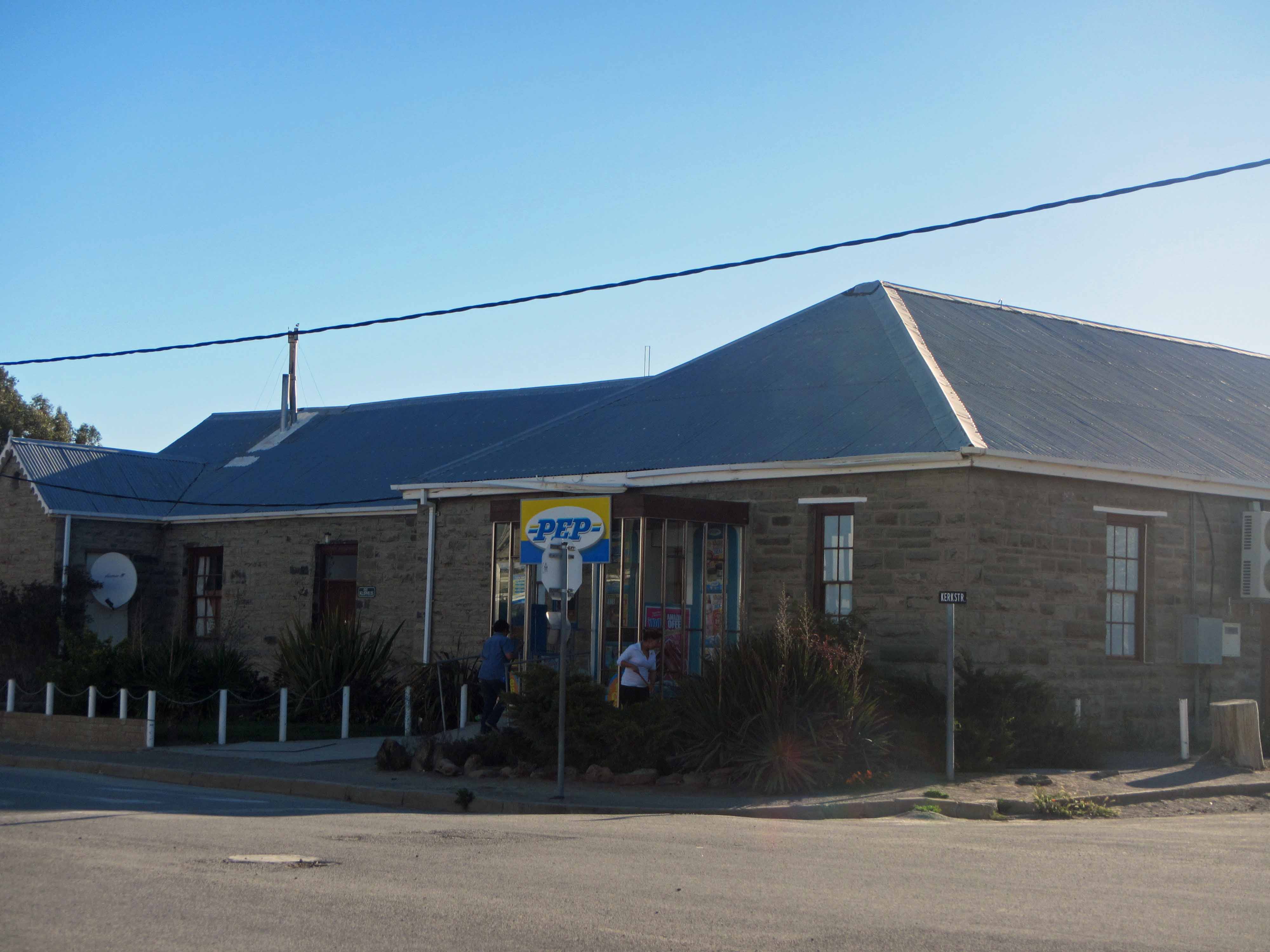
In subsequent posts, I’ll discuss SAAO and SALT and some of the geology that we observed along the way to Sutherland. Today, I want to share a few pictures of the town of Sutherland. At first glance, Sutherland looks like many other small towns in the Karoo. There are small shops, cafes, a restaurant or two, guest houses, schools, and churches– and even the PEP store that is found in most South African towns, both large and small. My husband and I joke that the presence a PEP store, which sells inexpensive clothing and other items, marks the difference between a village and a town in South Africa.

Main Street, Sutherland, October 2013.
Main Street. Sutherland, October 2013.
Another view of Main Street, Sutherland, October 2013.
Another view of Main Street. Sutherland, October 2013.
The Sutherland Mall... for all your shopping needs! Sutherland, October 2013.
The Sutherland Mall… for all your shopping needs! Sutherland, October 2013.
Sutherland's PEP store, October 2013.
Sutherland’s PEP store. October 2013.

However, after Jackie and I spent some time walking around Sutherland, we quickly realized that Sutherland is no ordinary small town in the Karoo. Rather, the town has a decidedly astronomical flavor. See for yourself:

Sutherland4
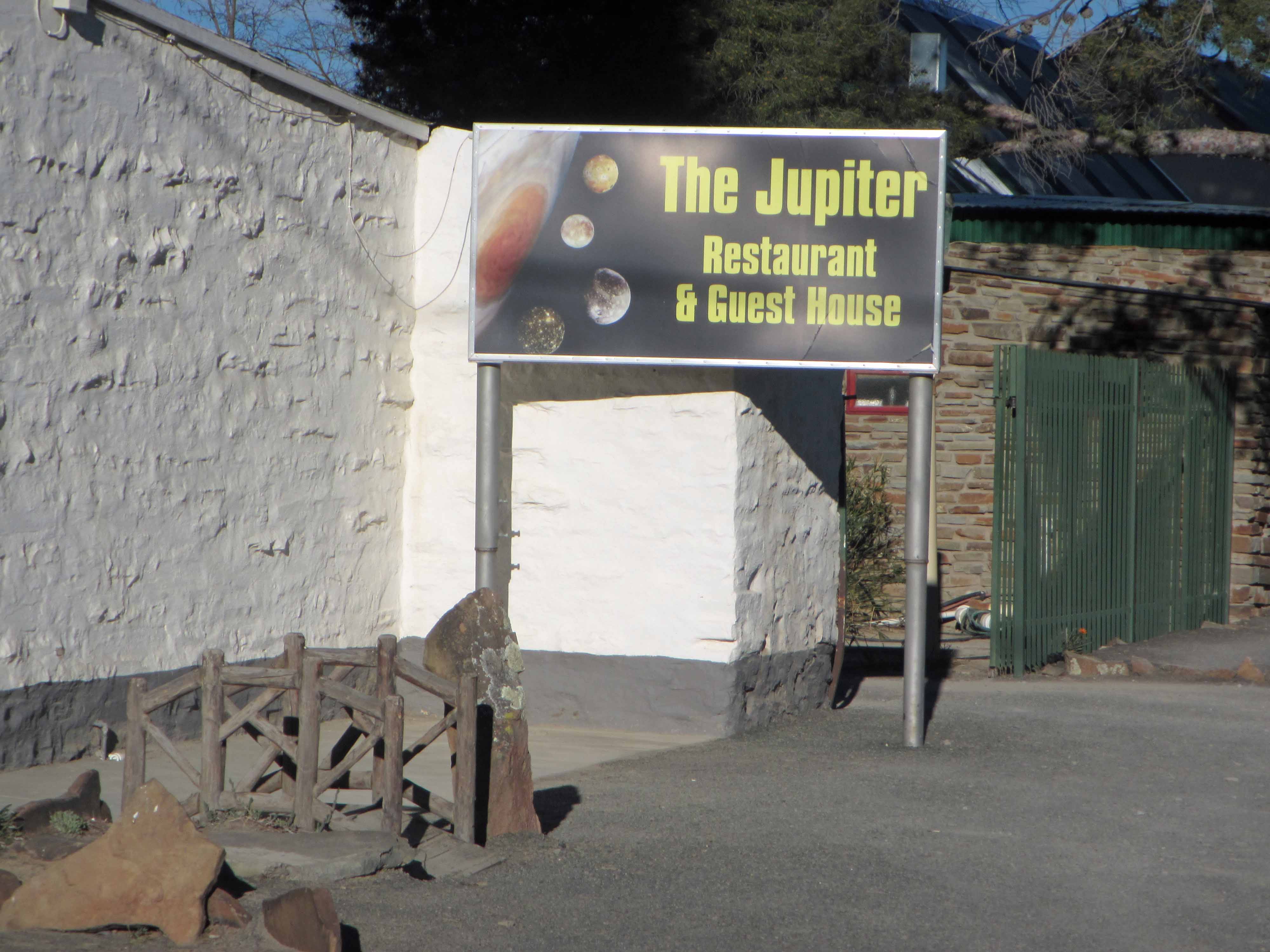
Signs for the Jupiter and Andromeda guest houses. Sutherland, October 2013.
Jupiter Guesthouse, Sutherland, October 2013.
Jupiter Guesthouse. Sutherland, October 2013.
Sign for the Skitterland Guesthouse. Skitter means "Sparkle" in Afrikaans. Sutherland, October 2013.
Sign for the Skitterland Guesthouse. Skitter means “Sparkle” in Afrikaans. Sutherland, October 2013.
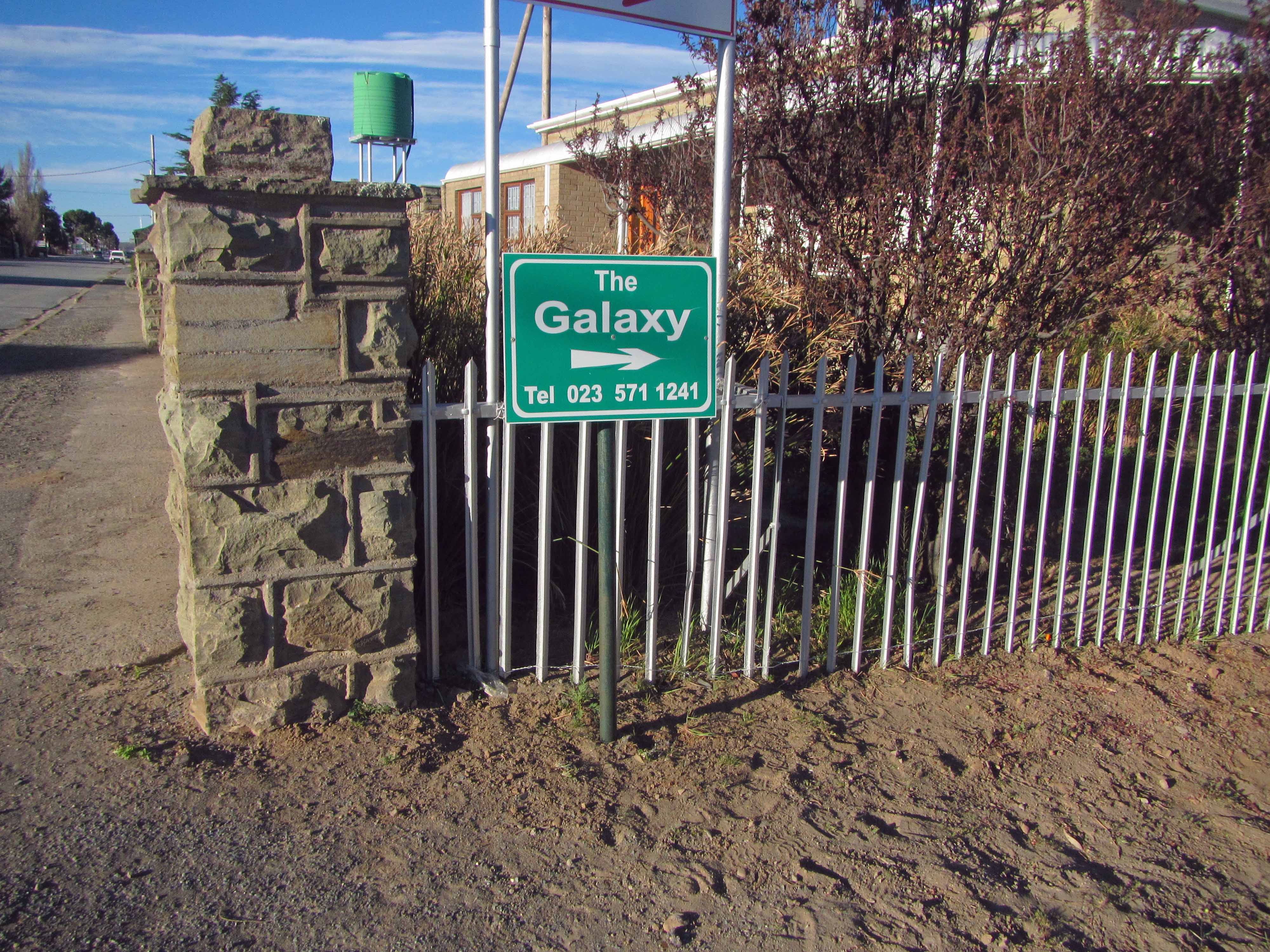
A sign pointing to The Galaxy. Sutherland, October 2013.
The Galaxy itself. Sutherland, October 2013.
A sign for the Galileo Guesthouse. Sutherland, October 2013.
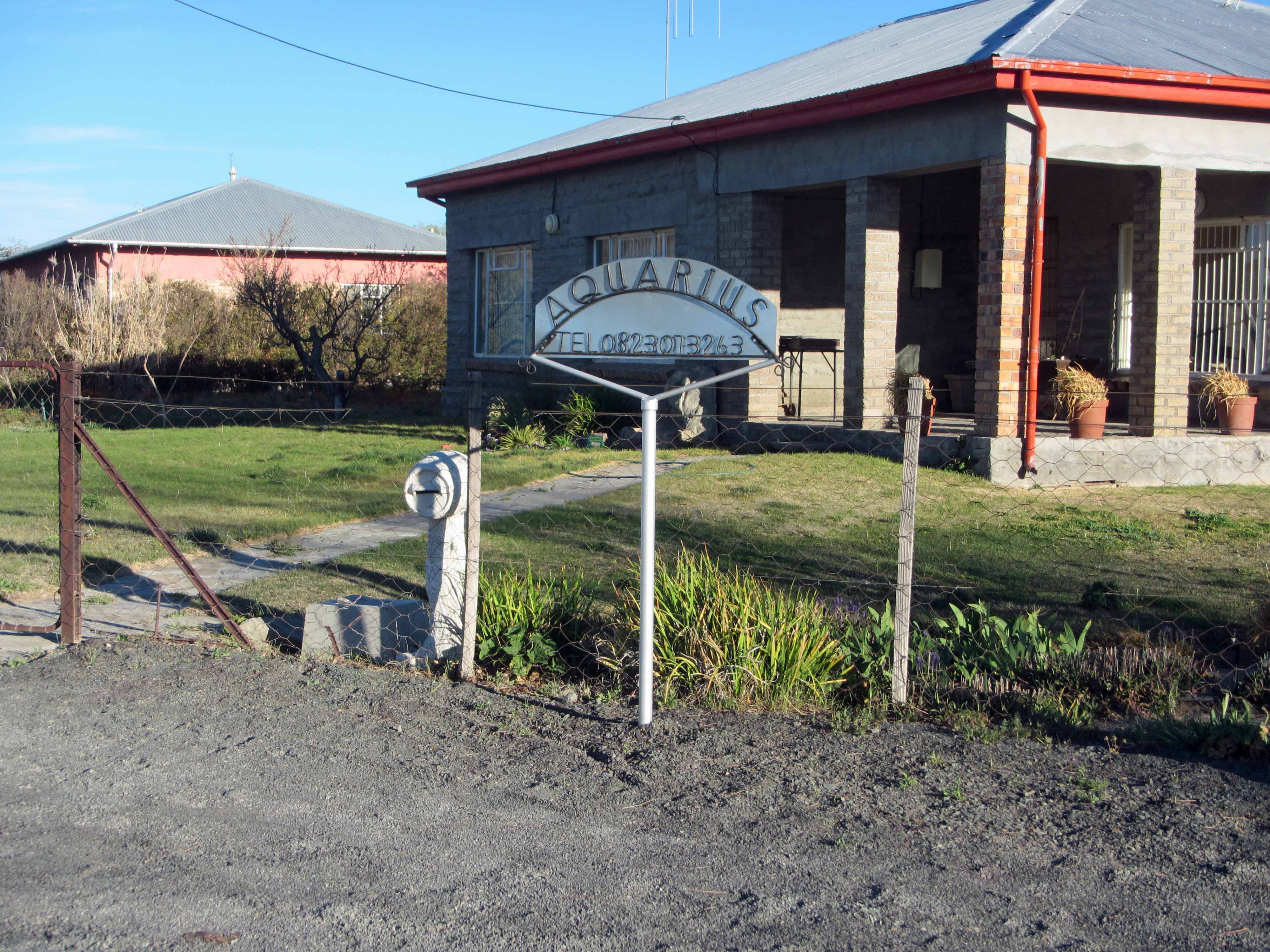
A sign for the Aquarius Guesthouse. Sutherland, South Africa.
A sign for the Aquarius Guesthouse. Sutherland, October 2013.
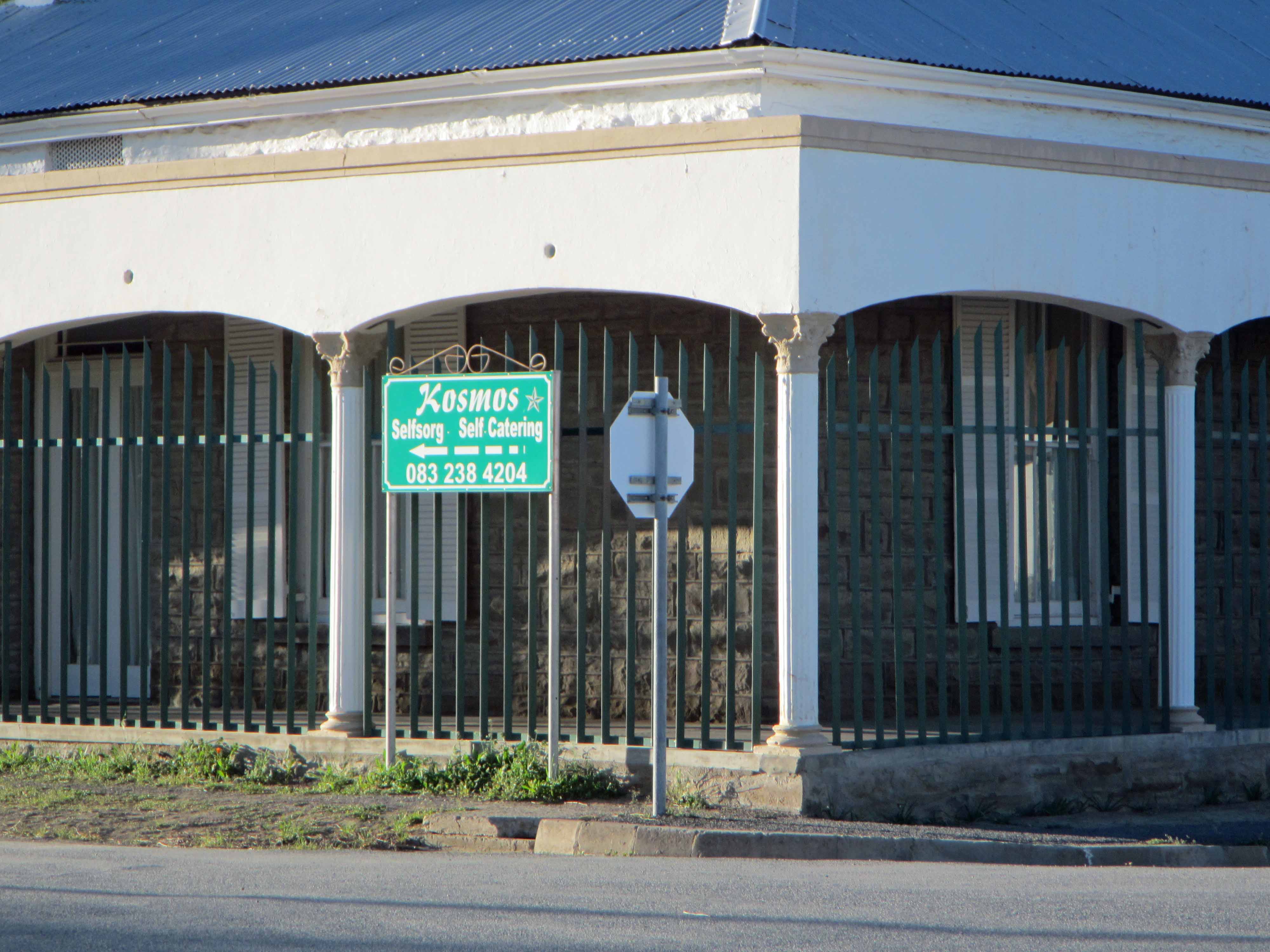
A sign for the Kosmos Guesthouse. "Kosmos" is Afrikaans for "Cosmos".
A sign for the Kosmos Guesthouse. “Kosmos” is Afrikaans for “Cosmos”. Sutherland, October 2013.

My favorite example of the astronomical theme found in the town of Sutherland is a cleverly named cafe:

Hailey-sê-kom-eet Cafe, Sutherland, October 2013.
Halley-sê-kom-eet Cafe. Sutherland, October 2013.

The name of the cafe is “Halley-sê-kom-eet”, which has a double meaning in Afrikaans. The cafe’s name obviously refers to the famous Halley’s Comet. In Afrikaans, “Halley’s Comet” is “Halley se komeet”. However, “Halley sê kom eet” means “Halley says come eat”. Adding a little hat above the one e and adding a space turns an astronomical reference into instructions to go eat some delicious Afrikaans food. The instructions worked– Jackie and I ate at the cafe a couple of times during our visit to Sutherland.

Well, that’s all I’ll share in this post. Stayed tuned for more about Sutherland!

Monday Geology Picture: A Giant Roadside Dinosaur

A giant dinosaur along the road in Cabazon, California. Picture courtesy of my friend Aimee.

For this week’s Monday Geology Picture I’m featuring another picture from my friend Aimee, who provided last week’s picture as well. This picture shows one of the Cabazon Dinosaurs, giant dinosaur sculptures standing along Interstate 10 in California near Palm Springs. Originally built starting in the 1960s to attract visitors to a roadside cafe, the dinosaurs are now part of an extensive roadside attraction and a museum that, unfortunately, promotes Young Earth Creationism and the denial of evolution.

Thanks for sharing this neat picture, Aimee! It’s a pity that the Cabazon Dinosaurs are now used to promote geological nonsense.

Plane Views: Denali

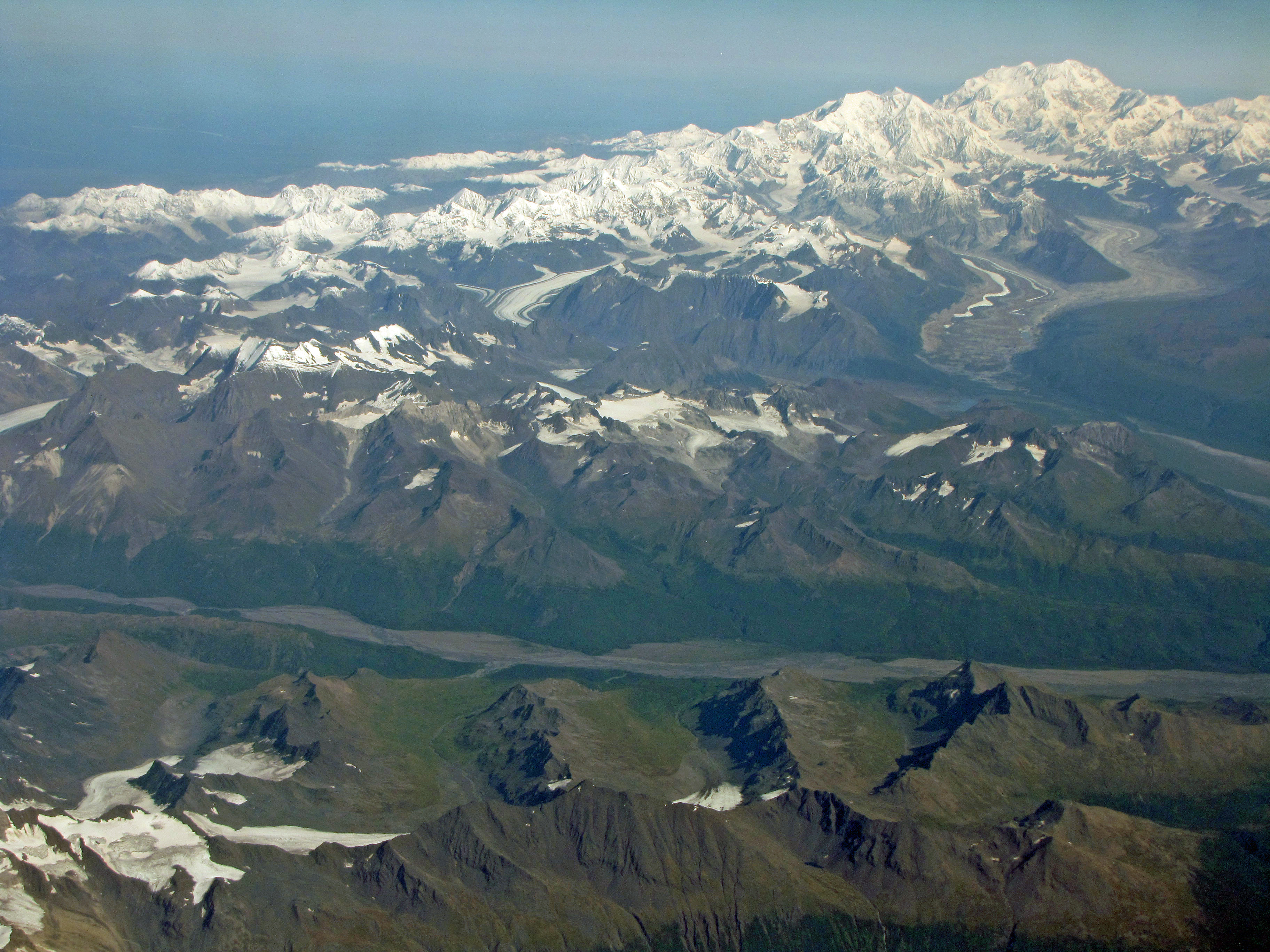
Denali #1.
Denali #1.

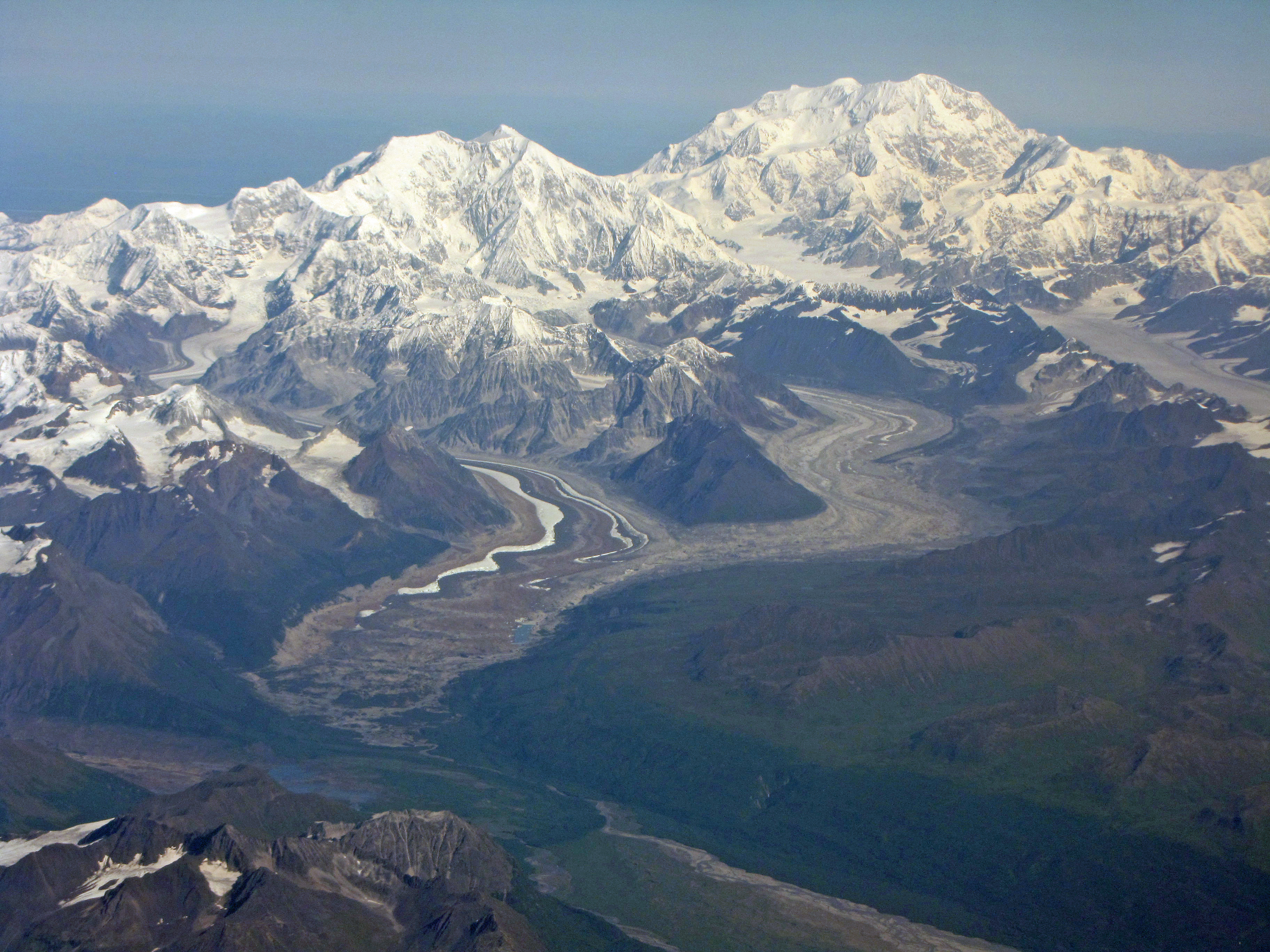
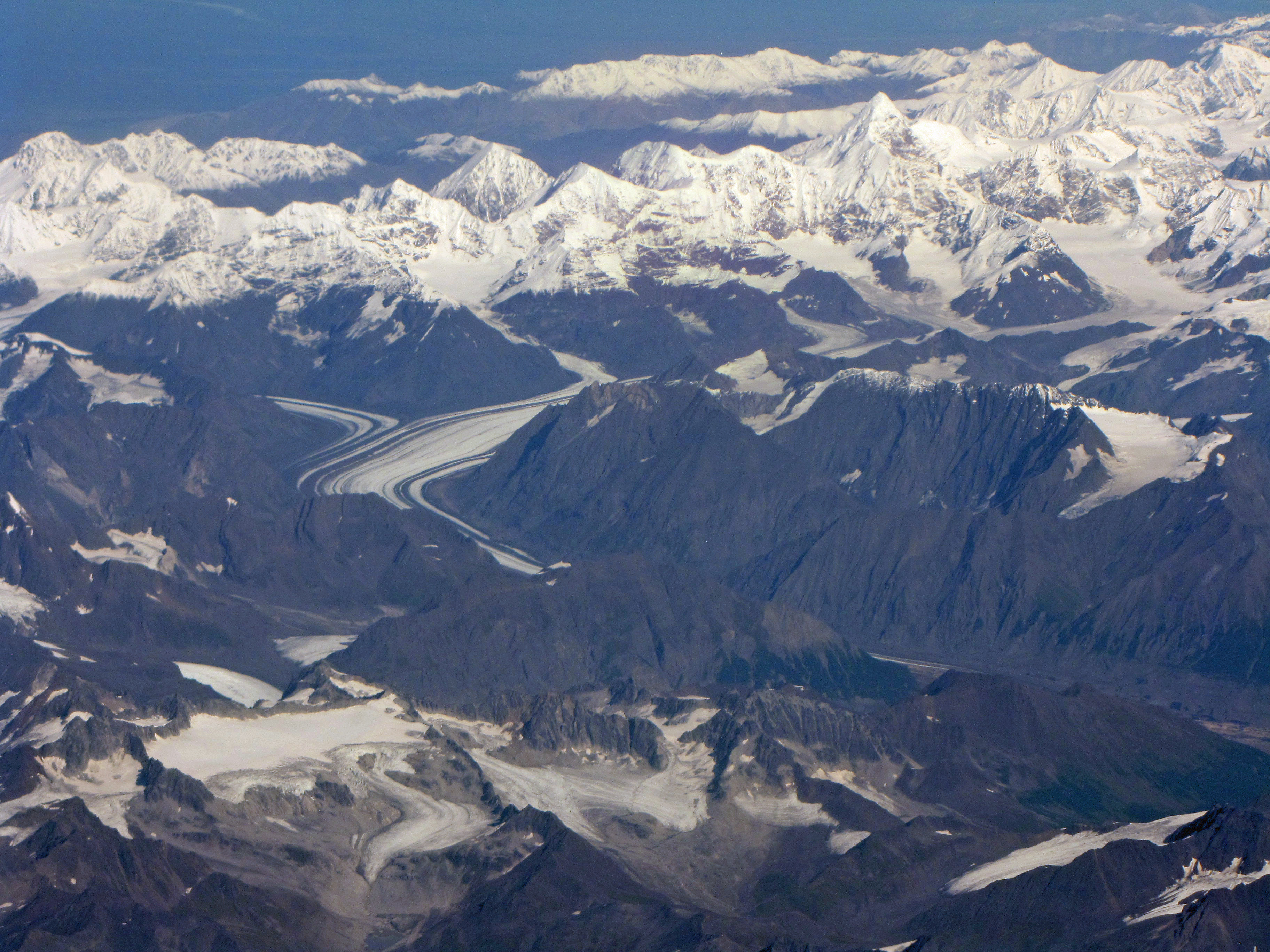
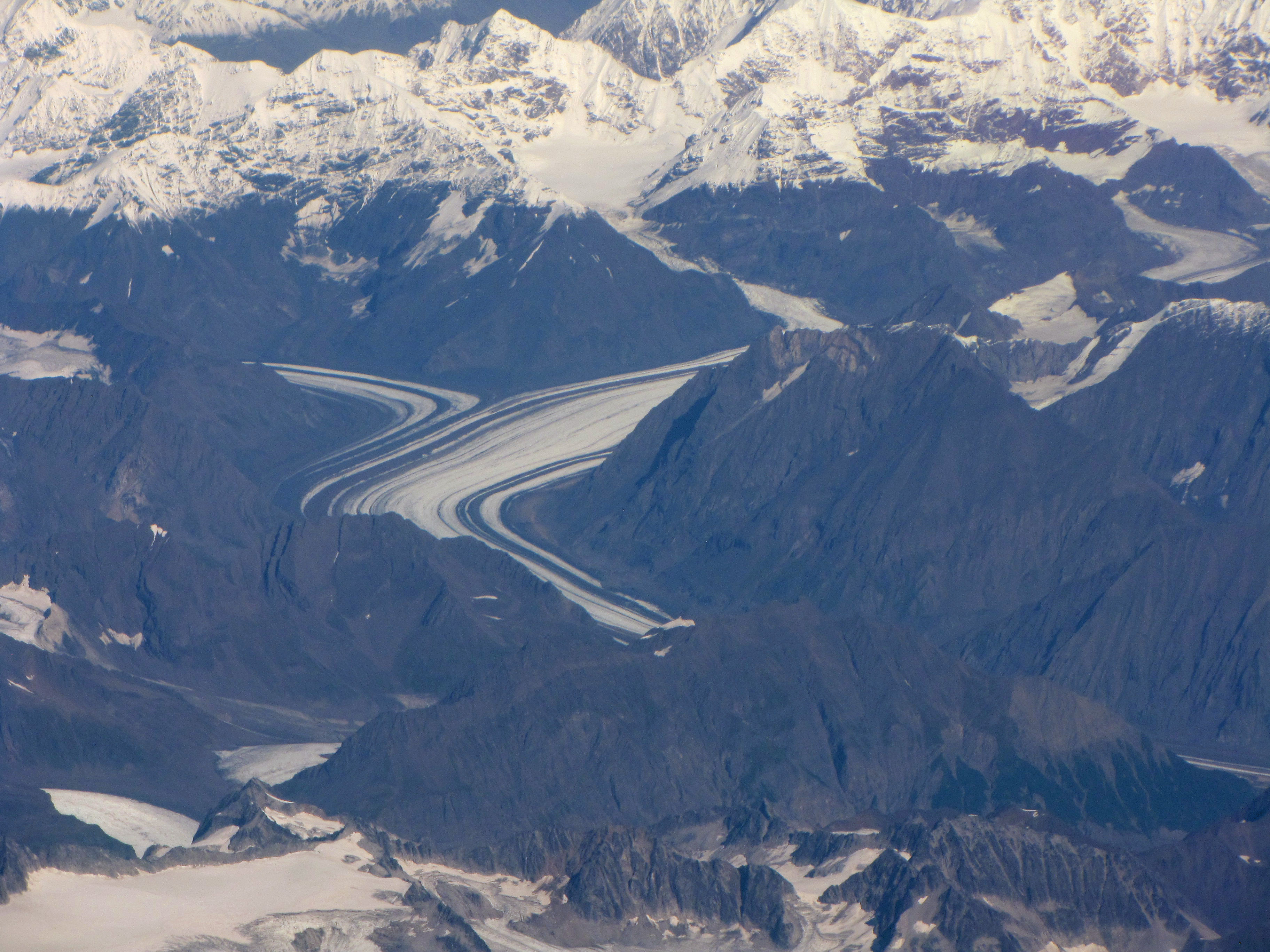
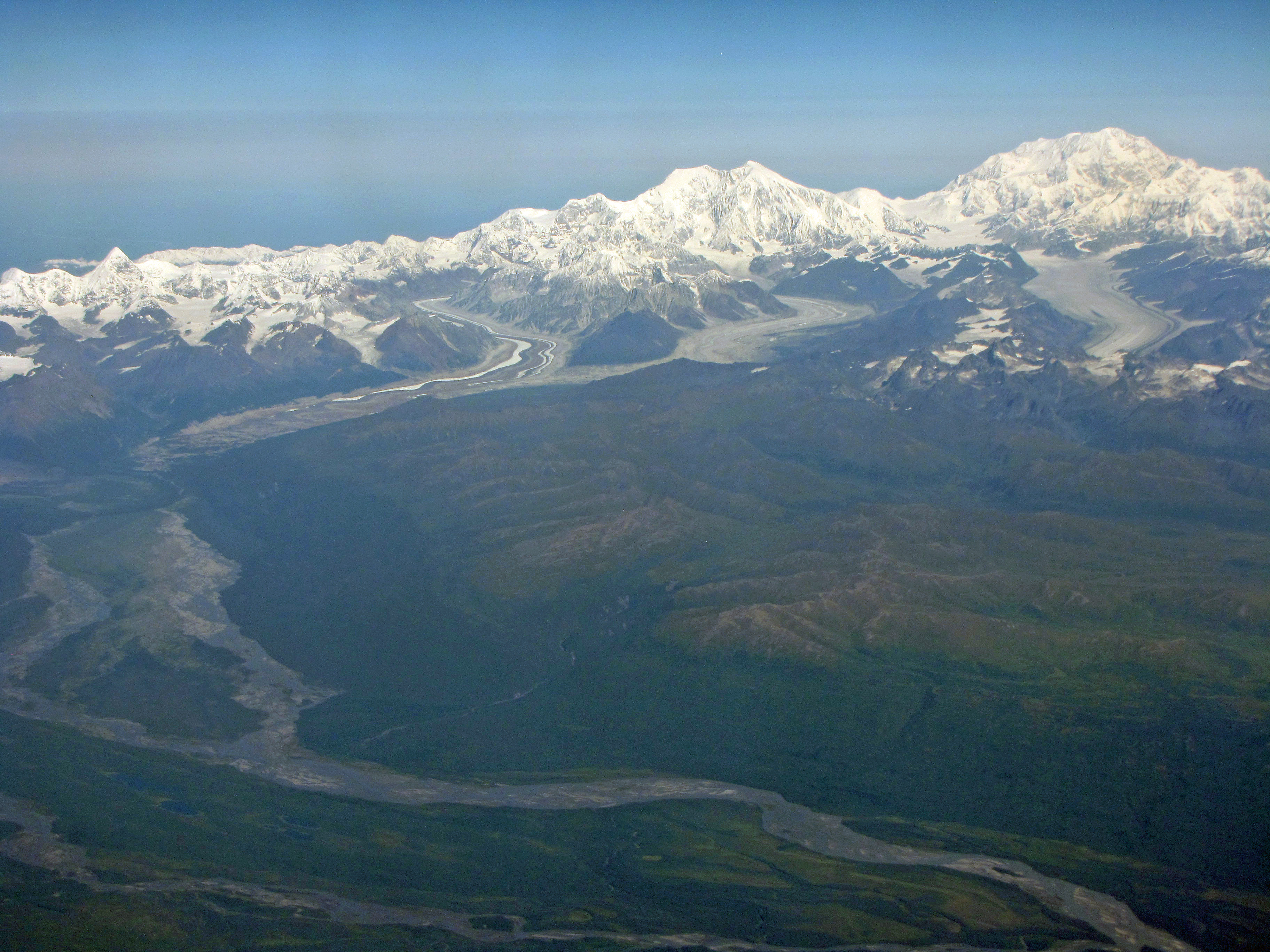
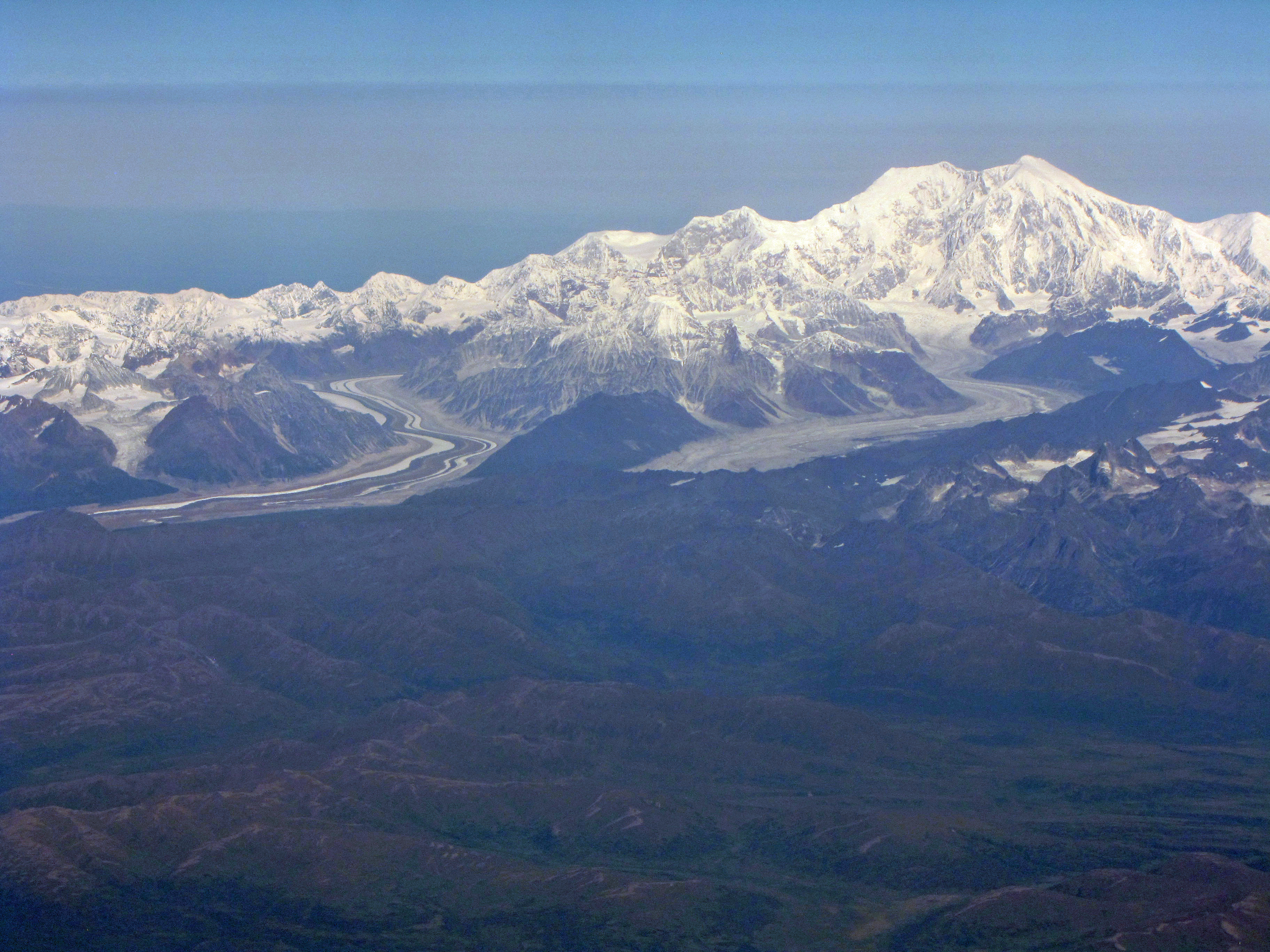
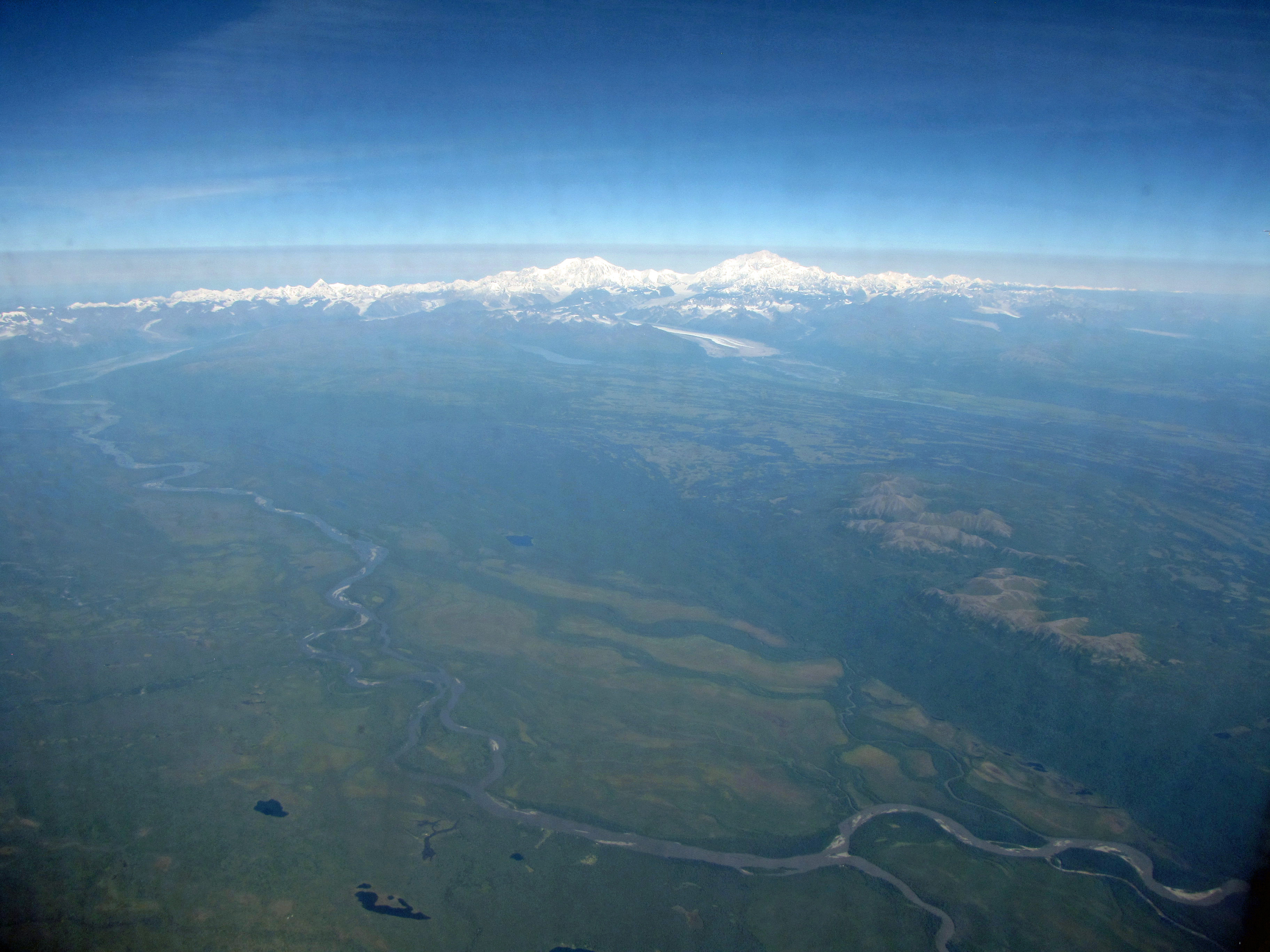
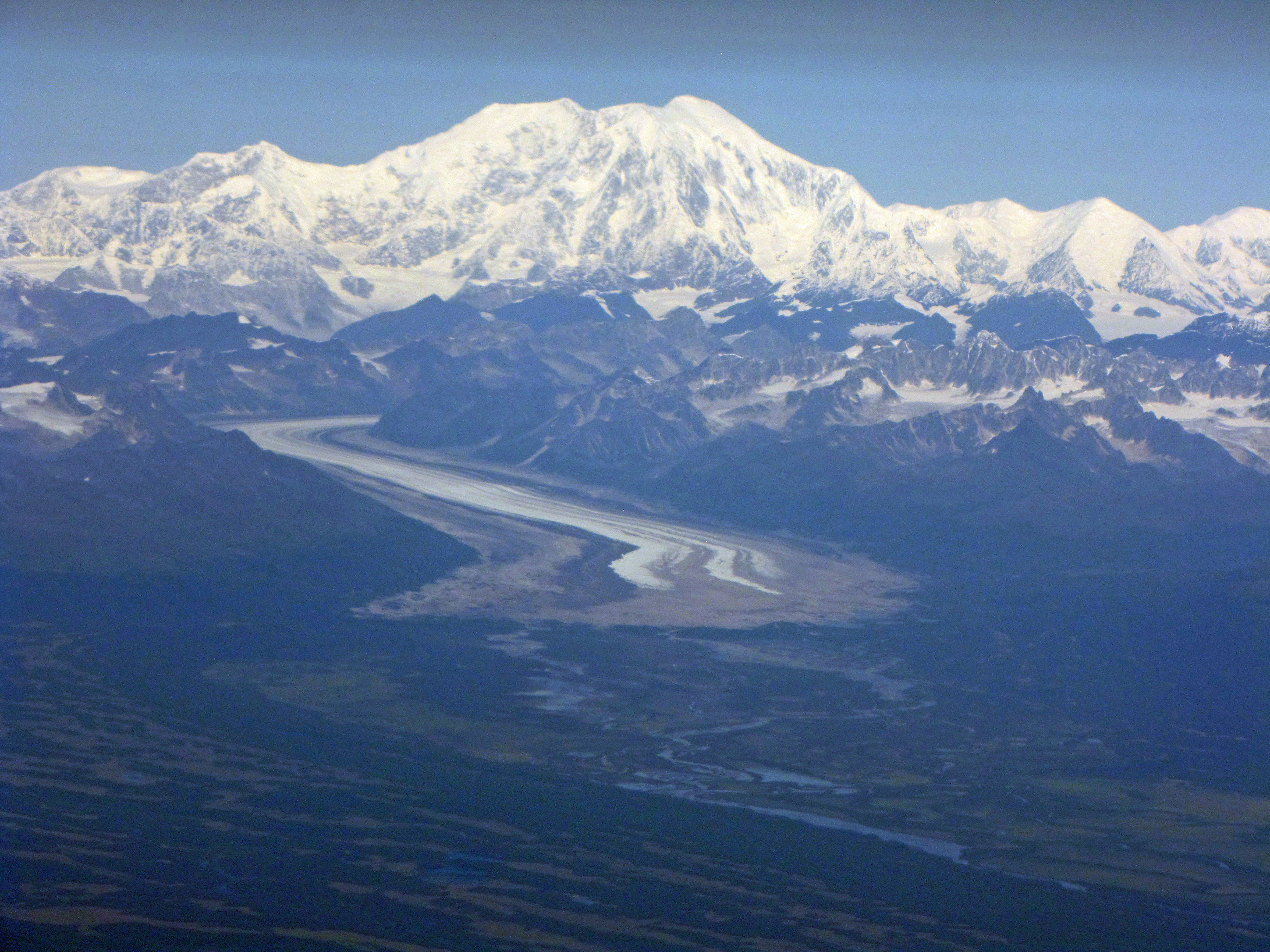
Three out of the four times that I flew between Anchorage and Nome, Alaska, the weather was overcast and clouds covered much of the landscape below. However, when I flew from Nome to Anchorage in August 2013 I was fortunate enough to fly on a day when skies were clear. I was thrilled to obtain a spectacular view of Denali, also known as Mt. McKinley, the highest peak in North America. Denali towers an impressive 20,237 feet above sea level. Flying over the Denali mountain range was a beautiful, humbling, thought-provoking experience. The landscape is certainly breathtaking. Rugged white mountain peaks are flanked by immense brown-and-white striped glaciers that snake down the slopes before melting into sediment-laden rivers that rush through green valleys then meander across the flat, pale green plain far below the mountain peaks. I found the glaciers particularly beautiful and fascinating. I also wondered and worried about what the glaciers will look like in 10 years, in 20 years, in 50 years, in 100 years– blinks of an eye in geologic time but significant periods in human time. Will the glaciers have shrunk due to warming climate? Will they be there at all? The immensity, and also the fragility, of the lofty landscape humbled me. So, too, did the thought that I was flying high above Denali, traveling in a little metal airplane built by little men (and women, I hope). I likely will never have the skill or guts or determination to climb a mountain such as Denali, but thanks to modern technology and some good weather conditions I was able to, for a little while at least, appreciate Denali’s beauty from a great height.

Below are some more plane views of Denali and the surrounding landscape. Enjoy! Please feel free to point out features on these pictures if you are familiar with the terrain. The National Park Service provides some information about the geology of Denali here.

Denali #2.
Denali #2.
Denali #3.
Denali #3.
Denali #4.
Denali #4.
Denali #5.
Denali #5.
Denali #6.
Denali #6.
Denali #7.
Denali #7.
Denali #8.
Denali #8.
Denali #9.
Denali #9.
Denali #10.
Denali #10.
Denali #11.
Denali #11.
Denali #12.
Denali #12.
Denali #13.
Denali #13.
Denali #14.
Denali #14.
Denali #15.
Denali #15.
Denali #16.
Denali #16.
Denali #17.
Denali #17.
Denali18
Denali #18.
Denali #19.
Denali #19.
Denali #20.
Denali #20.
Denali #21.
Denali #21.
Denali #22.
Denali #22.
Denali #23.
Denali #23.
Denali #24.
Denali #24.

Monday Geology Picture: Jumbo Rocks Campground, Joshua Tree National Park

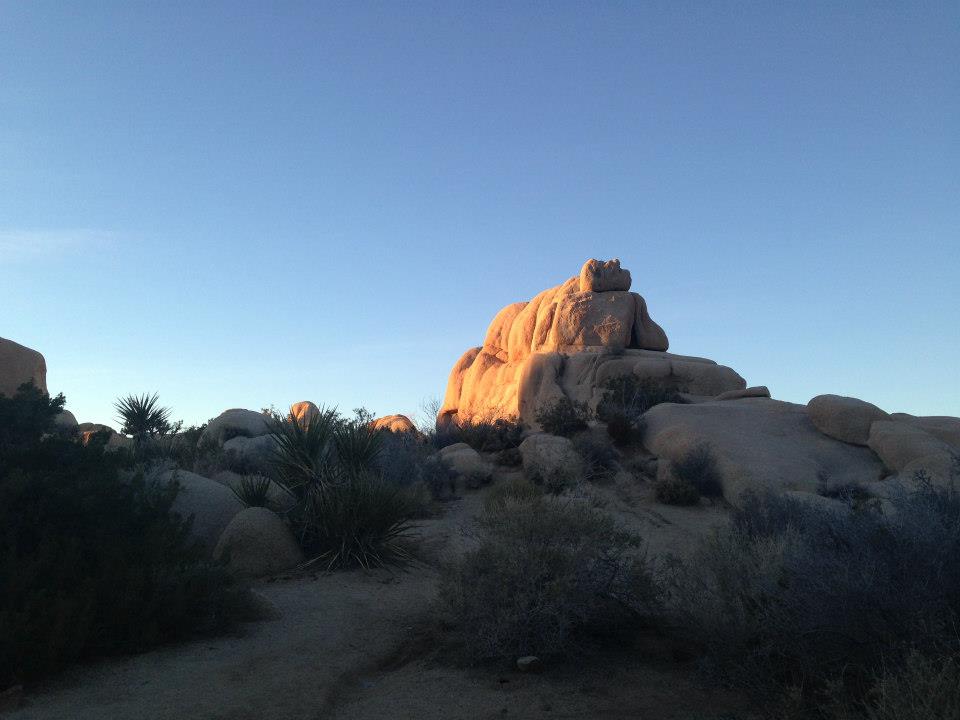
A picture taken at beautiful Jumbo Rocks campground in Joshua Tree National Park. Picture courtesy of my friend Aimee.

This week’s Monday Geology Picture is courtesy of my friend Aimee, who recently visited Jumbo Rocks Campground in Joshua Tree National Park in California. This campground is a geoloigst’s– and a rock climber’s– delight. Thanks for sharing such a great picture, Aimee!

Monday Geology Picture: A Geology Bookshelf

Some of the geology books on our bookshelf, circa February 2014.

I was doing a quick workout tape in the living room this evening and pondering what I might feature for this week’s “Monday Geology Picture” when my eye wandered over to one shelf of one of our bookshelves. The lowermost shelf of the bookshelf next to our TV has a decidedly geological theme, as you can see in the above picture. My husband and I have many, many geology books… this shelf features just a few of them, ranging from highly technical geological reference books to fun geology-themed popular science books.

What geological books are found on your bookshelves?

A Request: Mauritius Geology

The Mauritius guidebook I recently purchased. This guidebook skims over some very interesting geology-- I hope to learn more!
The Mauritius guidebook I recently purchased. This guidebook skims over some very interesting geology– I hope to learn more!

My husband and I have had quite a busy few months of work. We only took one day of leave over the recent December holiday, so we’ve decided that we need a short break before I start a new position at the beginning of April. So, we’ve booked a week’s vacation on the lovely island of Mauritius in late March. We’ll be traveling through Johannesburg on the way to visit some family and attend my sister-in-law’s university graduation ceremony.

I’m very excited about our upcoming trip to Mauritius. We plan to spend a significant amount of time relaxing on the beach, snorkelling, and kayaking. However, I also hope that we can explore some of the island’s geological wonders. I’m particularly interested in learning more about the Dodo bird, which lived on Mauritius before it became extinct. I’m also very interested in learning more about the island’s volcanic geology. Apparently there are some lava tubes on the island, among other interesting volcanic features.

Here’s my request: Can anyone help me learn more about Mauritius geology before my trip? Can anyone suggest any good papers to read about Dodo bird fossils or general Mauritian geology? Furthermore, does anyone know of any geologists (in Mauritius, maybe?) who might be able to provide advice on good places to see geology and/or fossil collections in Mauritius?

Any information that anyone can provide on Mauritius geology would be most appreciated. Many thanks in advance!

Monday Geology Picture(s): More Views of the Shipwreck on Noordhoek Beach, South Africa

Beautiful Noordhoek Beach, February 2014.

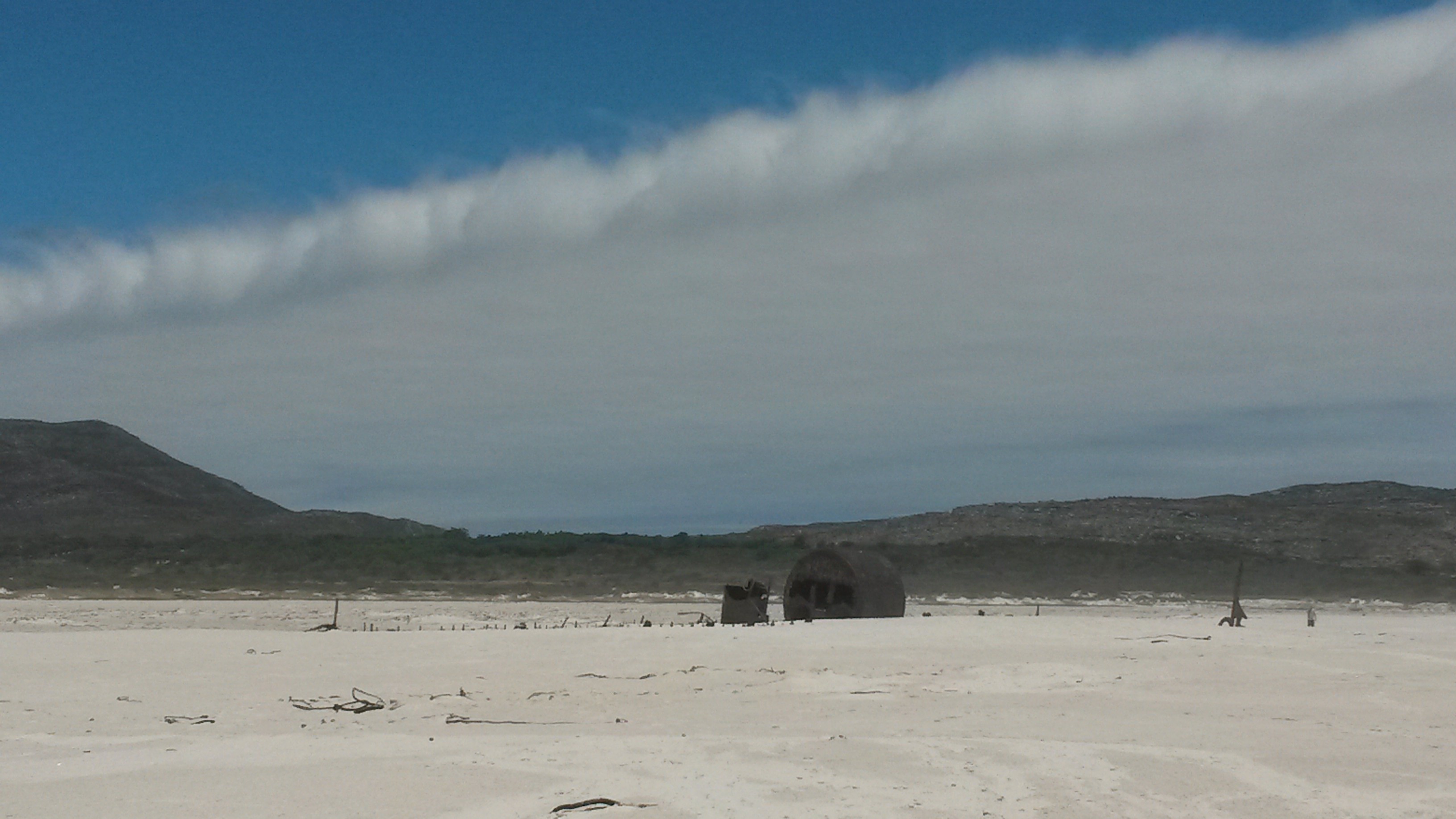
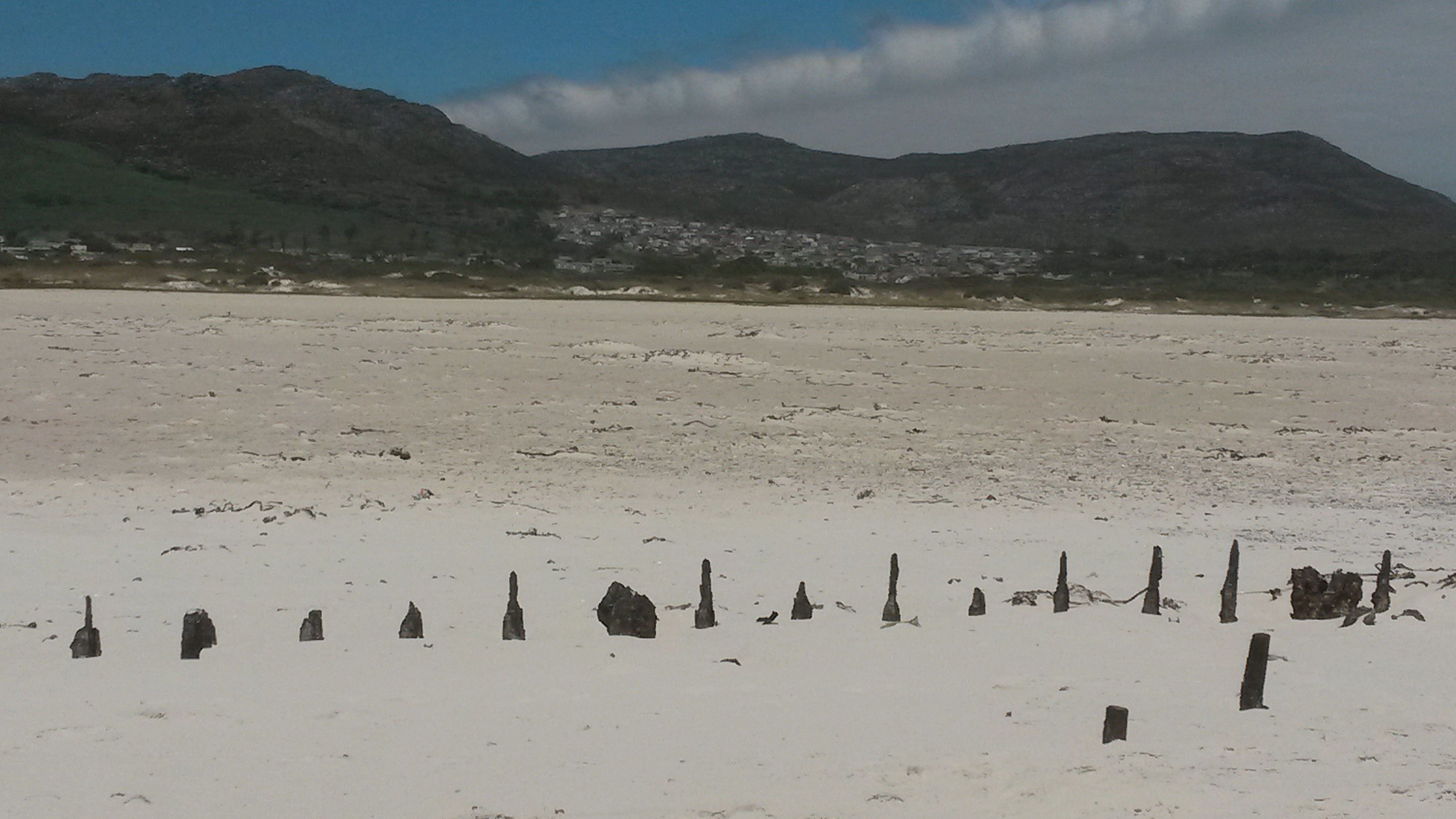
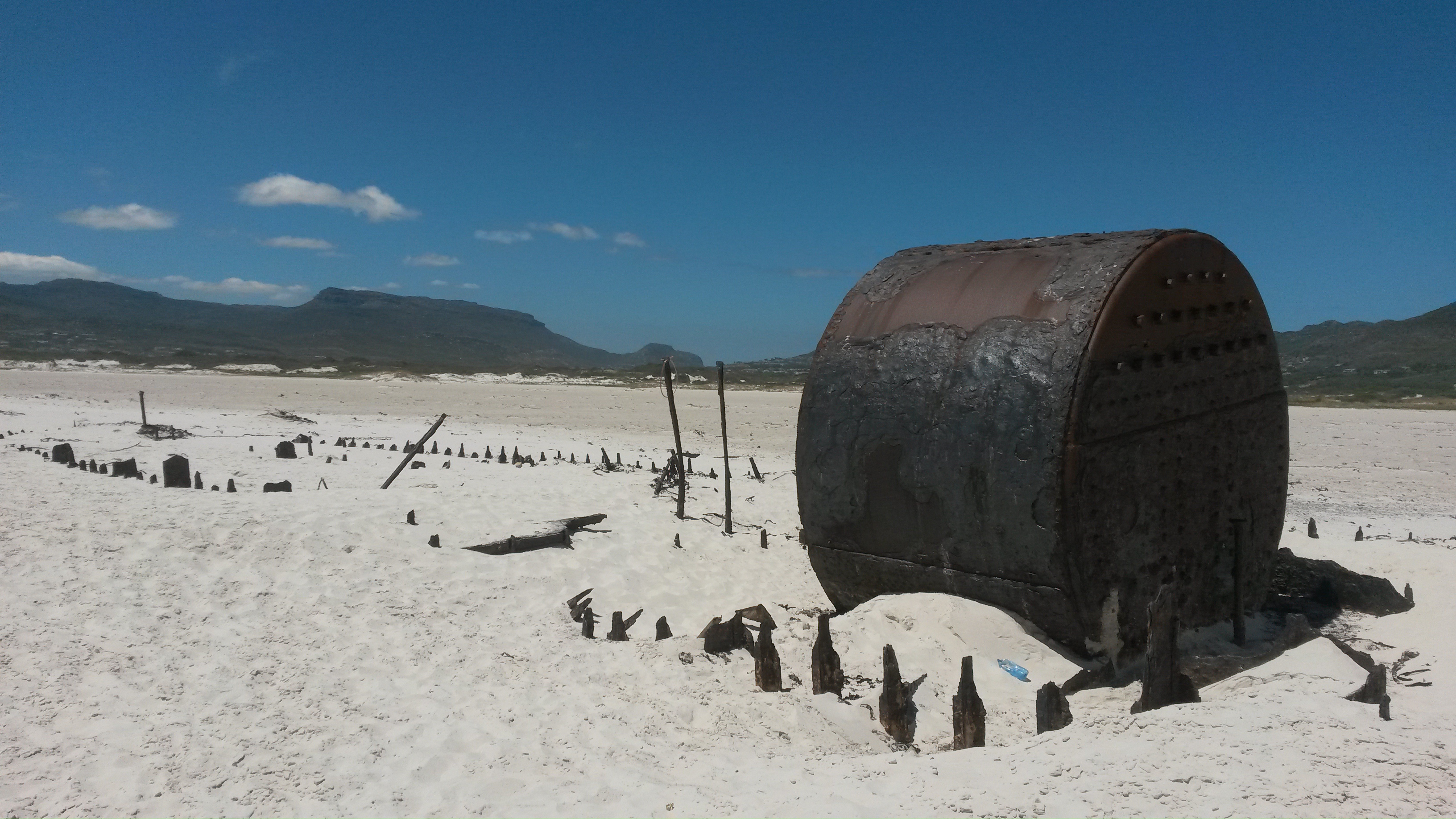
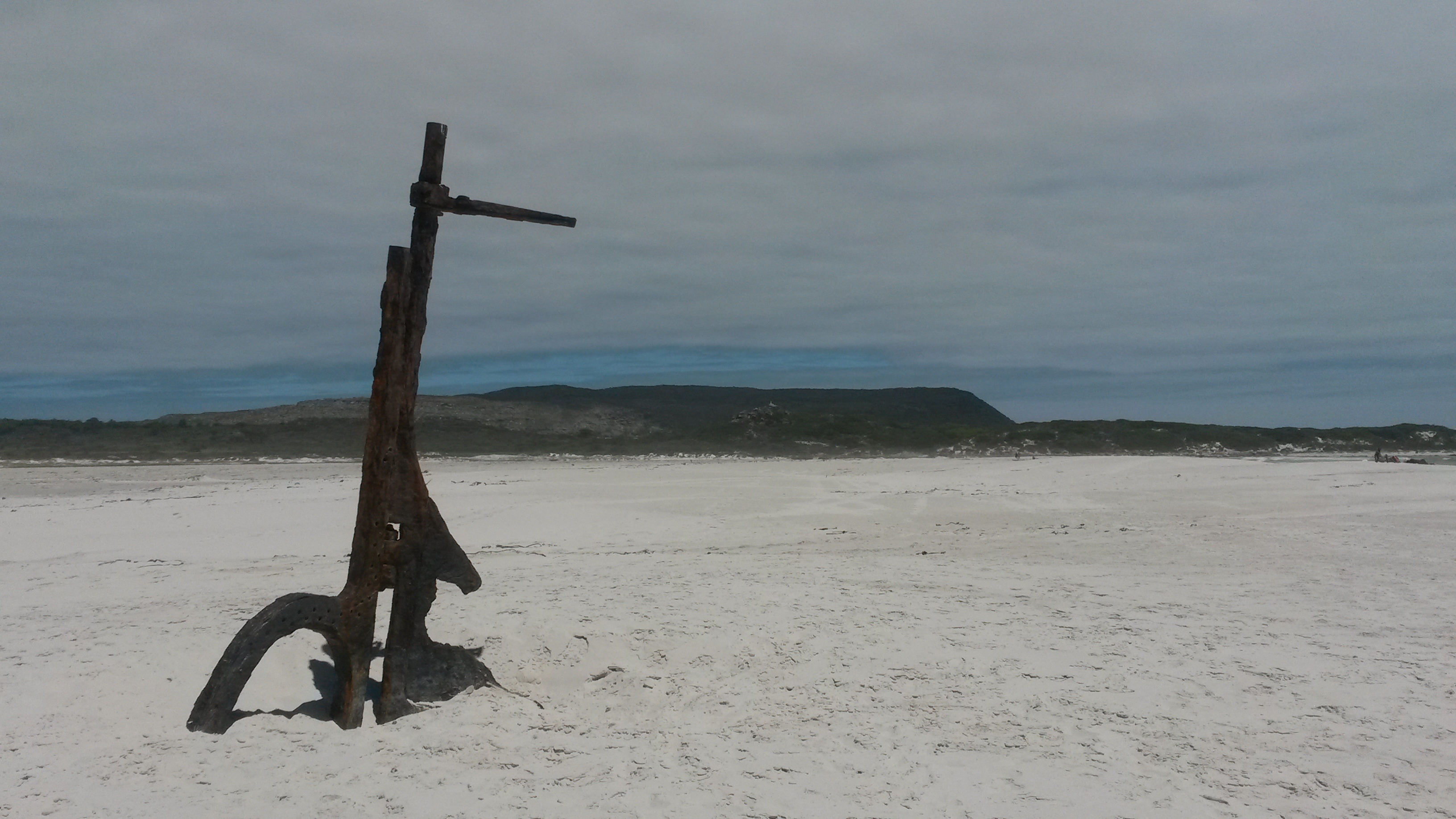
A few weeks ago I featured a picture of the S. S. Kakapo shipwreck on Noordhoek Beach in the Cape Town, South Africa, area for my “Monday Geology Picture” post. Yesterday my husband and I took a walk along Noordhoek Beach, which is quite a long beach. Walking from the parking lot at one end of the beach to the shipwreck at the other end of the beach takes about an hour at a leisurely pace. For this week’s “Monday Geology Picture” post I thought I would share a few more pictures of the Noordhoek Beach shipwreck. Enjoy!

The SS Kakapo shipwreck from a distance, February 2014.
The S. S. Kakapo shipwreck from a distance, February 2014. There is also a spectacular cloud in the sky.
Approaching the shipwreck, February 2014.
Rusty remains, February 2014.
More rusted remains, February 2014.
More rusty remains, February 2014.
A close-up view of the rusty remains of the boiler, February 2014.
Another view of the rusty boiler, February 2014.
Ship skeleton on the sand, February 2014.
A rusted pillar in the sand, February 2014.
A rusted ship sculpture in the sand, February 2014.

Monday Geology Picture: Sandstone Cross-bedding in Red Rock Canyon

A view of Red Rock Canyon, circa 2005.
A view of Red Rock Canyon, circa 2006.

This week’s Monday Geology Picture is a pretty shot that was taken several years ago in the Red Rock Canyon National Conservation Area, which is located just outside of Las Vegas. If you ever visit Las Vegas, I highly recommend making a trek out to Red Rocks– it’s a short drive away from the casinos and is a nice escape from the gaudy and glitzy Las Vegas strip. Also, you can see some very impressive sandstone cross-bedding, such as the bedding shown in the picture above.