Granite boulders on one of Cape Town’s beautiful beaches.
If you want to present at the 35th International Geological Congress, which is being held in Cape Town later this year, it’s not too late to submit an abstract! The deadline is January 31st.
I plan to submit my own abstract tomorrow. Come and join me at the congress! There are going to be some great talks and field trips… and you can come visit the gorgeous city of Cape Town, South Africa.
My beautiful Himalayan salt lamp, illuminating our living room at night.
Although I haven’t yet featured such a gift on my annual What to Buy a Geologist for Christmas list, some of my wonderful relatives recently bought me a rock lamp for Christmas. Specifically, they bought me a pink colored Himalayan salt lamp. The lamp consists of a large crystal of salt, or sodium chloride, that is mounted on a pretty wooden stand. The lamp provides a lovely, soft, pale pink light. We turn the lamp on every evening to illuminate our living room, and we sometimes leave the lamp on overnight as a night light.
I absolutely love my salt crystal lamp. I mean, what’s not to love? It’s a rock that’s also a lamp, and that in and of itself is awesome. I really like the look of the lamp and its soft light. I even find looking at the lamp somewhat peaceful. It’s nice to have such a beautiful object in our living room.
All that said, unlike many people I do not believe that my salt crystal lamp has any healing powers… or that it has any substantial health benefits at all. Despite what many people say on the internet and elsewhere, Himalayan salt lamps do not emit significant quantities of ions, nor any sort of other magical “positive energy waves”. Most (probably all) of the supposed health benefits of Himalayan salt lamps are absolute rubbish. I say that as a geologist and not a medical professional, but several people agree with me – for example, see here and here. As someone with geochemical expertise, I can attest that Himalayan salt lamps are certainly not emitting special streams of ions. That is, they’re not emitting any special ions nor high quantities of ions – and turning the lamp on or off won’t significantly impact how many ions the salt crystal in your lamp releases.
At most, my salt crystal lamp slightly decreases my stress level by being a beautiful object to look at. And, really, isn’t that enough?
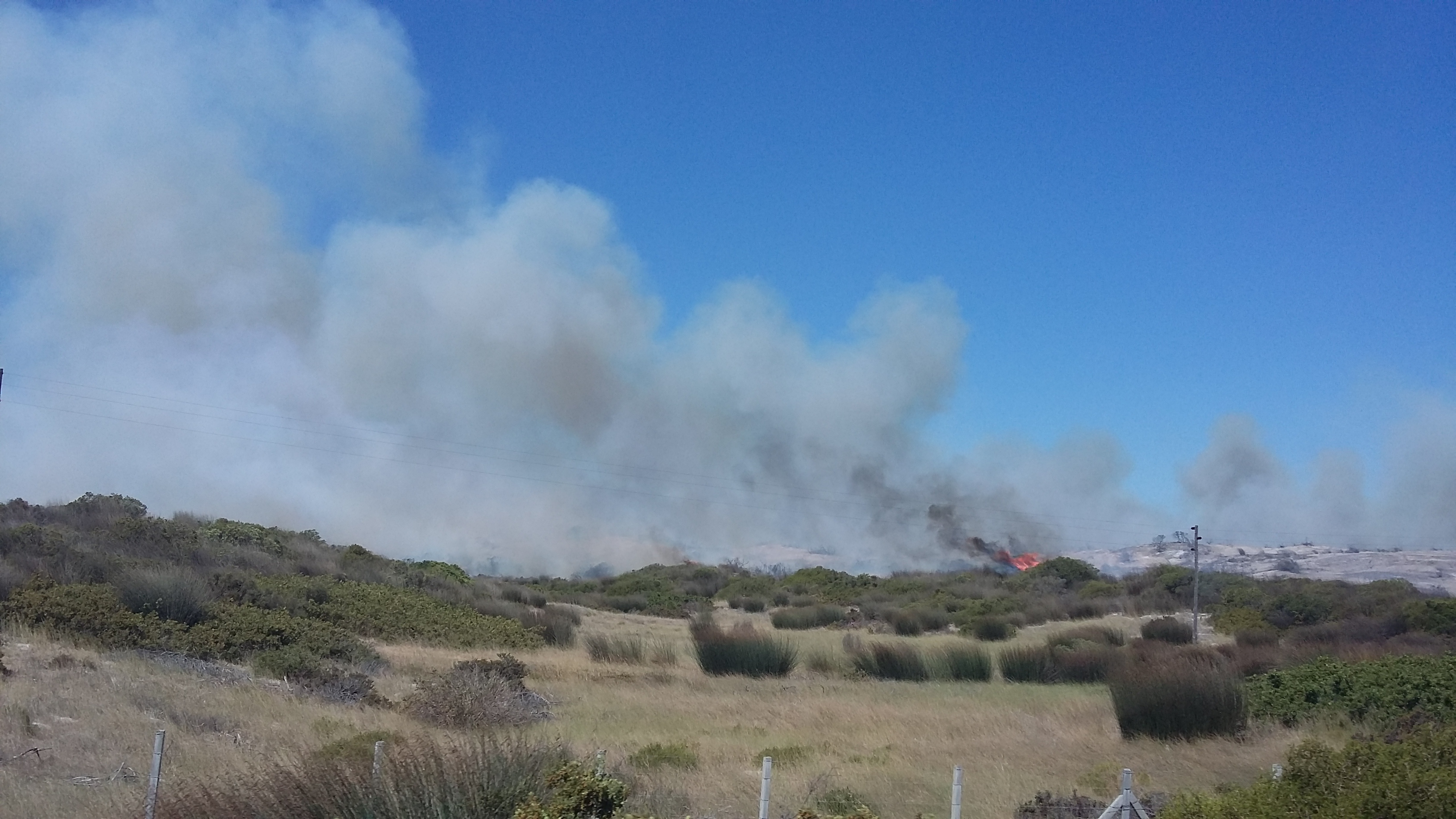
A small fire raging along the West Coast of South Africa.
Here in South Africa it’s fire season again. So far, this summer has been very hot and dry with many parts of the country suffering from drought. Over the past few weeks, there have been several forest fires around the Western Cape province. About a week ago we drove past a moderate size fire when we were driving back from Langebaan Lagoon. Fortunately, it seems that firefighters contained this particular fire fairly quickly. Hopefully there won’t be too many devastating fires this year, especially considering that many parts of the forest were burned last year.
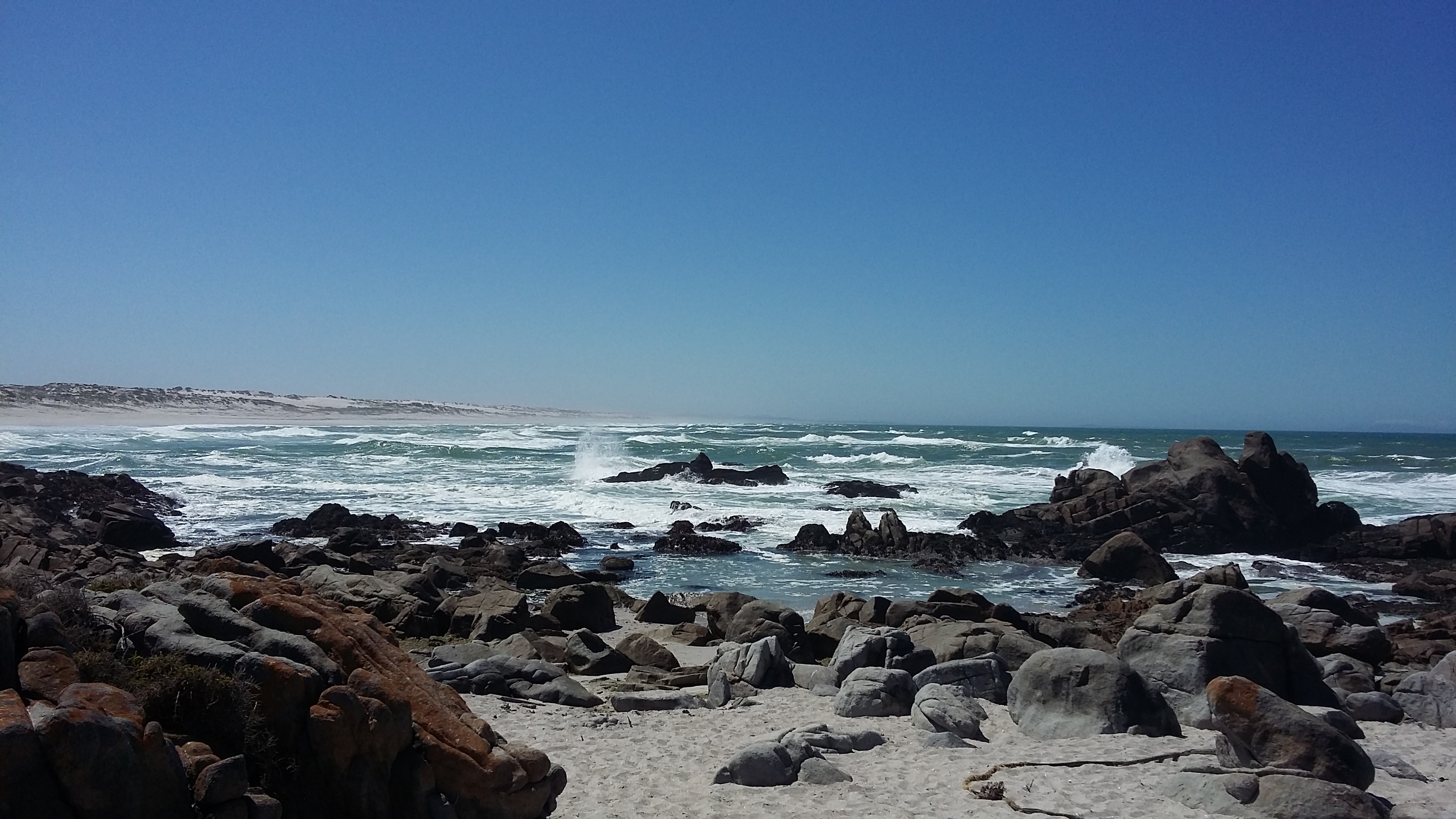
For this week’s Monday Geology Picture, here are some lovely granitoid beach rocks along the Atlantic Ocean at Langebaan, South Africa. I visited Langebaan again this past weekend with some family. Stay tuned for some pictures from the fossil park near Langebaan!
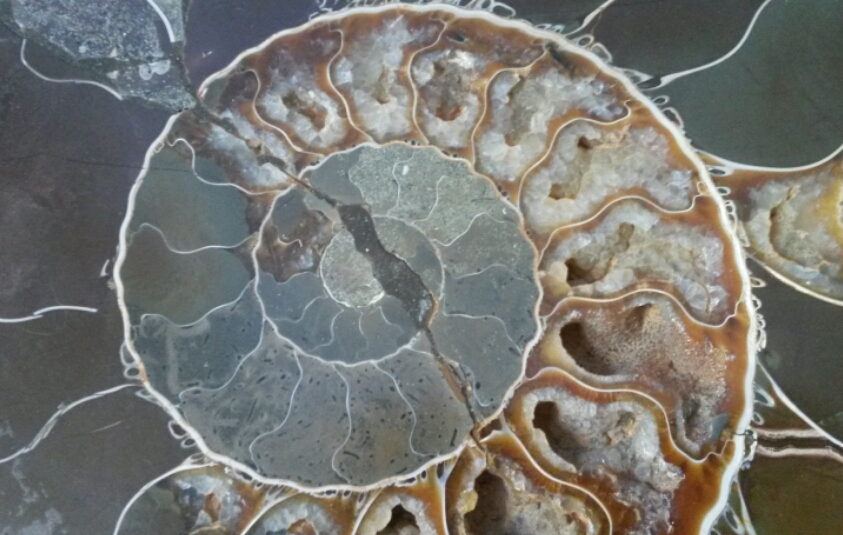
For this week’s Monday Geology Picture, here’s a close-up of an ammonite fossil. This particular ammonite fossil was a wedding gift and decorates our living room… along with quite a few other rocks! Apologies for the lack of scale – I didn’t want to spoil the pretty picture. I’ll have to share some more pictures of our rock collection shelf, which includes this fossil, in another post.
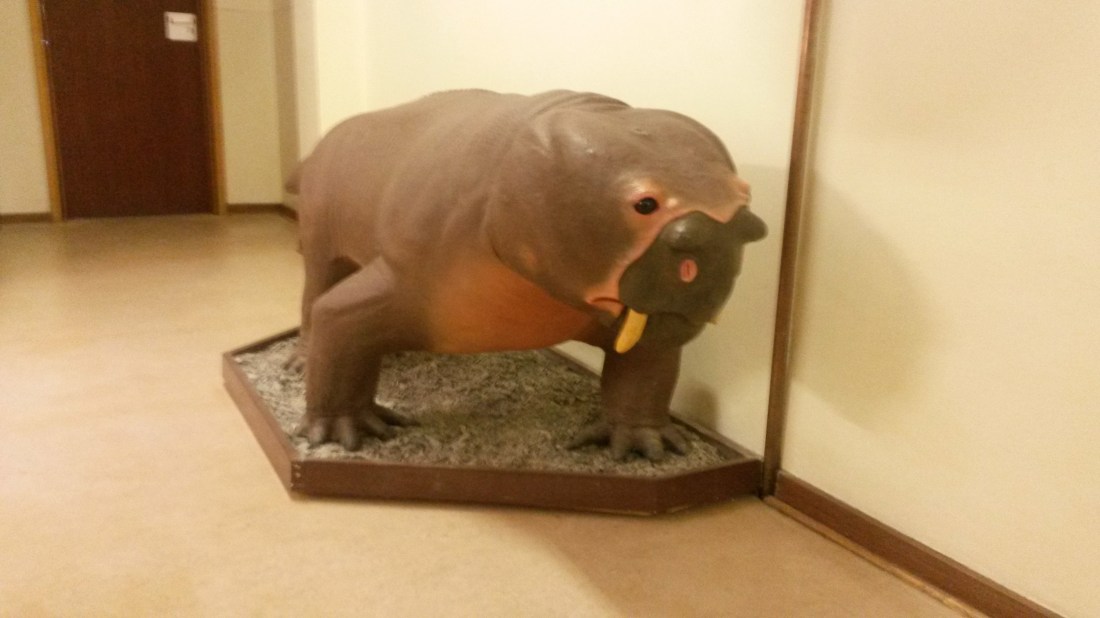
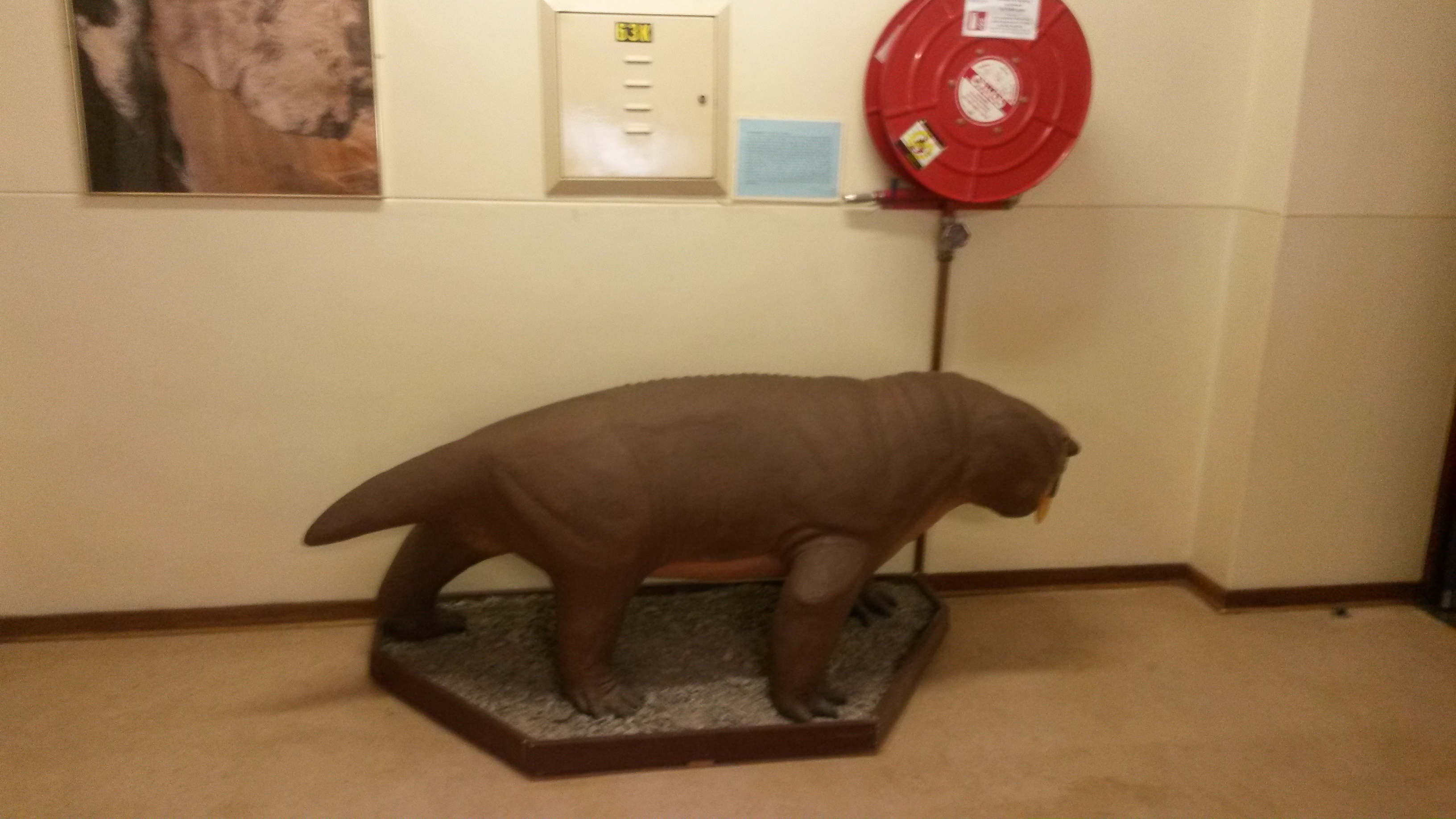
Aulacephalodon selfie…. because who doesn’t want to pose with this delightful model?
This week’s Monday Geology Picture is an aulacephalodon selfie that I took with the aulacephalodon model that is on display in the Geology Department at Rhodes University in Grahamstown, South Africa. Try saying that three times fast: aulacephalodon selfie, aulocephalodon selfie, aulacephalodon selfie! Can you say it without stumbling? I certainly can’t!
So, what is an aulacephalodon?
Here’s a description from the information sign next to the sculpture:
Aulacephalodon was a relatively large, plant-eating (herbivorous) dicynodont that lived during the Late Permian [~250 million years ago]. Like most other dicynodonts, Aulacephalodon had a beak for biting, grinding, and cutting plants. The animals also had a pair of prominent tusks, possibly for digging, sexual display, and defence [that’s how the South Africans spell “defense”]. The larger, and therefore older, specimens have distinctive bony knobs on the snout above the nasal openings. This feature is not seen in small juvenile skulls. These “nasal bosses” were either only developed in older animals, or they formed to mark either the male or female of the species. Note the prominent “hole” in the top of the skull – a structure known as the pineal foramen, common to all therapsids (mammal-like reptiles). This hole in the skull housed part of a sense organ which was capbale of sensing light and may have regulated the day/night cycle of the animals. Fossil footprints tell us that Aulacephalodon lived in family groups. This model reconstruction is based on the numerous fossil skulls and skeletal remains of Aulacephalodon that have been found in the Cistecephalus Biozone of the Karoo basin. The stance of the model is based on the footprints preserved in the ancient paleosurface (mudflat) that has been exposed in the “Asante Sana” valley, east of Graaf-Reinet.
Here are a few more pictures of Mr. (or Ms.? I’m not sure how to tell…) Aulacephalodon:
The aulacephalodon model, from the front.The aulacephalodon model, from the side.Another picture of yours truly and the aulacephalodon model.
The aulacephalodon model is fantastic, both for selfies and as a sort of department mascot. I hope that the geology students sometimes dress up the model for holidays and such! I can just imagine this guy (or lady?) dressed up with a scarf and hat in the wintertime!
A view of the Namibian night sky. Picture taken by Jackie Gauntlett in the middle of the Sperrgebiet, June 2015.
My husband and I spent some time doing field work in the Sperrgebiet region of Namibia earlier this year. We camped out in the desert for a few days. We spent our days looking at some fantastic geology, and we spent our nights looking at some fantastic views of the night sky. We were quite far from any towns, so we had very little light pollution and could see many stars. We bought a fancy(ish) camera earlier this year, and my husband has been playing around with taking shots of the night sky. Above is one image that he took during our recent field work up in Namibia. Enjoy! Click the picture for a larger version.
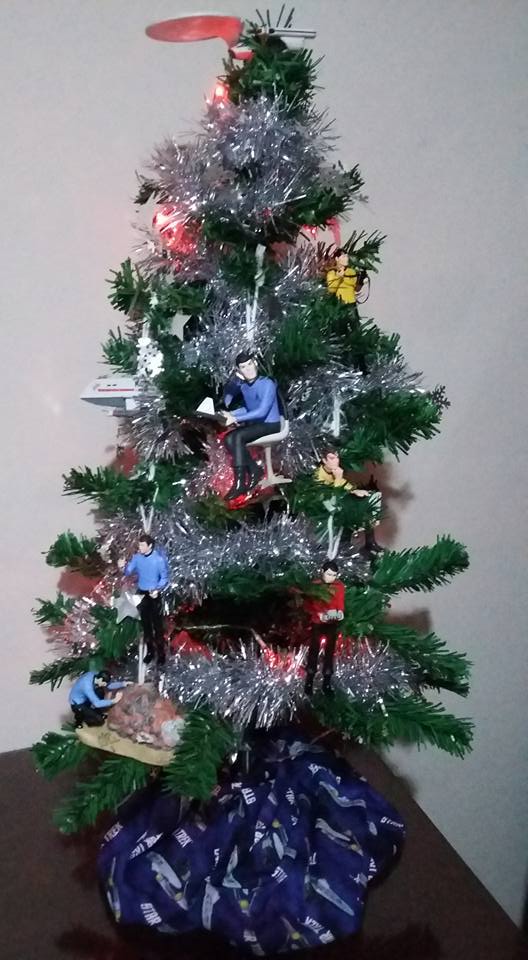
Logically, the little holiday tree in my office is decorated with Star Trek ornaments. The ornament of Spock and the Horta is my favorite!
Once again, like in 2013, the annual Georneys “What to Buy a Geologist for Christmas” list is a little late. That’s okay, though. If you’re having a busy December like me, then you’re probably a little behind on your holiday shopping. Also, these days you can order things online and request overnight delivery. Such is the modern world!
Do you have a geologist (or several) in your family? Then check out the list below for some holiday gift ideas.
You can also check out the lists from previous years:
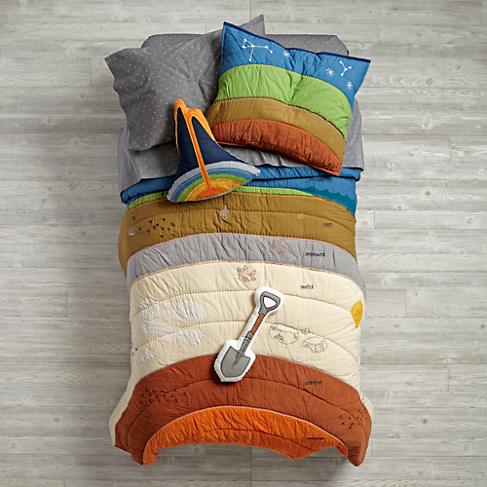
Geologists often talk about geological (rock) bedding… now they can sleep in geological (bedroom) bedding! If you want to spoil the geologist in your family, purchase the amazing “To the Centre of the Bedding” set for sale by Land of Nod. The set is a little expensive, but it’s amazing and also looks reasonably geologically accurate. If someone buys me this bedding set, I think I’ll put it in the guest room and not let anyone ever sleep there… it will just be for show! If you’re on a budget, you could at least buy the amazing volcano pillow as a gift.
Cost: About $300 for the quilt and pillows, about $20-$30 for a single pillow
Gift #2: Poster and Map Tube
Plastic tube for transporting posters and maps. Picture from Amazon.com.
Geologists can always use a plastic tube that can be used for safely transporting posters (to present at conferences) and maps. There’s nothing worse than finding creases and rips in your posters and maps! So, for the travelling geologist in your family, why not buy a plastic tube? I recommend a nice one with a strap. You can find a variety of these tubes. For example, here’s a nice one for sale on Amazon.
Cost: About $10 to $50
Gift #3: pH Indicator Strips
Box of pH indicator strips. Picture from Amazon.com.
For the hydrologist in your family, pH indicator strips make a great gift. I always carry a pack of pH indicator strips in my field pack, in case I want to quickly test the pH of spring water. Of course, a proper analysis requires a pH meter, but even then I often use the indicator strips first for reconnaissance to select sampling locations. You can buy a variety of pH indicator strips. I recommend the 0-14 ones. For example, here’s a suitable box for sale on Amazon.
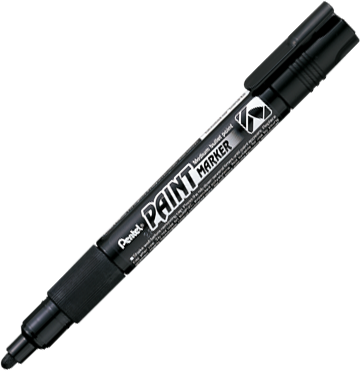
Another very useful item for a geologist’s field kit is a paint marker. Forget a Sharpie marker – that ink will just rub off of sample bags and tags over time. When you want to write a label that won’t rub off, use a paint marker. Some paint markers also write ink that’s resistant to fading at high temperatures, which is great if you want to write on sample tags or containers that need to go in an oven. I used paint markers extensively during field work in Alaska, and I learned that you can’t have enough of them when you’re collecting large numbers of geological samples. Black or blue paint markers are great. You can also buy multi-colored packs of markers, if you want a slightly fancier gift. Paint markers are available at many stores. Here’s an example of one for sale on Amazon.
Cost: About $3 for a single marker, about $15 for a set of markers
Gift #5: The Martian Book
The Martian book. Picture fromhttp://www.goodreads.com/.
One of my favorite movies this year was The Martian. I haven’t read the book yet, but now it’s on my reading list. My husband says that it’s well worth reading the book, even if you’ve seen the movie. For the planetary geologist in your family, why not purchase a copy of The Martian book? Or, if you prefer, you can write a card with a coupon that can be redeemed for the DVD, when it is released next year.
Geologists like maps, and they always need backpacks! So, why not buy the geologist in your family a backpack with a map on it? What a perfect holiday gift! There are dozens upon dozens of different map backpacks. I particularly like this one.
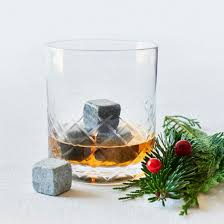
Is the geologist in your family also a whiskey connoisseur? If so, I recommend whisky rock cubes, which are small cubes of soapstone that can be used as an alternative to ice in your whiskey drink. The soapstone cubes can be chilled in the freezer to make your whiskey cold. However, unlike ice, these cubes won’t melt and dilute your drink. Furthermore, since soapstone is soft, these cubes won’t leave scratches on your nice whiskey glasses. I certainly know several geologists who enjoy whiskey, and I bet they’d love these soapstone cubes. With these cubes, they’ll be able to appreciate their whiskey and at the same time tell you how soapstone is made through metamorphism and where soapstone falls on the Mohs hardness scale relative to glass! You can buy soapstone cubes for whiskey at several places. For example, here are some for sale at Sur la Table.
Is the geologist in your family more of a beer drinker than a whisky drinker? If so, then why not buy them a bottle of Pangaea beer? This beer is made by Dogfish Ale Craft Brewed Ales and is named after the supercontinent of Pangaea (also spelled Pangea). This beer is called Pangaea because it is made with at least one ingredient from every continent, including Antarctica!
Cost: About $15 – I think this beer is limited edition, but perhaps you can find a bottle somewhere! Let me know if you know of a good supplier.
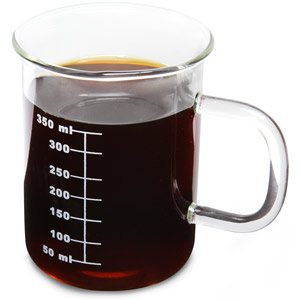
The geochcemist in your family will really love a beaker mug, such as this one from ThinkGeek. Just remind your loved one not to mix up this mug with their real laboratory glassware!
Cost: About $5-$10
Gift #10: Warm Socks
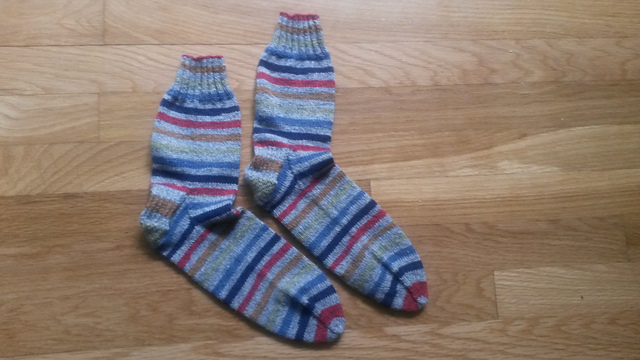
The latest pair of knitted woollen socks that I made for my husband.
A good pair of warm socks is essential for geological field work, especially in cold weather. I realize that socks may seem like a cliche holiday gift, but believe me the geologist in your family will appreciate a good pair of woollen hiking socks! If you happen to be a knitter, like me, you could even knit a special pair of socks. I’ve made three pairs for my geologist husband, and he still wants more! There’s nothing better than handmade knitted socks to keep your toes cosy during geological field work.
Cost: About $15 for a storebought pair, about $10-$20 for good quality yarn if you want to knit a pair
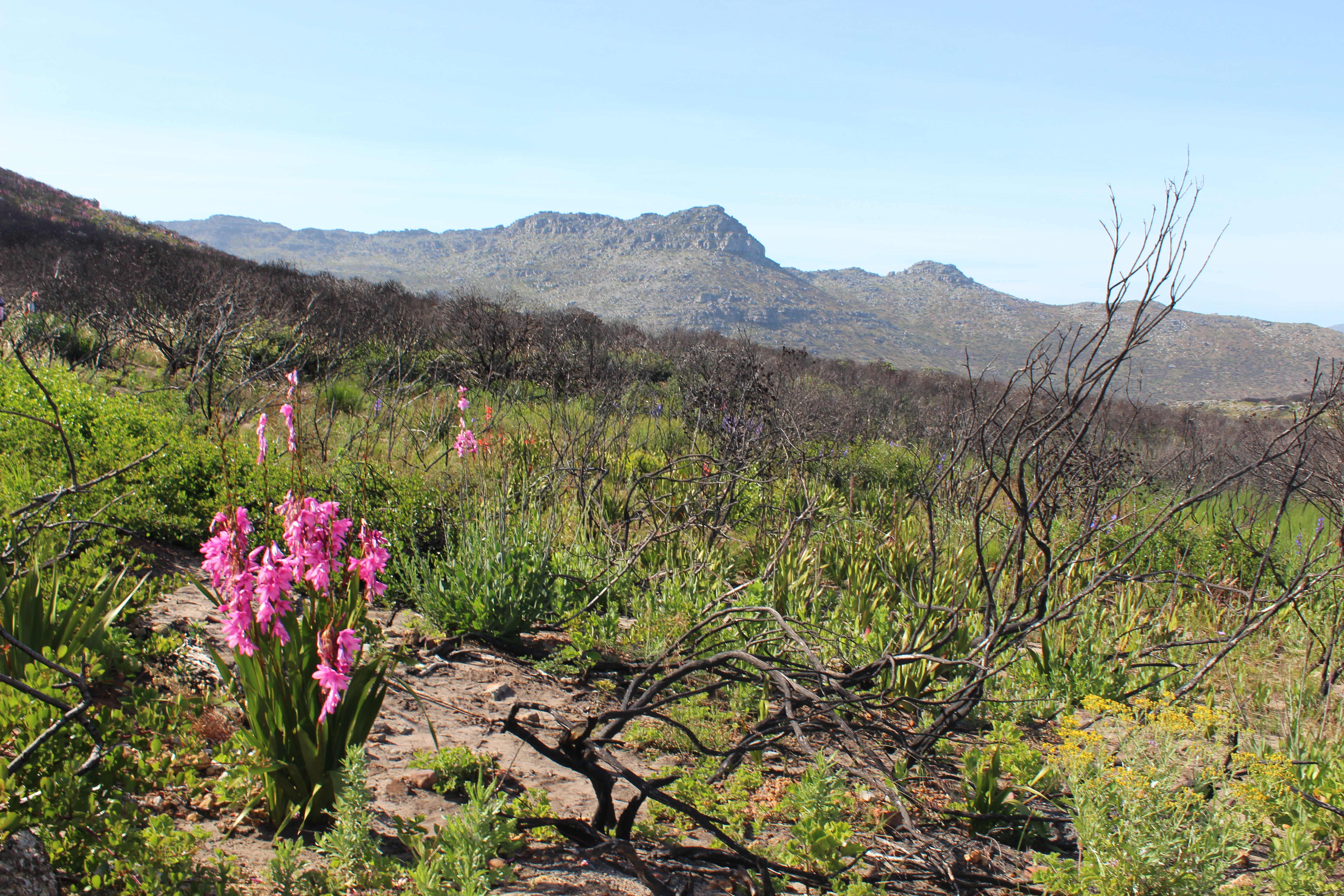
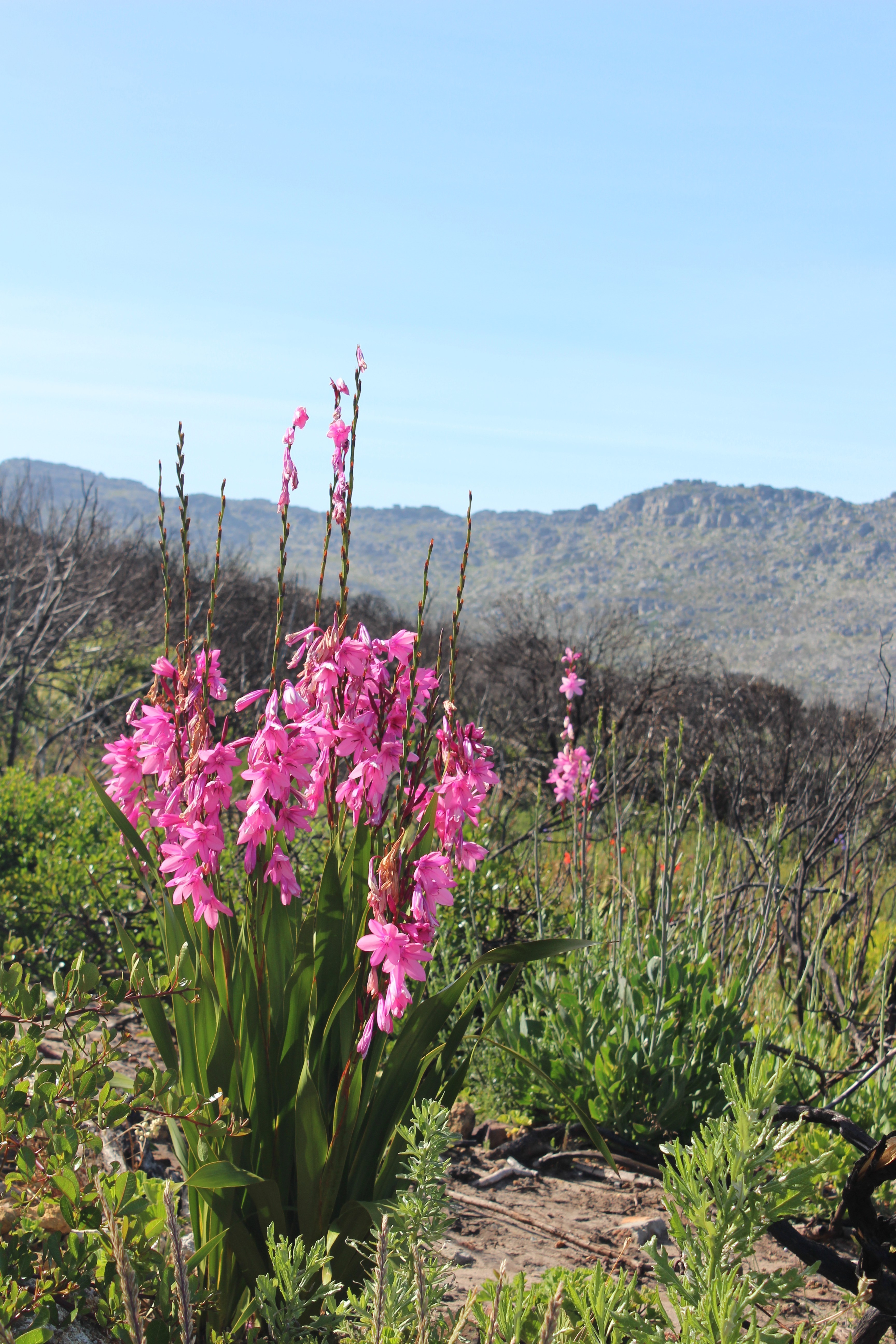
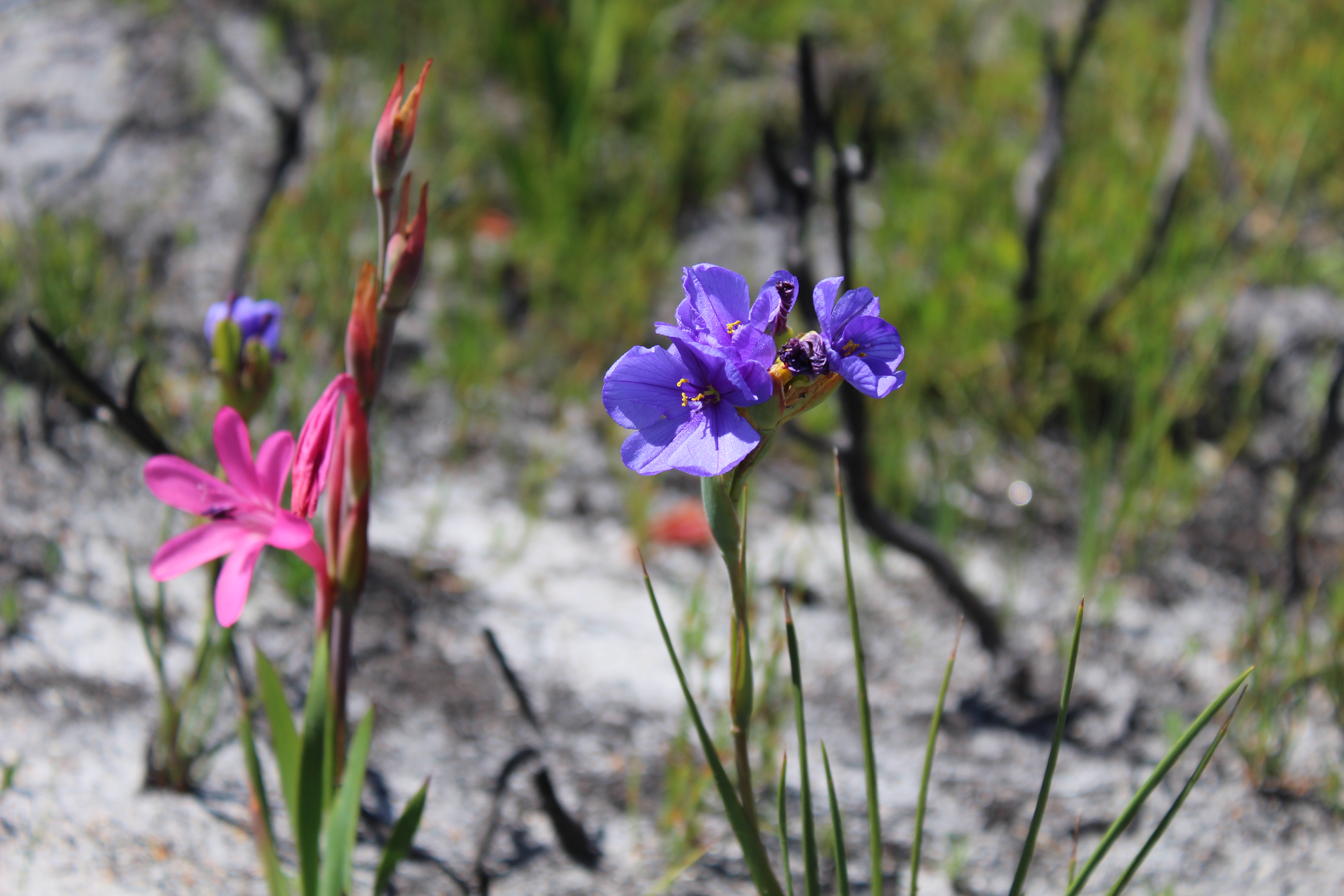
Silverine #1. Pink watsonia flowers are in the foreground, charred vegetation is in the background.
Earlier this year back in March, as I blogged about here and here, a large forest fire raged over much of the Cape Peninsula region of South Africa. Shortly after the fire was extinguished, my husband and I went on a hike in the Silvermine Nature Reserve, one of the areas badly affected by the fire. We found ourselves walking through a surreal, ash-covered landscape filled with charred vegetation, with occasional spared pockets of greenery.
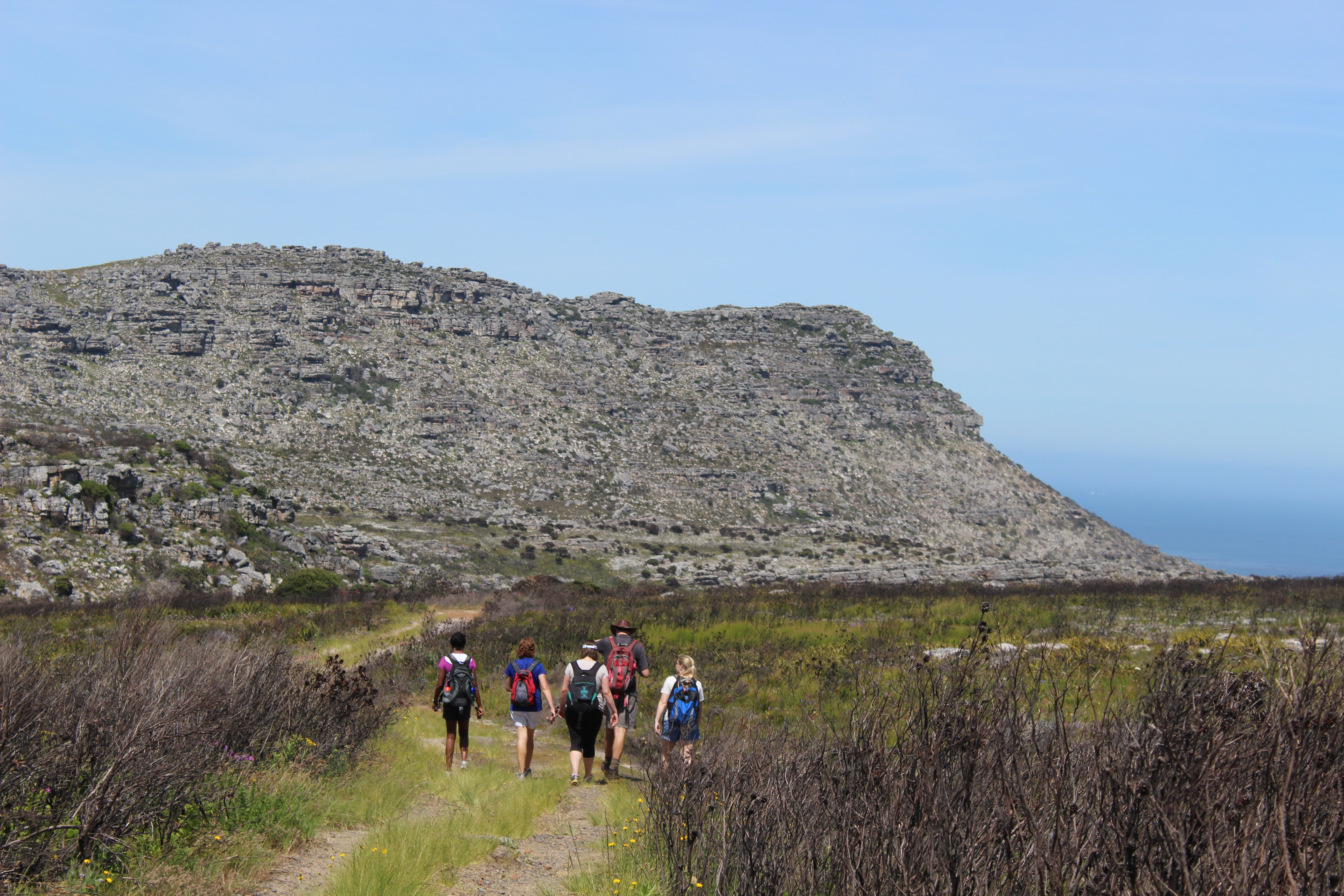
Originally, I had hoped to hike in Silvermine every month or two after the fire, to document the re-growth of the vegetation and other changes to the landscape. However, the reserve was closed shortly after our hike back in March. The reserve was closed to protect the environment, including the recovering vegetation, and also to protect people from hazards, such as partially-burned trees and damaged buildings. However, in October a portion of the reserve was opened up for hiking again. So, in November my husband and I organized a few friends, and we went on a half day hike at Silvermine. Today I want to share some pictures from that hike with you here.
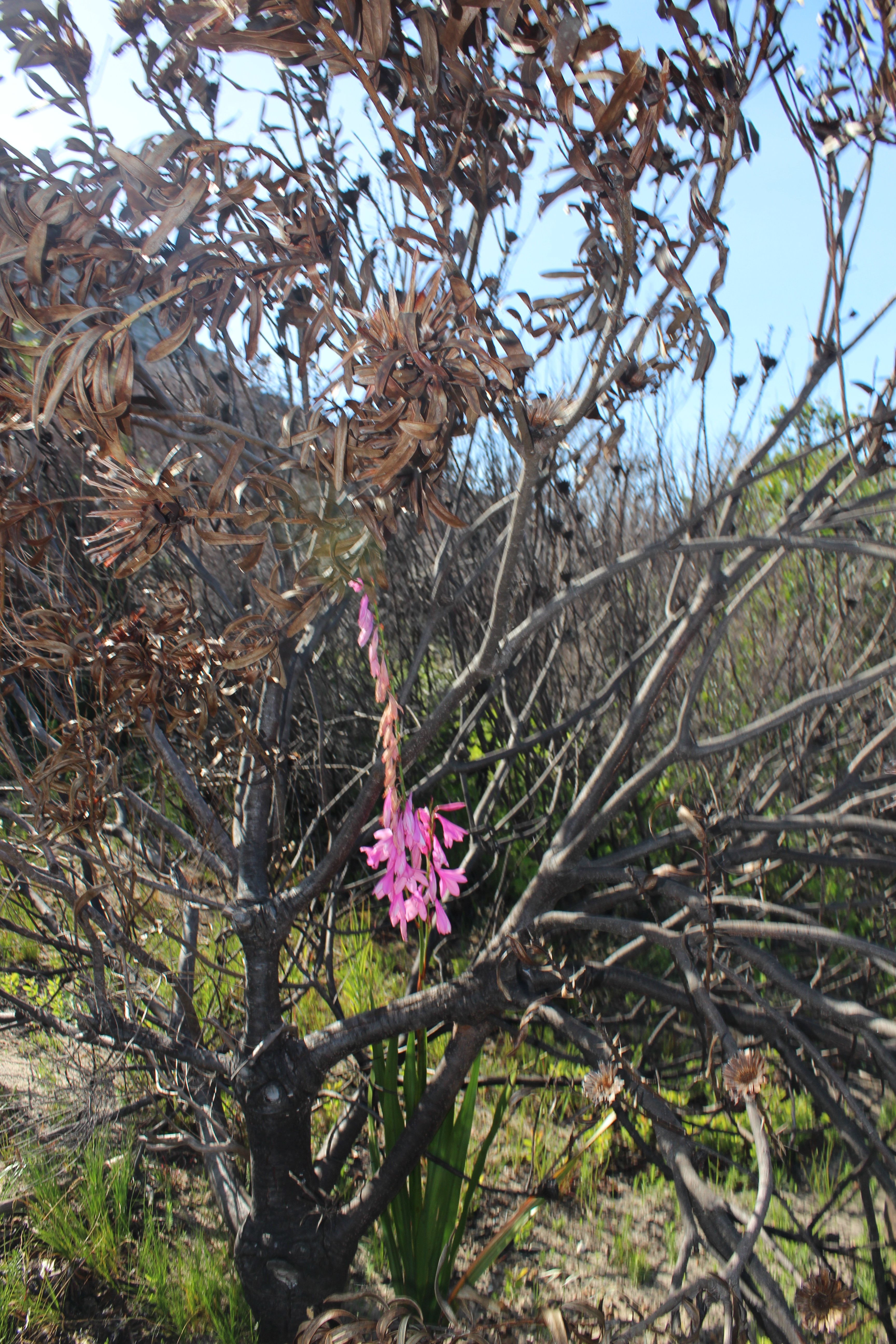
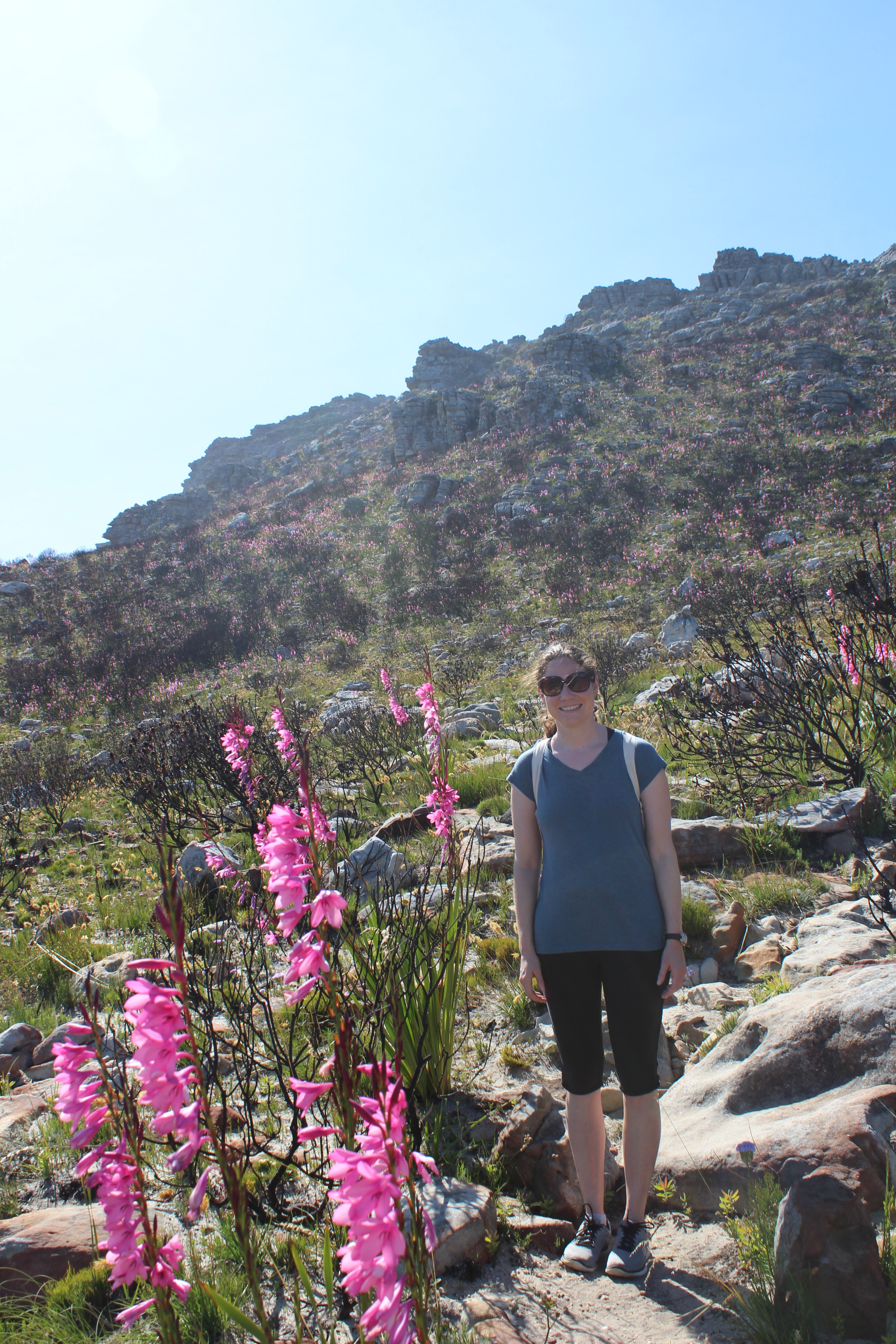
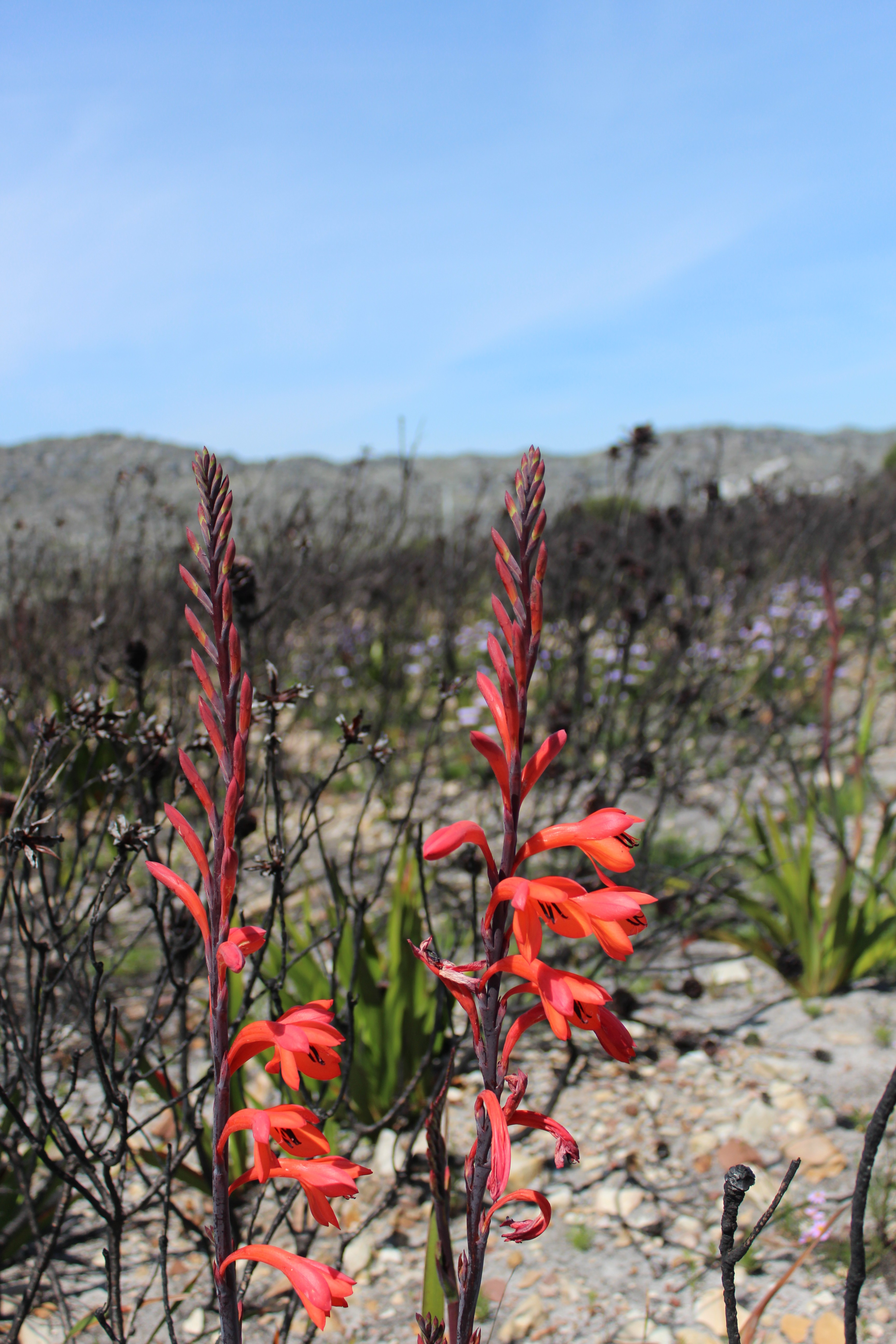
The Silvermine area is slowly but surely recovering from the fire. Animals are returning to the reserve, and the vegetation is also recovering. During our hike back in November, we found the flowers amazing, especially the gorgeous pink watsonias. There are always flowers at Silvermine, particularly during flower season, which has its peak in September and October. However, the flowers this year are the most impressive that I’ve ever observed at Silvermine during my 5 years of living in Cape Town. Because of the fire earlier this year, the flowers are more visible and stand out in vivid contrast against a charred backdrop of burned vegetation. In addition, the vegetation at Silvermine is different this year because opportunistic plants, including some flowers, are taking advantage of the extra space and sunlight.
Without further ado, enjoy some pictures of our stunning November hike at Silvermine:
Silvermine #2. Hiking amongst burned vegetation, with some green below.Silvermine #3.Silvermine #4.Silvermine #5.Silvermine #6.Silvermine #7.Silvermine #8.Silvermine #9.Silvermine #10.Silvermine #11.Silvermine #12. My husband stops to admire a watsonia flower.Silvermine #13. Up close shot of watsonia flowers.Silvermine #14.Silvermine #15.Silvermine #16. Yours truly, posing with some watsonias.Silvermine #17.Silvermine #18.Silvermine #18.Silvermine #19.Silvermine #20.Silvermine #21. A protea bush that survived the fire.Silvermine #22.Silvermine #23.Silvermine #24. The happy group of hikers, sans photographer.
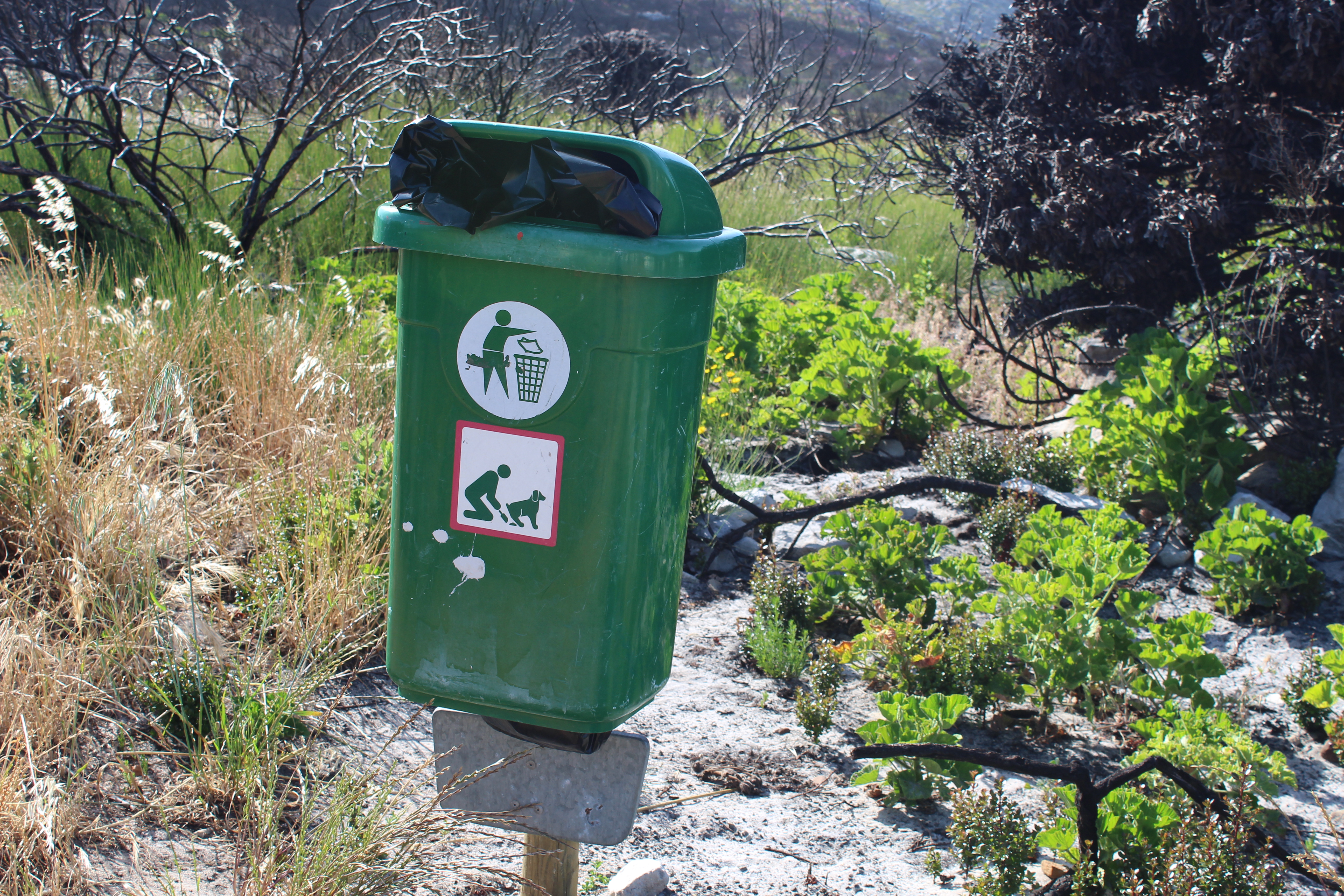
Last but not least, there’s a new (non-melted) green trash can:
Silvermine #25.
Certainly, Silvermine looks very different now compared to when we hiked there after the fire in March. The landscape will continue to change as the vegetation continues to grow back.
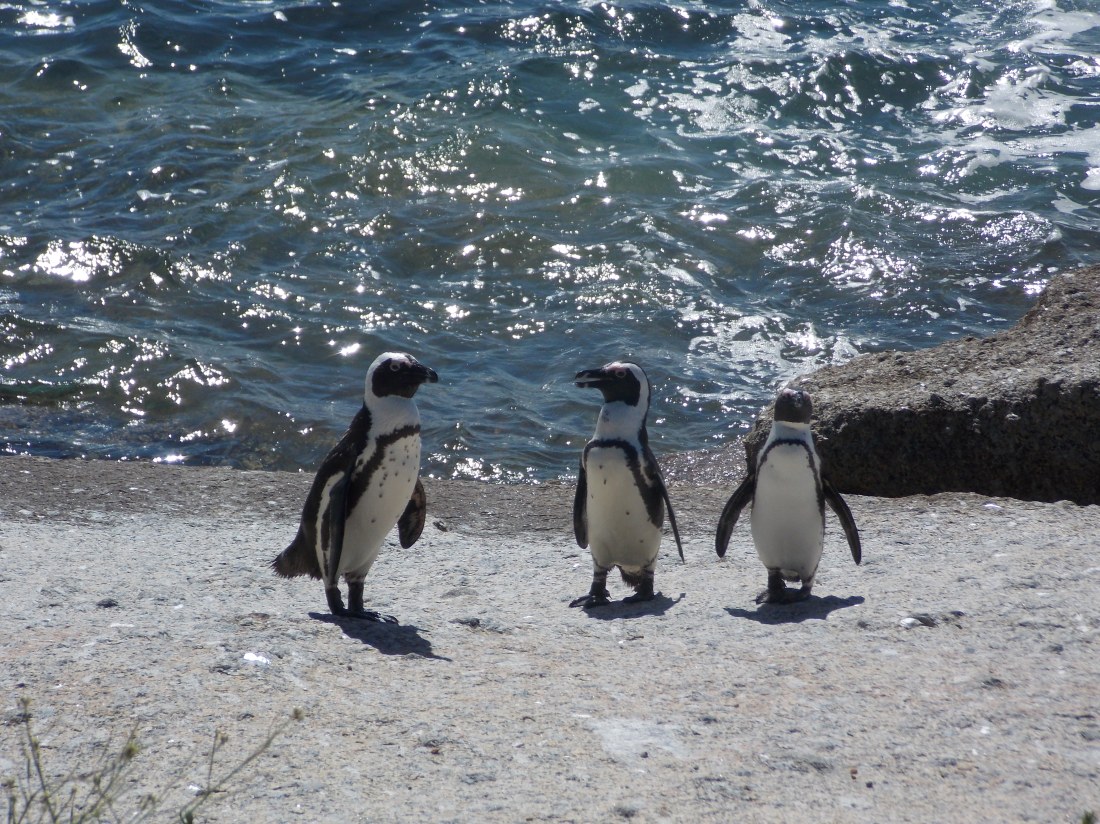
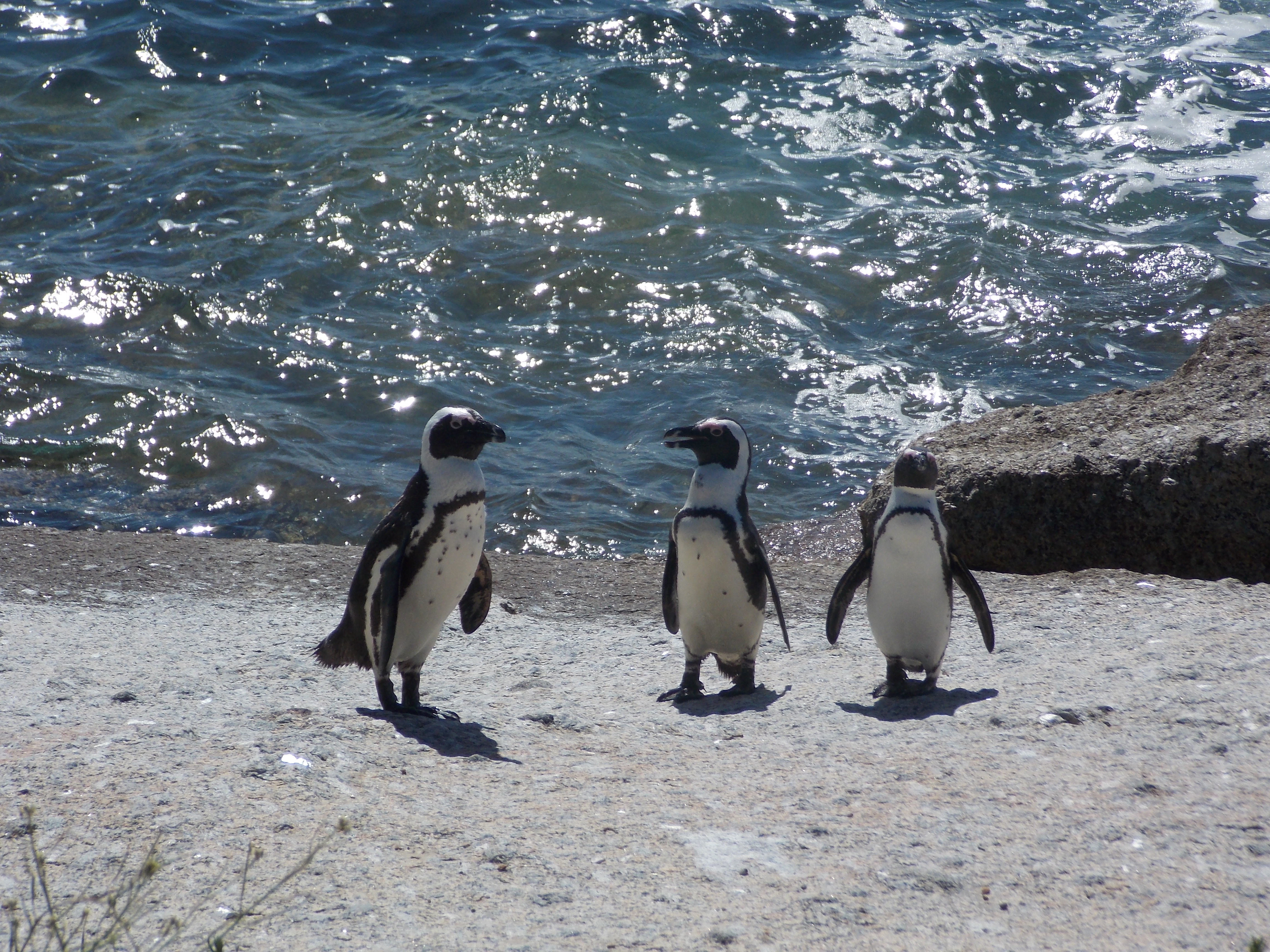
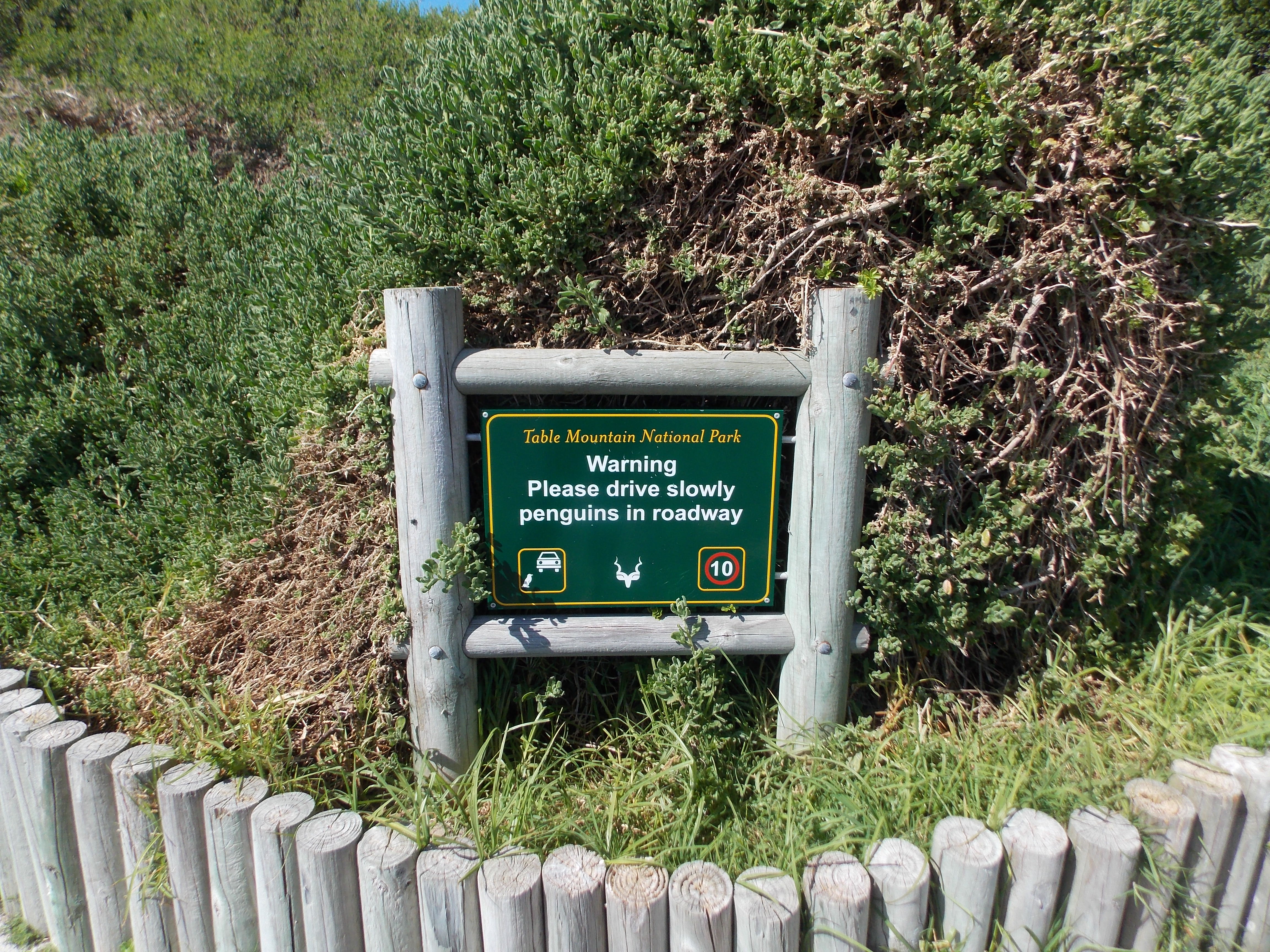
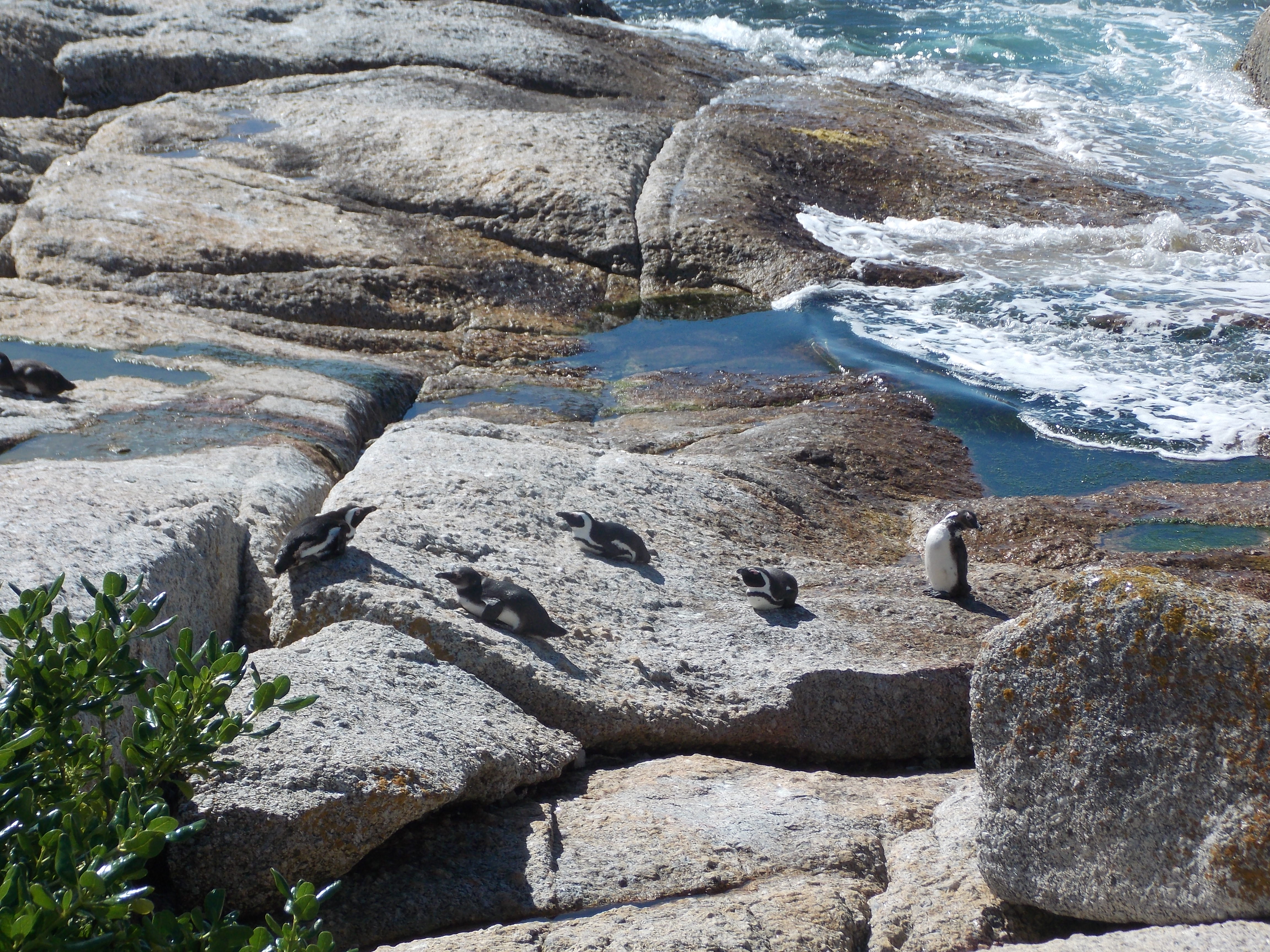
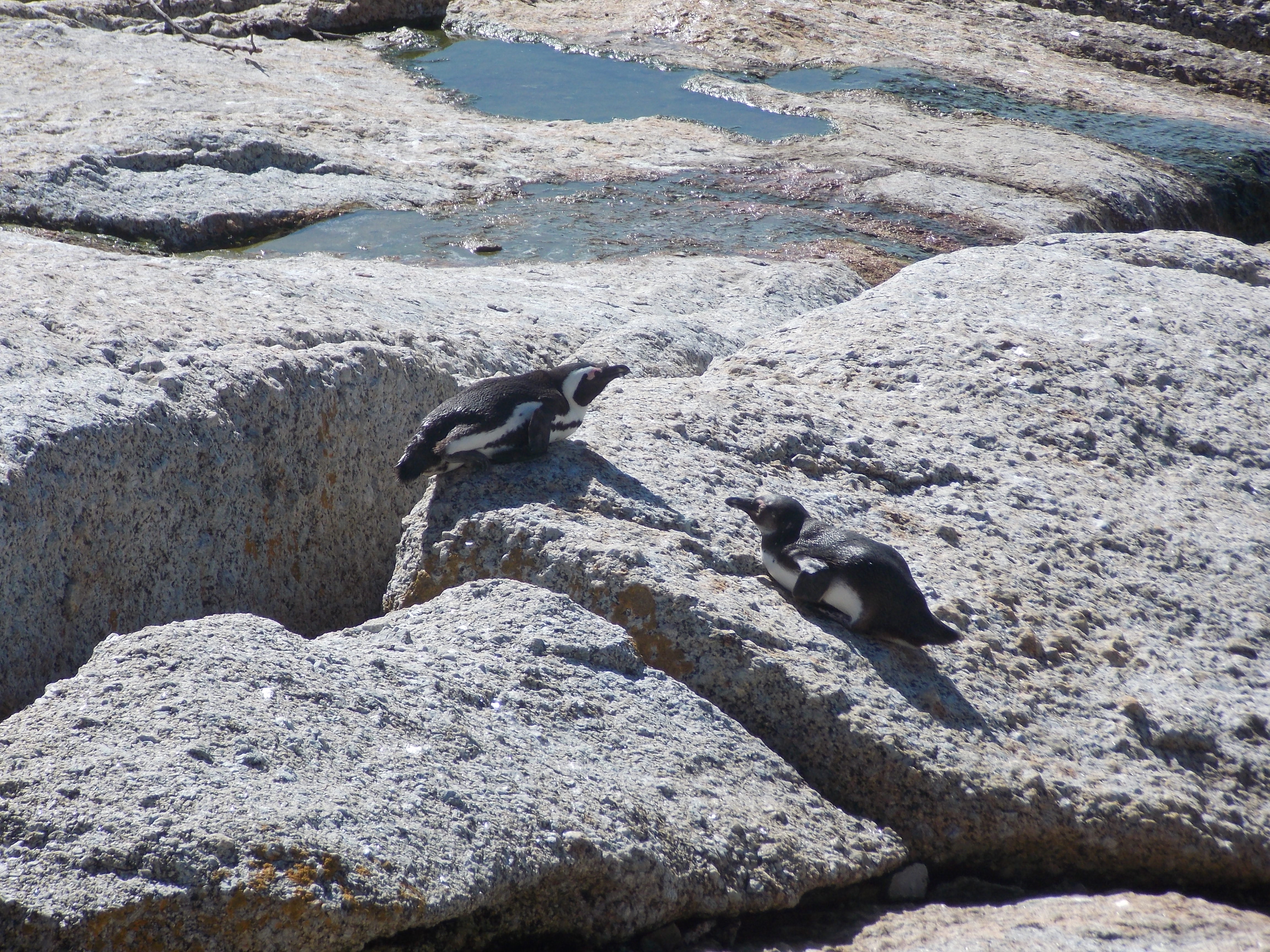
Last week I shared a few pictures from beautiful Boulders Beach just down the road in Simonstown, South Africa. This week I thought I’d share some more pictures of granite – and penguins! – at Boulders Beach. In the close-up shots, note gorgeous the potassium feldspar megacrysts in the granite. Most visitors to the beach focus on the penguins, but the granites are quite spectacular, too! Enjoy!
Boulders Beach #2.Boulders Beach #3.Boulders Beach #4.Boulders Beach #5.Boulders Beach #6. Note the megacrysts in this shot.Boulders Beach #7. There are more megacrysts in this shot.Boulders Beach #8. A close-up view of some of the granite, with shoe for scale.Boulders Beach #9.Boulders Beach #10.






















 Georneys