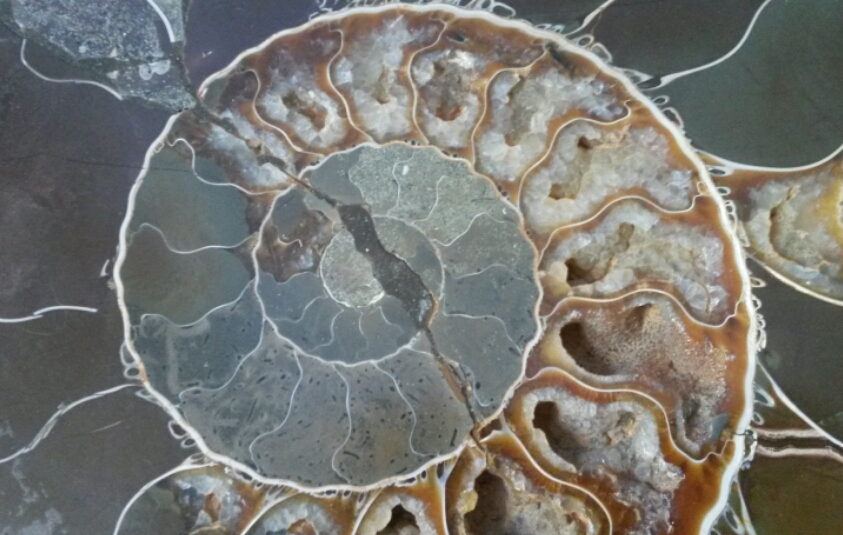
For this week’s Monday Geology Picture, here’s a close-up of an ammonite fossil. This particular ammonite fossil was a wedding gift and decorates our living room… along with quite a few other rocks! Apologies for the lack of scale – I didn’t want to spoil the pretty picture. I’ll have to share some more pictures of our rock collection shelf, which includes this fossil, in another post.
Aulacephalodon selfie…. because who doesn’t want to pose with this delightful model?
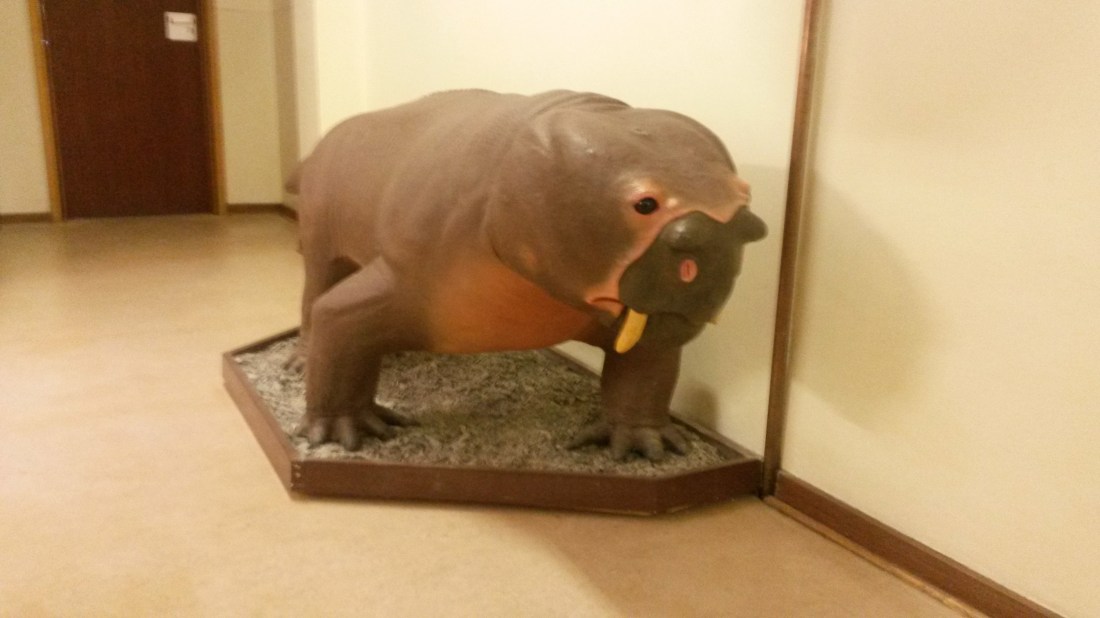
This week’s Monday Geology Picture is an aulacephalodon selfie that I took with the aulacephalodon model that is on display in the Geology Department at Rhodes University in Grahamstown, South Africa. Try saying that three times fast: aulacephalodon selfie, aulocephalodon selfie, aulacephalodon selfie! Can you say it without stumbling? I certainly can’t!
So, what is an aulacephalodon?
Here’s a description from the information sign next to the sculpture:
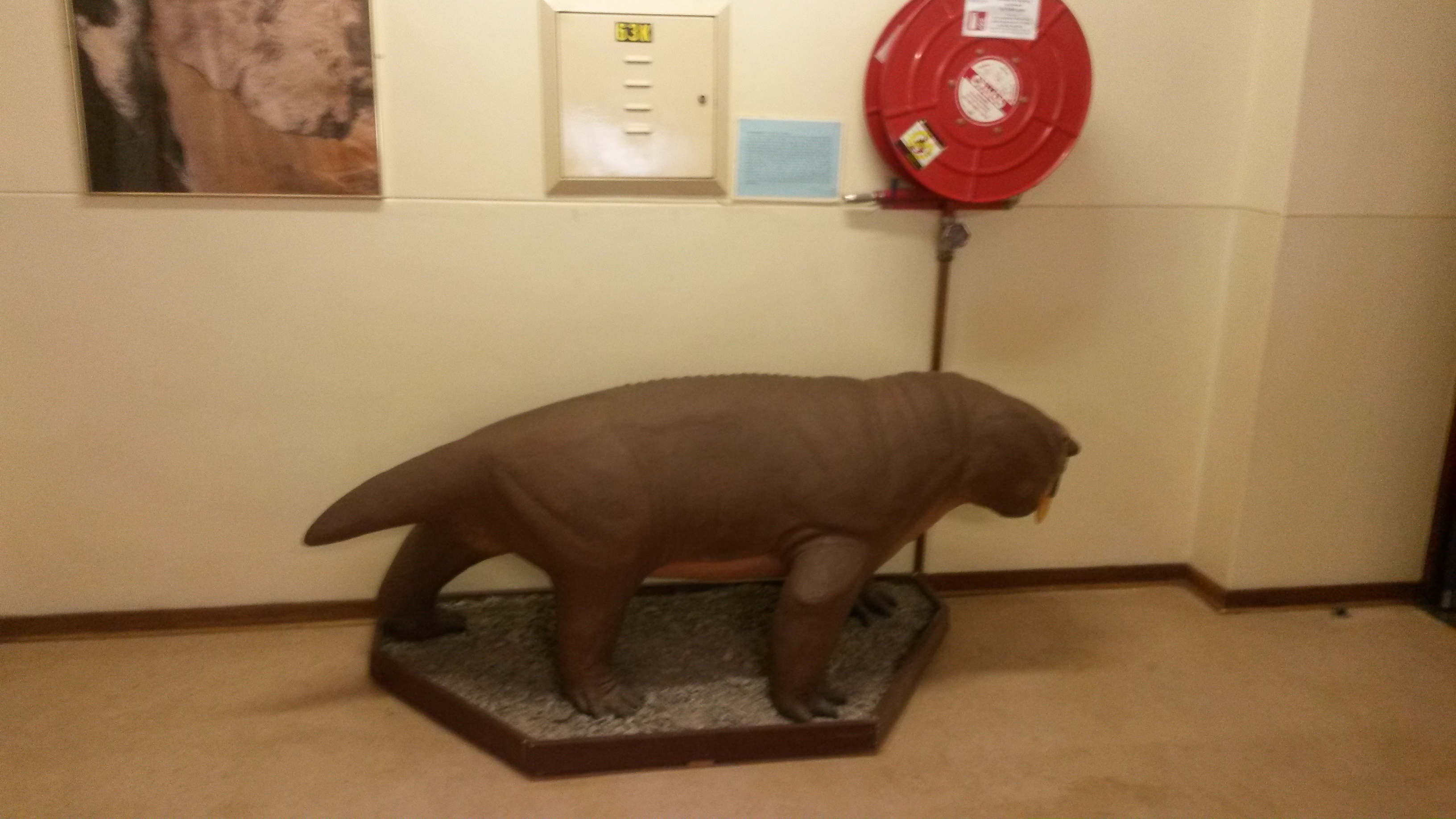
Aulacephalodon was a relatively large, plant-eating (herbivorous) dicynodont that lived during the Late Permian [~250 million years ago]. Like most other dicynodonts, Aulacephalodon had a beak for biting, grinding, and cutting plants. The animals also had a pair of prominent tusks, possibly for digging, sexual display, and defence [that’s how the South Africans spell “defense”]. The larger, and therefore older, specimens have distinctive bony knobs on the snout above the nasal openings. This feature is not seen in small juvenile skulls. These “nasal bosses” were either only developed in older animals, or they formed to mark either the male or female of the species. Note the prominent “hole” in the top of the skull – a structure known as the pineal foramen, common to all therapsids (mammal-like reptiles). This hole in the skull housed part of a sense organ which was capbale of sensing light and may have regulated the day/night cycle of the animals. Fossil footprints tell us that Aulacephalodon lived in family groups. This model reconstruction is based on the numerous fossil skulls and skeletal remains of Aulacephalodon that have been found in the Cistecephalus Biozone of the Karoo basin. The stance of the model is based on the footprints preserved in the ancient paleosurface (mudflat) that has been exposed in the “Asante Sana” valley, east of Graaf-Reinet.
Here are a few more pictures of Mr. (or Ms.? I’m not sure how to tell…) Aulacephalodon:
The aulacephalodon model, from the front.The aulacephalodon model, from the side.Another picture of yours truly and the aulacephalodon model.
The aulacephalodon model is fantastic, both for selfies and as a sort of department mascot. I hope that the geology students sometimes dress up the model for holidays and such! I can just imagine this guy (or lady?) dressed up with a scarf and hat in the wintertime!
A view of the Namibian night sky. Picture taken by Jackie Gauntlett in the middle of the Sperrgebiet, June 2015.
My husband and I spent some time doing field work in the Sperrgebiet region of Namibia earlier this year. We camped out in the desert for a few days. We spent our days looking at some fantastic geology, and we spent our nights looking at some fantastic views of the night sky. We were quite far from any towns, so we had very little light pollution and could see many stars. We bought a fancy(ish) camera earlier this year, and my husband has been playing around with taking shots of the night sky. Above is one image that he took during our recent field work up in Namibia. Enjoy! Click the picture for a larger version.
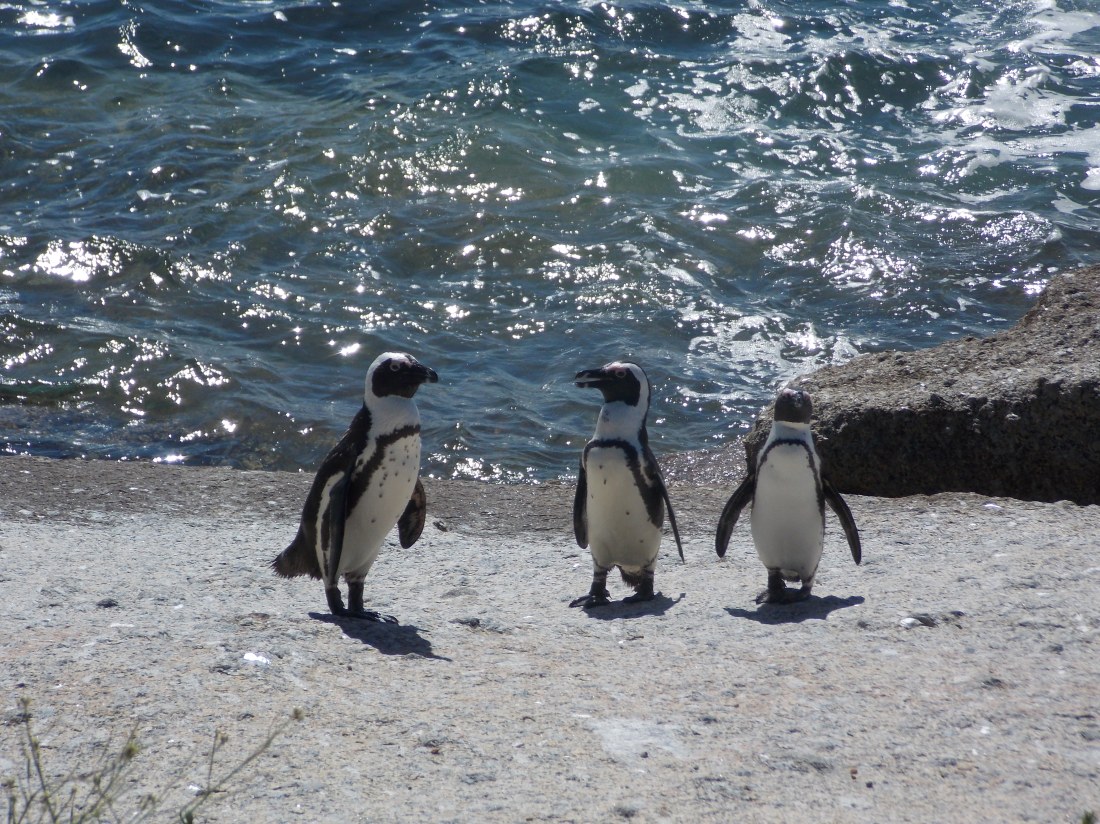
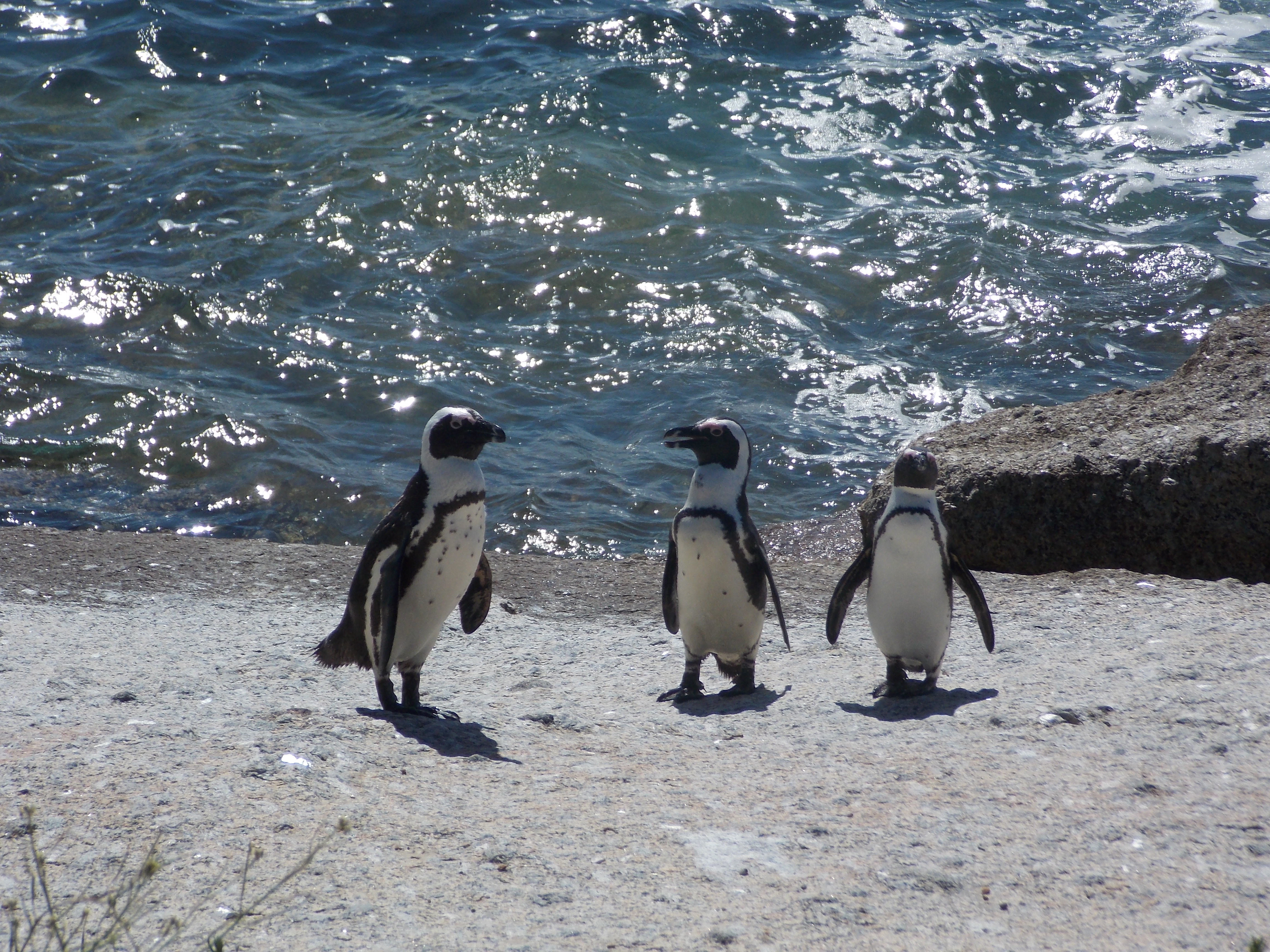
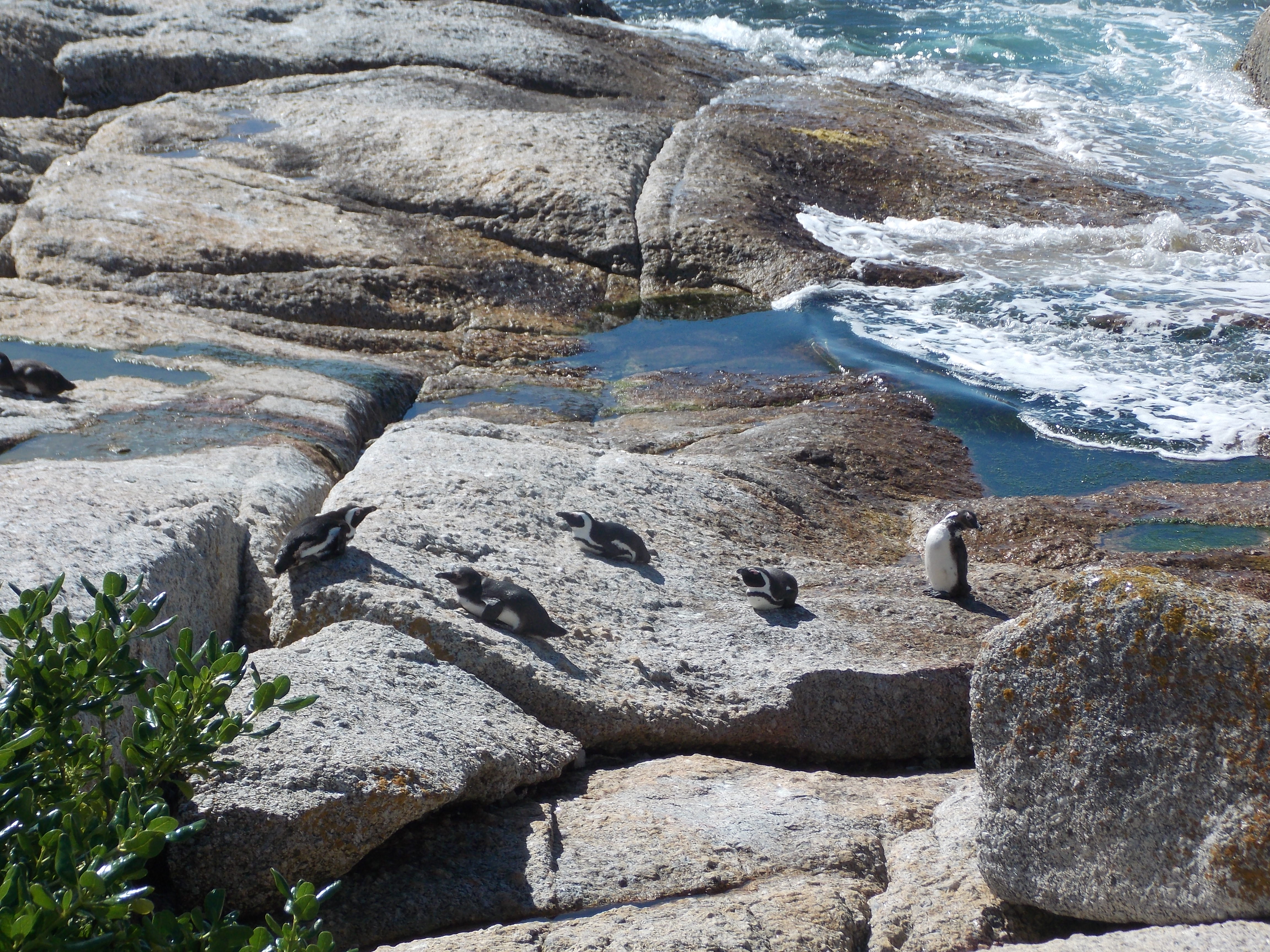
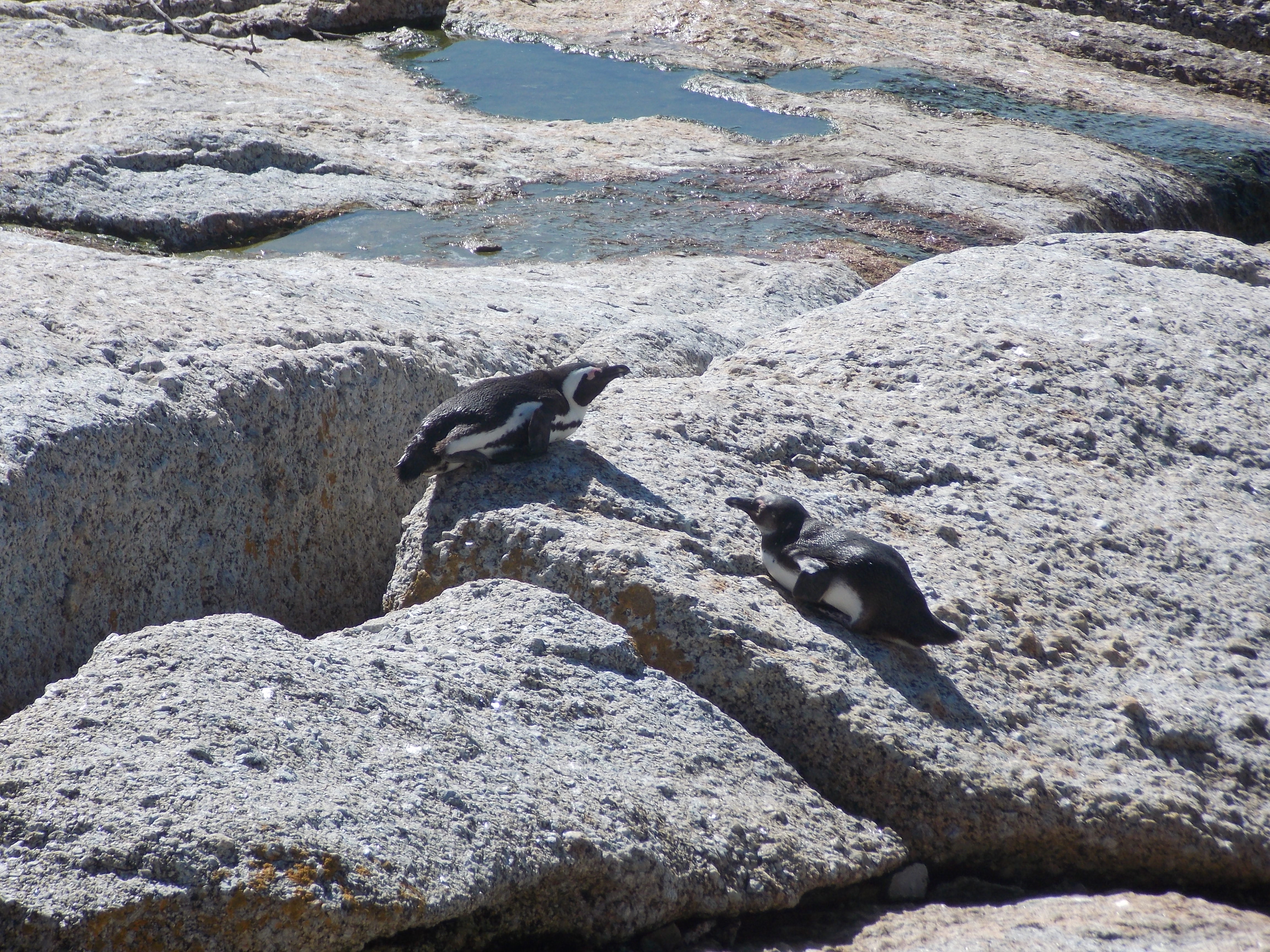
Last week I shared a few pictures from beautiful Boulders Beach just down the road in Simonstown, South Africa. This week I thought I’d share some more pictures of granite – and penguins! – at Boulders Beach. In the close-up shots, note gorgeous the potassium feldspar megacrysts in the granite. Most visitors to the beach focus on the penguins, but the granites are quite spectacular, too! Enjoy!
Boulders Beach #2.Boulders Beach #3.Boulders Beach #4.Boulders Beach #5.Boulders Beach #6. Note the megacrysts in this shot.Boulders Beach #7. There are more megacrysts in this shot.Boulders Beach #8. A close-up view of some of the granite, with shoe for scale.Boulders Beach #9.Boulders Beach #10.
Just down the road from where I live there is a fantastic place to observe gigantic granite boulders: Boulders Beach in Simonstown. Actually, you can see granite boulders on many beaches in the greater Cape Town area. These granites are part of the regional Cape Granite Suite and are roughly 550 million years old. However, Boulders Beach is special because it has a particularly good collection of large boulders… and it is also home to a penguin colony! Penguins and geology is a great combination for sightseeing!
Here’s a close-up of the picture above, showing the penguins:
Penguins atop the granite.
And here’s another view of the spectacular granite boulders:
Two generations (at least) of footprints on Noordhoek Beach, South Africa, November 2015.
This past Saturday my husband and I went for a long walk along Noordhoek Beach with some friends. The beach is over 8 km long, and we walked about 2/3 of it… and back! As we walked, I enjoyed the beautiful, panoramic views of the mountains on one side and the sea on the other side. In addition, I periodically found myself enjoying the view at my feet (as geologists often do), admiring the patterns in the sand. I took a few pictures of the sand beneath my feet, and I thought I’d share one for this week’s “Monday Geology Picture” post. The picture above shows two generations of footprints, one fresh and made by my friends moments before and one older and halfway erased by the wind, both on top of some windswept sand patterns. I wonder how long ago the older generation of footprints was made. Were the footprints made a few hours before I snapped my picture? A few days? How long, in general, does it take for footprints to fade from a beach? I imagine that it must depend upon the wind, amongst other things.
Pleistocene dig site at the West Coast Fossil Park, South Africa.
For this week’s “Monday Geology Picture” I’m sharing a picture of some bones from a Pleistocene age fossil site located about an hour’s drive from Cape Town, South Africa. I took this picture last year during a visit to the West Coast Fossil Park. If you ever find yourself in the Cape Town area, I highly recommend a visit to the fossil site. You can tour the dig site, and there’s a great little museum and educational center nearby as well. Later this week, I’ll share some more pictures from the fossil park and will tell you a little more about it. For today, enjoy this preview picture.
Update November 11th, 2015: I realize that I still have gotten around to sharing some more pictures and information. I’m busy working on a post, so stay tuned!
Dinosaur sculpture in the background, cycads in the foreground. Kirstenbosch Gardens, 2015.
This week’s Monday Geology Picture features a dinosaur in a botanical garden. Specifically, it features a giant metal sculpture of a dinosaur that is part of an exhibit in Kirstenbosch Gardens here in Cape Town, South Africa. The sculpture is one of several dinosaur sculptures that have been installed in the gardens as part of an exhibit to raise awareness about cycads, which are ancient plants that have been around for several hundred million years. Currently endangered, cycads were common millions of years ago, during the same time period when dinosaurs roamed the Earth. However, if cycads are not carefully conserved they could join the dinosaurs and become extinct.
Tomorrow, I’ll share some more pictures of dinosaur sculptures in Kirstenbosch Gardens. For now, enjoy this one picture as a “sneak peak”.
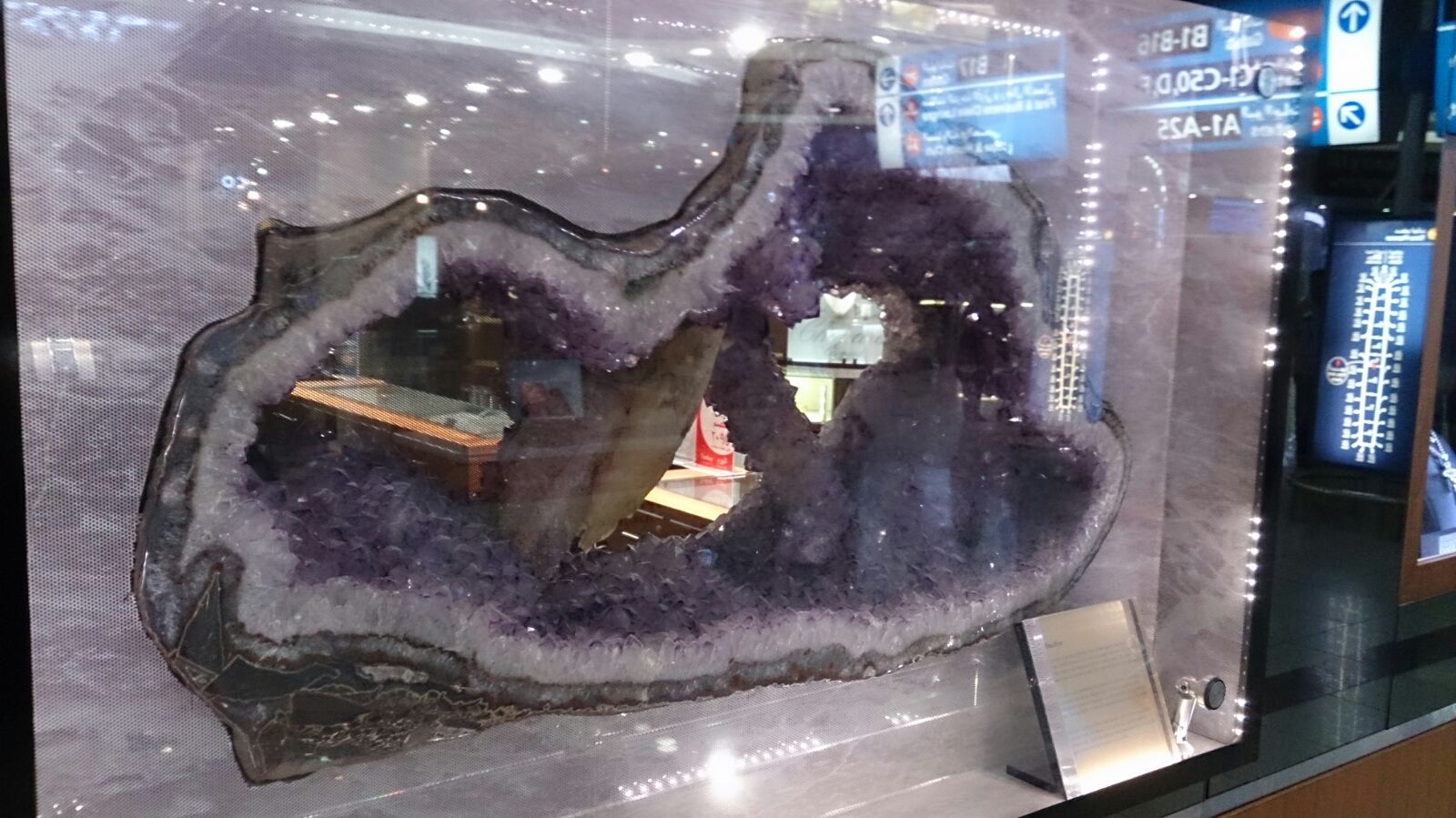
A few days ago I flew through the Dubai Airport on my way back to South Africa. One of the terminal shops had a gorgeous slice of geode on display. Check out those beautiful purple amethyst crystals!
A stone wall incorporating a large glacial erratic boulder, Fox Forest, New Hampshire.
Continuing with my recent blogging themes of stone walls and glacial erratics, here is a picture of a stone wall in Fox Forest in New Hampshire. This stone wall was built out of glacial erratics and incorporates a large glacial erratic that was most likely left in situ… that is, left more or less where the glacier deposited it. Today, the stone wall is located in the middle of a relatively young forest. A hundred or so years ago, it was part of a farm. If you find yourself in southern New Hampshire, I recommend a hike in Fox Forest. It’s a lovely place, and you’ll see quite a few glacial erratics and stone walls!











 Georneys