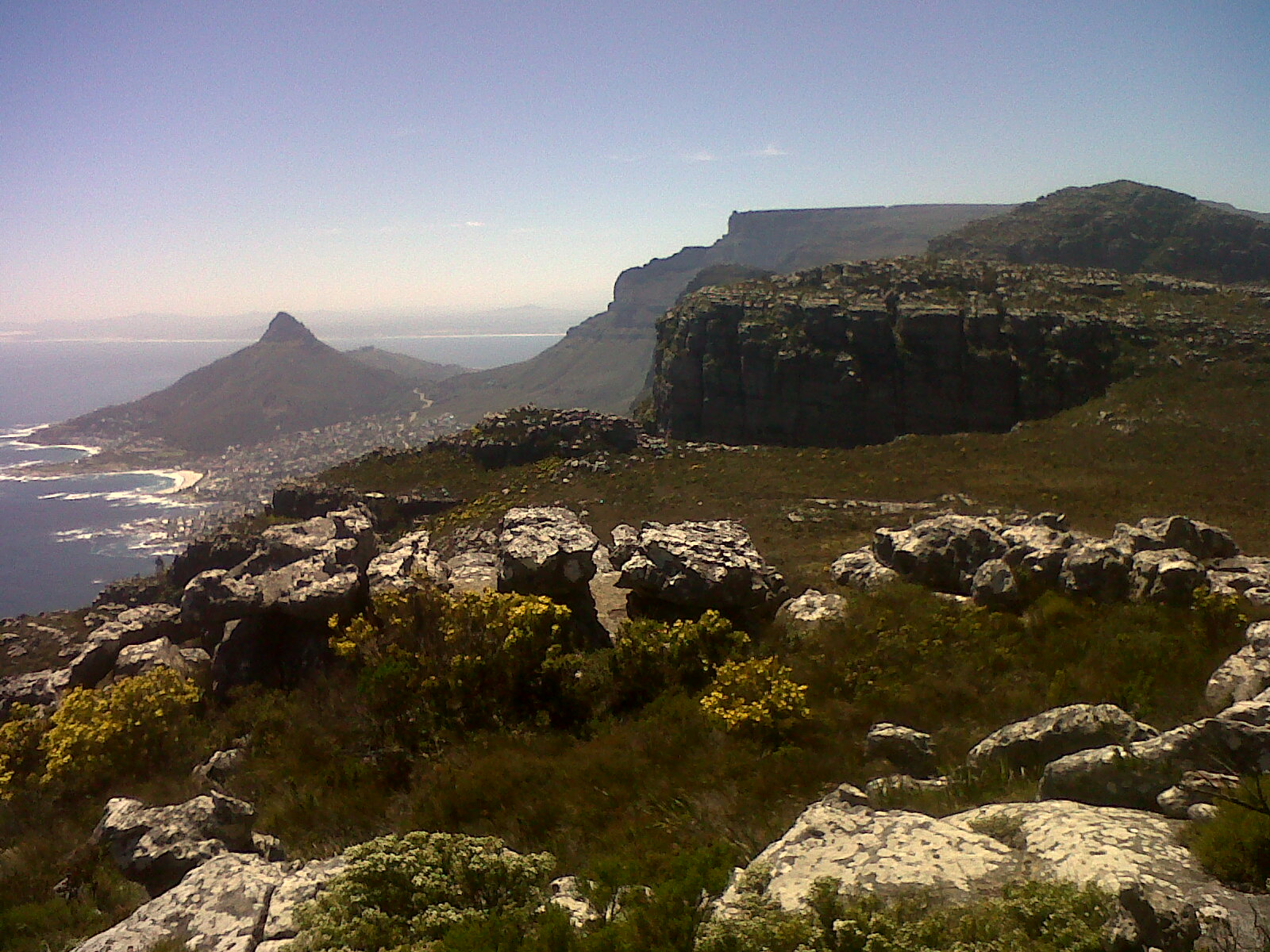
A view from near the top of Judas Peak, October 2012.
Yesterday (Sunday) I went on a hike up Judas Peak, one peaks in the Twelve Apostles range, which flanks Table Mountain and overlooks beautiful Hout Bay. On clear days, there is a gorgeous 360 degree view from the top of Judas Peak. The picture above shows the inselberg of Lion’s Head,which is another great peak to hike. I feel very fortunate to live in such a beautiful part of the world and to have a group of friends who enjoy hiking and other outdoor activities. Now that I’m in South Africa more-or-less full time, my husband and I are going to try to hike with friends at least one weekend a month. So, I’ll probably share more pictures from our hikes in the future.
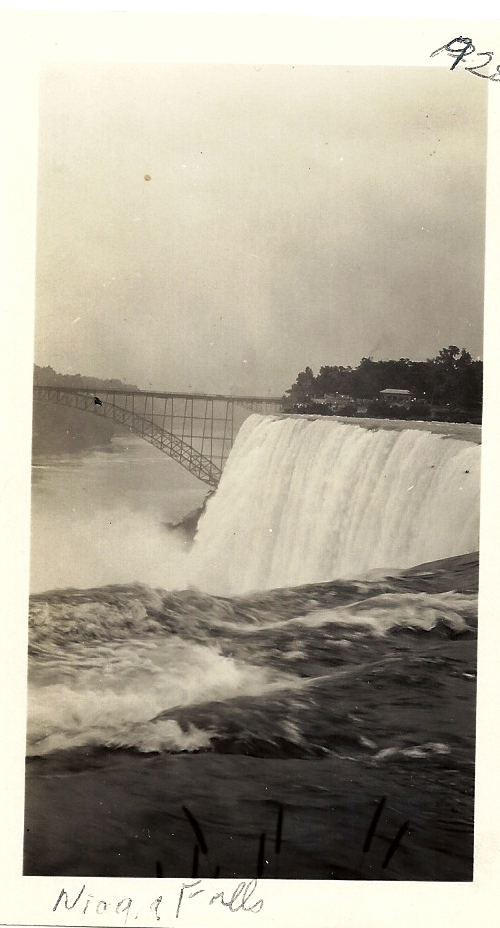
For last week’s Monday Geology Picture I shared a picture that I took of Niagara Falls in 2005. The glacially-carved falls have been attracting tourists for many, many years. This week, I am sharing some black and white photographs of Niagara Falls that were taken in 1928! These pictures were sent to me by Ann of the blog Ann’s Musings on Geology and Other Things. Ann informs me that these are family photographs of hers that she scanned. Thanks so much for sharing these wonderful photographs with me, Ann… and for letting me share them here on Georneys!
Niagara Falls circa 1928 #2.Niagara Falls circa 1928 #3.Niagara Falls circa 1928 #4.Niagara Falls circa 1928 #5.Niagara Falls circa 1928 #6.Niagara Falls circa 1928 #7.Niagara Falls circa 1928 #8.
I’ve only visited Niagara Falls once. I visited the American side of the falls for a few hours back in 2005 when I went with my mom, dad, and sister on a roadtrip from New Hampshire to Ohio. We drove to Ohio to pick up my parents’ new dog from a friend who had a litter of puppies. I didn’t have a very good camera back in 2005, so I only took a few pictures of the falls. I ran across the falls pictures when I was browsing my folders of pictures for a “Monday Geology Picture,” and I decided to share the above picture with you. I like the above picture because the falls almost look as if they’re falling from the sky… from the clouds, perhaps. Does anyone else have good pictures of Niagara or other famous waterfalls?
The glacial erratic in front of my parents' lakeside cabin.
New England is full of glacial erratics: rocks which were transported and dropped by glaciers and which have a different lithology from the rocks upon which they have been deposited. Often, erratic rocks have an angular shape because they were broken off of bedrock by glaciers and have not yet had time to be weathered and rounded by water, wind, and other erosional forces. Glacial erratics can range in size from very small pebbles to very large boulders, but usually it is the boulders which are noticed since these stand out in the landscape and are not easily transported away.
I remember becoming interested in geology as a child when I began noticing large boulders in the middle of fields and the forest around my native New Hampshire. I asked my science teacher about these boulders, and he told me they were called glacial erratics and taught me a little about ice ages. Most of the erratic boulders seen throughout New England today were deposited during the last ice age, which reached a maximum around ~22,000 years ago and which ended ~10,000 years ago.
My favorite glacial erratic, which is shown in this week’s geology picture, sits on a small island in front of my parents’ lakeside cabin on Franklin Pierce Lake in New Hampshire. My parents purchased the cabin about 5 1/2 years ago, and although I had long moved away from home when they bought the cabin, I quickly fell in love with it (and its erratic island!) and try to visit regularly. Every year, my husband and I spend at least a couple of weeks at the cabin. Back in May, the cabin served as a geologist lair when my fellow geoblogger Dana Hunter visited for a few days. If you are brave, you can swim or kayak to the little island from my parents’ cabin and jump off the erratic.
An erratic jump! This picture gives you a better sense of the scale of this enormous erratic boulder.
Does anyone else have a favorite glacial erratic to share?
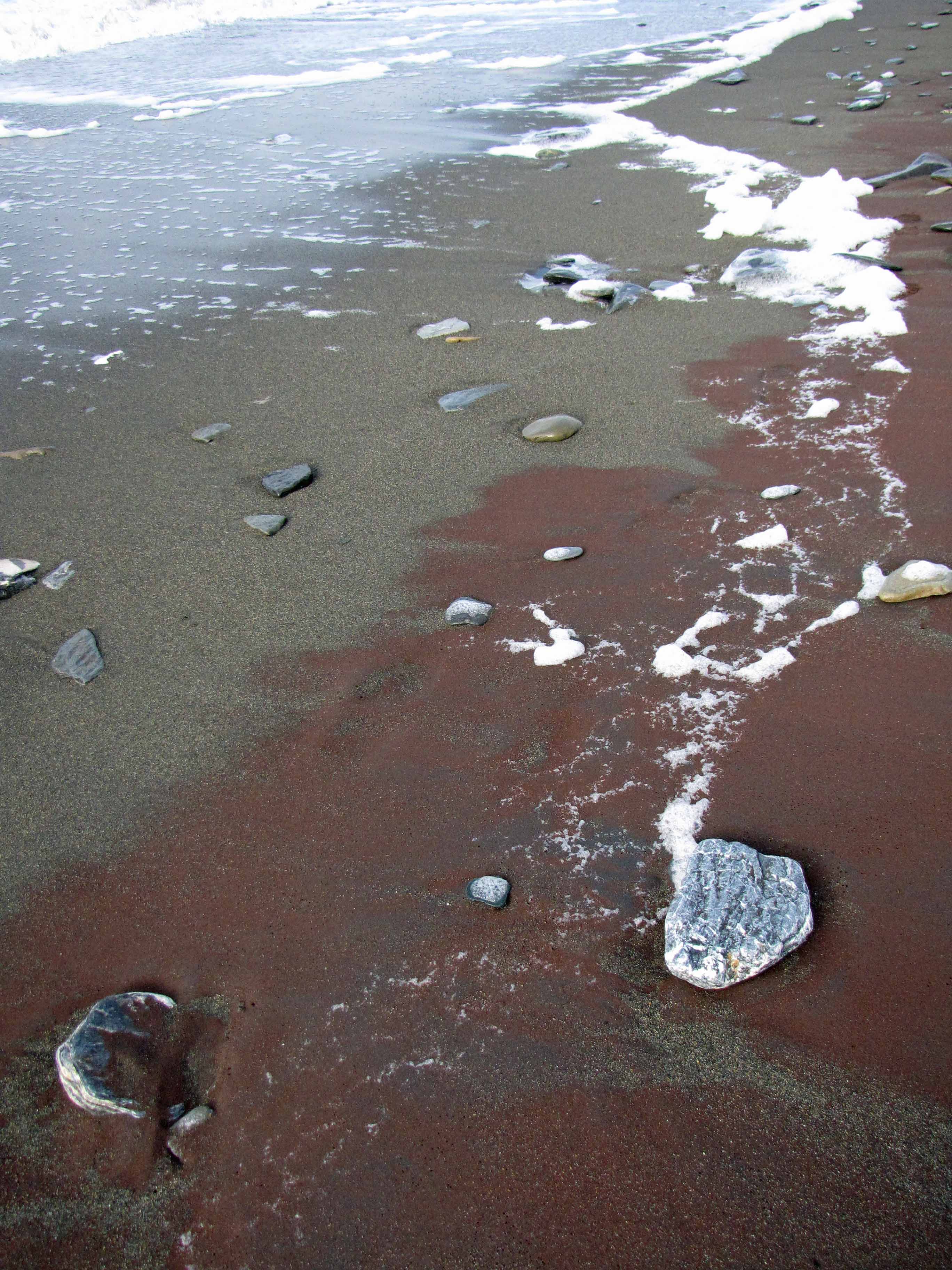
Gold-bearing garnet sands on Western Beach in Nome, Alaska, Summer 2012.
Above is a gorgeous beach sand picture for this week’s Monday Geology Picture. I took this picture a few weeks ago in Nome, Alaska after a summer storm. The beaches of Nome are rich in red garnet grains. The beaches of Nome are also very rich in grains of gold, and you can bet that if you pan some of the red garnet sand along the Nome beaches, you will find dozens of small flakes of gold. If you pan some of the more gravely beach material, you may even find yourself a gold nugget!
The beaches of Nome are always a rich red color, but after a storm the beaches look particularly red. This is because the storm waves remove some of the lighter beach sand grains (quartz and such) while leaving behind a lag of beautiful bright red garnet… and dark heavy minerals… and gold!
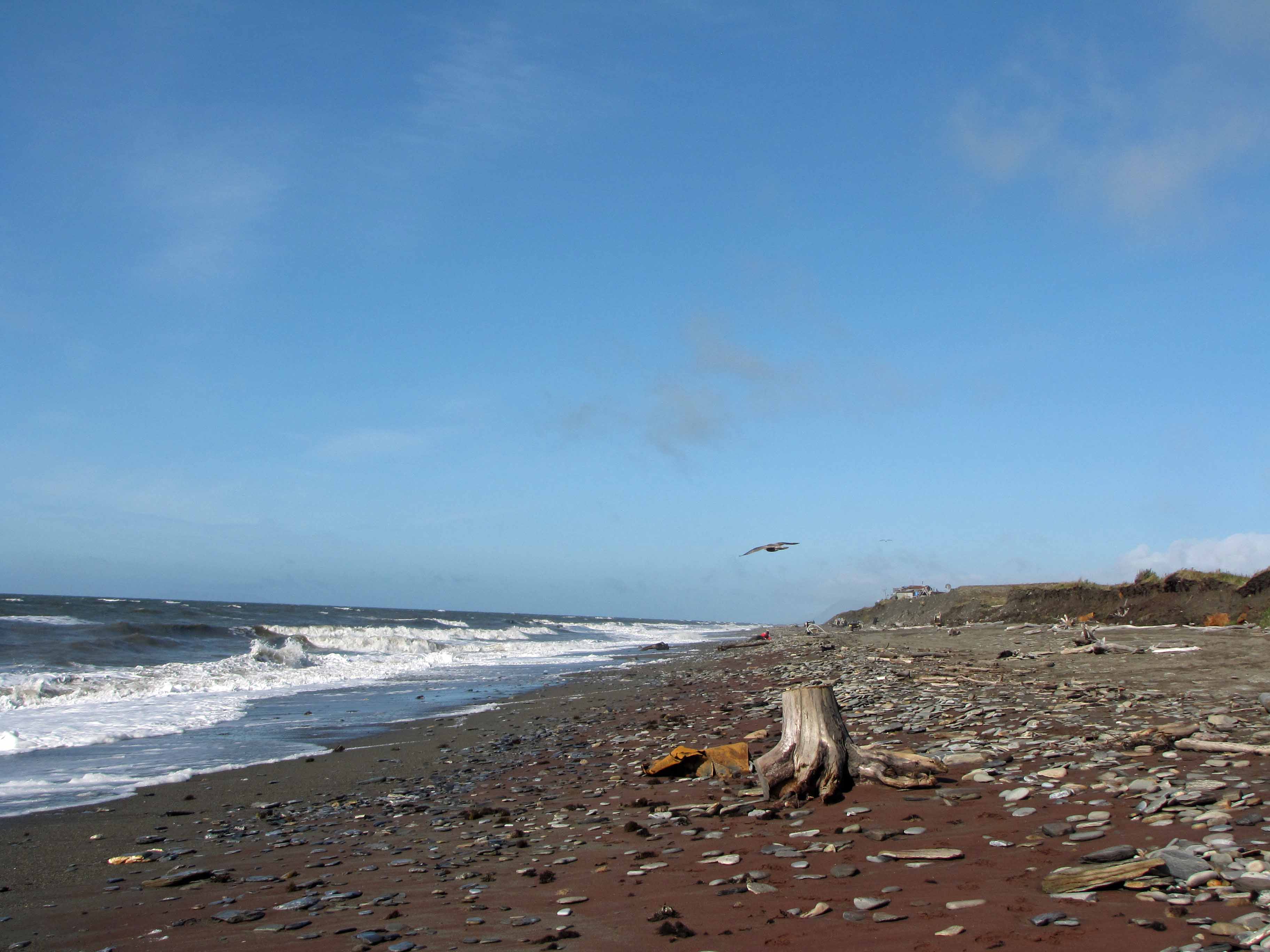
Here are two more pictures of the red garnet beach sands in Nome:
More red garnet sands along Western Beach in Nome, Alaska, Summer 2012. More red garnet sands– and beach cobbles– along Western Beach in Nome, Alaska, Summer 2012.
And here’s proof that if you pan some garnet sand from Nome, you will find gold:
Panned garnet sands from Western Beach in Nome, Alaska, Summer 2012. Note all the little gold glakes on the left side of the pan. Click to enlarge picture.
Gold panning is a gravity concentration process in which a large plastic pan and water are used to separate minerals according to their density. Gold is a very dense material (pure gold has a density of ~19.3 g / cm3), so gold will be sink to the bottom of the pan while much lighter sand grains are washed off during the panning process. Panning first removes the lightest sand grains such as quartz (density of ~2.7 g / cm3) and muscovite (density of ~2.8 g / cm3) and leaves behind heavier grains such as garnet (density of ~3 to 4 g / cm3), magnetite (density of ~5.2 g / cm3), and ilmenite (density of ~4.7 g / cm3). Eventually, the panning process leaves behind a dark-colored, heavy mineral concentrate that is rich in gold!
Here I am with just such a concentrate from Western Beach in Nome:
Me, with a gold pan and a bag of gold-bearing heavy mineral concentrate in Nome, Alaska, Summer 2012.
That’s an old gold dredge in the background of the above photo; I’ll write about the some of Nome’s old dredges in another post.
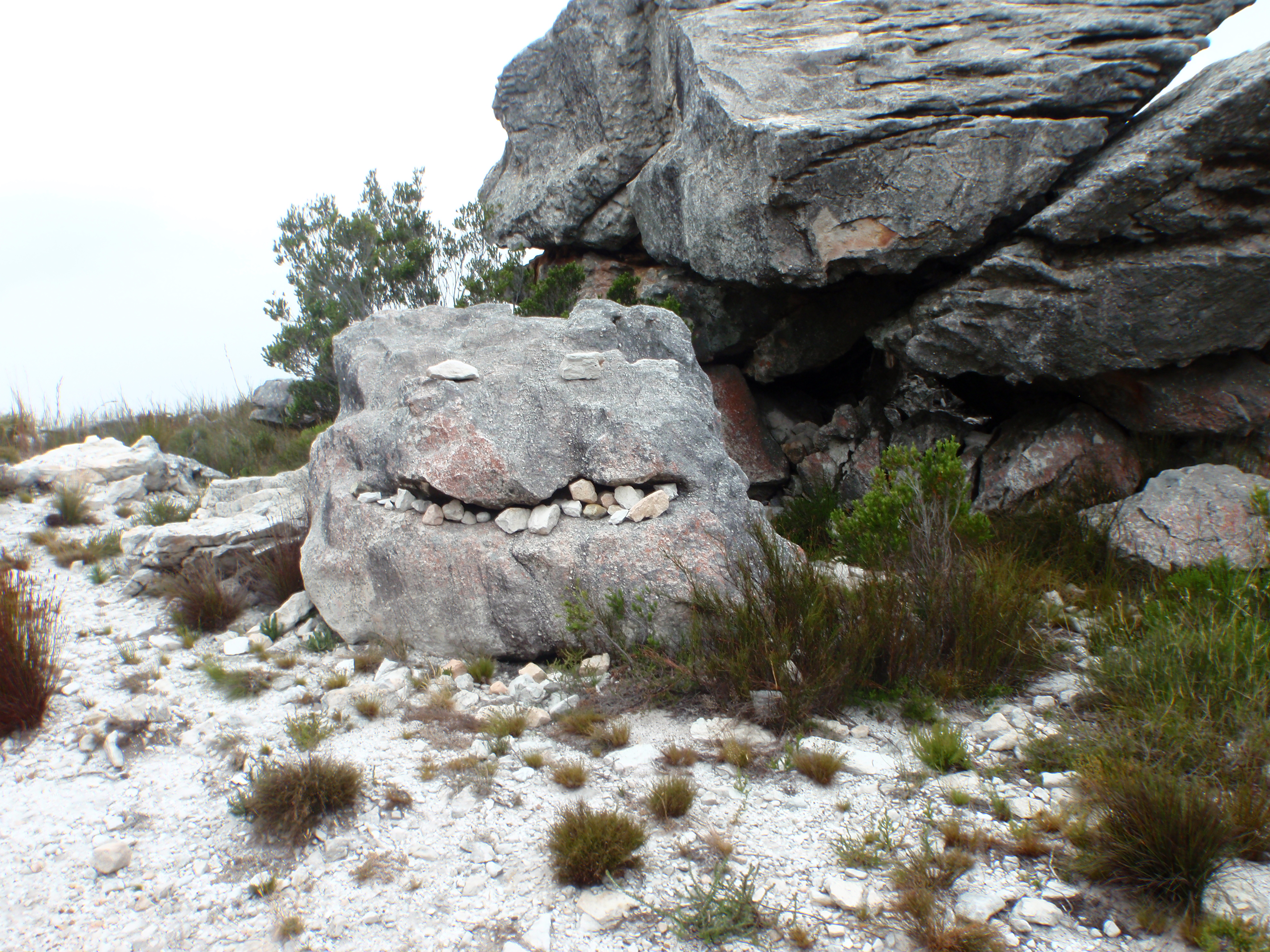
Happy rock monster, marking the trail to Suicide Gorge.
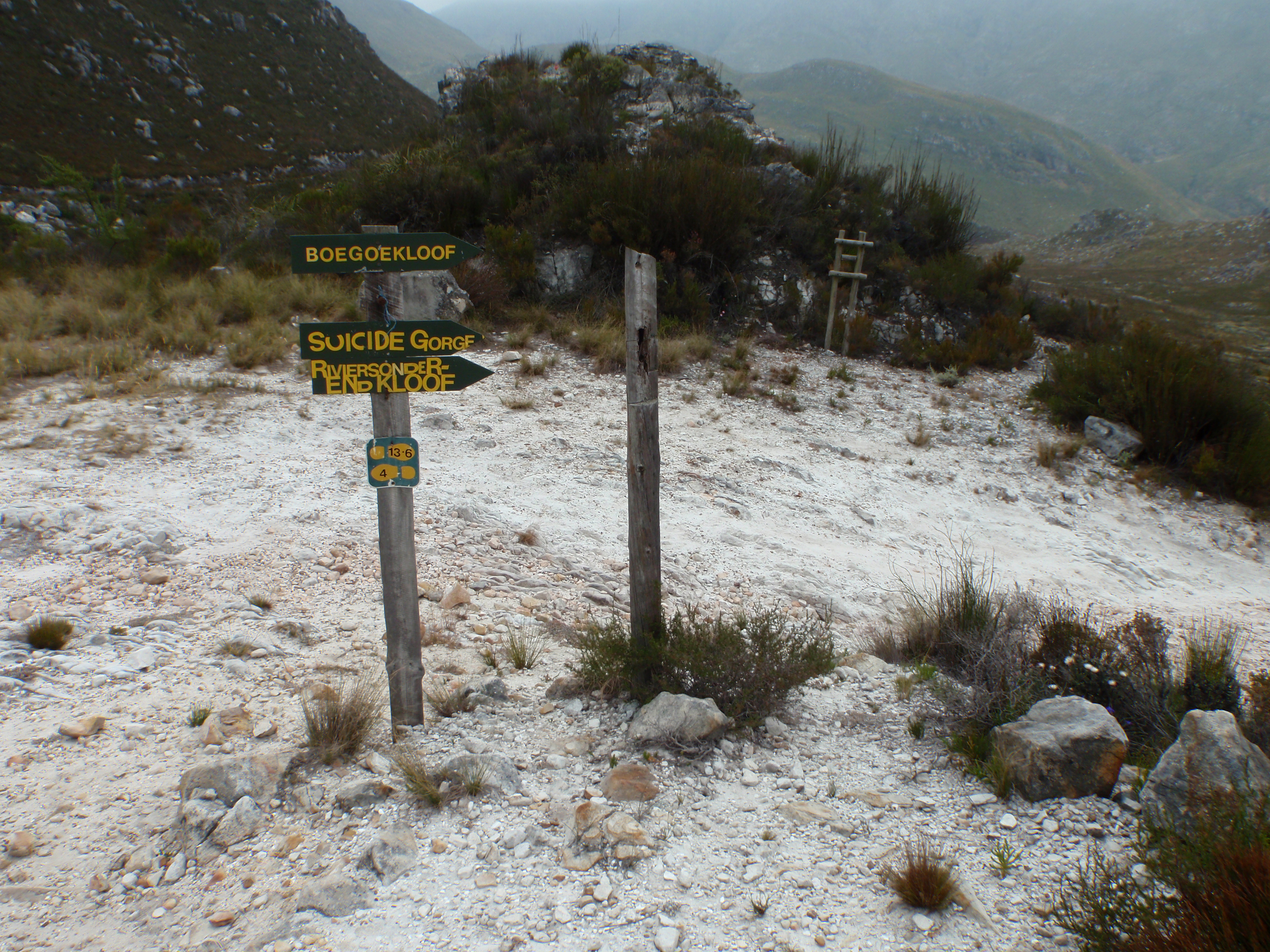
Back in January my husband and I took a day trip to the Hottentots Nature Reserve outside of Cape Town, South Africa. We walked a few miles in the reserve, including towards the start of the famous “Suicide Gorge” although we did not hike along the gorge itself. We’ll save that for another day, with a group of friends including an experienced kloofer (kloof in Afrikaans means “cliff”, so kloofing is probably best translated as “canyoneering”). While we were walking along the trails, we encountered the smiling rock monster shown above. Doesn’t he look happy, in a creepy sort of way?
Here are a few more pictures from our hike:
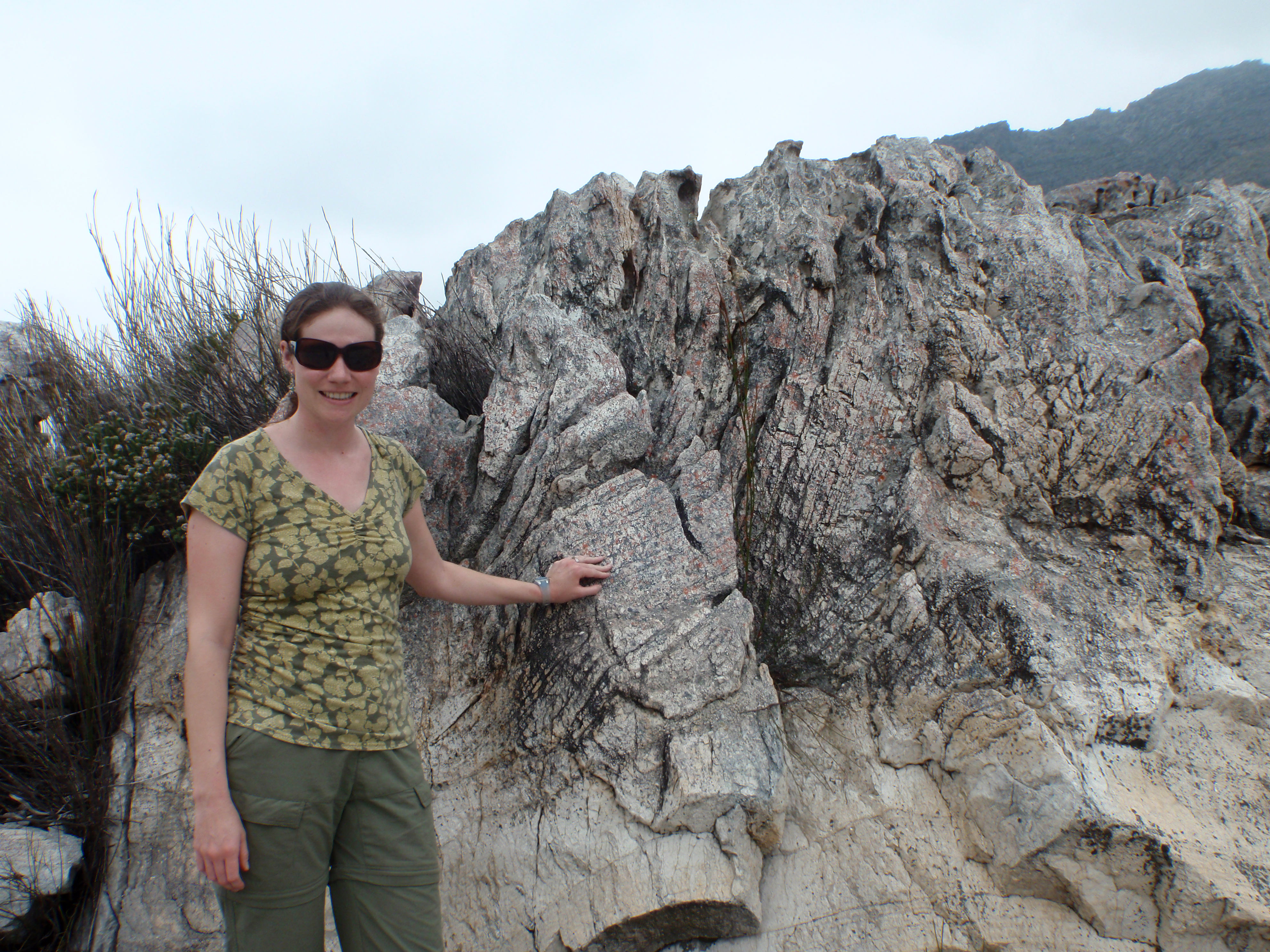
A winding path and wildflowers.To Suicide Gorge!Posing with some rocks #1.Posing with some rocks #2.
Some of the gorgeous decorative stones at O.R. Tambo International Airport.
Today I am going to share some pictures of decorative stones adorning the O.R. Tambo International Airport in Johannesburg, South Africa. I’ve flown through O.R. Tambo a dozen times or more, and I always appreciate the beautiful decorative stones that are found throughout the airport. I took the pictures in this post from the area around the security check-in for the international terminal. I apologize that the quality of these pictures isn’t fantastic. I took these photos somewhat slyly with my Blackberry phone, and I didn’t pause for too long to examine the decorative stones. The security guards look at you suspiciously when you start investigating the walls of the terminal too carefully.
I don’t know much about these decorative stones or where they came from– can anyone provide me with more information on them? All I know is that they are GORGEOUS and make my layovers in the airport much more enjoyable.
More gorgeous decorative stones at O.R. Tambo International Airport.Even more gorgeous decorative stones at O.R. Tambo International Airport.Even MORE gorgeous decorative stones at O.R. Tambo International Airport.A closer view of some of the decorative stones.An even closer view, with my hand for scale.Another close-up view.Even closer!
Here’s a fun picture of a giant pink dinosaur named Dinah, who now holds a sign welcoming visitors to Vernal, Utah. In the past Dinah held up a sign for the Dine-A-Ville Motel and Cafe.
Some neat fractured rocks (granite?) with veins (quartz?). Photo taken at Owl's Head State Park in Maine.
Adam and Kelly, my friends from college, recently (back in June) were married. For their honeymoon Adam and Kelly went to Maine. Adam was kind enough to send me some geology-themed pictures from their honeymoon, and I thought I’d share them here on Georneys. These pictures are from Owl’s Head State Park and Acadia National Park. I’ve provided a few notes about the photos, but please feel free to leave comments with additional insights and observations, particularly if you are familiar with the geology of the two parks. Perhaps we can tell Adam and Kelly a little more about the rocks they saw on their honeymoon. Here’s a great website by the National Park Service on the geology of Acadia National Park.
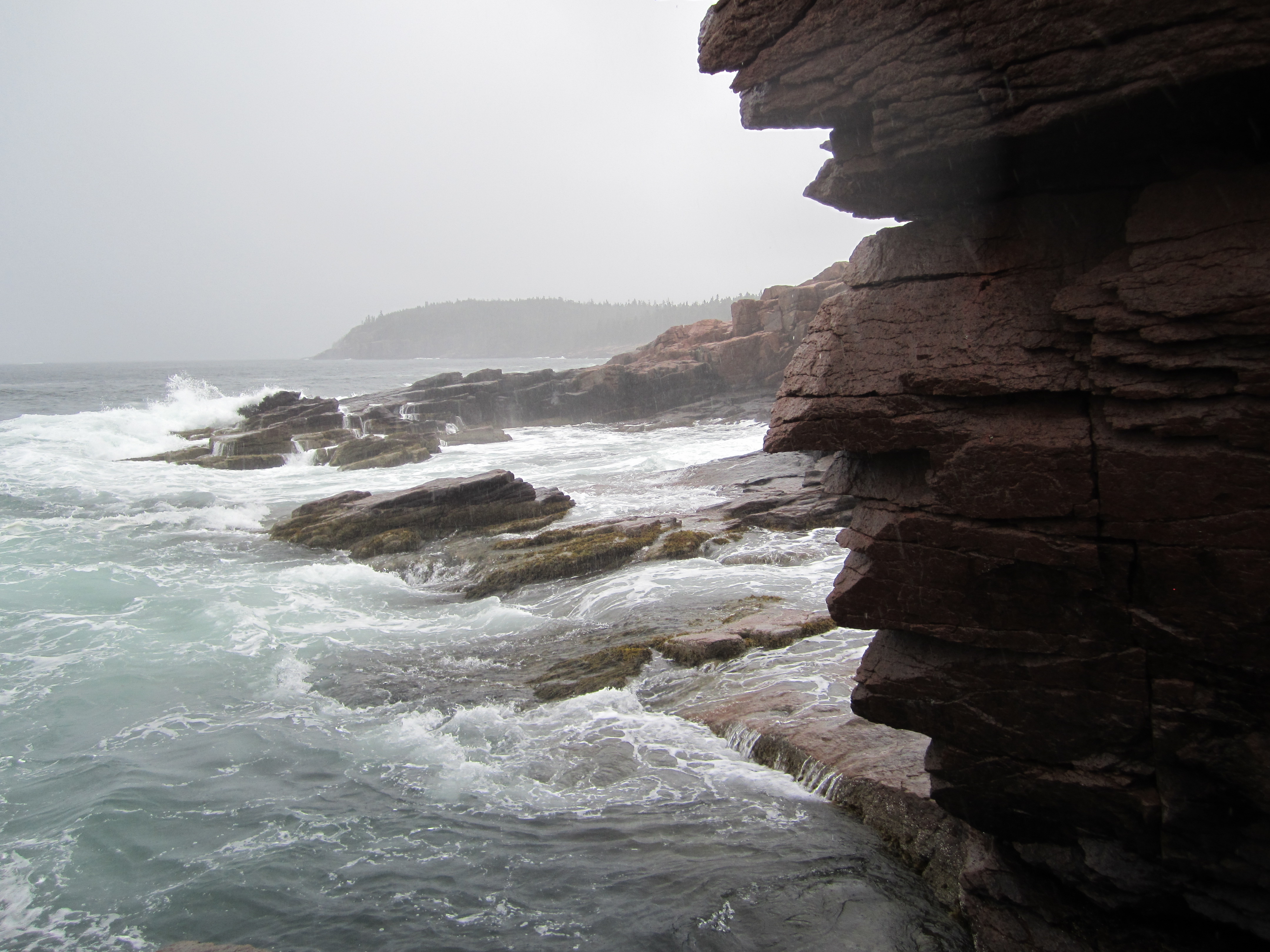
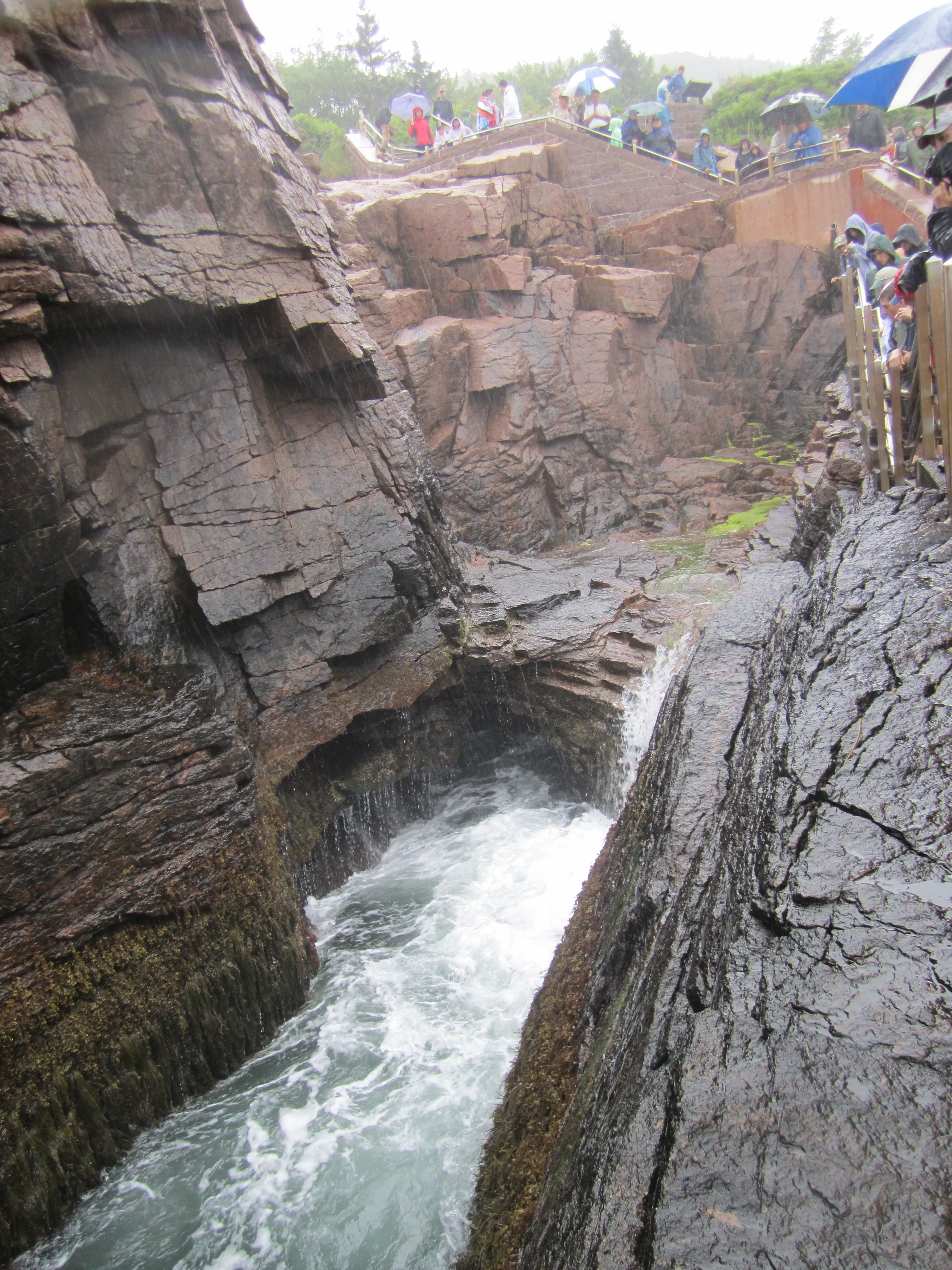
Here are some pictures from Thunder Hole in Acadia National Park:
Granite versus ocean at Thunder Hole. Water rushing by granite in Thunder Hole.
At Thunder Hole water can splash up to 40 feet high! The hole is a popular tourist attraction, but you need to be careful when the sea is rough. In 2009 several people were swept into the ocean when they were visiting Thunder Hole.
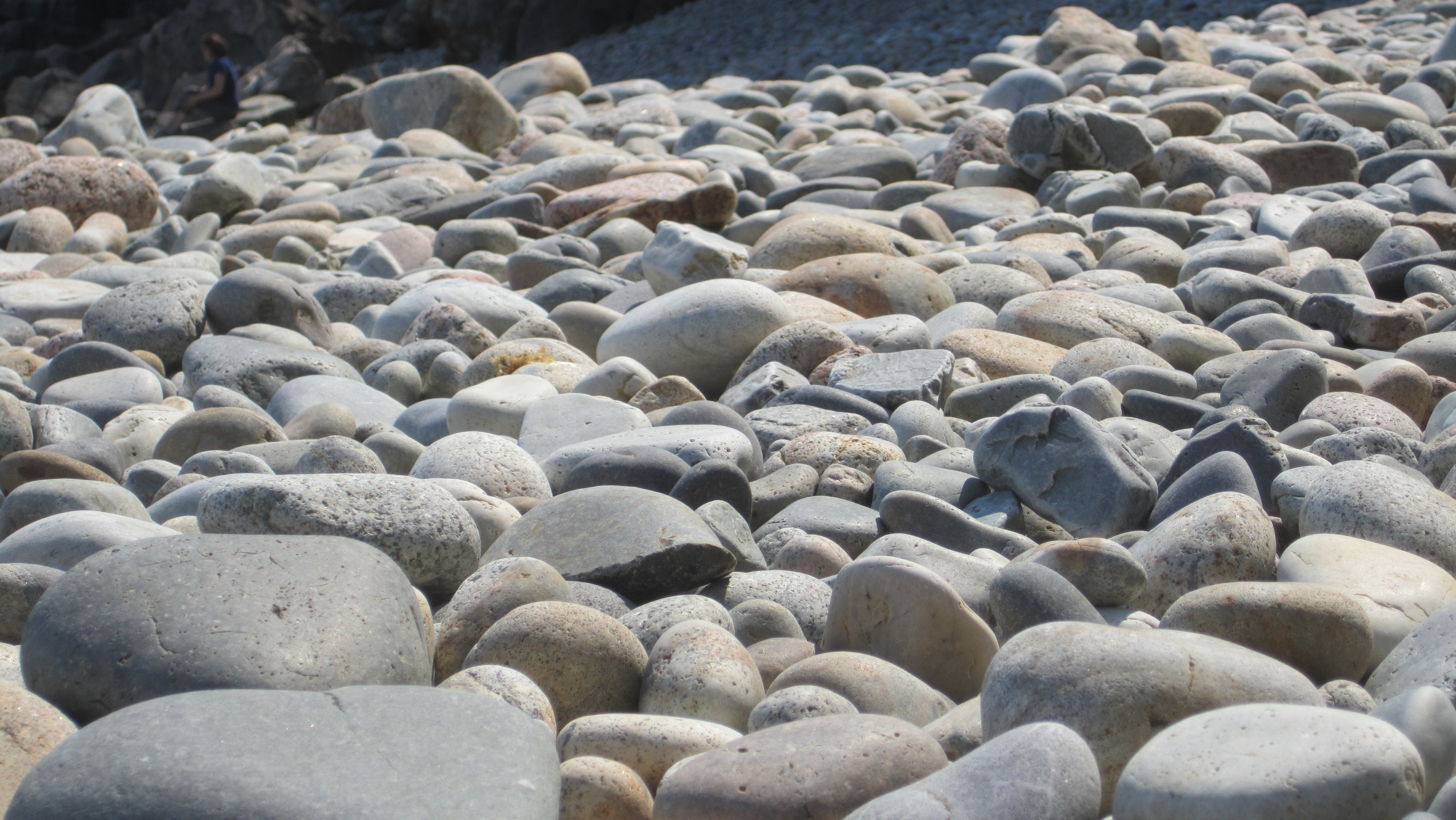
Interesting rock texture at Little Hunter's Beach.Cobbles at Little Hunter's Beach.Another view of the cobbles at Little Hunter's Beach.
Adam tells me that the cobbles from Little Hunter’s Beach were used in the past to pave New England streets. They certainly look like cobblestone street cobbles!
Thanks so much for sharing these pictures, Adam! Also, congratulations, Adam and Kelly!
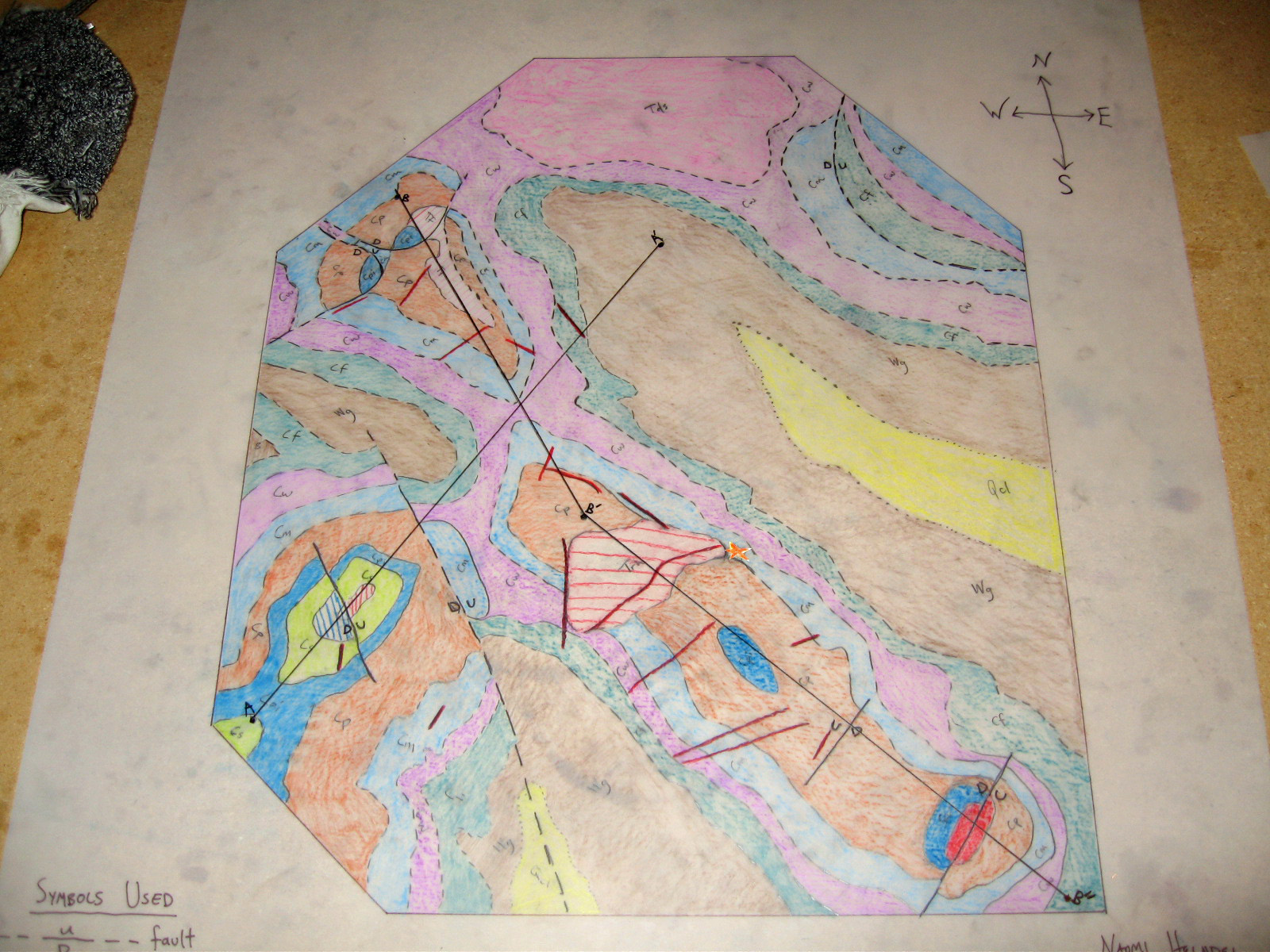
One thing I loved about learning geology back in college was coloring. Yes, coloring… or colouring, for my South African and European friends. Most of the rough geologic maps I made for assignments back in college were made using colored pencils, such as the group map shown in this week’s Monday Geology Picture above. This map was made by a small group of students during a quick (3 or 4 day, if I remember correctly) mapping project in Montana. I won’t vouch for the map’s accuracy, but the coloring sure is pretty!
















 Georneys