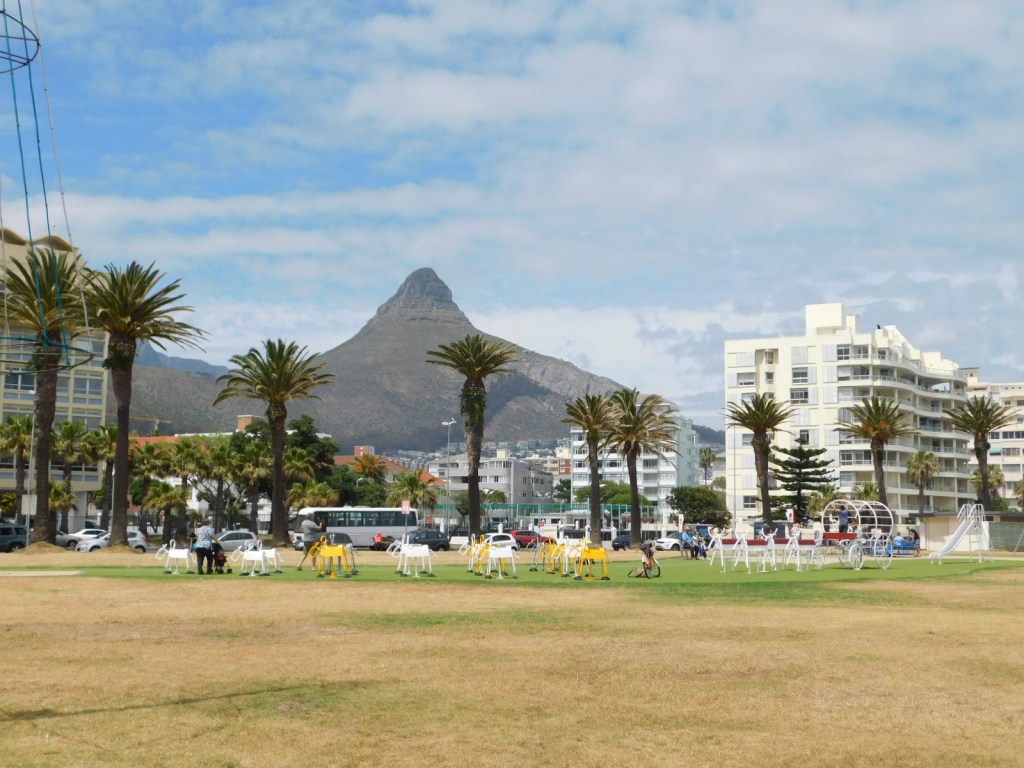
Lion’s Head. Photo taken from Sea Point Promenade, November 2017.
Happy New Year! I’m going to do my best to blog more regularly in 2018, starting with this first “Monday Geology Picture” post. This week I’m sharing a view of Lion’s Head (the distinctive mountain in the background of the picture), an inselberg here in Cape Town, South Africa, the city where I live. I took this picture a few weeks ago during a walk with my family along Sea Point Promenade. Cape Town is a fantastic city — you can see amazing geology even when you’re downtown!
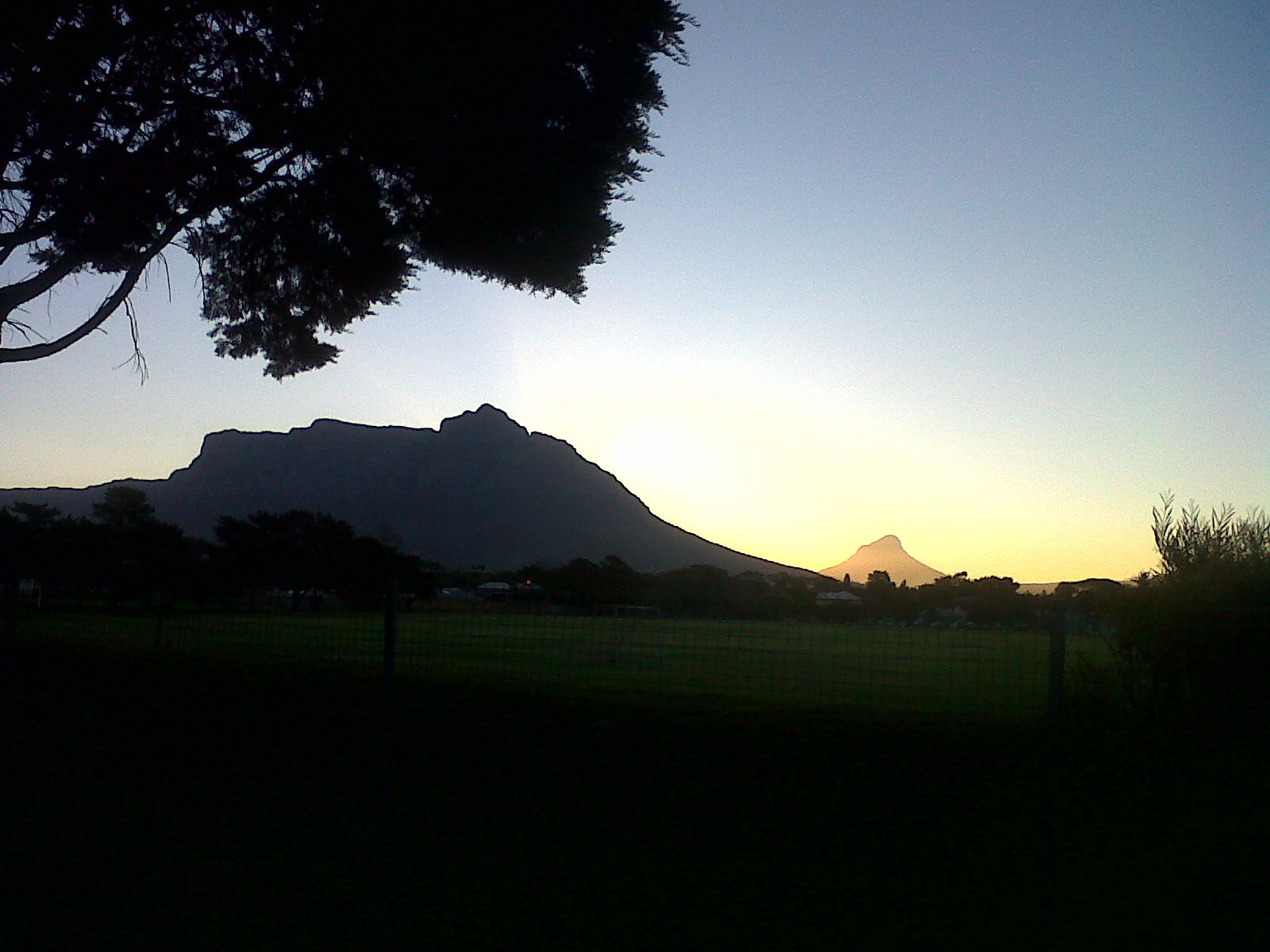
Mountain sunset along one of my walking / running routes.
For this week’s geology picture, I thought I’d share a picture that I took during one of my regular evening walks / runs here in Cape Town, South Africa. This picture shows Table Mountain and Lion’s Head, one of our localinselbergs, at sunset. I feel very fortunate to live in a city with such impressive and beautiful geology.
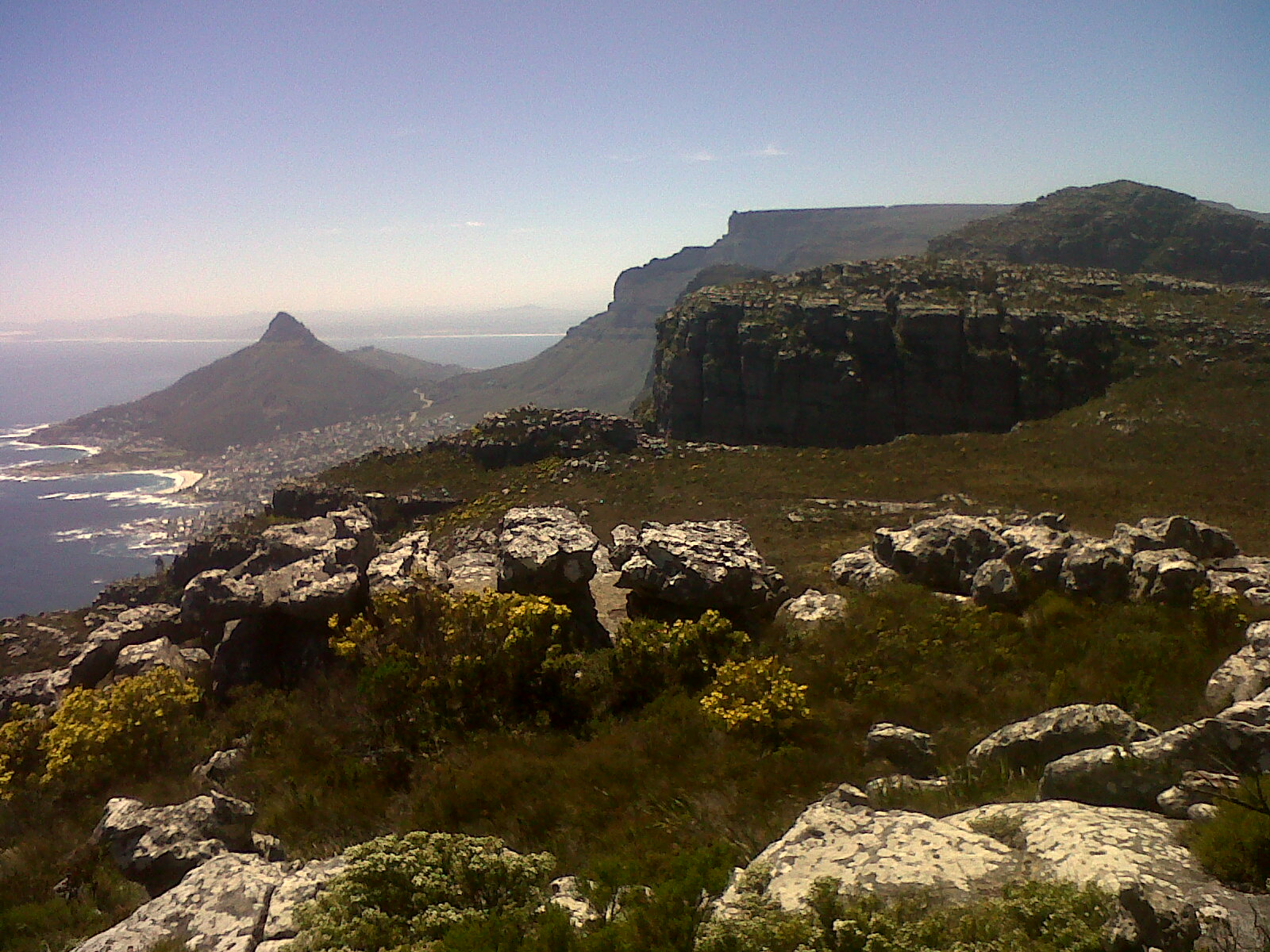
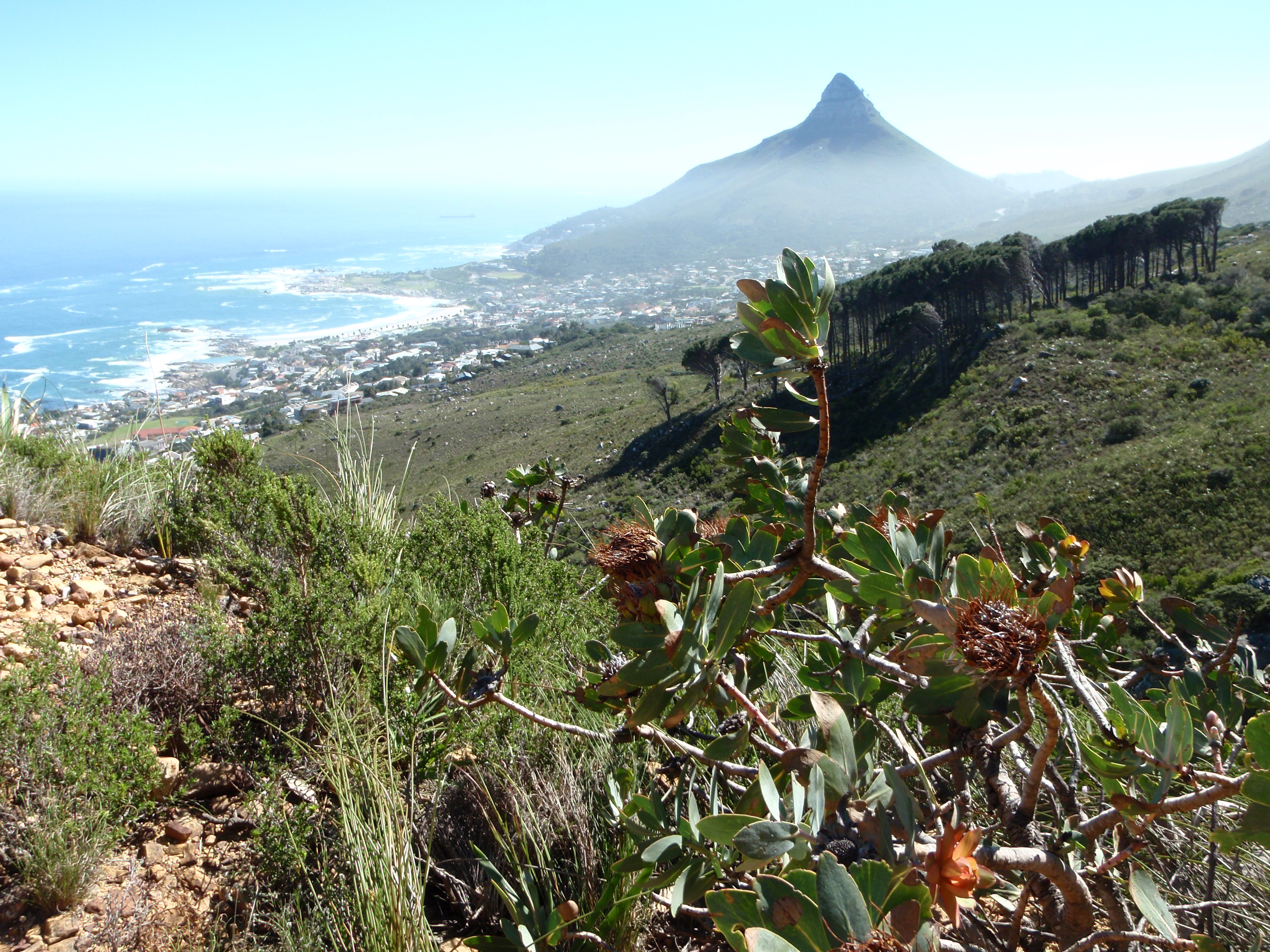
A view from near the top of Judas Peak, October 2012.
Yesterday (Sunday) I went on a hike up Judas Peak, one peaks in the Twelve Apostles range, which flanks Table Mountain and overlooks beautiful Hout Bay. On clear days, there is a gorgeous 360 degree view from the top of Judas Peak. The picture above shows the inselberg of Lion’s Head,which is another great peak to hike. I feel very fortunate to live in such a beautiful part of the world and to have a group of friends who enjoy hiking and other outdoor activities. Now that I’m in South Africa more-or-less full time, my husband and I are going to try to hike with friends at least one weekend a month. So, I’ll probably share more pictures from our hikes in the future.
Well, I’ve fallen somewhat behind with my regular posting, such as the Geology Word of the Week. I’m afraid that these final few months of my PhD are going to sometimes keep me from regular blogging. These last few months are tough! Over the past few weeks, I have been very busy finishing up the very last of my labwork for my thesis (yay!), traveling between Cape Cod and Cape Town (yet again!), and also taking on important blogging tasks such as writing up my strong opinions on science kits for girls and coming up with the Georneys What to Buy a Geologist for Christmas: 2011 list.
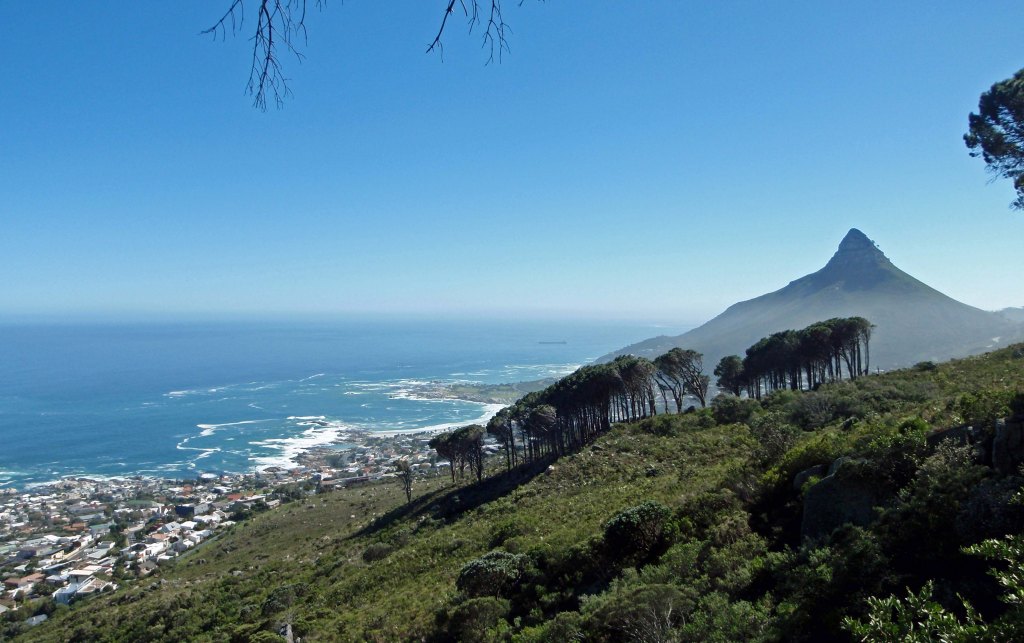
This next week is going to be very busy with work, and I’m afraid I just won’t have time for substantial blogging. I’ll try to write up another Geology Word of the Week post next weekend. Meanwhile, to keep this blog active, I’ll post a pretty geology picture every day this week, starting with the beautiful Cape Town inselberg picture above. I’m sure that many other geobloggers and blog readers are feeling very busy finishing up tasks in time for the festive holiday season. Hopefully, these pretty pictures will help keep us motivated to finish out the year’s work.
Have you also been neglecting your geoblog recently and been feeling stressed? Is there just not enough time for blogging this week? Feel free to also post a picture-a-day with me this week, if you want. Everyone loves pretty geology pictures!
A sedimentary inselberg (in the distance) in Cape Town, South Africa, September 2010.
def. Inselberg:
A small, rounded hill, knob, ridge, or mini mountain that rises abruptly from relatively flat surroundings. “Inselberg” is a loan word from German and literally means “island mountain.”
Originally, the term inselberg was used to apply to landforms in hot, arid regions; early German explorers were particularly impressed with the “island mountain” landforms which they observed in southern Africa. However, the term can also be applied to similar landforms in more humid regions.
Inselbergs are generally erosional remnants. Often, inselbergs are composed of harder igneous rock (such as granite) that is more resistant to erosion. However, inselbergs may also form in sedimentary rocks.
Uluru or Ayer's Rock inselberg in Australia. Photo courtesy of Gillian. Kata Tjuta inselberg in Australia. Photo courtesy of Gillian.
A variety of other terms, both scientific and colloquial, are also used to describe “island mountains.” Among these are monadnock (after Mt. Monadnock in my home state of New Hampshire), bornhardt (after the German geologist and explorer who coined the term “inselberg”), tor, butte, and monument. The distinctions between these various terms are somewhat confusing and not consistent in the scientific literature. Generally, more rounded landforms are described as inselbergs or monadnocks while flat-sided, towering landforms are described as monuments.
Whatever term or terms you use to describe geological island mountains or towers, these distinctive landforms are beautiful, intriguing, and can often provide information about current and past erosional environments. Island mountains and towers are also often very fun to climb or hike.
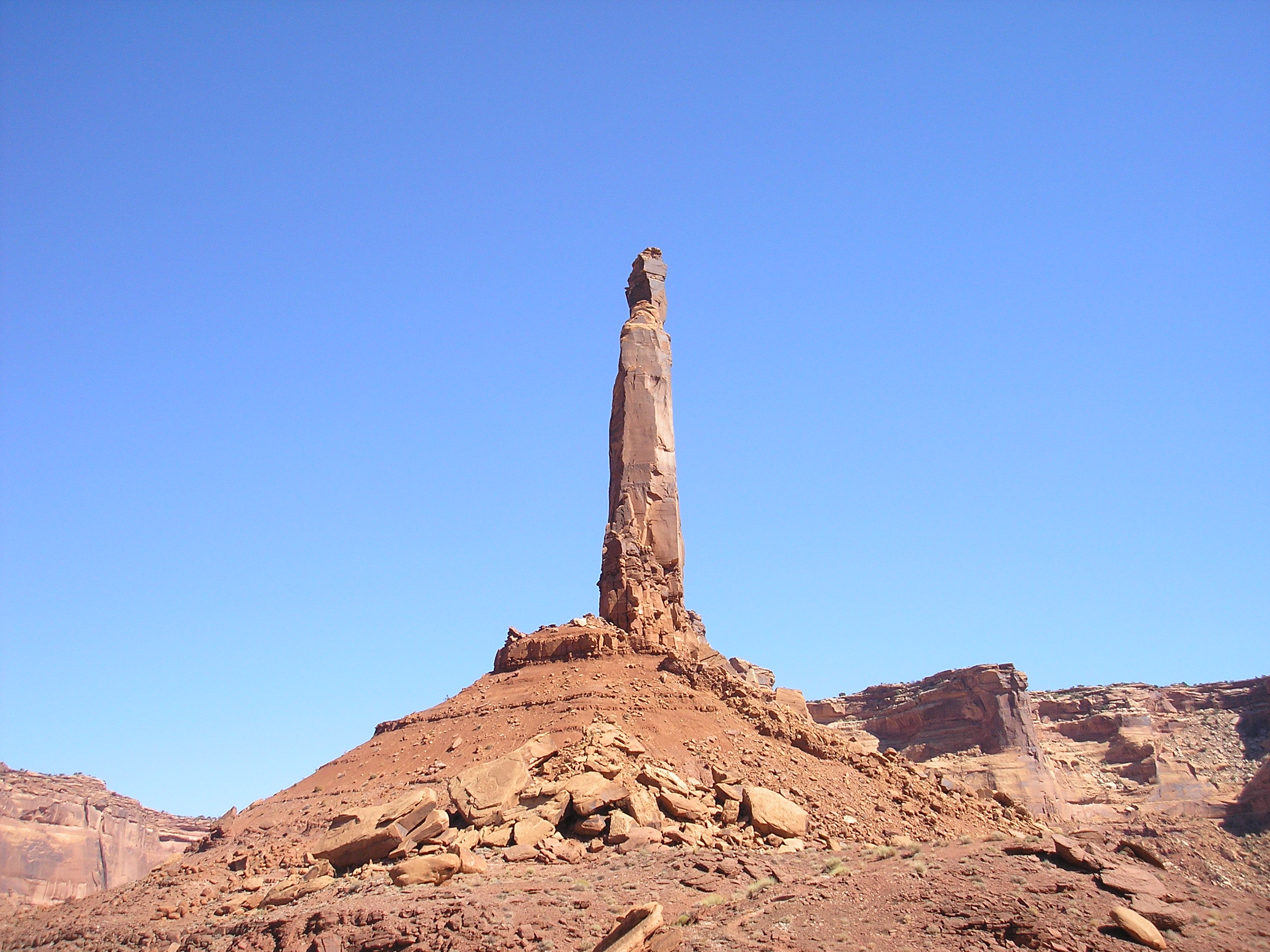
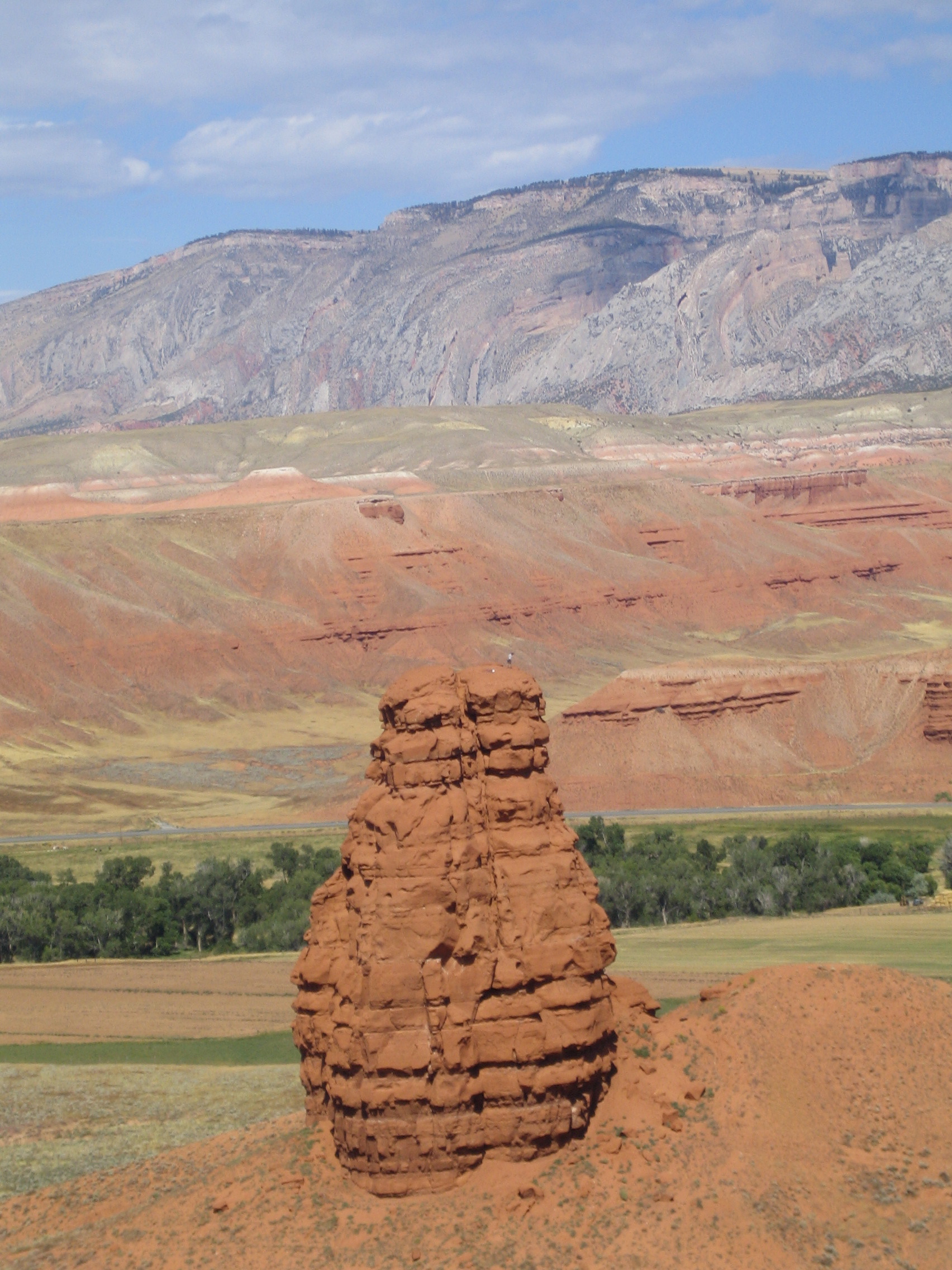
Steep-sided monument. Western USA, Fall 2005.Skinny monument. Western USA, Fall 2005. Small, slightly rounded monument. Western USA, Fall 2005. A closer view of the small monument. Check out the folding in the background! Western USA, Fall 2005.
My favorite island mountain is called “Leeu Se Kop” or “Lion’s Head” and is located in my adopted home city of Cape Town, South Africa. Lion’s Head is a sedimentary erosional remnant that is composed of the same sandstone as nearby Table Mountain. Hiking to the top of Lion’s Head takes about an hour. At the top of Lion’s Head there are is a gorgeous 360-degree view: ocean on three sides and towering Table Mountain on the fourth side. A popular activity among Capetonians and visiting tourists is to hike up Lion’s Head just before sunset on a night with a full or almost full moon. On full moon nights, dozens of people hike up Lion’s Head to watch the sunset. While the sun sets, people relax at the top with picnic baskets and bottles of wine or beer. After the sun has set and the full moon has risen, everyone hikes back down the island mountain.
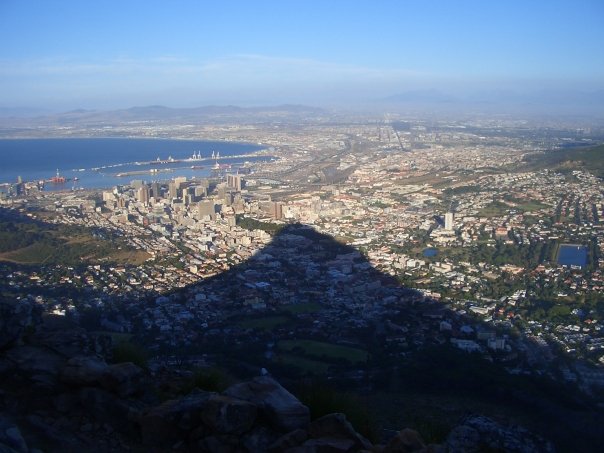
Lion's Head. Cape Town, South Africa, April 2011. Shadow of Lion's Head over Cape Town, South Africa, January 2007. Sunset view from Lion's Head. Cape Town, South Africa, January 2007. Another sunset view from Lion's Head. Cape Town, South Africa, January 2007.
***Thanks to Shaun for recommending this week’s word and to Gillian for providing two beautiful pictures.***
References:
“inselberg, n.” The Oxford English Dictionary. 2nd ed. 1989. OED Online. Oxford University Press. 30 July 2011.
“monadnock, n.” The Oxford English Dictionary. 2nd ed. 1989. OED Online. Oxford University Press. 30 July 2011.









 Georneys