Mount Coot-tha Building Stones


Meta-sedimentary building stone sourced from Mount Coot-tha Quarry.

A few weeks ago, I put up a blog post about a Gold Mine Hike at Mount Coot-tha in Brisbane, Australia.  I wrote that the gold was found in meta-sedimentary rocks, but I didn’t show any good pictures of the rocks. This is because the rocks are highly weathered and also mostly covered with vegetation in the area where the hike is located.

This morning I went with my family to the Brisbane Botanic Gardens at Mount Coot-tha and noticed that many of the building stones used throughout the gardens are blue-gray meta-sedimentary rocks that are locally sourced from Mount Coot-tha Quarry. You can still make out the original sedimentary layers in many of these rocks, which are hornfels metamorphic grade. They were cooked by the intrusion of the Enoggera Granite. The meta-sedimentary rocks make lovely and also very durable building stones. They also make good road aggregate. Here are a couple of pictures of them in use in the gardens:

Decorative wall made out of meta-sedimentary rocks from Mount Coot-tha Quarry.


Another picture of the deocrative wall leading to the Tropical Display Dome building.

Building stones sourced from Mount Coot-tha Quarry are used as decorative building stones in many places throughout Brisbane. I’ll share more pictures in another blog post in future.

What about the gold associated with these rocks? Well, I bet that if you analyzed the rocks in the above wall they would have elevated gold concentrations compared to typical meta-sedimentary rocks. However, their gold concentrations would not be that elevated. The gold grades in these Mount Coot-tha rocks are known to be low and patchy — that’s why gold mining was intermittent and relatively small-scale on the mountain. And that’s why the rocks are sold as building stones and road aggregate — they have value there, even if they’re not worth processing for gold.
Monday Geology Picture: Kangaroo Point Cliffs, Brisbane, Australia

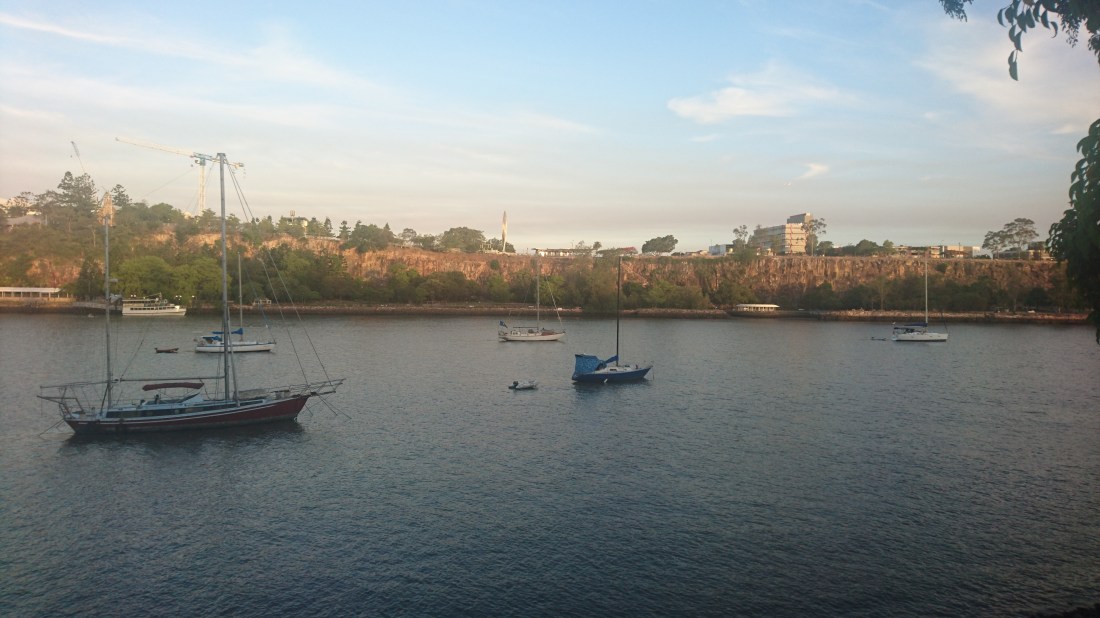
A view of Kangaroo Point Cliffs, taken from across the river, December 2018.

Happy New Year! I’m going to try to keep up with my “Monday Geology Picture” posts in 2019. I did okay with these in 2018, although I missed some weeks here and there when I was very busy with work or family life.

To start off a new year of pictures, here is a picture that I took during a recent visit to Brisbane, Australia. This picture shows a place known as Kangaroo Point Cliffs. These cliffs are not completely natural but were rather formed by a combination of river erosion and quarrying for stone that was used to make several buildings throughout the city. The geology of the cliffs is quite interesting — the cliffs are comprised of Brisbane tuff, a welded ignimbrite that is Triassic in age. I’ll blog more about these fascinating rocks in future.

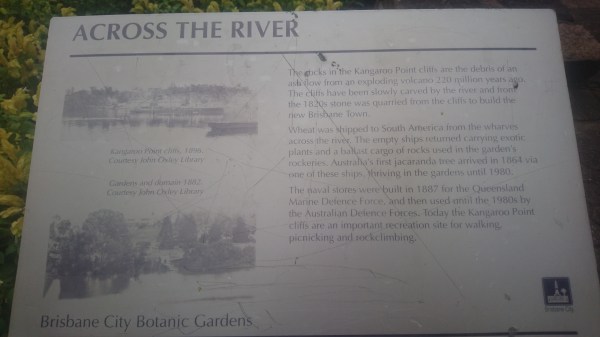
Here’s a little more information from a sign located across the river from the cliffs:

Sign with some information on the Kangaroo Point Cliffs. Click to enlarge.

The first paragraph says:

The rocks in the Kangaroo Point Cliffs are the debris of an ash flow from an exploding volcano 220 million years ago. The cliffs have been slowly carved by the river and from the 1820s stone was quarried from the cliffs to build the new Brisbane Town.

Monday Geology Picture: More Airport Geology

A set of decorative stones adorning a column, with airport signage shown in the reflection.

I’m traveling again this week (4 weeks of travel in a row!), so today I’m sharing another picture of some “airport geology”. Specifically, this is a picture of some gorgeous decorative stones adorning a column at O.R. Tambo International Airport in Johannesburg, South Africa. I took this picture yesterday when I was passing through the airport.  I particularly like the way the block of rock was split and the set up in a symmetrical fashion to enhance the effect of the natural patterns in the rock. There are quite a few similar sets of decorative stones around the airport — they adorn many support columns throughout the airport.

O.R. Tambo is full of gorgeous decorative stones. Last week I shared a shot of part of the floor.

Monday Geology Picture: Airport Geology

Lovely decorative stones adorning the airport floor, with my feet for scale.

I travel a lot for my job, and I often find myself traveling through O.R. Tambo International Airport in Johannesburg, South Africa. The terminal buildings contain some lovely decorative stones, which I often admire as I’m navigating my way through the airport. For example, while I was waiting for my luggage today I admired, as I have before, some of the lovely decorative stones that make up part of the floor in the domestic baggage claim area. These stones really are gorgeous, as you can see in the above picture. Check out all of the different hues: pink granitic rocks, gray gneiss rocks, dark black rocks (gabbro, perhaps?), and lovely yellow rocks (another type of igneous rock) — a rock rainbow of sorts! What rock types do you spot?

Monday Geology Picture: Geology Building at the University of Queensland

Part of the wonderful geology building at the University of Queensland.

Earlier this year I visited The University of Queensland in Australia. For this week’s picture, I’m sharing an image of the lovely geology building at the university. The building is made out of gorgeous sandstone blocks… and there’s a dinosaur mural! And, lower down, check out the stones with the fossil carvings! What a great building. I think this is one of the most lovely and delightful geology buildings that I have ever visited.

Does anyone else have a great geology building at their university? If so please share pictures in the comments.

Monday Geology Picture: Sandstone Building Stone

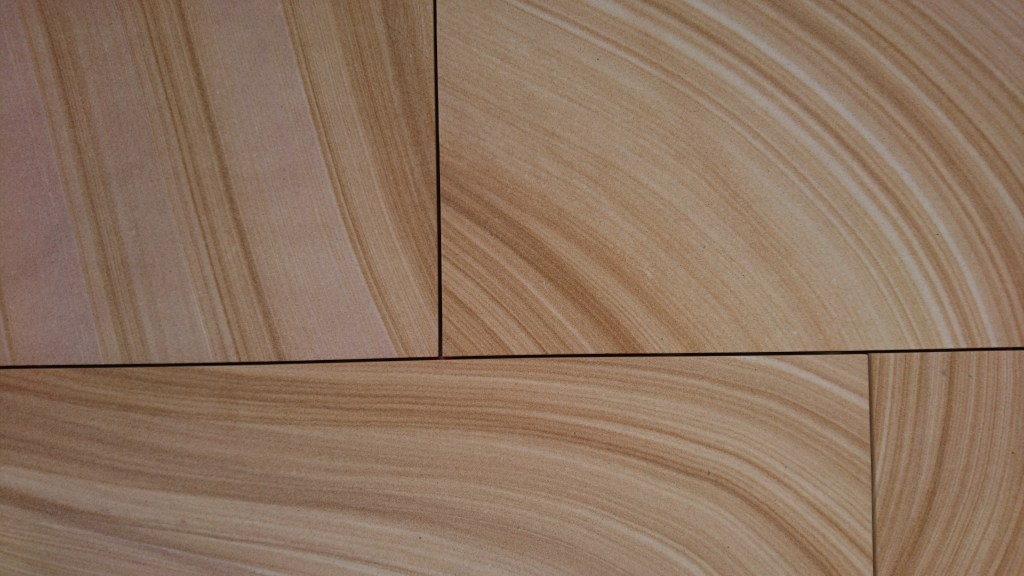
Gorgeous sandstone building stones.

I’m currently on the east coast of Australia, where local sandstone is commonly used as a building stone. Above is a picture that I took this morning. This picture shows some beautiful building stones on display at the University of Newcastle. The cross-bedding and variable coloration of the sandstone layers is just gorgeous. What a lovely building stone!

Monday Geology Picture: Sydney Sandstone Building Stones

Sandstone building stones used in a bridge in North Sydney.

During my recent travels in Australia, I noticed quite a bit of sandstone around Sydney. Therefore, I was not particularly surprised to also see quite a few sandstone building stones around the city. For example, the stones shown in the above picture, which shows part of a bridge in North Sydney.

By the way, I’m back home in South Africa now and won’t be travelling for a little while. So, I hope to have time to write up several posts on my recent Australian trip. Stay tuned!

Monday Geology Picture(s): Vesicular Basalt Boulder, Mauritius

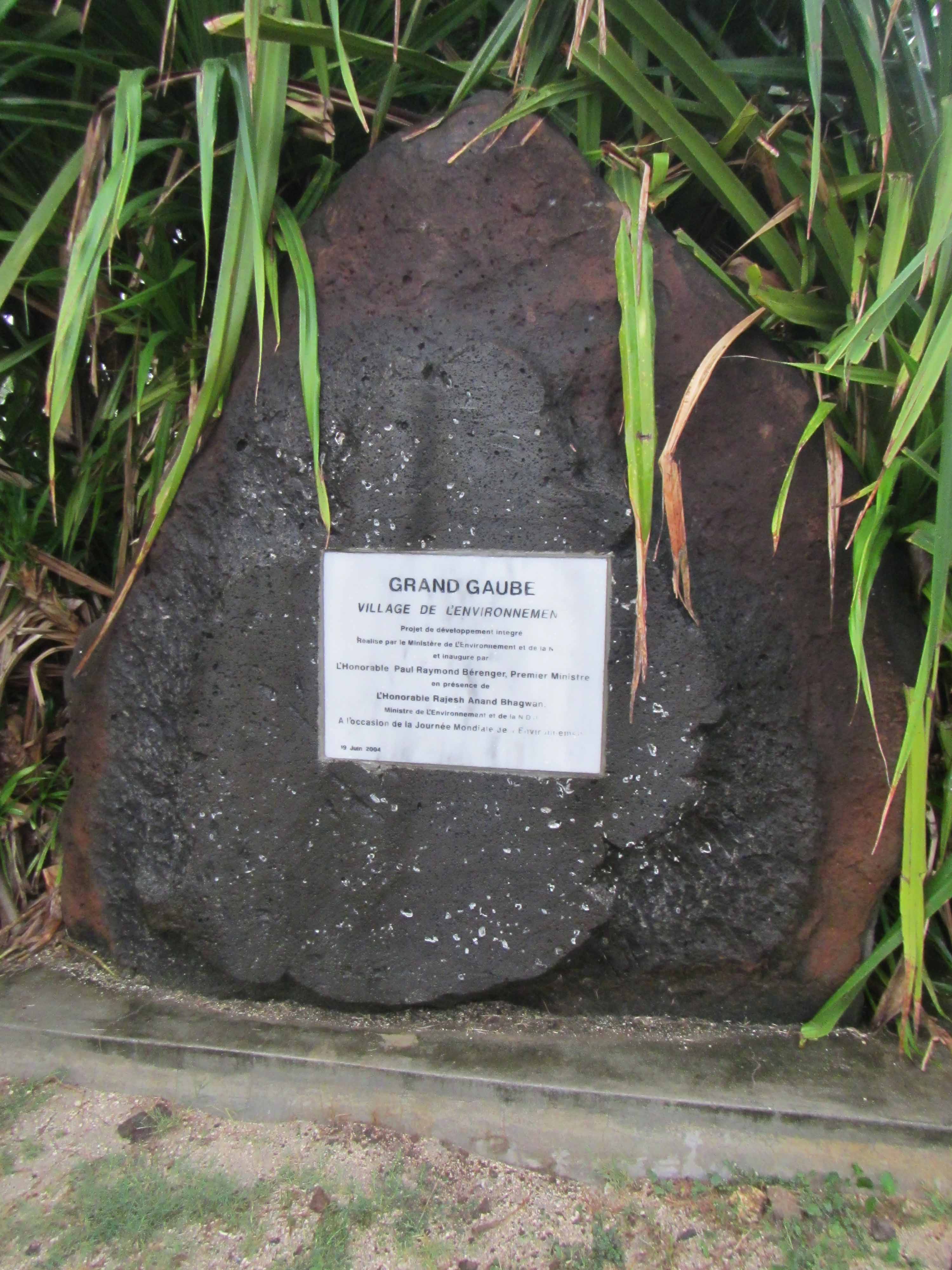
Grand Gaube sign on a large boulder of vesicular basalt, northern Mauritius.

Continuing with some pictures from my trip to Mauritius back in March, for this week’s “Monday Geology Picture” post I am sharing some pictures of a large boulder of vesicular basalt. This particular boulder is located in the town of Grand Gaube in northern Mauritius and is used as a decorative stone on which a plaque has been mounted.

Vesicular basalt is a dark-colored volcanic rock that contains many small holes, more properly known as vesicles. A vesicle is a small cavity in a volcanic rock that was formed by the expansion of a bubble of gas that was trapped inside the lava. Sometimes, vesicles can become filled in with secondary minerals, such as calcite, quartz, or zeolites. When vesicles are filled with such minerals, they are called amygdales. The vesicular basalt boulder featured in this post contains some amygdales. Some of the vesicles in the boulder are filled with a clear to white mineral, possibly calcite.

The boulder featured in this post also has a notable reddish-brown weathering rind. A fresh (and beautiful!) surface of the basalt boulder was exposed when the boulder was cut to make a flat surface for displaying the plaque.

Here are a few more pictures of the vesicular (or amygdaloidal) basalt boulder:

Another view of the vesicular basalt boulder.
A closer view of the vesicular basalt.
A closer view of the vesicular basalt boulder.
Another close-up view of the vesicular basalt.
Another close-up view of the vesicular basalt boulder.

The boulder almost certainly originates from a local source since basalt is abundant on the young volcanic island of Mauritius. Basaltic rocks can be found all over the town of Grand Gaube. For example, basaltic rocks are commonly seen on Grand Gaube’s beautiful beaches. I shared one picture of a basalt-covered beach in Grand Gaube last week.

Below is another picture of basalt on the beach in Grande Gaube; this picture was taken at the resort where my husband and I stayed:

A beautiful basaltic beach, Grand Gaube, Mauritius.

Stay tuned for more pictures from Mauritius!

Monday Geology Picture(s): Fossils in the Floor

Fossils in the floor #1.
Fossils in the floor.

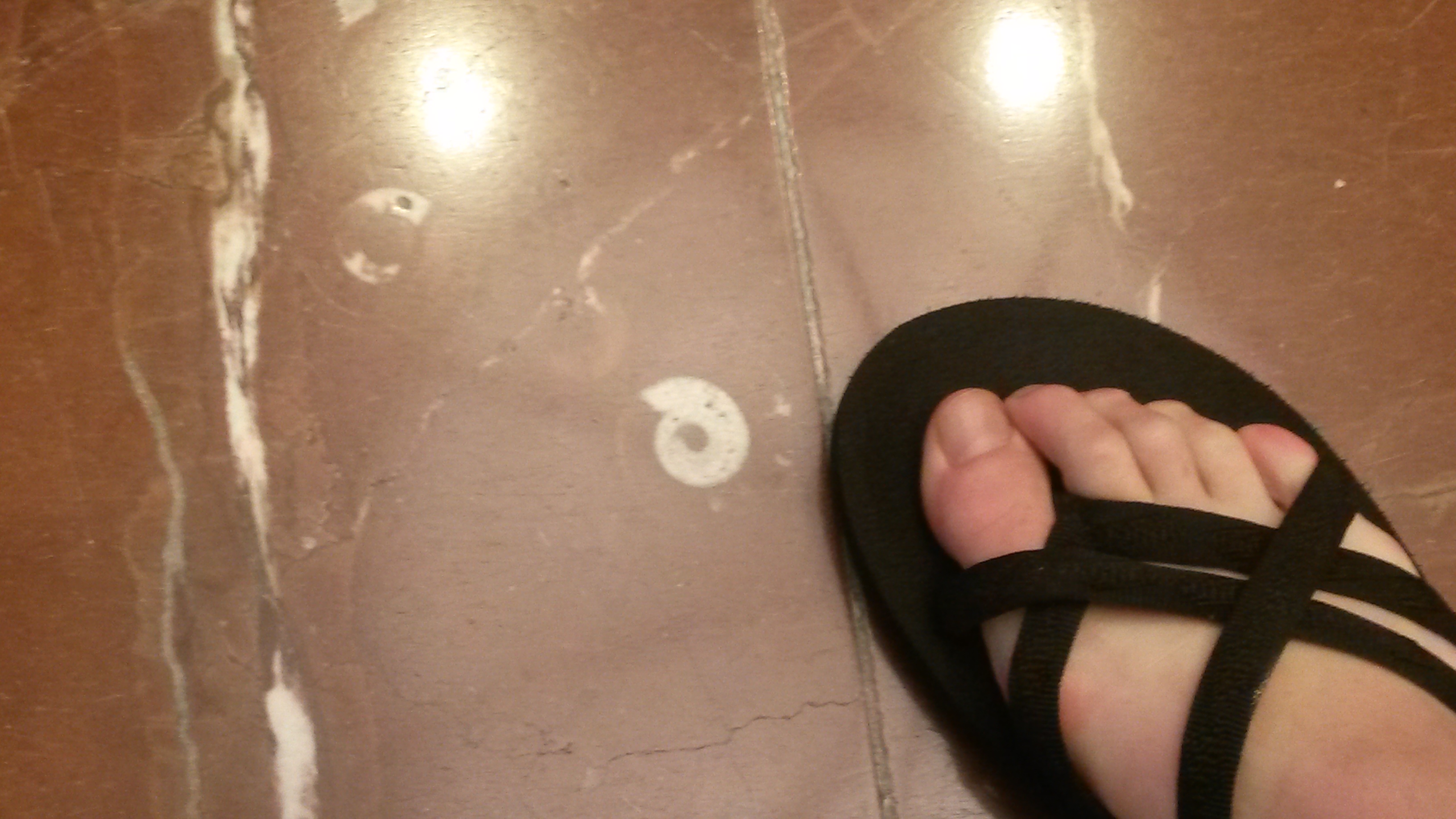
My husband and I are travelling in the US at the moment. A little over a week ago we attended an event at the Hynes Convention Center in Boston, and I noticed some interesting fossils in some beautiful building stones on the floor of a hallway connecting the center with an adjacent hotel. I snapped a few pictures of the fossils. Can anyone identify them? Does anyone know where the building stones come from?

Here are a few more pictures:

A wider view of the pretty building stones on the floor.
Here's a close-up view of one of the fossils, with my foot for scale.
Here’s a close-up view of one of the fossils, with my foot for scale.

Monday Geology Picture(s): Dendrites in the Tile Shop

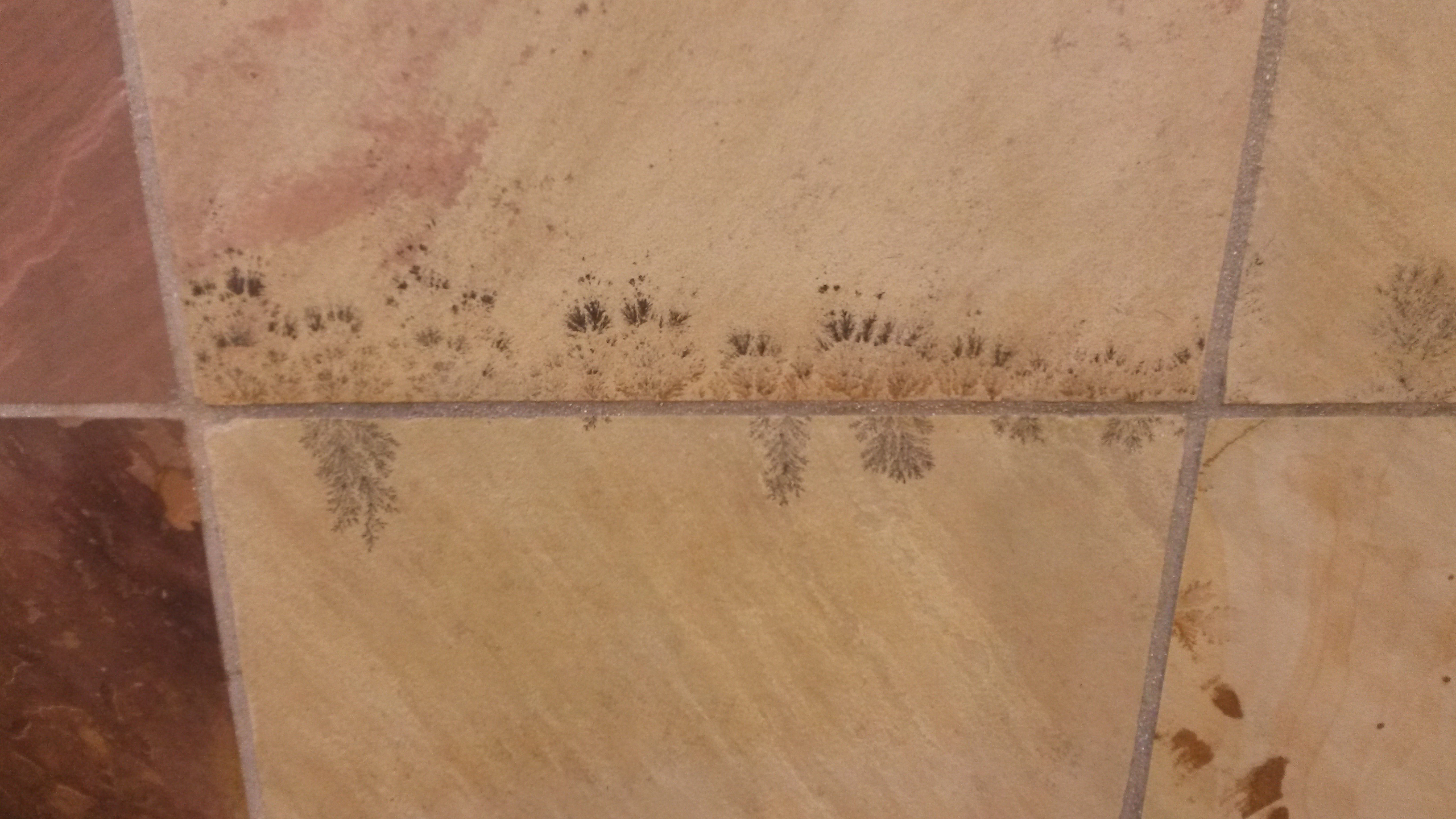
Pretty dendritic minerals on display in a Cape Town tile shop.

First of all, my apologies for missing the “Monday Geology Picture” post last week. I’ve been extremely busy recently with work and also preparing for a much-needed vacation. Actually, I’m on vacation right now, so I’ve set this to auto-post. Never fear, though… when I return in early April I will finish my “Sutherland Sky” series of blog posts. Also, I will be reviving the “Geology Word of the Week”.

For today, I wanted to share a few pictures of some dendritic minerals (probably some sort of manganese-rich mineral) that I observed on some tiles that were on display in a local tile shop here in Cape Town, South Africa. My husband and I were at the tile shop recently looking for some new tiles for our bathroom. We didn’t select these dendrite-decorated tiles, but I couldn’t resist taking a few pictures of them. I think dendritic minerals are just beautiful.

Here’s a closer view of the dendrite-decorated tiles, with my hand for scale:

Another view of the pretty dendritic minerals, with my hand for scale.

And here’s a wider view showing the tile display:

Dendrite-decorated display tiles.