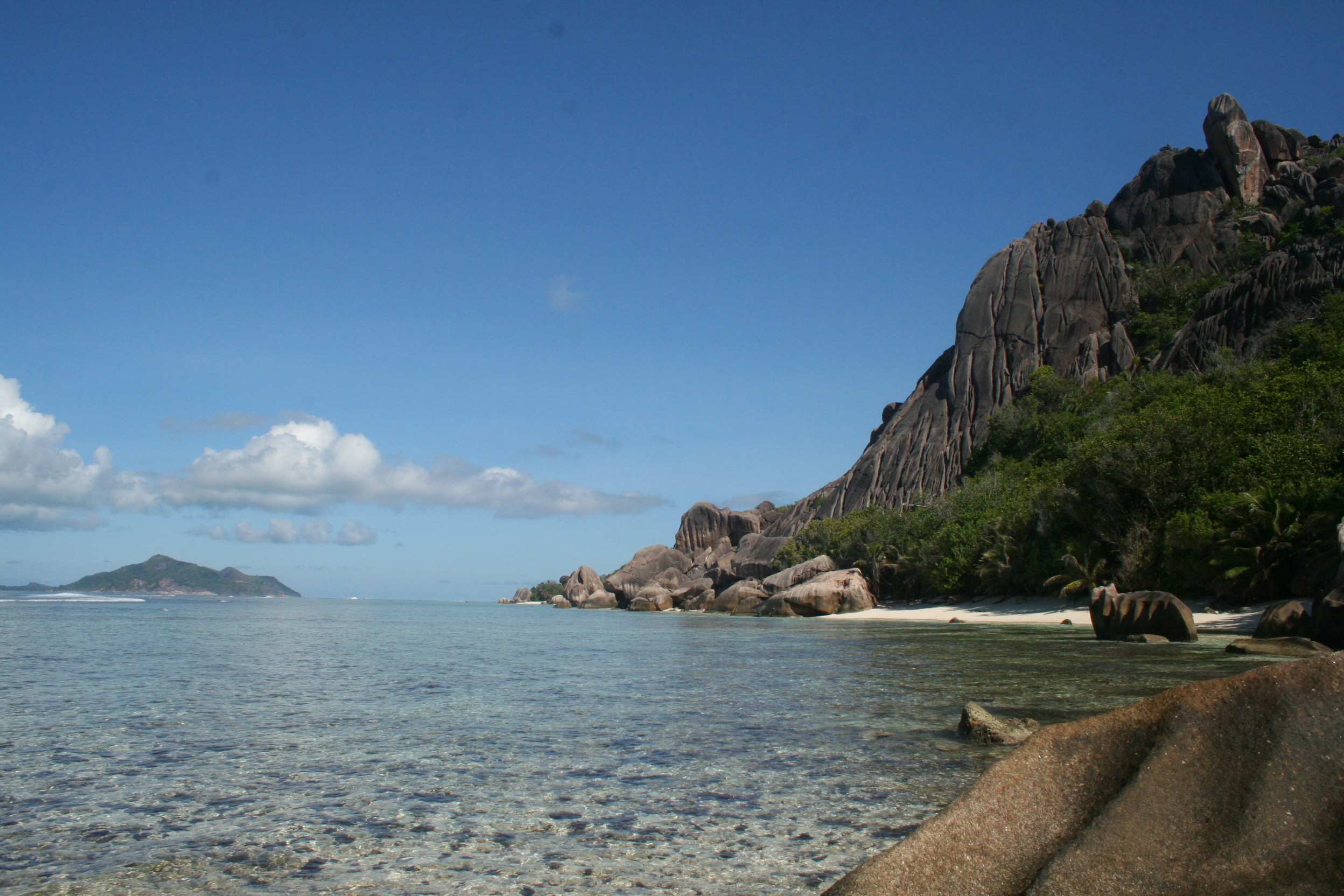
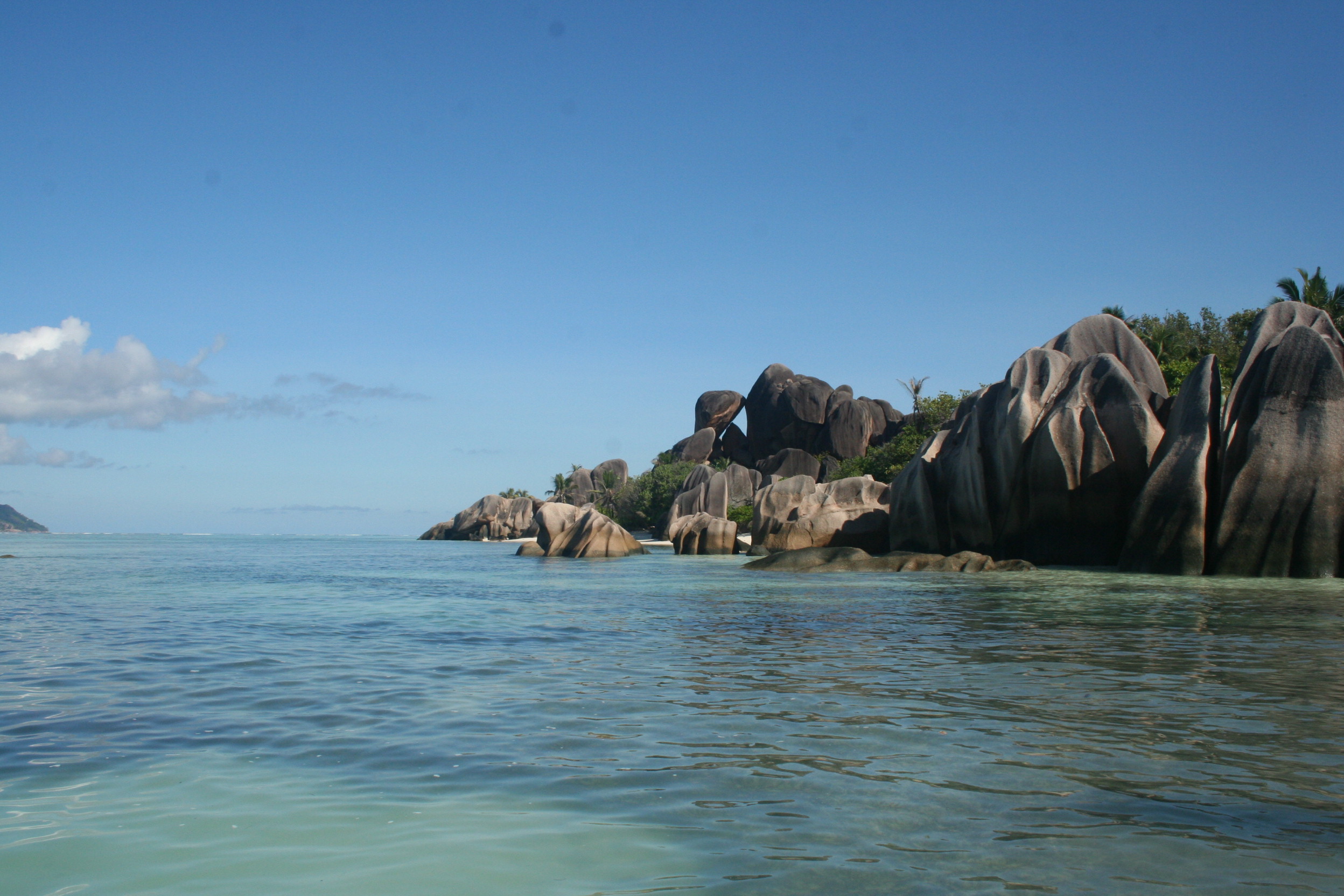
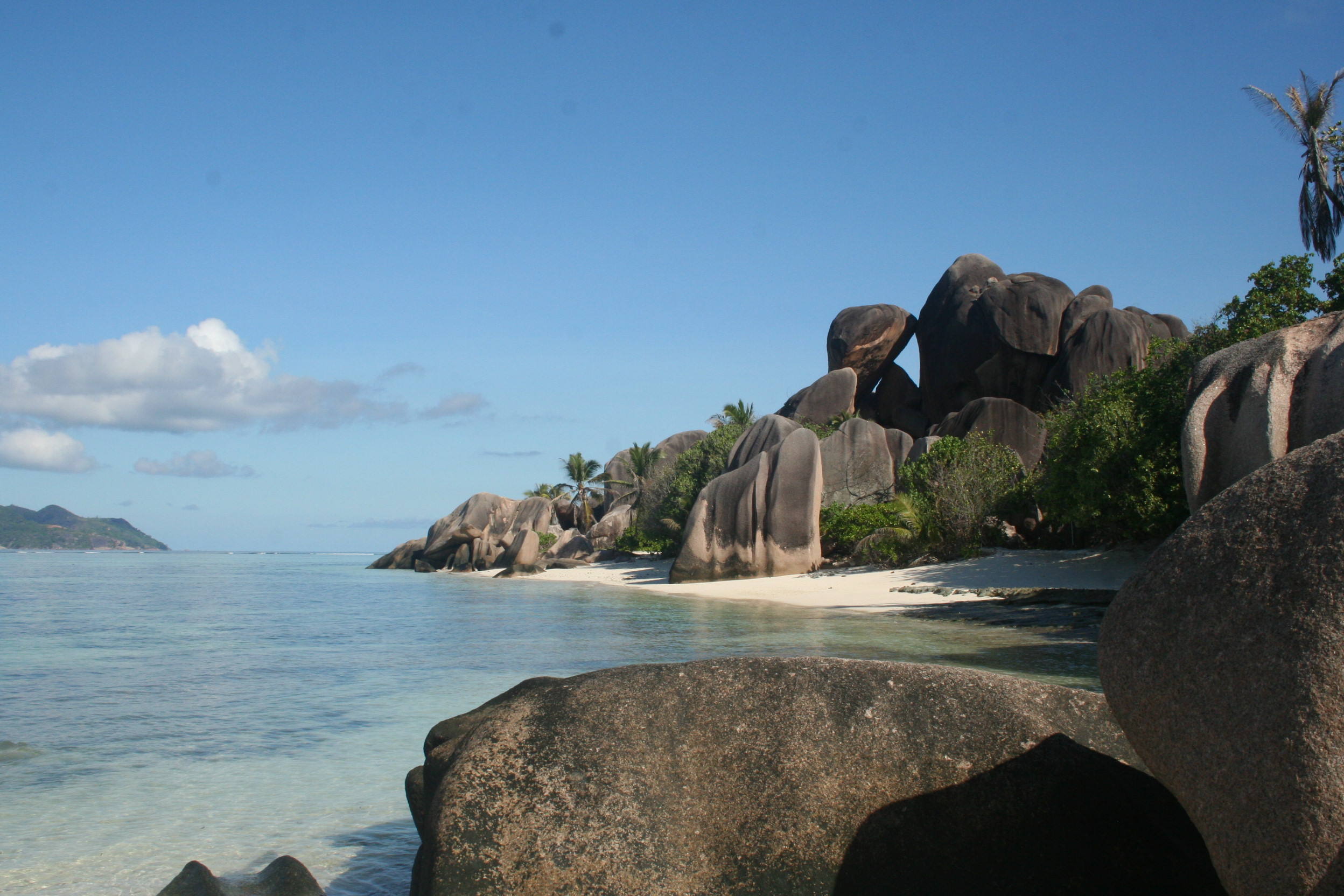
A granite island! Picture courtesy of Nia and Patrick.
My good friends Nia and Patrick recently went on holiday in the Seychelles, an archipelago nation consisting of 115 islands. The Seychelles are located north of Madagascar. Along with Mauritius and Zanzibar, the Seychelles are a popular tropical vacation destination for South Africans.
Geologically, the Seychelles are very interesting. There are two types of islands in the Seychelles: young coral islands and older islands made of granite. There are approximately 40 granite islands in the “Inner Island” area, which is where the vast majority of the Seychelles population is located. The Seychelles islands are part of the Mascarene Plateau. The approximately 700 million year old granites found on some of the Seychelles islands (and on the northern Mascarene Plateau) are a fragment of the ancient supercontinent Gondwana. Pretty amazing, huh?
Over the next few weeks, I’ll be sharing some of Nia and Patrick’s Seychelles pictures for my “Monday Geology Picture” posts. I hope you enjoy seeing little fragments of Gondwana! The pictures in this post were all taken on the island of La Digue.
A closer view of some of the interesting granite weathering. Picture courtesy of Nia and Patrick.More granite! Picture courtesy of Nia and Patrick.
Me, standing on top of a glacial erratic boulder in Nome, Alaska, Summer 2012.
def. Glacial Erratic:
A rock which has been transported and deposited by a glacier and which has a different lithology than the rock upon which it has been deposited. Often, erratic rocks have an angular shape because they were broken off of bedrock by glaciers and have not yet had time to be weathered and rounded by water, wind, and other erosional forces. Glacial erratics can range in size from very small pebbles to very large boulders, but usually it is the boulders which are noticed since these stand out in the landscape and are not easily transported away again.
Recently, I have been thinking a fair amount about glacial erratics and other glacial rocks and deposits, such as tills and moraines. That’s because I currently work for a marine gold exploration company that has a project offshore Nome, Alaska, where glaciers have transported gold to the coast along with erratics and other glacial sediments. If you walk along the beaches of Nome, you can spot quite a few glacial erratics, such as the one I’m standing upon in the above picture.
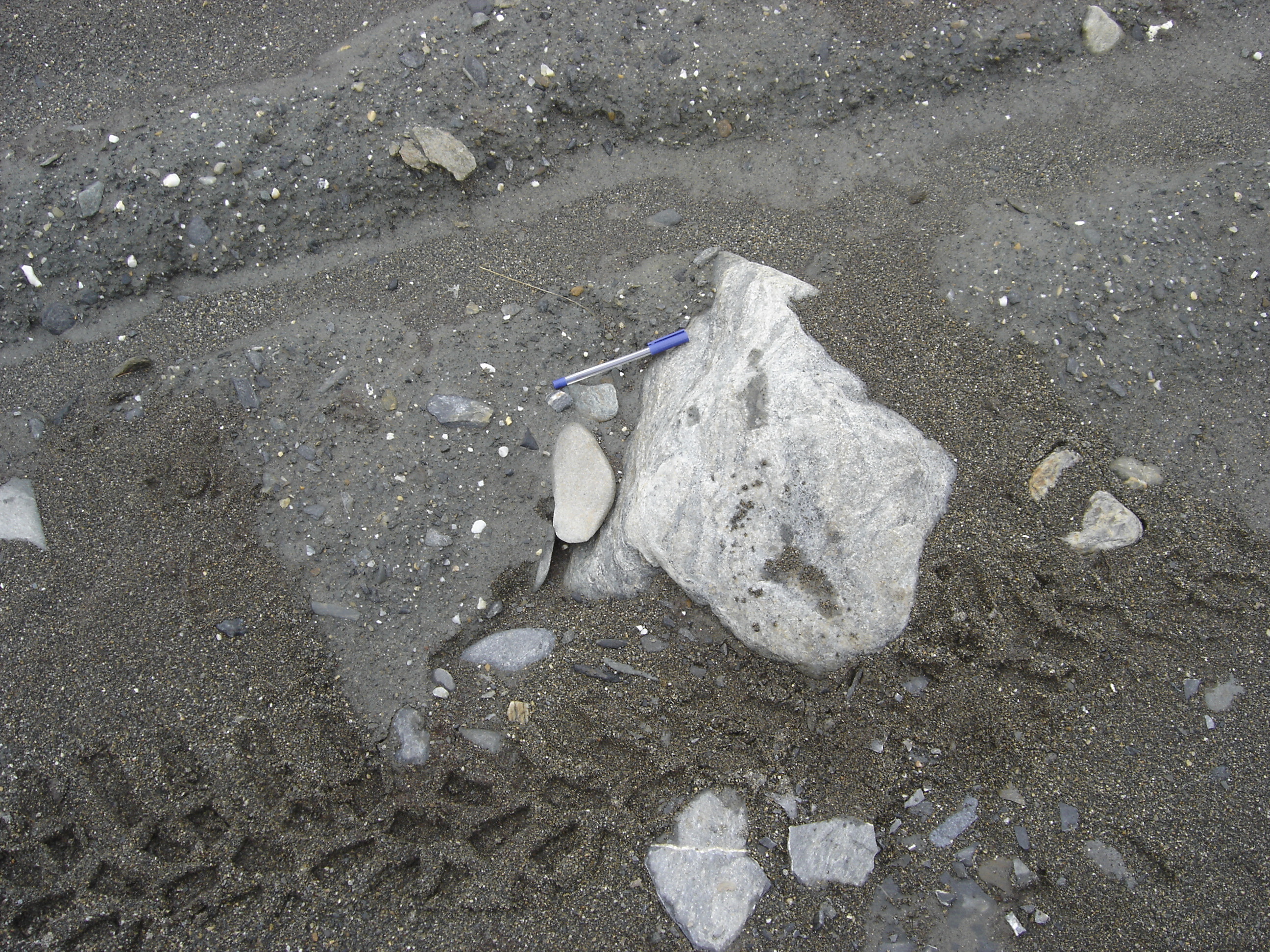
Another glacial erratic on the beach in Nome, Alaska, Summer 2012. Pen for scale.
Having grown up in New England, I’m no stranger to glacial erratics. In fact, back in September I wrote a little about my favorite glacial erratic, which sits on an island in front of my parents’ lakeside cabin in New Hampshire.
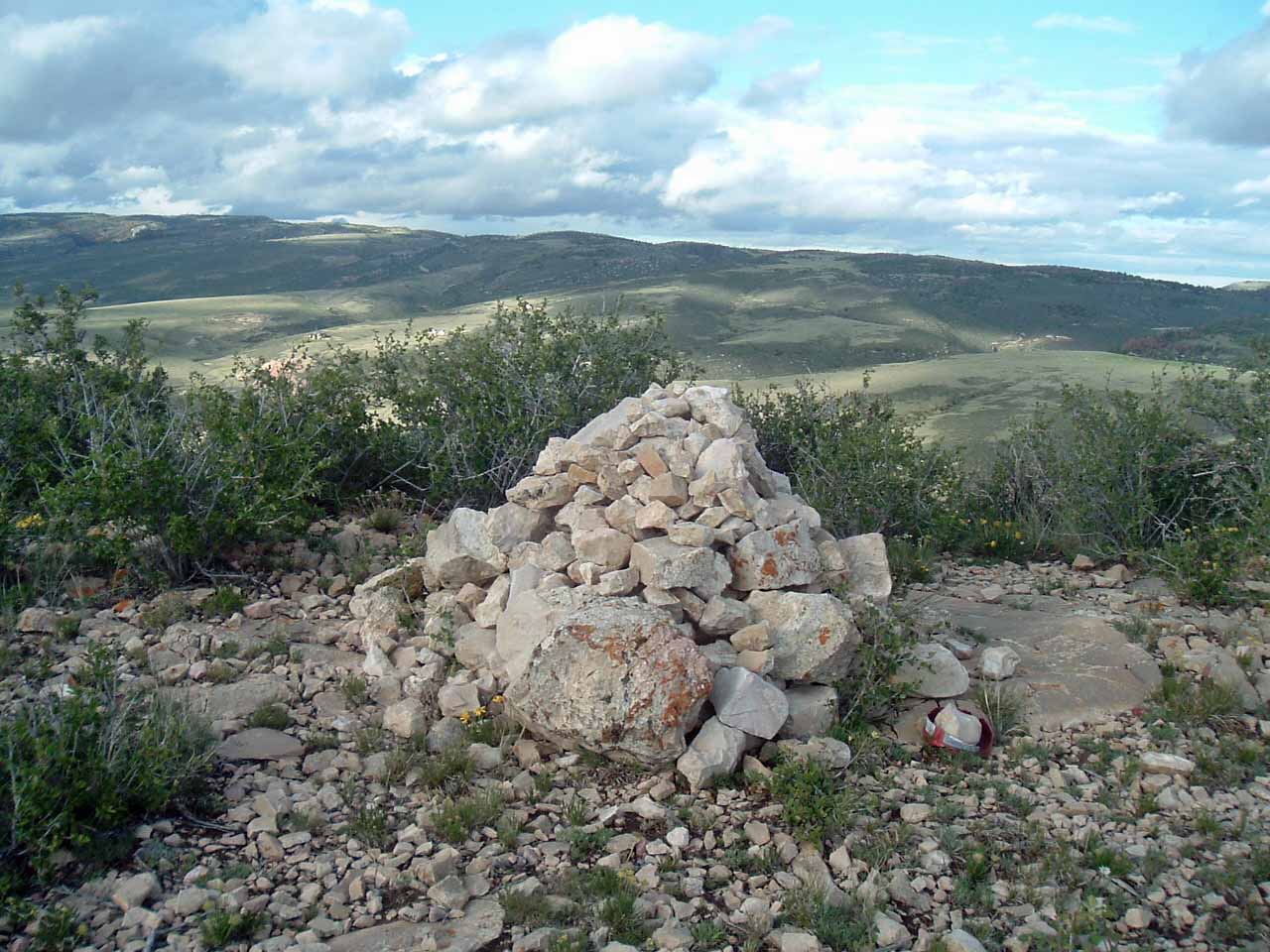
A cairn built out of float rocks in Wyoming, Summer 2011.
def. Float:
Loose pieces of rock that are not connected to an outcrop.
If you’re in the field with a geologist, you’re very likely to hear the word “outcrop” and the phrase “in situ“. When describing, identifying, mapping, and understanding rocks, geologists like to see rocks in context. If rocks were alive, you might say that geologists like to observe rocks in their natural habitats. You might say that geologists like to observe where rocks live and who their neighbors are and how they interact with their neighbors. Of course, rocks aren’t alive, but geologists still find it very useful to observe rocks in situ, a Latin phrase that literally means “in position.” When rock is observed in situ, that means that it is attached to an outcrop, which is a place where bedrock or other “in position” rock is exposed at the Earth’s surface. Sometimes, outcrops are natural– they are places where weathering, erosion, faulting, and other natural processes have exposed hard rock above softer soil, sediment, alluvium, and colluvium. Often, outcrops are manmade. Geologist are found of observing rocks exposed at manmade outcrops such as roadcuts and quarry walls. Observing rocks in situ at outcrops allows geologists to gather much more information about the rocks than can be gleaned from a fragment of rock alone. By observing rocks in context, geologists can gather much information about the structure, stratigraphic position, size, degree of weathering, and many other aspects of a particular body of rock. Observing rocks in situ at an outcrop is particularly important for geological mapping. Only rocks observed at an outcrop can be confidently delineated on a geologic map.
Taking a closer look at some float rocks in Wyoming, Summer 2011.
When geologists encounter pieces of rock that are not found in situ at an outcrop, they refer to these rocks as “floats.” Floats are pieces of rock that have been removed and transported from their original outcrop. Sometimes, float rocks are found very close to outcrops. For example, weathering and erosion may create a pile of float rocks at the bottom of a hill below an outcrop. Often, geologists will first notice float rocks and then will look around– and often find– the outcrop from which the float rocks originated. Of course, geologists can never be 100% sure that a float rock originated from a particular outcrop, but they can be pretty certain if there is a similar rock in outcrop nearby the float. Other times, float rocks are found very far from their original outcrops. Water, ice, and even wind can transport rocks very far from their original outcrops. A well-known type of float rock is a glacial erratic, a rock which has been scraped up and transported by a glacier.
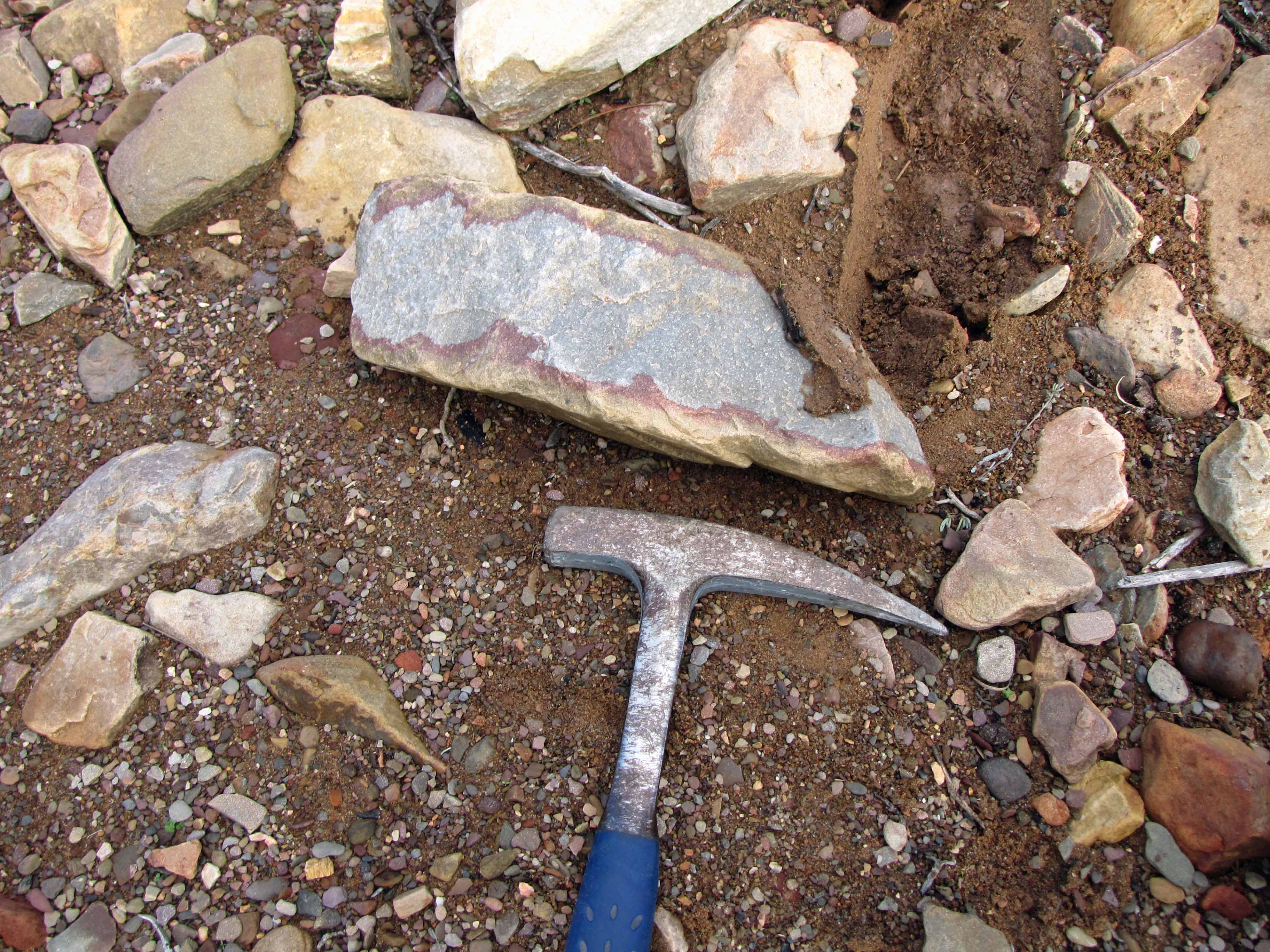
Float rocks downhill of an outcrop in the Cape Fold Belt, South Africa, July 2012.Taking a closer look at float rocks in the Cape Fold Belt, South Africa, July 2012.
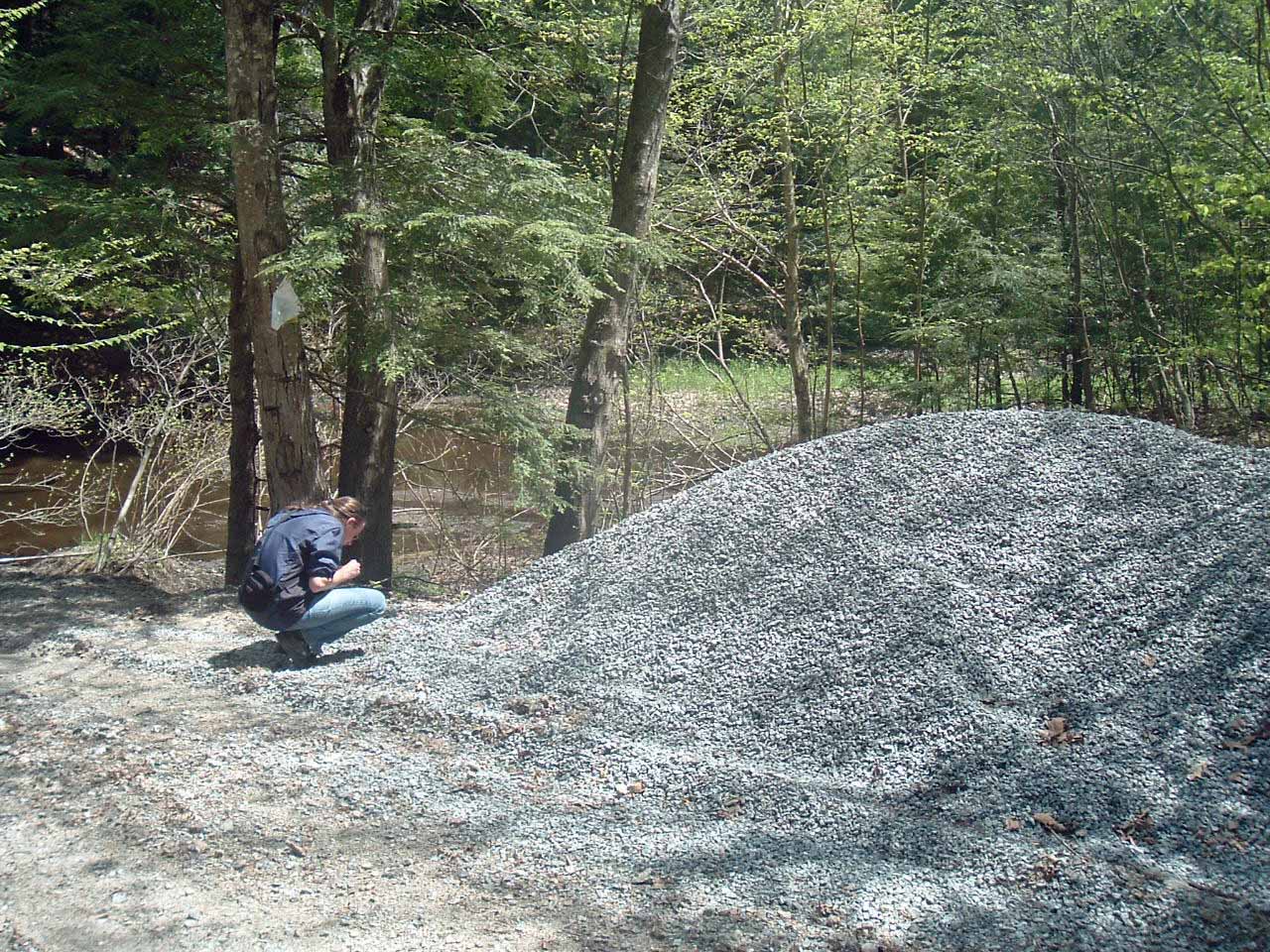
Float rocks can even be transported by anthropogenic activities. Many rocks are quarried and used for buildings, walls, roads, bridges, and other construction projects. Anthropogenic activities can move rocks far from their original outcrops. For example, in rural New Hampshire where I grew up many of the roads are gravel roads. The gravel that covers the roads is quarried and brought in by truck. I like to walk along the gravel roads near my parents’ house in New Hampshire and pick up interesting pieces of gravel. Sometimes, the gravel pieces contain spectacular garnets, micas, and other pretty minerals. I often find myself wondering about the geology of these gravel rocks. I can understand some things about the geology of these gravel float rocks, but to really understand these rocks I’d need to track down the quarry locations and go look at an outcrop or two.
My good friend Dana Hunter examining a pile of gravel float rocks along a gravel road in New Hampshire, May 2012.
Often, geologists are brought float rocks to identify. Curious non-geologists often pick up loose pieces of rock and bring them to geologists for identification. Commonly, people pick up dark-colored rocks and wonder if they are meteorites (most often, they’re not). Whenever I am brought a float rock (or am sent pictures of a float rock), one of the first questions I ask is, “Where did you find the rock?” I also often ask, “Were there any outcrops of the rock nearby? I mean, places where the rock was still attached to the Earth?” Often, the reply to these questions is, “No, I just picked up the rock. I don’t really remember where– somewhere in such and such place.” I do my best to identify float rocks when I can, but the truth is that there is only so much information that a geologist can gain from a float rock. Don’t get me wrong– geologists can still learn a great amount from float rocks. Nevertheless, geologists prefer to observe rocks in their natural habitats.
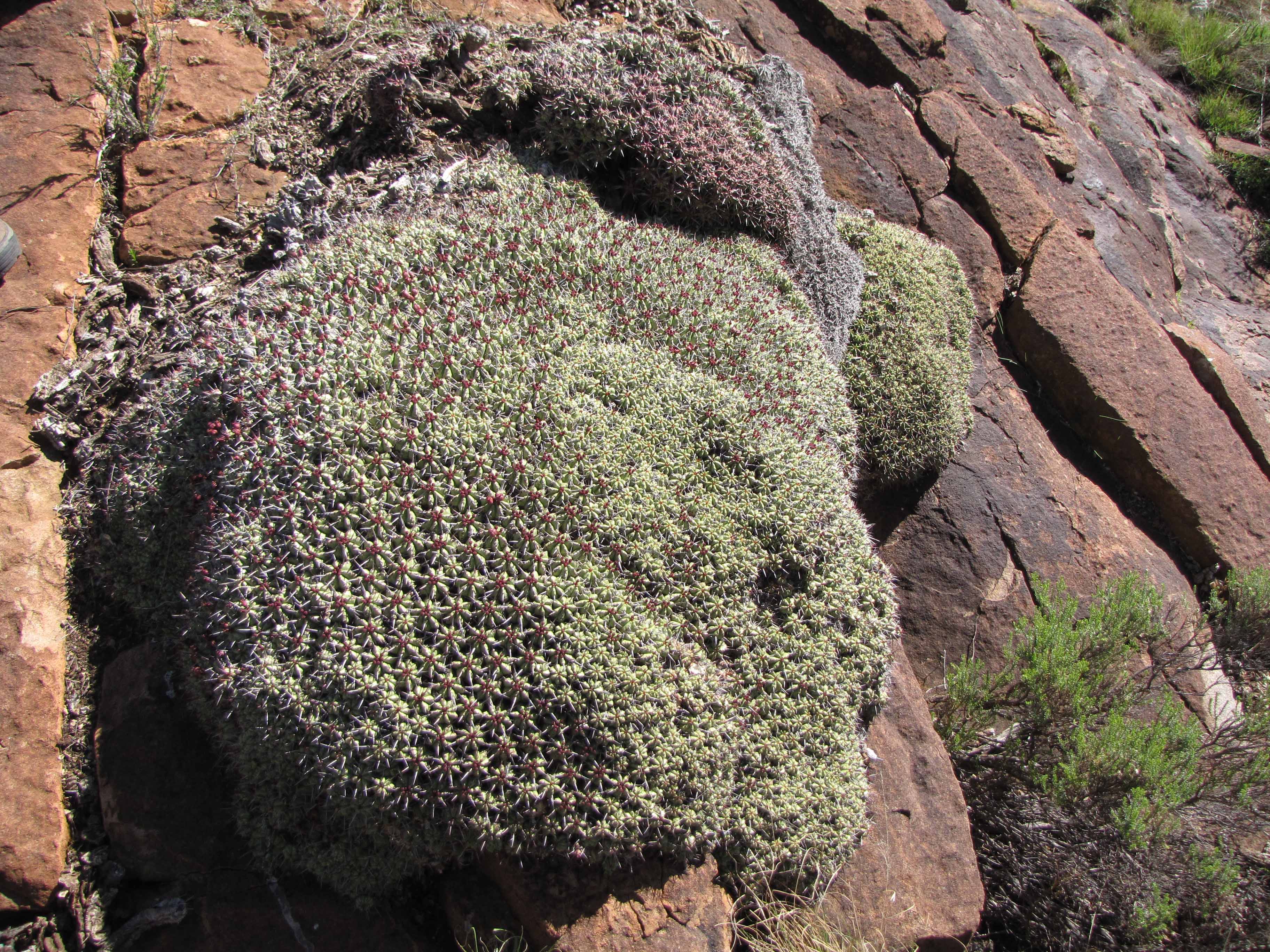
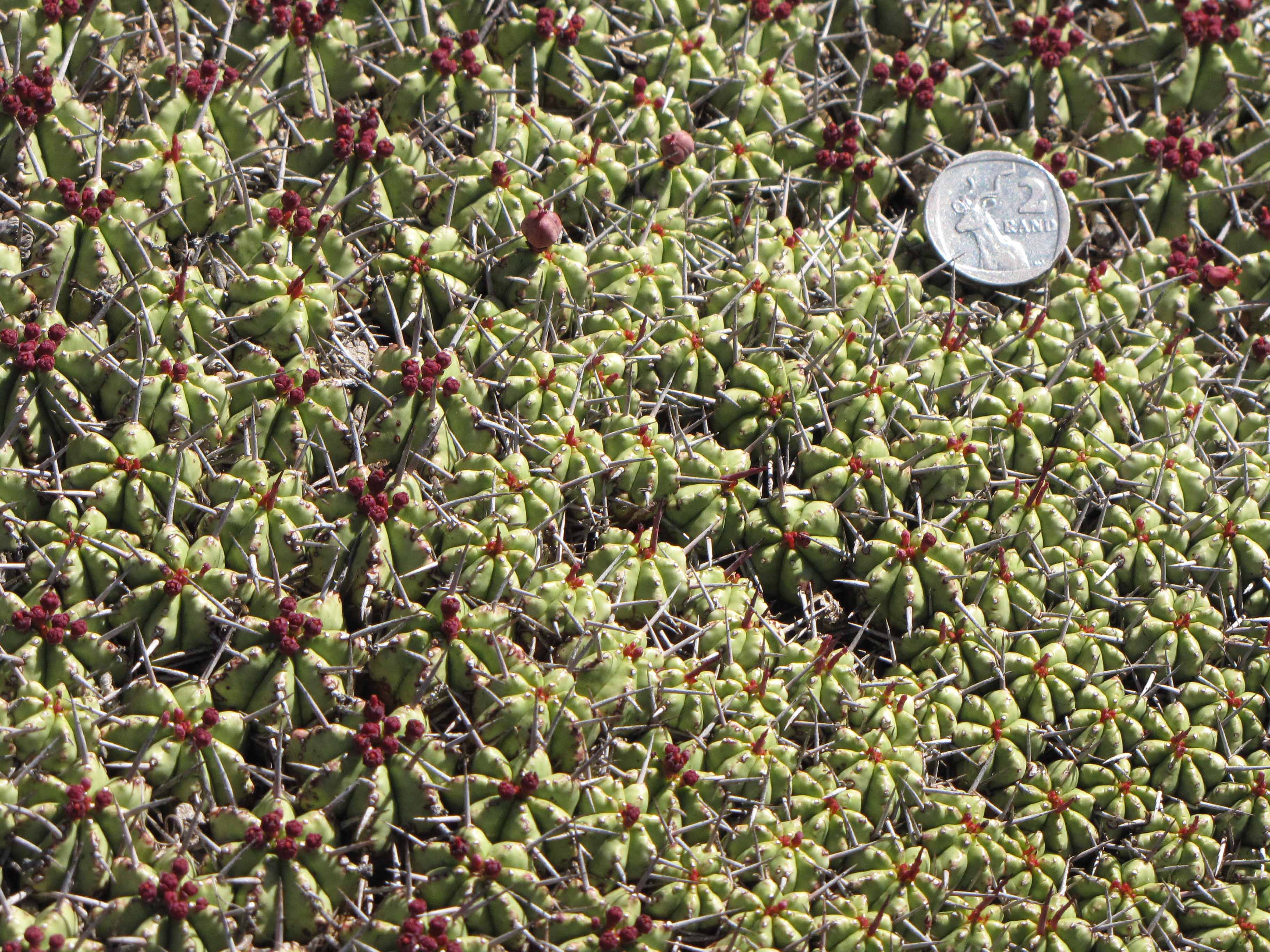
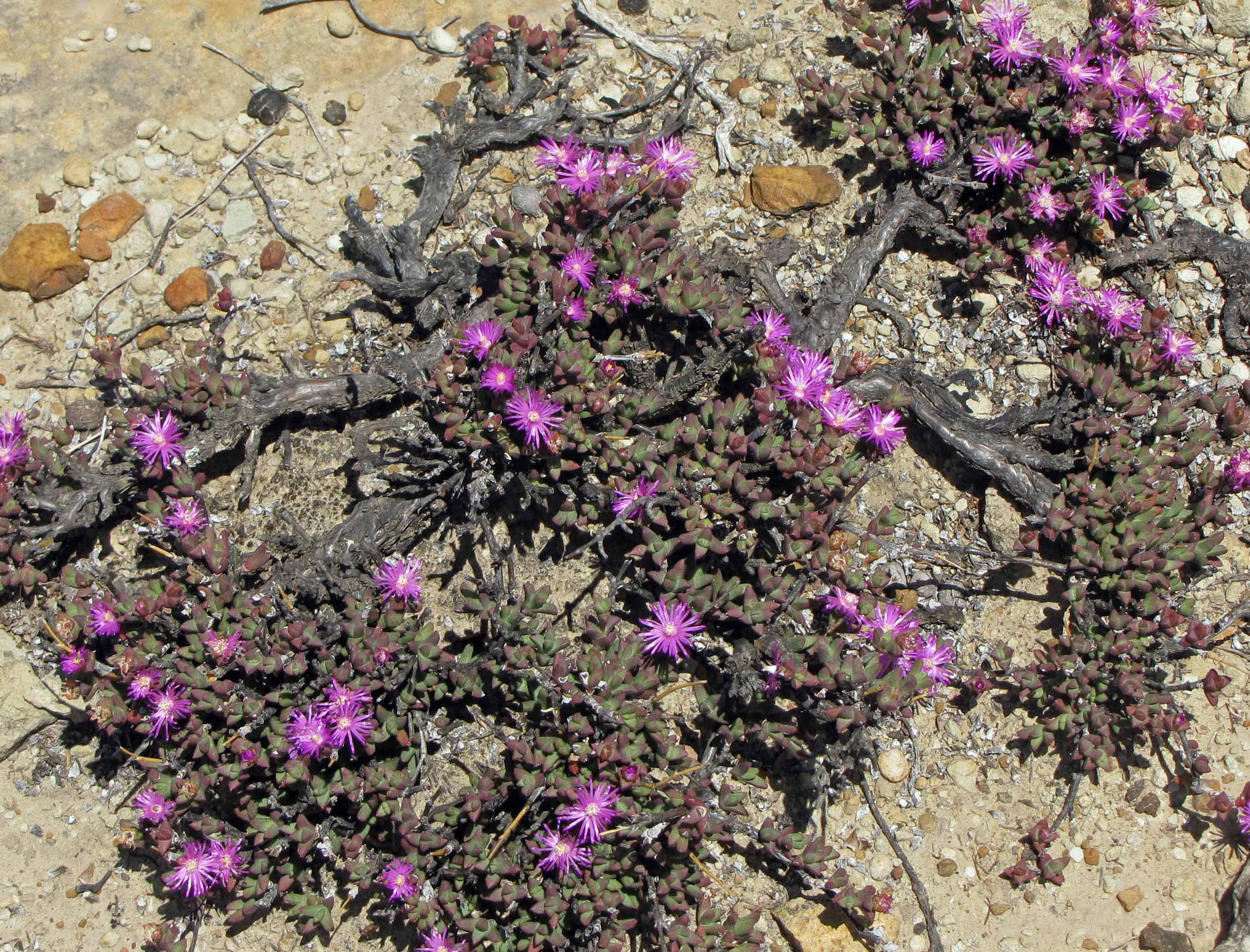
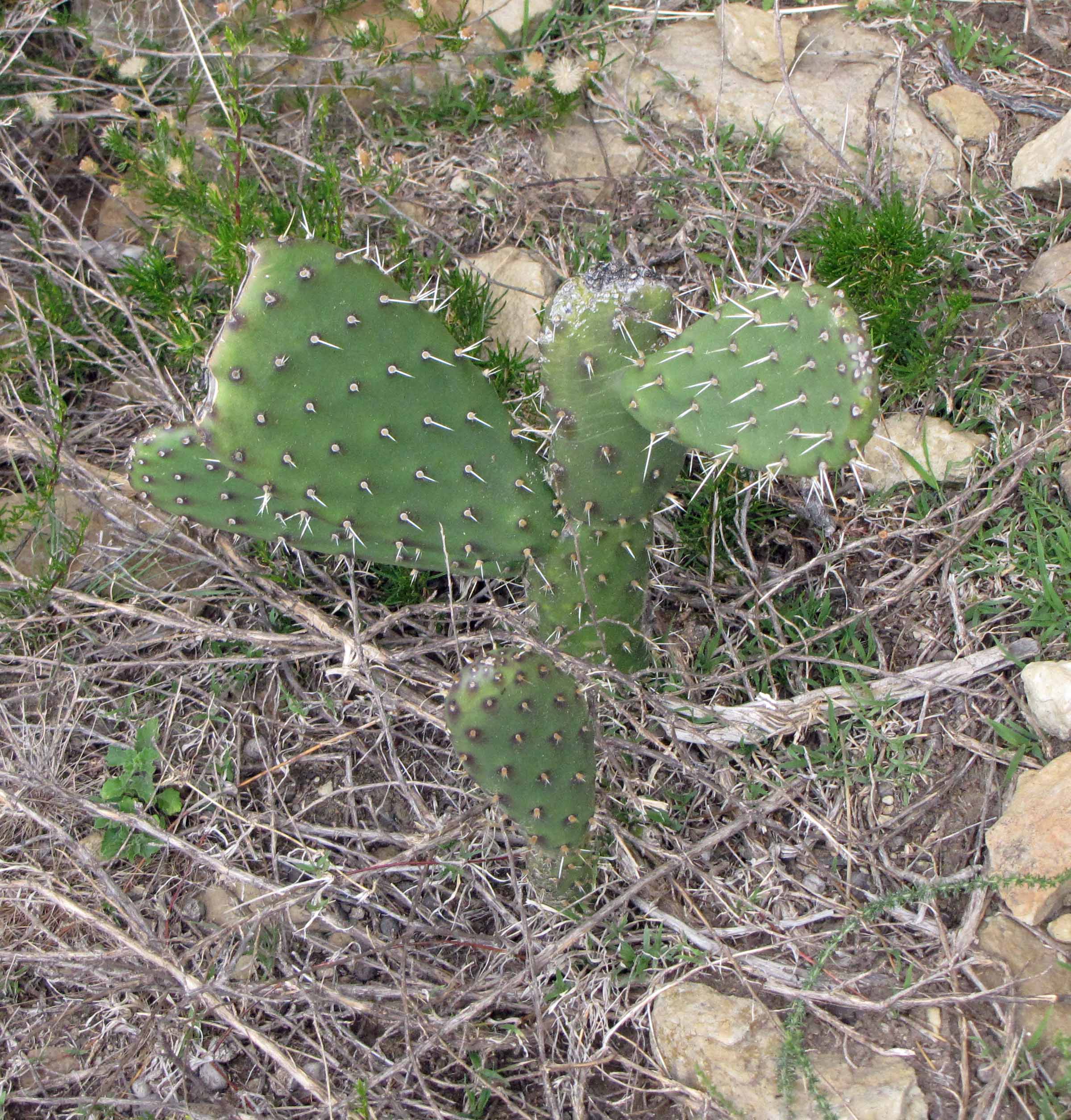
So, I’ve been meaning to put up another LASI V post or two, but I’ve been extremely busy with my day job over the past few weeks. I hope to have another substantive LASI V post up soon, but in the meantime here’s a lovely biological interlude post that contains pictures of some vegetation which I observed during the LASI V field trip to South Africa’s Karoo. As I geologist, I generally dislike vegetation since it covers up all the pretty rocks. Sometimes, though, vegetation is pretty enough that I don’t mind it too much. If any botanists read this post and know about the vegetation in the pictures, please enlighten us geologists!
Observed on Day #1 of the LASI V Field Trip:
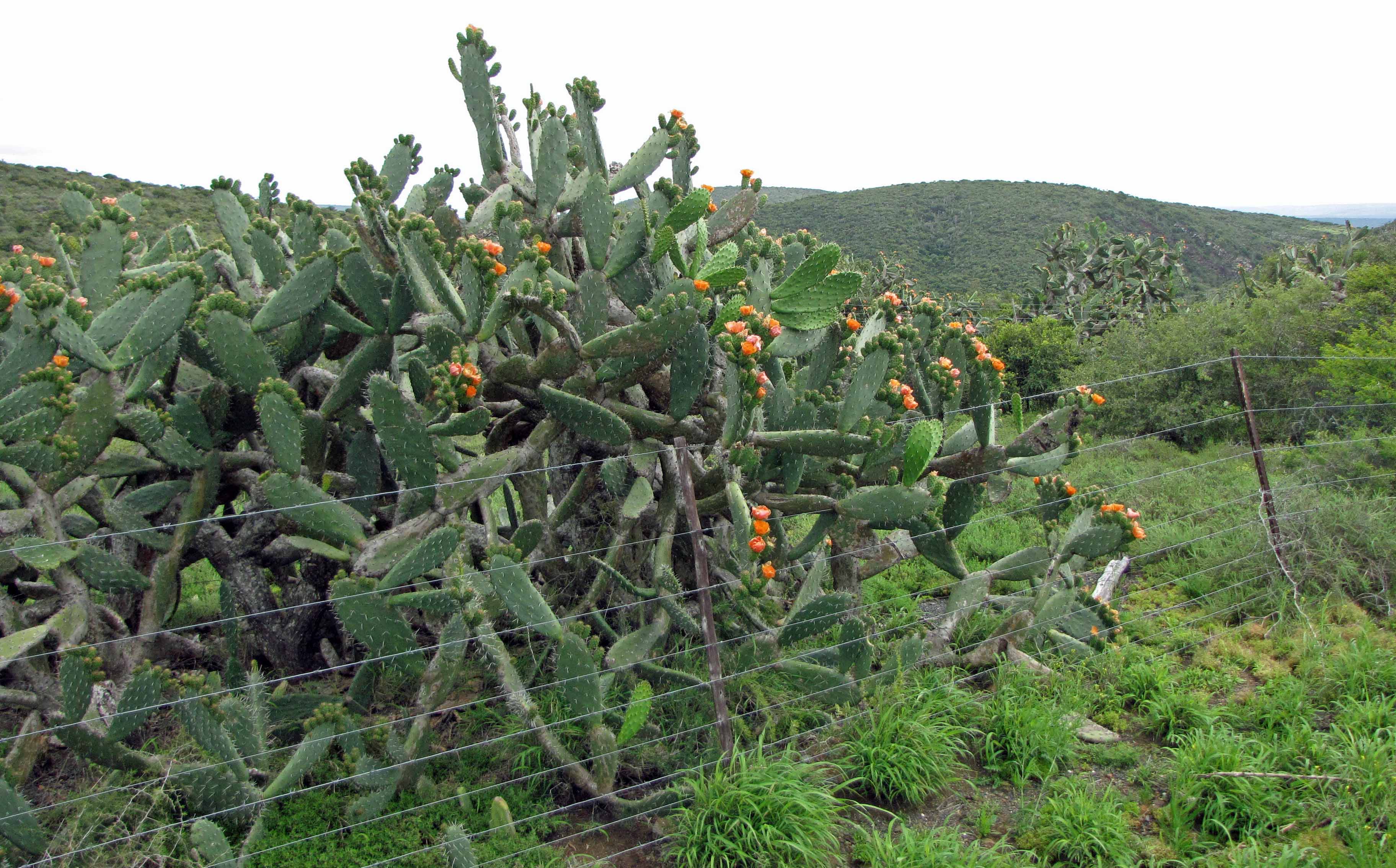
A lovely cactus of some sort.Pretty pink biology thingies.A closer view of one of the pretty pink biology thingies.
Observed on Day #2 of the LASI V Field Trip:
Another cactus... with some sills in the background!Very interesting vegetation growing on a rock.A closer view of the rock-covering vegetation, with a 2 Rand coin for scale (about the size of an American nickel).
Observed on Day #3 of the LASI V Field Trip:
Trees and some grass on a farm in the Karoo.A closer view of the grass.Pretty purple flowers.Yellow flowers... and some rocks in the background. A spiky cactus. Don't want to step on this one!The view from the top of a place called "Witkop 3". I'll be writing all about Witkop 3, so stay tuned!A zoom-in of the view down in the valley below Witkop 3. Flowers and sheep!Little yellow flowers.More little yellow flowers.
Bonita in front of "The Three Rondovels". Picture courtesy of Bonita and Jonathan Hall.
This week I thought I would I share a picture of my beautiful sister-in-law Bonita on her honeymoon in Mpumalanga, South Africa back in September. In the above picture Bonita is standing in front of a geological feature known as “The Three Rondavels”.
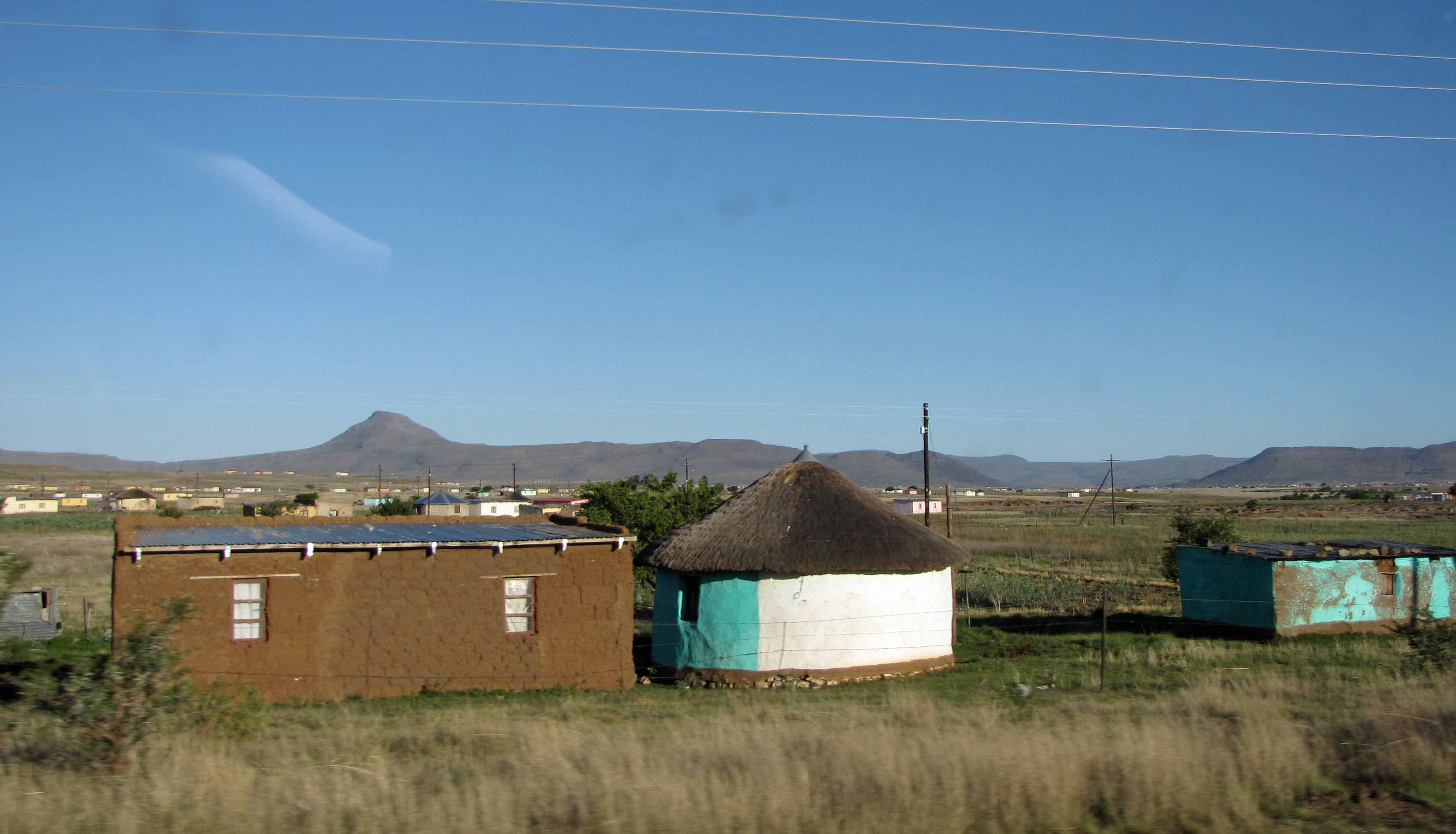
A rondavel is a type of traditional African house which is circular in shape. Here’s a picture of a rondavel in the Karoo region of South Africa:
A rondavel house in the Karoo region of South Africa.
My sister-in-law and her husband saw some other geological wonders on their honeymoon. Be sure to check out the previous posts on Berlin Falls and Bourke’s Luck Potholes. I’ll probably be sharing some more pictures from their honeymoon, too!
Eurypterid fossils on display in the Denver Museum of Science and Nature. Picture courtesy of Tony Martin.
def. Eurypterid:
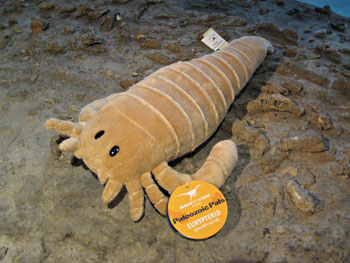
1. A group of extinct arthropods that were fearsome marine predators of the Paleozoic. There were over 200 different species of eurypterid, and they ranged from very small (less than 20 cm) to very large (greater than 8 feet). Because of their long tail, eurypterids are sometimes called “sea scorpions.” Indeed, they are closely related to today’s scorpions and other arachnids. One species of eurypterid, Eurypterus remipes, is the state fossil of New York.
2. A really, really cool fossil that I one day hope to add to my rock collection.
You can find out much more about eurypterids on wikipedia and Google. You can also buy your very own plush eurypterid here.
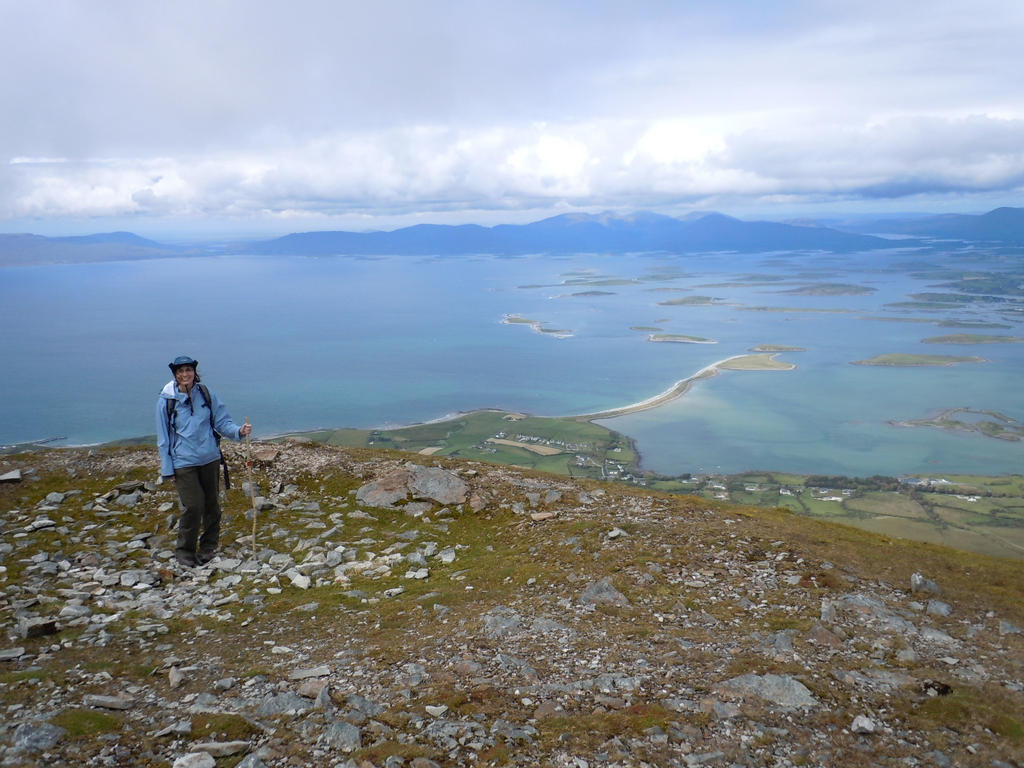
Geologist Liz Johnson in front of drumlins in Clew Bay, Ireland. Picture courtesy of Liz Johnson.
def. Drumlin:
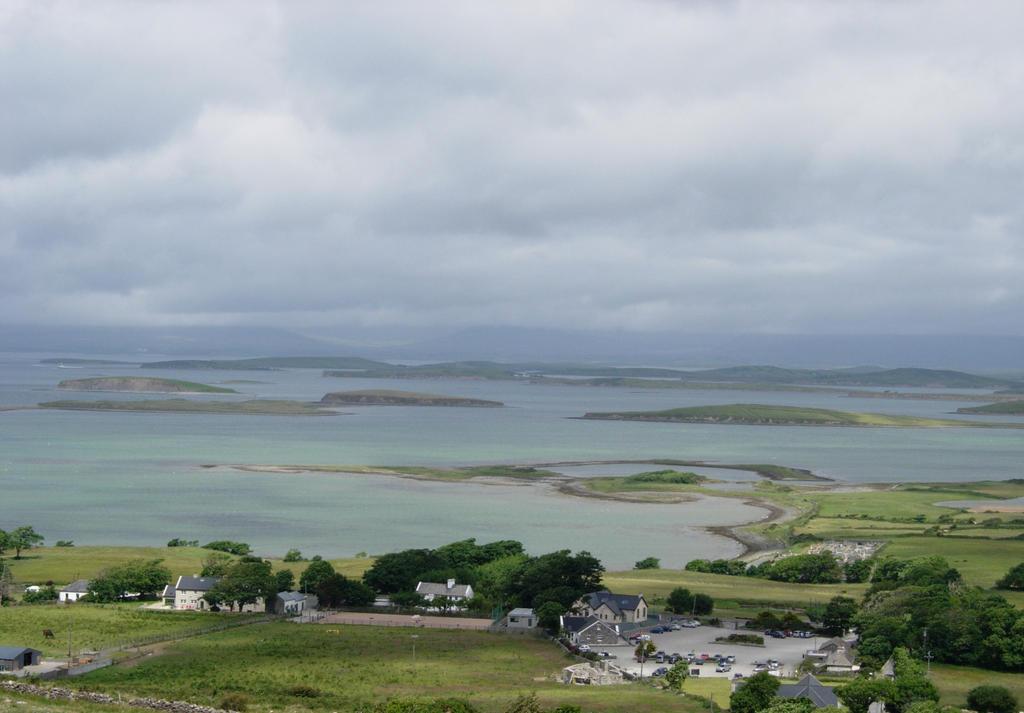
An elongated hill or ridge with a shape resembling an upside-down spoon or a half-buried egg that was formed out of glacial till– and sometimes other material such as gravel and even bedrock– that was shaped by the movement of a glacier. A drumlin carved in bedrock is usually called a “rock drumlin.” Drumlins have a steeper end and a less-steep, more tapered end. The shape of a drumlin gives an indication of ice flow in the glacier or ice sheet that formed it. The steeper end of a drumlin was formed upstream and the more tapered end was formed downstream in the ice flow. Drumlins, like many features carved by glaciers, generally appear in groups. So, it is not uncommon to find fields of drumlins.
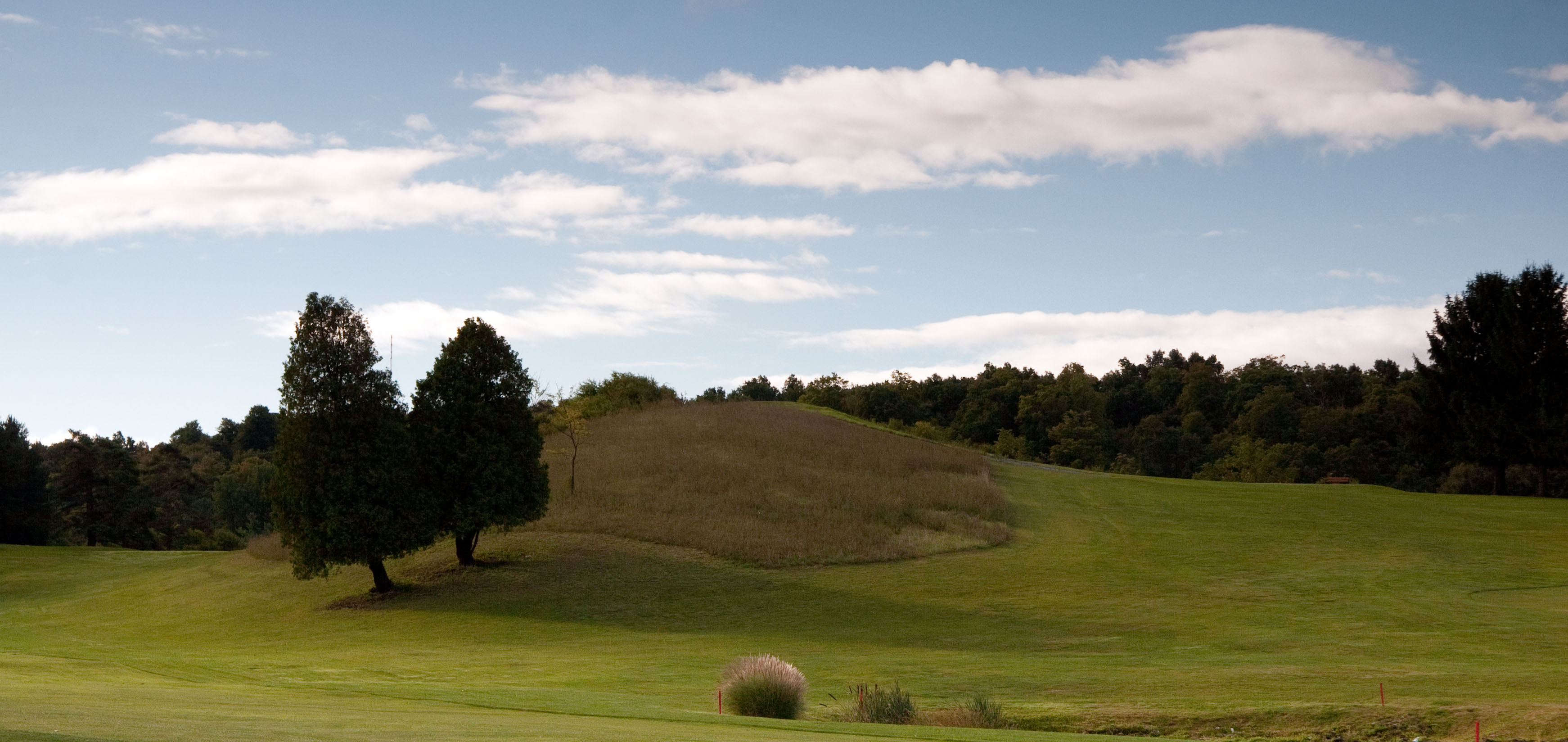
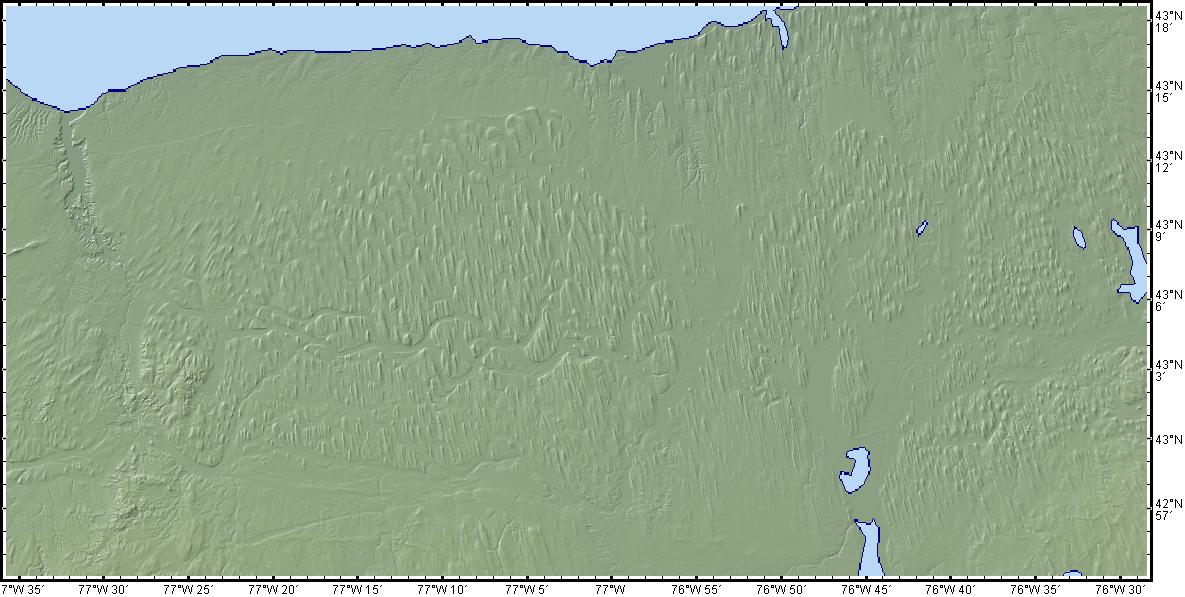
Another view of the drumlins in Clew Bay, Ireland. Picture courtesy of Liz Johnson.A drumlin at Drumlins Golf Course in Syracuse, New York. Picture courtesy of Tannis McCartney.Drumlin field south of Lake Ontario (the large bay in the upper left that is not colored blue is Irondequoit Bay near Rochester, NY). Map made in GeoMapApp and courtesy of Tannis McCartney.
If anyone else has good drumlin pictures, please send them to me, and I’ll add them to this post. My fellow AGU blogger Callan Bentley also has a couple of posts about drumlins:
Happy holidays from Evelyn, Jackie, Zayna, and Samira (who dislikes her Santa hat).
Do you have a geologist (or several) in your family, and you’re not sure what to buy them for Christmas? Good news! The Georneys “What to Buy a Geologist for Christmas” (or Chanukah, Newtonmas, etc.) 2012 holiday gift guide is here.
I also recommend looking through the previous Georneys “What to Buy a Geologist for Christmas” lists:
Gift #1: Journey to the Center of the Earth, the Board Game
Journey to the Center of the Earth, the board game! Picture taken by me.
My husband and I recently purchased this game, and I highly recommend it. You can read more about the game here, and you can buy it on Amazon.com here.
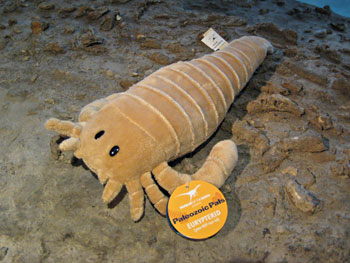
The eurypterid is the state fossil of New York. You can buy a cuddly version here at the Museum of the Earth online store. My fellow AGU blogger Callan Bentley has one of these for his baby boy Baxter.
Cost: $12
Gift #3: Ocean Sediment Pottery from “The Soft Earth”
A bowl made with sediments from the Bermuda Rise. Picture from “The Soft Earth” website.
“The Soft Earth” is a pottery studio located in Woods Hole, MA (nearby Woods Hole Oceanographic Institution). The studio sells beautiful pottery that is made using ocean sediments from all over the world. You can buy the pottery from the studio’s online store here. This pottery isn’t cheap, but it makes for unique and special gifts that any geologist will treasure!
Cost: Variable, most items are $100 to >$300
Gift #4: Mars Rover Curiosity Hot Wheels Toy
Curiosity… the Hot Wheels version! Picture from Amazon.com.
Hot Wheels has come out with a Mars rover Curiosity toy, which you can buy here. This makes a perfect stocking stuffer for your favorite geologist!
Cost: $10
Gift #5: An Earth Scientist’s Periodic Table of the Elements and Their Ions
Earth Scientist’s Periodic Table of the Elements and their Ions. Picture from here: http://www.gly.uga.edu/railsback/PT.html. Click to enlarge.
For the geochemist in your family, I highly recommend a copy of “An Earth Scientist’s Periodic Table of the Elements and Their Ions.” You can purchase a copy of this specialized periodic table at the Geological Society of America’s online bookstore here.
Cost: $10
Gift #6: Geological Tricorder
Star Trek Geological Tricorder! Picture from Amazon.com.
For the Star Trek fan / geologist in the family, the Star Trek Original Series Geological Tricorder is a must and can be bought from Amazon.com here. This is certainly on my Christmas wish list this year! Actually, I wish I had a real tricorder for my geology research… maybe someone will give me a handheld XRF for Christmas?
Cost: $70
Gift #7: Reviews in Mineralogy and Geochemistry
One of the MSA’s wonderful review books. Picture from the MSA website.
The “Reviews in Mineralogy and Geochemistry” book series published by the Mineralogical Society of America is a very useful resource. Ask the geologists in your family which books in the series they’d like, and then order the books here.
Cost: $30-$50
Gift #8: Geology Jewelry from Surly-Ramics
A fossil-filled bracelet. Picture from the Surly-Ramics Etsy Shop.
Surly-Ramics makes all sorts of fun, often science-themed jewelry… including some pieces with geology themes! Browse the Surly-Ramics Etsy Shop here.
Cost: $18-$50
Gift #9: Cummingtonite T-Shirt
A punny t-shirt. Picture from Zazzle.com.
Geologists love puns. Buy this punny t-shirt here … and dare the geologist in your family to wear it!
Cost: $25
Gift #10: Something From the Geokittehs CafePress Shop
A mug from the Geokittehs CafePress shop.
Update: The Geokittehs shop is now closed… perhaps it will re-open one day when we have more time.
Last but not least, I recommend buying an item from the Geokittehs CafePress Shop that my friend and fellow geoblogger Dana Hunter and I run. The goal of the shop is to raise funds so that Dana can afford a plane ticket to come visit me in South Africa. I need her to come visit so that I can take her on some wonderful georneys here! If we raise more money than we need for Dana’s ticket, we’ll donate the excess earnings to needy animal shelters. Dana is planning some exciting new merchandise for the shop, so check for that over the next few weeks. If you’re not familiar with Geokittehs, set aside a few minutes for procrastination and check out the blog here.
Journey to the Center of the Earth... the board game!
Over the past few years, my husband and I have become interested in board games. This is because some of our nerdy friends regularly get together to play board games such as Settlers of Catan, 7 Wonders, Agricola, and Puerto Rico. For awhile, we resisted buying our own games. We just owned a few basic games such as chess, checkers, and backgammon, and we relied on our friends’ collections of fancier, more modern board games. However, since I’m a big Star Trek fan (and my husband watches plenty of Star Trek, too), I just couldn’t resist acquiring this board game a couple of months ago:
Star Trek Catan! How could I resist?
This past weekend, my husband and I went to a board game shop (one of the few such shops here in South Africa) to look for an expansion pack for “Star Trek Catan” to allow for more players. We found out that no such expansion pack exists yet, but we didn’t leave the game shop empty handed. We found a game called “Journey to the Center of the Earth,” which is based on the classic Jules Verne novel. We both adore the “Journey to the Center of the Earth” story, including some of the various movie adaptations. Sure, the story isn’t scientifically plausible, but the story helped inspire us to become geologists, so we have a soft spot for it, bad science and all. The “Journey to the Center of the Earth” board game came out a few years ago, and the copy we found in the shop was somewhat dusty– obviously, it had been sitting on the shelf for awhile. The good news was that the dusty game was on sale for only 1/3 of its original price! We were a little worried that perhaps the game was on sale because it wasn’t very fun, but we decided to purchase it anyway since it was such a bargain.
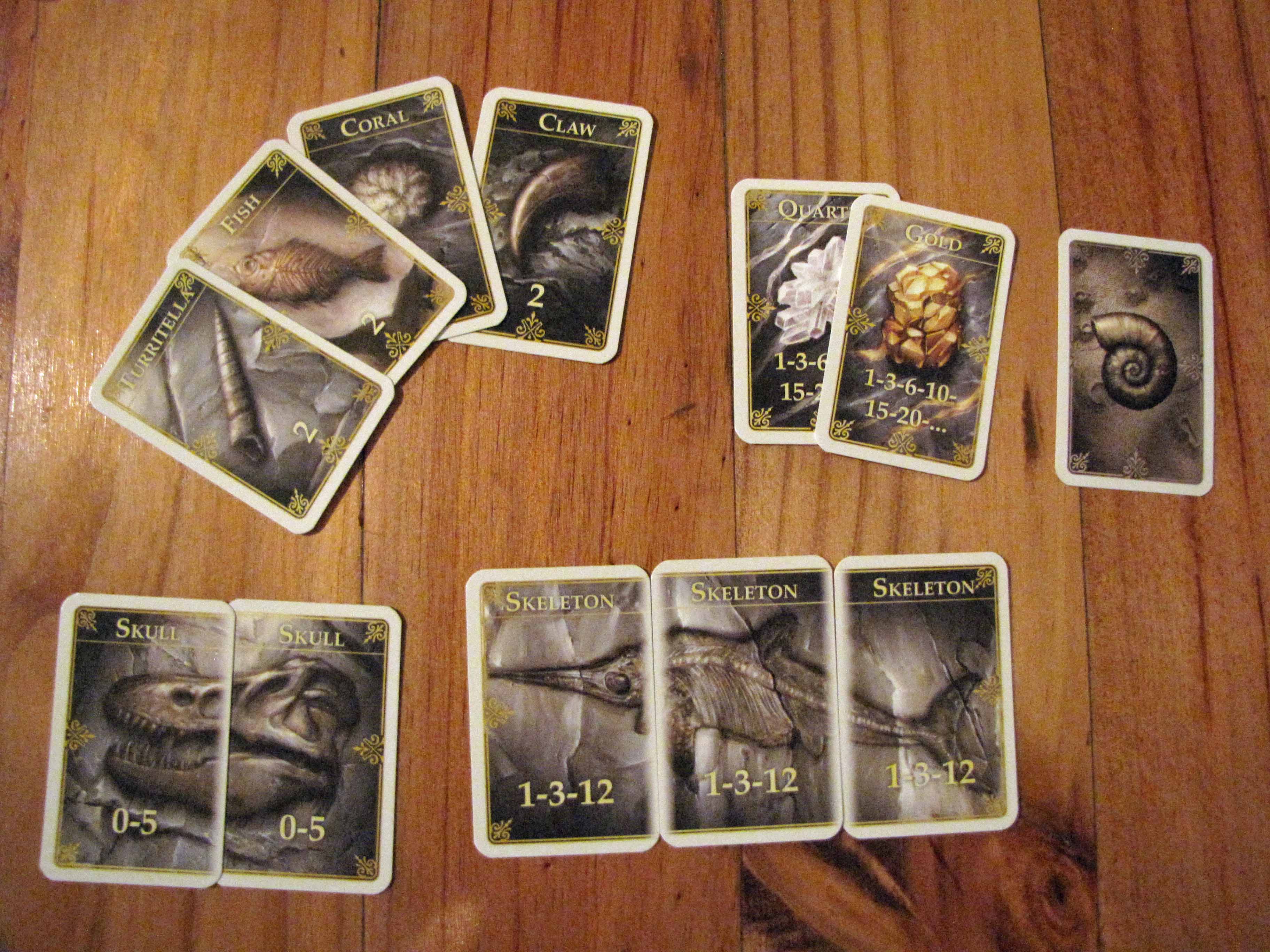
This past Sunday afternoon my husband and I spent a couple of hours playing “Journey to the Center of the Earth”, and we enjoyed it greatly! The game is actually very fun! The game is great for 2-person play and is challenging but not overwhelmingly complicated. The best part about the game is that you win by collecting the most fossils. How could you not like this game? At the end of our first game, my husband and I tied each other with sixty fossil points each. We’ll have to have a rematch soon.
Overall, I highly recommend the game, especially if you are interested in geology. I think I’ll put the game on my forthcoming annual “What to Buy a Geologist for Christmas” list!
Here’s a couple more shots of the game:
The back of the "Journey to the Center of the Earth" board game box, showing the game layout.Fossil cards! You collect these to win the game. Okay, I know that quartz and gold aren't really fossils, but the game is still fun!
Basalt columns at Devil's Postpile, California. Picture courtesy of Cian Dawson.
def. Columnar Jointing:
A structure that forms in rocks (most commonly in basalt) that consists of columns (mostly commonly hexagonal in shape) that are separated by joints or fractures in the rock that formed when the rock contracted, most often during cooling.
Columnar jointing is always a joy to observe in rocks in the field. Stumbling upon perfectly geometric columns of rock can only be described as magical. Even the most austere scientist might find herself (or himself) gaping in awe at the flawless shapes and wondering if men or Gods carved those immaculate columns. However, that majestic columnar jointing can easily be explained with a little bit of physics.
A geologist ponders columnar jointing at Mt. Ruapehu, central North Island, New Zealand. Picture courtesy of Shaun Eaves.
Most commonly, columnar jointing is observed in basalt. Let me try to explain how columnar jointing forms in basalt.The diagram below will be helpful for the explanation.
Basalt is an igneous, volcanic rock. For those of you who need a little Geology 101 refresher, “igneous” means that the rock formed from a melt and “volcanic” means that the melt erupted at the Earth’s surface as lava before it cooled to form the rock. After lava is erupted onto Earth’s surface, it cools. However, lava may take awhile to cool, and as it cools there may be a temperature gradient. Most commonly, the top of the lava flow will be cooler than the bottom of the lava flow.
When the lava cools, it contracts. This is because hot things generally take up more space than cool things. Think about hot steam, for instance. When you open the lid of a simmering pot or a tea kettle, that hot steam wants to escape and expand into the air. Or think about those balloons from your last birthday celebration. Have you ever notice how balloons tend to droop overnight? Partly, that may be because the helium in the balloons is escaping, but it’s also often because the gas inside the balloons cools down and contracts with the cooler nighttime temperatures. Sometimes, if you prop those drooping birthday balloons in the sun the next morning, they’ll pop back up again as the gas inside them warms up and expands.
When objects contract, they often crack or fracture. When contraction occurs at centers which are equally spaced (see the above diagram), then a hexagonal fracture pattern will develop. If the contraction is not evenly spaced, then other geometries of fractures, such as 5-sided or 7-sided fractures, may occur. Contraction may not be equally spaced if, for example, the thickness or composition of the lava flow varies. The fracture pattern that forms at the cooling surface will tend to be propagated down the lava as it cools, forming long, geometric columns. Thus, as lava cools to form basalt, it may crack in a hexagonal (or other) shape and form columns. These columns form in a variety of sizes– some are fairly small, and some are wider and much taller than people!
Hexagonal joints at the top of Devil's Postpile, California. Picture courtesy of Cian Dawson.
The formation of columns is particularly enhanced by water… Where water cooling has played a significant role, often when lava flows are ‘ponded’ in river valleys and are cooled by river water flowing over them, a predominantly two-tiered set of columns can develop, known as entablature and colonnade. The colonnade columns rise straight up from the basal cooling… whereas the ingress of water in the upper parts of the flow sets up a variety of different angles of cooling fronts. This leads to an irregular and sometimes hackly jointing called entablature in the upper parts of the flow.
Here’s a picture of some entablature (upper) and colonnade (lower) columnar jointing structures in basalts in Iceland:
Colonnade and entablature columnar jointing structures in Iceland. Picture courtesy of Dougal Jerram.
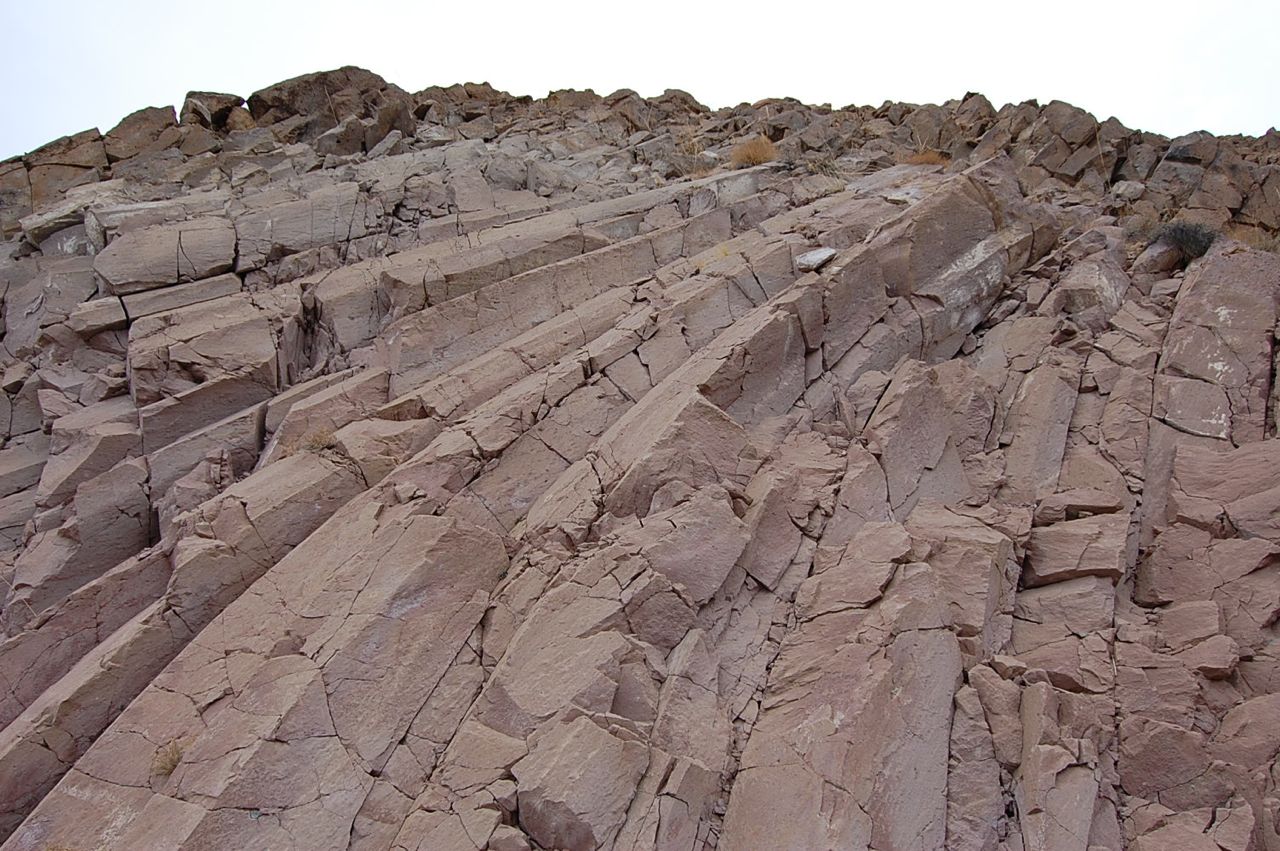
Columnar jointing isn’t restricted to basalts, however. This structure can also form in other types of rocks which undergo cooling and contraction. For example, here is some columnar jointing in the Bishop Tuff of the Long Valley Caldera in California:
Columnar jointing in the Bishop Tuff. Picture courtesy of Erik Klemetti.
I’d like to end this post with a question from me for the geoblogosphere: are there any other conditions (other than cooling of igneous rocks) that lead to the formation of columnar jointing in rocks? Could, perhaps, contraction related to the drying out of a sedimentary rock lead to columnar jointing? I know that mudcracks, for instance, are often hexagonal in shape. Put your brains to work and leave a comment below.
***Thanks to Cian Dawson, Shaun Eaves, Dougal Jerram, and many, many others for providing pictures of columnar jointing. I didn’t have time or space to share all of your pictures in this post, but stay tuned for an upcoming “Columnar Jointing in Pictures” post in which I’ll share a few more pictures. Meanwhile, you can enjoy this amazing collection of columnar jointing Gigapans compiled by Ron Schott.***
























 Georneys