A helicopter flying through the canyon… giving an awe-inspiring sense of scale! Picture courtesy of Ray Hall.
In last week’s “Monday Geology Picture” post I featured the incredible Painted Wall of Black Canyon in Gunnison National Park in Colorado. Last week’s picture was taken by my friend Ray Hall. After my post, fellow geoblogger Ron Schott sent me a link to an impressive GigaPan that he took of Painted Wall. Well, last week I don’t think I quite appreciated the enormous scale of Painted Wall. I stated that the wall is over 2,000 feet tall, but I didn’t appreciate just how tall that really is.
Well, I think that this week’s picture helps to put the 2,000 foot wall into perspective. Ray sent me this follow-up shot that he took of a helicopter flying through Black Canyon near Painted Wall. Look how small the helicopter is compared with the wall! That’s one very tall cliff!
Geologists love putting things in pictures for scale. Normally, geologists use rock hammers or pencils or rulers or– at the largest– people for scale. It’s rare that they get to use a helicopter for scale, but a helicopter is a perfect scale marker for the impressively large Painted Wall.
Thanks again for sharing another picture of the canyon, Ray!
The stunning– and very ancient– rocks of Painted Wall in Black Canyon, Gunnison National Park, Colorado. Picture courtesy of Ray Hall.
This week’s Monday Geology Picture shows the absolutely amazing “Painted Wall” of Black Canyon, which is located in Gunnison National Park in Colorado. The picture is courtesy of my friend Ray Hall. I’ve never been to Gunnison National Park, but the park is now high on my list of places I want to visit! The impressive wall consists of very old Precambriangneiss and schist rock that is cut by lighter colored pegmatite veins, which are also Precambrian in age. The wall is over 2,000 feet tall and is made of some very impressive, very old, and very beautiful rock.
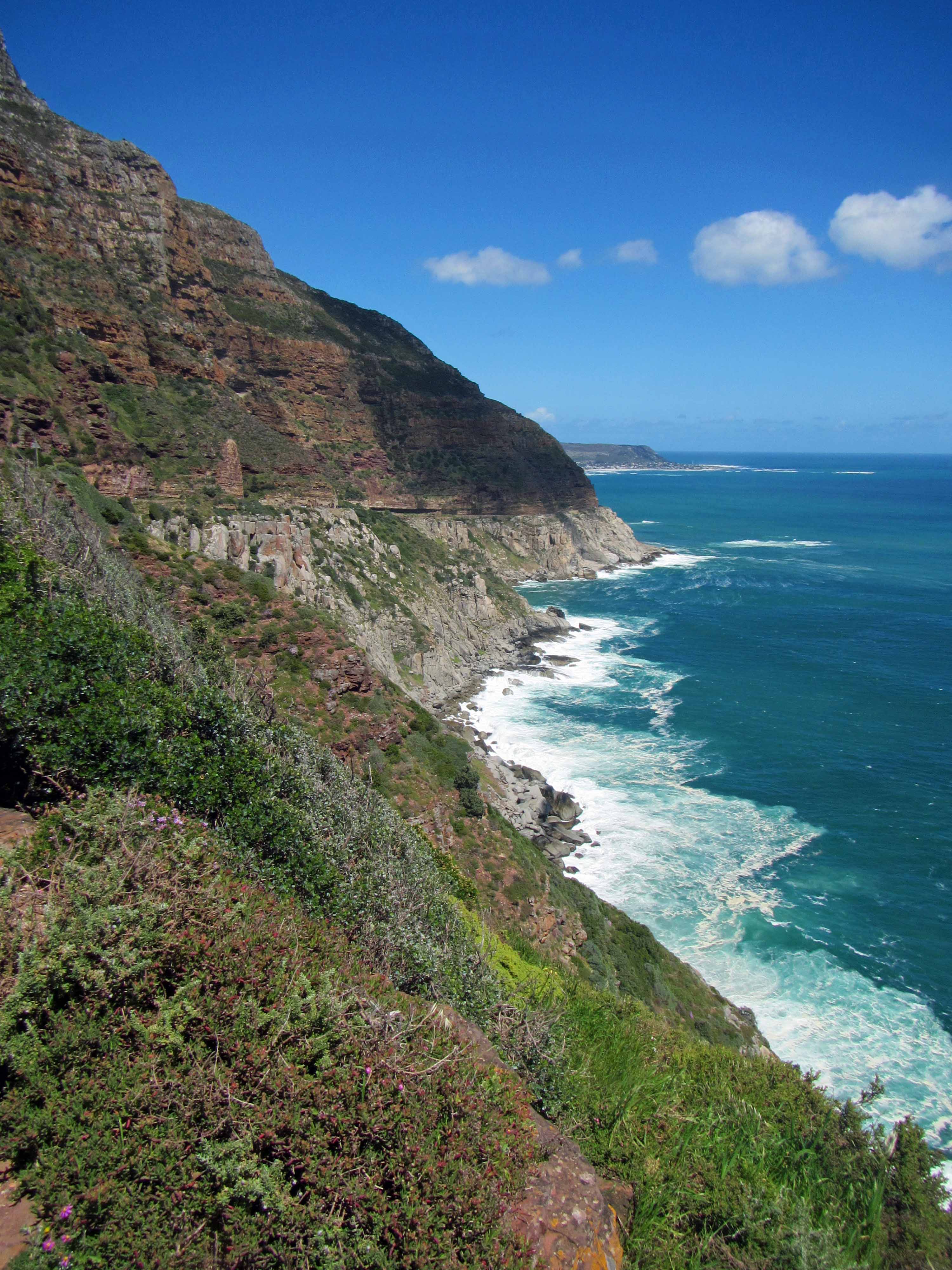
This week I thought I’d share a picture of my favorite nonconformity: the nonconformity between the ~550 million year old Cape Granite and the ~450 million year old Table Mountain Sandstone Group here in the Cape Town area. This famous viewpoint of this famous nonconformity is located along the Chapman’s Peak Drive. Can you spot the nonconformity? Once you’ve had a look, check out this previous post in which I explain the nonconformity in detail.
Rock of Raouché, Beirut, Lebanon. Picture courtesy of Diana Abouali.
This week’s Monday Geology Picture features the Rock of Raouché (aka Pigeon’s Rock) in the Raouché area of Beirut, Lebanon. The rock features some lovely sedimentary bedding and, when viewed from another angle, a beautiful arch. This week’s picture is courtesy of Diana Abouali, who was one of my Arabic professors at Dartmouth College. Thanks very much for sharing this lovely picture, Diana!
Today I’ll be discussing the fourth and final day of my recent backpacking trip along the Tsitsikamma Trail with my husband Jackie and five of our friends. I’ve already blogged about Day #1, Day #2, and Day #3. On Day #4 we hiked 11.5 km from the Kerbous Hut to the Lottering Plantation, where we had parked one of our cars.
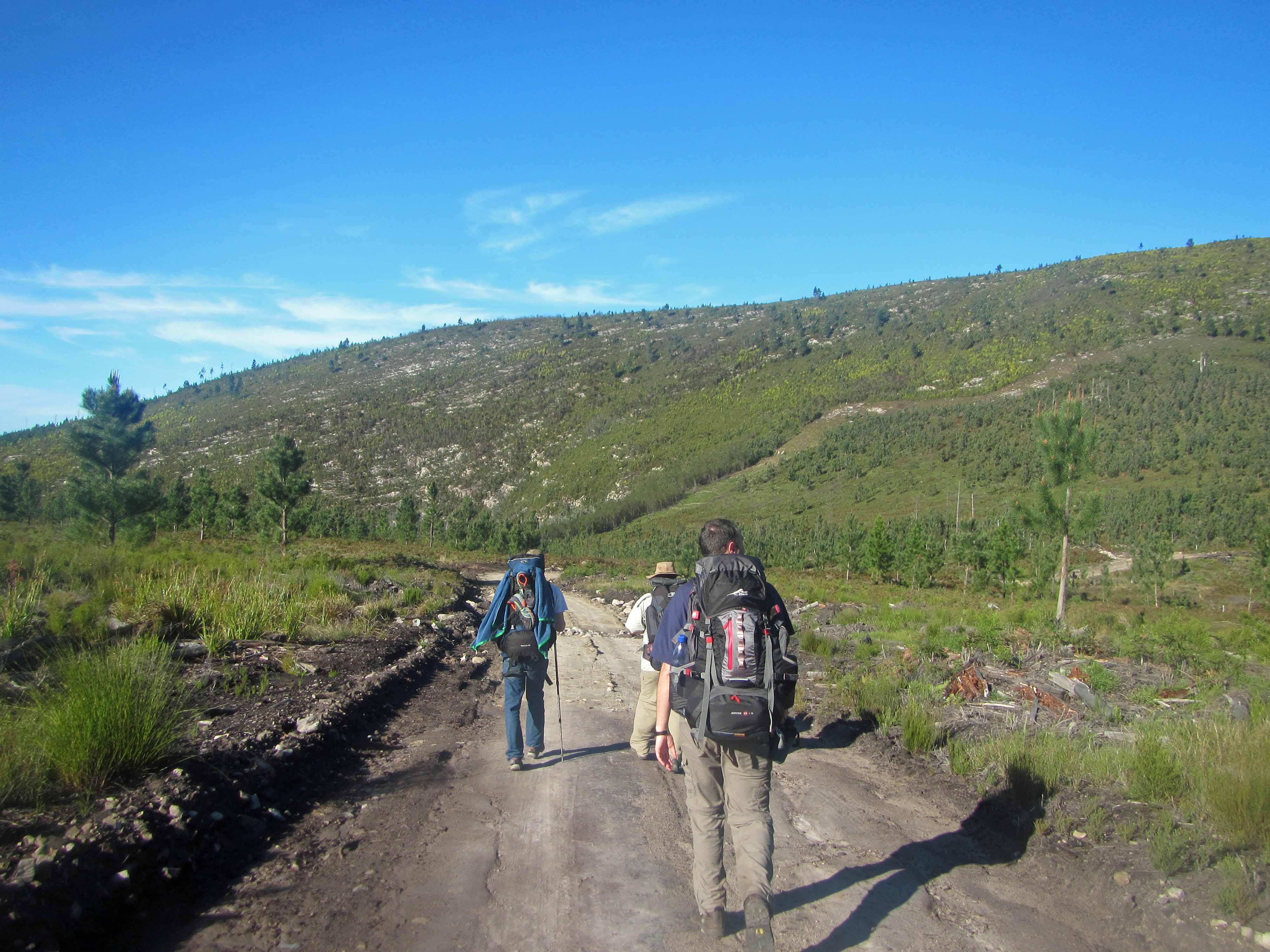
Hiking the full Tsitsikamma Trail actually takes six days. So, we hiked to the Lottering Plantation along a dirt road “escape route” that is used by forest rangers to take care of the trees on the plantation and also to service the Kerbous Hut and check on the hikers staying there. The road may also be used during rainstorms, when rivers and streams may flood and hikers may need to cut their backpacking trip short. However, we cut our trip short on purpose as we had only planned to hike for four days.
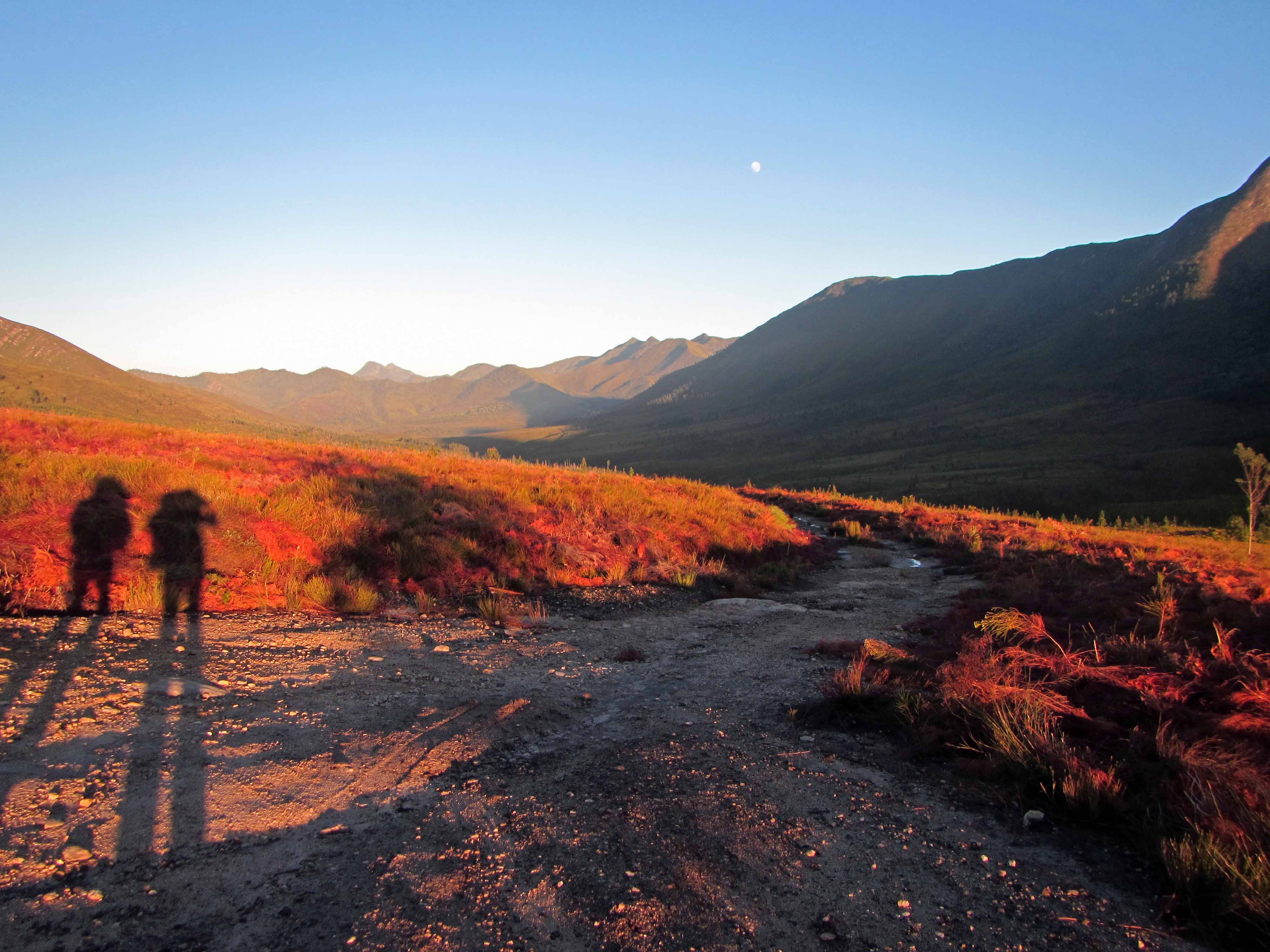
Since we had a long drive back to Cape Town (and many of us had to work the next day!), we woke up very early on our last day and started hiking at dawn. We actually hiked all 11.5 km before 10 am! We made much better time than we expected, probably because most of the hike was along a wide dirt road. Also, after we survived a couple of hours of uphill climbing, the rest of the hike was mostly downhill.
The plantation staff looked slightly surprised to see us arrive so early. After a few minutes of picture taking and relaxing, we ran shuttle to fetch the second car and then started the long seven hour drive back to Cape Town.
Here are a few pictures from our hike out to the Lottering Plantation:
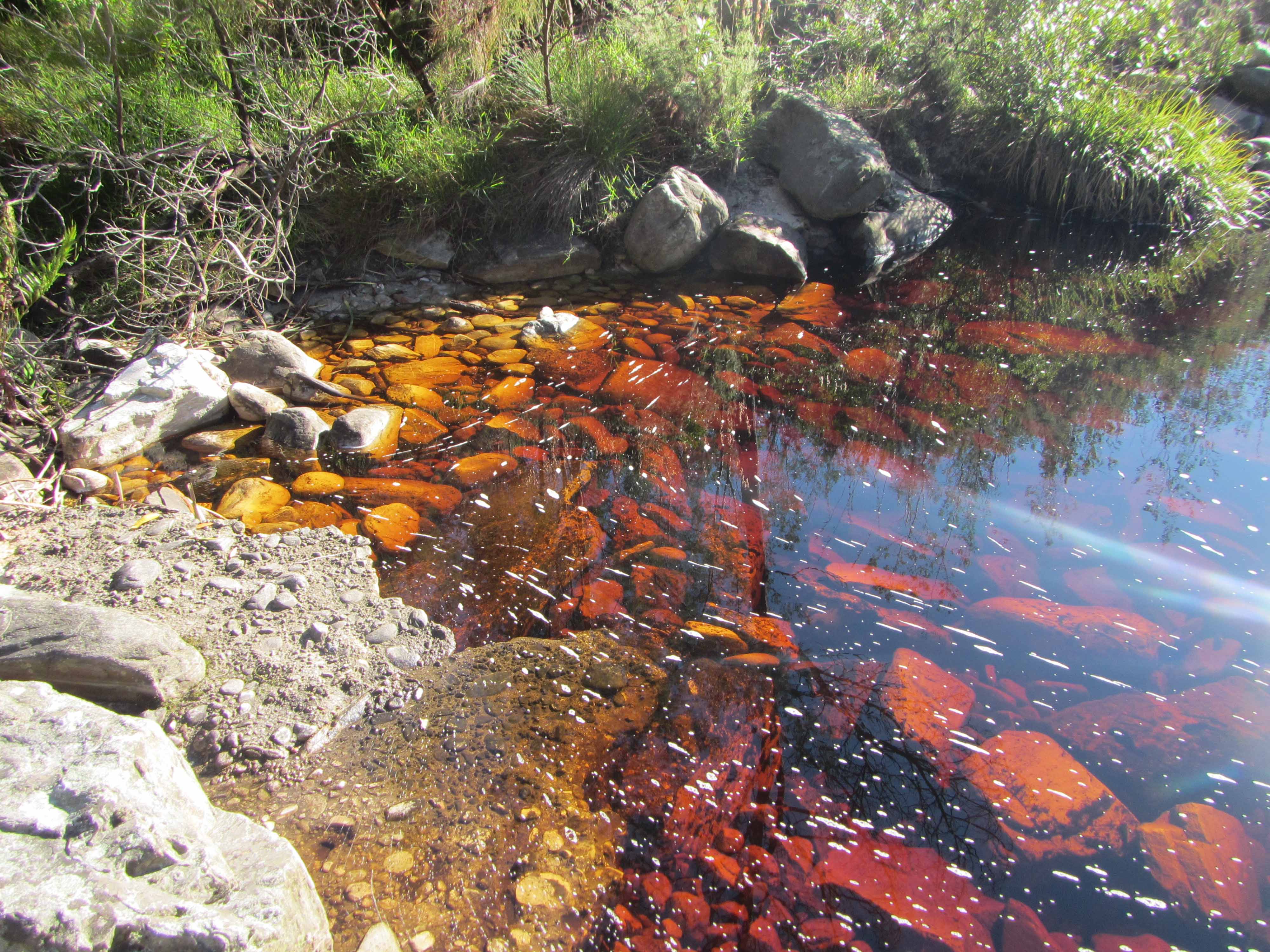
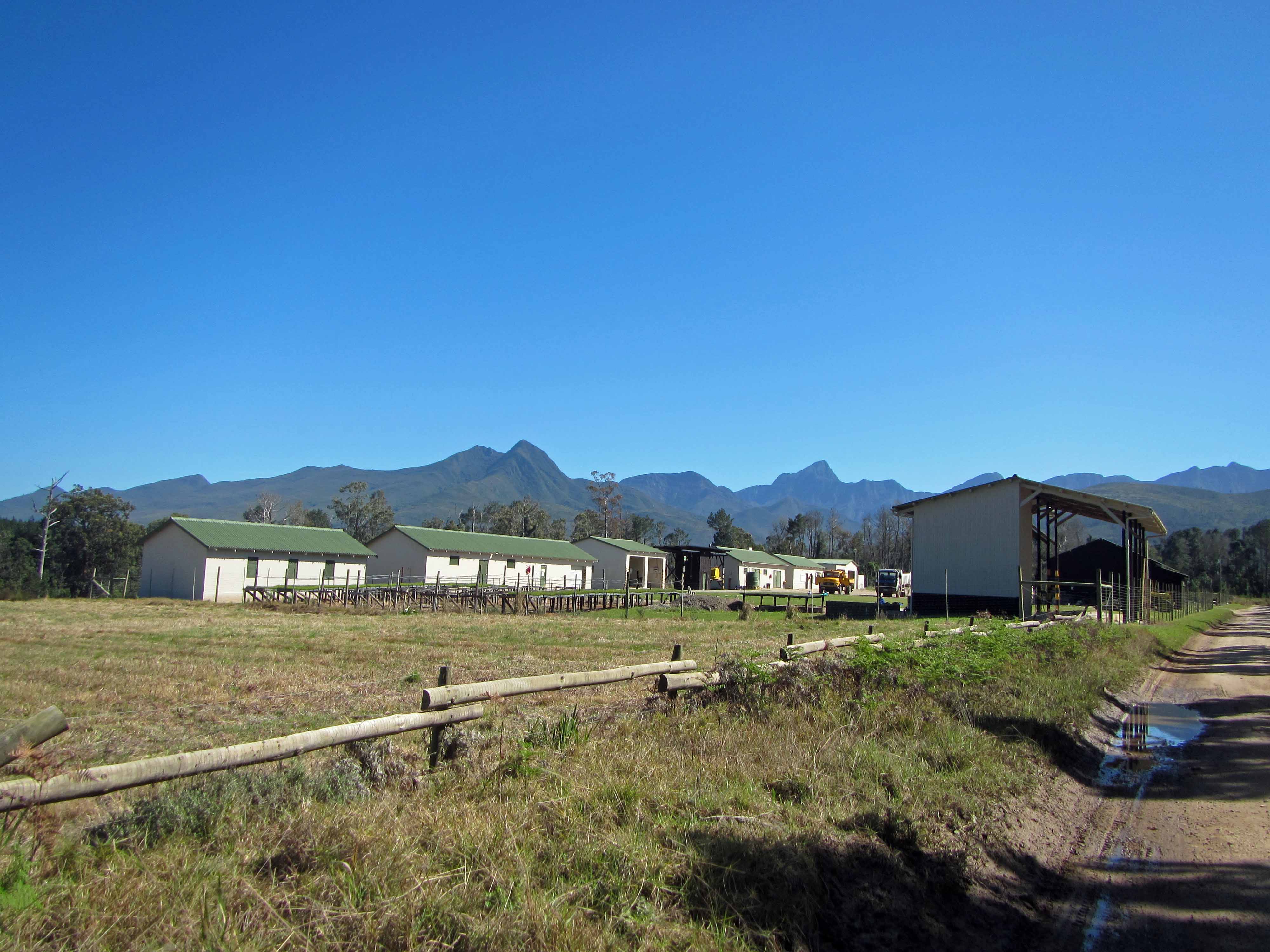
A stunning early morning view, looking back on the Tsitsikamma Mountains.A pretty black bird.Pine trees and uplifted sandstone.Making our way along the dirt road.Another coca-cola colored stream.Tall pine trees along the dirt road.The plantation buildings! We arrived a little before 10 am.A closer look at some of the plantation buildings.
Here’s the group at Lottering Plantation at the end of the hike:
Tired but happy hikers after four days on the Tsitsikamma Trail.
I really enjoyed this backpacking trip. The trail is well maintained and organised and winds its way amongst some impressive geology and vegetation.
The huts where we stayed were very comfortable, and it was great that we didn’t have to carry tents and heavy cooking equipment.
If you find yourself in South Africa, I highly recommend spending a few days hiking along the Tsitsikamma Trail! If you’re not up for all six days, you can arrange a two or three or four day hike or even a single day hike.
Majestic Blackstone Glacier. Picture courtesy of Jackie Gauntlett.
This week’s picture was taken by my husband Jackie in Prince William Sound, Alaska, back in early September. Jackie and I spent about two months working in Alaska earlier this year. After our work, I went to visit my family in New Hampshire for a few days while Jackie stayed behind with a colleague to pack up gear and such. Just before flying home to South Africa, Jackie and the colleague went on a glacier viewing cruise in Prince William Sound. They saw some impressive views of glaciers and highly recommend the cruise. I’m hoping to go on the cruise another year. Jackie tells me that the boat in the above picture above is bigger than it seems– Blackstone Glacier is quite a big glacier!
A week ago I asked you to go vote for a proposed design for a LEGO Deep Sea Submersible Alvin. At the time, LEGO Alvin had 275 votes. I said that I’d give you an update on the voting a week later. At the moment, LEGO Alvin has 356 votes. So, over the last week LEGO Alvin has gained an additional 81 votes. That’s not bad, but I think we can do better! Well, we need to do better since a design needs 10,000 votes before LEGO will even take a look at it. Do you think we can convince 10,000 people to vote for LEGO Alvin? I think we can!
So, I’m going to extend the LEGO Alvin challenge for another two weeks. Please, please go vote for LEGO Alvin here. Please advertise the LEGO Alvin voting on Facebook, G+, Twitter, on your blog, etc. Please also encourage your friends, family, colleagues, and everyone else to go vote!
To encourage voting, I’ll offer a small prize. If you voted for LEGO Alvin, leave a comment below (honor system!). In two weeks I’ll select a winner by drawing names randomly out of a hat. I will send a rock prize to the winner. More specifically, I will send the winner a beautiful hand sample of Dwyka tillite which I collected in South Africa’s Karoo region.
You know you want this gorgeous sample of Dwyka tillite.
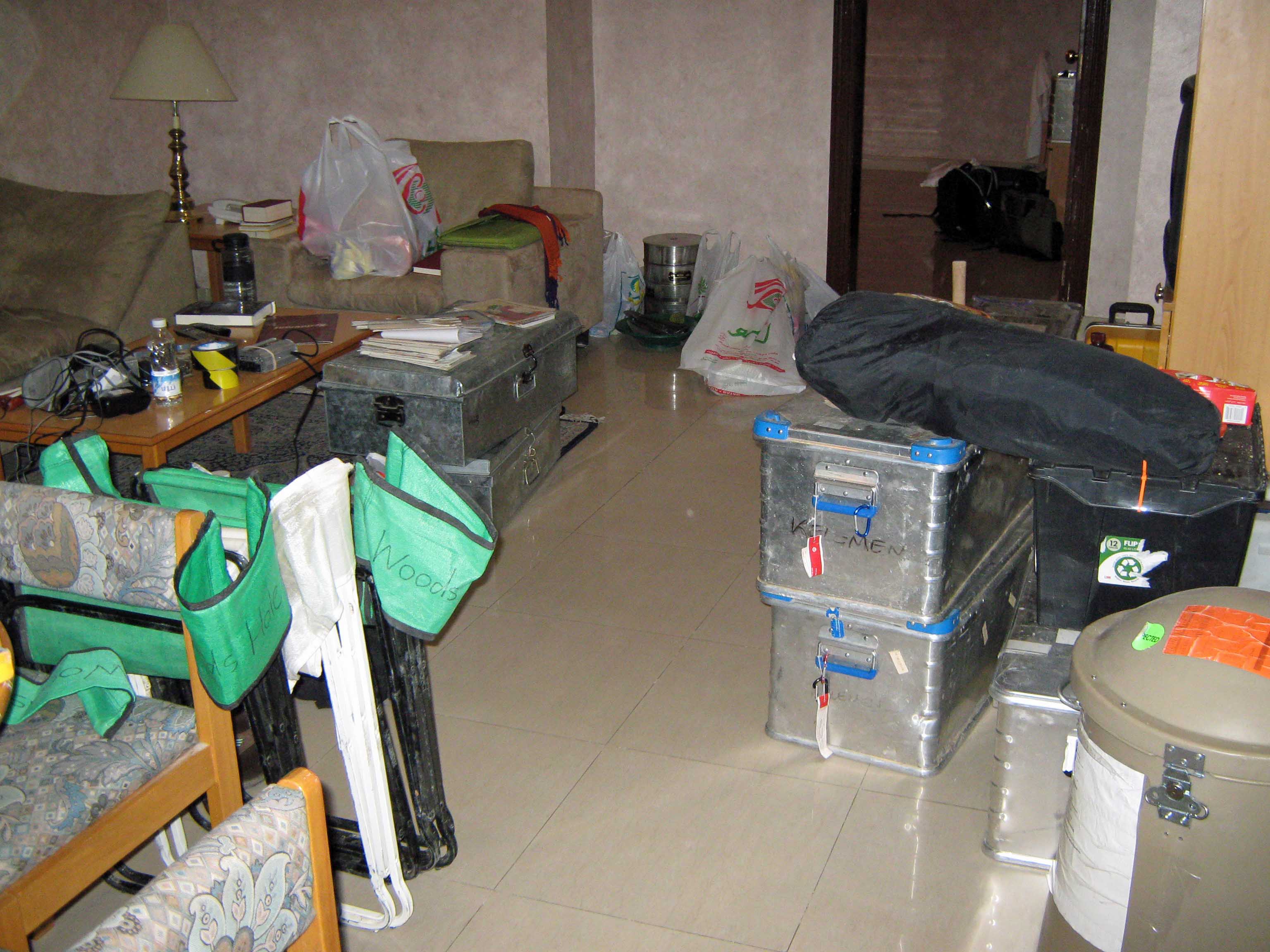
Boxes and boxes of equipment, supplies, and samples in a hotel room in Muscat, Sultanate of Oman, 2009.
Have you ever stayed in a hotel room and packed it to the brim with camping gear and scientific equipment and samples? Then chances are you’re a field geologist!
I took the above picture at a hotel in Muscat, Sultanate of Oman after 4 weeks of fieldwork in the Samail Ophiolite back in 2009. Our hotel room was packed full of camping gear, boxes of rocks and water samples, and various scientific instruments, such as pH meters. My favorite piece of scientific equipment was the light tan plastic box in the foreground on the right-hand side of the picture; that light tan box contained a storage container that was filled with liquid nitrogen in order to keep biological samples cold. We nick-named that storage container “R2 D2”, and we gave it a special place in one of the Land Cruisers. We even buckled it in with a seatbelt to keep it from tipping over!
Does anyone else have similar pictures of hotel rooms containing field gear?
Do you know what would make a wonderful addition to the Georneys annual What to Buy a Geologist for Christmas list? A LEGO version of the Deep Sea Submersible Alvin! I have a soft spot in my heart for Alvin because I obtained my Ph.D. in Marine Geology from Woods Hole Oceanographic Institution, which operates the Alvin. I have never personally participated in an Alvin dive. However, my Ph.D. supervisor Susan Humphris has participated in many Alvin dives and is the scientist who has been leading the recent Alvin upgrade. You can read more about Susan and her work on Alvin in this recent article. I would love to be able to buy a LEGO Alvin for Susan– I’m sure she would love it! In fact, I want to buy a dozen or so LEGO Alvins and give them to all my scientist friends.
Here’s the thing, though: LEGO doesn’t actually make an Alvin. Not yet, anyway. However, there is a design for a LEGO Alvin in the Idea Stage, and you can help turn the Idea Stage into reality by voting here. The LEGO Alvin currently has 275 votes. Personally, I think we can do a little bit better than that! In order for LEGO to even take a look, a design needs 10,000 votes. So, please go vote for LEGO Alvin and tell all your friends and family to vote, too! Now, voting is a little bit difficult because you have to create an account or sign in with Facebook. However, please be patient and take a minute to vote for Alvin. And help me spread the word on other geology blogs and social media. Let’s aim for 10,000 votes!
Let’s start by seeing how many votes we can gather for LEGO Alvin in the next week. I’ll check-in again on Friday, October 25th to see how many more votes there are.
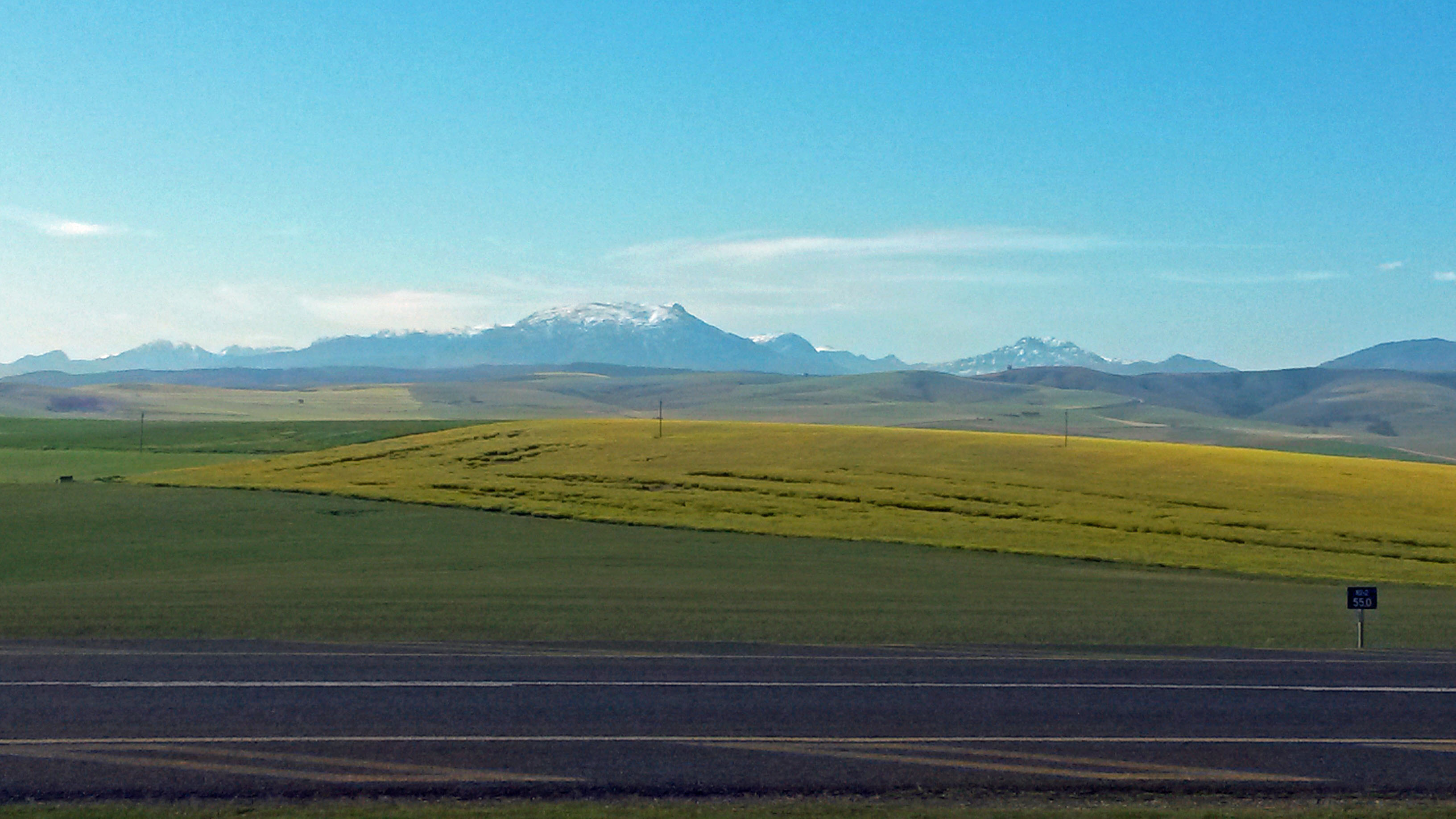
A snowy mountain landscape along the N2 highway in the Western Cape, South Africa.
This past winter was fairly cold here in South Africa. Somewhat unusually, many of the tops of the mountains in the Western Cape were periodically dusted with snow. There was even snow on Table Mountain in Cape Town.
During a recent backpacking trip along the Tsitsikamma Trail, my friends and I experienced some cold night-time temperatures although there was no snow in the Tsitsikamma region. However, when we were driving back to Cape Town after the hike, we noticed several snowy peaks in the distance. The picture above was taken a couple of hours outside of Cape Town along the N2 highway. I’ve seen snow before in the Western Cape, but this year’s snow was more impressive than what I saw previously.
The weather has been warmer recently, so hopefully that means that spring has finally arrived here in the Western Cape!













 Georneys
