Majestic Blackstone Glacier. Picture courtesy of Jackie Gauntlett.
This week’s picture was taken by my husband Jackie in Prince William Sound, Alaska, back in early September. Jackie and I spent about two months working in Alaska earlier this year. After our work, I went to visit my family in New Hampshire for a few days while Jackie stayed behind with a colleague to pack up gear and such. Just before flying home to South Africa, Jackie and the colleague went on a glacier viewing cruise in Prince William Sound. They saw some impressive views of glaciers and highly recommend the cruise. I’m hoping to go on the cruise another year. Jackie tells me that the boat in the above picture above is bigger than it seems– Blackstone Glacier is quite a big glacier!
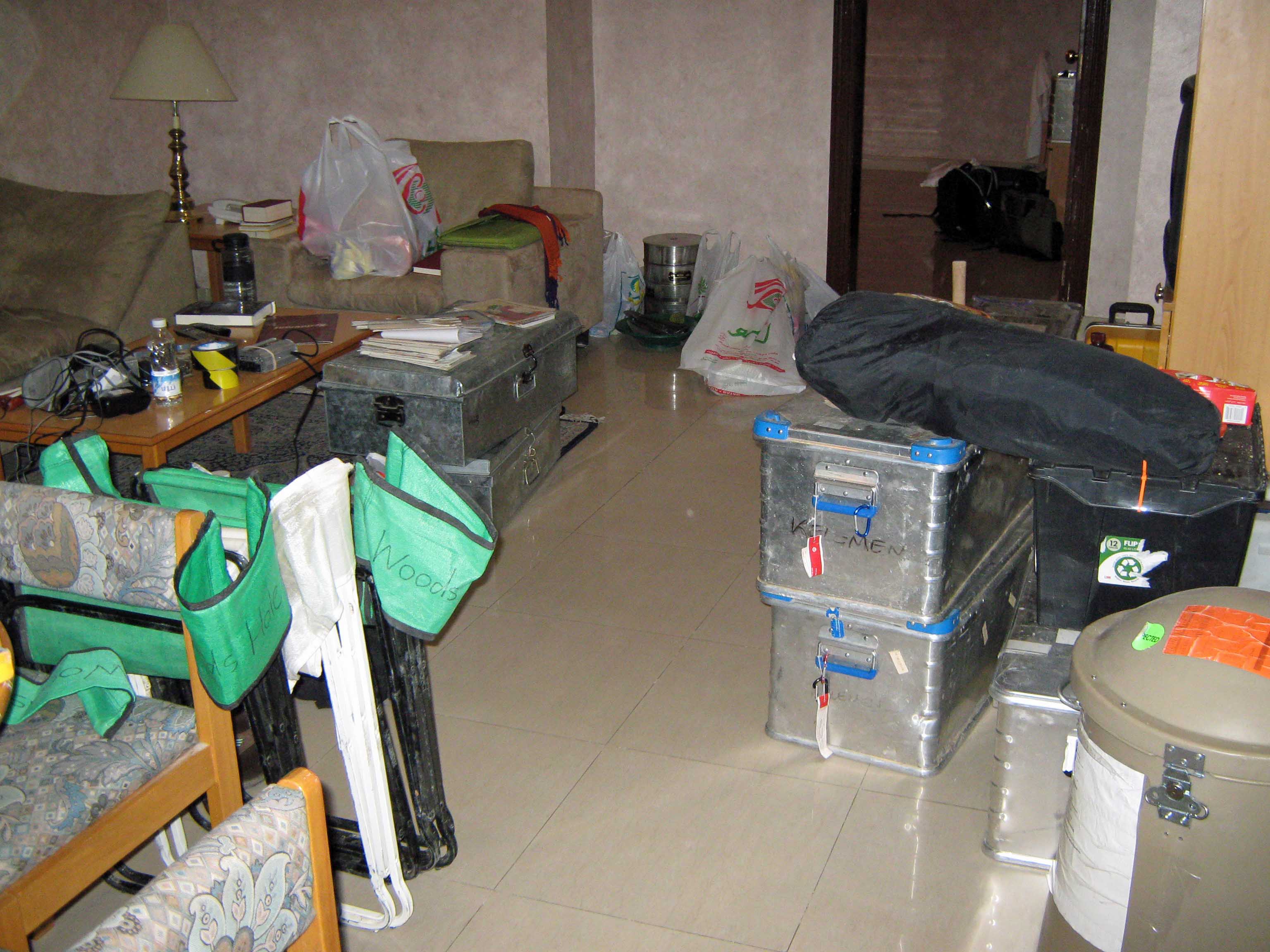
Boxes and boxes of equipment, supplies, and samples in a hotel room in Muscat, Sultanate of Oman, 2009.
Have you ever stayed in a hotel room and packed it to the brim with camping gear and scientific equipment and samples? Then chances are you’re a field geologist!
I took the above picture at a hotel in Muscat, Sultanate of Oman after 4 weeks of fieldwork in the Samail Ophiolite back in 2009. Our hotel room was packed full of camping gear, boxes of rocks and water samples, and various scientific instruments, such as pH meters. My favorite piece of scientific equipment was the light tan plastic box in the foreground on the right-hand side of the picture; that light tan box contained a storage container that was filled with liquid nitrogen in order to keep biological samples cold. We nick-named that storage container “R2 D2”, and we gave it a special place in one of the Land Cruisers. We even buckled it in with a seatbelt to keep it from tipping over!
Does anyone else have similar pictures of hotel rooms containing field gear?
When looking at rocks here in South Africa, geologists (and other outdoor adventurers) often encounter animals that live amongst the rocks. One of the most common animals which they encounter is the dassie or rock hyrax, an adorable creature that lives in groups in rock crevices. I’ve featured dassies before here and here on my “Monday Geology Picture” posts. This week, I wanted to share a picture of a dassie that my husband Jackie recently saw amongst some rocks in Hermanus. He was down in Hermanus a couple of weeks ago to go whale watching and attend a flower show with his mother. While walking around the town, Jackie and my mother-in-law spotted some dassies scurrying amongst the rocks. Jackie took the above picture of one dassie that wandered fairly close. It’s a cute little dassie, isn’t it?
What sorts of critters do you encounter amongst the rocks?
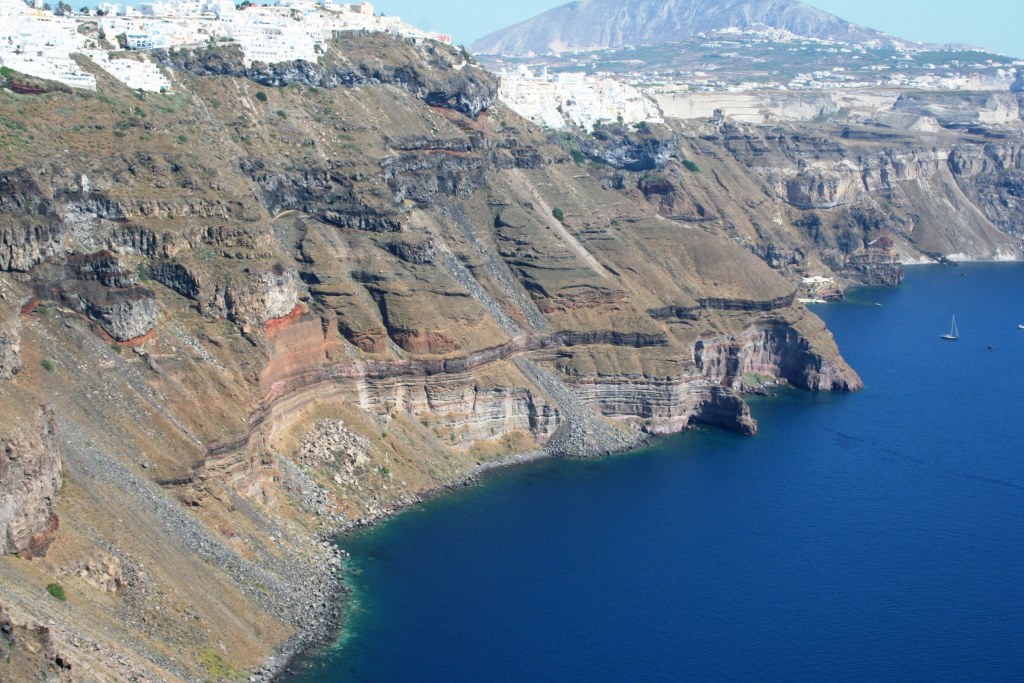
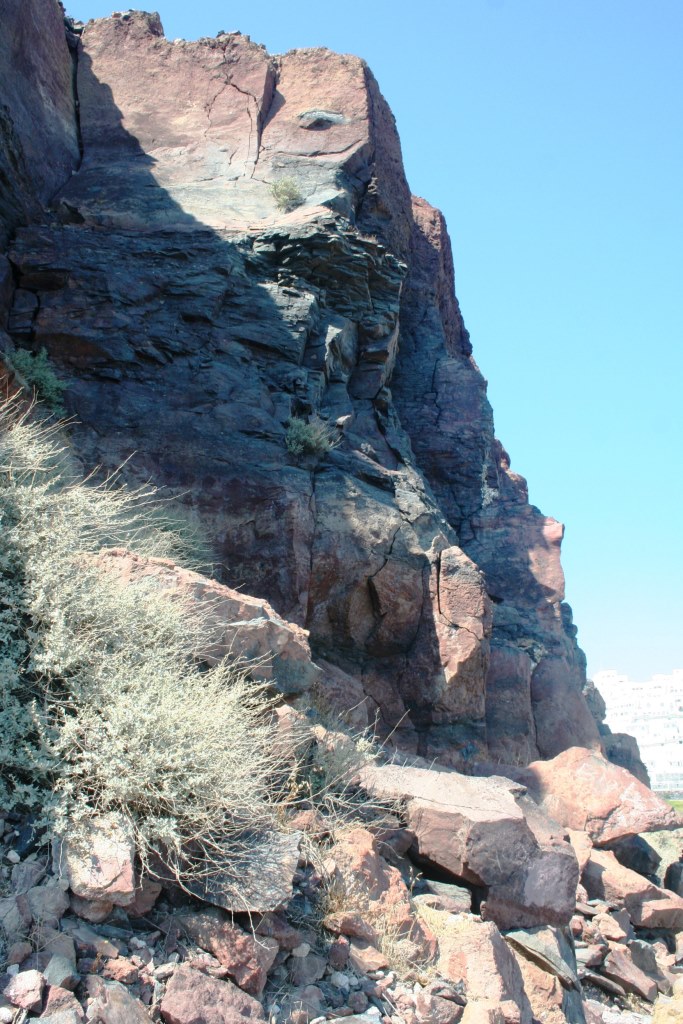
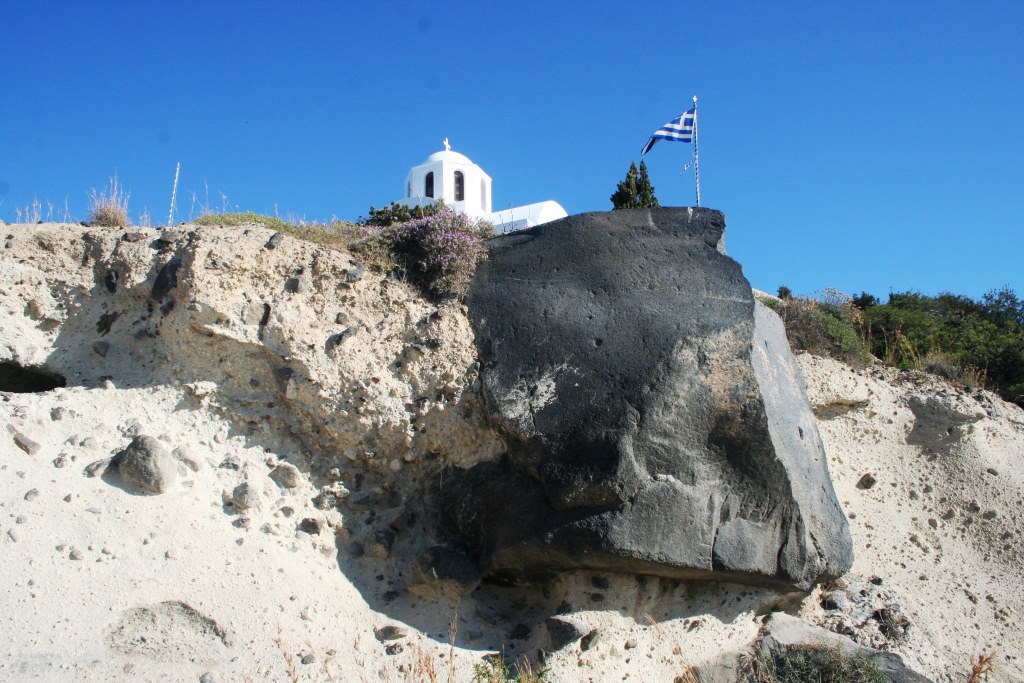
Last week I shared a lovely view of Santorini taken by my friends Patrick and Nia during their vacation back in June. This week I thought I’d share several more of their Santorini shots. Some of them are quite stunning. Enjoy!
When Patrick and Nia sent through these pictures to me, my husband commented:
Ah, a geologist’s nightmare. Photographs without scale! Except for the one with the boat… and the one with Nia…
Despite the lack of scale in some of them, these photographs are still pretty neat! If you are familiar with Santorini geology, please feel free to point out notable features. There are some great volcanic rocks in these pictures!
Santorini #2, with sailboat for scale.Santorini #3.Santorini #4, with some houses for scale.Santorini #5, with Nia for scale.Santorini #6.Santorini #7.Santorini #8, with some beach visitors for scale.Santorini #9, with flag and a building for scale.
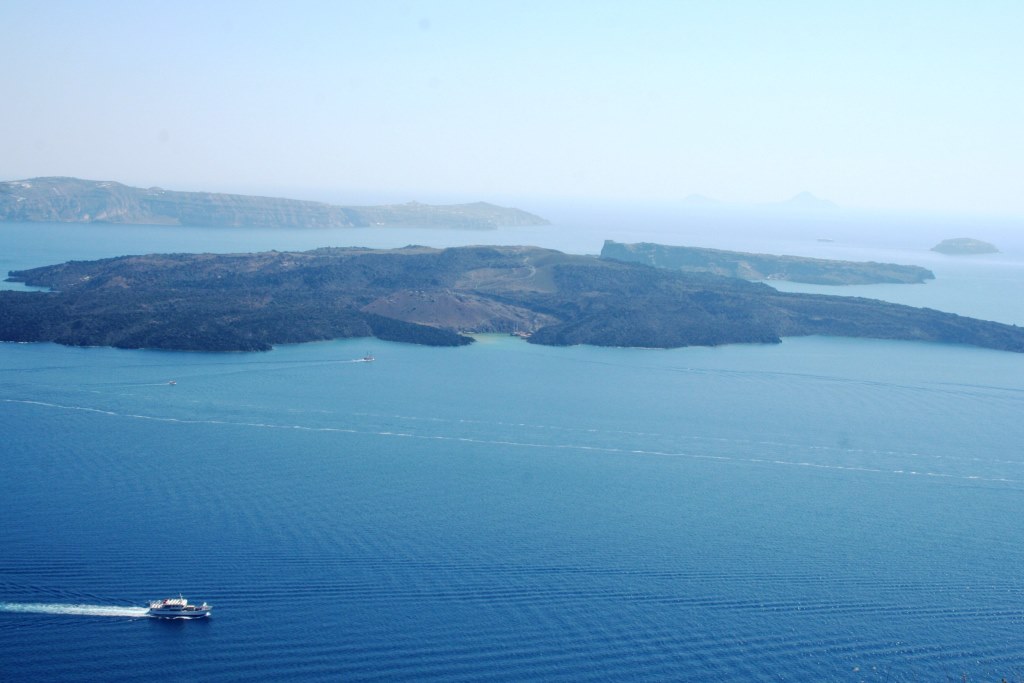
Beautiful Santorini. The boats are travelling across an enormous, water-filled volcanic caldera.
Courtesy of my friends Patrick and Nia, here is a lovely picture of Santorini, a Greek island that is a the remnant of a volcanic caldera. Patrick and Nia were on vacation in Greece back in June. I’ll share a few more of their Santorini pictures for next week’s “Monday Geology Picture” post.
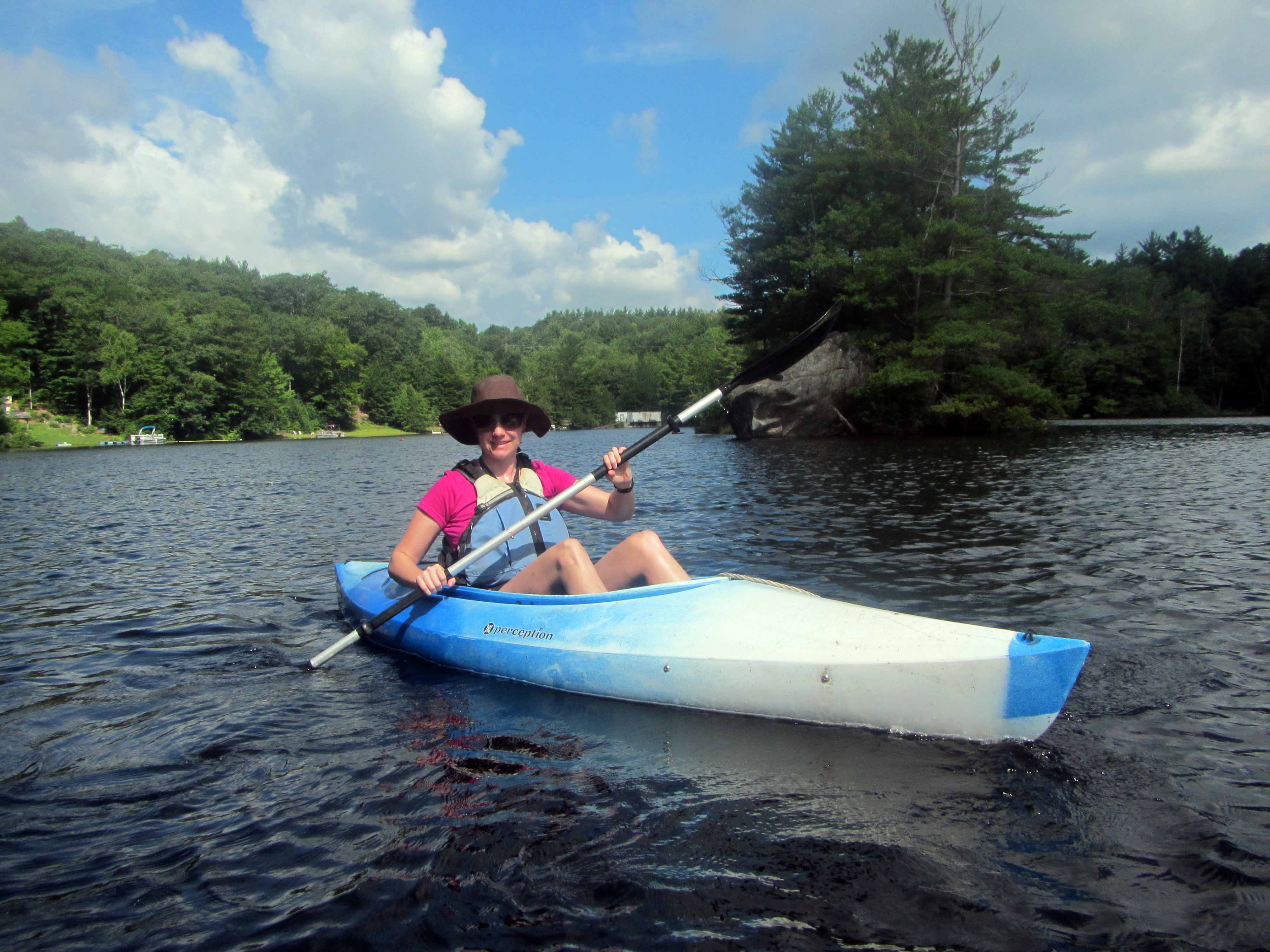
Setting off by kayak to explore the glacial erratics of Franklin Pierce Lake. Note the glacial erratic in the background.
Last week, I shared a picture of me sunbathing by my favorite glacial erratic, which is located near the Mervine Family Cabin on Franklin Pierce Lake in New Hampshire. This week, I thought I’d share a few more pictures of glacial erratics on Franklin Pierce Lake. Note the large sizes of these erratics and also how many of them are fairly angular. The erratics are mostly igneous and metamorphic rocks, and many of them contain large feldspar crystals.
I took all of the pictures in this post during a few kayaking trips during a recent visit to my family in New Hampshire. I really enjoy observing geology by kayak– I should do so more often!
My favorite glacial erratic, located on a little island near the Mervine Family Cabin.Some quite large erratic boulders!Angular erratic boulders. Note the front of my kayak for scale.Another view of an angular erratic boulder.A close-up view of the angular erratic boulder in the previous picture.Several erratic boulders.
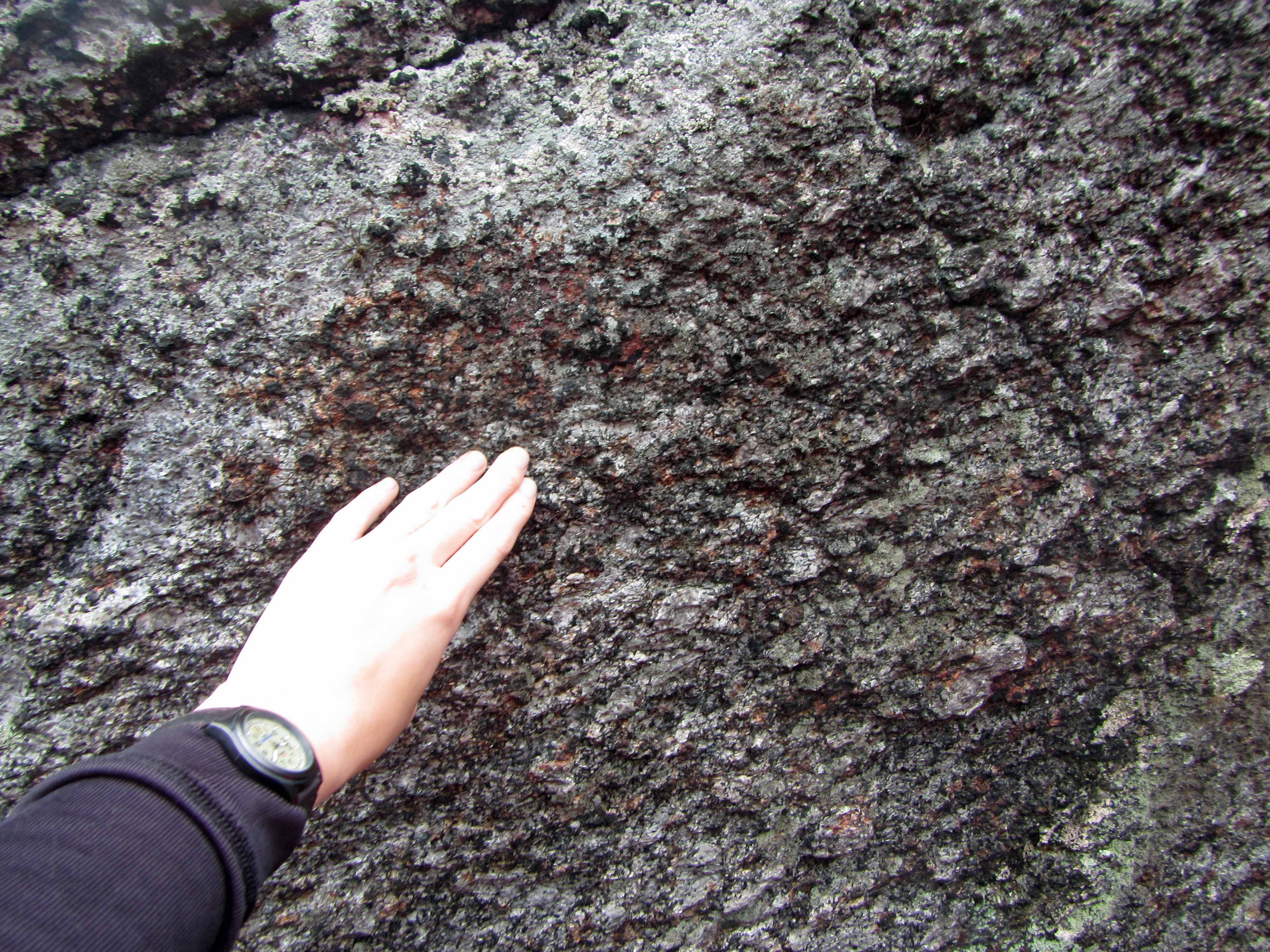
I found this erratic boulder particularly interesting (note the large feldspar phenocrysts and interesting texture):
A particularly interesting erratic boulder. Check out those large feldspars!A closer view of the interesting erratic.
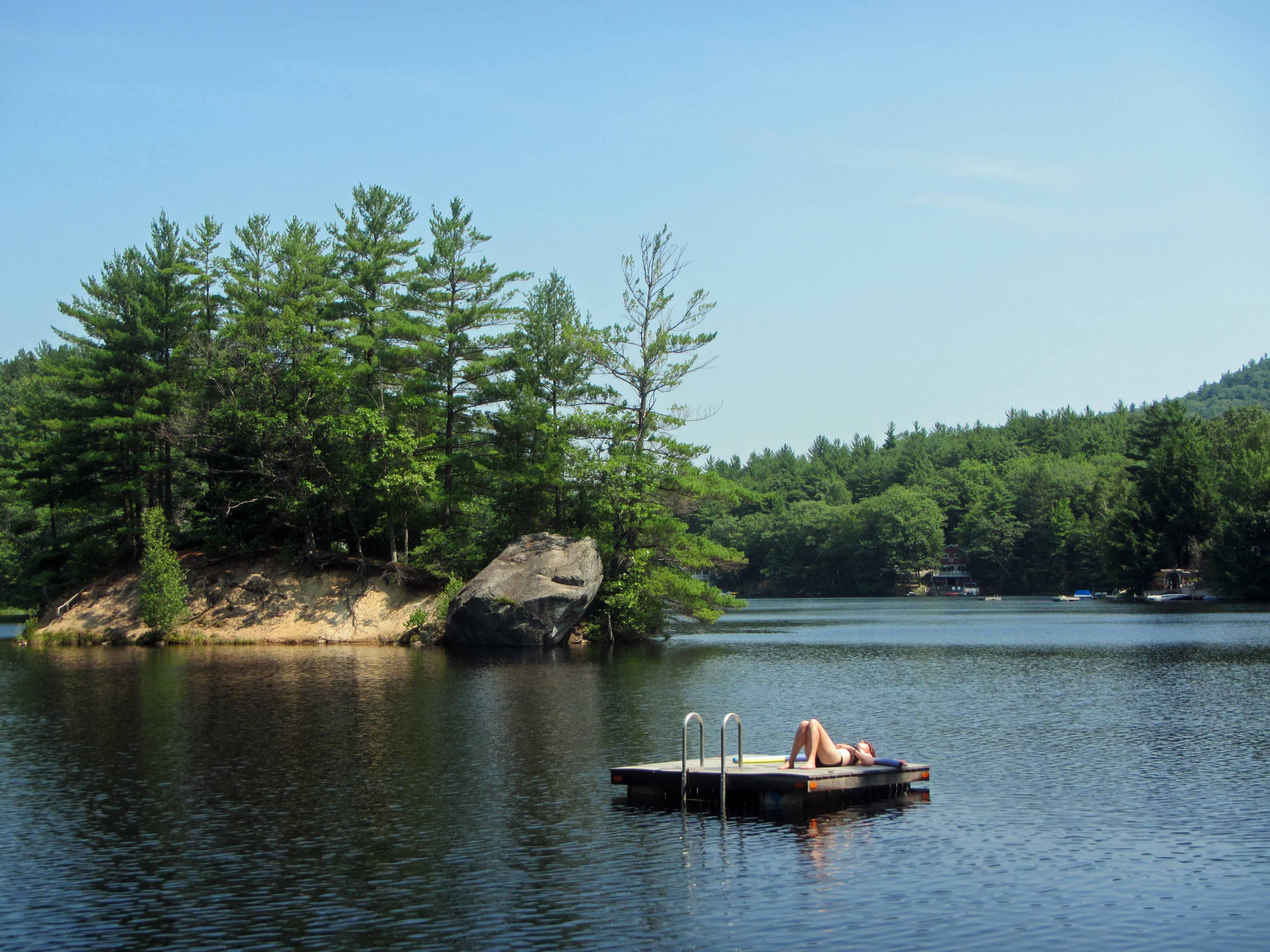
Sunbathing by my favorite glacial erratic. Franklin Pierce Lake, June 2013. Photograph by Jackie Gauntlett.
Happy Labor Day to all of my American readers! I hope that you all enjoy the holiday. Weather permitting, I plan on spending some time sunbathing by my favorite glacial erratic. I’m currently on vacation in New Hampshire and Cape Cod for about a week. I just finished up six weeks of field work in Alaska. My husband and I also visited New Hampshire for a couple of days on our way to Alaska back in July. After spending most of the past year in South Africa and six weeks in chilly northern Alaska, it’s nice to be home for a visit. And I’m always happy to visit my favorite glacial erratic!
A coral terrace on the beach near the village of Matemwe, Zanzibar.
For this week’s “Monday Geology Picture” post, I’m continuing with sharing some pictures from my vacation in Zanzibar back in June 2013. I thought I would share some pictures of a coral terrace on the beach near the village of Matemwe. My husband and I stayed at the beautiful resort of Azanzi near Matemwe. Most of the coral found along the beaches in Zanzibar is likely of Marine Isotope Stage 5e Pleistocene age (Arthurton et al., 1999).
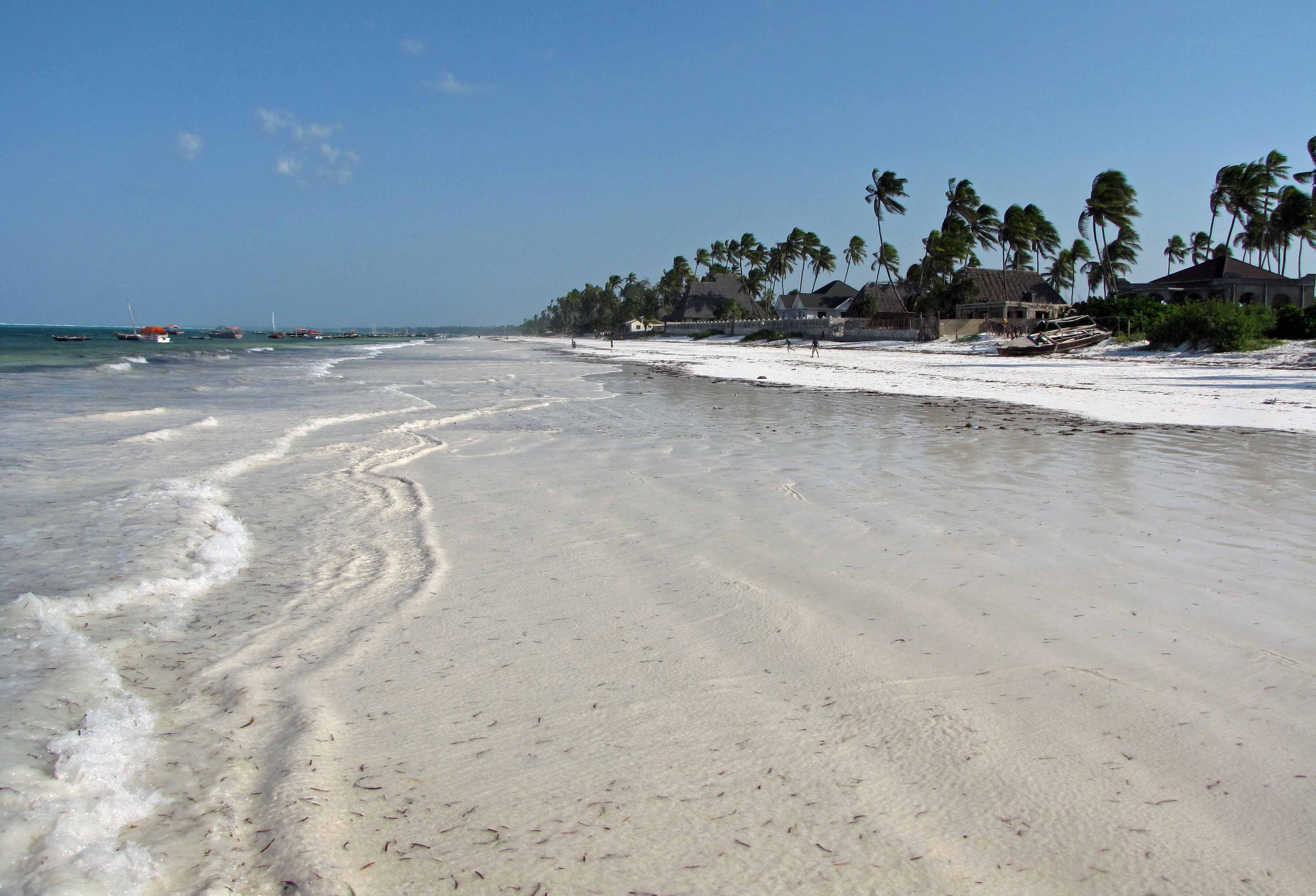
A crab crawling on a coral beach terrace, Matemwe, Zanzibar.The view of the beach near the coral terrace, Matemwe, Zanzibar.
Reference: Arthurton et al. (1999) Late Quaternary Coastal Stratigraphy on a Platform-Fringed Coast: A Case Study from Zanzibar, Tanzania. Journal of Coastal Research, Vol. 15, No. 3: 635-644.
Last week I shared some pictures of a coral palace in Zanzibar. This week, I’m sharing a few pictures of modern coral houses in the beachside village of Matemwe, which is located on Zanzibar’s northeastern coast. These days, more and more buildings in Zanzibar are being built out of concrete. This may be a good thing since mining of coral rock may not be the most eco-friendly building practice. However, some modern buildings, such as the one (in progress) in the photograph below, are still constructed from traditional coral building stone.
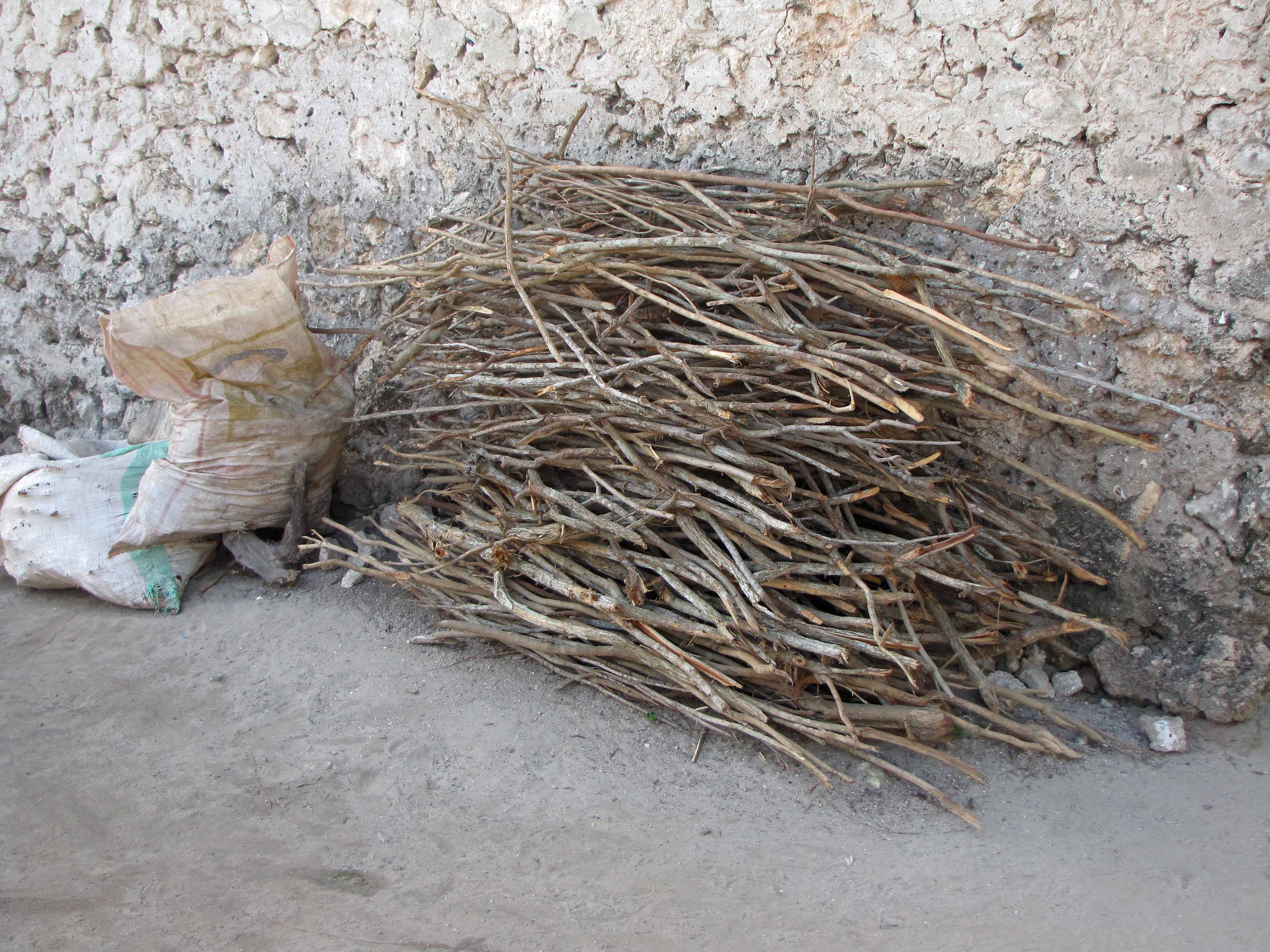
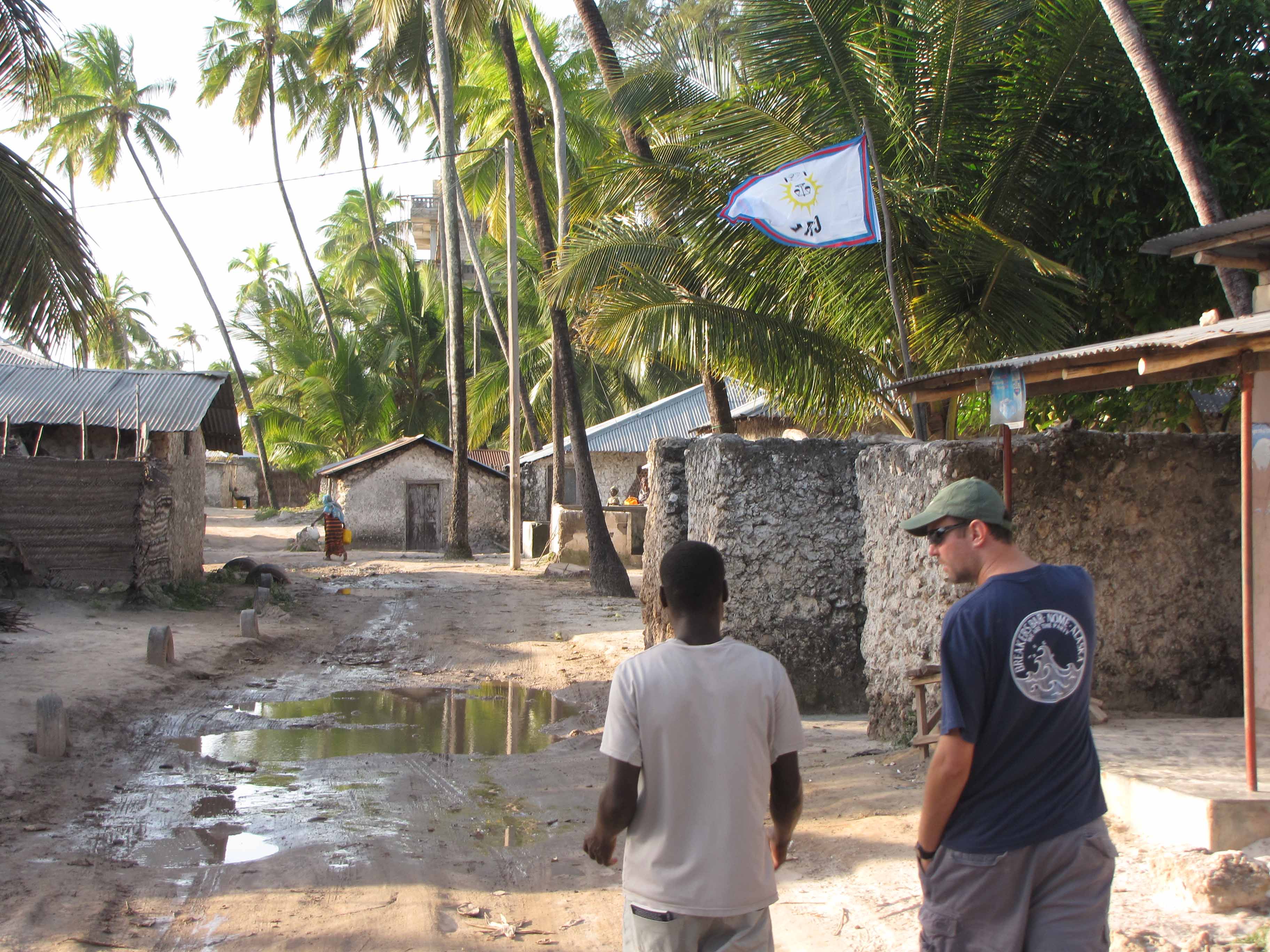
A wider view of a coral house under construction in Matemwe.A wooden door on a coral house, Matemwe.Firewood kindling stacked against a coral building in Matemwe.My husband and our guide walking down one of the main streets in Matemwe.Yours truly posing with some women outside a coral building in Matemwe. I bought one of the bags they were weaving out of palm leaves.
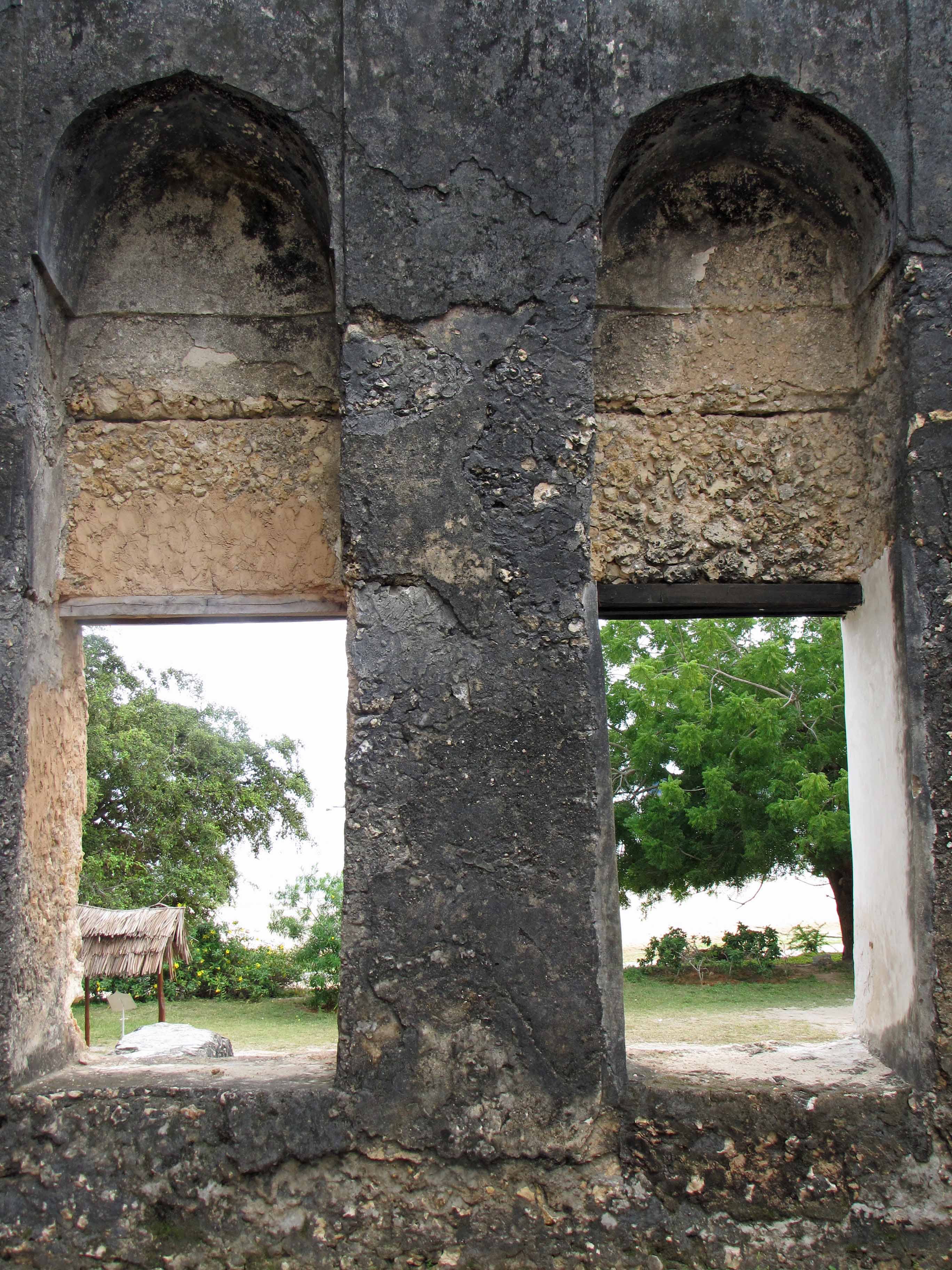
Coral building stone at the Princess Mtoni Ruins, Zanzibar.
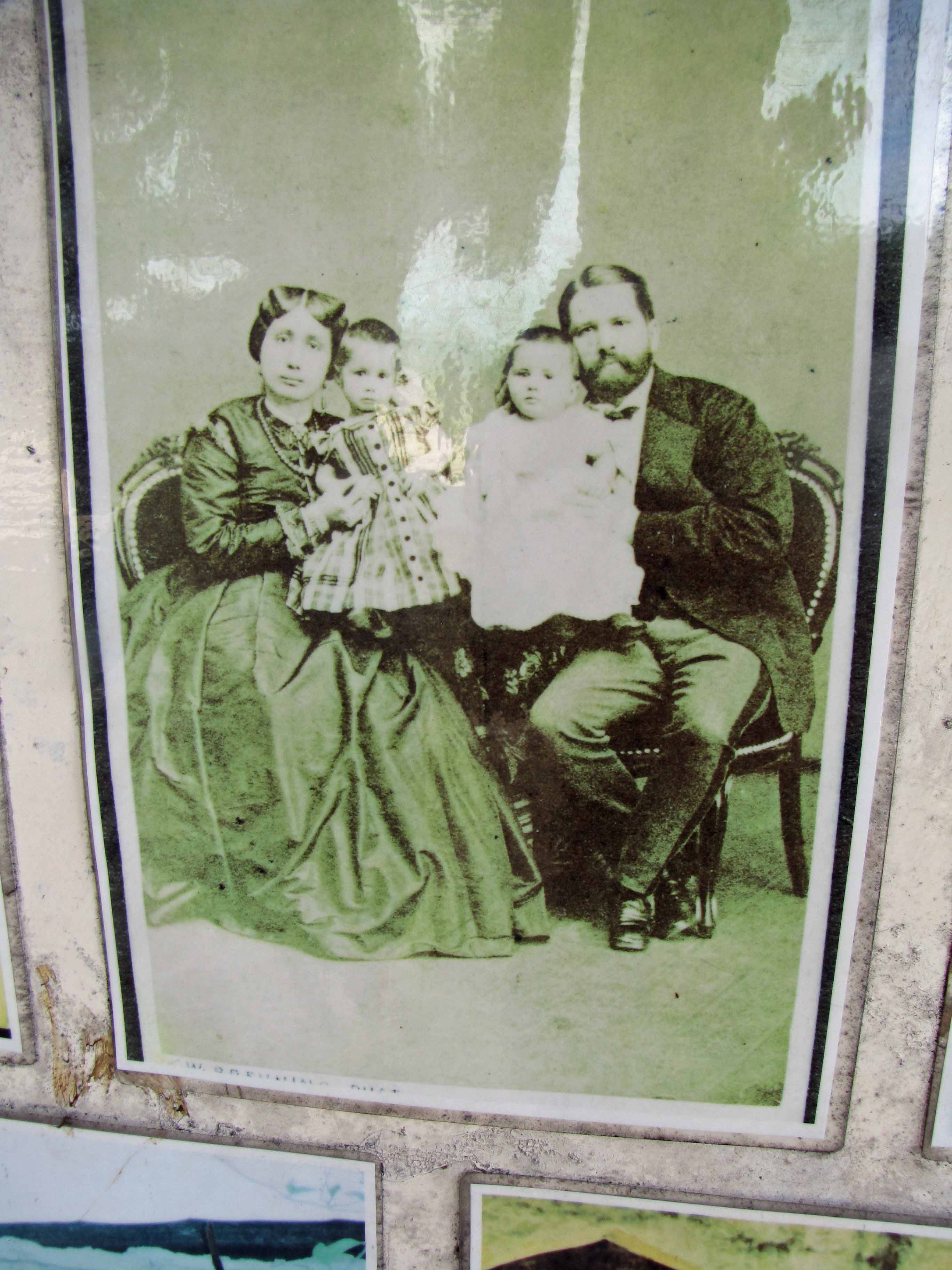
This week I’m continuing with sharing some pictures from my recent vacation in Zanzibar back in June 2013. There is plenty of coral around Zanzibar, and my husband and I noticed that many of Zanzibar’s buildings– both ancient and modern– have been built with coral blocks. As an example, the picture above shows a coral building stone in the Princess Mtoni Ruins, the remains of the childhood home of Princess Salme, a Zanzibari princess who in the 1860s eloped with a German merchant, converted to Christianity, and changed her name to Emily Ruete. While living in Germany, Emily / Princess Salme wrote an excellent book about her life: Memoirs of an Arabian Princess from Zanzibar. I read the book while I was in Zanzibar and highly recommend it. The book provides a rare, rich, colorful glimpse of Zanzibar– or at least of Zanzibari royal life– in the mid-1800s.
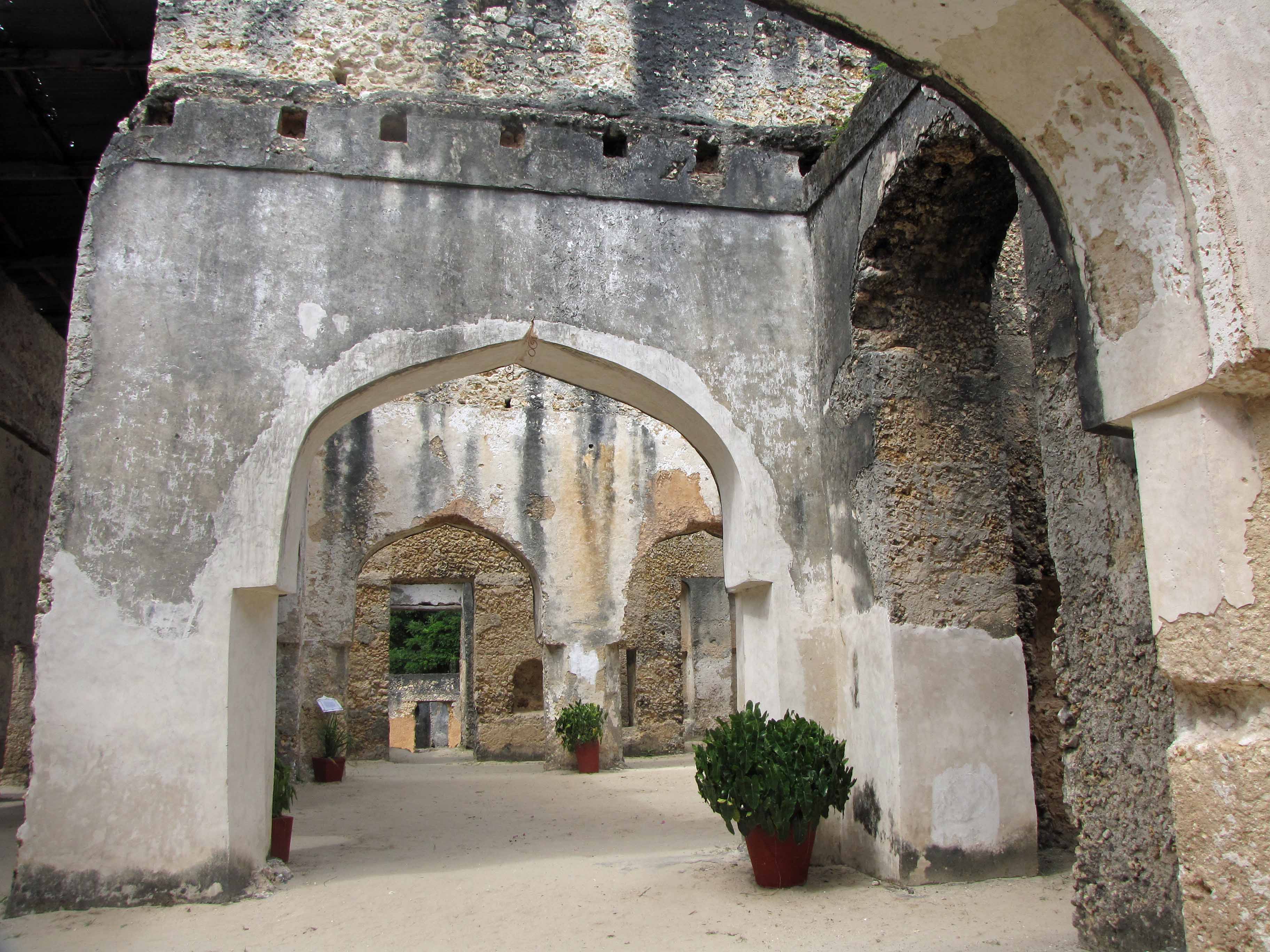
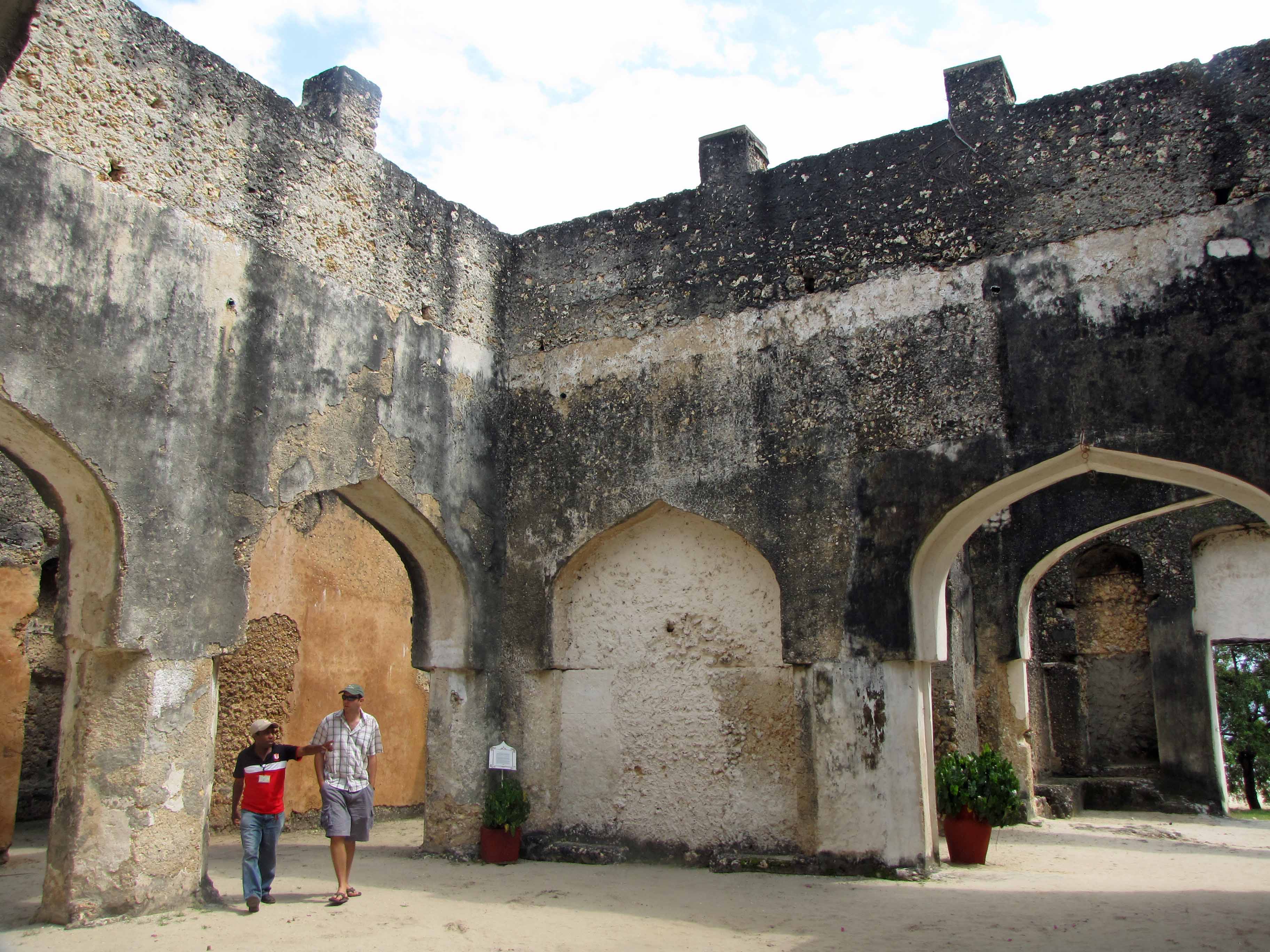
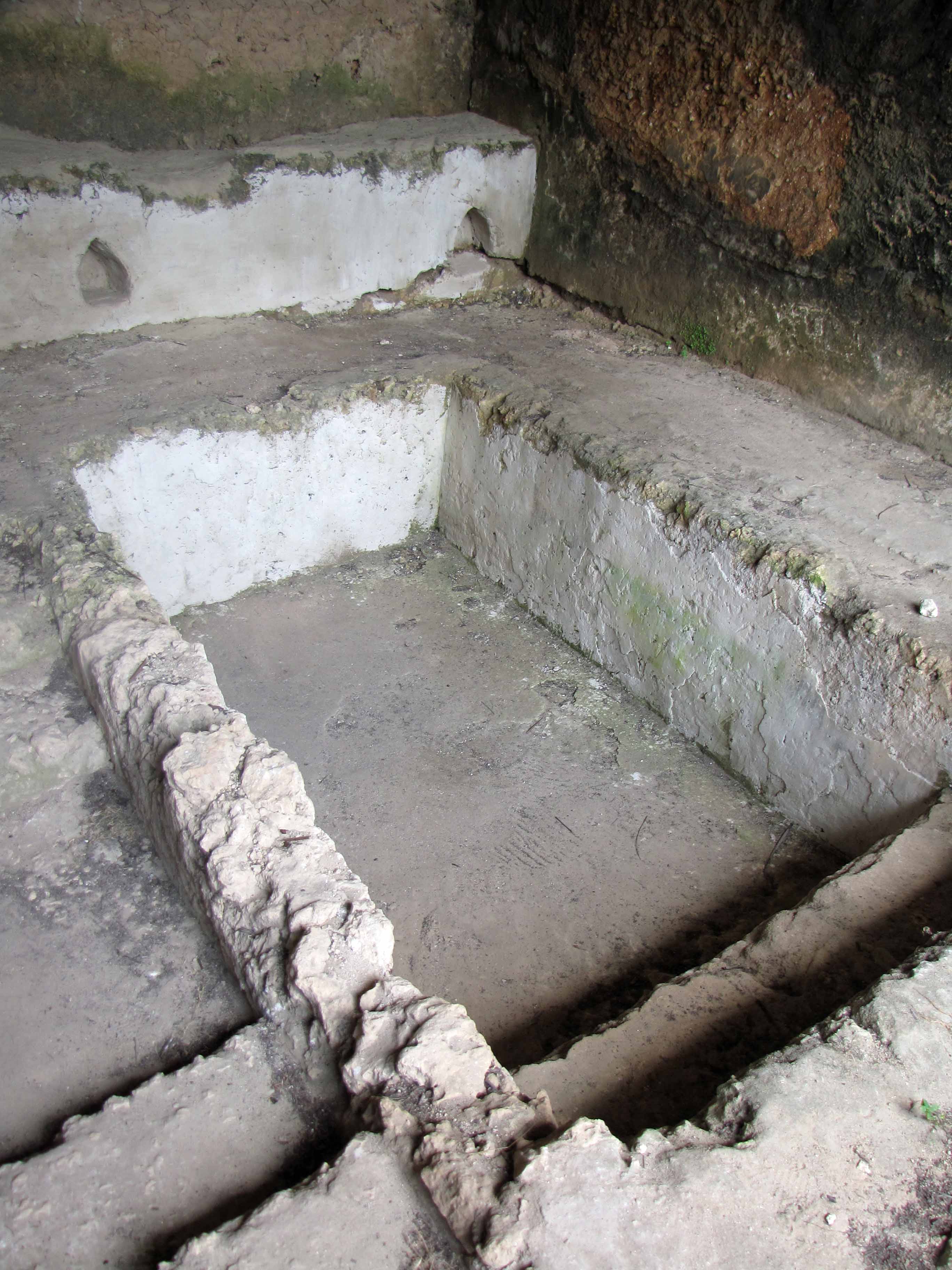
My husband and I visited the Mtoni Palace Ruins one morning on our way to Stone Town. We spent half and hour or so strolling through the ruins. Much of the Mtoni Palace that Princess Salme described in her memoirs has been destroyed or is in ruins, but the seaside palace is still definitely worth a visit. There are some interesting baths and toilets, and there are some beautiful arched doorways. I believe that much of the palace is constructed out of coral rock.
Here are a few more pictures from the Princess Mtoni Ruins:
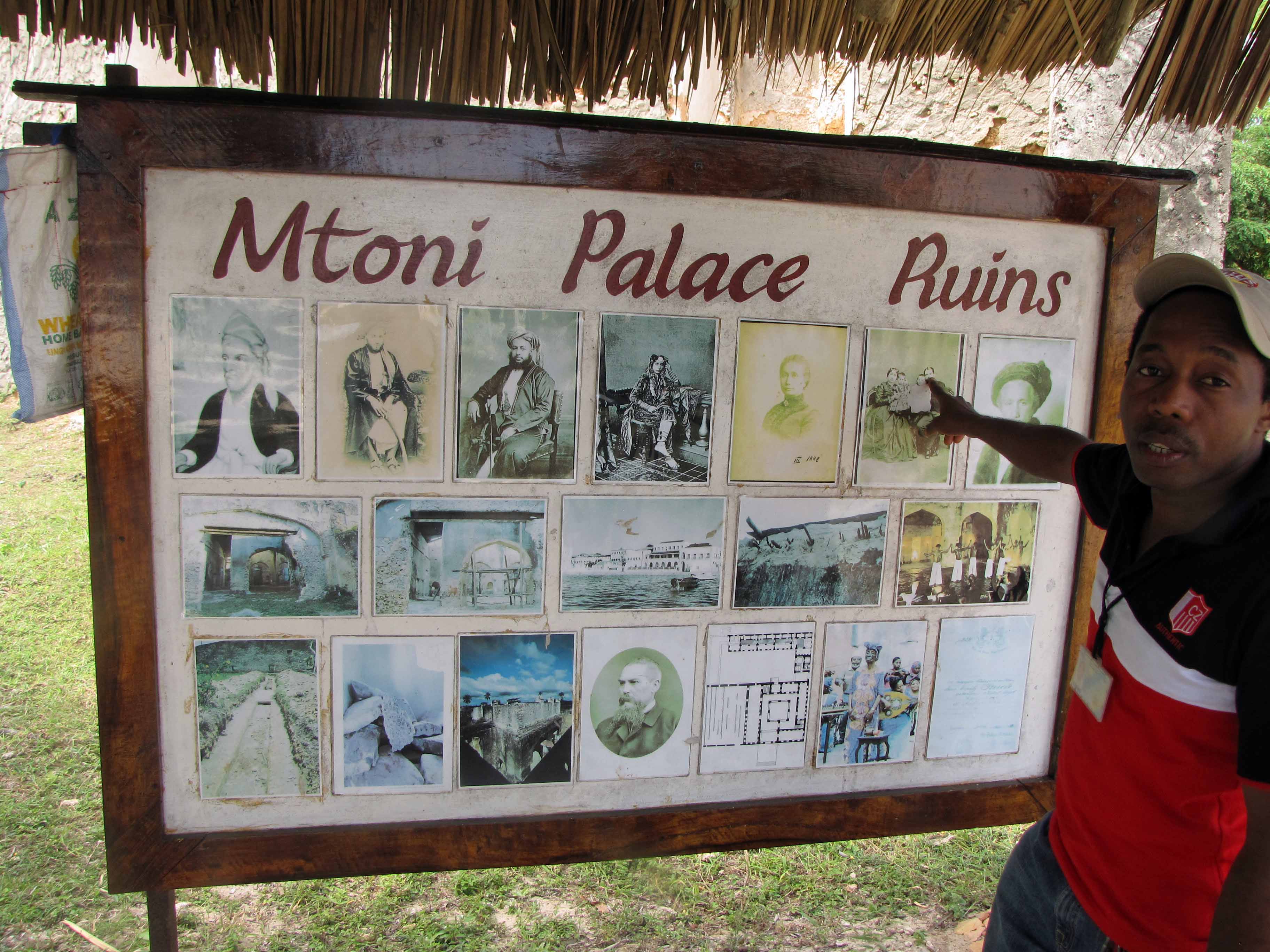
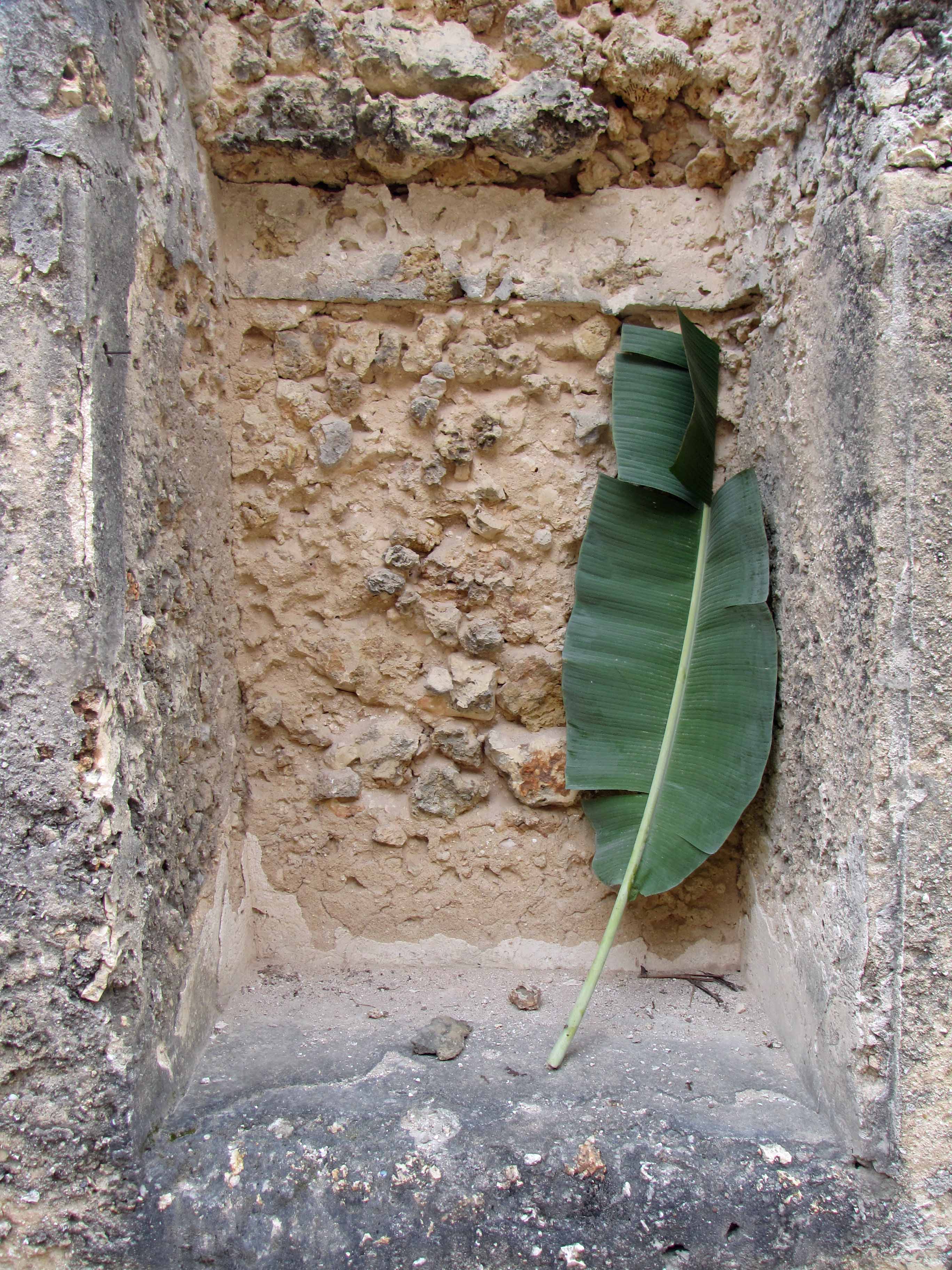
Sign for the ruins.Our guide pointing out a picture of Princess Salme and her family.Princess Salme, her German husband, and two of their children.Yours truly posing by the palace entrance.Beautiful arched doorways / passageways.My husband Jackie and our tour guide strolling through the ruins.Windows with a view of the sea.A little staircase.A stone toilet seat.A bath.Top of a stone wall.More windows with a view of the sea.The view through one palace window.A lone palm leaf resting in a coral alcove.Arches everywhere.Yours truly posing with a coral wall.
























 Georneys