Monday Geology Picture(s): Giant Fossil Clams on Chumbe Island, Zanzibar

Zanzibar242
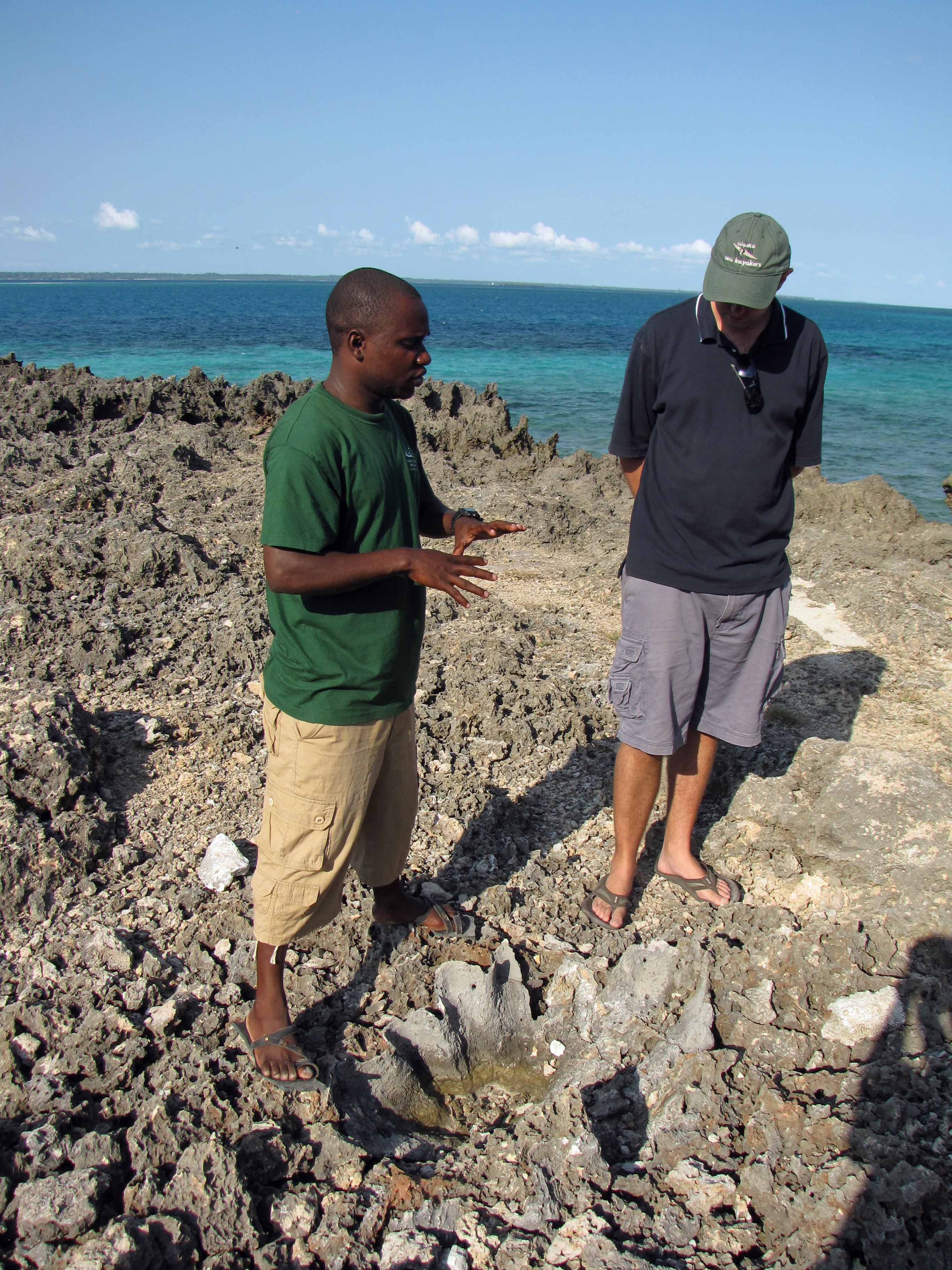
My husband Jackie, our tour guide, and a giant clam fossil!

Back in June my husband and I went on a week-long vacation to Zanzibar, an archipelago in the Indian Ocean just off the coast of Tanzania. When I told my American friends that I was going on vacation to Zanzibar, they mostly responded, “Wow! That sounds so exotic! Where is that, exactly?” However, when I told my South African friends that I was going on vacation in Zanzibar, many of them responded something along the lines of, “Oh, that’s great! I was there last year.”  That’s because Zanzibar– along with the Seychelles and Mauritius— is a popular vacation spot for South Africans. These Indian Ocean islands are to South Africans what, perhaps, the Caribbean islands are to Americans; they are tourist hotspots, and many travel companies offer package deals that include flights, hotel, food, tours, and so on. Today, much of Zanzibar’s economy is based on tourism. For our vacation, my husband and I booked a package deal and stayed at the beautiful Azanzi Beach Hotel on the northern side of Ugunja, the largest and most populous island of Zanzibar. We had a fantastic vacation! Our vacation was a great mixture of relaxing on the beach, outdoor activities, and exploring Zanzibar’s rich history and culture.

Over the next few weeks, I’d like to share some of my Zanzibar pictures for my “Monday Geology Picture” posts. I have many great pictures to share– mostly tropical pictures of coral and beaches and such. I’ll start by sharing some pictures from Chumbe Island, a small island located a 45 minute boat ride from Stone Town, which is the main city on Ugunja. Chumbe Island is a privately-owned nature reserve that funds itself largely through eco-tourism. You can stay on the island in one of the eco-friendly huts or you can take a day trip out to the island. My husband and I took a day trip to the island. Our trip included the beautiful boat ride, snorkelling amongst some of the most impressive coral reef I have ever seen, a delicious gourmet lunch, a walk through a forest, and a climb to the top of a lighthouse. We went to Chumbe Island largely because we were hoping to catch sight of the impressive coconut crab, a large, land-based crab that climbs trees and is known to eat coconuts! However, coconut crabs are nocturnal, so we didn’t catch sight of one during our visit. However, we did see plenty of other interesting things on Chumbe Island.

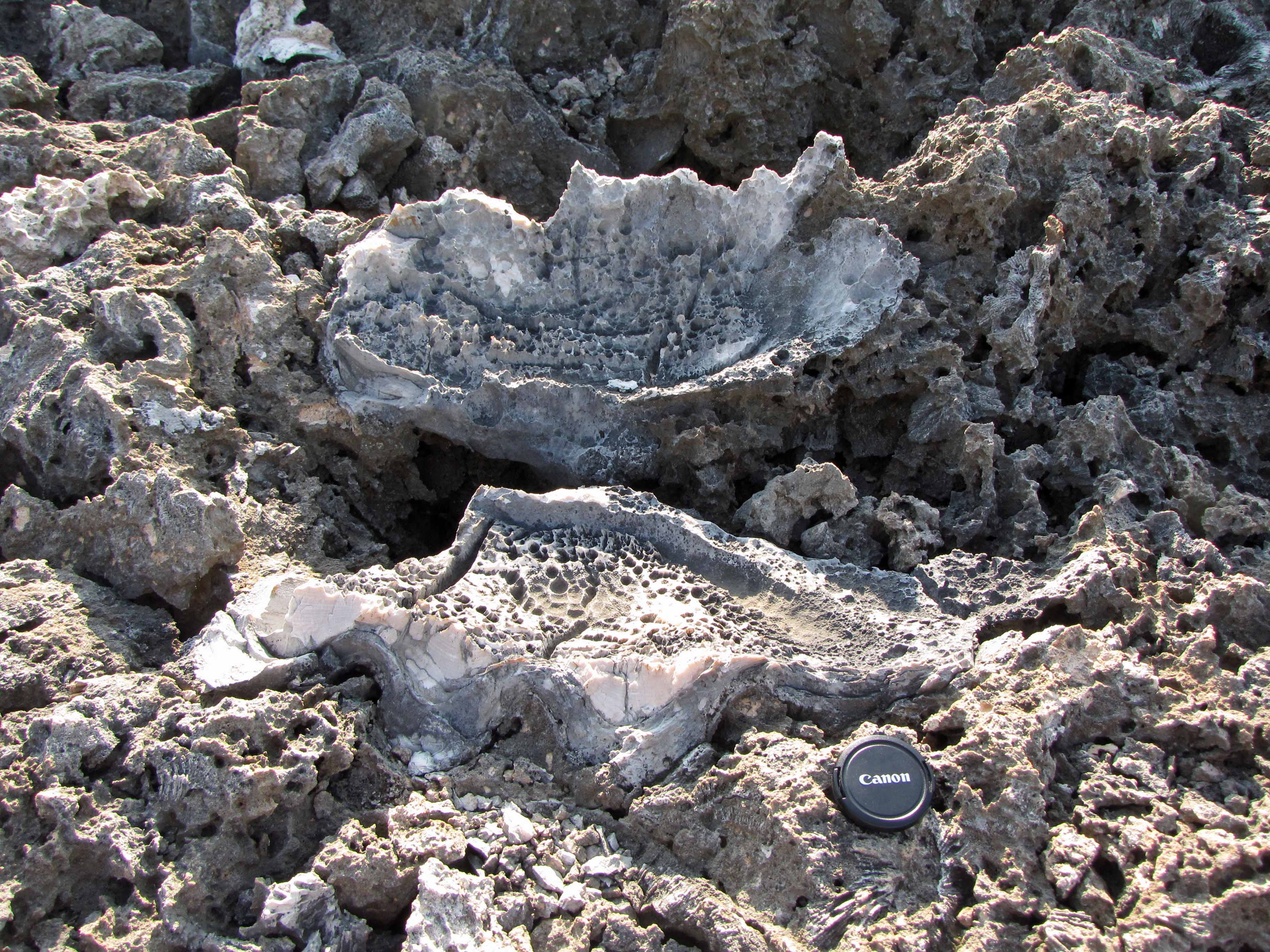
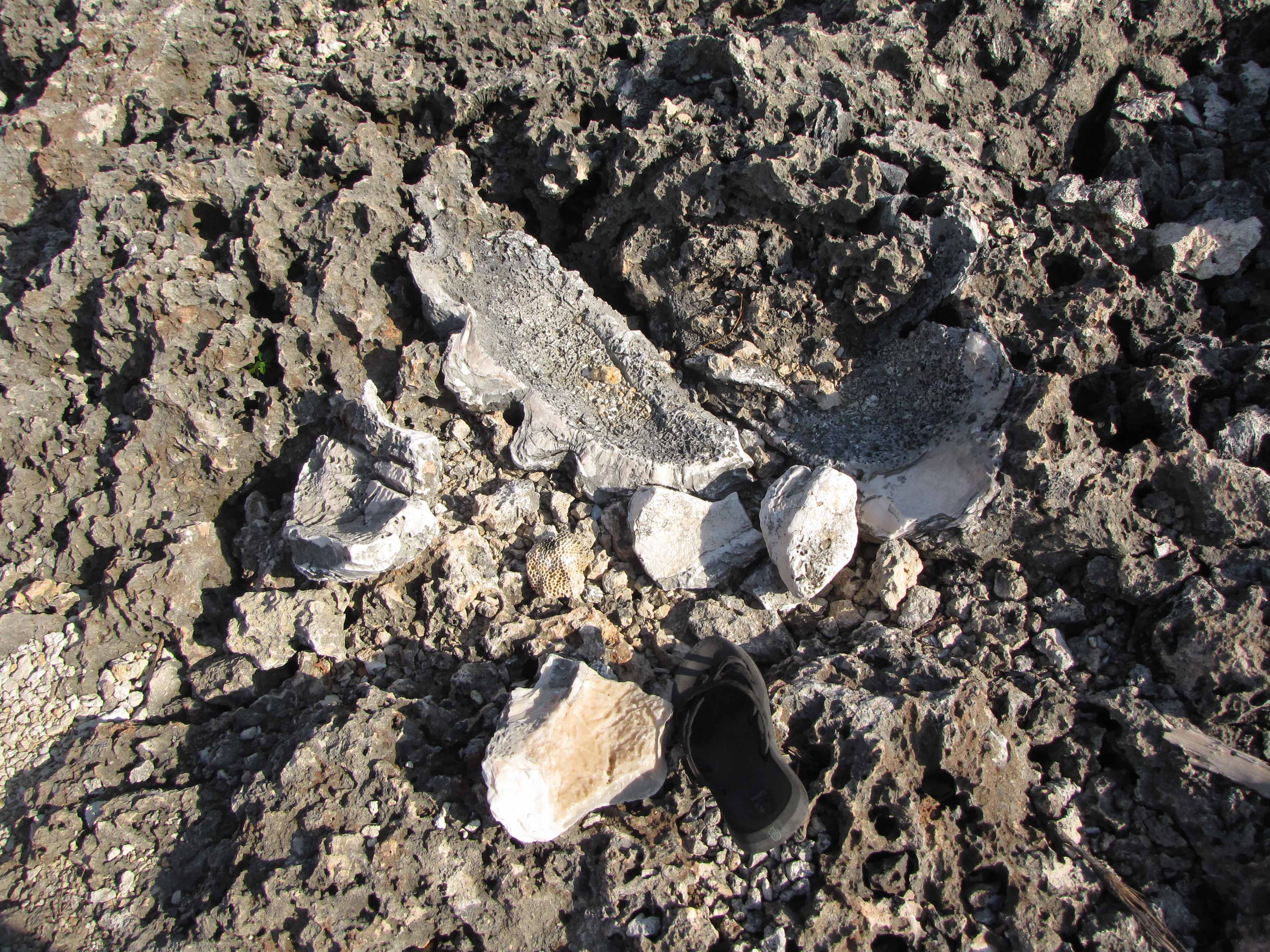
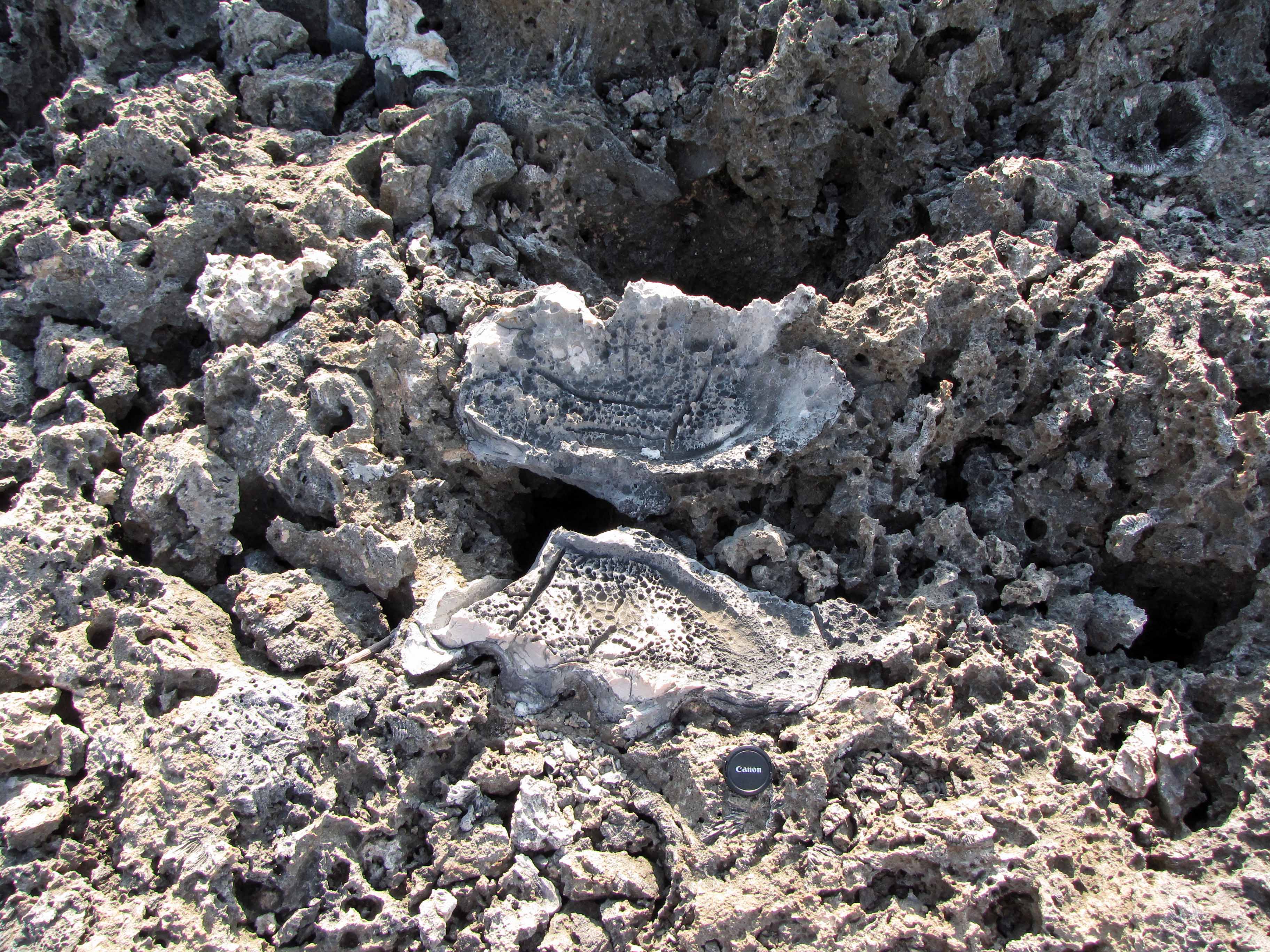
In this post I am sharing some pictures of some giant clam fossils which we saw on Chumbe Island. These fossils are quite impressive! I tried to find a scientific paper that would tell me more about them, but I wasn’t able to find anything with a quick search. If anyone knows of any papers on these fossils or can tell me more about them, please leave a comment below. The Chumbe Island website states that the fossil clams are 15,000 years old.

If you’re ever in Zanzibar, I highly recommend a visit to beautiful Chumbe Island. Staying overnight at the island is a little expensive, but remember that the money goes towards conservation. The day trip also provides a more affordable option. However, next time my husband and I travel to Zanzibar, we plan to spend at least a night on Chumbe Island. Hopefully then we’ll finally see a coconut crab!
Zanzibar243
Clam fossil with flip-flop for scale.
Zanzibar244
Clam fossil with lens cap for scale.
Zanzibar245
A closer view of a clam fossil with lens cap for scale.
Zanzibar246
Yours truly posing next to one of the clam fossils.
Zanzibar250
Clam fossil with lens cap for scale.

Monday Geology Picture(s): Petrified Trees

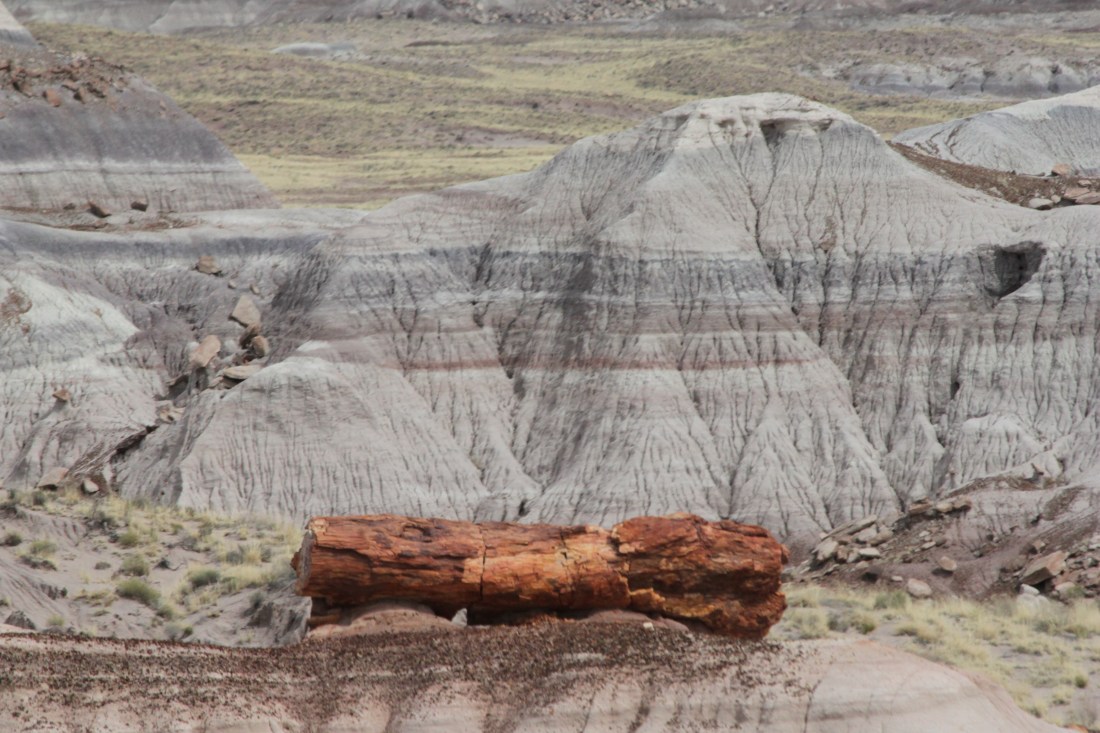
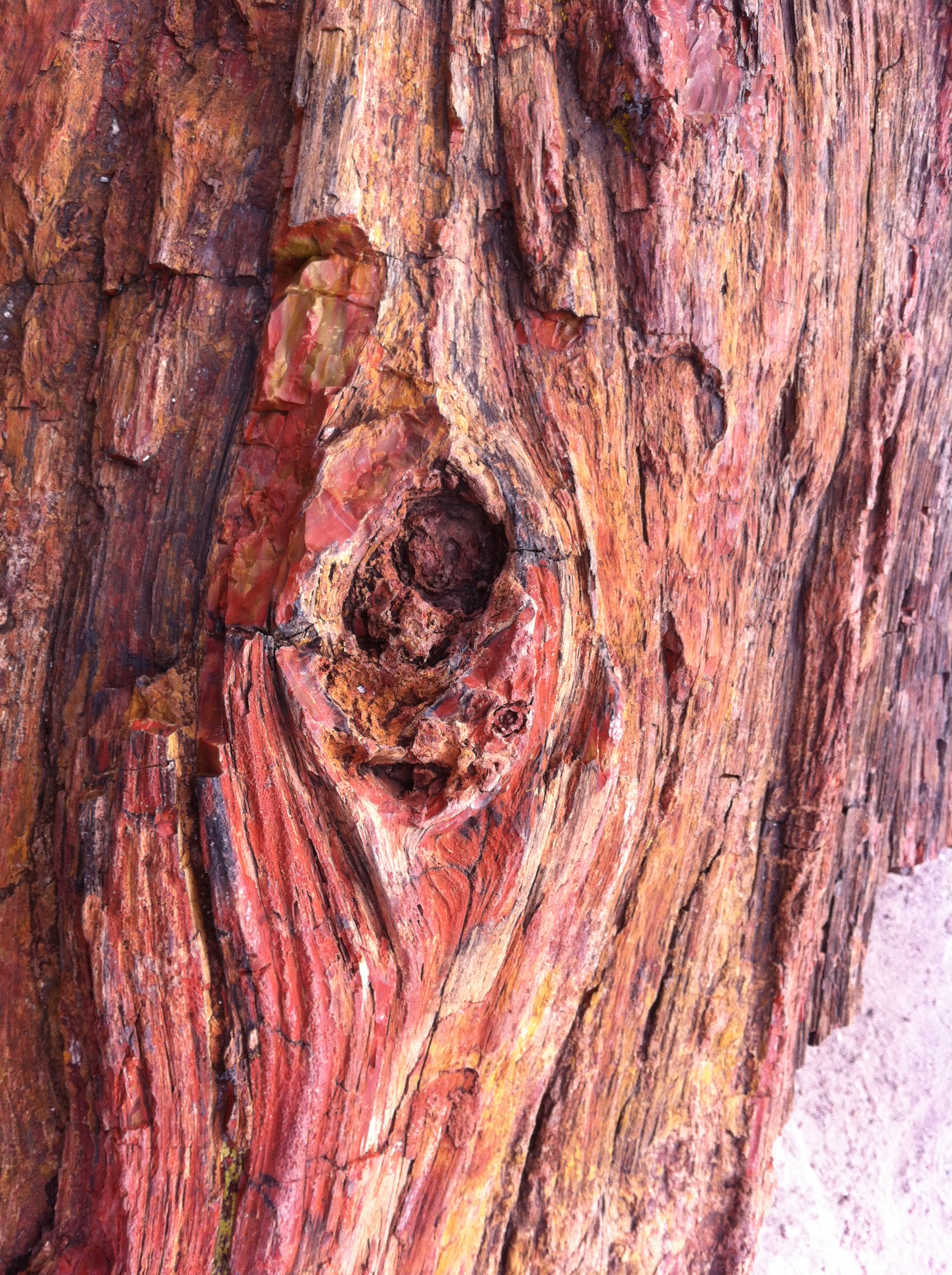
Petrified Forest National Park #1.

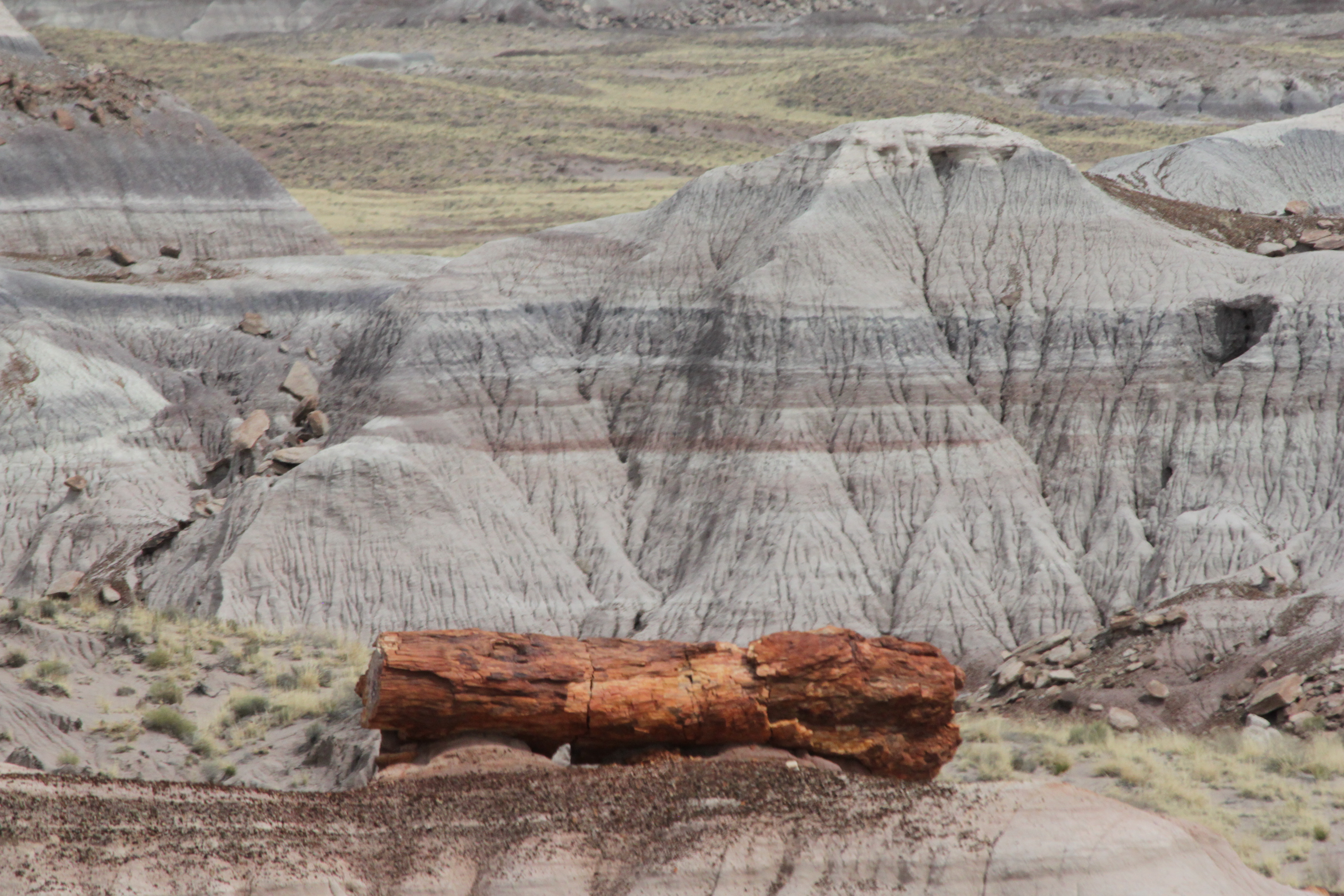
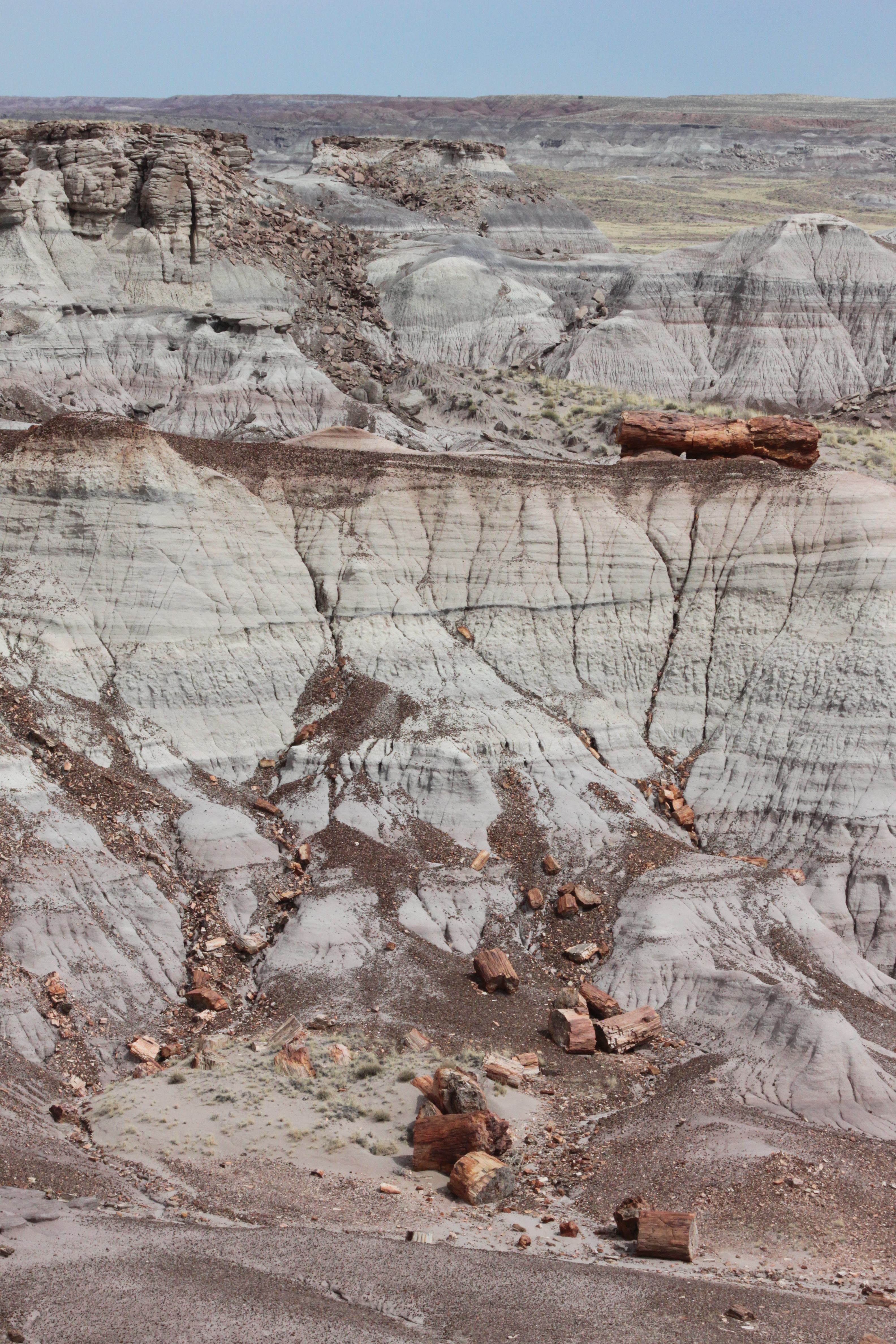
My friend Ray recently visited Petrified Forest National Park in Arizona and was kind enough to send me some of his gorgeous pictures of the landscape, including the petrified trees. Ray says that these pictures were all taken along the Blue Mesa Loop. These fossilized trees are about 225 million years old! They are weathering out of the Chinle Formation, a beautiful Triassic sedimentary unit. I’ve never visited this park, but it’s now very high on my list of geological places I’d like to visit!
Thanks for sharing some pictures here on Georneys, Ray!

Petrified Forest National Park #2.
Petrified Forest National Park #3.
Petrified Forest National Park #4.

Geology Word of the Week: E is for Eurypterid

Eurypterid fossils on display in the Denver Museum of Science and Nature. Picture courtesy of Tony Martin.

def. Eurypterid:
1. A group of extinct arthropods that were fearsome marine predators of the Paleozoic. There were over 200 different species of eurypterid, and they ranged from very small (less than 20 cm) to very large (greater than 8 feet). Because of their long tail, eurypterids are sometimes called “sea scorpions.” Indeed, they are closely related to today’s scorpions and other arachnids. One species of eurypterid, Eurypterus remipes, is the state fossil of New York.
2. A really, really cool fossil that I one day hope to add to my rock collection.

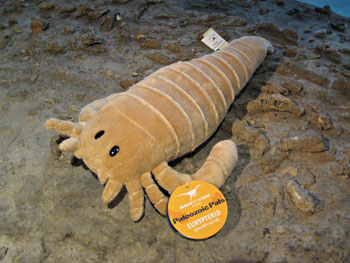
You can find out much more about eurypterids on wikipedia and Google. You can also buy your very own plush eurypterid here.

A cuddly eurypterid. I hope someone gives me one for Christmas! Picture from: http://www.museumoftheearth.org/store/storeitemdetails.php?pubID=5743.


***Thanks to Liz Johnson for suggesting this week’s word, inspired by my own What to Buy a Geologist for Christmas: 2012 Edition post. Thanks also to Tony Martin for providing the wonderful picture of eurypterid fossils.***

Monday Geology Picture(s): Journey to the Center of the Earth, the Board Game!

Journey to the Center of the Earth... the board game!

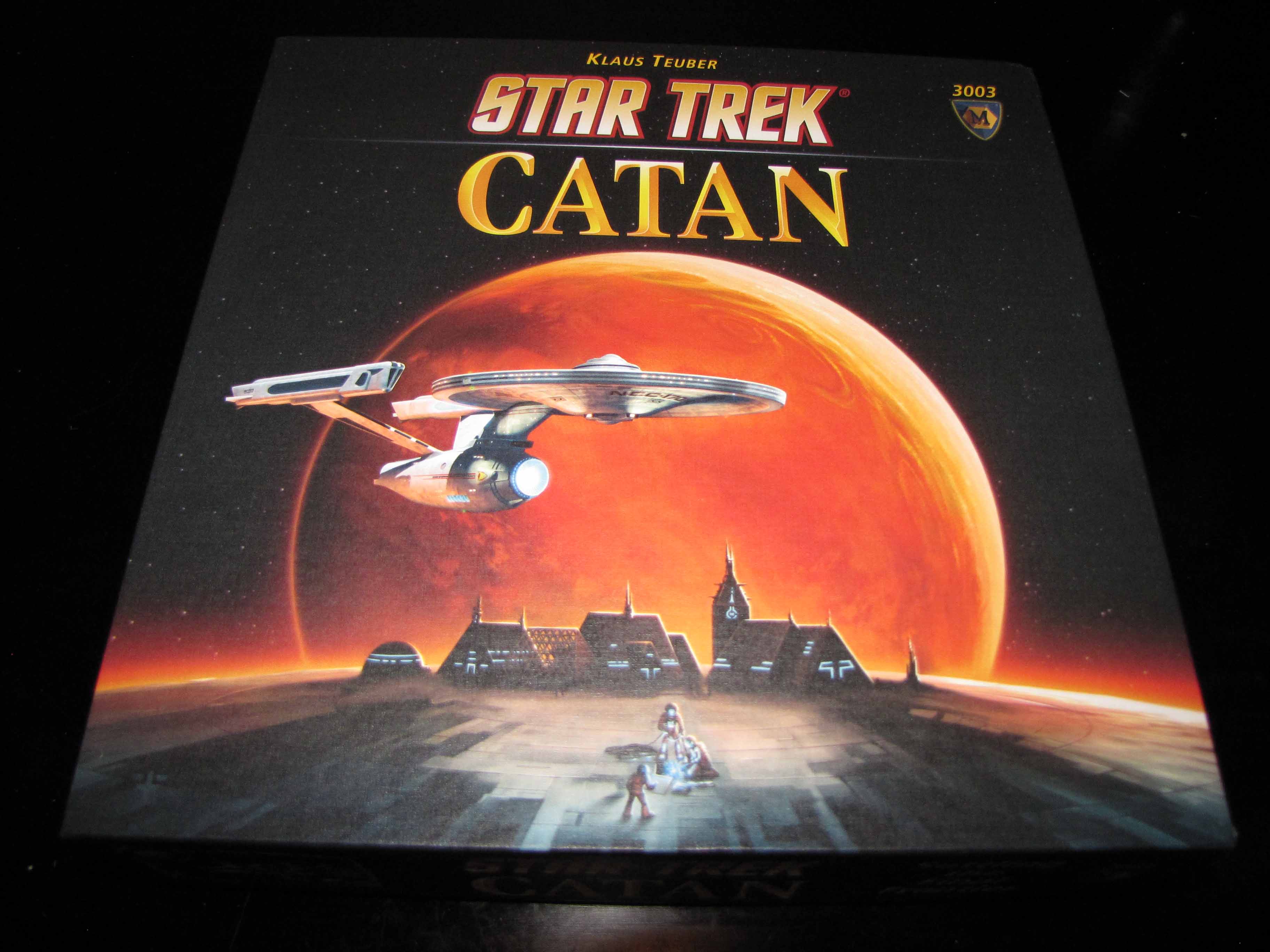
Over the past few years, my husband and I have become interested in board games. This is because some of our nerdy friends regularly get together to play board games such as Settlers of Catan, 7 Wonders, Agricola, and Puerto Rico. For awhile, we resisted buying our own games. We just owned a few basic games such as chess, checkers, and backgammon, and we relied on our friends’ collections of fancier, more modern board games. However, since I’m a big Star Trek fan (and my husband watches plenty of Star Trek, too), I just couldn’t resist acquiring this board game a couple of months ago:

Star Trek Catan! How could I resist?

This past weekend, my husband and I went to a board game shop (one of the few such shops here in South Africa) to look for an expansion pack for “Star Trek Catan” to allow for more players. We found out that no such expansion pack exists yet, but we didn’t leave the game shop empty handed. We found a game called “Journey to the Center of the Earth,” which is based on the classic Jules Verne novel. We both adore the “Journey to the Center of the Earth” story, including some of the various movie adaptations. Sure, the story isn’t scientifically plausible, but the story helped inspire us to become geologists, so we have a soft spot for it, bad science and all. The “Journey to the Center of the Earth” board game came out a few years ago, and the copy we found in the shop was somewhat dusty– obviously, it had been sitting on the shelf for awhile. The good news was that the dusty game was on sale for only 1/3 of its original price! We were a little worried that perhaps the game was on sale because it wasn’t very fun, but we decided to purchase it anyway since it was such a bargain.

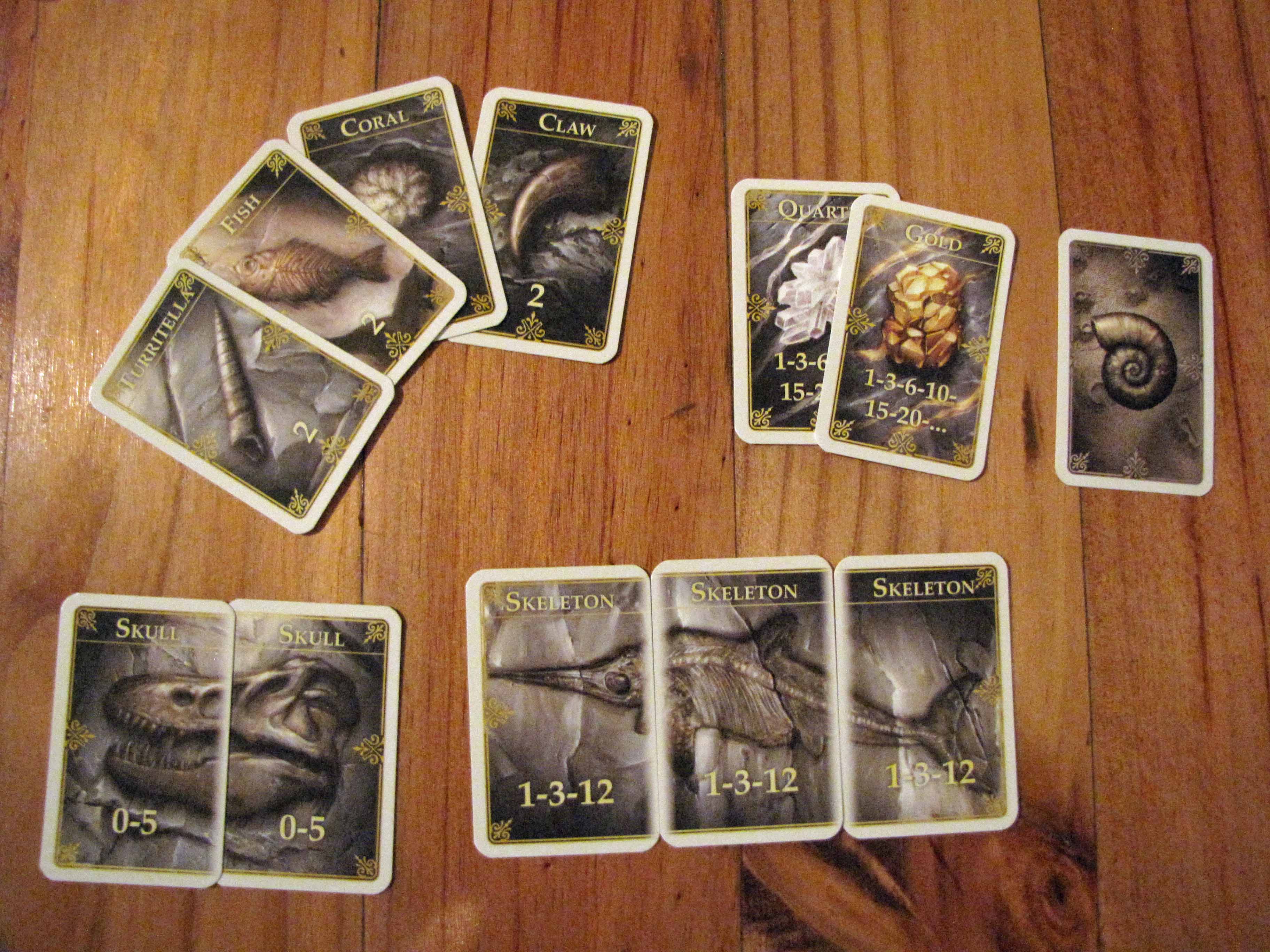
This past Sunday afternoon my husband and I spent a couple of hours playing “Journey to the Center of the Earth”, and we enjoyed it greatly! The game is actually very fun! The game is great for 2-person play and is challenging but not overwhelmingly complicated. The best part about the game is that you win by collecting the most fossils. How could you not like this game? At the end of our first game, my husband and I tied each other with sixty fossil points each. We’ll have to have a rematch soon.

Overall, I highly recommend the game, especially if you are interested in geology. I think I’ll put the game on my forthcoming annual “What to Buy a Geologist for Christmas” list!

Here’s a couple more shots of the game:

The back of the "Journey to the Center of the Earth" board game box, showing the game layout.
Fossil cards! You collect these to win the game. Okay, I know that quartz and gold aren't really fossils, but the game is still fun!

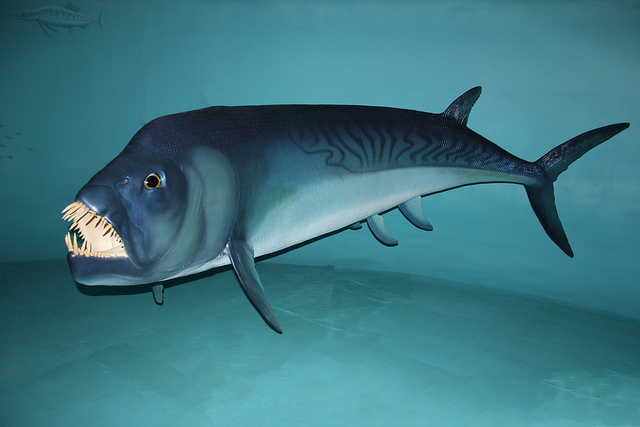
Geology Word of the Week: X is for Xiphactinus

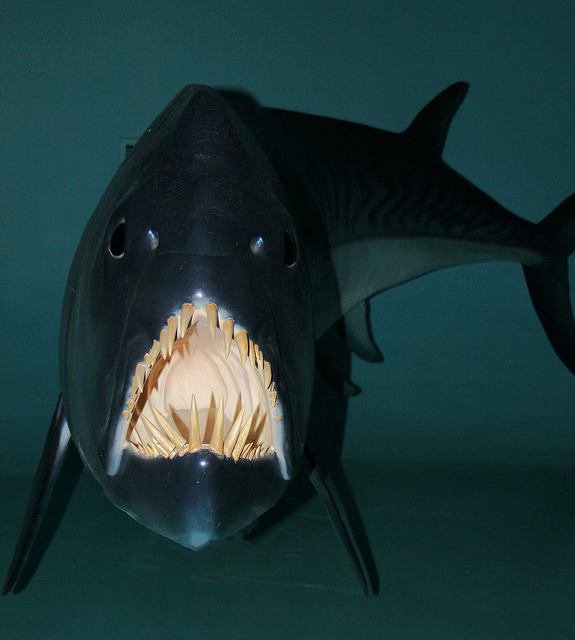
A model of a live Xiphactinus. Photo courtesy of Ron Schott.

def. Xiphactinus:
1. A large (15-20 ft long), predatory fish that lived during the Late Cretaceous.
2. A prehistoric sea monster. Seriously. What an enormous and scary looking fish.
3. A really, really cool fossil. Maybe one day I can display one in the library of my evil geologist lair.

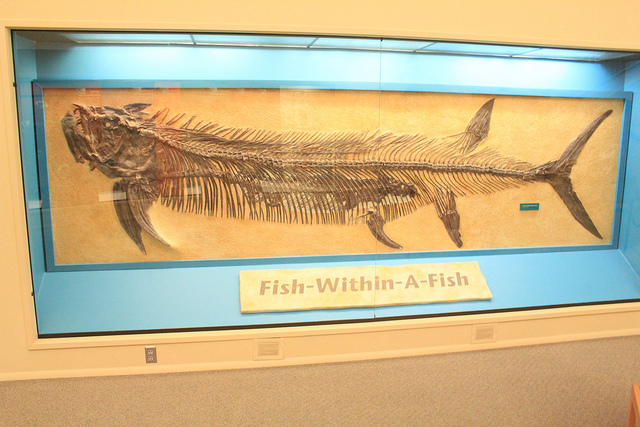
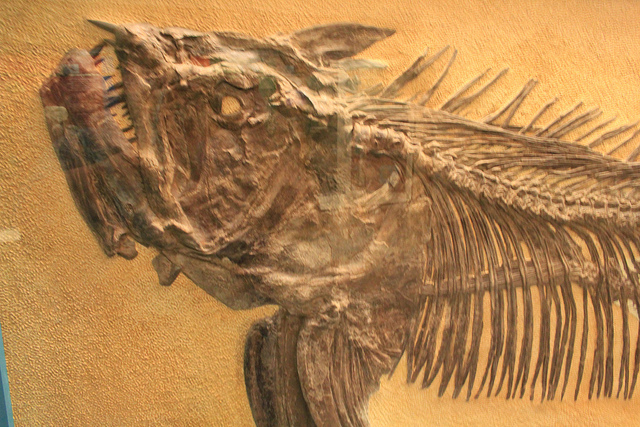
One of the most famous fossils of Xiphactinus is the “fish within a fish” fossil located at the Sternberg Museum of Natural History in Hays, Kansas. Ron Schott visited the museum several months ago and took many pictures as well as an incredible Gigapan of the “fish within a fish” fossil and some of the associated displays. Ron describes:

The centerpiece of the Sternberg Museum of Natural History in Hays, Kansas is the world renowned “Fish Within a Fish”. This remarkably complete sample from Gove County, Kansas is of a fourteen foot long Xiphactinus that had ingested an eight foot long Gillicus shortly before its demise in the Western Interior Seaway some 80 million years ago.

Here are some pictures that Ron took of Xiphactinus:

A fossil fish within a fossil fish. Very cool! Photo courtesy of Ron Schott.
Another view of the "fish within a fish" fossil. Photo courtesy of Ron Schott.
A closer view of the big fish's head. Look at those teeth! Photo courtesy of Ron Schott.
Scary fish teeth! Photo courtesy of Ron Schott.
A Xiphactinus skull. Photo courtesy of Ron Schott.
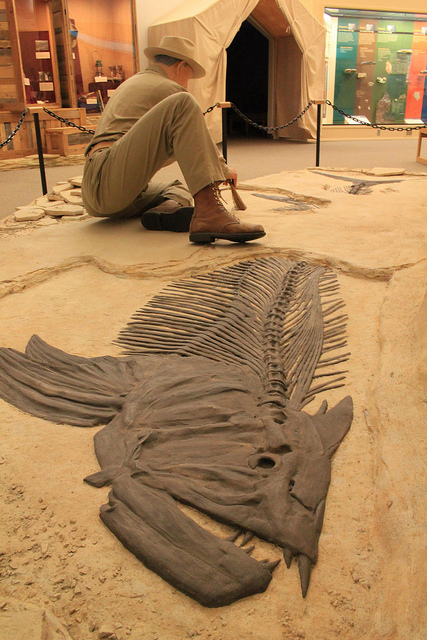
A reconstruction of the excavation of a Xiphactinus fossil. The model person gives a good sense of scale-- this is an enormous fish! Photo courtesy of Ron Schott.
Another view of the model excavation. Photo courtesy of Ron Schott.
Scary Xiphactinus mouth. Photo courtesy of Ron Schott.
Boo! Photo courtesy of Ron Schott.


***Thanks to Ron Schott for suggesting this week’s word and providing all the wonderful scary pictures.***

Georneys with Dana- Part II: The Rock, Fossil, & Dinosaur Shop


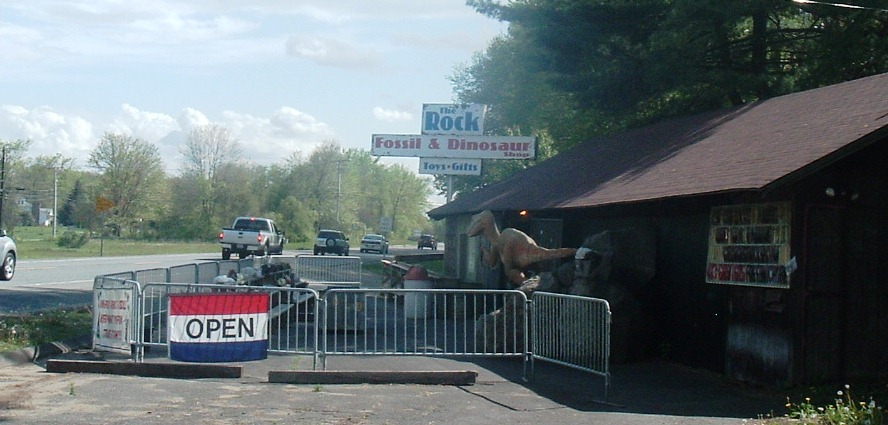
The front of the Rock, Fossil, & Dinosaur Shop, complete with naked (non-feathered) velociraptor.

Note: I convinced my Geokittehs co-author Dana Hunter to fly from Seattle to New Hampshire to visit me for a few days. I handed in the final version of my PhD thesis last Friday afternoon, and Dana arrived last Saturday to help me celebrate. This is Part II of my description of the fun georneys we had together during Dana’s visit.

After our visit to the dinosaur footprints, Dana and I headed to a place called The Rock, Fossil, & Dinosaur Shop in Deerfield, Massachusetts. I have fond memories of visiting this shop as a child. The shop has many interesting minerals, fossils, and other geology-themed items for sale, which are advertised with a general focus on science and with a minimum focus on the crystal healing, energy balancing, totem stone, etc. woo-woo that is sadly promoted at many otherwise excellent rock shops. The shop also offers a number of other cheesy, geology-themed activities. You can “pan for minerals” in a water sluice located out front. The shop attendant tried to sell us on panning, but Dana and I were not very interested in panning bags of sand spiked with amethyst crystals and small ammonite fossils. We told the shopkeeper we liked to pan in real dirt for our geological treasures. However, I do remember enjoying the fake panning as a child. The shop also features a mining adventure and a backyard full of fake dinosaurs.

One of the fossils (or maybe a cast?) for sale.
Giant ammonites from Morocco.
Moar fossils.
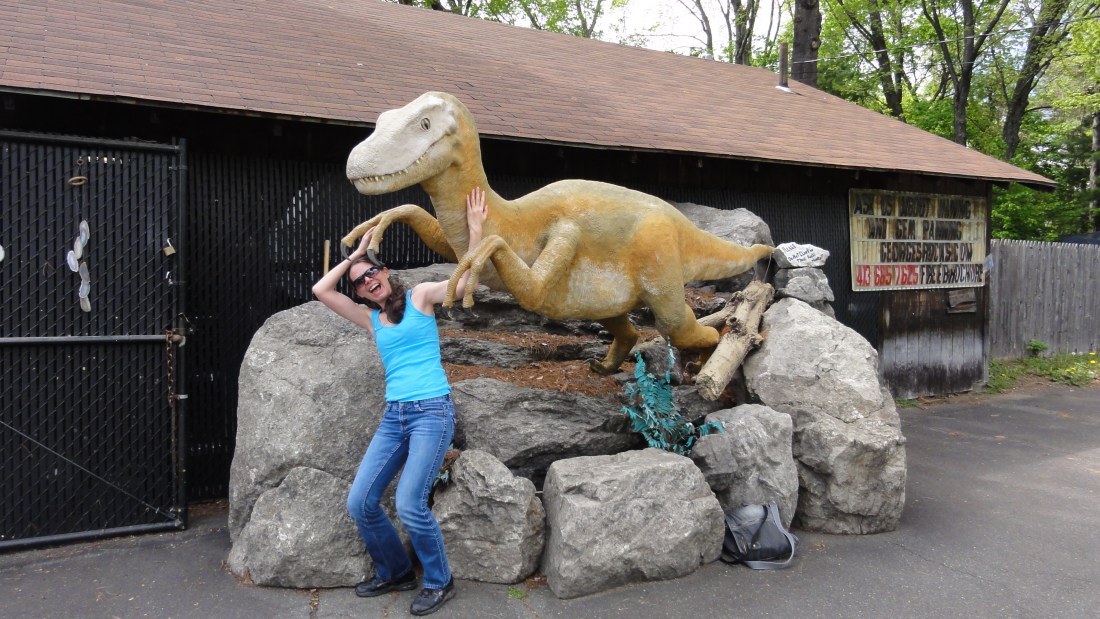
Dana, about to be eaten by a velociraptor.

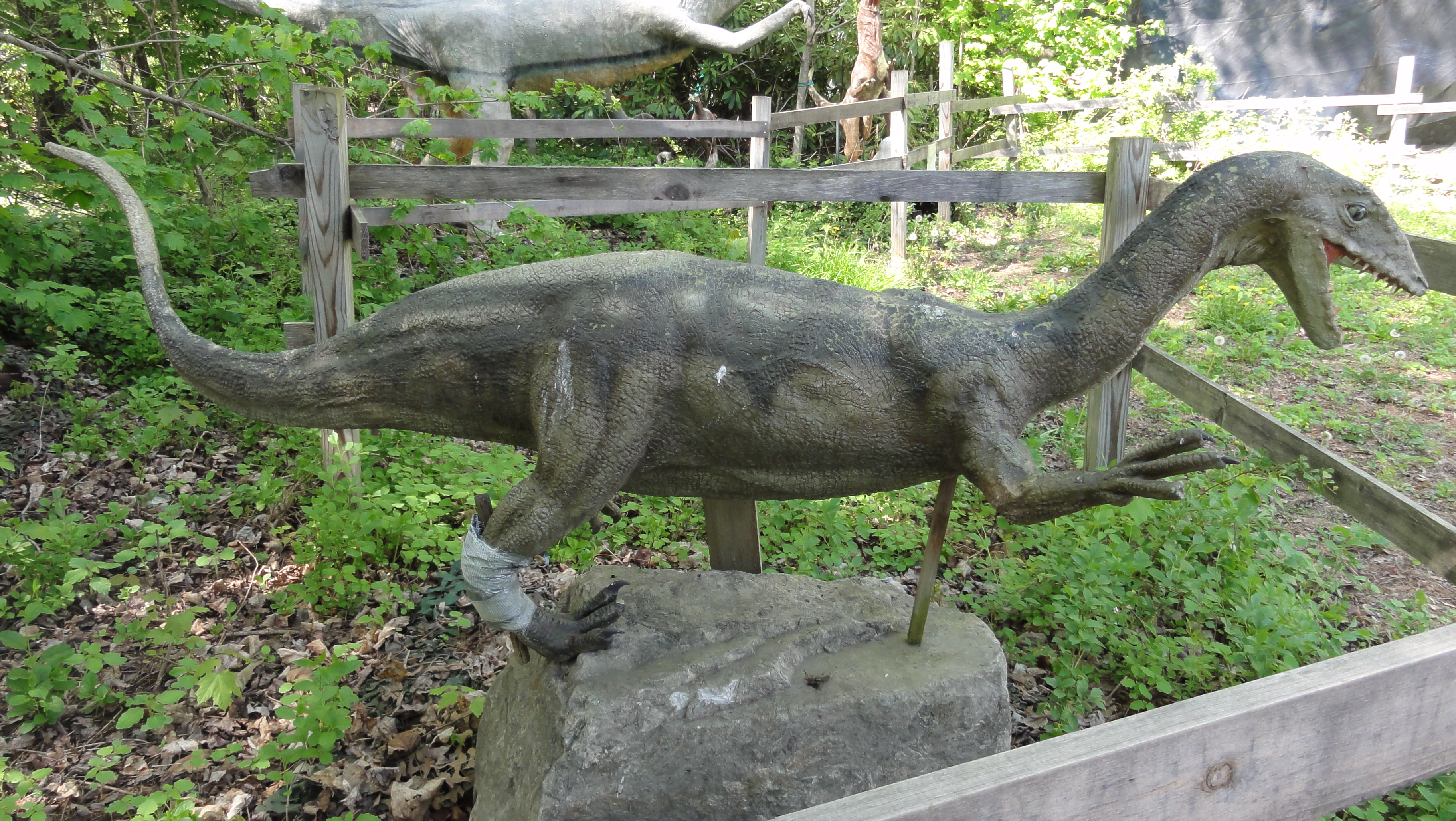
Dana and I enjoyed our visit to the shop, but I was very sad to see that the shop is now very poorly maintained compared to my memory of it. At first I wondered if I was just remembering the shop through memories glorified by the glow of childhood delight. However, looking at the shop website pictures— which are clearly dated by several years– it’s apparent that the shop has deteriorated. The paint on the shop sign is cracked and peeling, the shop merchandise quantity and quality are declined (parts of the shop seem half-empty now), and the dinosaurs are in a sorry state of disrepair. Sadly, the shop attendant (who I hope was not the owner) didn’t seem to know even basic geology and mineralogy. I’m not sure what happened to the shop– perhaps it has changed ownership or been hit hard by the economic decline.

A sign of the shop's decline #1: a duct taped dinosaur.
A closer view of the duct tape repair.
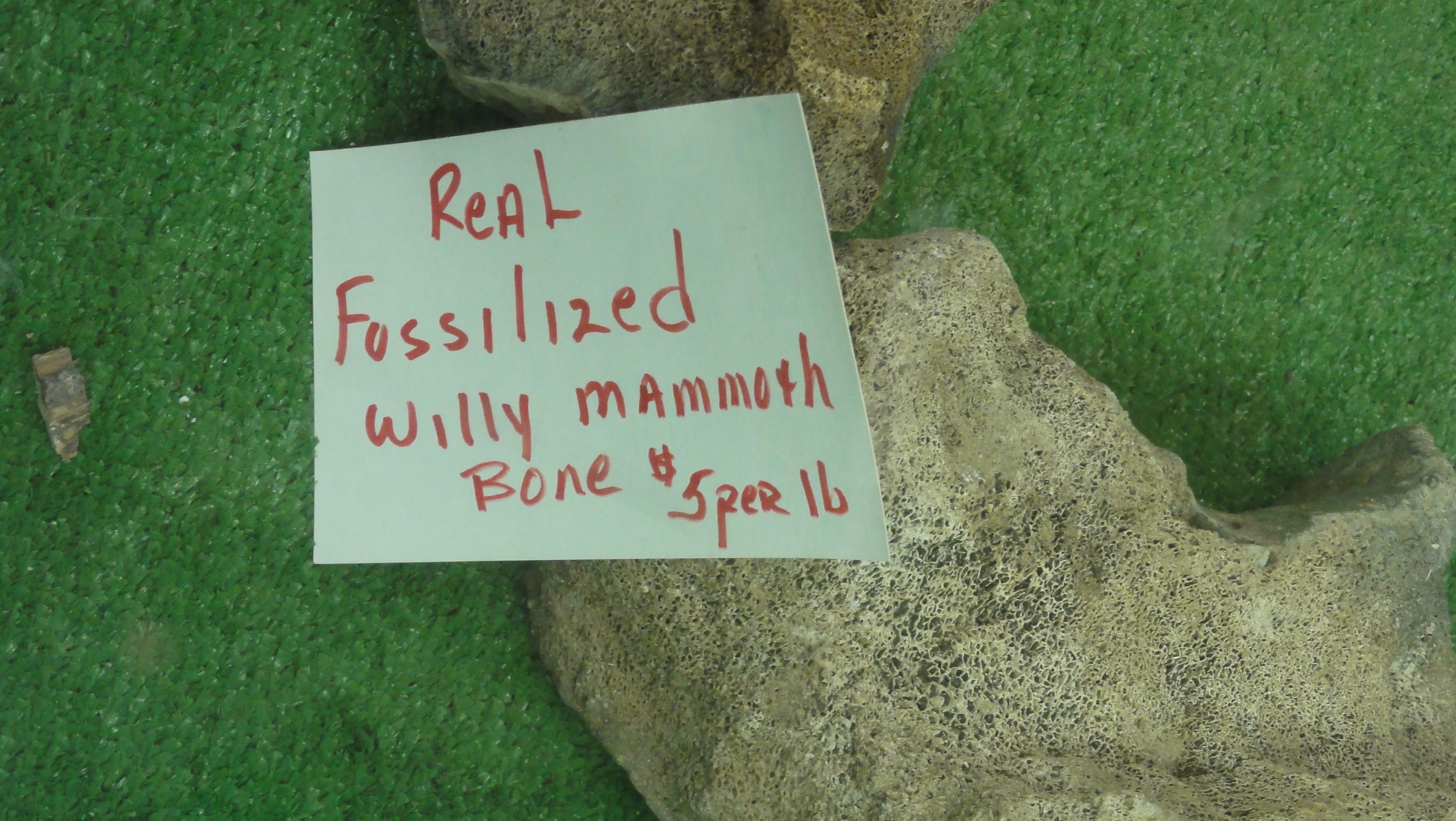
A sign of the shop's decline #2: Willy mammoth bone? Hmmm...

Nevertheless, Dana and I had a good time during our visit. We had great fun taking pictures of the dinosaurs:

Dinosaur heads.
Stegosaurus in the woods.
Jurassic Park?
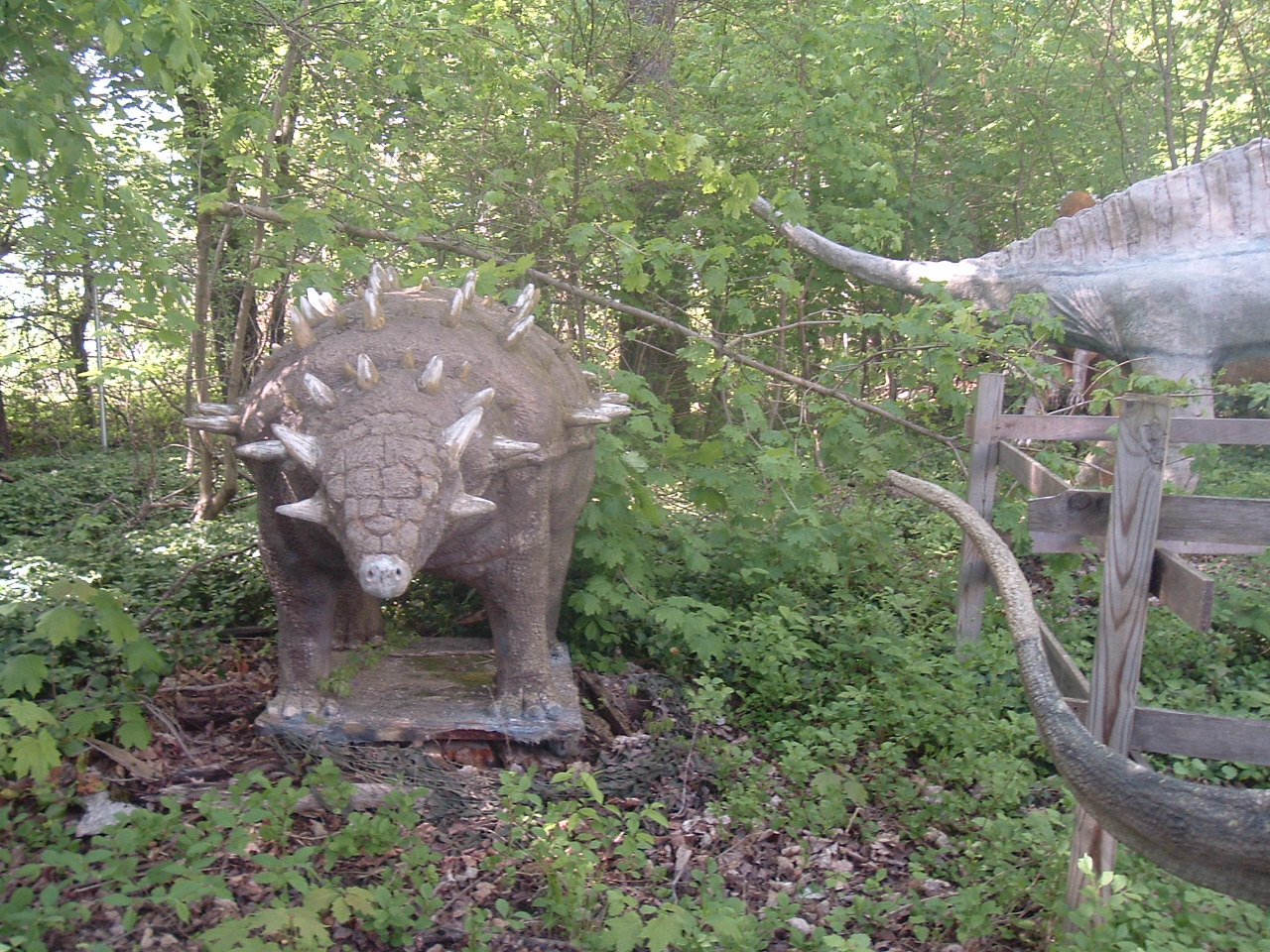
Ankylosaurus.
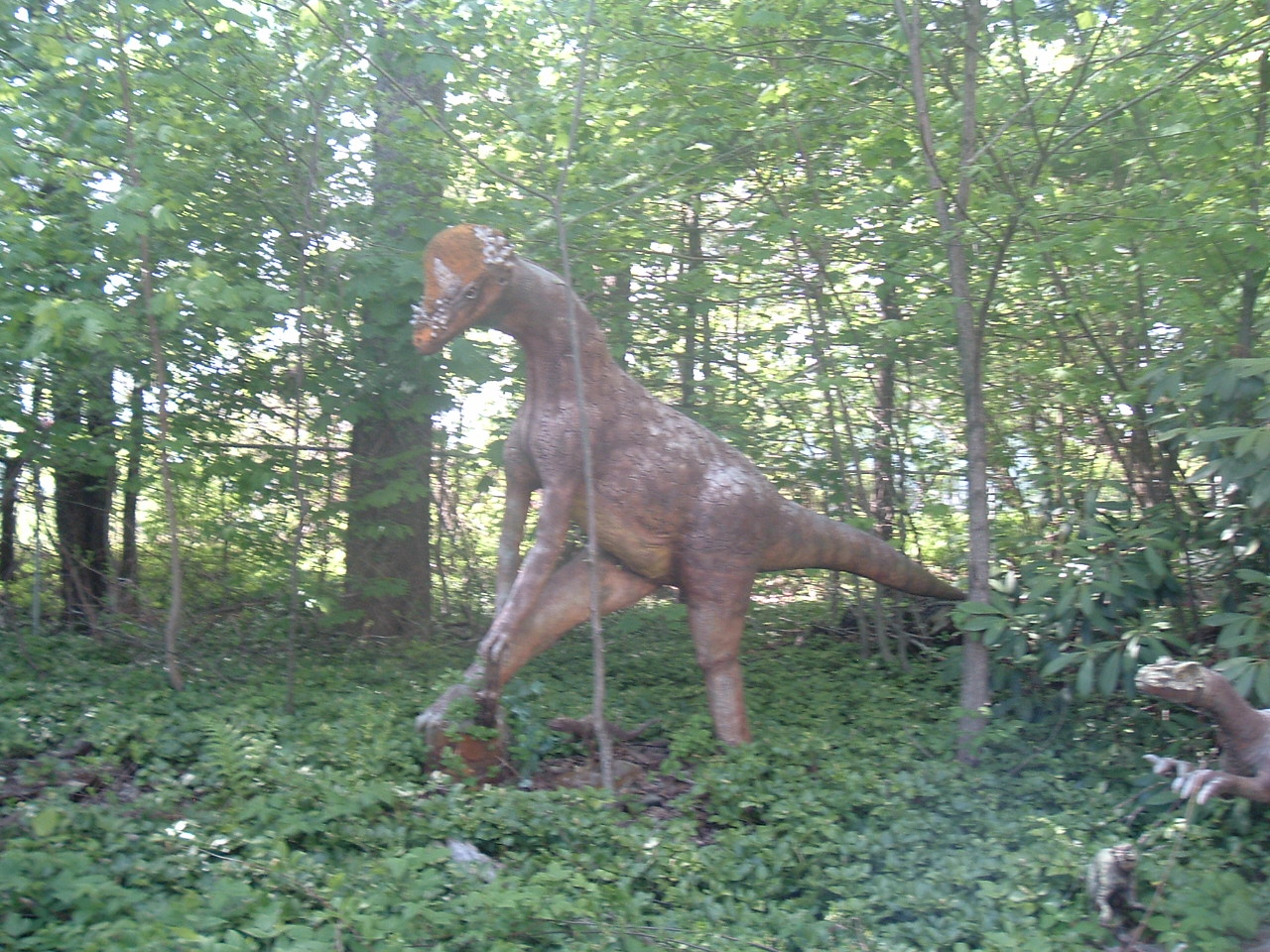
Pachycephalosaurus.

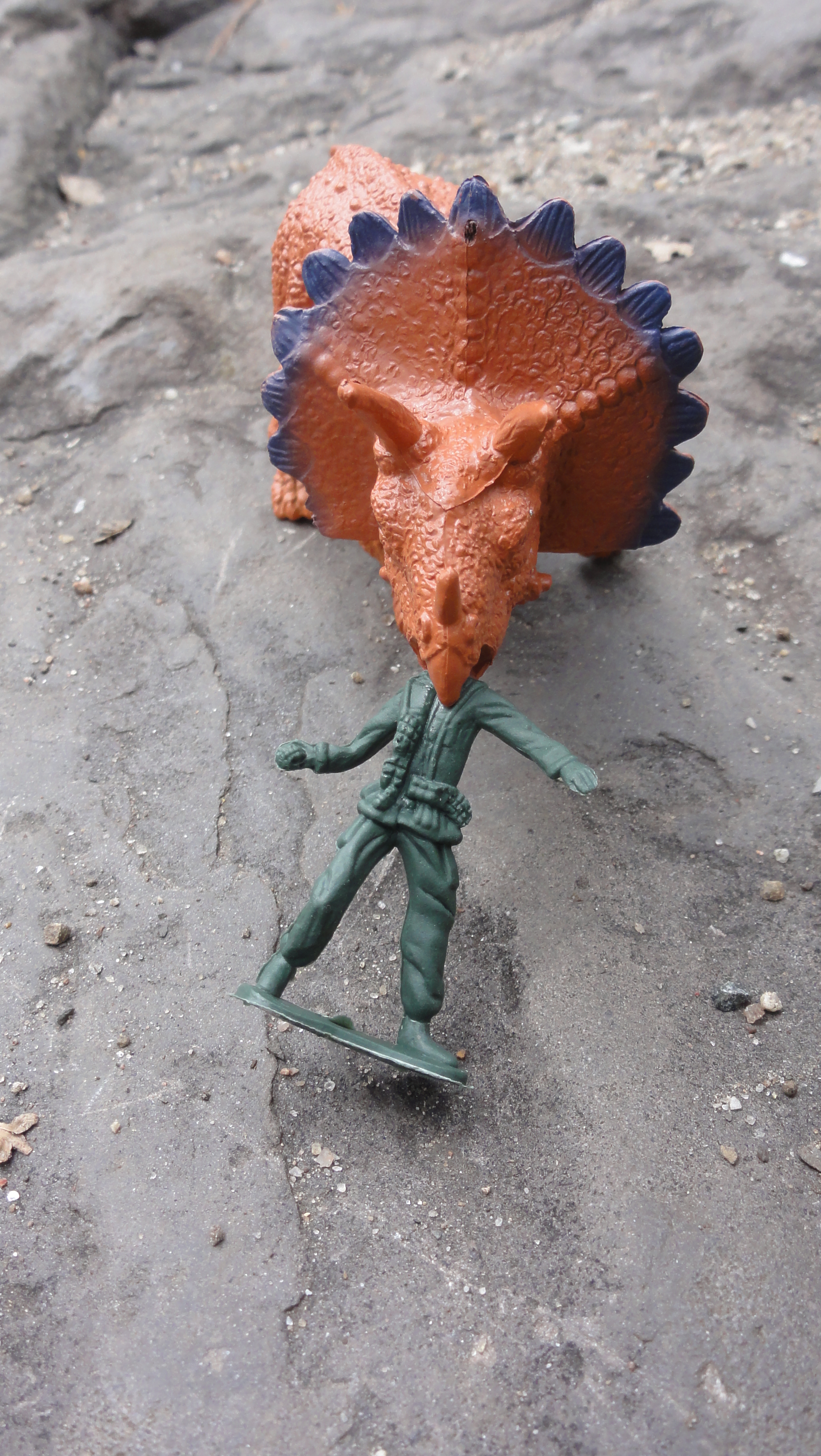
I made a triceratops friend:

My new friend.

And Dana found a new boyfriend:

I really hope this doesn't mean the shop is promoting the whole man-with-dinos thing.

While we skipped the panning and the mine tour, Dana did buy a few mineral samples, and I bought three stuffed animal dinosaurs: a velociraptor, a Utahraptor, and a triceratops. The velociraptor and Utahraptor even have a bit of fluff on them– I’m not sure if they’re quite feathery enough, but at least they have some feathers.


My new dinosaur friends. I think they need to become friends with Paleontologist Barbie.

Stay tuned for more georneys with Dana!

Georneys with Dana- Part I: Dinosaur Footprints Near Holyoke, MA

I convinced my Geokittehs co-author Dana Hunter to fly from Seattle to New Hampshire to visit me for a few days. I handed in the final version of my PhD thesis on Friday afternoon, and Dana arrived last night to help me celebrate. So far, we’ve been having a ball. You can expect several forthcoming posts about Dana’s visit, both here on Georneys and over at Dana’s blogs Rosetta Stones and En Tequila Es Verdad. For now, I thought I would share just a few pictures from the first full day of our adventures.

Today, we visited three geologic sites of interest in Massachusetts and New Hampshire: the dinosaur footprints along the Connecticut River near Holyoke, MA; the Rock, Fossil, & Dinosaur Shop; and finally the Chesterfield Gorge.

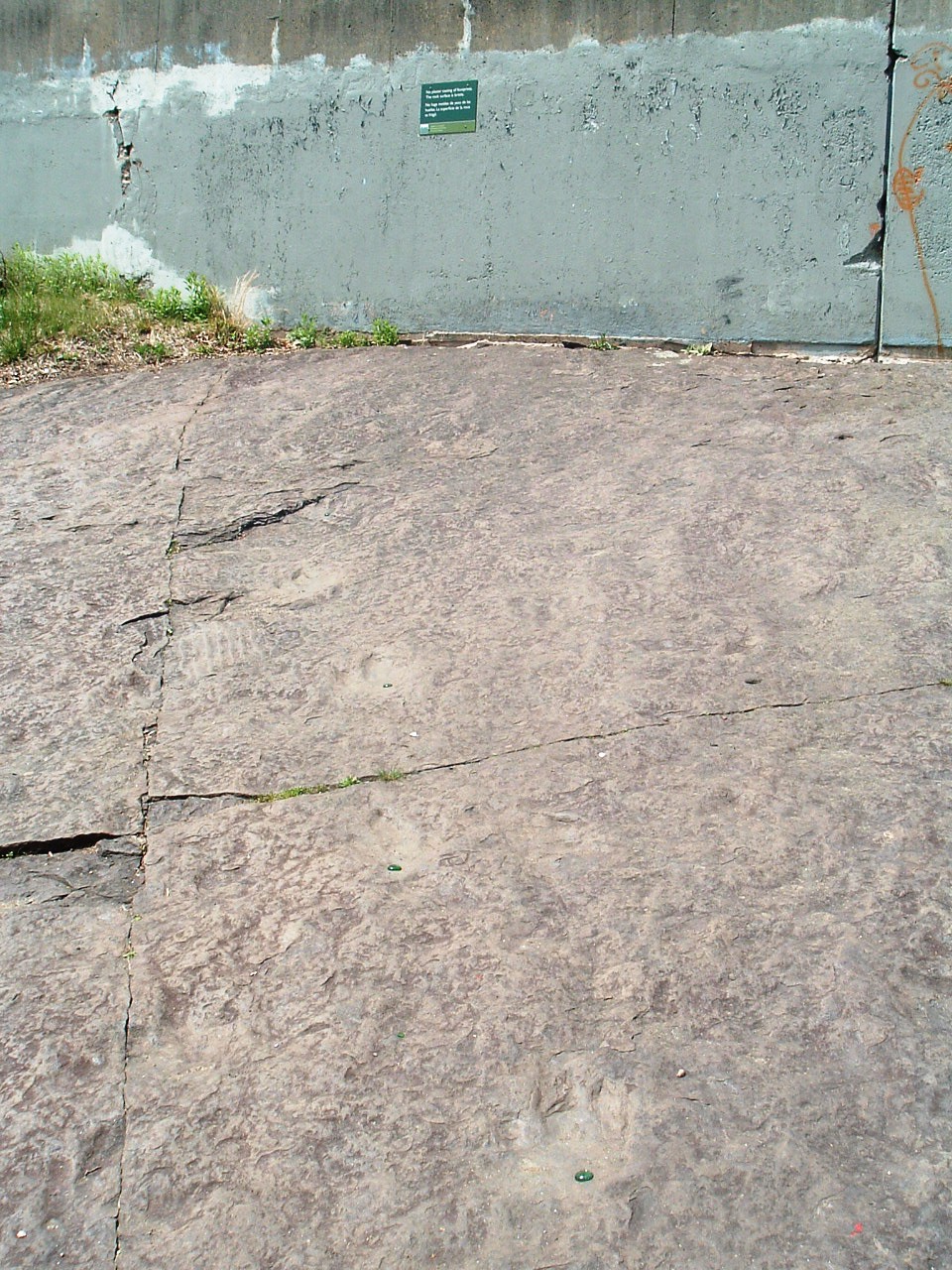
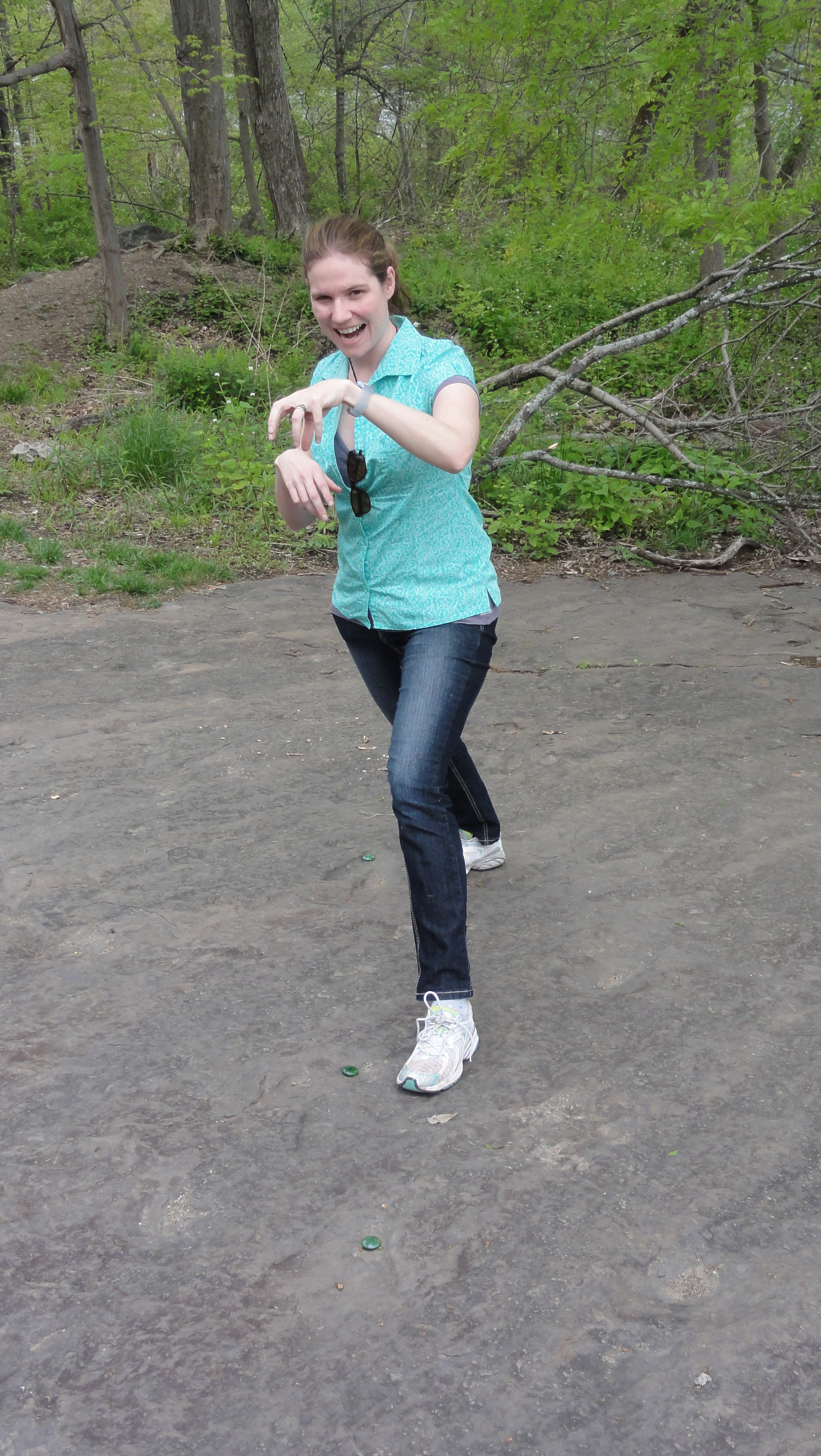
In this post, I’ll share some pictures from our visit to the dinosaur footprints, which were quite impressive. In the photos below, I’ve indicated the locations of the dinosaur footprints with green markers (glass beads from the dollar store) since the footprints are sometimes difficult to see.

Dinosaur footrpint #1
Dinosaur footprint, with my foot for scale.
A trackway of footprints. If you look closely, you can see the green markers indicating the footprints.
Footprints near ripple marks.
More ripple marks.

Dana and I aren’t paleontologists, but we think we have some idea how the tracks were made. We think it went something like this:

A scientifically accurate reconstruction of the events leading to track formation (we are joking, obviously 🙂 )
Yummy.
Epic dinosaur-army battle.

Alternatively, the tracks could have been formed by a Danaraptor:

The ferocious Danaraptor.

Or by an Evaraptor:

The vicious Evaraptor.
Rawr!

More seriously, according to the official website for the site,

Researchers believe these prints were left by small groups of two-legged, carnivorous dinosaurs, up to 15’ tall. The entire Connecticut River Valley – which scientists believe was a sub-tropical swamp a “mere” 190 million years ago – has long been recognized for its wealth of prehistoric footprints.

The first dinosaur prints to be scientifically described are still here to be seen, preserved in sandstone* since this valley was a sub-tropical mix of wetlands and shallow lakes, 190 million years ago. The larger Eubrontes prints were likely made by ancestors of the great Tyrannosaurus rex, standing up to 15’ tall and 20’ long. You can see hundreds of fossils not only from the four distinct two-legged dinosaurs, but also stromatolites, fish, plants and other ancient beings. Finally, look for the 20+ dinosaurs trackways, which formed the basis for the novel theory that dinosaurs travelled in packs or groups.

*Note: I’m not convinced the rock is sandstone– it looked more like siltstone or mudstone to me. Can anyone confirm the rock type? When I have the time, I’ll track down some scientific references.

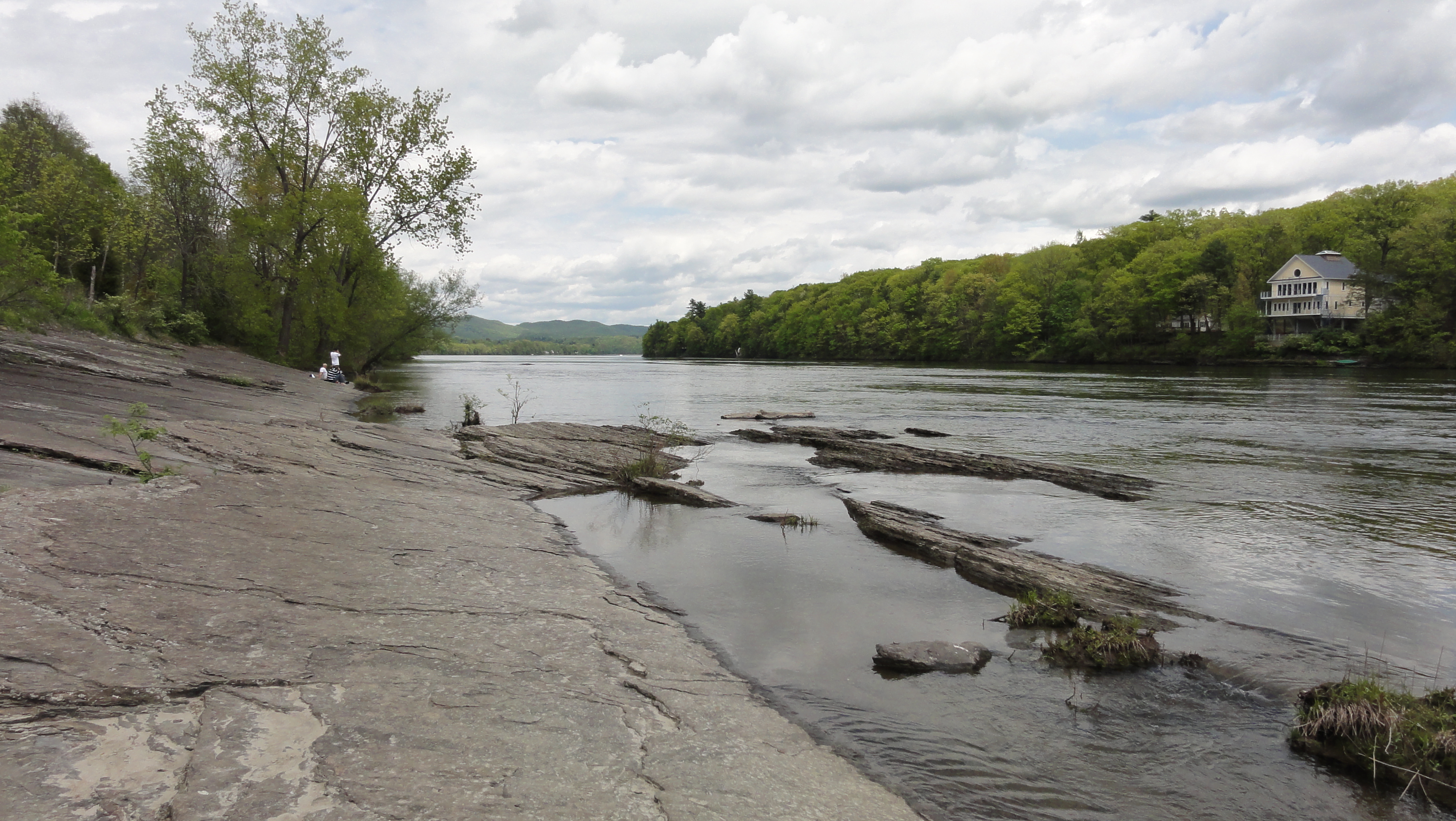
The dinosaur footprints are located along a beautiful section of the Connecticut River. After we had our fun looking at the tracks and doing our “scientific reconstructions,” we went down next to the river edge for awhile.

A pretty house along the CT River.
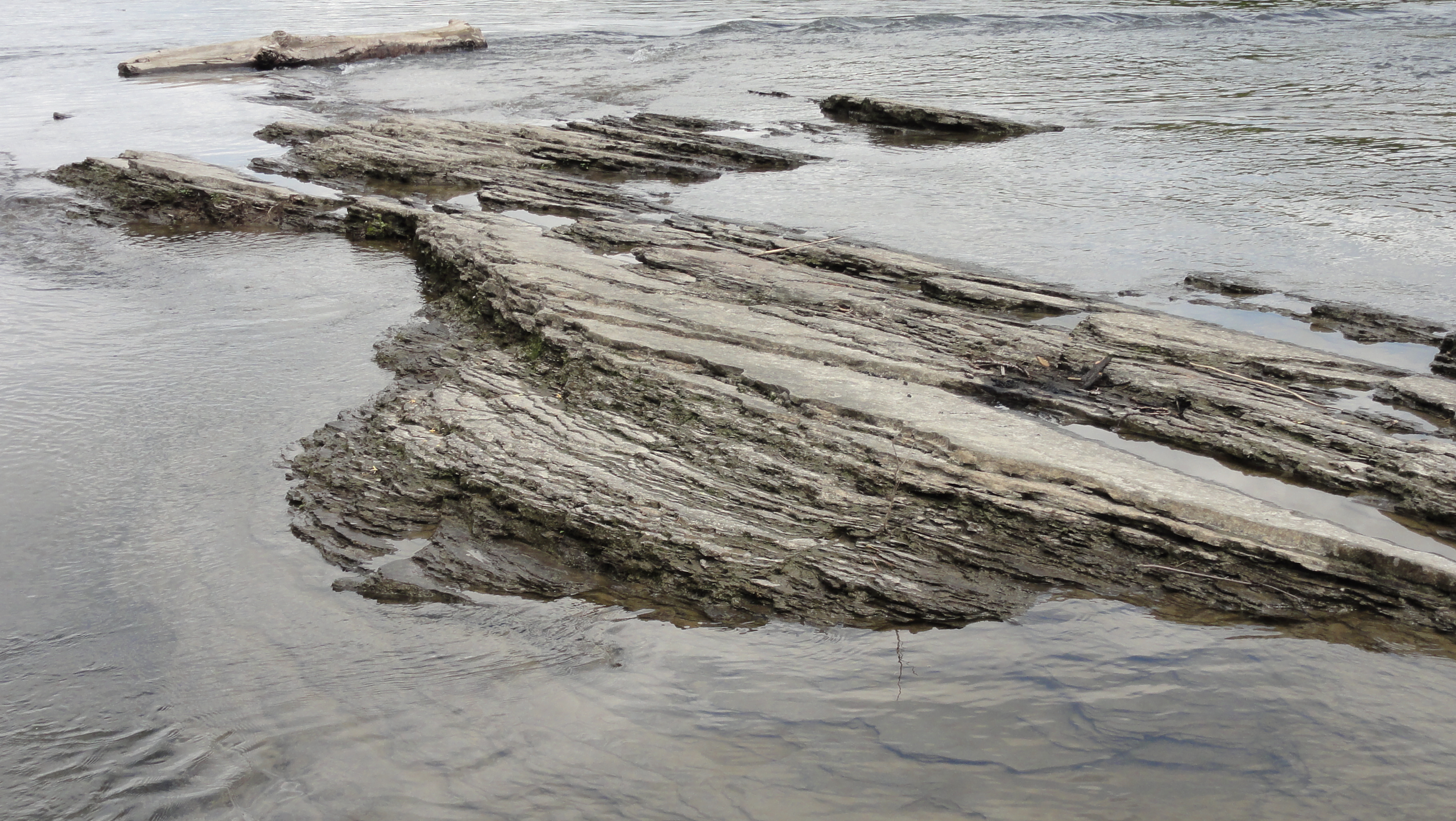
On the tilted riverbank.
Another view of the tilted rocks along the riverbank.
Sedimentary, my dear Watson.