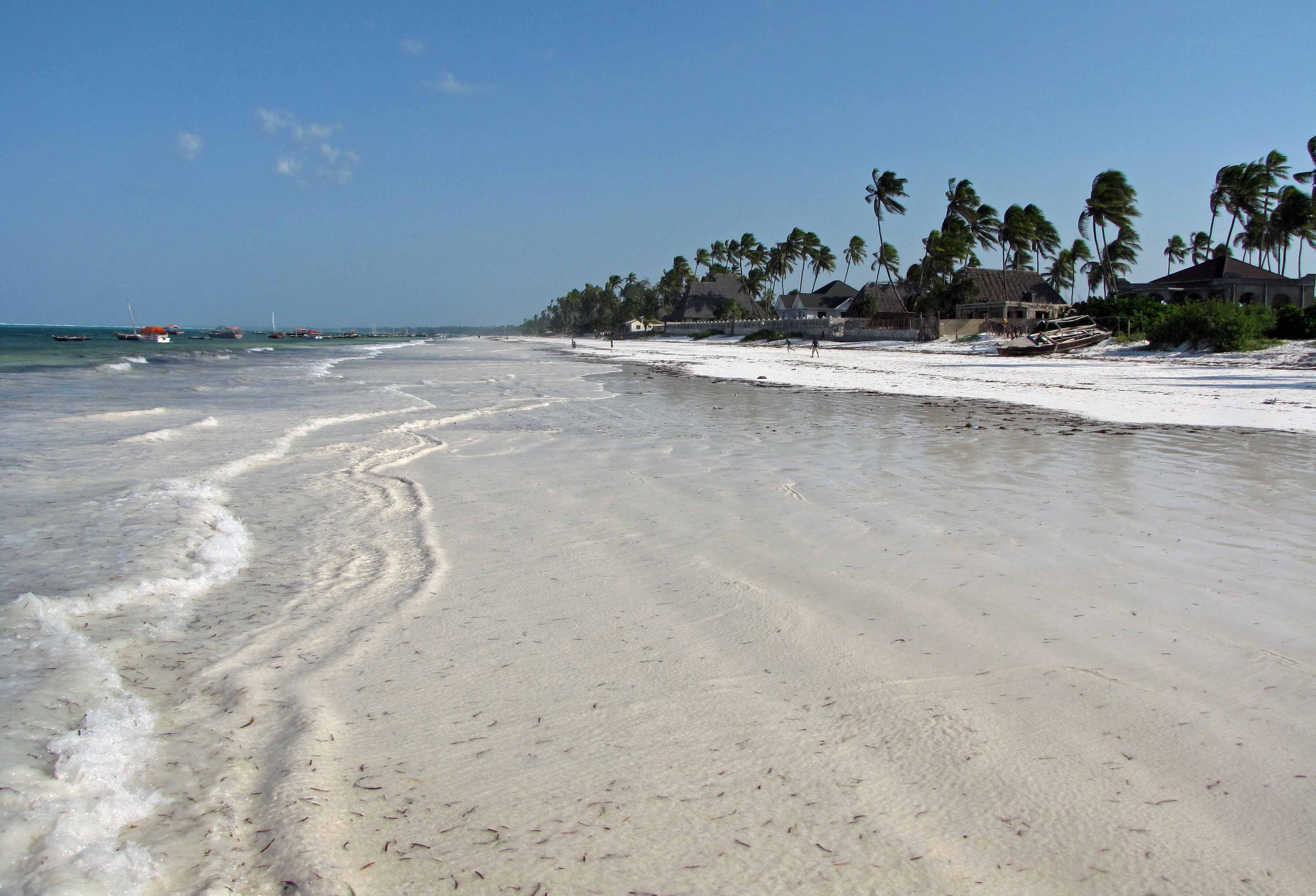
A coral terrace on the beach near the village of Matemwe, Zanzibar.
For this week’s “Monday Geology Picture” post, I’m continuing with sharing some pictures from my vacation in Zanzibar back in June 2013. I thought I would share some pictures of a coral terrace on the beach near the village of Matemwe. My husband and I stayed at the beautiful resort of Azanzi near Matemwe. Most of the coral found along the beaches in Zanzibar is likely of Marine Isotope Stage 5e Pleistocene age (Arthurton et al., 1999).
A crab crawling on a coral beach terrace, Matemwe, Zanzibar.The view of the beach near the coral terrace, Matemwe, Zanzibar.
Reference: Arthurton et al. (1999) Late Quaternary Coastal Stratigraphy on a Platform-Fringed Coast: A Case Study from Zanzibar, Tanzania. Journal of Coastal Research, Vol. 15, No. 3: 635-644.
Last week I shared some pictures of a coral palace in Zanzibar. This week, I’m sharing a few pictures of modern coral houses in the beachside village of Matemwe, which is located on Zanzibar’s northeastern coast. These days, more and more buildings in Zanzibar are being built out of concrete. This may be a good thing since mining of coral rock may not be the most eco-friendly building practice. However, some modern buildings, such as the one (in progress) in the photograph below, are still constructed from traditional coral building stone.
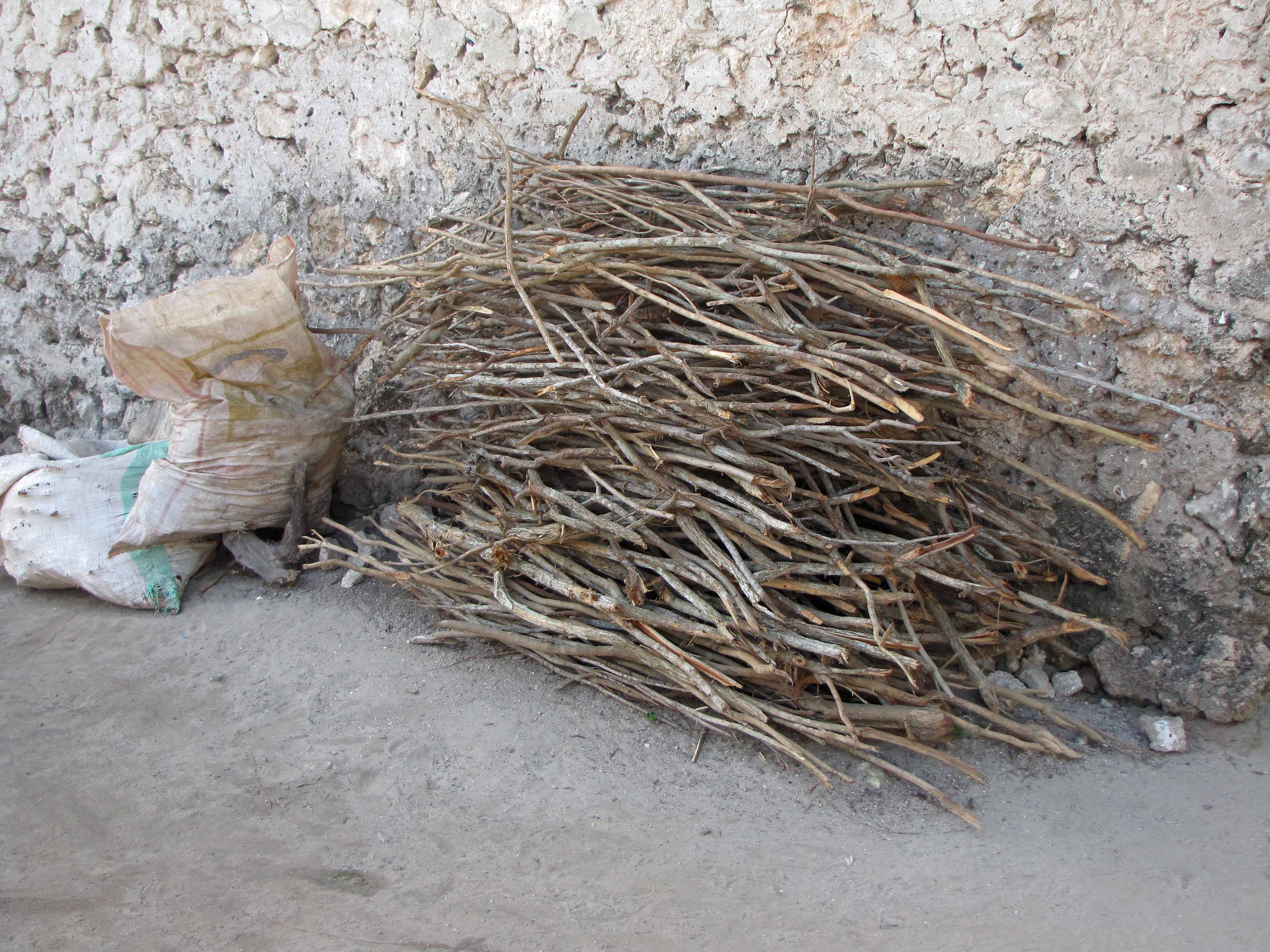
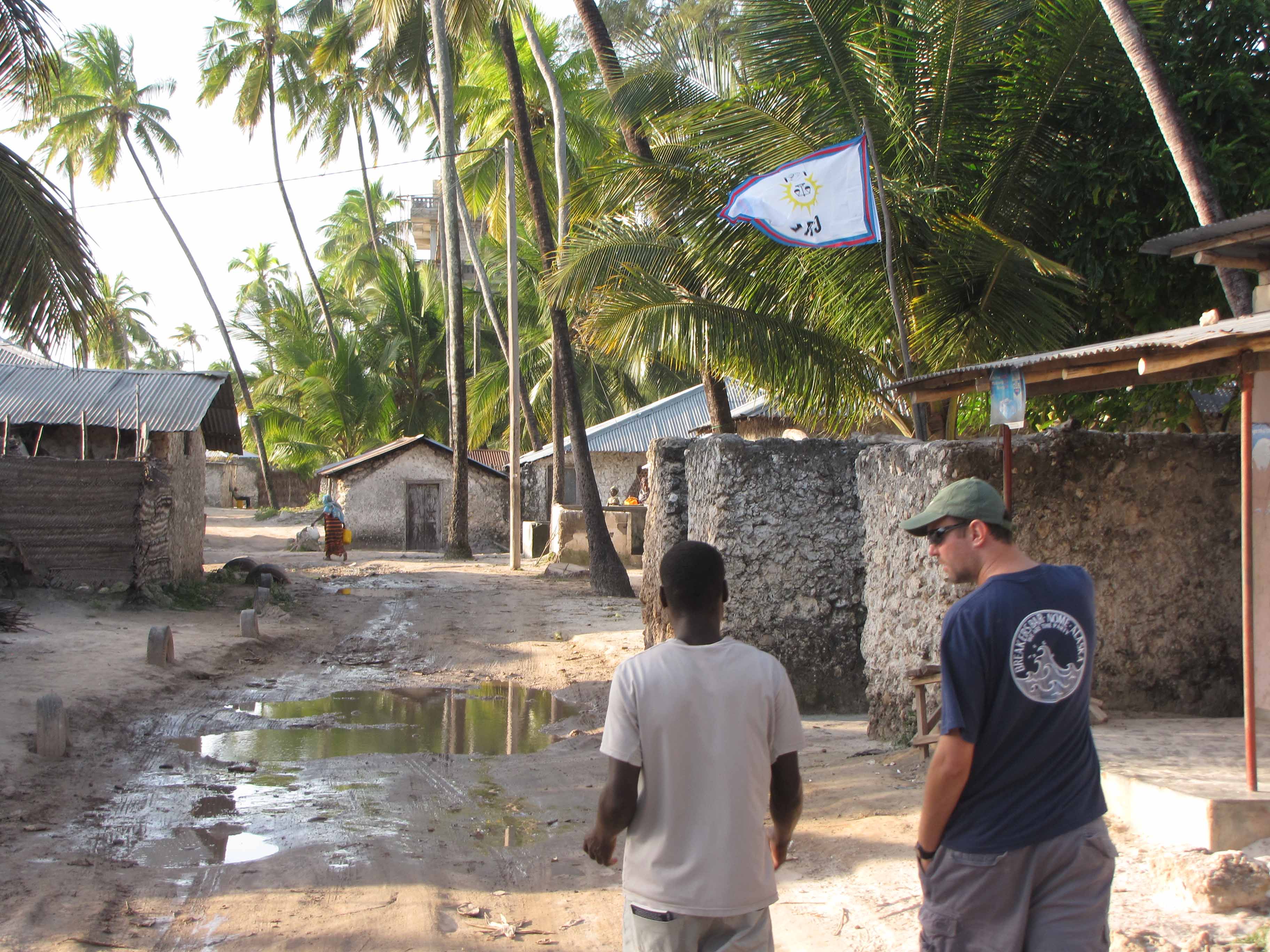
A wider view of a coral house under construction in Matemwe.A wooden door on a coral house, Matemwe.Firewood kindling stacked against a coral building in Matemwe.My husband and our guide walking down one of the main streets in Matemwe.Yours truly posing with some women outside a coral building in Matemwe. I bought one of the bags they were weaving out of palm leaves.
Coral building stone at the Princess Mtoni Ruins, Zanzibar.
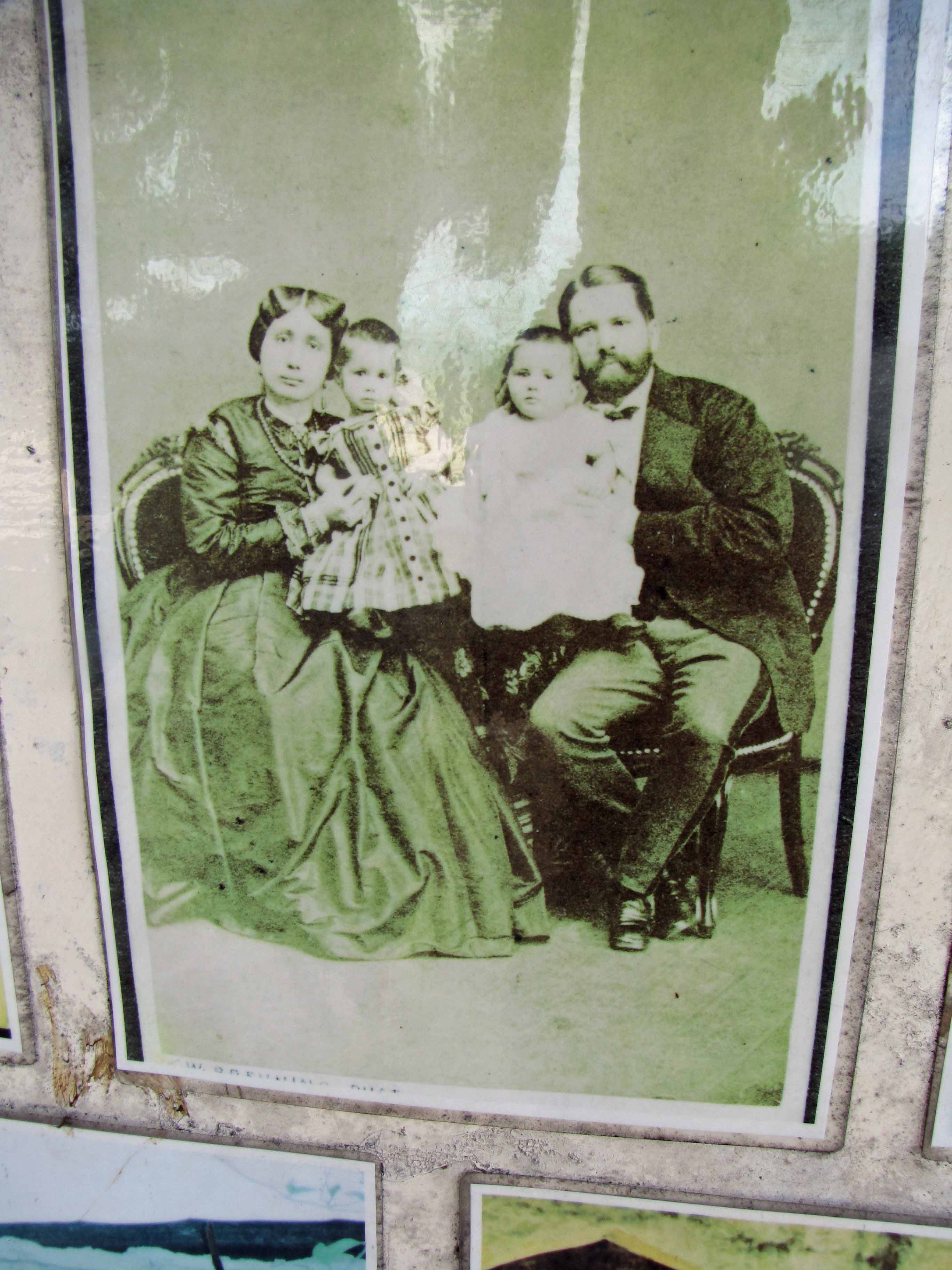
This week I’m continuing with sharing some pictures from my recent vacation in Zanzibar back in June 2013. There is plenty of coral around Zanzibar, and my husband and I noticed that many of Zanzibar’s buildings– both ancient and modern– have been built with coral blocks. As an example, the picture above shows a coral building stone in the Princess Mtoni Ruins, the remains of the childhood home of Princess Salme, a Zanzibari princess who in the 1860s eloped with a German merchant, converted to Christianity, and changed her name to Emily Ruete. While living in Germany, Emily / Princess Salme wrote an excellent book about her life: Memoirs of an Arabian Princess from Zanzibar. I read the book while I was in Zanzibar and highly recommend it. The book provides a rare, rich, colorful glimpse of Zanzibar– or at least of Zanzibari royal life– in the mid-1800s.
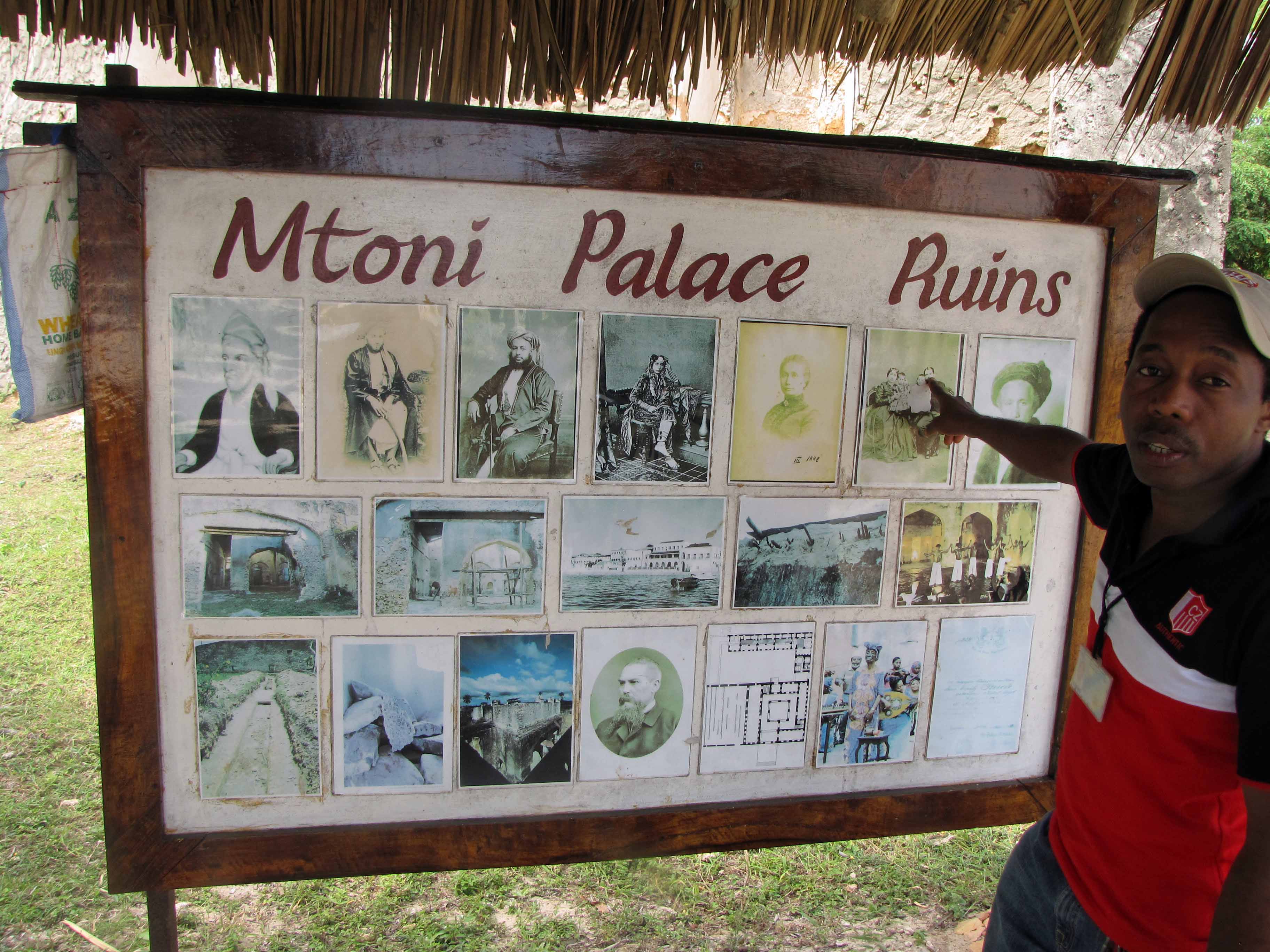
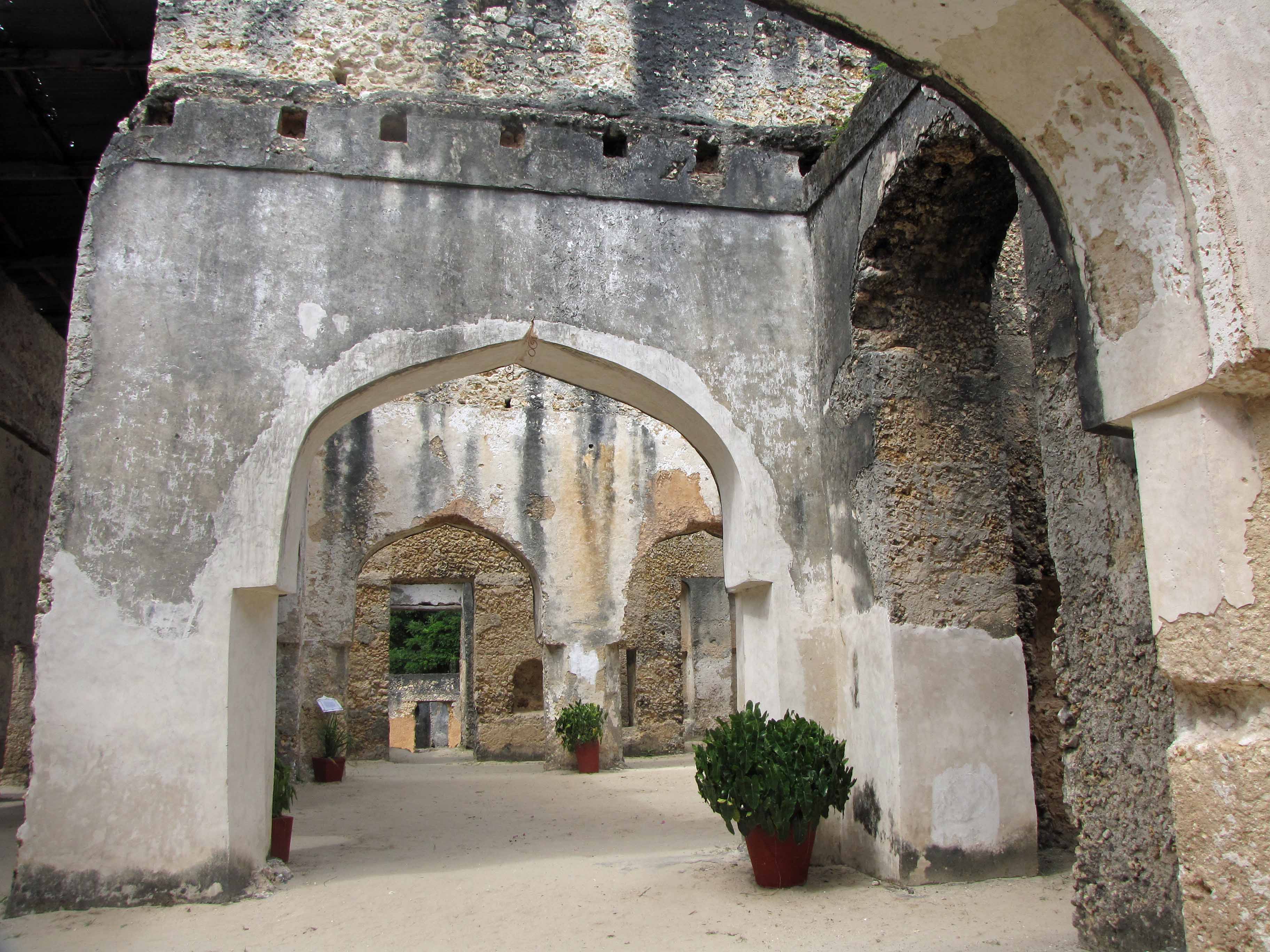
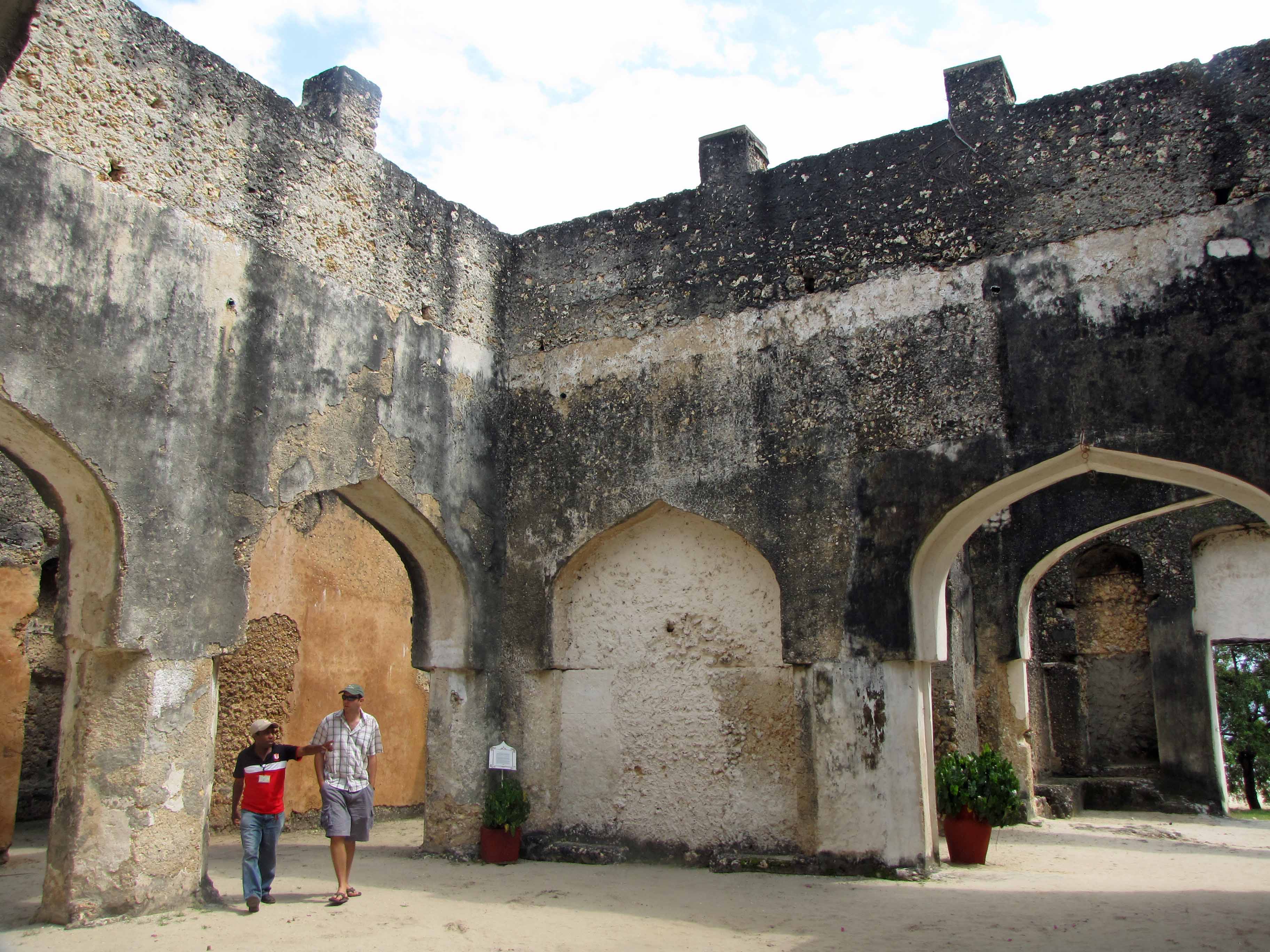
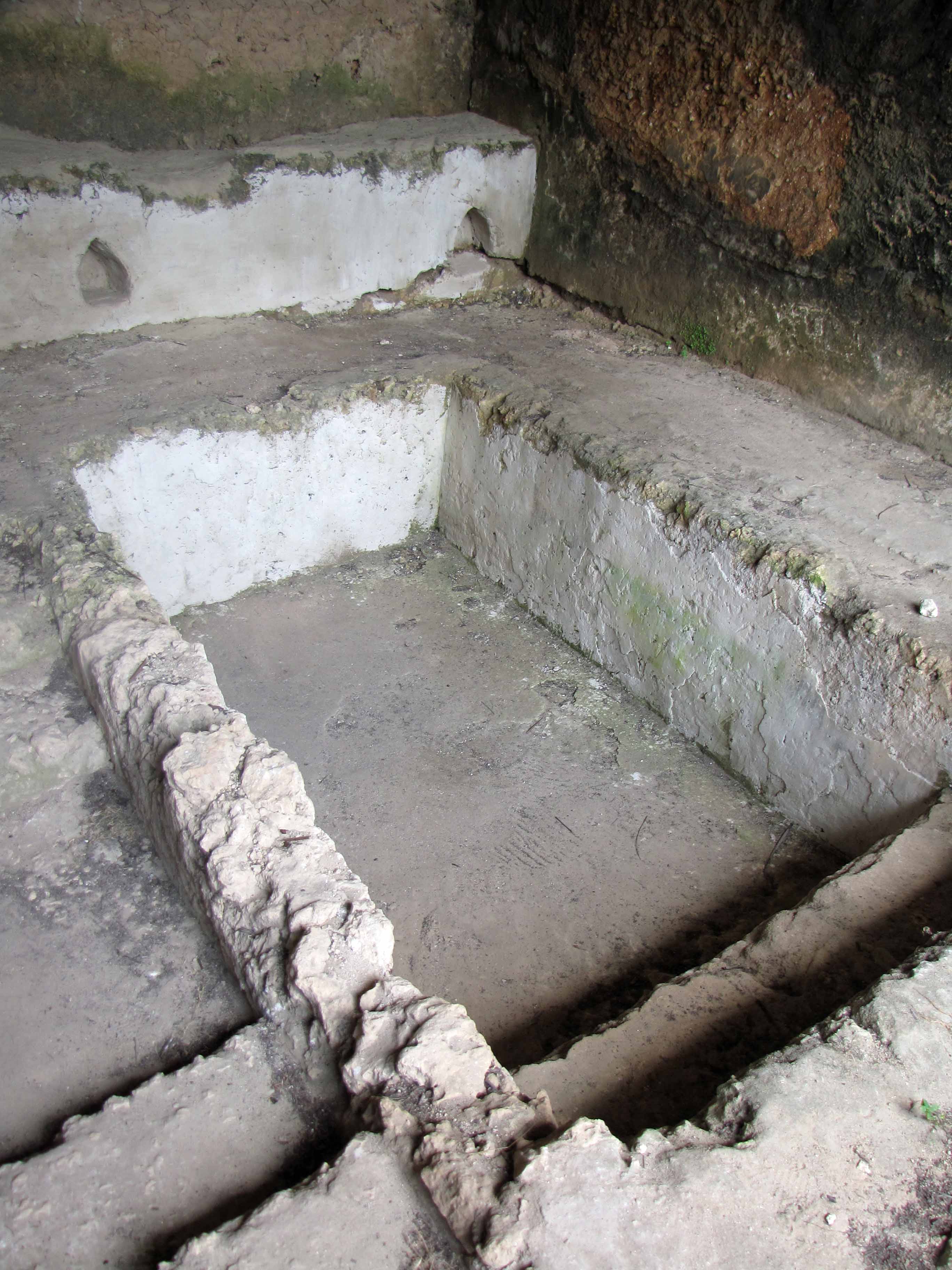
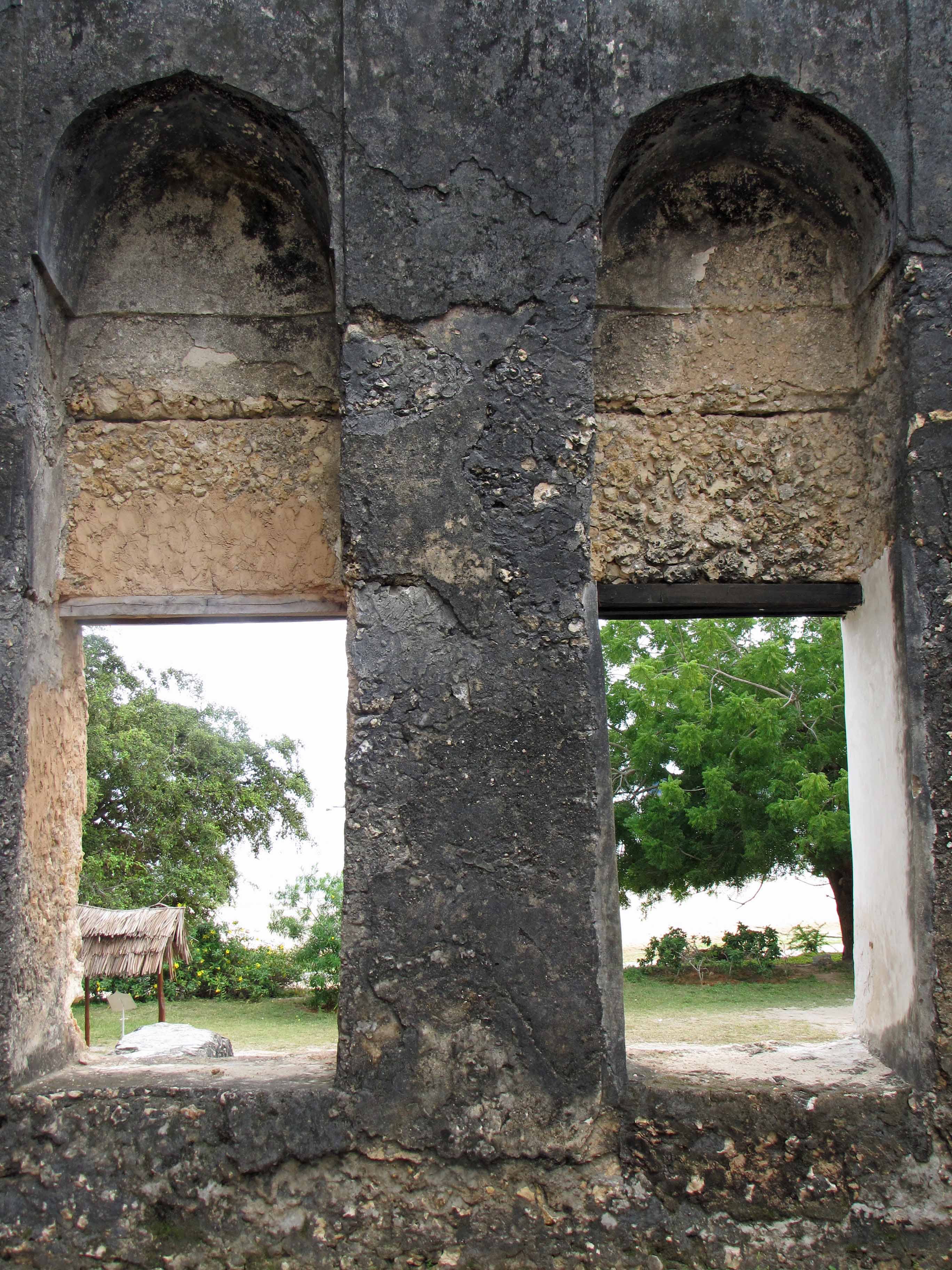
My husband and I visited the Mtoni Palace Ruins one morning on our way to Stone Town. We spent half and hour or so strolling through the ruins. Much of the Mtoni Palace that Princess Salme described in her memoirs has been destroyed or is in ruins, but the seaside palace is still definitely worth a visit. There are some interesting baths and toilets, and there are some beautiful arched doorways. I believe that much of the palace is constructed out of coral rock.
Here are a few more pictures from the Princess Mtoni Ruins:
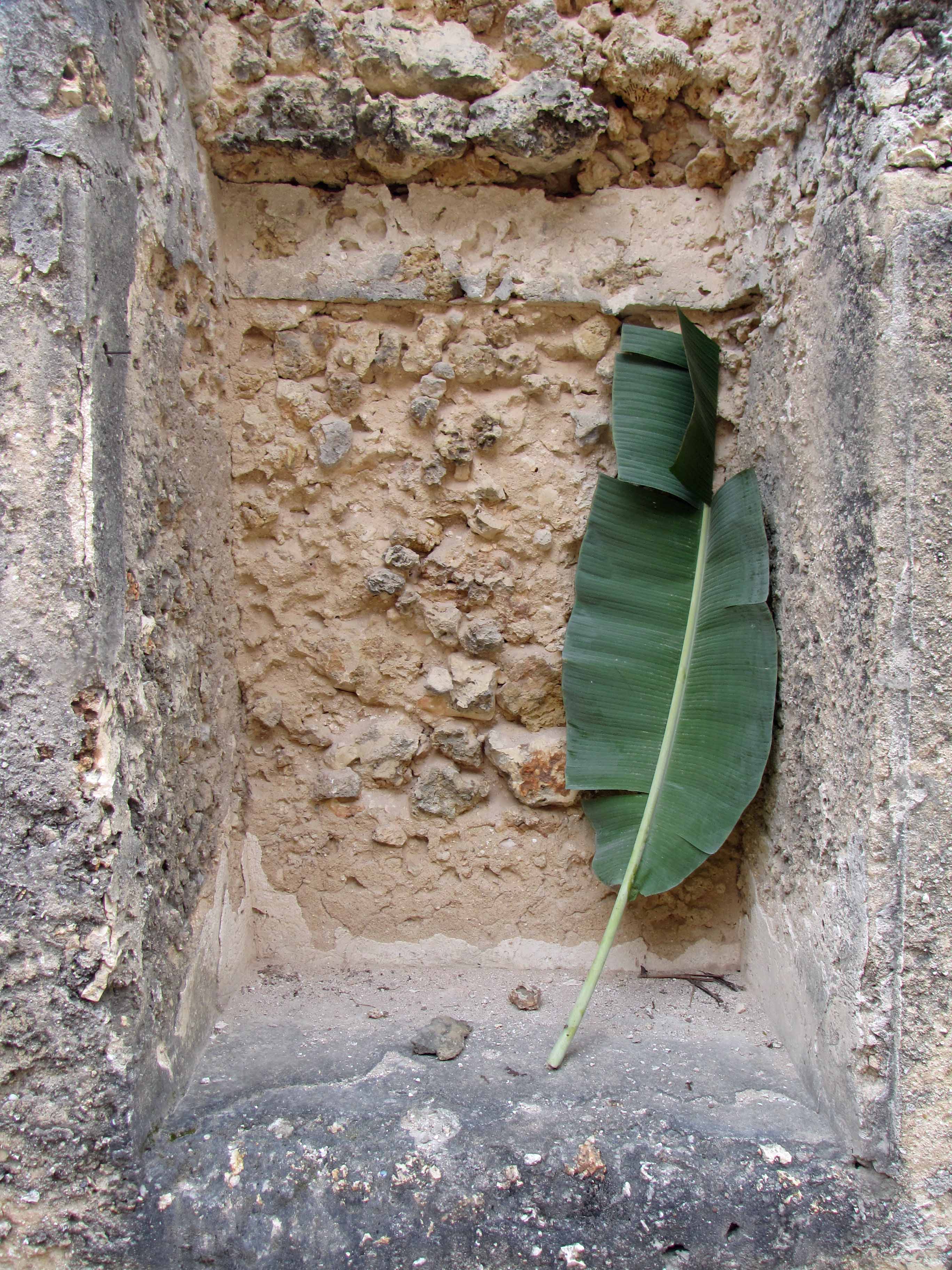
Sign for the ruins.Our guide pointing out a picture of Princess Salme and her family.Princess Salme, her German husband, and two of their children.Yours truly posing by the palace entrance.Beautiful arched doorways / passageways.My husband Jackie and our tour guide strolling through the ruins.Windows with a view of the sea.A little staircase.A stone toilet seat.A bath.Top of a stone wall.More windows with a view of the sea.The view through one palace window.A lone palm leaf resting in a coral alcove.Arches everywhere.Yours truly posing with a coral wall.
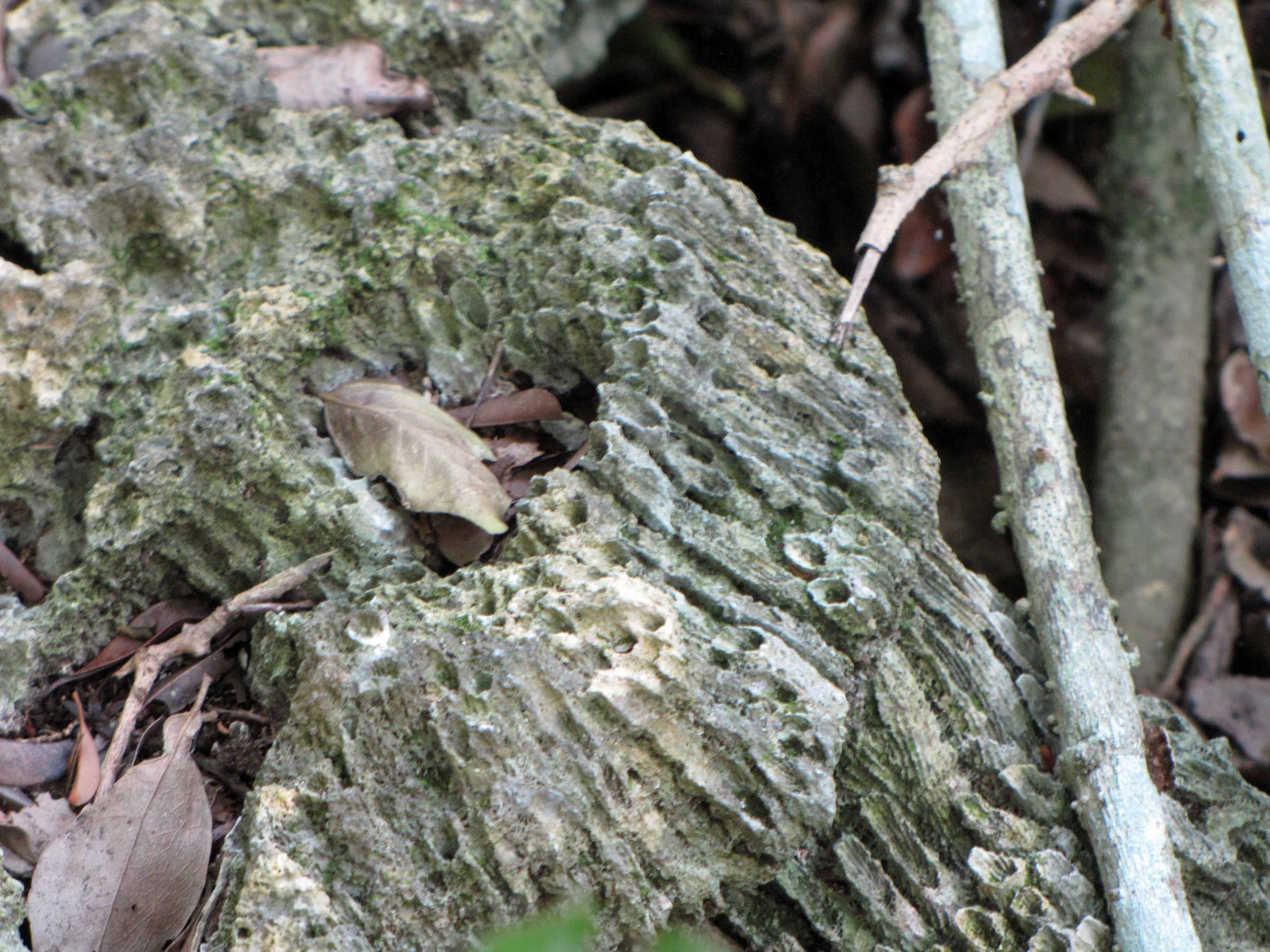
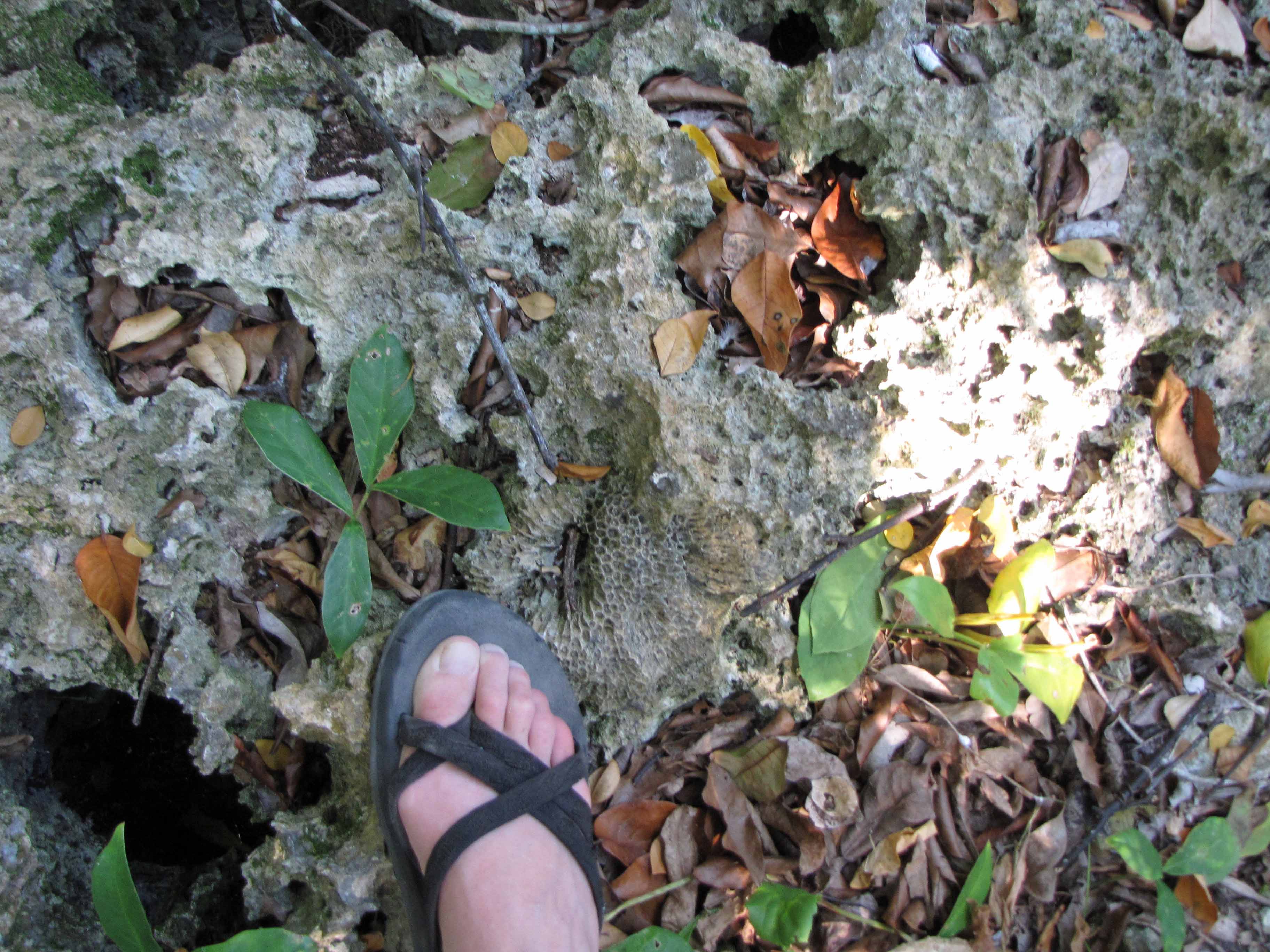
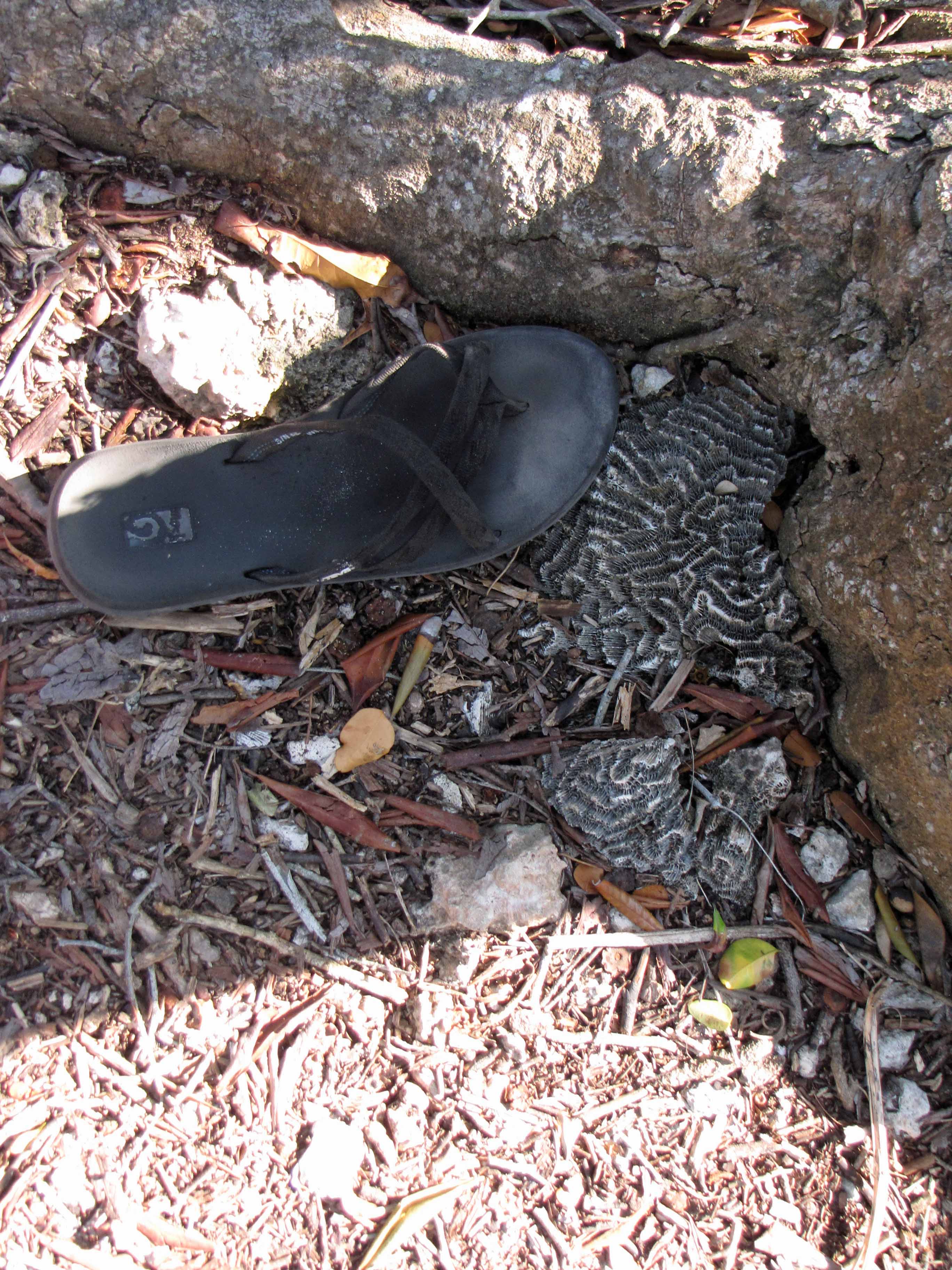
Last week I shared some pictures of giant clam fossils on Chumbe Island, Zanzibar. This week, I’d sharing some pictures of fossil corals that I observed on Chumbe Island. Can anyone identify the corals?
Fossil coral on Chumbe Island #2.Fossil coral on Chumbe Island #3.Fossil coral on Chumbe Island #4.Fossil coral on Chumbe Island #5.Fossil coral on Chumbe Island #6.Fossil coral on Chumbe Island #7.Fossil coral on Chumbe Island #8.Fossil coral on Chumbe Island #9.
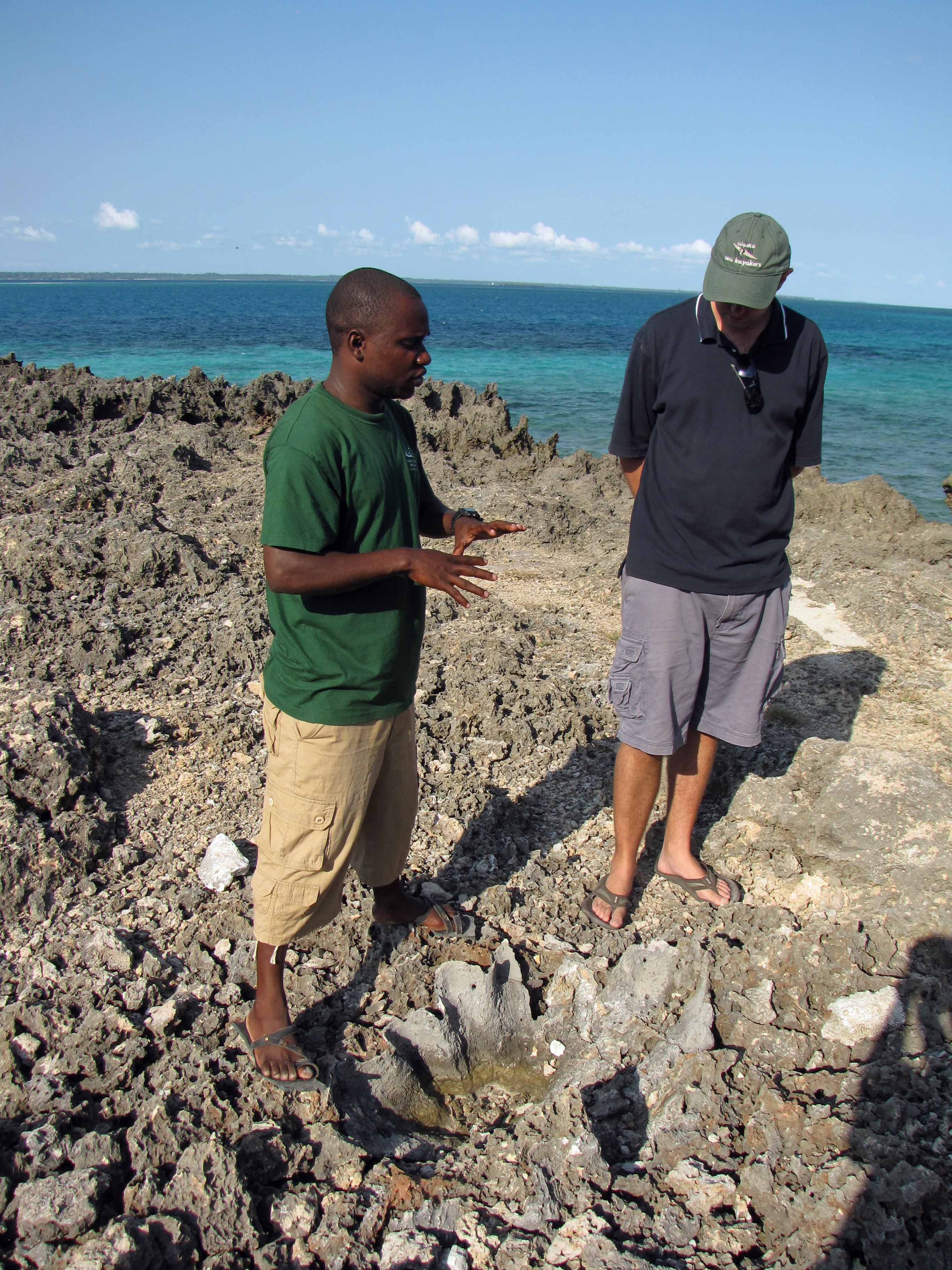
My husband Jackie, our tour guide, and a giant clam fossil!
Back in June my husband and I went on a week-long vacation to Zanzibar, an archipelago in the Indian Ocean just off the coast of Tanzania. When I told my American friends that I was going on vacation to Zanzibar, they mostly responded, “Wow! That sounds so exotic! Where is that, exactly?” However, when I told my South African friends that I was going on vacation in Zanzibar, many of them responded something along the lines of, “Oh, that’s great! I was there last year.” That’s because Zanzibar– along with the Seychelles and Mauritius— is a popular vacation spot for South Africans. These Indian Ocean islands are to South Africans what, perhaps, the Caribbean islands are to Americans; they are tourist hotspots, and many travel companies offer package deals that include flights, hotel, food, tours, and so on. Today, much of Zanzibar’s economy is based on tourism. For our vacation, my husband and I booked a package deal and stayed at the beautiful Azanzi Beach Hotel on the northern side of Ugunja, the largest and most populous island of Zanzibar. We had a fantastic vacation! Our vacation was a great mixture of relaxing on the beach, outdoor activities, and exploring Zanzibar’s rich history and culture.
Over the next few weeks, I’d like to share some of my Zanzibar pictures for my “Monday Geology Picture” posts. I have many great pictures to share– mostly tropical pictures of coral and beaches and such. I’ll start by sharing some pictures from Chumbe Island, a small island located a 45 minute boat ride from Stone Town, which is the main city on Ugunja. Chumbe Island is a privately-owned nature reserve that funds itself largely through eco-tourism. You can stay on the island in one of the eco-friendly huts or you can take a day trip out to the island. My husband and I took a day trip to the island. Our trip included the beautiful boat ride, snorkelling amongst some of the most impressive coral reef I have ever seen, a delicious gourmet lunch, a walk through a forest, and a climb to the top of a lighthouse. We went to Chumbe Island largely because we were hoping to catch sight of the impressive coconut crab, a large, land-based crab that climbs trees and is known to eat coconuts! However, coconut crabs are nocturnal, so we didn’t catch sight of one during our visit. However, we did see plenty of other interesting things on Chumbe Island.
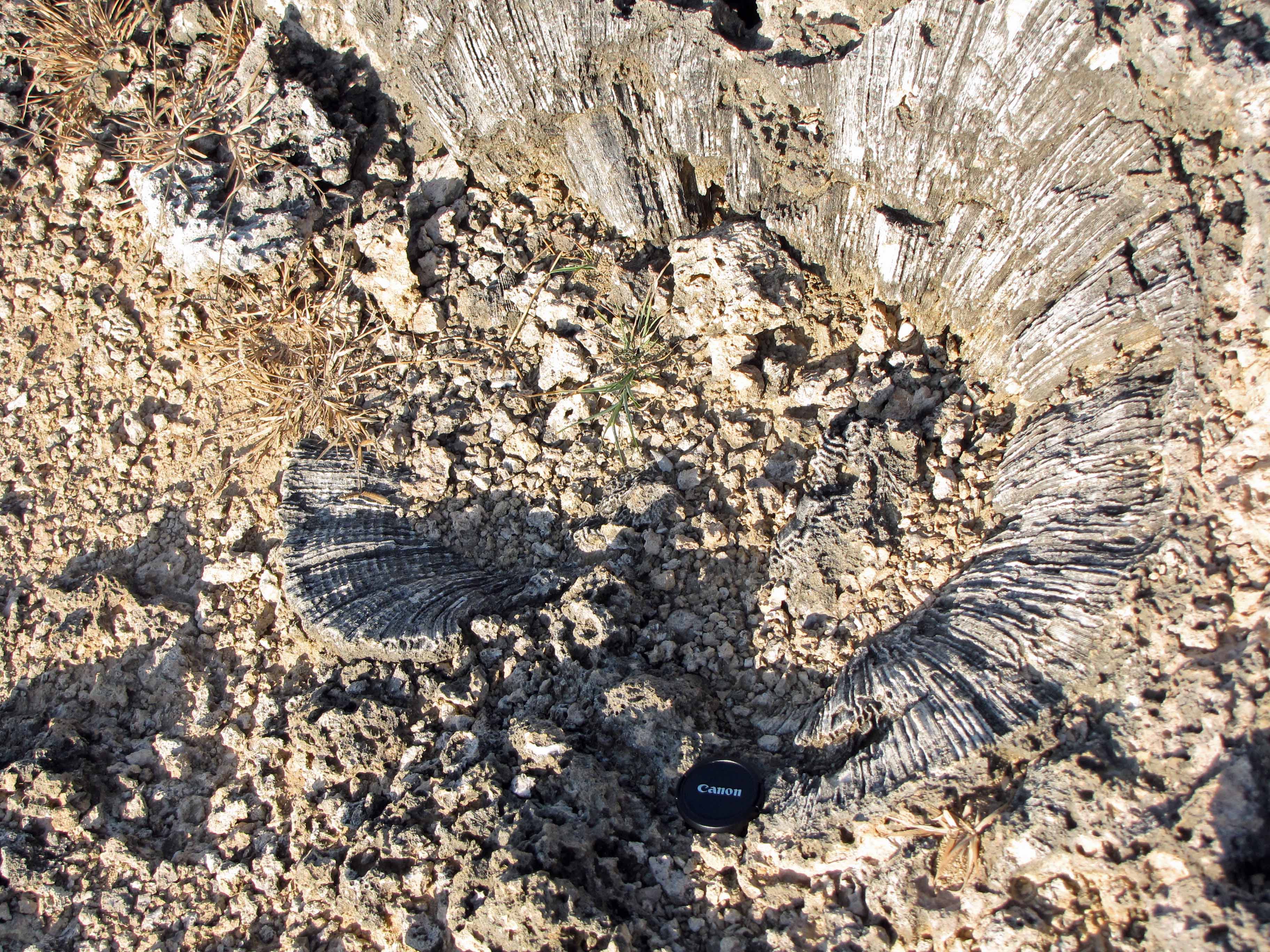
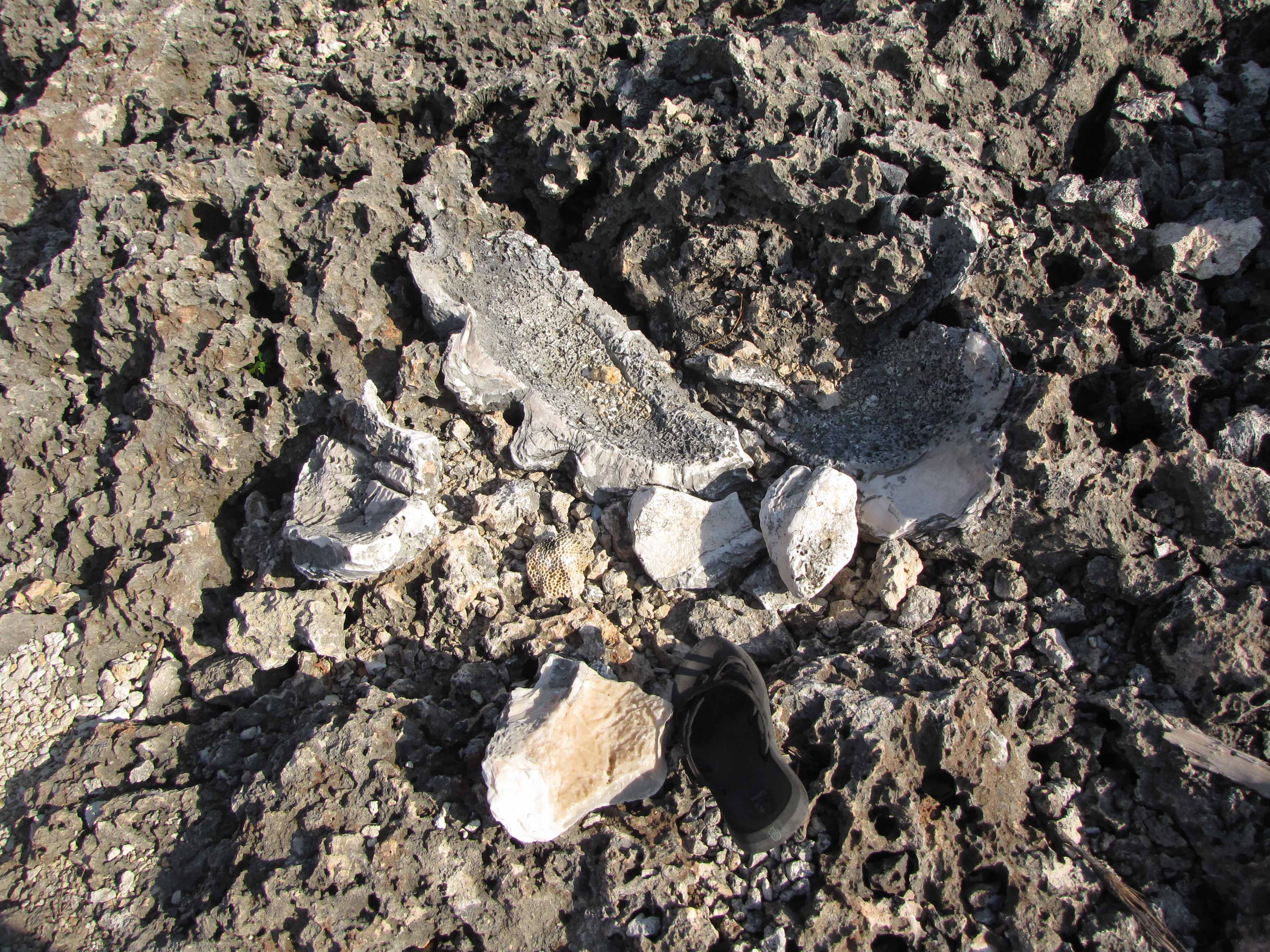
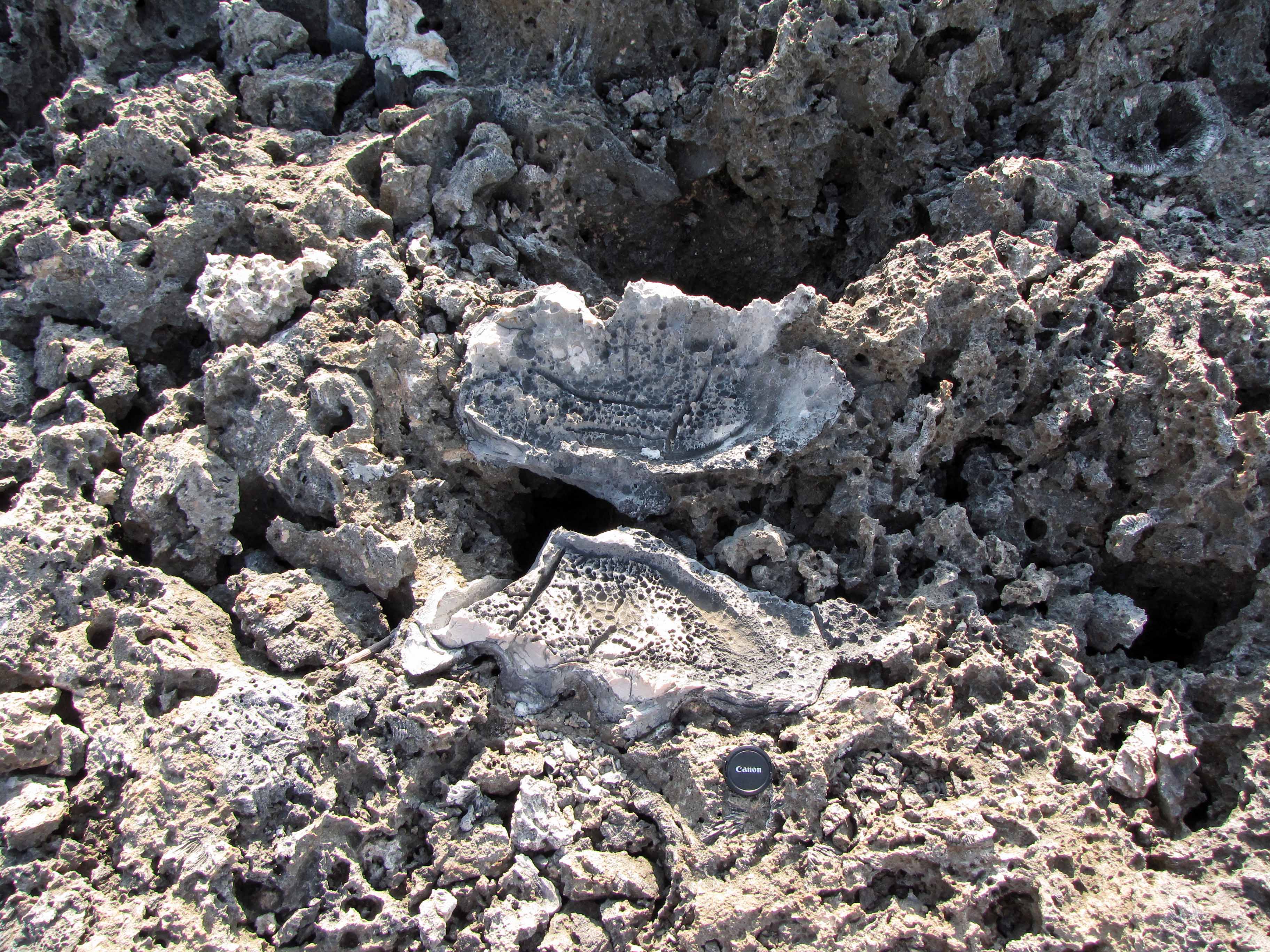
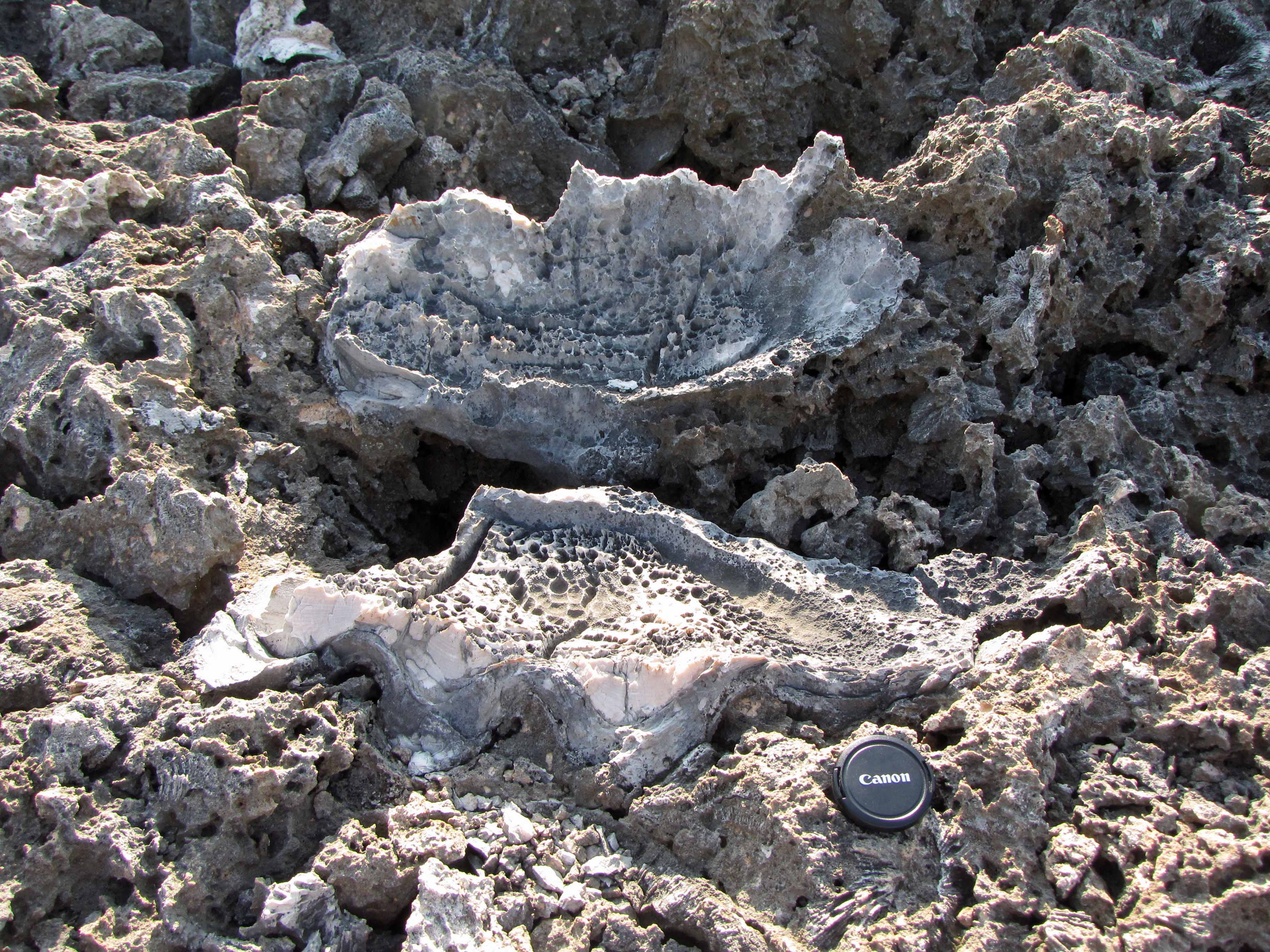
In this post I am sharing some pictures of some giant clam fossils which we saw on Chumbe Island. These fossils are quite impressive! I tried to find a scientific paper that would tell me more about them, but I wasn’t able to find anything with a quick search. If anyone knows of any papers on these fossils or can tell me more about them, please leave a comment below. The Chumbe Island website states that the fossil clams are 15,000 years old.
If you’re ever in Zanzibar, I highly recommend a visit to beautiful Chumbe Island. Staying overnight at the island is a little expensive, but remember that the money goes towards conservation. The day trip also provides a more affordable option. However, next time my husband and I travel to Zanzibar, we plan to spend at least a night on Chumbe Island. Hopefully then we’ll finally see a coconut crab!
Clam fossil with flip-flop for scale.Clam fossil with lens cap for scale.A closer view of a clam fossil with lens cap for scale.Yours truly posing next to one of the clam fossils.Clam fossil with lens cap for scale.




















 Georneys