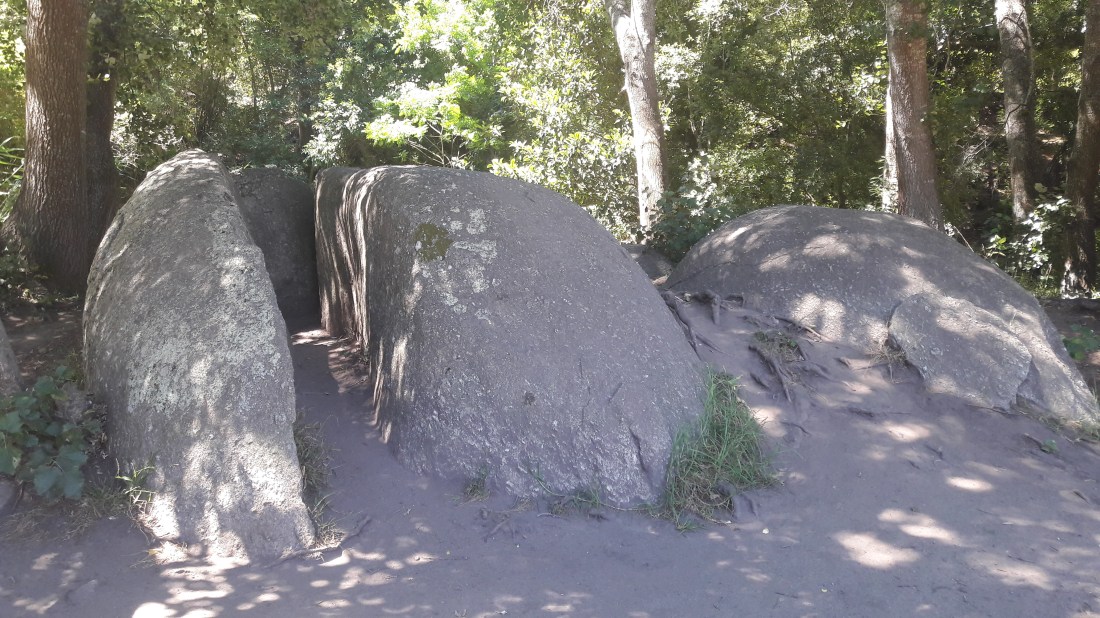
Monday Geology Picture: Constantia Granite

Large granite rocks along a walking trail in Constantia, South Africa. January 2018.

For this week’s post, here’s a picture that I took yesterday during a Sunday afternoon hike with my family. We went for an easy stroll, baby and all, along the Alphen Trail in the Constantia region of Cape Town here in South Africa. My son is 3 months old now, and we’re just starting to go on some easy hikes as a family. The Alphen Trail is more of a walk than a hike, but nevertheless it was nice to spend some proper time outdoors again! In another month or two we hope to embark on some proper hiking.

There is too much vegetation along the Alphen Trail to see much geology, but along one part of the trail I did notice some interesting large granite boulders, which are shown in the above picture. These boulders no doubt belong to the ~550 million year old Cape Granite Suite. Large outcrops or boulders of these granites are commonly seen in the Cape Town area. For example, you can see large granite boulders at some of Cape Town’s beaches. However, I found these Constantia granite boulders interesting due to their weathering. While still quite large, there are clear signs that these boulders are being broken down through weathering. On the right, you can see a nice example of exfoliating granite weathering. On the left, you can see that a large boulder has split in two. In a few parts of the picture, you can see tree roots and other vegetation, which are no doubt contributing to biological weathering of the boulders.

Here’s a close-up view of the exfoliating slab:

Granite boulder, with my foot for scale.

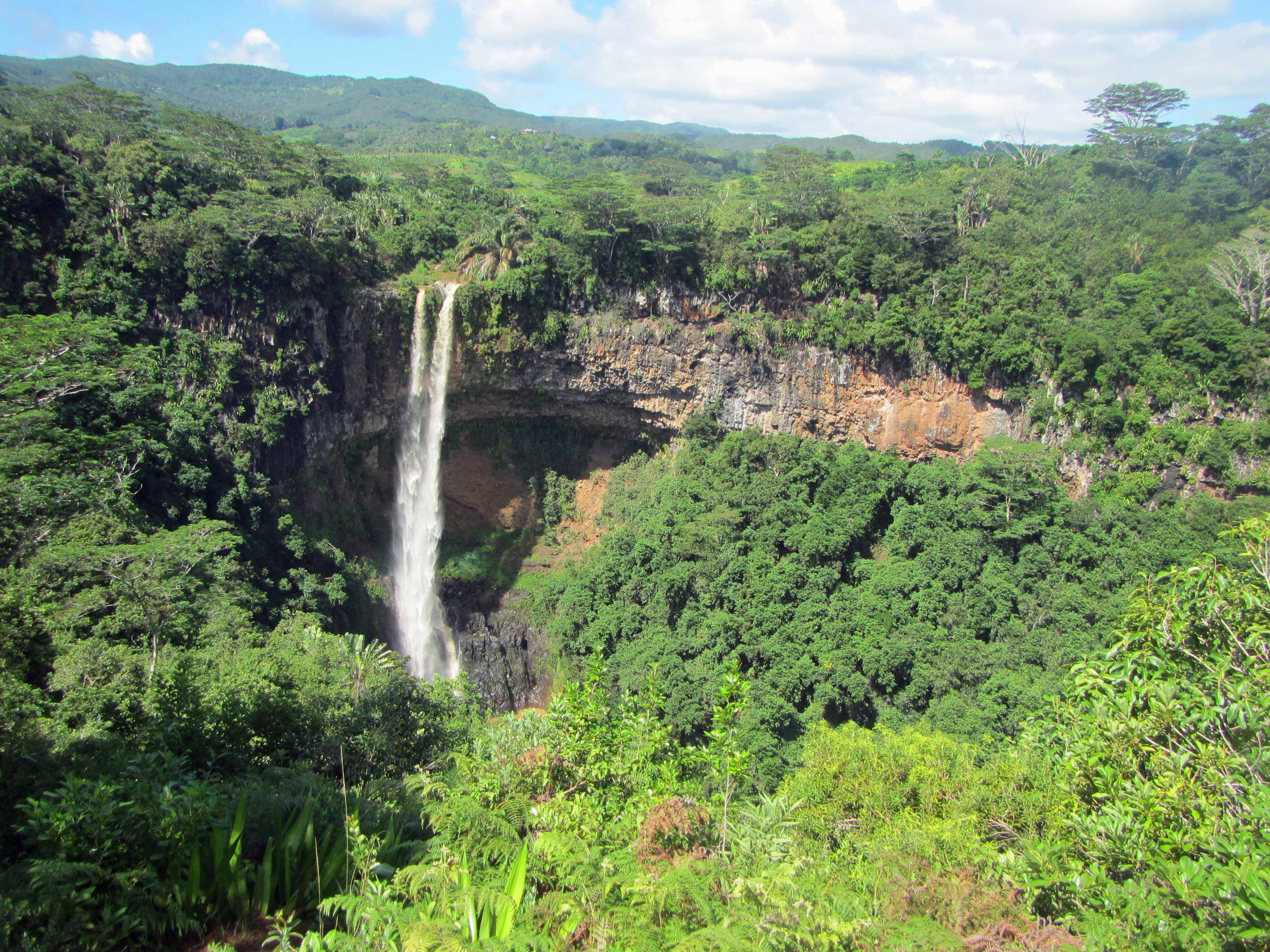
Chamarel Waterfall, Mauritius

Stunning Chamarel Waterfall, Mauritius.
Stunning Chamarel Waterfall.

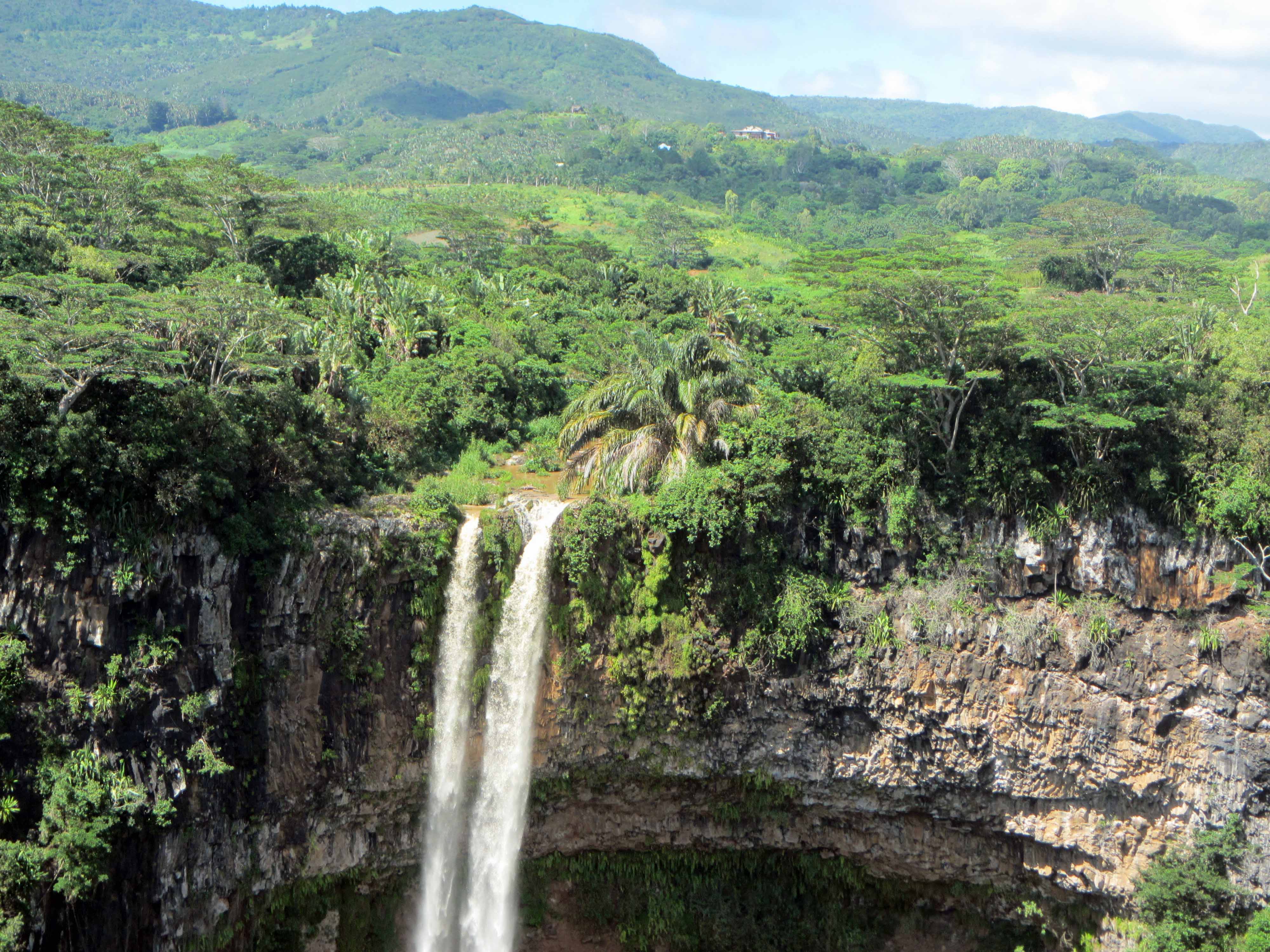
Today I’m continuing with sharing some pictures from my March 2014 trip to the volcanic island of Mauritius. You can see some of my previous posts on Mauritius here, here, and here. Mauritius is a tropical island, so in many places the lava rocks, particularly the older ones, are covered by thick green vegetation. However, there are some places where you can see the lavas well. One of those places is Chamarel, a popular tourist destination that consists of Chamarel Waterfall as well as a geologic attraction known as the Seven Coloured Earth— I’ll blog about the Seven Coloured Earth in another post. Today, I’d like to share some pictures of Chamarel Waterfall, a tall waterfall about the same height (~100 meters) as the Statue of Liberty. At the waterfall, two units of volcanic rocks are exposed. The first unit is approximately 8-10 million years in age and thus represents some of the oldest lavas of Mauritius. The second unit is approximately 1.7-3.5 million years in age.

Here’s an informational sign about the waterfall and the lavas:

Informational sign about the Chamarel Waterfall.
Informational sign about Chamarel Waterfall.
A closer view of the informational sign.

Here are a couple more pictures of the waterfall:

Waterfall... and lava flows!
Waterfall… and lava flows!
A closer view of the younger lava flow.

Stay tuned for more posts about Mauritius!

The Young Volcanic Landscape of Mauritius

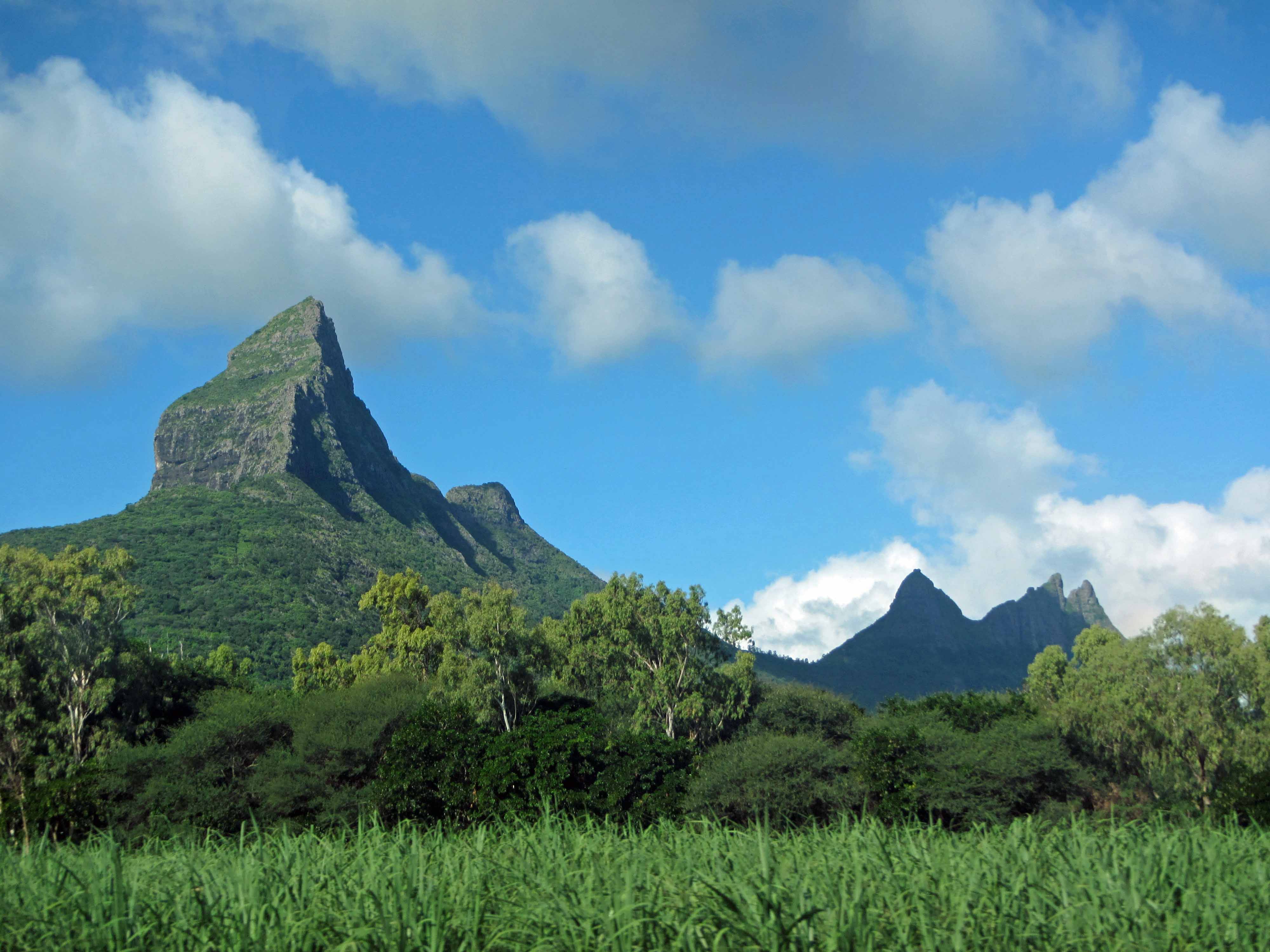
Young Volcanic Landscape of Mauritius-- Picture #1. This picture shows the dramatically perched boulder on Pieter Booth mountain, which has an elevation of ~820 meters.
Rugged, young volcanic terrain in Mauritius. This picture shows the dramatically perched boulder on Pieter Both Mountain, which has an elevation of ~820 meters.

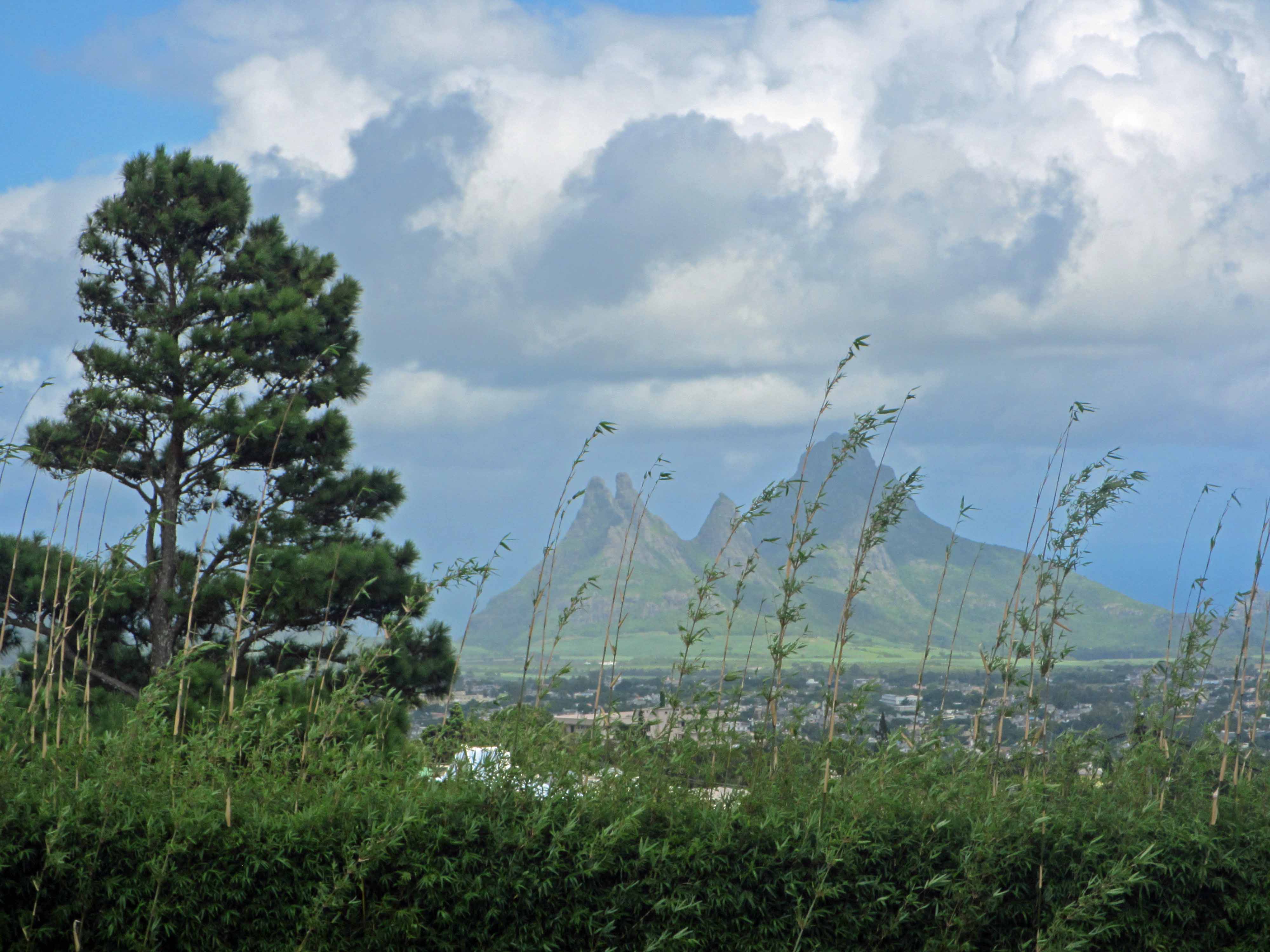
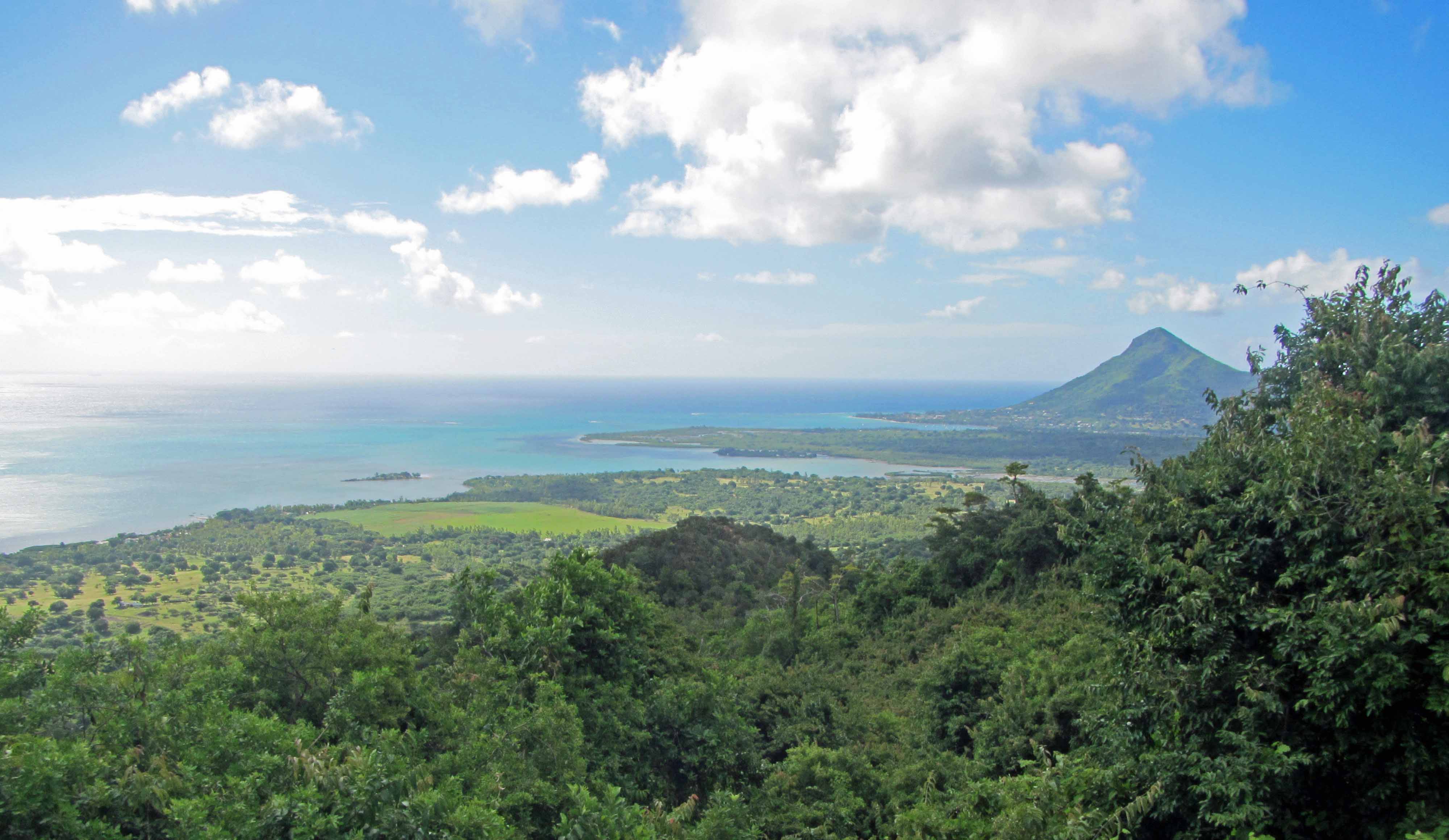
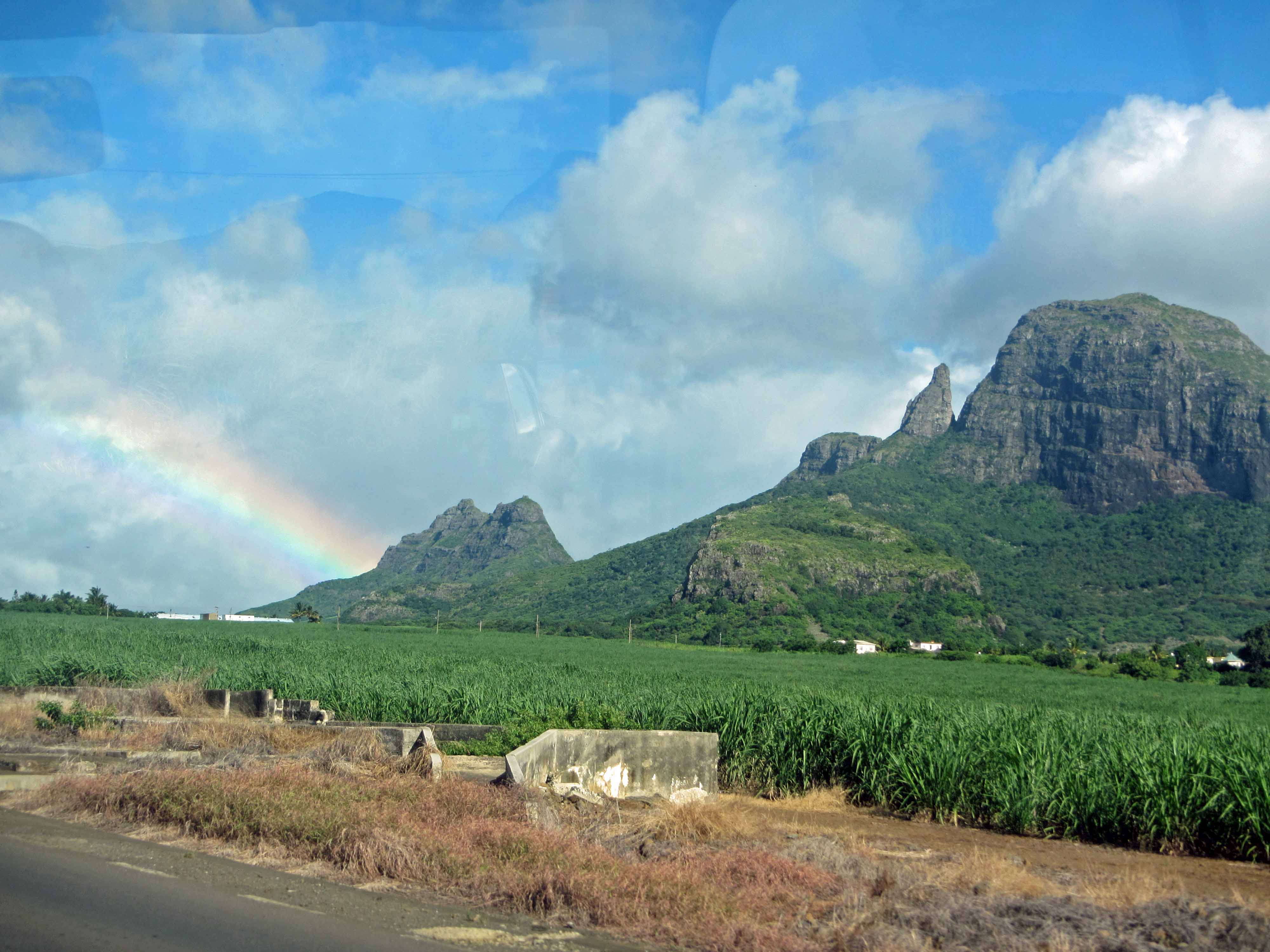
For the next little while, I will be blogging about my recent (March 2014) vacation to Mauritius, a young volcanic island in the Indian Ocean. I recently shared a couple of pictures of volcanic basalt in Mauritius for my “Monday Geology Picture” posts here and here. In future posts, I’ll write a little more about the volcanic history of Mauritius. In brief, Mauritius is believed to have been formed by a mantle hotspot that is now located underneath the volcanically active island of Réunion. Geologically speaking, the island of Mauritius is very young. The oldest lavas on Mauritius are approximately 8 million years old; the youngest are approximately 200,000 years old (see this publication for more on Mauritian lavas over time). There has not been very much time for the volcanic rocks of the island to erode– that is, there has not been very much time for them to be worn down and smoothed by various physical, chemical, and biological weathering processes. Thus, the landscape of Mauritius is dominated by steep, rugged hills and mountains comprised predominantly of young, dark-colored lava rocks. However, the rocks are certainly eroding. Mauritius has a wet, humid climate and is covered in vegetation, so chemical and biological weathering are breaking down the rocks at a fairly fast rate. On the tops of some of the mountains, boulders and rock slabs are perched precariously and will one day, not all that far in the future, come crashing down into the valleys during dramatic displays of physical weathering.

Below are some more pictures of the young volcanic landscape of Mauritius. Enjoy!

Another view of Pieter Booth mountain.
Another view of Pieter Both mountain and the famous perched boulder.
A slightly closer view of the boulder on top of Pieter Both Mountain.
Another view of Pieter Both Mountain.
Another view of Pieter Both Mountain and surrounds.
Pieter Both Mountain viewed from another angle.
One last view of Pieter Both Mountain.
More rugged Mauritian mountains.
More rugged mountains, with some vegetation in the foreground. Mauritius is covered in lush vegetation, so it’s sometimes difficult to take pictures of landscapes and rocks.
More steep mountains.
Another view of the rugged mountains… with slightly less foreground vegetation.
Another landscape picture... and some more foreground vegetation.
Another landscape picture… and some more foreground vegetation.
Vegetation, valley, mountains, sky.
Vegetation, valley, mountains, sky #1.
Vegetation, valley, mountain, sky #2.
Vegetation, valley, mountains, sky #2.
Another rugged mountain view.
Steep mountains at the sea.
Steep hill at the sea.
Yours truly posing with some steep mountains... and the sea!
Yours truly posing with the steep hill and the sea.
More rugged mountains.
Another view of some rugged mountains.
Some more rugged mountains.
Some more rugged mountains… and a rainbow.
Rainbow meets mountains.
One last pretty view.
One last pretty shot.

Stay tuned for more posts on the geology of Mauritius!

Interesting Sandstone Weathering at Cape Point

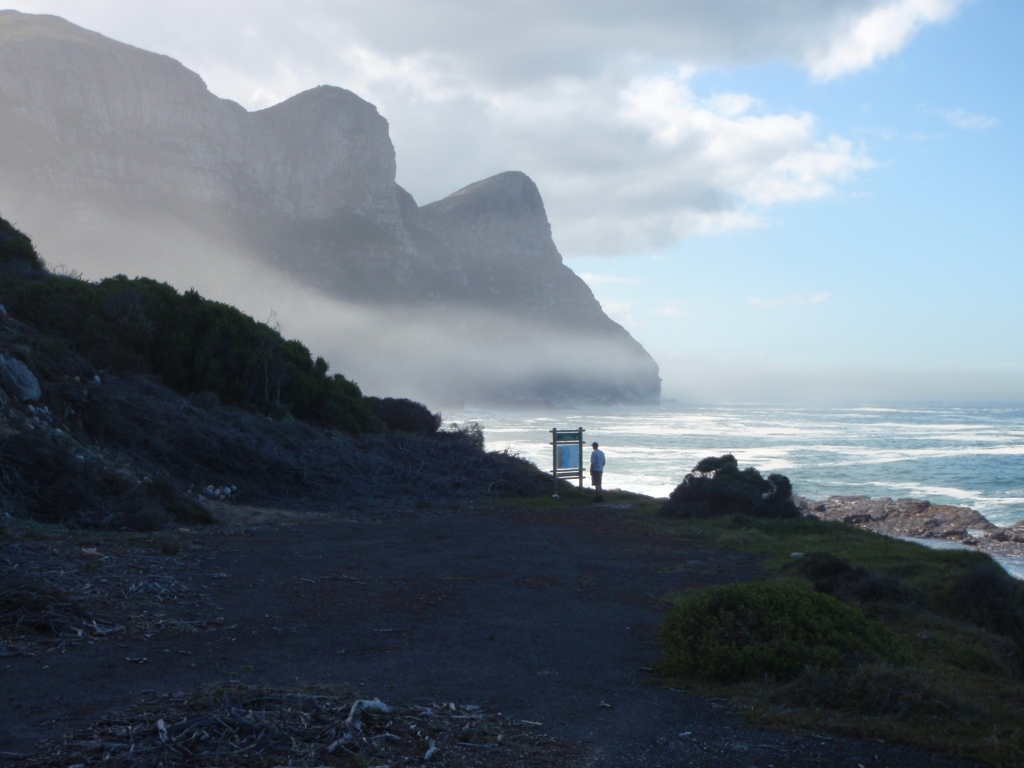
Gorgeous sandstone, Cape Point, South Africa, April 2011.

Back in January Callan Bentley over at Mountain Beltway posted these pictures of some rocks with interesting weathering patterns. In response, I posted pictures of some more rocks with similar weathering patterns.

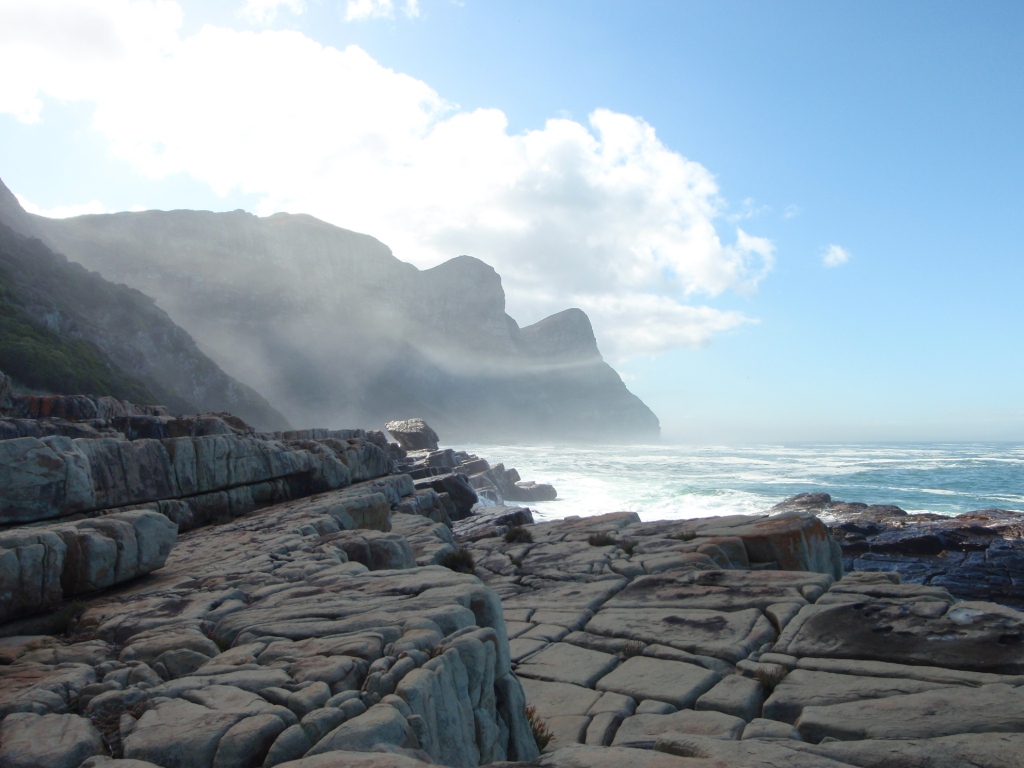
A couple of days ago my fiance and I did a few hikes around Cape Point, South Africa. There is abundant sandstone all around the point– most of the sandstone around Cape Point and Cape Town is part of the Table Mountain Sandstone Group (TMG).

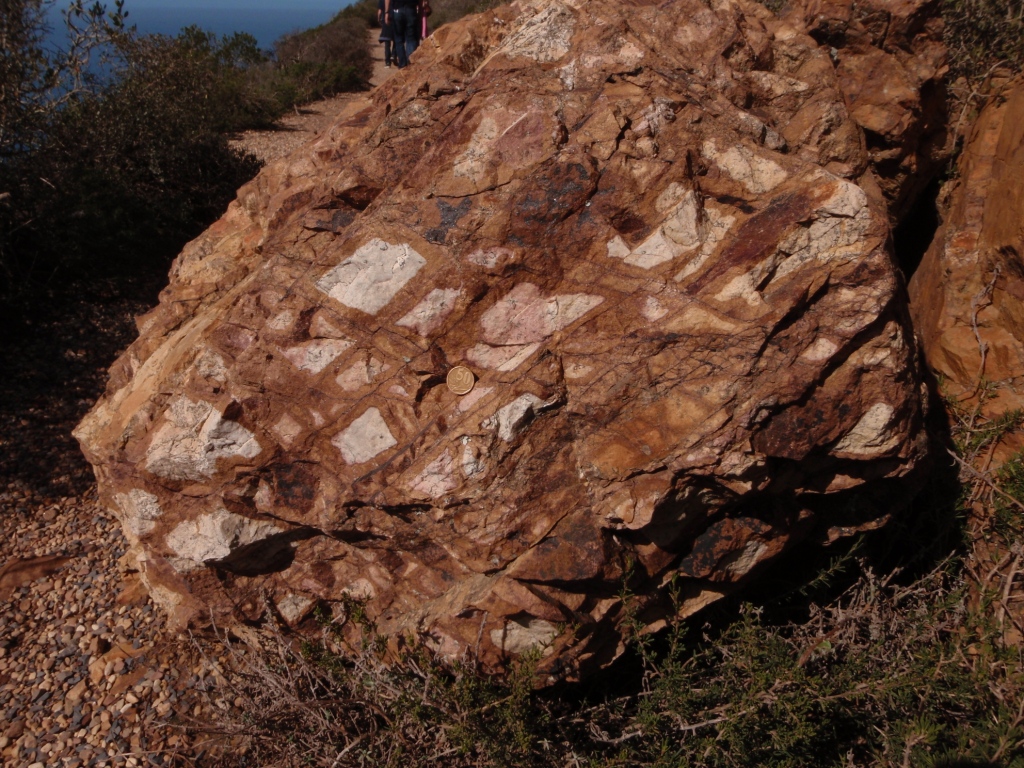
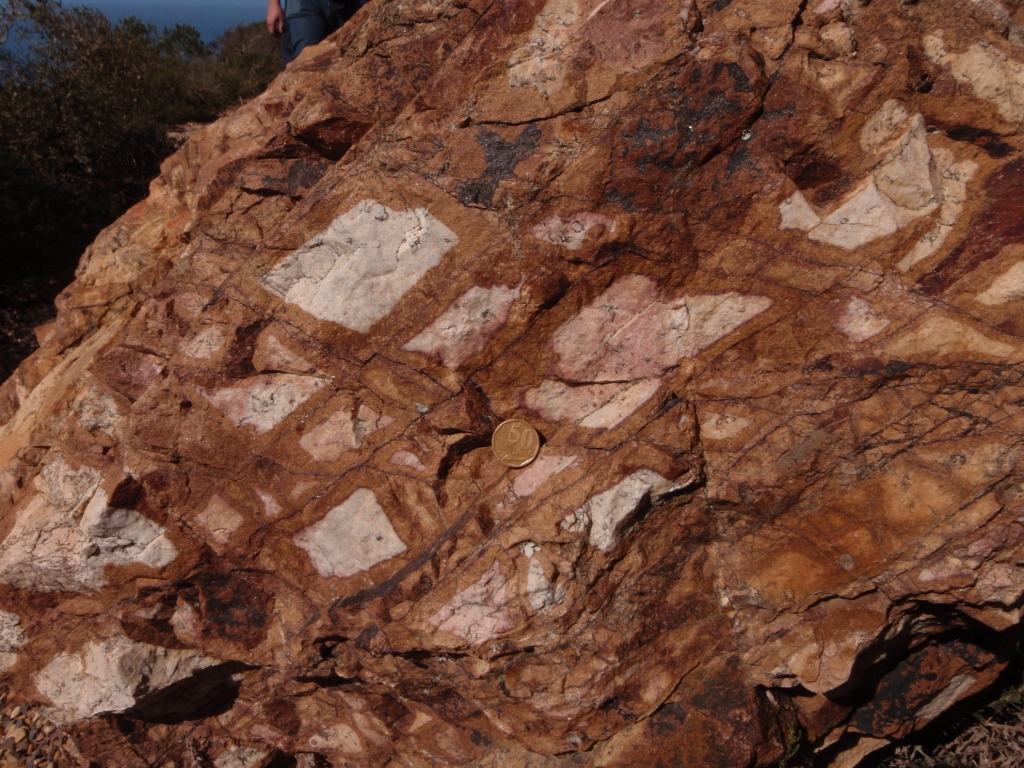
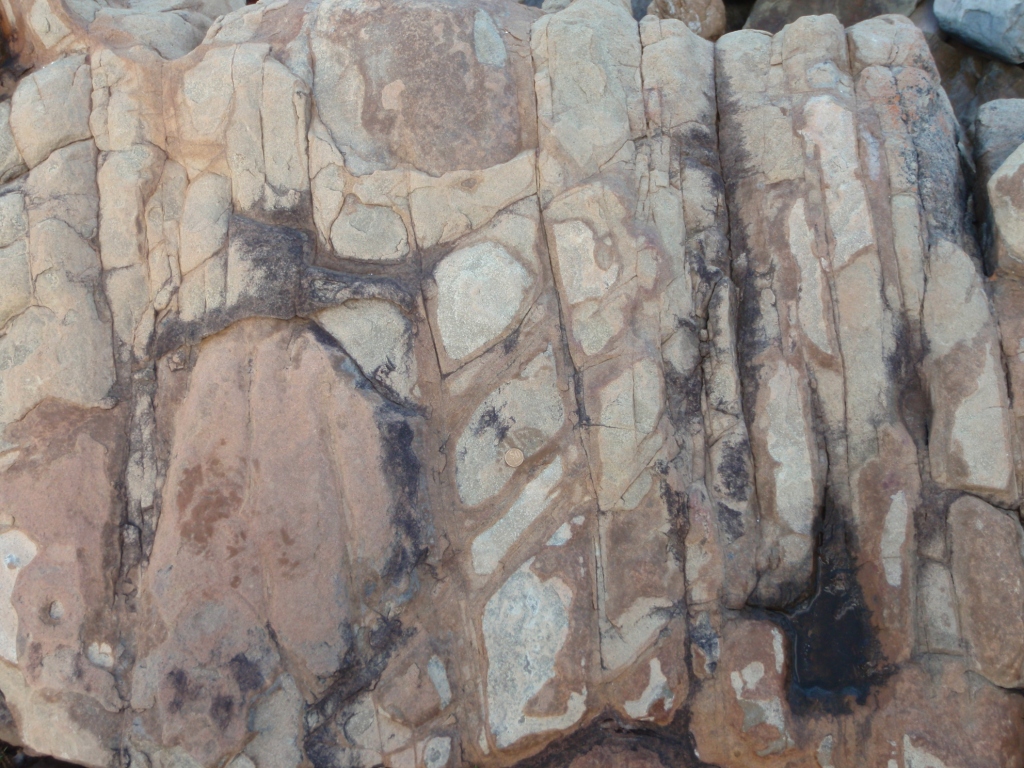
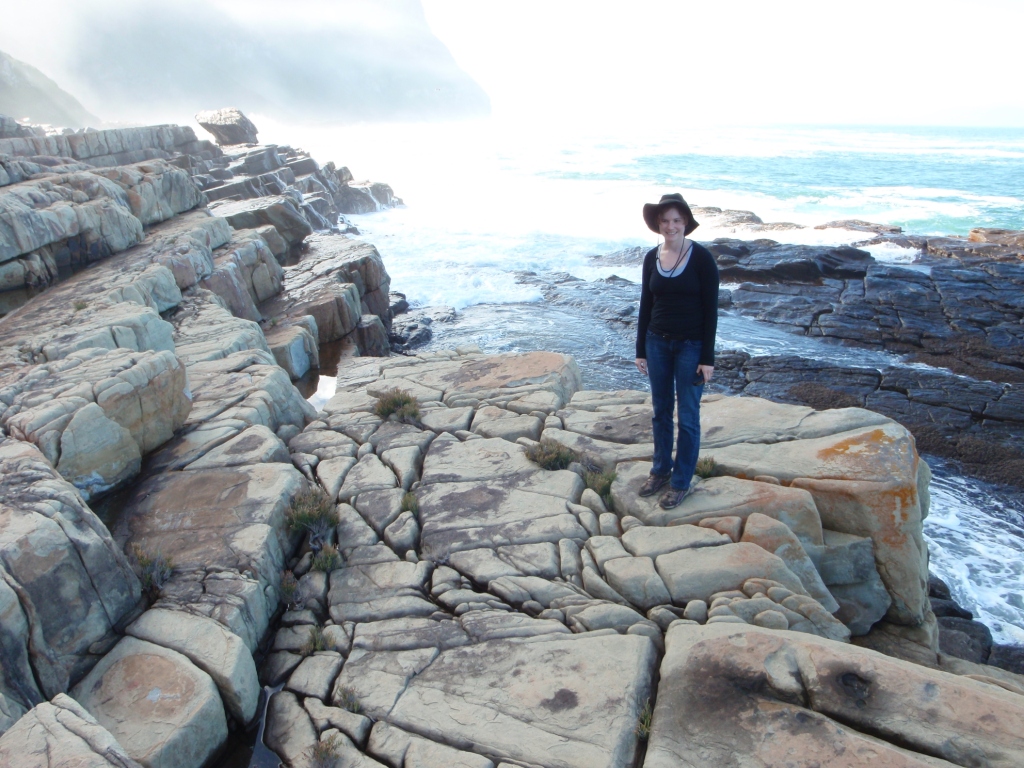
As we wandered around Cape Point, we noticed some interesting weathering features in the sandstone. Some of the weathering features are similar to the features Callan and I posted pictures of back in January.   Feel free to click on any of the pictures below for a larger version. In some of the pictures there is a 50c Rand coin (which is slightly larger than an American nickel) for scale.

Sandstone layers, Cape Point, South Africa, April 2011.
View from the lighthouse, Cape Point, South Africa, April 2011.
Lizard hanging out on some sandstone, Cape Point, South Africa, April 2011.
Sandstone boulder with interesting weathering, Cape Point, South Africa, April 2011.
Close-up of interesting sandstone weathering, Cape Point, South Africa, April 2011.
Venus Pools 1, Cape Point, South Africa, April 2011.
Sandstone weathering at Venus Pools 1, Cape Point, South Africa, April 2011.
Sandstone weathering at Venus Pools 2, Cape Point, South Africa, April 2011.
Venus Pools 2, Cape Point, South Africa, April 2011.
Venus Pools 3, Cape Point, South Africa, April 2011.