

The M/V Peace in Africa is an enormous mining vessel that mines alluvial diamonds off the coast of Namibia (and which used to mine off the coast of South Africa as well). The ship dredges up large amounts of diamond-bearing sediment, which is processed on the ship to concentrate the diamonds. The ship is owned and operated by De Beers.
The M/V Peace in Africa spends most of its time out at sea. However, when I was in Cape Town just over a week ago, I was lucky enough to catch sight of the M/V Peace in Africa in port. The M/V Peace in Africa is an extraordinary, very unique mining ship and is an impressive feat of engineering design and ship manufacture. I was excited to catch a glimpse of her, if only from a distance.
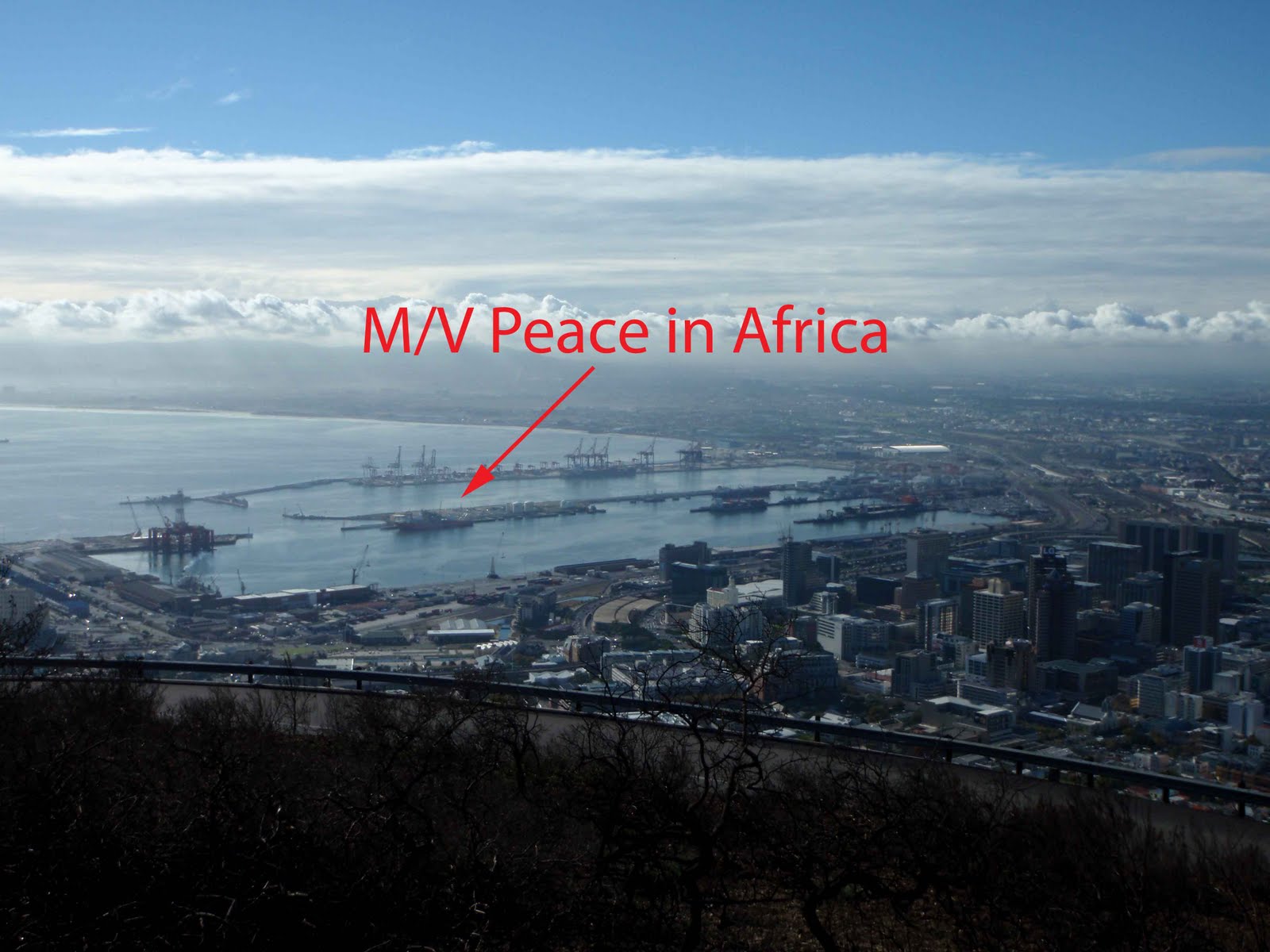
Here are a few pictures of the M/V Peace in Africa viewed from Signal Hill:
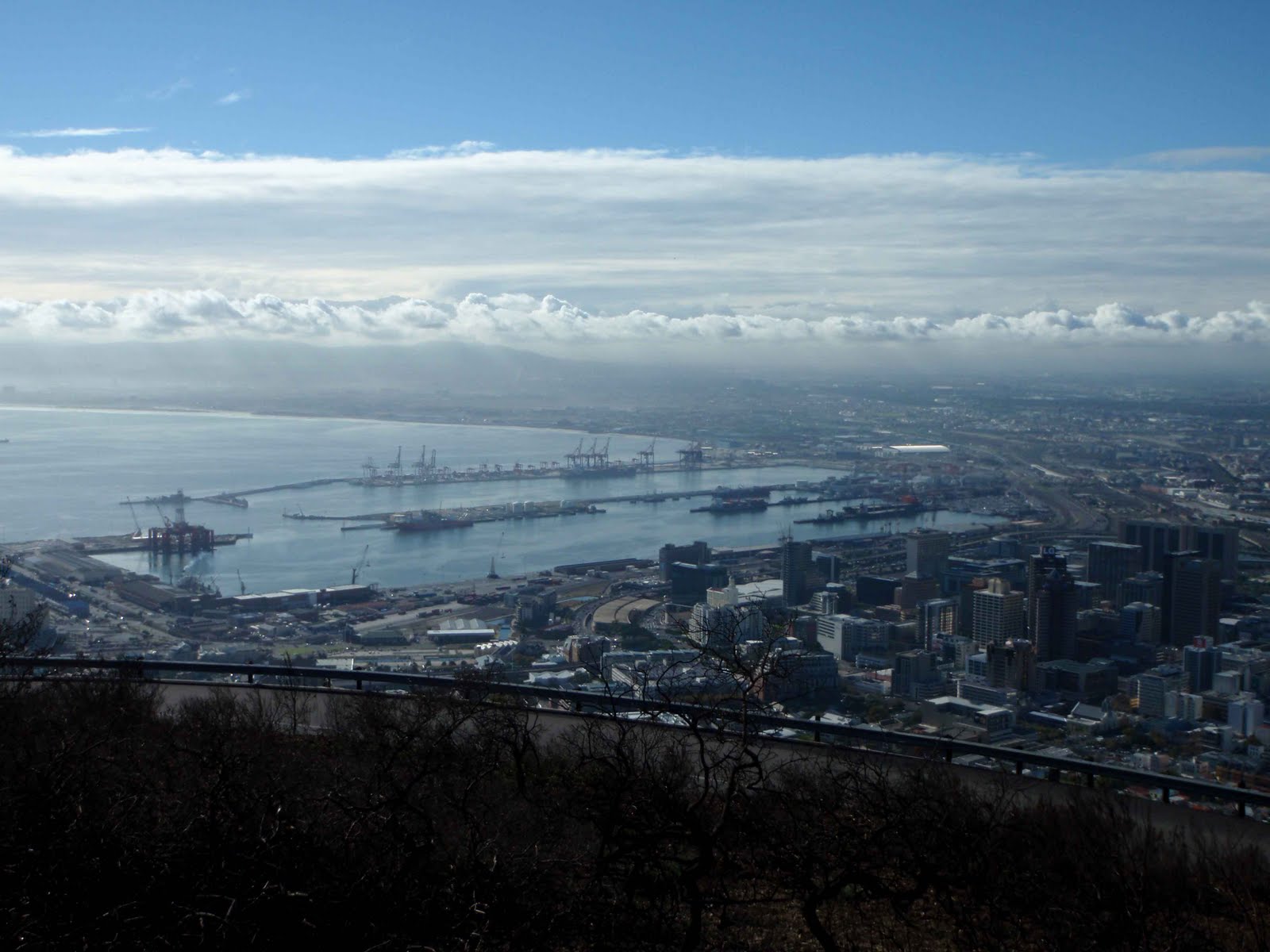 |
| Port from Signal Hill, Cape Town, South Africa, May 2011. |
 |
|
| Label showing location of M/V Peace in Africa. |
 |
| M/V Peace in Africa compared with a cruise ship (about the same size), Cape Town, South Africa, May 2011. |
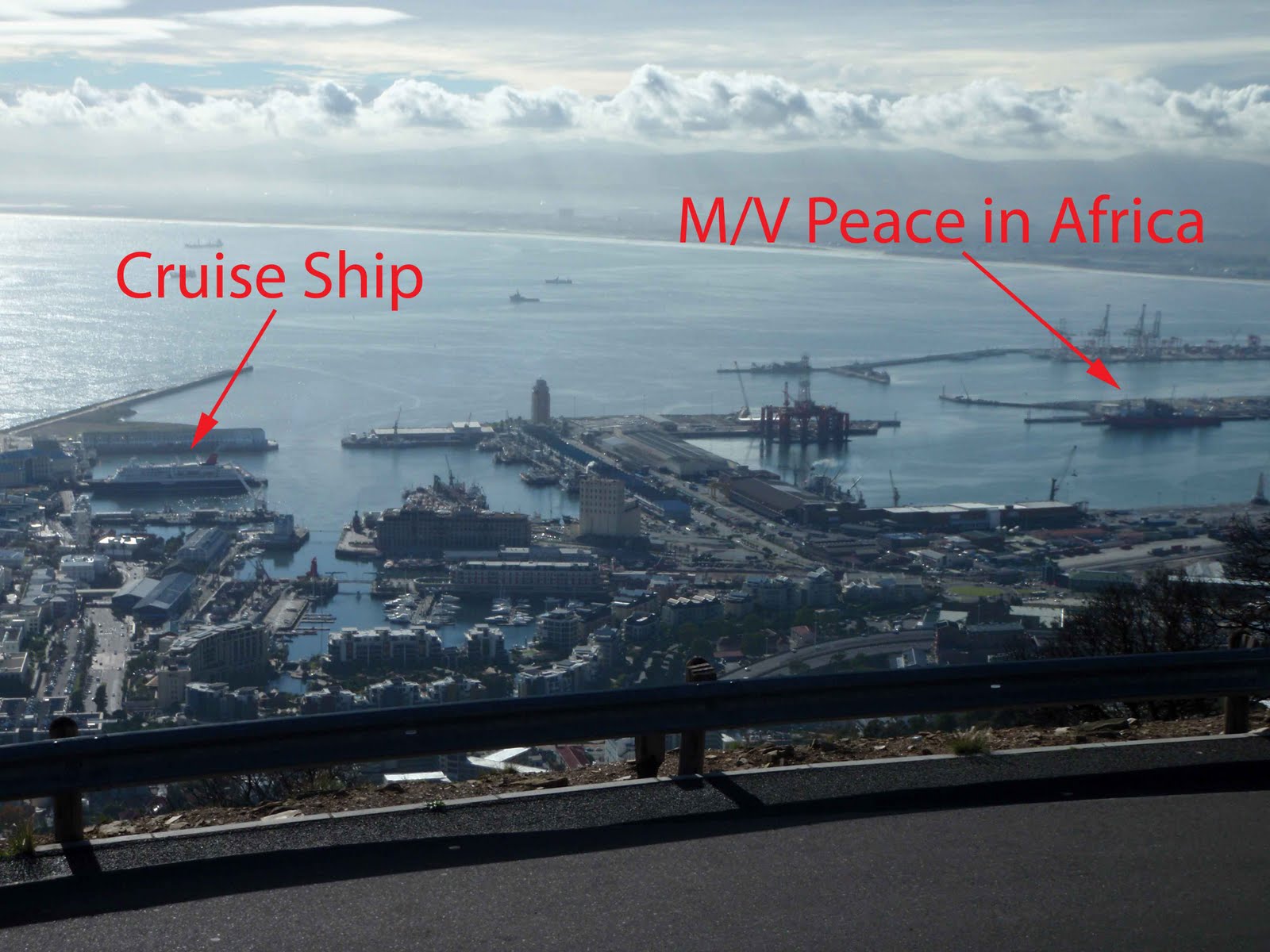 |
| Labels showing locations of cruise ship and M/V Peace in Africa. |
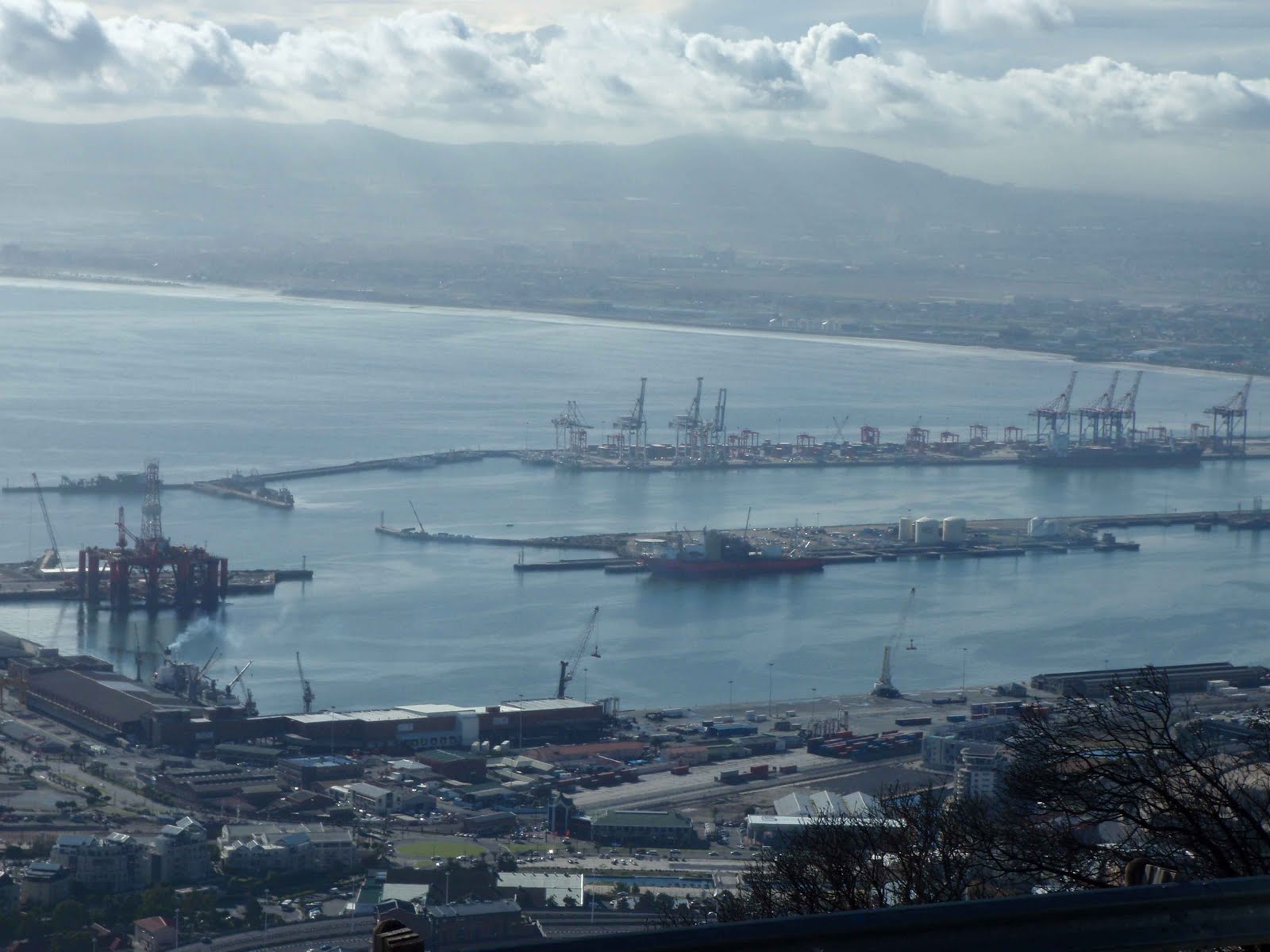 |
| A closer view of the M/V Peace in Africa in port, Cape Town, South Africa, May 2011. |
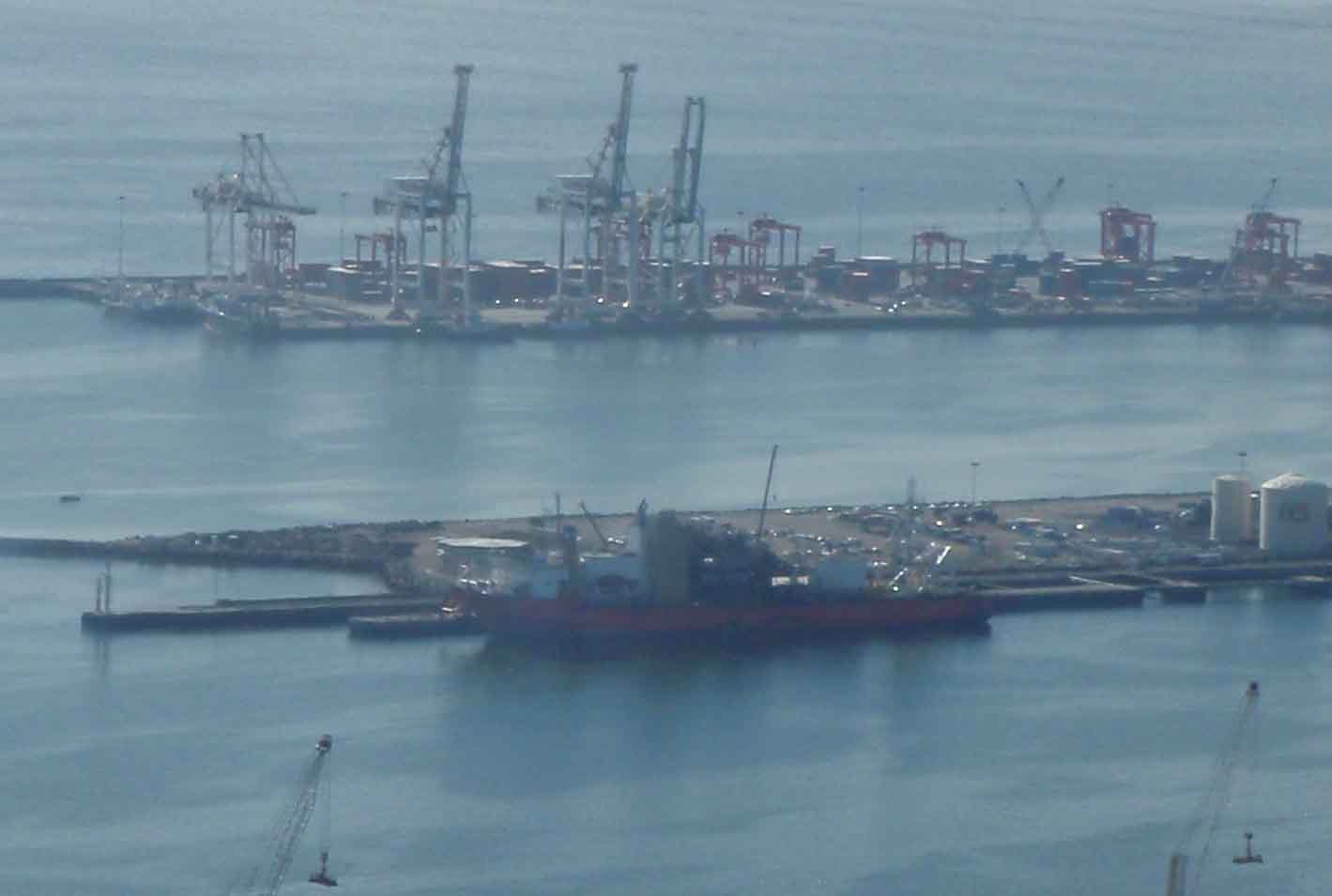 |
| Even closer view- slightly blurry. I really must invest in a better camera with a good zoom lens. Cape Town, South Africa, May 2011. |
Here’s a better close-up picture of the M/V Peace in Africa (from the De Beers website):
 |
| M/V Peace in Africa. |
If you want to learn more about the M/V Peace in Africa, I highly recommend watching the episode of the Discovery Channel’s “Mighty Ships” show about the M/V Peace in Africa.
Here are a couple of websites that have information about the M/V Peace in Africa:
The Art of Dredging
Ubergizmo
And here are a few more pictures taken from Signal Hill, which has spectacular views not only of the harbor but also of downtown Cape Town and Table Mountain:
 |
| View from Signal Hill showing the new stadium built for the 2010 World Cup. Cape Town, South Africa, May 2011. |
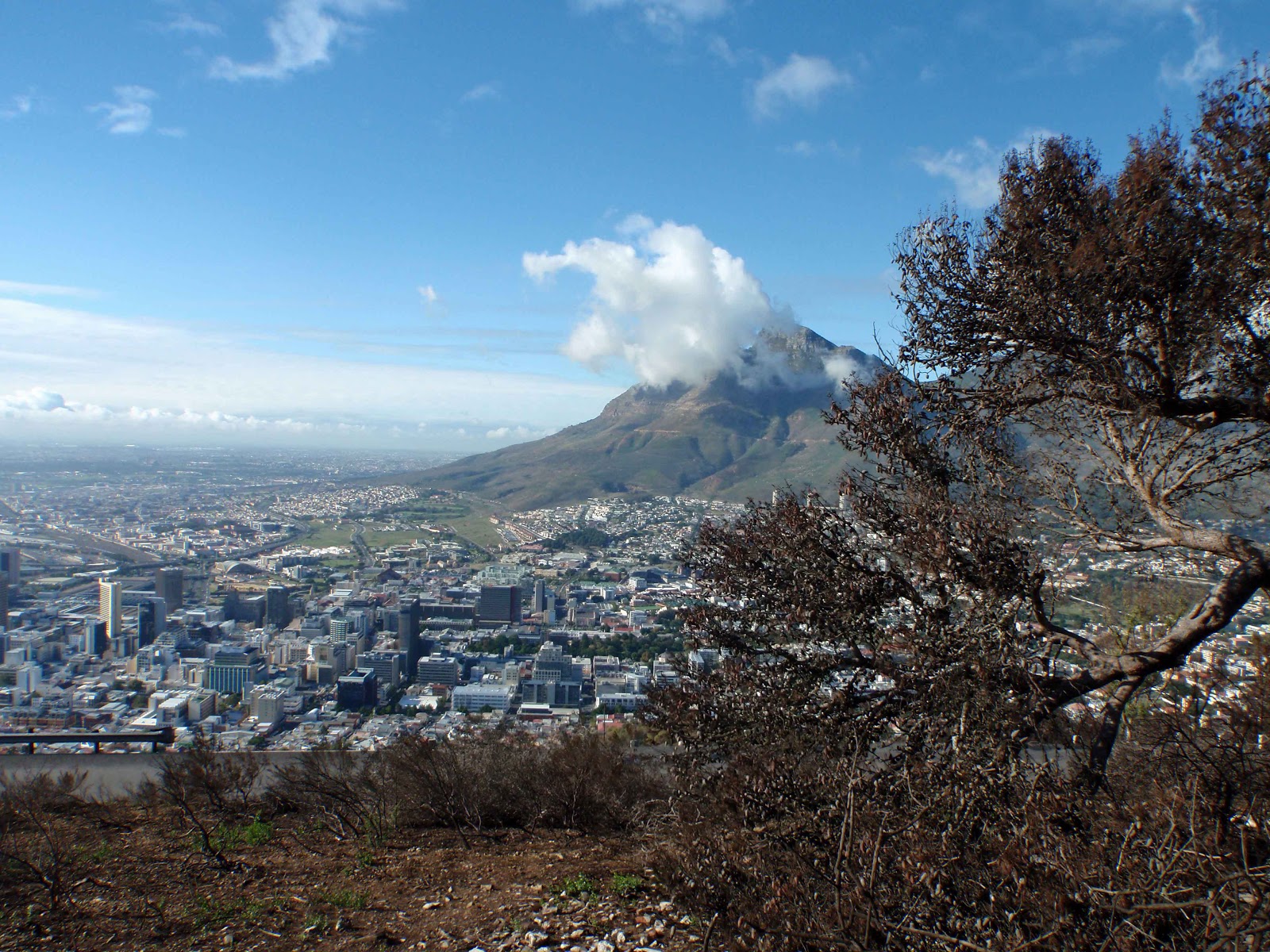 |
| Downtown Cape Town, South Africa, May 2011. |
 |
| View of Table Mountain and Lion’s Head from Signal Hill, Cape Town, South Africa, May 2011. |
 |
| Guineafowl visitors. These are found all over the city. Cape Town, South Africa, May 2011. |
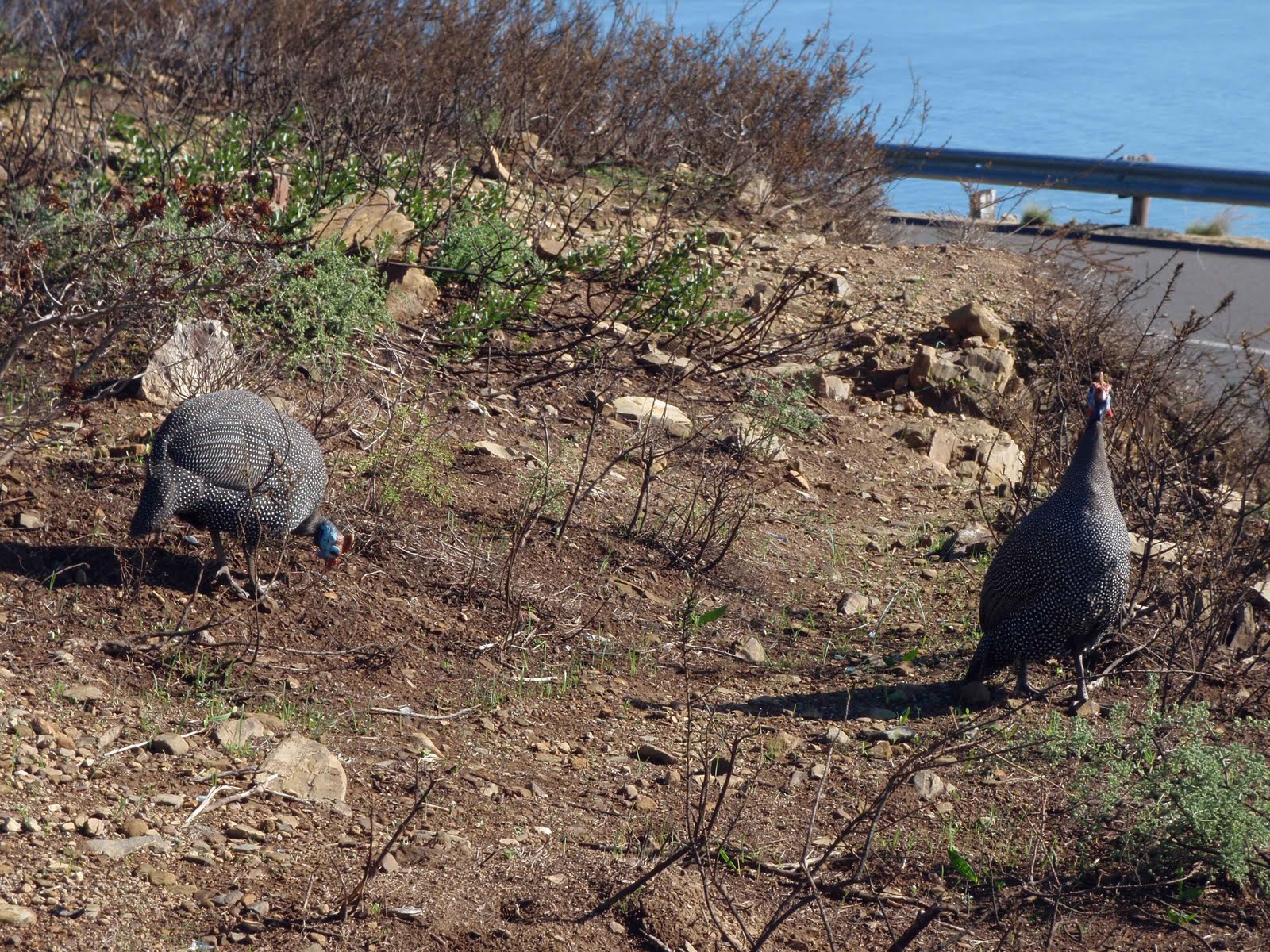 |
| Closer view of two guineafowl. Cape Town, South Africa, May 2011. |
 |
||
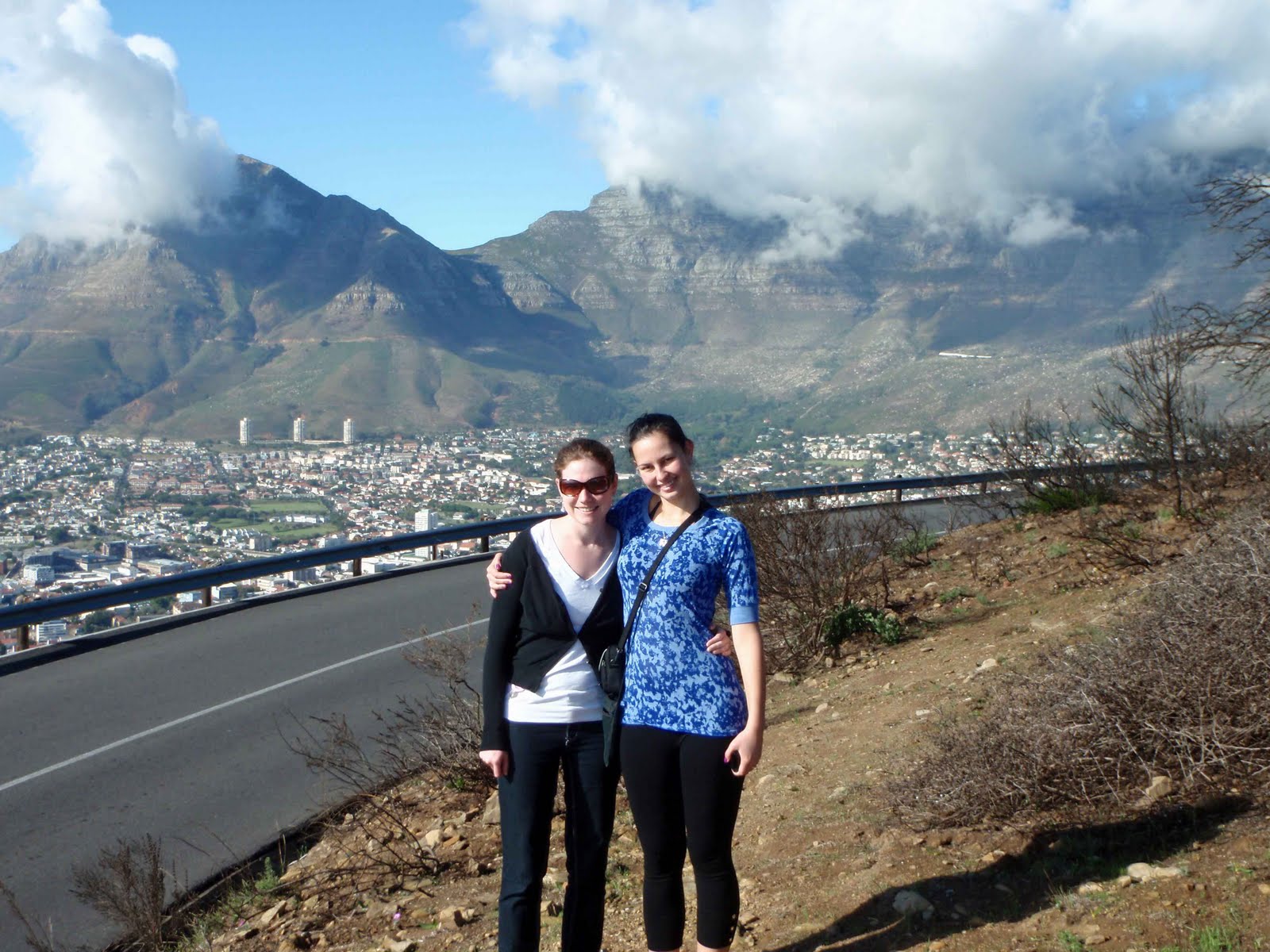
| My gorgeous soon-to-be sister and I, with Table Mountain and downtown Cape Town in the background. South Africa, May 2011. |
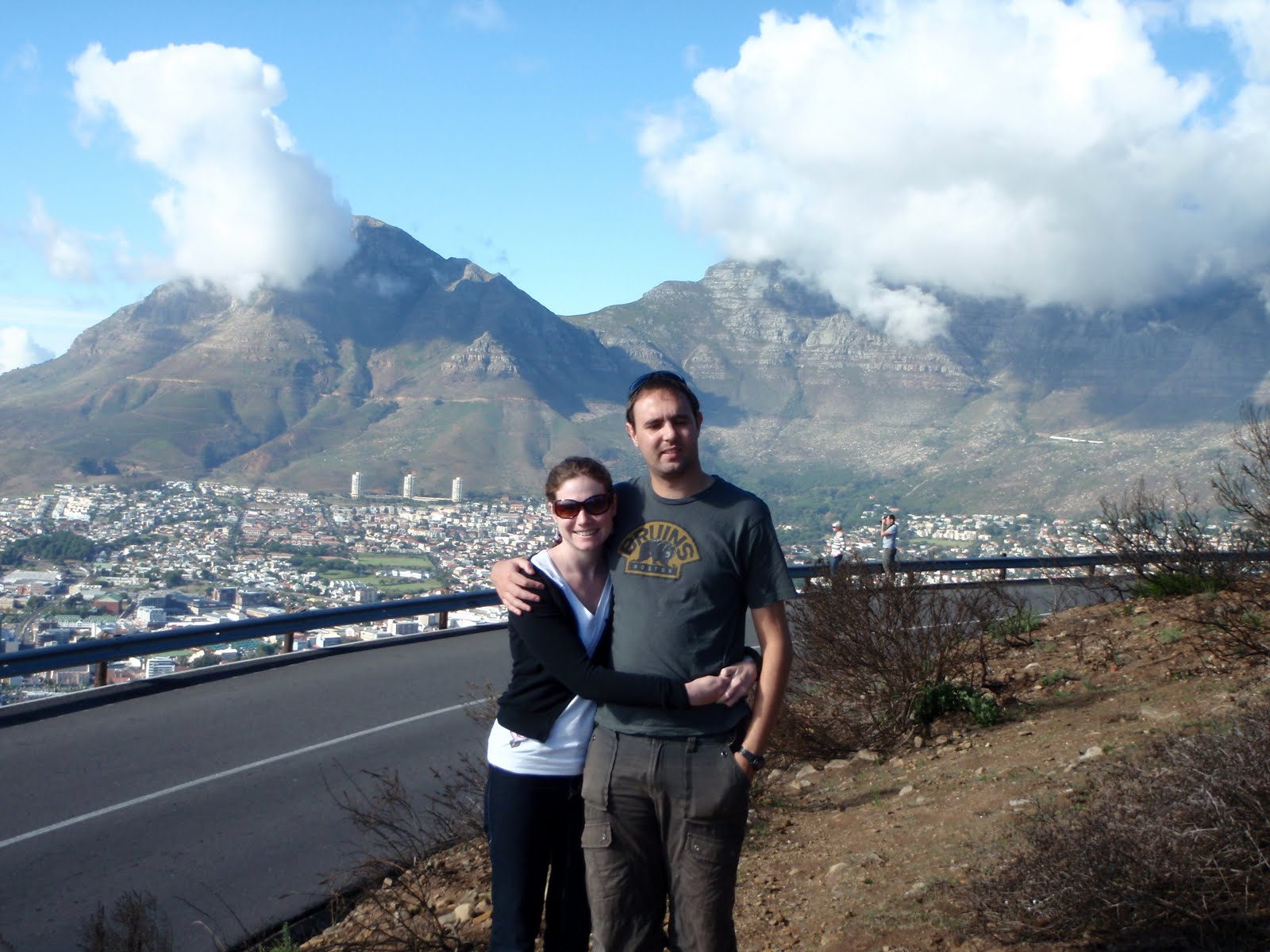 |
| My fiance (his eyes are closed, alas) and I, Cape Town, South Africa, May 2011. |


 Georneys
