Monday Geology Picture(s): Gold Reef City– Underground Mine Tour

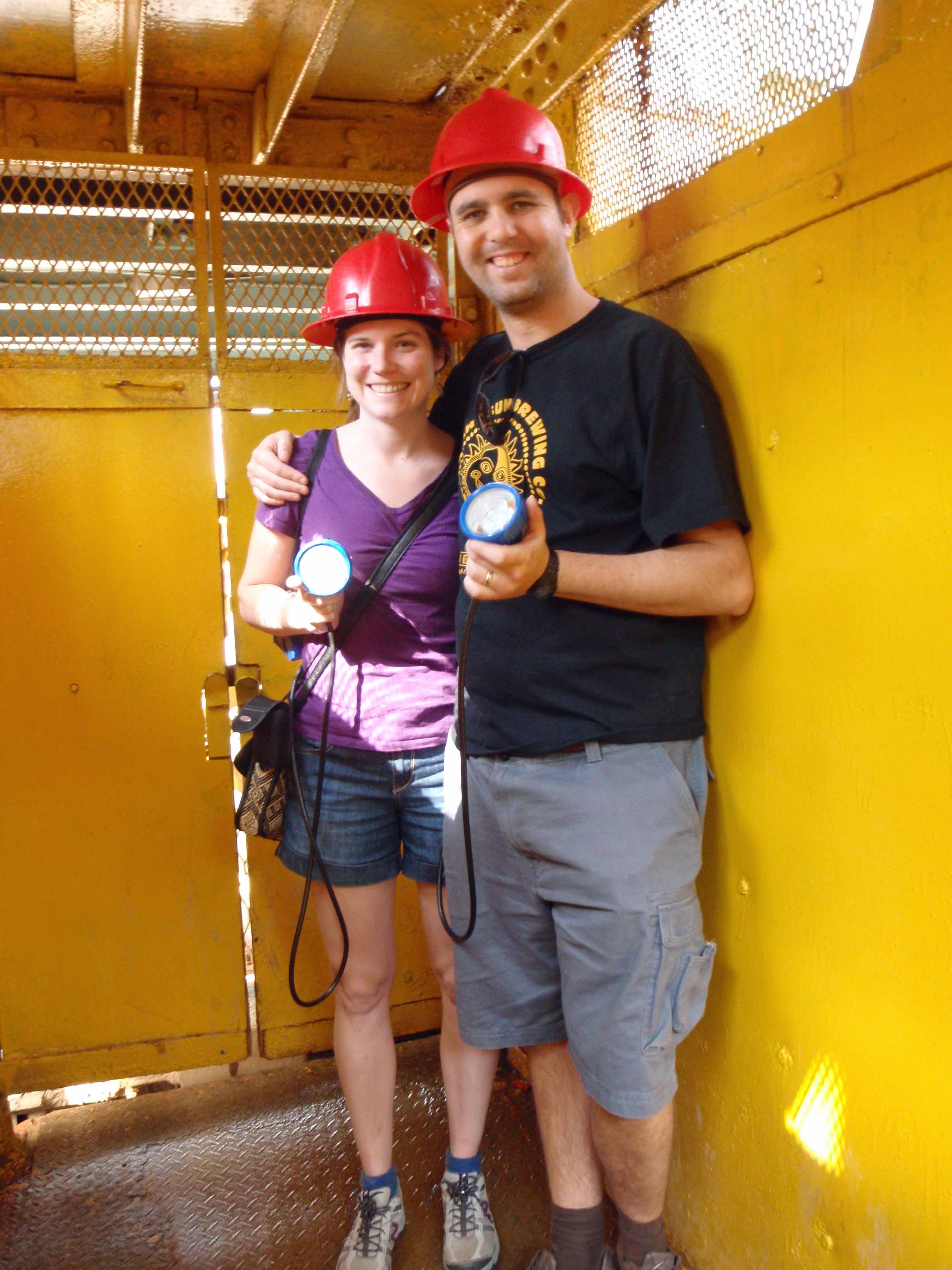
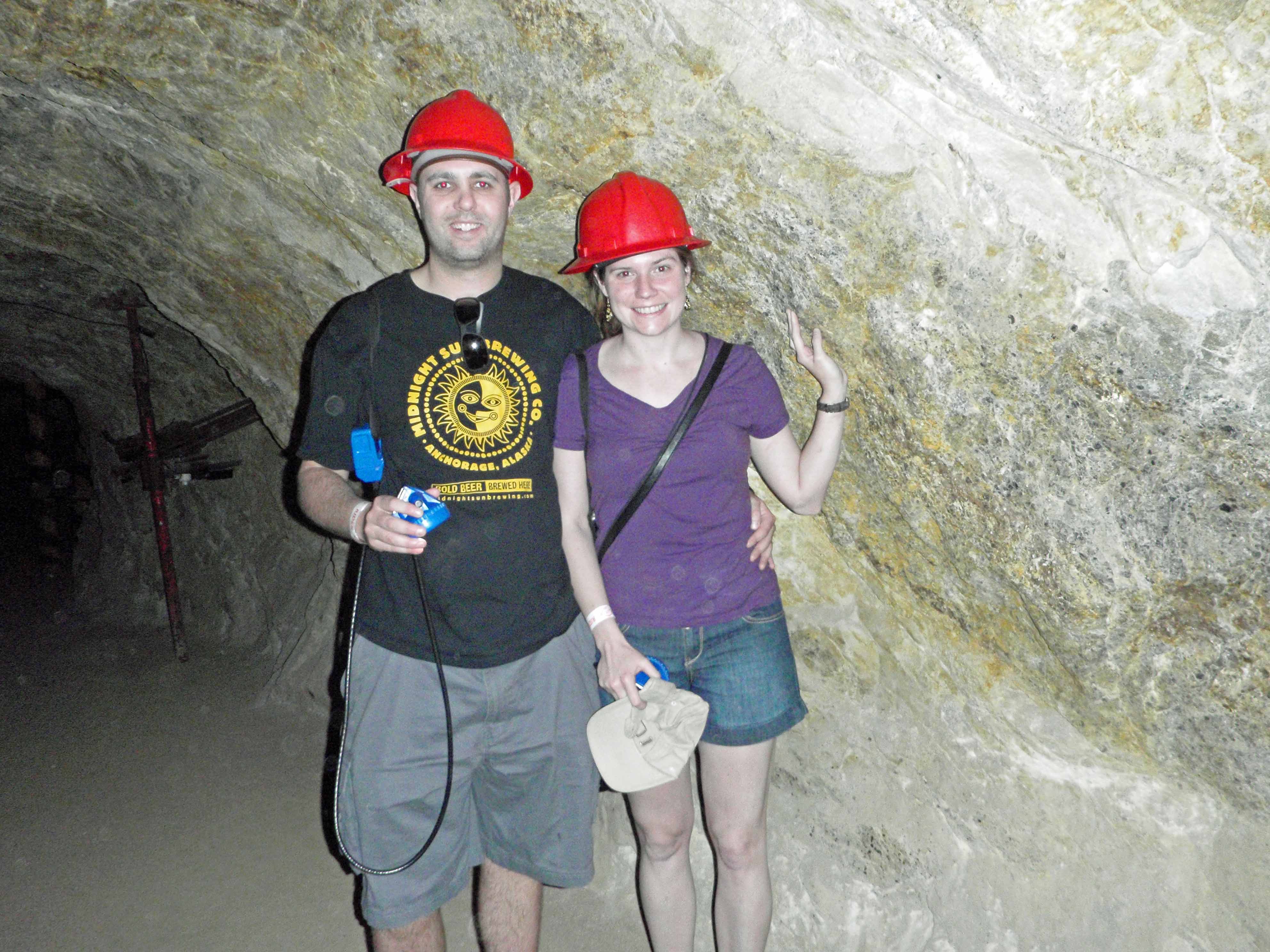
My husband Jackie and I during the underground mine tour.

For a few weeks, I’m sharing some pictures from a visit to Gold Reef City, a gold mining themed amusement park in Johannesburg, South Africa, back in September 2012. Last week I shared some pictures of the mining-themed entrance. This week I am sharing some pictures from the underground mine tour. The park is located on the site of an old gold mine. Now that water is no longer being pumped out of the mine in large quantities, most of the mine has flooded. However, the upper part of the mine is still accessible, and you can arrange to go on an underground tour with a guide. I highly recommend the tour. It’s fascinating to see the mine, and the guide that we had was extremely knowledgeable. My husband and I were the only people signed up for the early morning tour, so our guide spent extra time with us and even pointed out a few things that weren’t on the regular tour. Since my husband and I are in the gold mining industry ourselves, we certainly had plenty of questions. Our guide said that she appreciated our enthusiasm and said that, sadly, many of the schoolchildren who go on the tour are not very interested– they are much more interested in the rides and entertainment up top! 

Without further ado, here are several pictures from the underground mine tour:

Early extent of the mine, 1916-1920. Mine goes to 975 meters depth.
The mine just before its closure in 1977. Mine goes to 3,200 meters depth.
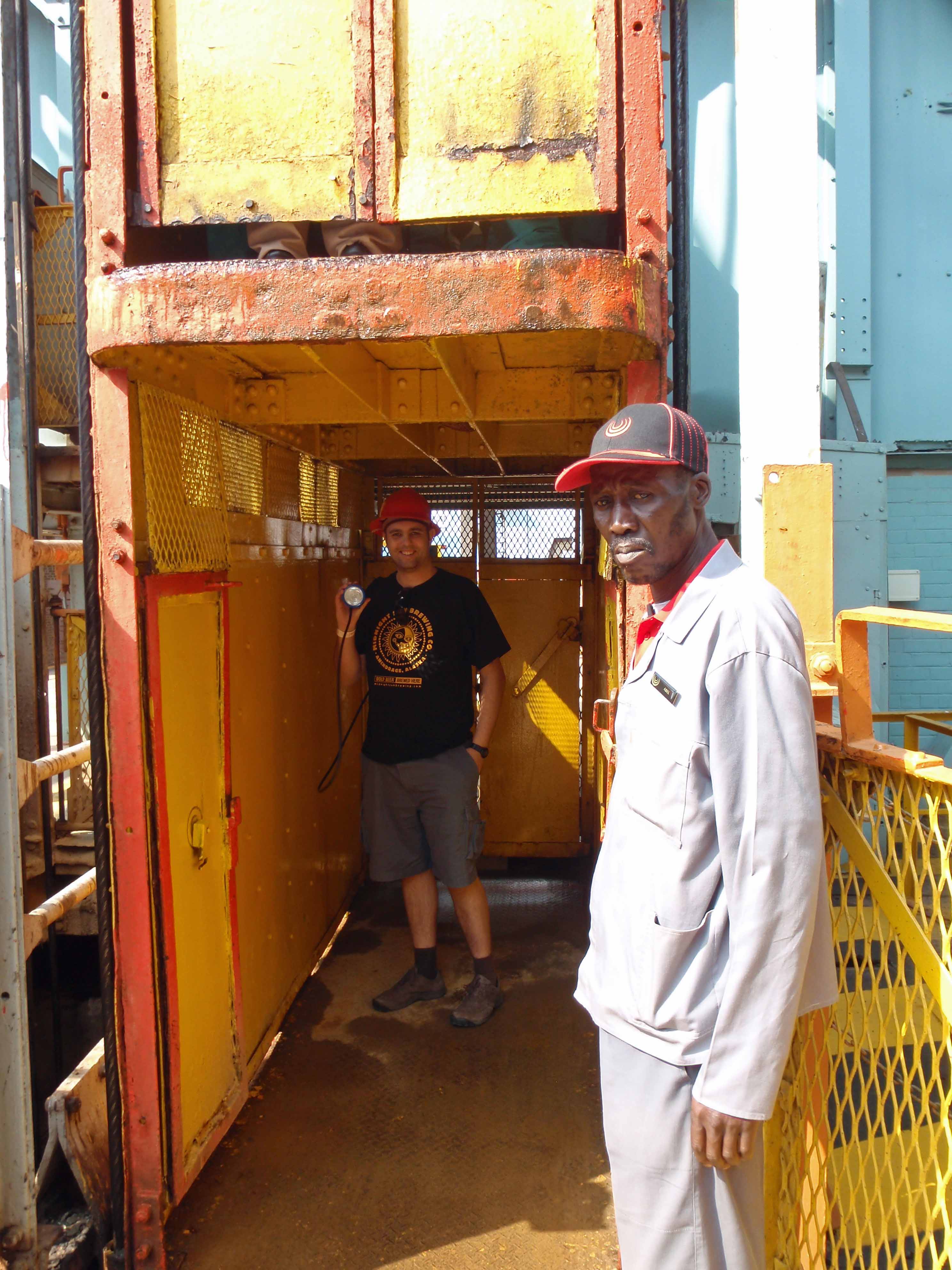
The elevator down the mineshaft.
We were quite excited to be headed down the mineshaft.
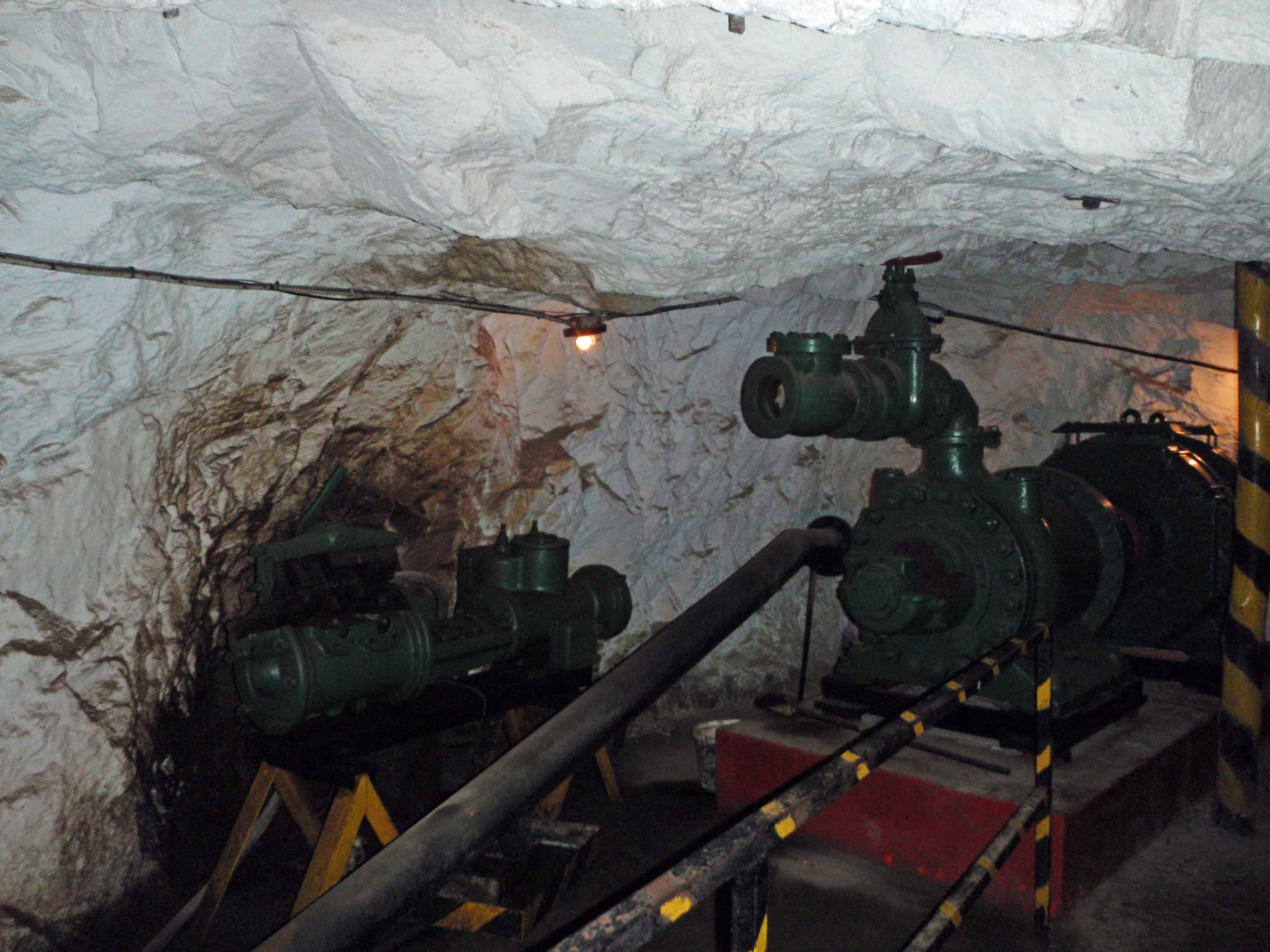
Mining equipment. The walls are painted white to increase the effect of illumination.
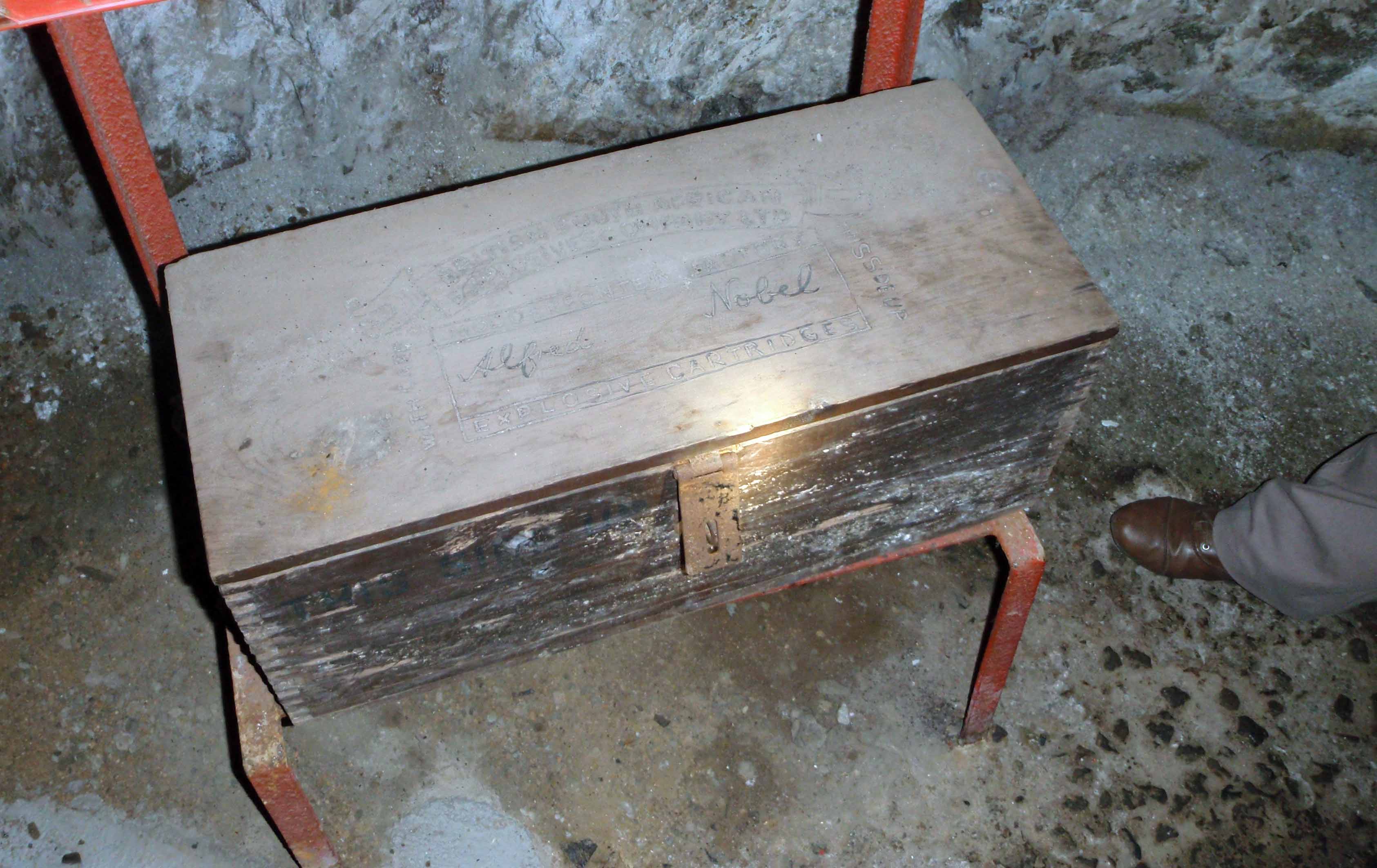
This box was used to store dynamite. It has a sloping top to prevent miners from accidentally putting lanterns on top of it.
Another dynamite box.
There is an underground pub behind this door. You can rent it out for functions. Fun!
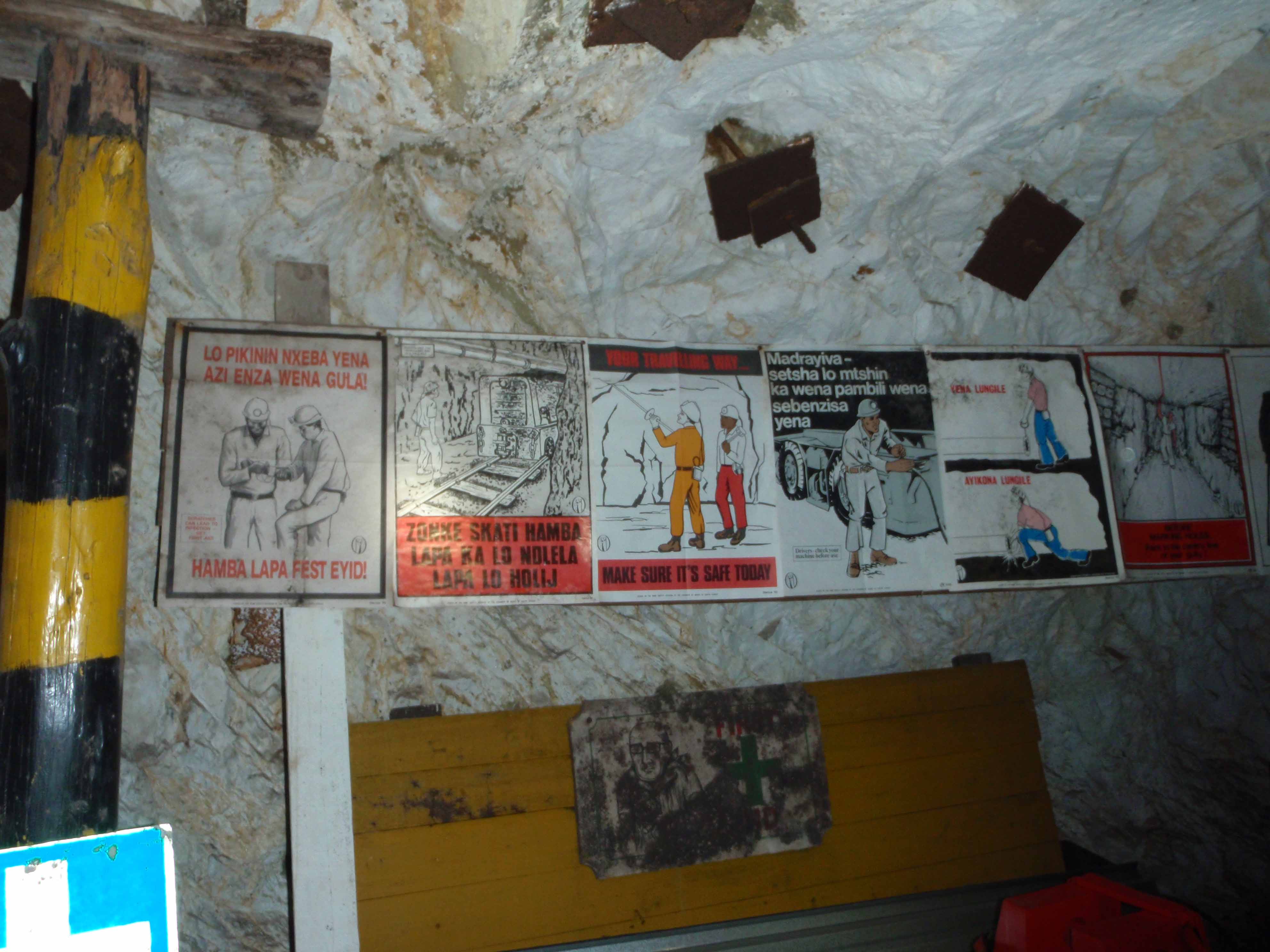
Old mining posters.

I blogged about the above mining posters previously.

Mining supports and a chute.
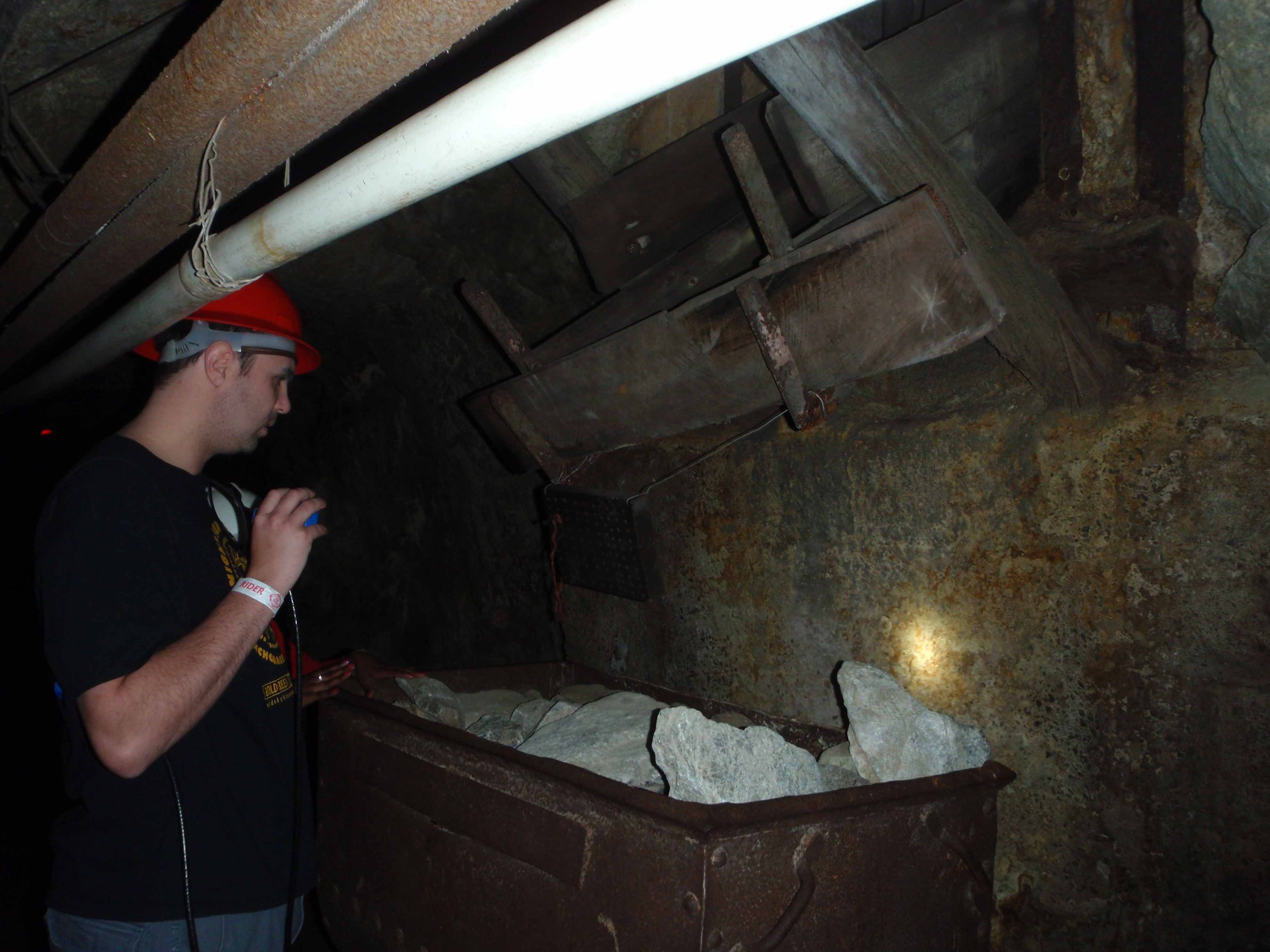
Jackie checking out one of the old chutes.
A simple device for counting.
A collapsed part of the mining shaft.
A rock drill.
Rocks!
Mining shaft with creepy mannequin man.
Mine shaft supports.
Closer view of the mine shaft surface
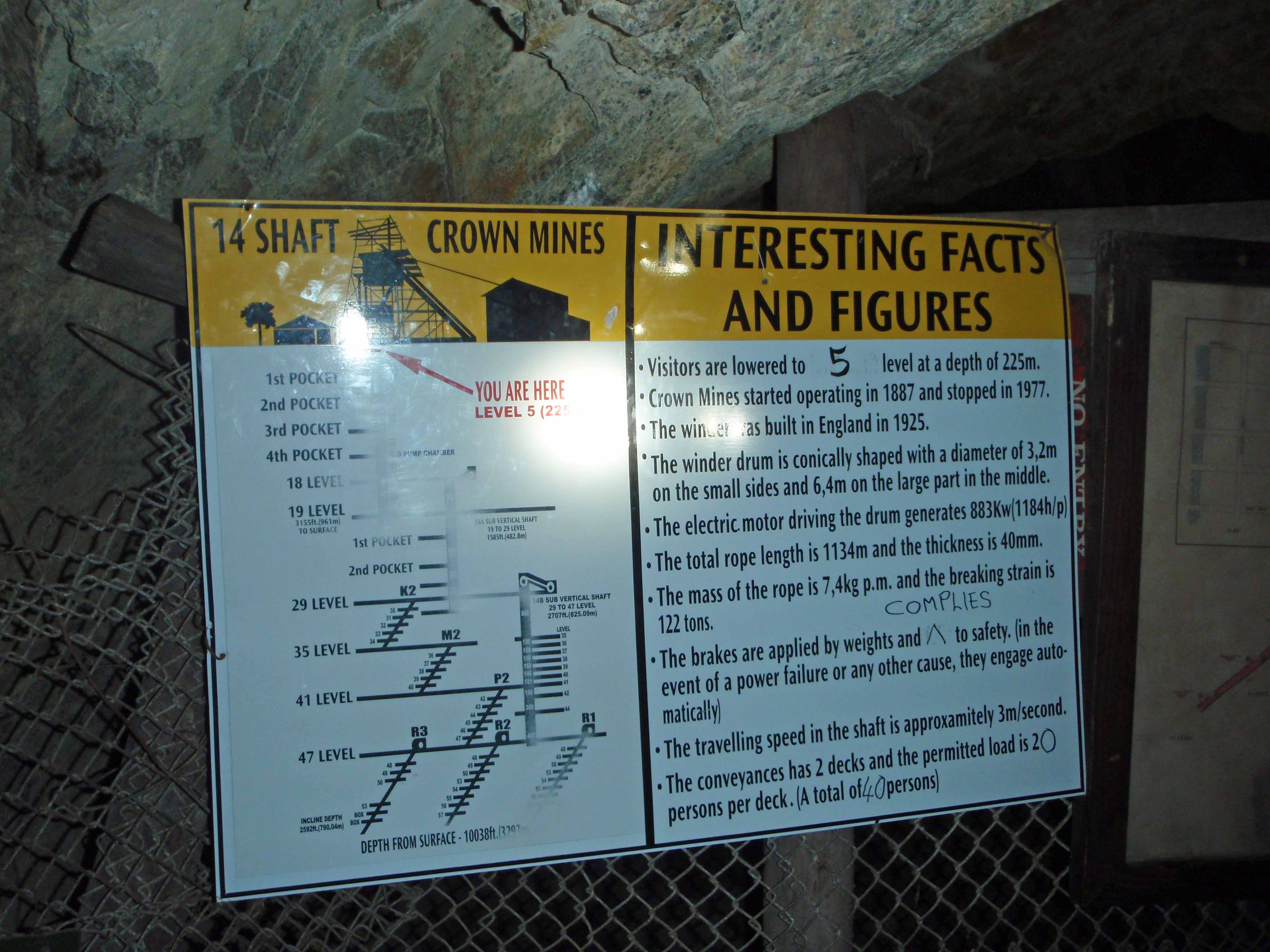
Informational sign about the mine. We went to the red depth-- the mine used to go quite a bit deeper!
Another view of the rockface
Old informational sign.
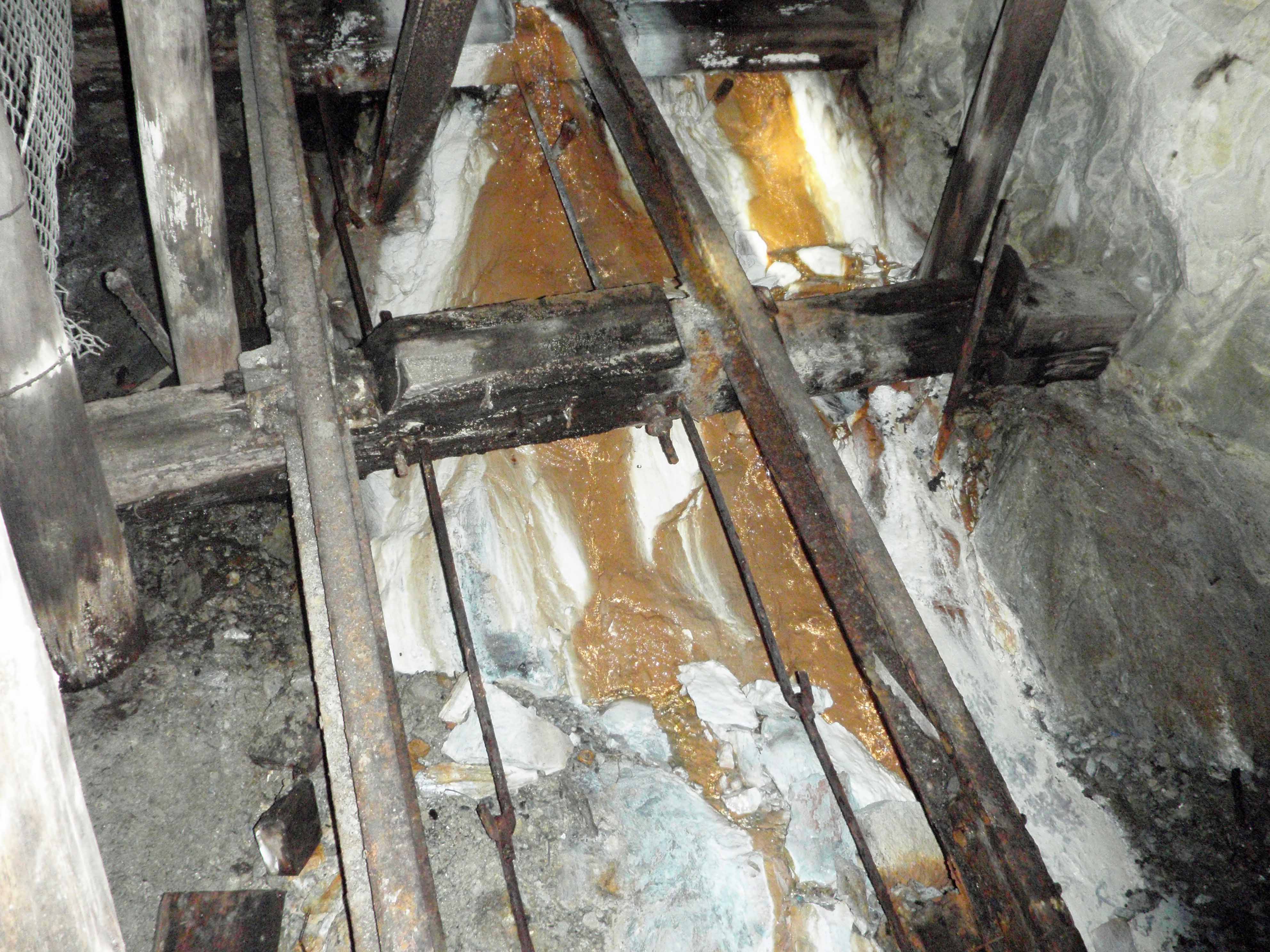
Another chute. That's travertine (carbonate rock) forming on the bottom.
Another old informational mine sign. I have not idea what a "Tchisa Stick" is. Does anyone know?
More signs.
Even more signs.
Headed back to the elevator.

Hope you enjoyed these pictures. Next week I’ll share some more pictures from Gold Reef City– from the gold brick pouring demonstration!


Monday Geology Picture(s): Gold Reef City– The Entrance

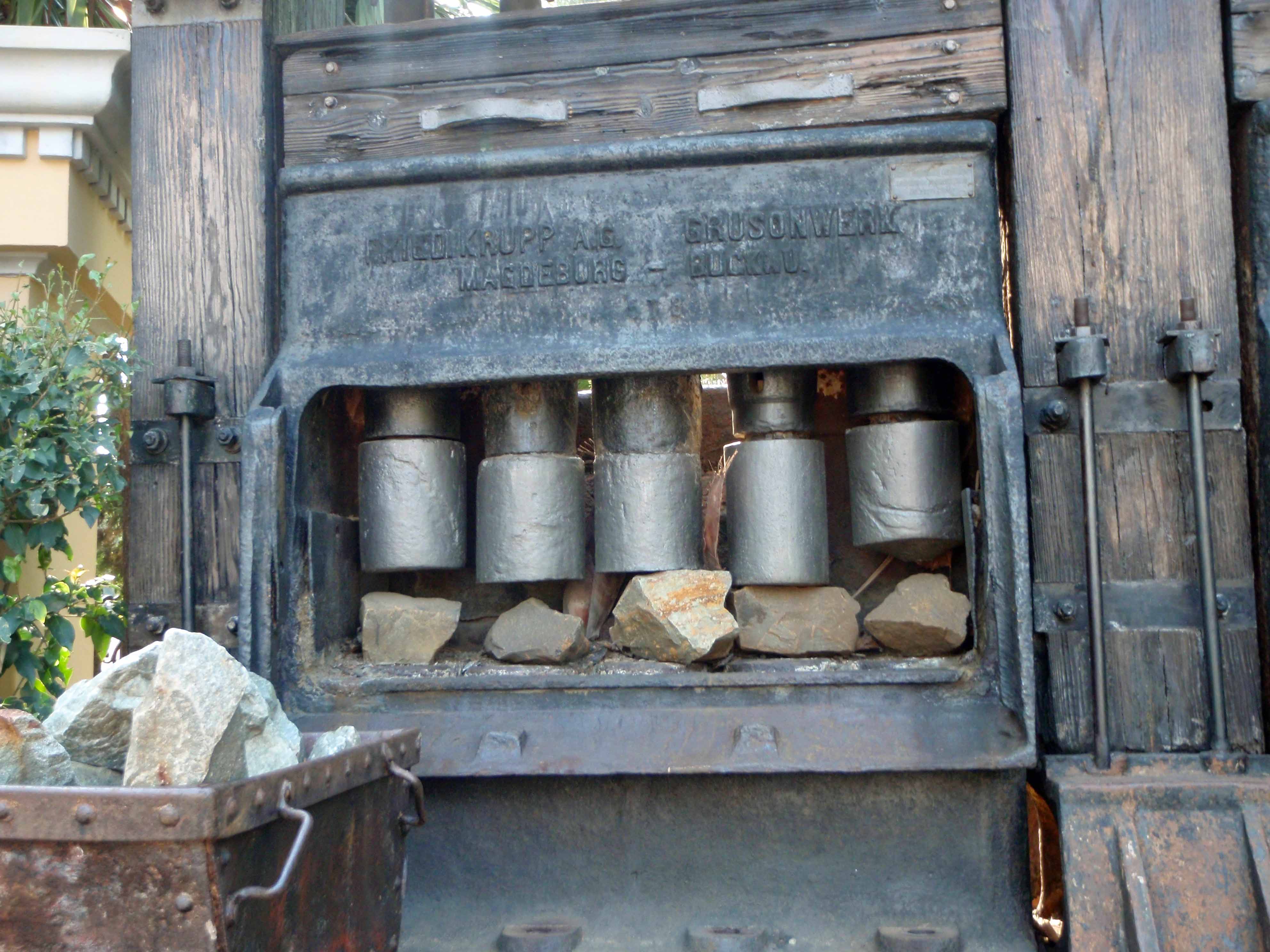
At the front gate: old ore crushing equipment. This is called a "stampmill".

Back in November, I shared a couple of pictures from a trip to the Gold Reef City theme park in Johannesburg, South Africa. Over the next few weeks, I thought I would share some more pictures from a visit to this gold mine turned amusement park. My husband and I visited the theme park back in September 2012 when we were up in Johannesburg for my sister-in-law’s wedding. If you are ever in Johannesburg, I highly recommend a visit to Gold Reef City!

This week, I thought I would share a few pictures from the front entrance to the theme park. There is plenty of gold mining themed decoration!
Headed toward the front entrance gate.
A wider view of the crushing equipment.
A close-up shot of some of the crushers.
Informational sign about the crushing equipment. Click to enlarge.
Gold miner friend #1.
Gold miner friend #2. Actually, this picture shows three gold miners since my husband and I work for a gold exploration company. I think our miner friend is telling us how tall we have to be in order to go on the rides.
I wore my gold flake earrings, which I bought in Alaska.
To the theme park!


Monday Geology Picture(s): Sandstone and Dassies along the Breede River, South Africa

Uplifted sandstone rocks along the Breede River near Robertson, South Africa, February 2013.

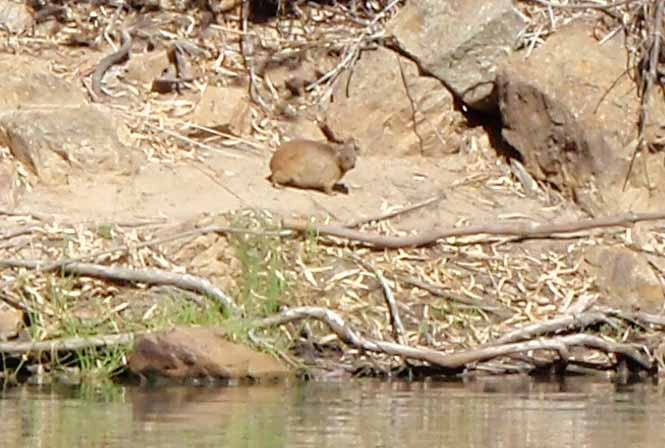
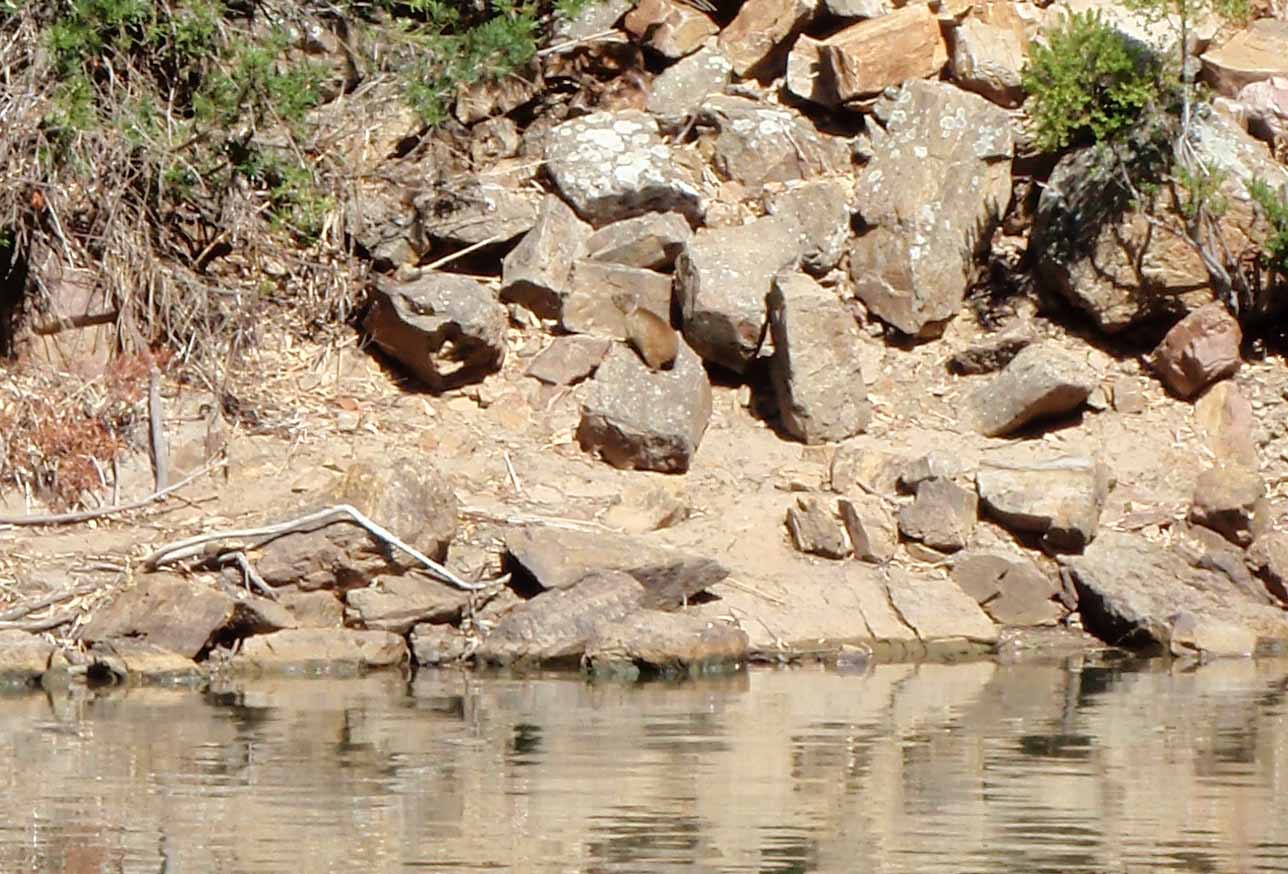
This past weekend my husband and I traveled down to Robertson, South Africa to visit family. We’ve been wanting to do a river trip for awhile, so we booked a kayaking trip along the Breede River for Saturday. The Breede is a very beautiful river, and we saw some incredible birds– most of which flew away before we could take a good picture of them! We stopped for a snack and some swimming near the uplifted (nearly vertical!) sandstone rocks in the above picture. We were taking a look at the rocks when we noticed some movement amongst them.The rocks, as it turned out, were full of dassies or rock hyraxes. The dassies kept darting out from the rocks and hopping and waddling (they’re pretty fat!) down to the river for a drink on the hot summer day.

Here are a few pictures of the dassies:

Dassie #1.
Dassie #2.
Dassie #3.

Monday Geology Picture(s): University Coral Outcrop

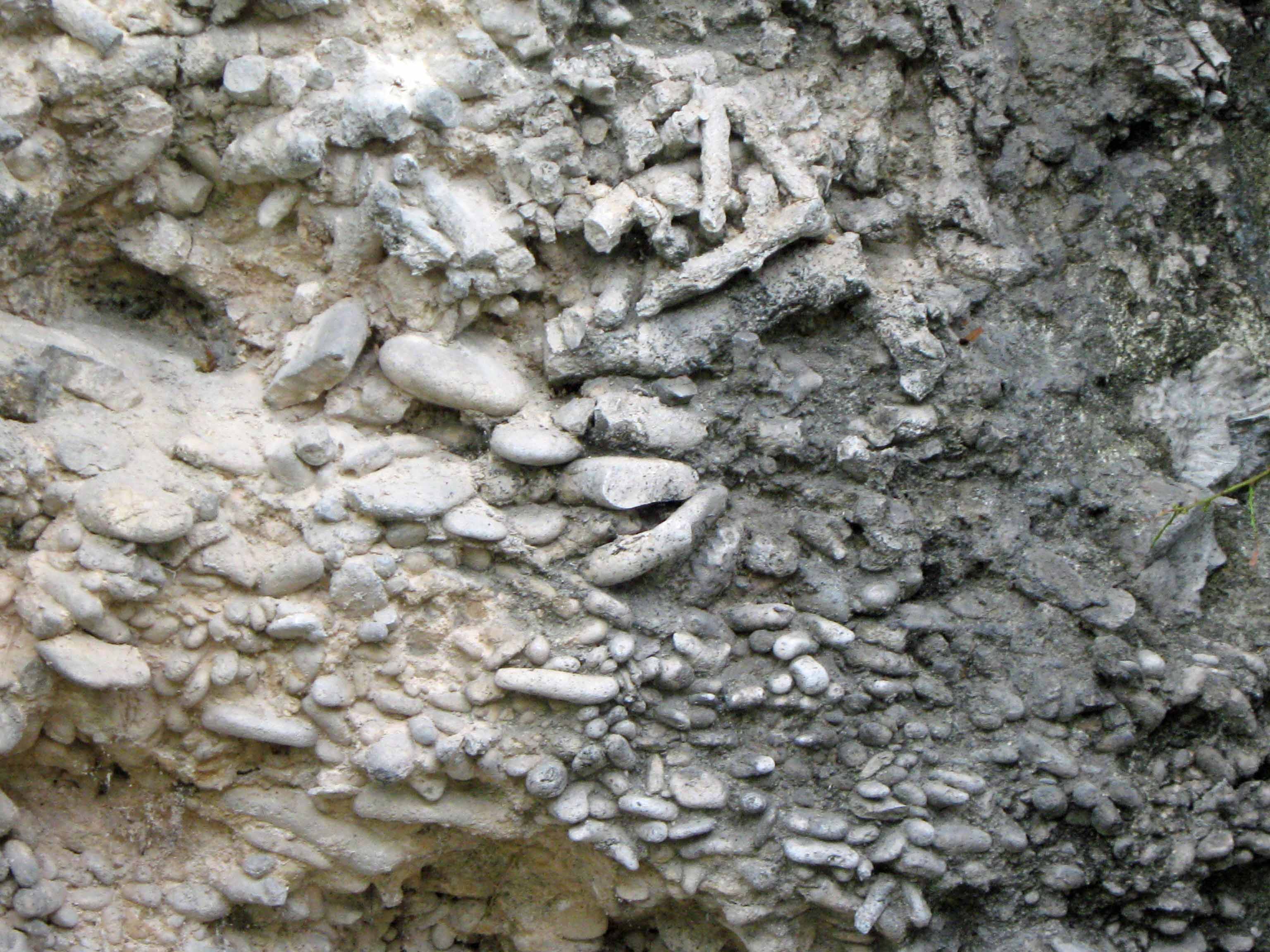
Coral exposed at the university outcrop. You can tell geologists have been here! Barbados, June 2009.

For this week’s Monday Geology Picture post, I thought I would share a few more pictures from my class field trip to Barbados back in 2009. One day we visited a well-known coral outcrop located adjacent to the University of the West Indies. You could tell that geologists had been there before by all the drill holes!

Corasl exposed at the university outcrop, Barbados, June 2009.
More drill holes in coral at the university outcrop, Barbados, June 2009.
The University of the West Indies, Barbados, June 2009.


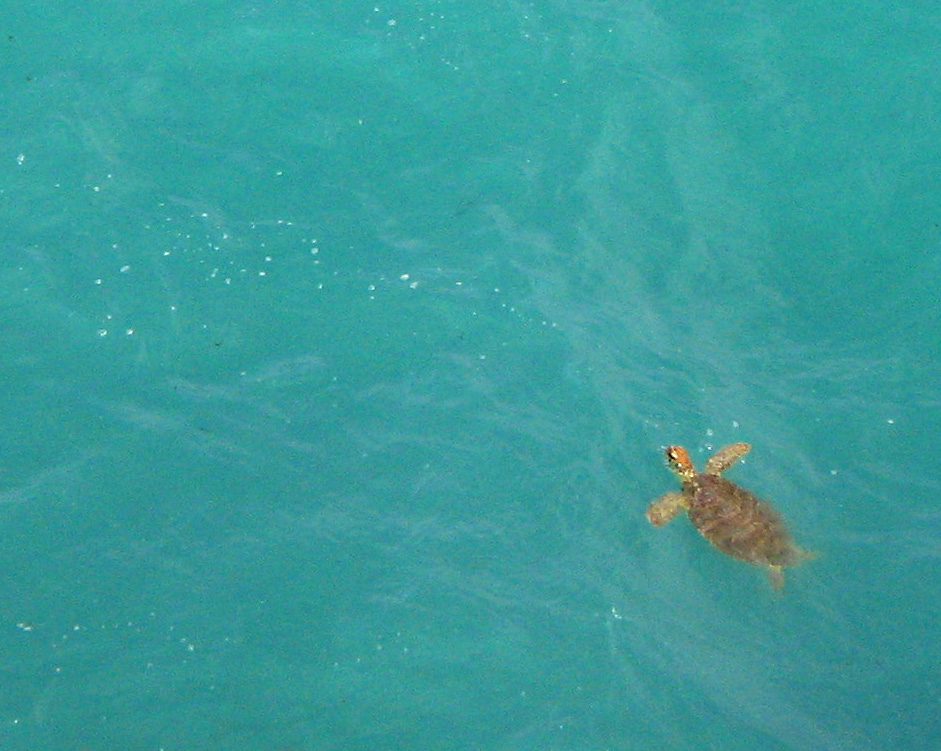
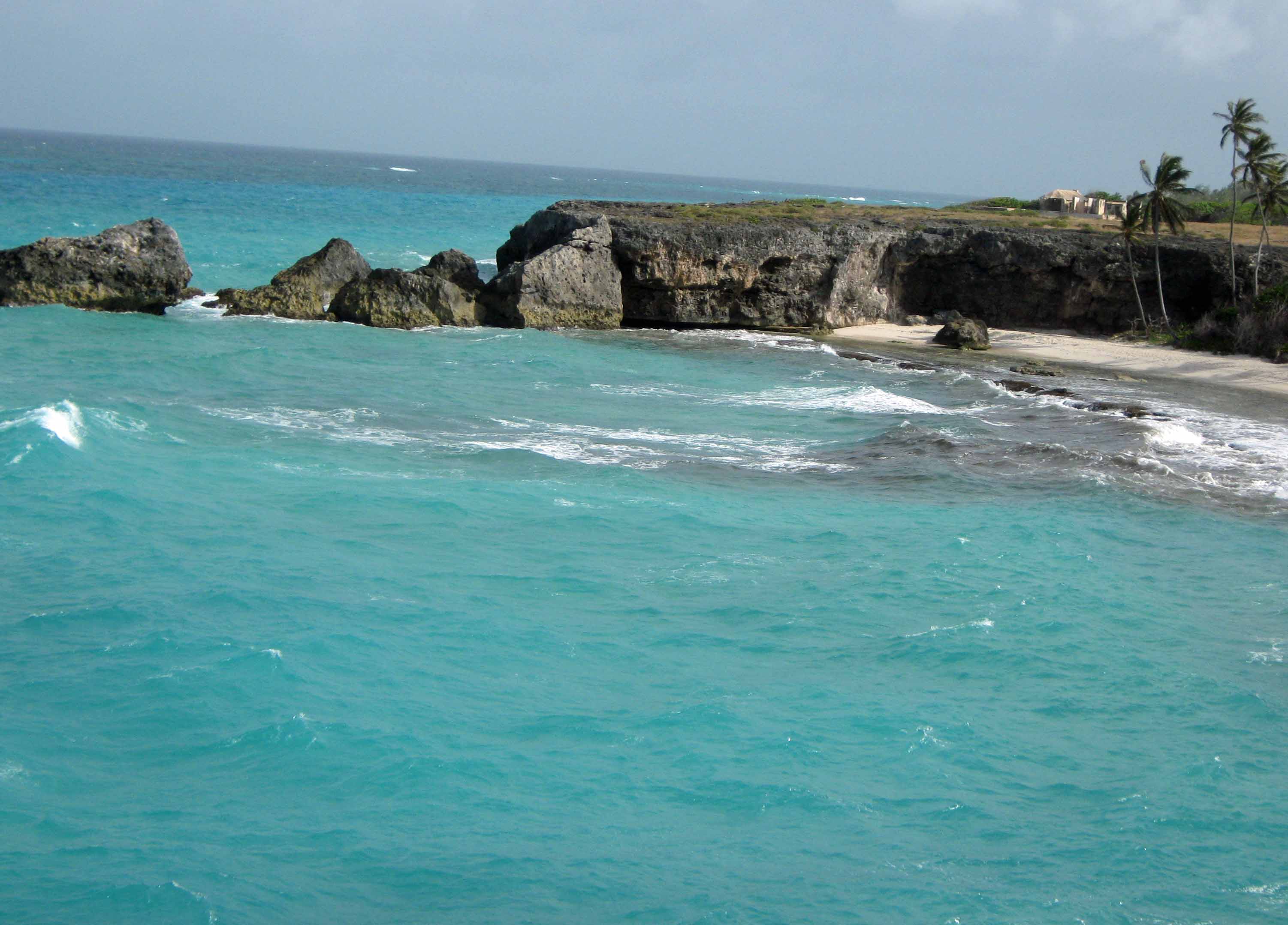
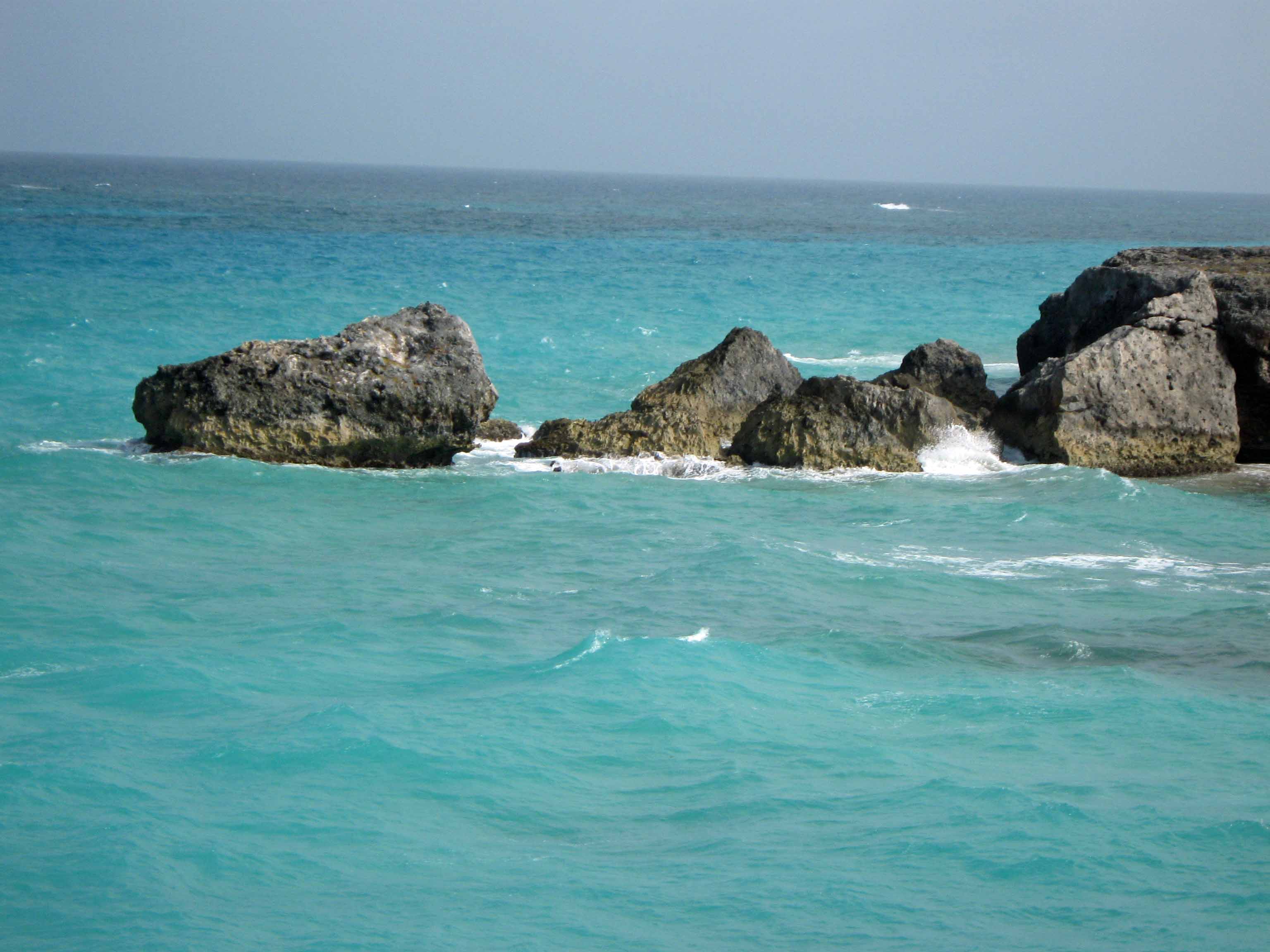
Monday Geology Picture(s): Rocks and a Turtle

A green sea turtle in a turquoise sea, Barbados, June 2009.

When I was back in Barbados for a student field trip back in 2009, I caught sight of a beautiful sea turtle one day. I didn’t have a very good camera back then, so I didn’t take a great picture of the turtle. The picture may not do the moment justice, but I still recall how magical it felt to observe a beautiful green sea turtle in a turquoise sea. Of course, being geologists we were at the beach to look at some rocks, which were pretty beautiful as well.

A closer view of the sea turtle, Barbados, June 2009.
The rocks beyond the turtle, Barbados, June 2009.
More rocks, Barbados, June 2009.

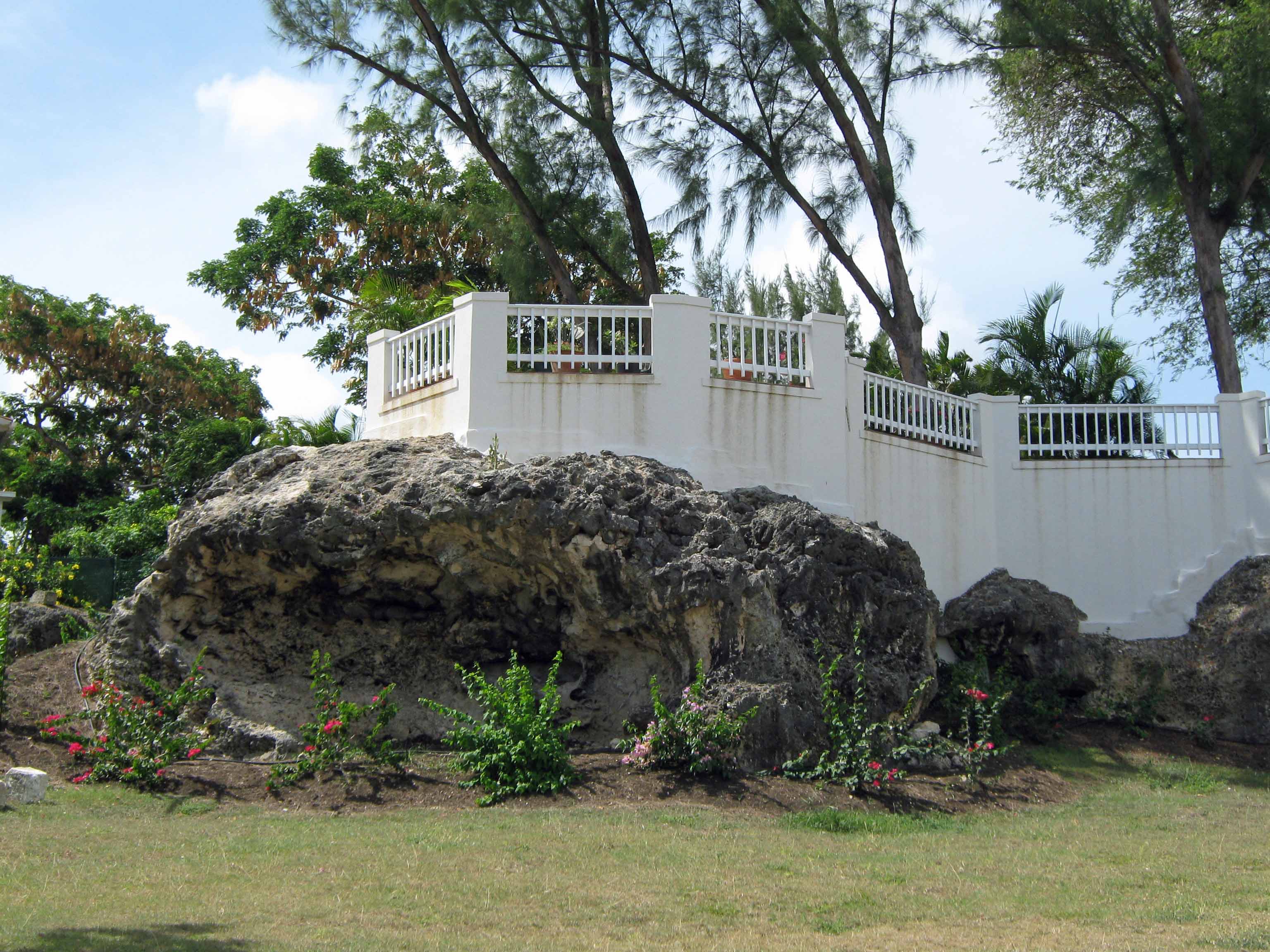
Monday Geology Picture(s): Coral in the Backyard

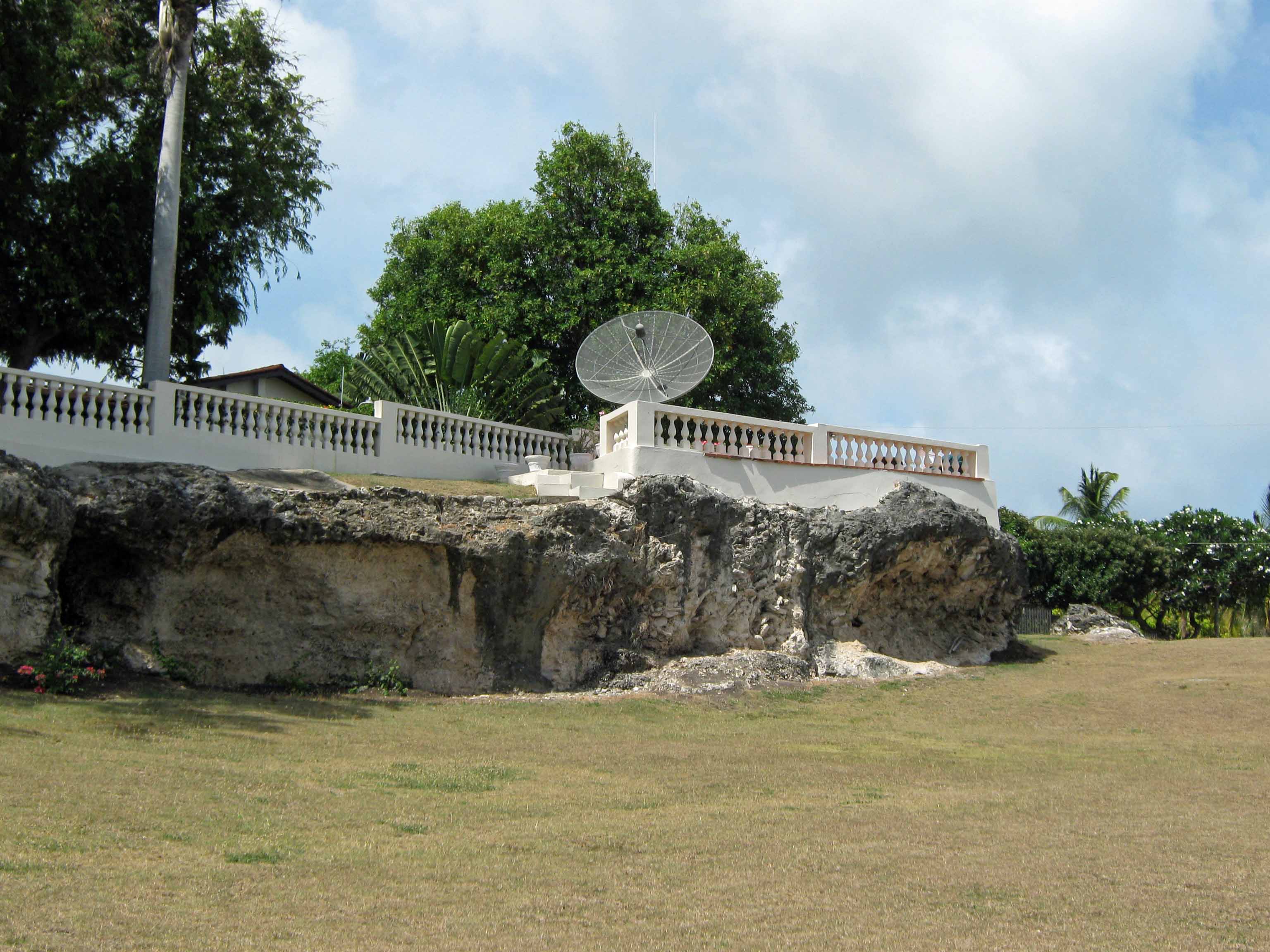
A coral outcrop in someone's backyard in Barbados, June 2009.

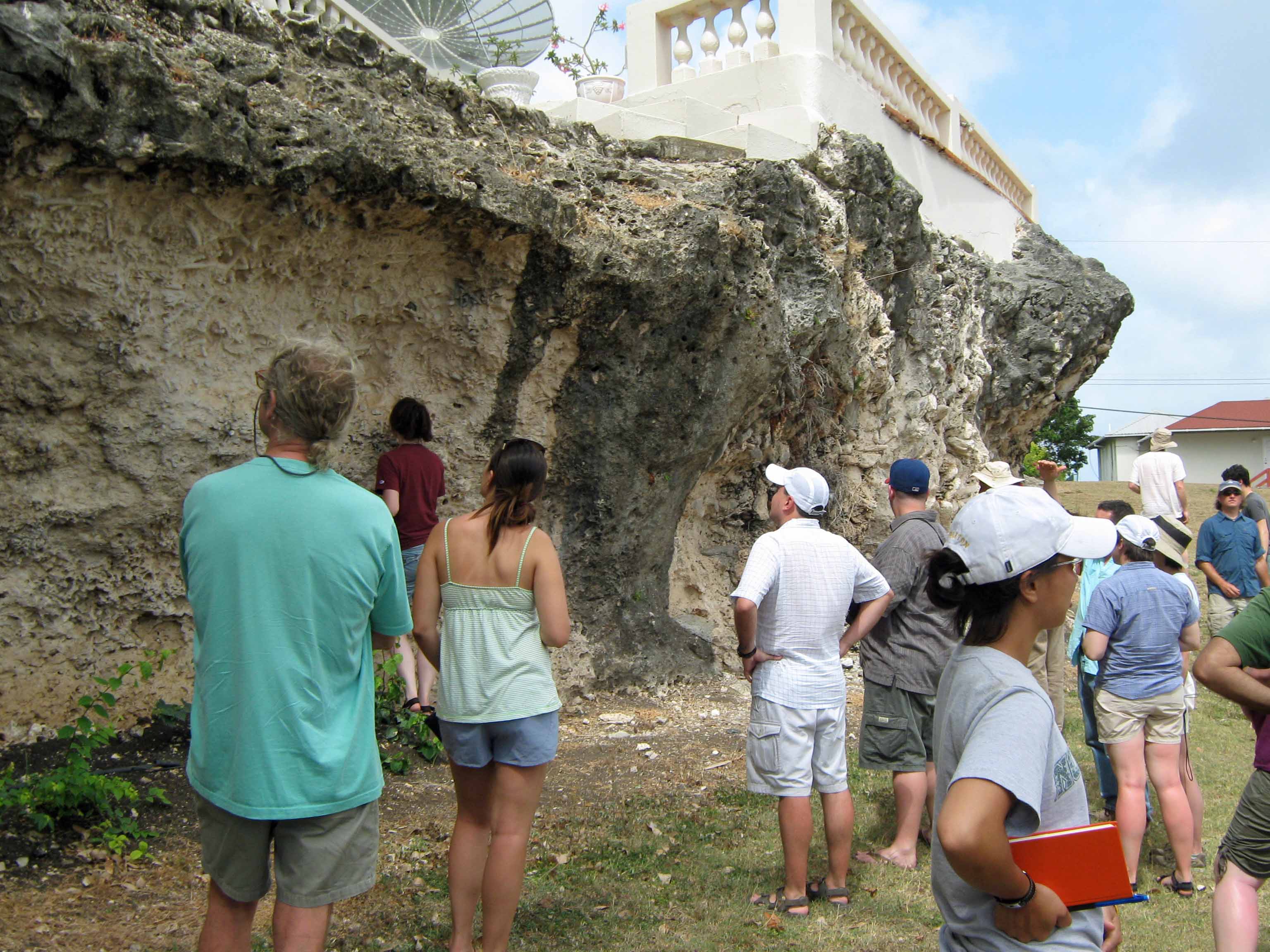
If you live in Barbados, don’t be surprised if one day a group of geologists shows up in your backyard… especially if there are coral rocks in your backyard, which is likely considering how much coral, both modern and fossil, is found on Barbados.

Another view of the backyard coral outcrop, Barbados, June 2009.
A group of geologists gathered around the backyard coral outcrop, Barbados, June 2009.
A student taking a closer look at the backyard coral outcrop, Barbados, June 2009.

Monday Geology Picture(s): Coral Boulders on the Beach in Barbados

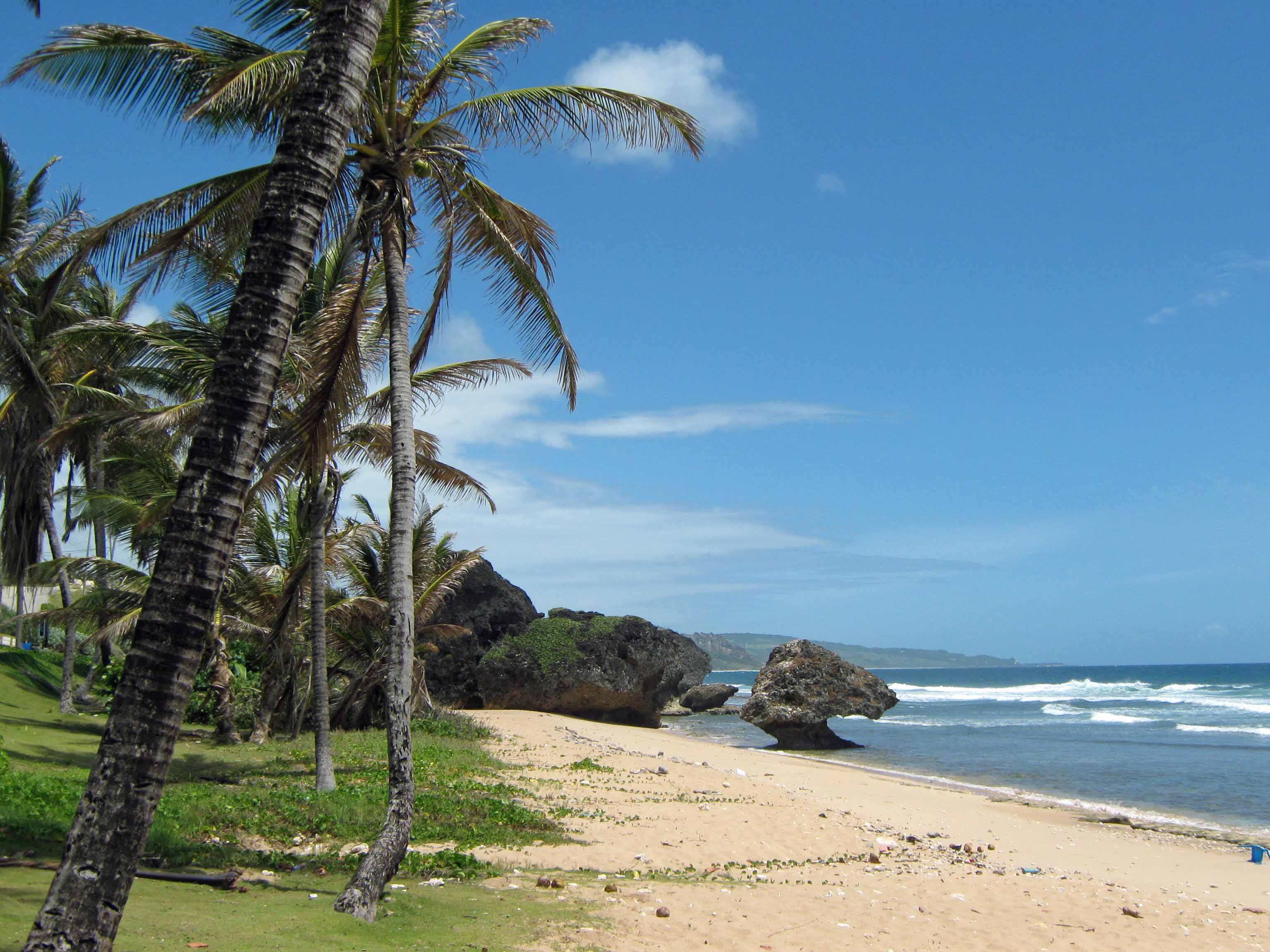
Coral boulders on the beach in Barbados, June 2009.

Back in June 2009 I visited the lovely tropical island of Barbados for a week for a paleoclimate field trip as part of one of my graduate school courses. I never blogged about this trip (I only started Georneys in late 2010), so I thought that I would share some pictures from this Barbados trip over the next few weeks. Hope you enjoy!

From the Woods Hole Oceanographic Institution website, here is an explanation of why Barbados is such an important and interesting location for the study of paleoclimate:

The study tour this year [2009] will to the Caribbean island of Barbados, a classic field area for Quaternary sea level study. Barbados is an actively rising island at the crest of the Barbados Ridge, an accretionary prism of the Lesser Antilles forearc. Strongly folded Eocene sedimentary rocks are capped by a sequence of Quaternary coral terraces that grew during sea level changes over the last 700,000 years or so.

A large fraction of what is known today about the rates and magnitudes of Quaternary sea level change comes from studies of the uplifted reef tracts of Barbados and cores recovered from the drowned deglacial coral reefs offshore. The first strong support for the Milankovitch theory of climate change came from the dating of the Last Interglacial terrace; locally know as First High Cliff. This date was key to establishing a timescale for the oxygen isotope record that remains our primary way of establising a stratigraphy and a timescale for all ocean cores.

This week, I am sharing some pictures of some coral boulders along a Barbadian beach. I also shared some pictures of a similar coral boulder from the same beach back in 2011. Eroded by waves, the coral boulders weather into some fantastical, beautiful shapes.

Another view of coral boulders on the beach in Barbados, June 2009.
A closer view of one of the coral boulders on the beach in Barbados, June 2009.

Monday Geology Picture(s): Port Elizabeth Pebbles

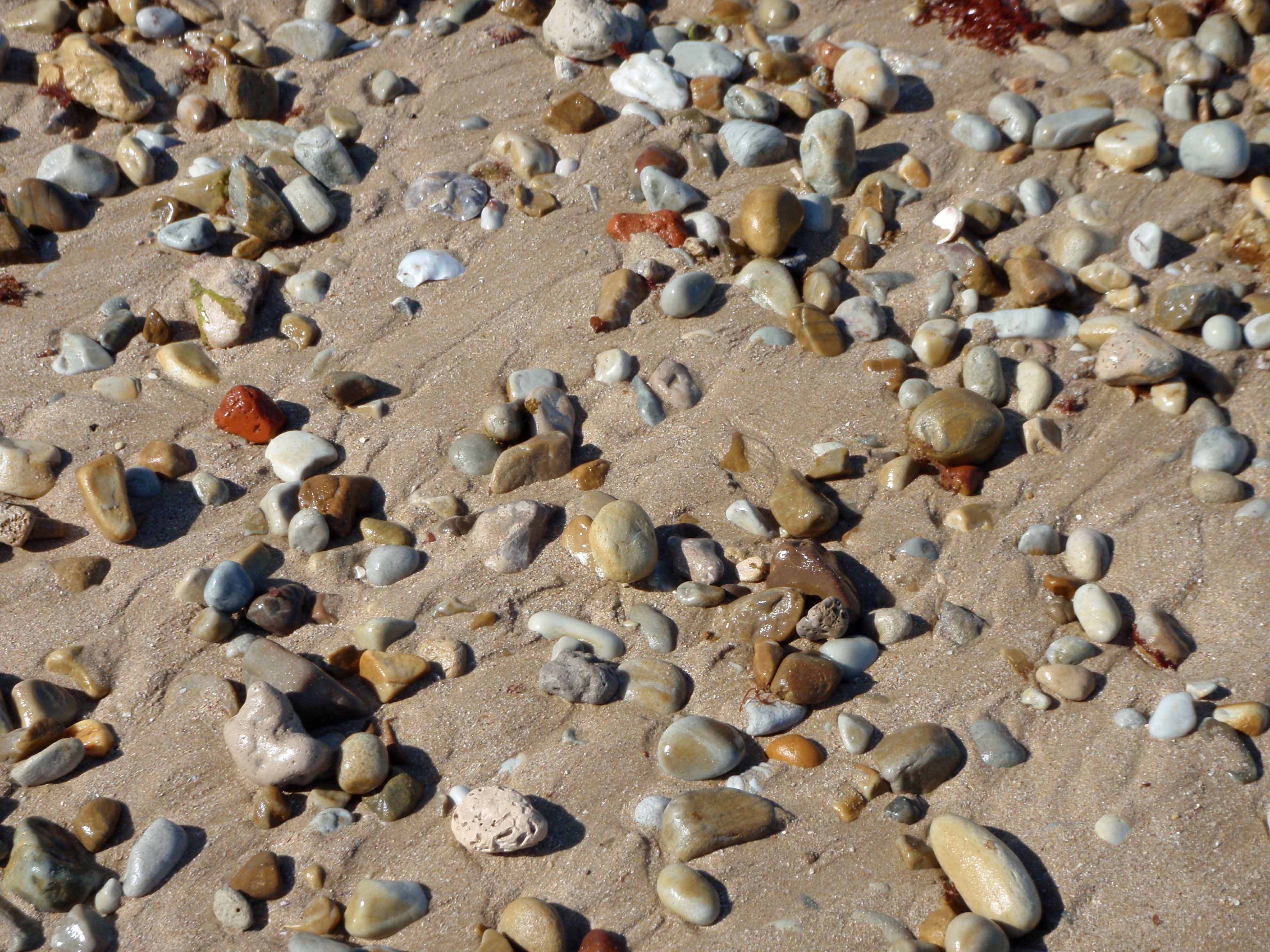
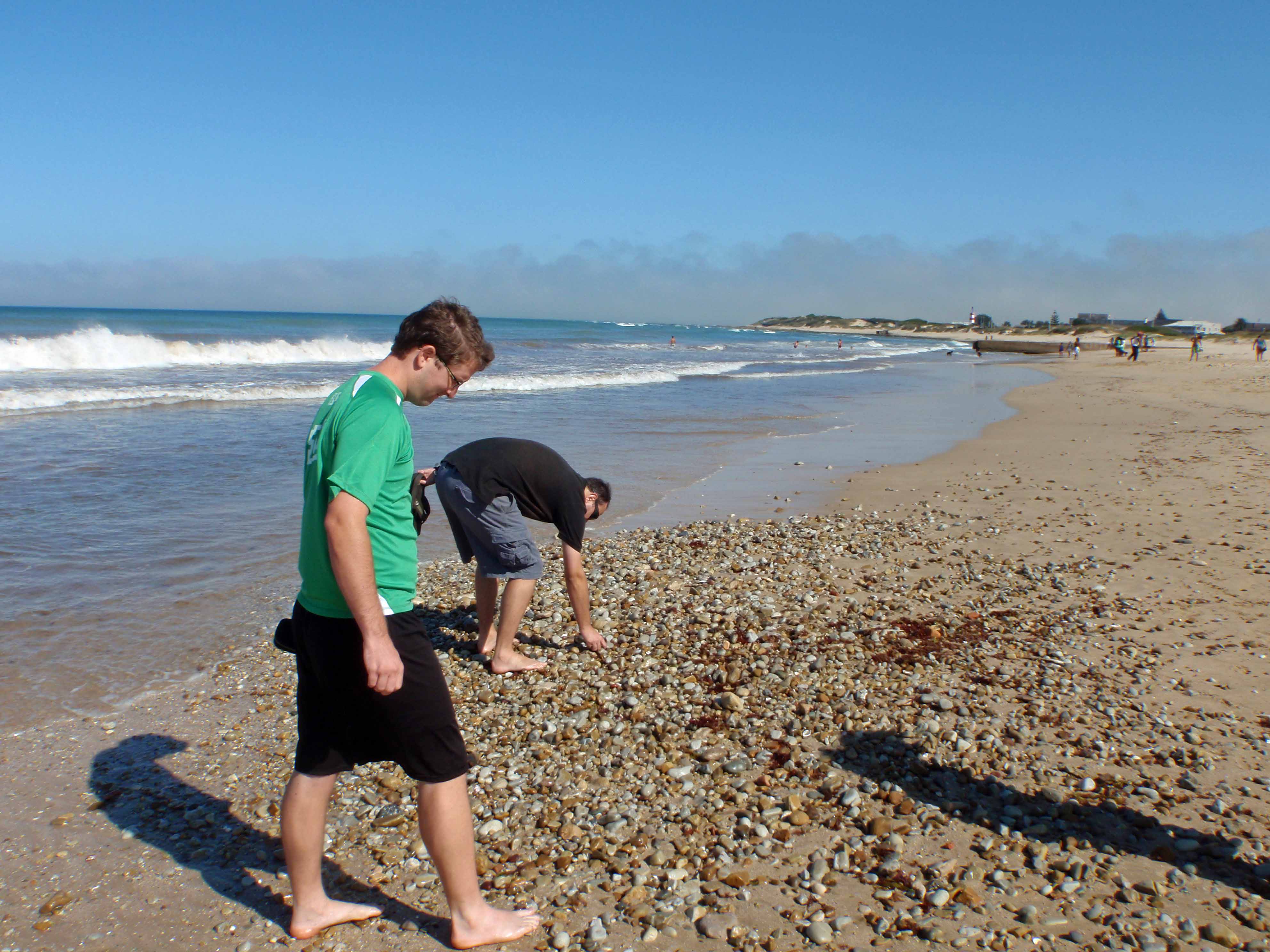
Various pebbles on the beach in Port Elizabeth, South Africa, December 2012.

For this week’s Monday Geology Picture post, I thought I would share some pictures which I took last month on a beach in Port Elizabeth, South Africa. As I was walking along the beach with my husband and some friends, we came across a pile of rounded pebbles of various lithologies. Some of the rounded pebbles seem to be anthropogenic in origin– I think they are rounded pieces of brick.

A wider view showing the location of the pile of pebbles on the beach.
My husband Jackie and our friend John checking out some of the pebbles.

Monday Geology Picture(s): Seychelles Miscellany

Seychelles Sunset. Picture courtesy of Nia and Patrick.

For this week’s Monday Geology Picture post, I thought I would share a few last pictures from the recent holiday visit of my friends Nia and Patrick to the Seychelles. These pictures have definitely inspired me to have my own Seychelles holiday one day! Beautiful beaches, warm weather, and fascinating geology– what a perfect vacation destination!
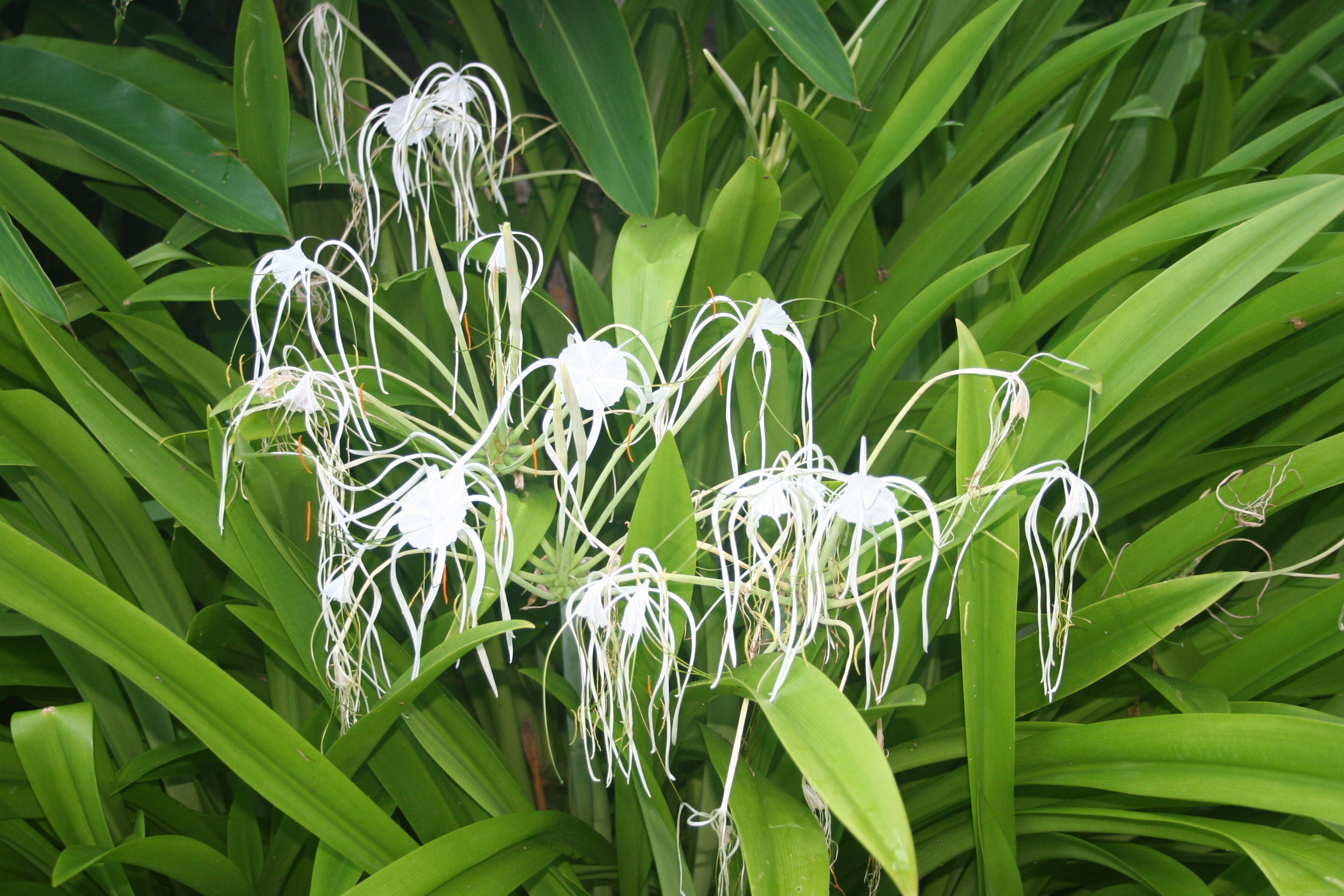
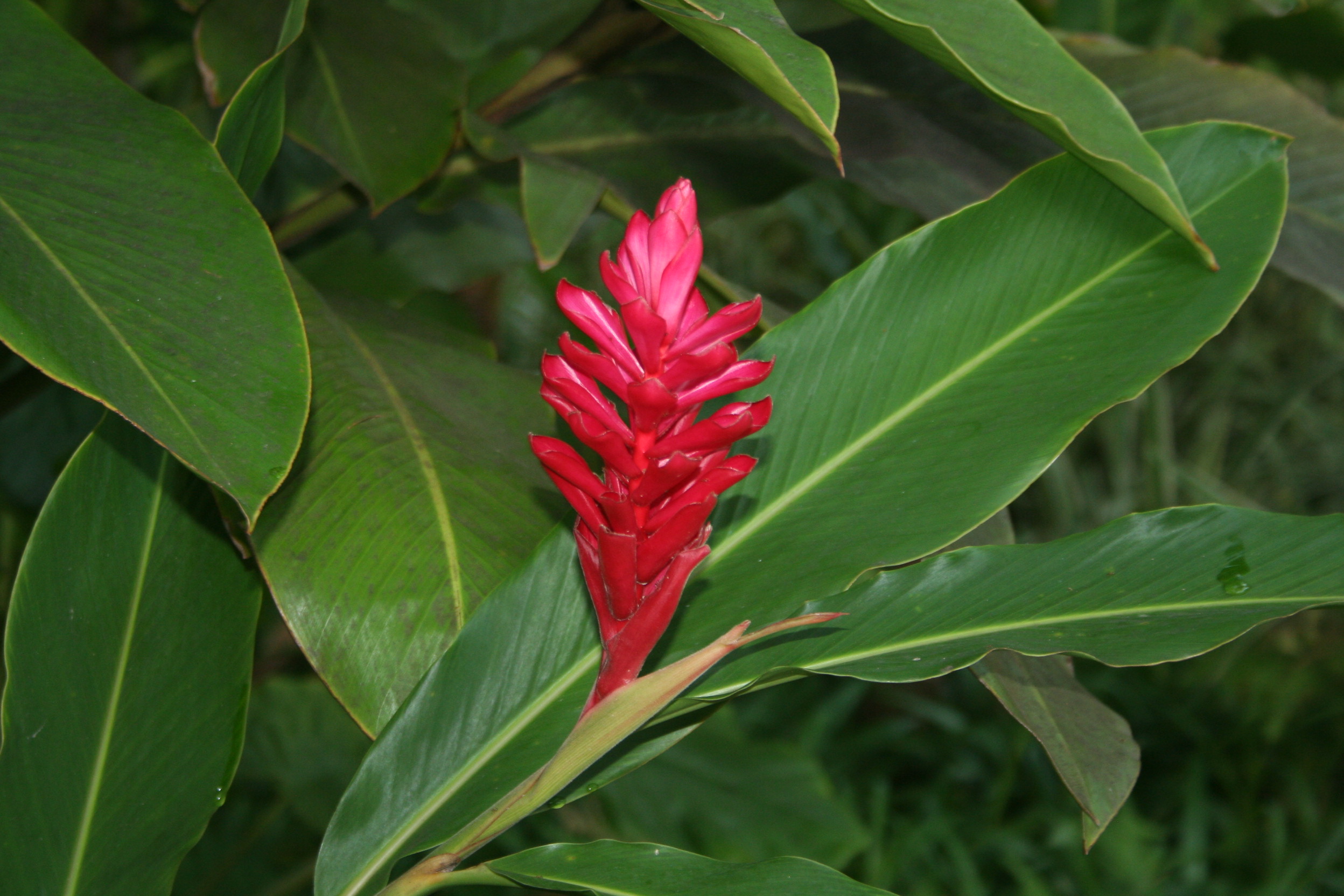
Flora #1. Picture courtesy of Nia and Patrick.
Flora #2. Picture courtesy of Nia and Patrick.
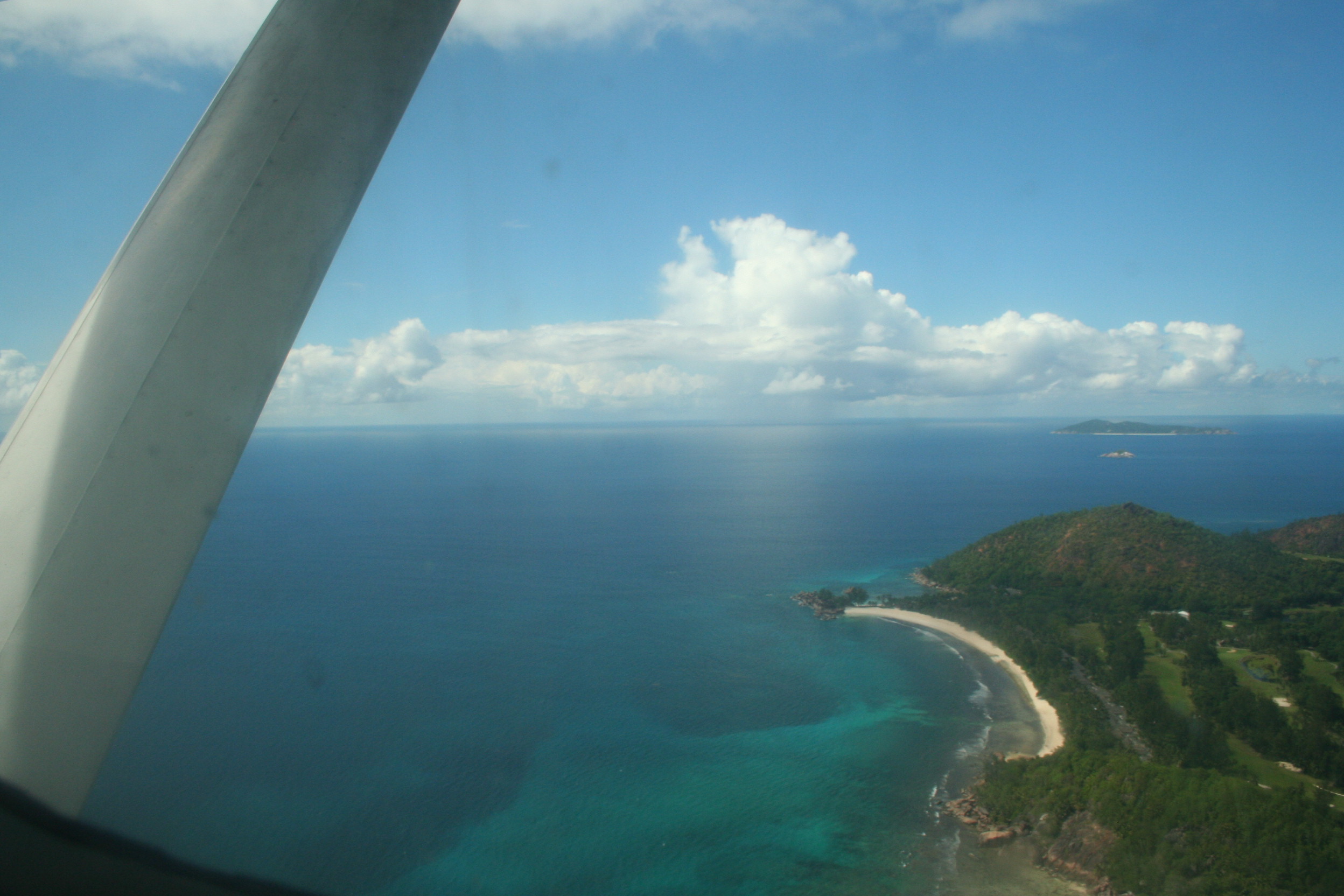
Seychelles from above #1. Picture courtesy of Nia and Patrick.
Seychelles from above #2. Picture courtesy of Nia and Patrick.
Seychelles from above #3. Picture courtesy of Nia and Patrick.
More Gondwana granites. Picture courtesy of Nia and Patrick.
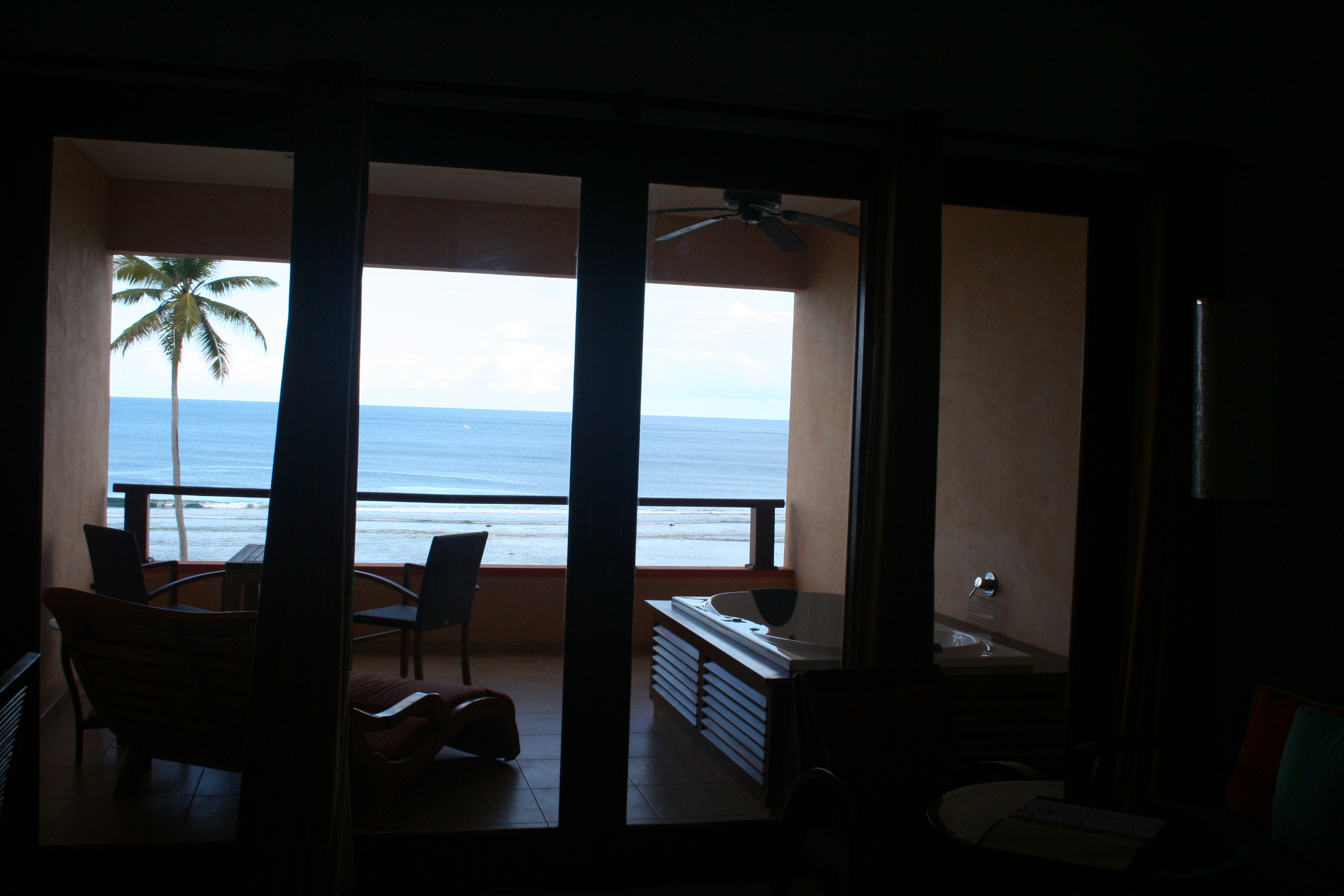
A beautiful hotel room view. Picture courtesy of Nia and Patrick.