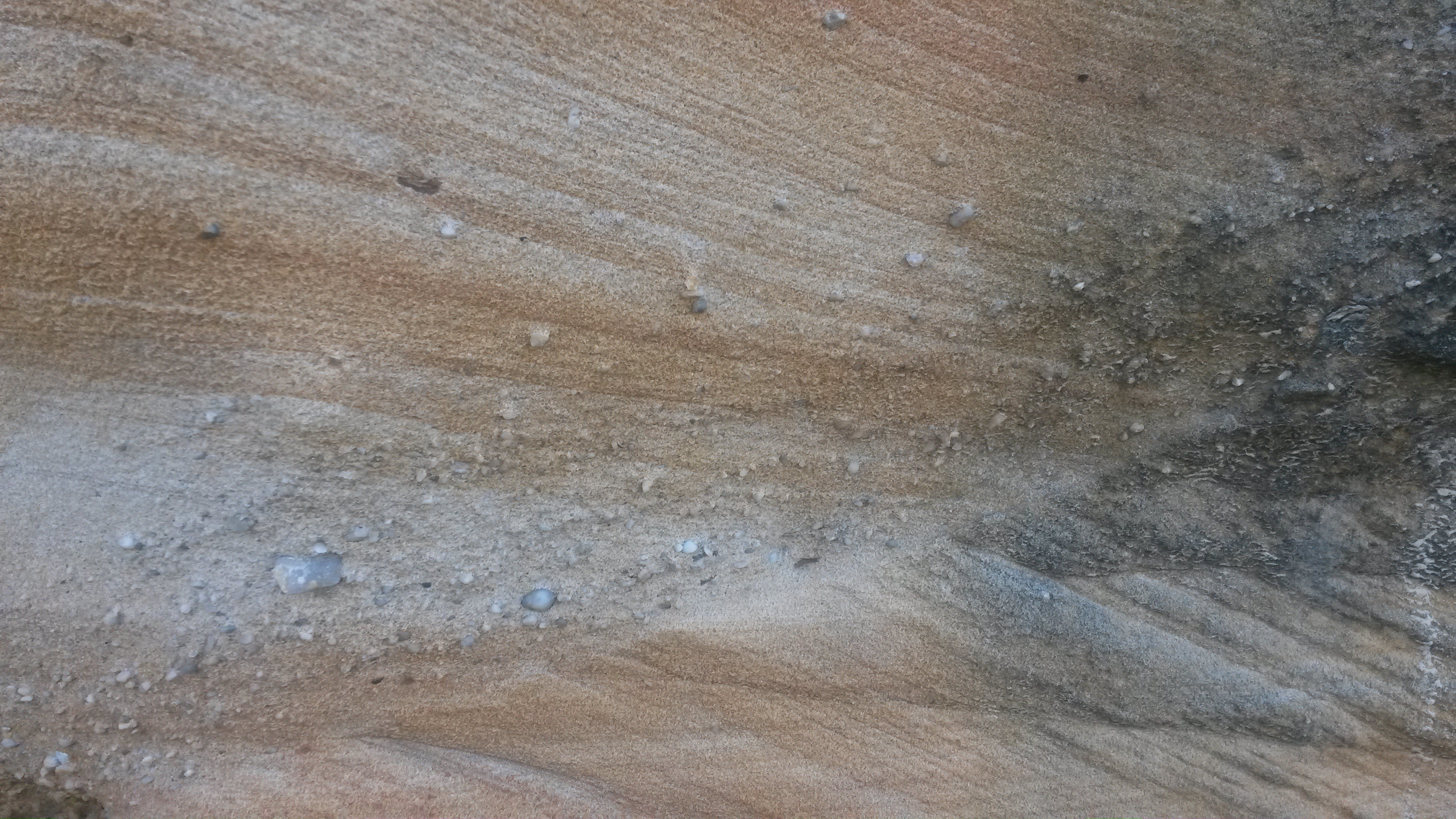
I’m visiting Australia at the moment and will have a few blog posts to write up once I’m back at home. For now, though, here’s a sneak peek at some geology in Sydney. I took this picture close to Bondi Beach. There are some lovely exposures of sandstone outcrops near the beach.
Samail Ophiolite seen on the airplane view screen.
I’m busy traveling at the moment, so Georneys will continue to be quiet for another couple of weeks. However, I thought that I’d quickly share a picture from my recent flight for this week’s “Monday Geology Picture” post. This picture shows the impressive topography of the Samail Ophiolite, which is located in northern Oman and the United Arab Emirates. An ophiolite is a section of oceanic crust and mantle that has been tectonically emplaced onto land.
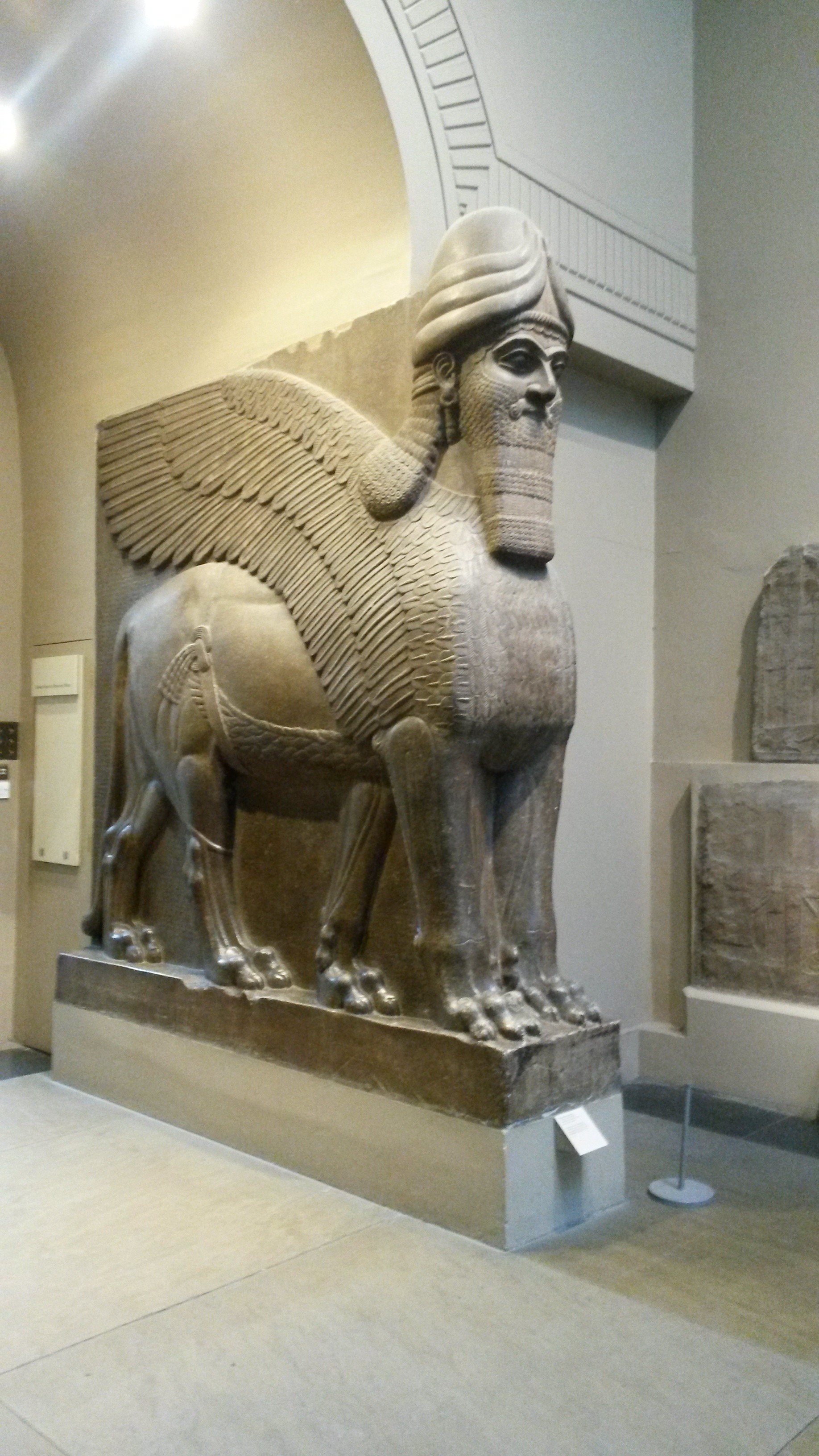
A statue from Nimrud on display at The British Museum, November 2014.
I was very upset to learn that a few days ago ISIS looted and bulldozed the ancient Assyrian city of Nimrud in Iraq. This war crime is a terrible tragedy, and I hope that not all of the city’s treasures were destroyed. Fortunately, many artefacts from Nimrud are preserved in various museums around the world. In a way, that is bittersweet. I really wish that artefacts from Nimrud could primarily be displayed in Iraq rather than in foreign museums. However, considering the present political situation, I am relieved that many artefacts have survived overseas. A few months ago, I saw some spectacular artefacts from Nimrud in The British Museum. For this week’s “Monday Geology Picture” I am sharing a picture of one of the very impressive statues from Nimrud that I saw at The British Museum. While I am happy that this statue has survived, I mourn the other statues and artefacts that were recently destroyed.
Currently, forest fires are raging here in Cape Town, South Africa. You can see some images of the fires here and here and here. I live and work relatively far away from the fires. However, from my office today I could see smoke from the fires in the distance. I hope that the fires are put out soon since they threaten much of Cape Town’s beautiful forest as well as many homes and other buildings.
Apologies for the recent gap in my blogging. I’ve been busy travelling for work, and our home internet connection was not working for a couple of weeks. We’ve also been suffering from regular power outages here in South Africa.
Anyway, to make up for my recent quietness, I’m sharing a spectacular picture for this week’s “Monday Geology Picture” post. This picture was taken close to the border between South Africa and Namibia near the town of Oranjemund and shows a salt pan that is called “Pink Pan” by locals. The Orange River is in the background of the picture. I took this picture through an airplane window when I was flying from Oranjemund to Windhoek earlier this month.
Apologies for the short hiatus in my blogging. I’ve been travelling and generally very busy with work these past two weeks. However, I have another “Geology Word of the Week” post coming up soon, so stay tuned!
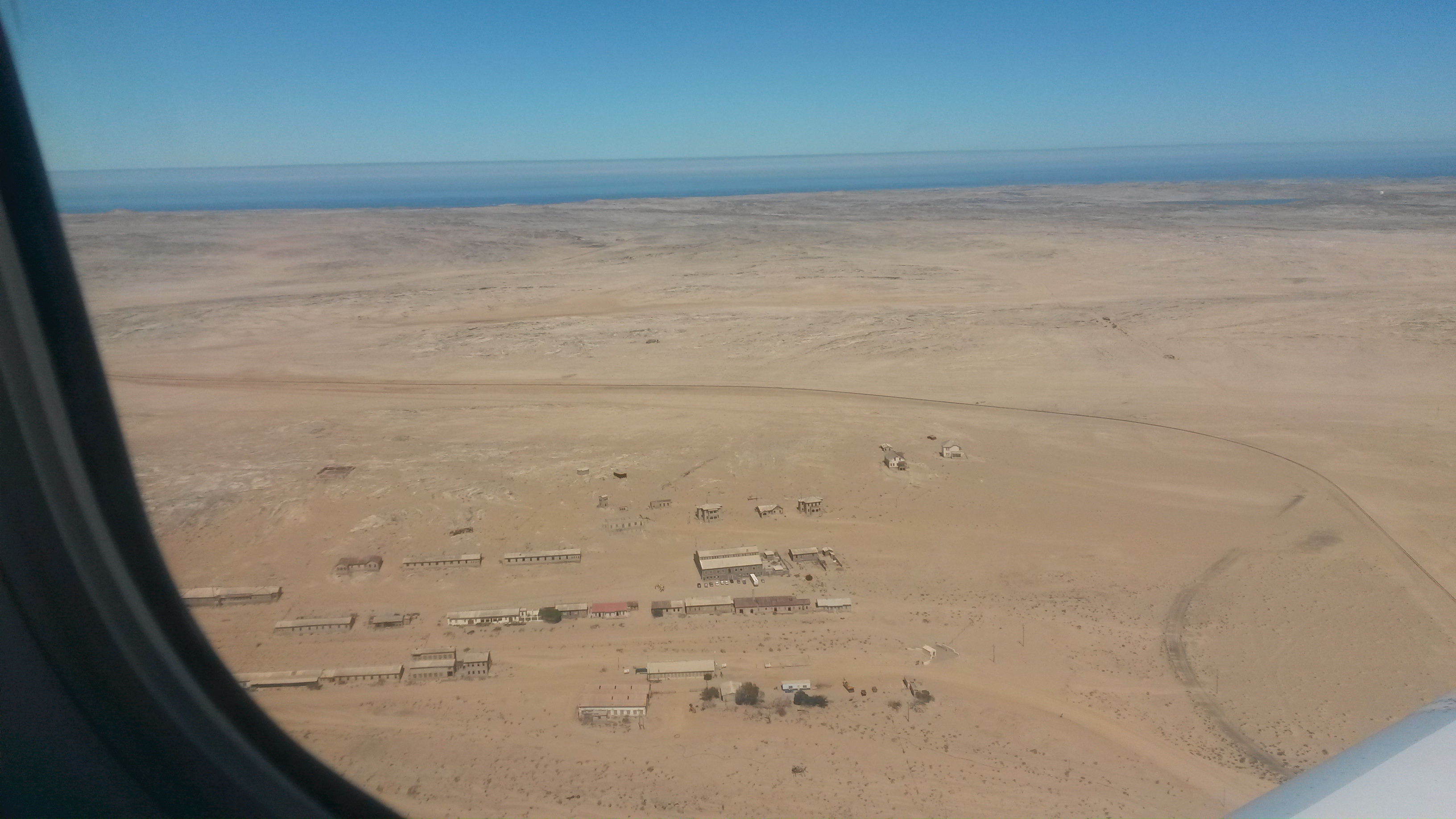
Today I want to share another view of the abandoned diamond mining town of Kolmanskop. I’m currently in Namibia for business, and I flew over Kolmanksop earlier today and managed to snap a few aerial pictures of the town with my phone. I previously visited Kolmanskop on the ground, and I shared some pictures here and here. However, I like these aerial views of Kolmanskop. They show the small buildings surrounded by a sea of sand, with the real sea sparkling blue on the horizon.
Kolmanksop from above #2, February 2015.Kolmanskop from above #3, February 2015.
A beautifully carved ancient Egyptian artefact in the British Museum. Two light-colored veins are visible in the rock.
Over the pastfewweeks, I’ve been sharing pictures of ancient Egyptian artefacts from the British Museum for my “Monday Geology Picture” posts. Here’s one last picture from the British Museum: a rock slab engraved with ancient Egyptian figures and writing. I didn’t take a picture of the informational sign, so let me know if you recognize the artefact. I think that this picture shows part of a larger artefact. Whatever the artefact, the two light-colored veins are quite striking and add a chaotic sort of beauty to this ancient piece of artwork.
Well, I think that I’ve shared enough pictures from the British Museum. Next week I’ll share something different for my “Monday Geology Picture” post.
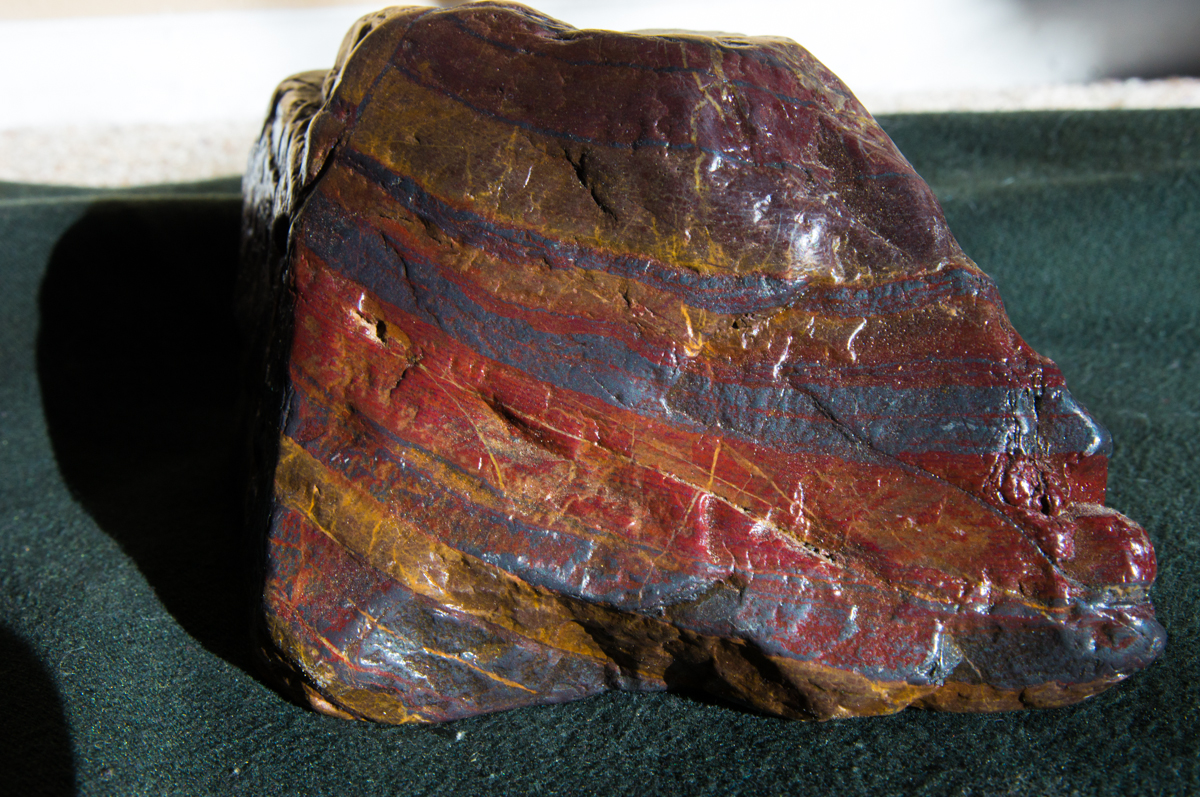
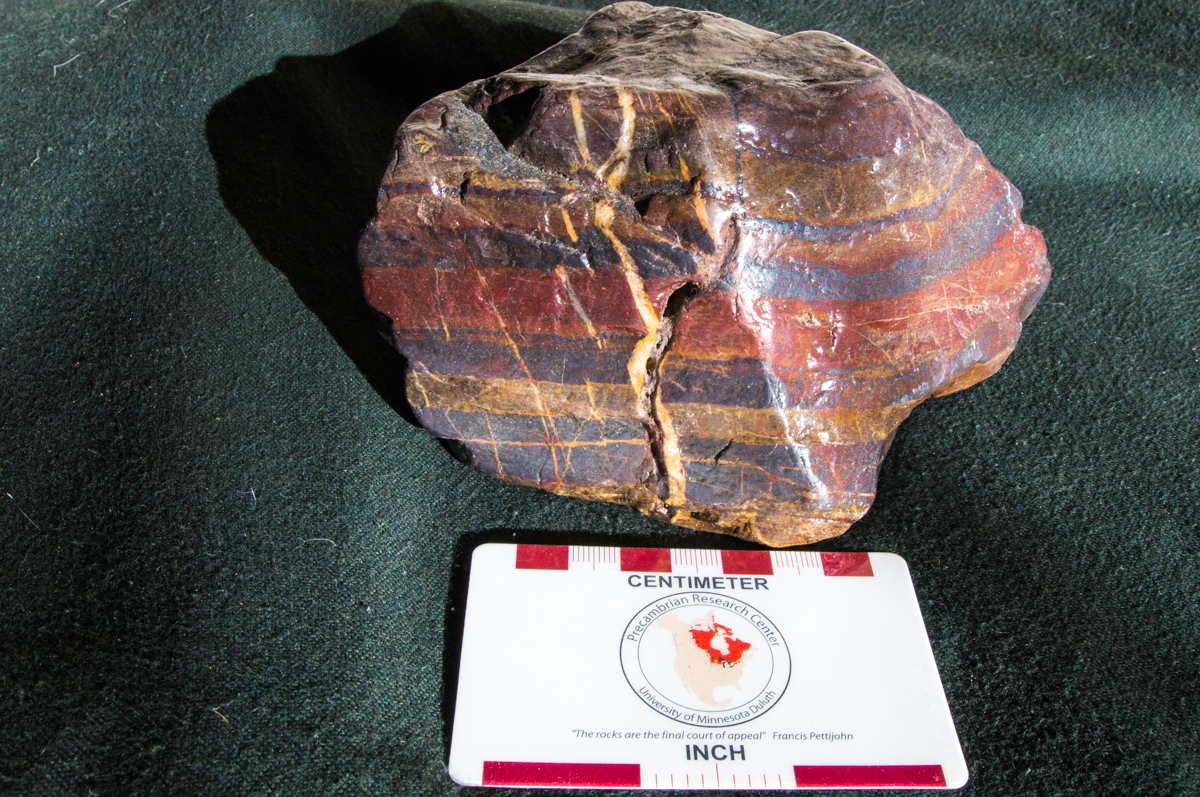
A jasper-rich rock from Minnesota. Picture courtesy of Ben Chorn.
def. Jasper:
A dense, opaque variety of chalcedony. Jasper is most often red in color but can also be yellow, brown, green, or gray.
For this week’s Geology Word of the Week post, we’re going to learn a little about silica, aka silicon dioxide or SiO2. More specifically, we’re going to learn about silica minerals. Silicon and oxygen are the two most common elements in the Earth’s crust and are found in many, many minerals. In fact, silicate minerals comprise ~90% of Earth’s crust. Silica minerals are silicate minerals with the chemical formula SiO2.
The most common silica mineral (and the second most common mineral in Earth’s crust, after feldspar) is quartz. Quartz is most commonly clear or opaque white in color but can also be purple (amethyst), pink (rose quartz), yellow (citrine), and brown or black (smoky quartz). The different colors of quartz are caused by impurities and crystal defects. Quartz is one of a few varities of crystalline SiO2. Under most pressure and temperature conditions present at Earth’s surface and in Earth’s crust, quartz will crystallize as the SiO2 mineral. However, under different temperature and pressure conditions, such as deep in Earth’s mantle or at a meteorite impact site, SiO2 can form as other minerals, such as cristobalite, coesite, tridymite, or stishovite.
When SiO2 does not form with a large crystal structure but rather forms with a microcrystalline or cryptocrystalline structure, a mineral known as chalcedony forms. Like quartz, chalcedony comes in different varieties. Jasper is one common type of chalcedony. Another common type of chalcedony is agate, which has alternating clear and opaque banding. Other types of chalcedony include carnelian, chrysoprase, heliotrope, and onyx.
Here are a few more pictures of jasper rocks, courtesy of Ben Chorn:
Another jasper rock from Minnesota. Picture courtesy of Ben Chorn.Yet another Jasper rock from Minnesota. Picture courtesy of Ben Chorn.Jasper cobbles from Minnesota. Picture courtesy of Ben Chorn.Two jasper cobbles from Minnesota. Picture courtesy of Ben Chorn.
And here’s a pretty agate that’s sitting on a shelf in my living room:
Agate rock.
And here’s some quartz crystals on a rock that I picked up during a recent hike in South Africa:
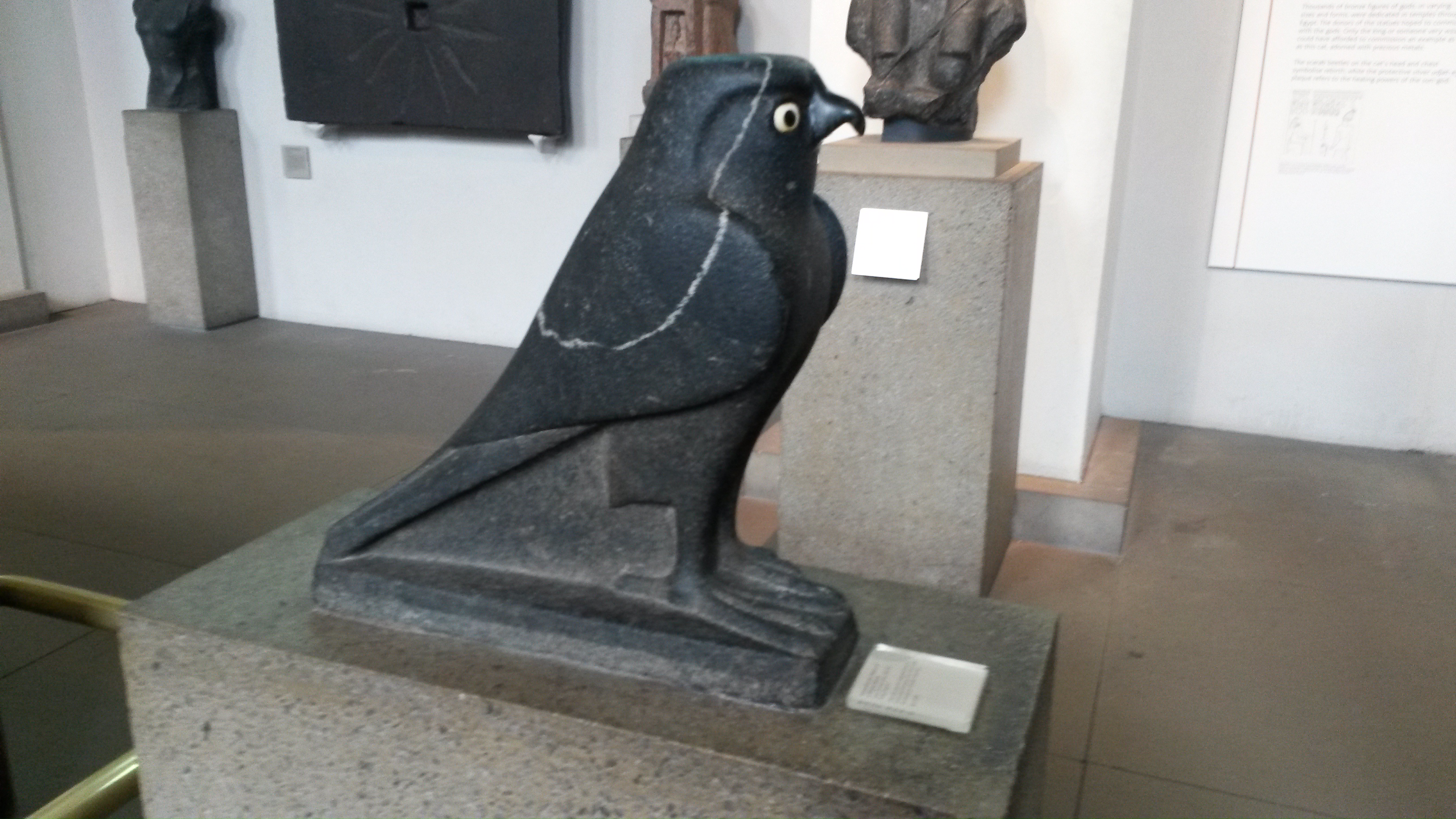
An ancient Egyptian Horus statue, The British Museum, November 2014.
For this week’s “Monday Geology Picture” I thought that I would share a couple more pictures that I took during my recent visit to The British Museum. When I was in one of the exhibits with ancient Egyptian artefacts, I was struck by a beautiful dark-colored Horus statue with a light-colored vein running through it. According to the museum sign, the statue was carved out of granodiorite. The vein is probably quartz.
Here is the museum sign about the statue:
Museum sign. Click to enlarge.
And here is a view of the statue from the front:
The Horus statue viewed from the front. Apologies that the picture is slightly blurry.
Two ancient Egyptian stone jars on display at the British Museum.
For this week’s “Monday Geology Picture” I thought that I would share another picture that I took during my recent visit to The British Museum. This week’s picture shows two beautiful ancient Egyptian stone jars. The jar on the left is made out of limestonebreccia while the jar on the right is made out of andesiteporphyry.











 Georneys