Chamarel Waterfall, Mauritius

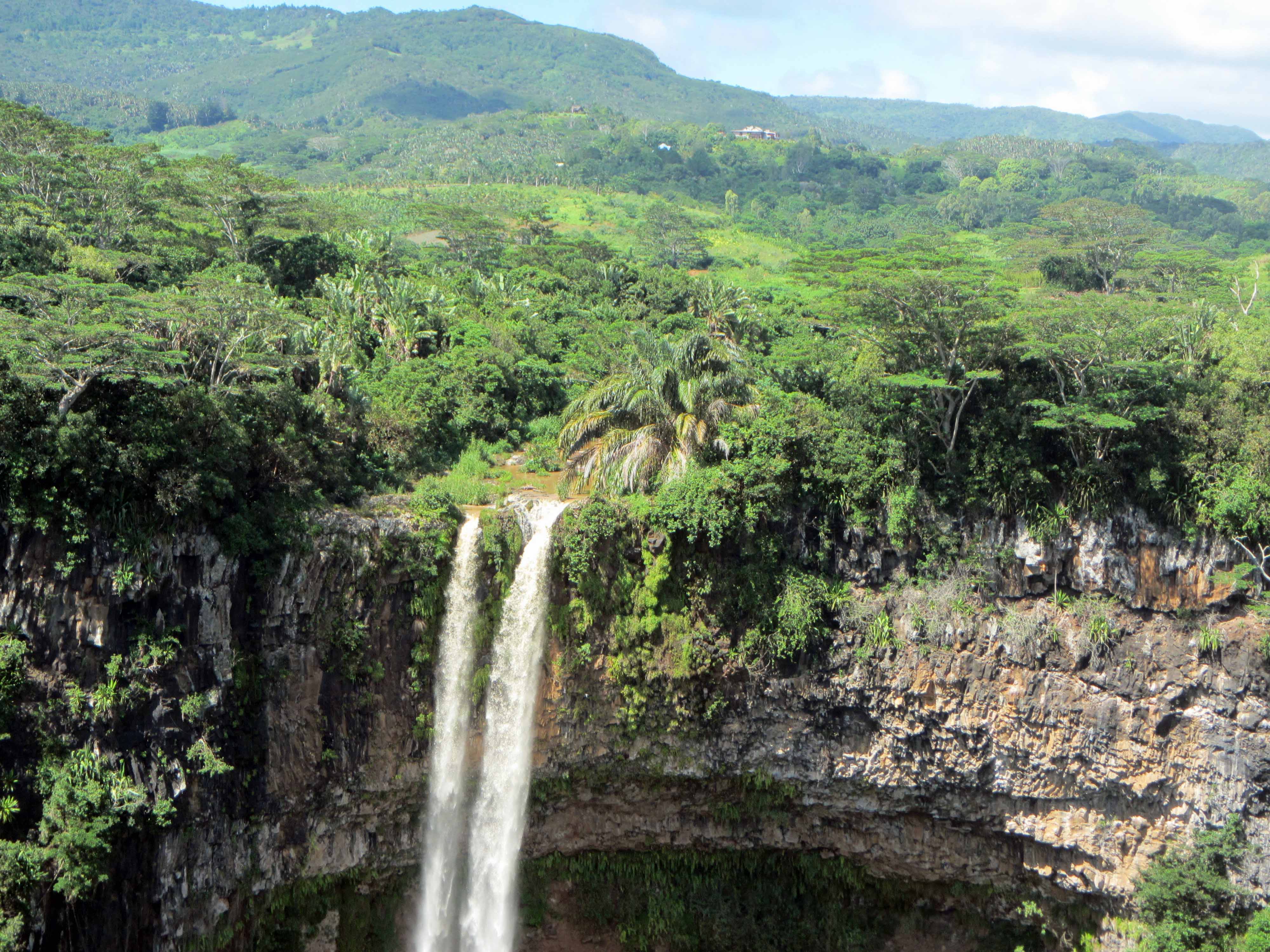
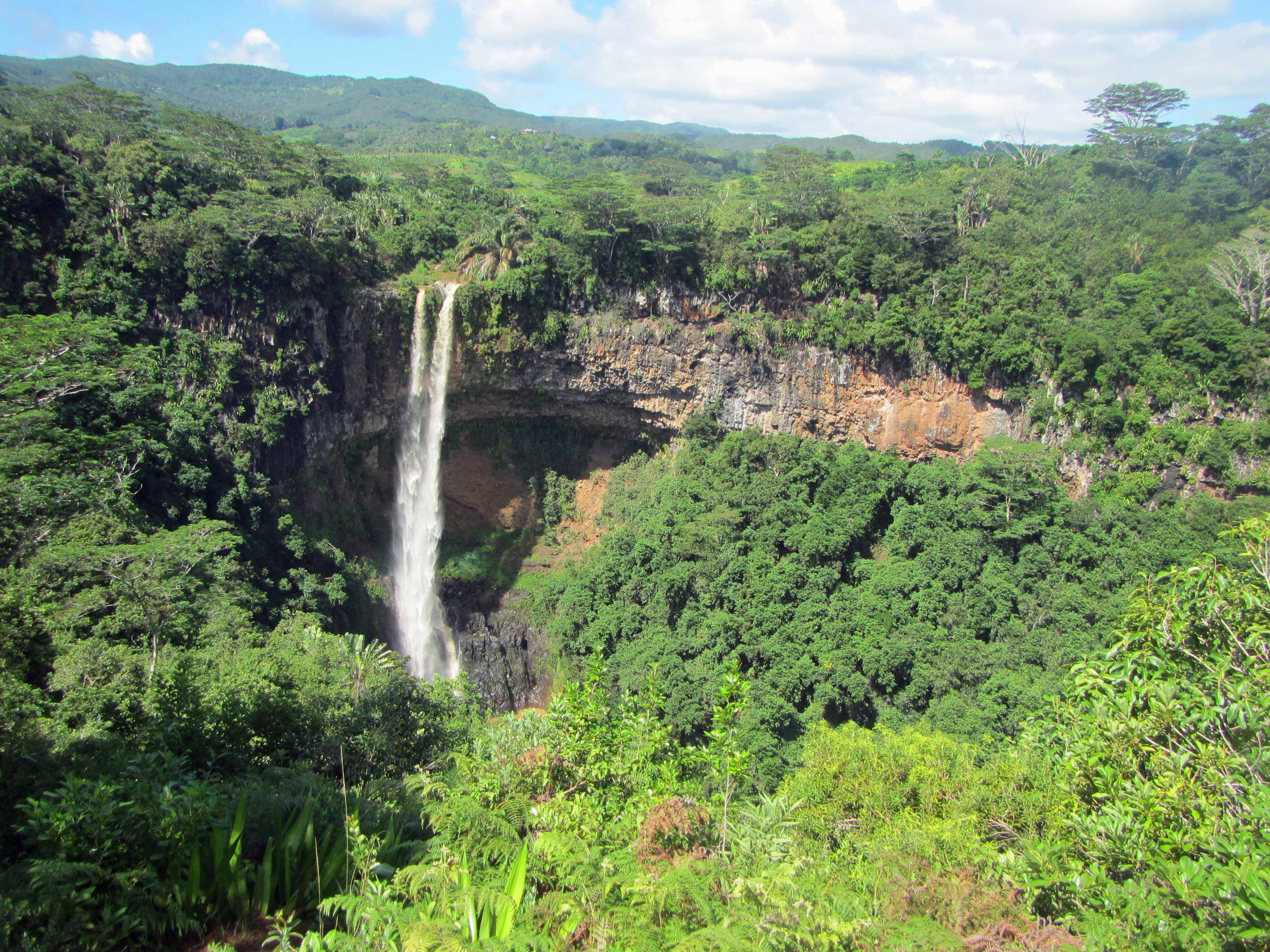
Stunning Chamarel Waterfall, Mauritius.
Stunning Chamarel Waterfall.

Today I’m continuing with sharing some pictures from my March 2014 trip to the volcanic island of Mauritius. You can see some of my previous posts on Mauritius here, here, and here. Mauritius is a tropical island, so in many places the lava rocks, particularly the older ones, are covered by thick green vegetation. However, there are some places where you can see the lavas well. One of those places is Chamarel, a popular tourist destination that consists of Chamarel Waterfall as well as a geologic attraction known as the Seven Coloured Earth— I’ll blog about the Seven Coloured Earth in another post. Today, I’d like to share some pictures of Chamarel Waterfall, a tall waterfall about the same height (~100 meters) as the Statue of Liberty. At the waterfall, two units of volcanic rocks are exposed. The first unit is approximately 8-10 million years in age and thus represents some of the oldest lavas of Mauritius. The second unit is approximately 1.7-3.5 million years in age.

Here’s an informational sign about the waterfall and the lavas:

Informational sign about the Chamarel Waterfall.
Informational sign about Chamarel Waterfall.
A closer view of the informational sign.

Here are a couple more pictures of the waterfall:

Waterfall... and lava flows!
Waterfall… and lava flows!
A closer view of the younger lava flow.

Stay tuned for more posts about Mauritius!

The Young Volcanic Landscape of Mauritius

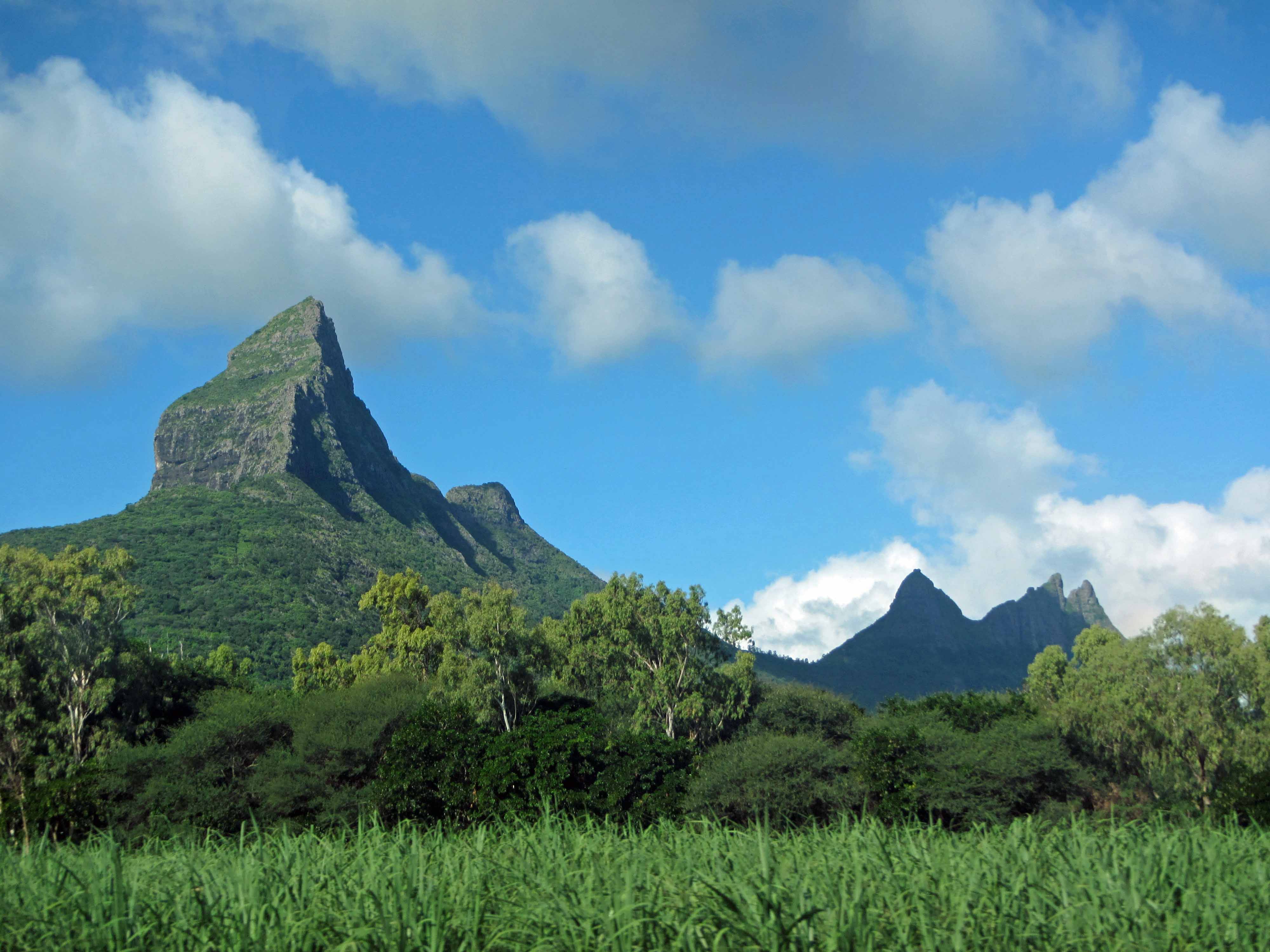
Young Volcanic Landscape of Mauritius-- Picture #1. This picture shows the dramatically perched boulder on Pieter Booth mountain, which has an elevation of ~820 meters.
Rugged, young volcanic terrain in Mauritius. This picture shows the dramatically perched boulder on Pieter Both Mountain, which has an elevation of ~820 meters.

For the next little while, I will be blogging about my recent (March 2014) vacation to Mauritius, a young volcanic island in the Indian Ocean. I recently shared a couple of pictures of volcanic basalt in Mauritius for my “Monday Geology Picture” posts here and here. In future posts, I’ll write a little more about the volcanic history of Mauritius. In brief, Mauritius is believed to have been formed by a mantle hotspot that is now located underneath the volcanically active island of Réunion. Geologically speaking, the island of Mauritius is very young. The oldest lavas on Mauritius are approximately 8 million years old; the youngest are approximately 200,000 years old (see this publication for more on Mauritian lavas over time). There has not been very much time for the volcanic rocks of the island to erode– that is, there has not been very much time for them to be worn down and smoothed by various physical, chemical, and biological weathering processes. Thus, the landscape of Mauritius is dominated by steep, rugged hills and mountains comprised predominantly of young, dark-colored lava rocks. However, the rocks are certainly eroding. Mauritius has a wet, humid climate and is covered in vegetation, so chemical and biological weathering are breaking down the rocks at a fairly fast rate. On the tops of some of the mountains, boulders and rock slabs are perched precariously and will one day, not all that far in the future, come crashing down into the valleys during dramatic displays of physical weathering.

Below are some more pictures of the young volcanic landscape of Mauritius. Enjoy!

Another view of Pieter Booth mountain.
Another view of Pieter Both mountain and the famous perched boulder.
A slightly closer view of the boulder on top of Pieter Both Mountain.
Another view of Pieter Both Mountain.
Another view of Pieter Both Mountain and surrounds.
Pieter Both Mountain viewed from another angle.
One last view of Pieter Both Mountain.
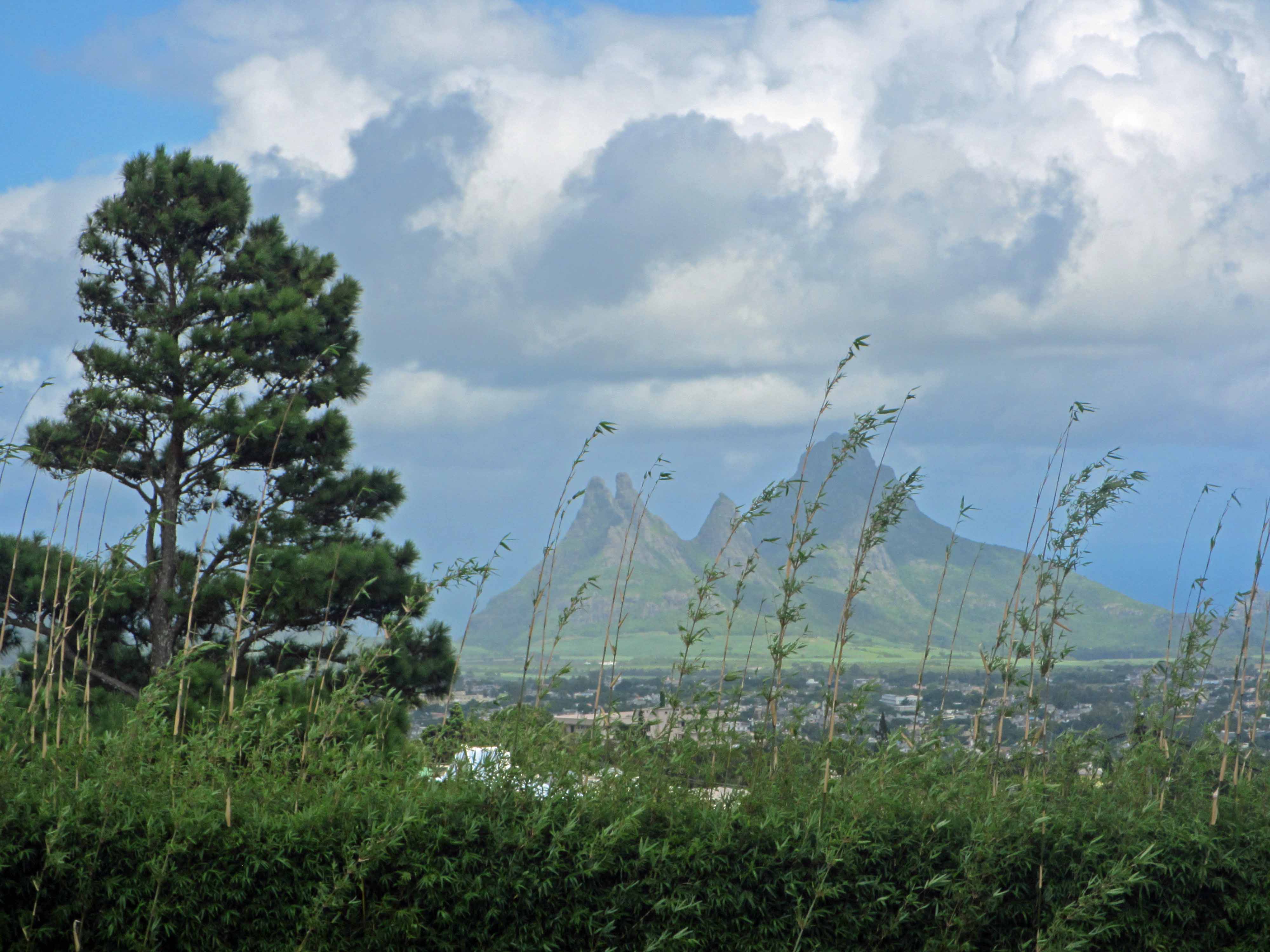
More rugged Mauritian mountains.
More rugged mountains, with some vegetation in the foreground. Mauritius is covered in lush vegetation, so it’s sometimes difficult to take pictures of landscapes and rocks.
More steep mountains.
Another view of the rugged mountains… with slightly less foreground vegetation.
Another landscape picture... and some more foreground vegetation.
Another landscape picture… and some more foreground vegetation.
Vegetation, valley, mountains, sky.
Vegetation, valley, mountains, sky #1.
Vegetation, valley, mountain, sky #2.
Vegetation, valley, mountains, sky #2.
Another rugged mountain view.
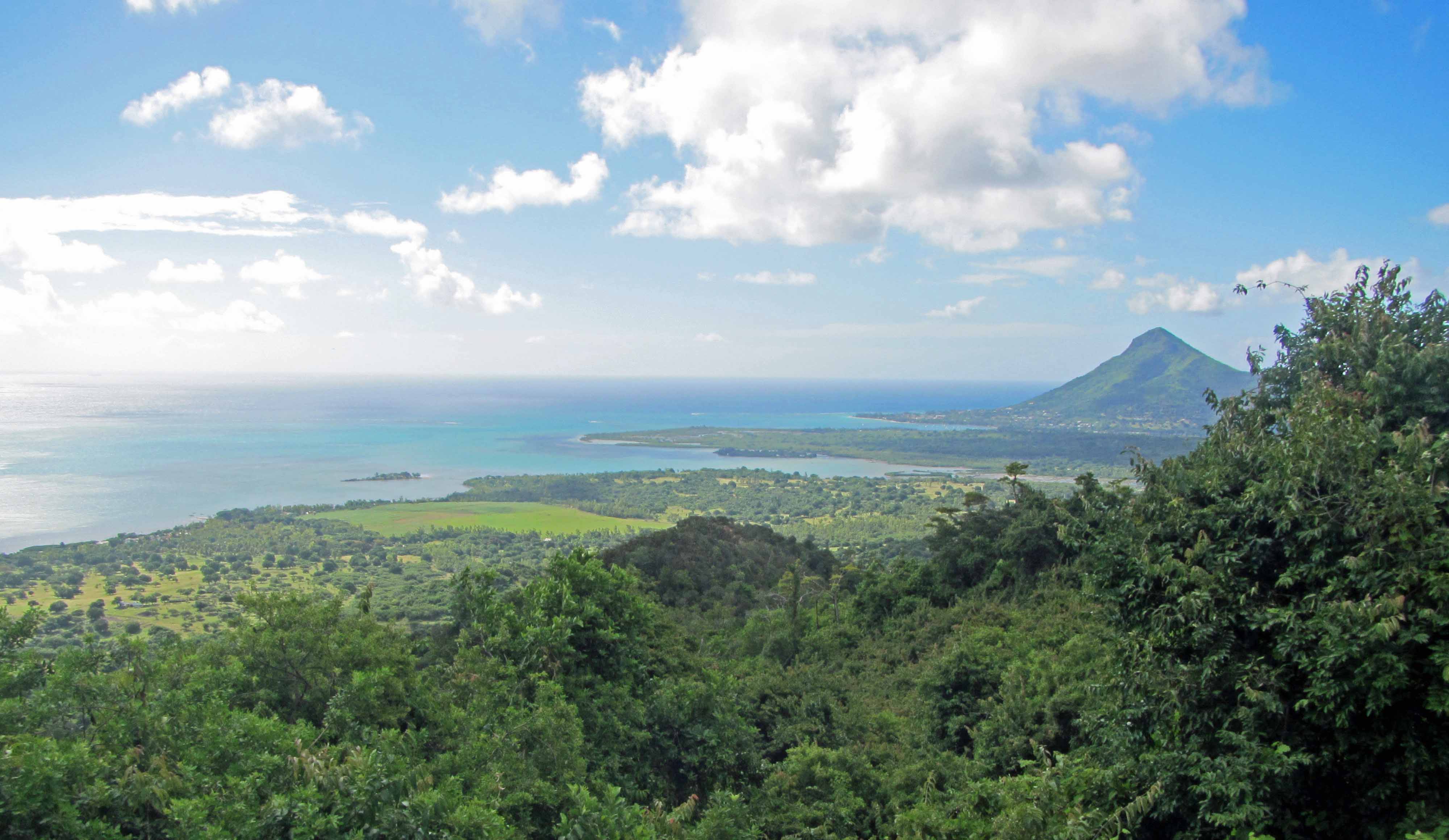
Steep mountains at the sea.
Steep hill at the sea.
Yours truly posing with some steep mountains... and the sea!
Yours truly posing with the steep hill and the sea.
More rugged mountains.
Another view of some rugged mountains.
Some more rugged mountains.
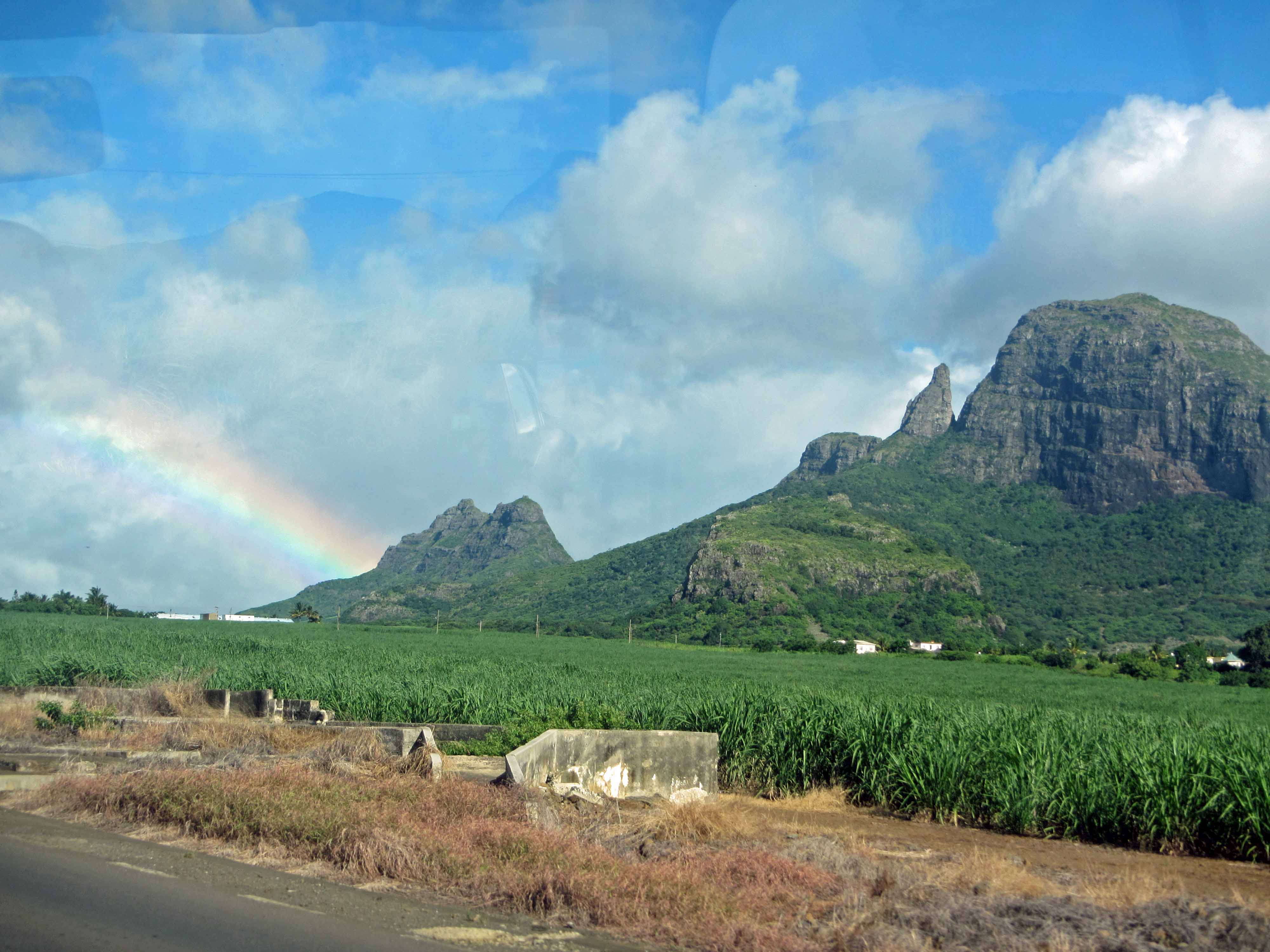
Some more rugged mountains… and a rainbow.
Rainbow meets mountains.
One last pretty view.
One last pretty shot.

Stay tuned for more posts on the geology of Mauritius!

Monday Geology Picture(s): Vesicular Basalt Boulder, Mauritius

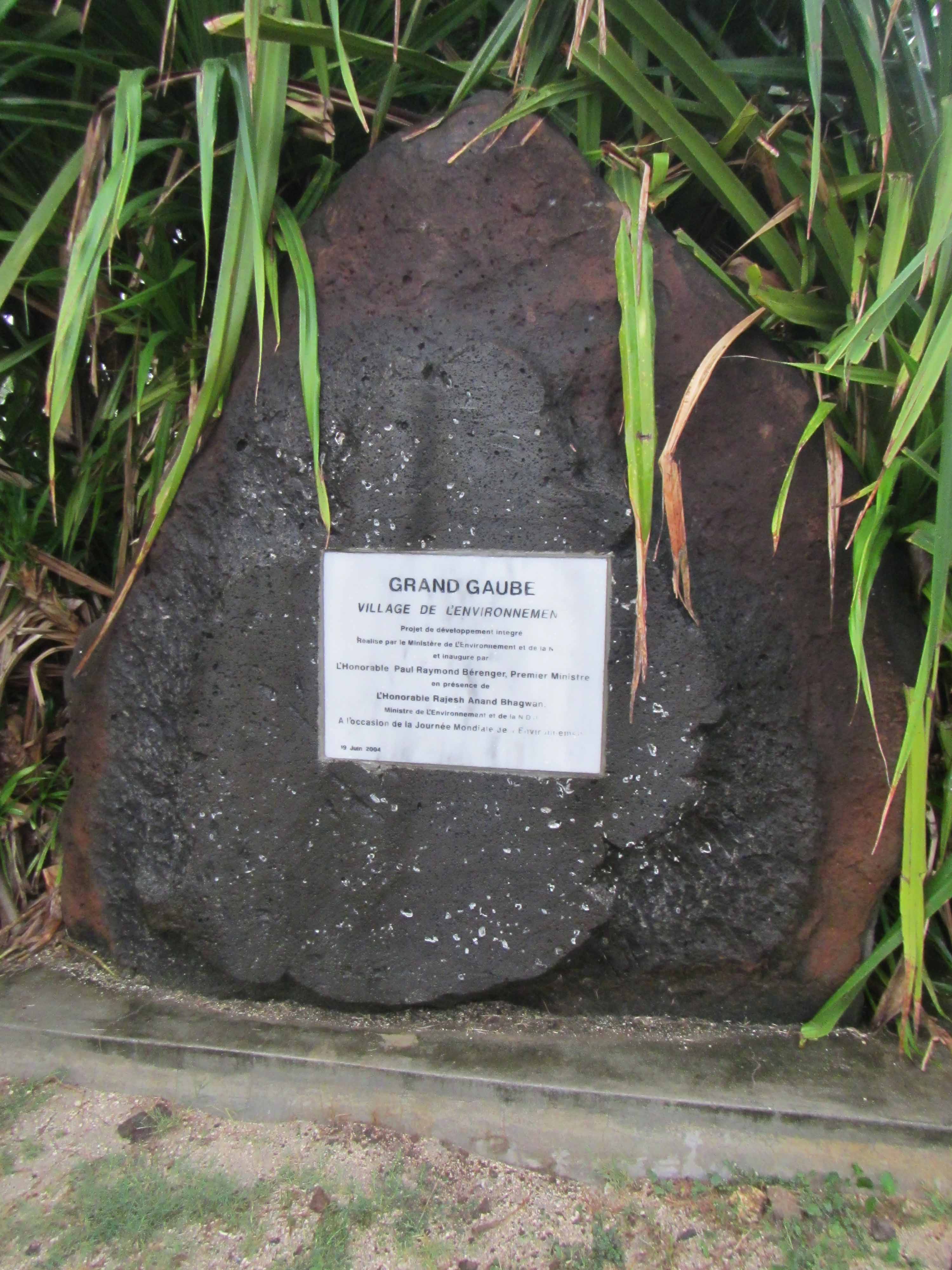
Grand Gaube sign on a large boulder of vesicular basalt, northern Mauritius.

Continuing with some pictures from my trip to Mauritius back in March, for this week’s “Monday Geology Picture” post I am sharing some pictures of a large boulder of vesicular basalt. This particular boulder is located in the town of Grand Gaube in northern Mauritius and is used as a decorative stone on which a plaque has been mounted.

Vesicular basalt is a dark-colored volcanic rock that contains many small holes, more properly known as vesicles. A vesicle is a small cavity in a volcanic rock that was formed by the expansion of a bubble of gas that was trapped inside the lava. Sometimes, vesicles can become filled in with secondary minerals, such as calcite, quartz, or zeolites. When vesicles are filled with such minerals, they are called amygdales. The vesicular basalt boulder featured in this post contains some amygdales. Some of the vesicles in the boulder are filled with a clear to white mineral, possibly calcite.

The boulder featured in this post also has a notable reddish-brown weathering rind. A fresh (and beautiful!) surface of the basalt boulder was exposed when the boulder was cut to make a flat surface for displaying the plaque.

Here are a few more pictures of the vesicular (or amygdaloidal) basalt boulder:

Another view of the vesicular basalt boulder.
A closer view of the vesicular basalt.
A closer view of the vesicular basalt boulder.
Another close-up view of the vesicular basalt.
Another close-up view of the vesicular basalt boulder.

The boulder almost certainly originates from a local source since basalt is abundant on the young volcanic island of Mauritius. Basaltic rocks can be found all over the town of Grand Gaube. For example, basaltic rocks are commonly seen on Grand Gaube’s beautiful beaches. I shared one picture of a basalt-covered beach in Grand Gaube last week.

Below is another picture of basalt on the beach in Grande Gaube; this picture was taken at the resort where my husband and I stayed:

A beautiful basaltic beach, Grand Gaube, Mauritius.

Stay tuned for more pictures from Mauritius!

Monday Geology Picture: Black Basalt on the Beach, Mauritius

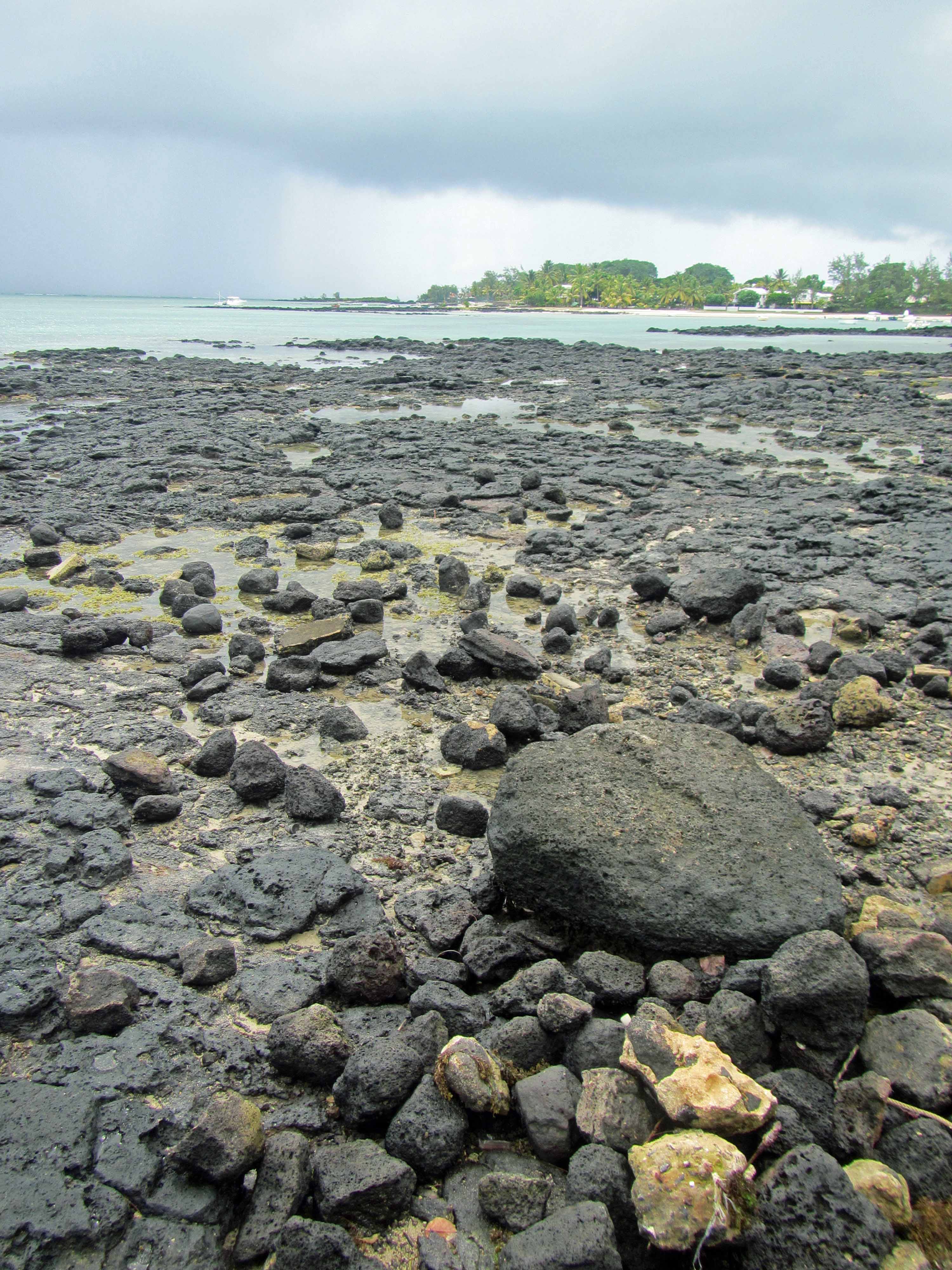
Mauritius_BasaltBeach
Black basalt on the beach, northern Mauritius, March 2014.

First of all, my apologies for the long absence from blogging. Work has been extremely busy this year, and for the last 6 weeks I was in the field with very spotty satellite internet connection. However, I’m back in Cape Town now, and September should be a quieter month for me, workwise. So, I’m hopeful that I will have time to catch up on some blogging. One of the things that I want to blog about is my recent (well, back in March, but fairly recent…) vacation to the beautiful Mauritius, a young volcanic island in the Indian Ocean that is perhaps most famous for having been home to the Dodo bird… before the Dodo went extinct, of course!

I have quite a few pictures and stories to share from my trip to Mauritius. For today, I’ll start with a picture of a beach in Grand Gaube in northern Mauritius. My husband and I stayed at a small beachside resort in Grand Gaube, and we explored the coastline near the resort by foot and by kayak. Because Mauritius is a young volcanic island, black basaltic rocks can be seen at many places along the coast. For example, outcrops and boulders of basalt can be seen in the above picture. I noticed that many items around the town of Grand Gaube were constructed out of basalt, no doubt locally sourced. I’ll share some more pictures from Mauritius soon… stay tuned!

A Request: Mauritius Geology

The Mauritius guidebook I recently purchased. This guidebook skims over some very interesting geology-- I hope to learn more!
The Mauritius guidebook I recently purchased. This guidebook skims over some very interesting geology– I hope to learn more!

My husband and I have had quite a busy few months of work. We only took one day of leave over the recent December holiday, so we’ve decided that we need a short break before I start a new position at the beginning of April. So, we’ve booked a week’s vacation on the lovely island of Mauritius in late March. We’ll be traveling through Johannesburg on the way to visit some family and attend my sister-in-law’s university graduation ceremony.

I’m very excited about our upcoming trip to Mauritius. We plan to spend a significant amount of time relaxing on the beach, snorkelling, and kayaking. However, I also hope that we can explore some of the island’s geological wonders. I’m particularly interested in learning more about the Dodo bird, which lived on Mauritius before it became extinct. I’m also very interested in learning more about the island’s volcanic geology. Apparently there are some lava tubes on the island, among other interesting volcanic features.

Here’s my request: Can anyone help me learn more about Mauritius geology before my trip? Can anyone suggest any good papers to read about Dodo bird fossils or general Mauritian geology? Furthermore, does anyone know of any geologists (in Mauritius, maybe?) who might be able to provide advice on good places to see geology and/or fossil collections in Mauritius?

Any information that anyone can provide on Mauritius geology would be most appreciated. Many thanks in advance!