


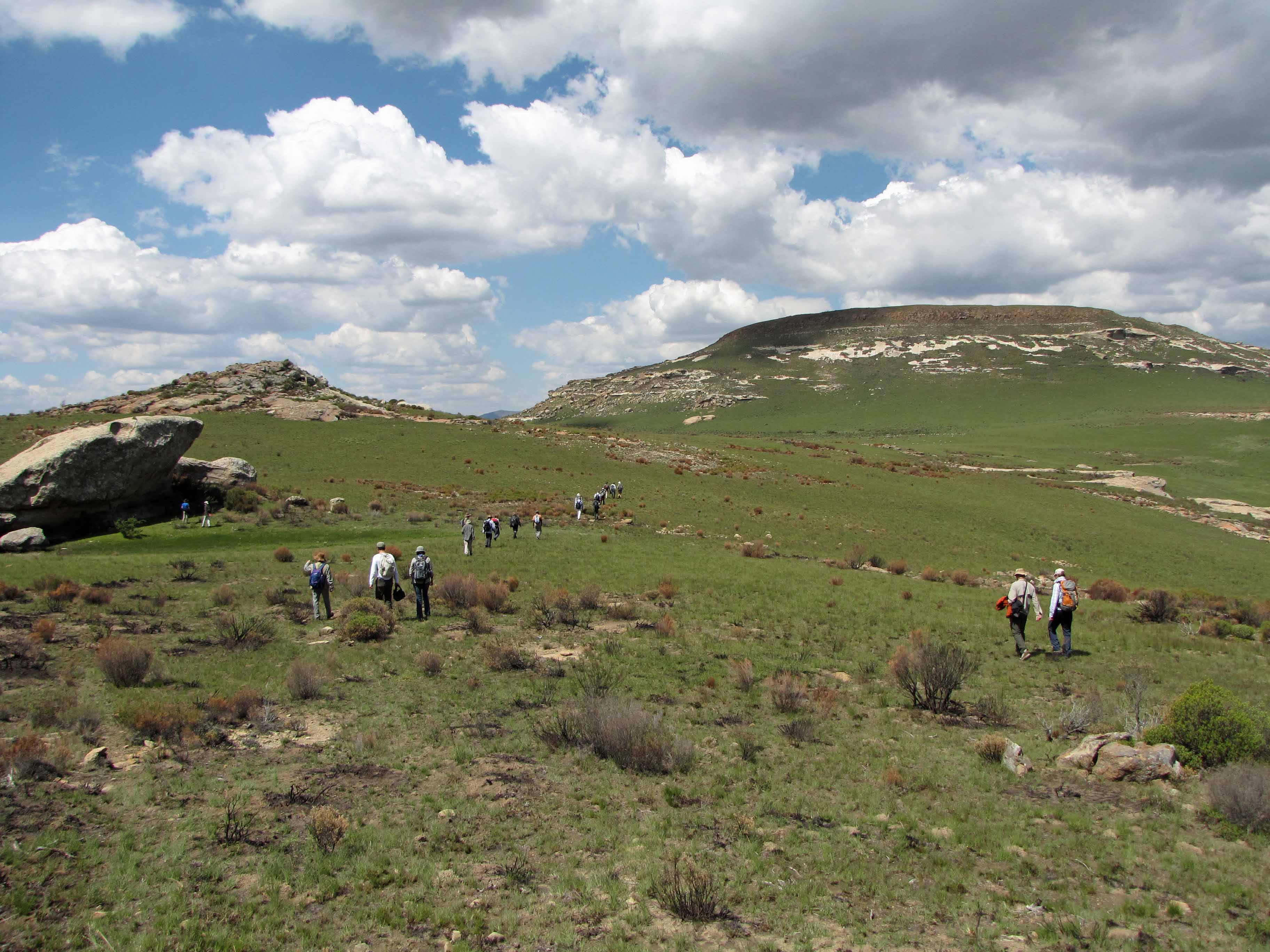
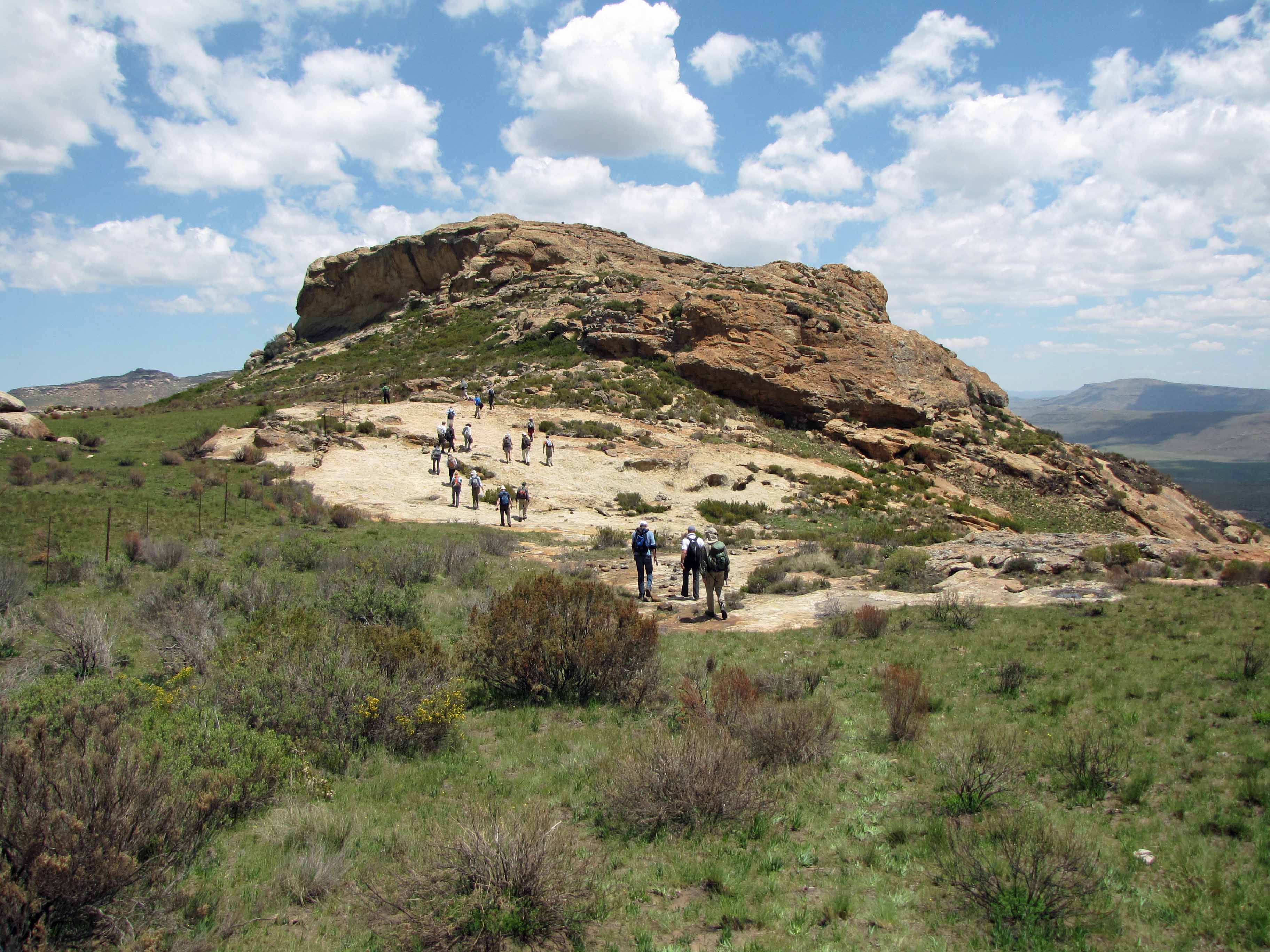
Last week I had the great honor and pleasure to attend the LASI V workshop, which was held in Port Elizabeth, South Africa with a field trip to observe sills and dykes which were emplaced into the Karoo sedimentary basin. I was kindly invited to attend LASI V by organizers Henrik Svensen and Sverre Planke, who are both scientists at Physics of Geological Processes, a Center for Excellence in Norway. I was invited to attend LASI V to observe, learn a little about subvolcanic systems, and write some blog posts about the workshop here at Georneys. Over the next few weeks, you’ll see several posts about the LASI V workshop. I plan to write about some of the workshop participants and their research on subvolcanic systems. I also plan to write about the Karoo field trip. I’m sure that I will also have quite a few LASI themed “…in Pictures” posts. I thought I would start off with a basic post to explain what LASI is all about. This is a question and answer style post. Many of the answers are based on interviews I conducted with Christoph Breitkreuz, a professor at TU Freiberg in Germany and one of the founders of LASI, and with Sverre Planke. I’ve edited their responses for brevity and clarity.
If you have any additional questions about LASI V, please feel free to leave your question in a comment below. I’ll forward your questions on to Henrik, Sverre, Christoph, and other LASI organizers. Hopefully, they will be able to provide you with an answer. You can also check out the official LASI website here.
LASI Questions and Answers:
What does the LASI acronym stand for?
LASI stands for Laccoliths and Sills. However, LASI workshops include study of all subvolcanic systems, which also includes dykes. I guess the acronym LASIDY just isn’t as catchy as LASI. The official title of LASI is “The physical geology of subvolcanic systems: laccoliths, sills and dykes.”
What are laccoliths, sills, and dykes?
Laccoliths, sills, and dykes are subvolcanic systems. That means that they represent the plumbing, so to speak, for volcanoes and other environments where volcanic rocks are extruded. They are often the link between magma chambers at depth and volcanic eruptions at the surface. They also represent what happens when magma doesn’t quite make it to the surface but rather is emplaced in the subsurface.
Some brief definitions:
Laccolith: A mass of igneous rock that did not make its way to the surface but rather spread out laterally, often in a lenticular or lens-like shape, and forced the overlying strata to deform upwards.
Sill: A tabular intrusion of igneous rock that is emplaced parallel to the pre-existing rock bedding. Most often, sills are originally horizontal or sub-horizontal.
Dyke: A tabular intrusion of igneous rock that is emplaced discordant to (i.e. cuts across) pre-existing rock bedding. Most often, dykes are originally vertical or subvertical.
I also asked the experts! Here’s what they had to say:
From Christoph:
Essentially, these are bodies of magmatic rock. A dyke is a conduit from a magma chamber in the lower crust or in the mantle towards the surface or near the surface. Dykes are vertical or almost vertical and generally tablet-shaped. In some situations, the magma doesn’t make it to the surface but will emplace in the upper crust— in the upper 500-1000 m, generally. However, the deepest known laccolith, which is in Utah, was emplaced at approximately 3 km depth. And these emplacements form horizontal or subhorizotal sheets of magmatic rock, such as dolerite, and these are known as sills. If there is enough magma volume and if the magma is viscous—that means a high silica content—then the emplacements tend to be laccoliths. A laccolith has a flat base and a lifted up, lentil-like shape. Sometimes, these laccoliths stay completely as a subvolcanic body, but if more magma is pumped in, they might pierce the surface, and there will be an eruption.
From Sverre:
I describe subvolcanic systems as rivers of magma that are running inside the rocks. A sill, for instance, is a horizontal river of magma. That’s an easy way to describe it.

Why is it important for geologists to understand subvolcanic systems?
From Christoph:
First of all, we have a scientific interest to understand how our “Spaceship Earth” that we are traveling on works. If we want to master the future, we need to know how the system has worked over the last 4.6 billion years. However, there are also a number of applied aspects to understanding subvolcanic systems. For example, we are on a field trip where we can see complex sill systems that have entered a sedimentary basin, and in other areas, such as in the North Sea, similar sill intrusion into a sedimentary basin influenced the formation of oil and gas. Also, emplacement of laccoliths can provoke landslides, so there is a hazard application. Another application is the research of Sverre Planke, Henrik Svensen, and others, who found that when huge subvolcanic systems intrude basins which are rich in organic carbon, they might provoke very fast degassing, which could lead to major climatic change that could trigger a mass extinction.
From Sverre:
There are three main applied areas for study of subvolcanic systems: the first is hydrocarbon exploration in volcanic basins, the second is ore deposits since many of the world’s large ore deposits were formed in or around subvolcanic systems, and the third is climate change since emplacement of subvolcanic systems is believed to have triggered global climate change numerous times in Earth’s history.
What is a LASI workshop?
LASI workshops are a regular (every 2-3 years) meeting of scientists who study subvolcanic systems. The workshop consists of 2 days of scientists presenting their research in talks and posters followed by a 1-3 day field trip to an area where subvolcanic systems can be observed in the field.
From Christoph:
LASI is multidisciplinary meeting of scientists who study subvolcanic systems. At LASI workshops we are looking at subvolcanic systems from many angles: petrology, geochemistry, physical geology, sedimentology, analog experiments, geophysics, numerical modeling, and so on. In a short time, within half a day of LASI, we see many connections across these disciplines, and it’s great fun.
How many people usually attend LASI workshops?
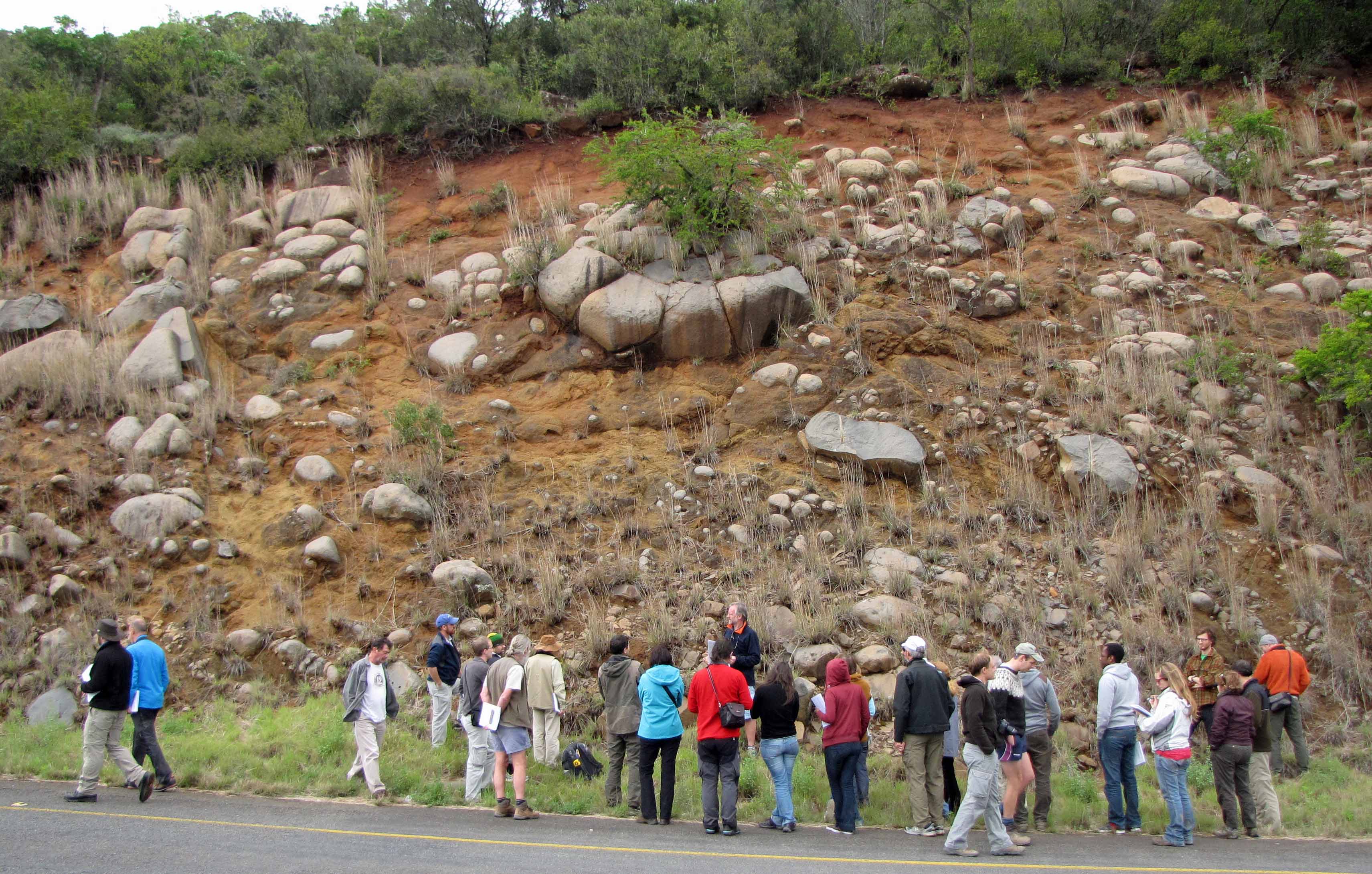
Between 40-50 people attend the LASI workshops. The workshops are mostly attended by researchers from Europe (Germany, Norway, Sweden, the UK, France, Germany, the Czech Republic, Poland, Russia, and other countries) and the United States. However, there have also been attendees from South Africa (especially at LASI V), Australia, and other countries. So far, there have not been many attendees from other places such as Asia. However, researchers from other parts of the world would be very welcome to attend future LASI workshops!
What is the history of the LASI workshops? How did the first LASI workshop come about?
From Christoph:
It’s a nice story. In the mid-90s I started to work in Central Europe in the Late Paleozoic systems, which are full of volcanic rocks and subvolcanic rocks. I worked in places such Germany, Poland, Czech Republic, Italy, and France. When I started to work around 1995 on these systems, I found out that there are many kinds of porphyritic rocks (in quarries and outcrops and drill cores), and I found that in many cases the formation of these rocks was not clear at all to the previous authors or the colleauges I talked to. I found out in particular that in the city of Helle in Eastern Germany there is an important complex of rhyolitic rocks (200 km3 of rocks), and I found out that researchers really had no idea how they were formed. So, I started to read literature on subvolcanic systems, such as laccoliths, and I started to contact researchers in that field.
I thought it would be a good idea to launch a symposium on subvolcanic systems at the European Geoscience Union conference around 2000 or 2001, but the organizers turned down the symposium. They said something like, “It doesn’t fit in our program.” But I went to EGU anyway for other purposes, and I met Nick Petford, who is a very good UK geologist, and I talked to him and I said, “Well, EGU turned down this symposium. Why don’t we organize something on our own on the topic of physical processes of subvolcanic systems?” And he said, “Well, that’s a great idea.” And so we spread the news that we would gather in Freiberg for three or four days. Astonishingly, more than 40 people showed up. We had a good meeting with a nice seminar and then a one day field trip that I would call rather modest compared to the other LASI field trips. After the first LASI, we thought that the next should be in the Isle of Skye in Scotland, but it took awhile to organize the next one, so the next one was four years later.
How are LASI workshops organized?
From Christoph:
As in many other scientific disciplines, in geology there are some forms of conferences that are very rigid in their procedures and requirements, and you feel as if you are in a big machine. In contrast, the LASI workshops are very low in terms of organization and are done in a very simple way. We just find some people who are willing to organize the workshop, and we spread the news on the internet. Then we see who wants to attend, and they just pay to cover the costs. The attendees usually submit abstracts although they even can attend without an abstract. There’s no committee, there’s no big reception ceremony, and there are no medals. It’s very laid-back. Every organizer has his own system of fundraising. For instance, when I organized the first LASI workshop I received funding from the German Research Foundation and from the state of Saxony where the workshop was held, and this worked quite well. Other groups are maybe more connected to companies—oil companies and mining companies—and receive funding from industry. But there are no rules, so the organizers just try to find funding for LASI wherever they can. When we’re planning the next LASI, we try to think of a good place for a field trip to subvolcanic systems, and we try to go different places—not always to Europe, for instance.Often, the next LASI comes around at dinner one night of the previous LASI. We’re sitting around the dinner table and someone says, “That’s a good idea for the next LASI. I can organize it.” There are no rules, no voting committees to decide where the next LASI will be. It’s very organic.
Have the LASI workshops led to some new directions for research on subvolcanic systems?
From Christoph:
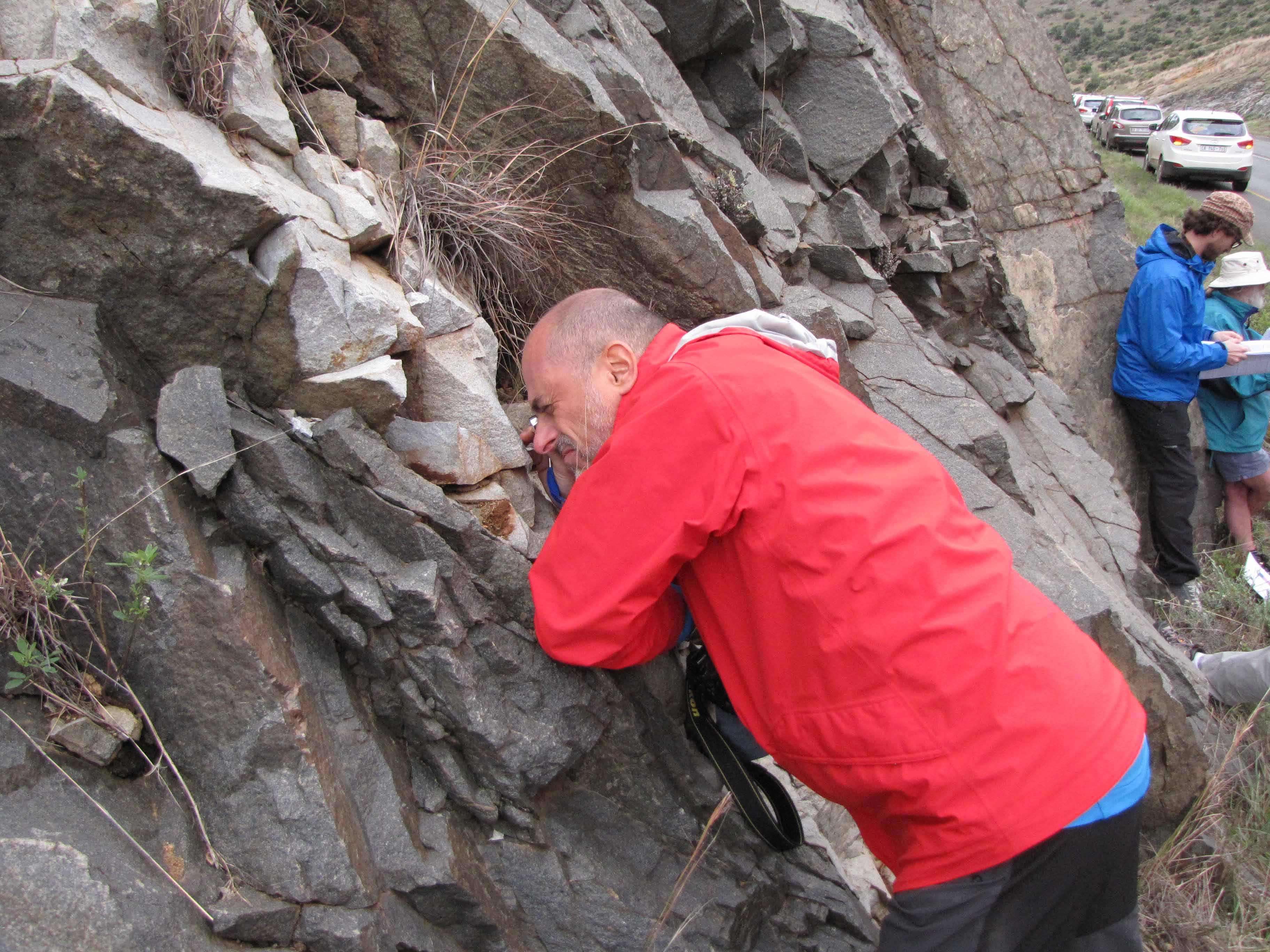
I am all the time inspired. For example, at the first LASI workshop I was working on the Halle volcanic complex, and I was very inspired by some talks by German colleagues of mine. Their work inspired me and helped me get ideas for new research and publications on Halle. I guess this is the case for almost everyone, even the veterans of subvolcanic system research. So, there is cross-fertilizing all the time. And the other component of LASI is that we always combine it with field trips to very classic or important outcrops for subvolcanic systems, and so the dsicussions continue on the outcrops.
From Sverre:
Going to meetings is very important for research. The first time I was exposed to the Karoo was at the IAVCEI meeting in 1998 in Cape Town, South Africa. At the first LASI meeting we met various people working on sill emplacement in the UK, and some of them were offered postdoc positions at PGP in Norway and were part of the motivation for doing the Golden Valley studies that we’ve done here in the Karoo. Obviously, conferences are important for meeting people and getting ideas and presenting your own research.

Where have the previous LASI workshops been held?
They’ve been held all over the world! Here’s a webpage with information on them all, and here’s the list:
LASI I: Freiberg, Germany, 2002.
LASI II: Isle of Skye, Scotland, 2006.
LASI III: Elba Island, Italy, 2008.
LASI VI: Utah, USA, 2010.
LASI V: Port Elizabeth and the Karoo, South Africa, 2012.
Why did you decide to hold the LASI V conference in South Africa? Why are you having a field trip in South Africa’s Karoo region?
From Sverre:
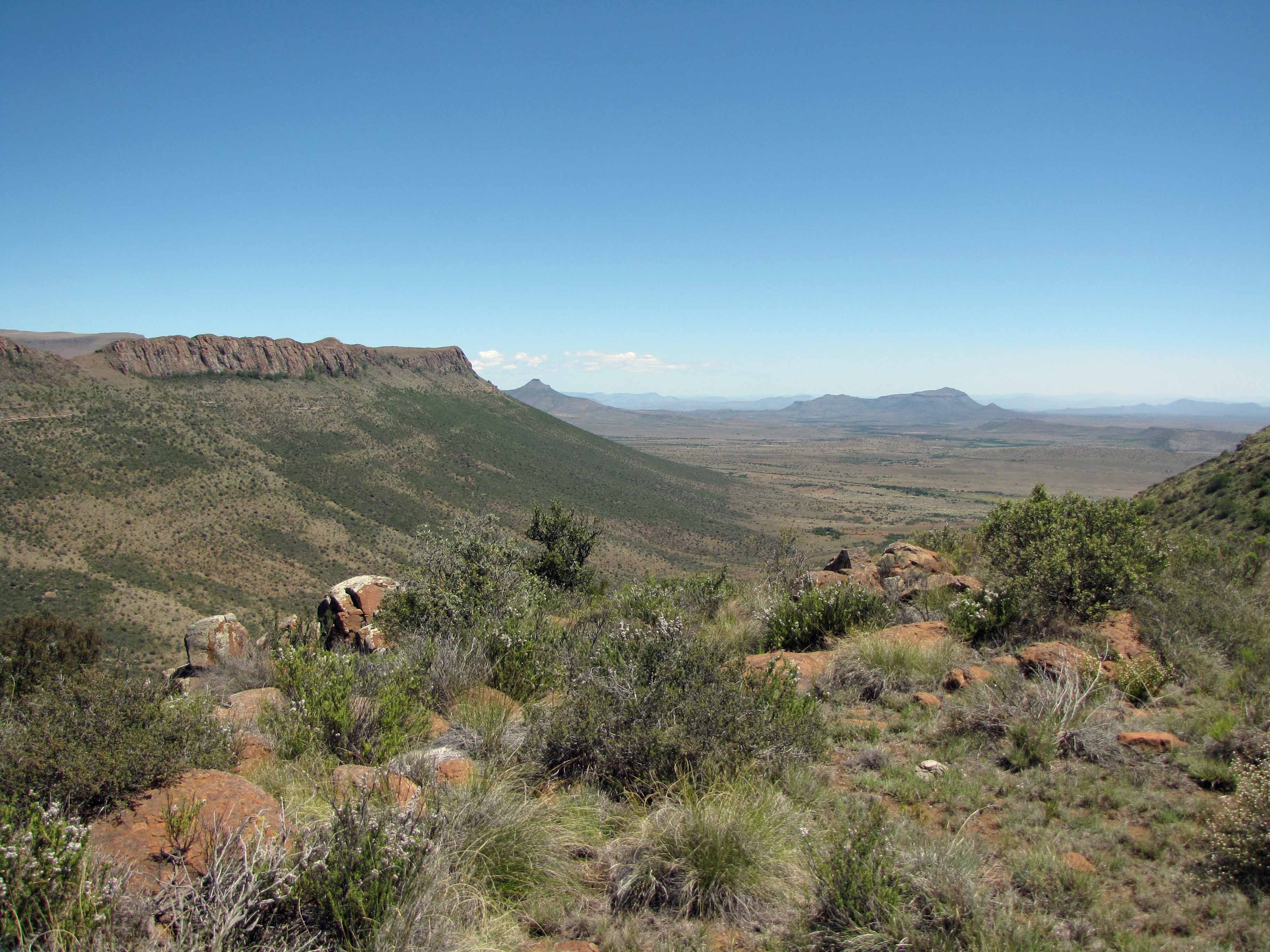
I can say briefly why we [the Norwegian research group from PGP] are here. We are studying subvolcanic systems in seismic data in offshore of Norway, and we’ve been looking for good field analogues for what we see in the geophysical data. The Karoo is really the best place to see these type of complexes exposed. What you find in the Karoo is a very large sedimentary basin where you have numerous sills and dykes and other subvolcanic rocks exposed, and this is similar to what we see offshore of Norway. Here we can go out in the field and then we can compare the results from the Karoo with what we see in the seismic data offshore of Norway.
When and where will the next LASI workshop be held?
This is still to be determined. I overheard many tentative suggestions at the conference, but nothing has been confirmed. If you have a suggestion for a good location, please feel free to leave a comment below. Whenever and wherever, I hope that I have the opportunity to attend the next LASI workshop. I greatly enjoyed attending LASI V. Thanks so much to Henrik and Sverre for inviting me!
That’s all I have on LASI for now. In future posts you’ll learn much more about LASI V. Stay tuned!









 Georneys