Monday Geology Picture: Pink Pan

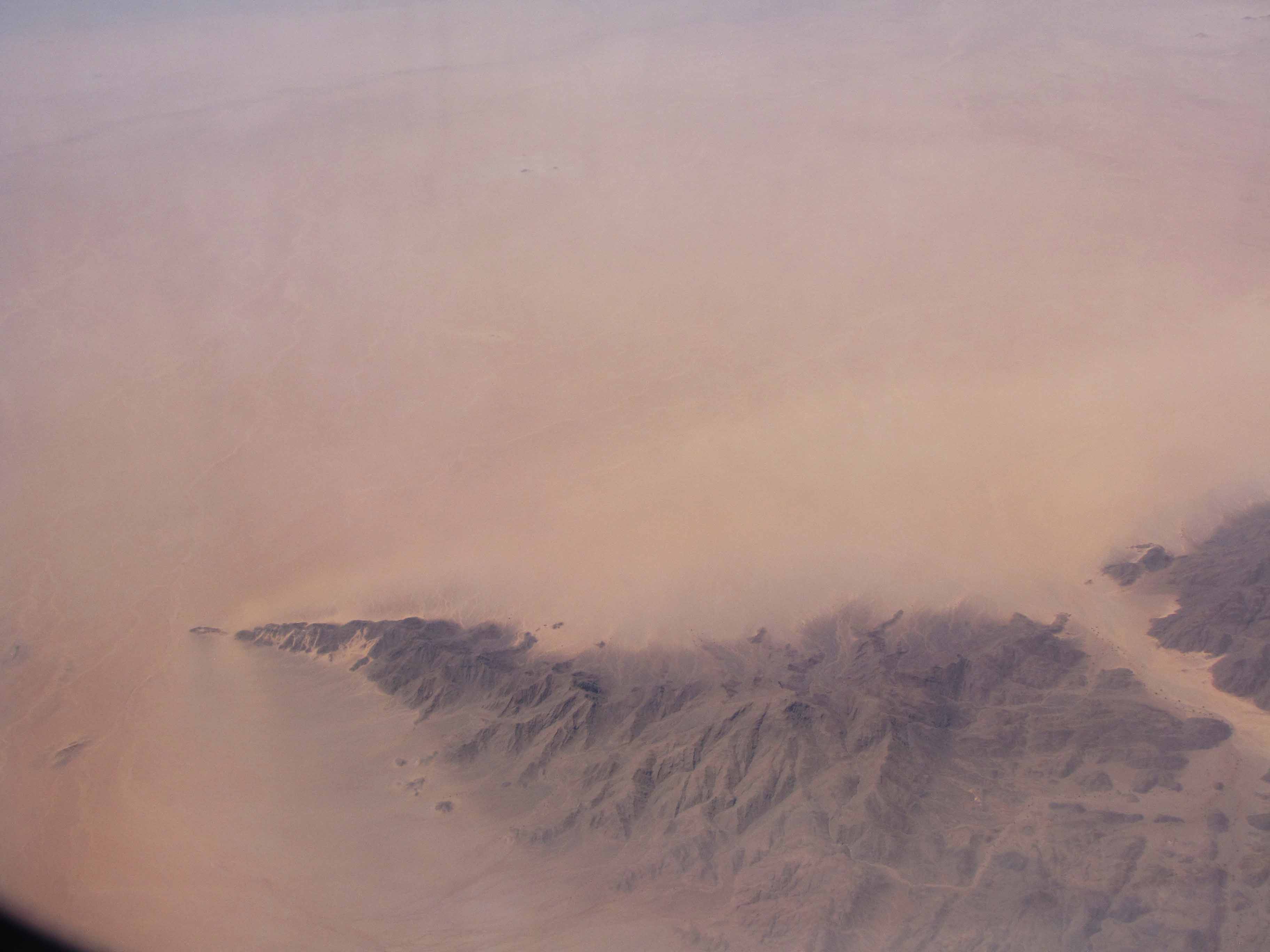
Pink Pan and the Orange River, Namibia.

Apologies for the recent gap in my blogging. I’ve been busy travelling for work, and our home internet connection was not working for a couple of weeks. We’ve also been suffering from regular power outages here in South Africa.

Anyway, to make up for my recent quietness, I’m sharing a spectacular picture for this week’s “Monday Geology Picture” post. This picture was taken close to the border between South Africa and Namibia near the town of Oranjemund and shows a salt pan that is called “Pink Pan” by locals. The Orange River is in the background of the picture. I took this picture through an airplane window when I was flying from Oranjemund to Windhoek earlier this month.

Monday Geology Picture: Kolmanskop from Above

Kolmanskop from above #1, February 2015.

Apologies for the short hiatus in my blogging. I’ve been travelling and generally very busy with work these past two weeks. However, I have another “Geology Word of the Week” post coming up soon, so stay tuned!

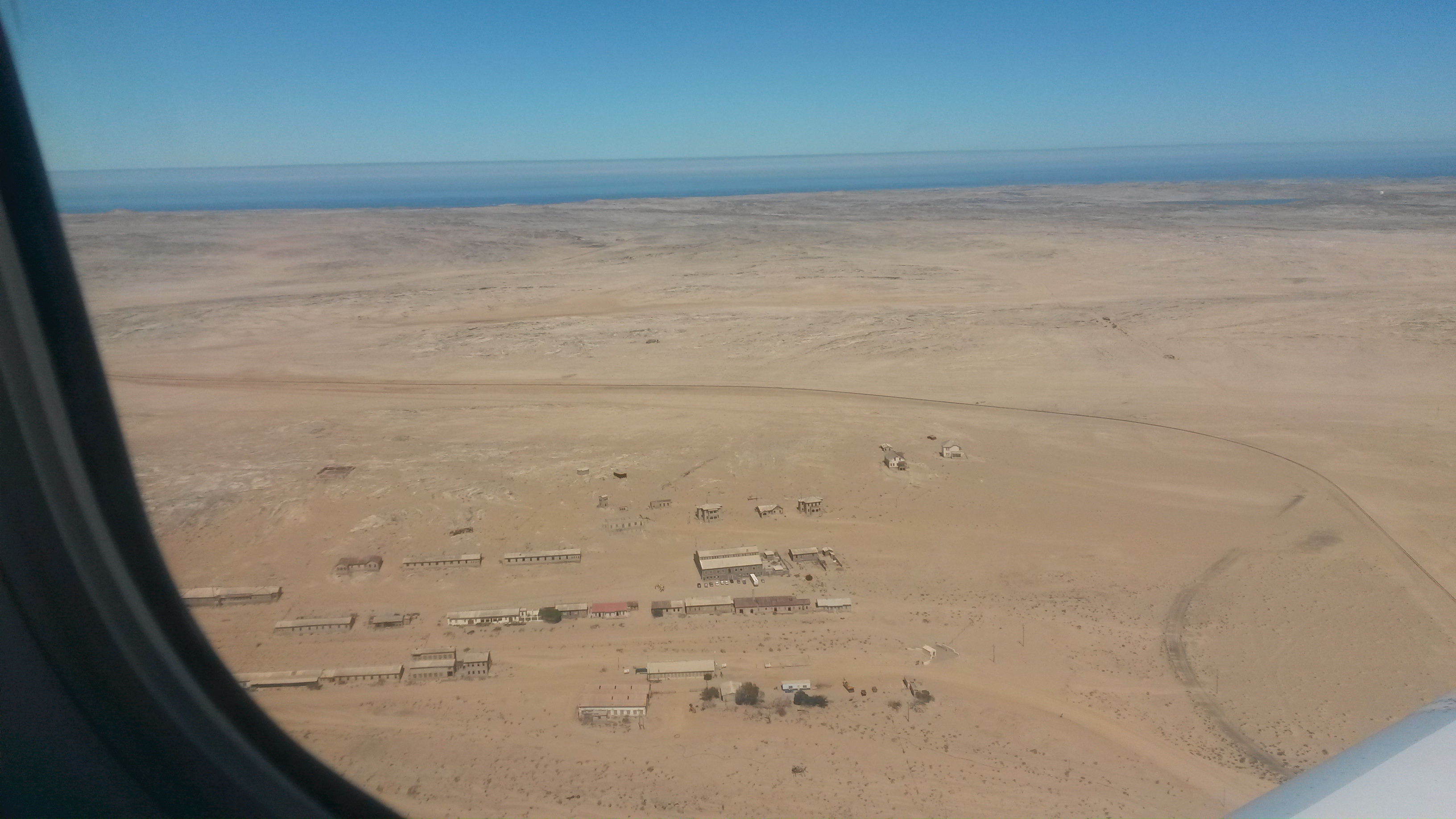
Today I want to share another view of the abandoned diamond mining town of Kolmanskop. I’m currently in Namibia for business, and I flew over Kolmanksop earlier today and managed to snap a few aerial pictures of the town with my phone. I previously visited Kolmanskop on the ground, and I shared some pictures here and here. However, I like these aerial views of Kolmanskop. They show the small buildings surrounded by a sea of sand, with the real sea sparkling blue on the horizon.

Kolmanksop from above #1, February 2015.
Kolmanksop from above #2, February 2015.
Kolmanskop from above #3, February 2015.

Monday Geology Picture: Sand Sign at Kolmanskop

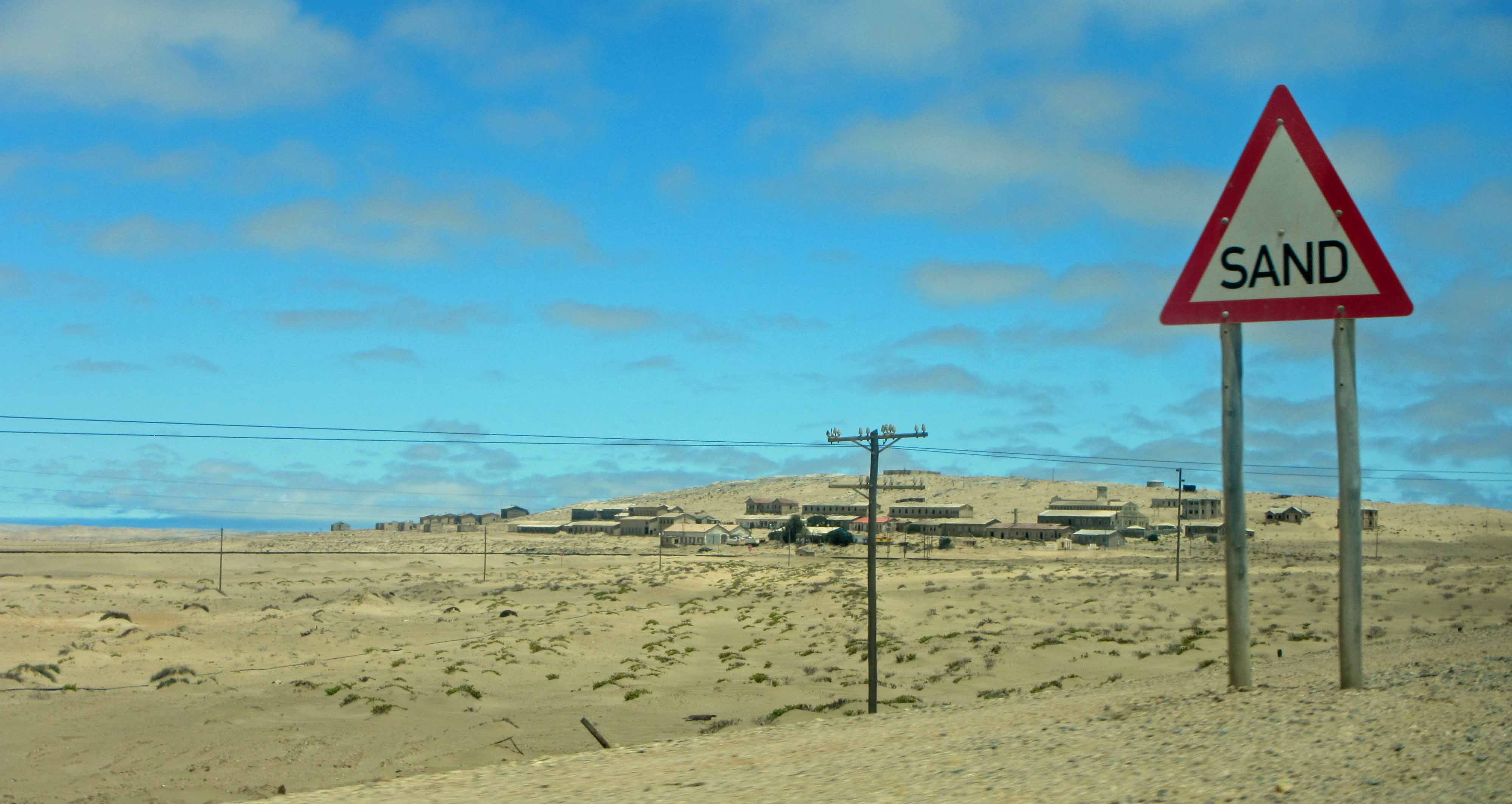
An appropriate sign near Kolmanskop, Namibia.
A road sign near Kolmanskop, Namibia.

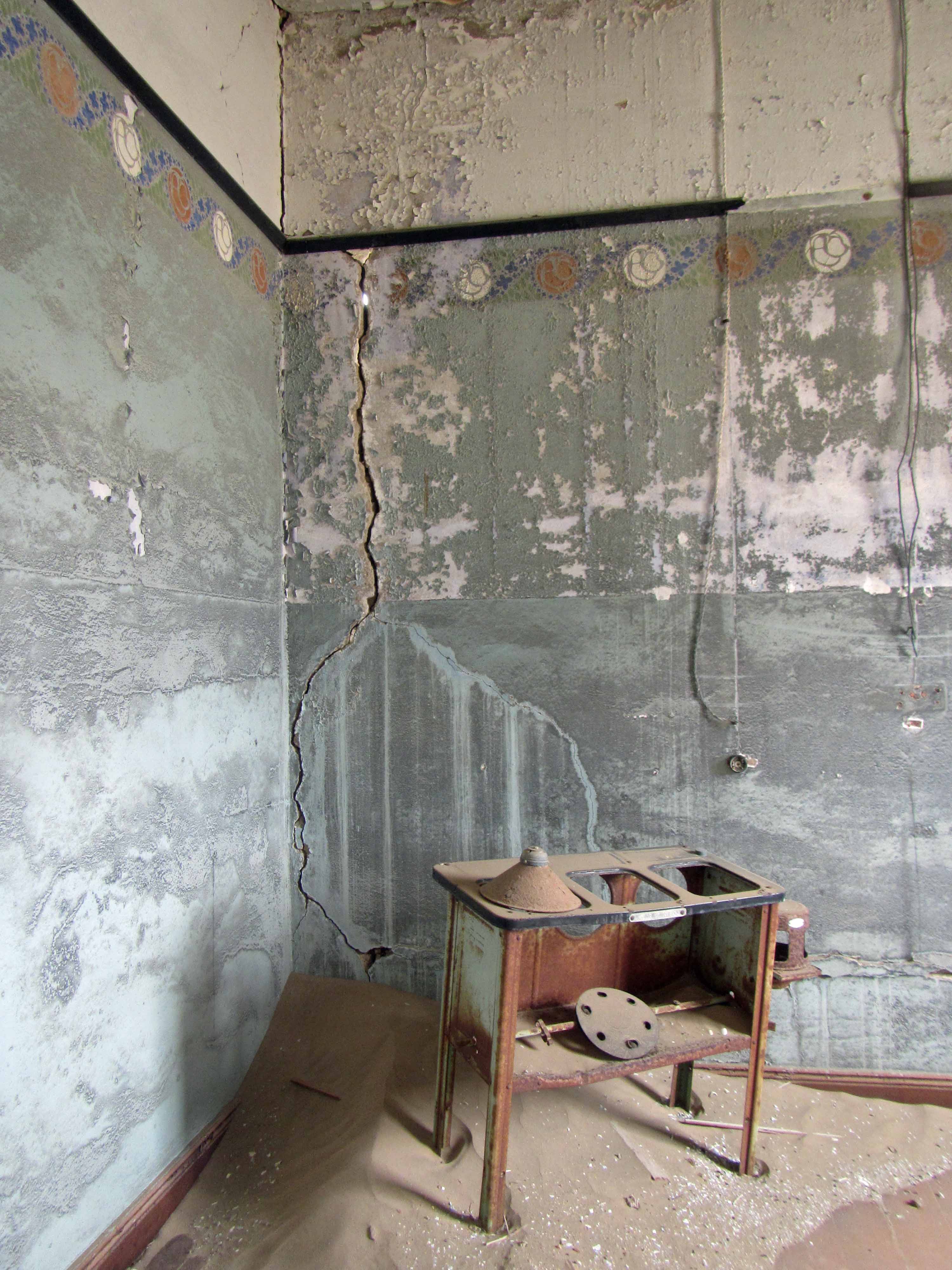
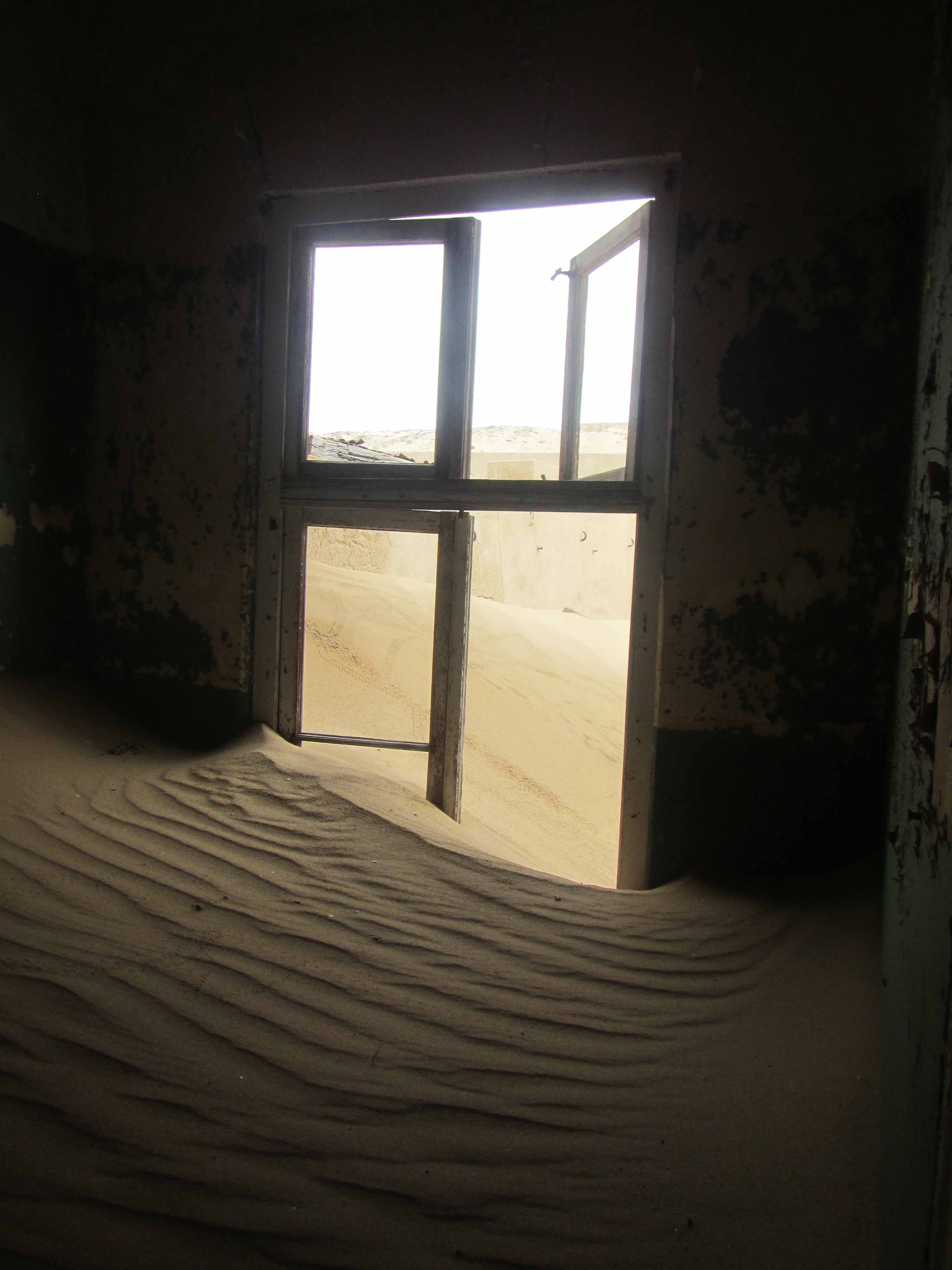
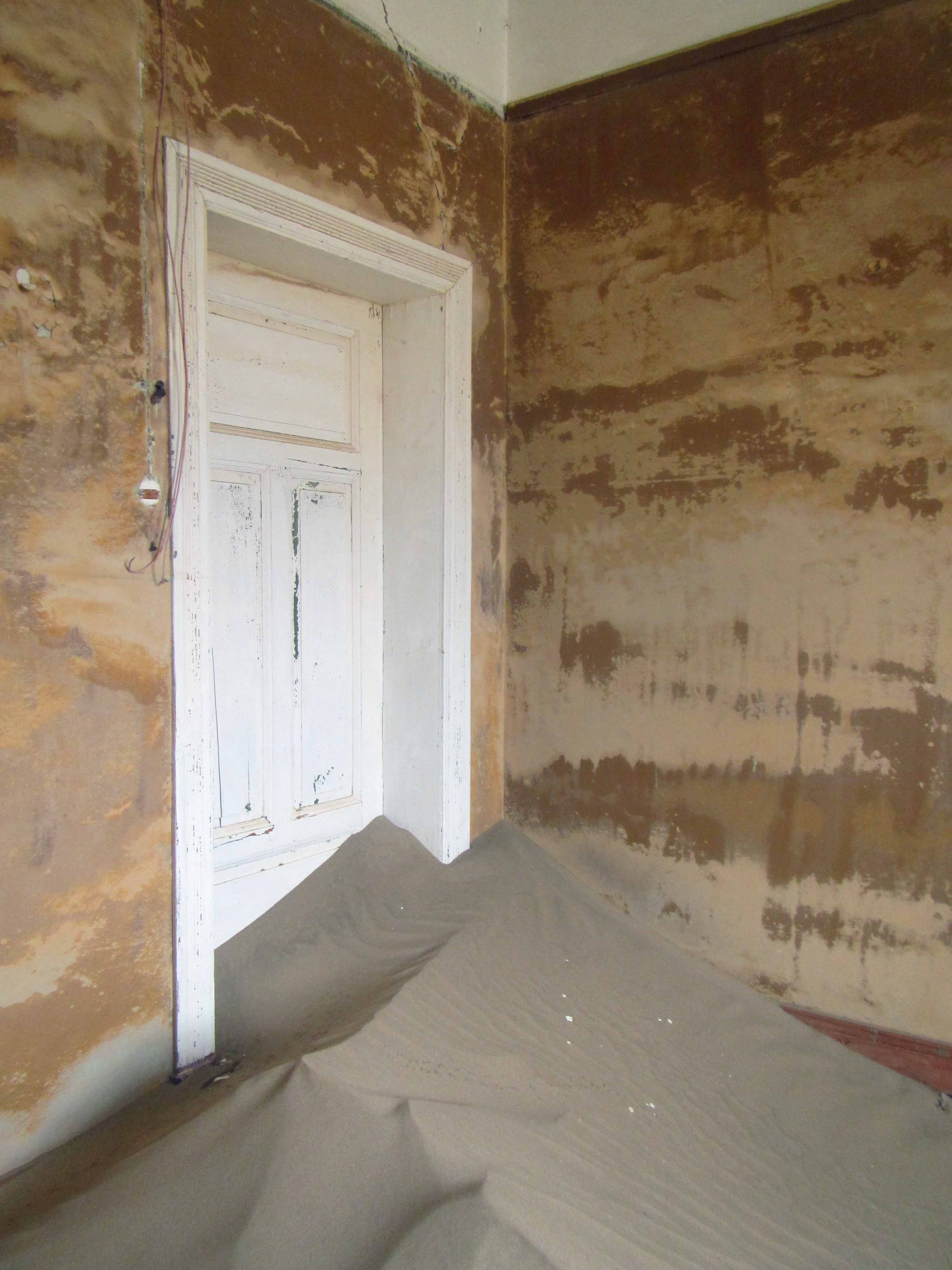
For this week’s “Monday Geology Picture” I’m sharing another picture from Kolmanskop, an abandoned diamond mining town in Namibia. Many of the buildings at Kolmanskop have been partially filled with sand. You can see more of my pictures from Kolmanskop here. When you drive along the paved road near Kolmanskop, you pass a roadside warning sign that says “Sand”. I suppose that the sign is warning drivers about sand covering the road or perhaps sandstorms creating poor visibility for driving, but when I saw the sign I thought that it was quite funny because it really states the obvious. Of course there is sand in the Namib Desert, especially at Kolmanskop!

Does anyone else have pictures of fun geologically themed roadsigns?

Kolmanskop in Pictures

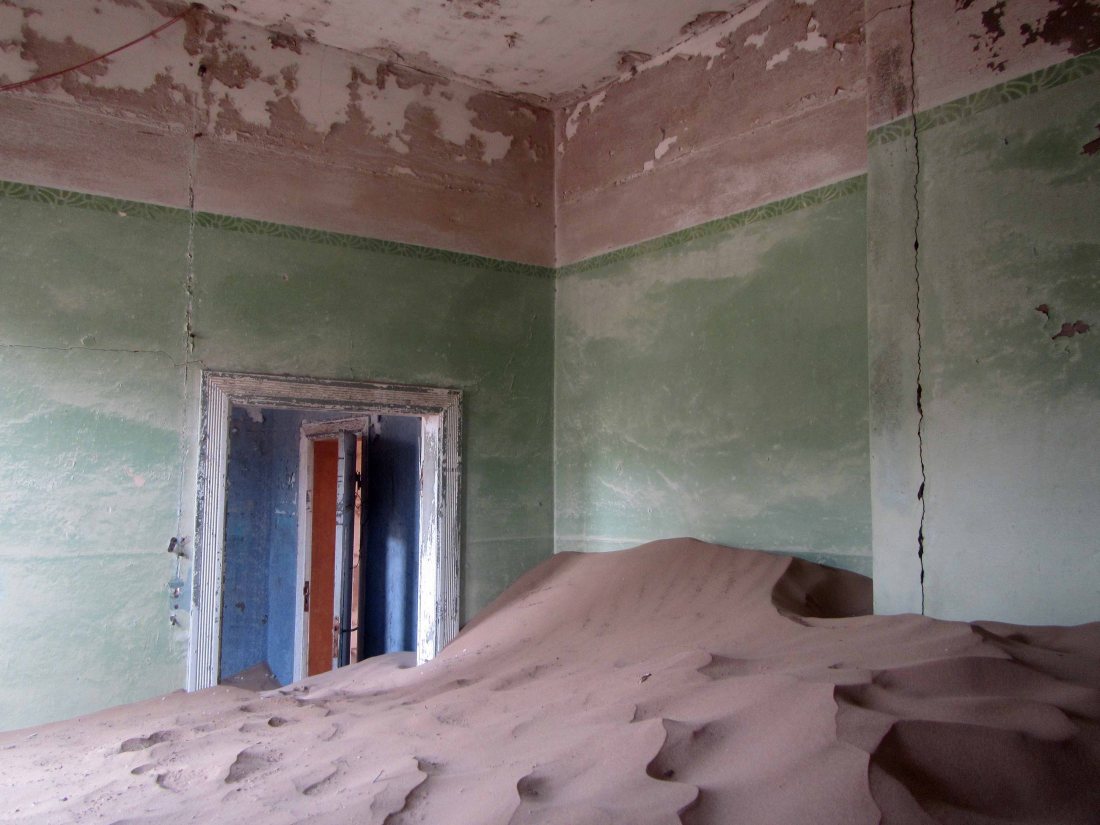
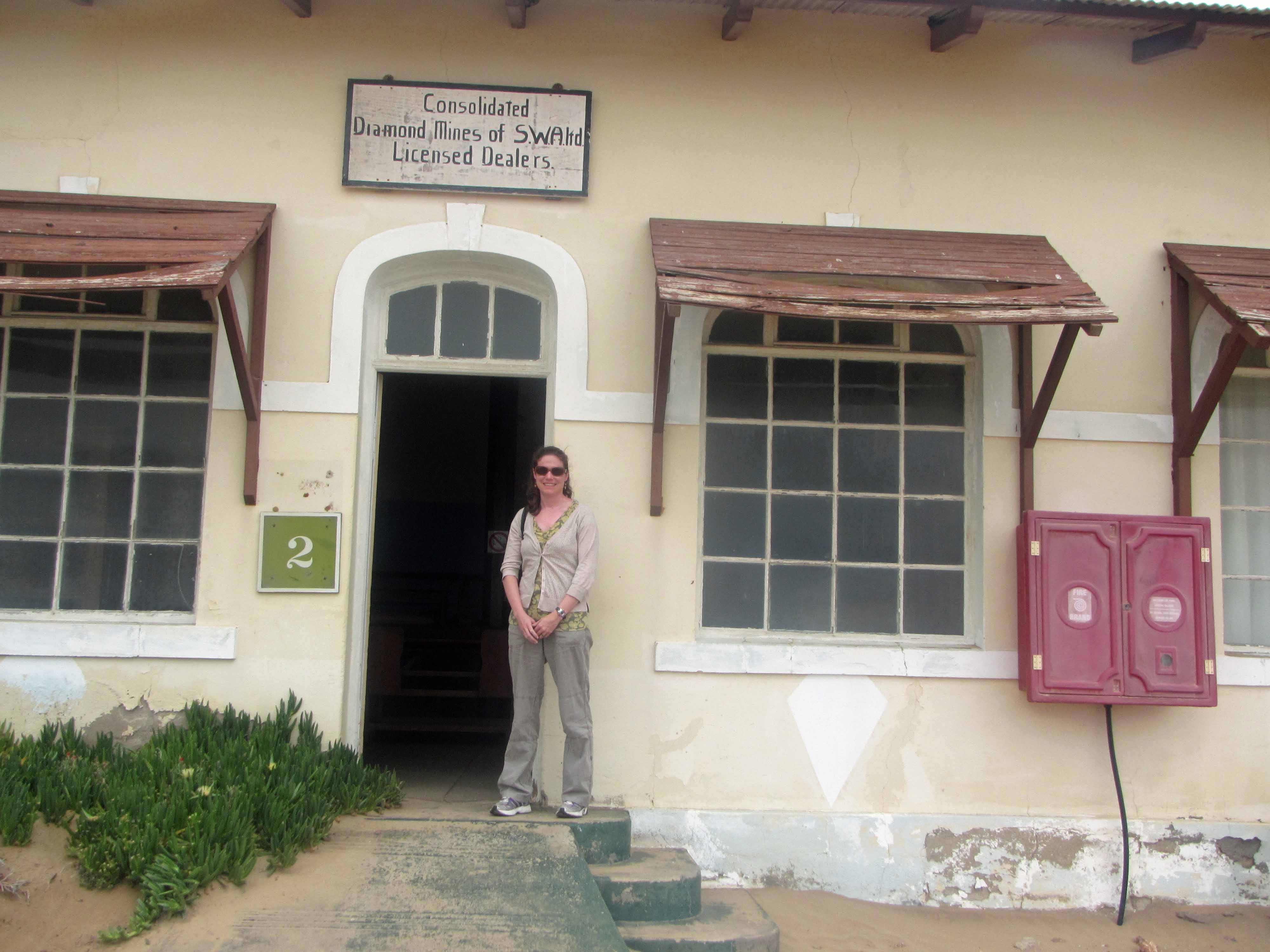
Kolmanskop #1. Sitting on some sand in one of the abandoned houses.

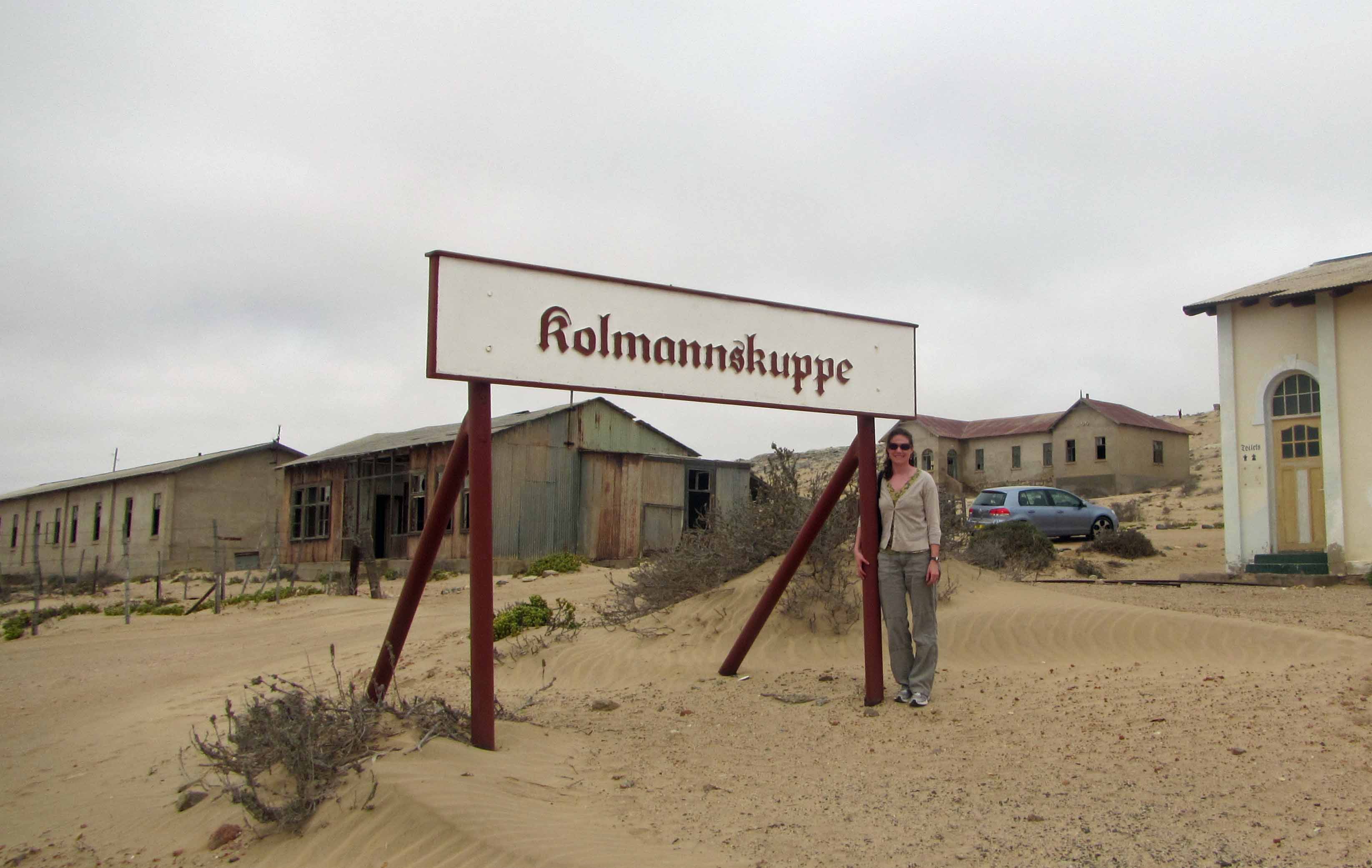
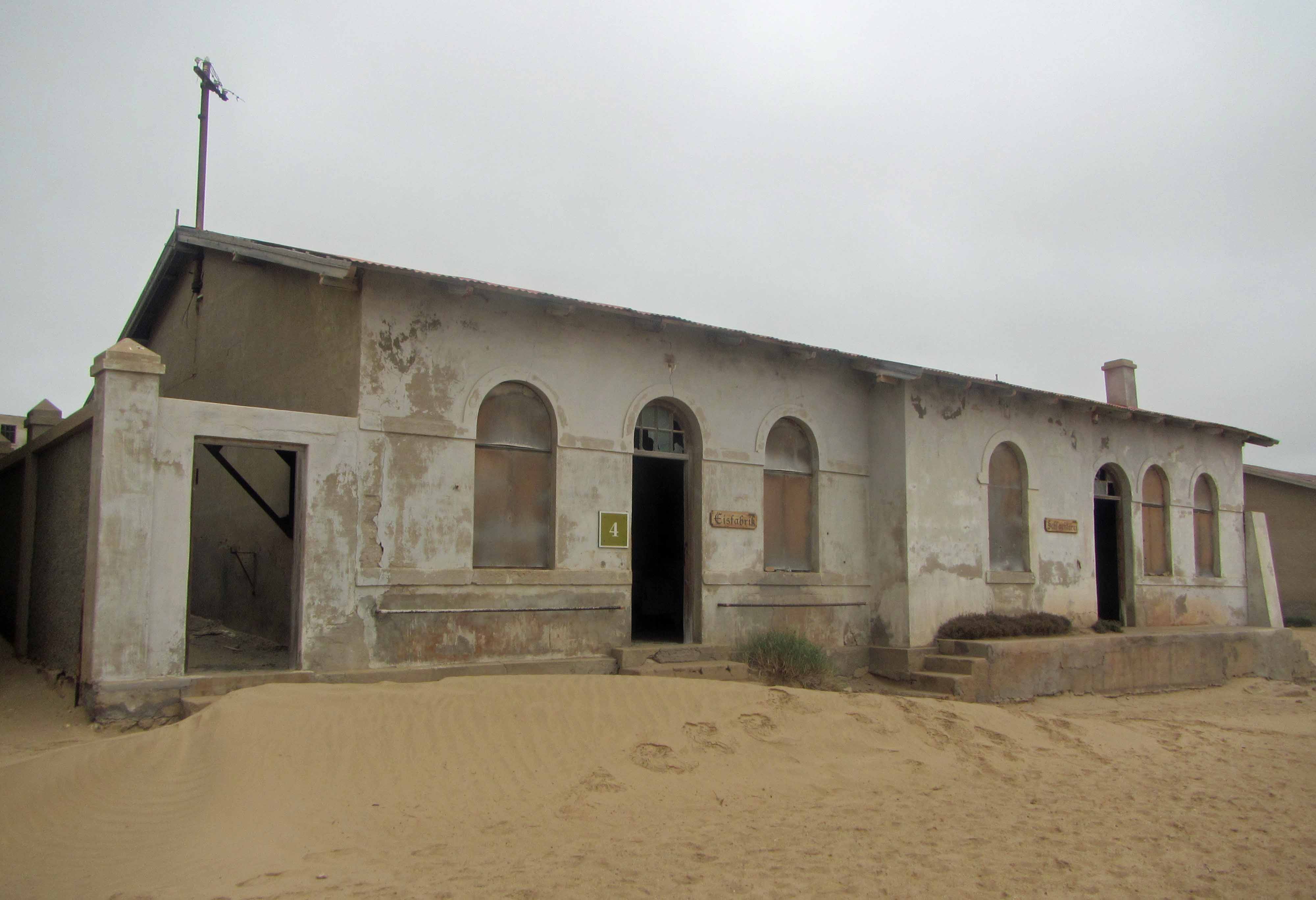
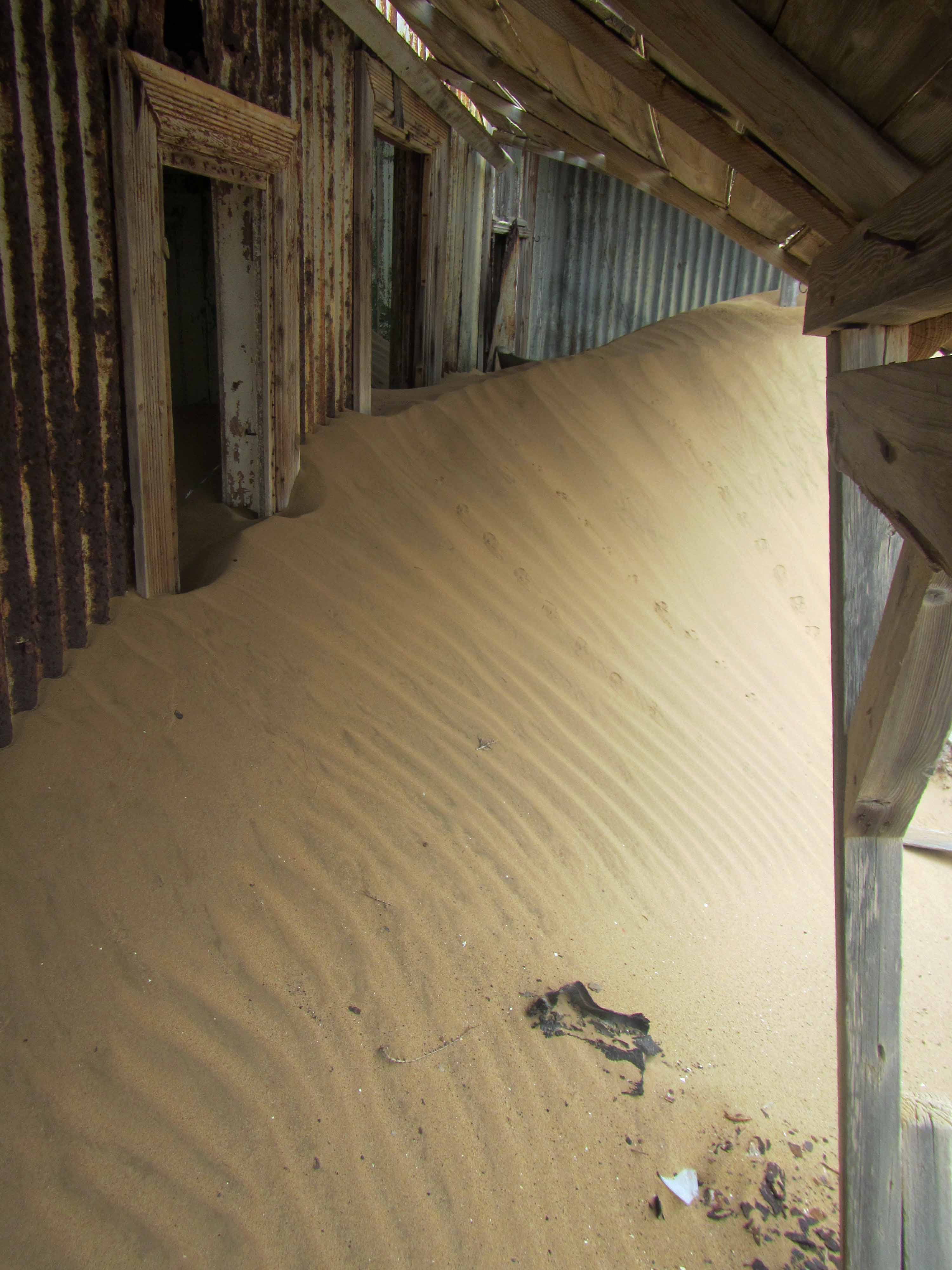
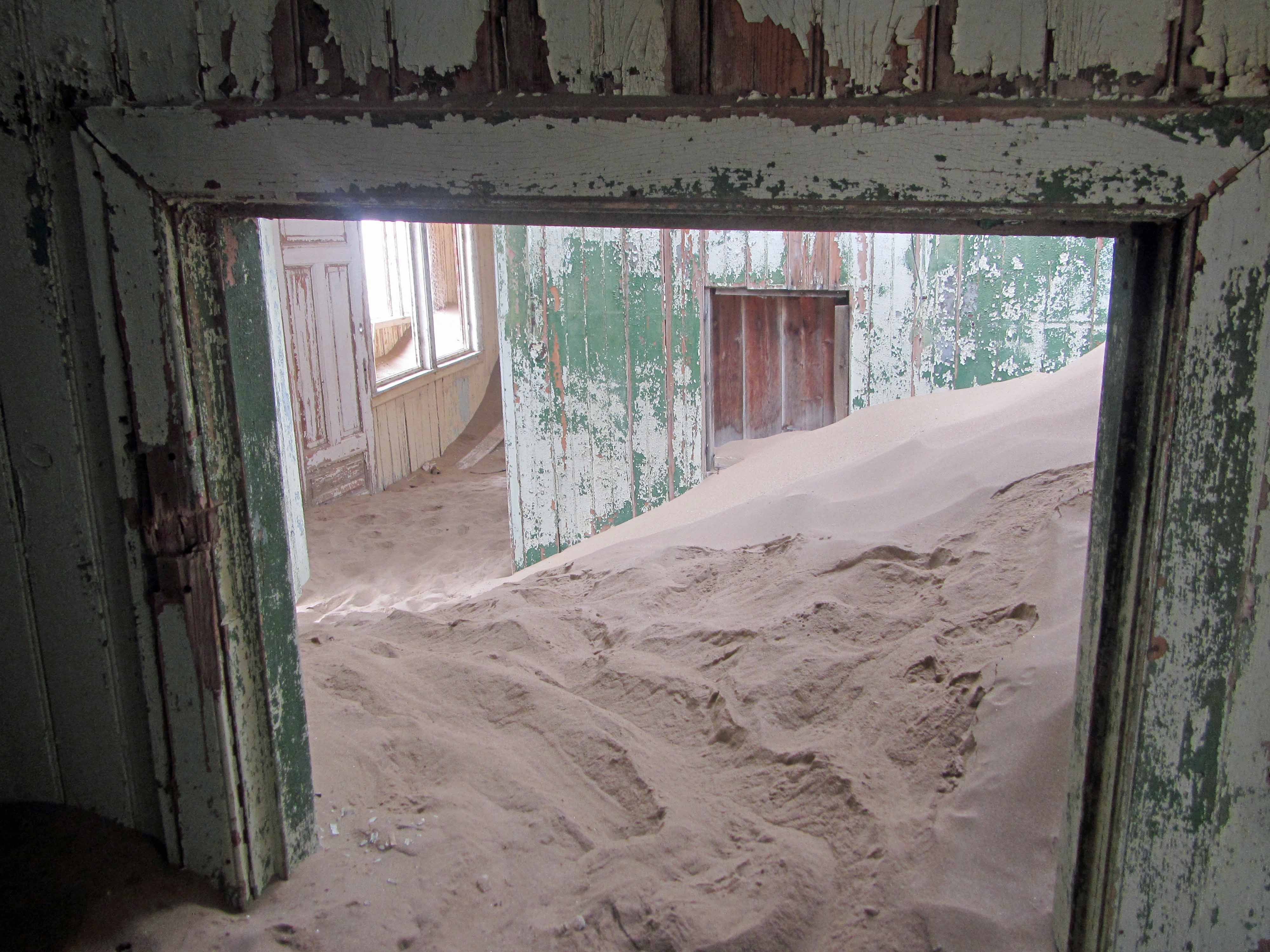
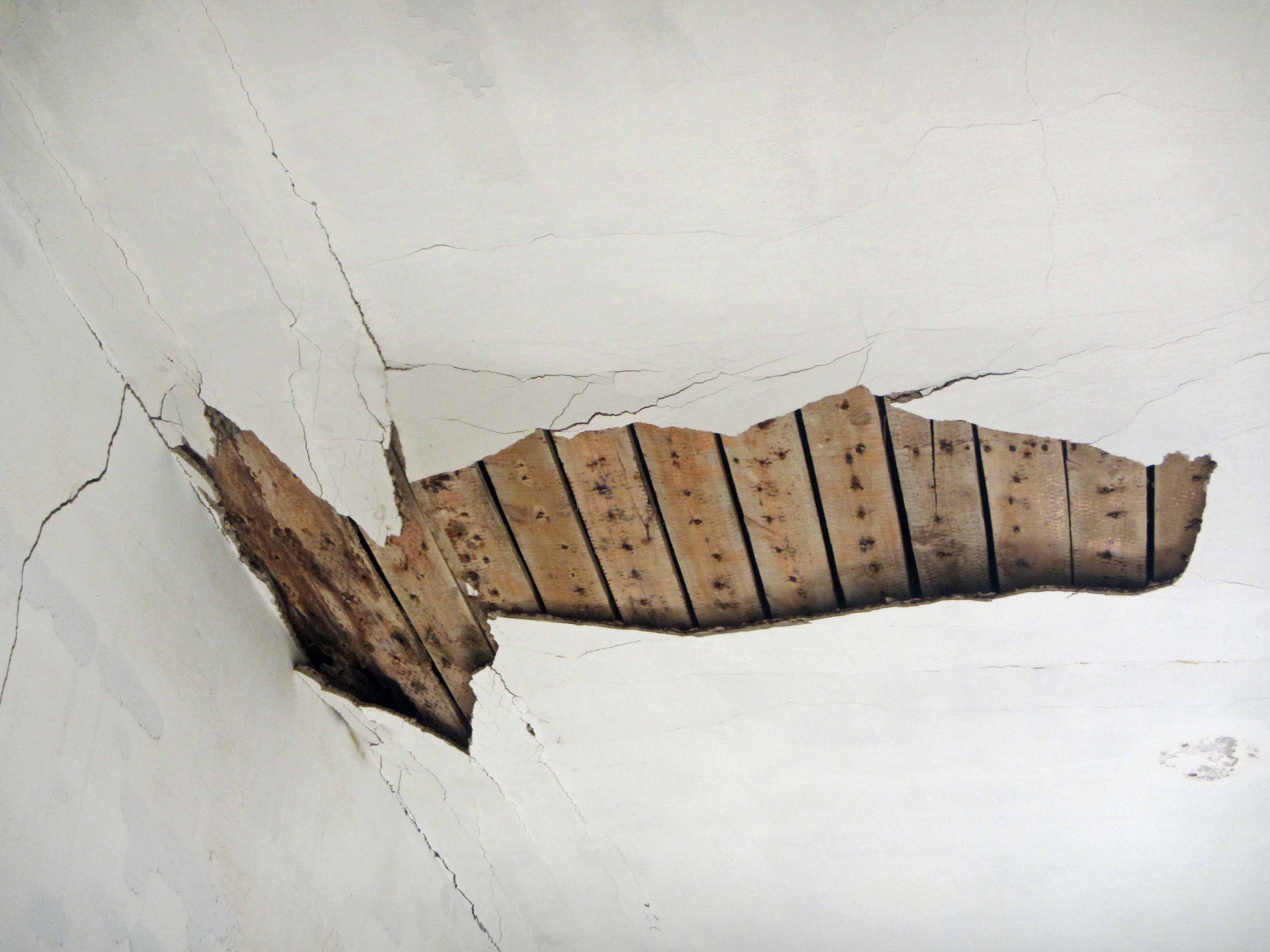
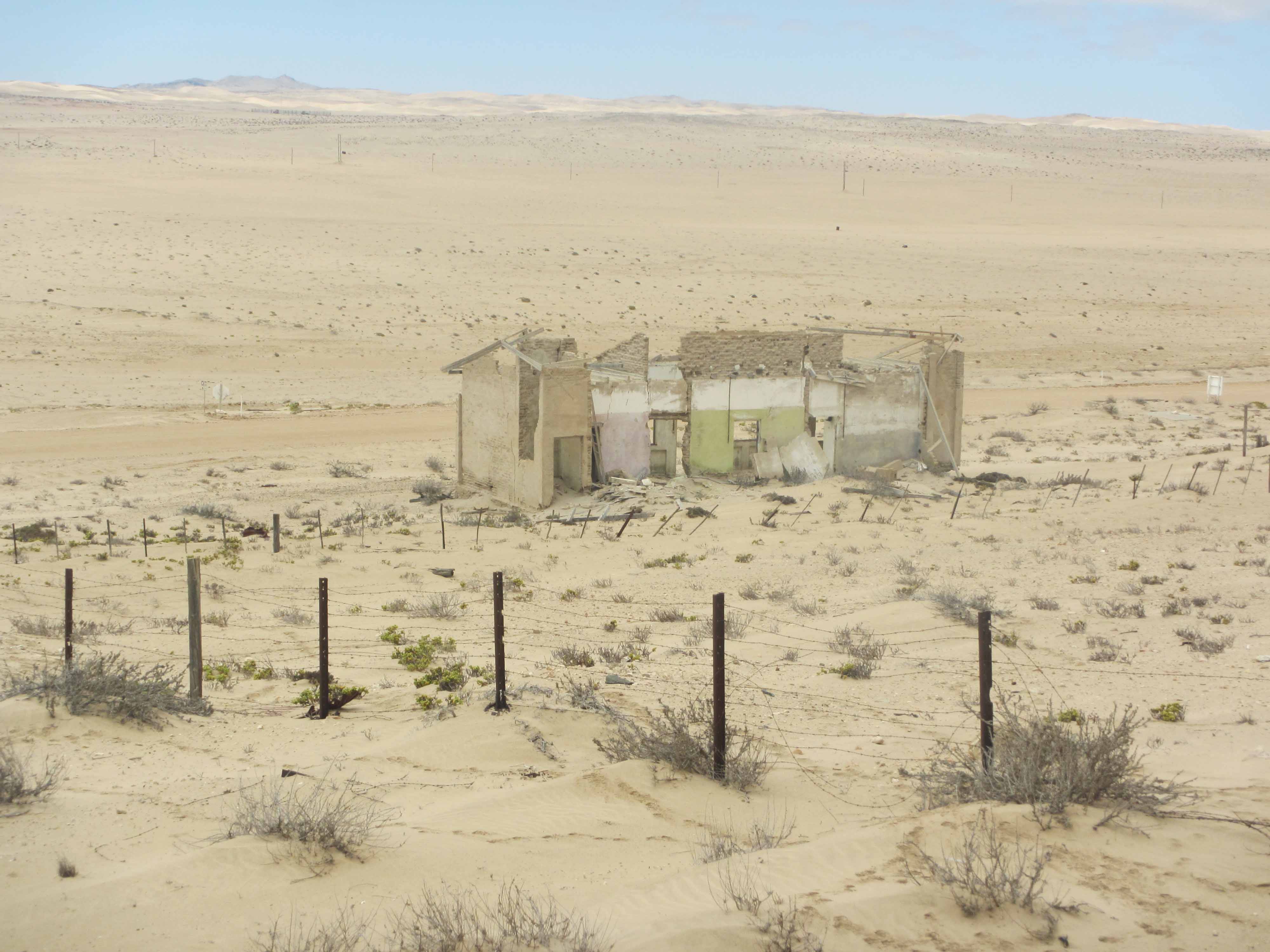
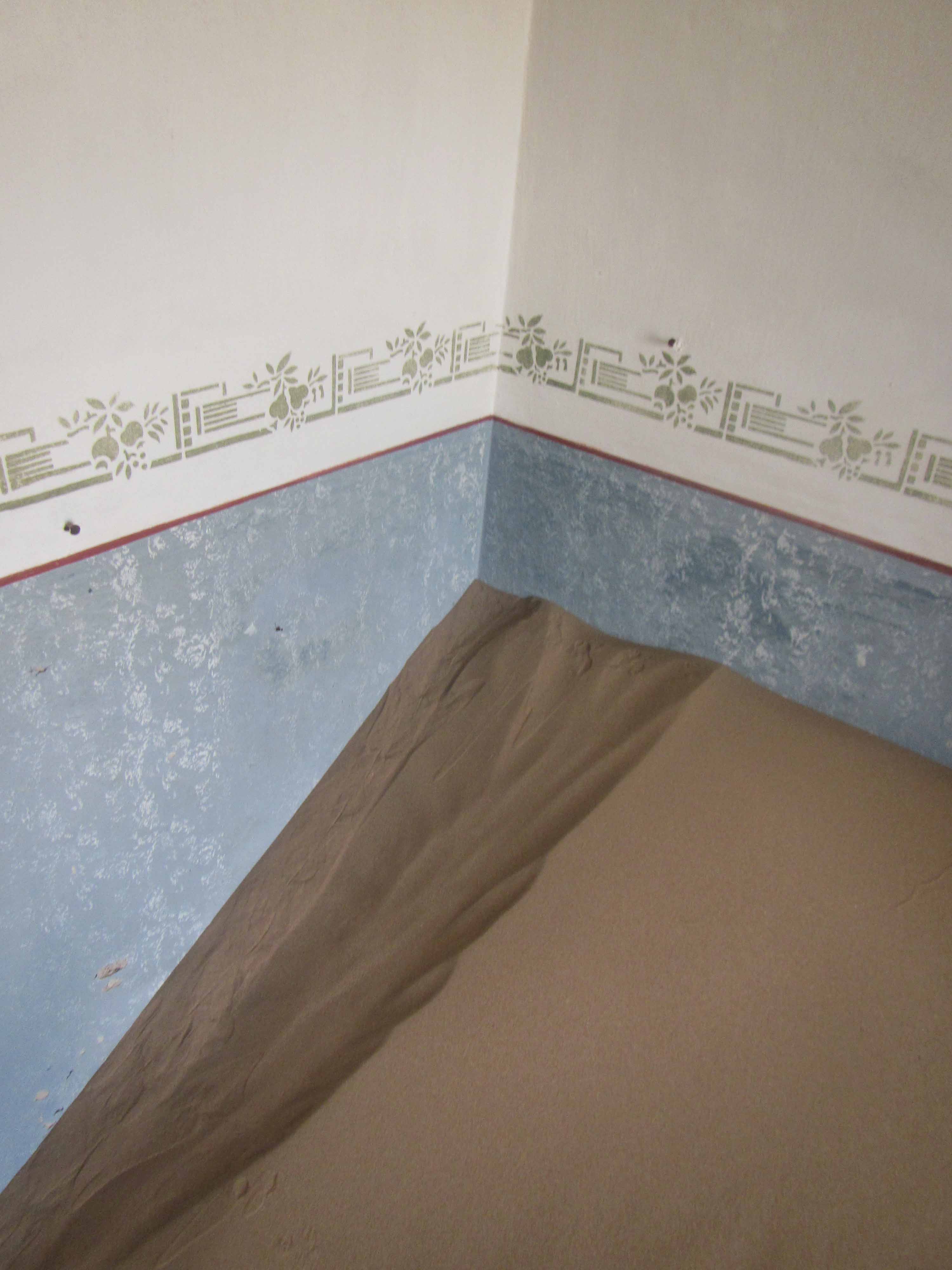
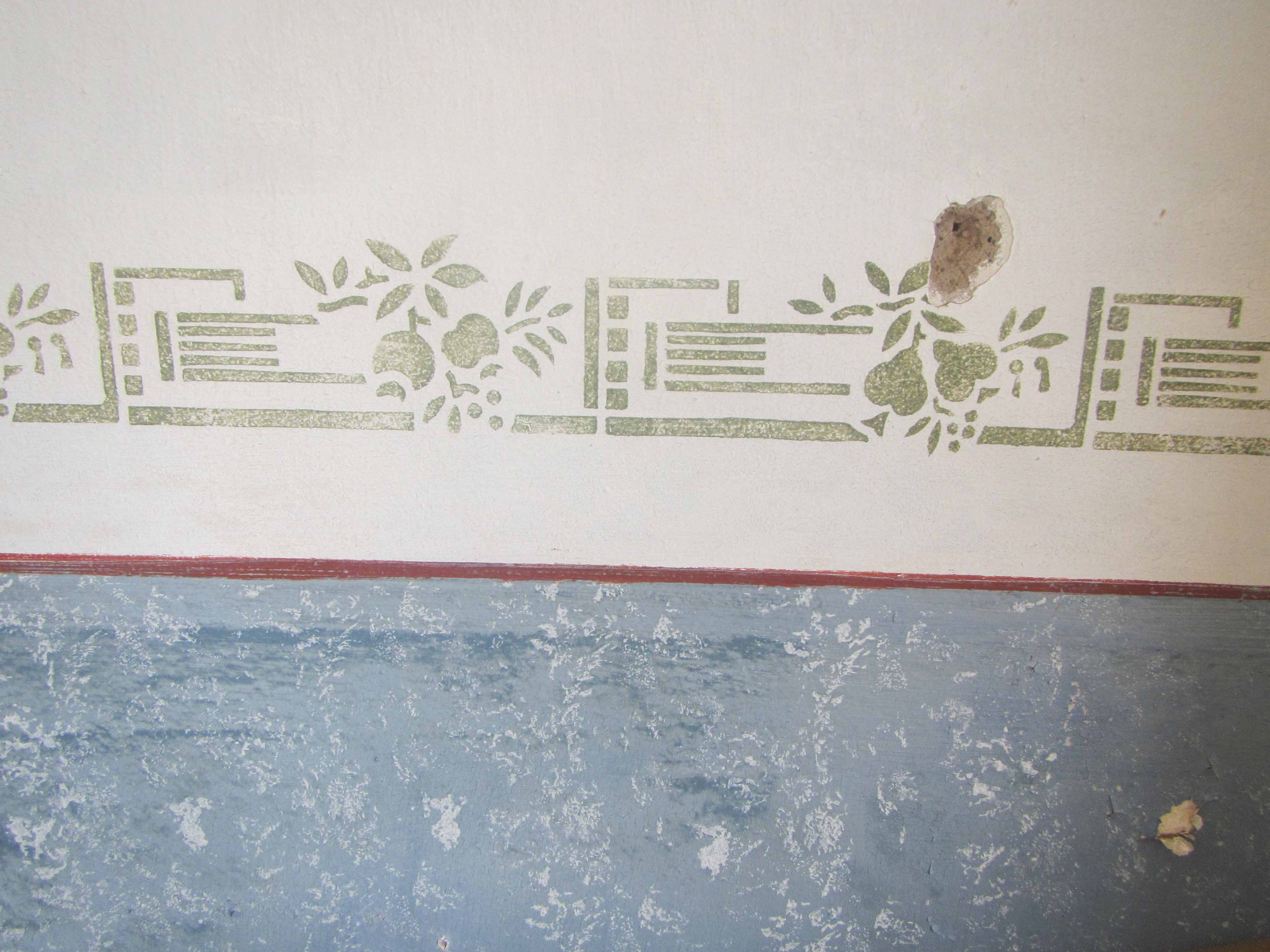
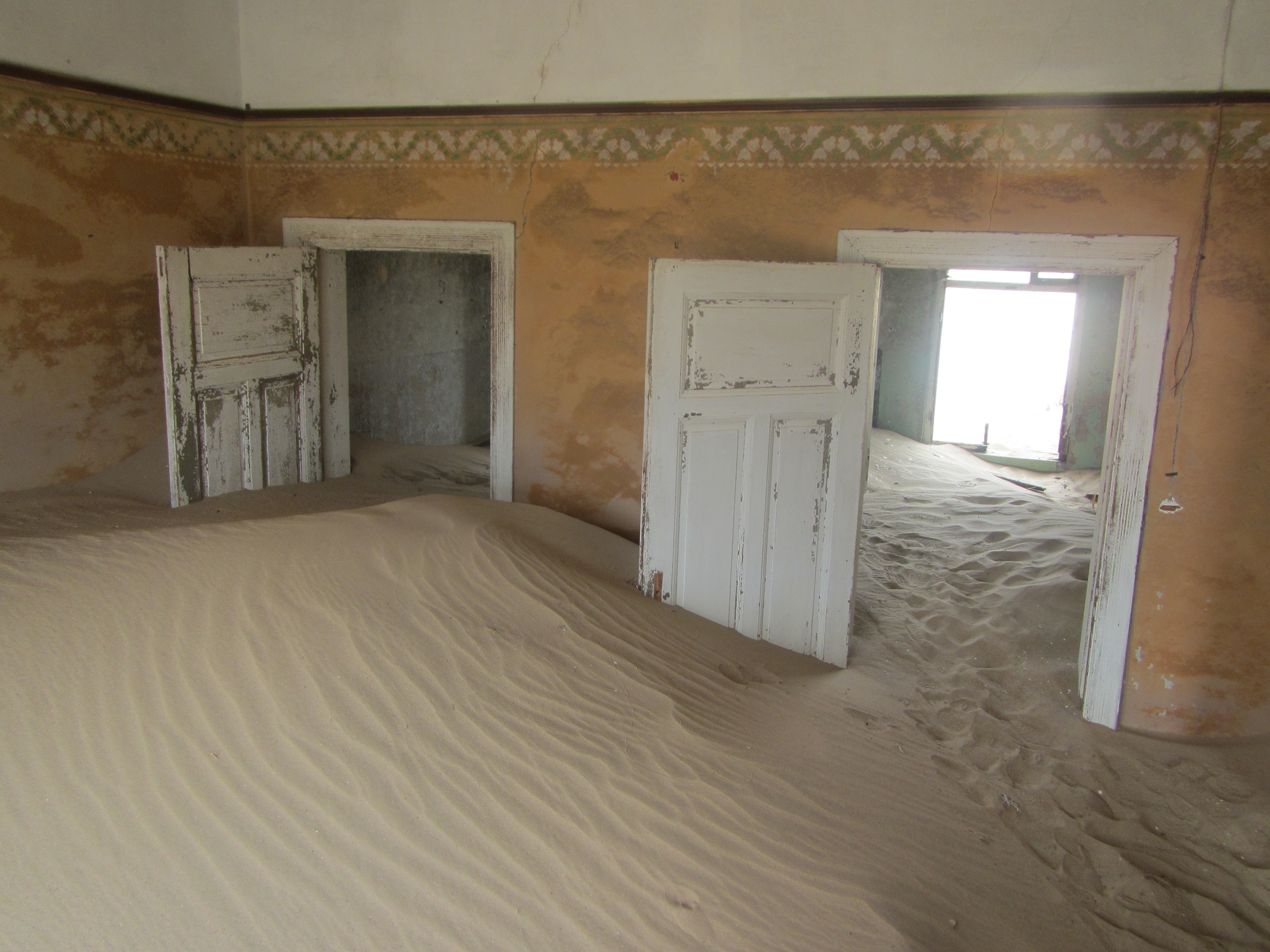
Last month I spent some time in Namibia for work. During one of my days off, I was able to spend some time visiting Kolmanskop. Located in the Namib Desert a few miles outside of the seaside town of Lüderitz, Kolmanskop is a “Ghost Town” that is the remains of a former diamond mining town. Kolmanskop was founded shortly after diamonds were discovered in the region in 1908 and was abandoned to the elements in 1954, after the diamond supply was depleted. Over the last sixty years, Kolmanskop has been decaying in the desert, battered by the wind and swept over with sand. Today, many of the buildings are half-filled with sand. The discarded possessions of the town’s former inhabitants are either slowly disintegrating in the open air or are precariously protected by glass display cases. The town of Kolmanskop is managed as a tourist attraction by the diamond mining company Namdeb. Tourists can pay a fee to visit the town during certain hours. At their own risk, tourists can wander through the abandoned buildings.

Visiting Kolmanskop was a fascinating and surreal experience. As I explored the ghostly town, I felt keenly aware of the insignificance and ephemeral nature of my life. I wondered if, one day years from now, a young woman will wander through the decaying remains of my home… or perhaps come across a former possession of mine– maybe a book, with my name written on the front cover, dusty in the corner of an antique shop– and wonder, just for a moment, about the object’s former owner.  Wandering through Kolmanskop, I found myself thinking about one of my favorite Carl Sagan quotations, from the book Pale Blue Dot:

Look again at that dot. That’s here. That’s home. That’s us. On it everyone you love, everyone you know, everyone you ever heard of, every human being who ever was, lived out their lives. The aggregate of our joy and suffering, thousands of confident religions, ideologies, and economic doctrines, every hunter and forager, every hero and coward, every creator and destroyer of civilization, every king and peasant, every young couple in love, every mother and father, hopeful child, inventor and explorer, every teacher of morals, every corrupt politician, every “superstar,” every “supreme leader,” every saint and sinner in the history of our species lived there- on a mote of dust suspended in a sunbeam.

The Earth is a very small stage in a vast cosmic arena. Think of the endless cruelties visited by the inhabitants of one corner of this pixel on the scarcely distinguishable inhabitants of some other corner, how frequent their misunderstandings, how eager they are to kill one another, how fervent their hatreds. Think of the rivers of blood spilled by all those generals and emperors so that, in glory and triumph, they could become the momentary masters of a fraction of a dot.

Our posturings, our imagined self-importance, the delusion that we have some privileged position in the Universe, are challenged by this point of pale light. Our planet is a lonely speck in the great enveloping cosmic dark. In our obscurity, in all this vastness, there is no hint that help will come from elsewhere to save us from ourselves.

The Earth is the only world known so far to harbor life. There is nowhere else, at least in the near future, to which our species could migrate. Visit, yes. Settle, not yet. Like it or not, for the moment the Earth is where we make our stand.

It has been said that astronomy is a humbling and character-building experience. There is perhaps no better demonstration of the folly of human conceits than this distant image of our tiny world. To me, it underscores our responsibility to deal more kindly with one another, and to preserve and cherish the pale blue dot, the only home we’ve ever known.

With that quotation in mind, enjoy my pictures from Kolmanskop:

Kolmanskop #2.
Kolmanskop #2.
Kolmanskop #3.
Kolmanskop #3.
Kolmanskop #4.
Kolmanskop #4.
Kolmanskop #5.
Kolmanskop #5.
Kolmanskop #6.
Kolmanskop #6.
Kolmanskop #7.
Kolmanskop #7.
Kolmanskop #8.
Kolmanskop #8.
Kolmanskop #9.
Kolmanskop #9.
Kolmanskop #10.
Kolmanskop #10.
Kolmanskop #11.
Kolmanskop #11.
Kolmanskop #12.
Kolmanskop #12.
Kolmanskop #14.
Kolmanskop #13.
Kolmanskop #14.
Kolmanskop #14.
Kolmanskop #15.
Kolmanskop #15.
Kolmanskop #16.
Kolmanskop #16.
Kolmanskop #17.
Kolmanskop #17.
Kolmanskop #18.
Kolmanskop #18.
Kolmanskop #19.
Kolmanskop #19.
Kolmanskop #20.
Kolmanskop #20.
Kolmanskop #21.
Kolmanskop #21.
Kolmanskop #22.
Kolmanskop #22.
Kolmanskop #23.
Kolmanskop #23.
Kolmanskop #24.
Kolmanskop #24.
Kolmanskop #25.
Kolmanskop #25.
Kolmanskop #26.
Kolmanskop #26.
Kolmanskop #27.
Kolmanskop #27.
Kolmanskop #28.
Kolmanskop #28.
Kolmanskop #29.
Kolmanskop #29.
Kolmanskop #30.
Kolmanskop #30.
Kolmanskop #31.
Kolmanskop #31.
Kolmanskop #32.
Kolmanskop #32.
Kolmanskop #33.
Kolmanskop #33.
Kolmanskop #34.
Kolmanskop #34.
Kolmanskop #35.
Kolmanskop #35.
Kolmanskop #36.
Kolmanskop #36.
Kolmanskop #37.
Kolmanskop #37.
Kolmanskop #38.
Kolmanskop #38.
Kolmanskop #39.
Kolmanskop #39.
Kolmanskop #40.
Kolmanskop #40.
Kolmanskop #41.
Kolmanskop #41.
Kolmanskop #42.
Kolmanskop #42.
Kolmanskop #43.
Kolmanskop #43.
Kolmanskop #44.
Kolmanskop #44.
Kolmanskop #45.
Kolmanskop #45.
Kolmanskop #46.
Kolmanskop #46.
Kolmanskop #47.
Kolmanskop #47.
Kolmanskop #48.
Kolmanskop #48.
Kolmanskop #49.
Kolmanskop #49.
Kolmanskop #50.
Kolmanskop #50.

Plane Views: Amsterdam to Cape Town– Part II

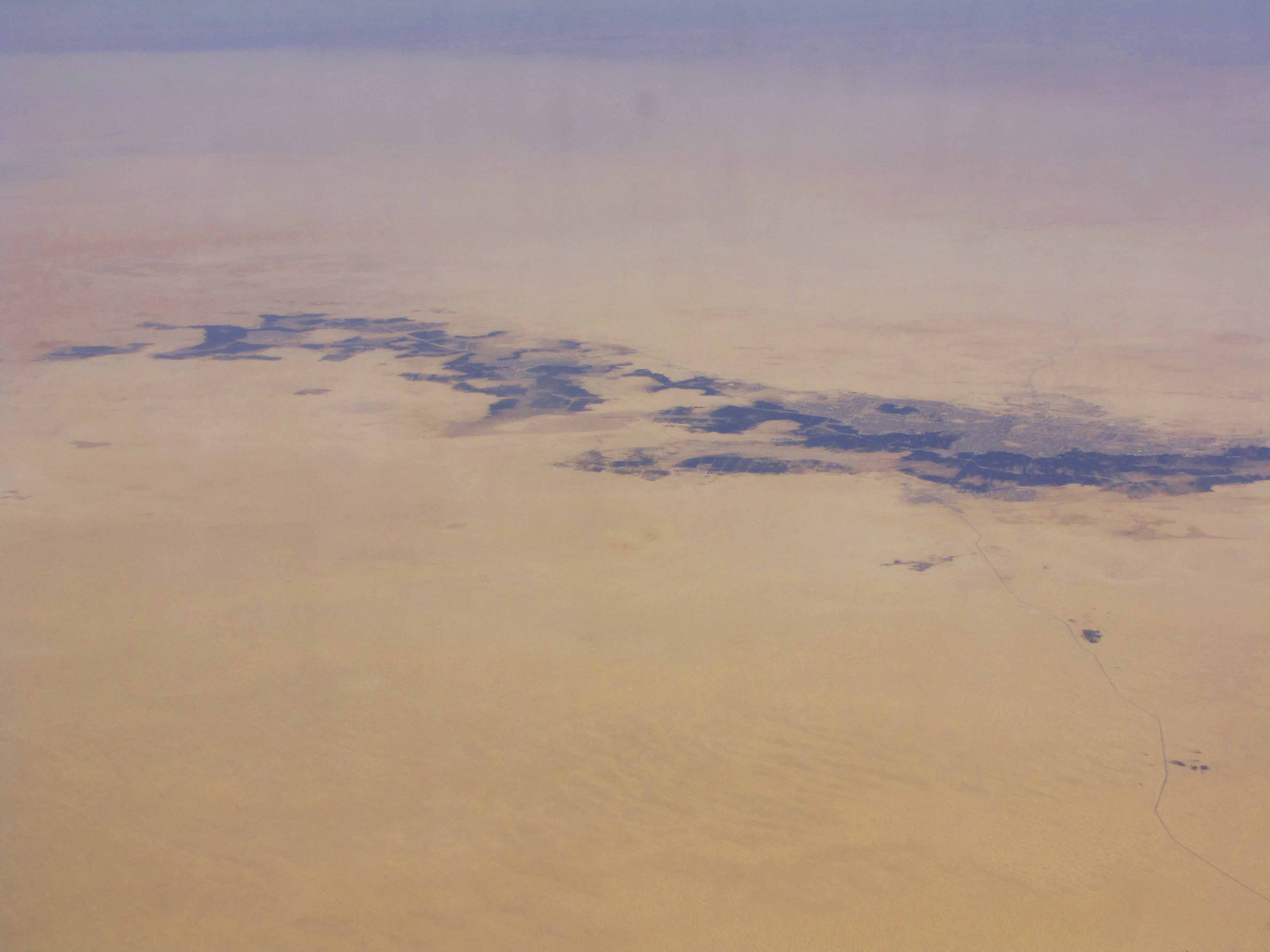
Algeria #1.

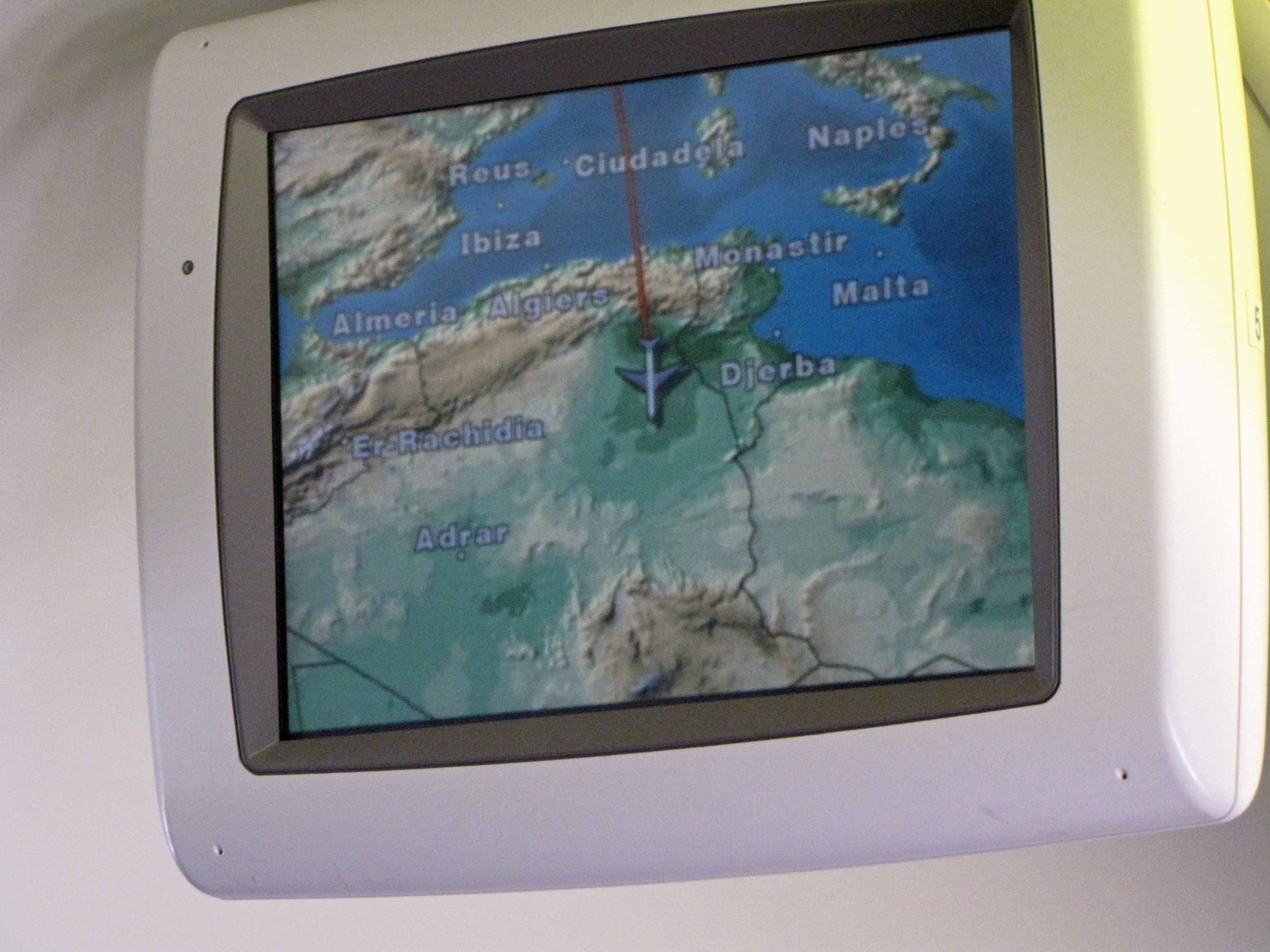
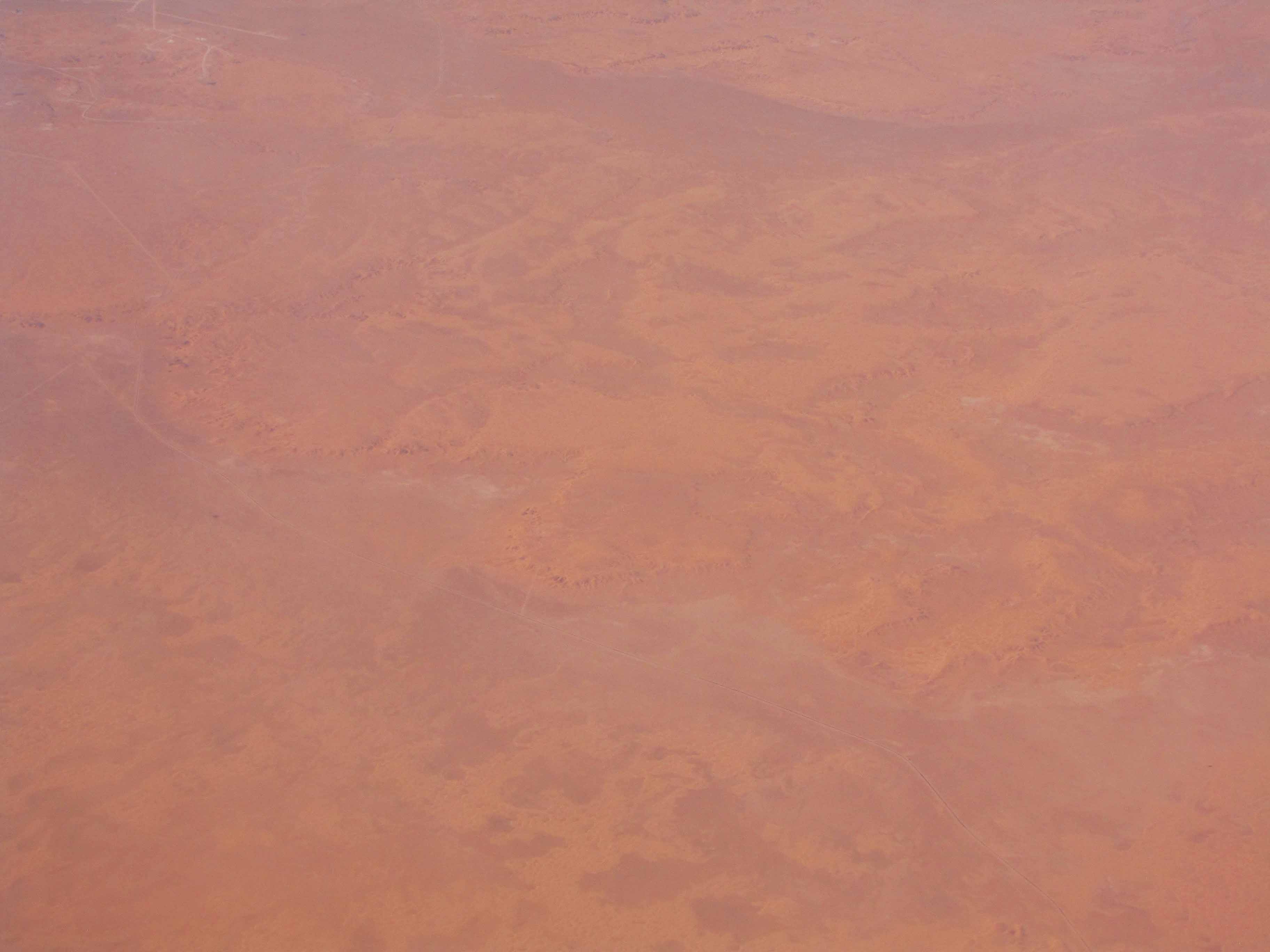
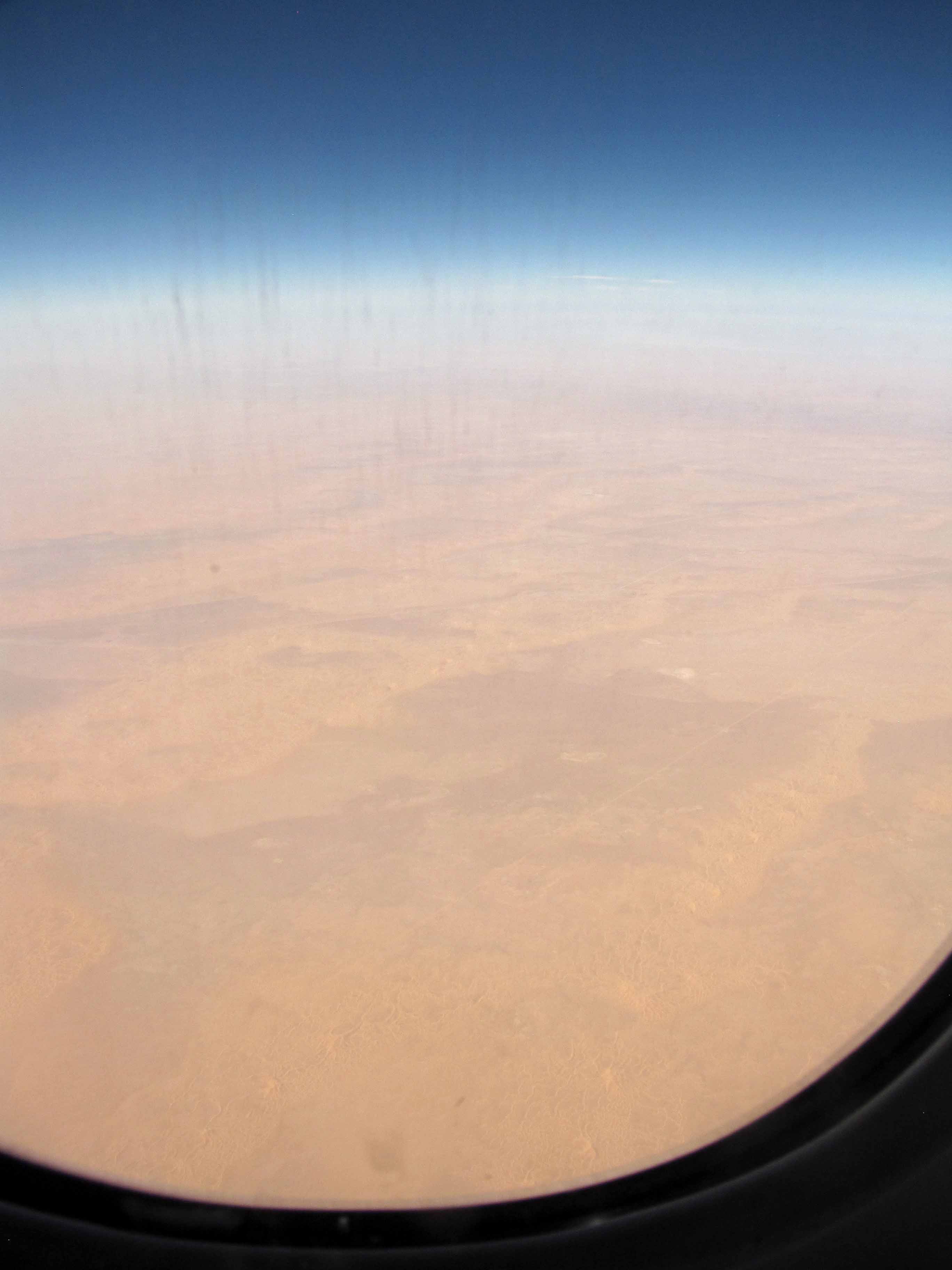
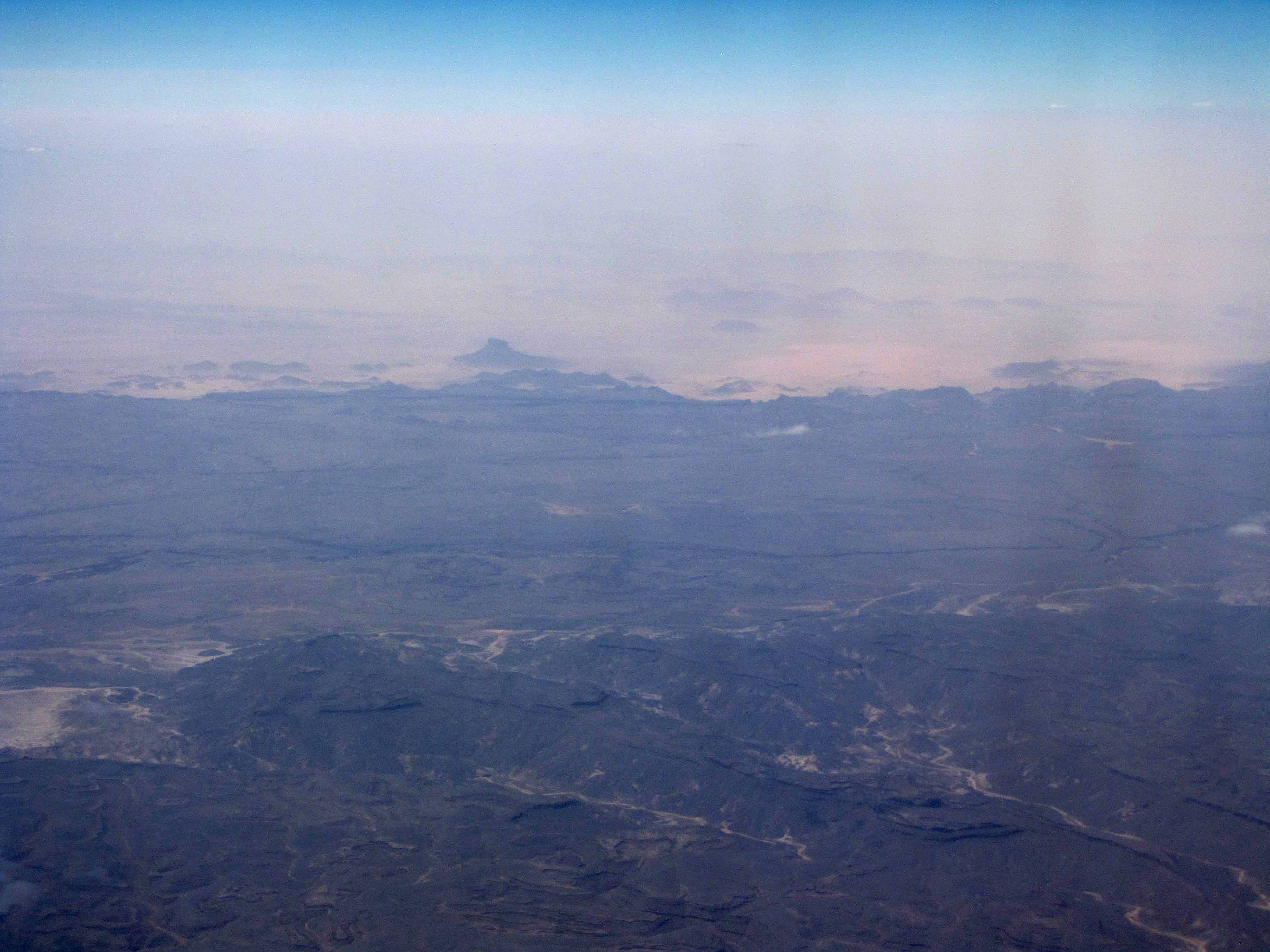
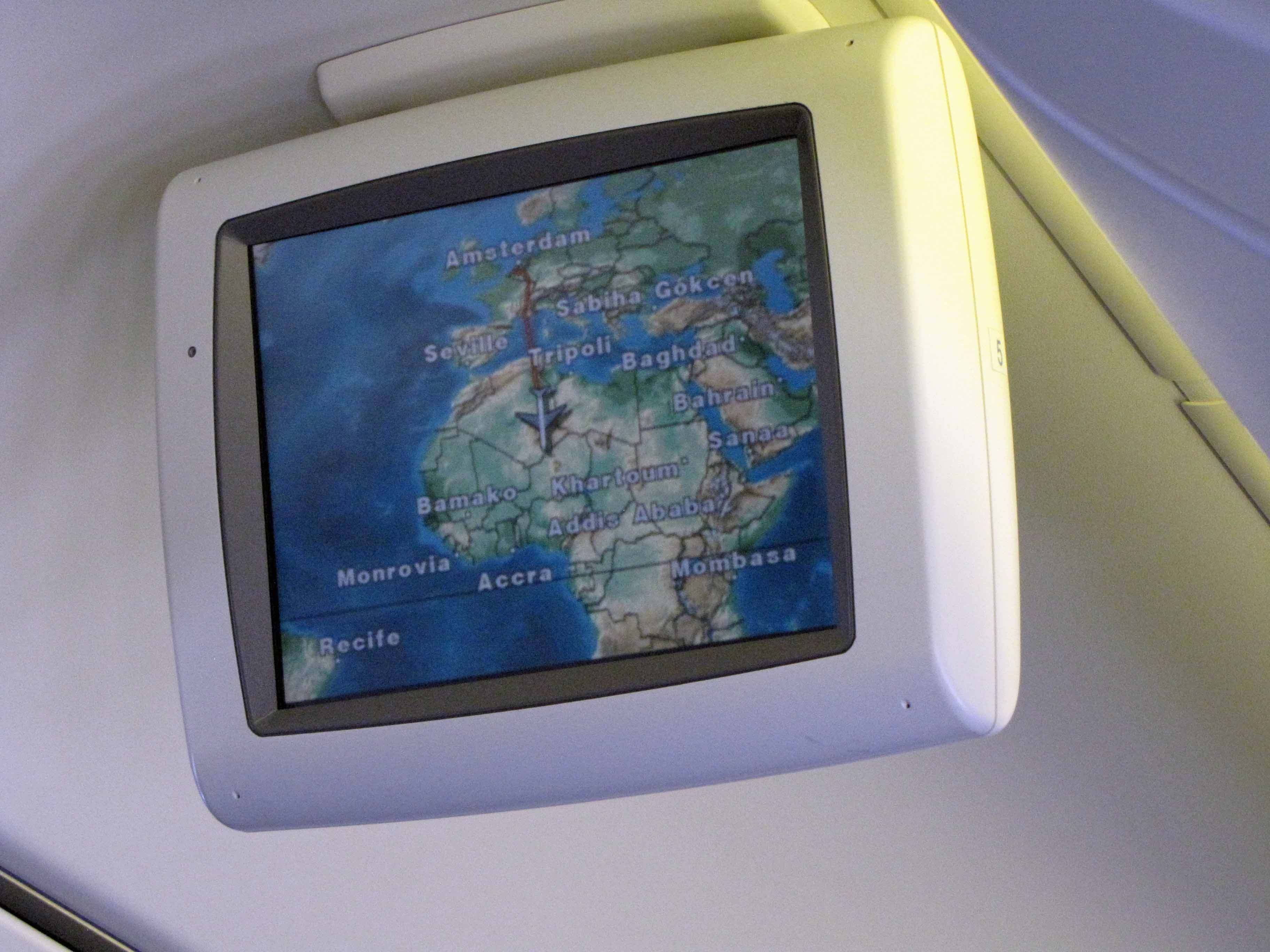
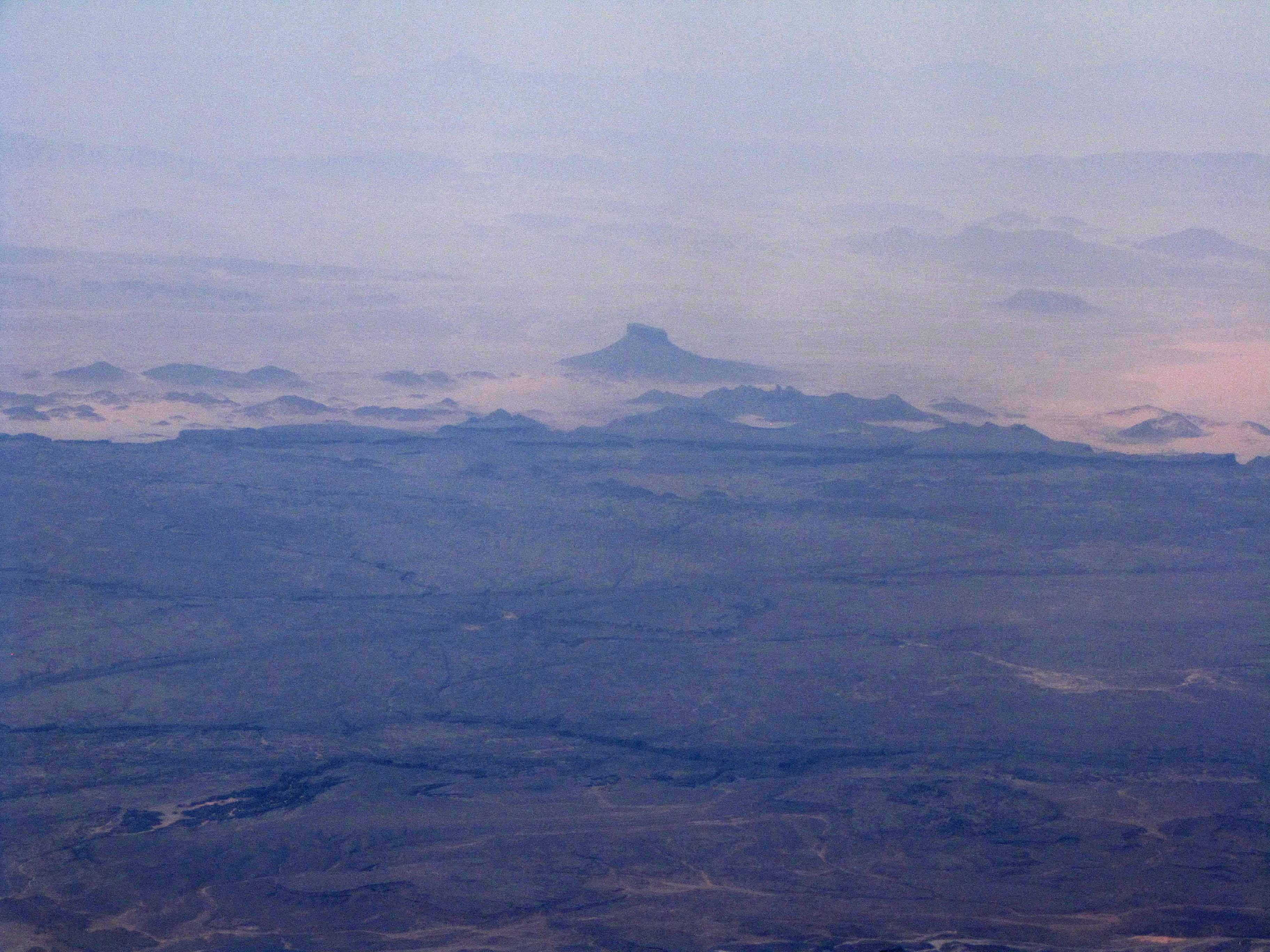
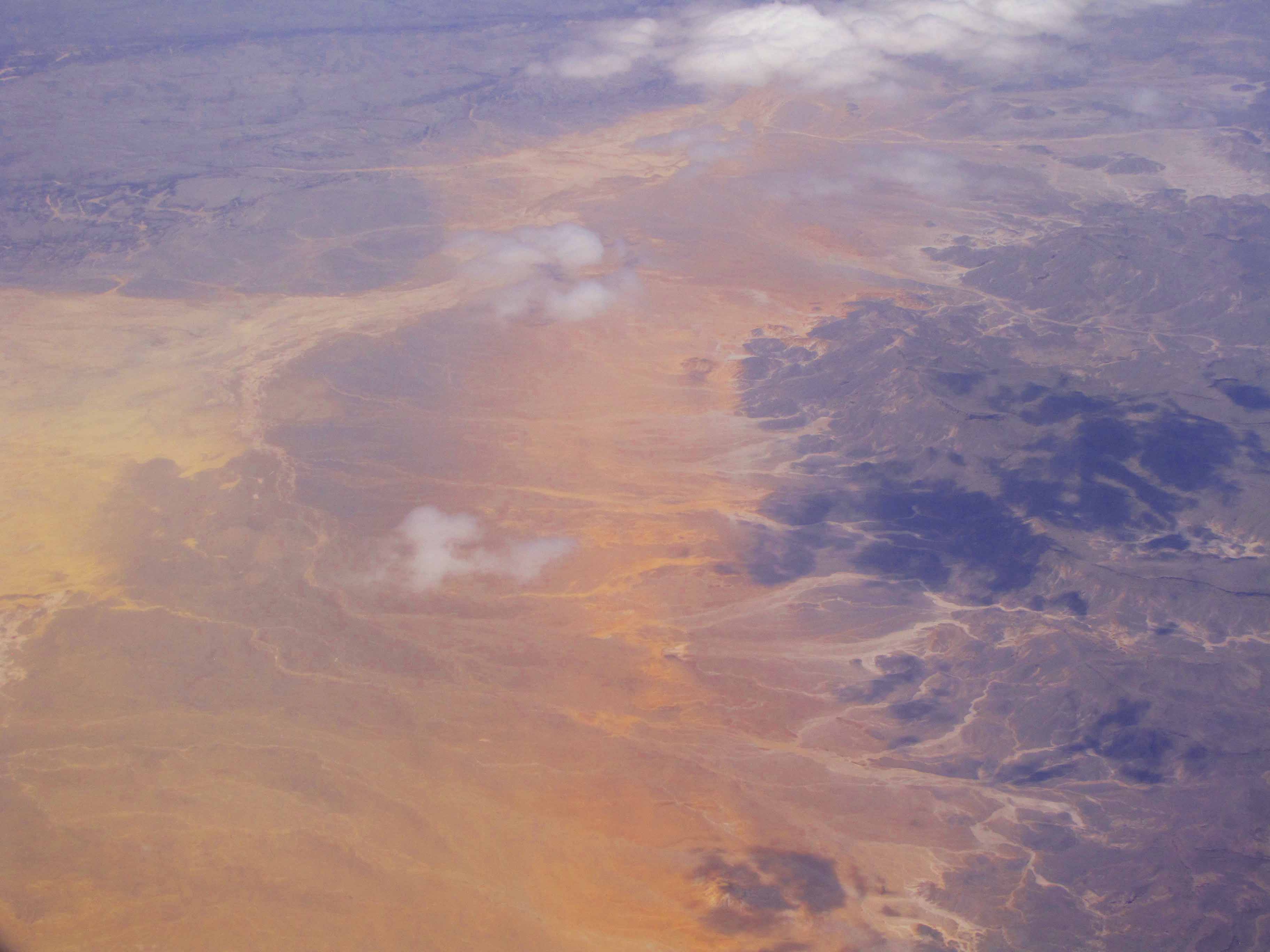
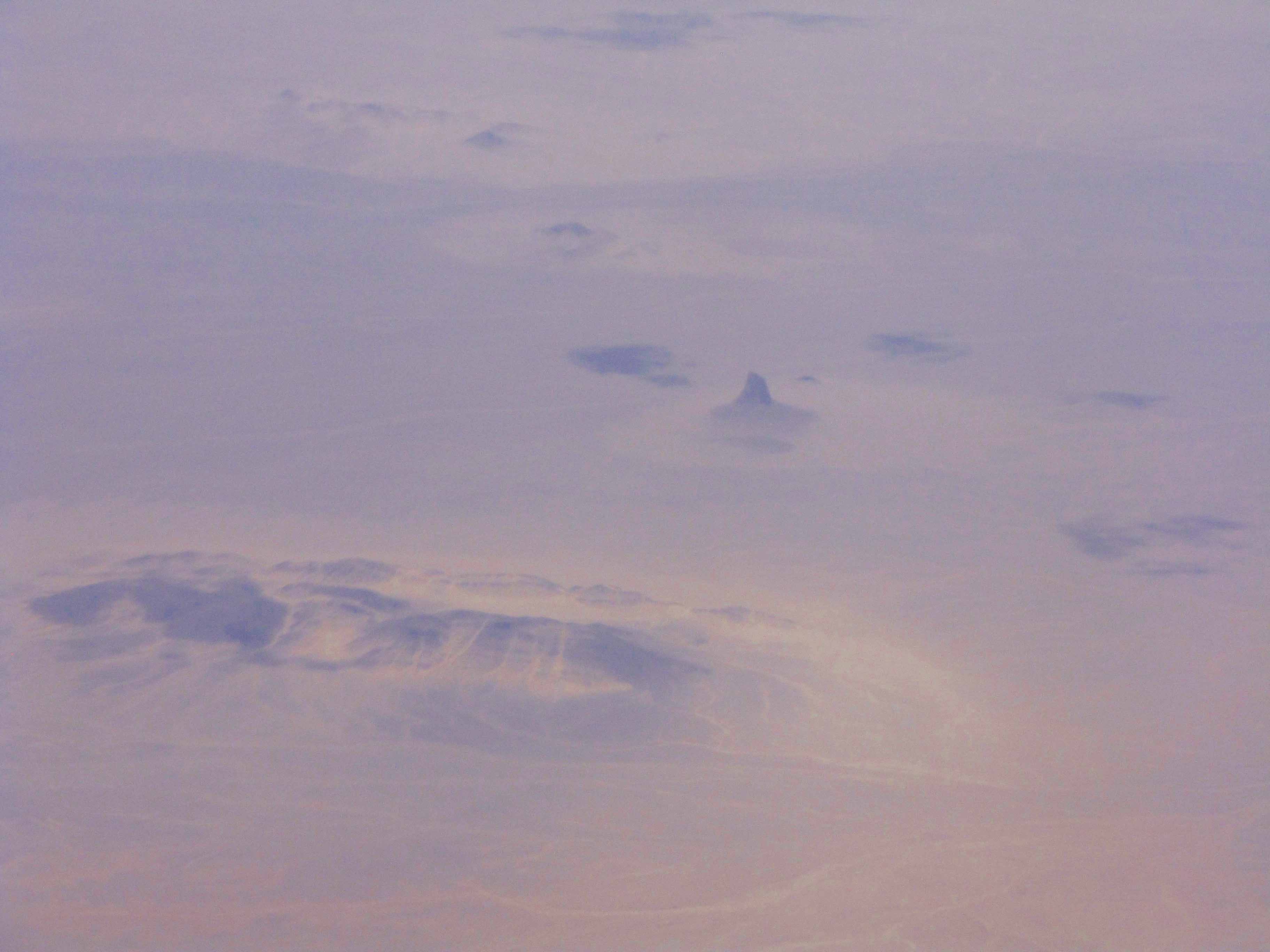
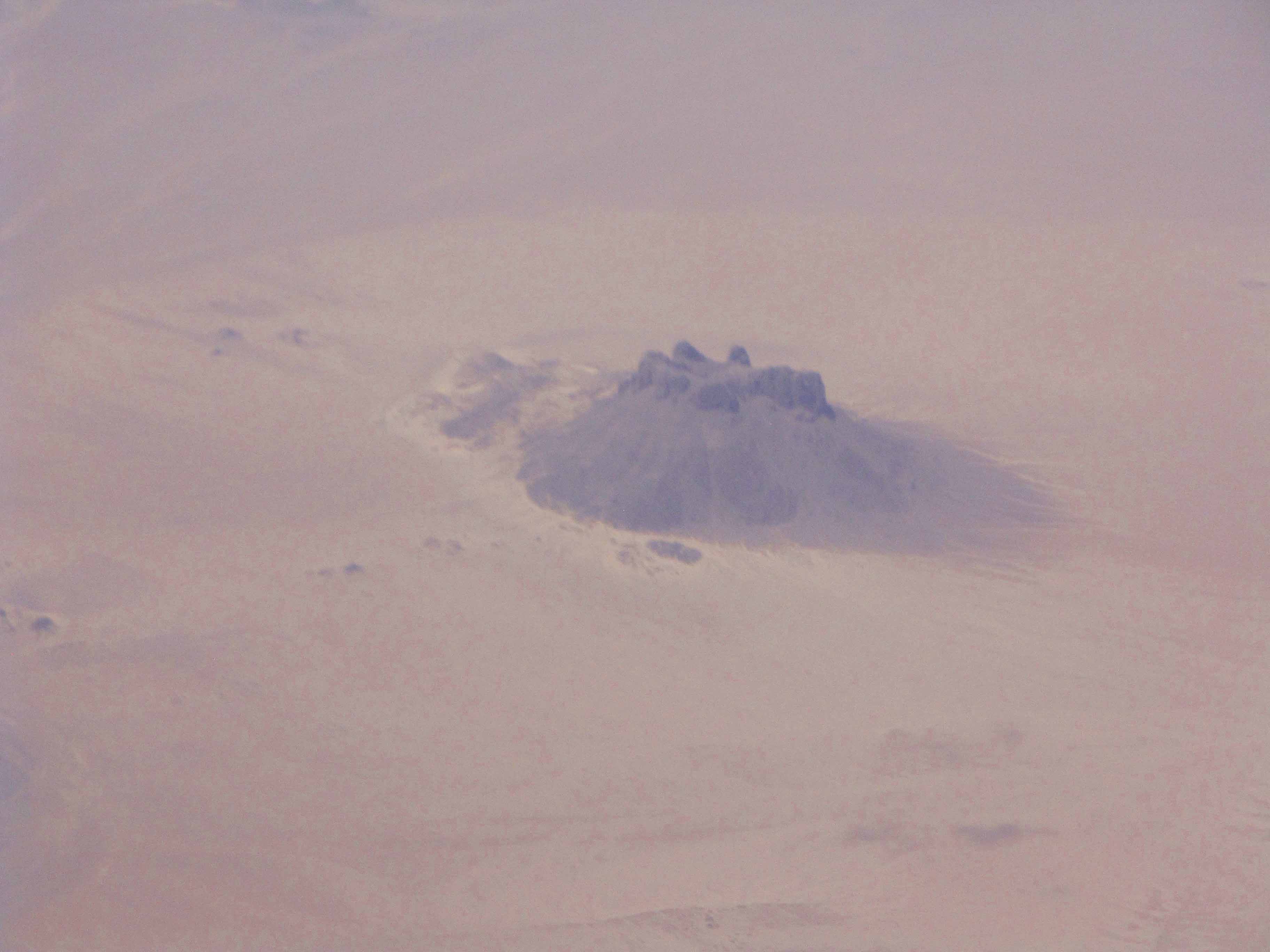
Here is Part II of the views that I observed during a flight from Amsterdam to Cape Town back in September 2012. Part I is here. I believe that all of these shots were taken over Algeria. There are some stunning desert views. Although I grew up in relatively lush New England, I have always liked deserts. I think I first became enchanted by deserts when I was an exchange student and lived in Jordan for 5 months when I was 15 years old. My school in Jordan took me on visits to places such as Wadi Rum and Petra, and I quickly fell in love with the sands, rocks, animals, people, and historical ruins of the deserts there. Visiting the Jordanian deserts certainly helped inspire me to study geology.

I’ve never been to Algeria, but the desert views I observed while flying over Algeria are certainly enchanting. The young, volcanic Hoggar Mountains look particularly enticing. I hope that I can one day visit the deserts of Algeria. Has anyone been there?

Enjoy the desert views below. And, as always, feel free to point out interesting locations and geological features.

I still have some more views to share from this flight, so stay tuned for Part III!

Algeria #2.
Algeria #3.
Algeria #4.
Algeria #5.
Algeria #6.
Algeria #7. Sand ripples.
Algeria #8. Sings of man.
Algeria #9. A lone fire.
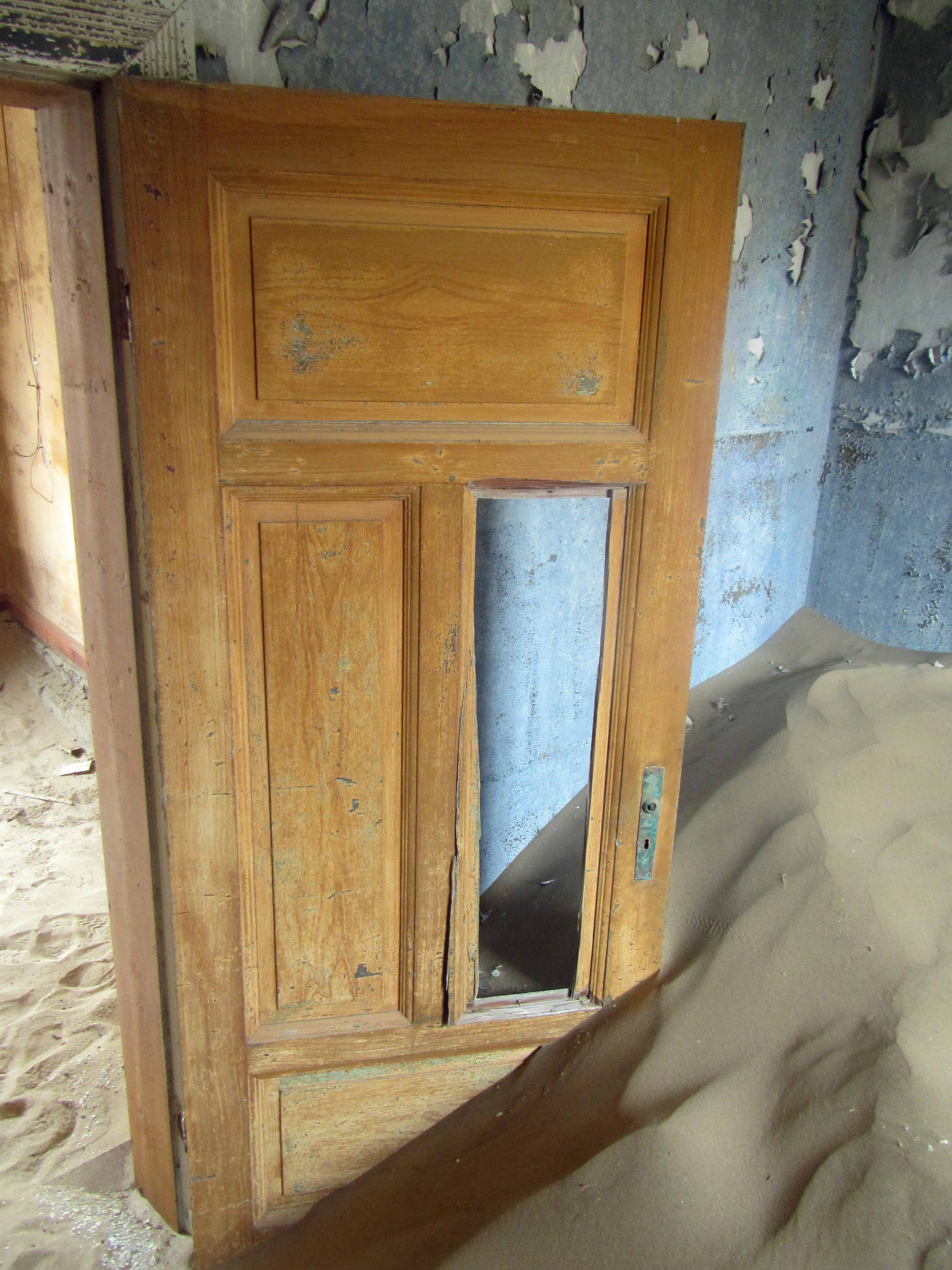
Algeria #10. Another view of the fire.
Algeria #11. Sand, sand, sand.
Algeria #12.
Algeria #13.
Algeria #14. Signs of salt.
Algeria #15.
Algeria #16.
Algeria #17. Red, white, and blue desert hues.
Algeria #18.
Algeria #19. A winding wadi leading into the Hoggar Mountains.
Algeria #20.
Algeria #21.
Algeria #22.
Algeria #23.
Algeria #24.
Algeria #25.
Algeria #26. Volcanic mountain tops.
Algeria #27.
Algeria #28.
Algeria #29.
Algeria #30.
Algeria #31.
Algeria #32.
Algeria #33.
Algeria #34.
Algeria #35.
Algeria #36.

Geology Word of the Week: Y is for Yardang

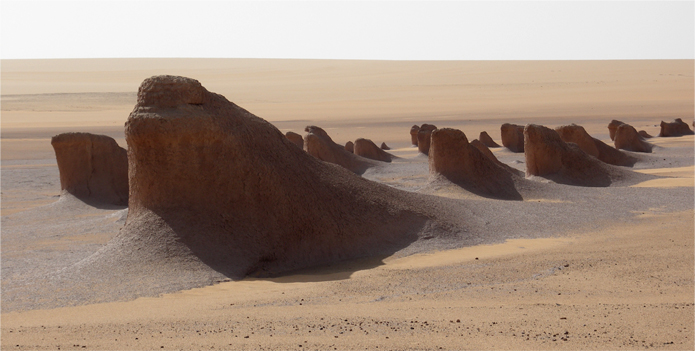
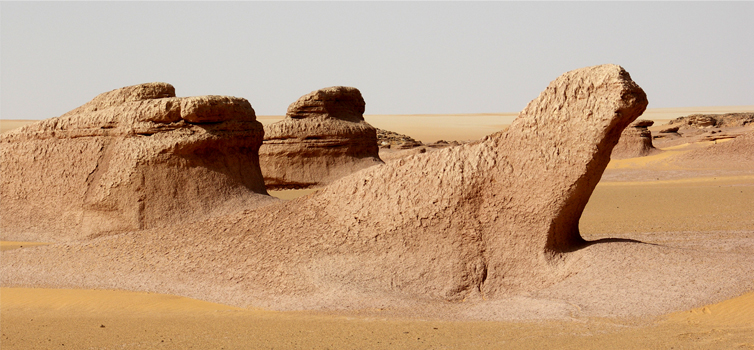
Yardangs 1. Photo courtesy of Michael Welland.

Cross-posted at Through the Sandglass

def. Yardang (also sometimes: jardang):
An elongated erosional landform, commonly found in deserts, resembling the hull of an inverted boat. Similar to sand dunes, yardangs typically have a tall, steep side facing the prevailing wind direction and slope gently down away from the wind. Yardangs are formed when looser material is eroded away (primarily by the wind and particle abrasion), leaving behind more consolidated material that is then sculpted into strange, ship-like shapes by further erosion. Yardangs most commonly form in soft rocks such as siltstone and sandstone (rocks commonly found in deserts) but can also form in harder rocks in places where the wind is the primary erosional force. The word yardang is of Turkish origin coming from the word “yar” which means “steep bank or precipice.” According to the Oxford English Dictionary, the word yardang was first introduced to the English language in 1904 by the Swedish explorer Sven Anders Hendin.

I had actually never heard of the word “yardang” until quite recently. Earlier this year I wrote to Michael Welland, author of the book Sand: The Never-ending Story and the Through the Sandglass blog, and asked him if he had any pictures of nabkhas for my “N is for Nabkha” word of the week. Michael wrote back promptly and sent me a beautiful picture of some nabkhas in Namibia. He also told me that he had some great yardang pictures for when I reached the letter Y. 

Well, I’ve finally reached the letter Y, and Michael has been kind enough to send me some pictures of yardangs and also some musings on these strange desert landforms. Both the pictures and the musings are below. Thanks so much, Michael!

Yardangs 2. Photo courtesy of Michael Welland.
Yardangs 3. Photo courtesy of Michael Welland. Click to enlarge.
Yardangs 4. Photo Courtesy of Michael Welland. Click to enlarge.

Michael’s Yardang Musings:
In the distance, in the morning desert sun, would seem to be herd of great beasts, grazing on the sand. They are, like all good herds, all facing in the same direction, but barely moving. On closer inspection, they are, of course, not moving at all and are completely inanimate clay and silt – but herd would still seem to be the right collective noun for yardangs. Yardangs. For once, a piece of geo-terminology that seems right, exotic but with a vague and indefinable animate sound to it that suits these things – “a yardang can go for days without water.”

They cluster together in a slight depression in the landscape, in all likelihood an old lake bed in which their clay and siltstone were deposited. The lake dried up as the climate changed, bringing with it the desert, the sand, and the wind. And the sand and the wind conspired as a great sculptor, sand-blasting the softest sediment, liberating the rough forms of the harder rock. The abrasional power of the sand is greatest within a meter or so of the ground, the height of flying grains in a sandstorm limited by the physics that Ralph Bagnold set out. And the sculpting takes place in the face of the prevailing wind, the face of the rock heading into the wind receiving the fiercest blasting, eddies and the slipstream chipping away in its lee. So these things explain some of the forms of the yardangs – the front face undercut to the maximum height of the strongest sandblast, leaving the “head” above. The result is, of course, reminiscent of the Great Sphinx, and romantic speculators like to think of yardangs as the inspiration for the iconic monument. Just as the Sphinx was for so long draped and buried in the sand, so the yardangs  are draped in the debris of their deterioration, and drifts of sand pile up against their flanks. But they are simply the inevitable result of aeolian processes – they are all facing the same way because they are facing into the prevailing wind, their shapes are determined by the interplay between the physics of flying sand and the varying resistance of the rocks that are in its way.
So far, so good – but think about them some more, and yardangs have their mysteries. Why are they spaced out the way they are? Some intrinsic depositional variation in the old lake sediments? Or is there some feedback going on here, one yardang influencing the flow of the wind so as to preclude another one developing within some critical distance? And, while I talked blithely about “eddies and the slipstream” chipping away in the lee of the front face, what does this actually mean? Why is the slope and curve of their “backs” so remarkably uniform?  I don’t know that we know the answers to such questions – which is why there is an intrinsic geo-weirdness to them. But, regardless of any geo-weirdness, a herd of yardangs is simply weird in its own right, making for a distinctly weird landscape.

And you just can’t not think of them as a herd. As we walked away, I could have sworn some of them were watching us.