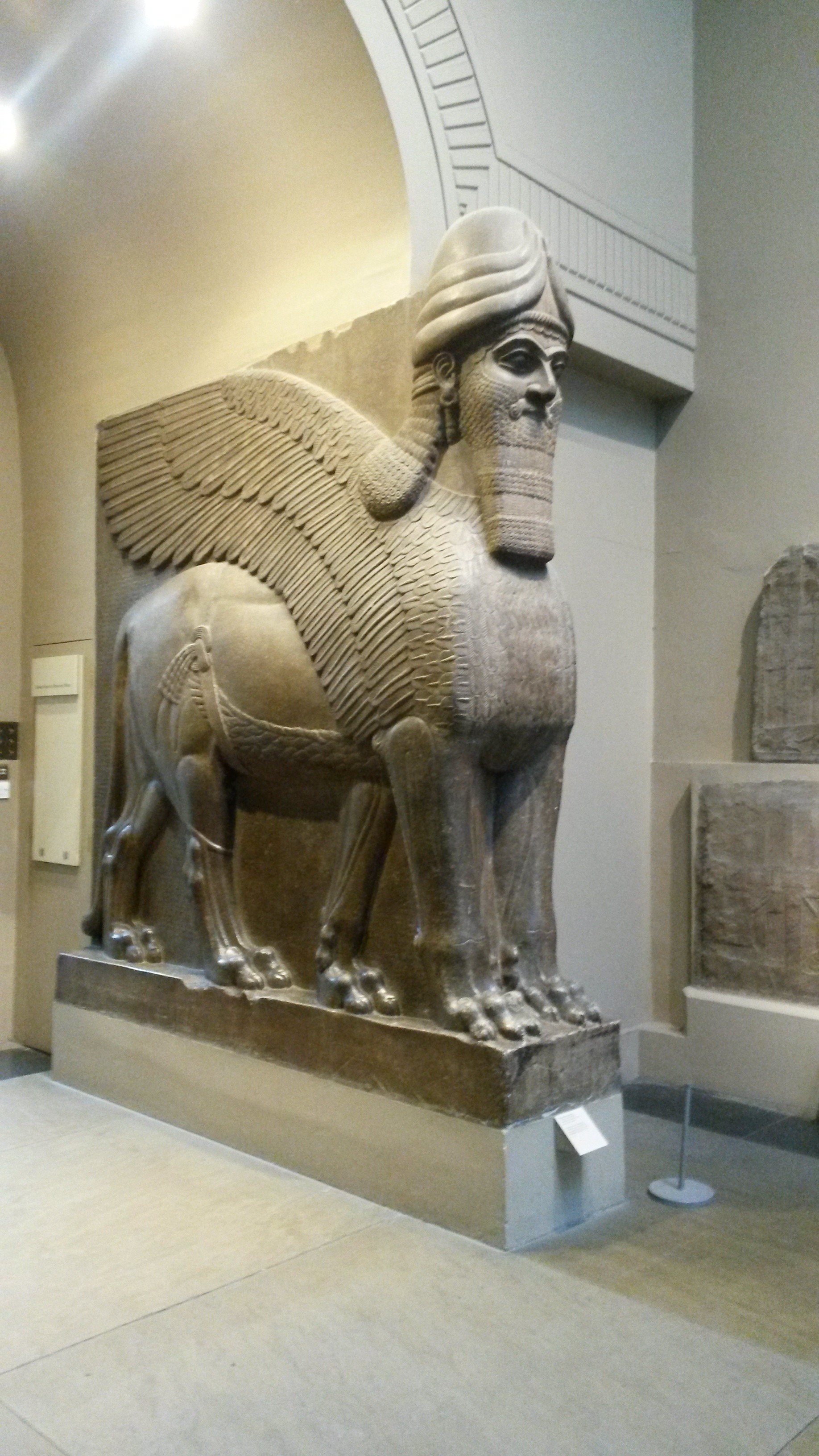
A statue from Nimrud on display at The British Museum, November 2014.
I was very upset to learn that a few days ago ISIS looted and bulldozed the ancient Assyrian city of Nimrud in Iraq. This war crime is a terrible tragedy, and I hope that not all of the city’s treasures were destroyed. Fortunately, many artefacts from Nimrud are preserved in various museums around the world. In a way, that is bittersweet. I really wish that artefacts from Nimrud could primarily be displayed in Iraq rather than in foreign museums. However, considering the present political situation, I am relieved that many artefacts have survived overseas. A few months ago, I saw some spectacular artefacts from Nimrud in The British Museum. For this week’s “Monday Geology Picture” I am sharing a picture of one of the very impressive statues from Nimrud that I saw at The British Museum. While I am happy that this statue has survived, I mourn the other statues and artefacts that were recently destroyed.
A beautifully carved ancient Egyptian artefact in the British Museum. Two light-colored veins are visible in the rock.
Over the pastfewweeks, I’ve been sharing pictures of ancient Egyptian artefacts from the British Museum for my “Monday Geology Picture” posts. Here’s one last picture from the British Museum: a rock slab engraved with ancient Egyptian figures and writing. I didn’t take a picture of the informational sign, so let me know if you recognize the artefact. I think that this picture shows part of a larger artefact. Whatever the artefact, the two light-colored veins are quite striking and add a chaotic sort of beauty to this ancient piece of artwork.
Well, I think that I’ve shared enough pictures from the British Museum. Next week I’ll share something different for my “Monday Geology Picture” post.
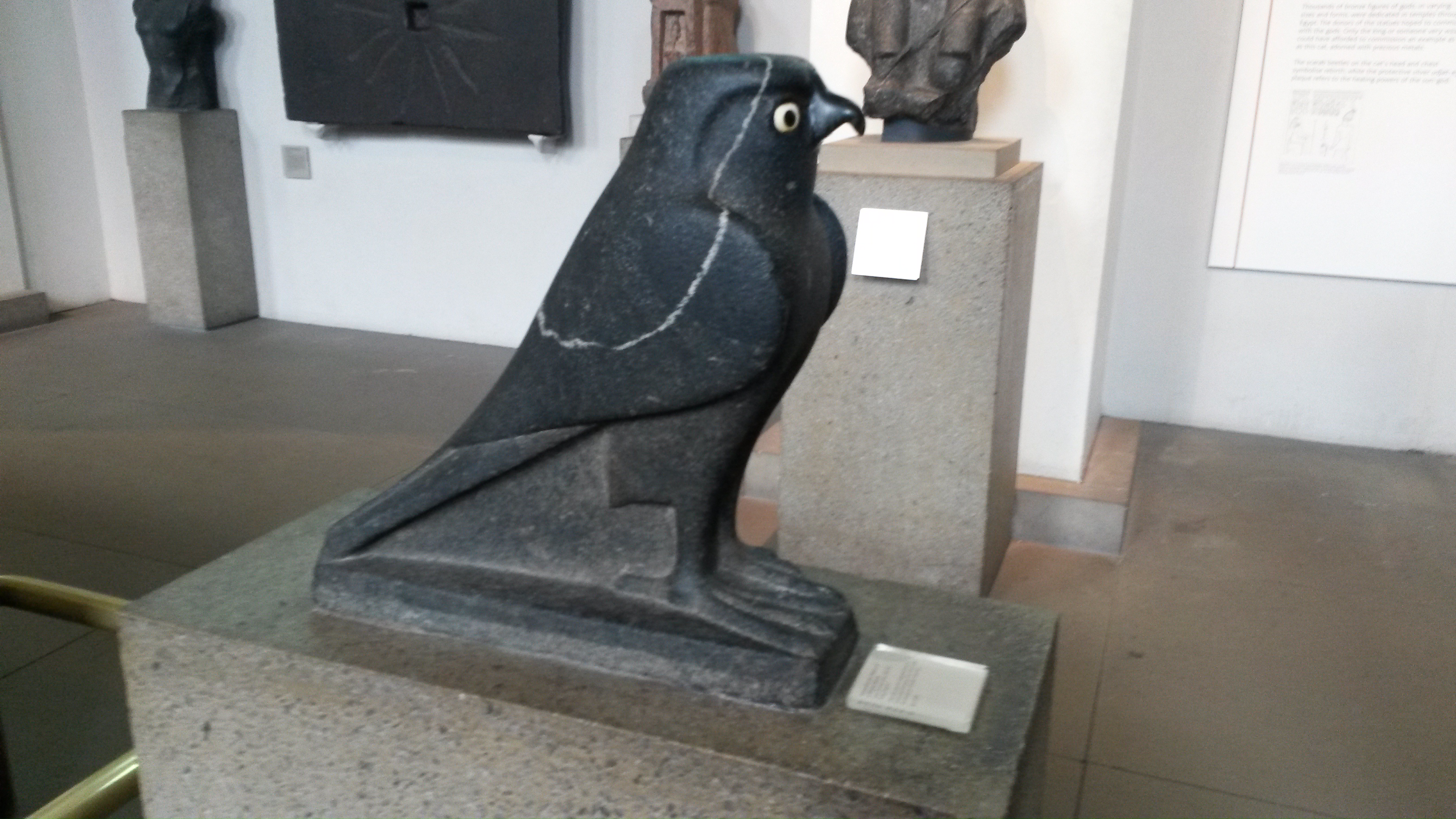
An ancient Egyptian Horus statue, The British Museum, November 2014.
For this week’s “Monday Geology Picture” I thought that I would share a couple more pictures that I took during my recent visit to The British Museum. When I was in one of the exhibits with ancient Egyptian artefacts, I was struck by a beautiful dark-colored Horus statue with a light-colored vein running through it. According to the museum sign, the statue was carved out of granodiorite. The vein is probably quartz.
Here is the museum sign about the statue:
Museum sign. Click to enlarge.
And here is a view of the statue from the front:
The Horus statue viewed from the front. Apologies that the picture is slightly blurry.
Two ancient Egyptian stone jars on display at the British Museum.
For this week’s “Monday Geology Picture” I thought that I would share another picture that I took during my recent visit to The British Museum. This week’s picture shows two beautiful ancient Egyptian stone jars. The jar on the left is made out of limestonebreccia while the jar on the right is made out of andesiteporphyry.
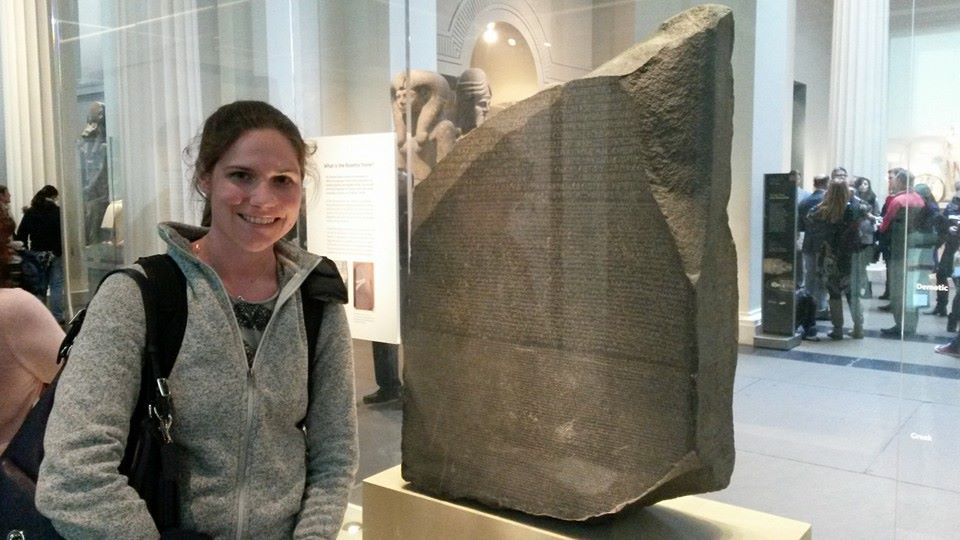
Yours truly posing with the Rosetta Stone at the British Museum. November 2014.
A few weeks ago I flew from the USA back to my home base of Cape Town, South Africa. During the journey, I had a long layover in London, so I left the airport for awhile and did some sightseeing. Among other touring, I spent several hours at The British Museum, where I saw many interesting artefacts. The most fascinating and awe-inspiring artefact that I saw was a slab of granodiorite. Now, a slab of granodiorite may not sound like much. After all, granodiorite is a common rock type. However, this particular slab of granodiorite has some words written on it. Specifically, it has an Ancient Egyptian royal decree written on it in three different scripts: Ancient Egyptian hieroglyphs, Demotic (another type of Ancient Egyptian script), and Ancient Greek. That’s right… this granodiorite slab is the Rosetta Stone, the artefact that allowed modern linguists to decode the meaning of Ancient Egyptian hieroglyphs. After linguists puzzled out the text on the Rosetta Stone, people were, for the first time in centuries, able to read hieroglyphs. This makes the words on the Rosetta granodiorite some of the most important ever to be written in stone. Discovered in 1799, the Rosetta Stone has been on display at The British Museum since 1802. The picture above shows me visiting the Rosetta Stone in November 2014.
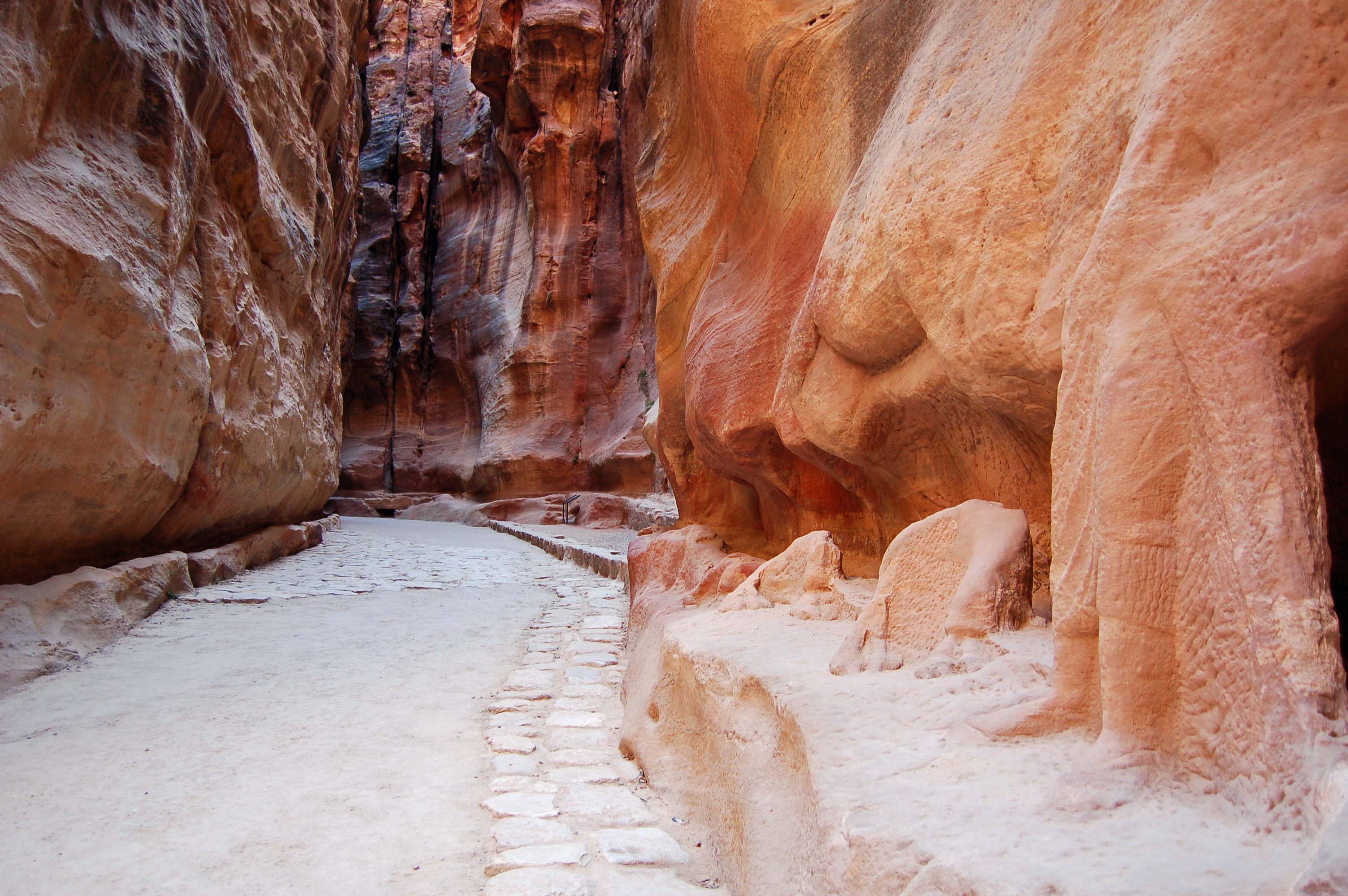
Remnants of ancient statues carved out of the sandstone walls of the Petra Siq, Jordan, August 2007.
Geology picture-a-day week continues here at Georneys. Today’s geology picture comes from one of my favorite places on Earth: Petra, Jordan. Petra is an ancient Nabatean city nestled in a broad valley that is protected by steep sandstone terrain. Petra is accessed by the Siq, a narrow canyon through the sandstone. The geology of the Siq is impressive enough: the walls of the canyon reveal beautiful, red rose colored sandstone which contains cross-bedding, concretions, quartz veins, and other interesting textures. However, the Siq is made even more impressive by the archaeological artifacts it contains: ancient water aquaducts that run along the sides of the canyon (see the background of the above picture), windswept stairs leading to small niches carved out of the rock, and even remnants of what must have been large and impressive statues. In the picture above, you can see the remnants of a sandstone statue of a man leading a camel– but only feet and hooves remain. The small archaeological artifacts found in the Siq hint at the impressive wonders that are found within the city of Petra itself; the Siq teases visitors and leads them along in anticipation.
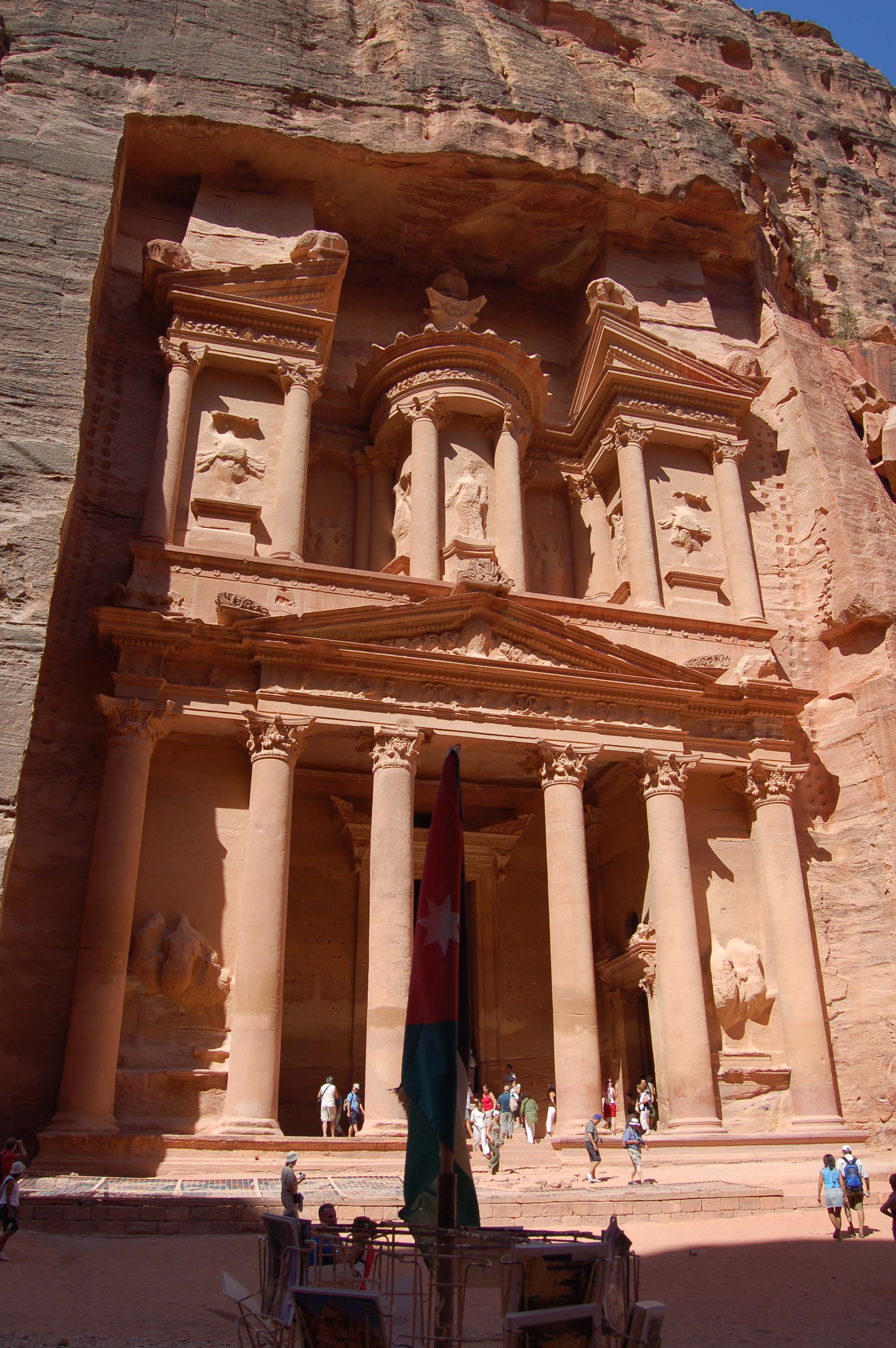
For those of you who have never heard of the Petra or the Siq before, you might recognize the end of the Siq as well as the impressive Al-Khasnah or “The Treasury” building from the movie Indiana Jones and the Last Crusade. Petra and The Treasury were also visited by my favorite cartoon explorer: Tintin! Speaking of Tintin, is anyone else excited for the Tintin movie that’s coming out very soon? I am!
Here’s what Tintin saw when he reached the end of the Siq:
And here’s what I saw in 2007 when I reached the end of the Siq:
The end of the Siq revealing a sliver of The Treasury. Petra, Jordan, August 2007.Astonished tourists gazing on The Treasury for the first time. Petra, Jordan, August 2007.The Treasury! Petra, Jordan, August 2007.
Petra is a truly remarkable place, both in terms of geology and archaeology. I could spend days upon days there. Here’s a few more pictures from my 2007 visit to Petra.
And, in case you missed them, here’s my other geology pictures from this week: Monday, Tuesday, and Wednesday. If you follow my twitter feed, I’ve been trying to retweet the geology pictures posted by other geobloggers. If you haven’t already, feel free to join geology picture-a-day week, even if you missed the first part of the week. The more geology pictures, the better!







 Georneys