Win a Geology Book Contest: Best Geology Pun

A few weeks ago a publishing company contacted me (and many other geobloggers, I think) about reviewing a book by Gillian Turner called “North Pole South Pole: The Epic Quest to Solve the Great Mystery of Earth’s Magnetism.”

I was somewhat skeptical at first that a publisher would actually send me a free book (could this be some sort of scam?), but I decided to write back anyway. I do love books, especially when they are about geology. I requested two copies of the book- one for me and one to give away to my blog readers. To my delight, the two books arrived in my mailbox yesterday.

I am currently very busy in lab trying to finish up the last of my thesis data collection, so I’m not sure how quickly I’ll be able to read the book and write my review. I imagine I won’t have time to read the book until I’m on the mass spectrometer next week. However, a quick browse through the book and some online reviews makes me think this book might actually be pretty good.

Would you like to win a copy of Gillian Turner’s book? Good news- you can! Just post your favorite geology pun below. Whoever posts the geology pun that makes me laugh the most will win this book. You have one week- I will select a winner on Wednesday, March 16th. As long as you don’t live in Anarctica, I’ll ship you the book shortly after that.

A Conversation with My Doctor

Last weekend I made a quick trip down to Tennessee to visit family since my great-grandmother recently passed away. I flew out of and back into Boston Logan airport. Before I headed back down to the little village of Woods Hole, I went to visit my doctor at MIT Medical– a facility that serves MIT staff, students, and their families.

I had a somewhat entertaining conversation with my doctor. The conversation went something like this slightly stylized version:

*****************
Doctor: So, tell me what’s bothering you.

Me: Well, my left hand is somewhat numb and painful. I think I’ve just been working under the microscope for too many hours, but I thought I’d visit just in case I’m dying of some horrible disease.

My doctor laughs softly then catches herself and tries to look more serious.

Doctor: Is your hand numb everywhere?

Me: Somewhat, but it’s mostly the two outer fingers.

Doctor: Huh. Well, I would ask you if your hand felt better on weekends, but you probably work through the weekend.

Me: Yes. Well, except this past weekend. And my hand does feel a little better.

Doctor: Oh good. Did you do anything fun?

Me: My grandmother died.

Doctor: Oh. Well, you said your hand is feeling better?

My doctor does various reflex tests and decides that I am probably putting too much pressure on a nerve at my elbow, probably by leaning on my elbow when using the microscope.

Me: Great. I’m not dying of any terrible disease. Just of my thesis.

Doctor (laughing): I guess you could say that. Well, I recommend that you work fewer hours under the microscope and take some weekends off.

The blood drains from my face, and I start twitching nervously.

Me: I’m a 5th year.

Doctor: Oh. In that case, try putting a pillow under your elbow.

*****************

Don’t worry. I’ve switched to another microscope and my left hand is doing much better. I can almost feel all my fingers again. Besides, in a few short months all this scientific perspiration will pay off.

However, I am looking forward to being finished with graduate school and having a better life balance. Perhaps I’ll even have all of my fingers.

Caught in a Bad Project

A friend* just sent me a link to this video called “Bad Project,” a parody of the Lady Gaga song “Bad Romance.” I think this video is hilarious! I love the Lady Gaga outfits made out of laboratory supplies.

 Video taken from Youtube.

Since I am currently on my third PhD advisor (I left my first advisor, then my second advisor took a job at another institution- though to his credit he still advises me from a distance), I have had my own graduate school frustrations. Fortunately, I actually have a “good project” and am finally making headway and feeling optimistic about my research. 

However, like many grad students, I have had days where I am so frustrated with graduate school and academia that I daydream about fantasy alternate careers. After awhile, I remember that I really do love geology, and that– despite all the hard work and frustrations– I’m right where I want to be. I’m not yet sure if I’ll “make it” as a professor at a high-pressure research institution (nor if I want to pursue such a career), but I know that I love geology and want to be a geologist, whether it be through working for a company or teaching or research or some combination of the above. 

In moments of stress, grad school friends of mine talk about becoming musicians, artists, novelists, and businessmen. They daydream about opening surf schools, bakeries, and kumquat farms. I think many grad students have fantasy alternate careers that they will pursue “when this whole grad school thing doesn’t work out.”

My own fantasy alternate careers?
-Park ranger or game ranger
-Archaeologist
-Novelist
-Professional kayaker
-Translator
-Owner of an adventure tour company
-Professor of Middle Eastern Studies or Arabic
-Jane Goodall (yes, I want to be Jane Goodall)
-Running a cat rescue shelter (my cat-allergic fiance vetoes this one, though)

What are the fantasy jobs that help you survive graduate school?

*Thanks, Fern!

What Type of Weathering?

Earlier today Callan Bentley over at Mountain Beltway posted these pictures of some rocks with interesting weathering patterns that he’s seen recently.

When I read this post, my first thought was: I’ve seen this type of weathering before!

And my second thought was: What the heck is the name of this type of weathering?

I’m still not sure, though my first idea was liesegang weathering, which is a type of weathering where chemical diffusion creates a ring or rim of rock that is more resistant to physical erosion.

Does anyone know what this type of weathering is called? Is this liesegang weathering or is it something different? Does this type of weathering have a name?

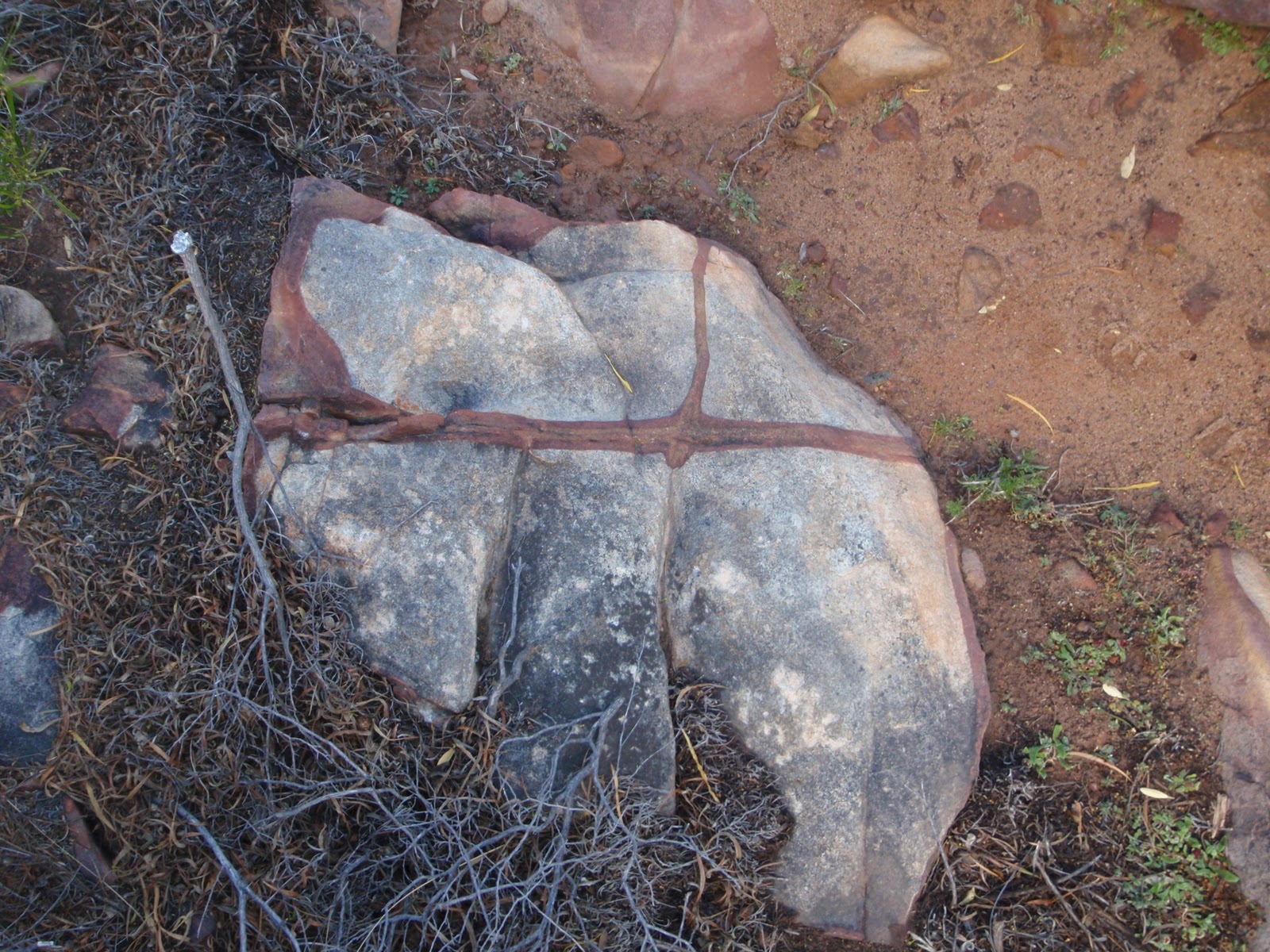
Here are some pictures from Knysna, South Africa of weathering similar to the photos Callan posted. One difference in the rocks below is that iron (which oxidizes to the reddish brown color) is definitely playing a role in this weathering. You can see, though, that the weathering follows fractures similar to the way that Callan’s rocks are weathering. Note the sunglasses for scale. Click on any of the pictures below to view a larger version.

Knysna rocks 1, South Africa, December 2009.

Knysna rocks 2, South Africa, December 2009.

And here’s a similar weathering pattern in a boulder (about a meter across) in the Cederberg Mountains (near the town of Algeria) in South Africa:

Cederberg boulder, South Africa, September 2010.

Beware the Jungle Raccoon

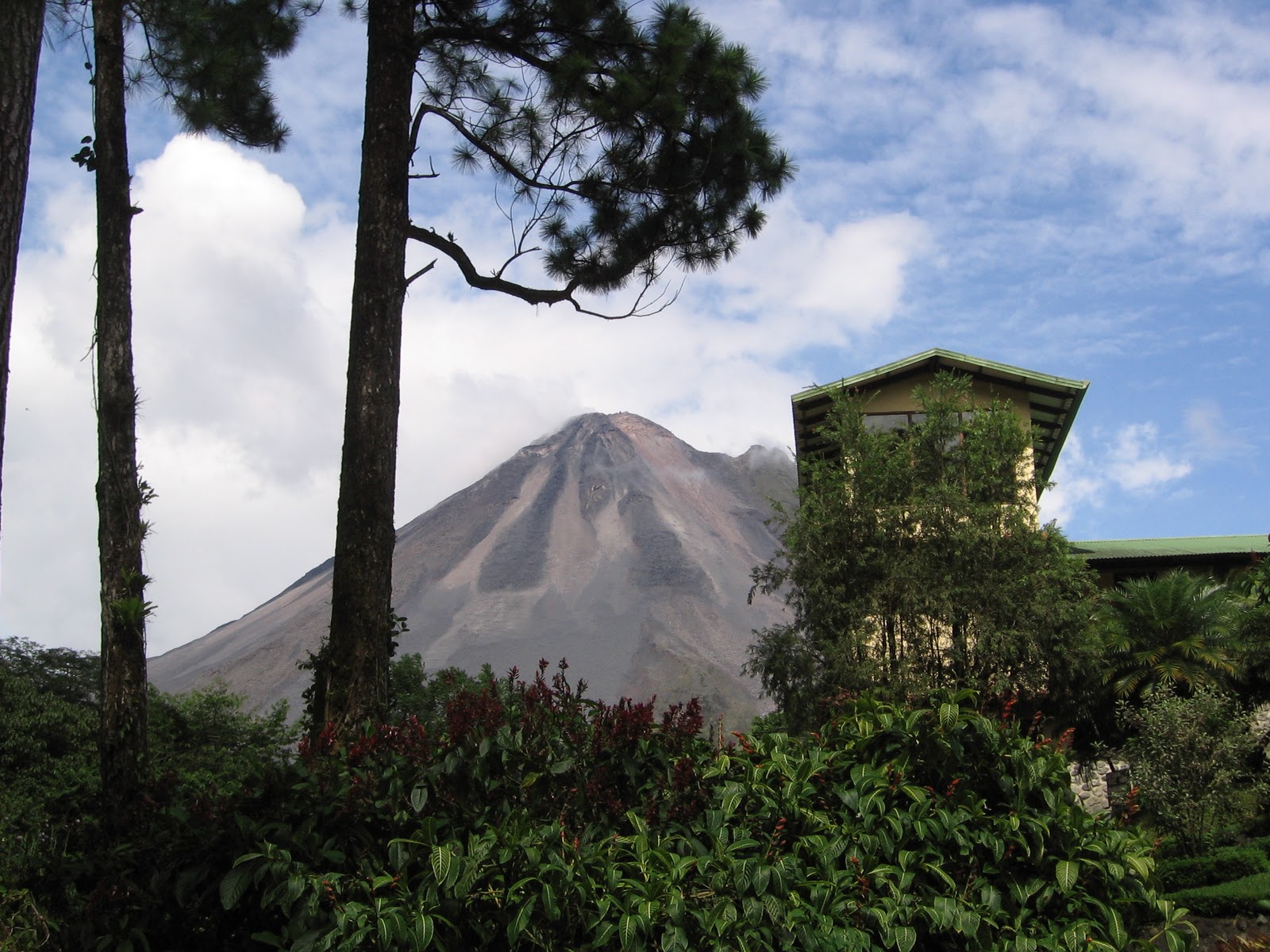
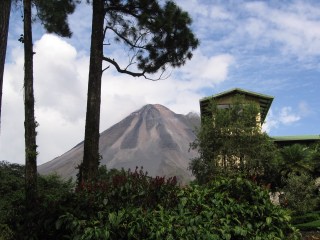
Arenal volcano, viewed from just outside the room where I stayed at the Observatory Lodge

I just returned from a whirlwind, but wonderful, trip to beautiful Costa Rica. Two of my very good friends were married on Saturday at the Arenal Observatory Lodge, which is located within Arenal National Park and is the closest you can sleep (safely, anyway) next to the active Arenal Volcano. The lodge is less than 2 miles from the active volcano, but is relatively well-protected because the property is separated from the volcano by a deep gorge carved by the Agua Caliente River.

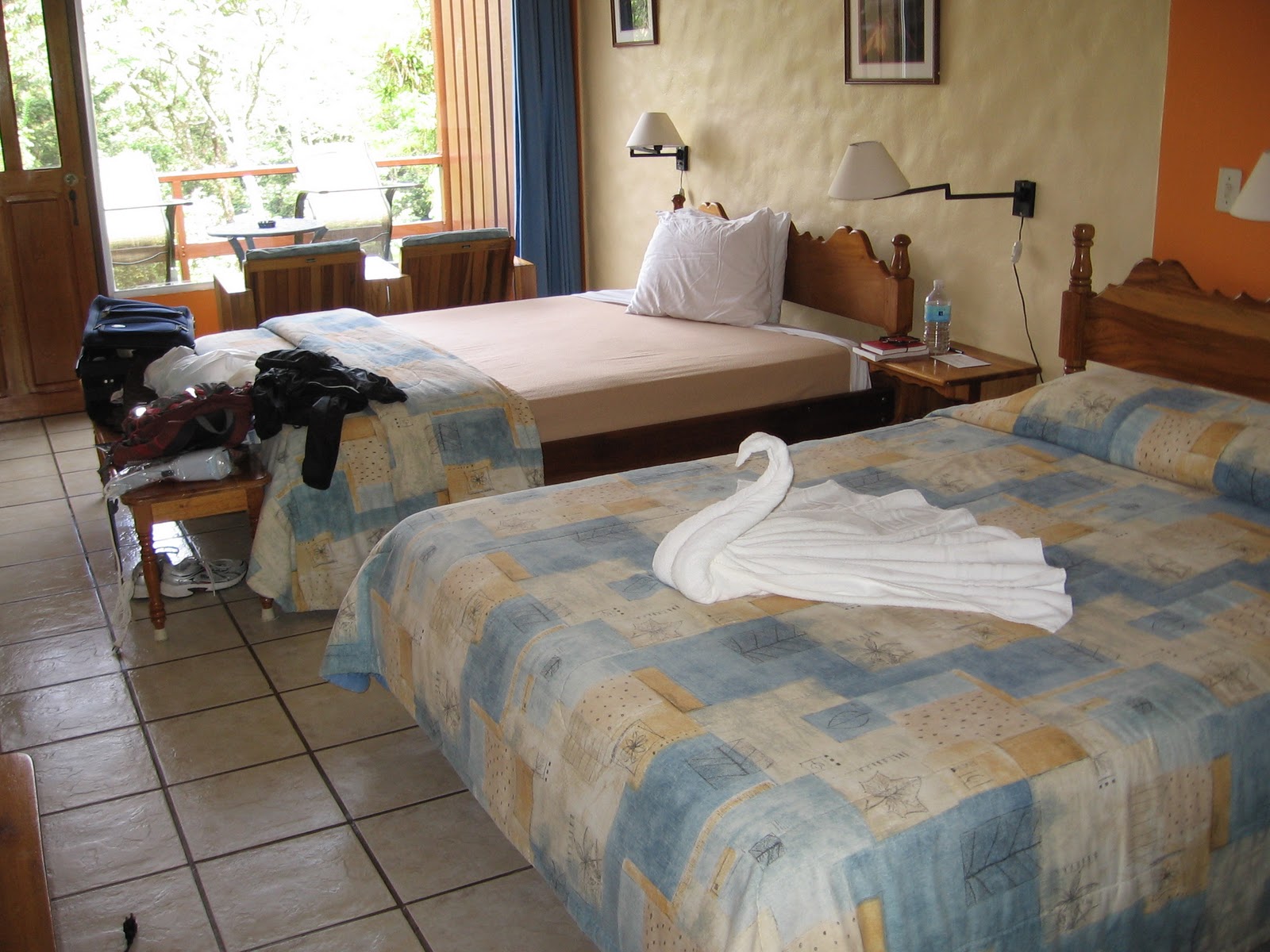
 The lodge originally opened in 1987 as a volcano observatory for the Smithsonian Institution. Researchers from the Smithsonian and elsewhere still use the lodge to study the volcano and the surrounding landscape. However, in recent years the lodge has expanded and has also become a tourist destination. Today, anyone can rent a simple, but elegant, room with a view of Arenal Volcano. I highly recommend the lodge to anyone who wants to see Arenal and spend some time in the park. The rooms are no-frills and the paper-thin walls allow you to hear your neighbors’ conversations, but the rooms are very spacious and cozy. By volcano observing standards, the rooms are actually quite posh: there’s hot running water, screens to keep out the bugs (and coatis), and the staff even make towel swans. Most rooms have fabulous views of the volcano, and the walls are adorned with photos of the erupting volcano.
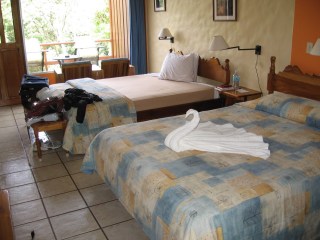
Towel swan!

The grounds consist of beautiful gardens full of tropical flowers and trees. There are at least two Indiana Jones style hanging bridges (one near the reception, another off in the jungle) on the grounds– very fun! There is also a spectacular cobalt blue pool and hot tub. Sitting in the hot tub with a view of Arenal is pretty much an ideal way to relax for a geologist. Unfortunately (fortunately?), the volcano has been very quiet recently. When I visited Arenal in 2008, the top of the volcano glowed nightly with the eruptions. Even when quiet, Arenal volcano still provides an impressive sight. The barren top of the volcano resembles an extraterrestrial landscape (Mars, perhaps?), especially in contrast to the enveloping dense, green jungle.

View from the hot tub at the Observatory Lodge. The mountain in the background is Arenal volcano.
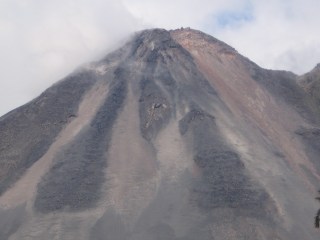
A closer view of the top of Arenal Volcano.

The lodge has a restaurant located near the reception area. The meals are pricey by Costa Rican standards, but the food is excellent and the portions generous. I recommend talapia and wine for dinner and the tuna fish sandwich with an Imperial beer for lunch. Breakfast is a buffet and is included in the price of the room. The service in the restaurant is excellent. The waiters- indeed all the staff- are genuinely friendly, enthusiastic, and very proud of their country, language, volcano, and- of course- the lodge.

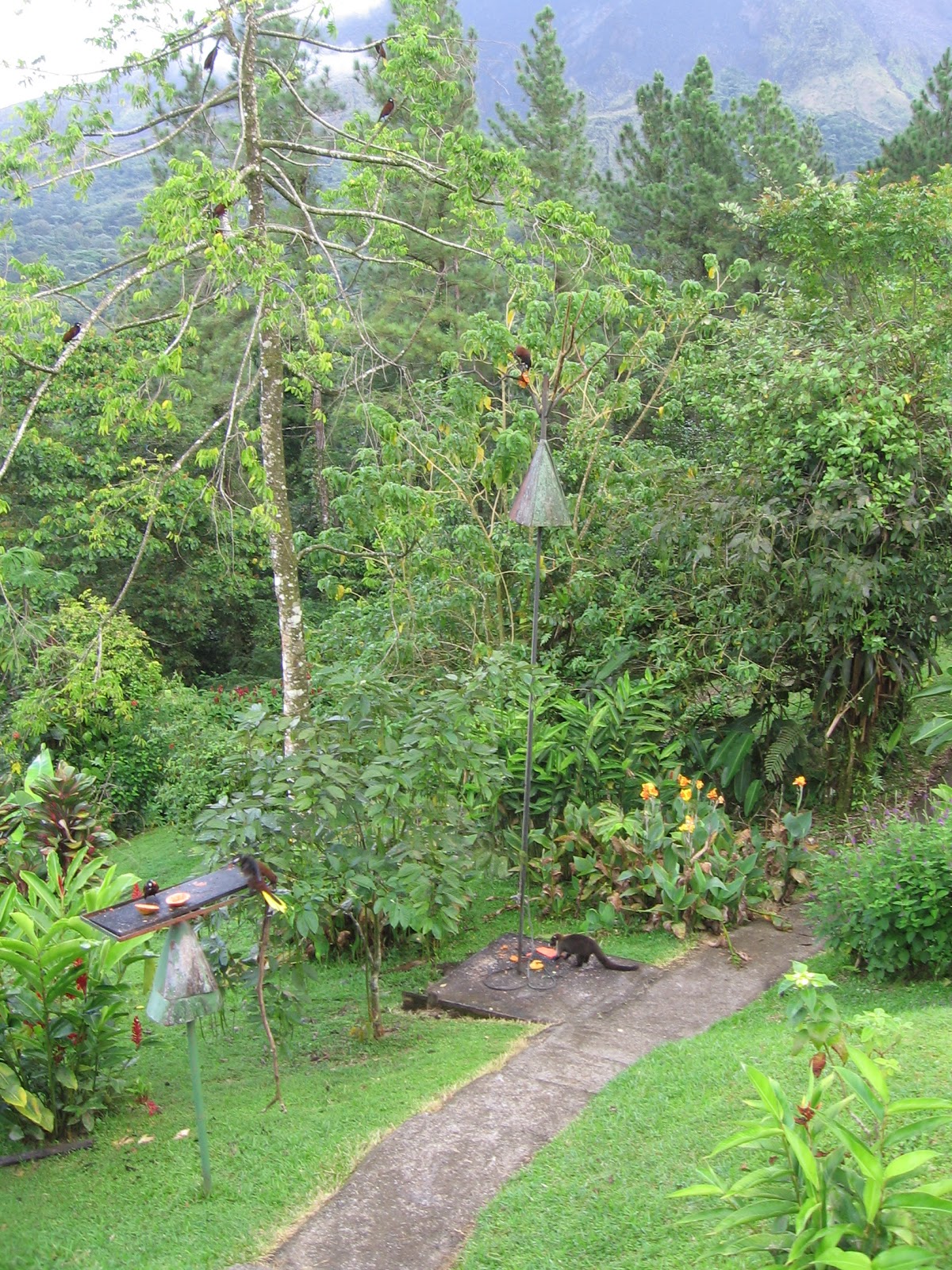
There is a balcony outside the restaurant from which visitors can view the volcano and also some of the local wildlife, which is attracted by fruit placed out by the staff. We saw many types of birds, including an impressive species of bird (I forget the name… I will try to look it up, but there are so many types of birds in Costa Rica!) where the males are much bigger than the females. Thus, it is not uncommon to see a small female feeding her much larger male baby (see the photo and movie below). We also saw several coatis, which we called “tropical raccoons” or “jungle raccoons” until we figured out their proper name. I will return to the troublesome coati in a little while… 

Arenal animals, viewed from the restaurant porch.
A little mother bird feeds her giant son.

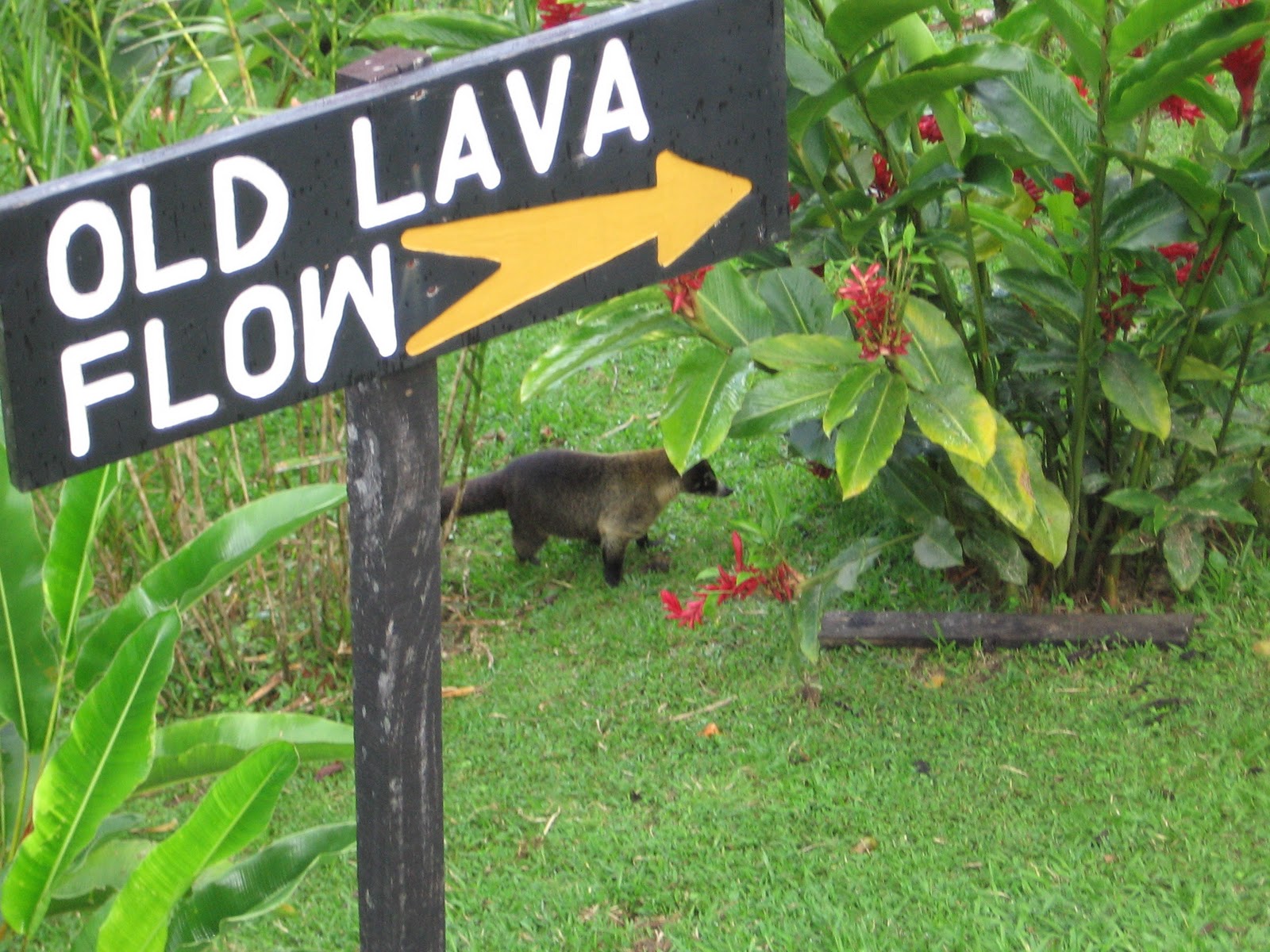
A coati… on its way to the old lava flow?

 As I was busy helping my friends prepare for their wedding, I didn’t have too much time for hiking and exploring the grounds. However, every morning the lodge offers a free guided hike. You can hire guides for other hikes, or you can explore parts of the property on your own. The day before the wedding, we did manage to make a short hike to a beautiful waterfall.
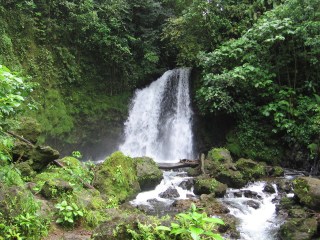
Waterfall on the grounds of the Observatory Lodge.

 The lodge is located several kilometers away from the ultra-touristy but charming town of La Fortuna. In La Fortuna the shops, cafes, and tour businesses generally have “lava,” “volcano,” or “gecko” in their name… such as the “Lava Lounge Bar & Grill.” The town is a mix of hippie souvenir shops, adventure tour businesses, restaurants, and a few other buildings such as a beautiful church with an adjacent park. In La Fortuna there are also several spas and resorts with hot pools, which are, of course, volcano-heated. To reach the lodge, you must travel 10 kilometers or so along a bumpy dirt road. I do not recommend doing so when you really have to use the bathroom. About a kilometer along the road, I made my friends pull over the 4×4, and I watered the vegetation adjacent to the road.

The lodge made a breathtaking wedding venue for my friends. The groom is a geologist and the bride is an engineer and oceanographer, but she has many geologist friends who drag her along on all sorts of geology-themed trips. The small wedding went perfectly… except for the troublesome coati.

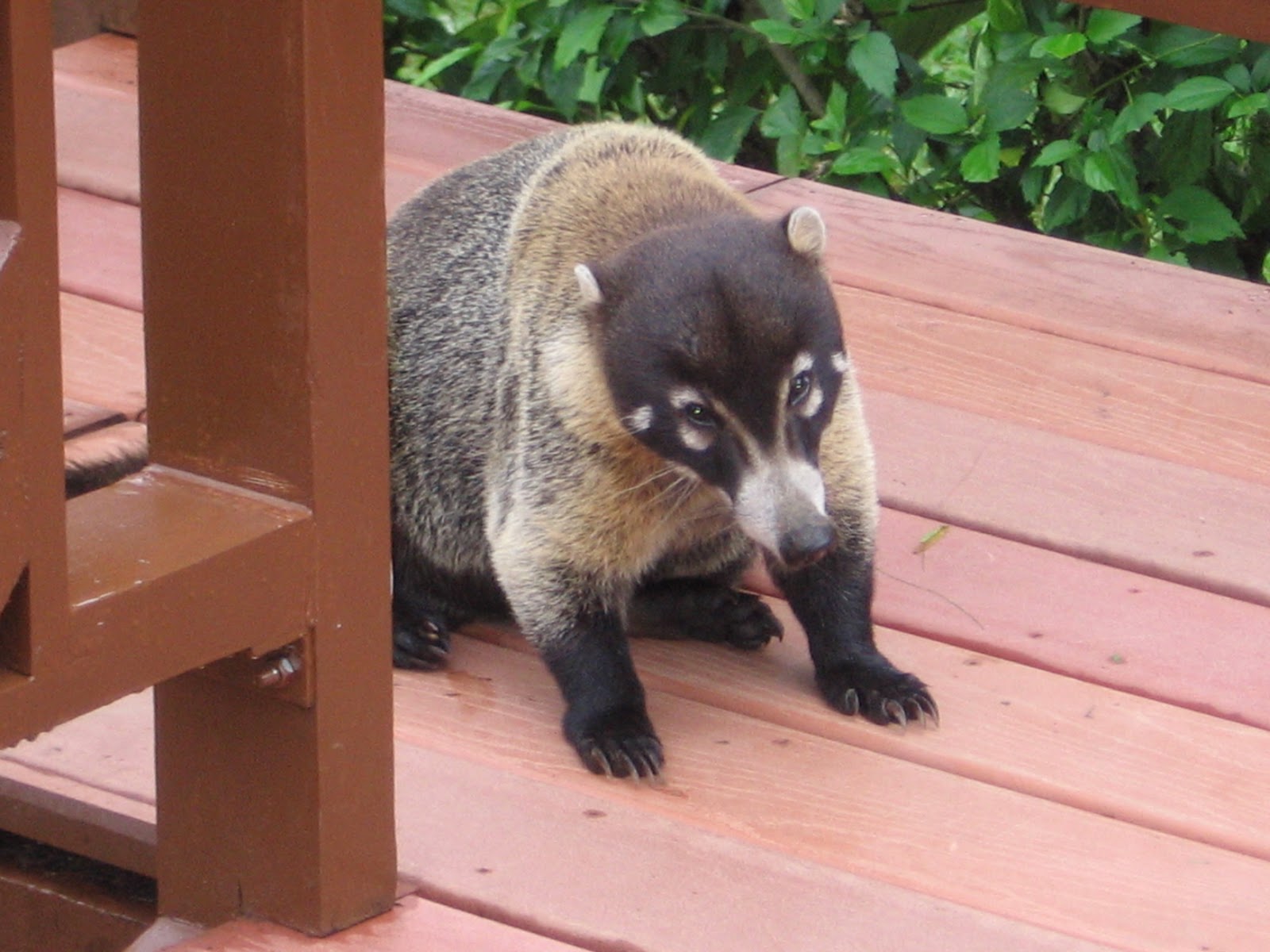
The coati looks adorable. I mean… what could be more adorable than this:

An adorable coati on the restaurant porch.

Or this:

An adorable (and fearless) coati on a walking path.

Beware, though! Although the coati has a long nose and long tail that distinguish it from its equally-cute cousin, the North American raccoon, the coati is really just a tropical raccoon. The coati is just as pesky as the North American raccoon, which I most often encounter eating trash. I think I saw more raccoons (usually in alleys eating trash) during the two years I lived in Boston than I did during my childhood in rural New Hampshire. Or perhaps I just saw the same urban raccoons repeatedly. In any case, there is no doubt that the raccoon is a pest… the coati is just a more exotic version of the cute raccoon pest.

For example, we encountered a “wild” coati eating pizza outside our hotel room. A not-very-smart tourist had left a box of half-eaten pizza outside his hotel room, along with a few beer bottles. The coati helped himself (or herself?) to a slice of pizza then returned for a second slice, walking just a foot or so from us as we watched with surprise and laughter. Somehow, I don’t think that pizza is part of the natural diet of a coati. At least the pizza was hawaiian… perhaps the pineapple is good for the coati. Although, come to think of it, all of the coatis we saw on the lodge grounds did look somewhat plump.

A coati eating a slice of pizza.

You definitely shouldn’t leave your lunch unguarded around a coati. I think the coatis around the lodge often make off with a granola bar or piece of fruit or part of a tourist’s sandwich. We expected the coatis to make off with our food, and so we kept a close eye on it. However, we did not expect the coatis to make off with other items. Following the wedding, we took pictures all over the lodge grounds… a gorgeous place for pictures! The groom’s mother set down her point-and-shoot camera on the deck outside the restaurant while she went to join family for a picture in front of Arenal volcano.

As the family posed for the picture, a coati boldly picked up the point-and-shoot camera in its mouth. The groom’s father noticed and started chasing the coati. The coati took off into the jungle, followed by the groom’s father and a few members of the hotel staff. Although several people searched, the camera was not recovered. In retrospect, perhaps a better strategy would have been to offer food to the coati… perhaps it would have exchanged the camera for a better snack. There are many other pictures from the wedding, but the groom’s mother was quite sad about losing her own photos. Perhaps someone will recover the camera so that we can obtain the memory card, but in such thick jungle that is unlikely. At least the camera-stealing coati provided a fun wedding story! As if being married next to a volcano wasn’t already a good enough story!

To my wonderful friends who were married, your wedding was beautiful. I cannot imagine a better venue for you! Thank you so much for inviting me. I wish you many years of happiness and many adventures, perhaps even a few more involving troublesome jungle raccoons.

**********
An addition: I just received some breaking news from the groom’s sister. The stolen camera has been recovered!

Here is her message:
Ah, but you didn’t get to hear the conclusion of the camera robbery! My dad went out into the woods the next day, guided by two workers, and they found it!! The case was covered in bite marks, but the camera was just fine. :)”

Geology in the Wintry Mix

Where is that contact again?, Montana, Fall 2005.

Many people in New England had their first taste of winter today with a wet, slushy snowfall. Here on Cape Cod we haven’t had any snow yet, but we’ve had nasty, cold rain all day. Today’s cold rain is my least-favorite sort of weather for geology fieldwork. I don’t mind snow- except when it accumulates so much that you cannot see the rocks. My second least-favorite weather for geology fieldwork is a hot summer day in the Middle East. But at least the heat is a dry heat and you can guzzle liters of gatorade. I definitely prefer the dry desert heat of Jordan (which is more moderate than Saudi or Oman, but still intense) in August to the just-above-freezing weather that produces cold rain and sometimes slush. Weather forecasters call this sort of precipitation “wintry mix.”

Wintry mix sounds festive, but New Englanders groan at such a forecast. I’ll take real snow over wintry mix any day. Wintry mix just means that the slushy rain is going to freeze into ice once the temperature drops at night. Wintry mix just means that in addition to being cold you are going to be soaking wet. Wintry mix just means that you can’t wear your snug, down-stuffed winter gear, which flattens and thus becomes less-warm in the rain. Instead, you have layer sweaters and fleeces under your rain jacket and wear two pairs of wool socks in your rain boots or hiking boots. Wintry mix means that your “Rite-in-the-Rain” field notebook is going to malfunction… this is the only sort of weather in which I’ve found it difficult to write in those robust, amazing field notebooks. Personally, I advocate changing the name of wintry mix to “wintry sh*t.”

I prefer fieldwork in snowy weather over wintry mix weather because even though the temperature is lower, you feel warmer because you’re not wet. Of course, geology fieldwork in the snow is somewhat problematic, even if you can keep yourself warm. Geologists dislike anything (vegetation, houses, water, alluvium, etc.) covering up the rocks they are trying to examine. Snowfall therefore presents a problem.

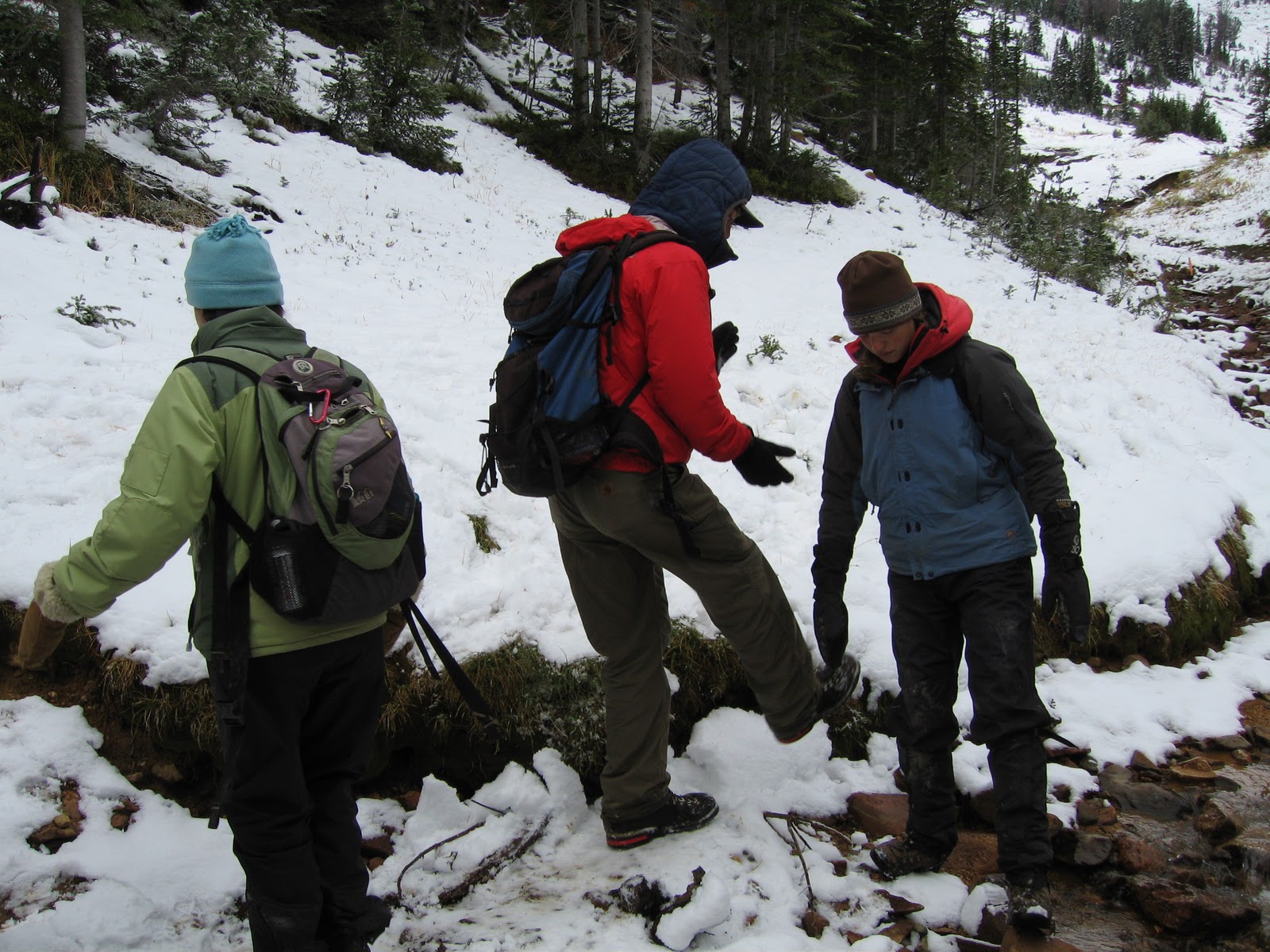
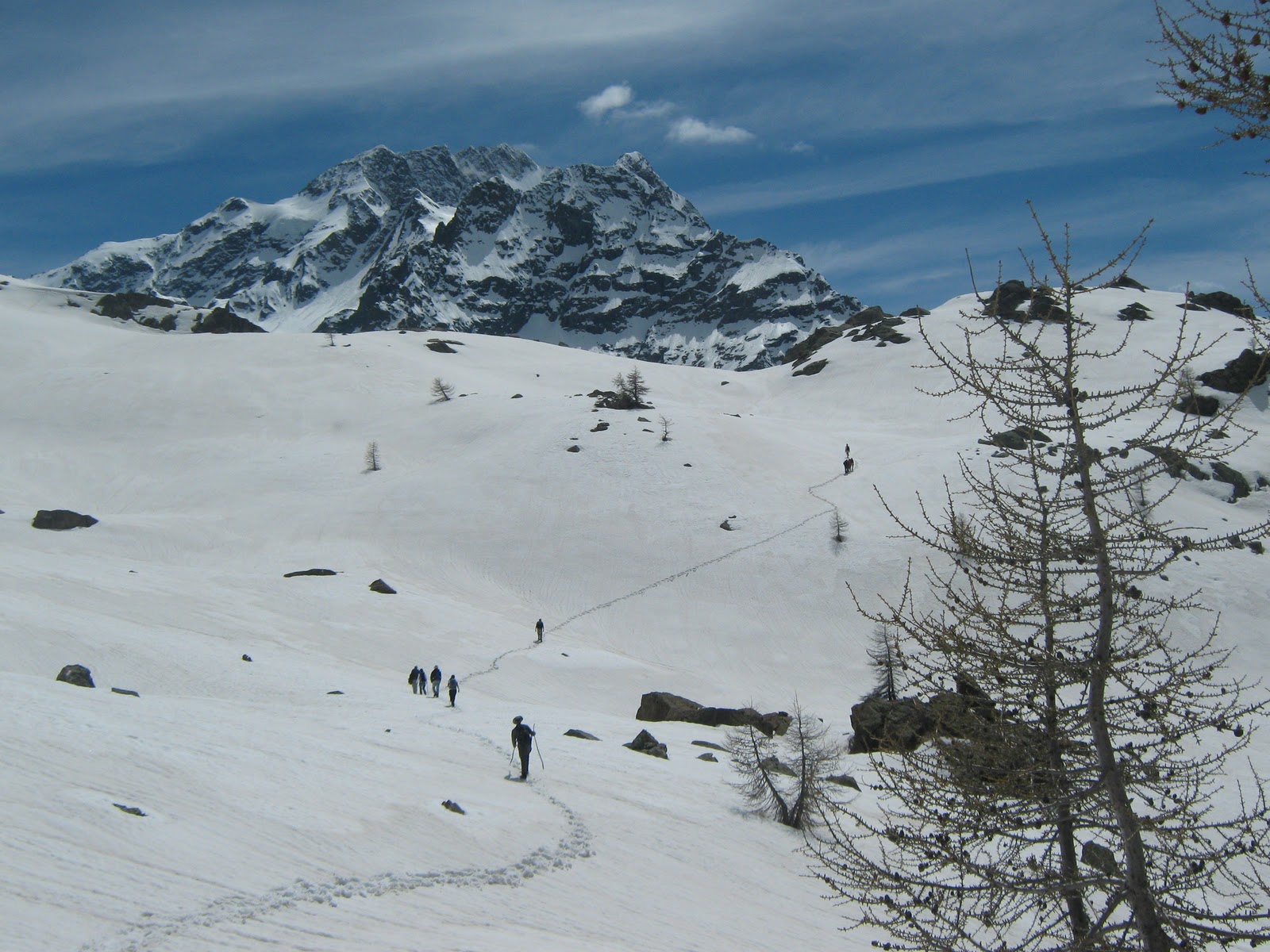
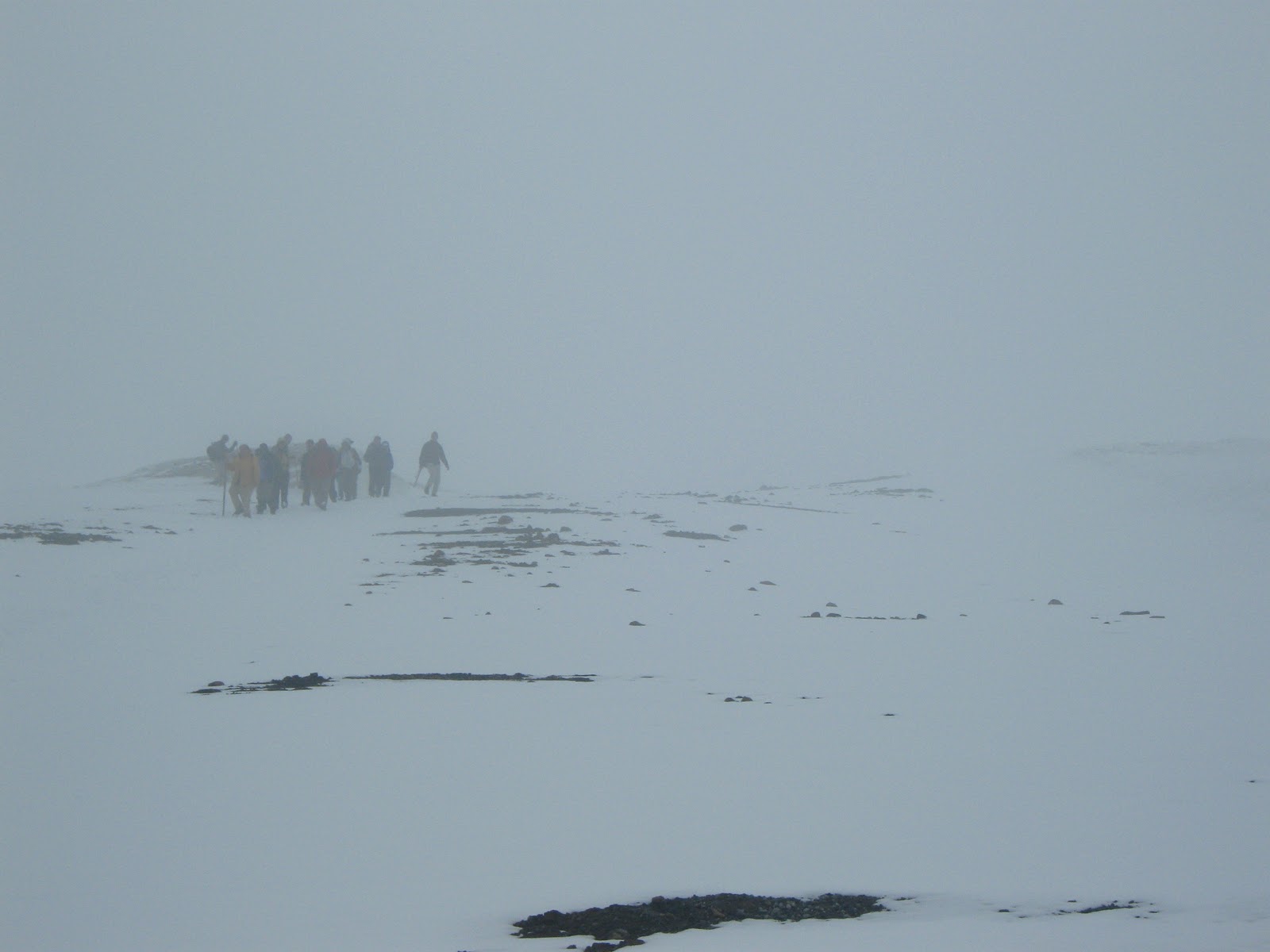
Although less-than-ideal, I have done some geology fieldwork in the snow. During my undergraduate field program, we did some mapping in Montana in early September. We had to shovel the snow off the outcrops in order to identify them. The teaching assistants took pity on us and helped us find key contacts, at least.  Most recently, I was on a geology trip in Switzerland & Italy and had to hike through significant snowfall… in early June! We didn’t expect or even particularly dress for heavy snow, but we didn’t let that stop the field trip. Geologists are tough… though a few of us did purchase some expensive (Switzerland is expensive!) hats and gloves.

A long climb, The Alps, Italy, June 2010.

White-out!, The Alps, Switzerland, June 2010.

There is one good thing about doing geology in the snow, though… at least you know when bears (and other snowprint-leaving animals) are around!

Rite-in-the-Rain field notebook (for scale) and bear track, Montana, Fall 2005.

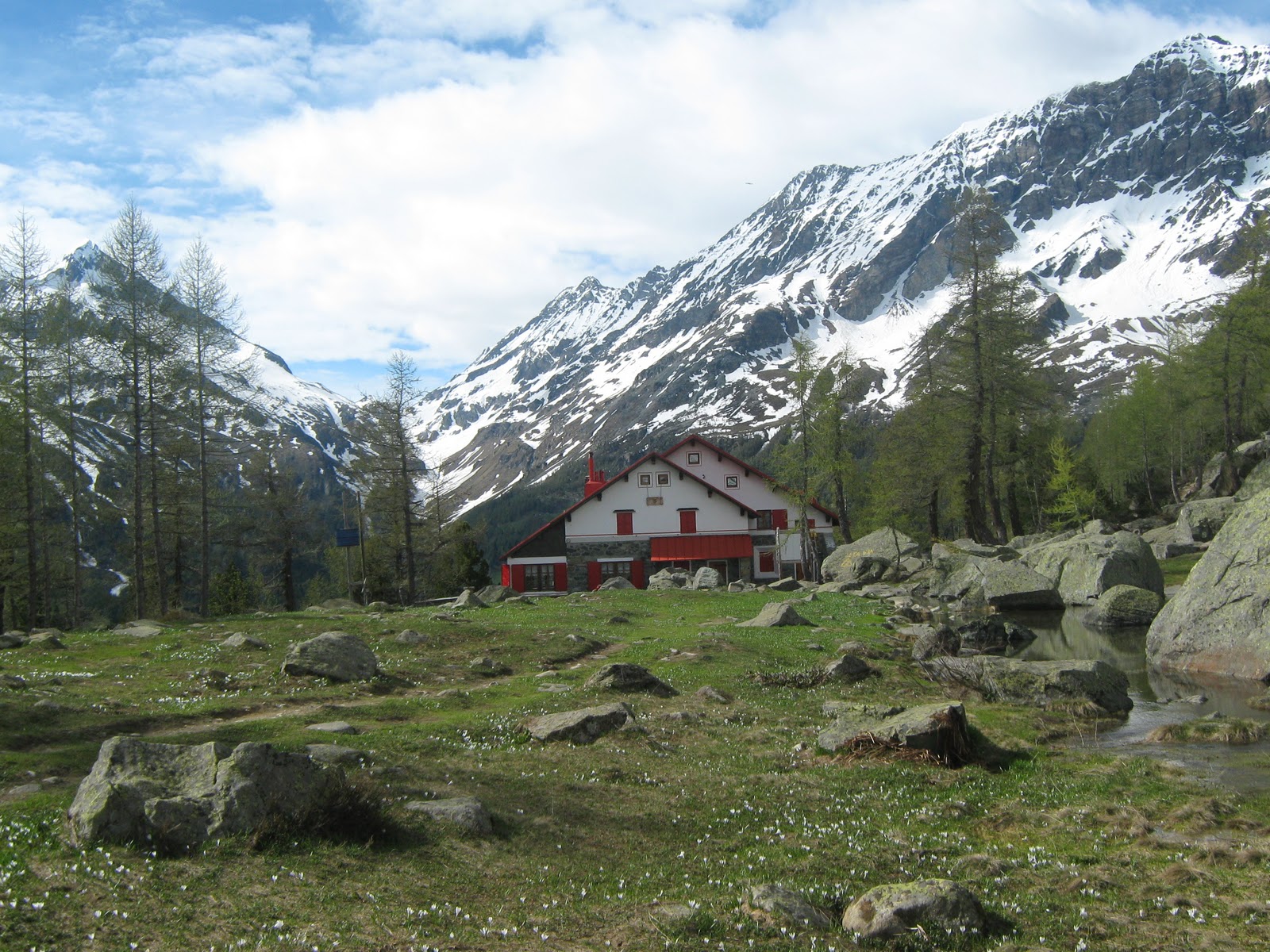
Another good thing about doing geology in the snow/wintry mix is that it feels wonderful to go back to a hot meal and a warm cabin/tent at the end of the day… particularly when your cabin looks like this: 

Beautiful cabin, The Alps, Italy, June 2010.

We didn’t actually stay in this cabin (I think Heidi lives there), but we stayed in a quaint little hotel just down the hill a bit. Beautiful, especially because there was no snow at lower elevations.

Okay, it’s time for me to drive home through the wintry mix. I hope the roads aren’t frozen yet!

The Cow Game

Geology trips often involve very long drives. Rocks are sometimes conveniently exposed in the vicinity of civilization, such as at roadcuts, but often reaching rocks of interest requires a long, exciting drive. Or not so exciting, depending on the location. For instance, for my very first geology field trip I went on a two-week Western USA tour with a group of geology students and professors from Florida State University. Florida is pretty much just limestone, so to see other types of rocks the geology department goes on long drives and also cultivates a rock garden full of basalts and granites and such. The first day of this field trip, we drove twelve hours from Tallahassee to Texas. Not the most exciting day, but necessary to reach the rocks. 

When doing fieldwork for research, I generally ride to the rocks in a stylish Land Cruiser such as these:

Land Cruisers in Oman, January 2009.

 Land Cruisers are great when you have a few scientists and some gear. They can cross some impressive terrain and carry many hundreds of pounds of rocks. I actually prefer the older models (right) to the newer models (left). The newer models are shiny, but I think they’re less-powerful.

However, Land Cruisers are generally not sufficient for transporting large groups of geology students. For my undergraduate field program, we rolled in three Dodge Sprinter vans: 

A trio of Sprinter vans, Western USA, Fall 2005.

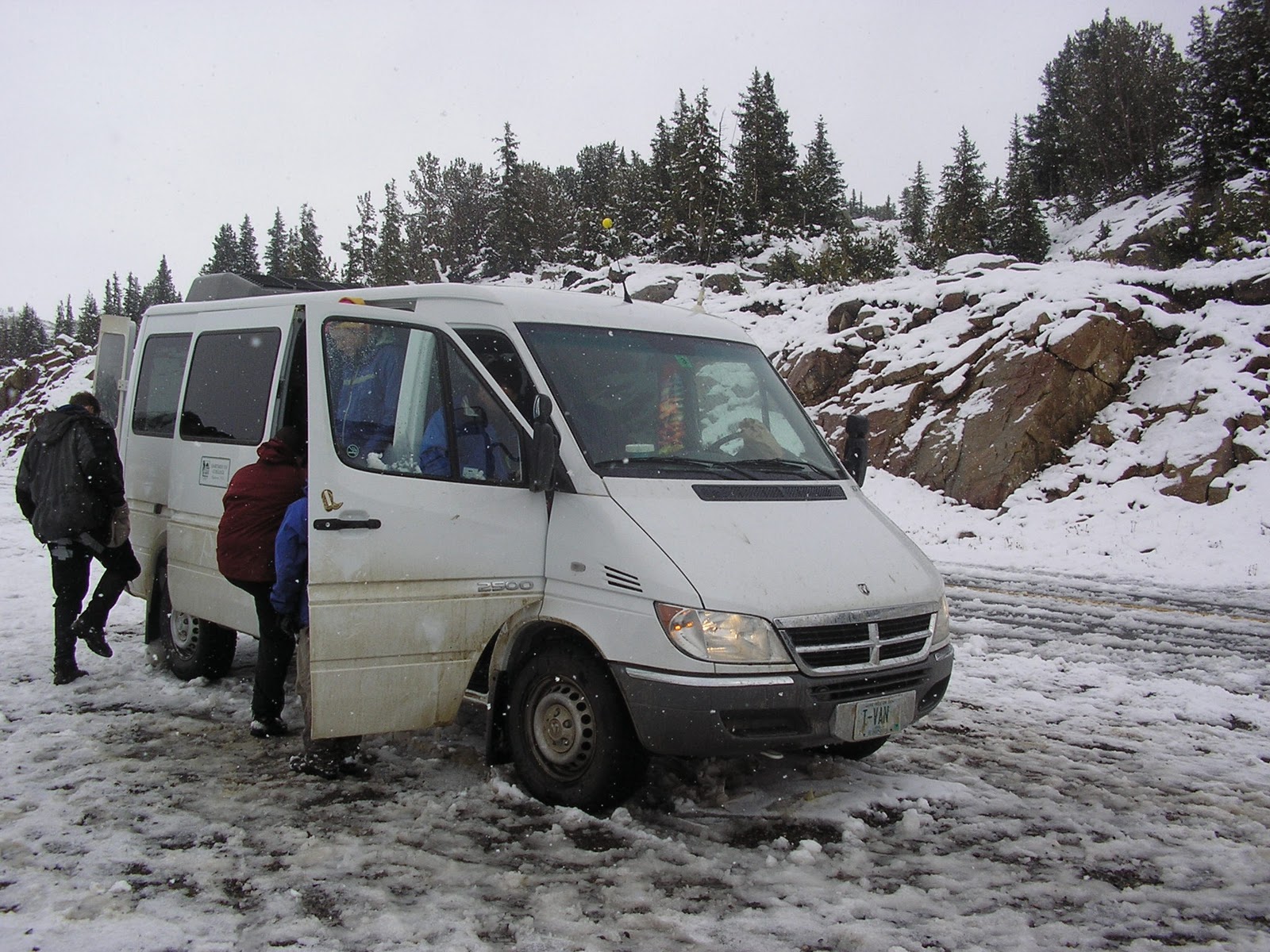
The Dodge Sprinter van is spacious, but that’s about all that can be said for it. Sprinter vans are ugly and are definitely not 4x4s. Sprinter vans are designed to deliver packages or flowers in town, not traverse rocky slopes. I have great respect for my geology professors and TAs… they bravely drove the Sprinter vans on coarse gravel roads, across bentonite mudflats (geologists will know just how dangerously sticky this mud is when it rains), and even through thick, slushy snowfalls.

Sprinter van in the slush, Western USA, Fall 2005.

Whatever vehicle you drive to the field, the long drives can be boring… especially in places where annoying vegetation covers up the interesting rocks.  Geologists have different ways of entertaining themselves on the long drives: iPod music mixes, books, long talks about rocks, and- last but not least- car games.

Today I am going to teach you an awesome car game to play next time you have a geologic (or any) roadtrip. Before I explain the game, however, I must warn you. After first hearing the rules, almost everyone thinks this is the stupidest game they have ever heard about. However, in my personal experience, almost everyone also ultimately ends up playing this “stupid” game. One or two steadfast skeptics usually whine about how annoying it is that everyone is playing this game. However, even these whiners usually participate randomly- generally to sabotage the person who is winning and hope that the game dies.

But the game does not die. It endures. It is often played for days at a time. Sometimes, the game is forgotten but then returns a few days later. The game is AWESOME.

Without further ado, let me introduce you to… THE COW GAME!

The cow game rules are as follows:
1. When you see cows, yell out “My cows!” Whoever yells that phrase first owns all the cows. If you call the phrase out first and can obviously count the number of cows, follow by saying, “I now have 5 cows.” If you already have 100 cows, say, “I now have 105 cows.” If you cannot count the cows, estimate how many you think there are in a particular field or barn or wherever. Participants are encouraged to argue about the number of cows a person has just claimed. Disagreements are settled by majority rule. In the case of just two people playing the game, disagreements are settled by whoever gives up first. Whoever has the most cows wins. There is no set timeframe for the end of the game, which can go on for days or even months.

2. If you see a white horse and are the first to yell “My white horse!”, your number of cows is tripled. If you call out “My white horse!” and it is really a goat or a black-and-white horse or something else upon closer inspection, all your cows die.

3. If you see a cemetary and yell “My cemetary!” (yelling “My graveyard!” is acceptable), everyone else’s cows die.

4. Cows are the most commonly owned thing. However, depending on where you are in the world you can play variations of this game. In Oman, I have played with goats (for cows) and camels (for white horses). In South Africa, I have played with ostriches (for cows) and springbok/rhinos/any other kind of cool animal (for white horses). When driving in North Carolina whitewater country, I have played with river rafts (for cows) and open canoes (for white horses… kayaks were too common). You can also decide to collect multiple types of livestock/animals/rafts.

5. Plastic/artificial giant animals, such as plastic cow signs at dairy farms, count. These add to your cow count and cannot die when someone yells “My cemetary!” Also, giant plastic animals are worth a gazillion coolness points each.

I learned the cow game on a kayaking trip in college, and I thought it was really stupid at first. Despite my initial reaction, I have now played the cow game on many long drives. I have taught the game to a few of my friends and colleagues, and now I am teaching the whole internet… though I imagine many of you have played various permutations of the game in the past.

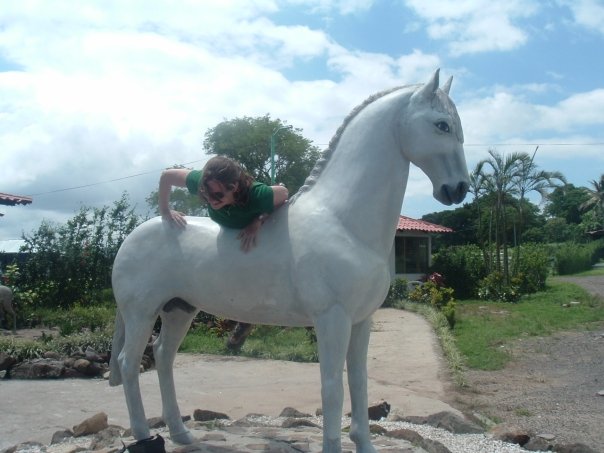
Speaking of fake animals, during a trip to Costa Rica a couple of years ago I was lucky enough to encounter this wonderful white horse at a roadstop. I had a little trouble climbing on top… 

White horse 1, Costa Rica, June 2008.

… but I managed eventually… 

White horse 2, Costa Rica, June 2008.

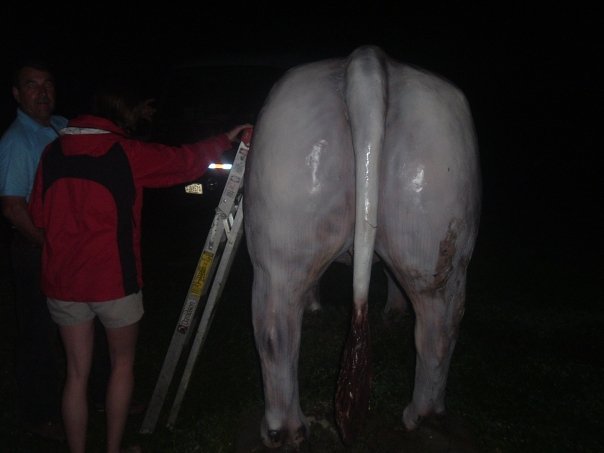
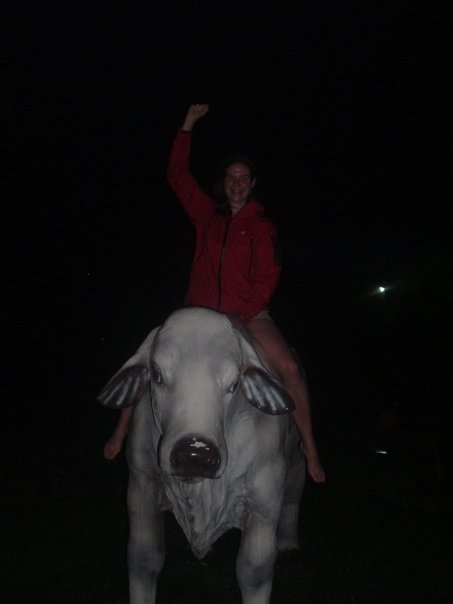
A few days later on the Costa Rica trip, we had dinner at a restaurant with a giant fake cow in front. I went to climb the cow, but one of the restaurant employees followed me. I was worried and thought he was going to yell at me to stop climbing the cow. Instead, he brought me a ladder. Costa Ricans- or at least this particular man- are AWESOME… just like the cow game.

The nice Costa Rican man brings me a ladder, Costa Rica, June 2008.

Yee-haw!, Costa Rica, June 2008. 

Come to think of it, I’m not sure exactly why I needed to climb the fake animals in Costa Rica… perhaps it was worth an extra gazillion coolness points.

Rocks for Jocks

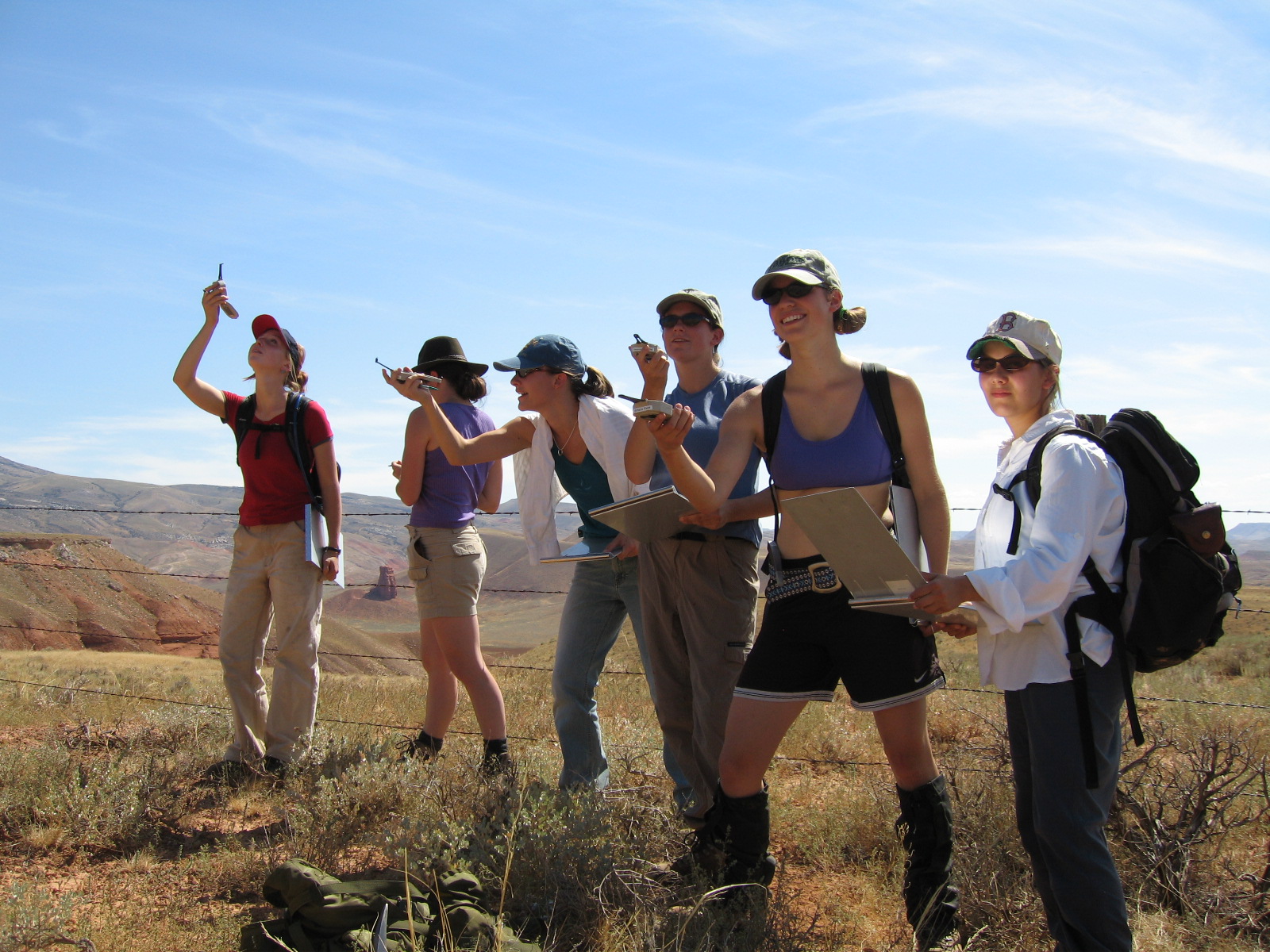
A group of geology students learning how to “use” Brunton compasses, Western USA, Fall 2005.

Introductory geology courses have the unfortunate (or fortunate, perhaps?) reputation for being “easy” or “fun” relative to other introductory science courses such as chemistry, physics, and biology. At most colleges, the introductory geology course (Geology 101 or Introduction to Earth Science) is known as “Rocks for Jocks.” The stereotype is that jocks (e.g. guys on the football team) take introductory geology as an easy way to obtain a necessary science credit. At colleges here in the United States, even if you are not a science major you generally have to take at least one science class. At least, this is the case at liberal arts schools where students mostly take courses in their major, but also are required to fulfill broad educational requirements and take a course in subjects such as English, History, Art, Language, and-of course- Math and Science.

I have mixed feelings about the “Rocks for Jocks” stereotype. I love the name, actually. As I mentioned in my welcome post, geologists have a penchant for puns and jokes and fun names. I’ve even heard other geology courses described in similar manners. For instance, I have heard Introduction to Geophysics called “Quakes for Flakes.” However, I do feel a little sad that geology is considered an “easy” science. There is no doubt that “Rocks for Jocks” is an easier class to take for your science credit than Chemistry 101, Physics 101, or Biology 101. I can verify this firsthand as someone who took Chemistry 101, Physics 101, Rocks for Jocks, and an introductory biology course.

As a quick aside, I actually didn’t take Biology 101- I took a different introductory biology course about dinosaurs because who wouldn’t want to take a class about dinosaurs??? It turned out the class was mostly about cladograms and evolution. On the first day of class, the professor said something along the lines of, “Welcome to the dinosaur class. This class is really about ancestral relations and evolution. I could just as easily teach what I need to teach you using clams or cows or squids. However, none of you would probably take a class about clams, so I’m going to use dinosaurs in all my examples.” The class turned out to be a little more difficult than I expected, but I enjoyed it anyway.

Here at MIT where I am a graduate student, geology is almost considered a humanities department (not really, but some engineers view it that way). The geology major is often considered “an easy major choice” for students who can’t quite cut it (at MIT, anyway) in physics or engineering. Sometimes, I even catch myself saying, “Oh, I’m at MIT… but I’m only in the EAPS (Earth and Planetary Science) department.”

However, I don’t really think that geology is an “easy” science. At least, not when you continue beyond “Rocks for Jocks” and pursue the full undergraduate major. My second, third, and fourth year geology classes were challenging. The geology department was small (relative to chemistry, physics, and biology), so perhaps my courses were slightly easier because the professors were able to give their students more attention. However, I remember some very tough mineralogy, petrology, and geochemistry exams. Also, because geology is a highly interdisciplinary field, in order to be prepared for graduate school I actually took several chemistry, physics, biology, and math courses as an undergrad. So I had to study those “tough” sciences in order to be prepared for my “easy” science of geology. 

Come to think of it, the “Rocks for Jocks” course actually does teach quite a bit of chemistry, physics, biology, and even a little math. At many colleges, the class doesn’t turn out to be quite as easy as the jocks were hoping.  And you know what? Many people who take the course, even some of the jocks, end up majoring in geology. Probably because it’s fun to go hiking and look at rocks and play with minerals. Really, really fun, even if there’s a little chemistry and math and such thrown in. So perhaps “Rocks for Jocks” serves as good recruitment for the sciences, or at least for geology.