


def. Ooid:
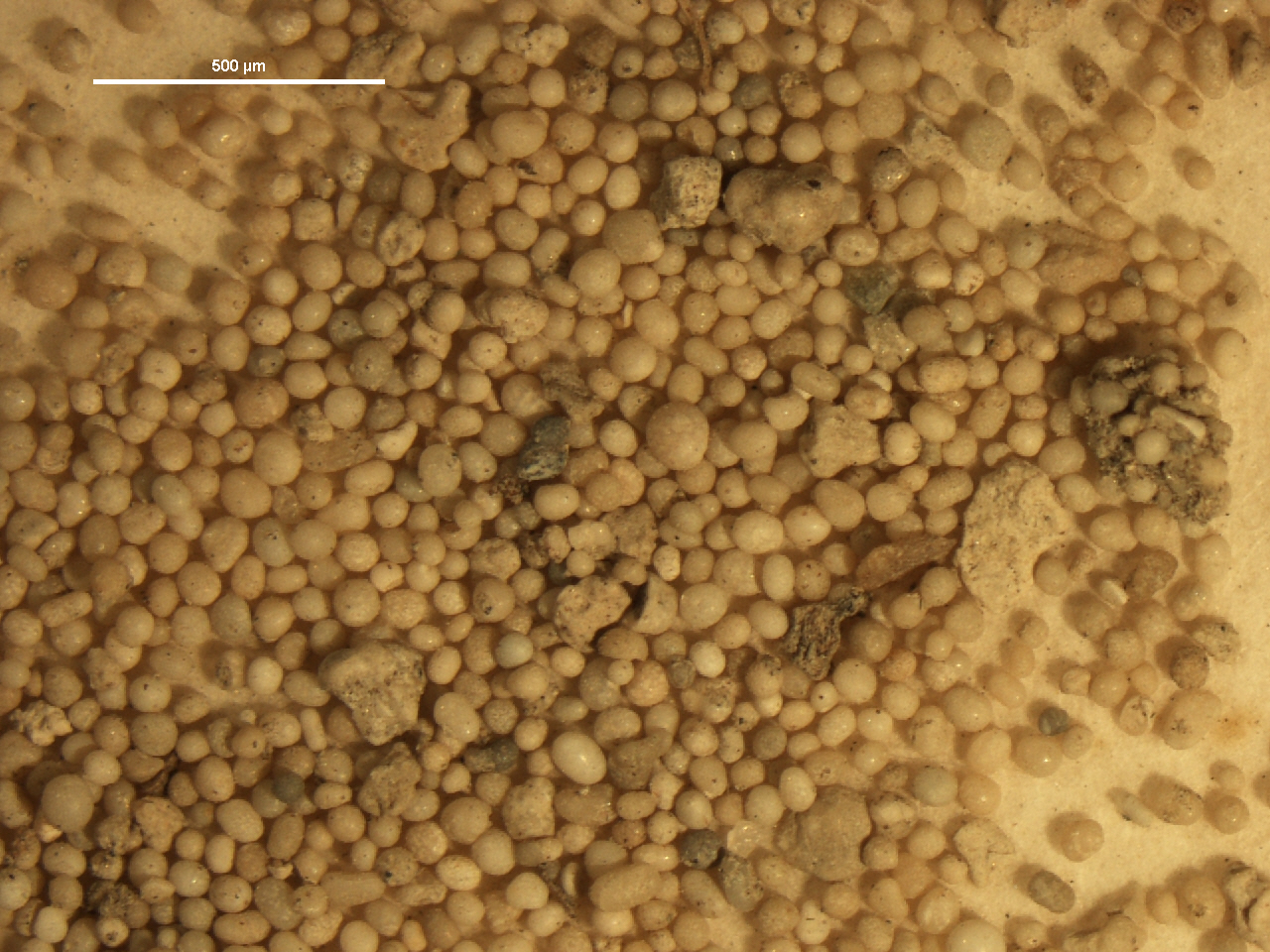
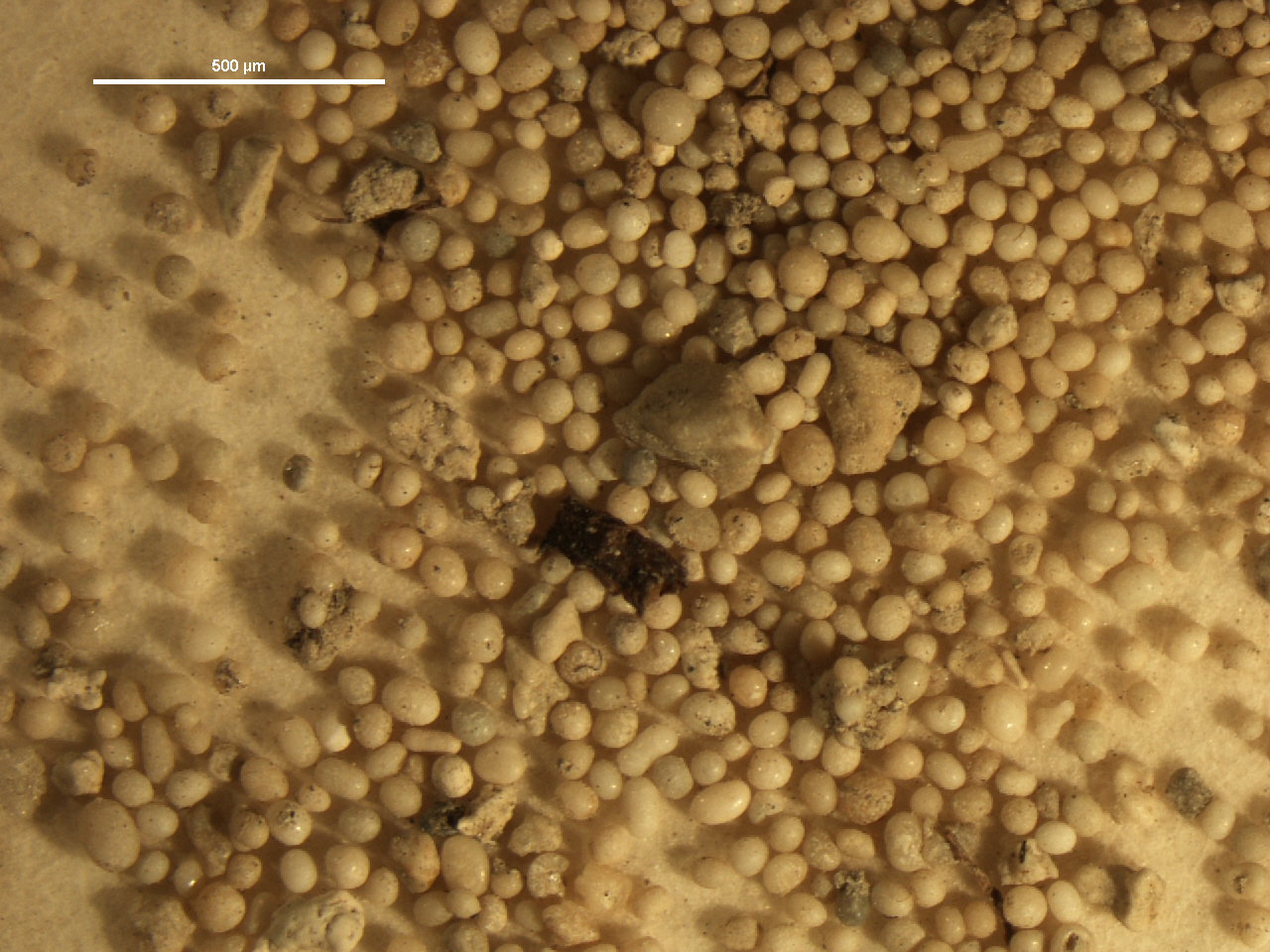
A small (generally less than 2 mm), spherical or ellipsoidal concretion of calcium carbonate (CaCO3) that has generally formed around a “nucleus” such as a shell fragment or a quartz grain. The word ooid is derived from an ancient Greek word meaning egg-shaped. According to the Oxford English dictionary, the name came about because ooids resemble roe (fish eggs).
Some geology words I love just because they’re just so much fun. “Ooid” is one of those words. “Ooid” is a great word because it looks and sounds like the geological entity it represents. The word is oval (O) and round (o) just like ooids themselves. The word also rolls off the tongue in a squishy way that makes me think of marine ooze, which might be found in the vicinity of ooids.
Here are a few bonus, related words:
def. Oolite:
A sedimentary rock composed of lithified (“made into rock”) ooids.
def. Oolith:
A synonym for ooid, often used to refer to a single grain.
A synonym for oolite is roestone— literally, fish egg stone!
Other related oo- words are ooidal, oolithic, oolitic, and oolitiferous. That last word sounds somewhat fake, but I found it in the trusty Oxford English Dictionary!
For more scientific information about ooids, here is a good article titled “Ooid Formation” (on a wonderfully-named website called Geology Rocks) that describes ooids far better than I could.
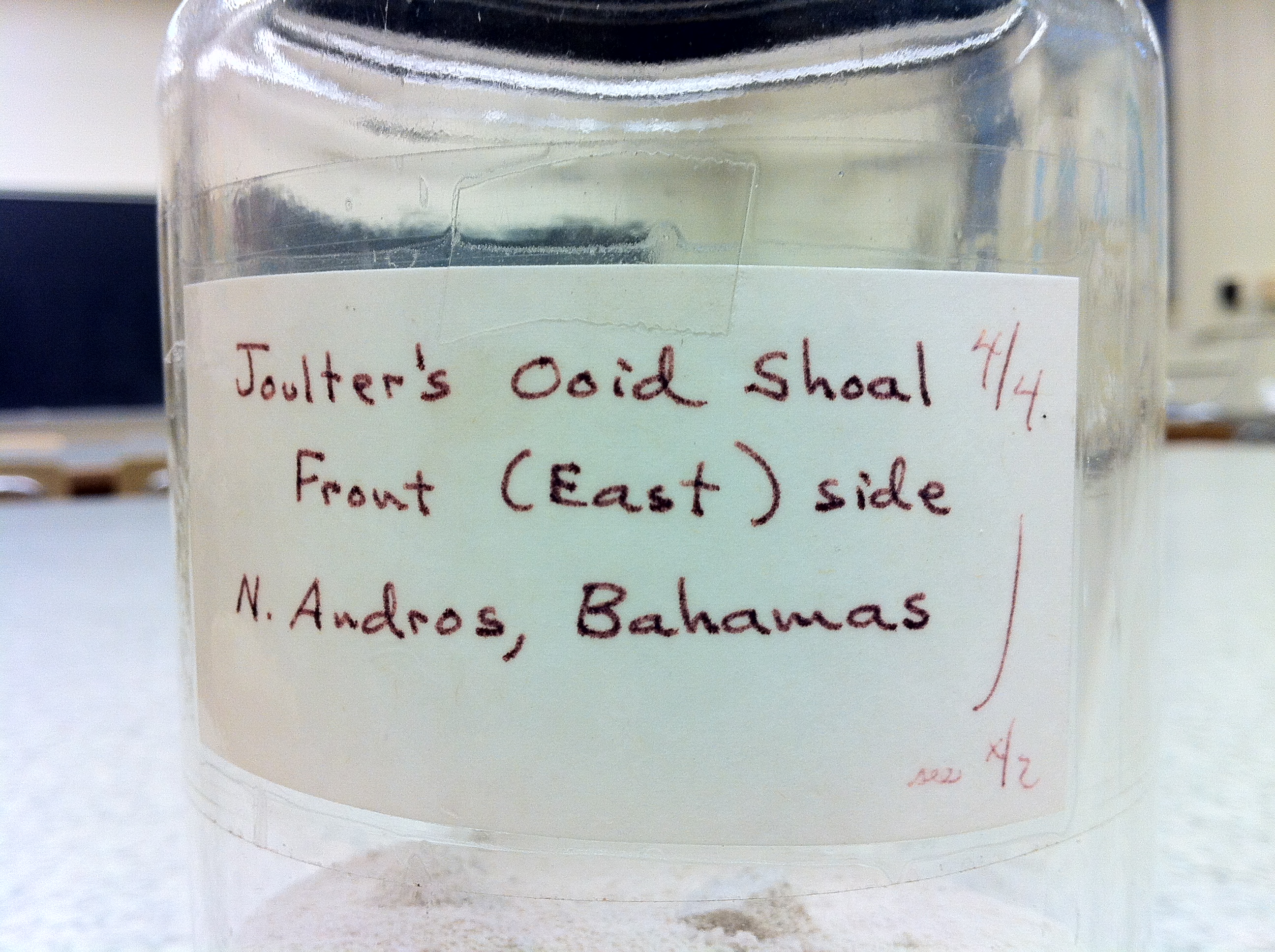
Here are oodles of ooid and oolite pictures:



References:
“ooid, n.” The Oxford English Dictionary. 2nd ed. 1989. OED Online. Oxford University Press. 11 September 2011.
Other words such as roestone, oolith, etc. were also looked up in the OED.
***Thanks to Christie Wilcox for suggesting this week’s word. Thanks to Matt Kuchta, Callan Bentley, Paul Glasser, and Ian Stimpson for providing pictures. Thanks especially to Paul Glasser for naming his picture folder “oodles of ooids,” a delightful phrase which I promptly stole for this blog post.***
 Georneys