Geology Word of the Week: L is for Luster

A sample of iron-rich rock with metallic hematite (gray in color, this variety of hematite is called “specular hematite”) and dull hematite (reddish brown in color). Picture by myself.

def. Luster (or Lustre if you use British spelling):

The way in which the surface of a mineral or rock interacts with light. Words used by geologists to describe luster include metallic, sub-metallic, dull (or earthy), vitreous, waxy, silky, greasy, pearly, and adamantine.


Luster is a physical property that is used by geologists to help identify minerals and rocks. Other physical properties that geologists use for identification are hardness, density, magnetism, color, streak (the color of the mark a rock or mineral leaves on a streak plate), cleavage, and crystal form.

When using luster to identify a mineral, it is important to know that many minerals can have more than one type of luster, in the same way that many minerals come in different colors. Thus, luster should be used cautiously for mineral identification. A good example is shown in the photograph at the top of this post. This photograph shows a shiny rock with a metallic luster. At first glance, you might think that the rock contains mica, which can have a similar metallic luster and a similar color. However, the rock is actually an iron-rich rock that mostly consists of hematite. The portion of the rock with the metallic luster is specularite, also known as specular hematite. Note that a portion of the rock has a reddish brown color. This part of the rock has a dull or earthy luster and is also hematite. To properly identify the minerals in this rock, a geologist must use other properties in addition to luster. For example, the density of the rock (iron is heavy) and the streak of the rock. Specular hematite will leave a reddish brown streak while mica will leave a whiteish streak.

The photograph below shows another example of luster. In this case, there are quartz crystals with a vitreous (or glassy) luster.

Quartz crystals with vitreous luster. Picture by myself.


The photograph below shows anther example of luster. This rock contains serpentine and talc. The white talc has a pearly or perhaps waxy luster. The green serpentine has a silky luster.
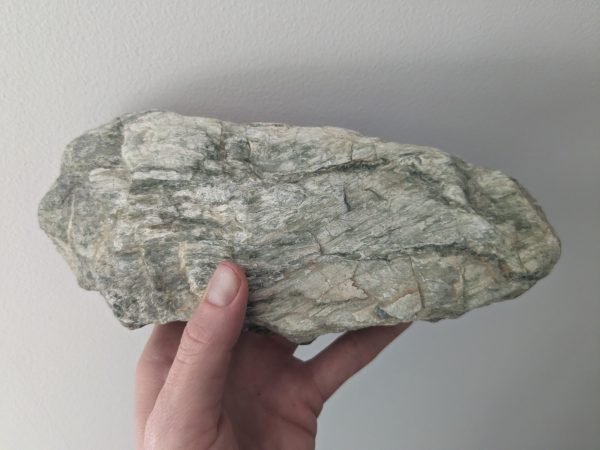
A rock containing talc and serpentine. The white talc has a pearly luster while the green serpentine has a silky luster. Picture by myself.

That’s all for this week’s word… stay tuned for next week!

Geology Word of the Week: V is for Vitreous

Obsidian with vitreous luster. Photo courtesy of Maitri Erwin.

Introductory Note: At long last, the Geology Word of the Week has returned! For almost a year, the Geology Word of the Week post has been on hold. I briefly resurrected the weekly word back in April with the posts T is for Time and U is for Ulexite, but the revival was short-lived. I neglected the weekly word because this past year has been busy and full of important life events and changes: getting married, finishing up my PhD, moving overseas, and starting my first job, among other things! To keep Georneys interesting, I started the Monday Geology Picture weekly feature. I’ll still keep posting the Monday Geology Picture, but I also hope to resume my weekly words. As always, feel free to suggest words and provide information and pictures related to the weekly word. Note that I go through the alphabet in order for my words, so for next week you should suggest words that start with “W”. From now on, I’ll do my best to keep up with the weekly word, but I may skip a week or several weeks here and there depending on what else is going on in my life. 


def. Vitreous:
Resembling glass. Most often used in geology to refer to a glassy (highly reflective and often transparent to translucent) luster.

Luster (or Lustre) is a term that is used to describe the way that light interacts with the surface of a mineral, rock, or other solid (such as glass or a manmade crystal). Luster is one of many physical properties (others are hardness, streak, cleavage, crystal shape, color, etc.) that geologists use to help them identify rocks and minerals. There are several terms used to describe luster, such as dull, metallic, waxy, pearly, and so on. Andrew Alden, the geology writer for About.com, has a great webpage (including an example gallery) all about luster here. Vitreous (also called glassy) luster is which resembles the luster of glass. Vitreous rocks and minerals are thus highly reflective and often translucent to transparent, like glass. Some vitreous rocks, such as obsidian, even are glass… natural glass!

Here’s a few more pictures of rocks and minerals with vitreous luster:

More vitreous obsidian. Photo courtesy of Maitri Erwin.
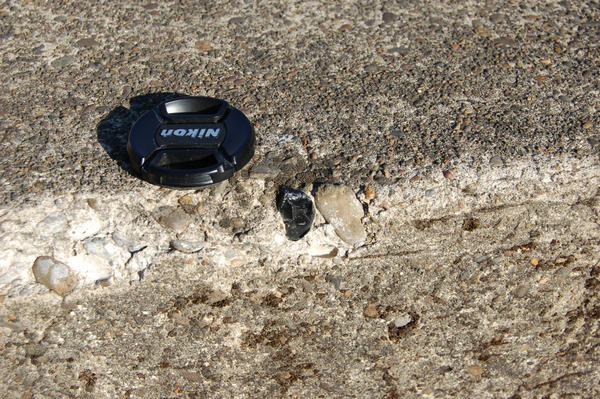
Even more vitreous obsidian (small black clast). Photo courtesy of Lockwood Dewitt.
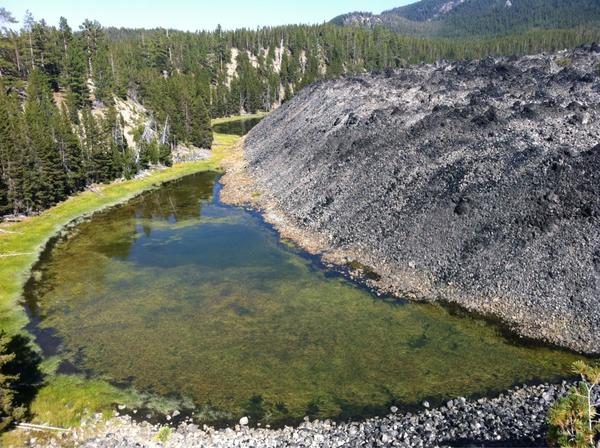
An entire flow of vitreous obsidian. Photo courtesy of Cian Dawson.
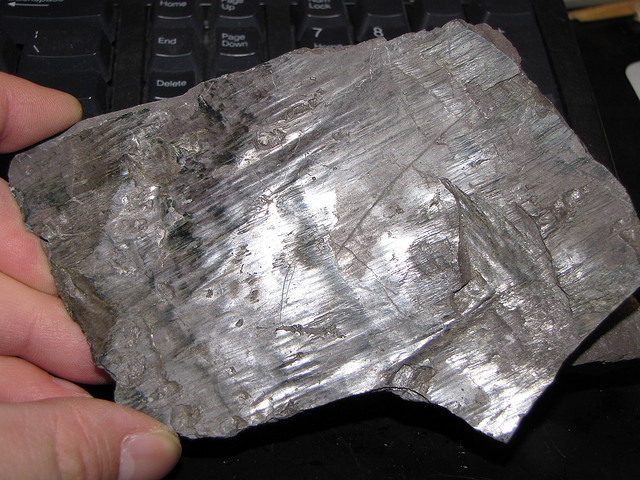
Slickensided slate (say that three times fast!) with vitreous luster. Photo courtesy of Ron Schott.
Limestone covered by vitreous sandstone, which has been melted by lightning. Cool, huh?! Photo courtesy of David Bressan.
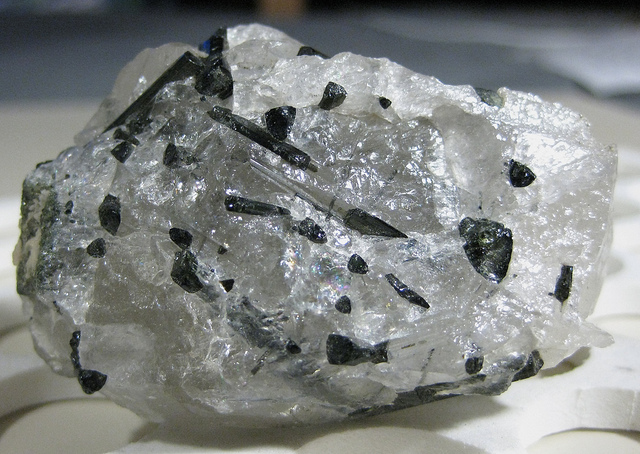
Quartz and tourmaline, both of which have vitreous luster. Photo courtesy of Patrick Donohue.

***Thanks to Maitri Erwin, Lockwood Dewitt, Cian Dawson, Ron Schott, David Bressan, and Patrick Donohue for providing pictures.***