A Quick Note: A Message from My Dad, a Nuclear Engineer, for TEPCO and the Japanese Government

A message from my dad for the Tokyo Electric Power Company (TEPCO) and the Japanese government, from Interview 16:

“We’ve tried to remain calm and rational and not get too excited. So, just because we haven’t raised our voice and started yelling and screaming doesn’t indicate at all that we don’t have concerns. I think from early on, if you go back and listen to some of the early interviews, the lack of transparency from TEPCO– I’ve been saying all along I think before, definitely before, the mainstream press, and I remember in one of the interviews early on I was really happy when finally Anderson Cooper was starting to take them to task for their lack of transparency– we’ve been saying since day one that TEPCO has not been forthcoming. And, in the last interview, and I realize it’s probably been three days, we talked about: hey [TEPCO], two-and-a-half weeks into this, now three weeks into this, how come you can’t get two or three reactor operators or engineers together from some of your other plants [and] interpret for the public what’s going on and produce a comprehensive briefing every day? And their [TEPCO’s] press releases are still not very informative.

The other thing that we’ve commented on is the lack of a website that an average person can go to and have the radiation and contamination readings in plain English so that they can understand where it’s above the limit and where it’s below the limit and where they should and should not be concerned. And the IAEA had at least put some information out there, and we had referenced people to it a few days ago, but still as far as I know, today– now there may be a site in Japanese that I can’t find or read– but to my knowledge there’s still not a website that people can go to that shows them: here’s the radiation and contamination readings for the past twenty-four to forty-eight hours– and here’s where we are above the limit, here’s where we are below the limit. It just doesn’t seem to exist. The information is scattered. Clearly, I think the Japanese government could be doing a better job there. I’m surprised that they’re not.

And the other thing  that we pointed out– we had a very long discussion about venting and the fact that the NRC in the US had required plants with the Mark I containment to go back in and put in hardened vent systems and that TEPCO obviously didn’t do that– now they’re not in the United States so they’re not compelled to follow orders from the NRC, but certainly they were aware that this design change had been required in the US, and I think TEPCO as a nuclear operator has a responsibility to do the right thing whether they are required by the government or not. But also– where was the Japanese government in requiring this for the plants in Japan? So, as far as I’m concerned they’re both at fault. And that has to be looked at. The Japanese government has to look at their regulatory agency and say: okay, what else should have been done to our nuclear power plants in Japan that we haven’t required?…

…given the lack of transparency, given the lack of implementation of the design changes, given some of the other shortcomings that we’ve heard of in terms of radiation suits and radiation badges, I don’t think it’s unreasonable to question if TEPCO should be allowed to continue to operate nuclear power plants. Now, I’m not yelling, I’m not screaming, but I don’t think I can be any clearer in saying that I don’t trust TEPCO, and I’m not sure anybody else should either based on what’s happened during this accident. ”

-Cdr. Mark L. Mervine, Nuclear Engineer (USNR, Ret.) 

16th Interview with My Dad, a Nuclear Engineer, about the Fukushima Daiichi Nuclear Power Plant Disaster in Japan

You can listen to all the interviews on the new vimeo channel Brandon and I created. You can also listen to most of the interviews on Brad Go’s YouTube channel.

Here’s the vimeo channel:


Brad Go’s YouTube channel: 


This afternoon my dad and I recorded our 16th interview on the Fukushima nuclear power plant disaster. Please see the rest of the blog (sidebar) for previous interviews. Please keep sending questions and comments to georneysblog@gmail.com. You can also follow me on twitter @GeoEvelyn but please do not send questions via twitter.

Here is a website we refer to in today’s interview:


In today’s interview:
1. My dad gives his usual update

2.We address numerous questions from listeners:

(a.) What is going on with the resin they are spraying at Fukushima to lower radioactive particulate dispersal?

(b.) The rescue effort is now bringing some large barges with fresh water, and there is talk about re-purposing a gigantic floating platform as a radioactive water holding tank.  Clearly, this has never been done before.  How long would the highly radioactive water have to be stored in the floating platform before it could be dispersed into the ocean more safely?

(c.) What potential problems will there be because there is so much radioactive water being generated at Fukushima? What will happen with these large volumes of highly radioactive water?

(d.) Are they now planning concrete entombing of the reactors at Fukushima? What would this lead to? How wide would the exclusion zone be?

(e.) What is happening to the enormous volumes of water that are being pumped into the reactors and spent fuel pools? Where does all this water go?  
   
The above are all of the questions we had time to answer today, but we will answer some more questions tomorrow. Please continue to send questions if you have them.

3. We address a concern from a listener: “Why do we sound so ‘trusting’ of TEPCO and the Japanese government regarding the nuclear disaster?”

To paraphrase our answer in the interview, just because we do not raise our voices and scream in anger does not mean that we are not deeply concerned and critical. We try to be calm and rational in these interviews as we believe this is the best way to provide clear information. We also want to avoid– to the best of our ability– conspiracy theories, misinformation, and unnecessary panic, which will only make the disaster worse. If you feel that we are too trusting, please listen again. From early on in the interviews we have actually been critical of TEPCO and the Japanese government in how they have handled (and not handled) the nuclear disaster.

In recent interviews, we have becoming increasingly critical of TEPCO and the Japanese government. For instance, we have been critical about the lack of clear, cohesive information from both TEPCO and the Japanese government, the unwillingness of TEPCO to communicate with and ask for help from the Japanese government and international community when they need it (for instance, asking for more radiation badges and suits), possible mistakes made by TEPCO (not checking the spent fuel pool water levels), and many other items. In the past two interviews, my dad has condemned both TEPCO and the Japanese government for not following the advice of the US Nuclear Regulatory Committee (NRC) to retrofit the Mark I reactors with important safety modifications that likely would have prevented the steam explosions that severely damaged reactor buildings 1, 2, and 3.

In the interview today, my dad said that in his opinion we should seriously question if TEPCO should be allowed to run nuclear power plants. I’m not sure how much more critical he can be than that. I hope this clears up any confusion over how “trusting” we are of TEPCO and the Japanese government.

Hope to have an audio link soon. Here is the interview on vimeo:

Please see the announcement page for more information about these interviews:


If you have time and interest, please transcribe this interview. Our next interview will be on Monday, April 4th. Thanks to Dave, a transcript is now available after the jump.

                                                                                                                                                   
Transcript for Interview 16:
A:      Hello!
Q:      Hi, Dad!
A:      Hello!
Q:      Sorry about that.  They put me on hold!  Are you ready for the interview today?
A:      I’m ready!
Q:      Ok, let’s go ahead and get started.  I’ll edit out that first part.  So,  my name is Evelyn Mervine, and, this is an interview with my Dad, Mark Mervine, who is a nuclear engineer.   This is,actually,  I believe, the 16th interview that I have done with my Dad about the Fukushima nuclear power plant disaster in Japan.  And, it is currently 1:50 P. M. Eastern Daylight time. And, it is the 3d of April.  And, I just want to quickly say,  sorry there was such a gap between the  interview we did on Tuesday and today.  We had travel schedules and there was some weather, so it was difficult for us to do an interview.  And, if you want to listen to any of the previous interviews, you can do so on my geology blog, georneys, which is G E O R N E Y S – georneys.blogspot.com.   So, today, the interview is gonna be the usual format.  My Dad is going to give an update, and, actually, I’ve received quite a number of questions from listeners, so we’re gonna try and answer as many of those as we can today.    So…Why don’t you give us an update on what’s been happening at Fukushima over the past few days.  I know there’s been quite a bit of news.
A:      Well, there has quite  a bit of news, but not much of a change in the actual status of the plants.  So, as a recap, there are six nuclear power plants at the Fukushima site.  Units 5 and 6 were least impacted, and, both of those units are in cold shut-down and would be considered safe, as long as they can maintain power and cooling to them.   There are seven spent fuel pools. One at each reactor, and a common one  and, the common one also has  electrical power for cooling, and, that one is considered  to be in a safe condition.  And, units 1 through 4 have been the reactors we’ve been concerned about during this accident.  Units 1 through 3 were operating at the time of the earthquake, and shut down automatically.  And, unit 4 was completely defueled for maintenance and its entire core load along with a lot of other spent fuel was in the spent fuel pool.  And…we’ve had explosions at each of these reactors that we think came from hydrogen that was generated from fuel damage.  So we know that we have fuel damage in each of the three reactors that were operating, and, the spent fuel pool from Number 4, and, that’s at a minimum.  We may also have fuel damage from some of the other spent fuel pools, but, until we’re able to actually get some close-up visuals, we won’t be able to tell for sure. In terms of changes in the past few days, the conditions of the plant haven’t really changed.  The big thing that happened in the last week was getting fresh water to the site, and, pumping fresh water into the reactors instead of sea water.  And, also fresh water is being used for most of the spent fuel pools, although I saw something today that surprised me, that  said that they were still using sea water for the spent fuel pool at Number 4, and, so, I’m not sure if that report is correct or not, because previously .   We had seem reports that they were using fresh water for all.   But…from a public concern standpoint, as long as they’re getting water in there, that’s the most important thing.   Fresh water, obviously,  is preferable, and, I would be surprised since they have now the large amount of fresh water from the Navy barges, that they would still be using sea water.  But,  it may be a kind of equipment situation.
Q:      So, basically, what you’re saying is that there is no change in that, at those four reactors, I guess one is shut down, so is not as big a concern, but, the three that we’re  concerned about,  they’re still using this temporary cooling system and, they’re not using their  normal cooling, and, we have no idea when the normal cooling is going to be restored.  This is sort of the same situation we were at Tuesday?
A:      Correct.
Q:      Ok.   And, there’s been no report…I mean, I just said this…but there’s been no report as to how long it’s going to take to restore normal cooling?
A:      There’s no indication, which we commented on last time as to what is the timeline.  Now the news that I do want to talk about, that has been – I don’t know if you would call it front page news, but, it has been on some front pages, is the leak of radioactive water into the ocean.  They believe they’ve found the cause of that, which is a pipe trench from unit 2, that  has got a big crack in it.  And they’ve made a couple of different attempts to patch that crack, once with concrete, and, another time with resin mixture.   And, so far, they haven’t been able to stop the leak.  So, we have this leak of highly radioactive water from the lower levels of unit 2, which is getting into the ocean, and, they believe that is what’s causing a majority of the radioactivity in the ocean water.
Q:      That’s sort of good news and bad news.  It’s good news that they have figured out where the leak is coming from, but it’s bad news that they can’t seem to stop it.
A:      Correct.  Again, they’re trying some different techniques, with resin with some fillers – Sawdust, newspaper – The reason for that is that  it will expand and hopefully will expand enough to seal up this crack.  Which, it’s not a little crack, it’s a big crack, which is why it’s leaking so much.   The other thing, in terms of updates, is, in looking at the IAEA website, they’ve got a little bit more information on the restoration of power.    And, for units 1, 2 and 4, they’ve indicated they now have power to the instrumentation.
Q:      Excellent.
A:      But, not for unit 3.  They just indicate lighting for the control room only.  So, they have made some progress then in electrical power restoration and getting  instrumentation back to three of the four units.
Q:      And, the instrumentation,that’s useful because that can be used to  monitor the condition of the reactors.   Is that extremely helpful in this situation?   Is that what they mean by instrumentation?
A:      It is extremely helpful, also, it would be needed in order to restore any of the cooling systems. 
Q:      Ok, so, that’s really a first task before they can even think about restoring cooling.
A:      It’s a very important step; and, up until now we were not really sure how much progress they had made, but, they have made a little bit of progress.   But, again, to your question,  and to the comment we made last time,   Can somebody give us an estimate when we can expect to see some type of normal cooling system restored at any of these plants? 
Q:      I have a simple question – I realize you may not be able to answer this.  The crack in the piping…is that a result of the earthquake, the tsunami, the explosions?  Do they have any idea how that crack occurred?
A:      You broke up a little bit, but, I believe you asked about what caused  the crack in the piping?
Q:      Yea, was it the earthquake, was it the tsunami, was it the explosions?  Do they have any idea?
A:      So, I can’t say for sure.  I did see a news report that said they believe  this may have occurred during the earthquake.  It’s possible that this trench may have had a flaw in it from…for some period of time, and, the movement  of the earth may have caused the crack to expand.  There normally isn’t any water in there, so it would not have been a problem in normal operations,. 
Q:      What is…what is this pipe used for normally? 
A:      They said it was a trench that carried electrical cables.
Q:      And, it’s just filled up with water because they’ve been pouring so much water onto the reactors?
A:      It’s filled up with water that has come from the basement of the turbine halls.  And, I actually sent you a link that you can post on your website, of a very good article on Wikipedia.  And, they have a drawing – a very simple drawing – that shows the elevations of the plant, and an explanation of how the water would get into this trench. 
Q:      Excellent.  I’ll post that.
A:      So, that does a better job of explaining it than we can do over the phone.
Q:      Ok.   Sorry to interrupt you,  I just wanted clarification…
A:      No, it’s ok..
Q:      Do you want to go on with your update?
A:      I can give a little more of an update, again, from the IAEA website, in terms of how they’re getting water into these plants, the… for units 1, 2 and 3.  They’re all being done by electric pumps now, and, they have diesel backup power in the event that they were to lose electric power.  And for the spent fuel pools, they’ve been using a concrete pump for unit 1.  For unit 2, they’ve actually got it going through one of the normal cooling lines.  That doesn’t mean they’re getting cooling, but, they are able to hook up the pipes and get the water in through one of the normal lines.   The same thing for unit 3 and 4.   But, they continue. Also, to spray water from the top for some of these pools as well.  And, the United States is actually sending over a much larger and…much larger concrete pump, that has the capability of being remotely controlled,  so they’ll have that available to them, as well…
Q:      But, they’ll be using that to provide water, not concrete.  I think there’s been some misunderstanding about that, right?
A:      Right.  That’s not for concrete.  They’re using that to pump water into the spent fuel pools.  Correct.
Q:      Right.  But, they can be further from their radiation. 
A:      Right.  And, in particular, this one is capable of being remotely controlled, so, they are able to  get closer and be more precise, because you don’t need a human to be there. 
Q:      Excellent.
A:      Alright, so, that’s the update for today.
Q:      Ok.  I have one quick question of my own, then, I will ask you the listener questions.    I just want you to comment on…I know you mentioned to me a couple of days ago that there a situation about     the  the radiation badges, and TEPCO not dealing properly with that?  Can you comment briefly on that, and, then, I will ask you some listener questions.
A:      So, what they were doing was that they would send a group of, say, three people to work in an area, and, since they didn’t have enough radiation badges, they would just give one to the group.  And, my point was, again, in all these nuclear power plants you have all these resources – you have resources available to you from the international community.  If you were short on radiation badges, either get some there from the other plants, or, ask the international community for them.  I’m quite confident that the United States would have flown some in if they were asked, and, I’m sure the same is true for France or other countries that have a lot of nuclear power plants.  And, certainly would be willing to help.  So, again, you know, it goes back to this whole thread, that, not just us, but other people have talked about which is the lack of communication and lack of transparency from TEPCO.
Q:      And…it’s important for every person to have their own radiation badge, because, you can have different levels of exposure, even in the same area, correct?
A       Yes, you could and, there’s…and there’s…correct, and people aren’t going actually to be standing in exactly the same spot.  The other thing that has been reported is that they have run out of radiation suits and other types of equipment.  And, again, it’s just hard for me to believe that with as many nuclear power plants as they have in Japan that they can’t borrow some equipment from other places.  And, if indeed there’s a shortage in Japan, then ask the international community! 
Q:      I’m sure that there would be support for that.
A:      I don’t think there’s any question.
Q:      Ok.  Well, we’ll maybe talk more about TEPCO in a minute.  But, let me go ahead and go through some of these emails.  I’ve actually gotten several emails that have many, many questions,  I guess there’s been a a bit of a gap between interviews, so, let me go ahead and start with the first email.  This actually comes from someone who’s in Japan, and, has sent me a couple of nice emails and is actually at ????  Ogama Dartmouth, which is the university where I went to for undergrad .  So, it’s nice to hear from a Dartmouth alum…So, I’ll read through these questions and we’ll try to answer as many as we can.  The first one, I think you talked about a little bit.  He was asking about the rescue effort, now spraying a resin to lowerradioactive particle disbursal.  I think this may be specifically for the pipe we just talked about.  And, he was wondering if you had talked about this before, and, if this method has ever been used before? 
A:      No, it’s a different thing, actually, that he is talking about. 
Q:      Oh, is that different?  Ok!
A:      They were actually talking about spraying a resin over some surfaces and the ground, to lock any radioactive particles in place, and, keep them from spreading.  And, that’s really all I can say.  I really can’t comment on it, because I really don’t know what they’re using, how their applying it, but, the concept was, that in some areas where they may have significant amounts of particulate contamination, either on the ground or on a building or whatever, they could spray this resin over it and that would lock it in place, and, it’s not gonna be picked up by the wind, or washed away with rain or something like that. 
Q:      but this is, sort of, not a technique that is put into practice often, because we don’t often have a nuclear disaster, so, this is sort of…They’re trying to see how this works, but, they don’t know much about it.
A:      Right, I mean,  I’ve just told you what I know….
Q:      OK…Let’s move on.
A:      I don’t know what kind of resin it is, where they’re applying it, how they’re applying it, but, apparently in some cases, they’re trying to take some steps to minimize the spread. 
Q:      Ok.  So, the second question from the same person, is about the large barges with fresh water.  And…I’ll just ask the question.   The rescue effort is now bringing in some large barges with fresh water, and, there is talk about re-purposing a giant, floating platform as a radioactive water holding tank.   Clearly, this has never been done  before, and, he wanted to know how long the highly radioactive water be stored in the floating platform before it could be disbursed into the ocean or somewhere  where it can be stored more safely?
A:      Ok.  So, I saw something in the news about that.  What’s going on  at the plant, I mean, we didn’t include this in our update,  is that they’ve been trying to take water that’s in the condensers and pump them into other storage tanks…pump them…pump the water from the condensers into other storage tanks so, they can then pump the highly radioactive water from the basement of the turbine halls into the condenser.  Eventually they’re going need to do something with that water, and, they may, depending on how long this continues…they may need some additional storage space.  They are apparently bringing in a barge where they can pump the radioactive water into this barge as a holding tank.  To my knowledge, they were gonna just hold it in this tank until they were able to transfer and have it processed.  I don’t think the intent was to tow it out in the ocean and just dump it.
Q:      Ok.  So this relates to his next question, which is…I guess he’s very concerned about there being a great amount of highly radioactive water produced   Now, normally, the cooling system is sort of a closed loop, and, you’re recycling, and, you’re not producing large amounts of highly radioactive water so his question and concern is  what do they do with that?  You’re sort of producing large quantities of radioactive waste that you’re going to have to store and do something with.  And, he wants to know how long do you store it?  And, what do you do with it?   You talked just now about reprocessing Is there something you can do that, at least, minimize the volume of radioactive material you’re storing?  Can you talk a little bit about that?
A:      Yea.  What you would do  is that you would take that water, and process it through a series of filters, to  remove particles and radioactive particles, and,  hopefully, produce water that was not radioactive at the output.  Obviously, there would still be some water and some sludge that would be highly radioactive, but, the goal would be to significantly reduce the amount of radioactive water.  And, then that concentrated water, or… They could be running that through charcoal filters  So, the filters themselves that would have to be disposed of as radioactive waste,  but, the goal would be to filter this water and try to remove as much radioactivity as possible so that then, it would be less radioactive, to the point where it would be local levels, where it could be disposed of as just water.
Q:      But, it’s still a problem that they are producing so much radioactive water, because at some time, they are going to have to process that, and, it’s going to be extra work down the line.  It’s obviously not ideal to produce this water, correct?
A:      Correct.  And, right now, we’re pumping water in, and the question is “where’s the water going?” 
Q:      Yea.
A:      Well, if the primary containment is intact, and, we don’t know for sure if the primary containment is intact for all three of these units,  or whether there are some leaks, because we don’t know exactly how all this radioactive water got into the basement of the turbine halls.   We’ve speculated in a couple of our interviews.   We’ve said MAYBE there could be a leak in containment.  Maybe it’s coming from the spent fuel;  Maybe it’s condensation from the steam we’ve vented, but we don’t know for sure.  
Q:      And it could be all three!
A:      It could be all three…Correct.  So..normally, if the containment was intact this water would be going into the reactor vessel.  It would be flashing to steam, and, the steam would be vented to the bottom of the containment, into the torus, as we discussed.  Eventually that torus would fill up with water.  The water would come up those down comer tubes and the water would start to fill up the containment itself.  Obviously, eventually, the containment would completely fill up with water, if it’s not leaking.  What you want to do is get some normal cooling systems restored, so that we’re not just pumping water in, and, once we get normal cooling we would flood the reactor full of water  and, now you’re in a cooling loop and you’re not adding any more water. 
Q:      but, as we just talked about in our interview, we’re not there yet for reactors 1 and 2…
A:      We’re not there yet, and, we’ve got no time line from TEPCO or the Japanese government as to when they could possibly expect to be there.
Q:      In the mean while, it’s still a very precarious situation, so it’s frustrating.
A:      So, yea,  Let me…Let me…be clear.  And, we can repeat it again in a minute.  We are still in a extremely serious situation at all four of these nuclear power plants.  Not just for reactors 1, 2 and 3 for the core damage, but, also we know, at a minimum, we have fuel damage from the spent fuel pool at unit 4 and probably from some of the other units as well.  So,  this situation is not under control, we are not out of the woods,  it’s a very serious situation and, you know, we’ve indicated at least it hasn’t gotten any worse, as opposed to how it was going in the first week, but, there hasn’t been as much progress as we would hope, in…in…the past couple of weeks.  It’s an extremely serious situation we are in.
Q:      Ok.  Let me move on.  The last question that came from this Dartmouth alum  is about concrete entombing.  I think we may have touched on this a little bit before, when talking about Chernoybl.  But…the question was, basically, it seems that discussions about concrete entombing are now on the table, whereas they weren’t during the first few weeks of the nuclear disaster, and, he wanted to know if these four reactors are entombed or abandoned, what does that mean, long-term?   How wide does the exclusion zone need to be?  How long do they have to be entombed?   That sort of thing.
A:      I don’t think we’re there yet.  I haven’t seen any discussion about that.  I don’t know if that was confusion caused by sending this concrete pump over…
Q:      Ok.
A:      Which is actually going to be used to pump water.  So, I haven’t seen anything about that.  Now, to answer the question;  if that was something that was decided to be done,  I wouldn’t see the exclusion area probably being much more than the site boundary, given that they would entomb these, and, concrete is a vary good shield of radiation.  And, I think it would drive the radiation levels down to the  point that the exclusion area wouldn’t  be much more than the site boundary.   Now,with  that being said,  what we don’t know is what the long term situation is for the current exclusion zone, which is 20 kilometers, In terms of how contaminated the soil is, and, when, either through natural decay or remediation efforts people would be able to that zone. 
Q:      Ok…Just to clarify something else.  He talked about these reactors being entombed or abandoned.  And, I don’t know if abandoned is the right word, but, we’ve talked about this many times, but, there is absolutely no way that reactors 1 through 4 can be re-opened.  There has been just too much damage. There is a chance that reactors 5 and 6 might be reopened, but, you talked about other issues with that.  But, these plants are going to have to be decomissioned, and, the effort is not going to be to get them to restore nuclear power, but, to basically try and keep them from being a danger to people by getting them into cold shut-down.
A:      Correct.  And it would be desirable to get these under control;  to get these reactors cooled down; and not have to entomb them, because what the people of Japan should want should be for that to happen, and for these plants to be decomissioned properly, and the area there to be returned to its natural environment.   And, if you entomb them, you’re basically saying “I’m going to have this big, concrete tomb around these four reactors forever”  So, that should definitely be the last resort, and, as long as we continue to make progress and the situation doesn’t get  any worse, I don’t think that option’s really on the table.  But, again, we’re trying to make this judgment from a long way away, with very little information.
Q:      Ok.  Well, thank you for commenting on that.  Let me move on to a second email.  This email has only one question, and, maybe we have touched on this a little before.  But, this person basically did not understand where all the water was going, and, sort of wondered what is happening to the water now?  We talked about this a little bit before   A lot of the water is just evaporating, right?   A lot of the water is going in, but it is very hot, so it is just disappearing, but,   he wants to know where it is going; what various parts is it going to; is it vaporizing to the atmosphere;  is it flowing back to the sea?   So if you could comment a little more on that;  I know we have touched on that already. 
A:      Ok;  Well;  we actually just talked about it a minute ago.  So..we pump the water in, it is flashing to steam, it is being condensed, or vented and being condensed.  It is filling up that torus, eventually, it will come up those down comers, and start to fill up the containment, assuming that the containment isn’t leaking.  The water that is being poured on the spent fuel pools is apparently ending up in the basement of these buildings and, in the case of unit 2, we’ve got this crack in this trench and some of that water is leaking out into the ocean.  But, for the rest of them, they are gonna try to pump the water into the condensers and, then eventually, into this barge, and, then hopefully, they’ll be able to take that barge and hook it up to the reprocessing plant, and, clean up as much of the radioactivity as possible.
Q:      Ok, thanks Dad.   Let me move on to another Email.  This email is actually a pretty long email.  There are a lot of concerns and questions,  so, I’m just going to summarize the main point in the email. So this person has ????    and seems frustrated that we seem to be having total faith in the government and industry officials, thinking that they can be trusted and expected to be forthcoming with information, and, this person’s sort of angry about that.  Actually, I’m not sure…I’m not sure where exactly that was coming from because, particularly in our more recent interviews, but  also from our earlier interviews, I think that we have actually been very frustrated both with TEPCO and the Japanese government.  I don’t know if “trust” is the right word, but they are certainly not performing in a way that we find to be acceptable, and, I think we’ve commented again, and again, probably almost every interview, for the past few interviews that there is information that TEPCO is not communicating with the people.  So…I’m not sure where this is coming from, but, if you could just comment on this.  And, one thing that we have done is we have told people to listen to the government and trust them about environmental readings of radiation, and, listen to them to try and not create panic.  Can you comment on this email we got, a little more, Dad?
A:      Alright.  Well. I try to remain calm and rational and not get too excited, so, just because we haven’t raised our voice and started yelling and screaming, doesn’t indicate at all that we don’t have concerns.  I think from early on, if you go back and listen to some of the early interviews, the lack of transparency from TEPCO, I have been saying all along, I think before…definitely before the main stream press, and I remember in one of the interviews early on,  I was really happy when finally Anderson Cooper was beginning to take them to task for their lack of transparency.  We’ve been saying  since day 1 that TEPCO has not been forthcoming, and, in the last interview, and it’s really only been three days, we talked about – Hey, 2.5 weeks into this; now, 3 weeks into this, How come you can’t get two or three reactor operators or  engineers together  from some of your other plants, determine, for the public, what is going on, and produce a  comprehensive briefing every day?  And, their press releases are, still, not very informative.  The other thing that we have commented on is the lack of a website that  an average person can got to and have radiation and contamination readings, in plain English, so that they can understand where it’s above the limit, and where it’s below the limit, and, where they should or should not be concerned.   And, the IAEA had put some information out there, and we had referenced people to it, but, still, as far as  I know, today – and there may be a site in Japanese that I can’t find or read- but,  to my knowledge there’s still not a website that people can go to that shows them “here’s the radiation and contamination readings for the past 24 or 48 hours, and, here’s where we’re above the limit and where we’re below the limit”  It just doesn’t seem to exist.  The information is scattered.   And, so, clearly, I think that the Japanese government could be doing a better job there.   And, I’m surprised that they’re not.
        And the other thing that we pointed out – we had a very long discussion about venting, and the fact that the NRC in the US had required plants with the Mark 1 containments to go back in and put in hardened vent systems, and, TEPCO obviously didn’t do that.   Now, they’re not in the United States, so they are not compelled to follow orders from the NRC, but certainly they were aware that this design  change had been required in the US, and I think that TEPCO, as a nuclear operator, has the responsibility to do the right thing, whether they’re required by the government or not   But, also, where was the Japanese government  in requiring this for the plants in Japan?  So, as far as I’m concerned, they’re both at fault, and, that has to be looked at.  The Japanese government has to look at their regulatory stance, and say “OK, what else should have been done to our nuclear plants in Japan that we haven’t required?”
Q:      Do other countries – and you may not be able to comment on the details of this – do other countries generally follow the advice of a bigger organization, like the NRC?
A:      Generally, speaking, they do…Obviously, every country has its own laws and regulatory bodies, but, in general, especially for something as significant as this,  they would follow the guidance and direction from both the manufacturer and the NRC.  And, had we had these hardened vents, we would have avoided the explosions of the reactor buildings for units 1, 2 and 3.   Unit 4 was caused by the spent fuel rod pool.  We’ve already talked about how, had they gotten…inspected and gotten water up there sooner,  they could have avoided all that.  I think, given the lack of transparency, given the lack of implementation of design changes;  given some of the other short-comings, that we’ve heard of , in terms of  radiation suits, and radiation badges  I don’t think it’s unreasonable to question if TEPCO should be allowed to continue to operate nuclear power plants.  Now, I’m not yelling, I’m not  screaming but, I don’t think I can be any clearer in saying that I don’t trust TEPCO, and, I’m not sure anybody else should, either, based on what happened during this accident.
Q:      And if the Japanese government can’t get good information from TEPCO, how can they…How can you trust them either?  I guess they’re doing independent radiation readings but it is frustrating that there isn’t clear information on that.
A:      It’s the government’s responsibility so, if they’re not getting the information, then, they need to do more.  it’s their responsibility.  They’re the ones that authorized this company to build these plants; that issued the licenses.  It’s the government’s responsibility.
Q:      And, as good a job as the IAEA and NEA and other websites have done, with our limited time and resources, it’s really not our job to do this.  It’s the job of TEPCO,  it’s the job of the Japanese government and, they’re not doing it.
A:      So, I think, 3 weeks into this, a lot better job could be done.  I’m not questioning the challenges they have in the plant.  I’m not questioning how hard  most people are working and risking their lives, but,  providing better information about what’s going on in the plant, and providing better information to the public on contamination and radiation levels wouldn’t seem that hard  of a job, three weeks into this.   And, so, I think you have to question both TEPCO and the Japanese Government in the way this is being handled. 
Q:      Ok.  Do you have anything else you would like to say before we wrap up the interview today, Dad?
A:      I do.  I didn’t include this in the update, and, kind of wanted to save it for the end  From the time of the earthquake and tsunami, TEPCO had reported that two of their plant workers had been unaccounted for.  And, unfortunately, and, I guess  not that it wasn’t unexpected, but, in the past 24 hours they found the bodies of these two workers in the -1 level of the unit 4 building.  So, kind of sad.
Q:      Did they die during the earthquake and tsunami?
A:      Apparently they died during the earthquake and tsunami, yes.
Q:      that is sad.  I hope that…I don’t know how many more casualties there will be as a result of this, but with the exposure, it’s probably too soon to say.  But it’s very sad. 
A:      But, again, obviously, thousands and thousands of people in Japan died in this event.  But, these people had been unaccounted for, obviously,  for almost three weeks, so, at least they found their bodies which will give their families some peace. 
Q:      Yes…  Ok, well, We actually did receive some more emails with questions, and, I’m going to try and address those questions.  We couldn’t do every one of those questions today.   There was an email from another person who is in Japan, and someone who wants to know a little bit about different units that measure radiation.   So, we will try to address those questions tomorrow, and any other questions that get sent today, or that I go through and decide would be a good question to answer.   We’re still receiving many questions that are duplicate questions,   When I can very clearly find an interview, I write back and tell you where it is.  But, if I don’t answer your question, it is probably because we have already answered it and, we’ve done enough interviews at this point that it’s difficult for me to go back and find out where we answered a specific question.  But, we are trying.  In some cases, we reiterate things that aren’t clear, but, we’re trying not to completely answer questions that we have answered in detail in some of the previous  interviews.  So, with that, Dad, should we  do an update tomorrow? Are you able to do that?
A:      I should, if it’s about the same time.
Q:      Ok, sound good.  I will talk to you tomorrow.
A:      Ok!
Q:      Alright.  Have a good night, Dad.

A Quick Note: Interview Postponed by Nor’easter

Here in New England, the weather is often unpredictable. Seasoned New Englanders often say to each other and to befuddled visitors or newcomers, “If you don’t like the weather, wait five minutes.” Today, there is a late season nor’easter sweeping through New England like an April Fool’s prank. There is rain and snow and slush everywhere.

Unfortunately, the weather has upset our work and travel schedules, so my father and I are unable to carry out our scheduled interview update about Fukushima today. Thus, we are postponing to Sunday, April 3rd. We plan to record the interview in the early afternoon.

We apologize for such a big gap in interviews. To tide you over until Sunday, we recommend taking a look at the information on the IAEA and NEI websites:

I’ve already received a few questions for Sunday, but please continue to send questions and comments to georneysblog@gmail.com. You can also follow me on twitter @GeoEvelyn.

15th Interview with My Dad, a Nuclear Engineer, about the Fukushima Daiichi Nuclear Power Plant Disaster in Japan

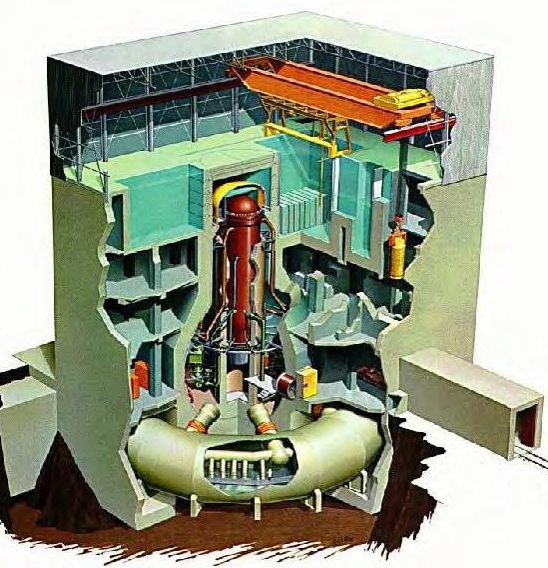
Picture of a Boiling Water Reactor Nuclear Power Plant like the Fukushima Plants. My dad refers to this image in his interview.

You can listen to all the interviews on the new vimeo channel Brandon and I created. You can also listen to most of the interviews on Brad Go’s YouTube channel.

Here’s the vimeo channel:


Brad Go’s YouTube channel: 


This evening my dad and I recorded our 15th interview on the Fukushima nuclear power plant disaster. Please see the rest of the blog (sidebar) for previous interviews. Please keep sending questions and comments to georneysblog@gmail.com. You can also follow me on twitter @GeoEvelyn but please do not send questions via twitter.

In today’s interview:
1. My dad gives his usual update

2. My dad talks some about high radiation levels at reactor #2 and potential sources of this radiation

3. My dad elaborates on the venting of steam from reactors and explains why venting of steam at the Fukushima Mark 1 nuclear power plants is different from venting of steam at American Mark 1 nuclear power plants, which have been retrofitted with design modifications

Hope to have an audio link soon. Here is the interview on vimeo:

Please see the announcement page for more information about these interviews:


If you have time and interest, please transcribe this interview. Our next interview will be on Friday, April 1st. Thanks to Kenyon, a transcript is now available after the jump. 


Transcript for Interview 15:
MARK: Hello

EVELYN: Good evening dad

MARK: Good evening.

EVELYN: Are you ready for our interview?

MARK: I am

EVELYN: Alright, let’s get started. My name is Evelyn Mervine, and this is going to be an interview with my dad, Mark Mervine, who is a nuclear engineer. This is the 15th in a series of interviews that we have been doing about the Fukushima Nuclear power plant disaster in Japan. Today is the 29th of March, and it is currently 9pm EDT. In today’s interview it is going to be the usual format: my dad is going to give an update—and there has been some more news about Fukushima in the last 24 hours since our last update; and then I’m going to ask him a couple of questions. With that, dad, why don’t you go ahead and get started.

MARK: Ok, actually I spent a fair amount of time today taking a look at the news from various different websites and there actually isn’t a great deal of news. I’ll editorialize in a minute. What we do know from today—and I’ll just briefly kind of give an update for those that haven’t been able to listen to the last couple of interviews. There are six reactors at this site, of which numbers one through four have been the ones of the most concern. Five and six were the least impacted, and they were able to get electricity restored to five and six sooner than the others. Both of those plants are in a cooled down, safe shut down condition. As a reminder there are seven spent fuel pools—on at each reactor and then a common one. As we’ve reported they’ve also been able to restore electricity and cooling to the common spent fuel pool. 

That brings us to reactors one through four. The progress has been slow at these reactors. To our knowledge they have electricity back to the control room for lighting, and they’ve been working on trying to restore instrumentation to some of these units, but it’s not been reported that they’ve had any success restoring any of the cooling systems to any of these reactors. The biggest news we’ve had in the past few days is that they’ve shifted from pumping seawater into reactors one, two, and three to pumping freshwater into those reactors. The other news in the past 24 hours is they’ve also shifting to using fresh water for the spent fuel pools. For reactors two and three they are now pumping fresh water into those spent fuel pools. For reactor two they are using a temporary motor driven pump, and reactor three they are using a truck with a pump to pump that water in; and they are making plans to be able to pump fresh water into the spent fuel pool at reactor four in the next few hours. So that’s the update, technically, from the plant. 

Now a little bit of editorilization here. We’re two–and-a-half weeks into this, and although it’s very much a very serious situation and we don’t want to take anything away from the efforts that a lot of people are making: risking their lives, making these efforts, working under extreme conditions to try to minimize the situation and prevent it from getting any worse. What I think is surprising now at the two-and-a-half week point is ‘where is the information on exactly what is going on?’ TEPCO has a lot of nuclear engineers, they run many, many nuclear power plants. They can certainly free some people up to do a better job of providing information and briefing the public. It really is almost impossible to get any kind of detail. In the first week when events were happening every day, and the situation was getting worse, I think you could understand that. But at this point, two-and-a-half weeks in, there should be complete and comprehensive briefings given every day as to the status of these plants. If you look at their press releases from today they’re incomprehensible…garbage, essentially.

EVELYN: Well, and we’ve talked about in the last couple days that organizations like the IAEA and the NEI have tried to step up their reporting efforts, but if they’re…

MARK: And they have, but…

EVELYN: …not able to get information from TEPCO, how can they step up their reporting efforts?

MARK: And they have, but at this point in the game, with as many resources as they have, it shouldn’t be that hard to put together a team of two or three engineers that can take the information from the plant and put together a comprehensive briefing on exactly what’s happening. I’m just really kind of surprised at this point. I…when we started doing these I had no idea there would be any value in us continuing as far as we have, because you would have figured by now—first off that they would have made a little more progress than they have, but second off that they should be able to provide fairly transparent information themselves at this point. It just doesn’t seem like it would be that hard to
me. With that being said I’ll step back now. It is very frustrating, and I know that people are kind of
counting on us to get information—and it’s very hard. I spent a lot of time today trying to get more
comprehensive information, and it just isn’t out there.

EVELYN: We both have full time jobs as we’ve said before, and my dad does a lot of time researching this. We do the best we can, but our reports are not going to be perfect. Part of that is because it is just so difficult to get information in one place that is easy to understand. If my dad, who is a nuclear engineer, has so much trouble, it must be extremely frustrating for the general public, as we’ve said before. It hasn’t, I guess, improved to the point where we feel we can stop doing these interviews.

MARK: For instance—how about a statement on just how much progress they are making on restoring electrical power. I mean, if the news isn’t good—give us the bad news. Give us some expectation as to when they’re going to be able to get cooling systems restored in some of these units. There is just no news…umm, it’s surprising—and shocking—to be honest with you.

EVELYN: Ok, do you have anything else with the update before I ask a couple of questions?

MARK: No, and I wish I could give a more comprehensive update. But…again, what we know is they are injecting fresh water into units one, two, and three, and they are now getting some fresh water to some of the spent fuel cooling pools. Other than that the status doesn’t appear to have changed a lot in the last 48 hours.

EVELYN: All right, well I’m going to ask you a couple of questions, then. A few listeners sent in today an article—I believe it was in The Guardian—and it was talking about there being some trouble with reactor number two. I don’t know if you can confirm this in any way, but the article said that there was a possibility that the fuel had actually…I guess…melted through part of the containment? It was actually sort of resting on the concrete base of the containment. I’m not sure what the evidence was for this, but can you comment on this at all? Have you seen more about that?

MARK: Ok, so what they’re talking about is that the fuel would have melted through the reactor
vessel. So there are supposed to be three barriers to the environment: the first is the fuel
cladding itself. The second is the reactor pressure vessel—which is a huge thick steel
pressure vessel that normally contains the reactor, and the water, and the steam, control rods—all
those things. And then the containment building, which is a steel and concrete structure around the
reactor that will contain anything that does leak out of the reactor if there was a leak.

I think…given the information that we have, that would be speculation on somebody’s part. I’m not saying that that isn’t the case, but I don’t know of any way to confirm it. What we do know is there’s very high radiation and contamination levels in the unit two turbine hall. How that got there is not clear. I think there are three possibilities:

–One: it is possible that the fuel in the number two spent fuel pool is damaged, and the flooding
of water from all the spray and the helicopters and those type of thing has carried a lot of that damaged fuel down in the building, to the basement…

EVELYN: We talked about that being a possibility at…number three…

MARK: Well, it’s a possibility at any of these plants, right…I mean, you don’t…

EVELYN: Yeah, I think maybe we were not perfectly clear on that yesterday. All the water, if it goes over those fuel rods and splashes out or something when they’re throwing it from helicopters, that can carry radiation with it if there is spent fuel damage, correct?

MARK: Correct.

[Two]: We also know that we vented a lot of steam, especially early on in this accident. That
was vented into the reactor building. We know that that caused the explosion. Unit two has the least
damage to its reactor building, but it does have some damage. Again, if that fuel was seriously damaged, then that radioactivity is in that steam. Some of it escaped, but some of it’s going to condense—and again, be washed down to the bottom.

The third possibility is that:

[Three]: That there could be some sort of leak in the containment building that with all this
water that they keep adding that some of that is leaking out into the basement of the building.

EVELYN: None of those are good things, none of those three options, right?

MARK: No. But what we do know is that for there to be this much radiation and radioactivity in
the basement of that building that it is coming from damaged fuel. There is a good probability that
both…that there is a significant amount of damage to the fuel in the reactor and, potentially, damage to the fuel in the spent fuel pool. So it could be from either of those sources, or a combination of both. But from other indications in terms of reports from the IAEA that reactor vessel water level in all these units is about half core-height, it seems kind of implausible that the core would have melted to the bottom of the reactor vessel and still have water in it, but again, without having more information as to exactly what’s going on it’s hard to actually give an answer.

It would be…as much as that person is speculating that the core may have partially melted through the reactor vessel, it’s speculation on my part saying that the radiation and radioactivity in the terminal is coming from spent fuel damage from either the reactor, or the spent fuel pool, or both. We obviously don’t have access to the precise radiation and contamination levels, we don’t know what else is going on in the plant, again—where is the transparency from TEPCO as to exactly what’s happening?

EVELYN: I feel like that should be an easy question for them to answer.

MARK: At this—again, early on we did question their transparency, but at the height of the accident
where there were explosions and things were getting worse every day…you might cut them some slack. But like I said, these people have lots of resources, they run lots of reactor plants. It can’t be that hard to get two or three reactor operators or engineers with knowledge of the plant to be able to translate the information that they’re getting, correlate that, and give some kind of comprehensive briefing.

EVELYN: Especially since there are so many international people involved with nuclear power who are offering them help. I mean, if they can’t do it, they could get help from somebody to do that.

MARK: Alright. Again, I can’t say…I can’t confirm it, I can’t totally rule it out.

EVELYN: Ok, well, let’s go on to the second question. I’ve received a few emails about this over the past few days. I think people are a little bit confused about what is going on with the venting of the steam–which I think is primarily hydrogen gas. I realize that one limitation is that you don’t know the exact design specifics of the Fukushima plants, but you’ve worked on similar plants. Can you talk a little bit more about what happens when they vent steam, where it goes, what that means?

MARK: Yes. I have to reference people back to that drawing that you posted several days ago…

EVELYN: I’ll post it again with this interview.

MARK: …as to the design of the containment of the Mark I containment. Let me just pull up the
picture myself so I can give people a good reference.

Ok, so in looking at that picture, down at the bottom is this round donut looking thing that is cut away.
That is the torus, and that torus is partially filled with water during normal operation. You
can see in the drawing some big pipes that come down at an angle, that are connected to a ring, and
spider/finger like pipes that go down underneath the water. What the concept of the torus and the water suppression are is that if you were to have a break in a pipe and be losing coolant—which would flash the steam obviously, then the water in the the torus serves as a suppression pool to cool that steam; the concept here was they could make the design of the containment a little bit more compact by having this water suppression pool to condense some of the steam and reduce the pressure within the containment structure. What they would have been doing to reduce pressure in the reactor vessel itself to allow first seawater, and now freshwater to be pumped in is they would be opening a valve at the top of one of the steam lines, and that would have a piece of pipe attached to it. That would be routed down and go into this suppression pool. So they were venting the steam out of the reactor and condensing it down in the bottom of this torus, or suppression pool. During operation, the Mark I containments are required to be oxygen free—they actually purge them with nitrogen so that there is no oxygen in there. The reason for that is to prevent an explosion inside the primary containment. So even if you get the fuel damage and the hydrogen, because there is no oxygen in the dry well portion of the containment, then you don’t have the oxygen to interact [with] and cause an explosion. Umm, let’s see…what else

EVELYN: So when they vent that, I guess there is some confusion about where that goes.

MARK: Ok, so there’s two different venting that would have went on. First, we vent steam into the
bottom of this torus, and it condenses. But eventually what happens if you vent enough steam,
then you start building up pressure in that containment building. In order to prevent exceeding the
pressure rating of that containment building, then you would do a second venting where you would
actually vent the containment. So initially we vented the reactor vessels, and we quenched that, but after a lot of doing that we build up a lot of pressure and steam inside the containment and
now we gotta to vent that.

EVELYN: And you vent that to the reactor building, or to the atmosphere, or both, or…?

MARK: Ok, and I think this is where a lot of confusion is coming from for people, because the original
design of these plants had that containment venting through a series of duct works and filters right in
the reactor building. There was a retro-fit required by the NRC back in the late 80s for all of the Mark
I containment structures—I think there are 23 of these in the US—to put in a hardened vent for the
containment. The hardened vents actually go into a fairly strong piping system that is outside of the
reactor building. If this particular scenario occurred at a US plant when they vented the containment, it would have been vented outside of the reactor building, and you wouldn’t have had the explosion of  the reactor building. Generally speaking, most regulatory agencies around the world follow the directions and guidance of the NRC. In this particular case, apparently, the Japanese government did not require those modifications to the Mark I plants.

EVELYN: Well, and we know there had to be steam building up in there because we had the
explosions—I mean, there is nothing else that can explain those explosions, correct? I mean…and we’ve confirmed that that’s why.

MARK: Correct. Again, this was a change in the design of the plants that was required for plants in the US, but it doesn’t mean that it was done to all the plants worldwide; and apparently it was not done to these plants in Japan. The other thing I guess I could comment on with respect to the containment is there was a lot of talk early on about—potentially—damage to the core in Reactor Two, that there was some type of explosion. There were also modifications ordered by the NRC to the torus areas of these containment designs to strengthen them. There were I think…three or four separate modifications that were done because after these plants were built there were studies that realized there was going to be a lot more stress and loading on some of this piping than was originally considered when the plant was built. Each of the utilities have had to go back and implement three or four different design changes and strengthen or modify how, exactly, some of those pipes are connected down in the torus. It’s again speculation, but my guess is that when this is all said and done and done, there may be something to be learned where whatever was going on in Reactor Two, the stresses exceeded the capability of some of that piping that you can see in the cutaway picture—and that may have been the source of the explosion that they heard. It might have just been simple failure of some supports or some piping. You would not expect a hydrogen explosion within the containment because it is inerted with nitrogen.

EVELYN: Ok.

MARK: Ok, so again as a recap—the first venting we would do would be from the reactor vessel down a pipe, into the bottom of this dry…excuse me, torus, where the water would quench it. But if you keep injecting water, and keep venting, you’re going to build up enough steam and enough pressure with-in that dry well portion that you’re going to have to relieve the pressure of the containment—not the reactor vessel, but the containment. And the way it was obviously done at this plant was through this old method, because apparently they didn’t have the design change for the hardened venting, and that was within the reactor building. Again, speculation, but I assume since they’ve reported on Units Five and Six that since they’ve removed some roof panels or drilled some holes, that they didn’t do the modifications on those units, either. As much as we might criticize TEPCO—and we should—because they certainly were aware, made aware, by GE that the US was requiring this and they could have undertaken it themselves—but also, where was the Japanese government oversight to require these changes?

EVELYN: Well, I think there will be many hard lessons learned from Fukushima. I know the NRC is taking an active role in looking at all the US plants, but I hope Japan is does that as well. If that problem is at these plants, at Fukushima, who knows how many other plants this might be a problem at—not just in Japan, I guess, but worldwide.

MARK: So I know that our own regulatory body, the NRC, is not perfect, but this is one case where they did require these changes, and these changes were made at all of the plants that have this containment design in the US. I hope that clears it up for people, because I think people were confused because they see online what the NRC is requiring, and they’re wondering ‘well, if they have these vents outside the building, how are we getting explosions inside the building?’. The way that we did that is apparently these plants did not get those design changes.

EVELYN: Ok, well thanks for commenting on that, dad. Do you have anything else before we end the interview for tonight?

MARK: I don’t. Again, I really think that after this much time they just really have to step it up and
provide more information. It’s kind of sad that different people around the world have to speculate
on what’s happening when—again—they have a lot of resources at their disposal, and they should be
providing a comprehensive overview that just isn’t happening. Again, what happens is…they’re…if they have any credibility left, they’re destroying it by not being transparent.

EVELYN: As happy as we are that these interviews can help people, we’re not working on this full time; we don’t have the resources that they have, we don’t have the information that they have, I mean…this isn’t really our job to be doing this. But because there is so little cohesive information, we feel that we have to do these updates to the best of our ability. We try, but it’s not perfect and, really, it would be great if TEPCO and the Japanese government, and different organizations could step up so that we wouldn’t have to do these updates so we wouldn’t have to do them—and they could do them much better than we could, that’s for sure.

MARK: Do you have any other questions?

EVELYN: That’s it for tonight.

MARK: Ok, I’m not going to be able to do another interview for a couple days, because I’m going to be on an airplane, and be on another continent, but hopefully we can get together on Friday.

EVELYN: We’ll plan on doing that Friday. My dad will be in Europe, but we’re going to try and arrange a time so we can talk on Friday. That will be our next update. If you have any questions, send them in, and if there is developments over the next couple days we’re sorry, but we won’t be able to comment on that until Friday. So that’s it!

MARK: Alright, thank you Evelyn, goodnight.

EVELYN: Ok, goodnight dad!

26:36. End Interview.

14th Interview with My Dad, a Nuclear Engineer, about the Fukushima Daiichi Nuclear Power Plant Disaster in Japan

You can listen to all the interviews on the new vimeo channel Brandon and I created. You can also listen to most of the interviews on Brad Go’s YouTube channel.

Here’s the vimeo channel:


Brad Go’s YouTube channel: 


This evening my dad and I recorded our 14th interview on the Fukushima nuclear power plant disaster. Please see the rest of the blog (sidebar) for previous interviews. Please keep sending questions and comments to georneysblog@gmail.com. You can also follow me on twitter @GeoEvelyn but please do not send questions via twitter.

In today’s interview:
1. My dad gives his usual update

2. My dad addresses my question “How does Fukushima compare with Three Mile Island and Chernobyl?”

3. My dad answers two questions from listeners: “How will they increase shielding at the Fukushima nuclear power plants now that the cooling water is more radioactive?” and “Is there a way to fingerprint radiation as coming from a specific nuclear power plant?”

Here is a website we refer to in today’s interview:


Hope to have an audio link soon. Here is the interview on vimeo:

Please see the announcement page for more information about these interviews:


If you have time and interest, please transcribe this interview. Our next interview will be on Tuesday, March 29th.  Thanks to Dave, a transcript is now available after the jump. 
                                                                                                      
Transcript for Interview 14:
Q:      Good evening dad!
A:      Good Evening.
Q:      Are you all ready for the interview?
A:      I am.
Q:      Ok.  Let’s get started then.  My name is Evelyn Mervine and this is going to be an interview with my father, Mark Mervine, who is a nuclear engineer.  This is actually the 14th interview we have done over  the past few weeks about the Fukushima Daiichi nuclear disaster in Japan.  If you’d like to listen to any of the previous interviews, or read them (many of them have transcripts), you can do so at my geology blog, georneys –  which, I guess is more of a nuclear power blog these days, but will return to being a geology blog.  But, that’s G E O R N E Y S – georneys.blogspot.com   and because we are doing many of these interviews, I just want to quickly state that today is the 28th of March and it is currently 8:40 PM Eastern Daylight Time.  And, in today’s interview, we are going with our usual format, where my dad gives an update on the events at Fukushima;  And, our last interview was actually about 48 hours ago, so it will be a 48 hour update.  Then, I’m gonna ask him a couple of questions that were sent in by listeners.   So…with that, dad, why don’t you go ahead and get started with your update?
A:      Alright.  Good evening.  So, as a reminder to everybody, the Fukushima 1, or Fukushima Daiichi power plant actually consists of six reactors  and, we’ve been most concerned about  units 1 through 4; units 5 and 6 were least impacted, and, were shut down at the time of the earthquake and tsunami and were the first to be able to get some kind of electrical power back.  Those two units are in cold shutdown and are of no real concern to us at this point.  We also talked about the spent fuel pools at the site;  there are seven, one at each reactor, and then one, shared or common,  pool.  And as we were able to report, they were able to restore electrical power and cooling to the common pool, and, that has not been a concern to us for the past several days.  so..we turn our attention to units 1 through 4, which have been the source of most of our concern, and, in terms of bringing people up to date, on site power has been partially restored to each of these units.  They have electricity for lighting in the control room for each of these units and they continue to work on restoration of instrumentation  and pump and valves that will, hopefully, allow them to restore some type of normal high pressure or low pressure cooling  or injection into the reactor core. 
Q:      Can I ask a quick question?  The cooling right now is still kind of  the system they rigged up with sea water, except they are using fresh water now, but it’s not in any way the normal cooling system for these reactors that they are using right now?
A:      Correct.   The biggest…the two big changes in the past several days;  the first was, that we reported on in the last couple of interviews, is that they have shifted over to fresh water for injection into reactors 1 through 3.  Per my people, unit 4 was shut down for refueling and maintenance at the time of the earthquake and tsunami, so all of the fuel has been removed from it and moved to the spent fuel pool, so,  there is no concern about the actual reactor or containment of unit 4.  The other thing that is unknown is, that for most of the duration of the past two weeks  what pumping was able to be done with seawater was by diesel powered pumps.  And now that they have some electricity back, they’ve shoved it over to  electric powered pumps. 
Q:      But those are still temporary pumps.  They are not the normal pumps used for cooling, correct?
A:      Correct.
Q:      Ok.  I just wanted to confirm that.
A:      The other thing that they’ve been doing, They have been continuing to use fire trucks and the concrete pumping truck to pump sea water into the spent fuel cooling ponds at units 1 through 4.  And, also, today, it was indicated that they hope, going forwards, instead of using seawater they will be able to use fresh water now to pump into the spent fuel pools.  And, as we had reported, the United States had sent two, large barges full of fresh water, to a port nearby, so they will, I assume, truck the water from these barges to the plant.  So, they have a fairly significant supply of fresh water available to them now.  And, the reason that is important is – as we had reported – we were really in uncharted territory where we got a significant quantity of sea water injected into these reactors and  as the water boils off, it will leave the corrosive salt residue behind, and the concern is, of course, making even more difficult  to cool the fuel, and, the potential for clogging the pipes, the valves and the pumps, once they are able to restore some type of normal cooling.
Q:      Ok.  I’ve got two quick questions for you.
A:      Yep!
Q:      So…spent fuel pools numbers 5 and 6 – those are at the stabile reactors that are in cold shut down –  Are they using their normal fresh water and normal pumping for those pools?  Have they been doing that all along?  Do you know?   For those two pools? 
A:      That’s a good question.  And, the answer is I don’t know for sure.  My belief is that that is the case, that they never had  to add any seawater to those units, so that is what I would believe.
Q:      I know they haven’t had to add seawater to the reactors, so, presumably  they probably would not have added seawater to that.
A:      I do  believe that they might of…I do believe that…Well, I am not 100% sure that they might have  added a little  seawater to the common spent fuel pool, but they do have electrical power restored to that, so, if they did have to add some seawater, they, by now,  made good progress in diluting that and  cleaning it up.
Q:      Ok
Q:      so it sounds like reactors 5 and 6, including their spent fuel pools and also the common fuel pool are in pretty good shape right now and are sort of stable.
A:      Right;  and one of the….One of the …  Obviously they were less impacted by the tsunami to begin with, but, the biggest advantage they had was the physical separation.  If you look  at a photograph, units 1 through 4 are close together, then there’s a significant space, and units 5 and 6 are close together.  So.  They didn’t incur  damage from any of the explosions…
Q:      The four explosions that happened.
A:      We know, for example that we had some cooling in unit 3 that we lost when we had  the explosion in unit 4, and, they thought that was because of the damage caused by the explosion of unit 4.
Q:      Ok.  My second question for you is:  I know we have talked  before about adding boron to the seawater.  I presume they are still adding boron to the fresh water, cause we are concerned about fuel damage so they probably are trucking in this water, and adding boron, which absorbs neutrons and keeps those fuel rods from interacting with each other.  Is that probably what they are doing?   I don’t know if you can confirm that…
A:      well, I can’t 100% confirm it, but, that’s what was reported and that would be logical.
Q:      Ok.  I just wanted to check on that point.  Sorry…go on with your update…
A:      Ok.  The other thing that has been a big news item, obviously, is the radiation and contamination levels that they found in the turbine halls of these things.  And…we talked a little bit about this last time, and, I think it’s important for people to have a perspective.    There was a report that the radiation levels were, I don’t know…a million times normal or something, then, it was retracted and they said “oh no, they were only 100,000 times normal”.  Ah.  Well, Ok…That’s great, but, what’s normal?  In these turbine halls, even those in a boiling water reactor, you would expect that the background radiation level would be almost zero, and, certainly, when the plant is shut down, they would be zero.  So…even though the steam and the water in the pipes would be slightly radioactive, and when the plant was operating you would see some slightly elevated radiation levels, once the plant  shuts down, the radiation levels would drop, and, certainly you would not expect  any particulate contamination in the building, outside of what’s physically in the pipes.  So, saying it’s any percentage above normal isn’t really  a good measure,  doesn’t really tell you anything other than being maybe a sensational report,  in that it’s almost nearly zero, ah, so virtually any level could be 1000, 10,000, or 100,000 times the normal level.
Q:      I mean, zero times a big number is still zero, so, I mean it isn’t exactly zero….
A:      If the normal was 0.001 something, then, you can multiply that by a large number and still not have a very high radiation level.  So, what’s important in reality is what are the actual radiation and contamination levels in absolute numbers.  Not in a multiple of what it normally is.
Q:      It’s a little bit deceptive for people, because they hear that multiplier, which is huge, and, they panic.  And, it’s not that there isn’t a radiation concern, but, it’s sensational.
A:      It makes for a sensational news story.  Now, with that having been said, there have been actual reports of levels that have been quite high, but, I think it’s important not to get carried away with 100,000 times, or a million times normal because normal levels would be almost nothing.  What is important is what are the contamination levels and what are the dose rates and they are quite high, apparently, in the bottom of the turbine hall and some of these piping trenches.  And some of the speculation from early reports was Oh!  We have a breach in the containment.  Well, I cant’s say if we do or if we don’t, and, honestly, I would say at this point, it’s probably irrelevant because the big…the big goal of containment, obviously,  is to keep any radiation that would be released due to the damage of fuel inside of containment from getting out into the environment.  But, unfortunately, in this case we know that we’ve got damaged fuel, in at least one of these spent fuel pools, and at least unit 4, and potentially some of the others.  And…because we’ve had to take these extreme steps of to drop water from the helicopter, spray it with a fire truck, pump it in by concrete pumping truck,  we know that some of that…actually we know only probably, of all the water that’s imported, only a small percentage, or, less than half, actually, went where it was intended to go.  And the rest of it washed down…ran down into the basement.  The other thing is, and, we know, because we explained this early on, that they only had these relatively low pressure pumps – these diesel pumps –  pump seawater into the reactors, that they had to lower the pressure in the reactor by venting steam.  And, we know that that steam was vented into the reactor building which caused them to have the hydrogen explosions which we explained  and, so, we know that whatever was in that steam also got out into the environment and certainly, by spraying of this water has washed down to the lower levels of the building
Q:      So, it sounds like we should be concerned with radiation being released into the environment because we’ve already had significant radiation released into the environment.  Not that there’s going to be, but, it’s already happened and we just need to keep it from getting worse.
A:      Well, let’s clarify this.   Right now, we have water and particulate contamination at several of the units at Fukushimi 1.  This is probably….probably  not a concern to the countryside.  It’s different from when we were having to do a lot of venting and a lot of materials carried up into the atmosphere.
Q:      Um hum…
A:      There’s still some happening obviously, because when they pour water on these units we still see steam so there’s still some small release of radiation taking place, but, not…and radioactivity….but not to the extent that we had, you know,  a week or ten days ago.  The more likely scenario here is some of this is getting out into the ocean, and, you know, is causing some of the elevated levels that we are getting from  the readings they are taking from the ocean.  So, I just…I want to be clear that there shouldn’t be a concern about this water contamination in the turbine hall continuing  to spread to farmland and those type of  things in the air.
Q:      It’s basically the major radiation is basically confined to the plants and so the only people affected by it are the ones that have to work in it.  I mean, that is a concern because you do need people to get in there and operate these plants , and fix these plants, right?
A:      The contamination rates and dose rates are impacting the workers, no doubt.  But what they’re trying to do is clean up this water, but the problem is that there is a lot of it and where to put it.  In a couple of these units they were actually pumping it into the condensers, so if you remember, way back in the beginning of the interview, we explained that  the reactor generates steam that goes through pipes and drives a turbine.  Attached to the turbine is a generator, and that’s how we generate electricity.  But, then, that steam has to go into a condenser, and be cooled, usually by intake seawater on the other side of the condenser, which cools the steam and turns it back into water, so, the condenser has a lot of room in it, so, they’re trying to pump some of this water into the condenser and, basically, use the condenser as a big tank…which is a good idea.  You basically have a big tank sitting there, that you’re not going to use again, so why not take advantage of it?
Q:      Eventually, you’re not using that water, and it needs a temporary holding place so it’s not going in places where people need to be working, repairing things, so it sounds like that is a good option
A:      it’s a good, temporary solution.
Q:      Ok.
A:      The other thing that we saw in the news in the past day or so, was that they’re detecting plutonium in the soil.  Ok.  So…if you actually read the article, it’s true, they did detect plutonium in the soil.  But…the levels were extremely low.  I mean, barely above what you would find if you took any sample of soil and sampled it for plutonium.  So, many, many places around the world, because of all the nuclear testing that was done over the last 50-60 years, you’re going to detect small quantities of plutonium.  So, again…that was the headline, but, if you read the whole article, there really isn’t much of a  concern  there, and, none of us should really be shocked by this, because we’ve explained over and over again, that, although unit 3 did use MOX fuel, plutonium exists in all fuel rods once they have been in the reactor for a significant period of time.  Actually, I wanted to thank one of your listeners…one of your listeners sent you a link to a paper that was done by somebody from the American Nuclear Society, and, it did clarify the amount of MOX fuel used in unit 3.  and…it was only 32 fuel assemblies, which is only about 6% of the core.   So, we had said we knew for sure that it was no more than 1/3 because they had only started using it during the refueling last Fall.  But, in fact, it was a much smaller amount, so, given….given the small number of fuel assemblies that were used, I think we can stand behind our comment that we didn’t think that the core from unit 3 was really any more significant than any of the spent fuel pools or the cores in the other units.
Q:      And as you said, several times, they’re all dangerous, whether they use MOX fuel or not.  They’re all bad.
A:      It’s all bad.  It is true that a Mig Oxide fuel assembly would have more plutonium in it than a normal one, even a normal used one, but, most reactors cannot operate with a full core of MOX fuel cells, because it does change the, and again, we said this isn’t a really good word, but,  it does change the burn properties of the core, and so it  changes the power distribution and the power density in different parts of the core, so it would have to be engineered correctly, so, most of them cannot do 100% Mg Oxide anyway, so we knew it only going to be 30% to 40%  of the core and, in fact it was only about 6%.  But, again, the point is…we knew we had some fuel damage.  We know all fuel has plutonium in it so, it shouldn’t be a shock that we would have some level of plutonium contamination in some of these areas. 
Q:      Just speaking again, quickly, on the radiation that was released;  just to clarify.  A lot of news  reports they talk about this being either similar to  or different from to Chernoybl  or Three Mile Island.  I mean, I think we’ve covered this before, but, we’re not expecting to get a major radiation release like we saw at Chernoybl, right.  I mean, this is a different situation and a different type of plant.  Can you comment on that?   I know you did that right at the beginning, just a little bit…actually a friend was asking me about this just tonight…is this like Chernoybl?  Is this worse;  is this better?   Sorry to spring this on you dad.  Just in terms of the radiation released into the environment,  there was much more released at Chernobyl.  Is that true?
A:      At the Chernoybl plant you actually had an explosion of the core and, this is a refresher, it was an entirely different kind of nuclear power plant than  is used by traditionally what we  call The West.  In the West there are two types of reactor in common use.  There is the Pressured water reactor and the boiling water reactor.   Both types are water cooled, water moderated reactors and, the Chernoybl reactor was graphite moderated and they were conducting a test, and had over-ridden safety features.  Those reactors are not inherently stable, like a water moderated reactor and, the core actually exploded and caught fire, and these plants did not have a containment building, so,literally, the entire core was released to the environment and because of the explosion, and because of the fire, a lot of radioactivity was carried up in the atmosphere and spread, pretty much, world wide. 
Q:      And eventually, they had to put a sarcophagus over that.  Right?  So…
A:      Yes, and   now, they’re actually  building  a new one around that one to  further contain it.
Q:      I mean, is that the sort of thing they could ever  build at Fukushima?  I know it is a different type of plant and a different amount of radiation being released, but, eventually, might they do the same thing at Fukushima?
A:      I don’t think…I don’t think we’ll go down that route and I’ll explain that  in a minute.. 
Q:      Ok…sorry to spring that question on you, but, I had that question today, and I was not 100% clear on it myself.
A:      Well, let me pull the other question…Then we go to Three Mile Island which is actually coming up…I don’t know if it is today or tomorrow on the 32d….
Q:      I think it just happened actually.
A:      In that case, we had virtually no release of radiation or radioactivity into the environment and eventually after a number of years they were able to fully decomission that unit, and, I think the big thing was after four days, the situation was  under control.  We’ve got something in between here. Now, we talked about this in some of the other interviews.  Law experts are saying “well, if Three Mile Island was a 5 and Chernoybl was a 7, then this should be a 6”  And, I think it’s really how you literally interpret the scales, and, I’m not sure it really matters, to be honest with you.   It’s definitely worse than Three Mile Island because so much radioactivity has been released into the environment and the fact that  we have multiple reactor cores and spent fuel pools involved.  It’s not as bad as Chernoybl because we did not have this catastrophic explosion and fire, and, the spewing of, basically, an entire core into the atmosphere and surrounding countryside.  So, although it’s been a long, tough road, the containment buildings have done their job.  The situation that…you know, you hate to use 20/20 hindsight…but, the situation that we should have taken more care to prevent was the damage to the spent fuel pools.  The potential and, I don’t know, When we’re finally able to get up there with a camera and see, I am sure we will find damaged fuel in those spent fuel pools. We need to find a way to prevent that from happening, because I think, from where I sit, and of course, I may be proven wrong at some day in the future, but in light of the problems that we’re having now in terms of the contamination levels in the water at the plant, is probably a result of the spent fuel pools.
Q:      Certainly, they were pouring a lot of water in there  and it wasn’t hitting it perfectly, so some of that water was washing off, and, highly radioactive
A:      My point was, you know, we had actually brought this up before they really started having problems…was, you know, they could have gotten or something up, and refilled those pools and avoided this whole scenario. Certainly, you know, with unit 4. So, again, we weren’t there.  We weren’t dealing with what those people had to deal with, but, perhaps, a little bit of action a little bit quicker,  the actions they ultimately did take might have mitigated it a little bit.  But, it is what it is;  we are where we are, from my perspective, it’s definitely worse than Three Mile Island, not as bad as Chernoybl…somewhere in the middle.
Q: Ok.  That’s a good question to hear, because I know we asked that question at the beginning  and, at the time, you said it was at least equal to Three Mile Island  and, now, it sounds like you’ve rated it as being worse.  It’s good to know where it is on that scale.  So…
A:      And I think the other important thing to point out is that we are not out of the woods;  This is not over   It may not be front page news to the extent that it was two weeks ago, but, you know, here we are, two plus weeks into this, and we don’t have a single cooling system restored at any of the four, impacted units.  There’s a long way to go before we can consider these plants to be safe and not at risk of any additional releases of radiation into the environment.
Q:      From both the reactors and the spent fuel pools.
A:      Right.
Q:      Which, uh,  Correct me if I’m wrong, but we had the earthquake and we had…which, I don’t think there was too much damage from the earthquake, the plants pretty much withstood the earthquake well…And there was the tsunami, which did have flooding,  which affected the generators, and affected some of the electrical systems;  and then, finally we had an explosion, correct me if I’m wrong, each of those four plants.  We had explosions in three reactor buildings, then, spent fuel pool number 4.  Those explosions have done significant damage to all of the, sort of, controls, and regular cooling systems so even if they have power restored, there’ve been just a lot of things that have been destroyed,   right?
A:      Well, they have very limited power restored.  So, power to control room lighting; power for cooling pumps for units 5 and 6 and the shared spent fuel pool.  They’ve got electrical pumps instead of diesel pumps for the fresh water injection that’s taking place, but, not a significant amount of progress   in terms of restoring electrical power to instrumentation or cooling systems in the plant. 
Q:      And I mean, looking at the pictures, And we were talking about this earlier, there’s just so much damage to those plants, right, from the explosions and flooding or whatever.  It’s gonna be an enormous task to restore all that isn’t it? 
A:      And now it’s being impeded by the high radiation and contamination levels so that’s why they are taking steps to try to mitigate that and, as we indicated, try to pump this water into the condensers or somewhere else in order  to drive those radiation and contamination levels down a little bit, which will enable…make it a little easier to work.
Q:      And meanwhile we have a cooling system which is temporary and, not ideal at all, right?  So, its not the most stabile of situations, right?
A:      And, it’s not really a cooling system.  We’re just pumping fresh water in, and monitoring the pressure.  If the pressure gets too high, we have to vent.
Q:      And that releases more radiation into the environment.
A:      That’s not the normal cooling system, and, just so we’re real clear here, the best they’ve been able to do is cover about half of the core of these units.  That’s how high the water level is.
Q:      So there’s still lots of fuel exposed.
A:      If it’s still there.  If it’s not a melted blob.
Q:      Oh, my God.  Wow!
A:      Ok?  Just to be clear, we are by no means in any kind of safe condition with these reactors. Um…As we’ve indicated, The good news is that it’s not getting any worse.  Every day. It’s getting a little better, but, we have a long way to go
Q:      Why can’t they fill the water up?  Is it just being…is the heat just high enough that it evaporates as soon as they put it on?
A:      I think…I think there is some regard for minimizing the amount of radioactivity they release into the environment. 
Q:      By venting that steam?
A:      Right.  So what…Basically what they are trying to do. I think,  is  hold their own and not make the situation any worse until they can restore some high-pressure pumps and finally fully flood  so then have the cooling turn off the heat.
Q:      So, they’re still using these low-pressure pumps which, basically, they can’t cover the core with those because  they don’t work when the pressure is too high.
A:      Well, it’s a balance of if I still have heat, I’m going to be generating steam.  If I generate too much steam, I’m going to generate too much pressure, which means I’m going to have to vent to the atmosphere, which you don’t wanna do, right?   You don’t wanna leak any more radioactivity into the atmosphere then we have to, so, it’s a balancing act.  
Q:      And if they don’t vent it, there could be an explosion within the containment itself?  Which is why they have to vent it even though it’s a bad option?
A:      We…If We…you have the reactor vessel itself,  and then you have the containment around the reactor vessel, so, depending on exactly what we are venting and where, if I was to vent within the containment  building, and allow too much pressure to build up in the containment building, I could jeopardize the containment building.  And, of course, I don’t really want to vent any more to the atmosphere from the containment building, so, like I said, it’s a balancing act.
Q:      they need to get those high-pressure pumps working as soon as they can…and  they have none working at any of those three reactors.
A:      We need to get, ah, some type of higher pressure pump, and, also the capability to provide coolant. 
Q:      Ok.
A:      Alright….One further update then I’ll pull you out a couple of  questions.
Q:      Um Ha.
A:      I think today, in particular, there is a lot of good information on the International Atomic Energy Agency website (the IAEA website) so, that’s http://www.iaea.org.  They actually have Some slide shows listed that you can watch in your web browser.  And, there’s status of the plant; there’s information on  sampling that they’ve done in Japan, both water and particulates…
Q:      That’s great, because we talked about that yesterday, that there wasn’t good information that you could find yesterday…On Saturday, rather…
A:      Yea, its not 100% clear, in terms of, OK, this is the level and this is what it means, but, it is there.  And, there’s also a slide show on the water samples they’ve done in the ocean.  And, they  show those results over four or five different  days.  So, I think that’s great.  I know you posted the link there yesterday, but, people should definitely go  check it out.  A lot of good information there  today.
Q:      Excellent. 
A:      Right. So, what have  you got for questions?
Q:      I have a couple of questions from listeners.  And, these might actually  be two questions from a single listener, but, I’ll just go ahead and ask the questions.  SO, I know you’ve talked about this a little bit before, but, one listener wanted to know about the additional shielding they might have to add to the plants cause, now, we’re not in a normal situation, as I think you emphasized in today’s interview and previous interviews, so a lot of the pipes the different equipment that is transporting, I guess, mostly water that normally wouldn’t be very radioactive has now become quite radioactive.  So, for people to work in the plant, in sort of the normal way, they are going to have to increase the shielding from what they normally have.  And,  I guess he wanted you to talk a little bit about how they might go about increasing the shielding in the plant, making the plant safer, so people could continue to work there for many years because, I mean, even if they get this situation stabilized, from what I understand, it’s going to be many years until the fuel cools down and they…they’re going to have to monitor this for many years so they’re going to have to increase that shielding so, just talk about the practicalities of how they might do that.
A:      Ok, so, it’s gonna depend a certain amount on the actual, physical construction of each of the units, and, although  the plants are similar, they are probably different, because they were, ah, built at different times.  Unit 1 is actually a smaller plant, then, units 2. 3 and 4 are  very similar in size but the physical layout may be slightly different, because  as nuclear power plant design was kind of evolving, in the era these plants were built;  and,  unit 6 is actually a completely different type of boiling water reactor – ah – the next generation after, with a  completely different containment design.  A Mark 2 instead of a Mark 1.  but, generally speaking, in a nuclear power plant, it’s not – these pumps and valves won’t all  be all in one room.  They’ll be on different levels;  They’ll be in different compartments, so there might be a compartment where the two pumps are located, or,  depending on the design, they may have had physical separation of the ?????  so they are not in the same compartment.  But, what I’m trying to say is;  some of this piping and valves and pumps may be in semi-isolated compartments behind concrete walls and those type of things, so, what they’re gonna have to do for shielding will vary a bit based  on the exact layout of the plant and in some cases, the concrete walls that are already present may provide enough shielding to reduce the radiation enough that it is not a significant danger.  In other cases, where there may be openings in walls for doorways and windows and that sort of thing, they may have to put up  shielding.  And, that could be in the form of lead blankets that could be hung, or it might be in the form of concrete block – solid concrete, obviously, -that they could bring in.  And, in some cases if it’s a localized, high radiation spot, they may actually put like a lead…a sheet of lead, that was designed to be hung, on some sort of temporary form.  So, it’s just gonna vary, based on the layout of the plant.  But, the key is that the water that normally flows through the system, , which is usually slightly radioactive, given the extent of damage that I think exists with the core, that water is going to be very radioactive  and so the radiation levels will be much higher than normal, so there’s no doubt the are gonna have to take extra precautions, and, there’s gonna be some, if not a significant portion of the system that will have to have extra shielding put around them.  It’s kind of hard to explain, but, if the piping comes out, and went into a heat exchanger, and the heat exchanger sat in a concrete bay by itself, that concrete bay may provide enough shielding except  when you physically went into it, you might not have to do anything else, except in the opening where you would go in. to inspect it. 
Q:      Although, this questions a .little bit putting the cart before the horse, because, before we can think of all the details of long-term safety at the plant, we need to get the basic cooling up and running.  I mean, I don’t think they are thinking about shielding every little pipe
A:      No, but, the point is, That when you, …Once you’re able to get these systems working, the minute you turn it on, you’re going to have these really high rate  issues  ????.
Q:      So that’s why they do the shielding before they turn it on.
A:      That’s why you have to give some consideration to it beforehand, because once you turn it on, you aren’t going to be able to get in there to put the shielding in place.
Q:      Yep, That’s a good point, I am sure they are thinking about all these things.  Ok…So, I think you’ve answered that question.   So, the second question…
A:      I did…I did to the best of my ability, and tried to think of another analogy., And, well, it’s like if you had a big tank of radioactive water, but, it was in your basement,  If you were standing outside your house, you may not have the radiation level, but if you were standing in your house over the top of it, maybe you would.  So, you might put a sheet of lead on your floor…
Q:      (laughs)
A:      that would keep it from coming up.  It’s going to depend on the physical construction of the plant and where these components are located, whether they were in individual compartments already  or not.
Q:      Well, as we have talked about many times,  we have never been in a  situation of this kind before,  so, many of these adaptations, they are just going to have to come up with.  It’s not like there is a handbook that tells you how to deal with this situation.  I mean, We’re  beyond the worst case design  cases for these plants, so they’re having to improvise pretty much everything right now.  Would you say that’s true, Dad?
A:      there is no manual for the situation we’re in, that’s correct!
Q:      but, as we said, there are many smart people working hard on this, so hopefully it will be under control soon.  But, it does  seem like it’s quite a serious situation at those four plants.
A:      Well, I think there’s some definite good signs in the past week.   It’s pretty clear they’re getting advice from the outside, and a lot of advice was given to them with respect to the use of fresh water.  They’re obviously getting a lot of support from the United States on that, so, very clearly… early on, it may have been all Tokyo Electric Power company, but, now, clearly, there are a lot of smart people engaged, and they’re getting a lot of advice, and, they are definitely taking the advice, and, the key is, the more information that TEP co. shares with experts around the world, the more help they can get in coming up with solutions to solve these problems.
Q:      It sounds like they’re being somewhat more transparent.   I mean, there’s no saving these plants, and, uh, there have been significant radiation releases, so they need  to just get them in a safe situation.
A:      How transparent they’re being is still to be determined. Because, as we said, just a couple of days ago, the Japanese   government was very stern with them with respect to  lack of transparency, so, again, there’s a lot of people willing to help, a lot of smart people out there  I hope they’re taking advantage of all that. 
Q:      I hope so too.  Ok…So, let me ask the second question for tonight, and, then we’ll wrap up,
Someone wanted to know…I mean, we’re in a situation here where we haven’t really been before, where we have six nuclear reactors  that are in trouble, and, also, In Japan there are, I forget, I believe he said there were 54 nuclear reactors in Japan.  Is that right;  a right number?
A:      Something around that
Q:      There’s about 50, let’s say…so, Japan relies heavily on nuclear power and I think that we have been fortunate that only one, I guess, system of nuclear power plants has been affected by the earthquake and tsunami in a significant way.  But, this person they said they wanted to know, if you have radiation in a place in  the environment that’s far away, for instance, .Tokyo, is there any way to tell which reactor it came from?  Say you had not only Fukushima at Fukushima Daiichi, but, you had another plant which was also having trouble, would there be any way to tell, sort of, fingerprint  that radiation source?
A:      Well, that’s a good question, and, really it’s not my area of expertise.  I would think that, in some respects that might be possible because the fuel for these reactors is custom made, and, I guess if you knew the exact core makeup and the amount of years it had been in service, you could probably get a fingerprint, but, in this particular case,  We’re pretty sure where the radiation’s coming from.  With that being said, people have to keep in mind that there’s always radiation in the environment.  We talked about the radon gas in the US that’s buried…that’s found a lot.  In some of the….
Q:      Rocks, Dad (laughs)?
A:      You Know, I was going to say that it’s found a lot in the East, in the mountain areas, but, in fact, I think it’s pretty prevalent probably throughout the US, because there’s a certain amount of uranium in the crust of the earth everywhere, and, you’re gonna get radon gas pretty much. Pretty much  everywhere.  We know that there’s radioactivity from cosmic rays.   I mean, We talked about in one of our interviews, that  airline crews get a lot more radiation than the average person because  they’re flying higher in the atmosphere where there’s less shielding.  SO, there’s always radiation in the environment, and, actually if people look at the information that’s on the IAEA website,it shows the radiation levels in Tokyo, kind of on a graph over a few days, and, it’s pretty much at a normal background level right now, so there’s always some radioactivity out there, and, when you see it going up,  or more  in the environment, I guess in theory you could fingerprint that to a source, but, again, that’s not my area of expertise and there’s no other plant that havehad these kind of issues, so, I think we are pretty confident that we know the source. 
Q:      I think this person was wondering if there was any possibility that any of the other nuclear plants in Japan were having troubles as a result  of the earthquake.  And, see,now we did talk about one   plant that did have problems initially, but, now they are in cold shutdown, that was the Fukushima 2.
A:      that was the Fukushima 2 plant which is about seven miles to the south.
Q:      I think it would be pretty clear if there were troubles with any of the other plants. I mean, that would be on the news, I would hope.  (laughs). So, I think its clear that the radiation is coming from  the Fukushima Daiichi…
A:      And the other thing that people do not talk about is that there is a lot of radiation released from a coal plant.  So, when you crush and burn that coal, you release a lot of that radon, and, it goes up the smokestack.
Q:      Into the atmosphere.
A:      And, uh, again, the point is, there’s a lot of naturally occurring  radiation and, if the people are expecting the samples to be zero, they’ll never be zero. 
Q:      Well, and you talked about this before…you have to know that everything is radioactive  to an extent.   We all have traces of uranium in us.  And, the rocks that I study, for example, have trace amounts of uranium in parts per billion, which, sounds pretty small,  but, believe it or not, I can crush that rock, and extract that uranium, and actually measure it.  But, all the geological samples I work with, even things that have high levels of uranium, and, we’re talking here about parts per million, so, the key is not whether the radiation exists or not, it’s  whether it exists at a level high  to be harmful to human health.  And, that is what we’re concerned with here, not is there zero radiation, because as he said, there never will be zero radiation.  Everything is radioactive, just some things are more radioactive than others. 
A:      And so, as we’ve mentioned several times, a lot of effort is going into monitoring the water and food supplies in Japan, and, I know people probably  remain very concerned, as we would probably  be if we were in Japan, but, my advice is to follow the advice of the government, and, it does appear that any food that is found to be suspect is being removed from the food chain and, if you’re told the water is fit to drink, it’s actually fit to drink.  And, I would point out that here, in New England, we’ve been able to detect now, some radioactivity from the fall out from this disaster in Japan.   Again, the levels are at such a low level that it’s just not a concern, but, for sure,  since a lot of the water supplies in New England are open lakes, for sure  some of that has gotten into the drinking water here.  But, .we’re not going to stop drinking our water when the levels are so low as to not be an issue.  And, as we pointed out, there’s plenty of naturally occurring radioactivity in the water anyway. 
Q:      Alright.  I think that answers that question.  Do you have anything else  before we end?
A:      Yea.  We really did not answer the question, and, yea, there’s probably a way to do it, but it’s just not my area. 
Q:      It sounds like that is not something they should be putting a lot of energy into right now, because they know where it’s coming from, and, they need to reduce it, and, not worry about which reactor it’s coming from at this moment.  So…good question.  Sorry we can’t answer it better.  Anything else, Dad?
A:      I don’t have anything else.
Q:      Ok, I just want to announce that we are going to do an interview tomorrow night, so send in your questions, if you have them, but, then, because of travel schedules, we’re not going to do our next interview until Friday  and, then, unless there’s something major in the news, we’re actually going to take a break for the weekend, and do the next interview on Monday.  I know we keep saying we’re going to stop doing these interviews, but, I guess there’s still news;  still things to be concerned about, so, I guess we have to continue with this for a little while longer, don’t we?
A:      Yes, but, I do think we’re getting closer.  I think….I think today, for example, there was quite a bit of good information on the International Atomic Energy Agency website, the more days that go by where we get better information, and those sources are available to people,then, I think there will be   less need  for this.  But, we’ll interview tomorrow, and do it on Friday, and take it from there.
Q:      Ok.  And we have promised, so we have to do this; to do an interview towards the end, so when you’re ready, talking a bit about the improvements made in nuclear power plants since the Fukushima plants were built, and, also talking a little bit about  Thorium, but, my dad still has to do some homework on that, so, we’ll do that one…maybe we’ll think about doing that one later next week or the following week.   
A:      Alright.
Q:      Ok, Dad…thanks very much!
A:      Alright…good night.
O:      Have a good night!

A Quick Note: Upcoming Interviews with My Dad, a Nuclear Engineer, and Lulu Book

Some Quick Announcements:


1. Upcoming Interviews:

While my dad and I wish we could stop doing our interview updates, the situation at Fukushima remains serious. We will discuss this more in our interview tonight, but keep in mind that the nuclear disaster at Fukushima will not be resolved in a matter of days; there are many long months and years of work ahead, especially since some of the reactors have been badly damaged by the earthquake, flooding (from the tsunami), and subsequent explosions. To fully clean-up the Fukushima site will require decades.

We probably won’t continue doing these interviews for decades, but we will continue them awhile longer.

This week we will be conducting interviews on Monday (3/28, later this evening), Tuesday (3/29), and Friday (4/1). Please send any questions or comments to georneysblog@gmail.com. You can also follow me on twitter @GeoEvelyn.

2. Lulu Book:

I just wanted to let you know that sometime soon (sometime in April, hopefully) I plan to self-publish a book titled “Conversations with My Dad, a Nuclear Engineer, about the Fukushima Daiichi Nuclear Power Plant Disater in Japan” on Lulu. In this book, I will compile all of the interview transcripts (which I will clean-up and check for errors) and also write brief summaries of the content in each interview. I will also include a chapter with some background on my father and I, including some pictures of us over the years, and a chapter with some of the many, many emails and comments we have received in response to these interviews. For the emails and comments, I will only use first names (or anonymous if the person did not give a name) and will avoid any personal details.

My father and I will donate 25% of the profits of each book to charities supporting Japan earthquake and tsunami disaster relief. If you have any interest in buying a book, let me know in a comment below or by email so that I have a rough idea of how many books might be ordered.

The interviews and audio files will remain freely available here always; I just thought that some people might like to have all of the interviews compiled in an easier-to-read book form. As I mentioned, I will try to have the book published sometime in April; I have a long plane flight to South Africa coming up in a few weeks when I can work on this. Depending on the situation at Fukushima, we may continue to do these interviews on a regular basis for some time. So, it’s possible that the book will need to be updated at some point if we continue interviews past April.

3. More Thank-Yous

Thanks again to all of the transcribers and audio helpers. I mailed pretty rocks to the volunteer helpers below (except Gerald– send me your address if you want a rock) earlier today. Rocks are heavy, so I mailed them parcel post, but they should arrive sometime in the not-too-distant future.

-Skype PR Representative
-Michelle, Gregg, Kirsten, Sophie, Chris, & Maria (transcription)
-Brandon (vimeo & audio help)
-Mike (audio help)
-Brad (YouTube help)
-Gerald (audio file hosting)

13th Interview with My Dad, a Nuclear Engineer, about the Fukushima Daiichi Nuclear Power Plant Disaster in Japan

You can listen to all the interviews on the new vimeo channel Brandon and I created. You can also listen to most of the interviews on Brad Go’s YouTube channel.

Here’s the vimeo channel:


Brad Go’s YouTube channel: 


This evening my dad and I recorded our 13th interview on the Fukushima nuclear power plant disaster. Please see the rest of the blog (sidebar) for previous interviews. Please keep sending questions and comments to georneysblog@gmail.com. You can also follow me on twitter @GeoEvelyn but please do not send questions via twitter.

In today’s interview:
1. My dad gives his usual update

2. My dad talks in a little more detail about radiation in the environment in Japan

Here are some websites we refer to in today’s interview:


Hope to have an audio link soon. Here is the interview on vimeo:

Please see the announcement page for more information about these interviews:


If you have time and interest, please transcribe this interview. Our next interview will be on Monday, March 28th. Thanks to Dave, there is now a transcript after the jump. 


Transcript for Interview 13:
         

A:      Hello
Q:      Hi, Dad!
A:      Good Evening.
Q:      Good Evening!, are you ready for the interview?
A:      OK!   My name is Evelyn Mervine and I’m going to be interviewing my father, Mark Mervine, who is a nuclear Engineer.  This is, actually, I believe, the 13th in a series of interviews I am doing with my Dad about the Fukushima nuclear power plant disaster in Japan.  If you would like to listen to any of the previous interviews, or read the ones that have transcripts, you can do that at my geology blog, Georneys, which is G E O R N  E Y S,  georneys.blogspot.com.   And…Because we are doing so many of these interviews, let me quickly state the date and time.  It is currently the 26th of March, and it is 7:30 PM, Eastern Daylight time.  And, in today’s interview, my Dad is gonna give his usual update about Fukushima, and then in the interview yesterday, he promised to try and do some homework about radiation and radiation reports in Japan, to try and get the general public a little better idea of what kind of radiation is in the environment in Japan.  So he’s gonna give us an update on that and tell us if he’s able to glean anything from the reports in the news he was reading.  So, with that, Dad, would you like to give your update today about  Fukushima? 
A:      Ok.  So, today’s update on the Fukushima 1, or Fukushima Diachi nuclear power plant   As a reminder, there are six reactors at this plant, and, ah, as I have for the past two days I will start talking about ones that are the least impacted; which are units 5 and 6.  These are the newer units which are physically separated at some distance from units 1 through 4.  And these plants have remained in cold shut-down and stable for the past 24 hours.  They’re getting electricity from the grid   There are also six spent…excuse me, seven spent fuel pools, six, one at each of the reactors and a common one.   That common spent fuel pool is also receiving power from the Grid, and, has cooling and has remained stable.
        So now we will talk about units 1 through 4, which are the ones that have been damaged, uh, severely by the earthquake, tsunami, and subsequent hydrogen explosions.  Yesterday we had reported that they had gotten fresh water to two of the three units, and, uh, last night they were able to get fresh water to the third one, so, now, units 1, 2 and 3 have fresh water being pumped into them vs the salt water that had been pumped in for the previous two weeks.  And the US Navy is bringing in two large barges full of fresh water which will be able to resupply the fresh water, so they continue to use fresh water instead of salt water.  And..we talked about that last night as to why that’s preferable   because, ah, the fresh water will not have as many, ah, contaminates, and more importantly won’t have salt in it.  And we talked about, of course, ah, because the water has been heating up, and, they’ve been having to vent  steam, , a lot of the salt has been left behind.  So that’s a significant development now  that all three units are using fresh water instead of salt water.
Q:      Dad, do you know, is that just plain, fresh water, like tap water?  I know that usually in a nuclear power plant – we talked about this  in our previous interviews – you use kind of  purified water.  Are they able to bring in pure water, do you know, or is sort of regular tap water?
A:      I, I don’t know specifically, but, my guess is it’s probably just regular, old fresh water.
Q:      but that is so significant an improvement over using sea water?
A:      Correct.
Q:      So, that is really good news.
A:      Correct.   So, it won’t be perfect but, it will a lot better than using sea water which, not only does it have a lot of salt in it, but, it’s going to have a lot of other organics and contaminates, so, it’s a big step forwards.  And I don’t know exactly where they’re getting the fresh water currently, whether it was brought in by truck, or, they do have some, ah, supply, but, ah, in any event, the, the Navy’s bringing in these two, huge barges which have, ah, significant amount of water on them.
Q:      And even if it is just tap water, I mean, at least they should be getting rid of some of the sediment and other things that, you would; organics and other things that you would see in sea water, so that is good news, news.  Ok…Sorry…Continue
A:      The other development is that, based on the report, it appears they have lighting in all of the control rooms, so, that’s a significant step forwards.   And they’re working on getting as much instrumentation restored as possible.  In terms of radiation levels at the plant, they seem to be stable at the plant, and,  as a reminder, the radiation levels at the site boundary are somewhere between 1 and 3 milRem/hour.   So, another day of progress, ah, another day in which there’s no significant bad news.  Ah, About the other newsworth item is the company that owns these plants, the Tokyo Electric company, came under fire by the Japanese Government in the past 24 hours, for not being as transparent and forthcoming as they should be with respect to those three workers that were contaminated and got a  radiation dose.  I guess the company had been aware that there was some concern about the high levels of radiation in the water pools and they had not made the government aware of it, so they weren’t too happy about it.
Q:      That was after the workers went to the plant?
A:      Well, after it came to light.
Q:      Oh, so they found out that they actually knew about that  previous to that contamination incident?
A:      That’s what was reported, yea.
Q:      That’s not, not very good.  And Tokyo Power company hasn’t been doing a very good job all along at providing information, but, at the least I would hope that they   would be providing information to the government.  Anyway.  It’s good, it’s good that the Japanese government is taking a hard stand on that.
A:      And the other thing that has been reported is that they’re trying to figure out how to pump some of that water out of the plant, so they will be able to, ah, work a little bit easier.  So, they’re working on that.
Q:      It sounds like the water level, in some of the places they have to work at, is pretty high.  I mean, they’re not ideal working conditions.  Especially since there’s radioactivity, and they’re working with  electronics and things.  I mean, some of these plants are quite flooded,  right?
A:      Well, I don’t know if they are quite flooded.  If the water was at the top of the boot level, that is really not that much water,
Q:      Ok
A:      But, the problem, of course, was that it was highly radioactive. 
Q:      Ok
A:      That’s the real problem.  And, this was apparently at, you know, a  basement level.  That would indicate that, ah, the plant, the plant’ no longer very flooded.
Q:      Ok,I wasn’t sure.
A:      Yesterday, I said I would try and do some homework and see what I could come up with in terms of the environment impact.  And, I spent quite a bit of time today, and, didn’t have a lot of luck, quite honestly.  Ah, there is not, you know,  again, I think we have commented on this, ah, on day 1, and, there may be a site in Japanese that I couldn’t find, but, there doesn’t seem be any place where you can go to get a comprehensive  report of the different readings that have been taken around Japan.  Ah, and, certainly there doesn’t seem to be any place that translates that,  translates that into something that is easily understandable by the general public.  So, I was a little disappointed.  I, I, assumed that if I did enough digging around, that I would come up with something.
        I do have some information, and, what I am going to do, Evelyn, is give you the link to the International Atomic Energy Agency website.  Today, they actually posted some really good information and, although it’s not a comprehensive view that, you know, tells people, ah, exactly what the situation is, it’s a lot of good information.  Most importantly, ah, they talk about where the radioactive iodine and cesium have been detected  in drinking water and, ah, in particular, ah, it appears that there was only one section of Japan where  it’s currently above the limits on infants and, in all other places it’s below the limit.  And, it was just barely over the limit there, so, I think that’s good news.  And, they also report some surface contamination levels and dose rate, but, again, there’s really not a map or detail that would have been as helpful as I would have wanted.  With respect to contamination of spinach and other leafy vegetables, they talk about a couple of locations in Japan where the levels were up above the limits set by the Japanese Government but in most other places they’re, ah, below the limits, which I also think is good news.  So, rather than go through those and basically read the report, and, probably do a very poor job of pronunciation,  I think it would be good if we just post a link.
Q:      All those Japanese names?
A:      Correct!…Could read these themselves.  So what the picture it is painting, although not as comprehensive as I would have liked, is that, ah, the situation does seem to be improving and it will continue to improve, especially for Iodine because we talked about the half life for iodine being only eight days.  So that means that in eight days, half of it is gone.  So, if you’re slightly over the limit, and there is no more released, then, within a day or two, you’re going to be below the limit.  Cesium is a little more problematic, because it has a 30 year half life, ah, but, it seems, for the most part, that Cesium contamination is fairly low. 
Q:      That’s very good news. 
A:      So, the other interesting news, and, it was a little surprising, actually, was, ah, there’s been a lot of samples of the water near the plant, the sea water
Q:      Ok.
A:      In the ocean.   And I was a little surprised because I think I actually;  I think Anthony might have asked me this question when he interviewed me last week; was there really concern about the ocean?  And I said I didn’t really think there would be, except in the immediate vicinity of the plant.  But, of course, what, what we really did not take into account there was that, ah, with all the water that they have been pumping on the spent fuel pools, ah, a lot of that, obviously, is running down the building and getting out into the, ah, ocean, adjacent to the plant  And, as we found out from this incident, that some of the water is pretty contaminated.  So, in the ocean, right next to the plant, the levels are actually quite high, and, what was surprising was that they did a sample at 30 kilometers and it was a lot higher than I would have anticipated.  Again, though,with, ah, ocean currents  and, ah, the spherical, ah…you know, as it spreads…you’re gonna get spread spherically, which means that the concentration per liter of water will continue to go down, and, also, the iodine, as we discussed, decays fairly rapidly.  But it was a little  surprising to see some of the report in the news, ah, that adjacent to the plant, ah,  the radioactivity in the water was more than 1000 times the limit.
Q:      Is it feasible for them to try and catch any of that water before it washes into the ocean?  And I guess the ocean is good because it is large and can dilute things….
A:      Actually, I think that’s actually the intent of trying to pump some of the contaminated water.  Ah, not only will it allow them to work in the plant a little bit easier, but,  It’ll, it’ll capture some of that and prevent it from being washed away.
Q:      OK.  That would certainly be good.  Because, I mean, the ocean is big, but, there are limits and, you know, particularly, we talked about the fisheries industry in one of our previous interviews, and that  being affected  And if you can minimize the radiation going anywhere, I mean.  .  You talked about the winds going out to sea, being a good thing because it is not falling on people, but, it’s not particularly great that this radiation is going anywhere on our planet.  So, if we can prevent that, that would be better, I imagine.  So…Ok..
        I’ve got one last question, Dad.   Yesterday you talked about one of the problems with the limits versus the environment reports was that first, they were not  in the same units, and, secondly that they were not in units that were practical for people to understand.  Is that report from the IAEA  is that in the same units and in units that are reasonable for people to understand?
A:      No, and, that’s the problem.  Like I’m saying, there is no, there doesn’t appear to be a website where you can go that, you know, shows a map of Japan, and, shows here’s the results, and, it would be pretty easy.   Either below, at, or above the limit.  Ah, it just does not seem like anybody’s put that together and, ah, so you have to do some interpretation, and, I think the most concise and clear, ah, view that we have currently, is, ah, the IAEA.   And, so you know, let’s hope the link to that website, and, maybe, as more and more samples  are collected and analyzed, maybe somebody will put this together.   But, I spent a good, ah, hour and a half today, trying to poke around and see what I could find, and, I just could not come up with any site that, ah, that was posting, ah, a comprehensive view.
Q:      I feel it can’t be that hard to do, at least to put things in the same units, even if they are not units that are familiar to people. 
A:      Right, but, it’s gonna have to be done by someone who has access to all the information…
Q:      Right.  We would certainly not want to put something together and have there be false information and not…
A:      well, we don’t have…there’s not enough data posted and even what we’re going to show is a link, it doesn’t really show where these results were obtained, so, it would be a great thing for one of the Japanese Ministries to put together, ah, just kind of showing a map of what the impact is.  But, again, ah, I think if you watched enough news, you would be feeling that the situation is pretty bleak, and, you know, we’ve indicated, you know, that definitely it is a serious situation, and by no means are we out of the woods, but, there is less radiation being leaked to the environment – Much less radiation being leaked to the environment currently than there was last week.  And, ah, although perhaps the contamination to the environment is more than we should – maybe we should have anticipated 10 days ago, ah, it, it’s not maybe as dire as you would get of a view from watching the news.
        The other thing that I think is important to point out is, and, I think I mentioned this three or four days ago,  Once they are able to restart these pumps and these cooling systems in these plants, because of the fuel damage and the amount of radioactivity that’s gonna be in the water that’s  in the reactors, they are gonna have to take extra precautions, ah, to shield some of the pipes, ah, because – they’ll basically, –  once they are able to fill up the reactor, they’ll be taking water out of there, putting it through a heat exchanger, and pumping it back in, and, they’ll have to take steps to shield some of that piping.  Normally, the, the water in the reactor is only slightly radioactive  because of the fuel damage we know the water is going to be highly radioactive. 
Q:      And, as you’ve mentioned several times, you know, just because this has fallen off the front page of the news does not mean that the situation is… is completely stabilized, and, there gonna  be many months and years ahead where this is still going to continue to be a problem and we may not be able to get  information for a long time; but, ah, we’ll continue to do these updates, at least for  a little while longer, just because. You know, there are things that people should be paying attention to, and,  there are still concerns, and, there is still some sensation in the media that is not always particularly helpful in getting people the information they need to deal with the situation, which is quite serious.
A:      but, I will say that, ah, I think, I think  that the, IE…I’m sorry, the IAEA and the NEI are trying to post as much information as they have, ah, on their website.  And, there is more information than there was early on, which is helpful.
Q:      And the NEI follows me on twitter, Dad!  So maybe some of their information is coming from here ;  You never know.(laughs)
A:      So we can post  the link to both of their accident logs
Q:      Excellent
A:      And people can look at those, and, see that there’s a little bit of, depending on the point of time you read it, there’s gonna be a little bit of mismatch of information because the situation does change.  But, definitely, all three of those reactors are now getting fresh water, which is great, and there is lot’s more fresh water on the way.  And, ah, progress continues to be made, albeit very slowly, on getting electrical power restored but, there is progress
Q:      Excellent News
A:      And, again, based on the information that is out there, there is definitely concern for the damage to the environment, but, there are a lot of monitoring teams are out there, food is being sampled  and anything that is suspect is being removed from the food chain, so, I think people should feel assured that the food is safe to eat.
Q:      I’m really glad to hear that the NEI and IAEA are stepping up and putting out some good information.
A:      So, I don’t know if you have any further questions?
Q:      That’s all that I have for today.  I know there were some other questions.   There was one that was technically, kind of difficult, and you said you would do some homework on that one.  And we are still not answering any of the questions about the ?warm? Reactors, saving that for another interview.   So, that’s all I have.  Fewer questions are coming in.  Hopefully that is because we are answering many  questions.  But, if anyone does have a question for the next interview, you can send me an email and we will try and answer it.   But…with that…when do you want to do our next interview, Dad?
A:      That’s up to you…Let me know.
Q:      Do you want to skip tomorrow and do it on Monday?
A:      Again, it’s up to you.  I think if there’s no big news tomorrow, then, ah, we can skip it.
Q:      I think that would be good.
A:      Unless there is breaking news, then, I guess, we’ll be back.  Otherwise, we’ll plan on  the next update Monday evening?
Q:      That sounds great.   So,we’ll do an update Monday evening.  Get your questions in tomorrow evening, if you have any. And, unless, again, unless there’s a big news story tomorrow, we’ll just wait, and skip tomorrow.  Ok.
A:      And I will email you these links so you can post them on your website.
Q:      Ok…Sounds good, Dad.  Have a good night!



A:      Hello
Q:      Hi, Dad!
A:      Good Evening.
Q:      Good Evening!, are you ready for the interview?
A:      OK!   My name is Evelyn Mervine and I’m going to be interviewing my father, Mark Mervine, who is a nuclear Engineer.  This is, actually, I believe, the 13th in a series of interviews I am doing with my Dad about the Fukushima nuclear power plant disaster in Japan.  If you would like to listen to any of the previous interviews, or read the ones that have transcripts, you can do that at my geology blog, Georneys, which is G E O R N  E Y S,  georneys.blogspot.com.   And…Because we are doing so many of these interviews, let me quickly state the date and time.  It is currently the 26th of March, and it is 7:30 PM, Eastern Daylight time.  And, in today’s interview, my Dad is gonna give his usual update about Fukushima, and then in the interview yesterday, he promised to try and do some homework about radiation and radiation reports in Japan, to try and get the general public a little better idea of what kind of radiation is in the environment in Japan.  So he’s gonna give us an update on that and tell us if he’s able to glean anything from the reports in the news he was reading.  So, with that, Dad, would you like to give your update today about  Fukushima? 
A:      Ok.  So, today’s update on the Fukushima 1, or Fukushima Diachi nuclear power plant   As a reminder, there are six reactors at this plant, and, ah, as I have for the past two days I will start talking about ones that are the least impacted; which are units 5 and 6.  These are the newer units which are physically separated at some distance from units 1 through 4.  And these plants have remained in cold shut-down and stable for the past 24 hours.  They’re getting electricity from the grid   There are also six spent…excuse me, seven spent fuel pools, six, one at each of the reactors and a common one.   That common spent fuel pool is also receiving power from the Grid, and, has cooling and has remained stable.
        So now we will talk about units 1 through 4, which are the ones that have been damaged, uh, severely by the earthquake, tsunami, and subsequent hydrogen explosions.  Yesterday we had reported that they had gotten fresh water to two of the three units, and, uh, last night they were able to get fresh water to the third one, so, now, units 1, 2 and 3 have fresh water being pumped into them vs the salt water that had been pumped in for the previous two weeks.  And the US Navy is bringing in two large barges full of fresh water which will be able to resupply the fresh water, so they continue to use fresh water instead of salt water.  And..we talked about that last night as to why that’s preferable   because, ah, the fresh water will not have as many, ah, contaminates, and more importantly won’t have salt in it.  And we talked about, of course, ah, because the water has been heating up, and, they’ve been having to vent  steam, , a lot of the salt has been left behind.  So that’s a significant development now  that all three units are using fresh water instead of salt water.
Q:      Dad, do you know, is that just plain, fresh water, like tap water?  I know that usually in a nuclear power plant – we talked about this  in our previous interviews – you use kind of  purified water.  Are they able to bring in pure water, do you know, or is sort of regular tap water?
A:      I, I don’t know specifically, but, my guess is it’s probably just regular, old fresh water.
Q:      but that is so significant an improvement over using sea water?
A:      Correct.
Q:      So, that is really good news.
A:      Correct.   So, it won’t be perfect but, it will a lot better than using sea water which, not only does it have a lot of salt in it, but, it’s going to have a lot of other organics and contaminates, so, it’s a big step forwards.  And I don’t know exactly where they’re getting the fresh water currently, whether it was brought in by truck, or, they do have some, ah, supply, but, ah, in any event, the, the Navy’s bringing in these two, huge barges which have, ah, significant amount of water on them.
Q:      And even if it is just tap water, I mean, at least they should be getting rid of some of the sediment and other things that, you would; organics and other things that you would see in sea water, so that is good news, news.  Ok…Sorry…Continue
A:      The other development is that, based on the report, it appears they have lighting in all of the control rooms, so, that’s a significant step forwards.   And they’re working on getting as much instrumentation restored as possible.  In terms of radiation levels at the plant, they seem to be stable at the plant, and,  as a reminder, the radiation levels at the site boundary are somewhere between 1 and 3 milRem/hour.   So, another day of progress, ah, another day in which there’s no significant bad news.  Ah, About the other newsworth item is the company that owns these plants, the Tokyo Electric company, came under fire by the Japanese Government in the past 24 hours, for not being as transparent and forthcoming as they should be with respect to those three workers that were contaminated and got a  radiation dose.  I guess the company had been aware that there was some concern about the high levels of radiation in the water pools and they had not made the government aware of it, so they weren’t too happy about it.
Q:      That was after the workers went to the plant?
A:      Well, after it came to light.
Q:      Oh, so they found out that they actually knew about that  previous to that contamination incident?
A:      That’s what was reported, yea.
Q:      That’s not, not very good.  And Tokyo Power company hasn’t been doing a very good job all along at providing information, but, at the least I would hope that they   would be providing information to the government.  Anyway.  It’s good, it’s good that the Japanese government is taking a hard stand on that.
A:      And the other thing that has been reported is that they’re trying to figure out how to pump some of that water out of the plant, so they will be able to, ah, work a little bit easier.  So, they’re working on that.
Q:      It sounds like the water level, in some of the places they have to work at, is pretty high.  I mean, they’re not ideal working conditions.  Especially since there’s radioactivity, and they’re working with  electronics and things.  I mean, some of these plants are quite flooded,  right?
A:      Well, I don’t know if they are quite flooded.  If the water was at the top of the boot level, that is really not that much water,
Q:      Ok
A:      But, the problem, of course, was that it was highly radioactive. 
Q:      Ok
A:      That’s the real problem.  And, this was apparently at, you know, a  basement level.  That would indicate that, ah, the plant, the plant’ no longer very flooded.
Q:      Ok,I wasn’t sure.
A:      Yesterday, I said I would try and do some homework and see what I could come up with in terms of the environment impact.  And, I spent quite a bit of time today, and, didn’t have a lot of luck, quite honestly.  Ah, there is not, you know,  again, I think we have commented on this, ah, on day 1, and, there may be a site in Japanese that I couldn’t find, but, there doesn’t seem be any place where you can go to get a comprehensive  report of the different readings that have been taken around Japan.  Ah, and, certainly there doesn’t seem to be any place that translates that,  translates that into something that is easily understandable by the general public.  So, I was a little disappointed.  I, I, assumed that if I did enough digging around, that I would come up with something.
        I do have some information, and, what I am going to do, Evelyn, is give you the link to the International Atomic Energy Agency website.  Today, they actually posted some really good information and, although it’s not a comprehensive view that, you know, tells people, ah, exactly what the situation is, it’s a lot of good information.  Most importantly, ah, they talk about where the radioactive iodine and cesium have been detected  in drinking water and, ah, in particular, ah, it appears that there was only one section of Japan where  it’s currently above the limits on infants and, in all other places it’s below the limit.  And, it was just barely over the limit there, so, I think that’s good news.  And, they also report some surface contamination levels and dose rate, but, again, there’s really not a map or detail that would have been as helpful as I would have wanted.  With respect to contamination of spinach and other leafy vegetables, they talk about a couple of locations in Japan where the levels were up above the limits set by the Japanese Government but in most other places they’re, ah, below the limits, which I also think is good news.  So, rather than go through those and basically read the report, and, probably do a very poor job of pronunciation,  I think it would be good if we just post a link.
Q:      All those Japanese names?
A:      Correct!…Could read these themselves.  So what the picture it is painting, although not as comprehensive as I would have liked, is that, ah, the situation does seem to be improving and it will continue to improve, especially for Iodine because we talked about the half life for iodine being only eight days.  So that means that in eight days, half of it is gone.  So, if you’re slightly over the limit, and there is no more released, then, within a day or two, you’re going to be below the limit.  Cesium is a little more problematic, because it has a 30 year half life, ah, but, it seems, for the most part, that Cesium contamination is fairly low. 
Q:      That’s very good news. 
A:      So, the other interesting news, and, it was a little surprising, actually, was, ah, there’s been a lot of samples of the water near the plant, the sea water
Q:      Ok.
A:      In the ocean.   And I was a little surprised because I think I actually;  I think Anthony might have asked me this question when he interviewed me last week; was there really concern about the ocean?  And I said I didn’t really think there would be, except in the immediate vicinity of the plant.  But, of course, what, what we really did not take into account there was that, ah, with all the water that they have been pumping on the spent fuel pools, ah, a lot of that, obviously, is running down the building and getting out into the, ah, ocean, adjacent to the plant  And, as we found out from this incident, that some of the water is pretty contaminated.  So, in the ocean, right next to the plant, the levels are actually quite high, and, what was surprising was that they did a sample at 30 kilometers and it was a lot higher than I would have anticipated.  Again, though,with, ah, ocean currents  and, ah, the spherical, ah…you know, as it spreads…you’re gonna get spread spherically, which means that the concentration per liter of water will continue to go down, and, also, the iodine, as we discussed, decays fairly rapidly.  But it was a little  surprising to see some of the report in the news, ah, that adjacent to the plant, ah,  the radioactivity in the water was more than 1000 times the limit.
Q:      Is it feasible for them to try and catch any of that water before it washes into the ocean?  And I guess the ocean is good because it is large and can dilute things….
A:      Actually, I think that’s actually the intent of trying to pump some of the contaminated water.  Ah, not only will it allow them to work in the plant a little bit easier, but,  It’ll, it’ll capture some of that and prevent it from being washed away.
Q:      OK.  That would certainly be good.  Because, I mean, the ocean is big, but, there are limits and, you know, particularly, we talked about the fisheries industry in one of our previous interviews, and that  being affected  And if you can minimize the radiation going anywhere, I mean.  .  You talked about the winds going out to sea, being a good thing because it is not falling on people, but, it’s not particularly great that this radiation is going anywhere on our planet.  So, if we can prevent that, that would be better, I imagine.  So…Ok..
        I’ve got one last question, Dad.   Yesterday you talked about one of the problems with the limits versus the environment reports was that first, they were not  in the same units, and, secondly that they were not in units that were practical for people to understand.  Is that report from the IAEA  is that in the same units and in units that are reasonable for people to understand?
A:      No, and, that’s the problem.  Like I’m saying, there is no, there doesn’t appear to be a website where you can go that, you know, shows a map of Japan, and, shows here’s the results, and, it would be pretty easy.   Either below, at, or above the limit.  Ah, it just does not seem like anybody’s put that together and, ah, so you have to do some interpretation, and, I think the most concise and clear, ah, view that we have currently, is, ah, the IAEA.   And, so you know, let’s hope the link to that website, and, maybe, as more and more samples  are collected and analyzed, maybe somebody will put this together.   But, I spent a good, ah, hour and a half today, trying to poke around and see what I could find, and, I just could not come up with any site that, ah, that was posting, ah, a comprehensive view.
Q:      I feel it can’t be that hard to do, at least to put things in the same units, even if they are not units that are familiar to people. 
A:      Right, but, it’s gonna have to be done by someone who has access to all the information…
Q:      Right.  We would certainly not want to put something together and have there be false information and not…
A:      well, we don’t have…there’s not enough data posted and even what we’re going to show is a link, it doesn’t really show where these results were obtained, so, it would be a great thing for one of the Japanese Ministries to put together, ah, just kind of showing a map of what the impact is.  But, again, ah, I think if you watched enough news, you would be feeling that the situation is pretty bleak, and, you know, we’ve indicated, you know, that definitely it is a serious situation, and by no means are we out of the woods, but, there is less radiation being leaked to the environment – Much less radiation being leaked to the environment currently than there was last week.  And, ah, although perhaps the contamination to the environment is more than we should – maybe we should have anticipated 10 days ago, ah, it, it’s not maybe as dire as you would get of a view from watching the news.
        The other thing that I think is important to point out is, and, I think I mentioned this three or four days ago,  Once they are able to restart these pumps and these cooling systems in these plants, because of the fuel damage and the amount of radioactivity that’s gonna be in the water that’s  in the reactors, they are gonna have to take extra precautions, ah, to shield some of the pipes, ah, because – they’ll basically, –  once they are able to fill up the reactor, they’ll be taking water out of there, putting it through a heat exchanger, and pumping it back in, and, they’ll have to take steps to shield some of that piping.  Normally, the, the water in the reactor is only slightly radioactive  because of the fuel damage we know the water is going to be highly radioactive. 
Q:      And, as you’ve mentioned several times, you know, just because this has fallen off the front page of the news does not mean that the situation is… is completely stabilized, and, there gonna  be many months and years ahead where this is still going to continue to be a problem and we may not be able to get  information for a long time; but, ah, we’ll continue to do these updates, at least for  a little while longer, just because. You know, there are things that people should be paying attention to, and,  there are still concerns, and, there is still some sensation in the media that is not always particularly helpful in getting people the information they need to deal with the situation, which is quite serious.
A:      but, I will say that, ah, I think, I think  that the, IE…I’m sorry, the IAEA and the NEI are trying to post as much information as they have, ah, on their website.  And, there is more information than there was early on, which is helpful.
Q:      And the NEI follows me on twitter, Dad!  So maybe some of their information is coming from here ;  You never know.(laughs)
A:      So we can post  the link to both of their accident logs
Q:      Excellent
A:      And people can look at those, and, see that there’s a little bit of, depending on the point of time you read it, there’s gonna be a little bit of mismatch of information because the situation does change.  But, definitely, all three of those reactors are now getting fresh water, which is great, and there is lot’s more fresh water on the way.  And, ah, progress continues to be made, albeit very slowly, on getting electrical power restored but, there is progress
Q:      Excellent News
A:      And, again, based on the information that is out there, there is definitely concern for the damage to the environment, but, there are a lot of monitoring teams are out there, food is being sampled  and anything that is suspect is being removed from the food chain, so, I think people should feel assured that the food is safe to eat.
Q:      I’m really glad to hear that the NEI and IAEA are stepping up and putting out some good information.
A:      So, I don’t know if you have any further questions?
Q:      That’s all that I have for today.  I know there were some other questions.   There was one that was technically, kind of difficult, and you said you would do some homework on that one.  And we are still not answering any of the questions about the ?warm? Reactors, saving that for another interview.   So, that’s all I have.  Fewer questions are coming in.  Hopefully that is because we are answering many  questions.  But, if anyone does have a question for the next interview, you can send me an email and we will try and answer it.   But…with that…when do you want to do our next interview, Dad?
A:      That’s up to you…Let me know.
Q:      Do you want to skip tomorrow and do it on Monday?
A:      Again, it’s up to you.  I think if there’s no big news tomorrow, then, ah, we can skip it.
Q:      I think that would be good.
A:      Unless there is breaking news, then, I guess, we’ll be back.  Otherwise, we’ll plan on  the next update Monday evening?
Q:      That sounds great.   So,we’ll do an update Monday evening.  Get your questions in tomorrow evening, if you have any. And, unless, again, unless there’s a big news story tomorrow, we’ll just wait, and skip tomorrow.  Ok.
A:      And I will email you these links so you can post them on your website.
Q:      Ok…Sounds good, Dad.  Have a good night!

12th Interview with My Dad, a Nuclear Engineer, about the Fukushima Daiichi Nuclear Power Plant Disaster in Japan

Update: Sorry that it took me so long to post this interview, which was recorded last night. I had trouble converting the video file at first, but I think I’ve sorted it out now.

You can listen to all the interviews on the new vimeo channel Brandon and I created. You can also listen to most of the interviews on Brad Go’s YouTube channel.

Here’s the vimeo channel:

Brad Go’s YouTube channel: 

This evening my dad and I recorded our 12th interview on the Fukushima nuclear power plant disaster. Please see the rest of the blog (sidebar) for previous interviews. Please keep sending questions and comments to georneysblog@gmail.com. You can also follow me on twitter @GeoEvelyn but please do not send questions via twitter.

In today’s interview:
1. My dad gives his usual update

2. We discuss:
      a) why salt might be a problem for nuclear reactors

      b) Fukushima has dropped off the front page of the news, and the mainstream media                               is not doing the best job of reporting about Fukushima in recent days (on a soapbox again)

      c) monitoring of radiation by the Japanese government and radiation in the environment

      d) why reports about radiation levels need to be in units people can understand and need to be             in consistent units

Hope to have an audio link soon. Here is the interview on vimeo:

Please see the announcement page for more information about these interviews:

If you have time and interest, please transcribe this interview. Our next interview will be on Saturday, March 26th. Thanks to Kenyon, a transcript is now available after the jump.

Transcript for Interview 12:

EVELYN: My name is Evelyn Mervine, and this is going to be an interview with my dad, Mark Mervine, who is a nuclear engineer. This is actually the twelfth in a series of interviews that I’m doing with my dad about the Fukushima nuclear power plant disaster in Japan. If you would like to listen—or read, many of them have transcripts–many of the previous interviews, you can find them on my geology blog ‘georneys’ which is G-E-O-R-N-E-Y-S, georneys.blogspot.com. And because we have done many of these interviews at this point, I’ll just state quickly that it is currently the 25th of March, and it is currently 8:10pm (EDT).  And tonight, actually, we are just going to do a somewhat shorter interview, my dad is just going to give an update and talk about some of the things he’s seen in the news. Many people have been asking about modern design, [unclear] reactors,  and things, and we are actually planning to do a separate interview dedicated to those topics; so we will return to some of your more technical questions, and some of your questions about future and current designs, so with that said, dad, why don’t you give us an update.
MARK: Alright, well, as a reminder, we’ve been interested in the Fukushima One nuclear power plant, also referred to as Fukushima Diachi. And there are actually six reactors at this site, and for the last few updates I’ll talk about—or I should say ‘as I have in the last few updates’—I’ll talk about units five and six first. Units five and six were the least impacted by the earthquake and tsunami, and were the first to get some electrical power back. Originally they were able to get one diesel generator at unit six, and run the equivalent of a long extension cord over to unit five from that; and they got a second diesel generator back at unit six.  And then, in the past few days they’ve been able to get power from the grid to units five and six.
Yesterday I reported that when they restored power they had lost cooling in one of those units, but I’m happy to report that that was a short-term event, and they were able to get cooling back at both of those plants. Temperatures did rise when they flipped over and they lost cooling, but it came back down again once they restored cooling. Both of those plants are considered in cold shutdown. They also have outside power available to the common spent fuel pool—again, as a reminder, there are actually seven spent fuel pools at this site: one for each reactor, and then a common one where the older fuel assemblies are stored. They have power from the grid and cooling for that spent fuel pool, so that one is in relatively good shape and has not been too much of a concern for this entire event.
Again, we turn our attention to units one through four. There have been some developments since we talked yesterday evening. One of the significant developments is they are now able to get fresh water from barges supplied by the United States. They hooked that up to units one and three, so instead of injecting sea water into those units, they are injecting fresh water.
EVELYN: So they are a fresh water source? What would the fresh water source normally be in a nuclear power plant? Would it have been pipes that maybe were damaged, or water towers? They can’t actually get the freshwater source they usually use, right?
MARK: Exactly where they would get the majority of their fresh water source, I don’t know. I would assume it would come from a public water source. I would assume they would take that and do some additional purification on it because for use in a reactor you want to make sure that all—I shouldn’t say all—but that as many of the impurities are removed as possible. Even in tap water there’s things like iron, magnesium, stuff that can [inaudible]. But you’re probably correct that that normal source hasn’t been restored, and we don’t know where the damage is—whether it’s in the plant, or whether it’s in the city, but in any event the US government has supplied barges with fresh water, and they are now using fresh water for reactors for units one and three.
EVELYN: Excellent
MARK: Why is that significant? Well, we are in uncharted territory here. I think in a [inaudible] way, we should not indicate that  by no means the situation is under control for us being out of the woods, what we’ve said for the past few updates is that at least it hasn’t gotten worse everyday. This is good news.
The plant that I work at, we’re close to an inland body of water. So had we had to resort to something like this, the water would—although not being ideal—would have been a lot better than water coming from the ocean which has a lot of salt in it. The concern obviously is that it is very corrosive, but also because of what’s been going on in these plants where they are pumping water in and it’s heating up, and they are having to release pressure by venting the steam off, the salt would be left behind. You’re probably getting a fair amount of salt build up on surfaces within these reactor [inaudible].
It’s not a concern because we know that we are never going to use these plants again—that it would be making them unusable—it’s more of the fact that we don’t know what additional problems that’s going to cause in terms of blocking flow through the fuel channels of the reactors. They did what they had to do which was get any kind of water in there, but obviously it’s better if you can use fresh water. They are now using fresh water for units one and three, and hopefully they will be able to switch that over to fresh water for unit two as well.
EVELYN: Is unit two harder to access;  is there a particular reason they haven’t started yet…?
MARK: I don’t know—I don’t know why. It’s not in the report as to why they originally did unit three, then they did unity one…it may be just the proximity to the barges, the piping they have to run…those type of things. My guess is by this time tomorrow probably all three will have fresh water supplies. It’s good news from the point of view, then, that there won’t be any more salt put in these reactors.
The other, I think important, developments are: that they now have lighting in all the control rooms at units one through four. For most of the duration of the time that we’ve been speaking—so almost two weeks now! They haven’t had proper lighting in these control rooms which, of course, makes it even more difficult to do the work that they’ve had to do. They now have lights in all four of the control rooms, and are proceeding to try and restore instrumentation and some of the pumping systems that will allow them to switch to …umm,
EVELYN: somewhat more normal operations?
MARK: The more normal cooling systems.
EVELYN: So it sounds as if they’ve managed to get lighting in there, that…I know over the past few days the radiation levels—particularly…I guess in the vicinity of spent fuel pool number four have been high enough that they haven’t been able to get people in there at all, and it sounds like now they are able to get people into these plants.  I know there was an incident yesterday where some workers stepped—I believe it was in reactor number three—they stepped into some radioactive water and had to be treated. Are the conditions such—you know, it sounds like they are going to be letting them go, that people are actually able to work in there (at least for brief periods of time) because the levels of radiation have dropped? Is that a true statement?
MARK: Well, let me get to that in a minute. Getting back to the update: they also have been able to add water to some of the spent fuel pools. If you remember from yesterday they were using a concrete pumping truck—not using concrete, but water—to put water into the number four spent fuel pool? That was allowing them to get a little bit closer, and be a little bit more accurate with that…
EVELYN: As opposed to the helicopters and the police water cannon, which is what they had been using prior to that.
MARK: Correct, correct. And for a couple of the spent fuel pools they’ve been able to inject water through some of the normal piping systems—so that’s also good news. They’re using a combination of getting water flowing through some of the normal pipes; and obviously for reactor four they are continuing to use the concrete pumping truck to supply water to that one.
EVELYN: Is that because they just can’t get close enough to it? There is still high radiation around number four?
MARK: I honestly don’t know what the reason is. I think it’s probably a combination of the damage—which from the pictures there is a significant amount of damage up on the refueling floor where the spent fuel pool is—and because of the radiation levels.
EVELYN: And remember, we said this a few days ago, but one of the sides of that pool actually collapsed—the concrete side. There is a steel liner that is intact, but there has been significant damage to that spent fuel pool from the explosion that happened there.
MARK: Ok, and I’m looking at a bunch of different reports. As Evelyn has indicated a couple of times, we have day jobs, and I’ve had a particularly busy week and I’m looking at a couple of reports as I speak to you this evening. I only had about 45 minutes or so after getting home from work this evening to take a look at these. As I indicated, units one through four now have lights in the control room. Unit one, they have restored some of the instrumentation—power to some of the indicators. Unit three does not have power restored to any of the instrumentation. What instrumentation they have in some of the units, in particular units two and three they say the readings—in particular for pressure in the reactor [inaudible]—are unreliable. There are a number of reasons why that could become unreliable; honestly, [inaudible] it could be a fault from the salt water injection. There is definitely progress over the last 24 hours. It is obviously slow, and I had said last night—we were able to get a look at some of the first pictures from inside the plant—and the damage was, I think, more significant than I expected certainly.
We expected that there was a lot of damage from some of the explosions that took place, but in fact there was a lot more damage from the earthquake and the tsunami than I think we had postulated. So that’s why it’s slow going in terms of restoring power, and instrumentation, and systems.
Let’s talk about what I guess was the big news story today, and we had talked about it a little bit yesterday, which is: they had three workers get excess levels of radiation contamination in unit three [while] trying to restore electrical power. The big concern is—and the source of this was highly contaminated water that was in one of the basement areas in the plant—and the question is, what is the source of this highly contaminated water?
I briefly saw a news report earlier today, around lunch time, that…you know, people were postulating that meant that there must be a crack or a breach of some type in the containment building.
EVELYN: I saw that on a couple of different mainstream news sites myself, and I wanted to ask you about that.
MARK: And the answer that I have this evening is that that has not been confirmed, however ‘comma’, it’s also not clear what the source of this contamination is. For it to be this high it would certainly be reflective of materials that would have come out of the reactor core, but whether it actually came from the reactor building—maybe through venting, and some of it washed down—OR whether it came from the water they ‘ve been pouring on the building and—you know—washed the material out of the spent fuel pools. We do suspect that certainly in unit four—and potentially in some of these other units—that some of the the fuel in these spent fuel pools has been damaged, and that’s why the radiation levels have been so high around these units. So, it’s one of these things that obviously made a good news story today, but in and of its-self is not a cause for any panic.
EVELYN: I was actually…on the sites that I read this morning, I was disappointed by a couple of things. First of all—they made it sound as if it was 100% certainty that there had been a containment breach at reactor three. That is a possibility, but it has not been confirmed by any sort of data really, at this point, and I think they need to investigate that further.  The second thing that I was very disappointed to see–and we’ve discussed this a couple times—and for a couple days the news was doing better about this, but in several articles I saw on that I saw on mainstream news sites they said “…and this is extremely worrisome because of this MOX (sp?) fuel.”  We’ve discussed how—you can talk about that more, dad, but the media for a while really blew that out of proportion. I was happy to see it fade away for a couple days. Unfortunately I don’t know if they’re recycling material, but it came back today—at least in the news articles I read.
MARK: Let me comment again on MOX fuels, which stands for Mixed Oxide Fuel. Normally the fuel in a reactor is Uranium. It’s what we call enriched Uranium, to about 3 or 4%. Naturally occurring Uranium is Uranium 238, and usually less than 1% Uranium 235, but Uranium 235 is the kind that can fission in a nuclear reactor. So we slightly enrich the Uranium so that we have enough Uranium 235 to have enough material to fission to produce energy. What does happen with Uranium 238 is it will absorb a neutron in the reactor, and it will go through a couple decay cycles, and form Plutonium 235.  Plutonium 235 is also a fuel that can fission in a thermal reactor and produce energy—and in fact, when one of these plants is operating a good 30-40% of the energy generated is actually coming from the fissioning of Plutonium.
EVELYN: In any normal Uranium fuel plant.
MARK: So any fuel rod that’s been in a reactor for any period of time is going to have some Plutonium in it, that’s just the way it works. The mixed-oxide fuel normally would come from one of two sources.
Either we were taking a weapon, a nuclear bomb that we’re eliminating from the arsenal—there’s been a number of treaty reductions so that both the Soviets and the US military have reduced the number of warheads—and some of that Plutonium can be taken and fabricated with Uranium to form a mixed-oxide fuel rod, and there are some power plants that have used them to deplete the Plutonium. The other way that it comes, and the more common way, is that old fuel rods are recycled. The good materials are saved and reused and made into a new—for lack of a better word– fuel rods.
There is a difference, though I haven’t really pointed out the difference until now—but the mixed oxide fuel rods do contain more Plutonium than would be in a used fuel rod, but also these reactors normally  only can use up to about a third of their fuel as mixed-oxide. So for reactor three, though it had mixed-oxide fuels, it was only about a third of the core of the core that had it. On balance, there’s a little bit more Plutonium in that reactor, but not that much more than would be—in terms of order of magnitude—it’s not like 10 times as much, or 100 times as much as would be in a reactor core anyway.
EVELYN: Well, I think the point you made before, too, is that *all* fuel rods are dangerous. The MOX fuel rods are not especially more dangerous than any of the other ones. If we had a containment leak at any of these reactors whether they contained MOX fuel or not, it would be a serious problem. That’s something that shouldn’t be exaggerated, but really…you can’t feel relieved just because it’s not MOX fuel.
MARK: There is no good fuel rod if it’s been melted and released to the environment. Period. It’s a lot of bad and nasty stuff in there. We’ve all seen the news—there’s Plutonium, there’s Uranium, there’s radioactive iodine, Cesium, Strontium, all bad stuff. That’s why you take such great pains to first have it in a fuel reactor vessel, then inside a containment building, and all the safety systems to try and keep water and cooling to these reactors. But at any rate, getting back to this—the other thing was the folks that got contaminated—this is actually two day old news and it was only today that it became a big deal in the press. And I’m not saying that it’s not necessarily a big deal, but it was kind of interesting to me that it made it appear that this was real time when, in fact, this exposure happened yesterday. It will take some time to determine what the source of these high levels of contamination are, but at this point they are still within the plant. There isn’t so much of a concern with these contamination levels getting out into the environment beyond the concerns we already have.
Also, after they found it in unit three, I guess they did a little more detailed survey in the last 24 hours and found fairly high contamination levels in the building in unit 1 as well.
EVELYN: The other thing I saw in the news is that…I guess news stories, they spin it different ways. One spin I saw is that this is terrible—and I think everyone can agree that this is terrible that there are these high levels, and that people were exposed; but another spin I saw was to downplay it and that it was really no worse than getting a sunburn, what exposure they had. Do you agree with that statement?
MARK: As it was described, they got this exposure by stepping in a pool of radioactive water, and I guess it was deep enough that it covered their boots and it seeped in over top of their boots. The good news is the limits to how much radiation somebody should get is different for the main portion of your body where all your organs and everything are than for your extremities. Normally your extremities like your hand and your feet can be exposed to more radiation without the same impact to the body. The good news is although they got a fairly large exposure of radiation, it was below what the Japanese have now set for nuclear power plant workers during this accident, and it was to their extremities as opposed to the main portion of the body. I would hope that the three folks are going to be ok, I think two of them went to the hospital initially; and the third one later one when they realized that although it didn’t go over his boots, that he was potentially exposed as well to the high levels as well. I think only one of those persons had to stay in the hospital. I think it would be a little worse than a bad sunburn, but it’s much better that it was to their legs, not ingested or to the torso where all the vital organs are.
In terms of how it’s played in the press, I think the important thing here is the situation kind of faded off of the front page here in the US. There’s been a lot of coverage obviously of what’s going on in Libya, a bit more-so coverage of the general situation in Japan—but not so much news about what’s going on at Fukushima. It’s back in the news today because of this incident. The key is that this is a long-term situation. The situation at these plants is still very severe. As we’ve indicated for the last few days at least the news hasn’t gotten any worse. We’ve got some good news in terms of power restoration, we’ve got good news in terms of now getting some fresh water to these units, we’ve got good news that units five and six and the combined spent-fuel pool are stable; and hopefully we’ll continue to get some good news in that maybe in one of these units they can restore normal cooling. I think we’ve got good news in that they’ve come up with a good way to get water into the number four spent fuel pool.
But…there’s a long way to go in this, and these plants are by no means yet in a safe condition…
EVELYN: And this is completely uncharted, as you’ve said before…
MARK: We’re definitely in uncharted territory…
EVELYN: This is not something that any nuclear power plant has prepared for—they’re having to really improvise as they go, and when you’re working with nuclear power that is not a situation you want to be in. Hopefully…it sounds like the Japanese have many people working on this, and they’re getting some assistance from other people, like the US government getting water…
MARK:  They’re getting a lot of assistance from the US government, they’re getting a lot of assistance from the international community, we know that the international atomic energy agency has got monitoring teams and they’re gearing up more monitoring teams.
I’ll answer maybe a couple more questions you might have, then I want to talk a little bit about the environmental impact, because I think a lot of people are interested in the environmental impact.
EVELYN: I just want to comment on one other thing that I’ve noticed in the mainstream news. First of all I want to say that although my dad and I are tired of doing these updates, I think we will continue to do them at least for a while longer just because there is still basic, factual information that as long as we can get access to it, we would like to convey. I think the mainstream media—they did a better job for awhile I think, and now it’s a little bit of sensation returning. The other thing I’ve seen quite a bit of on some mainstream news sites—and I won’t mention which ones—is I’ve seen a lot of very strong opinion pieces, either pro- or anti-nuke. And that’s fine, and on this issue that’s likely to happen, but I think that if you have that. If you have a piece that’s spun to much one way or the other, that can cloud the basic information; and if there isn’t an accompanying article accompanying article that is telling you what happened at Fukushima that day, and all you have is that very strong opinion piece—that’s not providing you the information that you need so that you can make up your mind—you’re getting sort of a very spun version of what’s happening. I think that to the best of our ability we are going to continue to try and provide these somewhat neutral updates that focus on what’s happening and explain things, and sort of try and focus on some of the facts and the science because I think it’s important for people to know what’s going on. As this drops of the front page it will be harder for us to do it, but it will be harder for the general public to understand things, too.
With that, I think that’s all I have. I don’t know if you want to comment on that, dad?
MARK: Well, I think some of it is the nature of the news. When we started this, we started it because there was no cohesive source of information, it was really hard to pull things together. The news was coming in sound bites and not in a comprehensive way that people could understand. We haven’t been perfect, but we’ve tried to provide as comprehensive of updates as we can. It’s been a little bit difficult this week because of travel and work and those type of things. We were a little bit opinionated the other day, but not so much for or against nuclear power—but I think we’ve tried to be a moderate voice.
EVELYN: I guess I’m mostly opinionated that the media should be doing a better job, and the nuclear organizations should be doing a better job, so in that sense I guess I’m being political, but…
MARK: And I think that we have pointed out that more recently a better job has been done, and I didn’t…like I said, I only caught a little bit of a news report today, but it did seem that it was a little bit sensationalized when it was 48 hours already.
But in any event, let’s talk about the environmental impact. I’m sure…you know, in most of our updates we’ve focused on the Fukushima plant, and that sort of thing, and we’ve talked a little bit about environmental impact, but not a lot. I wish I was in a position to give a comprehensive overview of the environmental impact, and what I’m going to try and do tomorrow is take a little bit of time and see if I can glean a little bit more information from the various different websites that are out there, and be able to talk to the environmental impact a little bit in some of our remaining updates.
EVELYN: Ok, so maybe we’ll do that interview…maybe tomorrow night, or perhaps Sunday night?
MARK: Yeah, like I said, I’ll have a little more time over the weekend, I’ll try to spend some time looking at different websites, there is some information out there, but I tried this evening to pull some things together. It’s very difficult because different measures and standards are being used between what’s reported as the levels, and then the standards that are set. Trying to interpret what the reading was, versus was that above or below the requirement is a little bit difficult right now.
But anyways, let me say this: Japan’s ministry of health, labor, and welfare put out a document with what they consider the safe limits for food and water, milk and dairy products for the various different radio-nucleides of concern. So basically guidelines for radioactive iodine, radioactive Cesium, Uranium, and Plutonium, and some of the other trans-Uranic elements.
EVELYN: What’s trans-Uranic mean?
MARK: Let’s not get into that tonight!
EVELYN: [Giggling] I’m asking the questions, dad!
MARK: I hesitate to even say that, because now I have to go and give an explanation of…let’s just say Plutonium and other alpha emitting particles that make up a reactor.
EVELYN: OK. You’re using words I don’t know, so if I don’t know, then…
MARK: I apologize, but…it’s not even worth going into…it’s…. We’ve talked about some of the alpha emitting particles being a concern if they’re ingested, right? We said the skin would stop it, but you breath it in or ingest it, it can cause a lot more impact on your body. Basically, they put the other alpha emitting particles in there with the Plutonium ones.
EVELYN: I’m going to translate it as ‘bad stuff’.
MARK: It’s bad stuff, yes. So those are published out there for people to go read. Here’s the problem: the reports of the levels of contamination that are out there are not in the same units as the standards. So that is why I’m going to try and do a little bit of work over the weekend to try and correlate some of the readings with the limits.
EVELYN: In that document that the Japanese government has released.
MARK: Right.To give you an example, there is really good information today on the International Atomic Energy Agency website as to what some of the radiation and radioactivity levels were at some of the sample points that they’ve done around Japan. But those don’t directly correlate to the standards, so…
EVELYN: Are they just in different units, basically? Do you just have to do a units conversion? Is that the problem?
MARK: It’s a little more complicated than that. The standards have been set on a per-kilogram basis, so for instance they set a limit per kilogram of drinking water…well, people don’t normally drink water by the kilogram. They drink it by the liter, or fraction of a liter—or if you’re in the US we use the English system instead of the International System, so we would drink it in pints. But like I said, I’m going to try to translate some of this information and see if I can make some correlations that will be more helpful to people.
But in any event, there was a lot of talk about some spinach that first came up that exceeded the safe limits. So now that we know what those limits are—like I said, they’re based on per-kilogram, which is a little over two pounds for people here in the US. The limits that they set are, you know, good safe limits. This spinach that was first cause for concern actually had 27 times what they said was the safe limit.
EVELYN: Wow, that’s much more than I thought.
MARK: Now to put that into perspective, had somebody eaten that, it really wouldn’t have had any impact on them. Had they eaten some of that spinach they might have gotten a dosage that would have been equal to as much as half of what a person would normally get for radiation exposure for the year, but certainly nothing that would have been dangerous. The problem with this is the impact is cumulative, so if you were to eat some of these contaminated foods on an ongoing basis,it would have a cumulative effect, and your cumulative dose would go up.
We talked yesterday about how the iodine levels in the drinking water in Tokyo had gone above the limits for children and infants. The limit for children and infants is lower than for adults; that is because [in] children and infants your body is growing, your cells are more active and growing and dividing than they are in an adult, so the impact of some of this radioactivity is more significant on children and infants. The other factor is that children and infants are smaller, so if you’re setting a limit in a volume basis, obviously you want the volume to be lower for somebody who has less body mass.
In general, talking about the impact, it’s been a little bit interesting in that it was kind of surprising that we had drinking water that was over the limit as far as away as Tokyo.
EVELYN: And as a reminder, that’s coming from streams that are joining with other streams, and actually coming to whatever the source of Tokyo water is, so it’s being carried in the water.
MARK: And then also, of course, some of these particles could have been carried in the air and then carried down with rain. What’s interesting is when you—and again, I’m going to see how comprehensive of a picture I can put together for tomorrow—but, as would be expected in the general vicinity of the plant you’re getting higher levels than the farther away you get, but what’s interesting is that there is also some spottiness.  In other words, at some places at a much farther distance from the plant there is more radioactivity or contamination than others. That just shows the nature of how this sort of happens—where it just goes up in the atmosphere and depending on the winds, you might have more of it deposited in one place than another, you might have a heavier concentration around the plant; and then for some intermediate distance not such a high level, and then a spot where you get a high level. So it is very interesting, but it is very hard to interpret.
We’re going to see what we can do to interpret some of this, maybe we won’t be able to provide a lot of information but we’ll do our best.
EVELYN: At least, maybe we can give some examples.  For instance, with the drinking water—put it in some tangible unit that people can understand: how many glasses of water can they drink before there’s harm, how much spinach can they eat, that sort of thing, maybe.
Mark: Right. So in any event, according the International Atomic Energy Agency, radioactivity is being monitored daily in 47 prefectures of Japan, and they’re saying that there’s considerable variation being observed. Some of their readings for Iodine went from a level of 42, to 16,000 in the units they were measuring. But they measured that per square meter, so…like a surface measurement, which doesn’t help us translate to the food safety standard, so that’s why we’re going to try and see if we can interpret those a little bit.
They also have begun measuring radioactivity in the water—in the ocean. They’ve made measurements as far as 30 km away from the plants to as close as 300 meters. They’re in the process of analyzing those and providing the data.
EVELYN: Now, these measurements. We talked yesterday about the half-life of, I believe it was…Iodine…, I looked it up, it’s about 7 or 8 days, like you thought. Some of this radiation, hopefully, if they can get things under control at Fukushima should dissipate. The half life…
MARK:  Though with Iodine, if there’s no additional release, then every 7 or 8 days the amount of it will be half as much. So if, say, you were over the limit today, in a few days you would be under the limit just from the natural decay. But some of the other materials, like Cesium—Cesium has a 30 year half life. So what can happen in a week with Iodine in terms of reducing levels through natural decay will take 30 years with Cesium.
EVELYN: Well, that’s what I was wondering—and perhaps we could speak more about this tomorrow. I’m wondering, especially closer to the vicinity of the plant, where there’s been damage, are there places where they won’t be able to grow new crops? I mean, is this something that’s going to get into the soil and water and be a problem for many years?
MARK:  It’s going to depend on what—when it’s all said and done—and we’re not…
EVELYN: We’re not done yet!
MARK:  Right, when we hope that we reach the point where we releases to the environment we’ll have to see where we’re at in terms of what some of those contamination levels are. There are different possibilities. My guess is some of the places very close to the plant will be off limits to farming for some period of time. There will be other places where they’re able to do some remediation efforts. And then, of course, as we talked about, if it’s primarily Iodine, in a few weeks it’s not going to be there anymore. We’re just going to have to wait and see. We have had, as we talked about, good fortune in that—for the most part—the winds carried most of out over the ocean, or there would be a lot more contamination.
But anyways, where I want to go with this is a lot of [inaudible] is getting done. We talked about…yesterday, that it looked like the government was trying to be as transparent as possible. They implemented limitations on the distribution of milk from a couple of the…what would be, I guess be the equivalent of counties in the US? What they call prefectures. And vegetables—there’s two of them you can’t distribute milk from, and four of them you can’t distribute any vegetables from them. This is to prevent any of this food or milk from getting into the food chain. And they’ve stepped up monitoring in six more areas.
What people have to do in Japan is follow the guidance that they were given—so two days ago they were told “Hey, don’t have your children or infants drink the tapwater.” We know, and we reported yesterday that the levels had gone back down below the safe limits, so people were told it’s ok again to drink the tap water in Tokyo.
And like I said…
EVELYN: And you have to trust them—because I imagine there must be many people who are still afraid, I mean, even if they were told it’s ok to drink. Probably there are many people who won’t drink it anyway, just because they maybe don’t understand about half-lives or something. It must be very scary to be told that one day, and then a couple days later be told it’s ok again. You do have to trust the government and their monitoring, and it sounds like they are doing a good job about being on top of that.
MARK:  Well, I know in general radiation is something that is a concern for people because it’s invisible, and the impacts are not well understood. But it’s not uncommon for public water systems to have issues—even here [audio cuts out] occasionally will have water systems where they might have some kind of contamination in them, and they’ll issue boil water notices.
EVELYN: I had that just this past summer actually, here on the Cape. Something happened with the water source and we had to boil our water for…actually, it was for a couple of weeks.
MARK:  And then once it’s clear and they’ve done the samples, and they’ve done consecutive samples they’ll tell people: ‘Ok, you can take a drink of water again’. And we generally follow that guidance from the government, and we have to have some trust in the government. They’ve done the samples, they’re doing the samples every day. They said “Hey, don’t drink the water”, and then they said “OK, All clear”. And everyday they’re monitoring it. Again, the levels of contamination that have been reported are low, when you take into account that what you’re worried about is the cumulative impact. Had somebody even drank the water for that one day it was over the limit there would be no impact. It would just be—if it was over the limit for multiple days in a row, and you continued to consume it, the cumulative dose would be the problem.
Now, why it’s important that people pay attention to what the authorities are telling them is what I was trying to describe is…the contamination is spotty. You can’t just draw a circle and say ‘Anything inside this area is bad, anything outside that area is good’ because of the fact that with the wind and the rain and that kind of stuff…
EVELYN: It really depends on what the weather is doing for a particular day.
MARK:  It…you know, what was happening at the time the radiation was released, where it was carried, and where it was deposited. Or where it got washed and got concentrated. So it’s important that—again—people follow the guidance they are given, not to panic or over react. If they’re told that in a particular town you should drink bottled water, you should drink bottled water. If you’re told that the water’s safe, then I would believe what’s being told because to the best of people’s abilities they’re doing as much sampling and as much monitoring as possible; and they’ve taken steps to ensure that in the areas where there is a potential that you could get food that would exceed the limits, that they are essentially quarantining the food and not allowing it to go into the food chain.
In the example that we gave where water systems do get corrupted or contaminated and we’re told “Hey, boil water until you’re given the all clear”. We follow that advice and we’re less concerned about it because it’s not some serious [inaudible] of radiation. Again, I would encourage people to follow the advice they’re given.
We will try to see—and it will be hard, I’ll have to spend some time—see if I can put together a little bit more comprehensive picture. What I wanted to do is talk about the impact which is…: in the area around the plant, there are probably going to be some areas where they are going to be off limits for a while; there are going to be other areas where we’re going to be able to remediate. Either remove some of the soil, or one of the other techniques—depending on the crop is grown is you just plow it under. If you plow it under far enough, the roots of the plants don’t get to some of this material, and then it would just naturally decay and you don’t have to worry about it. So there are very different techniques that could be used depending on what the contamination is, what the levels are, what’s being grown there…but I certainly wouldn’t—today, with what I know–say there are going to be massive sections of Japan that aren’t going to be able to grow crops.
Let’s get everything under control, let’s get to the point where we know these plants are in a safe, cold shutdown condition and no additional significant releases of radiation or radioactivity are going to occur; and then work backwards and try to determine what’s going to be required for remediation.
EVELYN: Is there still radiation being released today from the plant? In significant quantities, I guess?
MARK:  We currently have reason to believe that there is. Obviously to a lesser extent than was going on a week or ten days ago, but they’re still not completely cooled down, they’re still occasionally having to vent steam. Certainly we do see steam occur when we pour water on some of the spent fuel pools. In some cases, the water may be washing down that we’re spraying in there that has some contamination in it—that would more likely be reaching the ocean (as opposed to going out into the countryside).
But certainly, some of the steam will go up in the atmosphere, and where it lands really depends on the wind and the rain and other things. We are still by no means out of the woods here, and I think we’ve emphasized that.
EVELYN: And I think that’s maybe something that not everyone is aware of. Things are not under control, and before we can even…obviously, they’re worried about this, they’re doing monitoring—but before we can  think about the long term consequences, we have to first insure there isn’t going to be more radiation—a major radiation release. And that the radiation that’s being released basically on a daily basis it sounds like from the steam—that needs to get under control, and they need to stop that as soon as they can.
MARK:  So there is one more thing that came up today that seemed [inaudible: ‘to have mixed reports on it’?], so hopefully tomorrow we can get a little clarity on it. So we’ve had for some period of time now the recommendation that everyone within 20 km should evacuate…
EVELYN: From Japan, er, from the Japanese government that one, right?
MARK:  Right, 20 km from Fukushima should evacuate and—that’s about twelve miles for people in the US—and that everyone between 20 and 30 km should shelter in place. There was some mixed information today about recommendations for people in that 20-30 km zone as to whether they should evacuate. Like I said, I have mixed reports, so it’s not clear. One report said it was not a mandatory evacuation, but they were encouraging people to do so. It said that the real reason was it was getting hard to be able to get food and water to those people if they are supposed to stay in their house and never leave.
EVELYN: I wouldn’t want to just stay and never leave, I’d want to leave–personally. I mean, to just stay in your house for days? That doesn’t sound like fun!
MARK:  Like I said, hopefully we’ll get some clarity on that and be able to talk about that tomorrow.
Some people were trying to tie it in with the radiation exposure that the workers had; that all of a sudden the situation was getting worse and they wanted people to evacuate farther.  Again, I read a couple different reports and the other one that makes more sense to me given what we know, which is the radiation levels at the boundary have stayed approximately the same, somewhere between one and three millirems. And that we haven’t had any massive leaks of radiation in the awareness—that we’re aware of—it would make more sense that they’re recommending people evacuate  just because for this length of time obviously it’s very difficult to have food and water.
EVELYN: We’re approaching two weeks now, really.
MARK:  We’ll see if we can get any additional information on that tomorrow.
EVELYN: Ok.
MARK:  But again, I would go back and I would–whatever people are asking me to do, I would follow that advice. If you’re told ‘your’re fine, and you’re safe where you’re at’, I think you have to have a little faith that people are doing the best that they can to monitor the situation, to analyze the results, and to make recommendations.
EVELYN: Alright, do you have anything else before we end the interview for tonight?
MARK:  I don’t. I hope this helps, and I’ll put in some time—hopefully tomorrow—and for tomorrow’s update we can paint as good a picture of some of the impact as we can. Like I said, it’s extremely difficult because the limits are in one measure, the readings are in another and we might have to just interpret some of those results to the best of our abilities.
EVELYN: Ok, so we’ll do another update tomorrow evening, then. Does that sound good?
MARK:  Ok.
EVELYN: Goodnight, dad!
MARK:  Goodnight.
End interview.

11th Interview with My Dad, a Nuclear Engineer, about the Fukushima Daiichi Nuclear Power Plant Disaster in Japan

Update: Gerald has kindly hosted all of the new audio files. I am still updating all the audio links (some of which are broken). I’ll try to finish this up tonight– been busy! Meanwhile, you can listen to all the audio files on the new vimeo channel Brandon and I created. You can also listen to most of the interviews on Brad Go’s YouTube channel.
 
Here’s the vimeo channel:
 
 
Brad Go’s YouTube channel: 
 
 
This evening my dad and I recorded our 11th interview on the Fukushima nuclear power plant disaster. Please see the rest of the blog (sidebar) for previous interviews. Please keep sending questions and comments to georneysblog@gmail.com. You can also follow me on twitter @GeoEvelyn but please do not send questions via twitter.
 
In today’s interview:
1. My dad gives his usual update
 
2. We discuss:
      a) radiation in Tokyo tap water
 
      b) preparing for emergencies
 
      c) can older nuclear power plants be retrofitted with passive cooling systems?
 
      d) should some nuclear power plants in disaster-prone areas be shut down?
 
      e) what happens to spent fuel rods (in the US) at decommissioned nuclear power
         plants?
 
Here are some websites we refer to in today’s interview:
 
 
Here is a link to the audio:
 
Here is the interview on vimeo:
 
Please see the announcement page for more information about these interviews:
 
 
If you have time and interest, please transcribe this interview. Our next interview will be on Friday, March 25th. Thanks to Michelle and Dave, there is now a transcript after the jump. 

Transcript for Interview 11:                                    
A:  Hello?
Q:  Hello, Dad.
A:  Hello.
Q: Are you ready for our interview?
A:  I am.
Q:  Can you hear me OK?
A:  I can hear you.
Q:  All right, let’s get started, then.  My name is Evelyn Mervine and I’m going to be doing an interview with my dad, Mark Mervine, who is a nuclear engineer.  This is the 11th in a series of interviews that I’ve been doing with my father about the Fukushima nuclear power plant disaster in Japan.  If you wanna listen to any of the previous interviews, you can find them on my geology blog, Georneys.  Which is G-E-O-R-N-E-Y-S.  Georneys.blogspot.com.  And because we’re doing so many of these interviews, I just wanna quickly state that the day and the time.  It is currently the 24th of March and it is 8 PM, Eastern Daylight Time. 
        And in today’s interview, my dad is going to give his usual update about the situation in Fukushima and the last interview we did was 48 hours ago, so there will be a 48-hour update.  And then I’m gonna ask my dad a few questions.  So with that said, Dad, do you want to get started on your update?
A:  OK, so there wasn’t a lot of information in the last couple of days, so again, it is very difficult to piece together an exact situation, but let me start with a reminder that there’s actually 6 reactors at Fukushima 1 site.  And the two that have been the least damaged and the least concern are Units 5 and 6, which if you look at the photographs of the site, they’re physically separated by some distance from Units 1 through 4.  And they have been able to get power back to those units.  First, the diesel generators and subsequently from the grid.  And both of those reactors, they’ve been able to restore normal shutdown cooling and both of those reactors are in  cold shutdown.
Q:  So those reactors should be safe at this point?
A:  Relatively safe, but keep in mind that they’re going to continue to need power and cooling. 
Q:  But there is relatively little damage from the explosions or form the earthquake at those plants.  Now that they have power back up, they’re pretty much functioning about normally?
A:  Well, y’know, it’s not clear what the extent of the damage was, but they were the least impacted and they are in normal shutdown, cold shutdown.  And I did read where when they restored the electrical power from the grid, they did have a problem with one of the pumps at one of those units, but it wasn’t clear if they had been able to fix that problem or not.  But for the most part, I think they’re not of too much concern.  I also read – and we’ve covered this a couple times – is that there’s actually 7 spent fuel pools.  There’s one in each reactor and then a common one.  And I read that they were able to get electrical power back to the cooling systems at the common one and it wasn’t clear what the status is, as to whether they were able to go and restore cooling, but they’re obviously getting close, if they haven’t.  And the common pool, because it has fuel rods that are much older, that hadn’t most recently been in the reactors, hasn’t been too much of a concern, during this incident, being that it didn’t heat up as much as the other pools.
Q:  What does “cold shutdown” mean exactly?
A:  Cold shutdown would be cooled all the way down to less than 200 degrees.  The exact definition is going to vary by the design of the plant, but you’d be depressurized, cooled down and on a residual heat removal system.  So they would have water circulating through the reactor, going through a pump and heat exchanger.  And then that- on the other side of the heat exchanger, the water would be cooled by seawater.  And so they’d be down in a stable state, low temperature, low pressure.  Like I said, the exact definition depends a little bit by the design of the plant, but relatively low temperature and pressure.
Q:  Thanks.  I just wasn’t sure what that meant, so I just wanted you to define it.  OK, sorry to interrupt.  Go ahead.
A:  OK.  So we turn our attentions to Unit 1 through 4.  And we know that in each of those units, we had an explosion, more significant in Units 1, 3 and 4.  We also know that we have partial core damage in Units 1, 2 and 3 and potentially spent fuel damage in Unit 3 and probably very significant spent fuel damage in Unit 4.  And they’ve been working to restore electrical power to these units, they actually have power from the grid to these units, but in varying stages of restoration.  As of the last updates I saw today, they still haven’t been able to restore any cooling systems in any of these plants.  They did start to get some electrical power back to some of the control rooms.  And there were some pictures posted today, some of the first pictures we’re getting from inside these plants.  Now that they’ve been able to get some electricity and some lights.  And there’s quite a bit of damage and apparently in the tsunami, a good portion of these plants were flooded.  And so that’s- we suspected that there was probably a lot of damage to the electrical switch gear, which is why, in addition to the diesel generators, why it was so difficult to restore electrical power.  So it’s going to take them some time and they said that originally, they were starting to restore systems in Unit 2, because they thought it was the least damaged, but as they’ve worked on it, it’s more damaged than they thought it was.  So it’s taking them longer.
Q:  And they’ve not only had the flooding, they’ve had all the explosions as well, right?
A:  Correct.  But relatively-speaking, the conditions of the three units haven’t changed much in the last 48 hours, so they continue to pump seawater in and maintain the pressure under control, they continue to pump seawater into some of the spent fuel pools.  And in particular, for Unit 4, they brought in a concrete pump truck and if anybody’s ever seen a concrete pumper, it’s got a very long boom that you can manipulate and it’s used to pour concrete at construction sites where you can’t actually drive the concrete truck right up to where you need to put the concrete and you can pump it with this long boom.  And what they’re able to do with that is get a little more precise in getting the water into the spent fuel pool at Reactor 4. 
        The other thing I noticed in the pictures that were posted today is that it appeared that they were able to get the vehicles a little bit closer to these reactors than they had in the past, which indicates that – to me anyway – that they have been effective in getting water into these pools, which is reducing the radiation levels and allowing them to get a little bit closer.  So I think that’s, y’know, we’re looking for positives, that’s definitely positive.  The other positive would be that the radiation levels at the site boundary continue to be in the 1 to 3 millirem per hour range, so that’s a good sign, in that the radiation levels at the site boundary now have relatively stable.
        On a negative, a couple of times in the past couple of days, they’ve partially evacuated the site because of gray smoke coming from Reactor 3 building.  Somewhere in the vicinity of the spent fuel pool.  But they haven’t really been able to determine what the cause of that is.  And it comes and it goes.  So given the amount of water that they’ve been putting on these pools, I don’t know that you would say that it would necessarily be coming from the spent fuel pool, but it’s not clear exactly where it’s coming from, but they haven’t noticed any increased radiation levels associated with this.
Q:  Could that just be an electrical problem?  Would that create smoke?  Because they’ve had so much damage of the electrical systems?
A:  Well, since they’re- since they haven’t reenergized the electrical systems, and they’ve been very carefully going through and testing things one at a time.  I don’t know what that would be coming from.  And it- y’know, like everybody else, we could only speculate, but generally-speaking, if it was coming from the water that they put on the spent fuel pool, it would be more a white steam, like we saw from some of the other units.  Because it would be the boiling of the water.  So we’re not quite sure what that is and until we can get farther into the recovery and actually get somebody up there, or get a camera up there, nobody’s quite sure what’s going on up there.  But the radiation levels have not (inaudible) spiked, which is a good sign. 
       
The other negative news was a couple of workers had to be taken to the hospital, because they got contaminated and an excess dose of radiation.  These were a couple of workers that were trying to restore electrical power and somehow managed to step into some very radioactive water. 
So that’s my update.  Slow progress, but again, it’s been several days now where we really haven’t had any worsening of  the condition of the plants.
Q: Which is good, because we said at the beginning, the reason why we felt like at the beginning, we had to do these updates everyday, is that every 24 hours, for the first few days, the situation was dramatically worse.  And it seems like now, things are not good, but it seems like they’re not gonna [get] worse than they already were.   So allright.
A:  You have some questions for me?
Q:  Sure I do.  I think- as you said this, this situation in Japan with the nuclear power plant is starting to drop off the front page of the news a little bit, as is to be expected, but the main thing that I’ve seen in the news are concerns about radiation in the tap water in Tokyo, in particular, and the one article I read  – and you can confirm this with what you know – is that the levels were actually at a point where they were harmful, particularly to infants.  And so you wouldn’t want to be drinking that water.  Can you talk a little bit about that?
A:  So I did see in the news that yesterday, the iodine levels in particular were above the limit for infants and children.  And they were recommending people not to drink the tap water.  Today, the levels dropped down below, but they were still recommending for children not to drink the tap water.  Honestly, given the distance, about 150 miles, I think it is.  Or maybe it’s kilometers, I really- I can’t remember from the news report now, to be honest with you, but it’s a fair distance from the plant.  It was a little surprising to see as much elevated levels, because I think when we talked about this a few days ago, they were able to detect a little bit of Caesium and Iodine in the water, but the levels were extremely low.  And so it is a little surprising that the levels have spiked and gotten above the recommended levels for children.  So the only, I guess, good news – if you can say – about Iodine is it has a fairly short half-life.  A half-life means half of it will have decayed in a certain amount of time.  And if I remember correctly, it’s about 7 to 8 days.  So if you don’t have any more being released into the environment, then iodine will not be a problem after a relatively short period of time, compared to some radionuclides that have half-lives of years or much longer.  So it’s- I think it’s also good – and we talked about this early on in these interviews – that it was important for the Japanese government to be transparent and it’s very clear that they are doing a  lot of sampling.  They’re obviously getting the  word out and the only real advise I can give people is just to follow the advice that the government is giving you.  So if they’re telling you that you should be drinking bottled water, you should do it.  When they give you the all-clear, then that means that the levels have dropped back down to safe levels.  And our hope, obviously, is we continue to get the situation at Fukushima under control, we significantly slow down or stop any additional radiation from being released  and begin to clean up and address the problem.
Q:  And bottled water is OK because that bottle is basically like your clothing or your skin, providing a barrier  from that radiation that can be harmful, right?  So that water isn’t going to be contaminated, because it’s been sealed up properly.
A:  Well, as long as it was bottled somewhere with water that didn’t have any contamination or-
Q:  Right, presumably, it was bottled before the nuclear disaster or from a location further away.
A:  In Tokyo, the concern is not that there’s contamination in the air or in people’s houses or in the streets, it’s gotten into the water because probably rivers closer to the plant have flowed into other rivers where they use as a source of the water.
Q:  OK, well, I think that answered my question.
A:  I wish I knew Japan geography a little bit better.
Q:  Me too.
A:  But I only have been there once, so…
Q:  I’ve never been there, but we’re doing the best with what we have, so…  I think that answers that question and again, it sounds like the Japanese government is being very straightforward with people and giving them clear directions.
A:  From what I’ve heard, there’s a lot of sampling going on, they’re getting assisted by the IE- boy, I can never say those 4 letters.
Q:  IAEA.
A:  International Atomic Energy Agency, with monitoring teams.  They have help, obviously, from United States and they’ve identified several vegetables that- and milk that they’re not allowing to be consumed from that area.  And obviously, they’ve been transparent in respect to the situation with the water in Tokyo.
Q:  That’s excellent.  So people need to just listen to the advice of the government, it sounds like they’re doing a good job.
A:  And obviously, Tokyo’s the one that makes the news here, but my hope is they’re also being transparent about other cities that are maybe closer and may also be of concern.
Q:  All right.  Well, let’s move on to the next question.  So this is an article that actually I saw in the news and I’ll post a link.  I saw this on CNN, actually, and it was just a short article, but it was talking about there are some companies that make bomb shelters and these were very popular during the cold war, when there was fears about nuclear war.  And I guess they normally sell a certain number of these shelters per year, but in the last couple o f weeks, since there was a situation in Japan and presumably other current events, like the situation in the Middle East going on.  There’s just been a huge, I guess, increase in the number of requests that they’ve had to build these shelters.  And I was just wondering if you could comment a little bit about bomb shelters and about being prepared for disasters, and I guess in particular, a nuclear disaster.
A:  Well, I actually haven’t seen the article, so I’m not exactly sure of what these bomb shelters consist of, but I think I can speak to being prepared, so…  I live in New Hampshire and we obviously have very severe storms during the winter.  And it doesn’t happen very often, but every once in a while, we will get a snow and an ice storm that will cause extensive power outages.  A couple years ago, we had one and the power where we live was out for 4 days.  So you do, I think, have to be prepared for natural and other disasters.  And one of the things that we did at our house was we normally have oil heat here, which is very common in New England, it requires electricity to run your furnace.  So we installed a couple of propane heaters that don’t require any electricity and we can use those when the power’s out to keep the house warm.  We also have a- I keep in the basement – a kit with radio, flashlights, batteries, candles, bottled water, so that in addition to what food you should keep on hand that doesn’t require a lot of preparation work, or cooking, or electricity, that you basically have enough food and water on hand to last 2 or 3 or 4 days.  And I think that’s good advice for most people to follow, and then depending on where you live, if you’re in an area along the coast, where you might be subject to hurricanes or typhoons or if you live somewhere where you might be subject to flooding and maybe be cut off.  Or if you maybe live in the north, where you have severe winter storms and you might have a loss of power for a few days, I think it’s always good to be prepared.  I’m not so sure about the bomb shelters.  Certainly in the Mid-West of the US, we have a lot of threats with tornadoes and people often have tornado shelters, which are typically underground.  So I can’t really comment on these shelters because I haven’t seen it, maybe if you send me the link, I’ll take a look at it.
Q:  Well, they seemed very extensive and it sort of seems a little bit extreme, like preparing for apocalypse, and so they sell you these things- I’ll put the link up on the website, but so you know, it’s 200 thousand dollars or a million dollars for the shelter, and that seems a bit extreme to me.
A:  I think common sense.  But I think most people probably don’t prepare for the fact that they might be without heat or power for a few days.  Now, clearly, in parts of Japan, it’s a more significant problem because if your house wasn’t damaged from the earthquake and the tsunami, there’s going to be areas where it’s going to take them months to restore the electrical grid and get power back to everybody, I don’t think you can ever prepare for that.  And that’s why you need to have the relief agencies and the government, but for the average person, it’s probably not far-fetched to have enough batteries, have enough food that doesn’t need preparation, have some bottled water, so that you can go at least a couple-3 days.  That would be my advice.
Q:  Sounds like that’s an easy thing to do and would be useful in many situations, many natural disasters.  OK, I hope there’s not too much background noise, I’m in my office late at night and they’re actually vacuuming outside, so I hope that’s not getting picked up, but if it is, I’m sorry, hopefully it’s quiet.  So let’s move on, are we done with the shelter question?
A:  That’s all I can answer.
Q:  OK, so this question, maybe you can speak to, I know we talked yesterday about Vermont Yankee and renewing the license, but one thing that we didn’t address is people are obviously very concerned about having some of these passive cooling systems.  In the case, Vermont Yankee presumably has- is attached to the grid and has generators and has batteries.  But in Japan, we’ve shown that even if you have all that, there can still be problems.  So you had talked a little bit – though not in detail – about these passive cooling and I guess the question is do they have any of that at Vermont Yankee, are you aware of that?  And is it possible to take an older plant, like Vermont Yankee or Fukushima, and actually retrofit it with some passive cooling systems that would work if there was no electricity, basically, or no power?
A:  All right, let me try to answer the question in a couple ways.  And I’ll go back, I think, gosh, maybe in the first interview, we talked about needing to take a lessons learned from this and take a look at the design basis of these plants and make sure that given what’s transpired, that in fact, what we’re assuming of the design basis, or the worst-case scenarios is in fact still accurate.  And I did see that the Nuclear Regulatory Commission in the US is going to kick off an investigation and take a look at the safety of the plants in the US.  And other countries around the world are announcing similar type initiatives.  I think the European Union is going to try to get together and come up with a common process, but I think that’s very important.  And I think it’s important in the context of this question because whether or not a plant should have more or additional safety systems depends, I think, on the design basis.  And the current state of the safety system of the plant.  So, y’know, what got us here was two events that were obviously related, that were beyond the design basis of the plant.  The earthquake, which was beyond what was designed for, and then the tsunami, which was – as we talked about, I think, two days ago – double the height of what the plant was designed for.  And that’s what got them in the situation where they had a loss of power and a lot of damage.  If there’s plants that we look at and we find out that what we took into account for the design basis is no longer correct, then there’s gonna have to be remediation at those plants to either add or modify safety systems to make sure that the plant is safe. 
        So the second – to answer the second part, about the passive safety systems, I think it would be very difficult to modify these older plants with some of these newer design features.  And it’s because- it really almost has to be taken into account with the plant design to begin with.  So with the passive cooling, they have to accomplish a couple of things.  First, the- one of the bigger design requirements for a nuclear power plant is for what we call, loss of cooling accident.  And that would be where you would have a major pipe break.  So we know we have to pump water out the reactor and back in.  If one of those big pipes was to break and water would be coming out of the reactor at quite a fast rate, we have to have enough pumps and water to keep up with that and keep the reactor vessel filled.  In the passively-designed plants, they have systems with tanks where that water would flow without the aid of pumps.  The second thing that they have to be able to do is cool the reactor.  And again, in the older designs, like Fukushima or you mentioned Vermont Yankee, that would be done with needing electricity and pumps and heat exchangers and those types of things.  In the newer designed plants, they take advantage of natural convection, where warm water, or warm air will rise and cold water or cold air will fall.  So in the design of the plant, the piping systems and the interconnections to where the natural cooling system would be, you have to make sure that you wouldn’t have too much flow resistance, so too many turns in the pipes, the connections where these would tie in would have to be at the right places, so that you would get the natural convection flow.  And so it’s something really, for both of the cases, the systems that would allow the reactor vessel to be refilled in the event that you were losing water, and the cooling systems that would take advantage of natural convection, have to really be designed as part of the plant because to go in a retrofit that would be very difficult because for sure, the piping and the penetrations are not probably going to all be where they need to be in order to have this unassisted flow.
Q:  But there must be some things they can look at, I mean, I’m sure they are doing this and it sounds like they’ve formed a committee in the US, the NRC, to take a look at this.  And we talked at the very beginning about the generators being flooded at Fukushima.  And it sounds like, I don’t know how possible it is, I know that these are very large generators, but if you can somehow put them a little higher up?  I don’t know if you can put them on the roof, if they’re too heavy, but it seems like there might be some modifications that you could do, so that even in the case of the tsunami, or a Nor’easter for Vermont Yankee, there could be some things you could do – extra batteries – something so that you could make it so that a loss of power from the grid wouldn’t be such a huge problem.
A:  Exactly, but it would probably be unrealistic to – from a design perspective – to be able to retrofit passive systems into these plants.  I know it’s kinda hard to understand without any graphics or pictures of what I try to explain, but if you’re counting on warm water to rise, go up to a heat exchanger and cool and then come back down…  if you have too much flow resistance, so if the pipes have too many turns in them, or too much of an elevation change with a turn and the water won’t be able to overcome that flow resistance, so even if the water’s warmer, if there’s too much resistance, it still won’t flow.  It would be very, very hard to retrofit that, that’s something that’d be in the design of the plant and all the pipes and everything have to be in the right places to make that work to begin with.
        But you’re absolutely correct, if it turns out that some power plants, based on looking at it, are more vulnerable or the assumptions or the design basis earthquake, or the design basis flood are not valid, or conservative enough, then that will have to be looked at and modifications need to be made.  And there maybe, in some cases around the world, where it’s determined that there’s nothing that can be done and this plant is really is not safe to operate.  And what we thought- what we’re starting to find out in the past couple of days is that it wasn’t just the generators and some of the electrical that was flooded, but apparently, the tsunami was such that a good portion of these plants themselves actually got flooded.  So that’s why it’s taking so long, because not only was the generators and some of the electrical systems associated with the diesel generators flooded, but apparently water was actually in some of these reactor building from the ocean and pumps and valves and those types of things were also flooded and damaged.
Q:  Well, that’s a pretty significant observation and I agree with you, there probably are some nuclear power plants that they will determine are unsafe to operate and that becomes a pretty big deal, because nuclear power plants generate quite a lot of electricity, so to remove one would be a big stress on the grid, I would imagine, but if it comes down to having another Fukushima, better to have some stress on the grid and try to come up with a solution than trying to operate a plant that’s not safe, in my opinion.
A:  Absolutely.  And  I would think that, that’s something that everyone would agree on, whether you’re a nuclear engineer making your living or whether you’re a concerned citizen of the public.  If it’s determined that we’re beyond the design basis, then either we come up with a plan to remediate the plant or if we’re not able to do that, then we do need to shut it down.  But what I think we’re gonna find, at least in the US, is that’s probably not the case, that my guess is we’ll find out that we’re in pretty good shape.  And probably the biggest concern, based on what we have, are the plants that are located closer to the ocean and you mentioned  – and you know a lot more about geology than I do – that relatively speaking, the East Coast of the US is not really subject to the kind of event that we saw in Japan.
Q:  No, again, the East Coast, it’s- again, I posted a link to this, but it’s what’s called a passive margin.  So the reason that there was an earthquake in Japan is  because you have, actually not just 2, but 3 tectonic plates that are interacting and sliding under each other.  And that’s what generated the large earthquake and tsunami.  In the United States, it’s not that we can’t get a tsunami, but because we don’t have what’s called an active plate margin, where you have either plates that are sliding past each other or going under each other, there isn’t really a good mechanism right on the East Coast of the states, to generate a large earthquake or a large tsunami.  It would be much more difficult. 
        On the other hand, on the West Coast, you have the San Andreas Fault, where you have two plates that are moving past each other, and further north, that actually changes from sliding past each other, to actually what’s called a subduction zone, where you have one plate going under another and that’s why, for instance, you get Mount St. Helens and volcanoes there and again, look at the link, if you want to understand the geology a little bit better.  But there is a potential on the West Coast, to have large earthquakes and to have tsunami-generating earthquakes and so those are the plants that we should look at most closely.  And I’m not a geophysicist, I’m not an expert on earthquakes, I have many friends who are and there is a potential for large earthquakes on the West Coast and I think people who know more about that – I’m a geochemist, not a geophysicist – should really look at that hazards assessment, I’m sure that United States Geological Survey has good estimates, good hazard estimates, but they should look at those and they should check each plant and, as we’ve said, the design basis for that plant to make sure that it can endure-  y’know, we thought Japan – we didn’t think we’d get such a large tsunami there.  That wasn’t in the design basis, but they should check and make sure they really know the worst-case possibility is.  I guess they do this with probabilities.  And that design basis for nuclear power plants on the West Coast is within that design basis for both an earthquake and an associated tsunami.
A:  So a couple days ago, somebody asked what the viability of the reactors were at Fukushima.  And we said, well, 5 and 6 were physically separated and they were not as badly damaged.  And they didn’t have any core melting, so it might be possible that those plants can be repaired and restarted.  1 through 4, because of the extensive damage, because of the core melting, those plants will never operate again.  So we also mentioned that would it be safe?  Given what we now know is the design basis of these plants, is it possible to protect Units 5 and 6 with a construction of a seawall or some other barrier that, assuming that they could repair and decontaminate those plants, that it would be safe to restart them.  And that’s a question I don’t think anybody’s looking at yet, but that would be an example where unless we could do something like that, that it would not  be safe to restart those two units.
Q:  And those two units, they were less-damaged.  Do you know, where they less-flooded, I mean, because of where they were, did they get hit less by the tsunami, was that just luck of geometry?  I mean, they’re right on the coast like the other ones, right?
A:  I really don’t know.  From the pictures, which are mainly satellite views, it’s hard to- it doesn’t appear that there was any significant difference in elevation, but again, I imagine if you were at the site, it’ll look a lot different than it does in the satellite, so…
        But again, that would be a case where that has to be looked at.  And we also mentioned that the Fukushima 2 plant, which is 7 miles away and has 4 reactors, fortunately, they were able to recover those plants a little bit quicker and get them all into cold shutdown.  But that site needs to be looked at as well and it may turn out that Japan, for instance, might have several reactors that either they’re gonna have to do some significant seawall building or remediation before it would be safe to continue to operate those plants.  And although we have quite a few nuclear power plants in the US, if you actually look at them, the vast majority of them are inland, at least some distance, but again I don’t think we stop at the earthquake/tsunami scenario, we have to go back and look at the actual design basis for all these plants.  So what’s the worst-case tornado?  What’s the worst-case flood?  What’s the worst-case earthquake?  All that design basis has to be looked at and we have to validate that our assumptions are correct.  And if they’re not and we need to be more conservative, will the plant still meet that design basis criteria or not.
Q:  And flooding is a very important one, because that’s what did much of the damage at Fukushima.  And also because nuclear power plants require cooling, they’re often on a river or a lake or a body of water that could be in a flood situation.
A:  But again, so I don’t think we can just focus on flooding, we have to look at the design basis, because if you have a plant that was designed for, say, a worst-case earthquake of 3.0 and we find out in fact, that the worst-case earthquake now, we might say, is a 3 and a half or 4, then that could be a problem in that, that plant and its piping wouldn’t have enough extra supports and hydraulics…dampers and those type of things.  And what would you do in that case?  Well, what would happen in that case is we would have to shut the plant down, we would have to make those modifications and….before we would be allowed to start it back up.  Or if we determine that it was cost-prohibited to do that, we would just have to shut the plant down and retire it.  So again, I want to emphasize that – and I’m confident that the NRC and industry will do this – is to go look at the complete design basis, and not just worry about a tsunami or an earthquake or whatever.    We’ve gotta  look at all of the criteria for these plants.
Q:  Just to say one last thing about Japan, from a geological perspective, I mean, the way that Japan is, there can be large earthquakes and earthquakes are different and large earthquakes are different.  There are some aspects of them, but they can happen and slightly different geographical places, they can be slightly more deep or shallow, and the tsunamis that are generated by these earthquakes can sort of take different forms and can reach different places.  I mean, had the earthquake and tsunami been slightly different in a very similar, also geologically-plausible situation, Fukushima 2 could’ve had the problems that Fukushima 1 is having.   Just based on, coastal morphology and the way that the tsunami was generated, but really any power  plant that’s close along the coast of Japan is susceptible to this sort of event and I think Fukushima 1 just got unlucky with this particular earthquake and tsunami.
A:  And the last thing I would add is my guess is when we do go look in the US, I would be surprised if we came up with too many issues.  And one of the – one of our advantages, I think, is that a lot of our plants are older, because we haven’t built- after Three Mile Island, we haven’t built many plants.  And so what’s happened is the original license for these plants – and we discussed this in one of the interviews – was for 40 years. 
Q:  Yes.
A:  And then the plants had to apply for a license extension and they had to do a lot of engineering work.  They had to do a lot of work in the plants, replace components, which they do a lot anyway, for maintenance.  But they also had to do a lot of design work to prove that the plant was still safe to operate for another 20 years.  So for most of these plants, where they’ve already done this, they’ve already gone through a very extensive study to show that the plant is still safe to work at, so unless, y’know, some new information comes to light – such as we determine there’s a new fault line or something more severe than we currently know – because the plants are older, then it had to go through this relicensing process.  A lot of this stuff relatively been recently looked at for a lot of these plants.
Q:  Because so many of them have – for instance, Vermont Yankee just was renewed at 40 years, so they just looked at Vermont Yankee.
A:  They literally just got the green light from the NRC a few days ago.  And- like I said, they’ve had to have gone through an exhaustive review and study of the plant against the design basis, to prove that it was safe to operate for another 20 years.  And so, like I said, I would be surprised if we uncover a lot of problems.  But again, I think it’s incumbent to imply new lessons learned and go back and do some review.  So I don’t think anybody that lives near a plant should be in panic mode, because, like I said a lot of this stuff has been looked at very recently.  And there’s other places in the world where all their plants are relatively new and so-
Q:  Is France, for instance?  I don’t know where that would be.
A:  Well, France has a good combination, they have a lot of older plants, they have a lot of newer plants, but what I’m saying is the plants that probably might show up as having a concern, maybe, are the ones that are kind of in that mid-range.  Maybe they’re 10, 15 years old and we go back and look at it and say, oh, you know what?  We originally assumed this and now we could  expect that event, whenever it is, when- flood whatever – maybe to be a little bit more severe, because it hadn’t been looked at in the last 10 or 15 years.  But like I said, a lot of cases in the plants in the US, they’ve just recently gone through this exhaustive process where they’ve had to leave no stone unturned to justify the right to continue operation, to get that license extension.
(stopped at 45:05)
Q:      And there are some plants where they turned down that license renewal, isn’t that correct?  There are some plants that reached that 40 years and they  found a problem and they, or, I – It could have been political, so, I don’t know, but they found some problem and didn’t renew it because of that extensive review.
A:      Yea, I honestly, you know, because I haven’t worked in the industry in a number of years,  I haven’t really kept up. Ah,  I’m not aware of any plant that applied for a license extension that didn’t get it.
Q:      Ok
A:      But, there are plenty of plants where the decision was made that they would just shut down because the, the cost of continuing operation or the cost of modifying them to bring them up to current safety standards wasn’t worth it.  And I know there are a couple of plants in the country where there’s a concern about environment impact.  These are older plants that were build before, ah, there were as many requirements for cooling towers, and, I know that in the case of a couple of  those plants, that they are considering shutting them down because the cost of building cooling towers is not economical.
Q:      Ok, well I’ve got one  last question for you related to this actually, and then we’ll be done.  Um…So…When they do decomission the plants, they do have all this spent fuel. 
Do they leave it in the spent fuel pools at the plant?  Right now, in the US, there isn’t any other place to bring it, right?
A:      So…because there isn’t any other place to bring it, initially it would be in the spent fuel pool. But, it…it  takes quite a period of time to decomission a nuclear power plant.  The goal, in most cases, is to return it to a “green field” condition.  In other words, you’re actually gonna tear it down so, ah, thats gonna take quite a bit of planning and work in order to accomplish that.  So, while the pool…the fuel would initially be in the spent fuel pool, over time, obviously, it’s gonna cool down to the point where you could move it to the dry cap storage we talked about
Q:      Um hum.
A:      And so there’s a plant, ah, not too far from where I live, maybe 40 minutes away, with the Yankee Row Power plant.  And, that was decided to shut down quite a few  years ago, and they decomissioned the plant and removed the plant, but the fuel is sitting still, in a guarded area, a concrete pad in, in the dry cap storage area.  So, that’s, until there’s a solution in the US, ah, for the government to take these , ah, fuel assemblies or fuel rods, then it’s gonna have to be something like that.
Q:      Does the power plant pay for that storage?  And, how does that work?
A:      Well, we haven’t really talked about it, but, believe it or not, everyone in America pays for that storage.  It’s actually a law that the Federal Government had to take possession of the fuel, and, there’s a charge that’s made, ah, you know, to the nuclear utility, which is passed on to the people that buy the electricity  for the government to take the fuel  and the government never has.  So, ah….
Q:      So we pay for something we don’t get?  Wait! (laughs)
A:      Yep.  ah….
Q:      Hum…We’ll discuss this more, maybe later.
A:      but, in any event, the Federal Government is supposed to take possession of the fuel and it was supposed to go to Yucca Mountain, and we talked about that on one of your interviews.  …Decided not to do Yucca Mountain and the government has not come up with what they are gonna to do, so, in the interim, it’s gonna have to be stored in these dry cask units.  See, when the plant is shut down, the fuel will be too warm,and it will be in the spent fuel pool but, after a few months, or a year or so, it will cool enough that it can be put in dry cask storage.  So, they would…if they didn’t already have one, they would build a dry cask storage unit, and that’s where it would stay, and, they would go ahead and dismantel the rest of the plant.
Q:      Well, I was just thinking; and, obviously, this becomes less of a concern the longer the fuel has been out of the reactor, but, at Fukushima, we learned that just because a reactor is shut down it doesn’t  mean there can’t be a problem.  We’ve had significant problems with the spent fuel pool, so, you know, after these plants are decomissioned,  they’re still going to be in a hazardous area, and the fuel, which has been spent, but, is still hot, is still gonna be, you know, subject to those same environment hazards, so if you determine that a plant, there’s just too many natural hazards for it to operate, you have to not only shut down the plant, but, you actually…to me it seems you have to move the spent fuel somewhere else, away from that hazard as well, cause that can have just as much of a problem as the reactor,  potentially.
A:      Or…Or take some other compensating measure.
Q:      It seems that would not be as much of an issue as an operating reactor, but could still be a problem.
A:      It, It…could be a problem, but, you know, clearly you can’t move the fuel right away.  You have to come up with a plan on how to compensate it.  So, let’s say that the concern was risk of loss of electrical power, because maybe the generator, or switch might get flooded.  Then we’d have to come up with another plan where we’d, maybe have a generator or something or, ah, some kind of temporary  system that could be brought up quickly, to provide cooling for the spent fuel pool that wouldn’t rely on the components that would be at risk.
Q:      Maybe something you could bring in by ship, that you could set up quickly
A:      Well, again, most of…if you look at it a lot of the plants in the US are not near the ocean
Q:      I was thinking for Fukushima.  Ok.  Sorry to keep asking you questions!  You keep giving me a hard time because I ask too many questions!  I’m curious.
A:      OK (Laughs)
Q:      And I think other people are curious too, so…  (laughs).  Alright…
A:      So…yes…if you were in a situation you know, where we determined there was danger and we had to shut it down, and the reason was lack of some kind of power, or whatever, then, yea, it would be very prudent so have some kind of fall-back system, ah, that, ah, would not be subject to the same risks until you’ve reached a point where that fuel has cooled off enough that it would…it wouldn’t need it. 
Q:      Ok.  Do you have anything else to say before we end?
A:      I don’t!
Q:      And, I guess my other question for you is when would you like to next do an interview? 
A:      It would have to be tomorrow evening.
Q:      Sounds good.  I will talk to you tomorrow evening!
A:      Ok.
Q:      Ok…Bye, Dad!

10th Interview with My Dad, a Nuclear Engineer, about the Fukushima Daiichi Nuclear Power Plant Disaster in Japan

Picture of a Boiling Water Reactor Nuclear Power Plant like the Fukushima Plants. My dad refers to this image in his interview.

Update: Gerald has kindly hosted all of the new audio files. I will update all the audio links (some of which are broken) soon– I meant to do this yesterday or today but was overwhelmed with work. DONE Meanwhile, you can listen to all the audio files on the new vimeo channel Brandon and I created. You can also listen to most of the interviews on Brad Go’s YouTube channel.

Here’s the vimeo channel:

Brad Go’s YouTube channel: 

This evening my dad and I recorded our 10th interview on the Fukushima nuclear power plant disaster. Please see the rest of the blog (sidebar) for previous interviews. Please keep sending questions and comments to georneysblog@gmail.com. You can also follow me on twitter @GeoEvelyn but please do not send questions via twitter.

In today’s interview:
1. My dad gives his usual update

2. My dad and I step up on a soapbox and discuss: a) why nuclear organizations and the media need to be better about providing information about nuclear power and nuclear disasters, b) why the US should reprocess (recycle) nuclear fuel rods, c) long-term storage of nuclear fuel, and d) nuclear power, power plants in general, and the world’s energy needs

3. We address  the questions “How do you move fuel rods?” and “Should the Vermont Yankee Nuclear Power Plant license have been renewed?”

Here are some websites we refer to in today’s interview:

Here is a statistic we discuss (from wikipedia, let me know if you have a better source):

The US consumes 25% of the world’s energy but has less than 5% of the world’s population


Here is the audio file:


Hope to have an audio link soon. Here is the interview on vimeo:

Please see the announcement page for more information about these interviews:

If you have time and interest, please transcribe this interview. Our next interview will be on Thursday, March 24th. Thanks (again!) to Michelle, there is now a transcript after the jump.


A: Hello?

Q: Good evening, Dad.

A: Good evening.

Q: Are you ready for our interview tonight?

A: I am.

Q: OK. Let me first say that my name is Evelyn Mervine and I’m gonna be
interviewing my dad, Mark Mervine, who’s a nuclear engineer. This is actually the
10th interview in a series of interviews that we’ve been doing about the Fukushima
nuclear power plant disaster in Japan. We’ve done interviews pretty much everyday
since the earthquake and tsunami. We’ve only missed a couple of days, we missed
yesterday because my dad was traveling and I had quite a bit of work on my
plate yesterday, and then also on Saturday, a few days ago, my dad was actually
interviewed by Anthony, who’s a Japanese citizen living in Japan, so other than
that, we’ve done these interviews everyday, but as I said, there wasn’t an interview
yesterday, so today we actually are going to do an update for the last 48 hours. And
then after my dad does his usual update, we’re gonna take some questions. And
since we’re doing many interviews, before we start, let me just say that today is the
22nd of March. And it is currently 9PM, Eastern Daylight Time. So with that, Dad, do
you want to give your update for today?

A: OK, so as a reminder to everybody, the Fukushima 1 nuclear power plant actually
consists of 6 reactors. We’ve been most concerned about Reactors 1 through 4.
And less concerned about Reactors 5 and 6. And there’s been a lot of activity in the
past 48 hours, but I will say that as I think is typical in most events, there’s a lot of
interest and information in the beginning, and then as time goes by, the press moves
on to something else and the amount of information gets a little harder to come by.
Now, maybe that isn’t the case within Japan, but it certainly is from North America.
So I’ll give the best update I can, based on the fact that information is getting a little
harder to come by.

Q: Is that mostly in the mainstream news? Are there still reports being released by
nuclear agencies in Japan and internationally?

A: There are, but the updates aren’t quite as frequent. Especially in the past couple

of days, there hasn’t been as many updates coming from Japan. But anyway, let me
give what I know. So probably the biggest news item is we now have power form
the grid to all 6 reactors.

A: Excellent.

Q: But that doesn’t mean that the pumps and the valves and the switch gear in those
reactors are powered up yet. They’ve just brought the power to those buildings, and
because of the damage from the earthquake and the tsunami and the explosions,
there’s still quite a bit of work to do within the buildings to get power restored,
so that you can actually use it. So the reports are a little bit hard to interpret, but
in Units 5 and 6, if people recall from previous updates, they had gotten 2 diesel
generators in Unit 6 started and were using power from Unit 6 to also power Unit
5, via the equivalent of a long extension cord. And based on what I could read, they
now have off-site power available to Units 5 and 6. Again, kinda the same way,
through the Unit 6 plant and then feeding over to Unit 5. But that’s very good news,
and also we had reported that a couple days ago that with the diesel generators,
they were able to restore the normal cooling systems to those plants and both of
those plants were in cold shutdown and clearly they have to continue to provide
power and cooling to them, but relatively speaking, they’re in a few safe condition.

The other thing we’ve talked about is the spent fuel pools at the site. There’s
actually 7 of them – one for each reactor building and then a common one. And the
reports are that the common pool is in good shape, that the temperature’s under
control and it’s not a concern. So let’s turn our attention to Units 1 through 4. So
we’ve brought an outside power to each of those units, but we haven’t actually been
able to power up pumps and valves and switch gear and that kind of stuff yet,
because of the extent of the damage. In the past 48 hours, a lot of attention has been
turned to the spent fuel pools at Units 2 through 4. And I would encourage people
to go to the International Atomic Agency website, which is – I believe – http://www.ie-

Q: IAEA, right?

A: Correct. Iaea.org [www.IAEA.org] . And they gave a very good summary today of
the status of the plant and the spent fuel pools. But in any event, the-

Q: So wait, someone’s doing our job now? That’s great!

A: Heh. Well, I’ve been using information gleaned from the NEI, from Wikipedia,
from news reports, from the IEAA- excuse me, International Atomic Agency to put
it all together so that we are able to give these updates. But they got a pretty good

overview there, which is worth taking a look at, and again, in the past 48 hours, a
lot of attention has been on spent fuel pools for Reactors 2, 3 and 4. And the fire
departments have pumped a lot of water on those. Now, today, they said they put
a fair amount of water on to the number 2 pool and cooled it way down. And since
that building is the most intact of all the buildings, I’m actually assuming that they
probably did that through a fire hose that they routed up through the inside of
building, as opposed to using the pumper trucks and the riot trucks that they had
used for the other builds. But in any event, they were able to put a lot of water in
that pool and cool it down, and if you want the specifics, I would encourage you to
go take a look at the website that we just mentioned.

There was some concern in the past 48 hours about Reactor number 3. It
had been reported that the pressure within the primary containment building had
gone up and they were considering whether or not they were going to have to do
some additional venting, but the pressure stabilized and they didn’t have to do that.
But then, yesterday, there was a bit of a scare in that there was some gray smoke
sighted coming from the vicinity of the spent fuel pool. And they actually evacuated
the site for a short period of time until they were able to verify radiation levels and
allow people to come back on site. I don’t think that they ever actually determined
what the cause of that was, but they continued to pour water- or shoot water at that
reactor building. So, go ahead, you gonna have a question?

Q: I was just going to ask, I know that in our last update, the radiation around,
I believe it was mostly spent fuel pool number 4 was so high that they weren’t
actually able to get very close, they were having to use these police water cannons.
Do you know, has the radiation level dropped? Are they able to actually get close
enough with fire trucks at fuel pool number 4 as well?

A: So in general, I think that the radiation levels were most elevated at Unit 3 and
4 and with these efforts that they’ve had to pour water onto these buildings, the
radiation levels have come down. They’re not great, but they’re better. But they’re
still requiring them to stay at some distance to be safe.

So the situation, from 48 hours ago, the situation is definitely improving.
They’re not making as much progress as I think we would all would like to fully
restore power and get pumps and valves and that kinda stuff going, but I think that’s
a reflection of the extent of damage that these plants incurred, due to the
earthquake and the tsunami and the subsequent explosions. The other thing I
thought that was interesting, and I saw this at the NEI website – the Nuclear Energy
Institute – which is http://www.NEI.org. They said on their website – and I can’t
remember the exact numbers off the top of my head, but they thought that the

tsunami that hit was about a 14 meter height, so for folks in America, 14 meters…it’s
about 39 inches, but if you use 3 feet, that’s a pretty, pretty significant wave. That’s
40-some feet. And-

Q: Is this plant right on the ocean? Or how far- I don’t think I’ve ever asked you
before.

A: Is it right on the ocean, yeah. If you look at the satellite pictures, you can see that
it’s right on the ocean. And if I remember correctly, that was about double the size
that the plant was designed for. So a lot of the buildings were well-below this wave.
So that does help explain why the diesel generators and the electrical switch gear
and that kinda stuff have been so problematic to restore. So again, I don’t remember
the numbers off the top of my head, but the NEI website had a summary of what
they thought the wave height was and what the plant was actually designed for.

Q: This is very encouraging, because it sounds like some of the nuclear
organizations are starting to try and do what we’ve been trying to do since day one,
is actually provide people with some kind of coherent story about what has been
going on and I think that’s really encouraging because at the beginning, I don’t even
think that the nuclear organizations were doing a particularly good job of – y’know,
they were releasing bits and pieces of information, but they weren’t necessarily
providing a coherent story that the average person could look at and really digest
and have a good picture of what was going on. So…

A: It’s definitely better and I think it’s a little bit easier to digest. And I think that
they definitely are trying to do a little bit better job, but it’s still pretty difficult.
There’s still no one place that anyone can go and kind of pull the whole thing
together.

Q: And that’s problematic, because back when Chernobyl happened and Three Mile
Island happened, that was- correct me if I’m wrong, but Three Mile Island was in
1979, right? And Chernobyl was ’86 and there was no internet then, and so these
days, there’s almost too many places to go for information and there’s a lot of places
where you can get misinformation and so I think it’s-

A: Y’know, I

Q: Important for people to have one place that you can go.

A: Yeah, and I don’t think it’s so much of a nuclear issue. I think when we have
time to reflect, I think it’s a good lesson learned, if there’s any type of significant
emergency situation, that the government or the organization responsible needs
to figure out the best way in which to communicate to the public. In plain English.
I think these agencies are doing a good job, but the people that work there are
engineers and scientists and they still speak in that language.

Q: And we’re an engineer and scientist, but we’re trying to speak plain English. So
you can do it.

A: Well, we are. No, we are, but also, if it was some of their field that you or I were
not familiar with, we might have a hard time interpreting it, because although I have
a lot of experience in this field from my previous jobs, there’s other fields where I
don’t have any more insight or information than anybody, so I think that’s- like I
said, I think when we have time to reflect, we’ll have to look back and say, y’know,
because of the internet, because of the information age, is there a better way to
communicate and oh, by the way, it needs to be- y’know, I said English, which isn’t
really fair, because there’s so many people around the world and a lot of different
languages. But what I meant by that was not English per se, but in laymen’s terms,
so that the average person could understand it. That’s what I meant.

Q: And I think one thing that’s been really- I mean I know that we’ve both been
surprised at how many people who have listened to these interviews and it’s been
a little bit overwhelming for us, but I think that people are there, they wanna listen
and because this disaster has the potential to affect so many people, people wanna
know and they wanna hear some of the science and the technical details. They may
not be able to understand it in technical terms, but they-

A: Absolutely, as we said-

Q: They’re interested and we’ve had thousands upon thousands of page views and
your interviews have been circulated all over the internet and so people do wanna
listen to this sort of information and this sort of story and this sort of laymen’s
explanation. And hopefully we’ve been able to provide some people with that.

A: Yeah, when I say laymen’s, I’m not asking you to dumb it down. As we’ve said a
couple times, treat us as if we’re intelligent. Give us the information, but you’ve also

gotta explain it so that we can understand it, if we’re not an expert.

Q: OK. Well, do you have anything else about the plant? Any other updates?

A: Again, I’ll echo what I’ve said for the past 2 or 3 days. There may not be great
news there, but we’re no longer in a situation where everyday, the news is getting
worse and worse and worse. So I hesitate to use the word, but right now, we’re in
a relatively stable situation. Very precarious, but each day is bringing a little bit
of progress. And the other thing that I wanna say is at times, we’ve been critical
in terms of the information that’s available, and also maybe critical of the fact that
the situation of the spent fuel pools got out of control, which may or may not been
avoidable. We’re not there, we’re not under the pressure that those folks are under,
so it’s really not fair for us to judge. And the only thing that I would add is I think
we all need to have an appreciation for the folks that are at the site, that are working
round the clock, now for 8 or 9 or 10 days straight, to try to minimize the impact of
this event and put these plants in a stable condition. And not only does Japan owe
these folks some gratitude, I think the whole world community does. It’s, I think,
similar to the situation where we’ve had in the US where you don’t necessarily have
to agree with the war in Iraq or Afghanistan, but at least have appreciation for the
troops that went there and did what was asked of them, whether you agree with it
or not, I think whether you’re for or against nuclear power, you have to have some
appreciation for the dedication and the effort that these folks are putting in on the
ground in Japan.

Q: I certainly appreciate it and I hope that the health effects that especially the
people who stayed behind during the worst of the radiation, I hope that they’re able
to treat that and (number beeps audible)- oh, are you there, Dad?

A: Sorry, I accidentally bumped the phone.

Q: OK, well, that technical problem is your fault. But no, seriously, I mean, I really
hope that, y’know, I’m sure there will be some health problems as a result, but I
really hope that they’re able to treat those people and that they don’t have long-
lasting effects, and if they do, I really appreciate what they did, because if they
hadn’t have gone in there and taken care of that situation, things could’ve been
much worse and many, many people would’ve been affected by this more than they
haven’t already, so…

A: And I think the other thing to note is some people might say, well the people that

worked there, that’s kind of their responsibility, but let us not forget the firemen,
the military helicopter pilots, I mean these people have nothing to do with this, but
nonetheless-

Q: They’re risking their lives, too.

A: Absolutely.

Q: OK, well with that, why don’t we go on to some questions. And I just want to
say something quickly… Many people have asked us to comment on new nuclear
technologies, including Thorium reactors. And what my dad and I have decided to
do is we’re actually- at the end, towards the end of these interviews – we’re gonna
give an interview where we talk about the latest technologies. We’ll talk a little
bit about it today, but one thing that we’ve really been trying to do is not comment
on things for which we – and by “we”, I mean my dad – don’t have information or
firsthand knowledge, because we don’t want to have any more misinformation
being spread, so my dad has promised to do a little bit of homework about some
of these future technologies that have been proposed and at the end, we’ll sort of
maybe reflect on this disaster and try and discuss some of these future possibilities
and some of the debate about future nuclear power at the end.

A: OK, so speaking of homework, you actually gave me a homework assignment a
couple days ago, you asked me a question about how much of the core of the Three
Mile Island Unit 2 plant was damaged.

Q: Yes. And I know you emailed-

A: And (inaudible) there. I did. So it was approximately 50% core damage and
about 90% of the fuel cladding was damaged in some way.

Q: And that’s the zirconium coating on the fuel?

A: Right.

Q: And can you just go over again, what is the purpose of that coating? Is that to
make it have some shielding so you can handle the fuel rods a little bit more easily
and control the reactions, is that what the zirconium is for?

A: Well, what actually- So the fuel is actually made into Uranium dioxide pellets.
And these pellets are approximately about a half inch in diameter and – don’t quote
me on this because it’s been a while – about ¾ of an inch high. And so you put a
whole bunch of these pellets in this tube of zirconium and then on the end, you
actually leave a gap and you put a spring in there to hold it in place. And that gap,
what happens with these fuel pellets is they actually do get a little bit of cracking
in them from the fissioning and the decay of the subsequent fission products. And
some of the fission products are gaseous, and so they’ll leak a little bit from the
pellets, but they’ll stay within the zirconium tube. And the gap that you leave with
the spring allows for that- for the expansion of that gas. Of those gaseous products.

So it’s not really like, a rod, all of one piece, it’s a bunch of pellets stacked on
top of each other. Of these cylindrical pellets. And then a spring and then an air gap,
which allows any gas that is released from the pellets themselves, will be contained
within the- what we call the fuel rod, which is really that zirconium tube, which gets
obviously welded off at each end, or sealed off at each end, and then a bunch of
pellets stacked up, and a big spring and an air gap.

Q: So why do they use Zirconium? Is there something in particular about
zirconium?

A: It’s got really good properties for use in a reactor. It sustains fairly high
temperatures, it’s got good corrosion resistance, there’s a bunch of other great
things about it that I would have to dust off 25 years-ago-studies that I did in the
Navy nuclear power program.

Q: But basically it’s just to provide some kind of structure to these pellets, which
otherwise would be loose? It’s to put them into this fuel rod.

A: Right, that’s the way that- so there is no fuel rod, per se, it’s really the zirconium
tube that these ceramic pellets are put into, which forms the fuel rod.

Q: OK, so this is actually a good thing to discuss, going into our first question. And
this came in from actually someone that I know, who said- she sent me an email and
she said that she was watching a movie – and I don’t know the movie – but at some
point in the movie, there was a nuclear power plant and they had an emergency
and to deal with the emergency, they took the fuel rods out of the reactor and they
put them onto a truck and they drove away, so that they wouldn’t be dangerous.

And she said that I ruined the movie because after listening to these interviews,
she realized that that was impossible, that you couldn’t just pick the spent fuel
rods out of the reactor and put them on a truck. So she was wondering, actually,
because she asked me, well, how do they actually move the fuel rods? How do they
take them out of the reactor and put them in the spent fuel pools, because as we’ve
discussed, why can’t they just take the fuel rods away from the site and put them
into a different tank and we discussed how the equipment to move them has been
damaged and you really have to keep them in water. But I was just wondering if
you could talk a little more about that and I guess talk about how you move spent
fuel rods and also when you move them? Does it depend on how long ago they have
been in the critical in the core, how long do they have to sit around before you move
them, that sorta thing, just about the technical aspects of moving fuel rods.

A: OK, so I haven’t looked at your website for a few days. Do you still have that
picture up that I sent?

Q: I do. And I can actually put it up again with this interview.

A: Well, so that’s as good of a picture as I think we need. So it shows where the
spent fuel pool is in relationship to the reactor. And it shows how it’s, y’know, high
up. And what actually happens is you shut down for refueling and then on top of the
reactor will kinda be this big concrete plug. And then you can take the top off the
reactor vessel. So the reactor vessel is this big, steel forging, but it has a lid that’s
held down by a bunch of bolts and you can take that off. So what you do is if you
– I think it shows it in that picture, I don’t have it in front of me – but you basically
extend the spent fuel pool. And there’s a channel that goes from the pool over to
where the reactor vessel is. And you basically fill all that up with water, as part of
the refueling process. And then you remove the concrete plug and then the top of
the reactor vessel. And so the whole reactor vessel and then channel and the spent
fuel pool become one body of water. And you use the crane that’s shown in the
picture to actually go over to the reactor, pick up a fuel assembly. So normally in
a boiling water reactor, it’s not an individual fuel rod, it’s an assembly of fuel rods,
and they’re normally 7 by 7. So 49 fuel rods are build into an assembly. And you’ll
pick up that assembly with the crane, you’ll be able to keep it under water the whole
way, move it over to the spent fuel pool and put it in its proper place.

When we refuel a reactor, we normally replace about a third of the fuel
assemblies with new ones. But, as we’ve talked about, sometimes do a maintenance
or inspections, we actually have to take all of the fuel out of the reactor and
temporarily put it in the spent fuel pool.

Q: And that’s what happened at Reactor 4, sorry, saying it at the same time.

A: Exactly.

Q: That’s why that spent fuel pool was probably- I mean, we don’t know the details,
but that’s very likely why it was more of a problem sooner than the other spent fuel
pools.

A: So actually, on the International Atomic Energy Agency website today, they
actually said on there, the dates- the last date that new spent fuel was added to
those pools. And in the case of Reactor number 4, that core was moved over there in
approximately sometime in November. Or maybe early-

Q: So that’s fairly recent, actually.

A: Early December. So that was more recent and that fuel had more decay heat in it,
which is why that one was more problematic.

Q: How often do you have to refuel a nuclear reactor, generally?

A: It depends a little bit on what we call the fuel cycle. In the early days of nuclear
power, we would do it about once a year. And then as technology improved and
we had better quality control of the fuel and we were able to do a better job of
engineering the core designs, we’ve been able to improve that to 18 months, and
in some cases, some reactors are only refueled every 2 years, now. So somewhere
between 12 and 24 months, depending on the vintage of the reactor, the core design
and the- the other factor is planning of outages. So-

Q: ‘Cause you have to shut the reactor down for that time period?

A: Right. And so the whole- all of the power sources to a grid have to be planned.
You can’t literally shut down every power plant at the same time. So part of the
determining factor is not just design, but it’s also schedule. So if you have, y’know,
pick a number. In a particular section of the grid, you have 20 different power
plants. Maybe some gas, some coal, some nuclear. The outage times of when those
are shut down have to be planned, so that you don’t have too many shut down at
the same time, because then you wouldn’t have enough power for supplying the
grid. And so normally, most of the outages take place in the early Spring and in the
Fall, because the peak power demands are during the Summer, when everybody
needs air conditioning, and in the Winter, when everybody needs heat. But even
with that said, we have to plan for not too many power plants to be shut down for

maintenance at the same time.

Q: And how long does it take to actually change out the fuel? Is that a day process,
week process, how long does it generally take?

A: To change out the fuel, normally takes a few days. It’s a- as you can imagine, it’s a
very important process and a very critical process to get exactly right, because each-
so in addition to just replacing the fuel, you often times have to move a fuel bundle
from one place in the reactor to another. Because the core design is critical. You
want to get even power distribution within the reactor. You don’t want one part of
the core to be generating more power than another part of the core. So in addition
to just replacing fuel elements, you also have to move them to different places in
the core, so that when it’s all said and done, you’re going to get a balanced power
distribution in that entire core.

Q: So is that sort of the lifespan of a fuel rod, is about a year to two years and then
you can no longer use it for fuel?

A: No, in fact, we only do- only replace about a third of the fuel assemblies, or
bundles, in an outage, so if we refuel every 18 months, then that means a fuel
assembly’s in there for 3 cycles, or 4 and a half years.

Q: OK, and at that point, and I know another- we haven’t really talked about this, but
unless you do some recycling of the fuel rod, at that point, the fuel rod is considered
spent and it can no longer be put back into the reactor?

A: That would be correct.

Q: OK. So then you move the fuel rods to the spent fuel pool. And then they have
to sit there for a time period and then- I mean, this is one of the big problems of
nuclear power, and then they have to do something else with those fuel rods. And
so-

A: So normally what happens is they’ll be in the spent fuel pool for a number of

years, to completely cool down. And then in the US, the original plan was that the
United States Government was going to take possession of the fuel assemblies and
they were going to store them all in Yucca Mountain.

Q: Which has now been shut down.

A: And after many, many dollars were spent and studies and research and
construction, ultimately, we decided not to do that. So we’ve run out of space in the
spent fuel pools at a lot of the reactors. So what’s happened is – I mentioned this in
one of the interviews – we do what’s called “dry cast storage”. And at Fukushima,
they actually have some dry cast storage, as well. Even though Japan is a country
where they do some fuel reprocessing, or recycling. And what it is is it’s a big
concrete container and you can take the very old fuel rods that don’t really need
any significant cooling anymore. And you can take them out of the pool and you
can put them in these big concrete paths and they’re kept physically separated so
there’s a little bit of air flow around them, and they’ve cooled off enough that just
the natural air that would be out there would be enough to provide the remaining
cooling that they would need. And they basically sit in these casts until there’s a
solution for either disposing of them or hopefully recycling. Because one of the
things we haven’t talked about is, in a reactor – and it’s not a good word, because
fuel doesn’t actually burn, but because of the, I think, the history of power plants,
we talk about burn. You can only burn the amount of fuel above what’s required to
have a critical mass(?). And so when the- without going into a lot of detail, when
a fuel rod is spent and can be no longer used in a reactor, there’s still a lot of good
stuff in there. There’s still Uranium, there’s Plutonium, that we talked about that can
also be used as a fuel, and the amount of nuclear waste there would be significantly
reduced if we could recycle that- the good stuff, and reuse it in another fuel rod and
that- We talked about Reactor 3, which does use mix oxide fuel. And that mix oxide
fuel is fuel that’s partially recycled and made into a new fuel rod.

Q: And just to repeat, we currently do not do this in the United States, we currently
do not recycle fuel rods?

A: We do not recycle fuel rods in the US for commercial nuclear power plants, but
many countries around the world – France, Japan – do recycle their fuel.

Q: And the problem with that is if you do do recycling, you can significantly reduce
the amount of nuclear waste that you ultimately have to store in spent fuel pools
and in dry cast storage. Plus, the other thing we haven’t really talked about is, and

I don’t think we wanna get into this tonight, is you also don’t have to then go in and
mine more Uranium and more fuel for these power plants, you can actually recycle
some of what you’ve already used.

A: Correct, no it’s – it would definitely be a step forward, I think, if we were to
reprocess fuel. We’d reduce the amount of waste that we have and be able to
reuse the good stuff as new fuel. It’s kinda the same thing, if people recycle their
aluminum cans, their plastic bottles, y’know, you can make it into usable things and
reduce the amount of waste, so…

Q: So do you have any insight – I know this is probably a politically-charged
question – but why don’t we recycle in the United States?

A: The concern in the US was because these spent fuel rods have Plutonium in
them, that somehow they were going to fall into the wrong hands and somebody
was going to make a nuclear bomb out of it. But the reality of it is that it takes
such sophisticated technology, and it’d have to be handled with such care, because
they are very radioactive, that it’s pretty implausible for anybody besides the
government or a utility consorting sponsored by the government that would have
the wherewithal and the technology and the equipment to do this kind of work.
This is rocket science, y’know…

Q: Nuclear version.

A: It really is, I mean – and I think that’s part of the reason why it’s been helpful to
have these conversations is, let’s face it, and this is rocket science that we’re talking
about, it’s not something that’s intuitive and I hope that we’ve been able with these
talks to better explain this stuff to you, but it’s pretty far-fetched scenario to think
that some terrorist group would be able to get their hands on a fuel rod and have all
the technology and the equipment to reprocess that and get the Plutonium out of it
and make a bomb out of it. I mean, that’s-

Q: And clearly other countries, such as Japan and France, are not concerned about
this and they’ve not had any problems, so…

A: Well, concern is not the right word. I mean, a lot of precautions have to be taken.
If the technology upon which the spent fuel is transported, y’know, police escorts, I
mean there is a lot of precaution taken. But again, even if somebody should get their
hands on one of these, to have built a multi-million dollar plant to reprocess these,
without anybody knowing about it, it’s a bit of a stretch.

Q: OK. And just to finish this story, so at some point, you either, y’know, you’re
not allowed to recycle or you can’t recycle anymore. At some point, you do have
to consider long-term storage of the fuel rods and you’ve talked about this before,
there’s actually 2 types of nuclear waste, there’s the fuel rods and then there’s
everything else that has been made radioactive, like gloves and suits and things.
And those are the two types of waste that you have to worry about, sorta what to do
with long-term. So I guess let’s just stick with the fuel rods to start with. So I know
that they were thinking about putting them in Yucca Mountain, and I won’t talk
about this today – I actually visited Yucca Mountain several years ago on a geology
field trip and something that was interesting – and I won’t talk about the details – is
that that’s actually a region that is…there are many faults, there’s been volcanism,
it’s not actually the most geologically-stable region, it’s wouldn’t be a place that I
would personally recommend, as a geologist, that you would want to store your fuel
long-term. But for whatever reason, maybe because of the geology, they’ve decided
not to go through with that. But you do need some place where you can store these
for a long time and I guess the question is how long do you have to store these
before you can insure that they’re not going to be causing any problems for people?

A: A very long time.

Q: Where do you store them?

A: A very long time.

Q: Can you define “very long”? Thousands of years? Millions of years?

A: Thousands of years.

Q: OK. And it’s really difficult, I mean, I know one thing, y’know, at Yucca Mountain,
they have to predict what the geology is going to be doing a thousand years
in advance and that’s something that’s very challenging to do, I mean we have
trouble predicting climate, we have trouble predicting what a volcano’s gonna do
a thousand years from now and you can do the best you can, but it’s not- y’know, if
you look at how difficult it is to predict the weather, sometimes, forecasting in the
future and it can be challenging and there’s many variables and so finding a safe
place to store these is, y’know, there are places to do it, but it’s challenging.

A: As somebody that worked in that field, there’s no doubt that this is a major issue
that there is no perfect solution for. And I think especially for people from the US.
We’re- we represent what percent of the world population?

Q: I don’t know, but it’s not very much.

A: 5 percent or less?

Q: I’m gonna Google it. Continue.

A: It’s a few percent. And we use something on the order of 25% of the world’s
energy. And so first and foremost, I think that it’s incumbent upon the United
States and other Western societies to find a way to use less energy on a per capita
basis than we currently do. Because no matter what choice you pick, whether
it be natural gas fire plant, coal plant, nuclear plants, there’s something that’s
fundamentally unacceptable about all those things, in terms of the impact that is has
on the Earth. And so first and foremost, I think we need to challenge ourselves to do
a better job of finding ways to reduce our energy usage. And then you-

Q: And also-

A: Then you can get into a debate of what’s the best choice and definitely
everybody- a lot of countries now have set goals for renewables. And renewables
are good, obviously. You have solar, you have wind, they have downsides, too, in
terms of sometimes they’re not available. If the wind’s not blowing, or if the sun’s
not shining, then you can’t always count on those, so somewhere along the line,
with today’s technology, you are going to have to use some coal, some gas and
probably also some nuclear, but – And then you have to balance the pros and cons
of all of those. And I think the challenge for us is can we do that objectively and
scientifically? Because a lot of times, the decisions are made emotionally. And
again, there- the best kilowatt is the one we don’t use. We’ve got- Western Society
has to find a way to be more energy efficient.

Q: I’ll just add a couple things to that. First thing I wanna say, too, is I travel in
my geology research and for personal travel quite a bit in the 3rd world and the
standard of living there is obviously- my fiancé is actually from South Africa and
traveling in South Africa, you see the way that people live and it’s terrible and you
want to improve the living conditions of these people. And if you think about that, if
you think about world population increasing. And also I really hope that we are able
to improve living conditions in many of these 3rd world countries. There are many
developing countries, if you look at China and India. So if there are- our energy

needs are really going to increase and if everybody uses energy the same way that
we do here in the United States, there’s just no way that we’re going to be able to
supply it and these issues – debates about nuclear power and other power – they’re
just going to become more intense, because if everyone has the standard of living
and the same energy use that we do- the average person in the US does, there’s
just no way that we can sustain that, so we really do have to think about these
things. And I also want to say – the second thing – is I really agree with what you’re
saying, that, y’know, when you have this many people living on a planet, you’re
gonna have to choose something and it’s not gonna be perfect. But if we make that
choice, it shouldn’t be emotional, it should be scientific and we’ve really tried in
these interviews to stick to the facts and stick to the science. And I think that, again,
whatever your opinions are about nuclear power, please don’t make those opinions
based on emotion, make those opinions based on on the science and on the facts and
really try to educate yourself – not just about nuclear power, but about all energy
options. So…

A: There- y’know, I mean… There’s no such- in my opinion, there’s no such thing
as a good power plant of any type. And the best thing that we can do as a society,
or as a global society is to continue to use our brains and our engineering and our
science to come up with ways that we can be more efficient with our energy use.
And we are making great strides there. But as you pointed out, as the population
expands, even if we reduce the per capita consumption, the overall consumption
may go up. And I think we have to re-double our efforts to be more energy efficient,
so that we don’t need as many power plants of any kind. And we definitely need
to continue to use our technology in the renewable areas. We need to get solar to
the point where it’s really, truly economically viable without subsidies. And there’s
great strides being made, from shingles that you can put on your house that are
solar panels as well. Without actually having to have a fragile solar panel up there,
that’s a technology that can be made right into the roof of your house and so I’m
confident that with all the smart people we have in the world and all of the science
and engineering talent that we have, that as a global society, we will engineer our
way out of this, but we got quite a bit of work to do.

Q: I agree and I also don’t think that you should pick your favorite power plant and
vet(?) that power plant against everything else, I mean I think that we need to work
our many fronts and I don’t think that any one energy source – and I would love to
be proved wrong on this – I don’t think there’s ever going to be one energy source
that’s perfect or that can meet all of our energy needs, and so I think you need to
continue forth scientific research in as many fields of energy as you can and some of
those might end up being dead-ends, but I think only if we do that, are we going to
really make sure that we are going to meet our energy needs in the future and to do

that in the future in the safest way possible and the way that impacts our planet the
least. So…All right…

A: The other consideration we have – and we can get off of our soapbox – is that
different countries around the world have different natural resources. So some
countries, if they choose that they want to have a lot of nuclear power plants, that
may also be the countries that don’t have other choices. And I think that’s important
for all of us to keep in mind, that not everybody has gas or oil or coal as options.
Not everybody has a climate that’s conducive to a lot of wind power or solar. So
different decisions are going to be made in different parts of the globe and again, I
just hope, as a global community, as time moves forward and we can improve our
science and engineering and our energy efficiency, that we can do a better job going
forward and we just won’t need as many power plants of any kind.

Q: OK, well, since we’ve been on our soapbox for a while, I think one of the
questions that I was going to ask you, I’m actually going to ask in a later interview.
Somebody wanted to know if you thought this was a setback for nuclear power and
if you could comment on some future technologies and I think we’ve sorta promised
to do that, kind of devote a whole interview to that – talking about how nuclear
power technology power has improved. Again, the Fukushima plants were built in
the 60’s and 70’s and there has been a lot of progress made, so I think we’ll save that
for another interview.

A: Yeah, let’s save that- let’s answer that question when we kinda do our wrap-up,
whenever that comes.

Q: Yeah, and again, that’s been a very common question and we’ve kinda
purposefully avoided that question because at first, when there was a crisis,
it wasn’t really relevant to the situation at hand, because as great as the new
technology is, it wasn’t at Fukushima, so we tried to really focus on the situation at
hand, but we will address that, we will try to research that.

A: Alright, well, let’s answer a couple questions and then we’re gonna need to wrap
up.

Q: Yeah, so this is the last one. And I think it’s actually relevant. So somebody
wrote in and they were concerned because the Vermont Yankee Power plant, which
you actually used to work for Vermont Yankee, so maybe you can comment on
this. It has been around for 40 years and either just received or is requesting to

extend its license for 20 more years, so that it can run for 60 years and, from what I
understand, and what this listener understands, Vermont Yankee is actually pretty
similar to Fukushima- the Fukushima 1. And this person wanted to know if, in light
of the recent events in Fukushima, if you think it’s a good idea that they’re extending
that license or not?

A: OK. So I don’t work in the industry anymore, so I don’t keep up with everything
that’s going on. But with respect to Vermont Yankee, originally, when the titles
were licensed, they were licensed for 40 years. And that 40 years started from the
day that you start doing construction on the plant. Or the day that the NRC granted
that license. What plants were able to do was make a construction recapture, so
that the 40 years started from the first time that you started operating. So that
would involve-

Q: How long does it take to build a power plant?

A: It wasn’t uncommon to take 4 or 5 years to build a power plant. Some of the
later ones stretch longer than that, because of all of the design changes that were
required after the Three Mile Incident, but typically again today, it takes about 4 to 5
years to build a nuclear power plant, in the time you turn that first shovel of dirt
until you’re able to operate. So in any event, that was done and the 40 years for the
original license was from the date that they first started operating. A lot of plants in
the US have been licensed for an additional 20 years and I think we talked about it
in one of the interviews. Even though the plant is 40 years old, most of it isn’t 40
years old. Many, many pieces and parts are replaced, turbine rotors… Vermont
Yankee went through a power upgrade a few years ago, so a lot of parts in the plant
were replaced, new electrical generator, so there are parts that are 40 years old, but
it’s not like your car. You can imagine that if you had- if your car is a nuclear power
plant, the frame might be 40 years old, but everything else – the engine, the interior,
all the body panels, they’ve all been replaced and they’re not 40 years old. But
nonetheless, the process is to basically demonstrate that you’ve come up with the
plant, you’ve made all the safety improvements and you apply for this 20 year
license extension. And it’s really complicated for the older plants, because they have
changed over the years. If you can imagine, these plants that were designed in the
60’s, we didn’t have computer-aided drawings and the computer technology that we
have today to do the calculations… I mean, these plants were designed with slide
rules, not computers. So the plants have spent a lot of money over the years to go
back and recalculate everything and revalidate all the assumptions that were made
in the engineering, from when the plant was originally built. In Vermont Yankee’s
case, the NRC did just grant their 20 year life extension, but in the state of Vermont,
they also need a certificate of public good from the Public Service Commission, and

last year, the Vermont State Senate voted to not authorize that. So Vermont Yankee,
as far as the NRC is concerned, can operate another 20 years, but unless the state of
Vermont Senate takes another vote, and authorizes the Public Service Order
Commission- I can’t remember what it’s called. To issue the certificate of public
good, they won’t have the green light to operate from the state of Vermont.

Now getting to the question that the person asked…. What do we think about
the fact? And I go back to what we said in one of the first couple of interviews that
we did. And I said, in light of what’s happened in Japan, where we had an
earthquake that’s beyond the design basis and we had a tsunami that was beyond
the design basis, we need to go back and look at all these plants and look at the
design basis and see if, given what we know today, we’re still OK on the design basis
of the plant. So Vermont is obviously more geologically stable than Japan, but we do
have earthquakes in New England. So are our assumptions still correct, about
what’s the worst-case earthquake? What’s the worst-case winds that we might have
from a hurricane? Or –

Q: A Nor’easter, for instance, could hit Vermont Yankee, theoretically.

A: A Nor’easter, or y’know, we don’t get tornadoes very much New England, but we
still get them occasionally.

Q: On speaking to the geology point, just for a minute, Vermont Yankee, geologically,
it’s very stable. There is a passive plate boundary, so if you want to know more
about why there was an earthquake in Japan, I’ll post a link, I’ve blogged about it
earlier, but basically, Japan, there are three tectonic plates that are interacting. And
that creates an area where there are going to be volcanoes and earthquakes and
on the East Coast of the United States, we don’t have plate boundaries, it’s actually
one plate that continues out all the way to the Mid-Atlantic ridge, it’s what’s called
a passive plate boundary, and so there’s really no friction or tension, so there isn’t
really a geological mechanism to get an earth quake of the magnitude that we
had in Japan and a tsunami that we had in Japan. However, on our other coast, in
California, we have the San Andreas Fault, which is a very large fault, and we also
have tectonic plates further north in Oregon and we have our volcanoes. And so
we, from a geologic perspective, I would actually be more concerned about nuclear
power plants that are out in California. And actually, thinking about the design basis
for those and really, I think that all power plants should consider this, I think that
what Japan is showing us is that maybe the design basis really isn’t the worst-case
scenario.

A: And so that I think is the key question to be asked is, in light of what we’ve

learned over the past couple weeks, are our assumption about the design basis
of the plant still valid? And Vermont Yankee’s on the Connecticut River. Are our
assumptions about the worst-case floods still valid? Or do we need to take a look at
earthquakes, natural disasters, those type of things, and make sure our assumptions
are still valid. And if they’re not, then that has to be looked at from an engineering
perspective and say, OK, then what are the new assumptions? And do we still meet
the criteria of whatever the new assumptions are? And if after all of that review,
the answer is yes, then by law and by practicality, the plant should continue to run
for the duration of their license. But I think one of the important things to do is to
apply the lessons learned and I know the president and the chairman of the NRC
has said they are going to go back now and take a look at all the plants in the US
and hopefully look at the design basis and make sure that, from an engineering
perspective, that any information we have is applied and that we still can- that
our assumptions are valid and that the risk – because there’s always a risk – is
acceptable.

Q: I think that some more geologists should be talking to some nuclear engineers
and some people who are experts at risk analysis. I guess not every geologist has a
father who’s a nuclear engineer, but it sounds like some dialogue between people
who have some knowledge about what these natural hazards might be and people
who know about nuclear power plants and people who are used to assessing risks
should all get together and really think about this issue seriously. And I’m glad to
hear that the president is pushing for that.

A: It’s not just geologists. So for every plant around the world, we’ve made
assumptions on what’s the worst-case scenario for when.

Q: Meteorologists, maybe lots of scientists.

A: And we need to look at what happened in Japan and say, well, if that was a- and
I don’t know, but if that was a 1 in 10 thousand year-event, how did it happen?
Were our assumptions invalid? Because it may turn out that there could be a
plant somewhere in the world where the worst-case wind that it was designed
for turns out to be too low because our assumptions were invalid. And that’s my
point. We’ve gotta go back and look at the design basis of each plant. We owe it to
ourselves, we owe it to the general population and make sure that our assumptions
are valid. And my guess is, in probably 99 percent of the cases, we’re gonna go
back and look at it and find that we’re fine. Especially for some of the older plants,
because they were designed with slide rules, a lot of times, they were over-designed,
because we didn’t have the computer technology to exactly calculate something. We
didn’t have computer drawings, so in a lot of cases, these plants were over-designed

and there’s a lot more design margin in them, versus maybe something that was
built more recently, that we’re able to calculate more precisely.

A good example of that would be, you take an airplane leg of a DC-9, a few of
which are still flying with Delta. Because of the time frame that those planes were
designed and built, those planes are just over-built, I mean you could probably
almost fly them forever, because they ‘re just really solid. And today, obviously,
when we build a plane, we got all the computer technology and we calculate how
many times you can take off and land before we break a landing gear. And it’s the
same type of thing, when we didn’t have the sophisticated technology to calculate
things as accurately as we’re able to do now, we built a lot more design margin into
it. So my guess is in a lot of cases – even if the design basis for some of these plants
change, we’re probably going to be OK because they were over constructed. But
there may be some cases, where we find out it could be higher than we thought. Or
that tsunami or wave from the ocean or that wind could be a little stronger than we
thought. And we might have to go back and make some modifications on some of
them.

Q: And also, not only has there been some advances in the nuclear power industry
and technology, but I would say that in geology and in other natural sciences, there
have been improvements in our estimates, we- compared to 40 years ago, we also
have computers and we have better models and so if the plants were designed-
and I don’t know if they’ve updated this, but if the plants were designed for what
we thought was the worst quake- earthquake or Nor’easter or winds or whatever
40 years ago, I imagine that because there are many scientists working on those
problems too, you’ve actually updated those estimates and there’s probably new
risk assessments available for those. I don’t know, they’ve probably gone back and
reassessed that to a point, but it’d be worth evaluating that on a large scale and I
think Fukushima will hopefully inspire the United States and other countries to take
a close look at that.

A: Yeah, I mean no doubt that over the years, these things have been looked at over
and over again. But now’s the time- definite time to take a step back and say, woah!
We just saw something here that nobody expected to happen. Does that apply
anywhere else?

Q: Or is that truly a one in a- I actually don’t know- one in 10 thousand case or
something. I should actually talk to some geologist friends about how common this
is, but… we should probably figure out what the probability of that event was. Was
this just a very unlucky improbable event, or was this something that is geologically
plausible, could happen again or could happen in a different way somewhere else? I

think it’s good to think about all these things again.

A: All right.

Q: All right, I think it’s time for both of us to get to bed, so… All right, have a safe
trip home, Dad, and I’ll talk to you- are we going to talk to you tomorrow?

A: I don’t think I’ll be able to because of my travel schedule, so maybe Thursday.

Q: OK, our next interview will be on Thursday. And please do continue to send
questions. Fortunately our readership has leveled off, probably because the interest
in the news is less, and so we’re receiving fewer questions, which is good because I
was pretty overwhelmed with them for a while. So if you didn’t get your question
answered before and you really want to know the answer, send it in again or send in
new questions and we’ll continue to answer questions for a while. So…all right.

A: OK.

Q: Good night, Dad.

A: Good night.