Geology Word of the Week: P is for Pleochroism

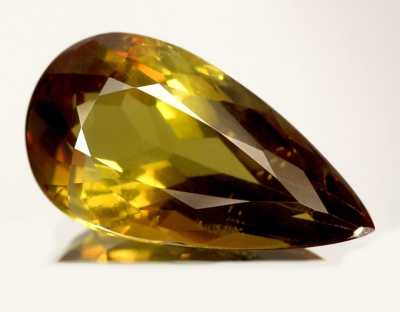
Pleochroism in an andalusite gemstone. Image taken from gemstonebuzz.com here: http://www.gemstonebuzz.com/andalusite.

def. Pleochroism:

1. An optical property found in many minerals in which a crystal is able to absorb different wavelengths of transmitted light depending on the orientation of the crystal.

2. A useful characteristic for identifying minerals in thin section with an optical microscope.

3. A color-shifting mirage that adds extra pizazz and pop to certain gemstones.

Pleochroic crystals are the chameleons of the mineral world. Pleochroic means “many-colored” in ancient Greek, and pleochroic crystals certainly live up to their name, changing colors– often dramatically– when viewed from different directions. For example, the pleochroic mineral zoisite can appear clear or yellow or pink. The mineral tanzanite ranges from rich purple to rich blue, although gem-quality tanzanite is often heat treated to remove pleochroism and increase the brilliant blue hue. Some pleochroic minerals do not change color exactly but rather display different shades of the same mineral. For example, kunzite ranges from light to dark pink.

The color-shifting nature of pleochroic minerals is revealed through transmitted light, not reflective light. So, while many minerals are pleochroic, this pleochroism is only visible if the mineral is thin or clear enough for light to be transmitted. Thus, for many minerals pleochroism is only observable in translucent, gemstone-quality specimens or when a crystal is sliced thinly enough to allow the transmission of light through the crystal.

Geologists often examine pleochrosim in crystal or rock slices viewed under the microscope. The slices are generally 30-40 micrometers thick  and are appropriately named “thin sections.” To increase pleochroism and other optical properties of minerals, these thin sections are usually viewed with a polarizing microscope, which orients (polarizes) the light in a very bright bulb placed below the thin section. These microscopes use both plain polarized light and cross-polarized light. I won’t go into too many details about optical mineralogy here. Thick reference guides and much practice under the microscope are needed to fully understand optical mineralogy, which many geology students find intimidating in these days of button-pressing, mechanical mineral identification. However, optical mineralogy still has many uses and is often a quick way to identify minerals.  So, I highly recommend taking a course if you have the opportunity. All you need to know for now is that pleochroic minerals display different colors in thin section when rotated under plain polarized light. The pleochroism of a crystal– the colors displayed and the angles at which the colors change– is a very useful characteristic that geologists can use to identify minerals in thin section. Similar-looking minerals can often be distinguished by differences in pleochroism.

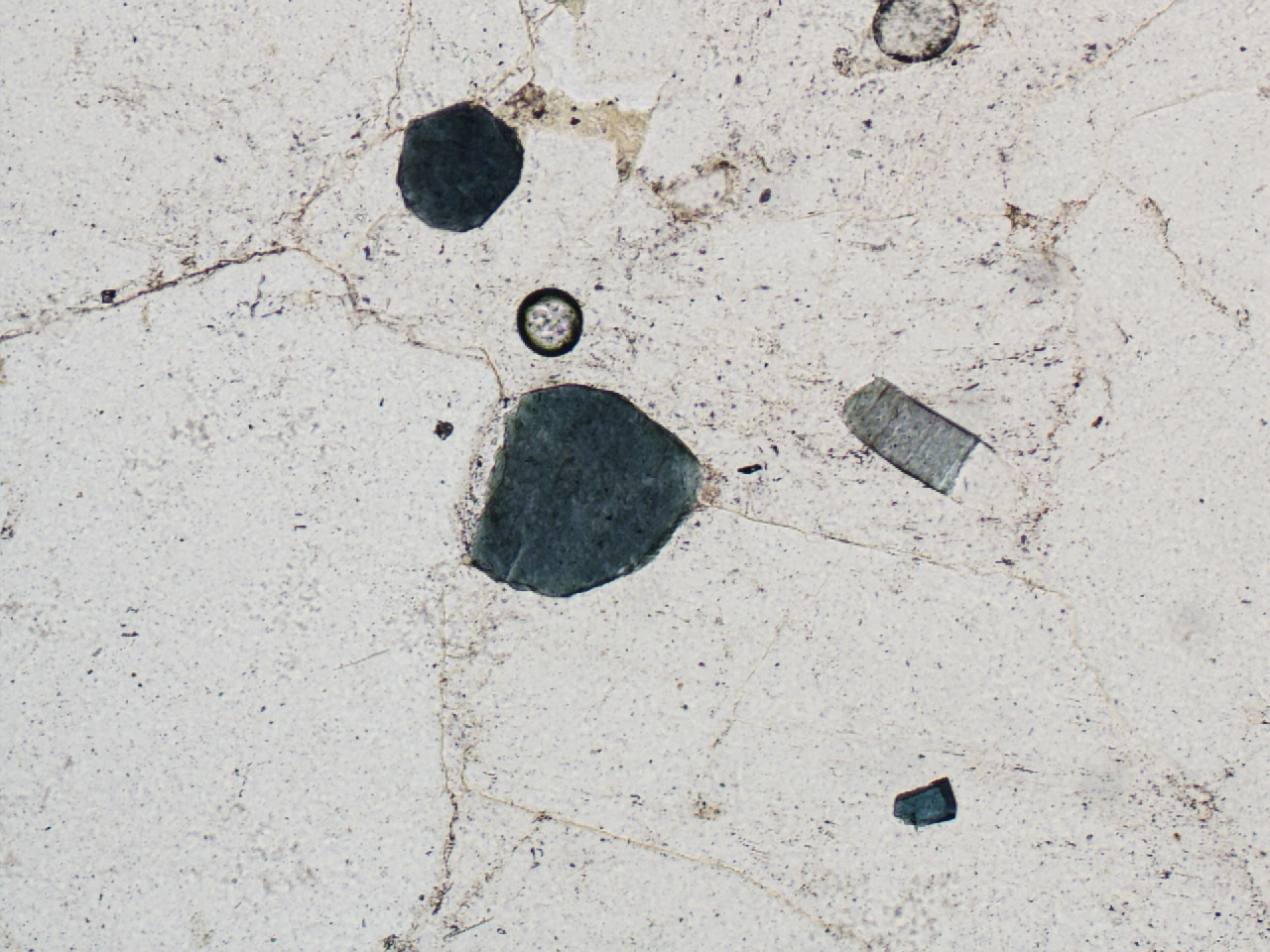
To give you a sense of what pleochroism looks like under the microscope, Shawn Wright of the geoblog Vi-Carius kindly sent me some wonderful sets of pictures displaying pleochroism in minerals viewed from different angles in plain polarized light using an optical microscope. In the set of pictures below, the mineral biotite changes color from dark brown to black when the thin section is rotated:

And in the set of pictures below, the mineral hornblende changes from brown to dark gray when the thin section is rotated:

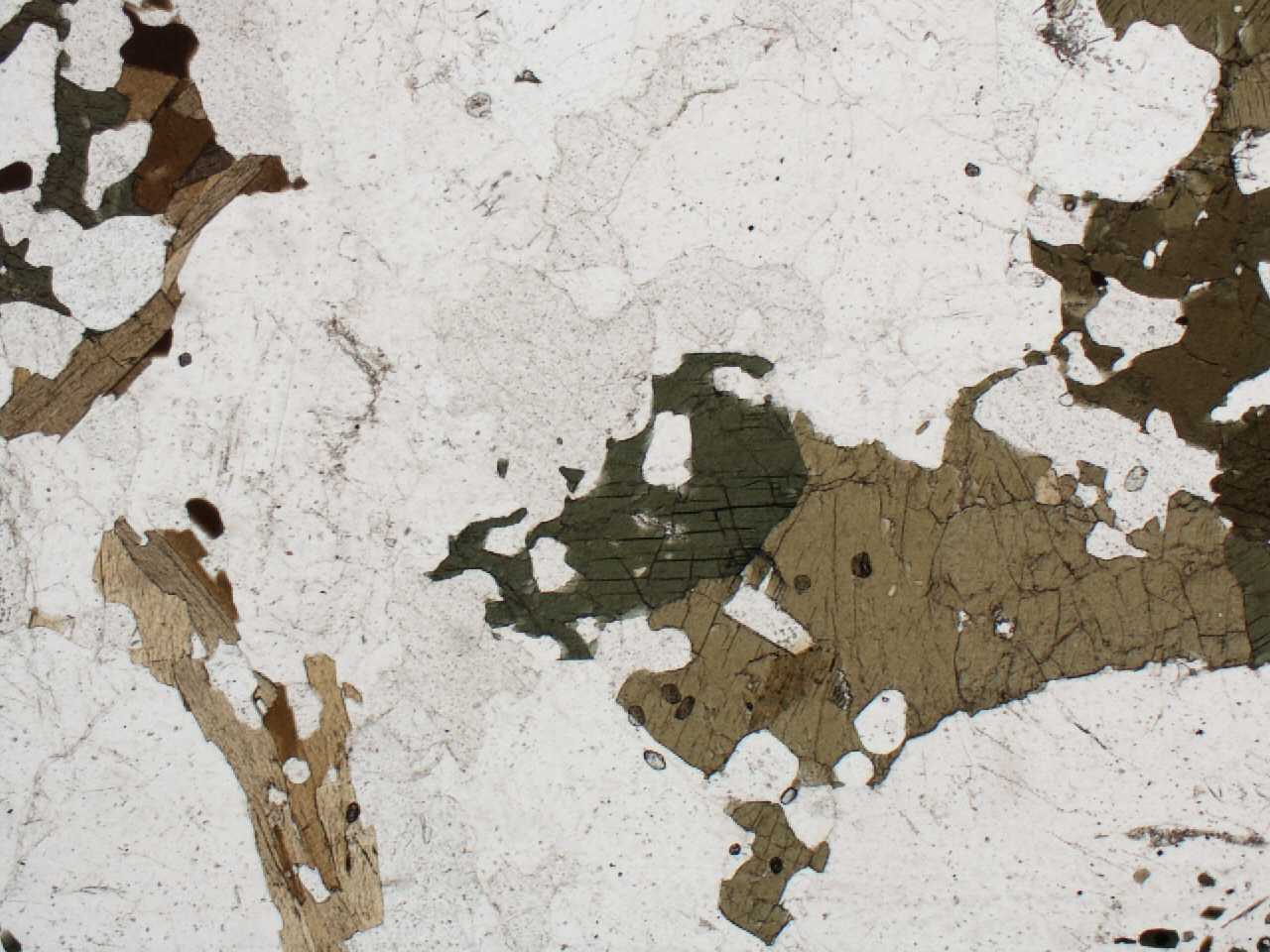
In the hornblende pictures above, the large crystal of hornblende is actually a composite crystal of hornblende which formed at slightly different orientations. One section of the large horblende crystal is brown at the same time that another section has turned dark gray. This “composite pleochroism” is commonly observed in thin section and can sometimes provide useful information about crystal structure and growth.

Callan Bentley of Mountain Beltway has also put together a wonderful set of .gif files which illustrate pleochroism in biotite and riebeckite. He has slow and fast versions in his blog post. Here’s the two slow versions:

Not all minerals display pleochroism, however. Some minerals display none, some minerals display two different colors, and some minerals display three different colors. The type of pleochroism (or lack thereof) displayed by a mineral is determined by crystal structure of that mineral.

When light is transmitted through different axes of a crystal, there are three options: the same color is displayed (no pleochroism), two different colors are displayed (dichroism), or three different colors are displayed (trichroism). Because we live in a 3-dimensional world, crystals have three axes: x, y, and z. Or a, b, and c if you (and my mineralogy text) prefer. Minerals which do not display pleochroism have symmetrical crystal axes. That is, the crystal structure is identical along the a, b, and c axes. Minerals which have identical crystal structures along all three crystal axes are known as “isometric” or “cubic” minerals. Because isometric minerals have the same structure in all directions, changing the angle through which light is transmitted does not change the color of the mineral. Minerals with  two identical crystal axes and one distinct crystal axis (trigonal/rhombahedral, tetragonal, or hexagonal crystals) can display two different colors. Minerals with three distinct crystal axes (triclinic, monoclinic, and orthorhombic crystals) can display three different colors.

The 7 Different Crystal Lattice Groups. Image taken from molecularsciences.org here: http://www.molecularsciences.org/book/export/html/125
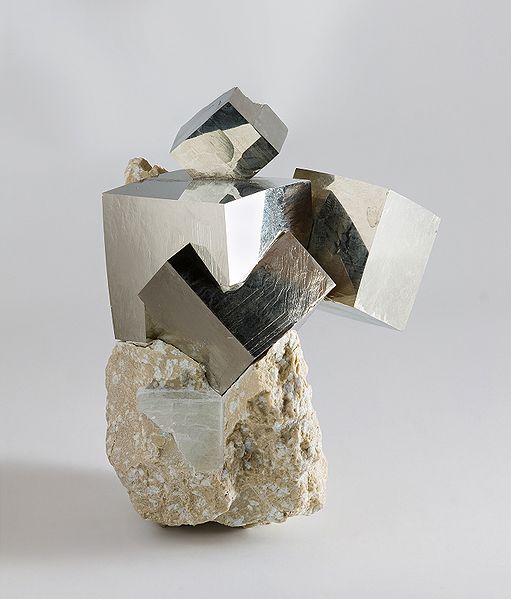
Pyrite is a cubic (isometric) mineral and thus does not display pleochroism. Photo credit: JJ Harrison. Image taken from Wikipedia Commons here: http://en.wikipedia.org/wiki/File:Pyrite_from_Ampliaci%C3%B3n_a_Victoria_Mine,_Navaj%C3%BAn,_La_Rioja,_Spain_2.jpg.
Andalusite is an orthorhombic mineral and dislays pleochroism, which is often highlighted in gemstones (see images at top of post and below). Photo credit: Didier Descouens. Image taken from Wikipedia Commons here: http://en.wikipedia.org/wiki/File:AndalousiteTyrol.jpg
Pleochroism in an andalusite gemstone. Image taken from Rocks & Co. website here: http://www.rocksandco.com/?task=rocksBookSecond&action=gemstoneSpecEffects.

Dichroic minerals can be a little bit tricky to identify in thin section. Because thin sections essentially represent a 2D slice of a 3D mineral, dichroic minerals may or may not display pleochroism in thin section. If the thin section displays two crystal axes which are distinct, then the mineral will display pleochroism. However, if the thin section displays two crystal axes which are symmetric, then the dichroic mineral will not display pleochroism.  Similarly, trichroic minerals may display different pleochroism, depending on the orientation of crystals viewed in thin section. Thus, pleochroism is a useful tool not only for identifying minerals but also for identifying which crystal axes are visible in thin section.

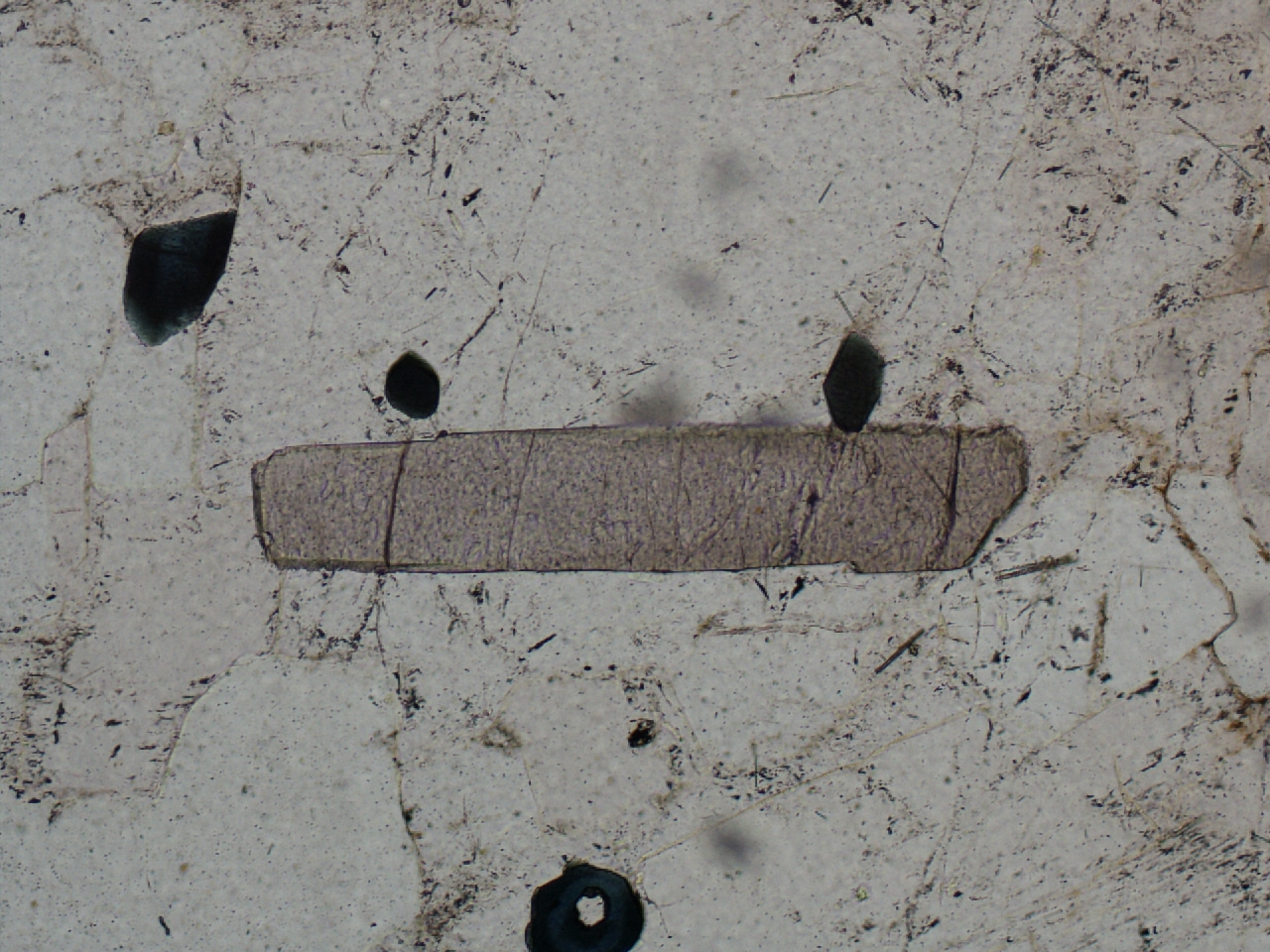
Here’s another great set of pictures from Shawn Wright, this time showing tourmaline in thin section. Tourmaline is a trigonal mineral, which means that it is dichroic. When oriented so that two distinct crystal axes are displayed (the first set of pictures), pleochroism is visible, and the mineral color changes from gray to dark blue when the thin section is rotated. However, when oriented so that two symmetrical crystal axes are displayed (the second set of pictures), no pleochroism occurs when the thin section is rotated.
Pleochroism is found in many gemstones, and gemstones are often cut to either display or hide pleochroism. Here’s a great website with many images of pleochroism in gemstones.

If you want to learn more about microscopes and thin sections, here’s a teaching website with more information on pleochroism and also on optical mineralogy in general.

Reference:

“pleochroism, n.” The Oxford English Dictionary. 2nd ed. 1989. OED Online. Oxford University Press. 15 September 2011.


***Thanks to Ryan Brown for suggesting this week’s word. Thanks to Shawn Wright for providing the wonderful microscope images and to Callan Bentley for creating the neat .gif animations.***

Geology Word of the Week: O is for Ooid

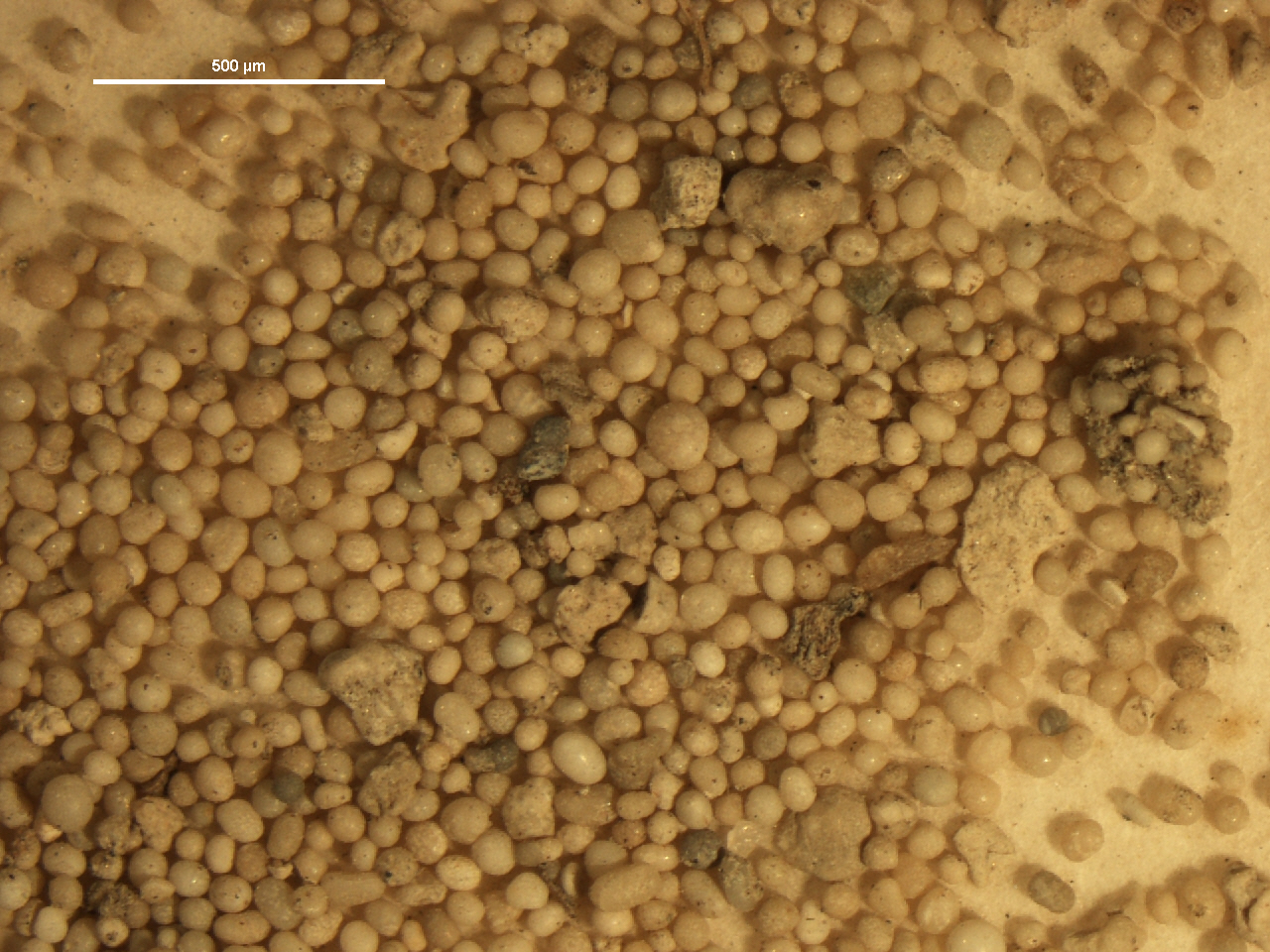
Ooid sand from the shores of the Great Salt Lake, Utah. Photo courtesy of Matt Kuchta.

def. Ooid:
A small (generally less than 2 mm), spherical or ellipsoidal concretion of calcium carbonate (CaCO3) that has generally formed around a “nucleus” such as a shell fragment or a quartz grain. The word ooid is derived from an ancient Greek word meaning egg-shaped. According to the Oxford English dictionary, the name came about because ooids resemble roe (fish eggs).

Some geology words I love just because they’re just so much fun. “Ooid” is one of those words. “Ooid” is a great word because it looks and sounds like the geological entity it represents. The word is oval (O) and round (o) just like ooids themselves. The word also rolls off the tongue in a squishy way that makes me think of marine ooze, which might be found in the vicinity of ooids.

Here are a few bonus, related words:
def. Oolite:
A sedimentary rock composed of lithified (“made into rock”) ooids.

def. Oolith:
A synonym for ooid, often used to refer to a single grain.

A synonym for oolite is roestone— literally, fish egg stone!

Other related oo- words are ooidal,  oolithic, oolitic, and oolitiferous. That last word sounds somewhat fake, but I found it in the trusty Oxford English Dictionary!

For more scientific information about ooids, here is a good article titled “Ooid Formation” (on a wonderfully-named website called Geology Rocks) that describes ooids far better than I could.

Here are oodles of ooid and oolite pictures:

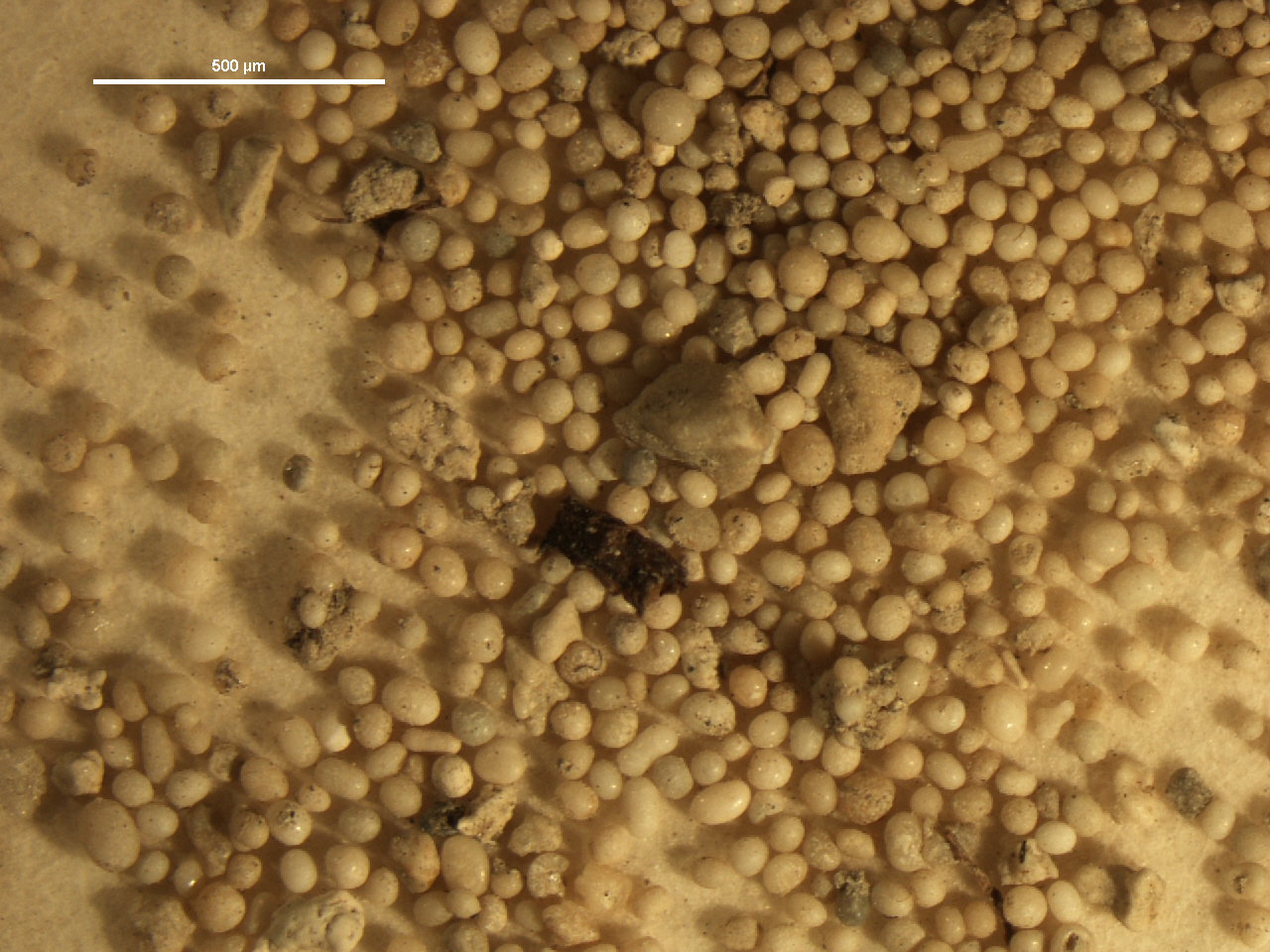
Modern ooids from the Bahamas. Photo courtesy of Callan Bentley. Note scale in top left corner.
More modern ooids from the Bahamas. Photo courtesy of Callan Bentley. Note scale in top left corner.
Oolitic limestone from the Rierdon Formation, a Jurassic unit from Montana. Photo courtesy of Callan Bentley. Note scale in top left corner.
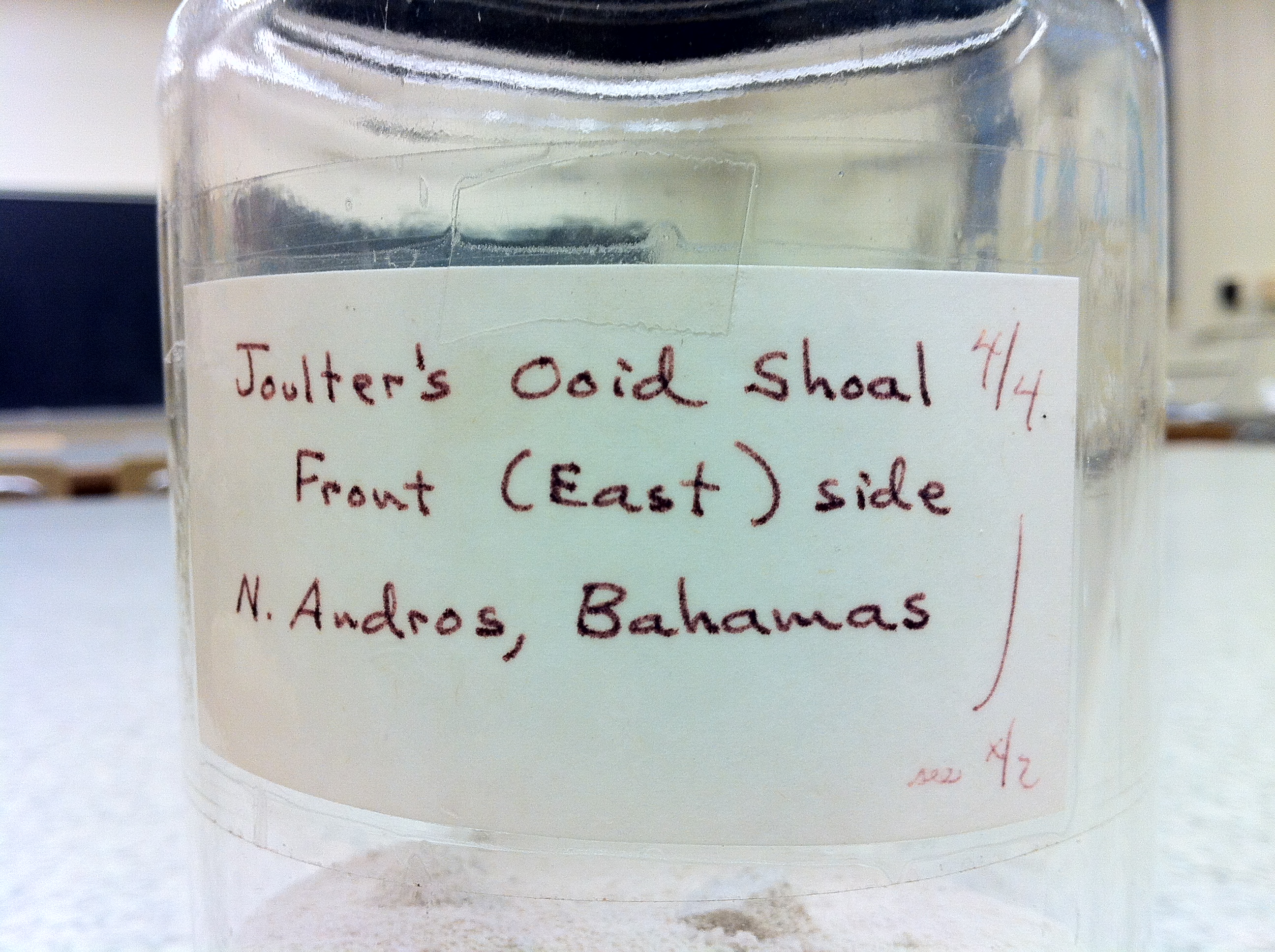
A jar of ooids! Photo courtesy of Paul Glasser.
Ooooo so many ooids! Photo courtesy of Paul Glasser.
Ooo000ooids! Photo courtesy of Paul Glasser.
Ooids in a petri dish. Photo courtesy of Paul Glasser.
Oolitic limestone deskcrop. Photo courtesy of Ron Schott.
Oolitic Portland Limestone, commonly used as a building stone. Photo courtesy of Ian Stimpson.


References:

“ooid, n.” The Oxford English Dictionary. 2nd ed. 1989. OED Online. Oxford University Press. 11 September 2011.

Other words such as roestone, oolith, etc. were also looked up in the OED.


***Thanks to Christie Wilcox for suggesting this week’s word. Thanks to Matt Kuchta, Callan Bentley, Paul Glasser, and Ian Stimpson for providing pictures. Thanks especially to Paul Glasser for naming his picture folder “oodles of ooids,” a delightful phrase which I promptly stole for this blog post.***

Geology Word of the Week: N is for Nummulite

Nummulite fossils. The small ones were collected near Notre Dame, France. Photo courtesy of Callan Bentley.

def. Nummulite:
1. A fossil or living foraminiferan of the Nummulites genus (or a related genus) that has a disc-like, spiral, calcareous skeleton. Fossil nummulites range up to several inches in size, making them quite impressive protozoa (single-celled, eukaryotic organisms). Nummulite fossils are common in Tertiary rocks, particularly in the Mediterranean area. The term nummulite originates from the Latin word “nummulus,” which means coin.
2. The unwitting star of a very strange and scientifically bunk, yet somehow delightful, book titled “The Nummulosphere: An Account of the Organic Origin of So-called Igneous Rocks and Abyssal Red Clays” by Randolph Kirkpatrick.

Nummulites are beautiful and very distinctive fossils that are relatively easy to recognize in the field– they look like little coins set into the rocks. Because nummulites have calcium carbonate skeletons, they are generally found in limestone rocks. Nummulite fossils are even found in some of the limestone blocks used to construct Egyptian pyramids!

Ian Stimpson of the blog Hypo-theses sent me this beautiful photograph of nummulite fossils in limestone:

This Nummulitic limestone is from the Tertiary of the Spanish Pyrenees. The nummulites are up to 1cm across in this sample. Photo courtesy of Ian Stimpson.

Nummulites can be very small (microfossils) but can also range up to several inches (or centimeters, to use the more-scientific metric system) in size, such as the ~2 cm example in the top image. What is impressive about the size of these macro-nummulites is that all nummulites are protozoa, which means that they are single-celled organisms. I’m not much of a biologist, but those large nummulite fossils look like pretty big cells to me!

Lorraine Casazza of the University of California Museum of Paleontology does know a thing or two (or many things!) about biology and also about nummulites, which she studies. I highly recommend reading Casazza’s  description of her research on Egyptian nummulites. Casazza has some great discussion on how and why single-celled nummulites became so large. One reason that nummulites may have become so large is because of an interesting symbiosis with algae. Again, I’m not much of a biologist, but according to this abstract (thanks to Lockwood DeWitt for finding it), all modern nummulites house symbiotic algae.

Kirkpatrick's 1912 "Nummulosphere" book. Image taken from Wikipedia. The book is now in the public domain.

Nummulites are fascinating and important foraminifera, but they aren’t quite as important as indicated by Randolph Kirkpatrick in his self-published 1912 book “The Nummulosphere: An Account of the Organic Origin of So-called Igneous Rocks and Abyssal Red Clays.” In this book, Kirkpatrick claims that all rocks– including the “so-called igneous rocks”– actually formed through the accumulation of foraminifera such as nummulites. The book has a catchy and clever title, but alas the book is mostly pseudoscience and, fortunately, was not taken seriously by many scientists when it was published. In fact, Kirkpatrick’s crazy ideas about “The Nummulosphere” tarnished his scientific reputation. Kirkpatrick actually was a good scientist when it came to certain aspects of his work. Kirkpatrick had kooky– and very wrong– ideas about how rocks formed, but he was very good at studying the biology of sponges. However, much of his good scientific work on sponges was probably overlooked by his contemporaries because of his crazy ideas about how rocks formed. Not until a decade or so after his death was his work on sponges truly recognized.

Kirkpatrick is an intriguing example of a smart and capable scientist who fell victim to pseudoscience. Many scientists– myself included at times– fall victim to pseudoscience. Just because scientists are smart and educated doesn’t mean that they can’t fool themselves, even in their own research. For example, Linus Pauling won not one but two Nobel prizes but had some very strange (and now largely discredited) ideas about how taking large quantities of vitamins could make you live longer. Physicists Russell Targ and Harold Putoff convinced themselves that Uri Geller has “genuine” paranormal powers, even though it has been demonstrated repeatedly that Geller is likely using simple magic tricks. In my own family there is an excellent example of a very smart person believing in pseudoscience. Upton Sinclair (I was named after Upton’s cousin, my great-grandmother Evelyn Sinclair) wasn’t a scientist, but he was a brilliant writer, journalist, and political activist. However, my Uncle Upton (as I like to call him) also wrote a book called “Mental Radio” in which he described his belief that his second wife had telepathic abilities. I’m sorry, Uncle Upton, but your psychic experiments were not carried out in a proper scientific environment and, really, most long-married husband-wife pairs develop non-verbal communication that may seem telepathic at times. In my own scientific encounters, I’ve met many a scientist who is mostly rational and reasonable but who also believes in one or more flavors of pseudoscience: homeopathic medicine, talking to the dead, chiropractics, and so on.

I guess the main point I want to make is that scientists are smart, but they aren’t smart about everything. Just because someone is a smart and accomplished scientist does not mean that that person is always right. PhD or not, Nobel Prize or not, scientists are not always right. The great thing about science, though, is that (eventually) data and evidence always trump scientific reputation. For example, just because Linus Pauling had a PhD and two Nobel Prizes didn’t mean other scientists weren’t critical of views on vitamins. Perhaps his scientific prestige helped him push the vitamin idea at first, but eventually concrete data largely dismissed his pseudoscientific idea. Similarly, just because a scientist has one crazy or scientifically wrong idea does not mean that the scientist’s entire body of work should be dismissed. For example, Kirkpatrick’s work on sponges should not have been dismissed just because he didn’t understand rocks very well. Kirkpatrick is an extreme example. However, too often a scientist publishes a paper with an idea that is later dismissed, and then this scientist receives a “bad reputation,” and other scientists become critical of all of this scientist’s ideas. The whole point of science is putting ideas– hypotheses– out there. Just because one of a scientist’s hypotheses turns out to be wrong does not mean that all of this scientist’s hypotheses will be incorrect. We must remember that science is a process, not a popularity contest. Reputations should not matter where evidence and good (or bad) data abound. Of course, I do simplify. Some scientists have good (or bad) reputations for good reasons. Regardless, we must never let prestige or reputation blind our science– we scientists must strive to be as neutral as possible.

A final thought: be cautious when listening to a scientist talk about something that is clearly outside of that scientist’s field. For instance, I’m a geologist with specialties in marine geology, geochronology, and isotope geology. When I’m talking about one of those three specialties, you can probably trust what I say. However, if I’m talking about something else, you better make sure I’ve done my homework and actually know what I’m talking about. When I step outside of my scientific specialties, it is very important for me to talk to other scientists and develop collaborations. As I mentioned above, I don’t know very much about biology. So, if I were to take on a research project involving some biology (for example, a study of biological influences on rock weathering), it would be important for me to work with some biologists. Kirkpatrick was a biologist, not a geologist. Perhaps if he had worked with some geologists and had better understood geology, he would never have written his Nummulosphere book. That would have been a shame, though. Nummulosphere is such a wonderful-yet-terrible little volume.

Reference:

“nummulite, n.” The Oxford English Dictionary. 2nd ed. 1989. OED Online. Oxford University Press. 4 September 2011.


***Thanks to Etienne Médard for suggesting this week’s word. Thanks to Callan Bentley and Ian Stimpson for providing pictures. Thanks to Lockwood DeWitt and Callan Bentley for some information and interesting discussion of nummulites on twitter.***

Geology Word of the Week: L is for Lepidolite

A sheet of rose pink lepidolite. Image taken from Wikipedia Commons. Attribution: Rob Lavinsky, iRocks.com.

def. Lepidolite:
A pink, lilac, or gray-white, lithium-rich, Mica Group mineral with the formula K(Li, Al)2-3(AlSi3O10)(O,OH,F)2.

Geologists (and laypeople) often talk about the “mineral” mica, but mica is not really a mineral. Rather, mica is the name of a group of minerals. The micas are phyllosilicate minerals, which means that they are comprised of flat sheets. In Micas, these flat sheets are piled together in stacks. The word “phyllo” comes from Greek and means “leaf.” To remember the word phyllosilicate, I always think of phyllo dough, which is a dough made up of thin, flat sheets piled up and used to make pastries such as baklava or spinach pie. Phyllo dough is generally made up of flour, water, and a little sugar. Phyllosilicates, on the other hand, are made up of thin sheets of silicon and oxygen in a 2:5 ratio. Micas also have some aluminum and potassium thrown into the structure. Micas are basically stacked sheets of aluminum, silicon, and oxygen that are held together by charged potassium (K+). If you want to read more about the structure of phyllosilicates and Micas in particular, I recommend these excellent notes I found on a Smith College Geoscience website.

Sheets of phyllo dough in baklava. Image taken from Wikipedia Commons here: http://en.wikipedia.org/wiki/File:Baklava.jpg.
Sheets of muscovite mica. Image taken from Wikipedia Commons. Attribution: Rob Lavinsky, iRocks.com.

Lepidolite is similar in composition and structure to the silver plates of muscovite mica and the brown-black plates of biotite mica that are common rock-forming minerals in rocks such as granites. However, lepidolite contains a significant amount of the element lithium (in the same place where aluminum sits in muscovite and other micas). In fact, lepidolite is sometimes mined for lithium although generally only because it is associated with other lithium-rich minerals such as spodumene (formula: LiAl(SiO3)2).

Lepidolite is a fairly rare mineral, generally found in something called a pegmatite, which is a very coarse-grained igneous deposit in which large crystals (sometimes amazingly large crystals!) were able to grow because of special conditions. In order to grow large crystals and form pegmatites, igneous bodies must cool very slowly and also have high rates of diffusion (high rates of transport of elements, basically), generally aided through the presence of water or vapor or both. Pegmatites often have high concentrations of lithium because lithium (as well as boron and other large elements) lowers the solidification temperatures (basically by being big edit: when thinking about relative sizes of elements, remember to consider ionic raidus as elements are generally in charged forms in crystal structures) of magmas, giving the crystals more time to grow. Lepidolites often form intermixed with muscovite and other mica minerals as well as with other lithium-bearing minerals such as spodumene, amblygonite, beryl, and tourmaline. Lepidolite most often occurs in pegmatites associated with granite bodies.

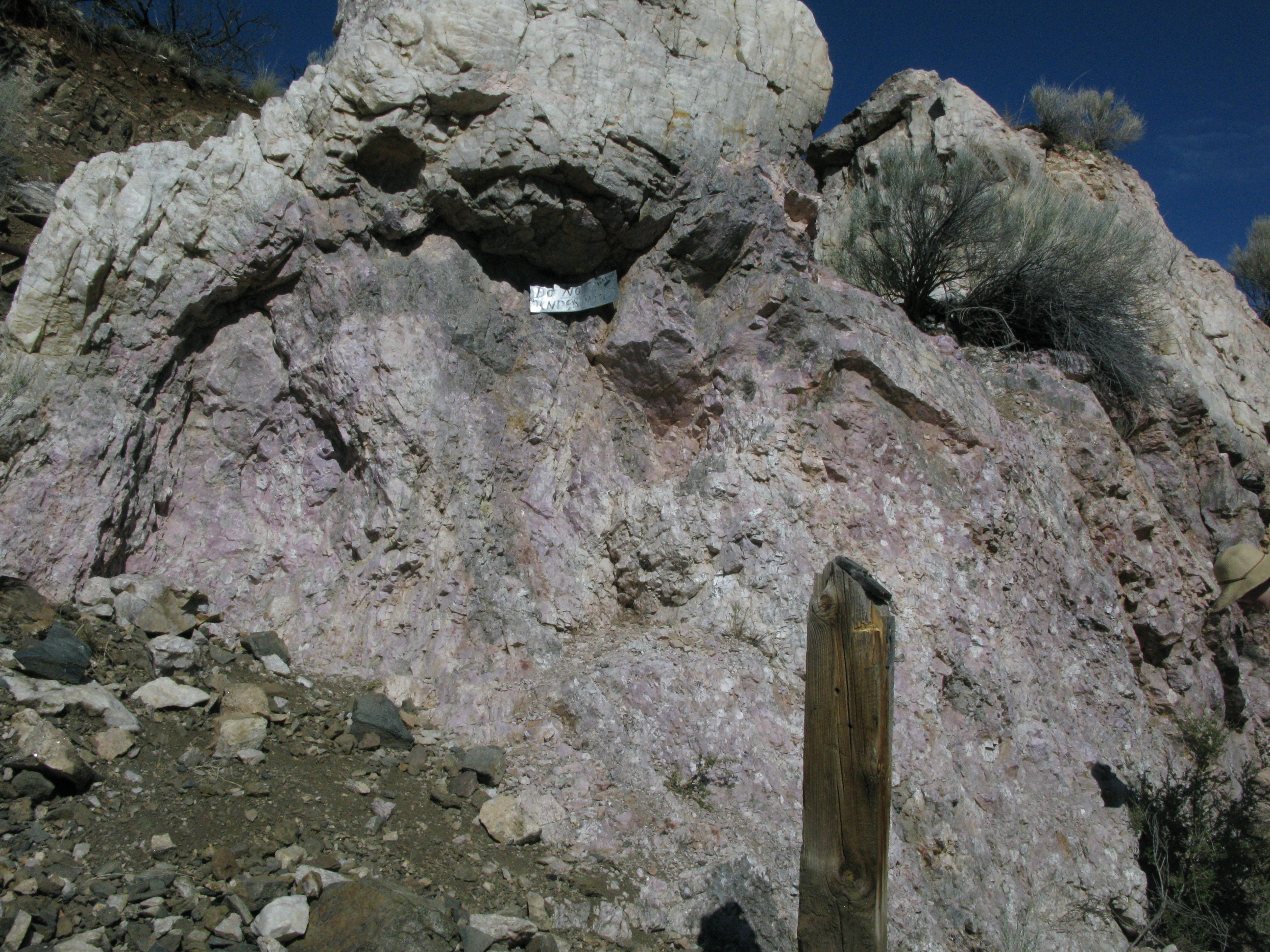
Lepidolite is a gorgeous mineral, especially when it is bright pink and lavender. My fellow AGU blogger Jessica Ball recently observed and collected some lepidolite during her visit to the Harding Pegmatite Mine in New Mexico. Jessica was kind enough to send me some pictures of  gorgeous purple lepidolite from the Harding Pegmatite:

Lepidolite (purple color) in an outcrop at the Harding Pegmatite Mine. Photo courtesy of Jessica Ball.
Lepidolite collected from Harding Pegmatite Mine. Photo courtesy of Jessica Ball.
A closer look at some beautiful purple lepidolite from Harding Pegmatite Mine. Photo courtesy of Jessica Ball.

References:

Klein, Cornelius. 2002. The 22nd Edition of the Manual of Mineral Science. John Wiley & Sons.

Deer, W.A., Howie, R.A., and Zussman, J. 1992. An Introduction to the Rock-Forming Minerals, 2nd Edition. New York: Pearson Education Limited.

Geology Word of the Week: K is for Krakatau

Anak-Krakatoa 1. Photo courtesy of James Reynolds.
Anak-Krakatau 1. Photo courtesy of James Reynolds.

def. Krakatau (aka Krakatoa):
A volcanic island between the islands of Sumatra and Java in Indonesia. The volcanic island is known for a major eruption in 1883 that largely destroyed the original island. Since the 1920s, the volcanic island has been rebuilding and is today known as Anak Krakatau or “Son of Krakatau.”

I’m flying to Johannesburg, South Africa tomorrow and have had a long couple of weeks preparing for the move, including a 10 hour drive today. So, for this week’s geology word of the week I’ll just share a few links and some photographs. Enjoy!

After I recover from my travels, I’ll share the story of when I was at sea for 50 days (no sight of land!) and  then the very first land I saw at the end of the research cruise was Anak-Krakatau. Seeing Anak-Krakatau was wonderful, but seeing the volcano from a ship at dawn after not seeing land for 50 days was amazing, magical almost.

Some Links:
Popular book by Simon Winchester: Krakatoa: The Day the World Exploded: August 27th, 1883

Book: The eruption of Krakatoa, and subsequent phenomena (1888). Thanks to David Bressan for the link

Many links on the Eruptions blog: Krakatoa Tag on Eruptions

Some Pictures, Courtesy of James Reynolds:

Anak-Krakatau 2. Photo courtesy of James Reynolds.
Anak-Krakatau 3. Photo courtesy of James Reynolds.
Anak-Krakatau 1.
Anak-Krakatau 3. Photo courtesy of James Reynolds.


A Video, Also Courtesy of James Reynolds:

Geology Word of the Week: J is for Jimthompsonite

Jim Thompson, circa 1979. Image taken from American Mineralogist, 1979, vol. 64: 664.

def. Jimthompsonite:
1. A magnesium and iron-rich silicate mineral found between the chlorite and actinolite zones of a metamorphosed ultramafic body. Jimthompsonite has the formula (Mg,Fe)5Si6O16(OH)2 and an orthorhombic structure. The mineral was named after James Burleigh Thompson, Jr., an eminent mineralogist and petrologist.
2. A wonderful example of scientists having fun with naming– and, in the process, classifying and better understanding– the world around them.

Intermixed jimthompsonite and clinojimthompsonite from Chester, Vermont. Photo by Jeff Weissman and taken from Webmineral.com here: http://webmineral.com/specimens/picshow.php?id=1670&target=Jimthompsonite.

Jimthompsonite is a delightfully ridiculous mineral name. Minerals are often named after people, usually for the people who first discovered them. For example, searching randomly through my mineralogy book, I come across mineral names such as Pentlandite (named for Joseph Barclay Pentland), Vivianite (named for John Henry Vivian), and Covellite (named for Nicola Covellite).

Minerals are also commonly named after places, often their “type locality,” a notable place where the mineral occurs or was first discovered. For example, Andalusite is named for Andalusia, Spain. Mineral names are also sometimes taken from colloquial, historical names– sometimes modified– which existed prior to the mineral being classified scientifically. For example, Beryl comes from Ancient Greek.

Sometimes, minerals that are named in honor of people end up with ridiculous names such as “jimthompsonite.” Why jimthompsoite? Well, thomsonite was already taken, and I suppose thompsonite and thomsonite would have been somewhat confusing. Jamesonite was also already taken. I suppose jamesthompsonite was a slightly more formal option, but for whatever reason the mineral namers went with jimthompsonite, which is simply delightful and probably more reflective of Prof. Thompson, who apparently went by Jim rather than James.

Jimthompsonite? Sounds like something Tintin detectives Thompson and Thomson should investigate!

What’s an even more ridiculous mineral name than jimthompsonite? Clinojimthompsonite, also named after Jim Thompson.

Ridiculous scientific names are not just limited to minerals. Just look at some of the ridiculous Element names (for example, Californium) and asteroid names (for example, #12426 is named “Raquetball”). Isn’t discovering and naming things fun? One of the funnest parts of science, I think.

Here are a few more ridiculous and fun mineral names:

Armalcolite: A mineral discovered on the moon and named for astronauts Armstrong, Aldrin, and Collins.

Znucalite: A mineral rich in the elements Zn, U, and Ca. Sounds like a Dr. Suess mineral, doesn’t it?

Cummingtonite: Supposedly named for the town of Cummington, Massachusetts. Uh-huh.. sure… 🙂

Coffinite: A halloween mineral? It’s uranium-rich and radioactive, so be careful…

Geology Word of the Week: I is for Inselberg

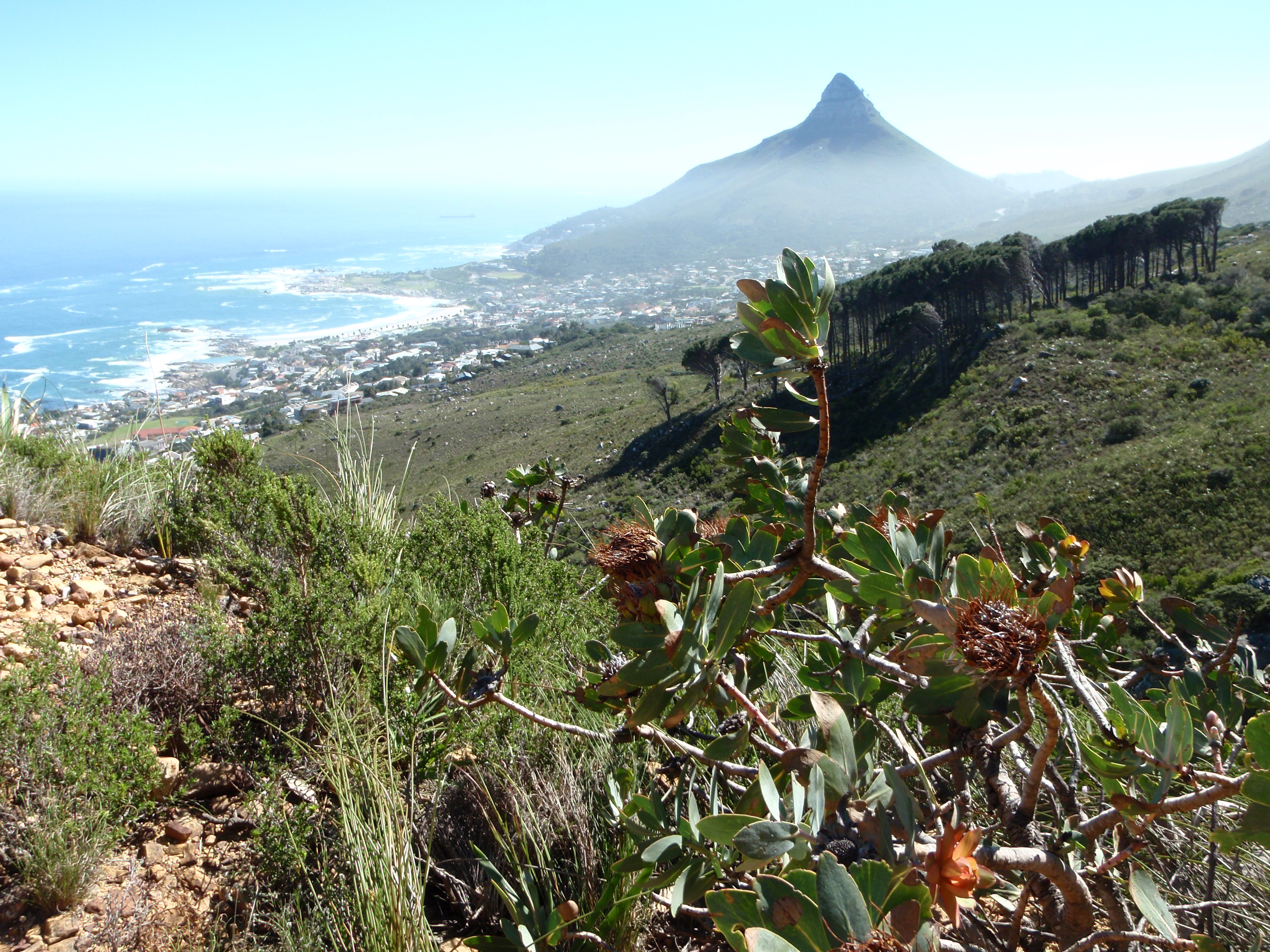
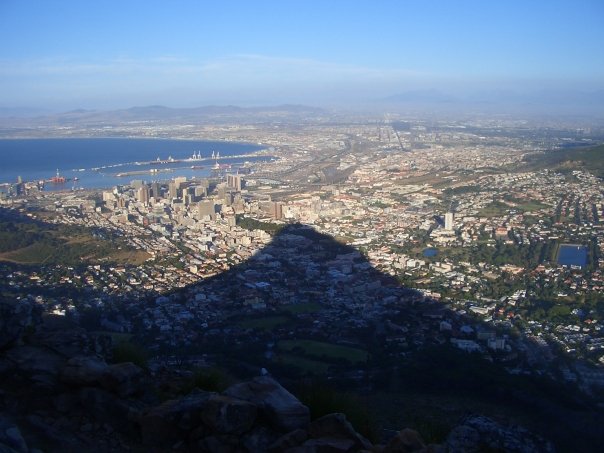
A sedimentary inselberg (in the distance) in Cape Town, South Africa, September 2010.

def. Inselberg:
A small, rounded hill, knob, ridge, or mini mountain that rises abruptly from relatively flat surroundings. “Inselberg” is a loan word from German and literally means “island mountain.”

Originally, the term inselberg was used to apply to landforms in hot, arid regions; early German explorers were particularly impressed with the “island mountain” landforms which they observed in southern Africa. However, the term can also be applied to similar landforms in more humid regions.

Inselbergs are generally erosional remnants. Often, inselbergs are composed of harder igneous rock (such as granite) that is more resistant to erosion. However, inselbergs may also form in sedimentary rocks.

Uluru or Ayer's Rock inselberg in Australia. Photo courtesy of Gillian.
Kata Tjuta inselberg in Australia. Photo courtesy of Gillian.

A variety of other terms, both scientific and colloquial, are also used to describe “island mountains.” Among these are monadnock (after Mt. Monadnock in my home state of New Hampshire), bornhardt (after the German geologist and explorer who coined the term “inselberg”), tor, butte, and monument. The distinctions between these various terms are somewhat confusing and not consistent in the scientific literature. Generally, more rounded landforms are described as inselbergs or monadnocks while flat-sided, towering landforms are described as monuments.

Whatever term or terms you use to describe geological island mountains or towers, these distinctive landforms are beautiful, intriguing, and can often provide information about current and past erosional environments. Island mountains and towers are also often very fun to climb or hike.

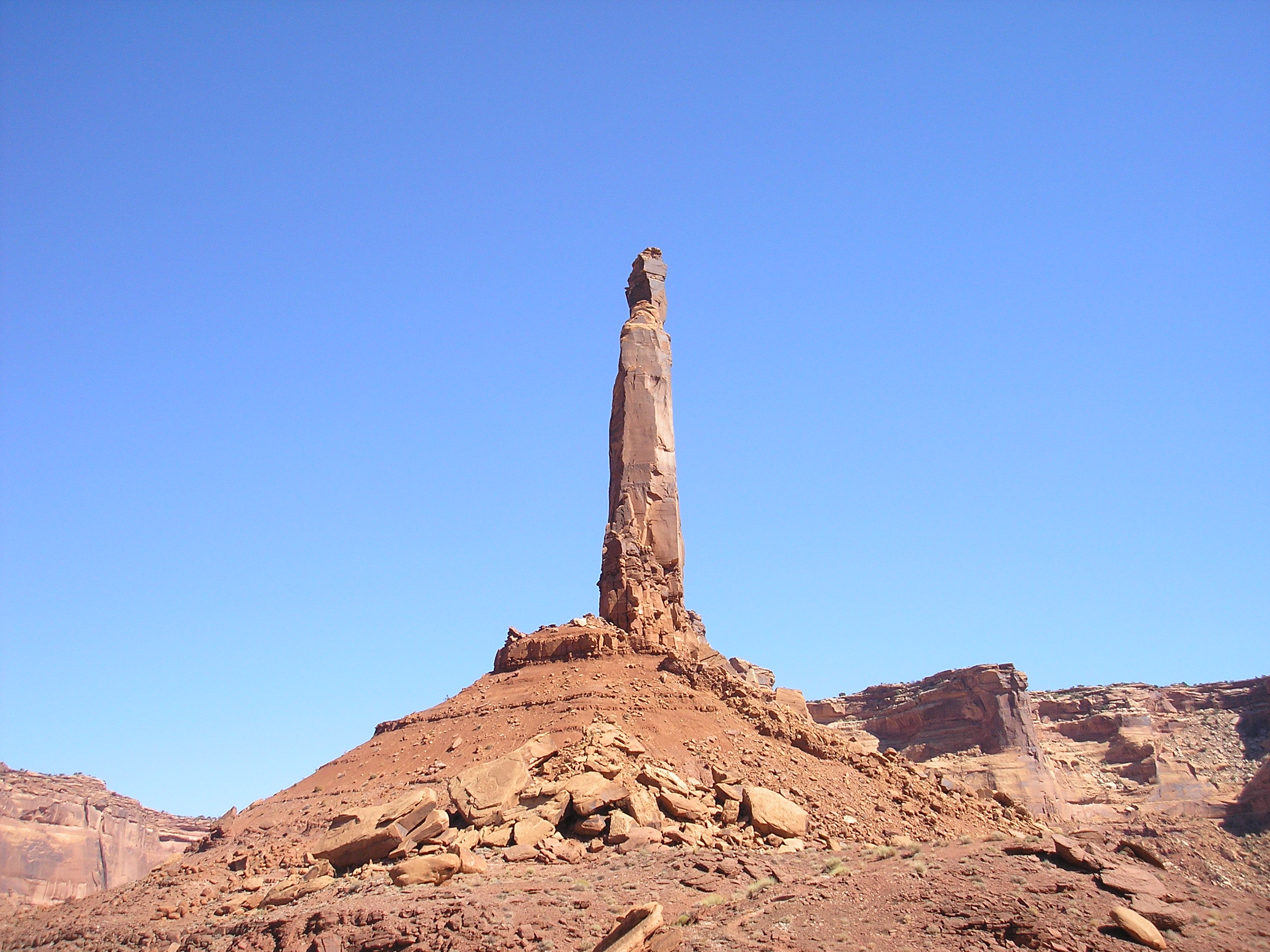
Steep-sided monument. Western USA, Fall 2005.
Skinny monument. Western USA, Fall 2005.
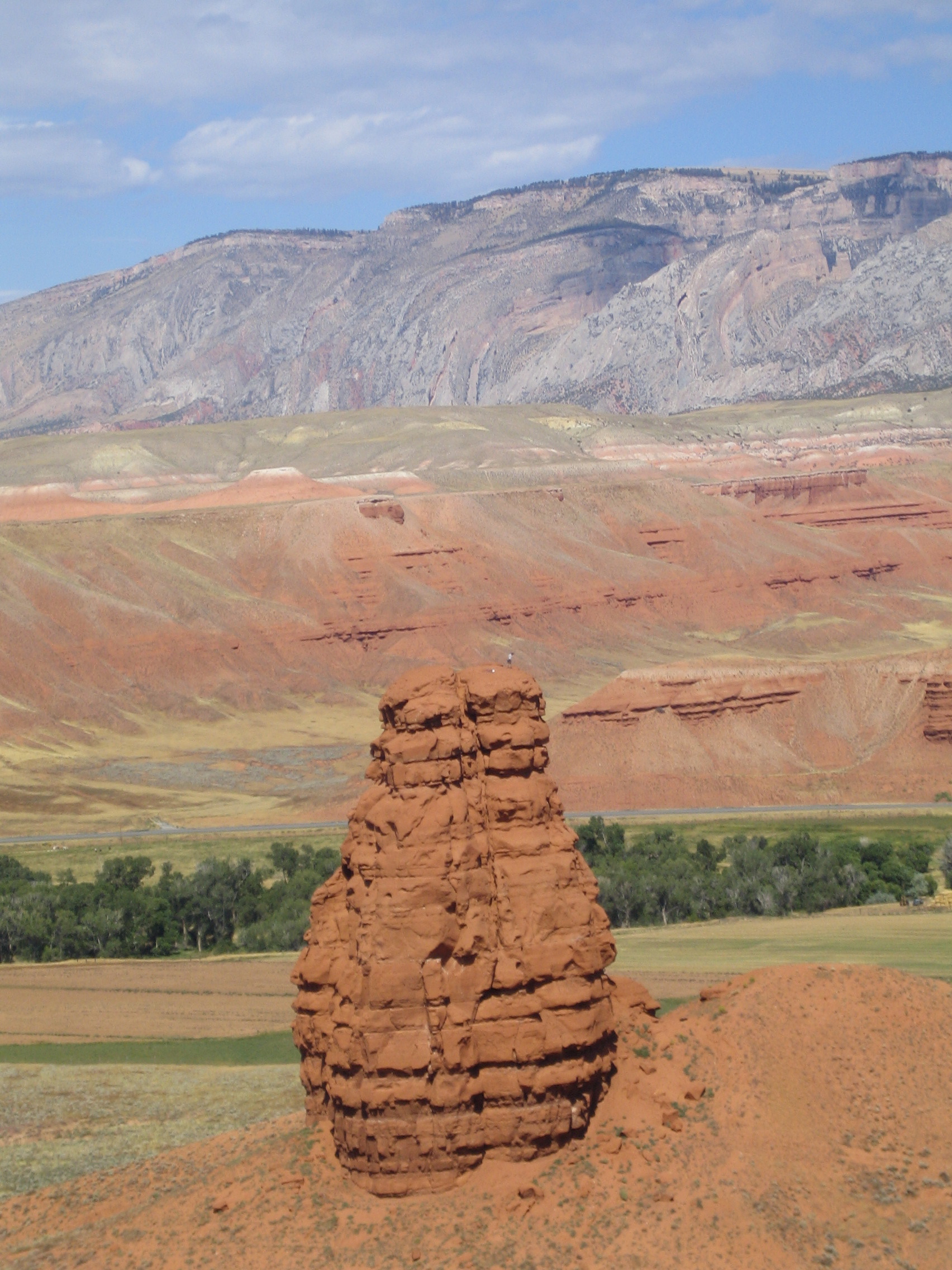
Small, slightly rounded monument. Western USA, Fall 2005.
A closer view of the small monument. Check out the folding in the background! Western USA, Fall 2005.

My favorite island mountain is called “Leeu Se Kop” or “Lion’s Head” and is located in my adopted home city of Cape Town, South Africa. Lion’s Head is a sedimentary erosional remnant that is composed of the same sandstone as nearby Table Mountain. Hiking to the top of Lion’s Head takes about an hour. At the top of Lion’s Head there are is a gorgeous 360-degree view: ocean on three sides and towering Table Mountain on the fourth side. A popular activity among Capetonians and visiting tourists is to hike up Lion’s Head just before sunset on a night with a full or almost full moon. On full moon nights, dozens of people hike up Lion’s Head to watch the sunset. While the sun sets, people relax at the top with picnic baskets and bottles of wine or beer. After the sun has set and the full moon has risen, everyone hikes back down the island mountain.

Lion's Head. Cape Town, South Africa, April 2011.
Shadow of Lion's Head over Cape Town, South Africa, January 2007.
Sunset view from Lion's Head. Cape Town, South Africa, January 2007.
Another sunset view from Lion's Head. Cape Town, South Africa, January 2007.

***Thanks to Shaun for recommending this week’s word and to Gillian for providing two beautiful pictures.***
References:

“inselberg, n.” The Oxford English Dictionary. 2nd ed. 1989. OED Online. Oxford University Press. 30 July 2011.

“monadnock, n.” The Oxford English Dictionary. 2nd ed. 1989. OED Online. Oxford University Press. 30 July 2011.

Geology Word of the Week: H is for Halokinesis

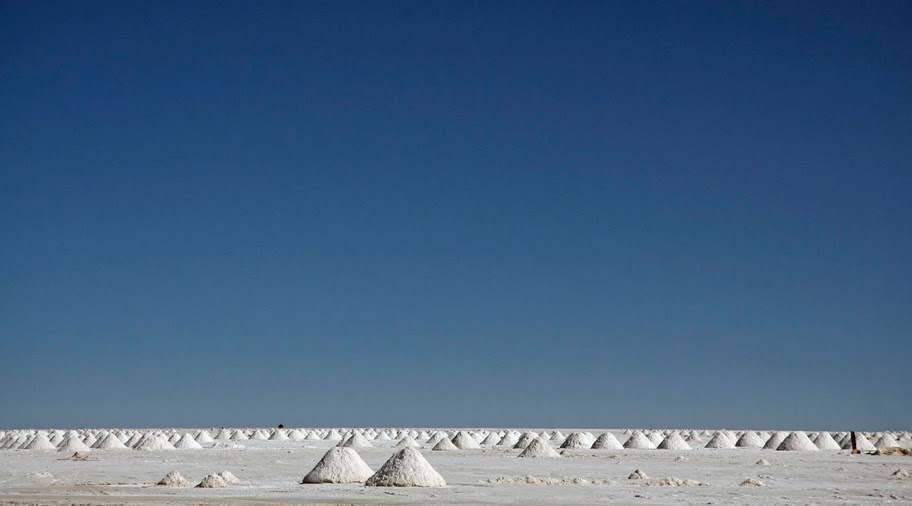
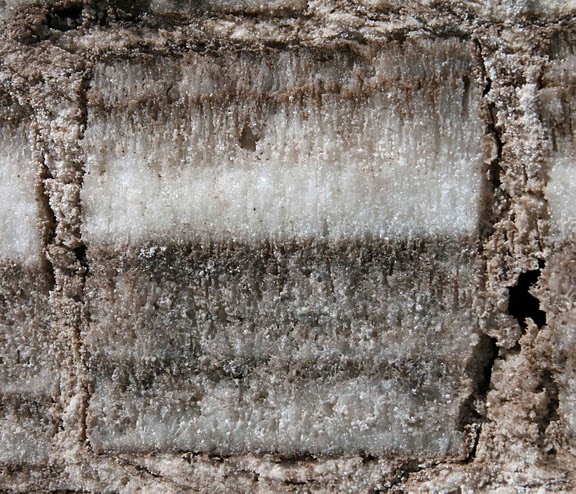
Piles of salt ready to be collected at Salar de Uyuni, Bolivia. Photo courtesy of Tannis McCartney. Click photo to enlarge.

def. Halokinesis:
1. The movement of salt and salt bodies. The study of halokinesis includes subsurface flow of salt as well as the emplacement, structure, and tectonic influence of salt bodies. Another term used to refer to the study of salt bodies and their structures is “salt tectonics.”
2. The magical (and non-existent) ability to move salt with your mind.

This week, as usual, I have been asking for suggestions for the Geology Word of the Week on Twitter and Facebook. I find Twitter and Facebook to be great resources– I receive so many great word suggestions. After I select a geology word for the week, I also use Twitter and Facebook to find out more information about the geology word and to find some pictures related to the word. For those of you wondering how useful social networking sites such as Twitter might be for geologists, MJ Vinas of AGU wrote a great post on The Plainspoken Scientist blog titled Why should scientists use Twitter? Of course, Twitter is no substitute for mainstream scientific publications or scientific conferences, but personally I find Twitter a great place to go for geology news and for asking geology-related questions.

If you haven’t noticed already, I work my way through the alphabet for the Geology Word of the Week. For example, for my first geologist’s alphabet, I made my way from A is for Alluvium to Z is for Zanclean. This week I am at the letter H, so I asked for suggestions of geology words beginning with the letter H. As usual, I had many wonderful suggestions of geology words. However, I was particularly struck by Brian Roman‘s suggestion on Twitter of the word “halokinesis” as I had never heard of this word before, and it sounded– to me– like some psychic pseudoscience nonsense. Here is the twitter exchange I had with Brian this morning:

Well, I was intrigued. So, I did a little bit of research on the word “halokinesis,” both the scientific definition and the pseudoscientific definition.

Scientifically, halokinesis is the movement (-kinesis) of salt and salt bodies. Salt often forms on Earth’s surface as a result of evaporation.  Salt is highly soluble, so surface salt deposits are generally ephemeral and short-lived, disappearing with the rain. Significant salt deposits only develop in very dry places. For example, salt deposits form in the hot, dry– and aptly named– Death Valley, California. The world’s largest salt flat is located at Salar de Uyuni, Bolivia.

Salt flat from a distance. Death Valley, California, Fall 2005.
Venturing out onto the salt flat. Death Valley, California, Fall 2005.

While salt deposits are somewhat ephemeral and ever-changing on Earth’s surface, salt deposits become somewhat more stable when they are buried. Salt is often found in subsurface sedimentary sequences. However, even when buried salt deposits can move. Furthermore, subsurface salt deposits can move in quite strange ways. Normal sediments contain a large amount of pore space, so as they are buried and transformed into sedimentary rocks, they tend to compress and increase in density. Salt deposits, on the other hand, do not contain much pore space, so their density does not increase significantly as they are buried. Because salt deposits tend to be less-dense than the surrounding sedimentary rocks, these salt deposits tend to deform and migrate, moving in a fluid-like manner– almost like magma or the plastic aesthenosphere– and forming structures such as diapirs and domes.  Because oil is often found above subsurface salt deposits, there is much interest in better understanding how salt deposits form and migrate in the subsurface.

Seismic image showing salt diapirs on the Brazil margin. Image courtesy of Peter Clift.
Seismic image showing salt bodies in the Gulf of Lions, France. Image courtesy of Peter Clift.

For more discussion on salt and halokinesis, I highly recommend reading the post Salt and Sediment: A Brief History of Ideas over at the Hindered Settling blog.

Both surface and subsurface salt deposits are often mined for salt and other evaporite minerals.  However, the mining of salt deposits must be done carefully as salt dissolves easily in water, and therefore the presence of water can destabilize salt deposits. Most salt mining is relatively straightforward, but the potential danger was highlighted in a disaster at the Jefferson Salt Mine, which operated underneath Lake Peigneur in Louisiana. As I mentioned above, oil is often found above subsurface salt deposits. On November 20th, 1980, Texaco was drilling into Lake Peigneur to search for oil above the salt deposit. Due to an error, the 14″ drill bit accidentally breached the subsurface salt mine, and water began leaking down into the mine. As the salt deposit and surrounding sediment dissolved and were washed away, the original drill hole was enlarged. An enormous whirlpool developed in the lake as water poured down into the salt mine. When most of the lake water had drained into the hole, a canal that normally drained to the Gulf of Mexico actually reversed direction and continued providing water to the whirlpool for several days.

Here’s a video with images and more information about the Jefferson Salt Mine disaster:

Pseudoscientifically,”halokinesis” is the ability to move salt with your mind— with magical psychic abilities, I guess. First and foremost, let me say that all telekinesis (also called “psychokinesis”)– the ability of a person to move or manipulate objects with their mind– is complete nonsense. There is no scientific evidence at all that people can manipulate objects with their mind. But don’t take my word for it. Listen to my friend James Randi explain how simple magic tricks can look like telekinesis:

I don’t know about you, but I think that a simple magic trick to explain the motion of a salt shaker on a table makes much more sense that calling upon some strange supernatural magic or exception to fundamental physics.

According to PsiWikia (I cannot believe such a wikia actually exists!),

Halokinesis is the psi ability to manipulate salt. One with this power could dehydrate another person (or occasionally rocks). Theoretically one with this power could control water of the ocean (salt water) as well. With the salt thoroughly dissolved, it could be extracted or used to help control the water.

Wow- that’s quite the telekinetic power! Can you imagine becoming angry with someone and then dehydrating them? Ouch. And how wonderful would it be to use such powers to desalinate ocean water? That would certainly help with freshwater shortages all over the world. I’m a little confused, though, about the movement of salt to “dehydrate” rocks– aren’t salty rocks, which are generally evaporites, generally already dehydrated? Come to think of it, how can you dehydrate a person by moving salt? Do you add salt to the person?

I must say that I am extremely skeptical of halokinesis. As Randi is fond of saying, “Everyone who believes in telekinesis, raise my hand.” Or, in this case, “Everyone who believes in halokinesis, dehydrate me.” Go on. I dare you.

I think that’s enough pseudoscience. Back to some real science.

Here are a few more salty pictures from Death Valley and Salar de Uyuni:

Salt flat reflection. Death Valley, California, Fall 2005.
Striking a post on the salt flat. Death Valley, California, Fall 2005.
Shoes become cumbersome on a salt flat. Death Valley, California, Fall 2005.
Salar de Uyuni Salt Flat, Bolivia. Photo courtesy of Tannis McCartney. Click photo to enlarge.
Another view of Salar de Uyuni, Bolivia. Photo courtesy of Tannis McCartney. Click photo to enlarge.
A block of salt at Salar de Uyuni, Bolivia. Photo courtesy of Tannis McCartney. Click photo to enlarge.

When I asked for pictures of salty things, my friend Peter Clift sent me on a Google Earth quest to investigate the Great Kavir salt diapir, which is located at 34° 40.007’N 52° 13.732’E in Iran. You should go check out that location on Google Earth– the diapir as well as nearby the nearby Namak Lake salt flat are quite impressive.

Google Earth image showing the Great Kavir salt diapir and the Namak Lake salt flat in Iran. Click image to enlarge.
An aerial photo of the Great Kavir salt diapir, an eroded salt diapir that has reached the surface. The sediment is all twisted and deformed around the salt column, which breaches the surface in the middle of the photo. The central part is around 5 km across. Image courtesy of Peter Clift.


***Thanks to Brian Romans for recommending this week’s word. Thanks to Peter Clift for the seismic images and for introducing me to the Great Kavir salt diapir in Iran. Thanks to Abdelrhman Selim and Brian Romans for recommending the Hindered Settling post. Thanks to Anne Jefferson for information and a video about the Lake Peigneur salt mining disaster. Finally, thanks to Tannis McCartney for pictures of the Salar de Uyuni salt flat.***

Geology Word of the Week: G is for Glomeroporphyritic

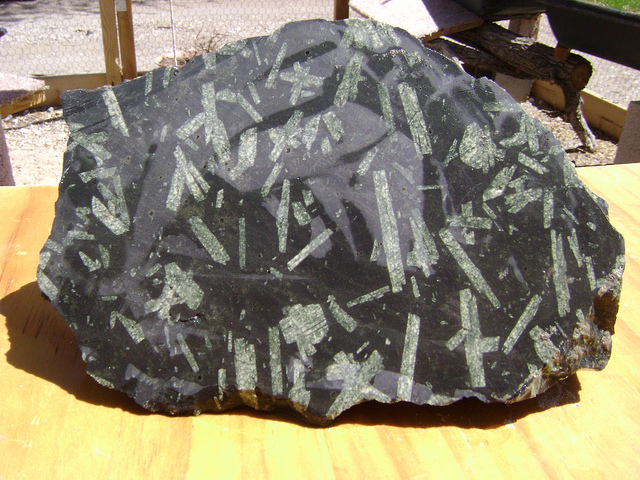
Glomeroporphyritic basalt from Ontario, Canada. Image courtesy of Ron Schott.

def. Glomeroporphyritic:
A textural term used to describe igneous rocks that contain clusters of phenocrysts, which are large crystals in a finer-grained matrix or groundmass.

Glomeroporphyritic is one of my favorite geology words. I love this word because it’s such a funny, complicated-looking word, and it’s so much fun to say. Sometimes, I manage to say “glomeroporphyritic” perfectly. Other times, I stumble over the tongue-twister of the word, saying something like “glomeroporphaglomeroporphyryyitic” before taking a breath and slowly, deliberately saying, “glomeroporphyritic.”

The word “glomeroporphyritic” is a modification of the word “porphyritic,” which is a textural term used to describe igneous rocks that have large crystals in a finer-grained groundmass.  How do porphyritic igneous rocks form?

Well, to quote an earlier blog post of mine,

How to porphyritic igneous rocks form? They generally form when magma that has been slowly cooling for a long time, possibly in a magma chamber, is suddenly erupted to Earth’s surface. Deeper in the Earth where magmas can cool more slowly, large crystals have time to form and grow.  Magma takes awhile to crystallize completely, so sometimes partially-crystallized magmas are brought to Earth’s surface and erupted as lavas. When these partially-crystallized lavas are erupted, the rest of the molten rock cools quickly, and there is no time for large crystals to form.

Here are a couple of pictures of regular porphyritic rocks:

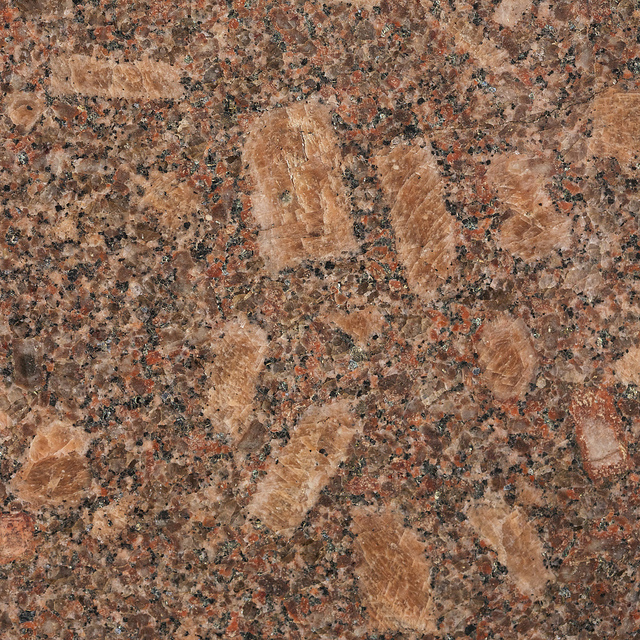
Porphyritic granite. Photo courtesy of Ian Stimpson.
A rhomb porphyry (porphyritic trachyte) from the 'Sande cauldron', in the Oslo Graben, Norway. Image courtesy of Ian Stimpson.

Unfortunately, “glomeroporphyritic” is not in the Oxford English Dictionary, so I’m not sure when the word was first adopted into the English language (anyone know?). The word “porphyritic” was first used in English in the late 1700s and comes from the Latin word “porphyrites,” which comes from the Greek word for purple and was used by ancient Romans to describe a purple-colored (and apparently porphyritic!) stone found in Egypt and used as a building stone.

The prefix “glomero-” is also of Latin origin, coming from the Latin “glomerat-“,  which is the participial stem of the verb “glomerare,” which means “to form into a ball or mass” or “to collect.” So, a glomeroporphyritic rock is a rock which contains balls or collections of phenocrysts. As an aside, I have just discovered that “glomerate” is a real word in English, and I think it’s my new favorite verb. I’m actually headed off to a meeting tomorrow, and I think I’m going to say to people, “Hey, shall we glomerate over there?” just for fun. It’s a nerdy meeting, so I think people will like the word “glomerate.”

There are two other geology words which are related to the word “glomeroporphyritic.” The first word is “glomeroporphyroclast,” which describes a cluster or collection of phenocrysts. Although the word contains the singular “clast,” the term really describes a collection of  crystals. Actually, the “-clast” suffix is a misnomer. Technically,  a “clast” is a rock fragment found in a sedimentary rocks. Glomeroporphyroclasts don’t really contain clasts at all– they contain phenocrysts. So, I think the term should really be “glomeroporphyrocryst,” but as far as I can tell no one uses that.  The second word is “glomeroporphyroblast,” which describes a collection of “blasts,” which are large crystals found in a finer-grained matrix in a metamorphic rock. For more on crysts, clasts, and blasts, see this “About Geology” article.

You might be wondering– do geologists actually use these fun but complicated words? Absolutely. A quick search of the GeoRef database returns 52 papers when I search with the term “glomeroporphyritic.” If you google the term “glomeroporphyritic,” you will find numerous scientific papers and reports which include the word as a textural description for rocks. I suppose geologists could just say something like “clumps of crystals” or “globs of phenocrysts,” but “glomeroporphyritic” is such a fun word! I’ve even used the word in my own research to describe globs of plagioclase phenocrysts in basalts.

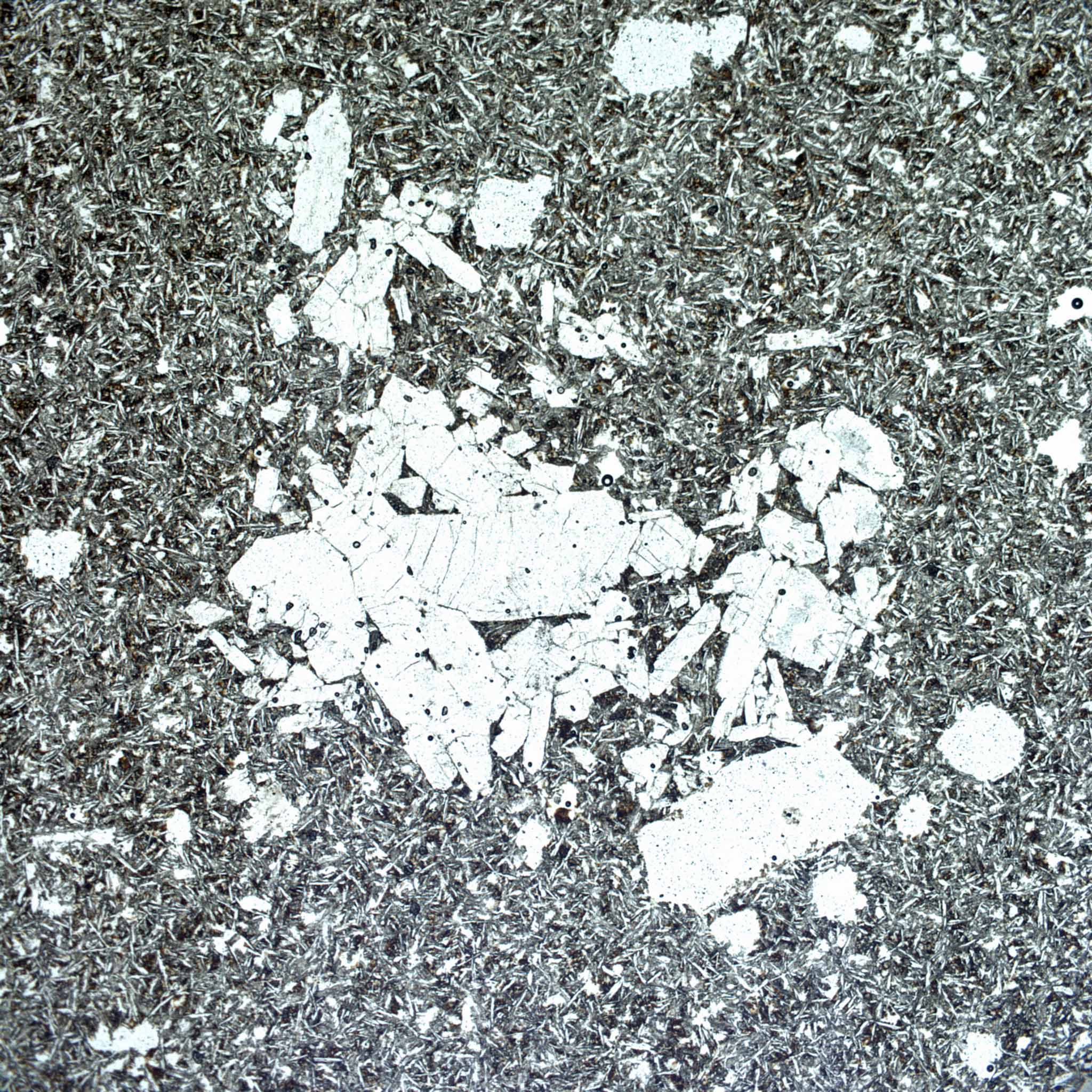
For example, below are some pictures of a geologic thin section which I described as having glomeroporphyroclasts of plagioclase phenocrysts:

Plagioclase glomeroporphyroclast (-cryst) in basalt. Thin section viewed through a microscope under plane light. Sorry there's no scalebar!
Plagioclase glomeroporphyroclast (-cryst) in basalt. Thin section viewed through a microscope under cross-polarized light. Sorry there's no scalebar!

The thin section pictured above came from a porphyritic basalt collected along the Ninetyeast Ridge in the Indian Ocean. In hand sample, the basalt looked something like this (not the same rock, but similar):

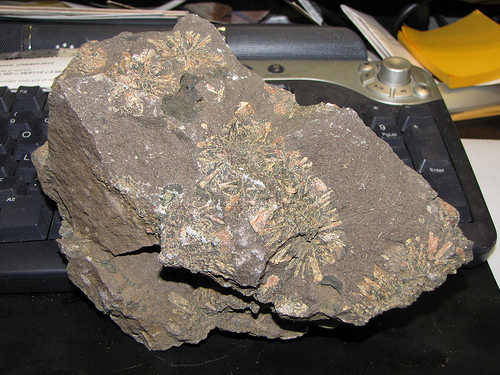
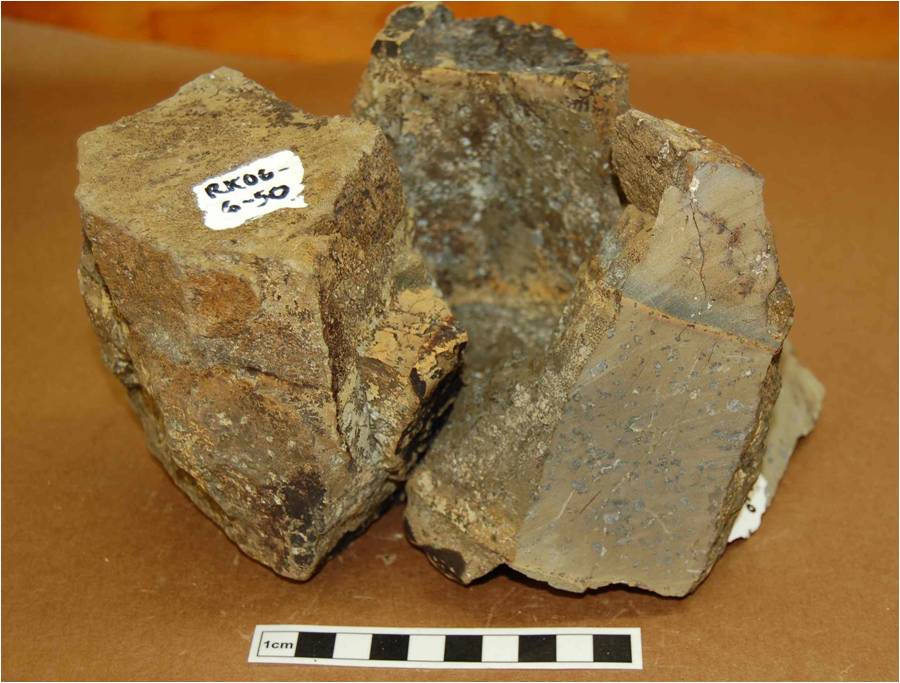
Porphyritic basalt with phenocrysts of plagioclase. Collected along the Ninetyeast Ridge, Indian Ocean in 2007.

Finally, back in May I identified (with the help of some fellow geologists!) a “Mystery Rock” with gorgeous plagioclase phenocrysts. This mystery rock has slight glomeroporphyritic texture– some of the phenocrysts look as if they are clumping together. The owner of this mystery rock actually decided to name her rock “Glomer.” You can see some more photographs of Glomer the rock here.

Plagioclase phenocrysts in the "Mystery Rock."


***Note: Thanks to Ron Schott and Ian Stimpson for pictures for this week’s geology word of the week.***

References:
“glomerate, n.” The Oxford English Dictionary. 2nd ed. 1989. OED Online. Oxford University Press. 13 July 2011.

“porphyritic, n.” The Oxford English Dictionary. 2nd ed. 1989. OED Online. Oxford University Press. 13 July 2011.

“porphyrite, n.” The Oxford English Dictionary. 2nd ed. 1989. OED Online. Oxford University Press. 13 July 2011.

Geology Word of the Week: F is for Fumarole

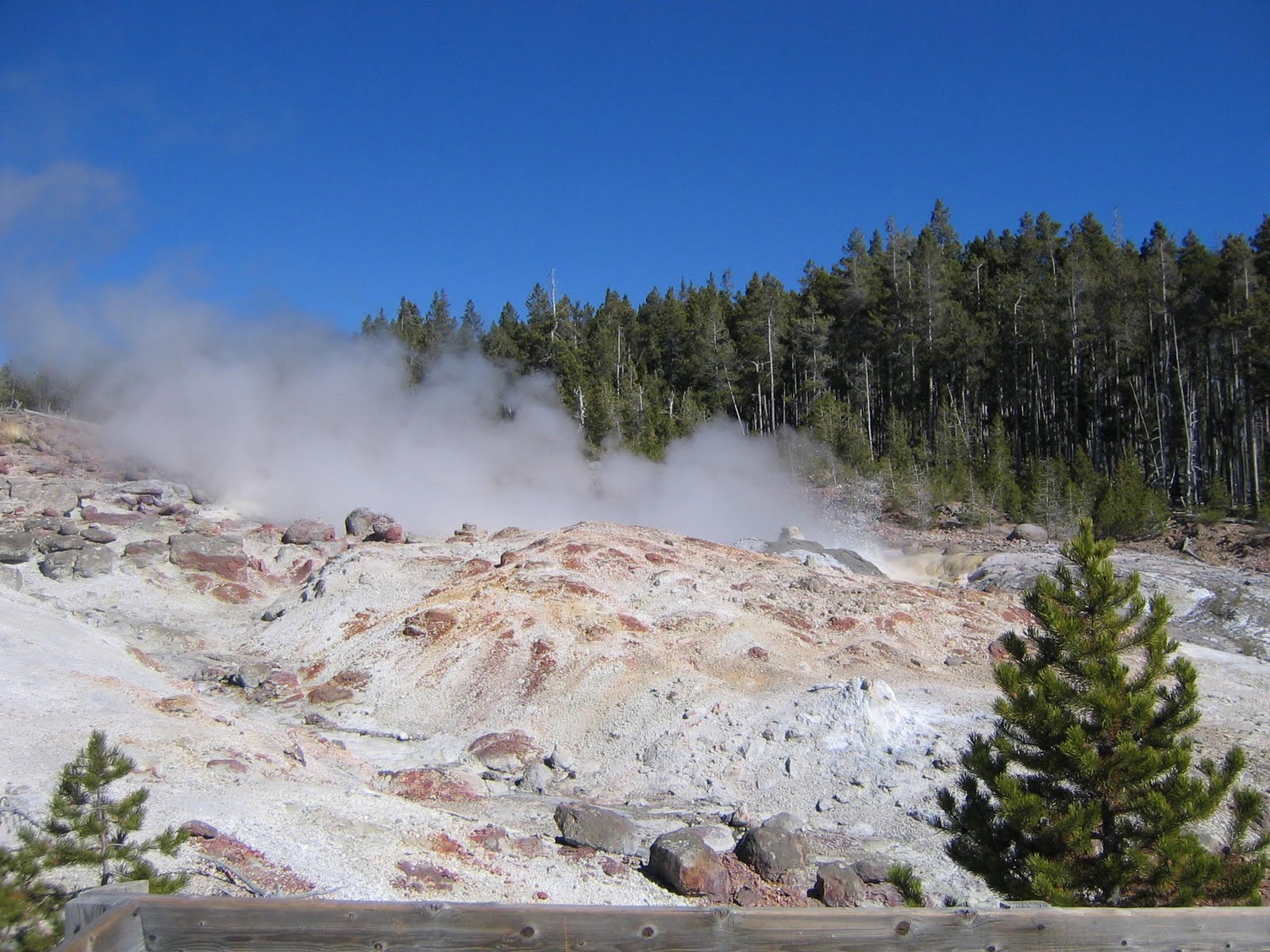
Fumarole 1. Yellowstone, Western USA, Fall 2005.

def. Fumarole:
A crustal opening, usually in the vicinity of a volcano, through which steam and other hot gases– such as carbon dioxide, sulfur dioxide, and hydrogen sulfide– are emitted. Fumarole comes from the Latin word “fumus,” which means smoke. According to the Oxford English Dictionary, the word was incorporated into English through the French word “fumarolle” [1].

When I’m pondering my geology word of the week, I usually start by reading several definitions of the geology word which I have chosen for that particular week. My trusty geology dictionaries rarely fail me, and I also often read the word’s entry (if it exists) on wikipedia (which is sometimes well-written; sometimes not) and check to see if the geology word is in the Oxford English Dictionary or OED. The OED is a great place to trace the etymology (origin and history) of a particular word. Sometimes geology words are in the OED (for instance, the words “delta” and “fumarole”), and sometimes they’re not (for instance, the word “nabka”). The OED definitions are usually elegantly written, but they are not always perfectly scientifically accurate. After reading several definitions– and sometimes sections of geology books related to a particular word– I set everything aside and then write up my own definition. I then add a little explanation and some pictures, edit a little, and then my geology word of the week is complete!

I really try to write the geology definitions in my own words and not just copy them out of books or online sources. However, this week I find myself particularly enchanted by the OED definition of “fumarole,” which is:

A hole or vent through which vapour issues from a volcano; a smoke-hole [1].

While perhaps not the most scientifically accurate and complete definition, I think that “smoke-hole” is a great way to describe a fumarole. Perhaps “gas-hole” would actually be better since a fumarole does not really release smoke from a fire but rather gases, generally hot gases generated by nearby volcanic activity. However, fumaroles do sort of look as if they are releasing fire smoke. Fumaroles often occur together in a “fumarole fields.” From a distance, a fumarole field can make a landscape look as if it is on fire, or perhaps smoldering after a recent fire. Indeed, one of the largest and most famous fumarole fields occurred in Alaska in 1912 and became known as “The Valley of Ten Thousand Smokes.” This impressive field of thousands of fumaroles formed in gas-rich volcanic ash that covered the valley after a very large eruption of the Novarupta Volcano.
However, fumaroles do not erupt smoke, at least not proper smoke generated by the burning of something. Rather, fumaroles release hot gases such as steam (water vapor), carbon dioxide, sulfur dioxide, and hydrogen sulfide. A fumarole which releases primarily sulfur-rich gases actually has a special name: it is called a solfatara (plural: solfatare). The gases released by fumaroles are generally produced as a result of volcanic activity and are generally being released from hot, gas-rich magma or ash. Water vapor released by fumaroles could also be the result of volcanic heating of groundwater.
Below are fumarole pictures galore! Enjoy!
Here are some pictures of fumaroles that I took during a trip to Yellowstone back in 2005:
Fumarole 2. Yellowstone, Western USA, Fall 2005.

Fumarole 3. Yellowstone, Western USA, Fall 2005.

Fumarole 4. Yellowstone, Western USA, Fall 2005.

Fumarole 5. Yellowstone, Western USA, Fall 2005.

Fumarole 6. Yellowstone, Western USA, Fall 2005.

Fumarole 7. Yellowstone, Western USA, Fall 2005.

Here are some fumarole pictures and descriptions sent to me by Erik Klemetti of Eruptions:

Fumarole field at Bumpass Hell near Lassen Peak, California.
Photo courtesy of Erik Klemetti.


A fumarole near the road at the southern entrance of Lassen Volcanic National Park.
Photo courtesy of Erik Klemetti.

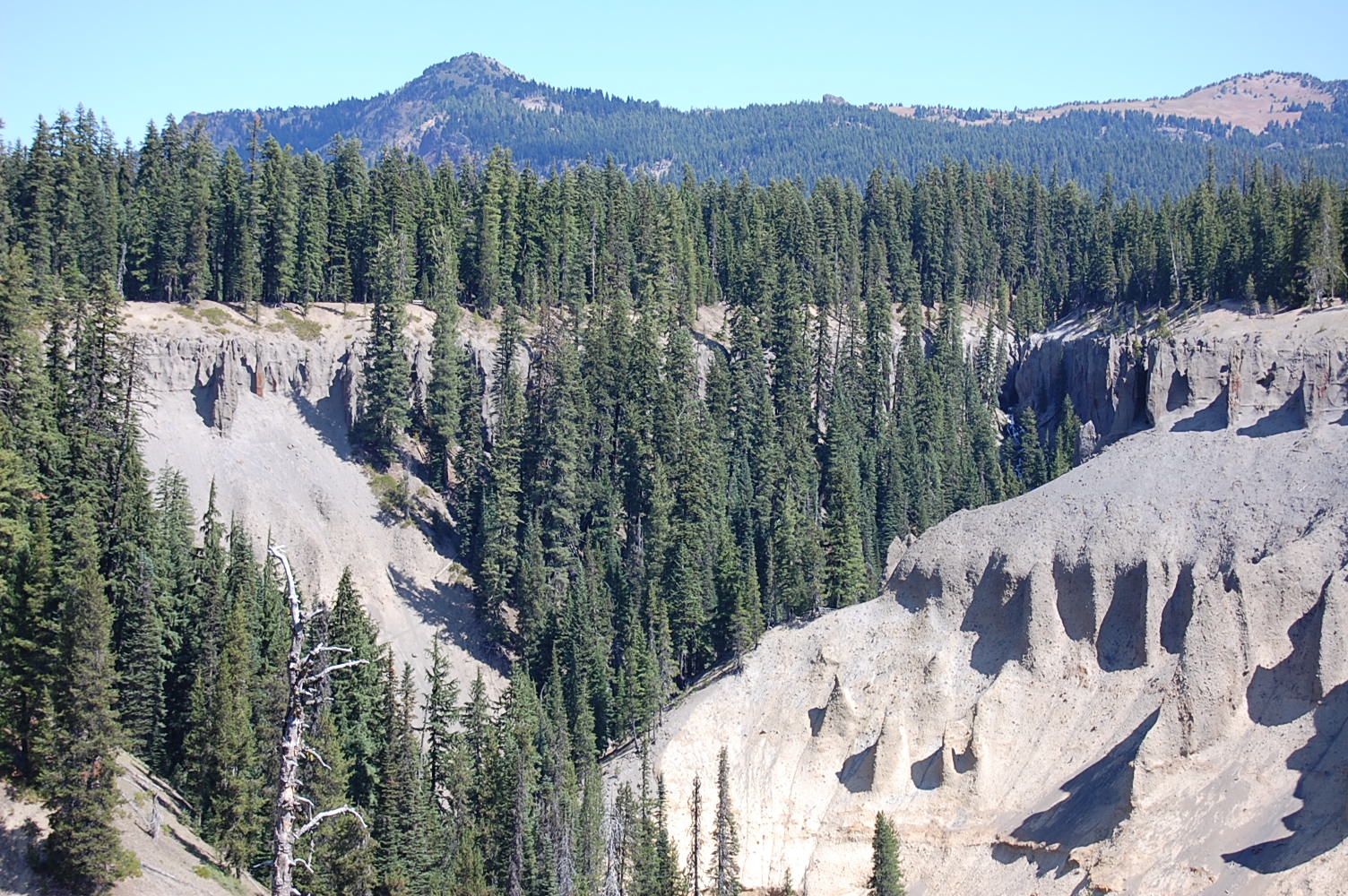
These aren’t active fumaroles, but the pinnacles in the Crater Lake ~7700 year old
eruption deposits are fossil fumaroles formed as the tephra degassed.
The ones in this shot are along the southern entrance road to the National Park.
Photo Courtesy of Erik Klemetti.
A fumarole in a sewer grate in downtown Rotorua, New Zealand.
Photo courtesy of Erik Klemetti.

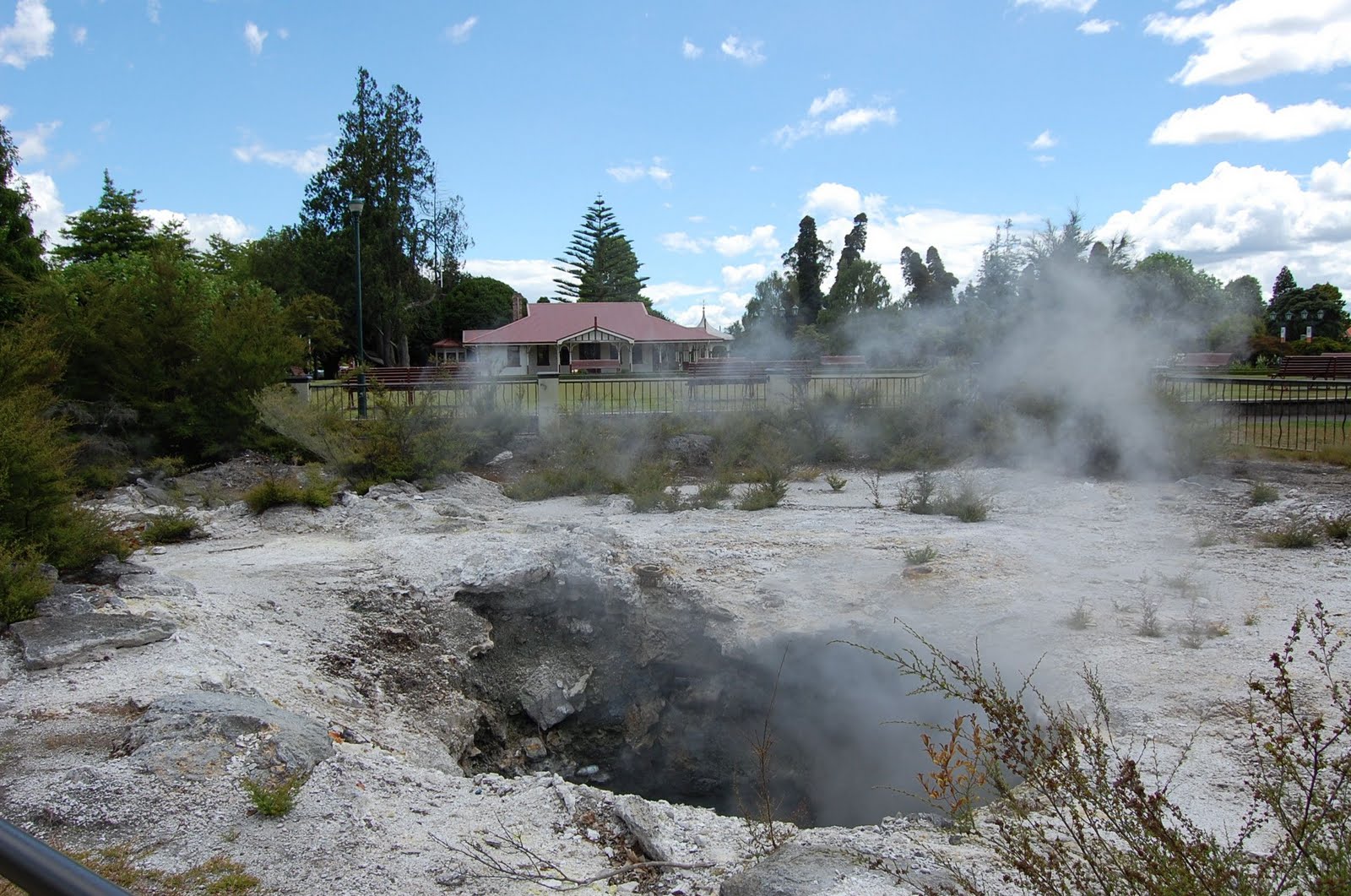
Fumarole in front of some colonial buildings along the shore of
Lake Rotorua, New Zealand. Photo courtesy of Erik Klemetti.

Here are a few more fumarole pictures from Yellowstone sent to me by Chris Rowan of Highly Allochthonous:

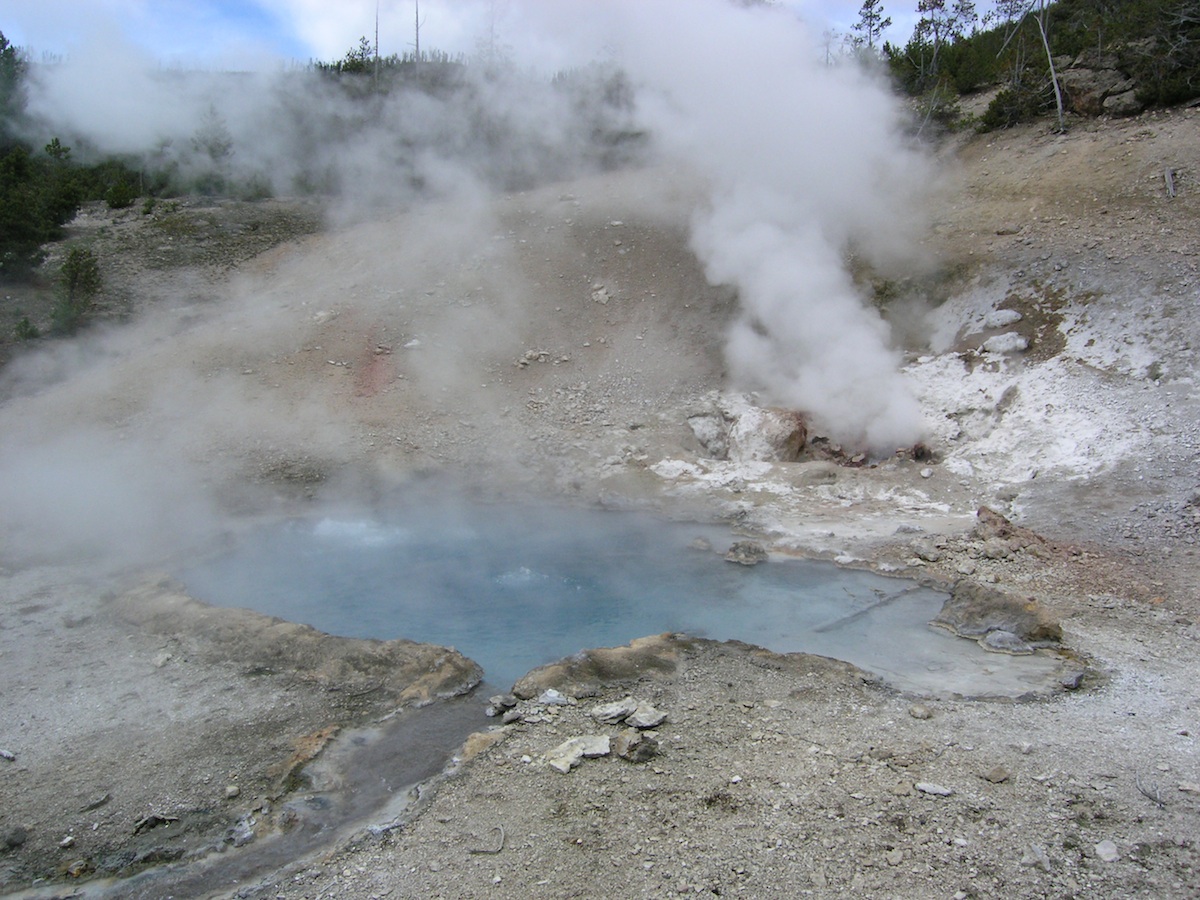
Beryl Spring Fumarole, Yellowstone, Western USA. Photo courtesy of Chris Rowan.

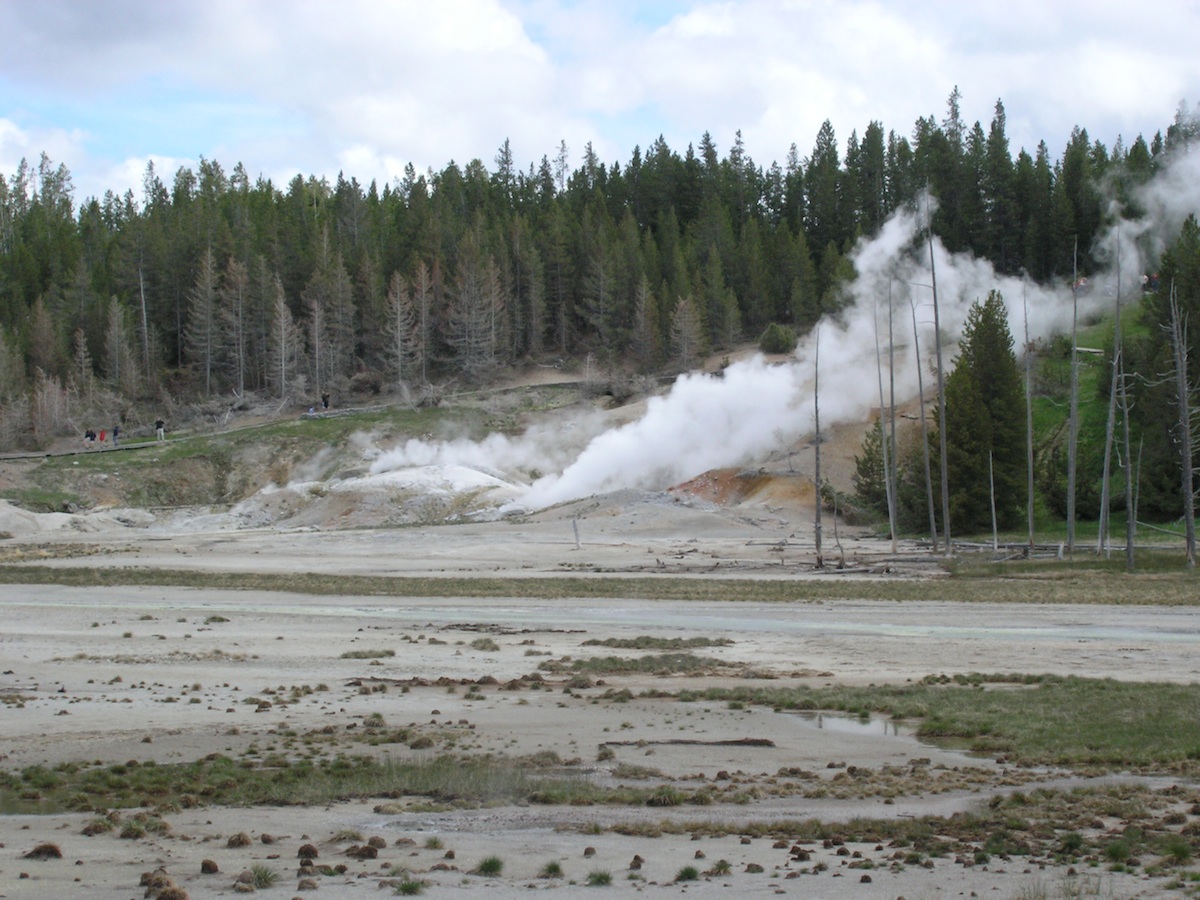
Black Growler fumarole. Yellowstone, Western USA. Photo courtesy of Chris Rowan.

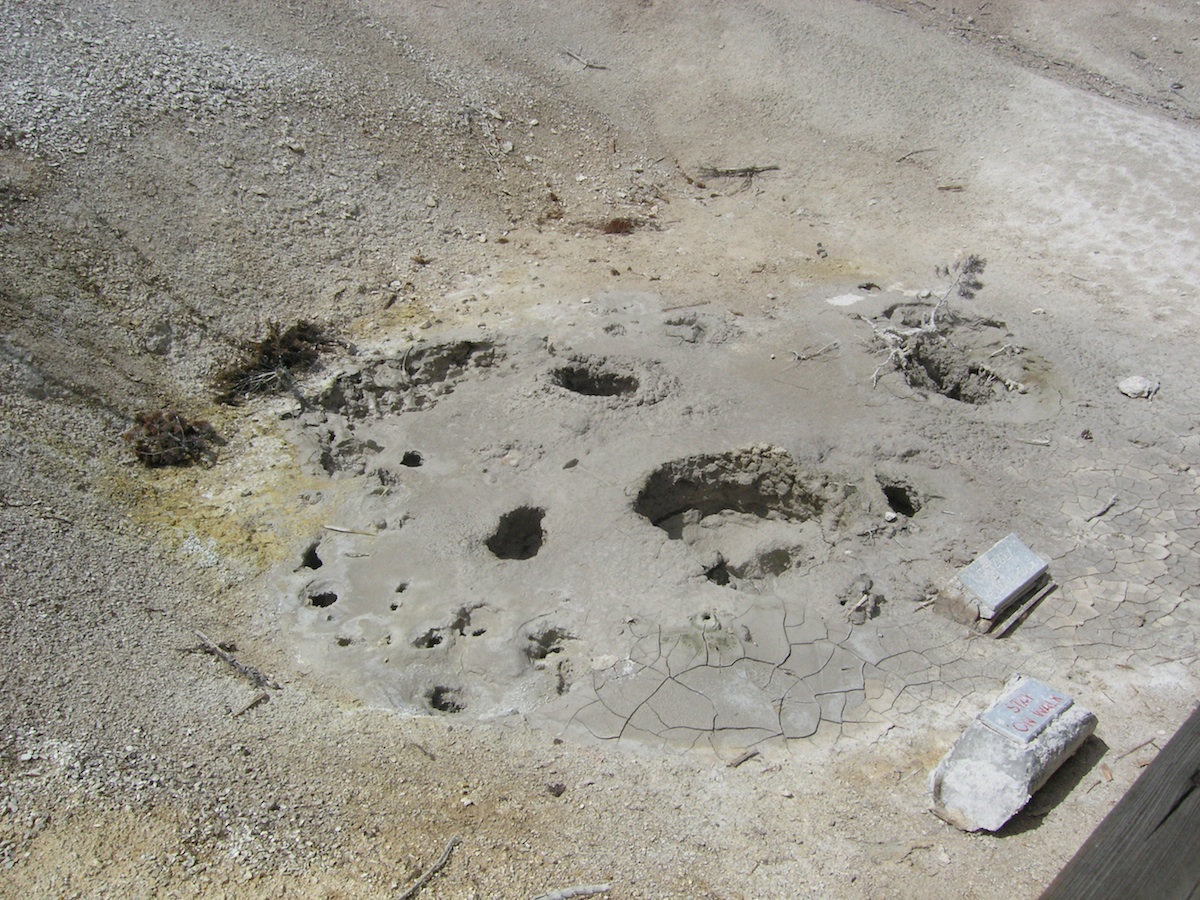
Grizzly fumarole. Yellowstone, Western USA. Photo courtesy of Chris Rowan.

Reference:
1. “fumarole, n.” The Oxford English Dictionary. 2nd ed. 1989. OED Online. Oxford University Press. 7 July 2011  .

***Thanks very much to Erik Klemetti and Chris Rowan for pictures of this week’s geology word.***