Technology Anachronisms in Science

MacDiff program running in a Mac Classic environment emulator on my Windows XP netbook, January 2011.

Ever since I starting doing geology research back in 2003, I have encountered technology anachronisms in science. I find these technology anachronisms intriguing, humorous, and- sometimes- frustrating. Often, the challenge of using technology in science is not keeping up with the latest-and-greatest technology but rather remembering or learning to use very old, outdated technology.

What is a technology anachronism? Basically, this is a piece of technology (e.g. a computer, a data reduction program, a mass spectrometer) that is old and out-of-date– sometimes wildly so– but which is still in regular use for any of a variety of reasons. A good example of a technology anachronism is the soon-to-be retired Space Shuttle. My senior year of high school, I remember reading a 2002 New York Times article titled “For parts, NASA Boldy Goes… on eBay.” Basically, in 2002 (and probably in 2011) the Space Shuttle was still using early 1980s computer technology. In order to keep the shuttle computers in good repair, replacement parts were sometimes needed. The problem, of course, was that 1980s computer parts were hard to come by in 2002. Thus, NASA would buy replacement computer parts on eBay and any other place they could scavenge them from.

So why did NASA go on eBay rather than just outfit the space shuttle with new computer systems? Well, you’ll have to ask NASA about that for an official answer, and I’m sure they did make some updates to the shuttle’s computer technology. However, I imagine that designing a space shuttle– even just part of a space shuttle– is such a long, rigorous process that it is more practical to maintain the outdated but tried-and-trusted technology rather than overhaul with new technology that would require significant energy to design, test, and implement.

About a year after I read the NASA article, I started participating in science research in a geochemistry lab down at Florida State University (FSU). I went down to FSU to work as a summer intern. For my project, I measured hafnium (Hf) and neodymium (Nd) isotopes in some post-shield basalts from Hawaii. I measured Hf isotopes on a very old mass spectrometer* that had been specially modified for the task. The computer that was hooked up to the mass spectrometer was early to mid 90s in vintage. Much of the running of the mass spectrometer was done by hand (physically pushing in the samples, initial settings and calibration), but the computer did have a program for measuring the isotopes. The computer program was difficult to use and full of glitches. I forget what code was used, but I think it was an old FORTRAN code that had been programmed by a graduate student or technician way back when. The results came out on an old dot matrix printer with the holes on the edges to move the paper along.

More recently, I have encountered a technology anachronism in the software program I am using to identify minerals in X-ray diffraction (XRD) scans of rock powders. To identify minerals, I am using a program called MacDiff. This is a great XRD analysis program– it’s free and works really well for basic mineral identification. There are other, very expensive programs with larger mineral databases and more capability. However, I don’t require this much analysis for my thesis, so MacDiff is fine. There is just one problem with the MacDiff software: the program has not been updated since about 2000. The program also only works on a Mac, but even that wouldn’t be a huge problem if it worked on a recent Mac. Actually, the program can only be run in the Mac Classic environment.

There are two options for working with MacDiff. The first option is finding an old Mac computer that can run the Mac Classic environment. This is not too difficult as many scientists have old Mac computers lying about, and worst case scenario you can always buy an old Mac fairly cheaply off eBay. The second option, which I decided to pursue, is to set up an emulator environment so that you can run the Mac Classic environment in a window on a modern computer. Setting up an emulator is a little bit tricky (well, for me anyway), but I had a computer savvy friend help me figure it out. Running MacDiff through an emulator works well with just a few problems. The emulator tends to crash if you do certain things in certain orders, but I’ve managed to figure out ways around the problems I’ve had with the emulator. I really wish that a scientist or programmer would update the MacDiff code so that it would run on a modern computer, but that coding represents a significant time investment, so it probably won’t happen anytime soon.

I have encountered countless more technology anachronisms in scientific research. In my experience, there are several reasons why technology anachronisms exist:

1. Money:
There can be a high cost in replacing technology. Scientists cannot afford to replace very expensive equipment– such as million dollar mass spectrometers– often. For example, here at Woods Hole Oceanographic Institution there is an ion probe** that is from the late 1970s. There is also a newer, fancier ion probe. However, since ion probes are so expensive and in demand, the old 1970s one is still run regularly.

2. Time and Effort:
Replacing technology and becoming used to new technology takes time, which scientists have far too little of these days. Sometimes, it is faster and easier to keep the old technology limping along rather than take the time to transition to new technology. As an example, if an extensive code has been written in outdated FORTRAN, many scientists prefer to keep working with the pre-existing FORTRAN code rather than take the time and effort to re-write the code in a new language.

3. Comfort:
Humans, scientists included, are often resistant to change. Like NASA space shuttle operators, scientists like working with tried-and-trusted technology. Sometimes, this means clinging onto a computer or code or machine longer than they should. Older scientists in particular can sometimes be unfairly critical and suspicious of new technology.

4. Compatibility:
Sometimes, using older technology is really the only option. For instance, if you are using an old ion probe you may need to use an old computer in order to be able to talk to that old ion probe. Similarly, if you are using a group piece of technology– such as MacDiff– that you cannot update on your own, then you may be stuck with old technology unless the whole research community makes an effort to update the technology.

There will always be anachronistic technology in science, if only because the pace of technology development is so rapid these days.This is especially true when it comes to computers. The day you buy your shiny new laptop, this laptop is already out-of-date. New and better computers and computer-like gadgets– smartphones, electronic book readers, tablet PCs– are constantly being released. New software programs (Microsoft products, internet browsers, blogging platforms) come out every couple of years, and updates to these commonly-used software programs come out all the time.

So, whatever technology you purchase for your science, it’s likely to be out of date by the time you install it in your laboratory.

*For mass spectrometry geeks, the machine was the Lamont Isolab 54 Secondary Ionization Mass Spectrometer (SIMS).

**For ion probe geeks, the older ion probe is the IMS 3f. WHOI also has a IMS 1280.

Scientific Perspiration

Note that I originally wrote this essay during my first year of graduate school. Three years later, I still feel that I am an average graduate student. However, I also feel that since I started graduate school I’ve gained a large amount of confidence and greatly developed my knowledge in geology, chemistry, and mathematics. I have also been humbled. Although I know much, much more than when I started graduate school, I have also more fully realized what an enormous amount of knowledge there is in the world and how much I don’t know. Most importantly, I’ve learned not to be afraid of a little scientific perspiration, be it picking crystals for hours on end, teaching myself an ancient data reduction program, or jumping headfirst into some math.

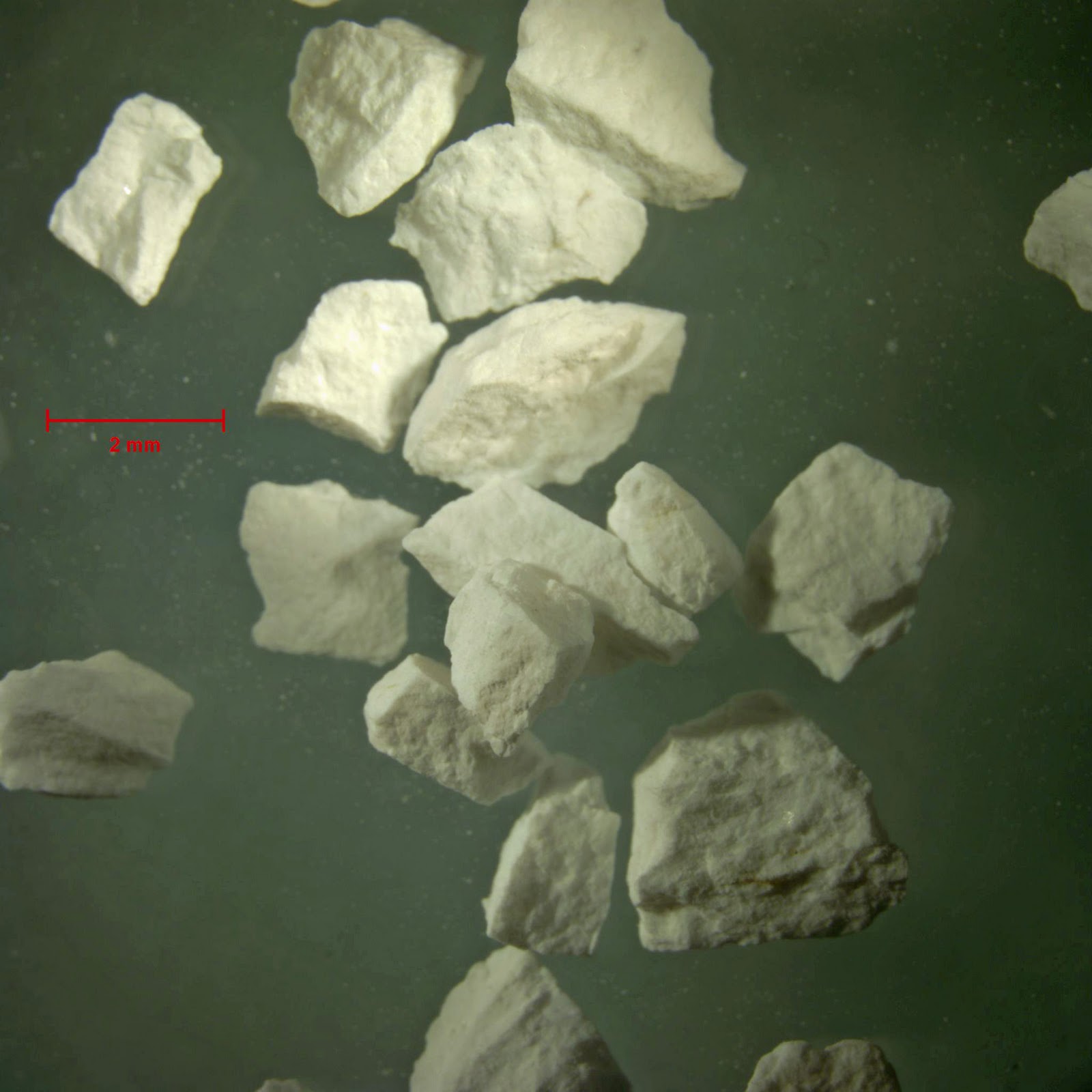
Carbonate grains under the microscope, Fall 2010.

“Genius is one percent inspiration and ninety-nine percent perspiration.”
-Thomas Edison

If you’re average but want to be a scientist, there’s hope! With persistence and a fair amount of perspiration, you can still become a great scientist.

Most of us are not scientific geniuses or autistic savants. Most of us are, well, fairly average. We should be. Most people are supposed to be average. Most of us should be C-level students. C is supposed to be average, the recent trend in grade inflation aside.

Take me, for instance. I may go to MIT and all that jazz, but really I’m quite ordinary. For instance, in the three math classes I’ve taken since high school, I’ve earned two Cs and a B. In many ways, I’m quite dumb by MIT standards. I suffer from math anxiety, like many people, and I have trouble memorizing information. I forget mineral formulas and phase diagrams. I’m slightly dyslexic and mix-up phrases and reverse numbers. I’m a klutz, though I’m more graceful than I used to be as a kid. Still, in the lab I have to work very carefully and constantly be aware of myself. I’m the sort of person to pick crystals for three days and then accidentally knock over the beaker onto the floor of the lab. I’ve done it before.

I am a fairly creative thinker and a decent writer, but in most other ways I’m about average. I hardly fall into the category of MIT genius. Like most people in the world, I don’t solve problems in fluid mechanics by gazing into my coffee cup (like Albert Einstein) or take up animal behavior studies by training the ants in my bedroom (like Richard Feynman). Unlike other MIT students, I don’t play competitive scrabble in my free time or whisk off to Vegas to win thousands by card-counting at Blackjack. I’m just a fairly average graduate student, my MIT credentials aside.

Still, there is hope for me as an average scientist. And there’s hope for you, too, if you’re also average like me! This hope comes from the fact that good science does not come exclusively from intellectual giants who come up with a great idea and immediately change the way we view the universe. We are not all Albert Einsteins, Richard Feynmans, or Carl Sagans. Even these great thinkers had to work fairly hard, long hours to come up with their strongest science. Sure, they were naturally talented in mathematics and their respective scientific fields, but that wasn’t enough. They also had to spend countless hours calculating, measuring, and writing. They not only had to come up with their ideas, they also had to figure out how to prove them and explain them to others.

As science grows more complex and interdisciplinary, the role of many hundreds of average scientists will be just as valuable as the role of one or two great thinkers. There are many problems science needs to tackle in this century and beyond, and we need as many minds as possible working on these problems. In order to be able to cure cancer and figure out issues such as climate change and sustainable energy, we need global scientific efforts.

I think a great misconception in the world is that one has to be really smart or naturally great at mathematics and science to be a good scientist. This is false, in my opinion. Sure, having some natural ability doesn’t hurt. More important, though, is having a real passion for science and being willing to work hard at science because of this passion.

When it comes down to it, science is often about persistence. Because science explores the unknown, there are no certainties. There’s a big difference between the textbook answers in a freshman college physics or chemistry lab and real scientific research. Scientific research is more often than not one step forward, ten steps back. Progress can be very slow and tedious. A great idea can take months to years to test and verify. Sometimes, smart people are not very good at hard work and persistence.

In my own life I’ve watched friends give up on science degrees when there were suddenly no textbook answers, when success required working through a little frustration. An ex-boyfriend of mine switched to finance after he realized biology was “a little more difficult” beyond the introductory level. He was smart enough to become a biologist, but he didn’t want to work hard for the answers that were not already there. The same semester he switched to finance, joined a fraternity, got drunk every night, and we broke up. He moved on to a pretty Asian girl, and I moved on to a research job in a geology lab. I like to think I chose science over him. It sounds more romantic than “he dumped me for a hot Asian chick.”

Personal stories aside, though, I feel that often the scientists who make the most valuable contributions to science are not the smartest ones but rather the most persistent ones (or perhaps the luckiest ones). These persistent scientists may not be geniuses in the Einstein sense, but they are willing to trudge away for years at a task that many might find extremely frustrating or boring. For instance, the Serbian geophysicist Milutin Milankovic was smart, but he did not become famous because of one moment of brilliance. Rather, he became famous because he devoted himself for thirty years to the tedious calculations associated with the planetary and solar system cycles that affect climate and ice ages. The Milankovic Cycles are controlled by Earth’s orbital shape, eccentricity, and axial tilt and are now recognized to play an important, natural role in climate regulation. The theory that physical variations in Earth’s movement may affect climate had been advanced before Milankovic. However, Milankovic was the first person to sit down and grind through the tedious calculations, so the cycles are named after him. He was willing to do the hard, often boring work that others were less willing to pursue. He worked hard.

Fortunately, modern technology is somewhat easing the amount of hard– or at least monotonous– work that scientists must do these days. Computer programs make repetitive calculations much more bearable and also much faster. Fancy equipment in the lab automates many of the more laborious aspects of chemistry, physics, biology, and engineering. Once one works his (or her!) way up the ranks somewhat in science, one can also hire graduate students, a cheap and often efficient way to complete less-than-desirable yet still important calculations or tasks in the lab.

Regardless, I think that dedication and hard work still count for a great amount in science these days. At least, that’s what I tell myself. I am not the hardest worker in my lab, by any means. I do often work long hours, though, and I try not to complain when the tasks are repetitive or frustrating.

For the last three days straight, I have been picking plagioclase crystals under a microscope. By picking I mean selecting crystals that are not altered significantly so that they are good “bottles” for the radioactive isotopes I am using to date the basalts from which these crystals came. These crystals are very small– they’re about 250 microns wide, on average. I use a very small pair of tweezers and pick in a dish filled with ethanol so that the crystals don’t stick to my tweezers as I’m picking them. I have been picking between eight and twelve hours a day with limited breaks. I go to the microscope, pick for a couple of hours, have a cup of tea, pick for another hour, eat lunch, pick for a few more hours, check email, pick for an hour, go to the gym, pick for two or three more hours, and then go home. By the end of the day, my right hand muscles ache and my eyes are sore. I walk home seeing tiny white plagioclase crystals dancing in front of me. While picking, I have listened to just about all the music I own and have started begging my friends for new mixes.

I’m exhausted, but I don’t mind my crystal picking too much. The task is monotonous, but it’s also very important. Picking crystals by hand is the best way to ensure that the dates I end up obtaining for the basalt rocks are the best dates possible. If I know the the crystals are good (unaltered, pure, clean plagioclase) then I can have confidence in my ages once I determine them three or four months from now. For a couple of unpleasant weeks of picking now, I’ll have a great scientific return in the future… hopefully, anyway. Nothing is guaranteed in science research, after all, but my chances for good data are high.

The work I’m doing now may not be as significant as, say, thirty years of Milankovic calculations. Regardless, as I sit here in my lab, at the microscope, picking away for hours on end, I feel somewhat romantic. Hey, I may not be the smartest scientist around. Here I am at MIT, though, and dammit I’m going to work hard.

So, that’s my message for today: a little enthusiasm and dedication can go a long way in science. Not the brightest but still want to be scientist? That’s okay. Work hard, and you can succeed in science. At least, I hope so. We certainly need more scientists in the world, so it shouldn’t be just the very top cream of the crop who pursue degrees and careers in science. We need some average, hard-working people to become scientists, too. And after all, even scientific geniuses have to work hard to provide concrete support for their far-fetched theories.