Monday Geology Picture: One More Egyptian Artefact from the British Museum

A beautifully carved ancient Egyptian artefact in the British Museum. Two light-colored veins are visible in the rock.

Over the past few weeks, I’ve been sharing pictures of ancient Egyptian artefacts from the British Museum for my “Monday Geology Picture” posts. Here’s one last picture from the British Museum: a rock slab engraved with ancient Egyptian figures and writing. I didn’t take a picture of the informational sign, so let me know if you recognize the artefact. I think that this picture shows part of a larger artefact. Whatever the artefact, the two light-colored veins are quite striking and add a chaotic sort of beauty to this ancient piece of artwork.

Well, I think that I’ve shared enough pictures from the British Museum. Next week I’ll share something different for my “Monday Geology Picture” post.
Monday Geology Picture: A Granodiorite Horus

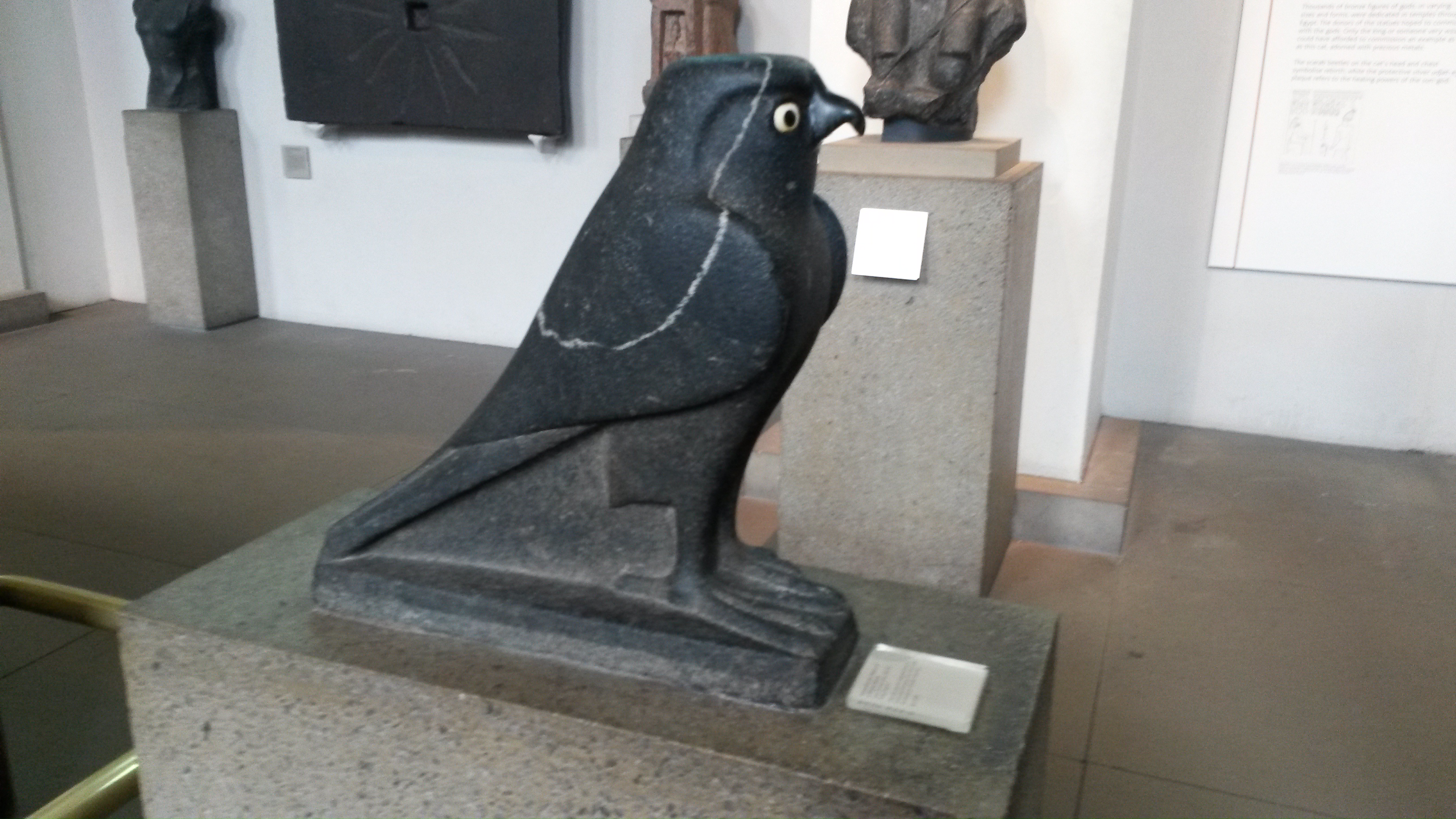
An ancient Egyptian Horus statue, The British Museum, November 2014.

For this week’s “Monday Geology Picture” I thought that I would share a couple more pictures that I took during my recent visit to The British Museum. When I was in one of the exhibits with ancient Egyptian artefacts, I was struck by a beautiful dark-colored Horus statue with a light-colored vein running through it. According to the museum sign, the statue was carved out of granodiorite. The vein is probably quartz.

Here is the museum sign about the statue:

Museum sign. Click to enlarge.

And here is a view of the statue from the front:

The Horus statue viewed from the front.
The Horus statue viewed from the front. Apologies that the picture is slightly blurry.

Monday Geology Picture: Ancient Egyptian Stone Jars

Two gorgeous ancient Egyptian stone jars on display at the British Museum.
Two ancient Egyptian stone jars on display at the British Museum.

For this week’s “Monday Geology Picture” I thought that I would share another picture that I took during my recent visit to The British Museum. This week’s picture shows two beautiful ancient Egyptian stone jars. The jar on the left is made out of limestone breccia while the jar on the right is made out of andesite porphyry.

Here’s the museum sign about the two jars:

Museum sign about the two stone jars.
Museum sign. Click to enlarge.

Monday Geology Picture: Written in Stone

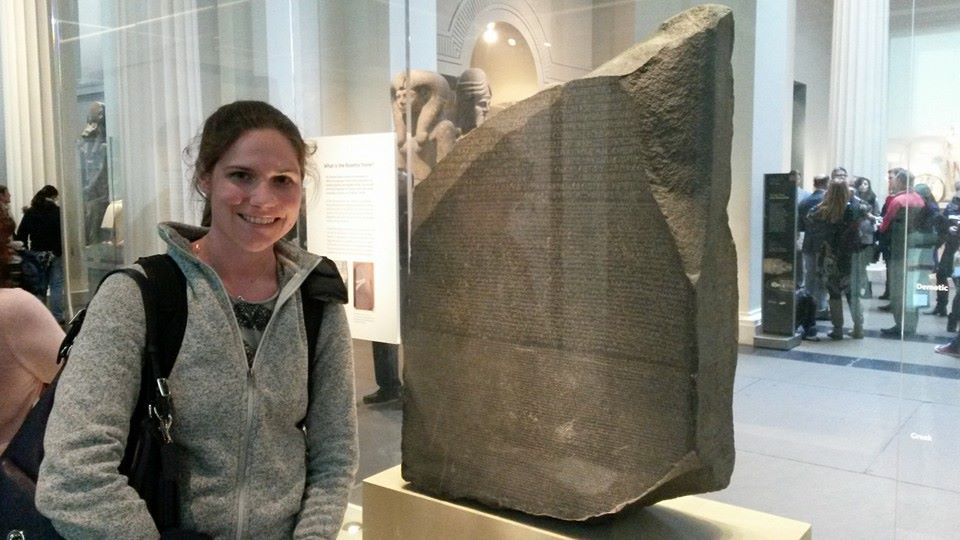
Yours truly posing with the Rosetta Stone at the British Museum. November 2014.

A few weeks ago I flew from the USA back to my home base of Cape Town, South Africa. During the journey, I had a long layover in London, so I left the airport for awhile and did some sightseeing. Among other touring, I spent several hours at The British Museum, where I saw many interesting artefacts. The most fascinating and awe-inspiring artefact that I saw was a slab of granodiorite. Now, a slab of granodiorite may not sound like much. After all, granodiorite is a common rock type. However, this particular slab of granodiorite has some words written on it. Specifically, it has an Ancient Egyptian royal decree written on it in three different scripts: Ancient Egyptian hieroglyphs, Demotic (another type of Ancient Egyptian script), and Ancient Greek. That’s right… this granodiorite slab is the Rosetta Stone, the artefact that allowed modern linguists to decode the meaning of Ancient Egyptian hieroglyphs. After linguists puzzled out the text on the Rosetta Stone, people were, for the first time in centuries, able to read hieroglyphs. This makes the words on the Rosetta granodiorite some of the most important ever to be written in stone. Discovered in 1799, the Rosetta Stone has been on display at The British Museum since 1802. The picture above shows me visiting the Rosetta Stone in November 2014.