Monday Geology Picture: Sandstone Building Stone

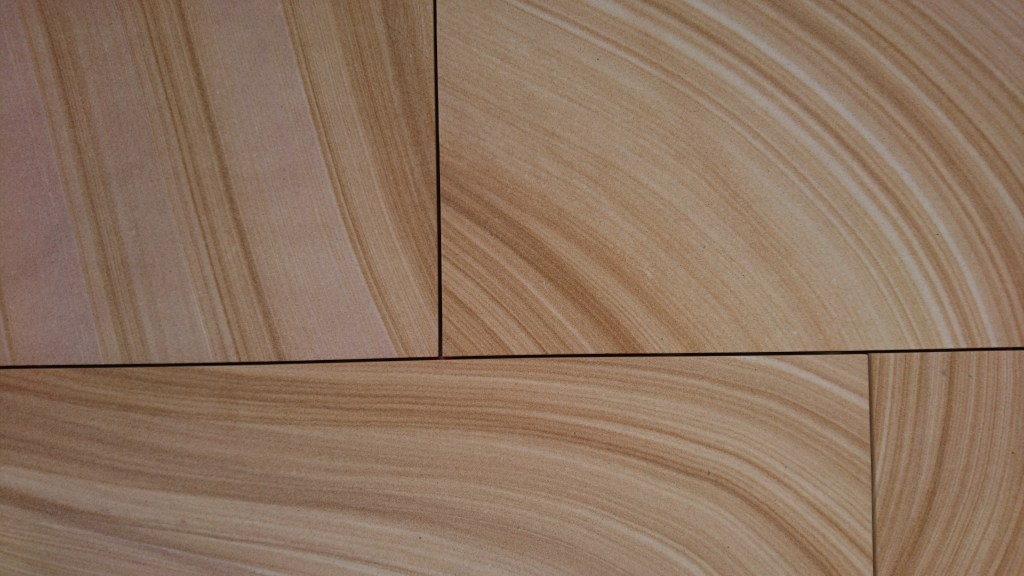
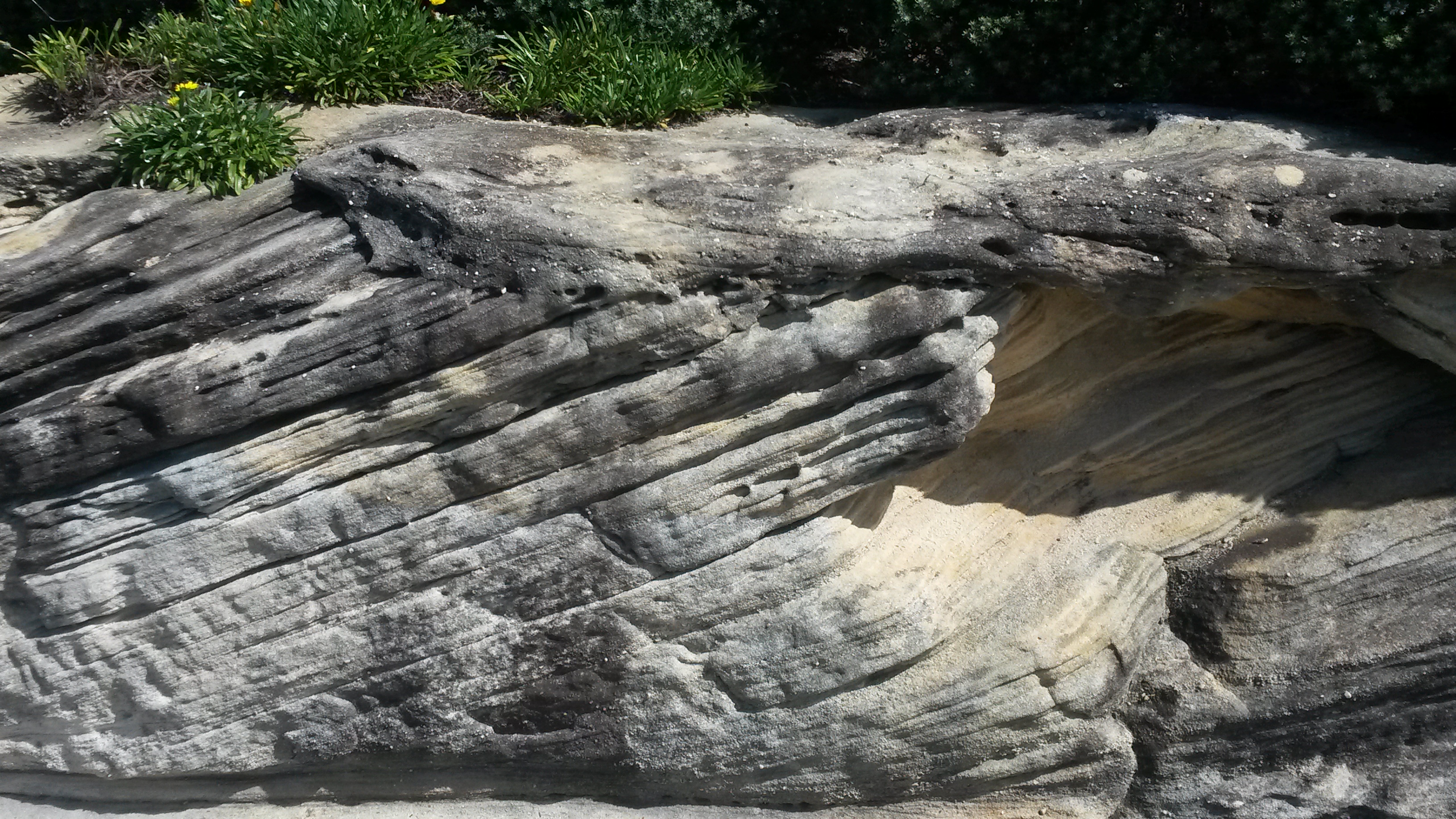
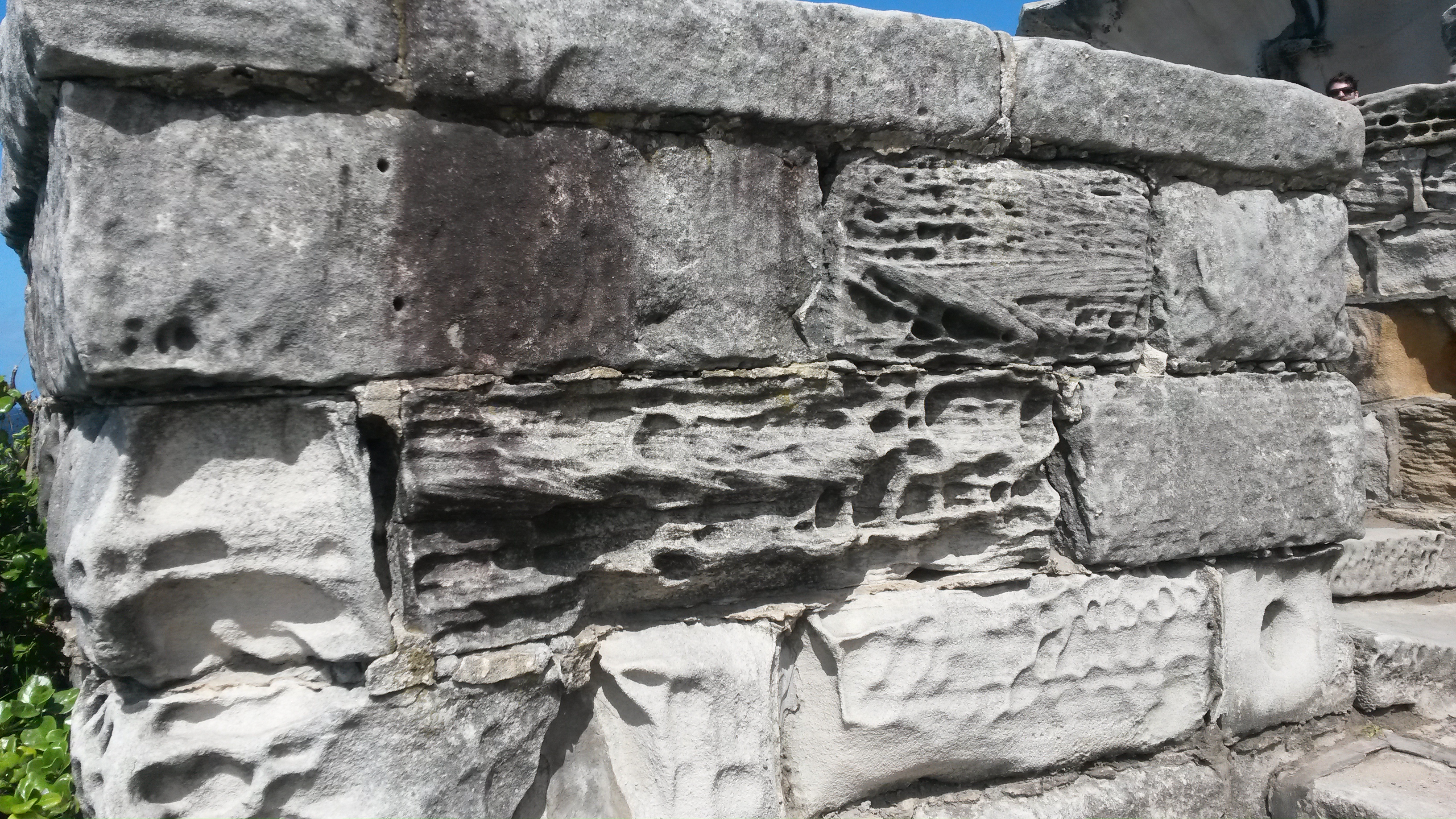
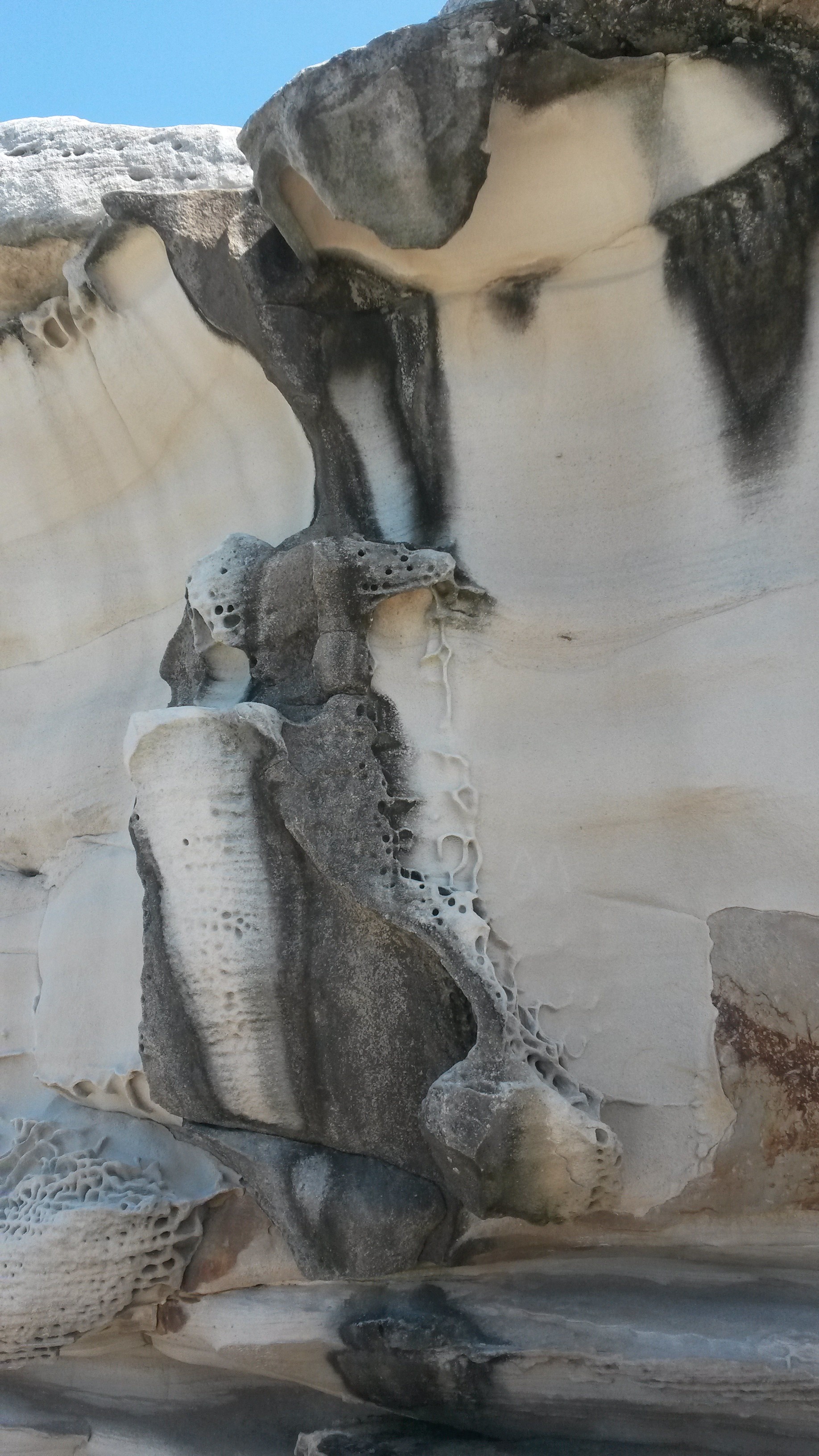
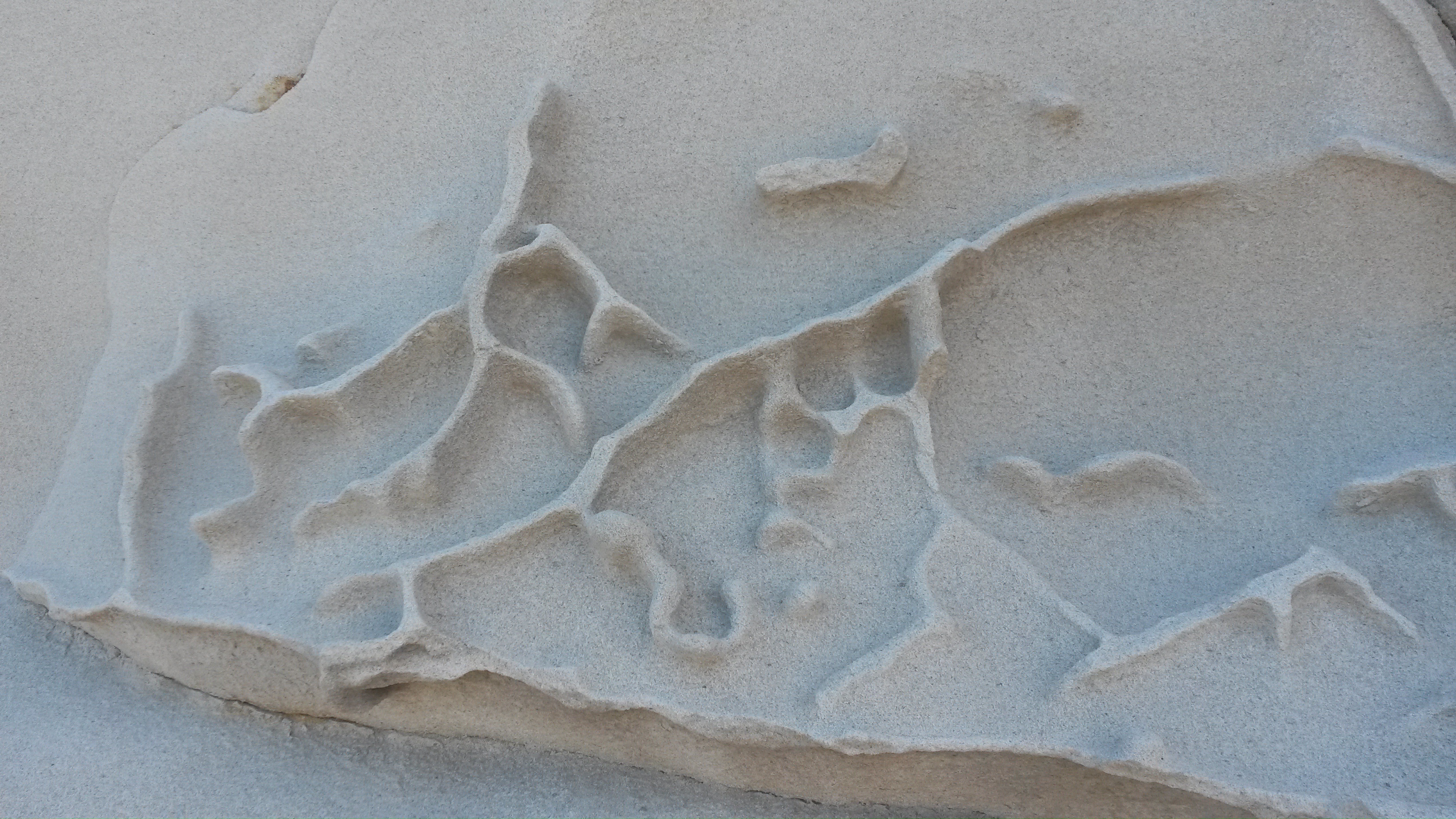
Gorgeous sandstone building stones.

I’m currently on the east coast of Australia, where local sandstone is commonly used as a building stone. Above is a picture that I took this morning. This picture shows some beautiful building stones on display at the University of Newcastle. The cross-bedding and variable coloration of the sandstone layers is just gorgeous. What a lovely building stone!

Monday Geology Picture: Great Barrier Reef View

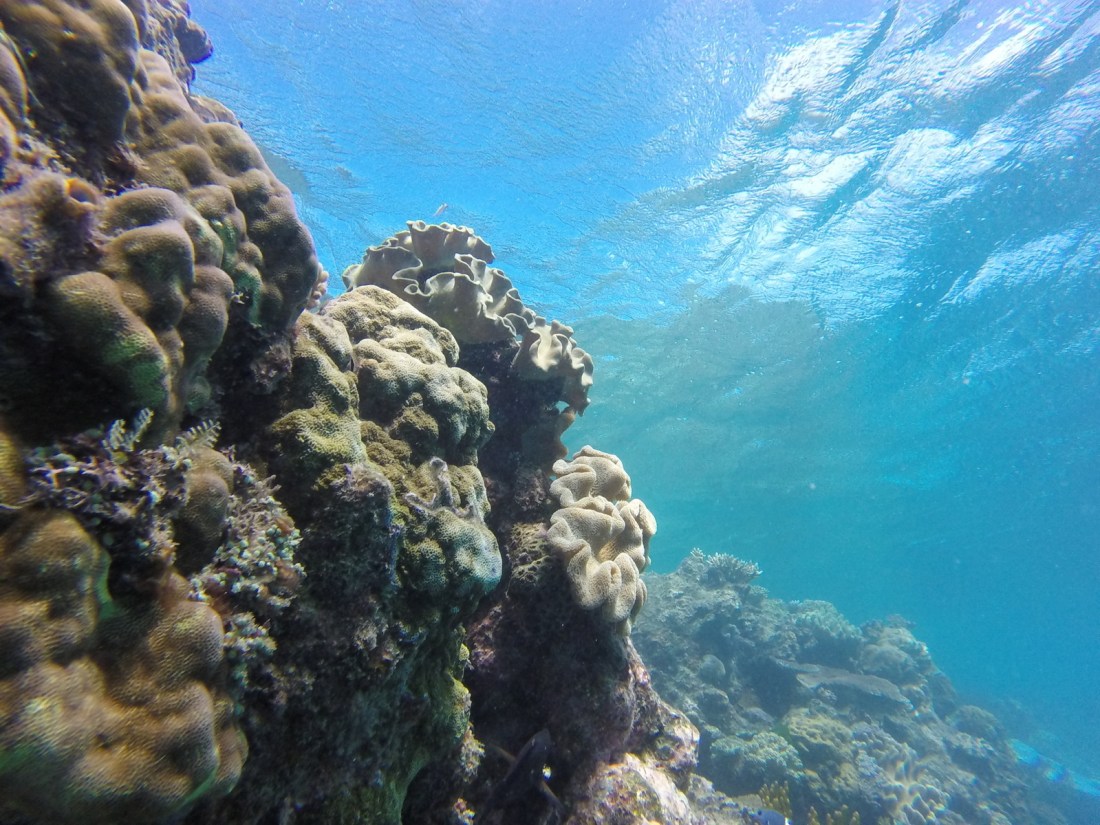
Underwater view of the reef, taken offshore of Port Douglas.

My family and I are flying to Australia tomorrow, so for this week’s “Monday Geology Picture” I thought I would share a view of the Great Barrier Reef that we took when we last visited Australia back in 2015 — before the serious coral bleaching events of 2016 and 2017. I’ll be sharing more Australia pictures soon, so stay tuned!

Monday Geology Picture: Great Barrier Reef, Australia

A great shot of the Great Barrier Reef taken by my husband Jackie Gauntlett.
A great shot of the Great Barrier Reef taken by my husband Jackie Gauntlett. Can you see me in the background?

For today’s “Monday Geology Picture” post I thought I’d share one shot of the Great Barrier Reef that my husband took during our vacation to Australia last year. Stay tuned for some more pictures from that trip! One of the items on my blogging to-do list is sharing some more pictures and information from our Australian adventure.

Syndey Sandstone

Sydney Sandstone #1.

Back in March and April 2015 my husband and I travelled to Australia for a couple of weeks for vacation. We went to visit some good friends who live in Sydney. We spent most of our time in Sydney and some of the surrounding areas, such as the Blue Mountains. We also spent a few days up in the Port Douglas area, including a couple of days on a boat out on the Great Barrier Reef.

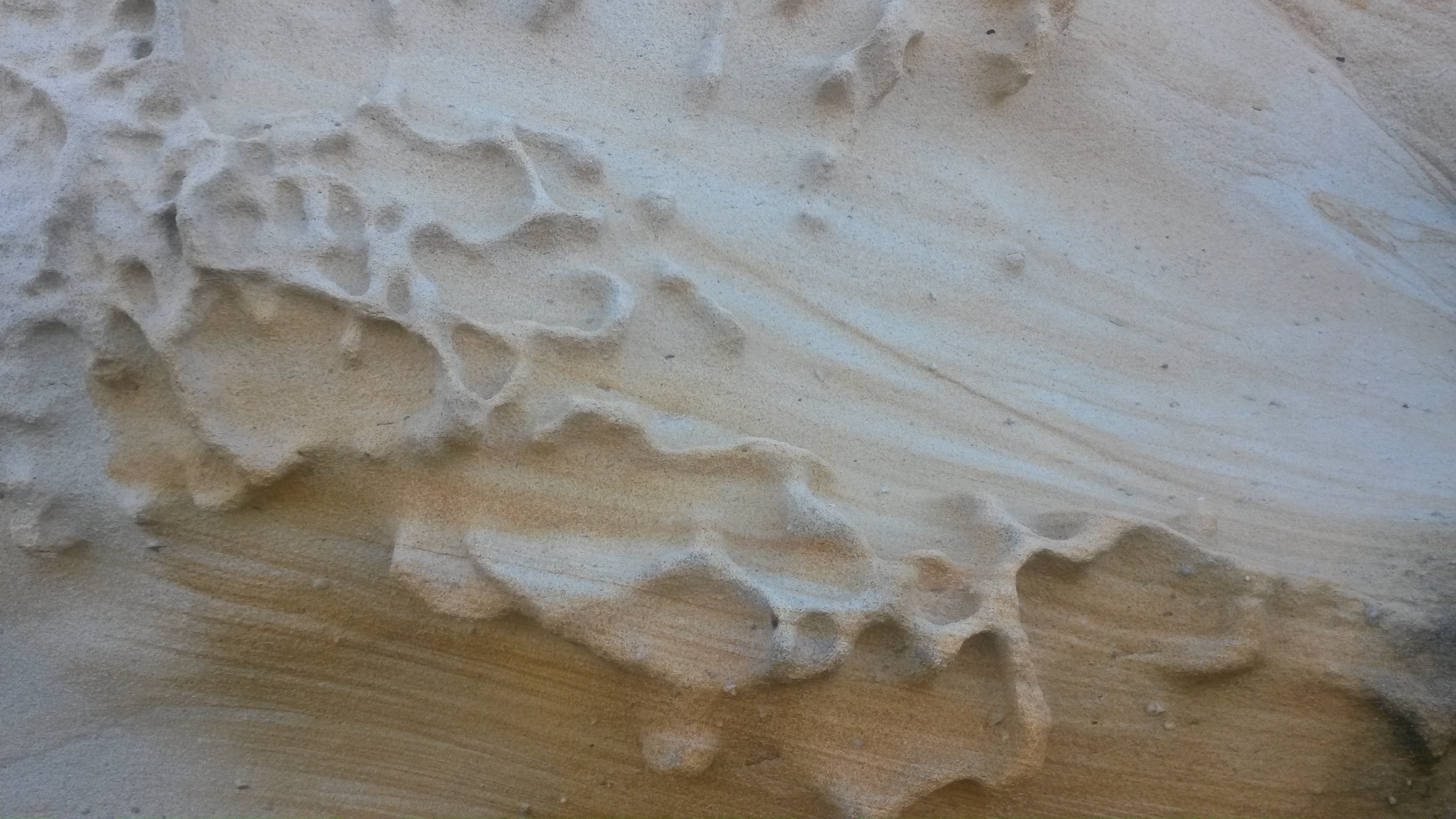
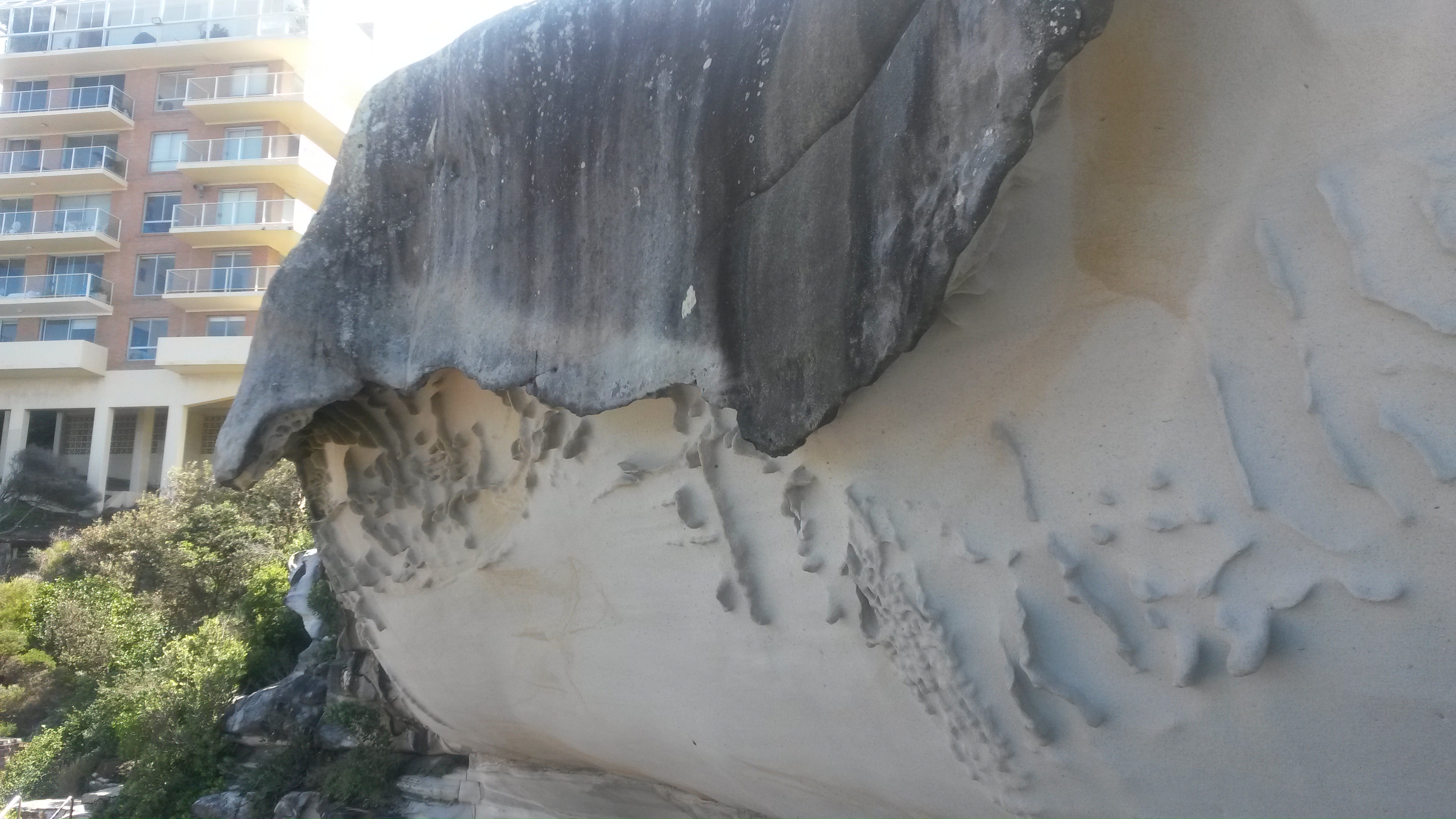
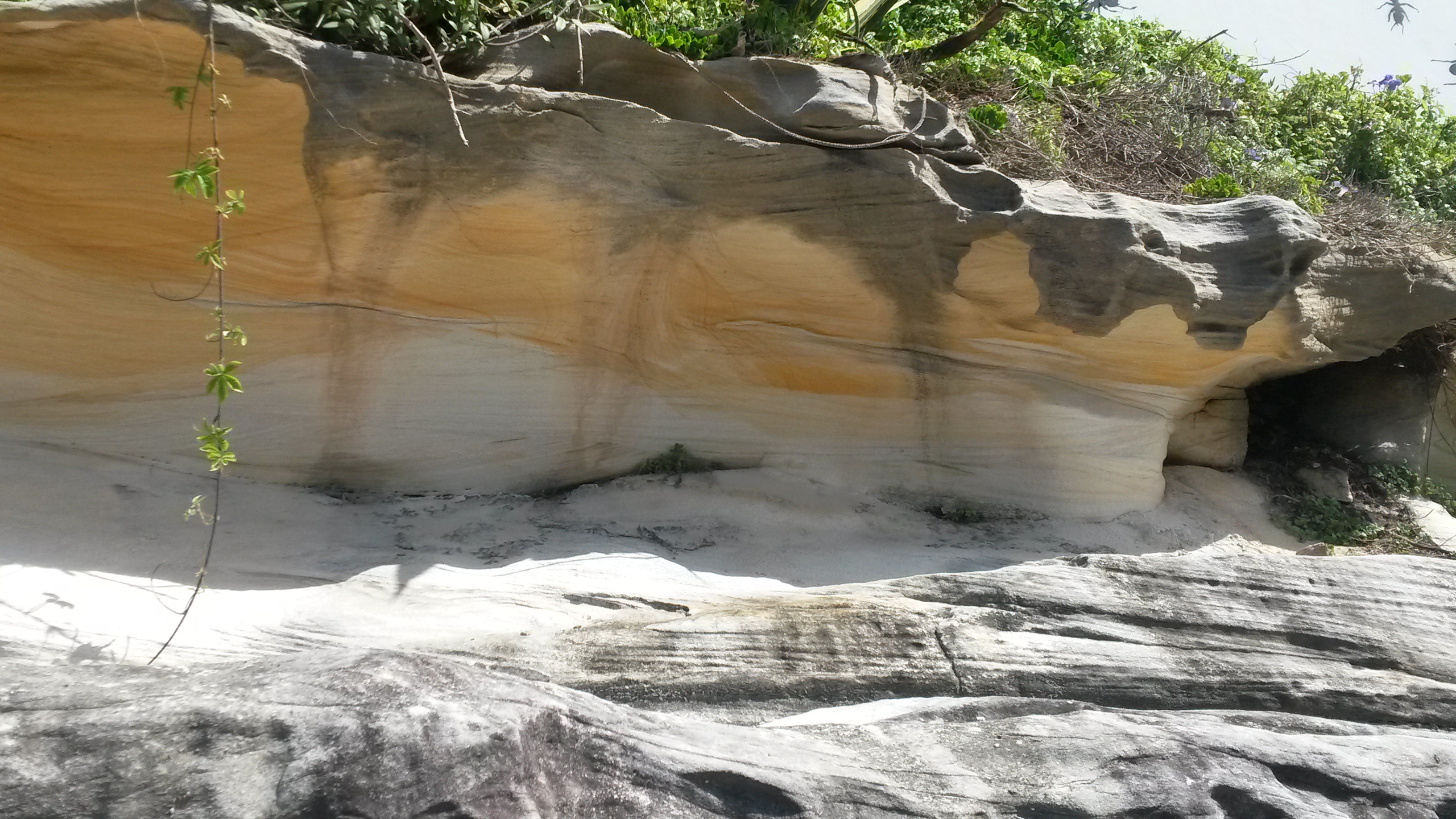
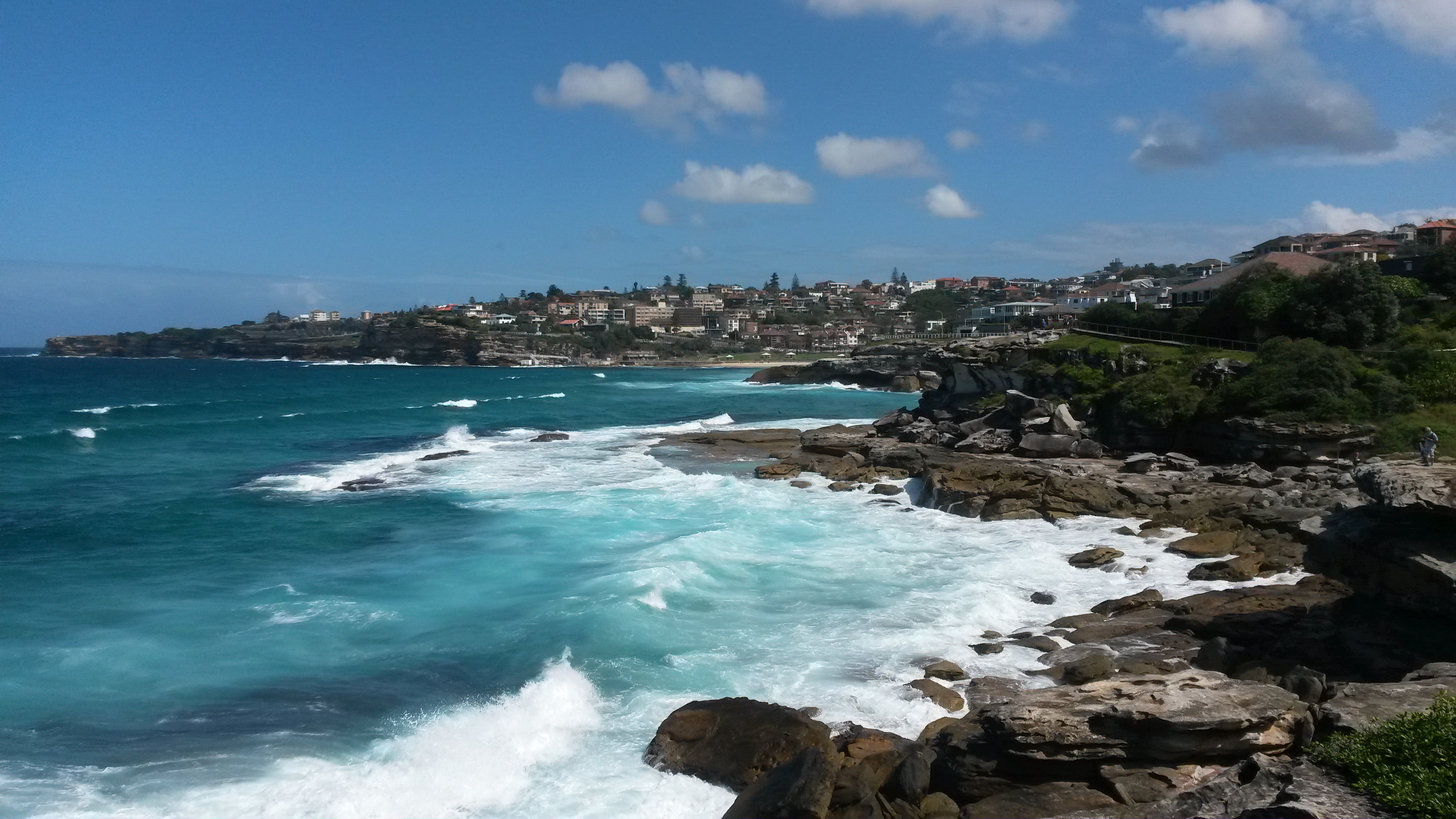
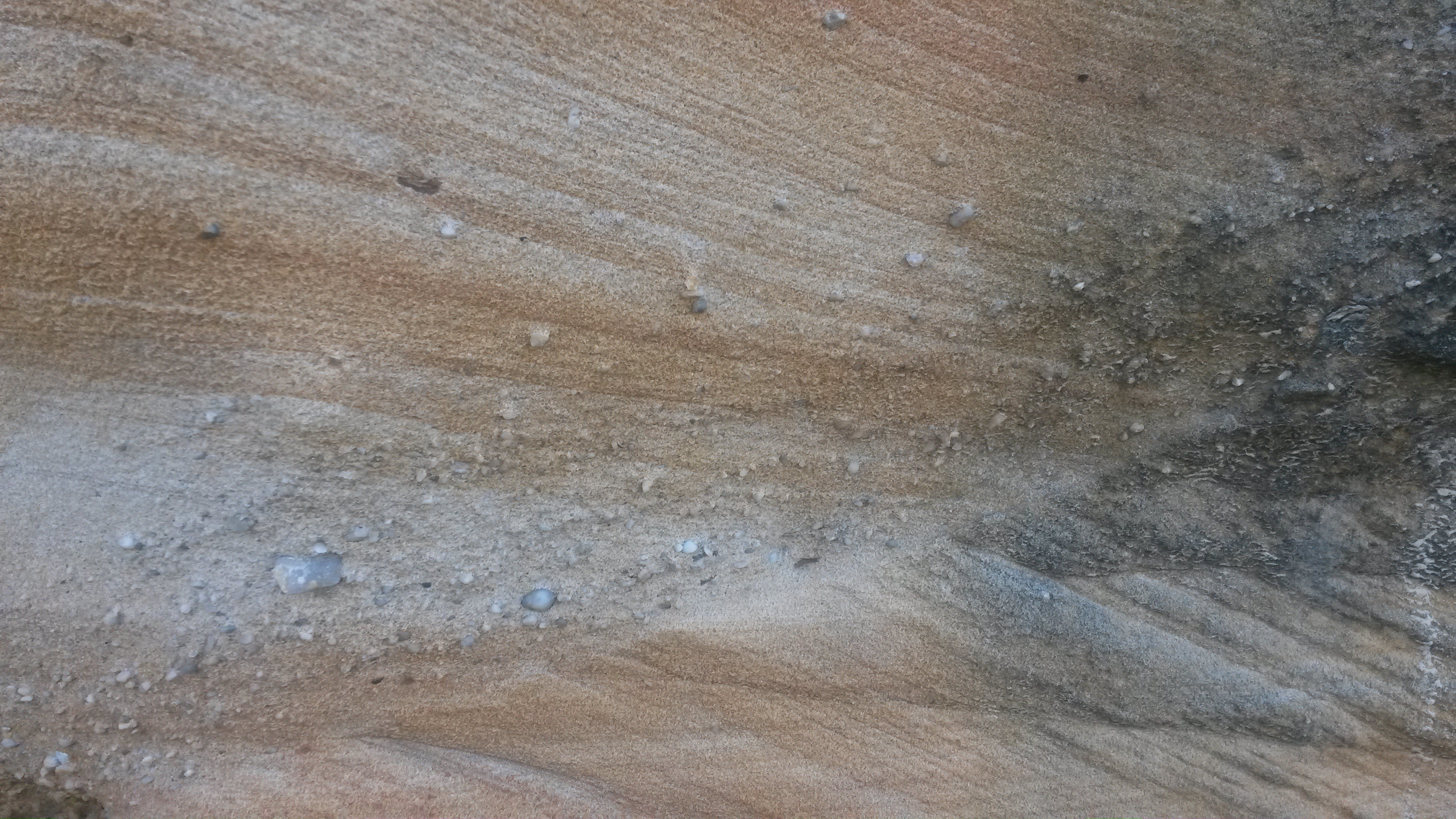
While we were in Sydney, we were very impressed by all of the sandstone, which can be seen in outcrop at many places in Sydney, including along many of the beaches. We observed many interesting features in these sandstone outcrops, such as impressive cross-bedding structures, trace fossils, interesting erosional forms, and oxidation/coloring of various types and shades. We also observed that many buildings, walls, bridges, and other structures in Sydney are constructed out of sandstone blocks, which we assume were locally derived.

I’ve already shared some pictures of Sydney sandstone outcrops here, here, and here and of some sandstone building stones here. Today, I want to share some more pictures of Sydney sandstone and also briefly discuss its geology.

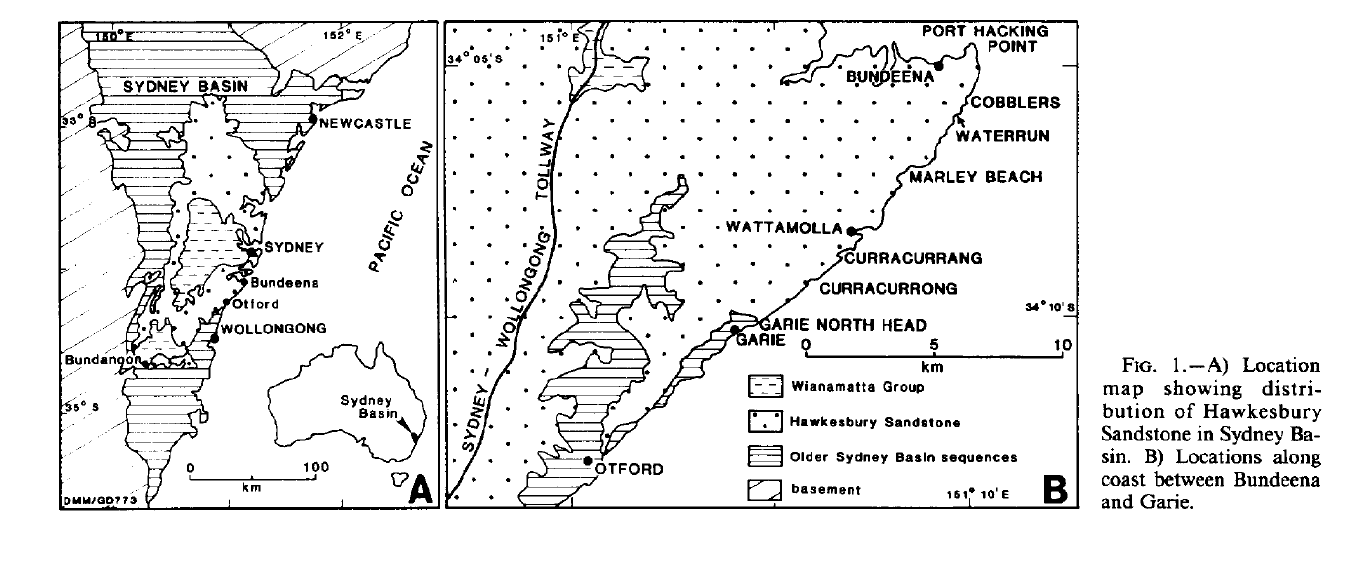
The sandstone that we observed around Sydney is known as the Syndey Sandstone or the Hawkesbury Sandstone. A nice scientific paper about the sandstone can be found here. The sandstone is Triassic in age and is interpreted to have been deposited in a fluvial environment by the ancient Hawkesbury River. Based on the scale and nature of features in the sandstone, such as cross-bedding and abandoned filled channels, this ancient river was likely a very large, sand-rich, braided river with deep main channels. Some of the abandoned channel fills are up to 18 m deep. The Hawkesbury Sandstone is extensively exposed in the Sydney area, outcropping over ~20,000 square kilometers in the Sydney Basin. The sandstone unit has a maximum thickness of ~290 m. The sandstone is a beautiful rock and has been used extensively as a building stone in Sydney, from the 1700s through to the present day.

Here’s a map showing the extent of the Hawkesbury Sandstone in the vicinity of Sydney:

Map showing the extent of the Hawkesbury Sandstone in the Sydney Area. Map from
Map showing the extent of the Hawkesbury Sandstone in the Sydney Area. Map from Rust and Jones (1987), Journal of Sedimentary Research, Vol. 57, No. 2: 222-333. Click to enlarge.

Here are some more pictures of this remarkable sandstone that we encountered pretty much everywhere in Sydney. The pictures below were all taken during a walk along the ocean, near Bondi Beach.

Sydney Sandstone #2.
Sydney Sandstone #3.
Sydney Sandstone #4.
Sydney Sandstone #5.
Sydney Sandstone #6.
Sydney Sandstone #7.
Sydney Sandstone #8.
Sydney Sandstone #9.
Sydney Sandstone #10.
Sydney Sandstone #11.
Sydney Sandstone #11. Sandal for scale.
Sydney Sandstone #12.
Sydney Sandstone #13.
Sydney Sandstone #14.
Sydney Sandstone #15. A bench amidst the cross-bedding.
Sydney Sandstone #16. Another view of the bench adjacent to the cross-bedding.
Sydney Sandstone #17.
Sydney Sandstone #18.
Sydney Sandstone #19.
Sydney Sandstone #20.
Sydney Sandstone #21.
Sydney Sandstone #22.
Sydney Sandstone #23.
Sydney Sandstone #24.
Sydney Sandstone #25. Sandstone being used as a building stone along the walking path... near an outcrop of the same sandstone.
Sydney Sandstone #25. Sandstone being used as a building stone along the walking path… near an outcrop of the same sandstone.
Sydney Sandstone #26.
Sydney Sandstone #27.
Sydney Sandstone #28.
Sydney Sandstone #29.
Sydney Sandstone #30.
Sydney Sandstone #31.
Sydney Sandstone #32.

That’s all for today… stay tuned for some more pictures from our recent Australian travels!

Monday Geology Picture: Cross-Bedding Sandstone Bench, Sydney, Australia

Enjoying a stop at a bench in front of some Sydney sandstone with classic cross-bedding.

Goodness, I’ve been busy recently! I’m afraid that my blogging has been quite neglected… as it has been for the past few months.

However, things have finally calmed down a little now, so I’m going to make an effort over the next few weeks to share some geological pictures from some of my recent travels… and also possibly from some travels in 2014 that I neglected to blog about.

I’ll start with this quick “Monday Geology Picture” post. This week’s picture shows me sitting on a bench in front of some sandstone in Sydney, Australia. This particular sandstone displays some impressive cross-bedding. My husband took this picture when we were on a beachside walk near Bondi Beach back in March 2015. I wish that all benches had such great geological scenery in the vicinity!

Monday Geology Picture: The Three Sisters, Blue Mountains, Australia

The Three Sisters, viewed in April 2015.

This week’s Monday Geology Picture was taken during my recent vacation in Australia. One day my husband and I drove outside of Sydney to spend some time exploring the Blue Mountains. One of the tourist attractions that we visited is a lovely rock formation known as The Three Sisters. This rock formation was carved (by erosion) out of ~250 million year old sandstone.

Monday Geology Picture: Sydney Sandstone Building Stones

Sandstone building stones used in a bridge in North Sydney.

During my recent travels in Australia, I noticed quite a bit of sandstone around Sydney. Therefore, I was not particularly surprised to also see quite a few sandstone building stones around the city. For example, the stones shown in the above picture, which shows part of a bridge in North Sydney.

By the way, I’m back home in South Africa now and won’t be travelling for a little while. So, I hope to have time to write up several posts on my recent Australian trip. Stay tuned!

Monday Geology Picture: More Sydney Sandstone

Sandstone with cro
Sandstone with iron oxidation coloration and bedding. 

I’m still in Australia at the moment but will be home in a few days. I’m looking forward to writing up a few blog posts about some geological sights in Australia once I’m back home. For now, though, here’s a picture showing another beautiful example of sandstone in the Sydney area. This picture was taken at the Sydney Zoo. The red and orange colors are a result of iron oxidation. The white is sandstone that lacks a color change from iron oxidation. Some bedding is also visible in this sandstone outcrop.

Monday Geology Picture: Cross-Bedding Near Bondi Beach, Australia

Sydney sandstone with cross-bedding.

I’m visiting Australia at the moment and will have a few blog posts to write up once I’m back at home. For now, though, here’s a sneak peek at some geology in Sydney. I took this picture close to Bondi Beach. There are some lovely exposures of sandstone outcrops near the beach.

Geology Word of the Week: C is for Coquina

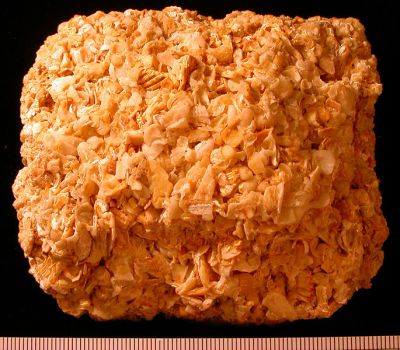
Coquina rock. Image taken from wikipedia here.

def. Coquina (“co-keen-ah”):
A sedimentary rock consisting of loosely-consolidated fragments of shells and/or coral. The matrix or “cement” consolidating the fragments is generally calcium carbonate or phosphate. Coquina is a soft, white rock which is often used as a building stone. Coquina forms in near-shore environments, such as marine reefs. According to the Oxford English Dictionary, coquina is a loanword from Spanish meaning “shell-fish” or “cockle” (a type of bivalve mollusc). Also according to the Oxford English Dictionary, the word was first used in English (to refer to the building stone) in 1837 in the book The Territory of Florida by J.L. Williams.

I remember exactly when I first learned the word “coquina.” When I was in high school, I had the opportunity to take some science electives in addition to the normal biology, chemistry, and physics courses. One of the electives I took was geology. I remember reading the textbook for the class (I believe it was Essentials of Geology), and there was a picture of coquina rock in the chapter on sedimentary rocks. I remember thinking, “Cool!” when I saw the picture of coquina. To me, coquina was a great rock because it was so simple: the rock was clearly composed of shell and coral fragments which had been cemented together. The fragments were large and obvious and just barely cemented together.  I think I liked coquina so much because I was a bit overwhelmed by all of the rock and mineral types when I took that first high school geology class.  I loved learning about rocks and minerals, but I found myself somewhat befuddled by all of the names and strategies used for identification. I had to think before I could confidently distinguish amphibole from pyroxene or diorite from dolerite. Coquina, on the other hand, was a refreshingly simple rock to identify.

While relatively simple to identify, coquina can actually be a complex rock. There are many different types of shell and coral fragments that can cement together to form coquina. Identification of these fragments is important in order to fully classify and understand the origin of a particular coquina, but this identification can sometimes be challenging. Like with any sedimentary rock, the origin of a particular fragment in coquina may sometimes be mysterious. Coquina may also be covered in mud and dirt or weathered, making identification difficult at first glance. Many coquina rocks were formed recently (within the past few thousand years), but some coquina rocks are older. Determining the age of older coquina is sometimes important for understanding local geology. For instance, since coquina forms in a near-shore environment, determining ages of coquina deposits (either marine or on land) can help reconstruct sea level rise and fall over time. However, determining the ages of sedimentary rocks, including coquina, is always a challenge since diverse fragments (often of different ages) have come together to form new rock.

Below is a picture some coquina that was collected from the seafloor just off the coast of southern Africa by my fiance, who is also a geologist. My fiance regularly finds coquina and shell fragments in the marine sedimentary rocks he studies. He is sometimes able to date coquina and other shell-containing sedimentary rocks by identification of shells.  Since certain shell-making organisms lived at specific times in the past, identification of some types of shells can be used to date coquina rocks. Coquina rocks can also sometimes be dated by their location within a sequence of sedimentary rocks. For instance, if the ages of rock layers on either side of a coquina layer are of a known age, then the age of  the coquina layer can be bracketed.

My fiance writes about this particular coquina,

Here is a picture of the coquina rocks – bear in mind these were photographed right after being collected off the sea-bed so are still covered in bits of mud. The entire “rock” consists of shell cemented by calcareous material and phosphorite. The sample contains least two different species of shell: a thin, long, spirally shell and a clam-like shell. From my seismic work I’ve interpreted this unit as Miocene in age (Burdigalian ~ 20 million years old).

Coquina collected at sea off the coast of Southern Africa.
Photo courtesy of Jackie Gauntlett.

Coquina is commonly used as a building stone, particularly in places (such as Florida and the West Indies) with large coquina deposits. Coquina is a very soft building material, so soft that it needs to be dried out  in the sun for a few years before being used as a building stone. Apparently, the softness of coquina made it an ideal building stone for some forts. For example, coquina was used to build the Castillo de San Marcos Fort in St. Augustine, Florida. The fort was built by the Spanish in the late 1600s when Florida was a Spanish territory. When British forces attacked the fort in 1702 during the Siege of St. Augustine, they fired cannon balls at the fort. However, the cannons were not effective at destroying the fort because the cannonballs kept sinking into the soft coquina. Forts are normally made out of harder stone, which fractures or punctures when hit with cannonballs.

Since the British could not break through the coquina walls, they were forced to lay siege to the fort. Eventually, Spanish relief ships forced the British to withdraw. The British managed to burn down much of the St. Augustine fort as they retreated (not sure why they didn’t try that earlier, honestly), but the fort was rebuilt and refurbished by the Spanish a few years later. However, the British did not give up, returning for a second siege and eventually taking over the fort in 1763. Just think, though… that pesky soft coquina kept the British from taking over the fort for 61 years.

Castillo de San Marcos fort. Image taken from wikipedia here.

In addition to being a good cannonball protector, coquina is a beautiful ornamental building stone. In response to my request on twitter (@GeoEvelyn) for coquina pictures, Phoebe Cohen (@PhoebeFossil) sent me some beautiful coquina pictures which she took just a couple of days ago in Shark Bay, Australia. The building where she is currently staying is made out of gorgeous coquina that was mined locally.

Phoebe writes,

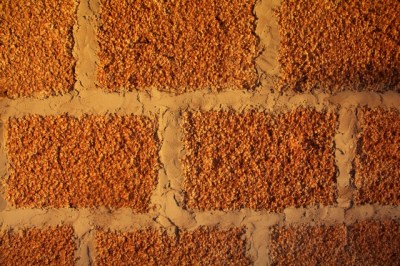
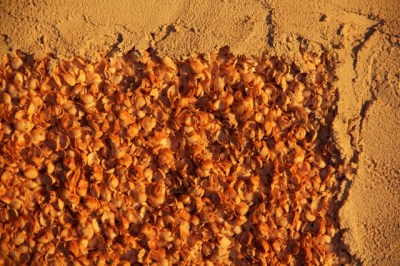
This building at Carbla Station, Western Australia, is made entirely of blocks of coquina. The coquina comes from the nearby beach of Shark Bay, a hyper-saline semi-restricted area. The coquina forms right near the beach, mainly from tiny clam shells washed up onshore. The shells are compressed and turned into a cohesive mass as rain water filters through them, dissolving a little bit of the shell’s calcium carbonate, which then glues the shells together. The coquina here is no longer used for building stone, as it is now in a protected marine park area.

Here are Phoebe’s pictures of the coquina building:

Coquina building in Shark Bay, Australia. Photo courtesy of Phoebe Cohen.

A closer look at the coquina building stones, Shark Bay, Australia.
Photo courtesy of Phoebe Cohen.

An even closer look at a coquina building stone in Shark Bay, Australia.
Photo courtesy of Phoebe Cohen.

And here’s a picture from Phoebe of an old coquina mining site:

Old coquina mining location, Carbla Beach, Shark Bay, Australia.
Photo courtesy of Phoebe Cohen.