Left Behind in the Field: Accretionary Wedge #36

For this month’s Accretionary Wedge, Geosciblog asks:

What do you regret leaving behind at a geological locality?

In other words, what samples, specimens, or even photographs do you regret “not getting enough of”?

For those of you who are not familiar, the Accretionary Wedge is a monthly “geology blog carnival” where geobloggers of all kinds are invited to blog on a theme. The deadline for this month’s Accretionary Wedge is July 16th. Be sure to head over to Geosciblog and participate!

Personally, my experience with scientific fieldwork has been collecting far more rocks, photographs, and notes than I could ever possibly work on scientifically. For every month of fieldwork I’ve done, I’ve had to work a year or longer in lab just to process a subset of the rocks and data collected from the field. Geochemistry is often this way; it takes months of hard work to process samples collected in the field. I’ve been lucky enough to participate in three major field campaigns during graduate school– a 2007 expedition to the Ninetyeast Ridge in the Indian Ocean and two month-long field campaigns in the Samail Ophiolite in Oman.

During the Ninetyeast Ridge expedition, we collected an enormous quantity of rock– about 3,000 kilograms!

A full dredge basket of rocks. Indian Ocean, Summer 2007.
Too Many Rocks. Singapore Harbor, August 2007.
Still too many rocks. Singapore Harbor, August 2007.

We collected so many rocks, in fact, that we started to become creative with some of the less-important samples:

90E Ridge in Cobbles. Indian Ocean, Summer 2007.

Because we’ve collected so many rocks during the fieldwork I’ve participated in, I rarely wish for more rocks– I have enough to keep me busy! Occasionally, I do sometimes wish for a specific scientific sample. However, for my thesis research I was fortunate to have two field seasons. During the second field season, I collected many of the samples I longed for after the first field season. During my field seasons, I also collected a plethora of notes and photographs.

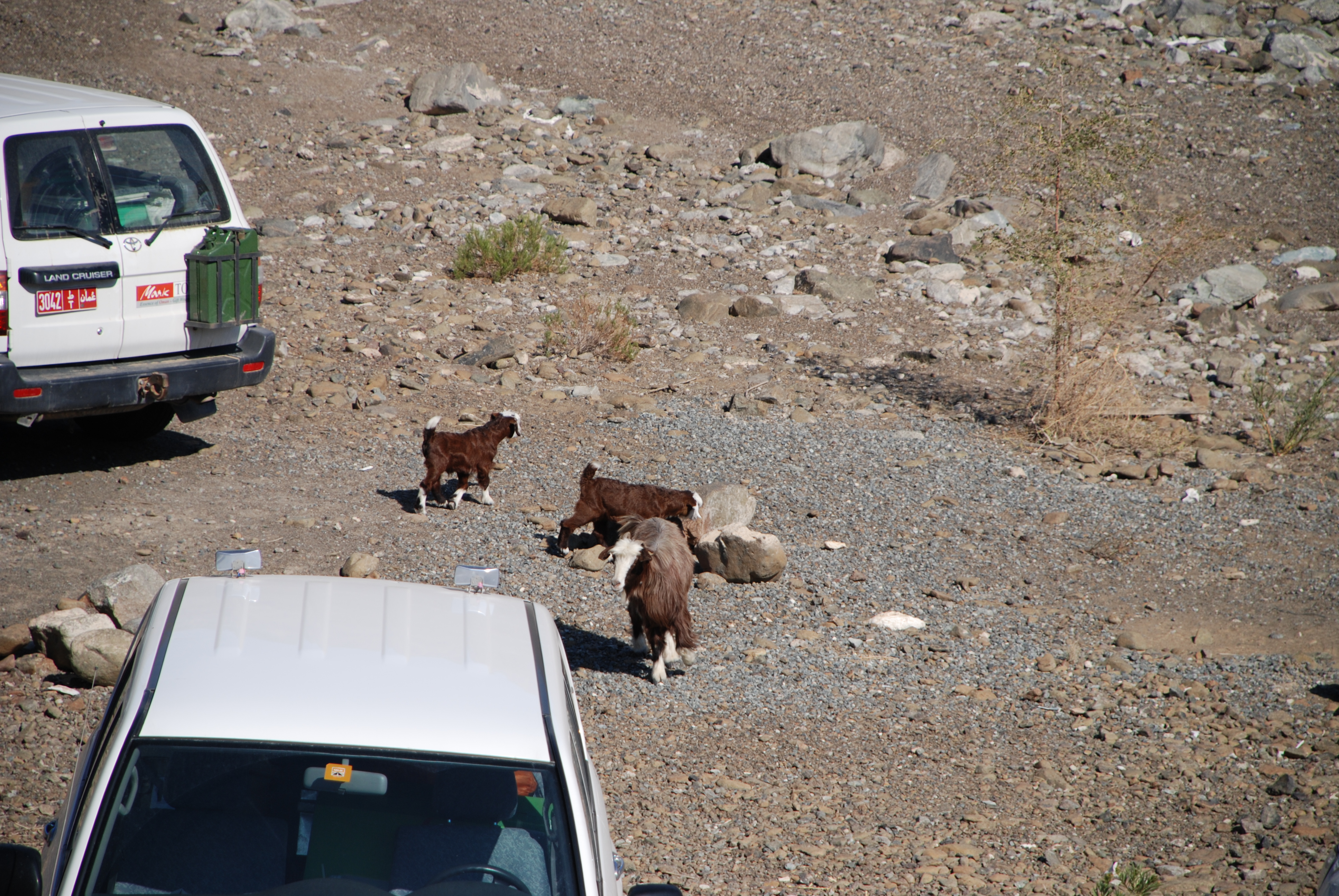
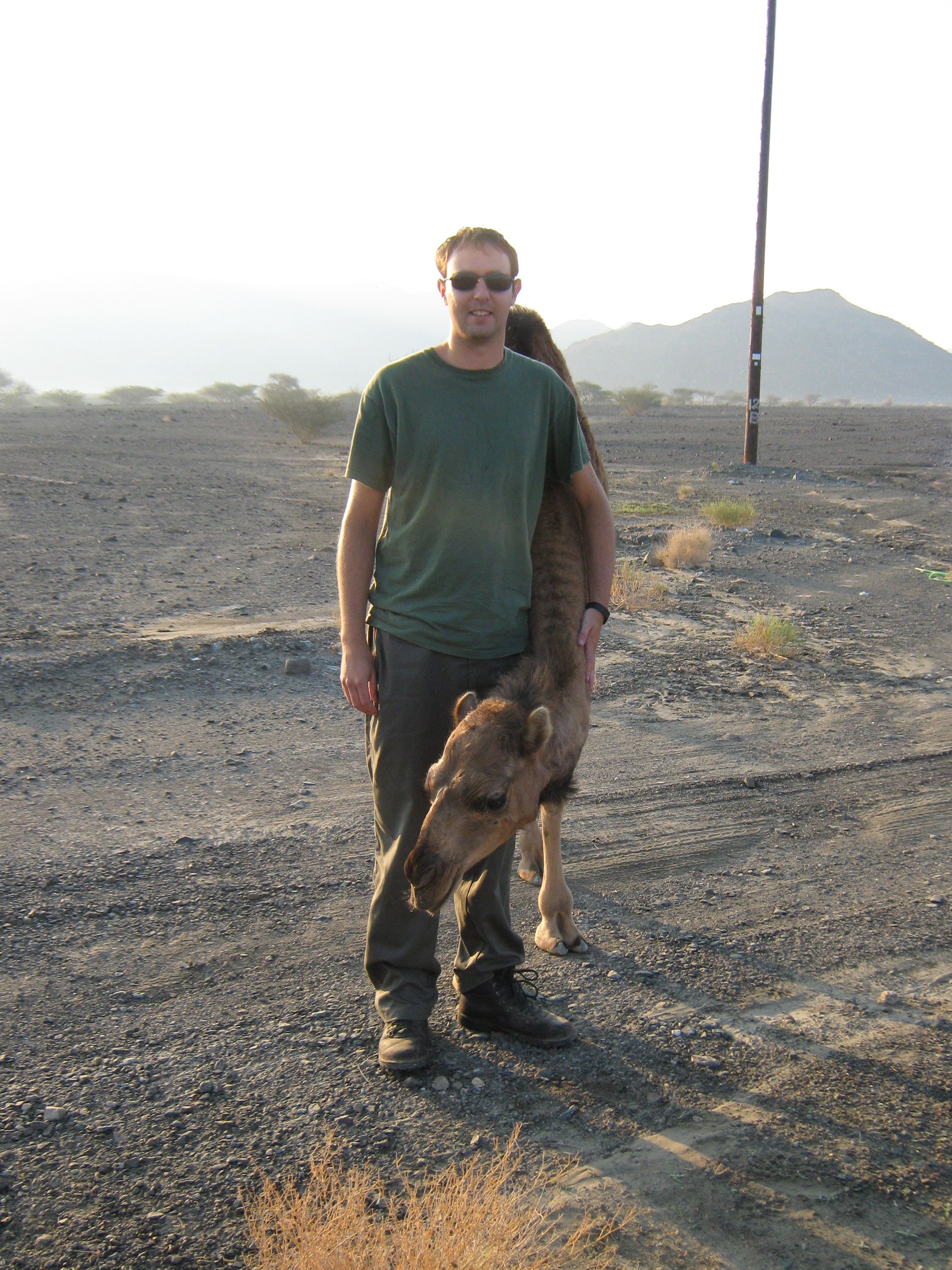
So, what do I wish I had brought back from the field with me? Not more rocks or notes or photographs. I wish I had brought back baby goats. Or maybe a baby camel. Particularly these little babies from Oman:
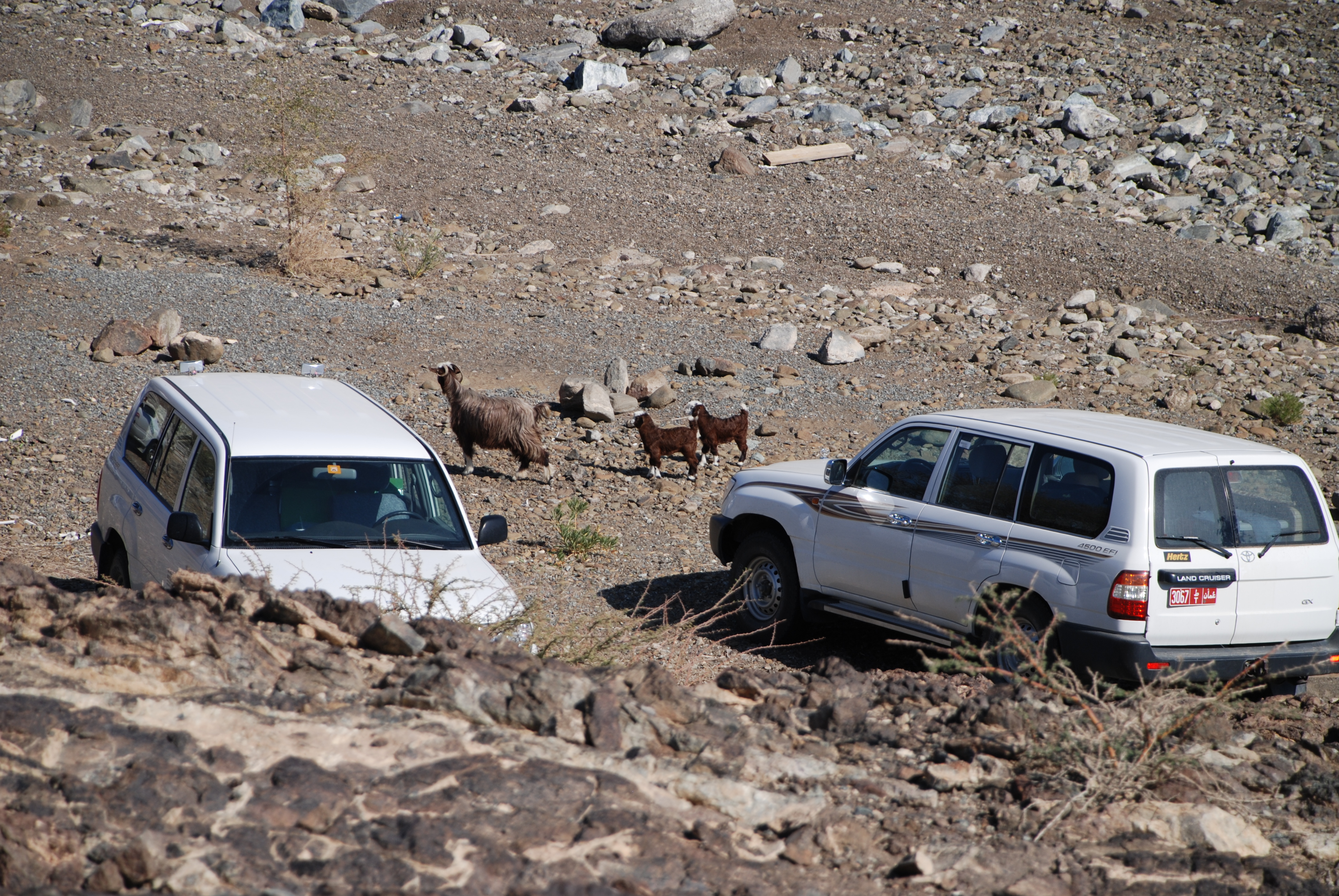
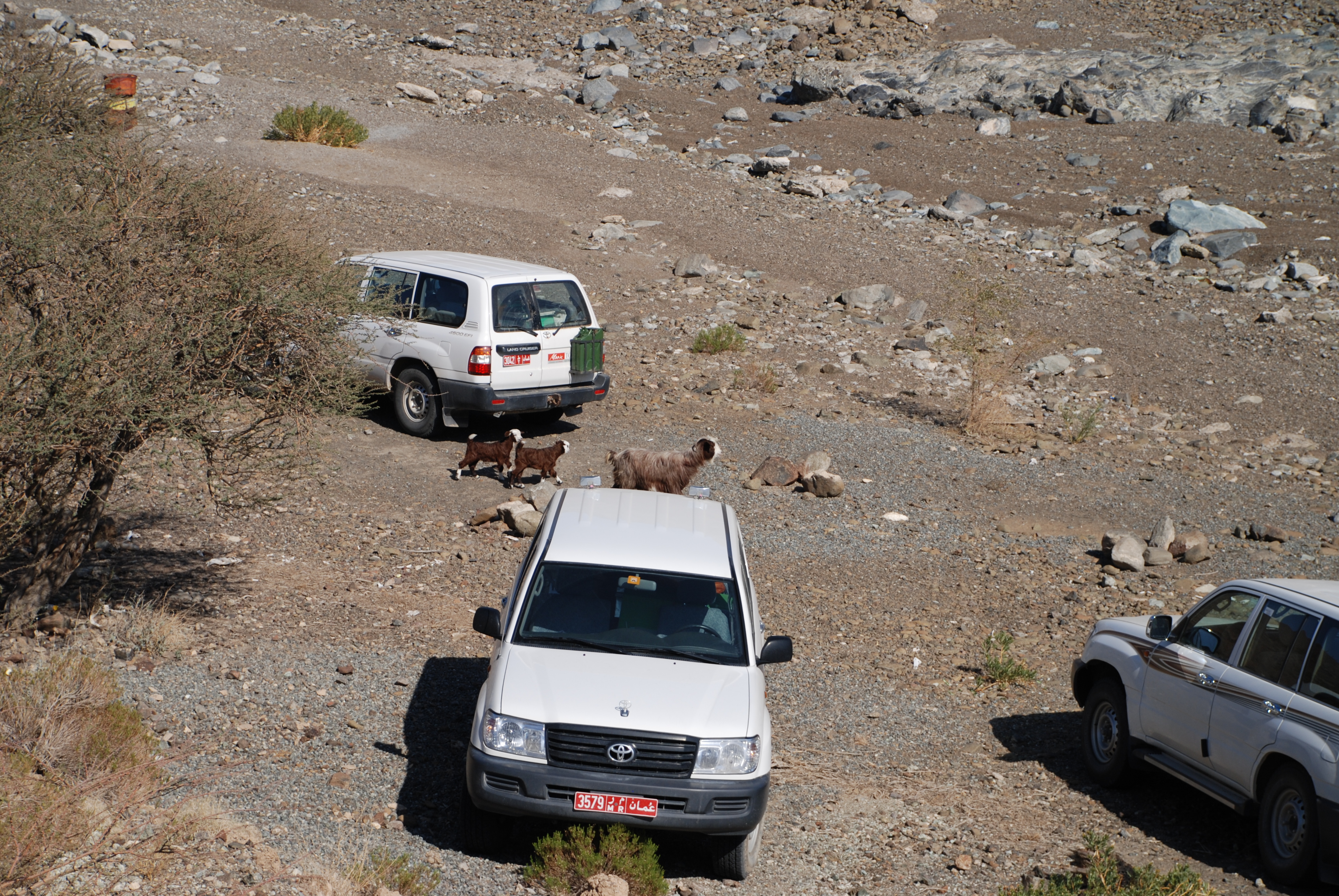
Baby goats 1. Oman, January 2009.
Baby Goats 2. Oman, January 2009.
Baby goats 3. Oman, January 2009.
Baby camel 1. Oman, January 2010.
Baby camel 2. Oman, January 2010.

I’m not sure where we would put the baby goats and camels since we live in a 2-bedroom apartment. I’m also not sure if they would get along with our two housecats. But I’d like to bring them back anyway…  because they are adorable! I guess I’ll have to make do with pictures, though.

Accretionary Wedge #35: Favorite Geology Words

As many of you know, I hosted the Accretionary Wedge Geoblog Carnival for June, and I asked What’s Your Favorite Geology Word? Turns out, many of you have favorite geology words! Geologists– like many scientists, I suppose– are fond of their jargon. Personally, I’m so fond of jargon that I blog about a geology word every week. I love many geology words, but if I had to pick an absolute favorite, it’s ophiolite.

Thanks so much to everyone who participated and shared a favorite geology word! The words are listed below, in the order in which they were posted. If I somehow missed your word, please let me know in the comments, and I’ll add it.

Jazinator of The Geology P.A.G.E. likes the Icelandic word jökulhlaup.

Reynardo of Musings of the Midnight Fox wrote a wonderful poem about the word volcano.

The Short Geologist of Accidental Remediation says that varves are not flashy, but they sure are pretty!

Ryan of Glacial Till says that he loves many geology words, but that welded tuff has to be one of his favorite geology phrases.

Jessica of Magma Cum Laude thinks autobrecciation is a really cool process– and she explains it very well, too!

Callan of Mountain Beltway is fond of the word boudinage, especially when said with “a heavy French accent and a leering, dirty expression.” 

Ian of Hypo-theses thinks crozzle has a great sound to it. I agree! What a fun word– almost sounds like a Dr. Suess word or maybe a something that a Jaberwocky might encounter. 

Denise of Life as a Geologist likes the word mylonite (or Míléngyáng in Chinese). She shares a beautiful Chinese poem with us and also some pictures of mylonites from Hong Kong.

Dana of En Tequila es Verdad seduced us with subduction.

David of History of Geology really likes geology, in several languages!

Shockingly, Chris of Highly Allochthonous likes the word allochthonous. His co-blogger Ann also likes the word allochthonous but for different reasons.

I swear that Brian of Clastic Detritus made up the word geophantasmogram. But I love the word anyway! I think Brian wins the internet (at least the geology part of the internet) with this word.

Jefferson of Anisotropic Reflections likes the folded rocks that hang out in an anticlinorium.

Elli of Life in Plane Light tells a wonderful story about how she first learned the word disthen.

Suvrat of Rapid Uplift came up with a word I cannot pronounce: primarrumf. I’m going to go ahead and pronounce the word “pirate’s rump” like Suvrat’s friend.

Silver Fox of Looking for Detachment tells us why she likes detachment. Also, she says everyone should become friends with Detachment Fault on Facebook.

Ron of the Geology Home Companion Blog had a little trouble settling on a favorite word but finally went for Tavurvur.

Mika of GeoMika thinks that rheology is an ugly word for a pretty science, but I disagree. I think rheology is a very pretty word. Rhea is also one of my favorite girls’ names!

Andrew of About Geology wrote about palinspastic. Interestingly, this was the very first geology word I blogged about during my previous (failed) attempts to keep up with the geology word of the week on Skepchick, a skeptical blogging group which I have recently left.

Simon writes about why he likes the word porphyroblast over at Earth Science Erratics.

Chuck of Lounge of the Lab Lemming is fond of the word sphene but not of that horrible “T-word.”

John of Geologic Musings in the Taconic Mountains also likes the word jökulhlaup.

Selim of GeoSelim explains why he likes the word isopach.

A Life-Long Scholar really likes mountains and the word orogenesis.

Julia of Stages of Succession cheated and picked two words: bioturbation and turbidite. It’s okay, Julia. I can’t really decide what my favorite geology word is, so I blog about one every week.

G of Gioscience also likes mountains, I assume, with a favorite word of orogeny. Did you hear that time that Antarctica Africa, and South America were caught in a three-way orogeny? Shocking, I tell you!

MyPhyz likes (in the comments) the word unconformity.

MK of Research at a Snail’s Pace is also fond of bioturbaton.

Tannis of Tannis Likes Rocks is fascinated by geohistory.

Finally, Jacquelyn starts a new blog called The Contemplative Mammoth with a post about playing with gyttja mud.

Thanks again to all the participants! If you have other favorite geology words, post them in the comments!

Geology Word of the Week: A is for Accretionary Wedge

Illustration of a convergent plate boundary. I’ve added a red arrow pointing out the
location of the accretionary wedge. Illustration from TASA graphics and taken from here.
Click to view larger.

def. Accretionary Wedge (aka Accretionary Prism, Subduction Complex):
A wedge- or prism-shaped mass of sediments and rock fragments which has accumulated where a downgoing oceanic plate meets an overriding plate (either oceanic or continental) at a subduction zone. The sediment is generally marine sediment that has been scraped off of the downgoing plate by the overriding plate. However, sediment from the overriding plate can also contribute to the accretionary wedge. Fragments of rock from the colliding tectonic plates can also accumulate in an accretionary wedge.  The sedimentary rocks which form at accretionary wedges are deformed, faulted, poorly-sorted mixtures which are often referred to as “melange” (which means “mixture” in French).

Since I’m hosting this month’s Accretionary Wedge Geoblog Carnival and I’m at the letter A in my second geologist’s alphabet, I thought it would be fitting for “accretionary wedge” to be featured as this week’s geology word (phrase) of the week.

An accretionary wedge is basically a hodge-podge collection of various sediments and rocks, scraped up and squished together where two tectonic plates collide and one plate subducts underneath another. The downgoing plate is always an oceanic plate (continental plates don’t really subduct as continental crust is too buoyant), but the overriding plate can be either another oceanic plate (such as the Japan subduction zone) or a continental plate (such as the Cascades subduction zone). The sediments in an accretionary wedge are mostly marine sediments scraped off of the downgoing oceanic plate. Most of the marine sediments on the oceanic plate actually subduct down into the mantle. However, some of the marine sediments pile up and are accumulated into a wedge or prism-shaped pile of sediments where the downgoing plate meets the overriding plate. This scraped-off marine sediment is mixed with other material such as sediments weathered/transported from the overriding plate and fragments of rock broken off of the colliding tectonic plates.

Because the sediments are primarily scraped off of the downgoing plate, accretionary wedges actually accrete new material primarily on the bottom of the wedge. This means the younger sedimentary rocks in an accretionary wedge are generally on the bottom, which is topsy-turvy to the classic Law of Superposition in geology.

The primary rock type which forms at accretionary wedges is a jumbled, fractured sedimentary rock known as melange. I’m not sure why– I guess French sounds smarter and more scientific?

Geologist Donald Prothero describes melange wonderfully in his textbook Interpreting the Stratigraphic Record:

“The most characteristic rock type of the accretionary wedge is melange (French, “mixture”), a mass of chaotically mixed, brecciated blocks in a highly sheared matrix. This deformation and pervasive shearing and brecciation are due to the tremendous compressional and shear forces generated by the downgoing slab [aka tectonic plate]. Melange is so mixed that it shows no stratigraphic continuity or sequence, and blocks and boulders from everywhere are mixed together. Some are exotic blocks from terranes no longer present in the vicinity.”  

Does anyone have any good pictures of melange rocks? If so, post a link below in a comment or send me the pics by email (see sidebar), and I’ll add them to the post. 

I think that Accretionary Wedge is a great name for a Geoblog Carnival, which is a jumbled mixture of blog posts just as a real accretionary wedge is a jumbled mixture of sediments and rocks.

Reference:
Prothero, Donald. Interpreting the Stratigraphic Record. New York: W.H. Freeman & Company, 1990.

Accretionary Wedge #35: What’s Your Favorite Geology Word?

I’m hosting this month’s Accretionary Wedge Geoblog Carnival here at Georneys. Since I write about a geology word every week (see the “Geology Word of the Week” tag on the sidebar or the post “A Geologist’s Alphabet”), I thought it would be fitting to host an etymological Accretionary Wedge. This month’s Accretionary Wedge is easy– if you want you can post just a single word!

The theme for this month is:

What’s your favorite geology word?

You can post just the word if you want. You can also add anything you want– a definition, some pictures related to the word, a story about the word, a poem, a drawing. Anything at all!

I must warn you, though: if you post about a good word, I may use the word in a future Geology Word of the Week post!

To join the geoblog carnival, just write a post on your blog and then link to it in a comment below or in a comment over at the Accretionary Wedge site. If you don’t have a blog, you should start one. If you don’t want to start a blog, just type your word in a comment below. Please submit your entries by the 26th or thereabouts so that I can compile them by the end of the month. Happy blogging!

Finally, be sure to check out last month’s Accretionary Wedge #34: Weird Geology.